
 Ask ChatGPT


 The State of It
2 Jun 2026 · 32m · 13 chapters
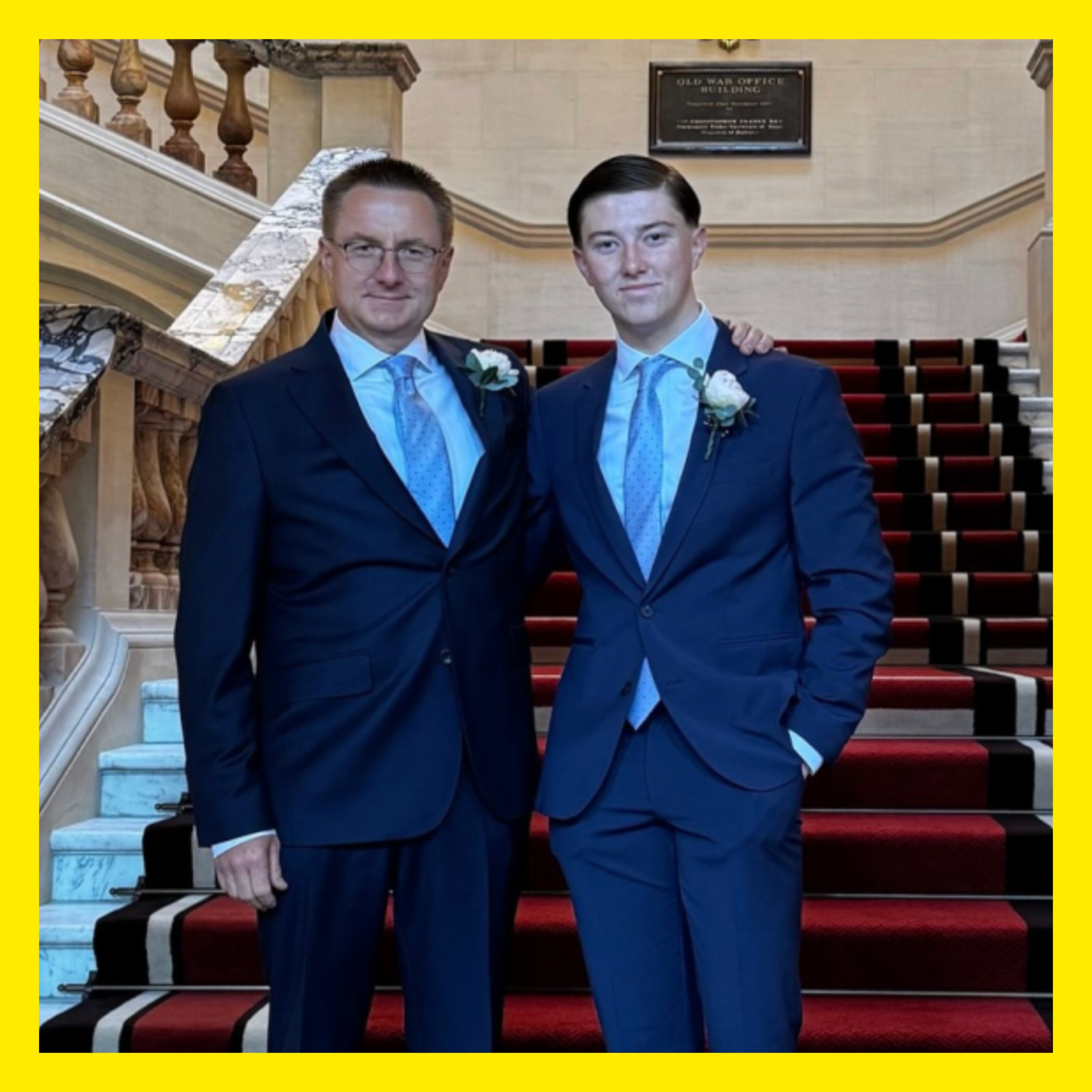
The episode links two political stories: the murder of 18-year-old Henry Novak (including police body-cam footage and claims of racist bias/two-tier policing) and the “Lord Mandelson files” (leaked WhatsApps/texts) that allegedly show Keir Starmer’s lack of political direction, especially around welfare policy.
Stephen Swinford (political editor, The Times), Patrick Maguire (chief political commentator, The Times), Lara Spirit (deputy political editor, The Sunday Times). James Beale (investigations editor, The Times) is mentioned for a separate “Poison” promo.
Farage used Novak’s death to argue “two-tier Britain” and that white people are treated worse; Labour is pressured to respond without seeming anti-police. Mandelson files largely confirm Starmer’s “absence” of political philosophy/judgment. A Pat McFadden message criticizes Labour MPs for focusing on taxing to fund benefits, and Labour’s failure to deliver meaningful welfare reform.
George Floyd (June 2020) and Starmer “taking the knee”; Starmer’s initial focus on knife crime; Kemi Badenoch’s “everyone matters” framing; Makerfield by-election dynamics; Alan Milburn warning that 1 in 6 young people are NEETs.
Written by AI. May contain mistakes.
A discussion on the tragic murder of Henry Nowak and his father's wishes.
“And yet, what has the public reaction been from our leaders and politicians?”
Exploring the public and political reactions to the murder and its implications.
“and the political responses that we're seeing already today.”
Analysis of Nigel Farage's response and its impact on public discussion.
“So a very strong intervention from Nigel Farge to start this day, Patrick.”
Discussion on the challenges faced by the Labour Party in responding to current events.
“Keir Starmer, against the advice of his aides, takes the knee because he feels under pressure from the left of his party.”
Exploring Kemi Badenoch's contrasting viewpoint and its implications.
“It's not totally irrelevant what he says because he's still overseeing, you know, the machinery of government and what he says is important.”
Insights into the dynamics of the Makerfield by-election and candidates' strategies.
“it was a very, very powerful intervention.”
Analysis of Andy Burnham's campaign tactics and approach to undecided voters.
“But at the moment, it doesn't feel like they are massively concerned about how that will play.”
Explore the political tactics being employed by Labour's Andy Burnham in the by-election.
“It is, as I revealed in the paper on Monday, you know, Northern Soul, keep the faith, change Labour, all of that sort of thing.”
Discuss the unusual dynamics within the Labour Cabinet during the by-election campaign.
“like, it's so transparent what these people are doing.”
Understand the significance and unusual circumstances surrounding the Makefield by-election.
“A social club on a suburban street in Wigan that every Thursday night, this is my favourite fact about it, has an exotic bird auction.”
Gain insights into the content and implications of the Mandelson files concerning Labour leadership.
“And we should open, because obviously we should open on this, Patrick Maguire syndrome.”
Examine the political challenges Labour faces regarding welfare reform and its implications.
“of what we already knew from these files.”
Discussion on the challenges of welfare reform faced by the Labour Party and its political implications.
“you know, Kemi Bainot calls them the welfare party.”

Get the gist, explore an idea or ask about something said.
 Claude
On The State of It, what are the key points of this episode?
Searching your listeningAutomatic transcript. May contain errors.
0:01This podcast begins with the suicide of a British student in a hotel near London and leads me to a man in a freezing car park in Canada. I'm James Beale, investigations editor at The Times. Now that man is going to prison. So how did we help expose his crimes? A new episode of Poison is available now. Search Poison The Times wherever you get your podcasts.
0:33Remember career criminal George Floyd. Remember the reaction to that and the way the police behaved. Within a few days, Keir Starmer was taking the knee. Churchill's statue was defaced. The cenotaph was vandalised. And yet, what has the public reaction been from our leaders and politicians? And indeed, to be frank, much of the media did this. Silence. Absolute silence. Proof, if ever there was any, that we're living in a two-tier culture in this country where the rights and privileges of white people matter less than those of ethnic minorities. What Nigel Farage is doing is reinforcing the difference.
1:15I have said that we need to find what we have in common, not what separates us. I don't want to hear about Black Lives Matter. I don't want to hear about White Lives Matter. We all matter. Enough of this nonsense where we keep separating everybody and splitting people into different groups. We are descending into tribalism. I do not want that. Welcome to The State of It, the political podcast from The Times and The Sunday Times. I'm Stephen Swinford, the political editor at The Times. I'm Patrick Maguire, chief political commentator for The Times. I'm Lara Spirit, deputy political editor for The Sunday Times.
1:47And look, we're going to be looking at two broad issues this week, the two big stories today. The first is the awful, appalling murder of Henry Novak and the political responses that we're seeing already today. And there'll be more coming this afternoon, I'm sure. And the second is we're going to go kind of deep dive into the Lord Mandelson files. We're going to be asking, what does this actually mean? And what is the bigger picture of where these files take us? But look, the reason we wanted to start on Henry Novak is I'm sure everyone listening to this podcast has seen the police body cam footage.
2:19And bluntly put, it is appalling. It is absolutely awful footage. It is a young man, an 18 year old dying after being stabbed with a 21 centimetres ceremonial sword. He is falsely accused of racism and he is arrested for alleged racism. And as he is lying there, dying, saying, I can't breathe, I can't breathe, I've been stabbed. The police are effectively, appear to be ignoring those concerns. They proceed with the arrest and that is his dying moments. And that is a young man that has died. But as ever, the politics are never far behind it. And the reason we're looking at this is the father of Henry Novak, this 18-year-old student that was killed, was very clear he didn't want this to be politicised effectively.
3:04He didn't want this to lead to more division and hatred. But what has happened this morning is we have started at 8am this morning with an emergency press conference from Nigel Farage, where he is essentially, as you heard in that clip, said that this is evidence that we are operating in a two-tier culture, a two-tier Britain, and that white people are being treated less well than those from ethnic minorities. So a very strong intervention from Nigel Farge to start this day, Patrick. But you were there to tune in this morning, I think, weren't you, at the ATM? Yeah, no, no, I was, and I watched it.
3:40Look, it is the epitome of how reform works, which is they move quickly those were the words used to me by so it's very close to nudge farage you know they got out hard and they got out fast they streamed this intervention live on x and live on youtube at 8 a.m yeah and it is leading the day's discourse not least because as you say steve it is sharply expressed it's not pejorative to say it's divisive because it's talking about divides in society. In a literal sense? Yeah, in a literal sense. And they know, they know full well that this is going to put the Labour Party and specifically Andy Burnham running against him in Makerfield in a very, very difficult position.
4:24There's lots to talk about, lots to respond to in this case, the response of the police, which is always a difficult thing for politicians to weigh in on, particularly Labour politicians who are conscious of being seen as anti-police you also have the accusations of racism or racial bias right all of which is a complete nightmare for the Labour Party to respond to and more than one person at the top of the Labour Party this morning you know talking MPs former cabinet ministers people who worked in Keir's Tomers Downing Street have drawn On the parallel with the incident Nigel Farage mentioned, June 2020, George Floyd, what does that cause in the Labour Party?
5:07It causes a massive nervous breakdown. Keir Starmer, against the advice of his aides, takes the knee because he feels under pressure from the left of his party. He took the knee in his office. Yeah, with Angela Rayner. Yes, yeah, yeah. And that is something you see raised on by right wing accounts on X quite a lot because it felt provocative. You had Keir Starmer under pressure to respond to the demands of activists in this party for a more robust response. Then obviously you had incidents of law-breaking, COVID breaches, vandalism. Keir Starmer condemned that, you know, ended up being hailed by Nigel Farage.
5:42You know, I remember a tweet from Nigel Farage in that week in June 2020 saying, I heartily agree with Keir Starmer's condemnation of the Black Lives Matter organisation. And he just, Keir Starmer emerged from it, battered and bruised. He couldn't really straightforwardly praise or defend the police. Everything he said about the racial issue opened up a really painful conversation among progressives from which he was caught in the middle. And that is the risk for any Labour politician who weighs into this. And the words of one Labour MP are my main takeaway from this is whatever, you know, what Keir Starmer says to this, obviously he's the prime minister.
6:17It's not totally irrelevant what he says because he's still overseeing, you know, the machinery of government and what he says is important. In terms of the politics of this, because the backdrop of it is what's happening in Makerfield, a seat where reform expect what they've said to have huge resonance. The question is, as a Labour MP said to me, will Andy Burnham just say the opposite to Nigel Farage? And if he does, there are lots of people in the Labour Party who'll think it'll open up a conversation in which they can only lose. And look, we've had two significant interventions already on this this morning.
6:52We've spoken about Nigel Farage's intervention he gave. We've had Kemi Badenoch, the Tory leader, was on Good Morning Britain this morning. And she took a very different view to Nigel Farage. She was talking about her nine-year-old son, who is half black and half white. And she was saying, Lara, that everyone matters. And that she thought that essentially Nigel Farage was whipping up anger and division, was her suggestion here. Yeah, I mean, it's really interesting to her intervention this morning where clearly she wanted to make it known that she had a very different position to Nigel Farage on this point and was very confident in stating quite aggressively, actually, that she felt that, you know, this was a divisive.
7:30And I think in her view, she was using that term pejoratively. Action from Farage to do this intervention and to use the language that he did. I think it shows a confidence on the part of the leader of the opposition because they do have, you know, pretty strong policies on these areas, they would say. and clearly they have wanted to take a very forthright position on questions around this broader issue. But here, Kemi Bay not clearly wanting to make it known that she has a very different view to Nigel Farage, which I think was very interesting to hear. Regardless of what you think of the substance, it was a very, very powerful intervention.
7:59You could hear, she was clearly emotional, you'd hear her voice cracking. And as you say, Lara, the point of that, and I was just talking about Labour saying the opposite and Labour being bounced in this direction and that direction by whatever Nigel Farage happens to be saying. what was impressive about Kemi Baden-Ock's response or the way she framed it was she rejected the framing entirely it was a distinct position to Nigel Farage it was trying to move the argument on and I got a Labour MP message me saying this is exactly where we need to be it is that rejecting the terms of what Farage is saying without necessarily saying the opposite yeah I will read out a bit of it because it was pretty powerful she said I have a nine year old boy in ten years time he will be about that age, the age of Henry Novak.
8:43He is half black, he's half white. I bring him up to believe this country is one where he belongs and he should never have to worry about how he will be treated. You see that video and think, how can we tell our children these things? I want that to be the reality. What Nigel Farage is doing is reinforcing the difference. We need to find what we have in common, not what separates us. But I think the point, just to come back to it that you made, Patrick, that this was Nigel Farage getting out the blocks incredibly early this morning with his version of events. And this whole debate is now being framed through the prism of Nigel Farage.
9:18And it is on the turf that they want to be on. This is a fight that they want to have. They are arguing that the system is effectively anti-white and that this is unfair. And it is playing obviously directly into that by-election. Yeah, exactly. Let me tell you what a source close to Nigel Farage said to me just after 8am this morning, in the hours after that speech rather, you know, we got out early and strong, think it was one of Nigel's finest speeches, struck the right tone, not a clue how Burnham responds, make a feel we'll buy into what Nigel has said. Now, having had lots of conversations with Nigel Farage about the state of government in this country, about what he sees as Keir Starmer's biggest mistakes, I don't doubt that his critique of two-tier policing is sincere, but it is also the case that this intervention is made with one eye on the voters of Makefield 2.
10:09Also, I mean, it's worth thinking if he hadn't made that intervention, what the conversation would be about, because Starmer's statement initially afterwards, while obviously saying it was an awful and tragic event, did focus firmly and squarely on knife crime, was making that the firm issue here. Which is what the family wanted the focus to be on. The family said on the steps they wanted the focus to be. But, you know, when I've spoken to people in reform, they say actually they've been in contact with the family. They're not concerned about this kind of area of questioning. But, you know, clearly Starmer wanted it to be in this space of knife crime.
10:39And immediately from Farage's intervention this morning, we're now in a very, very different place. Can we just talk about the by-election? Because obviously you've both been up in the last couple of weeks. How is it actually going for reform in Makerfield? Well, I think reform will say that the polling that we had from Servation in the Sunday Times, which indicated that Restore Britain might be on something around 7%, I think they think that's a bit high, that actually it is lower than that, realistically. I think they're pretty confident about being able to squeeze that vote. I don't know what you think, Patrick.
11:06I think there's been a greater level of confidence from Labour in recent days about that election, but I still think it's so close and it's so fascinating. And actually, you know, Patrick spent time with Kenyon, the reform candidate. I'd also spoken to him. There is just a constant stream now of comments and previous evidence of social media activity, which I think people in Westminster think is extremely concerning for reform. But at the moment, it doesn't feel like they are massively concerned about how that will play. And actually, I should say, in one of the more interesting things that, you know, I focused on during this by-election campaign, I joined a focus group that Luke Trill at More In Common had put on for women voters in Makerfield to see how they had responded to these comments from Kenyon, which in some respects have a flavour of focusing on women.
11:50I think it's fair to say. I mean, he kind of self-described at one point as being a sexist and actually listening to the remarks of these women who voted in different ways, we should say, but they were actually less appalled by the comments themselves. They were more unhappy and uncomfortable with the idea that he hadn't kind of firmly come out and really apologised and retracted those views. I think there is a sense among a lot of voters that you shouldn't necessarily have your career cancelled outright for things that you said more than a decade ago. And yet I think there was a sort of question about how he would respond to these in the coming days, which left me with a sense that if there was more to come out, for example, or if this did become a kind of longer running issue in the campaign, that actually it might be in reform's interest for Kenyon to say something more explicitly or openly about this.
12:28And I understand the kind of reluctance with him at the moment because he's not a seasoned politician. This is not like Andy Burnham being out there talking to the media like he has done week in, week out for decades in his career. This is somebody who was literally doing a plumbing job when he found out that he was going to become the candidate for reform in this constituency. So I do think it's interesting in that respect. But just, I mean, the gender divide in Makefield at the moment, if you look at that salvation poll, is so striking. So Burnham has a 21 point lead among women in those figures in that poll.
12:58And Kenyon has a 15 point lead among men. Right. Which is really striking, no? It's a very gendered by-election battle, right? But one of the things I wanted to talk about, Patrick, was Andy Burnham's strategy. So up till now, it strikes me that he has been running, I think, largely a positive campaign based on his own appeal and his desire to change the Labour Party. And kind of all focused on that. What he isn't doing is talking very much about reform or Farage. He doesn't seem to be playing the man directly. That may change because of what we're seeing now, I guess. Maybe. But what's interesting about the campaign, and Lara alluded to it there, is there are competing voices.
13:38Yes. You know, people are competing for Andy Burnham's ear. As you'd expect, the guy is almost certainly going to be our next prime minister. The key numbers, I understand it, is 17%. At least at the weekend, that was the number of voters Labour thought were still undecided, which they think is high for this point in the bio-election campaign. So while Andy Burnham's sort of public comms, you know, the beers and the daily video updates and that sort of thing are not necessarily, you know, I hate Nigel Farage. It is, as I revealed in the paper on Monday, you know, Northern Soul, keep the faith, change Labour, all of that sort of thing.
14:11Rugby league, very authentic local message. But they are trying to get Andy Burnham in front of as many undecided voters as possible. Lean into difficult conversations, right? lean into the stuff I'm told by people, several people who've been up, comes up on the doorstep. You know, he did a video last week where he spoke about his role in Greater Manchester's clean air zone, the sort of ULES style congestion charge, leaning into that grooming gangs he's done a video on to. So, you know, while he's not attacking Nigel Farage directly, he is acknowledging what Reform is saying, but he is becoming the message character for Reform's criticism.
14:46He's his own rapid rebuttal unit, which is, it's a new strategy. It sort of has more in common with digital native politicians like Farage himself, like Zoran Mandani in New York than it does any British politician. One of the things that I just wanted to touch on before we move on to the Mandelson files is actually in the Mandelson files, but it's pertinent to this, which is what do you do about reform? Pat McFadden asks this question very openly of Mandelson at one point. How do we deal with reform after they've suffered some really bruising local election losses? is I remember this question being asked right back through all the Tories.
15:19You know, Rishi Sunak was asking the same question when he was in power and his answer was not to talk about him, to treat Nigel Farage like Voldemort. Then you've got Starmer who is actually trying to predicate or has tried to save his premiership on going for Farage as much as possible, getting personal, and you now got Andy Burnham occupying this territory where he's having to deal with the consequences of what Farage is saying but still not quite playing the man. And it does strike me that people in British politics on the opposing side haven't really quite worked out how to tackle Farage and how to take him on.
15:53And it means that he can have these fights on his own terms. Yeah, I mean, for Labour, they're in a peculiar position at the moment and a completely unique one in that they have this by-election where Andy Burnham, as Patrick has just explained and we've spoken about, is running his own campaign of sorts with a Labour machine also behind him in a particular and very unique way where cabinet ministers are going up there secretly. They're not allowed to take their special advisors. They're campaigning with no photos being taken. They don't want cabinet visits. Yes. Because they're so unpopular. Well, no, no, totally.
16:22Because it reminds them of the government. It's like you're allowed to come up. It's an extraordinary situation. You're allowed to come up. And if you really, really, really want a selfie with Andy Burnham, you can have one. But Andy's not going to knock on doors with you. Andy is not going to roll that direct opportunity. Your association damages me is basically the idea. Well, no, no, totally. It's amazing. It's absolutely amazing. I was struck on Saturday when I was with Andy Burnham at the Labour campaign HQ, like, it's so transparent what these people are doing. Like, you just get a steady stream of people coming, you know, Labour MPs coming up to him like saying, oh, can we have a picture, Andy?
16:49This is why I don't think there's going to be a leadership contest. There's not going to be a leadership contest because like, you've got the whole PLP coming up to Makefield, coming up to Ashton, saying to Andy Burnham, you know, basically please can have a picture. Like, for four pictures, like, three of them knocking on doors and one of them the selfie with Andy Burnham. Like, come on guys. Isn't it one of the mad, consequential by-election in history. That is one of the maddest things, that Andy Burnham does not want to be associated with any members of the Cabinet or seen with them because it potentially would damage his chances.
17:19And if you drive through the constituency, the really striking thing, one, there are loads of reform boards, but two, you're reminded when you see the Andy Burnham garden stakes, he's not talking about the Labour, he's talking about the Labour Party insofar as he's saying, yeah, you know, you hate the Labour Party but not half as much as I hate the Labour Party. I had a drink with the minister on the terrace last night and they were saying, you know, they've been up a couple of times and they're saying it's so surreal in that usually if you're a by-election candidate, Party HQ, the North West region, whatever region you're in of the Labour Party, the hierarchy say, you're going to do this and on this day you're going to get the Chancellor and then the Home Secretary is going to come up and you'll do this visit and that visit.
18:02And Andy Burnham, I have to say, some of the most terrifying people in Labour politics, I mean terrifying as a compliment, some of the hardest people in Labour politics who are running the campaign with him are just saying, no, we're going to do it like this. And the minister was saying to me, what happens when the Prime Minister says, I would like to come up to Makefield and visit a school in the constituency? What do they say then? And obviously they'd like to say no. Frankly, you think, actually at this point, Andy Burnham's campaign probably does have the authority to say no. Also, if you want to visit a school in the greater Wigan area, you can do it by yourself because I'm certainly not going to be tethered to you.
18:42But yeah, it's extraordinary. The last thing I just wanted to touch on in it that just strike me as extraordinary is that because it is also a by-election, which is about the future prime minister, potentially, if he wins it, a lot of huge policy pronouncements are being made by Andy's spokespeople. So we had Andy will stick by the fiscal rules, not from Andy Burnham, but from his spokespeople. You've today had them ruling out going for an early election, not from Andy Burnham, but from his spokespeople. It's all being decided from the sort of back bar of a Labour club in Stubbshaw Cross, just outside Wigan.
19:14It's extraordinary. You don't see social clubs like that anymore. But that is the most significant place in British politics. A social club on a suburban street in Wigan that every Thursday night, this is my favourite fact about it, has an exotic bird auction. right people walk in with exotic birds in cages and people come from far and wide to buy them it used to be a thing it's a historic thing that the birds and cages well there you go an old society it was a uh a status thing wasn't it having exotic birds well exactly that's what they're still doing in wigan you know my retired minors having breakfast every saturday and in another room you have half of the labor party having to camp from london looking slightly baffled to be in wigan and what is this and a small group of people determining not only the Labour Party's country, an even smaller group of people, determining not only the Labour Party's future, but the country's future.
20:03It is extraordinary. And look, we are duty bound, obviously, to read out the full list of everyone who is standing for election in the Makefield by-election. So with no decorum, without fear or favour, we have Jake Austin for the Liberal Democrats, Count Binface for the Count Binface party, Andy Burnham for the Labour and Cooperative party, Dan Clark for the Libertarian party, John Dyer, who is an independent, Ed Gemmell for the Climate Party, Paul Gould, who is an independent, Howling Lord Hope, the official monster raving loony party, Robert Kenyon of Reform UK, Robert Pownall, an independent, Rebecca Shepard of Restore Britain, Sarah Wakefield of the Green Party, Peter Ward of Rejoin EU, Michael Winstanley, the Conservative and Unionist Party.
20:52Right, we're going to head to the interval and when we come back we are going to get into the Mandelson files.
20:59This podcast begins with the suicide of a British student in a hotel near London and leads me to a man in a freezing car park in Canada. I'm James Beale, Investigations Editor at The Times. Now that man is going to prison. So how did we help expose his crimes? A new episode of Poison is available now. Search Poison The Times wherever you get your podcasts.
21:30so welcome back to the state of it the political podcast from the times and the sunday times we want to talk to you about the mandelton files i mean there are a lot of them i've spent last night reading most of them now 1 500 pages worth 160 odd pages of whatsapps and text messages and i think look when you stand back they are pretty an extraordinary insight into a kind of first draft of history, the minds of people in government, or at least those that didn't have disappearing messages turned on, people like Pat McFadden and others who may not be fully au fait with that technology. And we should open, because obviously we should open on this, Patrick Maguire syndrome.
22:09Let's talk about Patrick Maguire syndrome. Well, it's a condition for which there is no known cure and it's spreading rapidly across Westminster and it's taken root in the cabinet, I think, Steve. So yeah, this was Peter Mandelson messaging. Steph Driver, the much-missed Director of Communications to Sir Keir Starmer last year, talking about another journalist whose modesty and integrity I will defend by not naming them. And Peter Mann said this journalist's attitude was essentially benign, but he does have a bit of the Patrick Maguire syndrome, which means you are critical of Keir Starmer and you think you struggle to discern a political philosophy and think he doesn't stand for anything.
22:49Surprise, surprise, everybody seems to have contracted that syndrome now. And I did get a text from a seen Labour politician this morning saying they basically agree. They didn't quite say they have Patrick Maguire syndrome. But if saying the prime minister doesn't stand for anything, it doesn't have a political project is a pathology, then, you know, I accept the diagnosis and have manfully chosen to live without treatment and battle this my own way and seek homeopathic remedies. But I think, you know, as well as getting to the heart of how Peter Mandelson operates, this question of what kind of leader is Keir Starmer hangs heavily over the files you know Keir Starmer is a felt absence his own text to Peter Mandelson revealed that there isn't really a private Keir Starmer when he's speaking to other politicians you know John Major is a very thoughtful man I'm so excited to be governing people want politics to tread more lightly on lives like even in conversation with Peter Mandelson privately there is no sort of it's party political broadcast yeah yeah exactly exactly right what we don't learn from the files interestingly because for all the talk of the intelligence and security committee being fearless and you know saying the government wanted to redact too much all the interesting stuff that could have told us about what peter mandelson was doing what kind of ambassador he was what the relationship with the u.s was what influence he had in shaping that what did he think about gaza about china about trump about industrial policy about trade about all the reasons he was put in that job.
24:16You read particularly the first two parts of it and it is just redacted, redacted, redacted, redacted, redacted. It's weird the way they've done this. They've just sort of invited yet another round. And it's like that scene for the Stimpsons, stop, stop, he's already dead. Like people just kicking Keir Starmer and saying he's rubbish, right? Yeah, we know that. We've known for years that you all thought that. So we basically learned nothing other than confirmation of what we already knew from these files. One of the things that is particularly one of the oddities of these files is Lord Mandelson has done more damage to the Labour Party and to Keir Starmer's government probably than anyone barring the Prime Minister himself and the many many U-turns but he does have a skill for language Lara and he talks about advanced buckle advanced buckle he talks about a beleaguered number 10 and a lot of people I've spoken to in Labour are in violent but silent agreement with Mandelson over his diagnosis it's just that obviously they can't say that publicly.
25:13And yeah, his criticism of the number 10 operation, I thought, was particularly striking and one of the big features of this. I mean, I think he said to Torsten Bell, the Pensions Minister, that having been in number 10, he was bereft of what he'd seen in there. I mean, do you remember when we heard that they would be coming out after recess and we thought that is so stupid that number 10 have allowed this to roll on and on and on? How insane that in the middle of a by-election campaign you're going to see this, there'll be another wake of damaging relations. I actually think the opposite is true.
25:36I think people have already decided that Keir Starmer is politically dead. And actually, as a result of it, this has been a bit of a damp squib. I'm sure that people will pour over this and they haven't totally absorbed everything in this yet, but this is not a release which is seeing widespread resignations. Or, I mean, for reasons that Patrick has explained, the kind of sole kernel of truth at the heart of this is an absence of political judgment from the prime minister that has been a well-accepted fact for a very, very long time. And this merely confirms that. And so I don't think that this is actually as catastrophic as we might have thought it would be.
26:07But the reason why it's not as catastrophic is because this government is already seen as being dead. I agree with that 100%. There is in there a really interesting story, which is we were trying to juggle with how you write the splash last night and ended up writing it very straight. Because technically, it's not really directly about Mandelson, about Starmer's authority. It was Pat McFadden in this one WhatsApp message about benefits. I mean, Patrick, just walk listeners through what that message said. We should get it up on the page. Yeah, exactly. So, you know, I'll read the top line of your expertly written splash, Steve.
26:41Labour MPs only care about who they can tax to pay benefits to others, a senior cabinet minister complained to Lord Mandelson. Pat McFadden, the working pension secretary, expressed his frustration with backbenchers in messages published yesterday as part of the so-called Mandelson files, which dealt a fresh blow to Sir Keir Starmer's authority. So yeah, that was when Pat McFadden, not yet the working pension secretary at that point, this time last year, there or thereabouts, was speaking to Peter Mandelson regularly as he did. And what they were talking about was the welfare rebellion, which was the moment, I think we'd all agree, that what was left of Keir Starmer's authority sort of blew up, right?
27:19That's the point at which the PLP, the Parliamentary Labour Party, Labour MPs took back control and said, you know, you're running against our instincts. We can't put up with this. The whole thing blew up. And Pat McFadden, like the good Blair Act that he is, is despairing that they don't want to swallow the medicine. In every meeting, he says they're asking that question, who can we tax more to pay more to people on benefits? But again, it comes back to Keir Starmer not setting a direction, the direction being run from the Treasury, who were looking for cuts in costs. The argument never having been made.
27:51And so you have these councils of despair constantly on the fringes and at the centre of the Labour government. But the politics of this are really, really tricky for the Labour Party, I think, because you see where the Tories and reform think they can make hay out of this. you know, Kemi Bainot calls them the welfare party. Nigel Farage now says the big divide, the defining divide in British society is between those who work and those who don't. We have that poll of union members on the front page of Monday's Times that Nigel Farage said, we are now the party of the working class. You know, we are neck and neck with Labour among union members.
28:29So what does Labour Party do about this? Do they max out their progressive base? It comes back to the question Pat McFann asked Peter Manilson, you know, what do we do about reform or do they try and do welfare reform so if Andy Burnham is trying to do welfare reform or the next working pension secretary who does do welfare reform how does that go particularly when you'll have neither Farage and Kemi Bay not quoting Pat McFund's words at them. I think it's one of the most damning indictments of this government so far their failure to do any meaningful welfare reform now we get why there was a mass result revolt more than 100 Labour MPs said no so he was politically incapable what it means is you now get this situation where you get these absolutely tortuous broadcast rounds where ministers seem to be incapable of saying that they would actually like to reduce the welfare budget that it's too big you get this kind of semantic language where they start talking about opportunity and stuff like that rather than the fact that this bill is really big there are more and more people on welfare this is unsustainable i think that is one of the kind of biggest problems this government faces when we got to the king's speech there is no welfare reform in it.
29:34And we had this excoriating report from Alan Milburn last week where he was warning that one in six young people could end up being NEATs. One in six people aged between 16 and 24 were on education, employment or training. That is an extraordinary statistic. The alarm bells are ringing everywhere. We have some fundamental societal problems and they are not being gripped. And I think that is a political problem for Labour. I think in the language that Milburn used around this, you do find perhaps an example of how Labour can do welfare reform, which is, you know, Milburn said, you look at the statistics that you've just cited, Steve, all of these young people who are out of work, many of them who would like to be in work.
30:13And he would say, is this not the example of a progressive cause to turn this around? And that is the case that we're making to some in the soft left who, you know, my colleague Josh Glancy wrote about this at the weekend. there are parts of the soft left that are looking for an off-ramp on this, that would look at the example like the Milburn view and say, you know what, not that we regret what happened with the welfare rebellion, but actually we do need to show that we are in favour of sensible and rational welfare reform because there are problems with this. And actually it's not a progressive thing to allow many young people to be locked out of the employment market for their whole lives when they would otherwise not want to be.
30:45There's nothing progressive about that. So I think there has been some hope in recent days in some parts of Labour that actually Milburn has shown there was expert media management but there was also a really substantial report that both he and Pat McFadden before yesterday's release you know he had a good few days could talk very you know coherently about about the problem and couch it in really strong labour terms. That is the problem I have with it they're really good at talking about it they're really good at saying this is a problem there's clearly an issue you know when it actually comes to doing anything about it let's not forget that when they tried to reform welfare and there was this mass revolt the welfare reforms that they introduced would only have mitigated the increase in the benefits bill.
31:21They were actually pretty small fry, despite the kind of scale of the outcry of it. And they wouldn't have had a significant impact, you know, very significant impact on the overall benefits bill and the concerns around. So that is my issue that we're now in, I think, three or four different reviews. No one is coming out with any policies to actually deal with it. No, I completely agree. I completely agree. And to that, they would say, you know, this is a problem of successive governments, not just the Labour Party. And I just wonder if, Andy Burnham comes in. I mean, I wonder who is Andy Burnham's work of venture secretary going to be, for example?
31:52What on earth is he going to say about this? He's going to face a really, really difficult set of fiscal circumstances when he first arrives in number 10. He's also going to face the need to fund a whole load of things that people on the software will be banging on his door saying that they need money for. And I think he does in Melbourne have something of a playbook to be able to say, here is an example of how we do need to make big changes. And there is a progressive case for doing that. This really is Labour's last throw of the dice, right? Get this wrong in any way and Nigel Farage, a government of the right or a dysfunctional, you know, someone will come along very soon and blow up everything you care about.
32:27So that's the choice, guys. Right. On that happy note, that brings this week's episode of The State of It to a close. Thank you for listening and we will be back next week. Who wants to do it? Go on. Go on. I've not done it in a while. So thank you very much indeed to Molly Guinness, Ewan Daughtry and Harry Kitson.
32:49This podcast begins with the suicide of a British student in a hotel near London and leads me to a man in a freezing car park in Canada. I'm James Beale, Investigations Editor at The Times. Now that man is going to prison. So how did we help expose his crimes? A new episode of Poison is available now. Search Poison The Times wherever you get your podcasts. Thank you.
Steven Swinford, political editor, The Times
Patrick Maguire, chief political commentator, The Times
Lara Spirit, deputy political editor, The Sunday Times
Producers: Euan Dawtrey, Harry Kitson
Executive producer: Molly Guinness
Picture: Henry Nowak with his father, Mark (Family handout/PA)
Audio: PA, ITV
This podcast was brought to you thanks to subscribers of The Times and The Sunday Times. To enjoy unlimited digital access to all our journalism subscribe here.
Hosted on Acast. See acast.com/privacy for more information.


