Ask ChatGPT
 The State of It
5 May 2026 · 31m · 15 chapters
The episode analyzes the fallout from an unprecedented local-election night, focusing on Keir Starmer’s leadership survival, potential Labour leadership challenges, and how Reform and the Greens are performing. It also covers two “winners”: Nigel Farage and Zach Polanski, including controversies that could shape their parties’ credibility.
Stephen Swinford (political editor at The Times) and Lara Spirit (deputy political editor at The Sunday Times). No external guests; other Times/Sunday Times colleagues are referenced.
The “post-war duopoly” of Conservatives/Labour is ending; results will be chaotic over a 72-hour period. Starmer allies say he must be “dragged out,” and leadership change is seen as risky amid cost-of-living pressure and an Iran-related jet-fuel/holiday disruption concern. Labour’s manifesto may be “fit for purpose” only with big pledges without breaching red lines.
Andy Burnham’s NEC-backed attempt to return to Westminster; Angela Rayner’s possible challenge after results, with internal left tensions (Sam Tarry vs Nick Parrott). Farage’s reported £5m security gift from crypto billionaire Christopher Harbourn and questions about declaration/crypto conflicts. Polanski’s polling drop after the Golders Green attack row over police handling, plus Labour’s accusations of “moral cowardice” amid antisemitism allegations involving some Green candidates.
Written by AI. May contain mistakes.
Discussion on the current state of the Labour Party and the upcoming elections.
“This Labour government is in complete shambles.”
Analysis of election predictions and the complexities of local elections.
“No, I think that's a well-justified hard top to this episode.”
Exploring the challenges facing Keir Starmer as Labour leader amid election pressures.
“One ally of his said they're going to have to drag him out.”
Examining Angela Rayner's potential leadership challenge and her political positioning.
“And we will put that to voters in the next election.”
Discussion of the rivalry between Angela Rayner and Andy Burnham within Labour.
“he is actually viewing Andy Burnham as potentially the big threat on the horizon.”
Explore the challenges facing Starmer and Rayner in terms of popularity and leadership change.
“He's very supportive of Starmer, just to be clear.”
A humorous recount of West Streeting's karaoke night and his political aspirations.
“West Streeting was his regular karaoke haunt which is called BAM karaoke in Victoria.”
Learn about the potential process and dynamics behind a leadership challenge within the party.
“They've got to tell the prime minister to set up a time frame.”
Discuss the looming cost of living crisis and its potential impact on political actions.
“You know, this is a joint project, Starmer and Reeves.”
Analyze the concerns around Rachel Reeves' role in Labour's leadership and future stability.
“If you want to understand the issues that define our times, it starts with listening.”
Delve into Nigel Farage's campaign and the implications of a controversial £5 million gift.
“And it revealed that their existence of this five million pound gift and that they'd gone to reform on it and to get ahead of the story, reform had gone to the telegraph.”
Examine Zach Polanski's recent drop in popularity and the surrounding controversies.
“Yeah, I mean, I think it would be really interesting to see how this plays going forward.”
Discusses Polanski's handling of anti-Semitism allegations and the impact on the Green Party.
“It was a really aggressive letter and he was livid.”
Explores the challenges the Green Party faces as it gains new members and navigates controversies.
“I mean, really, really egregious things.”
Looks ahead at the potential electoral success of the Green Party and the implications of recent events.
“Yeah, I mean, I think more than 200 ,000 new members since Polanski became leader, if I'm correct.”

Get the gist, explore an idea or ask about something said.
 Claude
On The State of It, what are the key points of this episode?
Searching your listeningAutomatic transcript. May contain errors.
0:00We have launched Operation Epic Fury. When everyone says they're right. Who do you believe? None of us knew the depth of that relationship. If the lines are blurred. Can you read between them? The depth of the relationship. When the story breaks. Who brings perspective? The mistake I made. If you want to understand the issues that define our times, it starts with listening. Times Radio. On your smart speaker, on digital radio, or the Times Radio app.
0:33The whole notion that we would copy the Conservatives and go doom-scrolling through leaders is an absolute nonsense. We need a reality checking the Labour Party, because the truth is, Kyrgyzstan was not going anywhere. This Labour government is in complete shambles. I've never seen a government since I've been in politics which has collapsed so fast. Welcome to The State of It, the political podcast from The Times and The Sunday Times. I'm Stephen Swinford, the political editor at The Times. And with me today is... I'm Lara Spirit. I'm the deputy political editor of The Sunday Times. Now, it's just the two of us this week because Gabriel Pogrund, our brilliant colleague, is starting his first day as editor of Insight.
1:12So big moment for him. And Patrick Maguire is unsurprisingly on the road with another politician for an article later this week. So both send their regards. They will be back in coming weeks. But obviously, we wanted to come to you to talk to you about what is a tectonic moment in British politics. This is about as big as it gets. I was talking to John Curtis, Professor Sir John Curtis last week, who's been doing the exit polls and working on elections for the BBC since 1979. And he was saying to me, and he's not a man given to hyperbole, he was saying, I have never seen anything like this. This is unprecedented.
1:47Records will be broken across the board on the night of the local elections. The duopoly, as he called it, the post-war duopoly of the Conservatives and Labour is over. And this is the first time we're going to see that writ large at the ballot box. So it's kind of a big deal on politics world this week. And it has huge implications for Britain. Is that selling it too hard, Laura? No, I think that's a well-justified hard top to this episode. I mean, it's going to be enormous. It's also going to be quite complicated and complex to get our heads around because in some places, West Sussex, where I was last week, for example, four parties genuinely competitive there.
2:25So clearly it's not going to be easy to wrap our heads around what happens. But I think people will be looking at a number of things after these elections. And we'll be looking at things like what is the national equivalent vote share after these results? We'll be looking at does reform do quite as well as they did last year, this time around? Does Labour do worse than it's predicted to have done in some of those forecasts that we've seen in recent weeks? What forecasts are we looking at at the moment? Because there's a new one from Rob Haynes. So, of course, we had Professor Stephen Fisher, who we've spoken about on this show, who did not crucially, not a kind of forecast, but more an analysis, which did have extremely strong reform gains and extremely big Labour losses.
3:02I spoke to Nigel Farage when I was on the road with him last week about that particular forecast. And he said that he'd be delighted if that was the case, but did think that they were more realistic. Clearly, that is kind of in the ballpark of where people are expecting. So it'd be very interesting to see if those do prove correct. Yeah, and look, it's a bad night for the Tories too. I think that Lord Hayward has the Tories losing. Hundreds of seats. Yeah, I think 600 if I'm correct. 600 seats as well. And obviously a very good night for the Greens as well by the looks of things. I just wanted to put listeners at the moment in the, I've had to kind of cast a head because we have to think about this operationally.
3:35What's going to happen on Thursday night? So actually what happens on Thursday night? There's a few key councils that are going, but on the night itself, it's not like you're going to wake up at 6am on Friday and the world will have changed. This change is predominantly all of the results that clustered the key results around the afternoon, so around one o 'clock-ish. And then there is a kind of wave of results at five or six p.m. on the Friday. Just before your deadline. Just before deadline. So a nightmare for a daily journalist. Now, why that matters is because for Starmer's survival, for Keir Starmer's survival, what matters is not the immediate aftermath of the day itself.
4:11We're not going to wake up with a new dawn and a set of clean figures. It will be chaotic. There'll be this kind of volley of figures. And then I think that people will, over that 72-hour period, in the wake of voters going to the polls, so we're talking about over the course of the weekend, they will look at it and they will take a view. Angela Rayner will look at it and decide if she moves and where's treating, could he move? So we've obviously been asking the question of where is Keir Starmer's head at? How's he feeling? And from everything that we're getting, he's, and I would caveat this by saying they always brief this, but he does seem to be in this place.
4:42He's really up for the fight. One ally of his said they're going to have to drag him out. Another one told me that, look, do people really want to change to the Labour leader when we're going to run out of jet fuel in four weeks, which is a reference to the Iran crisis and the fact that actually behind the scenes, it is far worse for people's holidays and they are staying publicly. They're really, really worried now about mass cancellations over the summer holidays. Obviously, publicly, they're saying it's going to be fine. We've got some mitigations in place privately. there is real alarm about holidays and concern about that.
5:16And Keir Starmer is kind of playing into that. So I think that's similar to what you've picked up, Lara. I mean, definitely. I mean, we had that summit at Chequers very recently where they discussed how they might pitch, not just kind of the King's speech, but more even into the long term. They were thinking up to conference, beyond conference in terms of announcements, clearly indicating that they think that Keir Starmer will be in a position to ride this out and to fight this out in a big way. I think the big question is how big is the pledges that they are going to make? So if they are, as I've been told, going to do something big on clean energy, on an offer to young people, a positive offer to young people.
5:48Fantastic. What does that look like? What does that look like? Because within a positive offer to young people, you could have, I don't know, I mean, some, you know, offer of training places. You could also have an unbelievably massive fiscal offering. I mean, the gamut is quite large there and we clearly don't have any firm indication of exactly what that will look like. I think the question of the elections and the results of the Greens will be interesting. As we know, David Lammy privately making the case that this campaign hasn't been positive enough to young people. They'll be looking at something here.
6:17But they definitely feel that Keir Starman will be front and centre of riding this out. And that they will, I think, as you say, have to drag him out. So let's look at that question of how big could he go after these elections. So there is a genuine conversation happening in number 10. And that happened at Chequers as well about whether the manifesto is fit for purpose anymore. Whether we are now in a new world where things like, let's go through some of them, the triple lock on state pensions, the triple lock on tax rises, we won't raise the main rates of income tax, national insurance or VAT, the red lines on Brexit, on migration, free movement.
6:50And there was a conversation about this manifesto was a manifesto from a different period. And do we need to deviate from that? Do we need to go big? And that's the question. The challenge, I'm told, from people around Starmer is they instinctively think he does need to go big. He needs a bigger offering. But he is really reticent to do anything that would be in breach of the manifesto. And that manifesto is effectively like a kind of garrote on his leadership. It limits his ability to do much, really. Yeah, I mean, one of the things that I've been picking up quite a lot as a sort of way to get around that, that I think some voters might not necessarily find fully credible, but is this idea that you're not necessarily going to change the policy per se before the election, But you'll say on Europe, for example, we're going to give Nick Thomas Simmons a mandate to negotiate single market customs union, whatever, a massive pitch on realignment with Europe.
7:37And we will put that to voters in the next election. That will be part of our manifesto. But we are going to spend the next two years talking about how brilliant that will be and wanting to have the fight. I think it's worth saying when I spoke to Farage about this last week and said, you know, are you worried about this? Are you worried about the fact that when you look at the polls, it does seem like there is increasing levels of sympathy, perhaps for a closer relationship with Europe? he made what I thought was a pretty good point, which was, you know, Cameron said this before the argument over Brexit.
8:03And it does time and time again happen that you might look confident before you start this debate. But actually, when we have this debate around Europe, we are the ones that win. I'm paraphrasing. But that is basically the case of what he was saying. And so, again, I've said this before, but I do sometimes think on Europe specifically, but I'm sure this applies across the board. You know, things like triple lock on tax as well. They do need to be massively ready to have a fight about this. And so far, what we know from Keir Starmer's leadership is that when it comes down to picking groups over one another, he's not very keen to do that.
8:31And he's not necessarily one of the criticisms leveled at him time and time again is he's not massively keen on making these tough decisions. Yeah. But look, we also need to talk about the king of the north. We need to talk about Andy Burnham. And I'm not saying that Andy Burnham exists to a degree rent free in Keir Starmer's mind. but we have run a front page story recently for my brilliant colleague Geraldine Scott that Starmer will do whatever it takes to stop Andy Burnham from succeeding him and coming back to Westminster. And what's really interesting about this is that the weekend there was a briefing in the Sunday Telegraph from people around Burnham.
9:04They think that they've got the support of the National Executive Committee now. Now this is technical but the National Executive Committee is Labour's ruling body and if Andy Burnham wants to step down as the Mayor of Greater Manchester and have a tilt at coming back to Westminster. He needs the support of that body. And the problem last time was that Keir Starmer has that body under lock and key. It is packed with Starmer allies who all argue twofold. One, OK, if you stand down as mayor of Greater Manchester, that creates a massive problem because we could lose Manchester Council to reform. So that is a really big concern in Labour circles.
9:38And two, they just think it would be too disruptive to have Andy Burnham in Westminster at a time when there is, across the living crisis, Iran. So what's interesting about that for me is psychologically where Starmer is, he is actually viewing Andy Burnham as potentially the big threat on the horizon. In the wake of that Sunday Telegraph story, Lara, you got a load of briefings from Starmer allies saying nothing has changed. The NEC is not going to let Andy Burnham descend on the South and take country. Yeah, clearly a huge amount of alarm at that report. I think it's fair to say people getting in touch and being very firm about their belief that actually push comes to shove, that they feel that those former Starmer loyalists remain Starmer loyalists and would actually block Andy Burnham again.
10:21I think it's worth saying, you know, I saw a frontbencher a couple of weeks ago and was talking to them about Andy Burnham. And they did say one of the concerns they have about Burnham is that he, for example, took that initial decision by the NEC, which did end up blocking him for granted. He really did think in their mind that they were just going to wave him through. And actually, the fact that he wasn't calling them up aggressively and trying to seek their vote, to their mind, spoke to a real lack of political strategy and an absence to do what it takes to win. And they were saying, you know, look at the 2015 leadership election.
10:50That's a similar thing. So, look, we've dealt with Starmer at the moment, who is kind of granite-like and seems to want to stay in power, obviously, and is going to do everything in his power to do it. We should look at the rivals briefly, where particularly Andrew Rayner is. Now, why Angela Rayner is interesting, again, we did a front page story last week that she's genuinely considering mounting a kind of direct challenge to Starmer's leadership. Now, in typical Angela Rayner form, she's not decided what she's going to do yet. She's going to wait for the aftermath of the results and open quotes, take the temperature, close quotes, of MPs and see where they are.
11:22But on any level, she's gearing up. Now, we have this thing in Westminster where we talk about wide ranging speeches. will tick. She did one of those. She did this wide ranging speech where she slammed their migration policy. She did a really personal interview talking about her 29 year old son and how he struggles to get by in life. She believes that younger generations are kind of being disenfranchised. And then her outriders are kind of some of the most violent you get in Westminster. They are briefing very heavily that she should be the next prime minister and things would be better under Andrew Reign.
11:53So you can see that things are in place for her to make a potential bit. I mean, definitely. But I think you're right that it sounds like, and conversations I've had genuinely in two minds about this, want to see how it goes. I think this is why it's so hard to have these conversations before the elections when they are just still such a seismic decider in what happens next. I mean, there was a great quote in the Financial Times this morning, which was to the effect of, from a Labour Party strategist, something like, it's one thing to be punched in the nose, but it's another to see the blood running down your shirt.
12:23And I think just that speaks to the psychological processes that Labour MPs will be going through after these elections. And so for Angela Rayner, and also I think we're streeting the health secretary, that is why waiting and actually being able to see what happens after these elections will be so important. We should talk about that because her team, her people are divided. So her partner is a guy called Sam Tarry, who's a former Labour MP. He's pretty on the left of the spectrum. And he apparently, from what we hear, is very gung ho. And he is influential. He has helped in the Commons on several occasions when kind of things have gone down.
12:55So he is one voice. There's another aide called Nick Parrott who is said to be taking a more cautious approach. And so that's just a tiny insight, but there are different people. I think this is one of the big frustrations that some of those close to these possible leadership contenders have had in recent weeks is, and they have said this to me, you can't control what your allies say to the media. But on the Tarry and Nick Parrott question, it's obviously a sensitive question because when you speak to those on the soft left of the party, they will say Angela Rayner, a massive political figure in her own right, with her own political views and her own political judgment, who makes her own decisions.
13:30At the same time, the level of concern I'm picking up about, particularly some of them feel about Sam Tarry, but also about this, about, as you say, this tension has given them some pause for thought, and I think will become and will continue to be perhaps one of the kind of big questions that they ask in the aftermath of those elections. So on the other side of Angela Rayner, there is a problem that she faces in which other people on the left don't necessarily think that she is the right prime minister. They actually back Andy Burnham. And we did a story suggesting that actually Ed Miliband believes that Andy Burnham should be the next prime minister.
14:02He's very supportive of Starmer, just to be clear. But should there need to be a change of leadership, Andy Burnham should be that man. And I think broadly there are some people who are pretty aggressive briefings against Angela Rayner on the left who say that she's not the one. That she, they point to her polling, which you were talking about before we came on air, but she's not very popular. I think she's the third least popular politician in Britain after Keir Starmer and Rachel Reeves. I think that's right. Yeah, so of those contenders, she is clearly the least popular and that is a question that they will need to answer for.
14:35And I think when you speak to Luke Trill, for example, of More In Common, he will say, actually, you know, voters do really care about this unresolved tax issue. This might be something that in the minds of many people in Westminster, we've moved on from, but actually that is something that voters still really care about and I think how she responds to that when it is resolved will be a really important part of whether or not she's able to move past that but at the moment they do have a problem in her personal favourability ratings. Right let's move to West Streeting then and I want to take listeners into so this is just over 10 days ago West Streeting was his regular karaoke haunt which is called BAM karaoke in Victoria.
15:10I've never been I don't go out so understandably but West Streeting does and he has colleagues and friends that he goes out with and they have a good time love a bit of karaoke and so it was a sweaty booth there were 18 people it was room for 10 and um his friends at one point in the evening thought it'd be a great idea to crack out and to kind of ambush him with i just can't wait to be king from the uh from the lion king and they tried to encourage him to sing along to that at which point wes politely told them to f off with how it was put to us um but either way he clearly wants the leadership i think he suggests that he has the report.
15:46And we previously at the Times revealed that one of his outriders had accidentally emailed a guy in Number 10 called Alan Lockie, who's the Prime Minister's speechwriter, asking if they could have his support during this kind of like submarine leadership campaign that's going, which caused all sorts of embarrassment. Submarine is actually a very good way of putting it. But, but, but, but he may have the support. But the bigger question is, he is, does he want it now? And I think he is making very clear publicly and to his allies privately, he doesn't think that this is the time for a leadership contest.
16:16He doesn't want to go over the line. Is that fair from what you're picking up? That is absolutely fair. I think that, you know, he's not in a position where he wants to be the person who is the first mover. Many reasons for that. I think everybody knows that politically it's seen as much more risky if you're the one who moves first. But, you know, clearly his allies, those close to him making the case that now isn't the right time. Obviously, others would say, well, maybe it is, given that the longer you wait, the more chance Andy Burnham has to come back and potentially usurp you. Okay, it's all very well to talk about, you know, Starmer may need to go, there could be a challenge.
16:50What is the mechanism for removing him? So obviously, Andrew Rayner or Wes Streeting, if they can get to the 81 MPs, they can mount a challenge, right? And then that challenge precipitates a domino effect where you've got other people, God knows who, coming out and you get a full-blooded contest. But it has to start from somewhere. And there is this weird debate happening at the moment where cabinet ministers are saying probably, oh, it's down to the backbenchers to do this. They've got to tell the prime minister to set up a time frame. And the backbenchers are saying to the cabinet ministers, no, no, no, you guys need to show responsibility.
17:25And the juggernaut coming down the tracks, I can't explain this to listeners enough. I spend a lot of time thinking about economics, actually, which is a lot of my background. I mean, I'm interested in politics, but I'm really interested in economics. and what is coming on the cost of living this this autumn and winter is is enormous it's it's it is bad on any measure we're in this kind of weird place at the moment when a lot of things are not happening now because people have brought ahead in terms of supplies fuel that kind of that will change and starmer's argument is going to be and steve reed the um helsing secretary we did interview them at the weekend and he said this would be madness to do it at this time and so that is going to be the PM argument in the face of this, that getting rid of him, frankly, would be nuts.
18:11Yeah. I mean, just to that point, it was quite interesting over the weekend how many Labour MPs I heard from on the question of Rachel Reeves' future, which I think has been a lesser mentioned part or facet of this whole debate, because to the soft left and some of those on the soft left I spoke to, they would say these two figures are indivisible. You know, this is a joint project, Starmer and Reeves. If Starmer goes, Reeves would have to go too. actually had quite a lot of Labour MPs speaking to me and saying, we're quite concerned about that in circumstances where what we have is significant instability.
18:39We're worried about the bond market. We feel like Rachel would be a very important person to stay the course in this. I think it's very just worth noting that there is a significant number of Labour MPs who are quite nervous about what this means for Rachel Reuters' future. So, yeah, basically everything is to play for this weekend. We're going to head to the interval now. And when we're going to come back, we're going to talk about two winners. We're going to talk about Nigel Farage and Zach Polanski, the Reform UK leader and the Green leader. And we're going to talk about the issues that they themselves have faced and some of the difficulties they've faced.
19:10We have launched Operation Epic Fury. Stop us being a proper country. When everyone says they're right. Who do you believe? None of us knew the depth of that relationship. If the lines are blurred. He knew the depth of the relationship. When the story breaks. Who brings perspective? If you want to understand the issues that define our times, it starts with listening. Times Radio. On your smart speaker, on digital radio, or the Times Radio app.
19:43We want to talk to you about the winners. We want to talk to you first about Nigel Farage, who has been everywhere this campaign, and you spent some time with him, Lara. And the reason this is a tee-up, just to choreograph what is going to happen, because he has a problem. But let's talk about what it's like on the road with him, Laura. Yeah, so this was my first time on the road with Nigel Farage. I was in West Sussex, which is where I'm from, and it was fascinating to see how loved Nigel Farage was on this. I'm literally, it's very, very hard to explain just how fated this man is. I mean, people literally mobbing him, running out of shops to grab him, wanting photos, telling him he was going to save the country again and again and again.
20:23But obviously the question underlining some of this was that I think it was just the day before or perhaps two days before the story had broken that there'd been this five million pound gift from a Thai based British billionaire, Christopher Harbourn, to Farage, which he'd said was an unconditional gift for his security. And I asked him about that while we were sat on a very shaky bus. And I said, you know, I mean, the key question I said, is every penny of this five million pounds going to go on security? And he said, no, know this is an unconditional gift i can do with it what i want uh but that he and i know i'm i'm paraphrasing but that it's very he needs to make sure he's safe and secure for the rest of his life um and this is obviously going to be an ongoing question for farage clearly it's not gone away in the in the days since but it was an interesting snapshot because it couldn't have been further away from the vibe of that day so we should just talk about this gift briefly because it is an extraordinary story.
21:19So the story, the first thing we read about it was an interview that Nigel Farge had done with The Telegraph. So he did, and we'll give the context of this and give the proper credit to The Guardian shortly. But in this interview with The Telegraph, he revealed that his home had been effectively firebombed, I think. Someone had put in a lit incendiary device. He wasn't there at the time. It was a very serious incident and the police had been called. And I was reading the copy and then about in the 10th or 12th par, there was this line about how he'd been given five million pounds by this guy, Christopher Harbourn, who is a cryptocurrency billionaire, a British citizen based in Thailand.
21:53And that Farage, and that that information was apparently about to come out and that Farage felt that he'd been hacked and that it had been obtained illegally, this information. And so what I looked at it was, this is really confusing because obviously the firebombing is a story, but this gift that is in these lower paths in the Telegraph article, what's that about? So we looked at it and obviously that was the story. And then shortly after that, A Guardian story dropped that Anna Isaac there had been working on for some time. And it revealed that their existence of this five million pound gift and that they'd gone to reform on it and to get ahead of the story, reform had gone to the telegraph.
22:32And I'm not sure quite what they thought, but I presume that they thought that it would be buried in the copy and therefore mitigate the impact of the story. But it is significant in several ways. Firstly, I think it's kind of unprecedented. I've never heard anything like it. So what happened was Nigel Farage sat down with this guy, Christopher Harbourn, and they drop a contract for a£5 million unmitigated, unconditional gift. And why this matters is Farage, for most of his career that I've known him, has been pretty broke. I think he said that he's broke, that he doesn't have the money. He relies on the largesse of others.
23:08So he had a difficult relationship with money simply because he is not rich and had not made a fortune before entering politics. So this was an unconditional gift. It was spun initially as a for his private security. As you've revealed, Lara, is now far bigger than that. Now, you can argue, as Reform would, that he's perfectly entitled to take a gift from a friend. But it's interesting from a couple of points. First of all, it wasn't declared. And the Tories have referred him to the Standards Commissioner. And also, they're trying to refer him to the Electoral Commissioner over it. So the question of should this have been declared?
23:39Is this actually a political donation? It was made kind of weeks before Farage actually decided he was going to stand as an MP. So that is one question. And the second question is one that my colleague Fraser Nelson has been putting up in lights, which is actually this is just a, he argues it's a kind of scandal in plain sight, that Nigel Farage is accepted£5 million from a man who has a vested interest in loosening the rules on cryptocurrency. and lo and behold, he is an advocate of loosening the rules on cryptocurrency as potential prime minister. And he says that that's a conflict of interest.
24:13Reform UK categorically denies that and say that Nigel Farage is independently pro loosening the rules on cryptocurrency. But that is a potentially big political issue. And the other last bit of this, Lara, is that Farage has taken some of this money, it looks like, 215 grand of it or so, and put it as an investment in cryptocurrency, which we asked him about. And he said, you guys don't understand. That's just a punt. It was quite a big punt. So look, let's not beat around the bush. Reform is going to have a very big night on Thursday and Friday. And Nigel Farge will argue that it puts him in pole position to be prime minister.
24:49But I think this question of the cryptocurrency money and an unsolicited gift, which Reform UK clearly didn't want out there, had not declared, had not made public in any way before, will become a kind of consistent issue. Yeah, I mean, I think it would be really interesting to see how this plays going forward. And I should say, he wasn't cagey about this with me. I asked him in the bus and I've told you the answer. I spoke to him at the end of the day about, you know, how he perceived these questions around his finances. And he was keen to stress that he felt that this was a Westminster story, that it wasn't coming up when he was campaigning so far.
25:23But look, Nigel Farage is obviously right to say that this isn't coming up on the doorstep. I can't imagine it is. It's not a doorstep issue. Why it's significant is because we are starting to have a serious conversation about what does Nigel Farage look like in number 10? And what does a Nigel Farage premiership look like? Now, whatever side of the political spectrum you're on, if you're neutrals like we are, you have to consider that. And I think the question of where someone's money comes from is actually fundamental to that. So that's why the questions are being asked. It might not be an issue on the doorstep today.
25:52It may not be an issue on the doorstep tomorrow. It may get all decided on migration, Brexit, the economy, who knows, right, whichever issue. But nonetheless, it's exactly the kind of thing that can become an issue if you get to number 10. We should also talk about Zach Polanski. So obviously, the Greens are doing well. There are suggestions they could take as many as four councils in London. They will have power. They will have much more power than they have at the moment. They're going to be one of the big winners of the elections. But we're going to ask a simple question, Lara. Is the sheen beginning to come off Zach Polanski?
26:24OK, possible answer. Judging by the most recent polling from More In Common, it looks like he's dropped 14 points in favourability in the space of a week since last week. Hang on, that's in one week? That's in one week. So that is on your graph. What does that look like? It looks like a sort of line going very straight forward. A vertical line almost, right? It looks like a near vertical line. That's not significant. Still significantly more popular than Keir Starmer. As we know, that really is not a particularly hard task at this point to outperform the Prime Minister on this basis. But now I think on minus 27, if I'm correct, which puts him in a more difficult position.
26:58And to fool that much in a week does beg questions. Now, clearly that is in response to his response to the Golders Green attack. So what did he say, Laura? Just paint the picture. So the picture is that this awful attack happened. And then subsequently there were questions online by Zach Polanski, who reposted a post that was questioning whether or not the police acted appropriately when they were apprehending the suspect kicking him. He'd obviously been tasered, but they were trying to disarm him. Keir Starmer, in an interview with the BBC on Saturday, was saying that if he were in the position of these policemen who were trying to make sure that this knife was handed over, he had a rucksack on, I mean, they would have been worried at this point.
27:40Other parties have very clearly defended the actions of the police in this moment. Polanski has, of course, in the suspect, questioned it. And there was an ongoing row then with Mark Rowley. We spoke to Mark on, so Mark Rowley is the commissioner of the Metropolitan Police, and he sent this extraordinary letter to Polanski afterwards in which he accused him of, you know, inciting or kind of firing up tensions, increasing tensions, undermining confidence in the police. It was a really aggressive letter and he was livid. We saw him in feudal on Friday and he was really angry about it still. And he said overtly, I was angry about it.
28:14I defend my officers. And he kept using this language about kind of people. It's all right sitting there having no operation experience. My officers, they were afraid. They were traumatized. And you can very visibly see that in the footage. And this was their training kicking in. They thought that guy had. So he had defended his people to the hilt. and Polanski initially kind of gave this half apology didn't he Laura he said I'm sorry for tweeting in haste essentially that he shouldn't have tweeted in haste but crucially he didn't apologize for raising concerns about the manner of the arrest no and then subsequently he has also questioned suggestions about whether or not you know pro-Palestinian marches might be curtailed as possibly being authoritarian There has been, I mean, yeah, there's been an ebb and flow, I think, in his position, you could say, where it's not totally clear exactly what it is.
29:07And nor is it clear exactly whether or not they're going to change the position of the party in the wake of this. And I think that has led to some significant concerns from voters that Polanski isn't taking this question of anti-Semitism seriously enough. The backdrop of this, of course, is that we have had a number of Green councillors who have been exposed as having said explicitly anti-Semitic, egregiously anti-Semitic. Awful things. Awful things. Jewish people are cockroaches. Zionists should be killed. I mean, really, really egregious things. And people are wondering whether or not the response from Polanski has been firm enough on this question.
29:40I think one of the challenges for them is that if you're a political party, you want to focus on your core messages in the run up to an election. Now, the Greens' call message is actually about the economy, it's about the cost of living, it's various things on that. And instead, he's getting dragged back again and again into a row over whether the Greens have anti-Semitic candidates, whether his comments were appropriate or inappropriate. And that just sucks your bandwidth. And it is reminiscent for me of the stuff that used to be an issue for Jeremy Corbyn. And obviously lots of issues around candidates, Jeremy Corbyn's own views, all of that kind of stuff.
30:14And it just anything, especially in the roundup to a polling day that is distracting from your core message is unwelcome. And I think that is one of the big challenges that Zach Polanski is facing at the moment, that this question isn't going away. There are more disturbing views of candidates. And obviously, like Labour is playing into that space. We did this interview we did with Steve Reid at the weekend, the housing secretary, and he accused Polanski of moral cowardice. And he accused them of the Greens of putting the rights of terrorists before those of the victims and the Jewish people. It was really strong stuff.
30:48So Labour clearly sees something that it can go at here. And it's all getting pretty fraught as a debate. The Greens categorically reject that. They reject any allegations of antisemitism. They point out that they have suspended candidates where they do find antisemitism. But this is the kind of difficulties. The Greens are not a fledgling party, but under Zach Polanski, they are new and different and they are doing something different and they're attracting different people. Yeah, I mean, I think more than 200 ,000 new members since Polanski became leader, if I'm correct. That clearly points to a party that is changing quite significantly under his leadership and also enjoying a newfound sense of success.
31:27And I think that will be very interesting to see after these elections. Of course, we've said the big winner will be reform. We've said the big loser will be Keir Starmer, but another big winner will be zap polanski we we know that i mean there are questions about just how how how big that win will be for them and how many seats they'll pick up but they will pick up hundreds of seats and we will be looking at a question of a party that is now becoming much more mainstream is genuinely competitive in areas that it hasn't been before and going into the next general election will want to prove that it's a responsible party of kind of would-be government and i think it will be very very difficult unless they get on top of this and genuinely respond to it in a really forceful way for them to be able to kind of signal that they are a responsible party.
32:06That's right. I can't put it better than that. I think that brings this week's episode to a close. Thank you to Harry Kitson and Ewan Daughtry. And thank you everyone for listening.
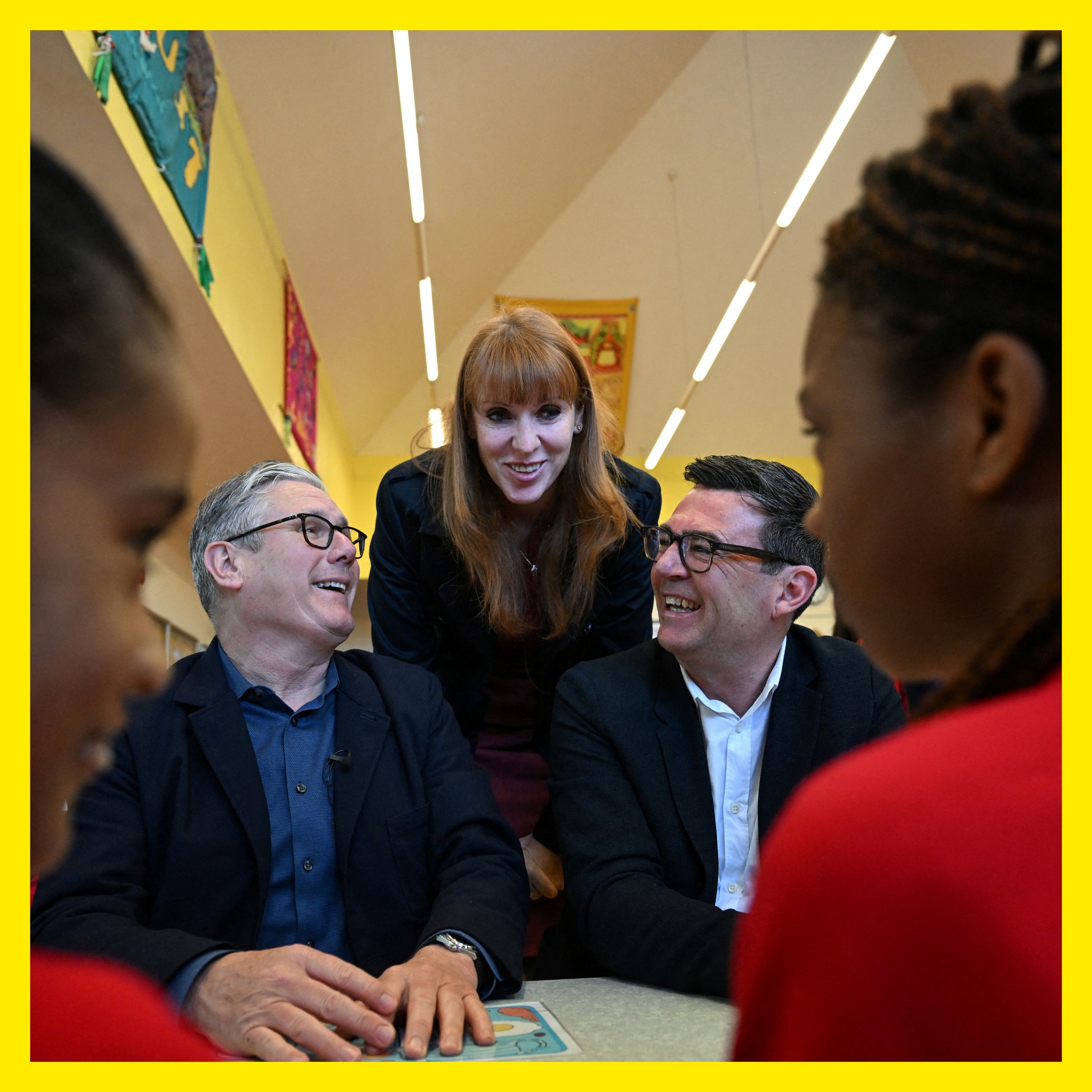
Thursday's local elections are set to blow apart Britain’s political duopoly, and the fallout for Labour could be existential. Pressure is mounting on the Prime Minister as rivals circle. Angela Rayner, Wes Streeting and Andy Burnham are all positioning. But who moves first?
Meanwhile, it's not all smooth sailing for the insurgents. Questions over Reform's Nigel Farage’s £5 million gift from Thai-based crypto tycoon Christopher Harborne aren’t going away.
And on the left flank, Green Party leader Zack Polanski has seen his approval ratings dip after questioning police tactics during the Golders Green attack.
Steven Swinford, political editor, The Times
Lara Spirit, deputy political editor, The Sunday Times
Producers: Euan Dawtrey, Harry Kitson
Picture credit: Getty Images
This podcast was brought to you thanks to subscribers of The Times and The Sunday Times. To enjoy unlimited digital access to all our journalism subscribe here.
Hosted on Acast. See acast.com/privacy for more information.