 Ask ChatGPT
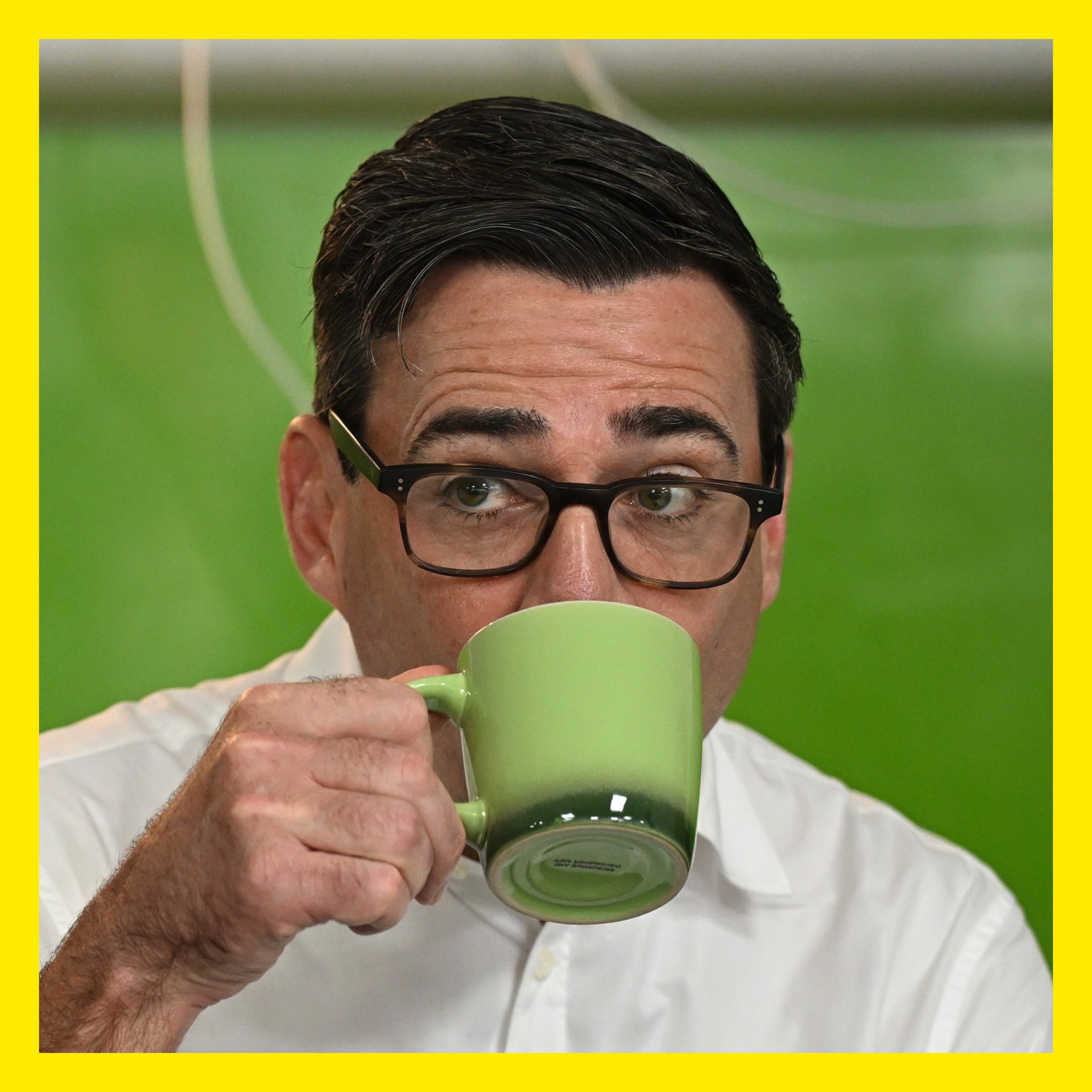


The episode (The State of It) focuses on UK politics and the risks around Andy Burnham’s first meeting with Donald Trump at the UN General Assembly, plus the UK economic outlook and the Liberal Democrats’ conference. Guests are Stephen Swinford (Times political editor), Ben Riley-Smith (Times/Sunday Times political editor), and Laura Spirit (deputy political editor).
Burnham intends a more confrontational, substantive approach than Keir Starmer’s “kissing the ring,” but won’t seek an outright clash; the UN setting reduces media risk compared with the White House; Trump may be “weaker” due to midterms and looming Republican leadership battles.
Trump’s prior “your countries are going to hell” UN rant; Iran conflict “genie out of the bottle” and Strait of Hormuz risk; energy bills rising 24% in January; Lib Dems’ 2019/2024 seat surge and internal criticism of Ed Davey’s “stunts,” with debate over whether to target Conservatives or Labour.
Written by AI. May contain mistakes.
Discussion on the importance of Burnham's meeting with Trump at the UN.
“Coming to you live from The Sunday Times' political office in Westminster, I'm Stephen Swinford, the political editor of The Times.”
Analysis of the challenges Burnham faces in dealing with Trump.
“not full Mark Carney, but show a bit more substance, I think, in their exchanges.”
What to expect from the upcoming meeting between Burnham and Trump.
“Because in the White House, he tends to do this spray at the beginning where reporters can fire any question they want for 10, 15, 20, 30 minutes.”
Discussion on how Trump's weakened position affects international relations.
“He keeps on using that pragmatic phrase about North Sea Oldrum.”
Understanding the economic implications linked to Trump and Burnham's meeting.
“I thought it was just to your point about Trump feeling weaker or just his words perhaps not being clung to in the same way, particularly in the UK as they were towards the beginning of his term.”
Exploration of the budget challenges facing Burnham's government.
“So since we last did this podcast, we've had Andrew Bailey, the governor of the Bank of England, come out and say interest rates are coming.”
Explore the economic difficulties and political implications for Andy Burnham's leadership amidst budget constraints.
A deep dive into the Liberal Democrats' current state and Ed Davey's strategies amidst internal challenges.
“This week on the Business Podcast, are the rich really abandoning the UK?”
Explore the evolving relationship between Ed Davey and Andy Burnham within the context of upcoming elections.
“So it is so striking just how singularly their opposition should be focused on the Conservative Party.”
Discuss the expectations and visuals surrounding Ed Davey's upcoming conference appearance.
“So all of this is obviously serious political chat and really important, but can I ask the most important question?”
Discuss the expectations and visuals surrounding Ed Davey's upcoming conference appearance.
“AI is already changing business and medicine, but could it also change the way we look after our own health?”

Get the gist, explore an idea or ask about something said.
 Claude
On The State of It, what are the key points of this episode?
Searching your listeningAutomatic transcript. May contain errors.
0:00Hi, I'm Danny Fortson from the Times Tech Podcast, which is currently sponsored by ServiceNow. ServiceNow describes itself as an AI control tower for business reinvention, connecting systems, data, and AI so workflows more smoothly across organizations. The platform integrates with different clouds, models, and data sources, bringing them together in one place. To learn more about how ServiceNow puts AI to work for people, visit servicenow.com. Hi, I'm Katie Prescott from the Times Tech Podcast. AI is already changing business and medicine, but could it also change the way we look after our own health?
0:38In a special episode in Paid Partnership with Vitality, we look at how AI, wearables and everyday health data could help shift healthcare from treating illness to preventing it. Listen to the Times Tech Podcast wherever you get your podcasts.
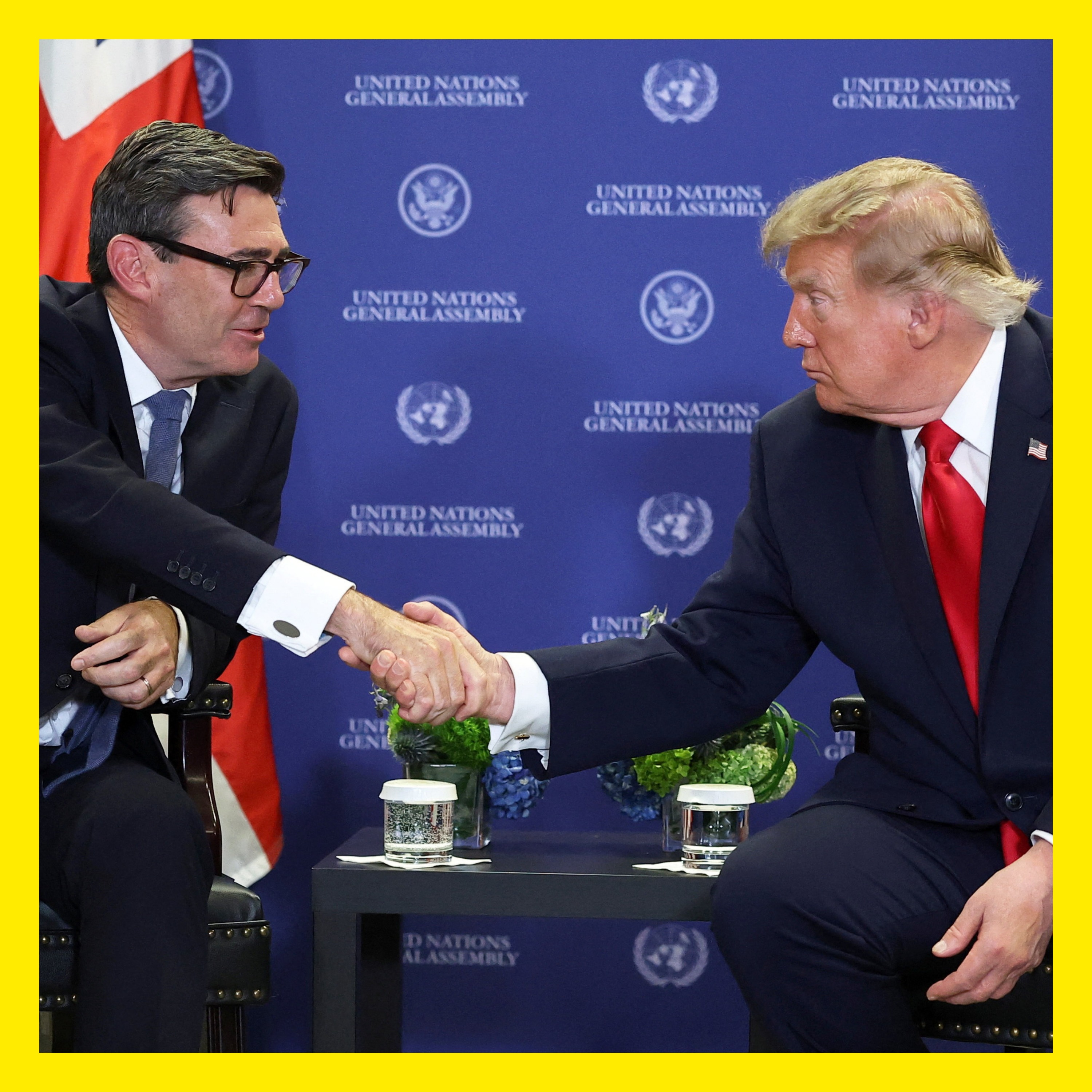
0:56It's coming. Andy Burnham is going to meet Donald Trump for the first time and it has the potential to be explosive. It is the biggest foreign policy moment in the Burnham premiership so far. The relationship between the UK and US leaders is so critical on defence, on the economy, on pretty much any geopolitical issue you can pick. So what happens in that room is going to matter. Welcome to The State of It, the political podcast from The Times and The Sunday Times. Coming to you live from The Sunday Times' political office in Westminster, I'm Stephen Swinford, the political editor of The Times.
1:31I'm Ben Riley-Smith, the political editor of The Sunday Times. I'm Laura Spirit, the deputy political editor of The Sunday Times. We want to take you to next Tuesday afternoon, where Andy Burnham is meeting Donald Trump for the first time. And it has the potential to go wrong about six ways to Sunday. There are so many conflicts, so many issues. So we're going to talk to you about those potential issues and how Andy Burnham is planning to take on Donald Trump at the neutral territory. It is the UN General Assembly. And they've not met before. They've spoken twice. They've got on quite well. And it looks like he wants to take a different approach.
2:06We all remember Keir Starmer being incredibly kissing the ring of sequiers, picking up the papers when Donald Trump dropped them. doesn't feel like Andy Burnham's going to do that. He wants to have a slightly more confrontational approach, not full Mark Carney, but show a bit more substance, I think, in their exchanges. Yeah, well, he's caught between this position that it's very clear where public opinion is in Britain and has been for years. It's very critical of Donald Trump. So if you're thinking electorally, politically, domestically, you want to hold him at arm's length. But he is so fundamental to so much of British policy, obviously the state of the economy, whether he goes for tariffs, our defence and security policy, NATO, our interests in Falklands and Chagos Islands.
2:50And all of that drive encourages you to get close to Trump. So Andy Burnham has indicated, I think he said in possibly his first interview with Laura Koonsberg of the BBC, that he was kind of willing to stand up for Britain and its interests and push back a little against Donald Trump. It's clear where the policy differences are. They're quite familiar now. our level of defense spending and his frustration that we didn't go in with him in iran early in the year falklands islands chagos um possibility of his stariff uh tariff approach hitting us again i mean i have a little inkling that it won't be as explosive as possible for three reasons firstly trump i i covered his first term in washington there is a particular type of leader that he tends to get on with it's a kind of blokey bloke uh yeah it's not it's i don't think it's coincidence that theresa may angela merkel he had quite a frosty relationship with these kind of taciturn female leaders whereas boris johnson um have a milan argentina um he seems to like and obviously there's a funny strongman thing so and keir sturm was quite successful actually behind the scenes are kind of getting alongside Trump.
4:03The second reason is, actually, as you pointed out, it's not at the White House. It's at the UN General Assembly. And that's matters for media purposes. Because in the White House, he tends to do this spray at the beginning where reporters can fire any question they want for 10, 15, 20, 30 minutes. I mean, we were there when Keir Starmer did it. And, you know, the UK delegates are kind of sitting there on the sofa, gripping it, wondering what the hell he's going to say. But whereas in the UN, I think it will be what normally happens to these bilateral meetings, which is like five minutes of questions with just two or three reporters.
4:36So there's less danger there. Yes, I think it's going to be less for also Donald Trump tends to have the thing that he doesn't get that critical personally in the room with someone. I mean, there are exceptions to that, like the terrible Zelensky meeting that kind of escalated so aggressively. But usually he doesn't go at them face to face. I remember I was there for Angela Merkel's. visits the White House in 2017, I think it was. And he had a lot of beef with Angela Merkel and defence spending, but didn't lean in and have a go at her at the press conference. He tends to do it before or after on Twitter.
5:11What do you reckon, Laura? Yeah, I think for the reasons that both of you have outlined, that's probably what we're expecting. I mean, I think in that interview that you mentioned, he also said, I'll meet him where he's at or something to the extent of that. That was Andy Burnham speaking about President Trump. So I think it's fair to say that Andy Burnham does want to look like he's not a pushover and he's not of secrets and he's not taking on the same posture as Starmer did, particularly because there were a number of Labour MPs towards the end of Starmer's premiership who were highly critical of Keir Starmer's handling of Trump.
5:39felt like Ed Davey was able to make a real run at this issue because actually Trump is widely very unpopular with voters and that Starmer should have been a bit tougher towards him. So I think people around Burnham are wary of that. But also nobody is silly enough to think that an outright confrontation with Trump at this time would be a good thing for Burnham or this government. So they will be treading quite carefully. I think behind the scenes, especially at the beginning, there'd been some optimism that if they made some positive noises on oil and gas, that that would win over Trump in a significant way or would at least predispose him more towards them.
6:11Obviously, we've seen the Jack Dorsey decision delayed. It's not something that Burnham can go into a meeting next week saying, look, I'm massively moving forward on this issue. It's actually become a lot more fought and they're a lot more concerned about some potential Green voters when they were previously. He doesn't have that kind of Trump card now either. But I think for the reasons, especially Ben, you've explained, you can't see it being massively expensive. He keeps on using that pragmatic phrase about North Sea Oldrum. What on earth does that mean? You're going to drill. I mean, obviously the decision is done.
6:41It's just a case of when. But Starmer was going to drill. He was, but then he also had Ed Miliband in that job and Ed Miliband was not keen on that drilling. Yeah, but I mean, we don't know that Meata Fambula is keen on, for example, Rosebank. We don't know that Burnham is necessarily keen on Rosebank. I mean, there's been a consensus in Labour around Jackdaw for quite a long time. And I just, you know, you do, this argument that Starmer people make is, it is just going to look quite similar. And if they do just end up doing jackdaw and a bit more of tiebacks, that's actually not meaningfully that different.
7:07It was to me, he just wants to tell Trump I'm being pragmatic and have something he can point to, which is jackdaw, even if actually if you're following the nuts and bolts of the policy, it's not that different. There is one other thing that is playing massively in Boone's favour when he goes out there. And that is Trump is doing his big UN address on Tuesday morning. And like for viewers and listeners that may recall, they may not. His last one in 2025 was an absolute epic. He went on a 56 minute rant in which he castigated every single world leaders. And it was called the your countries are going to hell speech.
7:43So in that, the context is that he is going to be going into this bilateral with Burnham after what is inevitably going to be an explosive, angry intervention about the lack of support he feels he's got. I mean, you could almost write it already. So weirdly, Burnham will benefit from being, he's not an irrelevance, but actually Trump will have picked fights with most of the developed and developing world by that stage. So it is a bit of a sideshow for him. So it's not the main fulcrum, whereas if you go to Washington, then you are the main centre of attention and the capacity for things to go wrong is much greater.
8:18So actually, for Burnham, it could play quite well. There's one other factor that I wanted to talk about and I'm interested in both your views on this. trump is weaker than he was so one of the reasons that keir starmer was so obsequious and went out of the way was to protect britain's interests and there was reason behind it they did get a better deal on tariffs than others when the trade war came but trump was also at his most powerful there's an argument that right now he's the weakest he's ever been we're on the edge of the midterms they're going to go badly for him and that is a different kind of relationship you're not walking into a room with a guy that is a totally politically dominant figure.
8:55You're walking into a room with a guy that is running out of time. Definitely. I mean, it's quite hard to cast our minds back now to that incredible sense of uncertainty when Trump was taking office January last year, when it was genuinely unclear what would happen with NATO, what would happen with Ukraine. Would he force Zelensky to fold within a month? I mean, he kept on saying on the campaign trail he was going to settle it on day one obviously he hasn't done that but there was a real sense of jeopardy uh in the western alliance in europe and a bit of that has faded i mean clearly there's still big structural concerns and carney's whole middle powers come together um argument is still playing out as we've seen this week but there's not that kind of intense feeling as it was with kirsten that you had to get close to this guy early and influence him on ukraine and nato in particular and then yes the u.s domestic position i'm sure a lot of our listeners will know this, but it is the midterm elections in November.
9:50It's possible that the Republicans lose control of both bits of Congress, the House of Representatives, and the Senate. That means any bill Donald Trump hopes to pass essentially will not pass because his opponents are now in charge. And then immediately the beginning of next year swings in the presidential primaries. And we know Donald Trump isn't going to run unless he's going to try and rewrite the constitution somehow because he can't do a third term. So immediately, you know, in Britain, you call it the lame duck prime minister thing. It's going to be, well, J.D. Vance, is Marco Rubio going to go against him?
10:28So, you know, there's that thing in Westminster and Washington and probably all other political capitals. There's a kind of sense for power and you can feel power shifting. from the beginning of next year, it's going to be who's coming next and who's going to take the crown for the Republicans. So those things do matter as they're trying to calibrate their relationship. I mean, it also matters insofar as for Trump, that's a massive distraction because, or rather the Burnham thing could be a massive distraction because their focus is so religiously at the moment on trying to get across an affordability message, on trying to make sure they don't lose too much ground in the midterms.
11:01I thought it was just to your point about Trump feeling weaker or just his words perhaps not being clung to in the same way, particularly in the UK as they were towards the beginning of his term. It was interesting to hear his reaction to the offer that we heard from Ursula von der Leyen yesterday around associate membership of the EU to Canada. I mean, you know, Trump saying something along the lines of threatening not to do any trade with Europe in normal circumstances or many months ago. I think that kind of reaction would have just been absolute catnip for journalists. And yet, like with quite a lot of these trade threats at the moment, but more broadly, I think with Trump's remarks, just not quite getting the same level of traction or causing quite the same level of alarm among diplomats in the UK.
11:39Can I just take us behind some of the diplomatic niceties? So obviously, this meeting, they want it to go well. When you speak to people privately around Burnham, I was speaking to one very senior ally, Burnham, and they had this to say about Donald Trump. They said, the guy is a lunatic. He's completely lost it. And what they're talking about is Iran. and the concern now is that the Iran conflict is it has no end so when it started uh six just over six months ago uh in February they had a uh the contingent like Whitehall loves writing contingencies right and we were told at the time that the central scenario was that it would last six weeks they've actually now they don't even bother to put a time limit on this conflict because it is a kind of manana conflict it will never you know they are worried now that the genie's out the bottle that it never ends, that Iran has this struggle hard over the Strait of Hormuz, which is incredibly difficult to end.
12:32So you've got a more embedded conflict. You've got the Houthis firing off all sorts of assaults against Saudi Arabia, further jeopardizing. It is complex. It is on multiple fronts. The genie's out the bottle. And oil, meantime, is$100 a barrel plus. This is me segueing into the economy, by the way, and the budget. And there is a very strong argument that one of the biggest forces, or the biggest force, weighing on Britain and our economy ahead of this budget is not Andy Burnham, is not Labour's tax and spend decisions, or whatever your view of them is. It is that guy in the White House and this wall that is pushing up prices, and we're going to see energy bills go up by 24 % in January.
13:1124%, that's 400 quid for your average energy bill, depending on how big your house is. It's huge. It's a whopping portion. And all of that is weighing on the budget. So since we last did this podcast, we've had Andrew Bailey, the governor of the Bank of England, come out and say interest rates are coming. Traders are helpfully pricing in for interest rate rises before kind of mid next year. So huge interest rate rises, rising bills. This is a long and short way of saying it's not looking very good ahead of the budget on October the 28th. Yeah, I mean, pick your mess for the wars are closing in or the vice-like grip is gripping tighter on the Prime Minister and the Chancellor.
13:52were uh you know we know he came into office in the great summer of love when it was all two thumbs up and uh yeah maybe i'll think about uh lifting the personal tax allowance here and yeah maybe what's the women i can help them out there and then he's faced with the realities of the budget book and the worsening realities um it just makes it incredibly difficult i think it's now widely accepted the budget is a money racing budget not a money giving away budget so whether that's more borrowing where you know bond market experts would say um your flexibility there's pretty tight whether it's tax raises i think they're desperate not to do in a big way like rachel reef did with her first budget and national insurance because they knew that if they took a big political hit from there but you're going to have to get the money somewhere or it's spending cuts but they push back um you know the the financial benefits of the welfare reforms to next year's financial package not this year's so it's incredibly tricky when Burnham is trying to project optimism but the message from the financial markets is pessimism yeah and I mean just in that context I think it's worth having a brief word on Europe because we've seen this week the summit the EUK EU summit delayed again I mean Rachel Reeves did not start as chancellor as a massively kind of pro-Europe chancellor there wasn't any indication that she was going to go hell for leather for a very ambitious reset deal but on the basis of the numbers closer alignment was seen as one of the key ways to try and secure by the end of their tenure some kind of meaningful growth and andy burnham himself saying to the ft he would like to see multiple percentage points of growth through the reset well i'm sorry but if you're going to do that you have to do customs market or customs union or single market we've seen analysis from uk and changing europe suggesting that that is the case and yet it's not clear that the government necessarily knows where they're going with this reset and because of this made in europe policy this european competition policy that's making its way through the european parliament at the moment the uk seems to be kind of basically delaying this summit uh in effect because the european union is basically saying well we're not going to take that as part of the reset and they're delaying it even even further so something that was meant to be many months ago now delayed even more and the possible economic benefits that the previous administration under kisama and rachel roos have been touting we're not yet seeing and i think that will be quite an interesting issue to watch closely in context of these wider.
16:13It feels like almost, you know, Burnham came in having said last year, yeah, I think in the long term we should rejoin the EU and all these comments about, you know, increasing percentages of GDP. Now it feels like we're almost further away than we were in the late Starmer months with this kind of increasing awareness that made in Europe, which seems to be an attempt to counter Chinese goods undercutting Europe is actually going to hit us because we're going to left beyond it. I mean, is that your sense? It feels like it's not like we're going way further than Starmer in engagement with the EU currently.
16:41They seem to be being pushed further away. Yeah, I think you're right. And I mean, there's obviously this context of, you know, Andy Byrne didn't win in Gorton and Denton. He won in Makerfield and there's the so-called Makerfield test. And this is a new constituency and we need to be wary of these voters. I think there's also a sense of just generally re-looking at the reset as they've come in. And, you know, you've got a new minister there. Nick Thomas-Simmons is no longer in that position. Asking what it might be that you actually want from that reset. And of course, being quite wary that the reset was the kind of key thing that Keir Starmer came out with at that, frankly, really abysmal speech that we'll all remember after the local elections where he was doing his final fight back.
17:17And Europe and close relationships with Europe was absolutely front and centre to that pitch. So I think there's just a general sense of, OK, well, maybe that was his thing. Let's just think about it before we go full front into that again. But as a result, it's kind of dragging and dragging. And let's just remember, again, that this is just kind of more in that the UK has more to lose from this, basically, at the moment. And insisting that Maiden Europe is part of these negotiations is quite difficult in circumstances where actually, you know, we're the ones going to the European Union and saying, you know, please help us.
17:46Yes, we're happy to do parts of dynamic alignment. But basically, we understand that there's an economic benefit to us here. So, you know, I think as ever, I just thought it was quite interesting reading that Hamish Faulkner, the new minister responsible for these negotiations, did an interview with The Guardian some time ago. now I think over summer where he said and I am paraphrasing and probably in a slightly ungenerous way but something to the effect of you know I've negotiated with the Taliban before because of his you know so they have a customs union there and I read it and I was like oh I think this is going to be really difficult so let's just see what happens there but at the moment it's not and the Taliban famously got held back in Afghanistan oh no they're now in church what one last thing I wanted to touch on the economy and it is my question is how sustainable is the schizophrenic nature of this government and its messaging you've got a guy in number 10 who is talking about the biggest change in 40 years the end of neoliberalism huge radical pitch to voters you've got a guy in number 11 who's saying economic growth is fragile this is all pretty difficult right so those two different messages and there was a particular point that we've seen in the last few last week but particularly this week where two of Andy Burnham's closest allies, good mates of his, one guy called Andy Haldane, who used to be at the Bank of England, and another guy called Jim O 'Neill, who used to be a former Goldman Sachs economist, they both have turned on him effectively and said, your tone's all wrong.
19:11Like, look at the markets. Look at the reality of the fiscal situation we are facing. You need to change your tone because the market's responding. Or the brutes he had. The Haldane one was unbelievable on LBC this week. He basically went out and said there's a very real risk that this is basically, the markets will think this is a traditional socialist government with better TikTok videos, which is really risky. And what I am told behind the scenes is that has hurt in number 10. They are angry. They are upset that two of Burnham's closest allies are turning him on the economy because they know that's his Achilles heel.
19:48This is the biggest risk for Burnham to lose confidence in the markets. And when you've got your mates telling you, yeah, change your tone, that's a problem. Yeah, I think we've got two big, in terms of how long is it sustainable, I think the test is these two big moments that are, first one rhetorical, the second one policy. Andy Burnham's big conference speech, which is less than two weeks away now, he has to somehow try and weave his upbeat, optimistic hope narrative with what he's saying about the economy, which is it's going to be tough decisions in the budget. And we've got to maintain fiscal credibility somehow.
20:27So rhetorically, how he weaves those two together, that's like a big challenge. some of that might be resetting expectations because he's been setting expectations up at the ceiling he's basically said you know in this kind of two-month summer uh tour and makerfield pretty much everything you guys want i'll manage to deliver somehow when i'm in office but that's he's going to have to adjust somehow and then the second moment is obviously the budget and i was talking to some treasury folk recently who said no we do want to have elements of hope in the budget they don't want it to all be doom and gloom you know whether that might be over an offer to young people and neat whether it might be over um council housing which is an issue Andy Burnham's talked about a lot I'm sure part of it will be about pushing power down and devolution which is so central to the Burnham premiership but they are trying to have some chinks of light and optimism in that budget but how do you do that if the numbers are so gloomy.
21:24So I think once we get through those two moments, we can begin to see whether it's the light or dark that's running out. Right, let's head to the interval. And when we come back from the interval, Lara is going to talk to us about the Liberal Democrats, Ed Davey, and the essay question for that conference is, are the Liberal Democrats still relevant? Hi, I'm Danny Fortson from the Times Tech podcast, which is currently sponsored by ServiceNow. ServiceNow describes itself as an AI control tower for business reinvention, connecting systems, data, and AI so workflows more smoothly across organizations.
21:59The platform integrates with different clouds, models, and data sources, bringing them together in one place. To learn more about how ServiceNow puts AI to work for people, visit servicenow.com. Hi, I'm Katie Prescott from the Times Tech Podcast. AI is already changing business and medicine, but could it also change the way we look after our own health? In a special episode in Paid Partnership with Vitality, we look at how AI, wearables and everyday health data could help shift healthcare from treating illness to preventing it. Listen to the Times Tech podcast wherever you get your podcasts. This week on the Business Podcast, are the rich really abandoning the UK?
22:42Does it really matter if they do? The wealth tax, it's sold as a way to raise lots of money. It's sold as a way of reducing inequality. I don't like it because I think it does neither. From The Times and The Sunday Times, join me, Hannah Prevett. And me, Dominic O 'Connell, for conversations from the world of business and entrepreneurship. Follow us wherever you get your podcasts or find our channel on YouTube by searching Times Business.
23:14Welcome back to The State of It, the political podcast from The Times and The Sunday Times. Look, we need to talk about the Liberal Democrats. We do all need to talk about the Liberal Democrats. These are the reasons we need to talk about them. They could hold the balance of power. They are going to be key to a coalition with Labour if they have a chance of getting into power at the next election. They matter. They are a significant number of MPs. But, Laura, they're really unhappy. and I'm sure you've picked up, but there is a lot of bile in Lib Dem ranks going towards Ed Davey, the stunt loving leader of the Liberal Democrats.
23:48They just don't think that he's doing much. And look, Lara, you've met Ed Davey. You've seen him this week. You've interviewed him for the Sunday Times this weekend. What was he, without giving away any of your exclusive newslines, which people should rate to read in the Sunday Times, what was he like? Tell us the vibes of the man. Yeah, so I arrived at Lib Dem HQ in Westminster, a lot of young aides running around doing the final preparations before the party's conference. This is probably the most intense time you could have. And he seemed pretty relaxed. I mean, I did, you know, I asked him about Josh's column and this question of these restive Lib Dem MPs.
24:20And he said, you know, actually, I think we're more united than some people give us credit for, essentially. But I did, you know, I got a sense from him that this is a really significant and important conference and that he's been taking particularly the preparations for speech very seriously. So I think they'll be aware that all eyes are on them. I mean, more so than for any other party, I would say it's the Lib Dem conference is so essential right because it's the time when they can genuinely command the national attention and in circumstances where the criticism from some Lib Dem MPs has been that they're not doing that this is his moment so I think it'll be very interesting to see the argument he makes one of the things that struck me from speaking to him was just how open he was actually about the fights that the Lib Dems are having particularly that conservative the fact that the conservatives are kind of a really key uh a kind of key challenge for them you know he's he's he's kind of convinced that there could be a conservative reform alliance That's a kind of big Lib Dem argument, of course, that that's something that people need to be worried about.
25:11But I think going into the weekend, something I'm hoping to convey in this interview is the sense to which that pitch is kind of tailored around that particular argument, I think, around Conservative voters. So quite excited about that. And it was very, yeah, it was it was very interesting to interview him at that time. But I would say he is trying to put on a really strong face. And I mean, I believed it. I have to say he seemed pretty confident, particularly on their message around the economy. A lot more to say about that. So, yeah, do read it in The Sunday Times. It's a fascinating moment.
25:38I mean, we should shout out our colleague, Josh Glancy, who wrote a column where some of those Lib Dem MPs went on record being quite critical or questioning of where they find themselves right now. It's a really curious position because on the one hand, Ed Davey has been phenomenally electorally successful. So the Lib Dems basically got the same share of the vote in the 2019 election and the 2024 election. but they jumped their seats from low teens up to 70 because they were kind of absolutely brutal in working out where they had maximum chance of doing well in this first-past-the-post system 2019 they spread themselves too wide and it proved really successful and you know there is an argument that all the stunts that we can joke about because everybody knows about them I remember in that election they said that the most important thing to do as a third party is to make sure the public remember you and remember you're an option then you try and seed in some of your policy ideas I think there are two reasons why, you know, clearly they have not taken advantage of the opportunity.
26:34It's a very rare moment where both main parties are dropping. Reform have jumped. Greens have jumped. Restore are now, you know, not that far away from Lib Dems and some national polls. So why have they missed that opportunity? I think there's two questions that will probably play out at conference. One of them is Ed Davey may have many strengths. He's got a lot of government experience. He served all the way through the coalition. he possibly doesn't have that thing that Farage and Polanski have which is in this fragmented media landscape where social media is the way you get to a lot of young people and you need to catch their attention in 30 seconds 45 seconds you know Farage and Polanski seem to be able to do that on policy messages in the way that Davey can't he does it with his stunts but how many of his clear positions do you remember kind of ringing through the media cycle and feel like they're landing.
27:22And the second one is like their political positioning. I remember talking to various Lib Dem strategists and they said, look, most of the seats we won are off the Tories and most of the seats in our next 20 to 30 targets are Tories. So largely we are aiming our fire at the Conservatives. It's very rare you hear Ed Davey stand up and have a go massively at the Labour government. He seems to be picking these topics like Trump or the EU where he thinks their party is more in line with the public than Labour can be. He's not going after Labour at all. Maybe they need to question that tactic or maybe if they think it might be a coalition, then they'll stick to it.
27:56But I think a debate around that is coming. Yeah. And I think, I mean, it was something like 60 seats that they gained in the last election. They gained off the Conservatives. So it is so striking just how singularly their opposition should be focused on the Conservative Party. But the interesting thing is they are less vitriolic about the Conservatives than they were before the last election. I think that is important to note. I mean, I do think it's probably quite likely this weekend that we see Ed Davey being pretty anti the Conservatives. I think we can safely assume that's the case. But what they do on Labour, I think, is really interesting.
28:28Like you say, there are a number of issues where there is obviously an affinity between Ed Davey and Andy Burnham, right? You've got electoral reform, crucially, albeit Andy Burnham has said not before the next election. But even so, you know, I think if the Lib Dems didn't see it in the next manifesto, they'd be absolutely furious. you've got social care which both Ed Davey and Andy Burnham have spoken about a great a great deal and those two key issues I think are are really important and there's another one that I've forgotten but it will come back to me in terms of ones do you think Ed Davey is kind of thinking I need to be in a position my best chance of delivering some of the policies I believe in is a coalition with Labour and so I need to ease the path for that well I mean let's see I think I I think actually that what I say is I remember after the last election when everybody said, especially quite a lot of allies of Keir Starmer would say privately to you, look at Ed Davey and Keir Starmer, you know, two lawyers.
29:20Both of them have had caring responsibilities, spoken about these issues very movingly. Like in character, they're quite similar. There's actually secretly this kind of, you know, a kind of sense of goodwill towards each other. And actually, not just over Trump, but over other issues, Ed Davey clearly thought it was in his interest to break from Keir Starmer at some point and then was pretty aggressive towards him for some time politically. And I do think if, as Steve says, which is completely correct, Ed Davey is facing a lot of pressure from some of his libid MMPs, then this idea that he's just going to be nice about Labour over the coming months, I think is quite unlikely.
29:56I would be surprised if he wasn't pretty critical of Burnham in some ways going forward, just because they want to make a message on the economy. I think that's a really crucial thing to say. They're going to need the latitude to be able to criticise the current government on that issue, I think. And because, like you also say, the Conservatives are, that Conservative vote is absolutely crucial to them. And, you know, we all know people like this, people that live in, you know, particularly the south of England, previously Conservative voters, might have voted Lib Dem in the last election. they want to be able to vote for Ed Davey wants them to be able to vote for the Lib Dems in this coming election and what do they think of Labour the Labour government quite often they think they've raised their taxes you know they've not got a particularly great growth message and I just think if he goes into the next election being really nice about Andy Burnham some of those voters are going to be slightly alienated by that message so I just would be surprised Vote for Andy Burnham that's the risk isn't it yeah and I think he has to be really careful that said of course he hasn't ruled out any of these outcomes so they are on the table and actually I think he's not scarred by, Dave isn't scarred by the coalition or doesn't seem to say that he's scarred by the coalition in the way some Liberal Democrats do.
31:01So I think that will be a very interesting message. Unless it's irony that they're probably closer to a return to government than any time in the last 11 years since they left because the electoral mat's lining up in such a way that if you had to bet on the result now it's not inconceivable that Labour manages to be the largest party by getting everybody to weaponising the prospect of Farage and getting everybody to vote tax against them but need the lip temps to get in. Can I ask a really important question? So all of this is obviously serious political chat and really important, but can I ask the most important question?
31:29So this conference in Bournemouth, is it? Brighton, yeah. Lovely on the south coast. The question is, will we see any stunts from Ed Davies at this conference, or is he now Mr. Serious? I'm told there'll be strong visuals. I think that was the precise word. That's a went suit. They value their visuals. Something along those lines, I'm slightly paraphrasing, but I think there is going to be a visual element to this conference. A horrible youth visual, isn't it? Strong visuals. Burned onto the record. Okay, I think on that note, we'll bring an end to this week's podcast. Thank you so much for listening and obviously we'll be back next week where we will find out if Ed Davey did indeed appear in Speedos or not.
32:10Thank you so much to the brilliant Harry Kitson for this week's episode.
32:21Hi, I'm Katie Prescott from the Times Tech Podcast. AI is already changing business and medicine, but could it also change the way we look after our own health? In a special episode in Paid Partnership with Vitality, we look at how AI, wearables and everyday health data could help shift healthcare from treating illness to preventing it. Listen to the Times Tech Podcast wherever you get your podcasts. Hi, I'm Danny Fortson from the Times Tech Podcast, which is currently sponsored by ServiceNow. ServiceNow describes itself as an AI control tower for business reinvention, connecting systems, data, and AI so workflows more smoothly across organizations.
33:02The platform integrates with different clouds, models, and data sources, bringing them together in one place. To learn more about how ServiceNow puts AI to work for people, visit servicenow.com.
The Burnham Trump meeting
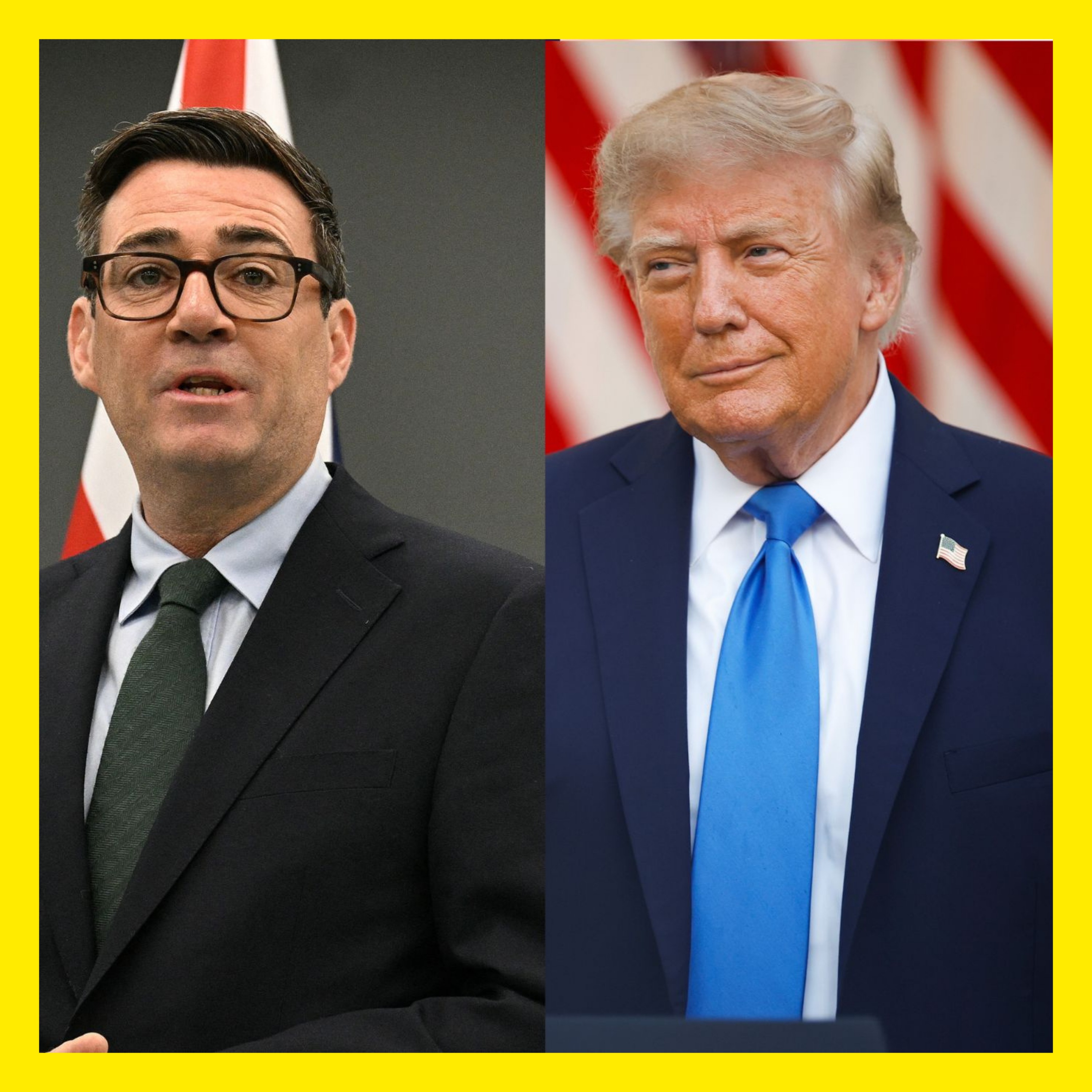
Andy Burnham and Donald Trump will meet for the first time in New York next week. It's the biggest foreign policy moment in Burnham's premiership so far and there are many different ways in which it could go wrong. Burnham wants to be more confrontational with Trump than Starmer was...without damaging relations with the US.
Autumn budget: the walls are closing in
It's now accepted that next month's budget will be a money-raising budget. Does the new government have a plan for growth?
Are the Liberal Democrats still relevant?
The Liberal Democrats are about to hold their conference and some of their MPs are worried that Ed Davey isn't doing enough as leader. We look at their electoral strategy and their prospects.
Steven Swinford, political editor, The Times
Ben Riley-Smith, political editor, The Sunday Times
Lara Spirit, deputy political editor, The Sunday Times
Producer: Harry Kitson
Executive producer: Molly Guinness
Pictures: Getty Images
This podcast was brought to you thanks to subscribers of The Times and The Sunday Times. To enjoy unlimited digital access to all our journalism subscribe here.
Hosted on Acast. See acast.com/privacy for more information.