Ask ChatGPT

 The State of It
25 Aug 2026 · 28m · 11 chapters
UK politics “on hyperspeed” after Parliament returns, focusing on (1) potential UK sanctions over Israeli settlements in the West Bank, (2) early-release plans and police warnings about mass release of serious offenders, and (3) Reform UK’s social-housing/migration agenda based on “British-born” citizenship.
Stephen Swinford (political editor, The Times) and Fraser Nelson (Times columnist). They discuss policy and polling, with references to Ed Miliband, Andy Burnham, Keir Starmer, Mark Rowley, Alan Milburn, Stephen Timms, and Chris Philp.
West Bank sanctions may include a hard-to-enforce trade/services ban that could effectively hit all Israel goods; police fear early-release will strain the criminal justice system; Reform’s “British-born” social-housing priority is a new right-wing fault line that could trigger an arms race in hardline policies.
1,200 settler homes approved; Spain/Ireland settlement purchase bans; 5,000 serious offenders released over 10 months; Mark Rowley warning about criminal justice collapse; Reform’s “British-born” council-housing proposal; Chris Philp’s social-housing claim about immigrants.
Written by AI. May contain mistakes.
Overview of upcoming political events following Parliament's return.
“Welcome to The State of It, the political podcast from The Times and The Sunday Times.”
Discussion on the recent sanctions proposed against Israel and their significance.
“Let's face it, they're not going to change the world.”
Exploration of the practical challenges in enforcing sanctions against Israeli settlements.
“Now, we also need to remember where Keir Starmer arrived at this.”
Analysis of Andy Burnham's strategy to unite the left in light of current political events.
“So this will bring him into some interesting practicalities.”
Discussion on the implications of the proposed early release of offenders on law and order.
“Andy Burnham right now is up there with Kemi Bednich in terms of popularity.”
Examination of upcoming budget decisions and their potential impact on the government.
“And welfare are both coming after the budget.”
Exploring the difficulties Burnham faces in leadership and tax policy
“Will he have to wait until the crisis forces his hands somehow?”
Discussion on the changing narratives in British politics regarding immigration and citizenship
“The Story Podcast brings you the best of the Times and the Sunday Times journalism with one story told in-depth every day.”
Analyzing Reform's policy on social housing and its implications for British politics.
“Let's talk about reforms policy on social housing and why that is potentially a new line in British politics.”
Connecting UK political trends to international contexts, particularly Italy's situation.
“kind of arms race in who can do the most draconian hardline policy.”
Explore the intricacies of Italian politics and Maloney's tactics.
“So in the history of the republics of the modern era, effectively 80 years, she is now the longest serving government.”

Get the gist, explore an idea or ask about something said.
 Claude
On The State of It, what are the key points of this episode?
Searching your listeningAutomatic transcript. May contain errors.
0:00The Story podcast brings you the best of the Times and the Sunday Times journalism with one story told in depth every day. I met a good contact of mine and I saw a document which indicated what was happening. Someone came up and pressed a note into my hand, which I opened it and said, Dear friend, please tell the truth about what you see here. Join me, Manveen Rolna, and me, Luke Jones, on The Story. Find us wherever you get your podcasts. While every other channel is fighting for your customers' attention, podcasts are where they've already given it. No one accidentally listens to a podcast for 45 minutes.
0:38They choose to be here. They trust the voice in their ears. And when that voice talks about your brand, it doesn't sound like advertising. It sounds like a recommendation from a friend. Acast gives you that trust at scale. Digital precision, post-read authenticity, and performance data that proves it worked. Don't fight for attention. Buy it with Acast. Learn more by visiting acast.com slash advertise.
1:07Welcome to The State of It, the political podcast from The Times and The Sunday Times. I'm Stephen Swinford, the political editor of The Times. And I'm Fraser Nelson, columnist for The Times. This week, it's back. We're going to be talking about Parliament's return next Tuesday, September 1st. And we're going to be giving you a big list of things that are going to happen. And then we're going to talk about some things that are not going to happen. And then we're going to also get into reform in quite a big way, looking at their social housing policy. and if that's a new line on the right of British politics.
1:34But look, let's talk about the big bang next week. I'm going to give you a list. It's going to be quite a breathless list, but let's go. Parliament is back on Tuesday. We get Andy Burnham's first statement to MPs as Prime Minister, his second as a Labour MP that day. We get the government's solution on early release, how they're going to keep PC Harper's killers in jail. We're going to get a decision next month on North Sea oil and gas, giving likely Jack Dorr the go-ahead. Then we go to conference at the end of September. Then we get to the budget on October the 28th. Then we get to two big reviews on welfare.
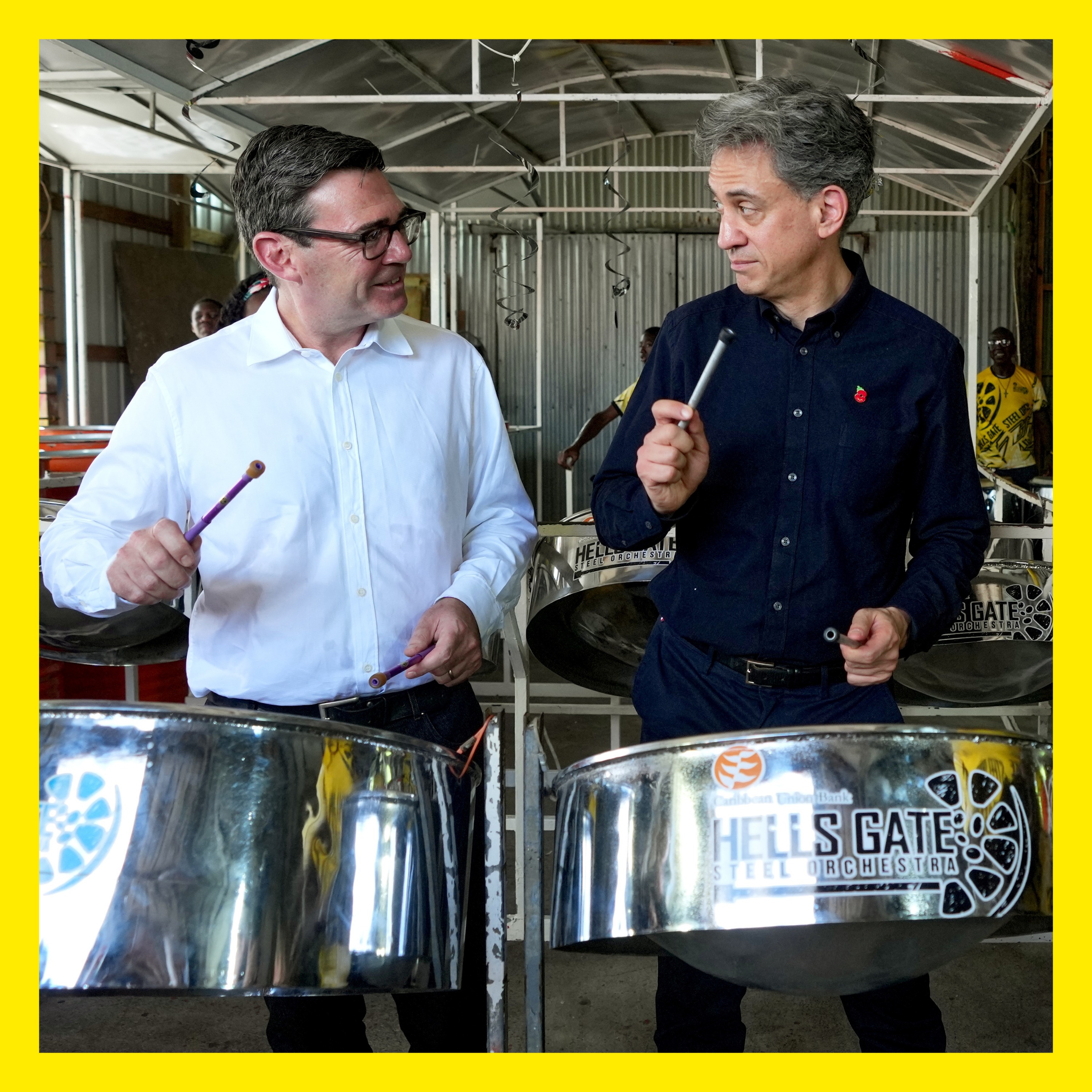
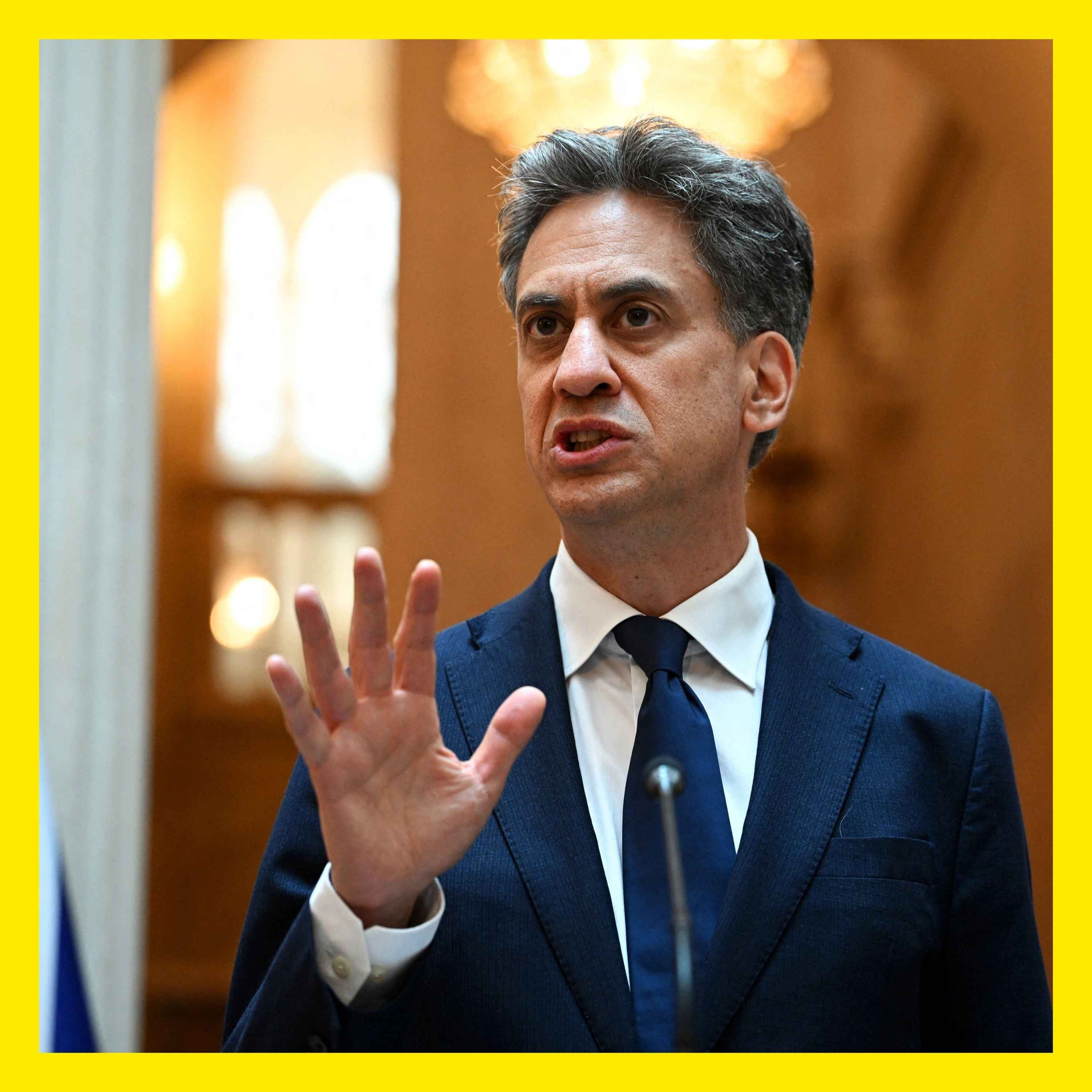
2:08And finally, we get to a 10-year plan with a vision for government towards the end of the year. So effectively, it's a kind of politics on hyperspeed. That's what we're going to see after quite a slow summer with some relatively mediocre announcements. Let's face it, they're not going to change the world. Suddenly, we've got a lot of big decisions. The one we want to talk about first today is Gaza and the West Bank and what is happening there. So Ed Miliband last week gave a very clear indication of what's happening. The Israeli government has given broad approval for 1 ,200 Israeli settler homes in the West Bank, which would effectively split the West Bank.
2:44And the government fears that will end the two-state solution. Ed Miliband put out a very strongly worded statement saying that the government would take further actions. And that means sanctions. And these sanctions could be announced as soon as next week. And for Andy Burnham, that is a big moment because Andy Burnham, his first intervention on foreign policy was actually on the subject of Israel. And he criticised Keir Starmer effectively for being too close to Israel. And they want to go much further in these sanctions now. It's interesting because all of the European left has been through the same thing.
3:16after the atrocities of October the 7th. They all went around basically backing Israel to the hilt. And then public opinion turned and then the war went in a different trajectory. So then there was a story about how David Lammy was once invited to a group of European foreign ministers meetings. And he was struck that they weren't really talking about Europe. They were all talking about the problem that they've all got, being so close to Israel. And they were getting a far bigger bite back domestically at home than they expected. in the UK. Perhaps this has led to the Green Party's popularity in Polanski.
3:50And this has led to a backlash, which hasn't been that difficult for the European left. We've seen Spain, we've seen the Netherlands, we've seen Portugal, we've seen Belgium, all coming through with various forms of what Ed Miliband is about to announce. So this, I think, will be quite helpful for Andy Burnham, because he is not really making a U-turn. He pretty much arrived on the Israel policy scene, as it were, is saying that he thinks that they should have called for a ceasefire sooner than they did. Now, we also need to remember where Keir Starmer arrived at this. He was taking over from Jeremy Corbyn at a time where the Corbyn Project had the stench of anti-Semitism around it.
4:30And he wanted to really clearly define himself against that by being as full square behind Israel as he could. Difficult for him to really move back from that. But Andy Burnham, fresh start. So you can see him aligned more with the European left in saying, OK, sure, we support Israel, etc. But the settlements, that's just too much. OK, so I want to drop at this point a scoop on this in terms of what they're looking at. They're looking at two forms of sanction. The first one is straightforward. That is sanctioning individuals who are connected to the settlements. They've done that before. That will happen.
5:04Fine. OK. The contentious one, Fraser, is the one that you touched on. And this is an effective trade ban on goods and services from these settlements. And what officials have been saying in the government is this is actually practically really challenging to do. There's the gap between the rhetoric and the reality of the policy. And that is because it's not as if these goods are labelled, you know, this is a product of an Israeli settlement. They are kind of subject to the national labelling system of Israel. So the concern is that actually what you could end up if you go down this route is with a de facto trade ban for the whole of Israel of goods and services.
5:42And that would create a real backlash. So the question of how you do it, and this is Andy Burnham's latest lesson in governing is hard part 10. I'm sure there'll be many more of these. But that is what the Foreign Office officials are saying, that there's a real risk of this backfiring into a much bigger issue for British-Israeli relations. Yeah, I guess what he's got going from us here is that he's not the first person to have this idea. The Spanish passed exactly this policy at the end of last year saying they wouldn't buy anything made from settlements. And the Irish government, they passed that in Parliament earlier this year.
6:19I think Belgium has done the same. I mean, how do you really find out if your olive oil has come from the settlements? This is just simply gesture politics. I mean, the problem with the British is that we tend to be sticklers for laws that we pass. You might say that in Europe, these laws are by and large seem to be advisory. Where here, we've got a common law tradition. So they might be interpreted more rigorously, in which case we might end up with a sharp end of this problem. How do we know this doesn't basically end up with a student union style ban on Israel goods in general? So this will bring him into some interesting practicalities.
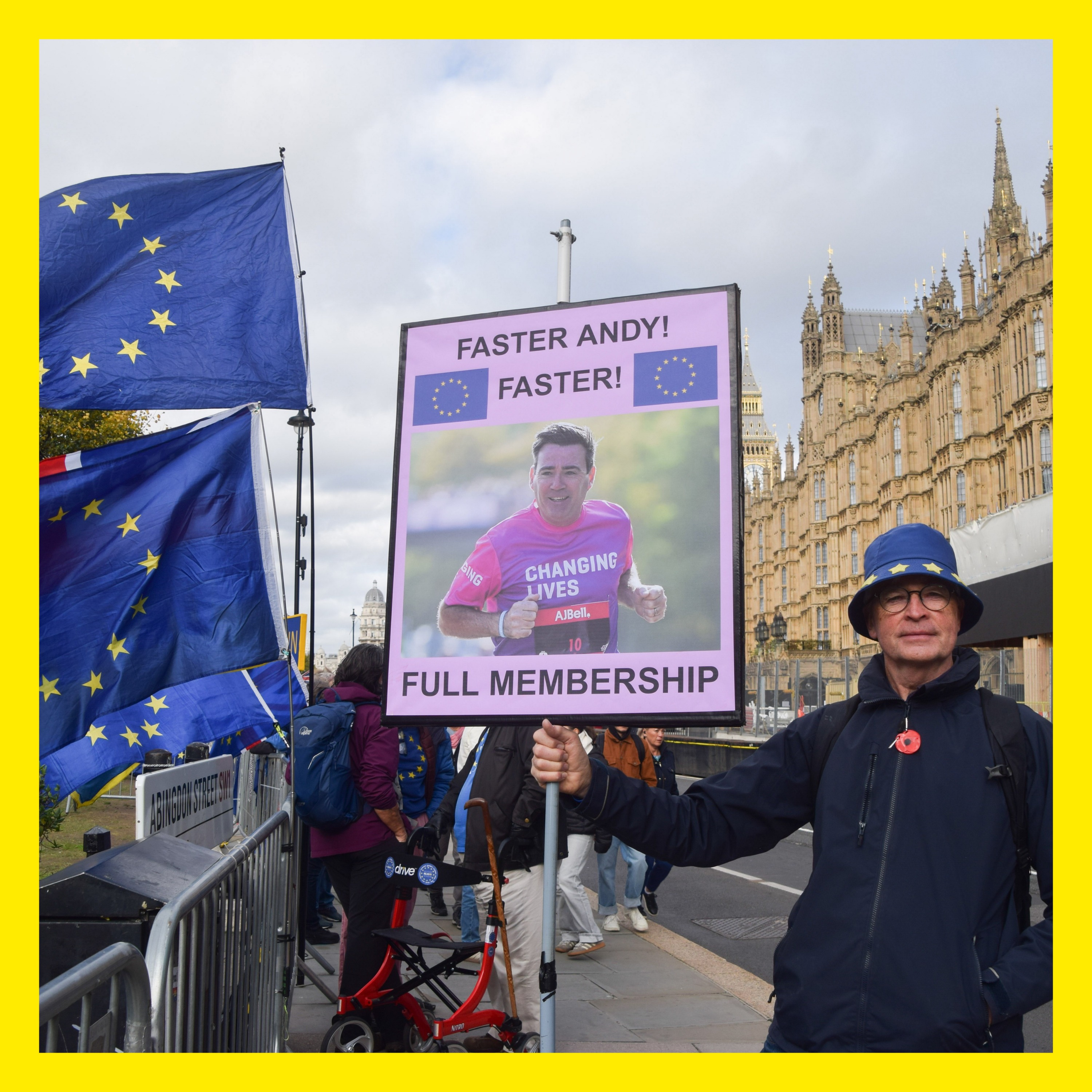
6:53Because in Britain, if he is to produce a ban, the ban needs to be enforceable. How do you enforce a ban if you can't label it? that will be for his policy officials to work out and the results might be messy. We should also just briefly touch on the domestic politics of it because if you look at the Andy Burnham project, he is essentially about uniting the left. He is looking to win over people that have voted Lib Dem at the last election and people that voted Green at the last election, so the progressive left. And so far the polling bears that out. He is very popular with people in both those categories and the Green vote has gone down considerably.
7:26So this is the kind of policy that might play well with those kind of voters. Yeah, well, of course, the first thing he needs to do is to stop the split on the left. I mean, for a while, it looked as if the right was split between the Tories and reform, where Keir Starmer had the left all to himself. Now, I always thought that wasn't going to last, especially when you see the new left parties in German politics doing so well. And as it turns out, the issue of Israel and Palestine is the number one wedge issue. It's something which gets people onto the streets in the way that almost no other domestic policy would get people onto the streets.
7:58So Andy Burnham is looked on in horror as the Labour vote has genuinely fallen off. Even in the by-elections, we can see this. But now Zach Polanski, his popularity is plummeting quite a lot. We saw a lot of anti-green tactical voting in the local elections. And we also said Polanski is basically as popular as Nigel Farage. That's where the two of them are. Andy Burnham right now is up there with Kemi Bednich in terms of popularity. Both of them are not very much in the positive territory, but they now are. Now, this is the sort of thing which really does bite on domestic policy and domestic agenda.
8:32So you can see that Andy Burnham is wanting to close down this exposure he's got and hopefully reunite the left in a way that Kemi Baden-Och would love to reunite the right. So we're just looking ahead to the rest of September. So we get the Gaza decision, but we also get two other big decisions. So we've got the early release decision, which is coming on the 1st of September. we have touched on this before but one of the things I wanted to just touch on today is so the government has a proposed solution to keep PC Harper's killers in jail but the backlash from the police I'm picking up this week is quite extraordinary and I think we can expect some pretty direct interventions from senior figures in the policing world this week basically sounding the alarm bell over what they feel could be the collapse of the criminal justice system.
9:18So your feeling Steve is that what they're not going to be able to keep them in jail? They will be able to keep those people in jail, but it's the broader issue. It's the macro picture. It's the 5 ,000 people from October the 1st, 5 ,000 very serious offenders, killers, people that have committed violent assaults, sex offenders will be released en masse over a period of 10 months. And the police are worried about the impact on the criminal justice system. They are arguing we're already struggling to cope. And I can just see this issue dominating all the way into next year. So how Burnham handles that.
9:54is going to be a massive test. And that is what we're expecting some interventions on in coming days as police effectively lay down a marker because they're going to argue, look, our budgets have been cut, our ability to deal with this stuff is less. Mark Rowley, the head of the Metropolitan Police, has already been making that point publicly, that we're effectively being asked to clean up the mess of people that should be in prison. And that is not on. So law and order is going to feature very strongly this autumn. It's interesting because it's not often that you get the police historically criticizing the government.
10:25Ever since Thatcher's day, they've tended to be the ones who squeal the least. But we saw it a couple of weeks ago when Mark Rowley was told by Sadiq Khan that he couldn't use Palantir and his AI to manage to clear up his back office function. And he was saying, well, if I can't say the jobs there, I'm going to have to take 750 frontline officers away. So it's not usually the police behave in this way. Now, if they're going to be telling Andy Burnham in advance, you're crazy to release all of these guys back onto the streets. It will only be a matter of time before those who are released will be back in the courts for things that they've done.
11:00So you can see this having a drip effect on law and order. I've got quite a lot of sympathy of Andy Burnham here because they inherited a dreadful situation from the Conservatives. I mean, they actually have built new prison places. There's been quite a lot of them built. The problem is that the prison estate is so creaking that a lot of these have been closed down. So the new places coming on have barely managed to compensate for the prison places that they've had to close. And every government has kicked this down the road. So what we're seeing now is the delayed consequence of decisions that should be made, should be made under the Conservatives.
11:36But if the police are going to be there saying to Burnham, you're going to regret this, and then what they warn about then comes true, that is a very toxic political combination. And we just should touch on the budget and talk about that because actually one of the things that's very striking in this budget is a lot of the big decisions have been deferred now. So things that we know that are not coming in the budget are longer than the things we know this are. So we've got the 3 % target for defence spending. That is not going to be decided until next year. That's a huge fiscal decision that we decided with the spending review.
12:08We know that welfare is going to be coming after these two big reviews from Alan Milburn and Stephen Timms. And welfare are both coming after the budget. And we've revealed this morning that the decision of Thames Water and whether to put that into special administration, which could cost taxpayers billions, has again been kind of long grass. And why am I highlighting what is not in the budget? It's because of how they see it. They want this to be a really streamlined budget that avoids thwonking big tax rises and spending rises, like the last two budgets. They want it to be a slimmed down affair.
12:41And actually, in the order of importance, when I talk to people, how important is this budget in number 10? They say, well, actually, the 10-year vision is the most important thing at the end of the year. And the budget, they get that the risk is involved and they're not underestimating it. But politically, I think they're trying to make it as small a fiscal event as possible. Now, this is where I think Andy Byrne could really be in danger here. Why did Keir Starmer end up in so many problems? Because he was facing problems that had no easy solution. Now, I always thought that whatever Keir Starmer's personal defects, whoever replaced him would inherit exactly these problems.
13:15And now we have Andy Burnham, he might say is having a compact bijou budget, but another way of saying it is kicking all of his cans down the road. Take welfare, for example, every single working day, something like 5000 people are signed on to sickness benefit. Every day they delay welfare reform creates permanent damage to societies, to the economy, to the lives of the people who could and should be given extra help, and they're not being done. So leaving these things until later on, I don't think will make it better for him. And what you're supposed to do when you've got reasonable political capital, when you've got popularity like he does, is use that moment to identify what's going to be difficult and to do it right then.
13:54Now, I can see, of course, why he doesn't want to do tax rises. But this is the great question of Andy Burnham. How is he going to come up with better solutions to all of these problems that basically paralyzed Keir Starmer in the end? Will he have to wait until the crisis forces his hands somehow? and this splash of the paper this week that Burnham's already nodding to tax increases. Of course, he's going to have to increase taxes somehow because we're borrowing as much as we can and he hasn't been able to control the spending. And if he isn't going to come up with painful devices to control the spending now, that problem will just become more acute.
14:36So, and also the 10-year plan. I mean, I don't know how many 10-year plans we've had from prime ministers who didn't last two years. I was trying to count them the other day. I mean, there have been probably 10, 10-year plans over the last few years. LizTrust didn't quite get around to publishing one, but Boris Johnson, I think, had six or seven 10-year plans. I'm not sure that yet another prime minister issuing a 10-year plan is going to have the impact that he wants. I mean, when Rishi Sunak was obviously in his final few months as a prime minister, he was announcing what he was going to do to change A-levels.
15:09Nobody took that seriously. They thought, you're not going to be in power to implement this. So a 10-year plan asking people to wait for some jam tomorrow, or jam at the end of the decade, I think will risk him squandering political capital. And it also reminds me a little bit about Keir Starmer coming into power, having to do review after review because he didn't know what he was going to do. Now, this was the great suspicions of Andy Burnham, that he came down from Manchester as mayor without really knowing what he was going to do in government. and a mini budget, to me, would underline the idea that he doesn't really know how to solve his problems.
15:46Let's head to the interval. And when we come back, we're going to talk about reform and its new, harder position on migration, even harder than it was before, and why that matters for the broader politics, for the Tories and where the right is going.
16:00The Story Podcast brings you the best of the Times and the Sunday Times journalism with one story told in-depth every day. I met a good contact of mine and I saw a document which indicated what was happening. Someone came up and pressed a note into my hand, which I opened it and said, Dear friend, please tell the truth about what you see here. Join me, Manveen Rolna, and me, Luke Jones, on The Story. Find us wherever you get your podcasts. While every other channel is fighting for your customers' attention, podcasts are where they've already given it. No one accidentally listens to a podcast for 45 minutes.
16:38They choose to be here. They trust the voice in their ears. And when that voice talks about your brand, it doesn't sound like advertising. It sounds like a recommendation from a friend. Acast gives you that trust at scale. Digital precision, post-read authenticity, and performance data that proves it worked. Don't fight for attention. Buy it with Acast. Learn more by visiting acast.com slash advertise.
17:06Welcome back to The State of It, the political podcast from The Times and The Sunday Times. Fraser, let's kick off. Let's talk about reforms policy on social housing and why that is potentially a new line in British politics. Well, reforms policies, I think it's worth taking very seriously. Nigel Farage is still pretty much the man most likely to be prime minister at the next election. I mean, Kemi Behnik sometimes goes in front of him. But, you know, what they say deserves to be taken really seriously, no matter where they are in the opinion polls. And a new fault line has opened up now. Previously, they were focused on immigration.
17:41And this was a very popular cause. If you look at the Conservatives, one of the main reasons they lost the last election was because they promised to control the borders and then they didn't. You had the so-called borders wave of immigration almost hitting net a million. But what you've had since then is Shabana Mahmood making a really good fist at controlling these numbers. Immigration is down now 60-70 % from the peak. If you look at the national insurance registrations, it's something like a 20-year low. Take away the pandemic, and we haven't seen it so low for a long time. So you can see Nigel Farage looking into the future thinking, well, I can't talk about immigration, because there's a good chance that this government has already controlled it.
18:21It could already be at the tens of thousands. If you actually strip away students and the Hong Kong Chinese and other asylum seekers, it's already at the tens of thousands. But this is a problem if you're a party that wants to frame politics in terms of migrants versus natives. So what do you do? And we've now got the answer. Reform intends to split British citizenship into two categories. Those who are British born and deserve the full sort of gamut of privileges and those who are not British born. British born. That is the key. That's what they're saying right now. But let's remember Boris Johnson wasn't British born.
18:58So, you know, they might have to change that. But right now they're saying that council housing should go primordial to British born people, not to foreign born citizens. So, you know, previously we only knew two categories. immigrant and not, citizen and not. You could certainly say, and the government does, an immigrant should have no recourse to public funds. That's the phrase that's used. So they can't claim benefits, etc. But when you've got your passport, you're treated the same as everybody else. Now, reform will say, no, that's not how it's going to be. Because if you look at the way council houses are awarded, they're awarded in a hierarchy of need.
19:36And who comes to the hierarchy? and women, women of large families. Now, if you look at who's got the largest families, Somalians score very high. As a result, something like 70 % of Somalians in Britain were in social housing at the time of the last census. So there's no doubt about it, but the way cancel housing is allocated does tend to favour migrant groups because migrant groups tend to have larger families and be more in the category of social housing need. Now, one way of doing it is to change social housing need and to say, okay, we're going to look at how many years have you paid into the system.
20:10But no reform is coming up with citizenship, saying a citizen who is not British born is in a lower class citizenship and therefore will not qualify for this. Now I'll tell you why I think it's important, because it gives a narrative which survives immigration being under control. We can say, no, no, it's not about immigration. It's about those already here. And it's not even about foreign nationals versus UK nationals. That was the distinction they made. in the welfare reform last year. It's about UK nationals who recently got their passport and those who were born entitled to it. There is a significant public support for this, by the way.
20:46I don't want to diminish this as a crazy idea, but it is difficult. I mean, even in America, once you've got an American passport, you are as an American as anybody else. So this is difficult territory. It's new territory. But I do wonder if the Conservatives might end up doing something similar. A few days ago, we had Chris Philip, the Shadow Home Secretary, making a video outside London social housing saying, we've discovered a place where 75 % of social housing occupants are immigrants. Now, what he didn't say was that something like 80 % of them were actually UK nationals. These are naturalized immigrants.
21:24These are integrated ones. But he also chose the most immigrant heavy part of London. Now, on social media, I pointed this out and he was saying, ah, this shows another problem here that perhaps we gave away citizenship too easily. He then edited the tweet later on to take away we referring to conservatives to saying perhaps citizenship was given away too easily. But that is the point reform is making. If citizenship was given away too easily, by Chris Philp's telling and by Reform UK's telling, then what are you going to do about it? So the Tories might be next in saying that those who were given their citizenship previous years were given it too quickly, too easily, and you'd have the privileges now retrospectively revoked.
22:11revoked. I mean, that also talks to how congested it is on the right right now, in terms of the battle for space, the battle for ideas and the battle for public attention. You've got the Tories and reformers, basically the latest YouGov poll has them almost within margin of error of each other for the first time in quite a while. So it's not quite a level playing field, reformer ahead, but it's much closer than it has been for a long time. And there is a risk that it leads to a kind kind of arms race in who can do the most draconian hardline policy. We already see that with Rupert Lowe and Restore, who've got far harder policies than Reform.
22:46So it's how far are the different parties willing to go? Where are they going to draw their lines? I think this is fascinating territory right now, because there is a sense that the old gatekeepers, as it were, traditional media, are now out of the game. If you look at the top 10 news sources, it's all social media or broadcasters. And if social media is now saying things like, is Rishi Sunaki even English, that kind of stuff, that debate is now mainstream on social media. So if that kind of opinion corridor or Overton window has been smashed, and you can now talk about, let's deny social housing to immigrants who have got UK citizenship, then perhaps there will be constituency there.
23:28So what was happening here is we're seeing the right explore this territory. Perhaps it's now permissible to say stuff that the papers would tell you off for. Perhaps it is now time to see how far we can go in ethno-nationalism. There's a phrase, a meme called UK, Y-O-O-K-A-Y, which is a derogatory term effectively for non-white Brits. Now, is it OK to use this term? We're now seeing Tory MPs use this term. Can we dabble in those waters to show that we're experimenting in cultural politics, as it were? Are there more votes to be found here? Now, of course, you've got Rupert Lowe as the most hard line here, if you take away Tommy Robinson.
24:10So Rupert Lowe is saying all sorts of things, ban kosher meat as well as halal. And in the Maker Fiat by-election, you saw a reform face a dilemma. How much do we dare chase, restore UK and Rupert Lowe here? And by the end of Makerfield by-election, you had Robert Jenrick, I think, literally endorsing the death sentence. Now, I'm not sure that did them any favours. There was a feeling there where they'd gone a bit too far, and they'd managed to galvanise an anti-reform tactical vote. So this is the great dilemma. Is it possible to explore new territory? Is it possible to split Britishisms between the native, the true born and the kind of foreign born?
24:51And will that be acceptable territory? And if so, how far do we dare go? And I think we can keep seeing these experiments. You'll do a policy here, a tweet there. You'll get a Tory video here and there. Just seeing if there is any kind of reaction. How far dare we go? Is there resonance? And where is the new dividing line going to be drawn? And the closer they are in the polls, isn't it an amazing situation to see these three parties all broadly speaking within the margin of error? It just goes to show you that British politics is still thrillingly unpredictable. Anything could happen in the next year or so.
25:30And I think a lot of them will be exploring these new policies to see if they can find support, which has hitherto eluded them. And this isn't just a problem that Tories or reform are facing in this country. It's actually a problem for Georgia Maloney, the Italian prime minister. I just wanted to give you some colour because Kemi Badenock took a trip to Rome. She went with her husband, Hamish, and she met Georgia. They sat down in a perfectly normal tourist cafe. And I think Georgia had a coffee and Kemi had a hot chocolate. And they just taught politics. They're actually old friends. They've known each other since 2023.
26:05they got on very well but in Italy Maloney is facing a very similar threat from a kind of right-wing insurgent party and that is a challenge for her and while she wouldn't comment directly on Farage and the situation with reform her point was stand your ground be your own woman she said that is how I've approached it and that is how Kemi also views it she thinks a coalition would be monstrous all of these things of course everyone at this stage in the game is going to rule out coalitions confidence and supply arrangements but i bet you i bet your bottom dollar if the polls continue like they are by the time we get to the next election that is all we're going to be talking about because the next government will probably end up having to be formed if no one can get an outright majority from either a left-wing coalition of some form or a right-wing coalition so expect to see that but as a result you've got this intense competition to try to delineate, when actually if you stand back, the policies for the Tories and Reform, a lot of them are quite similar.
27:07ECHR, broad approaches to Europe, broad approaches to migration, and therefore it becomes a contest of personalities. And do you like Kemi Badenok more, or do you like Nigel Frajman? That's the kind of territory I think we're going to be getting more and more into in the next few years. Yeah, it was interesting seeing Kemi Badenok being enlisted in the Georgia Maloney kind of club. I mean, Maloney likes to go across Europe and make common cause with the Danish prime minister as well. You know, she likes to find people who take her center right. She always regards herself as center right. Yeah.
27:38A center right coalition. And it was also interesting to see that Kemi Baden-Nik's takeaway from this. She was saying, look, they all wrote off Georgia Maloney. They all said that she wasn't a significant character, that she'd be gone within six months, which is what people were saying about Kemi Baden-Nik when she became leader. But look at this. She's now, I think, Italy's, I think this week she became Italy's longest serving prime minister. Great stat with that, just to give you that. So in the history of the republics of the modern era, effectively 80 years, she is now the longest serving government.
28:07That government is still under four years old, which I think tells you everything you need to know about Italian politics. Yeah. Mind you, as Brits, I'm not quite sure we can afford to laugh at it. We're entering that as well. We managed two years on average now. So it's interesting to see that advice that Maloney is giving. In other words, do create that clear water with those on your right, as she did. And of course, I mean, this is relatively new policy for Kimi Bajnik to say, I'm ruling out even a post-election deal with reform. In doing that, she is trying to fish for the anti-reform tactical voting and the belief that there'll be some constituencies where a Labour voter will think, OK, Labour's not going to win here, but reform might, so I'm going to vote for Conservatives.
28:55So one of the best things that happened to the Tories recently was the Aberdeen South by-election, where they won it with almost half of the vote. Since when does that happen? In a place where they've got absolutely no apparatus, really, they still managed to storm home. So we're seeing this as a new policy from her. And also, Kemi Beichnick does need to make these kind of foreign policies one of her weak points. People don't really know. They know what she thinks about identity politics. They know what she thinks about her domestic enemies. They don't really know what she thinks about the rest of the world and what kind of politician she is.
29:25So it'd be interesting to see, of course, if Georgia Maloney, you know, she likes to turn up to these CPAC conferences to quite often make common cause with the European right. Is she now drawing the line with the Niger-Farages of this world? so I think this is going to be you know there's not that much in the way of really hard policy areas on the right, it's mainly about the tone that you take talking about migrants and talking about the country I think that broadly brings us to the end of this week's episode of the State of the State of the State so thank you for listening thank you to our brilliant producers, thank you to Molly thank you to Ewan and thank you to Harry and we will all be back next week
30:11From blockades to breakthroughs. From rising tides of populism to market crashes. From number 10 to the White House. The Story Podcast helps you digest the news cycle with the best journalism from The Times and The Sunday Times. I'm Manveen Rana. And I'm Luke Jones. We'll bring you one news story told in-depth every day. Exclusive stories, expert analysis and groundbreaking investigations. Find the story wherever you get your podcasts.
31:06Podcasts, book host reads or run your own ads and track every conversion in real time. Same skills you already have. Brand new results. Acast. Acast.com slash advertise.
Steven Swinford, political editor, The Times
Fraser Nelson, columnist, The Times
Producers: Euan Dawtrey, Harry Kitson
Executive producer: Molly Guinness
Picture: Getty Images
00:00 - Parliament Returns: The Autumn Political Agenda
01:45 - Ed Miliband, Gaza Sanctions & West Bank Trade Bans
07:50 - Early Release Scheme & Police Backlash (PC Harper Case)
10:45 - The Mini-Budget, Welfare Reviews & 10-Year Plan
15:00 - Reform UK's Housing Policy & Citizenship Split
23:30 - Kemi Badenoch Meets Giorgia Meloni in Rome
This podcast was brought to you thanks to subscribers of The Times and The Sunday Times. To enjoy unlimited digital access to all our journalism subscribe here.
Hosted on Acast. See acast.com/privacy for more information.