
 Ask ChatGPT



Host: Gabriel Pogrund, Whitehall Editor at the Sunday Times
Steven Swinford, Caroline Wheeler, Patrick Maguire
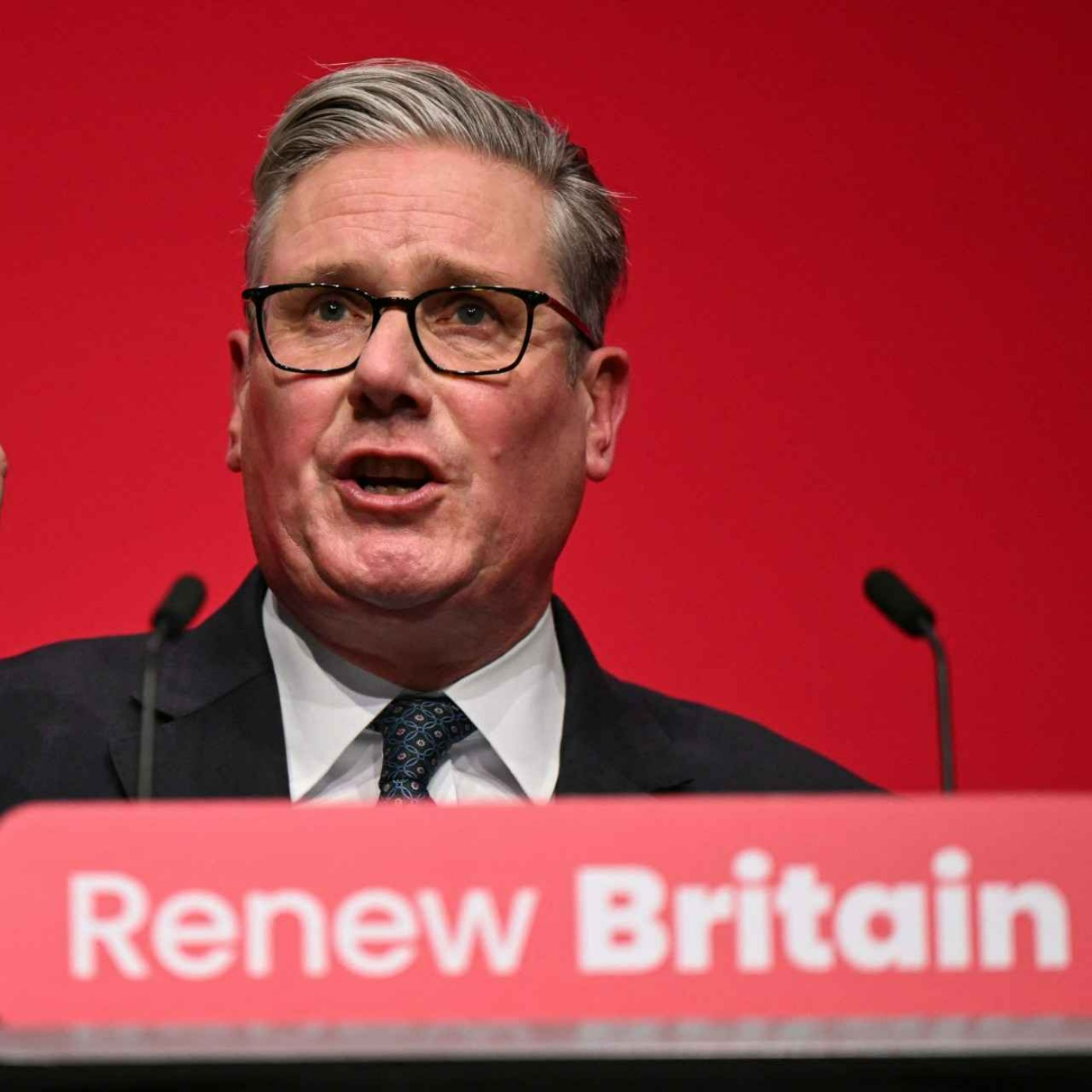
Liverpool, during the Labour Party Conference
This episode discusses the aftermath of Keir Starmer's speech at the Labour Party Conference, addressing internal party sentiments, the implications of Starmer's remarks about Nigel Farage, and the upcoming budget led by Rachel Reeves.
Written by AI. May contain mistakes.

Get the gist, explore an idea or ask about something said.
 Claude
On The State of It, what are the key points of this episode?
Searching your listeningAutomatic transcript. May contain errors.
0:00Gabriel Pogrund: Hello, I'm Gabriel Pogrund, Whitehall Editor at the Sunday Times. This new podcast is called The State of It. What do you make of the state of Britain? Terrible. Disgusting. Could do with tidying up and changing a bit, I think. Desperately trying to keep going. Sure, to be fair, then. Go on, tell me why. We want honesty. Just this. It's obviously like... I'm not a racist person or that, but obviously to do with all the immigrants.
0:25Steven Swinford: There's a lot of homeless people, and they deserve a better life.
0:28Gabriel Pogrund: I don't think it's anyone's fault. It's just like they don't see us down here, you know what I mean? When you hear the words Keir Starmer, what do you think? Keir Starmer, what does that mean? He's a Prime Minister. He's a Prime Minister? Is that the Asian dude, is he? That was Rishi Sunak. Who's the Prime Minister now?
0:42Steven Swinford: I'm not even sure.
0:47Caroline Wheeler: Welcome to the inaugural episode of The State of It, the politics podcast from The Times and The Sunday Times, where we are going to take you inside the room where it happens, where the decisions are made and give you the insight into everything that's going on in Westminster and indeed here in Liverpool at Labour Party Conference. I'm Stephen Swinford, the political editor of the Times.
1:07Steven Swinford: I'm Caroline Wheeler, the political editor of the Sunday Times.
1:09Patrick Maguire: I'm Patrick McGuire, chief political commentator for the Times.
1:13Gabriel Pogrund: And I'm Gabriel Pogren. You just heard me in Liverpool City Centre. I'm Whitehall editor at the Sunday Times.
1:18Steven Swinford: And in today's episode, we are going to talk to you about whether it's all over for Sir Keir Starmer and also the outrage that we've seen from Nigel Farage. and the branding of his party of racist. And also, we're going to discuss whether any of this actually matters, given that the main focus this autumn is going to be on Rachel Reeves' budget and whether she can balance the books without major tax rises.
1:40Caroline Wheeler: So let's kick off with this conference. We're here at the end of the conference. Keir Starmer's done his big speech. And number 10 this morning, they're feeling pretty pleased. They think it went very well. They think this speech solidified him. It was much better, they think, than last year's efforts. They think he set out dividing lines. and we were out in the kind of the bars here last night and in the conference hall. We witnessed Wes Streeting doing a version which was OK of Don't Let the Sun Go Down on Me by Elton John. Just OK. Yeah, Just OK. Just OK. Just OK. And then we witnessed possibly the murder of an Oasis song by Lisa Nandy, Wes Streeting and Jonathan Ashworth in the early hours of this morning.
2:20Caroline Wheeler: So everyone here is pretty happy and the question that we need to ask is, Are they right to be happy or is this still terminal for Keir Starmer?
2:29Patrick Maguire: No, I don't think they are right to be happy, is the short answer, Steve. I think the problem the Labour Party has with any party conference, right, is a gathering of the faithful or, you know, the meeting of a cult, essentially. And especially here in Liverpool, when we're out on the docks, you're separated from the city centre by a chill carriageway. You do feel like you're in a hermetically sealed bubble in there. but after Keir Starmer's speech yesterday I had two conversations in very quick succession I, unlike you, escaped that party almost as soon as West Street got up and I came to the bottom of a set of escalators and I bumped into a minister and I said, what do you think of the speech?
3:07Patrick Maguire: This is a minister who is sort of on the left of the government and they said, it was so amazing I have to admit, I had a tear in my eyes and I went up the escalator, came outside I saw another minister having a fag and I said, what do you think of that? They said the Prime Minister's just called all of my voters racist. I can't believe he's done that. So, one, the party is as divided on the strategy that Keir Starmer has adopted as ever. And still, I think, even though Keir Starmer's brought himself a little bit of time, most MPs are well aware that their constituents absolutely hate the Prime Minister.
3:41Patrick Maguire: I mean, I was sat next to another minister, very middle of the road, sort of person whose name you wouldn't even know, at a dinner the other night. I hadn't even met them properly before. And within seconds, they were unloading on the prime minister. I don't even think they were particularly drunk. They were just saying, the guy's a joke. The guy doesn't have a strategic bone in his body. He's worse than Corbyn on the doors. This has been the general theme of this conference. There hasn't been a great reawakening of faith in Keir Starmer. There's a feeling of relief. But that conversation is the one you have with basically everyone.
4:16Patrick Maguire: on. It starts from the premise, even with middle-of-the-road MPs, it's not a question of should you get rid of the Prime Minister. It is assumed as fact that they should and they will. And the only conversation people have really been having in private is, when are we going to get rid of this guy? So you think he's dead, gone? Well, I wouldn't say he's gone yet. I think maybe the upshot of the speech yesterday, and this was a conversation I had a couple of times afterwards, that he has bought himself until May. That was one of the conclusions from another conversation I was having with a group of government advisers, some of them more keen on the Prime Minister than others.
4:54Patrick Maguire: But the consensus wasn't he will be Prime Minister for as long as he wants. It will be maybe the PLP, the Parliamentary Labour Party, Labour MPs will want him or will tolerate him as Prime Minister for a bit longer. But that big reckoning, the May local elections, hasn't gone away and nor has the budget.
5:11Steven Swinford: But I think one of the things that I've picked up on, because I've had exactly the same kind of conversations that you've had, including from people that, you know, don't normally text you, that kind of preface their texts by, I don't normally send you messages like this, but dot, dot, dot, you know, don't you think the prime minister's rubbish and don't we have to get rid of him? But the thing that kind of changed at this conference was the Andy Burnham dynamic. And I think that that has changed a little bit of the sentiment that some of the people that really think that he's useless have because they don't want Andy Burnham either.
5:45Steven Swinford: And so that has confected a sort of slight unity against Andy Burnham, which has actually helped the prime minister. And as one cabinet minister said to me, I think Sir Keir Starmer should send Andy Burnham a bouquet of flowers for the role that he has played ahead of this conference because he has actually helped him and bolstered him going into the conference. But I think Patrick's right. I think it's only a question of time. I don't think that any of the fundamentals are actually going to change. I think so much of what people have worked out about the Prime Minister is that he can no longer blame the missteps or any of the failings of his party on other people and that actually there is a problem with his leadership as an individual.
6:27Steven Swinford: And I think that it's just a question of which bump comes next, whether it's the budget or whether it's the local elections in May. But one of those ones is very likely to upend his premiership.
6:38Caroline Wheeler: Gabriel, we should talk about Andy Burnham because it is incredibly fashionable here to pile into Andy Burnham. Like every minister on the conference stage, off it, they are just like utterly castigating him. Some of them aren't, some of them quite like him and say he's a good guy. I think there is a question that actually, OK, Andy Burnham may have got the tactics wrong. He did these kind of three big interventions in the space of 48 hours, kind of going for the prime minister, talking about the bond markets, all of that. But is he a symptom of the bigger problem here for Keir Starmer? And is he actually wrong in the broader picture here?
7:11Gabriel Pogrund: It's a great counterfactual to contemplate. What would this conference have been were it not for Andy Burnham's volubility shortly before the event kicked off? And I was at a Progressive Britain event the other night. This is sort of Blairite Progress Group's successor. And their director made a sort of joke about Burnham having united the Labour Party. And I happened to be stood right next to the Chancellor. there Rachel Reeves was howling with delight at this joke and it was a sort of laughter that was like you know she was she was amping up the decibel count and it was like the party needed Burnham to make all these tactical missteps in order to sort of salvage a sense of victory from the event and I thought it was a nice sort of visual metaphor that before Starmer's speech yesterday I happened to be just walking into the conference center and I saw Burnham darting away I mean, it was literally four minutes before the start of Starmer's speech.
8:04Gabriel Pogrund: So where does it leave us long term in terms of leadership speculation and the succession? I think the big problem is, you know, as Patrick said, as Caroline was outlining, the fundamental dynamics haven't changed. The economic story hasn't changed. Doubts about Starmer's own personal leadership haven't changed. But you can't quite make out that silhouette of who it's going to be. And events over the last couple of months have conspired to take so many people off the pitch. rain is out of the conversation Burnham for now is as well I mean there was once upon a time when people talked about Bridget Phillipson she can't win the deputy leadership and the number of people now who look ready well they're conspicuous by their absence so I certainly I think relief is the right word to kind of characterise where number 10 are at at the moment
8:50Caroline Wheeler: that's exactly right and the issue is that they need to coalesce under the Labour rules around a rival there needs to be someone who is a prince across the water that is ready to go. This isn't the Tory party where you have rules that allow kind of this extraordinary regicide on a regular basis. It's harder. The rules literally make it harder. And we haven't seen that at this conference yet. We have seen someone making a lot of noise and someone getting more profile and actually confessing to have leadership aspirations. And that is Shabana Mahmood. And she's done a bit of that.
9:21Patrick Maguire: Yeah, yeah. I interviewed Shabana Mahmood on stage on Tuesday night. It was hours after Keir Starmer's speech. we had a very expansive conversation as these fringe events tend to be and I was looking at the timer at the foot of the stage and I said we had three minutes left and I thought god I'm gonna have to so I said you know it's being home secretary the limit of your ambition let's talk about the elephant in the room or the people wanting to be leader of the Labour Party do you and she laughed and I could tell she was I mean look she relishes a difficult question the home secretary and there was a sort of glint of mischief in her eye and she she did the classic I'm totally focused on being home secretary I love my job you know we'd spoken at some length about her having saved Keir Starmer once before in opposition and saving Keir Starmer again in government and then she said and she's no fool Shabana Mahmood she said I think any politician who tells you they're not ambitious is lying and she was also talking about how once the sum of her ambition had been to be a barrister.
10:23Patrick Maguire: She never thought she'd be Home Secretary. And all implicit in that is, of course, Siobhan Ramud can see herself as Prime Minister. It was a striking answer to that question. And I think she's definitely in the conversation. The other person, by the way, is Wes Streeting, the Health Secretary, and sometime karaoke star, who I was actually, you know, speaking to some people close to Wes as he was doing karaoke and telling them how good their speech was. You know, he was talking about how much he loved the trade unions and uh you know paying tribute to angela rayner you know if you're cynical you think it was a leadership pitch but i'm just assured that's what was really thinks welcome back to episode one
11:01Caroline Wheeler: of the state of it now we're going to talk about nigel farage the man of the moment quite literally who nearly overshadowed the entire of labor conference nearly nearly well very much did but that was their choosing this is their fight they chose to make him the boogeyman they chose to say this is the guy that we are not we are defining himself against him he doesn't like Britain we do like Britain is it going to work?
11:24Steven Swinford: I interviewed Sir Keir Starmer on Friday a head of Labour Party conference it was very clear when I was speaking to him that this was going to become the new dividing line that the language that they were going to use against Nigel Farage was going to be ramped up massively and that's what we've seen at this conference here they're talking about creating a huge dividing line here but it does come with some serious problems because of course in the back of their minds and I've spoken to a number of cabinet ministers about this they're really worried about this notion that we're basically branding those people that support Nigel Farage's party as racist and some of the comparisons that have been made to me is the real concern about what happened during Brexit there was a kind of suggestion that when they were talking about people that supported leaving the European Union, that they were kind of less intelligent than the people that supported Remain, that they were, in essence, casting real aspersions against a huge swathe of voters.
12:19Steven Swinford: So on the one hand, you've got people in the Cabinet who are really worried about that. But on the other hand, they are really trying to appeal to moderate Britain, to really try and look at the kind of Overton window that shifted so rightwards that they're concerned that it's almost making some of the sentiments and the support for this party and some of the things that they say about migration part of the kind of mainstream narrative. And I think what Sir Keir Starmer is trying to do is to say people, actually, some of this stuff is not acceptable. You should make a stand against that and that people should be very much clear which side of the fight they're on, whether it's this kind of unacceptable, sort of what they see as a racist approach towards immigration or whether they want to take a stand which says, yes, we want to take some sort of really sensible measures to bring down both legal and illegal migration.
13:10Steven Swinford: But there is a kind of real difference between acceptable things and unacceptable things. And they want to make that really, really clear.
13:18Caroline Wheeler: Look, Patrick and Gabriel, that is in typical Keir Starmer fashion. I think the dividing line he sat on your interview was the one he wanted to make. This guy's immoral. This guy's bad. but in Keir Starmer fashion he went one step further almost by accident rather than design. He did an interview on Sunday in which he was asked the question do you think that these migration policies are racist? He thought about it for a second and he said yes and in that moment he has opened up a huge can of worms.
13:45Patrick Maguire: Yeah, and as the guys who wrote the book on Keir Starmer or sorry, one of the books on Keir Starmer but the best book on Keir Starmer, apologies to Mike That's official. Apologies to Mike, the best book on Keir Starmer's project Tom Baldwin is a good friend of mine But what I would say is, you know, you and I both know, Gabriel, that actually the history of Keir Starmer as Labour leader is littered with incidents where he just gives an answer in an interview that he hasn't really thought about. He just says what he thinks. And then all of a sudden, the politics of the Labour Party are redefined.
14:14Patrick Maguire: This time, two years ago, we were sat here watching as the Labour Party ripped itself to bits after he did the same thing on Gaza. Yeah, and we've spent hours and hours talking to people about what happened there, and the answer is just a very simple, he just messes up an interview sometimes. Just fed up, yeah. And then it becomes strategy, as this has.
14:31Gabriel Pogrund: I think that's absolutely the case. I mean, he, you know, for a very loyally person, he is capable of verbal misdemeanor that ends up having strategic implications. I happened to be on air with Richard Bergen last night, the torchbearer of the Benite tradition within the Labour Party, sort of proper shop steward of the left. i thought it was fascinating because we've all been here during conferences that were pretty sulfurous in which the left was incandescent and upset he was uh far too pleased i thought for kirstarmer's liking he said it was a values-driven speech he might have liked to see a bit more policy but he thought it was really good that kirstarmer started to call out farage as racist and i think the reality is is that is what people will take away from this event you know whether it was deliberate or not he certainly went on to lean into it and i think he leaned into but partly because it comes naturally to him.
15:19Gabriel Pogrund: You always get the sense there are many Keir Starmer. There's a Keir Starmer that has been made to take down some of Morgan McSweeney's bitter blue Labour medicine. And then there's a Keir Starmer that actually feels quite happy condemning Farage for being racist. And I think if you zoom out and think about what we've heard at this conference, you've heard Shabana Mahmood saying people are right to be complaining about the scared of immigration. And they're right, by the way, to think that the indefinite lead for a main regime is a joke. And then you've got Starmer saying, well, Farage, he's just a bit more to the right on just how much of a jerk and definitely Tremaine is.
15:55Gabriel Pogrund: Well, he's racist.
15:56Caroline Wheeler: That's the point, right? There is a question over the coherence. You are accusing someone of pursuing a racist policy that actually does have very striking similarities to the very policy that was announced on the morning you said that policy was racist.
16:09Gabriel Pogrund: Which Starmer didn't mention in his speech, by the way.
16:11Caroline Wheeler: So there is a coherence aspect, but there is another aspect to this, which is it isn't smart politics. That's what cabinet ministers have been saying to us, because you have just given Farage this enormous platform. And he's Farage. He's going to use it. And lo, he did use it.
16:26Patrick Maguire: Yes, he really did. So I don't know whether the rest of you have an Apple Watch. I never used to, but I succumbed when I got it for a birthday present in July. Other watches are available. Other watches are available. Sorry, I have a smartwatch manufactured by a tech concern in Palo Alto. So anyway, I was sat having a coffee with a senior Labour figure yesterday and my wrist started buzzing and then it stopped and then it started buzzing again. And I thought, God, someone really wants to talk to me. So I left the coffee, looked at my phone, two calls from a senior reform official. I thought, what's this all about?
17:02Patrick Maguire: Picked up the phone. We exchanged pleasantries. They asked me how much Farage I thought would be in Keir Starmer's speech. I said, well, I haven't read it yet, but it seems that that's going to be one of the big themes. And then from the background, I heard, Patrick, it's Nigel here. Then, you know, a furious Nigel Farage absolutely laid in to Keir Starmer, saying, I always thought he was a decent man. I cannot believe the rhetoric he's pursuing. And told me he was going to give a speech after Keir Starmer's speech, in which he accused him of endangering the safety of reform activists, reform elected politicians are basically inciting violence against reform and so it came to pass you know that is Nigel Farage's allegation that there's been US style political polarization with that language and that you know he mentioned in his speech the shooting of Charlie Kirk and that's something that's profoundly affected Nigel Farage to which Labour people here are saying snowflake you can't hack it etc etc but it's easy to forget Nigel Farage sort of sincerely believes in a lot of things and does feel pretty affronted by what the Prime Minister has been saying, not least because he's always been very careful in the past.
18:12Patrick Maguire: You know, when they meet, it's cordial. You know, he was, he's a sort of quite old fashioned in some respects. He likes showing deference to the office. But when I spoke to him yesterday, totally unexpectedly, so the last person you expect to speak to at Labour conferences, Nigel Farage, he was incandescent. I have never heard him so furious. And I think, you know, people might think, well, hang on, the gloves were never on between Labour and reform, but it has really, really wound Nigel Farage up, and he has now got a point to prove against Keir Starmer personally. If you listened to his attacks before, they were never personal about Keir Starmer himself.
18:45Patrick Maguire: Now I think that fight is going to get very, very ugly indeed.
18:48Caroline Wheeler: And there's a wider issue behind the scenes. One of the reasons he's so angry is because he says he had his police security pulled or cut by three quarters in the last two weeks and he says that he feels that that was part of a plot that is actually to undermine him and make him feel less safe and make him feel vulnerable. Now they've employed a load of private security at great cost to the party but in the words of Zia Yusuf who's a senior reform guy this morning he feels there is a nefarious plot to basically undermine Nigel Farage and he does appear to be very concerned about his security.
19:20Steven Swinford: Well and you can understand why I mean Nigel Farage has talked many many times about some of the threats that he's faced and how much he does value that team because he does have a lot of people. I think we've probably all spent time with him on the road from time to time and people do feel that they can come up and talk to him and not everybody says nice things to him. So he will feel quite threatened by it. But I mean, look, I think one of the things that they've gambled on here is that, you know, Nigel Farage has been quite careful, I think, about sort of positioning his party left of people like, for example, Tommy Robinson and have said some fairly clear things about differentiating their message between the likes of Tommy Robinson and reform members.
20:00Steven Swinford: And I think to be kind of all lumped into this kind of far right or racist movement has really wound him up. But I don't think this is going to end any time soon. I think this is part of a really clear strategy for them now because they want the electorate to look at some of the things that reform are saying and actually make a kind of moral argument about whether or not this is where our politics should be and whether we should be talking in this kind of vein. But at the same time, it's difficult because they do recognise, and certainly even at the Labour Party conference, I've talked to some of the party's senior strategists.
20:34Steven Swinford: And while they don't think they can win on the small boats narrative, because, of course, you know, the Reform Party can say basically whatever they want and they can keep saying more and more radical things. They do accept that they've got to squash that message. They've got to really try and take on the small boats argument so that they can say that they've done things to address it. And I think that's one of the reasons why we're likely to see fairly swiftly a sort of major announcement, which is that they're going to move some of those single male asylum seekers out of those hotels, out of those HMOs and onto MOD land.
21:09Steven Swinford: and they're going to build basically a new generation of prefab homes in order to do that as a really clear sign that they don't want this issue, which has been bubbling up over the summer, to continue, where communities have been feeling like they've been coming sort of under threat from people that don't look and speak like them.
21:29Caroline Wheeler: Yeah, and they have to make progress on this. On the Saturday of conference, 125 people crossed in a single boat. That is a record number of people in a single boat. It is a very visible and has been since the Conservatives for a long time now example of the limits of government power and effectively government impotence. You've had successive Home Secretaries say we're going to do this. I remember the day when Priti Patel was talking about pushing them back. I remember there was even chat about housing migrants on oil rigs back in the day. And now we have another Home Secretary with a lot of rhetoric.
21:59Caroline Wheeler: There's going to be language around military land, language around changing the law. Should we leave the ETH?
22:03Patrick Maguire: Your language around the Fulton Islands is, well, I asked Siobhan Mahmood yesterday when I was speaking to her on stage, just before she said she wanted to be Prime Minister, I said, you know, what are you prepared to accept? And I ran through some of those old pretty Patel ideas. I said, would you send them to overseas territories? Would you send them to the Fulton Islands? And she very pointedly said, and she said it twice. You know, I could see, you know, it's one of those things I want to check. She's like, everything is on the table until I tell you it's off the table. I said, what? So you might send them to the Fulton Islands.
22:33Patrick Maguire: and by the way, I had a Fulton Islands notebook in my hand, best conference freebie. I was flying the flag from my new freebie providers and I said, what, so you might send them to the Fulton Islands. She said, I haven't said I won't. So, you know, until I tell you I'm not going to do that, I'm considering every option. Now, the question obviously is, how do we know it's going to end up any differently for Shabana Mood as it did Priti Patel? And the answer to that is a big question mark right now.
22:58Caroline Wheeler: And look, they are talking a good game on it, but we have been here before And let's not forget that in the past year, there has been a tiny handful of migrant hotels that have actually closed down. He said he wants to close them all by the end of this parliament or sooner. I think the time for rhetoric, I think they acknowledge this is probably over and they just need to get on and do something. And the point is, the time frame for this is not the end of this parliament. The time frame, as we've spoken about, is May. They need to show, Gabriel, tangible action and tangible results on small boats by the time of the next election.
23:29Caroline Wheeler: If they can't stand up and say, we've closed 200 hotels or the crossings are down, this problem is going to get worse and worse for them.
23:38Gabriel Pogrund: That's right. I spoke to a Labour MP yesterday who was very disciplined when I asked him how he thought things were going. He said, you know, everybody loves to get on the conference roller coaster. Don't forget that there's a world outside. And I happened to spend a bit of time in Liverpool City Centre yesterday, vox popping the great people of Merseyside. And it was actually quite a striking experience, because I know that, you know, anecdote does not equal data and straw polls are straw polls. But for what it is worth, you know, we're in a city with a rich Labour tradition. And I spoke to a lot of people and I can honestly say, you know, every single person I spoke to proactively raised immigration when I asked them about the state of the country, for better or worse.
24:18Gabriel Pogrund: You know, my best response was ask somebody what they thought of Keir Starmer, to which they said, what's that? but everybody everybody else every person in some way meditated on the madness of our current situation i spoke to a delivery driver who said that he used to earn 150 quid now it's 50 quid you know he was actually sat next to a guy he was his chum who had moved during the boris wave and didn't want to speak because he didn't speak english he was like i like the guy but he shafted me and he was totally he was delightfully open about that um so there is a public mood and the The vocabulary and the political language is one thing, but we are in the last chance saloon now, possibly not just for Starmer, but for sort of orthodox conventional politics and its ability to deal with these things.
25:03Steven Swinford: And there is a sort of understanding of that, which is that for all the focus on small boats here, actually at the end of the day, they do realise that the next election, it will be the economy stupid, as every election generally is. And it will come down to how people feel in their pockets, whether they feel better off or not. And particularly, I've seen lots of business leaders here. The thing that they are worried about more than anything else is not whether the boats are going to stop. They are worried about the budget. They are very, very worried about what decisions Rachel Reeves is going to take next.
25:34Steven Swinford: There is a real fear, a sort of palpable fear, that she didn't listen to the views of business leaders when she was formulating that budget last year. and a real concern that they might make some of those mistakes again, thinking that they've come up with some grand wheeze that isn't going to kind of impact on working people that effectively ends up clobbering them, as I think many business leaders have now concluded and indeed working people have concluded, given the effect it's had on inflation, that that's going to happen all over again. And I think that is the thing that I've taken away from this more than anything, was when I was speaking to a very senior government minister who said very clearly to me that what had become apparent when they were making those decisions at the budget last year was that they weren't looking at some of the things that they were doing through the prism of the standards of living crisis and also just had not kicked the tyres hard enough on some of the decisions that they made, looking at the kind of political ramifications of it.
26:33Steven Swinford: Now that's quite striking and actually quite terrifying 14 months into a government that that was not the kind of top consideration for them when we are, and clearly have been for some time, in the middle of a cost-of-living crisis. So I think for me, all of this, you know, the future of Sir Keir Starmer, what happens next, is all going to be contingent on what Rachel Reeves does next.
26:57Patrick Maguire: Well, in an act of extraordinarily generous largesse, Rachel Reeves gave not one but two interviews to The Times, I think on consecutive days or within three days last week. She spoke to you on Thursday, Steve, and I met her in my hometown of Southport, not far away from here, a couple of days later. And I think between us, we sort of got a sense of where her head is at, even if, as ever, Rachel Reeves sort of freezes when the tape goes on and you just get the lines to take. She is an extraordinarily fun and convivial and banterous politician in private. But God, you've got to work hard to get her to deviate from the line.
27:37Patrick Maguire: And I think our sense from both those interviews, Steve, as much as she is on safe ground when she's talking about, you know, her message, you know, to me, it was we're making big local investments. She'd saved Southport Pier. They've been banging on about that. And I'm very, very grateful. But, you know, 20 million quid for a pier here or investment in a high street there. When the conversation moved on to tax, talking about the plans you revealed, Steve, a couple of months ago for a sort of mansion tax, new capital gains on people selling their primary residence. But while she wasn't denying it, she was on much less safe ground.
28:10Patrick Maguire: She was almost sort of wanting to take refuge back in the buzzwords. And I know from your interview, it was pretty clear that that is the territory they're heading to, but don't really want to talk about it explicitly. Tax rises are coming, including pretty tatami ones.
28:24Caroline Wheeler: Some pretty big tax rises are on the way. And look, the Labour conference is fun for the people here. It is its own bubble, as we've discussed. On Friday, something much more important is happening. The Office for Budget Responsibility, which is this tiny independent body that sits on the 14th floor of the Ministry of Justice, will hand the Treasury its official forecast for the economy. And if they are bad, and we expect them to be bad, we're expecting a big hole in the public finances, possibly as much as£30 billion, then Rachel Reeves is going to have to whack up taxes across the board. And notably, we are doing this dance at the moment, which is, journalists hate it, but it happens every time we run up to a budget, about which taxes will she rise.
29:06Caroline Wheeler: And she has got a particular form of language. She says, we stand by the manifesto commitment not to raise income tax, VAT and national insurance. And if you were an ordinary punter, you might think, great, that sounds like a pretty solid commitment. You can stand by something today and it's gone tomorrow. and people that we're talking to here think that it may well be gone to tomorrow and we may have a totemic tax rise on the horizon, Gabriel. I think you're picking up similar things.
29:30Gabriel Pogrund: Absolutely. I spoke to somebody very close to the PM the other day who said that he was attempting to disabuse colleagues in Downing Street of the slightly Eorish and negative atmosphere inside there. He said there are three big events. There's conference, there's the budget, and then there's next May's election. And this person said that the only one of them which represented an opportunity was the budget, because conference is conference and whatever. And frankly, the sort of underlying forces that will shape the outcome of that set of elections is probably already crystallized. And the one thing I'm wondering in relation to the budget in terms of if there's any way of converting it into a political opportunity is why is that there has been so little laying of the groundwork or argumentation?
30:16Gabriel Pogrund: I mean, I don't know. I'm not a political strategist and it's easier to critique from the sidelines. But I do feel like with this government, it's often that the argument happens after the announcement and then gets sort of discarded quite promptly. So we talked about ID cards, not on economic policy, but one that, you know, was announced out of nowhere, apropos of not very much, after months of briefings that it wasn't going to happen. Then there were 48 hours in which we were given parallel positions as to whether it was designed to make the state more efficient or designed to deter migration.
30:51Gabriel Pogrund: And then it just disappeared. And Starmer didn't mention it once in his speech. I think for the budget to have any chance of, you know, if the government is going to tell a story that is more than Reeves forced to raise taxes, they need to start developing some of that narrative. Now, I say the only narrative they're really attempting to spin at the moment is just how deeply pissed off they are at the OBR. they've unleashed a brief in war against this tiny organ of the state located as we learned earlier what was it office 14t as the office a specific office in petty france in whitehall where the obr is based that that seems to be the only real political argument is that we're not very happy with the people that mark our homework caroline's been picking up a lot on this but when we did our
31:34Caroline Wheeler: interview with rachel reeves the obr the office of responsibility is doing something called it's basically doing a massive downgrade of the productivity forecast so it's going to say that actually, in hindsight, over the last decade, we were much less productive than we thought we were. Therefore, the public finances need a lot more money to balance the books. You need more in tax. And that has led to enormous frustration. When we interviewed Rachel Reeves, she said that the timing of that productivity review was challenging. And I think underlying that word challenging, you can read probably many expletives of officials in Treasury when they discovered that this was coming ahead of this budget, because it makes it that much more difficult.
32:11Steven Swinford: It does make it more difficult. And I think we'll see much more about this coming in the coming weeks, because they are desperate for some of their growth measures to be scored. That's a very sort of technical way of saying they want to say that some of the decisions that they've made are going to have tangible financial outcomes. And therefore, they can use those numbers to basically offset some of that black hole that they'll find themselves facing again, because of obviously some of the decisions that they made around, for example, welfare. So I think that we'll see them talking about some of those frustrations, how if it wasn't for this arbitrary organisation called the OBR, they'd have far more money to play with and how really it's all just a kind of fantasy economics game and not based and grounded in reality.
32:55Steven Swinford: But look, I mean, I take on board exactly what Gabriel was saying. And it's an appeal that we keep making to the Treasury, which is when are you going to start pitch rolling for this? Because at the moment, actually, all that's happening is that questions are asked of the Chancellor about, are you going to look at, for example, hiking VAT? And then they rule it out. Or are you going to do banking taxes? And they rule it out.
33:15Gabriel Pogrund: They use these forms of vocabulary. It stands in the here and there.
33:17Steven Swinford: And what happens is that they just end up being boxed in tighter and tighter and tighter. And actually what happens in the real world is that this creates quite a lot of anxiety and panic.
33:27Caroline Wheeler: On the property market elsewhere.
33:29Steven Swinford: Exactly. And, you know, even speaking to people around the Chancellor, she was saying, you know, this period of time before the budget is really perilous for them. Because, for example, reports came out a couple of weeks ago by the IPPR, which was talking about banking taxes. Apparently, that's not where the Treasury wants to go at all. But it knocked billions of pounds off the stock market because the speculation alone had a market moving effect. So I think they're really, really nervous about that. But similarly, I think there is an issue with just the strategy of this government per se, which is that the grid is just mad.
34:06Patrick Maguire: The grid being the piece of paper every government department gets every week. It's like a spreadsheet and it tells you on Tuesday, the minister for paperclips is going to a paperclip factory. Wes Streeting is on the round. Bridget Philipson is writing an op-ed in the Telegraph, that sort of thing. And it tells you everything the government is doing.
34:26Gabriel Pogrund: Peter Hyman actually, one of Starmer's former advisors, said the other day he practically created the grid. And he was talking about the fact that the grid's time is up. And he said that the way the government communicates is still far too grid oriented.
34:41Steven Swinford: And you can see that because, you know, as we were saying around ID cards, for example, I mean, that's a big announcement. It's a big political announcement. it's risky because it risks alienating some of those people on the sort of progressive end of politics who don't like the kind of big brother creep but it kind of dropped out of nowhere Starmer didn't even mention it in the interview that I did with him on Friday it wasn't mentioned at all here at conference and already, I don't know if you guys are picking up the same thing I've had conversations with a number of cabinet ministers who have said to me they don't think it will ever happen So despite promise to bring forward legislation in the next year, people have said to me there's no money for it, there's no appetite for it, and that it actually could be really unhelpful to them in terms of building a coalition of support to counter the threat of Nigel Farage.
35:33Patrick Maguire: Yeah, I asked Siobhan, so I keep leaning very heavily on my one conversation with Siobhan and Lou. Not my only conversation with Siobhan and Lou, but if you have a long conversation with the Home Secretary in public, you've got to make the most of it. And I did say to her how much it's going to cost this ID card thing. When are we going to see it? Who's going to get them first? And she basically said, well, it's Liz Kendall's department. So I'm sure Liz is going to be making lots of speeches and making lots of announcements. said with faint but discernible relish that the Home Office isn't responsible for the implementation.
36:05Patrick Maguire: But, Carolyn, you're absolutely right, by the way, on the weird timing of this. It just came out of nowhere. It was announced in the Prime Minister's speech to something called the enticingly named Global Progress Action Summit, which is essentially like a sort of jamboree for centre-left leaders from around the world. And Anthony Albanese was there, as was Mark Carney, the Canadian Prime Minister, two left-wingers or centre-left leaders who won against the odds. And they did a little panel discussion with Keir Starmer and the Prime Minister was talking in sort of jargony buzzwords about patriotic renewal, national renewal.
36:36Patrick Maguire: His big policy announcement had been ID cards and Albanese, and I actually weirdly bumped into one of his former advisors here, and you know, the guy is obsessed with Labour politics. He spent ages on the plane preparing for his speech here, but he just went to this sort of panel discussion with Keir Starmer back in London last week and said what he thought and the big sort of essay question was you know how does the centre-left win in an age of instability and insecurity where the old orthodoxies are dead how do you do it how did you do it Anthony and he basically said sort of matter of factly and in a very Australian way I'll just increase people's wages mate and that was the simple thing I think it is as simple as that for Keir Starmer but it's also the most difficult thing him and Rachel Reeves can possibly do because for all the reasons we've talked about, you know, all the nightmare of the fiscal situation, the fact she's going to have to raise taxes across the board, you know, if only Anthony Albanese's advice was so easy to follow.
37:34Steven Swinford: But they are thinking about that, aren't they? I mean, given that, you know, it is going to come down to how people feel in their pockets by the time we get to the general election, even though the finances are really tight, I think there is some real mood music around the fact that they are thinking about a retail offer. But, you know, these are big challenges. You can see very clearly that they are walking an incredibly, incredibly difficult tightrope. And actually, we started this conversation talking about whether or not this was the end for Sakir Starmer. I actually wonder whether it's actually Rachel Reeves who is facing the most perilous autumn.
38:11Steven Swinford: We are picking up rumours that Ben Nunn, who has been a faithful servant to Rachel Reeves, may be on the move, he might be going to number 10. And one person that was speculating about his future said to me that was because there was a general perception that Rachel Reeves' stock was falling and that they needed to pile all their best people, their best resources into number 10 to shore up the Prime Minister.
38:36Caroline Wheeler: The only problem they've got is the bond markets, which hated the idea of Rachel Reeves going when she cried in the Commons. And that is the problem that we've got. Everything is so sensitive. If they do any big fiscal move, the markets go crazy. They call it the kind of Liz Truss moron premium in the city, which is the idea that everything is much more challenging and sensitive now. And they can't move for it. It is a straitjacket. And there is a wider question that some Cabinet Ministers say, of who is actually governing us now? Is it the bond markets? Andy Burnham is not necessarily wrong to suggest that we are in hock to the bond markets.
39:09Caroline Wheeler: We literally are because we have borrowed an enormous amount of money and that affects what governments can do.
39:15Gabriel Pogrund: It's an astonishing political dynamic, isn't it, where you think that essentially the Chancellor's line manager is the collective wisdom of traders. And it is for that reason that she's sort of in this sort of paradoxical predicament. She's totally politically disempowered and yet she seems uh you know safe safe as houses for as long as the bond markets
39:35Patrick Maguire: want her there yeah and i think it's possible to overstate the extent to which you know she has an independent political fortune i think if she fails kia starmer fails their political fortunes have become completely entwined the presence of ben nunn who we mentioned earlier not a legend beyond camden and westminster but you know he was one of the prime minister's first aides he ever Hayat, you know, still very close to the Prime Minister. His presence in Rachel Reaves' office is a testament to how close the relationship between Number 10 and the Treasury, at least at a sort of personal level, has become.
40:09Patrick Maguire: So if Rachel Reaves fails, I mean, that is the beginning of the end for Keir Starmer.
40:13Caroline Wheeler: I think that probably wraps up the inaugural episode of The State of It, the new podcast from The Times and The Sunday Times. And we are going to come to you next week from Conservative Party Conference, where one of the questions is, is it existential for the Tories? Do they have a heartbeat? Can Kemi Baden-Ock survive? Is Robert Jenrick necessarily the next leader, or could it be someone like Katie Lamb in the wings? But obviously, we're all going to be talking about Sir Keir Starmer as well, the budget, where it's going, and how big that black hole really is. So please join us from Conservative Party Conference next week, and keep listening.
Welcome to The State of It, coming to you from Liverpool where the Labour Party is finishing its annual conference. Keir Starmer's team seem happy after his leader's speech, but what are his MPs really saying about him? Was he wise to call Nigel Farage a racist? How will Rachel Reeves balance the books in November's budget? Oh, and which cabinet ministers excelled at last night's karaoke?
Steven Swinford, political editor, The Times
Caroline Wheeler, political editor, The Sunday Times
Patrick Maguire, chief political commentator, The Times
Gabriel Pogrund, Whitehall editor, The Sunday Times
Producer: Euan Dawtrey
Executive producer: Molly Guinness
This podcast was brought to you thanks to subscribers of The Times and The Sunday Times. To enjoy unlimited digital access to all our journalism subscribe here.
Hosted on Acast. See acast.com/privacy for more information.


