
 Ask ChatGPT



Written by AI. May contain mistakes.

Get the gist, explore an idea or ask about something said.
 Claude
On The State of It, what are the key points of this episode?
Searching your listeningAutomatic transcript. May contain errors.
0:00It is no wonder that we read this morning that the former Deputy Prime Minister has said about the health secretary she'd rather stick pins in her eyes than be on his golden ticket. Welcome to The State of It, the political podcast from The Times and The Sunday Times. And I think that is what we call cut through. You first heard that reportage from Patrick on pins in the eyes on this podcast and it is now being repeated at Prime Minister's questions. We're being listened to in, I was going to say, some of the most influential rooms in the country. I'm not sure you'd say that at the Leader of the Opposition's Office.
0:36but it's good to know we're being listened to. So look, this week we are going to talk about the jostling for the leadership, which is the only subject on the Christmas party circuit this year, where you drink bad wine and talk to ambitious MPs about their putative futures, which Patrick has likened to the Cuban Missile Crisis. We'll talk about that in a moment. And then we're going to talk about Keir Starmer. What is his plan? And he's got, you'll be surprised to hear, a New Year's reset, which I think is another reset of Keir Starmer 5.0, But a revised new version of Keir Starmer we're going to see in the new year as he tries to fight for survival, essentially.
1:10So I'm Stephen Swinford, political editor of The Times. I'm Caroline Wheeler, the political editor of The Sunday Times. I'm Patrick Maguire, chief political commentator for The Times. And I'm Gabriel Pogrand, Whitehall editor at The Sunday Times. Let's kick off with the Cuban Missile Crisis. And this is the idea that everyone is gearing up. Last week we had this extraordinary series of interviews, two of them in fact, from West Streeting, where he effectively went over the top and directly criticised Keir Starmer's leadership, the way he was doing business. Now, he claimed subsequently, oh, this is not aimed at the prime minister, but he was essentially criticising a technocratic model of government and saying it doesn't work.
1:47If you read out a big shopping list to voters, it doesn't translate. It doesn't have impact. We need to tell our story better and we need to communicate better, which I don't think is actually that controversial. but what was controversial was a very senior member of the cabinet going public and saying so. I think the last time I remember particularly for that was when Boris Johnson was foreign secretary and started writing long essays about why Theresa May's Brexit plan was wrong shortly before quitting. I mean that's what it feels like. It felt like a proper moment that Wes was going over the top.
2:19I think it speaks to the fact that there is a huge amount of frustration at the moment. I mean, I was walking through Portcullis House last week and I could barely make it from the escalators to the coffee shop at the end of it without being stopped by a multitude of MPs, peers, other senior figures who wanted to talk about the leadership to sort of ask me what I thought. Could it go on? Was it sustainable? And what it felt like for the first time was that there was a little bit of what we've been lacking, which was momentum. And actually people saying to me for the first time, I don't think this is going to last until May, which has been the kind of accepted wisdom was that everything would start bubbling to a kind of crescendo around those local elections.
3:02And in the space of about five minutes, two very senior Labour figures stopped me and said, I think that we might see something happen in January or February in the new year. and the reason I think for that was kind of twofold. Number one, because there is just this sense that it can't go on. It's so dire, it feels like number 10 is stuck. One senior figure said to me that they'd made a personal warning that unless things were kind of brought to a head or changed demonstrably, it was going to be anarchy in the new year because you were going to start to see people following West Streeting's lead and starting to say things publicly, whether that be other cabinet ministers or just groups of MPs who are really, really unhappy, like the group of MPs representing rural seats, who I understand met Keir Starmer quite recently.
3:51And I'm told there was absolute blood on the walls. They told him in no uncertain terms that the policy around inheritance tax was killing them in the countryside. But the other reason that things are kind of bubbling to a head is that I think there is this threatening prospect of Andy Burnham looming in the rear view mirror, people are looking over their shoulder now and really starting to worry because the noise around Burnham, the mayor of Greater Manchester, is getting louder that he may be revising his decision which he made at the Labour Party conference when in essence he said he was going to rethink his plans and come to a sort of new position in the new year and I think there is a growing confidence amongst his allies that he may well yet try and seek a return to Westminster in the new year and may indeed have identified a seat in order to do that so for both of those reasons I think that there is a real growing kind of momentum now behind what might be a very explosive new year.
4:53Patrick what is it on the Cuban missile crisis can you just explain the concept of that how people are gearing up? Now the reason that came to mind because you're seeing the sort of superpowers of this leadership race who I think you're right Caroline right now Andy Burnham and Wes Streeting and Angela Rayner watching each other mobilize you know parking tanks on lawns or you know cruise missiles you know a few hundred miles away from uh from Miami yeah exactly exactly and everybody is thinking god if Andy's moving if Wes is moving if Angela's back do I also have to mobilize but the one thing they don't want to do is blow themselves up in the process now for Andy Burnham as you say Caroline that's not a problem He's out of Parliament.
5:34He's not subjected to party discipline, although he will be if he tries to get a parliamentary seat and has to come face to face with an NEC that's packed full of allies of Morgan McSweeney. but West Streeting is having to play a very difficult game of saying just enough to make his intentions clear but not saying so much that he precipitates a move prematurely and in blowing Keir Starmer up blows himself up and you know mutually assured destruction for the Labour Party also reminds me Gabriel of another great Southport historian A.J.P. Taylor something akin to his theory about how the first world war started unfolded which was once one person saw another person mobilize their troops because they were looking at the railway timetables and they were saying the germans have moved these troops here the french have moved these troops here and once you see your rival mobilize or their missiles are in your back garden it's quite hard to resist the temptation to say well i'm going to have to say something as well or i'm going to have to make my intentions clear as well but often that can result in something self-destructive and a Messi and that is the game everyone is sort of playing the awkward dance everybody is having and to be that first mover yes it could give you a massive advantage but it's a big big calculated risk people will be taking I spoke to a friend of Wes's shortly before this and asked for their reflections on kind of said keeping miss our crisis and they said they wouldn't underestimate the scale of Wes's abiding anger about what happened when number 10 briefed against him I don't think we quite appreciated at the time the depth of the hostility that you know he felt towards McSweeney and the Downing Street operation for kind of sanctioning what he deemed to be a preemptive strike against him and this person said the one thing that he needed to be careful to do was not to behave rashly because in some ways there's an obviousness to Wes Streeting's candidacy I mean he has for years been seen as a future leader certainly a would-be leader but you know this person he just needed to be careful in terms of not going too early or not being characterized being too seditious or compounding the problems that Labour faces ahead of the locals I think this is the one thing by the way which secures starmer's position in tilmay which is who would want to go early who would want to have to deal with the aftermath of the sort of so-called midterms but you don't if you're west street and want to be accused of talking down the government of pressing the bruise of starmer's unpopularity you know he's made quite a sort of elliptical subtle critique of starmer over the last seven days but i think he'll just want to steer back because unlike Burnham say you know his natural supporters won't necessarily reward him for saying the quiet bit out loud which is basically that Starmer's not up to the job and doesn't respect his MPs so you know different brief for all the different candidates and the way they use language and communicate with the party and the public is going to come under ever more scrutiny as those locals approach.
8:48Can I weave in at this point a question from one of our listeners so this is from Pete Marchetto, Pete I hope I pronounced that right from darkest Cornwall as he puts it why is street why is it that streeting always comes up as a potential leader and pm when he has a 528 majority and is odds on at the next general election to lose his seat now that is a very important reality check and he's right the reason we keep talking about west streeting you talked about gabriel people talking him up as a potential prime minister i think it is fair to say and a cabinet minister was pointing this out to us recently that kiss west streeting himself has been talking himself up as a prime minister since he was a teenager he has this extraordinary infallible confidence and self-belief and he wants it and the hunger is so naked and you ally that to the fact he's obviously a very good performer on the media rounds he's clearly a force but the the you know pete is right that is a tiny majority and unless he can resolve that issue in his own seat it's a big problem for people looking at him i think steve what you said is right he just wants it number two from a very early stage of his own parliamentary career many of the big beasts of the new labor years have also believe in his singular political abilities and we saw one show after he was flushed out by downing street and in this instance streeting provided communications masterclass throwing into even sharper relief the difference between him and the man whose great inadequacy is his communication with his party in the public yeah and exactly it's the sort of you know he backs himself to increase his own majority through all of the things you say and also he did something striking in his interview with the new statesman last week which was to try and blame morgan mcsweeney for his tiny majority he didn't quite put it that explicitly of course but it was obvious yeah he said actually i wish i'd stood up to labour hq aka the campaign being run by morgan mcsweeney and said no actually i know my seat needs resources you know labour mps and safe seats, safe seats in inverted commas, were told to campaign in marginal constituencies.
10:53And that was a campaign very effectively run by Morgan McSweeney and the woman who's now Labour's General Secretary, Holly Ridley. Basically on pain of death, local parties were not allowed to campaign in their own seats if the party didn't tell them to. Now West Streeting is now basically saying, I knew that was wrong, I should have stood up to them. So basically he's saying there is a reason I've only got a majority of 500 and that's because Morgan McSweeney was wrong. So, and it comes back to your point, Gabriel, about how little goodwill there is there. But that combination of, you know, a rising tide will lift all boats, including my little boat in Ilford North.
11:23You know, I back my ability to improve Labour standing in the polls and make sure that's not an issue. But also that's an artificially low majority because those terrible people in Downing Street messed it up the first time. But also let's not forget the other thing, which is it's now or never in one sense. I mean, if you look at the polls, you know potentially Labour may not be in power at the next election this is an individual that has wanted to be Prime Minister as you were saying since he was a teenager this is something that he sees as his destiny and we're in a situation where you know Labour may not be in power after the next election and we know how long it took them to get into power in the first place and perhaps part of the calculation is actually well I shouldn't really think about what's going to happen in three three and a half years time actually what I'm more interested in is what's going to happen in the next six months and if I can become prime minister and start turning around the party in the polls then potentially there's an opportunity to extend his time in Downing Street if he were to be lucky enough to be elected and equally if he were prime minister you know often that recognition actually bodes well for politicians they're much more known they might increase their majority because they know I mean it can work the other way perversely if they're really dreadful it could work against them but I do wonder if that's part lot of his calculation as well but it's certainly pete it's not something that we we don't talk about often when we talk about west streeting and his potential to become the next leader it's actually the same problem that shabana mahoud faces as well for similar reasons well similar-ish reasons in terms of the threat of the kind of independent candidates that were standing in the election against her but i think for wes there are more reasons for him to go for it now in some ways than anybody else for both that reason but also just in terms of the kind of choreography of what might happen next year because if Andy Burnham is going to come back into parliament and certainly I've heard that Andy has been talking or certainly him and his proxies have been talking to MPs in the north of England all over the north of England but particularly around the kind of Liverpool seats he was obviously born in Liverpool himself so he has a natural connection to those seats but if there's a suggestion that Burnham might be back in time for May it would actually suit West Streeting better if there were a contest before he arrived so I think that's one of the reasons again why we're seeing this kind of impetus really in terms of the leadership chat that perhaps we haven't seen for a while it does kind of go up and down in volume it was very loud before the Labour Party conference it kind of all dampened down because it was perceived that you know Andy Burnham had slightly blown things at conference but certainly I think in recent weeks the volume has been turning up and up and up and up and up and it'll be interesting to see what happens in the new year if the break if the parliamentary recess at Christmas kind of takes some of the wind out of the sails or whether people go back to their constituencies as often happens talks to their constituents realise that it's actually worse than they'd been expecting then you might see again a kind of resurgence in noise again when we come back in the new year.
14:31Just one question on Burnham. This is a listener question, but I'm abusing my privilege as co-host to pose it. Given what Patrick said about the extent to which the NEC is packed with, if not star maristas, then, you know, Morgan McSweeney's hand-picked cadets, is there not an inverse relationship between the extent to which Andy Burnham wants it and whispers that he wants it and the extent to which the NEC and the Labour leadership would make a seat available to him. I mean why would Starmer, given the enmity between him and Burnham and the extent to which Burnham has salted every wound over the course of Starmer's complicated premiership today, why would they make a seat available to him?
15:11It's a really good question and I think there's been a lot of reporting but on both sides. One saying he's been given assurances they wouldn't stand in his ways, There's lots of reporting saying that they would. But I do think it will come down to timing and where Sir Keir Starmer is at that particular moment of time. Because if he does seek to block Burnham from coming in, if a seat indeed does become available to him, I just wonder how much that could ignite a civil war that would bring him down in any event if he tried to do so. So I do think it will come down to how strong Starmer feels at the time and whether he feels that he can, you know, use that power given the kind of circular sort of firing squad that we're seeing at the moment and also the feeling of the soft left because it does feel like there's a bit of organisation going around on the soft left at the moment in a way that I hadn't appreciated before so I interviewed Richard Bergen for Radio 4 this week very much expecting him to obviously profess loyalty and up until a point that there is a leadership contest and expecting him to say that when that leadership contest arrived, that Angela Rayner would be where he would be casting his ballot.
16:21And no, he didn't say that at all. Actually, what he talked about was there being a clean skin and saying we can't actually have anybody in a contest that's basically got their hands dirty with all of these missteps. So implicitly sort of endorsing Andy Burnham, which is not what I would have expected him to do. Perhaps I'm wrong and you guys perhaps know better than me what that side of the party are doing. But it did suggest to me that there is more organisations there and I do just wonder as with all of these things it is about strength and whether or not somebody can face down something like that and how strong they feel at the time.
16:55But the point at which somebody comes out and says I'm resigning my seat you know say I don't know say Jim McMahon or Andrew Gwynn or you know Kim Johnson resigns their seat in the North West tomorrow and makes it explicit they're doing so to create a path for Andy Burnham to come into Parliament you'll have I don't know, you'll presumably have Lucy Powell saying it'd be great to have Andy in Parliament, the deputy leader of the Labour Party. You'd have Angela Rayner, Louise Hay, you'd have loads of MPs coming out and saying, yes, Andy Burnham should win this selection. You would have had an MP or even a former minister resigning to make space for Andy Burnham.
17:29At that point, as you say, Caroline, it's very difficult for Keir Starmer. It's a big deal. You know, Keir Starmer, it's a huge test of Keir Starmer's authority. It's like your point about civil war to say, no, we are going to block this guy. so actually maybe the the path doesn't matter that whole thing could as you say just precipitate a massive blow up anyway that accelerates the end and there's no there's no actual proof that he could win the seat you know if you think about most of the seats that he might be courting if indeed it's true that he's looking at those seats particularly in the northwest i mean reform is a great challenge in those seats and that's that's something that people point to as well is that actually maybe sakir starmer wouldn't have to do anything he could just let him stand because you Nigel Farage has made no secret of the fact that he would turn it into a, I think the words he used was an epic battle, to try and see whether he could use his might to defeat somebody like Andy Burnham, which would obviously put a great big barrier in his way.
18:24Farage saving Starmer would be a great plot twist. It would be a great plot twist. Probably underwritten, yeah. Look, the problem with any Cuban missile crisis is that you can always spill into nuclear warfare with one kind of slip of the hand or one accident, which is probably where we are. We should head to the interval. and first of all thank you very much to Peter for his question if you want to email in please do on thestateofit at thetimes.co.uk and when we return from the interview we're going to talk about well what is Keir Starmer's plan and what's he going to do about it. Welcome back to The State of It, the political podcast by The Times and The Sunday Times.
18:59You've just heard the various machinations going on behind the scenes with all of the rival candidates vying for contention and building up to nuclear war but we haven't talked about the man who's actually got power and is in office Keir Starmer and what he's going to be doing about it and it looks that we're heading towards some kind of new year reset again where they're going to try to hone their message we're hearing lots of words about the importance of storytelling the importance of trying to bring people with them and and to kind of show that you can genuinely improve people's lives talking about the weekly shop stuff like that that's fair Patrick isn't it yeah yeah we had a long conversation Steve and I with a senior government figure i suppose we'll call them that for to preserve their anonymity but convey accurately the level of their influence over they're more than a labor insider yeah yeah exactly more than the party insider more senior than a senior source anyway i've already said too much yeah they were saying they were telling us that from the new year the government is going to try and do less but do less better now it's almost the inverse of what west streeting said about the government's problems or has been saying about the government's problems which is we've done loads and nobody knows because we're not good enough at storytelling and part of the problem number 10 have come to this conclusion part of the problem is they've done they have done loads every day is a new announcement whitehall is constantly churning out policy that people aren't really paying attention to yes because it's badly communicated but it doesn't cohere into a political strategy so in the new year both number 10 and at their insistence the rest of whitehall let's see how this goes we'll be focusing on three things all built around the idea of renewal and that kirsten was talking about in his conference speech shall be renewing the state restructuring the state renewing the economy and renewing communities which is all about investing in local areas that sort of thing and the plan is to say to the rest of government And you've got to think in these terms about every single thing you're doing, because this is our strategy.
21:04And there's a degree of, I'd say, guarded optimism at the very top of government in number 10, the people who are very close to Keir Starmer about this. They say Keir Starmer is resilient. He's energized. Yes, they get the polling every week. They know it's not great, to put it lightly, but they have a very clear idea of what the public want action on, particularly the cost of living, and that's allowing them to sort of clarify their focus, their messaging, and that Keir Starmer, by all accounts, everybody who's close to him and works with him is increasingly saying this. You know, he's not feeling fatalistic.
21:41It's not the days after the Hartlepool by-election in 2021. It's a sort of steely resolve, as much as that's a cliche. And he's also feeling energised. You know, it's sort of, at least something on all of this stuff and Morgan McSweeney actually said this special advisors fairly recently they're meeting special advisors so he feels they both feel they've been written off before and that despite Westminster consensus they have managed to turn it around so that's the sort of headspace number 10 are in the challenge is that obviously things need to improve on the cost of living and for lots of people you've just done a massive whack of tax rises in the budget they're going to make it worse i mean i was looking at the price of chocolate the other day it's extraordinary the rise in the price of the chocolate and what's happened to weekly shops that's what they're up against there is an economic reality that is is very challenging for them on top of that they're talking about simplifying things what i would say in response to that is why were they so complicated in the first place they were probably so complex because we had a miasma of missions of plans of different priorities measurable milestones whitehall is still got kind of gripped in utter confusion about what this prime minister wants it doesn't know because there were at one point i think i counted 42 different priorities and okay it's great we're now boiling it down to kind of three broad headline ones but the problem is they're trying to undo something they've already created yeah and look i remember when morgan mc sweeney took over from sue gray in october 2024 keir starmer went on a foreign trip and said actually i have three priorities you know it's the economy national security and immigration you know and we've had several occasions on which he said don't worry I only have three priorities the difference now sources close to the prime minister say is that you know he has come up with this himself these are his priorities you know it's it's the strategy set out in his conference speech but as you say the political context is difficult it's particularly difficult to talk about the cost of living when people associate part of the crisis with policy decisions the government has made something else they should be aware of is speaking to senior people in reform about this last week what's Nigel Farage going to spend January talking about the cost of living he knows that's the issue defining politics just as number 10 do and they also know in reform that yes they've made the economic policy and they did have a couple of cost living announcements earlier this year you know tax on non-doms to pay a 400 quid cash payment to the 10 poorest households but they know they need to do more so you'll have both the prime minister and the man leading in the polls hammering relentlessly on the cost of living it'll be very interesting to see in the battle of those speeches in january because kirsten will make a speech on this early in january who wins out the The amount of kind of verbiage and the number of words that now sort of lie in the rearview mirror over the last year and a half.
24:38I mean, every few months there's a reset or a new piece of language or political communication used to attempt to capture what this government is seeking to do. I mean, I think the reason why my initial instinct in response to what you just outlined, Patrick and Steve, was that this just has echoes of things we've heard before, is that one of the great through lines of this government has been an inability to put a fine point on what it is that Starmer believes but also finding a way to kind of capture the essence of what they have achieved so about a year ago in fact before the election people close to Morgan McSweeney were speaking a lot about this idea of deliverism which was a kind of critique out of the United States of the Biden administration.
25:29It was essentially this idea that Biden had pumped more than a trillion into his signature green stimulus package. He had done substantial things, but every time the voters were invited to offer their verdict, it was lukewarm, to say the least. And obviously, he went on to lose the 2024 US presidential election, for which reason, people in and around Starmer's office were, you know, want to tell you that, you know, whatever Keir Starmer says he believes in, whatever we do economically in terms of tax and spend, the one thing we've got to do is go further than Biden. We have to transcend the deliverism critique and make sure that people feel our policy in terms of the pound in their back pocket.
26:11And they have been saying that for some time. I think the problem is that it doesn't really matter what language you're using. If people aren't actually feeling any difference, then your ability to affect the political dynamic is is limited but there is just again this fact that Starmer himself finds it very difficult to articulate what it's all for and it's pretty interesting Patrick that you were saying there that the great distinction in this instance is that it was Starmer's own idea well I mean we are we're speaking in December 2025 so what does that say of everything that's come to pass since July but also the months prior to the last election I think what I find absolutely hilarious in some ways is whenever governments are in trouble the answer is always to do less and not more and I remember particularly I think it must have been the start of 2023 Rishi Sunak was in a sort of similar position he'd not long been Prime Minister it was kind of not going brilliantly they talked about doing another reset and their answer to this was to come up with kind of three fairly obvious things that they were going to do a lot of it involved you know turning around public services which is you know the thing that people always sort of grasp on to but what they wanted to say more than anything was a kind of message to us journalists which was we want to get you off this sugar rush of kind of announcements and we want to to do less so that when we do say things you pay more attention and my memory of that period if anything is that that didn't go very well because actually what happens when government starts saying less is that mischievous people like you particularly Mr Pogrand and you particularly Mr Maguire is that you go and start scrabbling around for other stories.
27:48And actually what you then find is a whole host of stories that the government doesn't want you to report rather than the things that they do. And that actually trying to do less is a gamble, it's a danger. I remember Boris Johnson trying to do that when he came into government. You know, he was very clear that there was this kind of moment post-comings where they were going to do less and they were going to have a much more sort of disciplined message. Even Liz Truss, if you remember, that was very much their message to us at the point was that we're not going to be feeding you that's why they stopped putting people on the kind of today program every day which of course this government has also tried to do and it doesn't work and so I just question whether that is the right sort of direction of travel rather than having a more coherent strategy perhaps a grid that is linked up more and in my experience the journalist guys message to Downing Street I'd be very careful because Gabriel and Patrick are here Steve is here on his phone call relentlessly harassing people to talk to him and you're here and I'm here so yeah good luck with that.
28:48The politics are balls of vacuum and there's always someone to fill it. I think that brings this week's episode to a close so thank you everyone for listening and next week we have our inaugural The State of It Awards. This is the political awards that we're giving out to the great and good of Westminster so please join us for that it's quite a lot of fun.
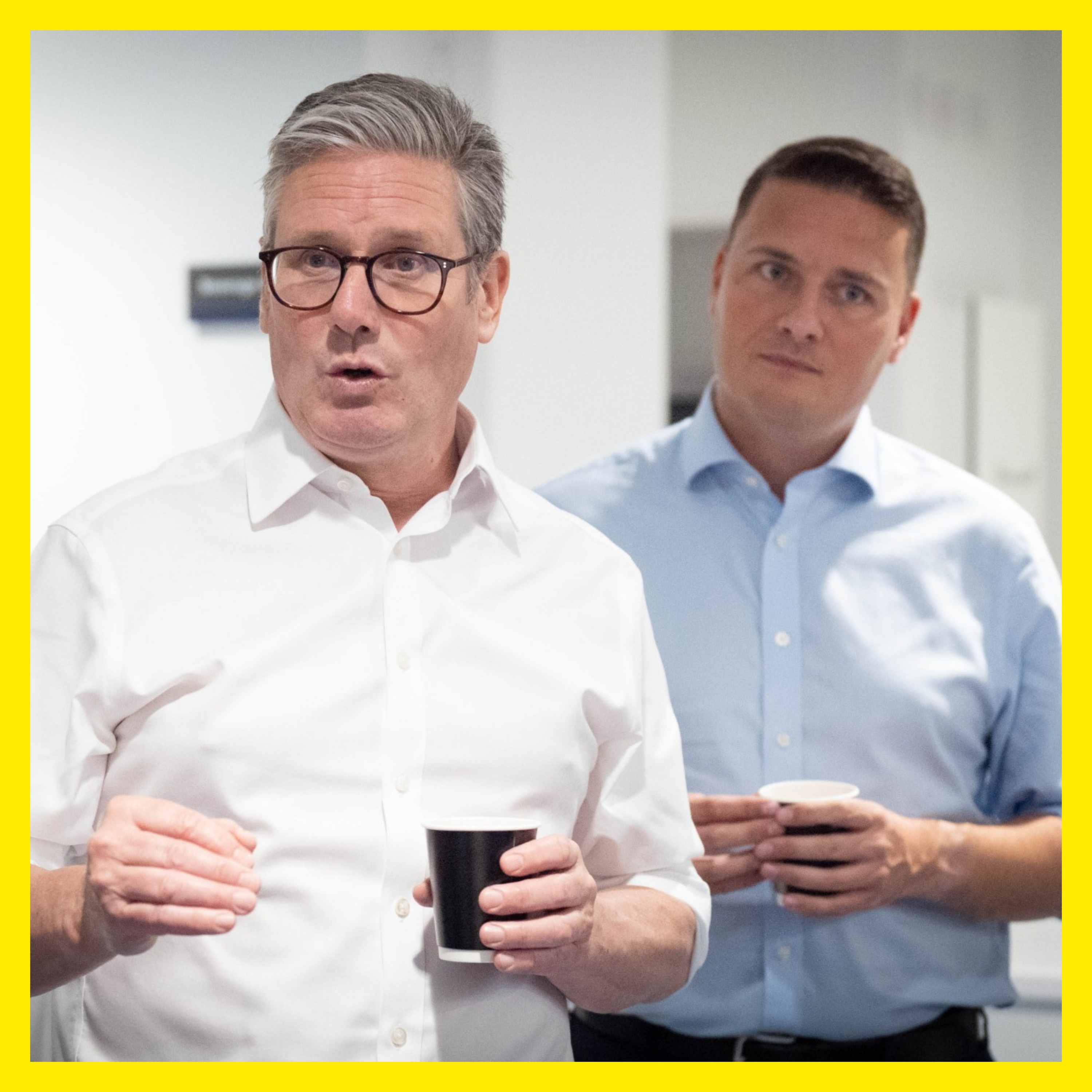
Senior Labour figures say a challenge to Keir Starmer's leadership could come as early as next month. But who will move first? Andy Burnham, Wes Streeting and Angela Rayner are all on manoeuvres.
Steven Swinford, political editor, The Times
Caroline Wheeler, political editor, The Sunday Times
Patrick Maguire, chief political commentator, The Times
Gabriel Pogrund, Whitehall editor, The Sunday Times
Producer: Euan Dawtrey
Executive producer: Molly Guinness
Picture credit: Getty Images
Email us: [email protected]
This podcast was brought to you thanks to subscribers of The Times and The Sunday Times. To enjoy unlimited digital access to all our journalism subscribe here.
Hosted on Acast. See acast.com/privacy for more information.


