
 Ask ChatGPT



The episode debates whether Reform and Restore can unite the right, while also covering Labour’s early-release prison policy and the Greens’ summer strategy.
none; it’s hosted by Patrick Maguire (The Times/Sunday Times) and Laura Spirit (Deputy Political Editor, Sunday Times).
Labour/Justice Secretary Alex Norris and Andy Burnham say they “wanted to go further” on early release but couldn’t; overcrowding pressure makes prisons “full by November” without the scheme.
child sex offenders and “killers” (PC Andrew Harper’s case) will be released early; alternatives like governor discretion or rapid prison building are criticized as risky/impractical. Reform is said to be “cautiously optimistic” (YouGov ~23% vs Labour ~22%) and plans more Farage appearances during August’s political vacuum. Restore’s Rupert Lowe offered cooperation with Farage after Greater Manchester by-election (Restore 8.7%); Farage responds with “constructive ambiguity,” calling Restore a spoiler. Greens sources argue two-party politics is “premature,” planning focused campaigning on inequality, wealth taxes, and climate, while Zach Polanski’s online presence has hurt them.
Written by AI. May contain mistakes.
Discussion on the political dynamics and the government's current situation.
“Hello and welcome to The State of It, the political podcast from The Times and Sunday Times.”
Examination of the government's recent changes to the early release scheme and its implications.
“But before we do that, Lara, we should reflect on the thing that's leading the front page of the Times on the table in front of us, killers but not rapists, to be given early release.”
Analysis of Andy Burnham's approach to communication and public engagement amid controversies.
“before Andy Burnham arrived in number 10, that kind of first fortnight, this was something that has been a little bit more movable and that they've certainly had to adapt to.”
Discussion on the broader issues related to prison overcrowding and government pressure.
“But on this, I think from very early on it was very clear they didn't want to do this, but actually it's worth remembering that Keir Starmer probably didn't want to do this.”
Exploration of the Reform Party's current standing and strategies in the political landscape.
“so politically that's a really worrying time for incumbent governments.”
Insight into the emergence of the Restore party and its recent electoral performance.
“Well, a party who will be looking at this, they'll be looking at the other issue you mentioned earlier, small boats.”
Explore the evolving relationship between the Reform and Restore parties in British politics.
“And Rupert Lowe, after the Greater Manchester mayoral by-election, in which, as you say, Restore won 8.7 % of the vote, comes on the back of a similar showing in Makerfield.”

Get the gist, explore an idea or ask about something said.
 Claude
On The State of It, what are the key points of this episode?
Searching your listeningAutomatic transcript. May contain errors.
0:00Nigel, now is the time to put our differences aside and cooperate for the good of the country that we all love. There is this myth that I fell out with Rupert Lowe. It's not true. Everyone fell out with Rupert Lowe.
0:21But look, if you have to speak to people or make arrangements of people that you've previously fallen out with, if there is a greater good to be had from that, then I'm not closing my mind to it. Hello and welcome to The State of It, the political podcast from The Times and Sunday Times. I'm Patrick Maguire and I'm sorry to say the two most important men in my life are on holiday this week. One, of course, is Andy Burnham and the other, even more important than the Prime Minister, is Stephen Swimford, our political editor. So this week you've got me and you've also got... I'm Laura Spirit, Deputy Political Editor of The Sunday Times.
0:56So it is the first full week of August and appropriately, the government is, well, it's not having a quiet week, but the prime minister is having a rest. So this week, we're going to be focusing on what's happening away from the Labour Party. Why the Greens and reform think two party politics is not back yet. But before we do that, Lara, we should reflect on the thing that's leading the front page of the Times on the table in front of us, killers but not rapists, to be given early release. This is going to run and run this week. The government's changes to the early release scheme, but quite modest changes in the scheme of things.
1:35And we should remember, of course, that it was your story in the Sunday Times during the Makerfield campaign that revealed exactly this was going to happen. So this is what's quite interesting is I think there's been interpretation from some that this has been something that Andy Burnham has come in and found to be the case and is horrified by and has changed at the last moment. Actually, it was during the transition and sometime before that people were thinking this is not going to be a very good look because it had dawned on people around Burnham very early on that actually one of the very first things he'd be forced to do would be to make a decision on this.
2:04because if he was going to come in over the summer or, you know, indeed as early as he did do in the end and find that actually one of the first things that would happen under his watch is that sexual, child sexual offenders were let out early, that that would be particularly egregious. And actually that particular category, child sex offenders was something that was coming up again and again when I was talking to some people around Burnham, it's something they were particularly concerned about. So it's interesting. They were looking at this, have been looking at this for some time, but actually I still think it's something that's caused them a huge amount of concern because actually, even though they knew this was something that they didn't want to do, frankly, from very, very early on, it was not actually that clear until they really came in exactly whether that would be possible, how it would be possible, and have had to make a very quick decision on this.
2:44So I think it's fair to say in terms of the kind of grid that had been perfectly planned out before Andy Burnham arrived in number 10, that kind of first fortnight, this was something that has been a little bit more movable and that they've certainly had to adapt to. And on this podcast recently, we've spent a lot of time, understandably, talking about Andy Burnham's communication strategy, how he's trying to have a different kind of political conversation with the public. And I think this episode is going to be a real test of that because I think it's the first time, and there'll be lots more occasions like this, lots more policy issues like this, where the vibes collide with the reality of a dysfunctional state and a dysfunctional economy.
3:21I mean, the budget is going to be the biggest. Defence spending is going to be another. But on this, we're seeing Andy Burnham come up against the limits of what he can do, right? He couldn't speak a different solution to that he briefed, you know, people commit to manslaughter being given early release, child sex offenders, rapists haven't, right? We knew he wants to do that. We knew he probably wants to go further. Indeed, he's written a piece in the Telegraph this morning and put a load of statements out as well where he's saying, I need to be honest with you, right? I wanted to go further.
3:51I couldn't go further. Alex Norris, the new justice secretary, has been saying much the same. He's been very open about the fact he's had to apologise. to the mother and the widow of PC Andrew Harper, whose killers will now walk free early. So it'll be interesting to see how this unfolds politically over the week, because Andy Burnham in particular, and also Alex Norris, have had to come out and front this up and say quite openly, like, look, this is not what we wanted to do. We would have liked to have gone further, but we couldn't. Now, there are similarities there with what Keir Starmer was doing, but you get the sense that they are still trying to take the initiative, even though the outcome is not what they wanted.
4:33Yeah, and I think in terms of Andy Burnham's communication style, obviously what he said he wants to do is to have a new style where even when he doesn't know the total answer or the total end point in the hill that they'll end up in, that he'll be honest with people about the kind of direction they're going in. But on this, I think from very early on it was very clear they didn't want to do this, but actually it's worth remembering that Keir Starmer probably didn't want to do this. This is not something they're doing because they decided that they want to let killers out of prisons early. We know from the Ministry of Justice that without the early release scheme, the jails would be full by November.
5:05So there is a really massive pressure to do this. And actually, perhaps this might go Andy Byrne's way because we've seen some flexibility from other parties on this issue as well. I think we should say. So, you know, I interviewed Colin Sutton, who is, of course, the PCC, Police and Crime Commissioner for Norfolk for Reform, one of the most renowned British detectives. and you know when I spoke to him he was very open about the fact he thought maybe quite a lot of the women in prisons could be released. I think people are thinking of some more creative potential solutions or not total solutions but just measures that might be used to address what is obviously and universally accepted to be a chronic overcrowding crisis in prisons.
5:41So whether or not this opens the space for bigger discussions on this wider issue I think let's see. It's August so politically that's a really worrying time for incumbent governments. It's also famously quite a worrying time for incumbent Labour governments and circumstances where you have the small boats crisis. I know we'll come on to talk about reform, but this issue in particular, I think, is not going to go away this summer. But Burnham's piece in The Telegraph, I think you're right to point out is something that is a really interesting intervention from him, which is essentially trying to level with people and say, I understand that what I've done is not the sum total of what I wished I could have done on this.
6:13But I've done something. But I've done something. And you have to believe me that I've done what I can in the time that I've been given. Yeah, exactly. I'd say the crucial difference is, you know, Keir Starmer speaking to someone who used to work very closely with him in number 10 this morning, the difference my conversation partner was diagnosing was Keir would have done the right thing, the right thing in inverted commas, i.e. okay, I've been told by prison governors, by officials, by the Home Office, by the Ministry of Justice, probably more the Ministry of Justice than the Home Office, I think there were differences of opinion there.
6:45I've been told by all these people that the prison service is going to fall over. It is not our fault. The Tories have left me this legacy. I'm going to have to do this unpopular thing because I've got no other option. It's the right thing to do. They tried to prosecute a political argument in that early phase. This is all the fault of the Tories, right? We're having to do unpopular things. It's the Tories' fault. This is why you got rid of them. Clearly it didn't work. Now Andy Burnham is doing something subtly different, right? Labour yesterday spent all of yesterday reminding journalists this was the Tory legacy on prisons.
7:16But, you know, you're still seeing a government saying, yeah, but we're not entirely at the mercy of events, right? We still have a degree of agency and autonomy in how bad, you know, this is less bad than it could have been because of our intervention. So I say that's the crucial difference. And we'll see over the coming weeks, the coming month, whether that makes a difference. Yeah. And we know why the alternative measures to this wouldn't on their own be sufficient to solve this crisis. I think it is worth saying that. I mean, you've had a number of things suggested. Our colleague Matt Dathan had that really fascinating report about a suggestion that perhaps prisoner governors could decide who might be eligible for release.
7:56Of course, under those circumstances, you would, of course, have a huge amount of pressure on some prisoner governors, say somebody was released and then went on to commit a crime. That would be, you know, an enormous pressure on their shoulders. And also then suggestions that you could build prisons extremely quickly. I think that is a really, really difficult case to make in circumstances where this was originally supposed to start from September. We now know it will start from October. So there was a really immediate crisis for them to get to grips with. And clearly, they've had to make a really difficult decision on this.
8:23So let's see how it pans out over the coming weeks. Well, a party who will be looking at this, they'll be looking at the other issue you mentioned earlier, small boats. They'll be looking at the vast expanse of empty news lists and broadcast running orders over August is reform, of course. Now, on this podcast in recent weeks, we've been talking about reform's difficulties, but I think you and I have had a series of conversations over the last couple of days, Lara, that suggest reform are actually feeling a little chipper, more chipper than some of the gloomy commentary would have otherwise implied.
8:58It's worth saying, latest YouGov poll, voting intention. We spent a lot of time talking about the polls last week. They're backing the lead. The burn and bounce didn't last too long with YouGov. Reform are back up to 23%, over 22 % for Labour. Tories down two points. So if you speak to people in reform right now, they are suddenly feeling, not that they weren't optimistic before, not that they weren't defiant before, but there's a degree of cautious, not so cautious optimism, excitement for the summer ahead. They had their big intervention on small boats yesterday. They don't necessarily mind that it was kicked to bits by experts and opposition parties.
9:36That's the space they like to be in, you know, defiant and railing against establishment consensus. So let's talk about reform because they are back on the agenda this week. Nigel Farage is energized. You know, I was told this morning he's going to be at the podium a lot over summer. So what do you make of it all? Yeah, I mean, so they have another press conference planned for this week. I think they feel that, I think, you know, someone senior in form said to me this morning that timing is everything. They feel, you know, Andy Burnham's gone on holiday. This has left something of a vacuum. This is their time to pounce while he's writing his 10-year plan, while Burnham is writing his 10-year plan and preparing that.
10:12This is, I mean, typically and traditionally, this is prime reform territory this August period, because usually you see a rise in small boat crossings, for example. You see a vacuum in the political calendar. You know, Westminster isn't sitting. Traditional parties might not necessarily have planned out a hyperactive grid. This is a time when people and leaders do go away for well-earned breaks and that this is usually a strong time for them to make a move. Now, this year has been harder, this particular period, because obviously they have had a few difficult by-election results. They have obviously had questions, ongoing questions about Reform's finances and Nigel Farage's finances.
10:46So it hasn't necessarily been as easy. But I think notably having that press conference this week that we've already seen in circumstances where there's definitely been a drop off in press conferences that we've traditionally seen in recent months from Baraj. Clearly, they now feel confident enough to have him out there taking questions, talking about immigration and other issues on the front foot. And so for that reason, yeah, the conversations I've been having, people are pretty chipper. and part of that is as you say the poll you know a single point that that is symbolic insofar as it symbolizes a short burnham uh bounce in their view also would point to clacton where they think they're doing spectacularly well in the in the polling i think the most recent servation poll had for arjun 57 points i think it was well it's interesting so there are so the the servation poll you mentioned which is in the times on on monday uh by servation for mandate research two really interesting questions though.
11:38The first is the actual existing list of candidates, right? So Farage was on 72%, Count Binface was on something like 22%, everybody else was nowhere. But the poll reform people are really excited about, as you say, is the one where it gave voters a choice of, okay, say all the main parties are running. And it showed that Farage had increased his share of the votes in that hypothetical matchup from 46 % in 2024 to 57%. The Tories were down to 11%. down something like 17 points and Labour were nowhere as well. So in reformers' views, it's like, well, of course you didn't want to run against us because actually in seats like this, you are absolutely nowhere.
12:20That is their view. And to be honest with you, it is outside of London, the more money parts of the southeast, it's absolutely true. As much as we are talking in Westminster about a reversion to the mean of two-party politics, Go out there in the country, look at actually existing elections. The one you mentioned, you mentioned Colin Sutton earlier, Norfolk Police and Crime Commissioner. I mentioned this on the podcast last week. You know, the Tories are nowhere in that as well. And yes, it's only a Police and Crime Commissioner election, but actually existing elections, the Tories are nowhere and reform.
12:52Outside of London, the Tories are nowhere. And yes, there are pockets of the country where the Tories are in rude health, Aberdeen, London, right? But, you know, it's tricky for them. Yeah, it is. And I mean, I think Colin Sutton is a very good example of someone that reformed Phil, very proud of having bought into the fold. So certainly it feels like they're trying to get more on the front foot at the moment. They also feel that, you know, some of the coverage around the Greater Manchester mayoral election has not been massively fair insofar as in their view. 8.7 % for restore is actually not as significant as it should have been in circumstances where they gave them a free run.
13:26And actually it should have been higher. I think there's a lot of bullishness from them on these questions at the moment. So I don't think it's an easy run, but it certainly does feel that there's a kind of newfound confidence going into this summer. And I think you're right to say that it doesn't really matter to them on the boats specifically that people were questioning the ins and outs of the policy. They feel like they were top of the news yesterday morning. They were top of the news yesterday evening. And that's what reform does well. Well, we should talk about Restore, who you just mentioned, because Nardifaraj was asked about this in the press conference yesterday.
13:58And we should remind listeners, if you've not been hanging off Rupert Lowe's every tweet, what exactly happened over the weekend. And Rupert Lowe, after the Greater Manchester mayoral by-election, in which, as you say, Restore won 8.7 % of the vote, comes on the back of a similar showing in Makerfield. They beat the Tories in Greater Manchester, Restore, albeit on a low turnout in the 20s. But still, you know, this is a political party that did not exist in any meaningful sense six months ago. So it is to a large extent, you know, they've got lots and lots of members, many of whom I saw out of the doors when I took a trip around the towns of Makerfield.
14:35But afterwards, after that result, in Greater Manchester, Rupert Lowe did something I don't think anyone expects him to. His differences with Nigel Farage and the wider reform team are very well publicised. You know, in his words, they tried to get me thrown in prison. They took away his guns, famously. They suspended him, et cetera, et cetera. clashed with Zia Yusuf, then party chairman, now shadow home affairs spokesman. But Rupert Lowe did something unexpected. He made a video and put it on his socials in which he said, I'm making a big bold offer to Nigel Farage. Let's work together. Let's unite the right.
15:12Gave him a laundry list of policies to sign up for. And Nigel Farage's response, both in the written word and at that press conference on Monday, was sort of like a study in constructive ambiguity because you could read it. At no point did he say yes. At no point did he explicitly say no. But there was a, if you were a restore voter reading that, you think, hmm, what exactly is going on here? Because he's not saying he hates Rupert Lowe. He's not saying, I'll never work with you ever. I'm told basically that the whole point of that statement is, Nigel Farage did not expect to work constructively with Rupert Lowe.
15:49After he gave his press conference yesterday, He said, you know, Rupert Lowe was meant to talk on the phone yesterday. We never spoke. Rupert Lowe tweets a screenshot of their WhatsApp conversation, which Farage says at about 10.30 in the morning, I'll call you later. We'll call later, verbatim. And he never gets a phone call. So I don't think there's any serious expectation of reform this deal is going to get off the ground. I think there's a lot of bad blood there. I think there's a real distrust there. It's not constructive, but what do reform want? Ideally, they would like to, that 8.7 % of the vote, or as much of it as possible to be voting for them again.
16:24Farage has said repeatedly, restore is a spoiler. That's his language now. He's basically saying 8.7 % of the vote is enough to stop reform winning. And he obviously does not want that to happen. But to this end, he's been having some very interesting conversations. If you look at Italy, there's a new party of the far right called National Future. run by a guy called Roberto Vecchini, who is a general, an MEP, got a big following on social media. He's written books, got a big local network of supporters, right? So not entirely dissimilar to Restore. Indeed, if you look at his polling, right, they're polling around 8%.
17:04And Maloney is running a right-wing coalition, Georgia Maloney, the prime minister, and struggling with these guys. She's looking at them. He's saying to her natural-based supporters, we need more purists, more hardline positions on immigration. on Europe, on law and order. So there is a symmetry there. And I think we both picked up, Lara, that that is something Nigel Farage is thinking about. Yeah, so I think it's clear that he's having these conversations with Maloney about this kind of new multi-party politics. Though we should say that we did get a statement from Farage who told us, I never discuss in public any private conversations that I have.
17:41But very interesting, I think, what you're saying because clearly he is looking to a new political landscape now and to some degree has accepted that perhaps this is a new reality. I think I'm also picking up a level of quite extreme scepticism, I think it's fair to say, about the possibility of this deal getting off the ground, you know, that something really huge would have to change from Restore's perspective to make it possible for reform to actually go along with anything like that. But I think they're clear they don't want to close the door on that completely. But there's a lot of presentational kind of questions at play here, isn't there?
18:13You don't want to be the one that looks like you're closing the door on a deal. And yet, clearly, it's not at the moment necessarily, I don't think, in Farage's interest, in circumstances where, as you say, what he would have to do to get that deal over the line would be pretty catastrophic for the internal workings of the Reform Party. Yeah. And his strategic imperative, electorally, is to say to voters on the broad right who – actually, that might be an unhelpful way to think about it. Because one anecdotal thing from the Greater Manchester Mayor election from people who are at the count was they were looking at, because it was a two round preferential system, they were looking at ballots and saying, oh God, there are a lot of Tory first preference, Labour second preference votes here.
18:53Right. So it depends whether you think the right runs from the Tories to restore with reform in the middle or there's something slightly different going on. And Tory voters, remaining Tory voters are just as motivated to vote against Nigel Farage as they are to vote against the Labour Party and indeed might have a stronger aversion to Nigel Farage as prime minister in some places. But strategically, whether you're talking about reform and the Tories or reform and restore, Nigel Farage's big strategic mission is to make clear to those voters, if you don't vote for me when the rubber hits the road, if you're going to vote for restore, if you're going to vote for the Tories, then there's only one winner, Andy Burnham.
19:35Anyway, we'll head to the interval now. And on the other side of it, we'll be talking about the battle for the insurgency on the left of British politics and what the Greens are up to. It's not been a great couple of weeks for them. Are things about to look up? We'll see you in a minute. Welcome back to the State of It Now. We've been talking about reform, restore, the Tories, the Labour Party. And it's easy to forget because I think, to be honest with you, some people in Westminster already have or are willing themselves to that the Greens are still on the pitch. But just how far on the pitch are they?
20:10I was speaking to a source very close to Zach Polanski this morning, and they said that we in Westminster are being far too premature about the return of two party politics. Because you can see this in a lot of the commentary and not just the commentary. I mean, the commentary as a commentator always reflects to a certain extent or to a large extent what people are telling you and what they're thinking. And something I've been hearing a lot from Labour people recently, there is an expectation among Labour people and indeed Tory people that we are seeing a slow, you know, a de-alignment or a re-de-alignment.
20:46Anyway, it's some kind of alignment back towards traditional two-party politics. The expectation is Polanski's had a bad run of publicity. You know, he's proven that he's not quite up to it. Farage is damaged goods. So that means we can get back to our comfort zone and Labour and the Tories will fight it out. But that's certainly not the green view. Speaking to sources close to Zach Plansky this morning, I'm told they are planning light reform. They're going back to basics over the summer. They're going to have a burst of sustained and intense campaigning activity on three core issues. They are, which is the big issue in British politics, as Andy Burnham would himself say.
21:24inequality. So they'll be talking about wealth taxes and also, and you can hear the environment, climate. And so that is a very focused and very disciplined set of priorities. I think Gaza, it's interesting, right? They'll still be talking about Gaza, obviously, but that's a notable admission from that. I think there is a desire on the Greens part, Lara, for focus. They think they know where the country is at, what the country cares about, but they have had a distracting couple of weeks, most of it due to, as even sympathisers and allies of Zach Polanski would say, maybe Zach Polanski being a bit too online, being on his phone too much.
21:59Do you think he is on his phone too much? He's on his phone a lot. I mean, if you go on Blue Sky, which I occasionally do, your feed is full of retweets from Zach Polanski. And that's why he came a cropper the other week, of course. Last week is because he'd accepted a really surreal watching a political leader of a national Political Party explaining the concept of an Instagram collab on Newsnight to a baffled and unsympathetic Victoria Derbyshire talking about how he had accepted an Instagram collab. But also, I think there's a belief in the Greens that he's still, you know, look at the polls, right?
22:33Some polls, they're sort of flatlining. Some polls, they are being squeezed by Andy Byrne. There's still a feeling at the Greens, at the top of the Greens and in the Greens leadership team, certainly, that he's still their best asset. Yeah, the environment is very interesting because obviously you and I and everybody else has been hearing for quite some time a level of frustration among some of the more traditional caucus in the Green Party about the fact that they had perhaps neglected what was once their absolutely core issue in favour of other issues, particularly Gaza. And that has been quite a sustained criticism.
23:01So it'll be interesting to see that. Obviously, their conference will be a big moment and they need to, I mean, famously, the Green Party is an extremely democratic party. Many people who are members of that would say that's a very good thing, but it does mean that having some level of discipline, if you're saying that the summer is going to be defined by a great deal of discipline from Zach Polanski, from his close team, that they'll be keeping laser focused on a number of key issues, on those trio of issues, they will get to conference and they will find that is slightly upended by the fact that there will be an array of different motions on an array of different controversial topics at which imposing some level of discipline is obviously just not the Green way.
23:36And that's not said as a criticism, That's just an observation of the way the Green Party is run, right? That will make that summer more difficult in circumstances where suddenly there will be certainly a change of focus to a whole range of other issues. Yeah, and the challenge for Zach Polanski is to rise above that, to punch through that. You know, the internal structures are difficult. They want to make the Greens unique, as you say, and to maintain focus, right, to not make enforced errors. I mean, you know, just looking back at the conversation I was having with one of his closest elders this morning, Talking about him as an energetic, focused leader, great communicator.
24:09Yes, he uses social media more than most politicians. It's how he connects directly with our supporters. We'll continue to use that to challenge the status quo. And when you do that, you need to tell the story yourself. And he does that excellently. There is a definite feeling as well at the top of the Greens that we've been talking about the burn and bounce. Two-party politics is back. I think with good reason, and it's worth taking this seriously, their view is, you know, this is crazily premature. You know, Andy Burnham can only really end up disappointing the block of voters who have already defected to the Greens.
24:46Again, what happens, as Polanski's team points out, when those voters realise that, you know, he is not, for instance, introducing rent controls, not going to do a wealth tax, not straightforwardly saying there's a genocide in Gaza when he goes to Aberdeen or wherever, has a hard hat and high vis on and says, you know, drill, baby, drill, or whatever. Andy Byrne's equivalent of that is. So that is, those are the big questions. You know, lots of people have written off Zapolanski already, but, you know, the Greens are still polling at, you know. I think 13%. Yeah, exactly, 13 % in that YouGov poll we've been talking about.
25:23So they've not disappeared. But it is down from, I guess, what's the high 20%. And I think part of it is that we, and we have seen that with reform, that there is an expectation among these populist parties that they have a completely unencumbered rise, right? That they don't face setbacks because they're populist insurgent parties and everything comes good for them. And actually it is more difficult than that. They do have bumps. And actually that is part and parcel of being seen as a more popular and more credible force in electoral politics. And that is something that they have to deal with.
25:52And it's interesting that it feels like the bumps have focused around both of those leaders in particular, who are, of course, as per the classic populist mould, the most important thing by far in that party. You remove them and it then becomes very difficult to see. And I mean, that is less the case for the Greens, of course, but certainly I think in recent months, it is definitely Zach Polanski's party front and centre. And that has been seen until fairly recently as an asset for them. And it's only now they're really, I think, facing questions about some of his weaknesses. Well, there'll be lots more questions for all the leaders over the course of this week.
26:27let's see if they reach Andy Burnham on his holiday but that's all we've got time for this week on The State of It thank you very much for joining us and Laura do you want to after your own absence return to pressing the red button and thank you it would be my pleasure of course thank you so much to our wonderful team Ewan Daughtry and Harry Kitson and Steve will be back next week from his holiday with Andy Burnham so thank you very much for listening make sure you like and subscribe wherever you get this and we'll see you on The State of It next week
Has Andy Burnham's vibes-based politics collided with the reality of governing as he wrestles with the prison early release crisis?
Restore leader and right-wing insurgent Rupert Lowe has publicly reached out to Nigel Farage, urging him to unite the right. Can Farage and Lowe finally put the bad blood behind them, or is the divide simply too deep?
And on the left, the Greens have endured a bruising few weeks, with leader Zac Polanski's social media habits creating unwelcome headlines. But has Westminster been too quick to write them off? With Polanski at the helm, anything is possible.
Lara Spirit, deputy political editor, The Sunday Times
Patrick Maguire, chief political commentator, The Times
Producers: Euan Dawtrey, Harry Kitson
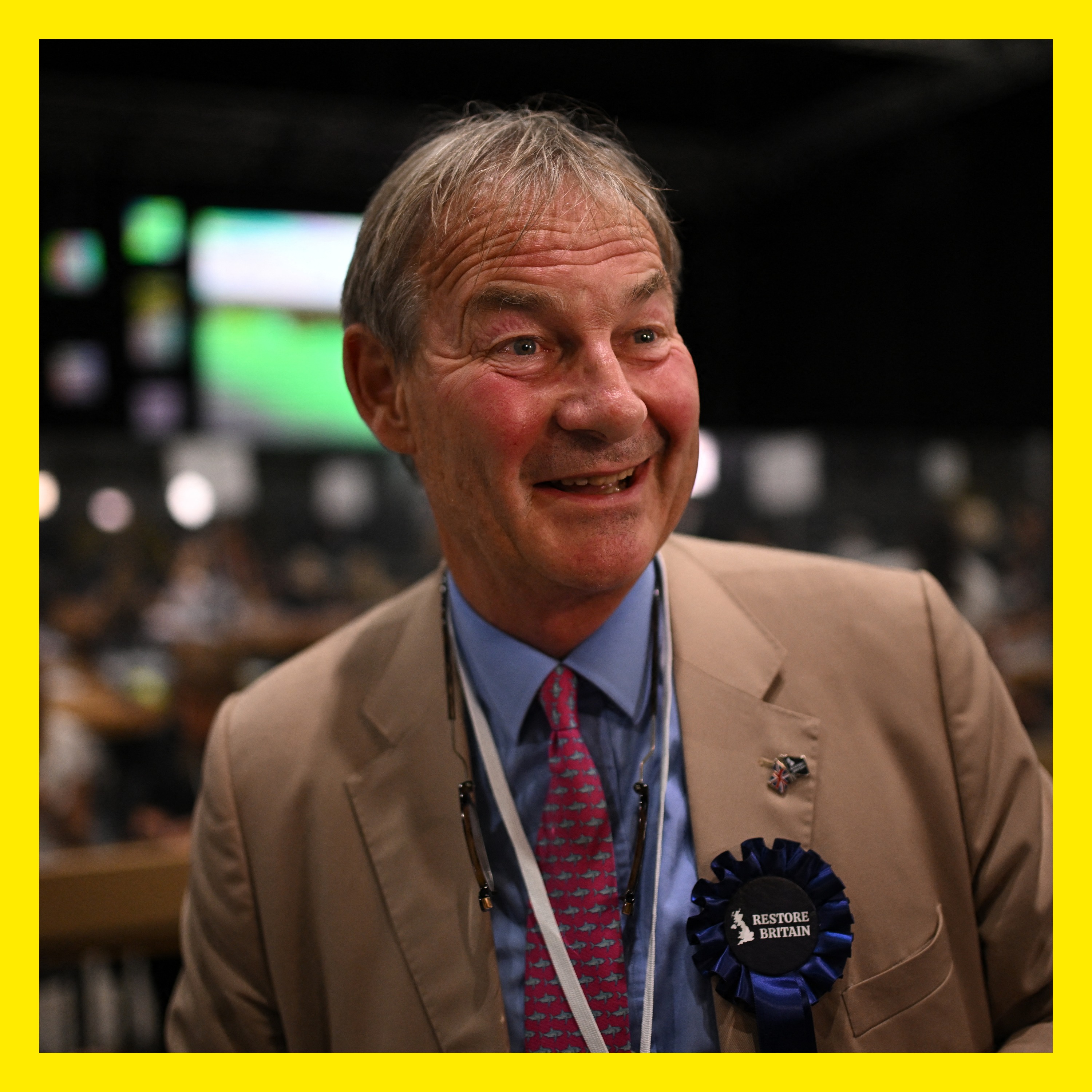
Picture: Getty Images
This podcast was brought to you thanks to subscribers of The Times and The Sunday Times. To enjoy unlimited digital access to all our journalism subscribe here.
Hosted on Acast. See acast.com/privacy for more information.


