Ask ChatGPT

 The State of It
30 Jun 2026 · 29m · 16 chapters
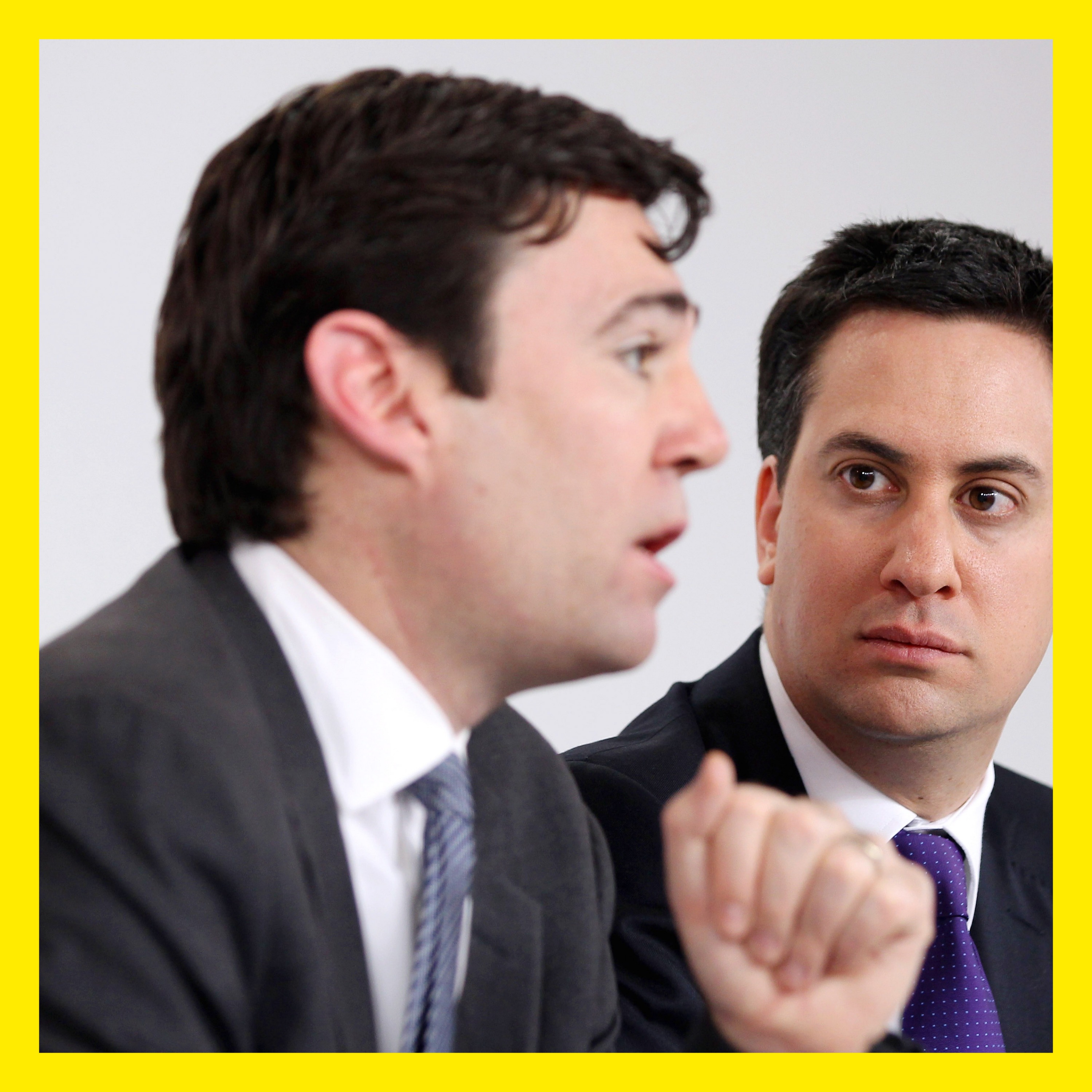
The episode argues that Andy Burnham’s emerging Labour leadership project will face major political friction over cabinet appointments, especially if both Miliband brothers return. Guests discuss David Miliband’s reported desire for frontline politics (possibly Foreign Secretary) and his development background, plus how his 2010 rift with Ed Miliband could be overstated. Key claim: Labour will struggle with “optics” and internal backlash if there are “more Milibands than women in top jobs,” given concerns about women’s representation and alleged disrespect toward Home Secretary Shabana Mahmood. Notable examples include foreign aid cuts and subsequent Labour mobilisation, Spectator “female PM” briefing, and Burnham’s “Number 10 North” devolution plan (Prime Minister’s office driving regeneration, re-industrialisation, and public control of utilities). Guests also note speculation vacuum over cabinet roles and Reform UK’s targeted campaigning in Burnham country, plus Farage’s £5m donor investigation.
Stephen Swinford (Times political editor), Patrick McGuire (Times chief political commentator), Laura Spirit (Sunday Times deputy political editor).
Written by AI. May contain mistakes.
Discussion on the potential return of David Miliband to frontline politics and implications for Andy Burnham's cabinet.
“I'm Stephen Swinford, the political editor of The Times.”
Exploring concerns about gender representation in top political roles alongside the Miliband issue.
“And then we want to kind of talk more broadly about Andy Burnham's big debut speech yesterday and how that's gone down and where we think things are going.”
Analysis of the complex relationship between David and Ed Miliband and its impact on Labour politics.
“people this morning, I think one of the things that people float is David Miliband's experience in development.”
Delving into Labour's ongoing challenges regarding women's representation in leadership and cabinet roles.
“you know, the return of his brother to Westminster.”
Discussion on Andy Burnham's approach to cabinet formation and leadership dynamics within the party.
Conversations about the speculation regarding potential cabinet positions in Burnham's government.
“You know, Laura Kirksmith, who's the MP for, I think, Ailsbury in Buckinghamshire made this point last week and lots of other MPs did it privately.”
Analyzing the significance and impact of Andy Burnham's debut speech on his political future.
“You know, I'm not going to engage with speculation.”
Learn about the key elements and impact of Andy Burnham's first speech to voters.
“And look, we just wanted to talk about Andy Burnham's debut speech because it is a moment.”
Understand the differences in communication styles between Andy Burnham and Keir Starmer.
“And I think it's really important we have Wolves representation in the media.”
Explore the key policies and implications of Burnham's devolution proposals.
“orator, I think is the fairest way to put it in comparison to Andy Burnham.”
Examine the economic challenges and implications of Andy Burnham's proposals.
“the post-war period, it all needs money and there is no money.”
Discuss the risks and uncertainties involved in Burnham's local governance approach.
“But certainly by the time of the next general election, that's one of the challenges here.”
Analyze the potential impact of Ed Miliband on Burnham's leadership and political strategy.
“And there'll be some hits and misses, I imagine, in the process.”
Understand the emerging political challenge posed by Reform and its implications for Labour.
“actually really telling in this respect.”
Explore the controversies regarding Nigel Farage's financial dealings and its political implications.
“We should just say that obviously there is still this unresolved issue over the£5 million gift from this reform donor.”
Explore the implications of a significant financial gift and the resulting political scrutiny.
“but at the same token revealed he hasn't actually spent any of the money and would be willing to give it back.”

Get the gist, explore an idea or ask about something said.
 Claude
On The State of It, what are the key points of this episode?
Searching your listeningAutomatic transcript. May contain errors.
0:01Westminster and Whitehall are set up for conflict and they require radical change if the country is to get back on track We will create a more streamlined state with a clearer purpose. To power up all parts of the country, the change will be driven through the Prime Minister's office in an extended operation based here in Manchester. What the country wants is immediate action, and I tell you what, they're not going to get it from Mr Burnham. Or should I say, Open Borders Andy. Welcome to The State of It, the political podcast from The Times and The Sunday Times. I'm Stephen Swinford, the political editor of The Times.
0:43I'm Patrick McGuire, chief political commentator for The Times. I'm Laura Spirit, deputy political editor of The Sunday Times. And look, we want to talk to you today about the potential return of David Miliband. Yes, we are back in the Cain and Abel scenario. Two Miliband brothers potentially in Andy Burnham's cabinet. It is a real thing. It could happen. So we could be reliving some of the psychodrama of those new Labour years all over again. And then we want to kind of talk more broadly about Andy Burnham's big debut speech yesterday and how that's gone down and where we think things are going.
1:16But should we just open up by talking about David Miliband? Because, I mean, he wants it. Lara, let's start there. We are told David Miliband very much wants to be back on frontline politics. He's been out working in the US for many years, but people close to him are linking him to the role of Foreign Secretary. Yeah, I mean, I think it's really interesting. From an outsider's perspective, what you would say looking at that is you already have this question about how Andy Burnham is going to cope with accusations that he is not a woman and his chancellor, Ifed Miliband, is not a woman. If you have a situation where there are more Miliband's and great officers of state than there are women, then I think there will be people, particularly in the Parliamentary Labour Party, women in the Parliamentary Labour Party, who are very concerned about that state of affairs.
1:58If you don't have Ed Miliband in the chancellorship role, if that does, in some world, they persuade, say, Shabana Mahmood to be able to do that job, that's looking increasingly unlikely, but say they are able to do that. And Ed Miliband is in a more junior position than David Miliband. And we know, you know, in history, we know the two have not necessarily had the easiest of relationships. I think that presents its own potential difficulties. You know, speaking to people this morning, I think one of the things that people float is David Miliband's experience in development. I mean, could he have a kind of high profile role in that particular space?
2:28At the moment, there is a cabinet minister, a Baroness Chapman, who is the development minister. I think, look back to that cut that they did to the foreign aid budget to fund defence. You remember at the time, the parliamentary Labour Party, the soft left of the parliamentary Labour Party were incensed about that and felt very let down. And they then mobilised and they managed to make sure that a further cut to foreign aid was ruled out to fund the defence investment plan. So this is a very mobile and active part of the parliamentary Labour Party and one that David Miliband is in very close contact with, who he knows many of these people.
3:00Of course, you've spoken about his background in this. There's a question, I think, about how Andy Burnham approaches the development budget. Not necessarily would he boost the budget, but is there something that they would want to do that's perhaps more bold in this space? So I'm not saying he's not going to be foreign secretary, but I'm just saying there are some questioning some other possible roles that he might have. Something worth reflecting on here, though, what we've all referred to is the history of David Milliman. The fratricide. The fratricide, whatever you want to call it, right? The David-Ed relationship, what happened in 2010, and the rift that caused in their relationship.
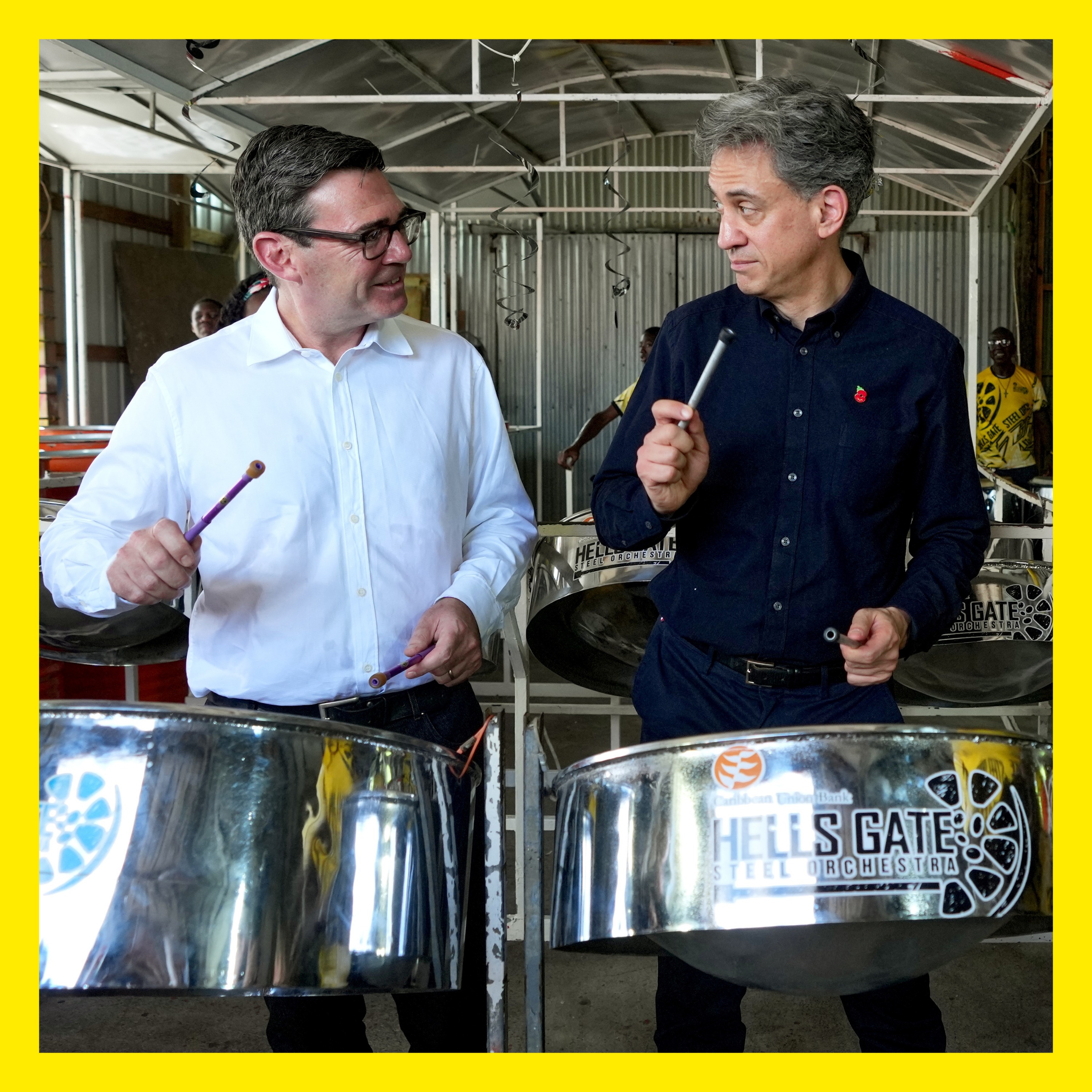
3:35Anyone who knows both of them will say those years were difficult, as you'd expect. But I think there are now, that narrative has taken root in Westminster, like Japanese knotweed. And I think there are, rather, quite a lot of outdated misconceptions about that relationship and the state it's now in. The interesting thing that I've heard from a couple of people, and this hasn't been denied, indeed it's been stood up, is that Ed Miliband has been one of the people internally in Andy Burnham's camp who's been making the case and was one of the first people to make the case that David, his brother, would have a lot to offer an Andy Burnham government.
4:14And that's not a question of, you know, make my brother X or make my brother Y. But it tells you something quite important about where that relationship is, that Ed Miliband is, by all accounts, entirely relaxed and indeed encouraging, you know, the return of his brother to Westminster. And it's going to be interesting if that does happen, less on that sort of interpersonal relationship. I think that'll be the dog that doesn't bark, but it'll be more along the lines you were talking about, Laura. You know, what does it mean for the policy choices and the way a Burnham government presents itself to the country.
4:48I think one of the challenges, you identified it very early there, Laura, is there are only so many jobs to go around. And this is a quote that my colleague Ollie Wright got from a female cabinet minister this morning. You cannot have more Milibands than women in top jobs. That kind of thing matters. And that is the point here. If you had David Miliband and Ed Miliband, one as Chancellor and one as Foreign Secretary, then that is a kind of disproportionate balance towards men that are called Miliband. And that presents a quite significant challenge for Andy Burnham. There are only so many jobs to go around.
5:23Yeah, I mean, I spoke to a female cabinet minister last week who also said there'd been quite significant unease about this women question in recent weeks. I think in part because originally there'd been a hope among some that there would be a woman who challenged in any leadership contest. Obviously, nobody is arguing with the political logic at the moment that has just basically forced Andy Burnham towards the forefront of this in a way that means that it would be pretty insane for anybody now to challenge him. And this particular cabinet minister was saying to me, you know, it's not just this kind of wider question of women.
5:57It's also the fact that we saw that briefing in The Spectator suggesting that Andy Burnham was a female prime minister because he cared about female issues rather than, I think it was bombs and budgets, which are, of course, exclusively the purview of men, as we well know. But also they felt actually the treatment by number 10 of Shabana Mahmood, the Home Secretary last week, which in their view was laced with a kind of a level. I don't think they definitely didn't use the word misogyny, but they just felt that there was perhaps a level of disrespect in the way that she was slapped down essentially by number 10.
6:31All coalescing into a view that actually at the moment the Labour Party is perhaps not in the strongest possible position it can be with regards to its quote unquote women problem. I mean I was in Poland with Yvette Cooper of course the foreign secretary last week and I asked her you know about that briefing to the spectator and she was quite clear of you know of course she would want to see a female leader of the Labour Party one day but that Andy is the right person for now and I think broadly that is where the parliamentary Labour Party is right and that does mean that it's slightly less difficult for them but when it comes to the second question which is of course staffing the government itself rather than the person that is at the very helm of it I think they will come into some problems because as you know you say if you have a day if you have david ed and andy at the very top of this government that is going to be a difficult that that is just going to be difficult optics i'm sorry it is there's no way in which that isn't complicated for them even if you have you know shabana mhmud by all it by all accounts an extremely strong and formidable holder of a great office of state you still will have three men in those positions and james pinnell running number 10 as well another of their contemporaries and it's very it's very you know you can see already and you're getting faint rumblings of this.
7:41You know, Laura Kirksmith, who's the MP for, I think, Ailsbury in Buckinghamshire made this point last week and lots of other MPs did it privately. Andy Burnham could end up looking like he's running a sort of new Labour reunion boys club or on the other hand, he could end up looking like a very regional politician and it's Lou and it's Midge, Annalise Midgley running the show and, you know, oh, I'm an MP in a 2024 gain in the home counties, these people don't like me. I mean, that's not the image they're putting across. Andy Burnham is putting the hard yards and meeting all these people in. But you can barely see how some of those reductive criticisms, and in the same way that Keir Starmer's inner circle always had the boys' club attack on them from Sue Gray and her allies was reductive.
8:25But you can see how this will, could, and at this stage you wouldn't put it more strongly than could, become a narrative that has a life of its own. And one of the challenges is, at this point in time, Andy Burnham is undeniably, he's probably the most powerful he will be at any point because he hasn't announced his cabinet, hasn't made any of the big decisions about where he's going yet. So everyone, as you were saying last week, is looking over at him. They want to kind of curry his favour. But that does mean that people are vying for these top jobs, right? There are a lot of... We'll start with West Streeting.
8:55A lot of Streeting allies are saying, look, two of them, I was going to say, he doesn't have a chance of being Chancellor. They reckon that's going to Ed Miliband. So we shall see on that. But they do fancy him for Foreign Secretary. They think he'd do a great job. So you're getting briefings along that. And some other people are also trying to brief themselves into other jobs, Laura. This was one of the more curious terms of my weekend, which was the case of Zabir Ahmed, who was, of course, a health minister under West Streeting until he resigned in the wake of the local elections. And there had been suggestions that he had been in talks, there had been reports that he had been in talks with Andy Burnham's team to become health secretary.
9:35that is categorically denied. And indeed, I've been told that Andy Burnham has had the ick, which is parlance. I mean, how would you describe the ick to a listener that isn't well acquainted to that term? A sort of general feeling that you suddenly become extremely disgusted. Andy Burnham has the ick with people basically trying to brief themselves into jobs, in their view, and that essentially they feel that this has come out of nowhere. And so it has been extremely hard recently, standing up any question of who might be in particular positions in a future Andy Burnham cabinet. It has not been particularly hard ruling out some of those individuals who won't be, and I think we can say definitively that Zabir Ahmed is not going to be the next health secretary.
10:16So Burnham stood up and he does seem to treat this speculation, as he calls it, with a degree of contempt. Lucy Powell, the Labour deputy leader, was calling it tittle-tattle over the weekend. The reason it exists, and I think they're both completely wrong on that, I think the speculation is fully justified, is it really matters who the Chancellor is. It really matters who the Home Secretary is. And we are in an effective vacuum at the moment because he is trying to construct a government in the space of now three weeks to go. But, you know, obviously it matters if Ed Miliband is going to be...
10:47And it matters to these individuals as well. Like, we are getting a lot of calls from allies of Ed Miliband promoting him, from, as we said, allies of West Street promoting him for the role of Foreign Secretary. This is real. We have to report it. And the reason it is happening is because Andy Burnham has chosen to do this process the other way around. So he is announcing his vision and his plans first. And then in the final week, we think, so week three, he's going to announce his chance. So retrofit the key people to, he's got a series of speeches on different areas coming up to his agenda when he decides who's best to fit them.
11:20But obviously that creates a power vacuum and a lot of speculation. Yeah, it does. And it's interesting that he said that very categorically in Manchester. yesterday. You know, I'm not going to engage with speculation. I'll only speak at the end of this process. Having dinner with a source close to a cabinet minister last night, we were kicking this idea around, you know, should he announce his cabinet now? And even someone who is anxiously waiting to see what their fate is said, well, it makes complete sense because he's the point of maximum leverage over absolutely everyone, including people who a fortnight ago, a month ago, said Andy Burnham was a joke, a clown, a flip-flopper, a complete charlatan, right?
12:01All of these people are now on bended knee, tugging their forelock, saying, oh, Andy, I've always loved Everton and the music of the Smiths. Andy, please, please pay attention to me. I agree with everything you say. And for some of them, by the way, on substantive points of policy, that's actually true. But for many more of them, it's completely unconvincing. So, So, you know, if Andy Burnham has got the ick, that ick is only going to intensify over the next fortnight because of the very deliberate choice he's made to not engage with the speculation. And it's interesting because the difference with the Starmer project here is, like, you could, in theory, like, find out what Keir Starmer thought about something, you know, a given issue, a given appointment.
12:48But there was always the sense that, like, Like, does he think anything? Maybe think something, but what he thinks will be different to what Morgan thinks or what Rachel thinks or what, insert 16 other people here, think. Here, you get a real sense that actually Andy Burnham is the principal, right? Yes, people are bringing influence to bear on him, but a large part of the reason we don't know Andy Burnham's Chancellor is because the only person that knows for certain who Andy Burnham wants to be Chancellor is Andy Burnham. As one cabinet source was saying to me yesterday, as another cabinet source was saying to me yesterday, You know, we've tried a non-politician who was influenced by very political people, but now we've got a proper professional politician pretending not to be a professional politician in charge and knows the game.
13:33Right. He's been here before. He's seen this from every angle. And it's quite confounding for people like us because it's refusing to play the game that so sustains and invigorates us. That will change soon. He will be in government. He's going to have to engage. and there will be a whole cabinet beneath him. Look, when we come back from the interview, we should talk about his debut speech and what that signals about where we're all headed and this massive devolution agenda he's got. Welcome back to the state of it. And look, we just wanted to talk about Andy Burnham's debut speech because it is a moment.
14:04It is the first time he's kind of exposed himself to the voters more broadly. They're making their mind up about him. As a starter for 10, one thing that is obviously very clearly different to Starmer is there is some swagger there. The guy can communicate. He knows what he is and what he's about. The tone is very different to Starmer. Well, that's the difference with Keir Starmer, isn't it, Steve? The thing is, with an Andy Burnham speech, the thing that struck me, and you always got this with Keir Starmer speeches, didn't you? The language was dynamic. He said, I am going to do this, whereas Keir Starmer would point at problems and describe them.
14:47And that's the problem with a Keir Starmer speech, isn't it, Steve? I'm sure Andy Burnham isn't listening to this podcast, but can I just say that's a mark of Wolves' solidarity. I'm trying to reclaim the Andy Burnham impression from people who make him out to be a member of the Beatles. That is not how Wolves speak. And I think it's really important we have Wolves representation in the media. So solidarity to all Wolves out there. But no, to say that in my own voice, it was clear, it was dynamic and that was one of the phrases that really stuck out to me i am going to do x right you know and i just i i actually was talking to someone as a you know in conversation with a former star raider's speech was going on we were both listening to it and i said that is so unlike a care speech and i said yeah absolutely like you can you never hear that in a care speech could be a sort of like like rambling and torture thing like you know oh people say a government can't do x but i've always thought why and you know it's always sort of like these imagined riposte to critics who didn't exist and like sort of quite stroppy meta commentary on like how difficult it is to be Keir Starmer.
15:52Whereas with Burnham, it was like a very clear political argument, picked as enemies and rhetorically and presentationally very strong. Now, obviously, the flip side of all of that is people are saying, where's the beef? Like, where's the policy detail? But actually, there was just a clear through line of argument from Andy Burnham. And for various reasons, some of them political, some of them presentational, you never really got that sense of consistency from Keir Starmer, who, you know, is less of a natural and experienced political orator, I think is the fairest way to put it in comparison to Andy Burnham.
16:29Well, let's talk about the substance, Laura, because we have been here before. We've seen Boris Johnson come into office with a pleasure to level up the country. He took a bit of the treasury moved it to Darlington um there is trying to talk about devolution in a way that grabs voters is actually a very hard thing because it is an abstract concept and that's what he's trying to do here so what did you make of the substance of what you were saying I mean there is clearly a distinction between uh devolution where you're actually shifting power and the some of the kinds of things that Burnham is talking about separately which is you're splitting number 10 uh and you're moving some of it to a different place or uh you're splitting the treasury and you're moving so much to face.
17:06That's just moving central government to a different location. That's not actually moving power fully somewhere else. And that, I think, is a key distinction that people around Burnham are very sensitive to, which is why I think they'll be keen to go as far as they possibly can on this. I mean, I was rereading some of the leveling up white paper that was published under Boris Johnson, in which, you know, they do make the case that in the examples they give, for example, in Germany, post-war Germany, the amount of money that was spent in order to do this was completely extraordinary. I mean, like really, really extraordinary.
17:37And I think that is something that they are going to be grappling with over the coming weeks and months is the extent to which they're honest with people about those trade-offs and just the extent to which under the existing fiscal framework, Burnham is actually able to do as much of what he wants to do and see it genuinely have effect. I mean, all roads lead to tax rises, right? If you look at the scale of that programme, re-industrialisation, the biggest council house building programme since the post-war period, it all needs money and there is no money. So if you're sticking to the fiscal rules, then that does leave you in a place where you're going to have to raise taxes.
18:09And we know where he is on taxes on wealth, things like capital gains tax, huge questions as to whether they would raise that money. But it was a really interesting intervention this morning from Jim O 'Neill, who is a former Goldman Sachs banker and former Treasury minister who is going to be an economic advisor. And he was basically saying, don't raise taxes. Businesses have been taxed too much. The solution is not to raise taxes. The reason that we're talking about this aspect of it is because this devolution programme he's announced, this rewiring of the state, that is a long term programme.
18:41He was talking about 10 years. God knows how many of the last seven prime ministers in this decade have talked about 10 years of power. They all talk about 10 years of power, but it's not it's going to take time. It's certainly not going to you'll see signs of it, but it's not going to yield meaningful results if it does yield meaningful results in the next three years. So Burnham is going to have to have a really radical economic agenda beyond devolution. This language about rewiring the state, kind of place before party is all great, but you are dealing right now with really difficult economic times.
19:13The public finance is in a parlour state. We've just had the government rip itself apart over defence spending, right? That's still going to be coming down the tracks for Andy Burnham with the spending review next year. So all of these problems are still there. And I don't think at this stage devolution is the answer to those problems. It might be in 10 years' time. It might be in five years' time. But certainly by the time of the next general election, that's one of the challenges here. I mean, on the devolution stuff, I sort of, with a couple of hours' distance yesterday, by the time I was on the train back at sort of three o 'clock from Manchester, it occurred to me that only one thing really stood out to me, and that was number 10 north.
19:49And I was speaking to people, I said, is this not? You know, am I right in thinking, actually, what you've pulled off here is probably the most clever and effective and sort of deceptive bit of political branding in history. We think Number 10 North and you have an image of Andy Burnham hiring a co-working space on a Friday so he can get an early train back up on Thursday and then there's beers in the office and everyone's hot desking and no one's really doing any work and it's all cosmetic. But if you listen to what he was saying, we played the clip at the top of this show about everything running through the Prime Minister's office.
20:26he set out the mandate for number 10 north, which was regeneration of the regions. It was re-industrialization and it was reform of utilities to take them into public control. They are three massive macroeconomic priorities. The sort of thing that often if you put those inside the Treasury in a submission to the Treasury, that's the place they go to die. So it's a big signal of intent. It's not breaking up the Treasury, but it's I am going to create a counterweight to the Treasury, to which people might say, oh, we've heard that before. What's the difference? Well, it is actually the firm smack of prime ministerial authority.
21:01The north bit is almost like a sort of, that's nice to have, and obviously stuff will be run out of there in a meaningful way, and it means a lot to Andy Burnham. But it's like part of Number 10's mandate now, and one of Andy Burnham's closest allies was saying this to me, I was like, you know, this is Andy Burnham personally taking control of rewiring the economy. There is a risk with it, right? Because underlying all of this is his argument, his principle, his assumption that local government is best, the closer government is to the people, mayors, councils, they will make the best decisions.
21:36But that is not necessarily always going to be true. The country is not blessed with incredible public servants everywhere, just as Whitehall isn't. So, you know, a lot of the mayors that are going to get these powers are going to be people that are ideologically opposed to Labour and Andy Burnham. They're going to be reform mayors when you actually start to dig into it. And it's also you're going to need to create a whole new level of the state at a local level. So it's one thing to give them the money to spend, but they're going to need people. They're going to need more staff. So you could get a much bigger bureaucracy at the end of all of this, because that is the nature of rewiring.
22:13It takes time. You need the right people in place to deliver things. It's not it's not necessarily a slam dunk, but this is the gamble. He says this will change Britain. It will make it all better. but I'm just not quite clear if necessarily that is always going to be the right answer. And there'll be some hits and misses, I imagine, in the process. Can I just end by kind of circling back to where we started, which is Ed Miliband. So just before Andy Burnham did his speech yesterday, Kemi Badenok gave a speech. And in that speech, she talks repeatedly and consistently not about Andy Burnham, but about Ed Miliband.
22:46She said voters are terrified of him. He would effectively destroy the economy. At one point, she compared him to a Nigerian dictator. But very clearly, opposition parties are kind of rubbing their hands at the prospects of Ed Miliband becoming Chancellor. Now, Ed Miliband's allies would say, look, he has the experience and dynamism to turn the economy around. These are radical times, you need a radical solution. Ed will do that, he will transform the economy. But his detractors say, this guy is a lightning rod for criticism and that's going to be a problem for you and it makes the job of Kemi Badenot and Nigel Farage easier.
23:20Yeah. And I mean, I think allies of Andy Burnham are genuinely worried about the idea that it might. We've obviously been through on this podcast all of the concerns that they have about Ed Miliband. I think it's fair to say that those have been communicated, obviously, to Andy Burnham in recent weeks. He will be well aware of the fact that there are people who want him to do well, who have reservations about Ed Miliband. But it does feel at this point like it's becoming increasingly likely that it is going to be Ed Miliband. And it feels like, you know, Shubhan Amin has made it clear that she wants to remain as Home Secretary.
23:50And we need to genuinely be persuaded, I think, to do that role. Whereas Ed Miliband, as we've seen in the last week, especially, I think we've seen the organisation of his allies in quite an incredible way. I mean, the campaign that they've run has been genuinely impressive, I would say. Not just people public facing, but also, of course, privately. all of us will have had calls from allies of Ed Miliband explaining to us why actually the idea that he would speak the markets is, in their view, really misguided. They think he's got a clear plan. That's actually what the markets care about. And so I think, I mean, you know, you can see why opposition parties say this, because they have a very clear and well-run practice of attacking Ed Miliband.
24:27This is somebody who has been the bogeyman of Labour's excesses for the whole of some as premiership in some respects, right? But I don't actually think that's the reason why people, some of those people around Andy Burnham are concerned about Ed Miliband. I don't think they're paying that much attention to that particular part of it. I think they're just quite concerned about the fact that they think that Ed Miliband would be a really very powerful chancellor. So, you know, would be capable perhaps of causing Andy Burnham grief if indeed there was a divergence between them. And I think what Patrick said about prime ministerial power is actually really telling in this respect.
25:01Like, it's very interesting that there have been these big plans and there are some people around Bern who have been publicly advocating for a more powerful number 10 and some power being stripped away from the Treasury. I think if you have Ed Miliband as Chancellor, it'd be really interesting to see how those debates play out because clearly, I'm not saying that's the reason why anybody thinks this, it's definitely not. And these views definitely predate any sense of Ed Miliband being Chancellor. But that scepticism of an all powerful Treasury, I think will be quite an interesting thing to watch if indeed Ed Miliband is in that job.
25:29Yeah. And I should tell you what, by the way, I mean, the ghost of the feast in all of this is, of course, Nigel Farage, who we heard from at the top of the show. I should tell you what reform think about this, or the leadership of reform think about this. It's been said they had a terrible night in Makerfield, terrible candidate, yada, yada, yada, right? That's their critique. But actually, they are looking at this. And I think given what they're hearing in the early canvassing for the Greater Manchester by-election, particularly in the sort of outer boroughs of Greater Manchester, they feel pretty chipper, right?
25:58They think Andy Burnham is in his honeymoon, but they are ready. And what is striking actually speaks to them is that we are into the realms of brass tax and big financial decisions. You know, they are about to select the candidates, I'm told, for their top 50 or 100 target seats. Lots of them in Burnham country, in the northwest, in the northeast, also in Essex, Lincolnshire, Kent, Yorkshire, the East Midlands. And one of my favourite details from Reform's internal strategy is that they are aping Morgan McSweeney's targeting operation in 2024. They are trying to find the seats that are most likely to give them a path to number 10.
26:38And they're spending a lot of money, I'm told it's in the millions, hiring local organisers, opening regional offices and all of that. So, you know, Andy Burnham, how the Labour Party fights this, right? They've got now a more competent person for the air war, but the ground war is about to kick in. And we'll see this in the Greater Manchester by-election. We'll see this. Reform are not going anywhere. They are building a massive infrastructure in Burnham's backyard to make this a constant campaign. And that is something the Labour Party is going to have to adjust to. Maybe we're back in the world where we're in block politics and they're both going to max out the turnout on the right and the turnout on the broad left.
27:22But it's something Andy Burnham is going to need a response to because reform, from what I am hearing, are not messing around. They want candidates in all of their top target seats. Lots of them will be in Andy Burnham country by the end of the summer. And Farage's view has always been, you know, there'll probably be an earlier election than a later one. We should just say that obviously there is still this unresolved issue over the£5 million gift from this reform donor. A British Thai national called Christopher Harbourn gave£5 million, no strings attached, unconditional money. Farage seems to be very, well, he's highly defensive about it.
27:58He did a round about it the other week and said two things that were contradictory. He said, I can spend it on what I want, Ferraris, horses. It's my money. It's an unconditional gift. I can do what I want with it. but at the same token revealed he hasn't actually spent any of the money and would be willing to give it back. And the reason that is significant and serious is because the Parliamentary Standards Commissioner is investigating him over whether he should have declared that and the potential censure for that could ultimately trigger a by-election. Now, he might fight that and win, but there are clear concerns that I'm picking up around reform that this is becoming one of those things that keeps dominating the narrative.
28:34Just as Starmer got bogged down in the stories about his suits and stuff like that. Every time he goes up now, this is the story. And it's taking the energy. And because it's such an extraordinary thing. I mean, like to get a five million pound gift from anyone, but to get it from a cryptocurrency billionaire who's got a clear interest in deregulating cryptocurrency, it leads to allegations of a conflict of interest. So look, that is obviously one to watch. And it may reach a culmination in the next couple of weeks. So we will keep a weather eye on that from where we go. But look, thank you for joining us again.
29:07And we will be back next week, another week closer to Andy Burnham's premiership. Who wants to push the big red button? Patrick, you love pushing the big red button. Go on then, go on. Thank you very much. Not to Molly Guinness, who's not here this week for some reason, but Harry Kitson and Ewan Daughtry are. And we thank them for all that they do, as ever.
There is considerable intrigue around Andy Burnham's possible cabinet, not least because the eldest Miliband brother is being linked to the position of Foreign Secretary. Are we about to see UK politic's Cain and Able story return for a second round? And most importantly, Is Andy Burnham ready?
Burnham's debut speech caused headlines with his bold plans to reshape the British state. But there are difficult questions lurking behind the rhetoric, namely what does any of it actually mean? Plus, Reform UK gears up to choose their top candidates to challenge Burnham in his own backyard.
Steven Swinford, political editor, The Times
Lara Spirit, deputy political editor, The Sunday Times
Patrick Maguire, chief political commentator, The Times
Producers: Euan Dawtrey, Harry Kitson
Executive producer: Molly Guinness
Picture: Getty Images
Audio: Reuters
Email us: [email protected]
00:00 The Return of David Miliband?
02:53 The Miliband Brothers Psychodrama
04:23 Labour's "Boys Club" Optics Problem
08:02 The Brutal Fight for Top Cabinet Jobs
11:20 How Burnham is Manipulating Westminster
13:56 Burnham vs Starmer: The Real Difference
16:27 The Hidden Cost of Devolution (Tax Rises?)
19:31 What is "Number 10 North" Really About?
22:31 Why the Tories Fear Ed Miliband as Chancellor
25:29 Nigel Farage's Secret Plot for the North
27:35 The £5 Million Farage Crypto Investigation
This podcast was brought to you thanks to subscribers of The Times and The Sunday Times. To enjoy unlimited digital access to all our journalism subscribe here.
Hosted on Acast. See acast.com/privacy for more information.