 Ask ChatGPT
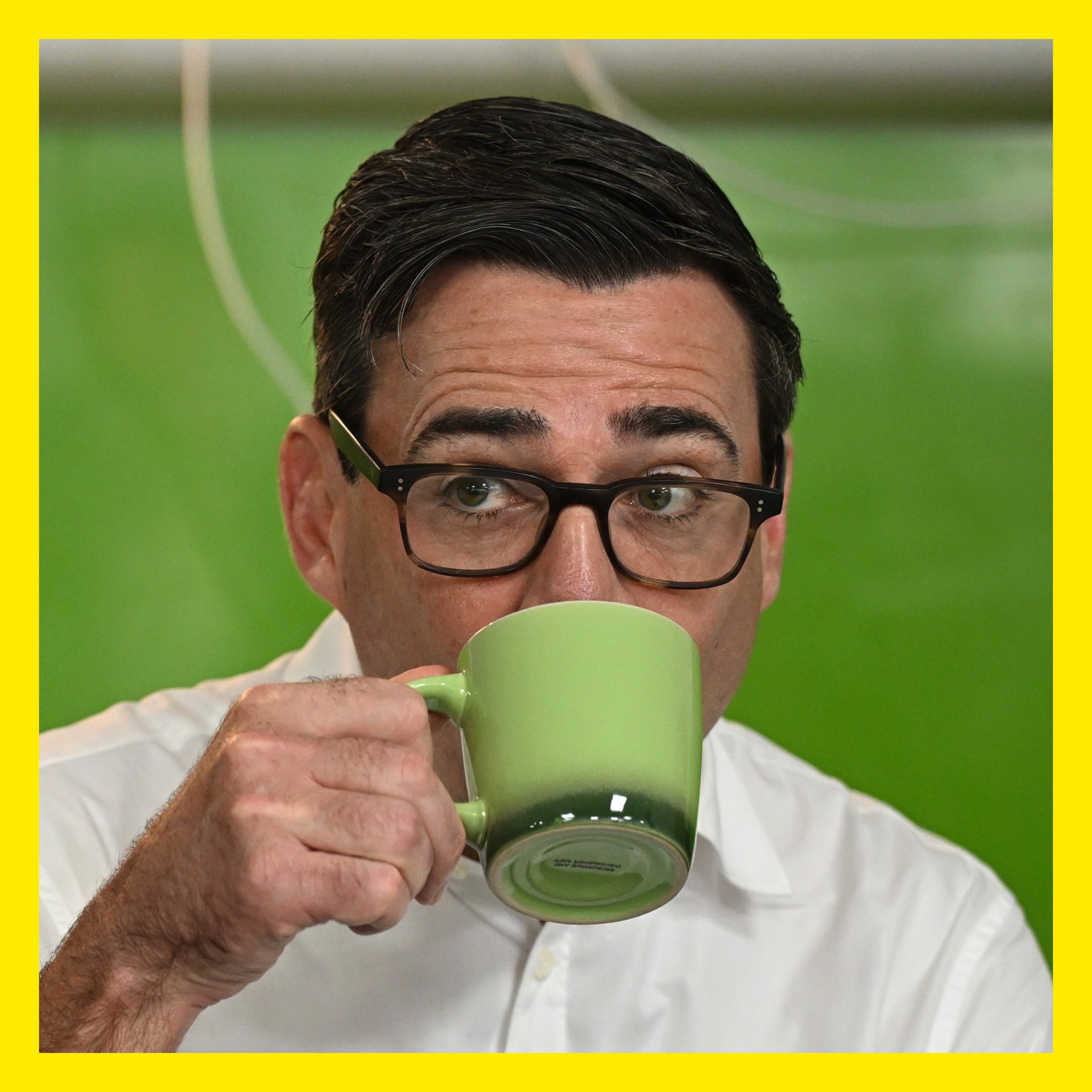

The episode of The State of It focuses on two issues: (1) the Holborn and St Pancras by-election and what it means for Green Party leader Zack Polanski, and (2) Labour’s return to Parliament and the “monster autumn” facing Andy Burnham, culminating in the October 28 budget.
Stephen Swinford (Times political editor), Laris Barrett (Sunday Times deputy political editor), and Patrick Maguire (Times chief political commentator).
Labour’s convincing by-election win was a straightforward defeat for the Greens and raises questions about Polanski’s leadership; the Greens’ internal shift toward Palestine activism (including the “Zionism is racism” motion) has destabilized the party and damaged Polanski’s judgment.
Polanski’s BBC Today interview, the Greens’ conference motion on Zionism, resignations/criticism including Caroline Lucas, and Labour’s upcoming bills (courts/tribunals) plus budget constraints and defence spending tensions.
Written by AI. May contain mistakes.
Discussion on the Holborn and St Pancras by-election results.
“Welcome to The State of It, the political podcast from The Times and The Sunday Times.”
Analyzing the implications of the by-election for Polanski's leadership.
“But look, let's start with the story of the day.”
Debate on the changing dynamics of the Green Party and Polanski's strategy.
“But even so, I think it's important to say that this was just obviously a straightforward defeat for them to Labour.”
Exploration of internal party conflicts related to Palestine and its impact.
“And that is explicit in the Polanski strategy from conference.”
Discussion on Polanski's position amid criticism and challenges.
“Given that the by-election has come so hot on the heels of that row, you know, taken together, it looks like a really, really bad indictment on Zapolansky's judgment.”
Examining how the public's perception of the Greens has changed.
“and not entirely, you know, not as clearly as he could, that he would have voted against that motion and that he wanted to amend it and that he's now going to try and undo it.”
Preview of the challenges facing Parliament in the upcoming session.
“And I think, by the way, it is just a straightforwardly good day.”
Discussion on the difficult economic decisions facing the Labour government and the implications of upcoming budgets.
“And coming as it does with very difficult economic headwinds, it's going to be extremely difficult for them.”

Get the gist, explore an idea or ask about something said.
 Claude
On The State of It, what are the key points of this episode?
Searching your listeningAutomatic transcript. May contain errors.
0:00I've got big news. I switched to Verizon and got the new iPhone 18 Pro. Shh. I can keep my old phone. Can I also get the latest iPhone every year? Shh. Anything else? Verizon let me choose Apple Watch Series 12 or iPad on them. Everybody listen up. Switch to Verizon and get the new iPhone 18 Pro now. No trade in needed. And the latest iPhone every year with Simplicity Plan. Plus, choose Apple Watch Series 12 or iPad on us. Simplicity Plan with Simplicity Pro required. Plan and device payment purchase are separate agreements with separate terms. Service plan for watch or iPad required. edition terms apply for all offers.
0:32Let's ask the big question. Is Zach Polanski, how much trouble is he in? Is he going to have to resign eventually with this? I mean, the Greens, unlike other parties, do give us the treat of an annual leadership election.
0:48Welcome to The State of It, the political podcast from The Times and The Sunday Times. I'm Stephen Swinford, the political editor of The Times. I'm Laris Barrett, the deputy political editor of The Sunday Times. And I'm Patrick Maguire, Chief Political Commentator for The Times. And today we're going to talk about two things. We're going to be talking about the Holborn and St Pancras by-election. Where does that leave Zach Polanski? Is this the beginning of the end for Zach Polanski? And then we are also going to be talking about everyone coming back to Parliament and the tough reality that is about to face Andy Burnham on about six different fronts from the budget through to justice system, you name it.
1:23It's a very tough autumn that's about to start. But look, let's start with the story of the day. We've woken up to a convincing Labour victory in Holborn and St Pancras. And in a parallel universe when Keir Starmer, well, this would never have happened without Keir Starmer being Prime Minister, still being sub-Prime Minister, but in a parallel universe six months ago, this was a by-election that Labour could have very well lost and they haven't. Yeah, I mean, I think for Zapolanski and the Greens, the defence runs something like, well, you know, it's still our second best by-election performance ever.
1:57This seat could now be considered marginal where it previously isn't. And I think for Polanski facing questions going forward, there'll be a lot of attention that he's trying to draw to the fact that actually, yes, they have fallen from their highs, but perhaps he was the one that saw them reach these highs and therefore it may not be as apocalyptic as people say. But even so, I think it's important to say that this was just obviously a straightforward defeat for them to Labour. And there was a period in which it would have been seen as extremely plausible that someone like Polanski could have won that seat in recent months.
2:29They were unable to do so. And actually listening to Polanski talking to the BBC on the Today programme this morning, you know, he said he admitted, yeah, well, no politician that runs in a by-election doesn't want to win. But he was essentially trying to say that a measure of success was that he felt like Andy Burnham had imbibed some of his language and was talking in the way that he had previously spoken a lot and that some of those issues are now being used by Labour. But that in itself is not really a key defence of his leadership or a sort of good diagnosis of where he is going to take the party next.
2:59And it's clear, not just from this by-election, much more significantly from the party conference at the weekend that the party is in, his leadership is in very deep trouble. Patrick, I mean, you've written about this this morning, but there is obviously a massive switch in their approach to, you know, being an outright party in their own right, to being one that is essentially vote green, get a slightly different version of Labour. And that is explicit in the Polanski strategy from conference. Yes, exactly. And the rhetoric from the first half of this year was all about replacing the Labour Party for a brief period.
3:30I mean, remember, Gorton and Denton, that looked plausible, if never quite likely, but you'd have been a fool to rule it out entirely at that point. Now, as you say, he's speaking like the sort of chairman of a Labour adjacent pressure group, that he's leading an adjunct to the Labour Party that exists to sort of chivvy it into woker, more left wing positions, more socially conscious positions, which is not what was written on the Polanski tin when so many Green members bought it last year. and it is that to say it's the second best Green by-election performance ever as he has the problem is you know he set the bar incredibly high both with his rhetoric in those early electoral performances and given that these two things by the way the big row over the Green's new policy on Israel decreeing that Zionism is racism and all the accusations of anti-Semitism the resignations, the very public criticism from Green MPs and Green grandees like Caroline Lucas that we've seen.
4:43Given that the by-election has come so hot on the heels of that row, you know, taken together, it looks like a really, really bad indictment on Zapolansky's judgment. One, for not grabbing the party by the scruff of the neck during that conference and saying, look, I'm the leader, I know we're a hyper-democratic party, but this is the policy I want. It's only today, after the by-election, that he's clarified, after a fashion, and not entirely, you know, not as clearly as he could, that he would have voted against that motion and that he wanted to amend it and that he's now going to try and undo it.
5:21And two, running in Hobart and St Pancras in the first place. You know, he sort of had painted himself into a corner rhetorically by saying, I want a London seat. But the one he chose wasn't really well suited to him anyway. Even the local elections when the Greens ran Labour pretty close, it was never looking like a slam dunk in the way that Hackney or Lewisham or somewhere like Lambeth, where, by the way, the Greens lost a council seat to Labour last night as well. Camden, Hoban and St Pancras is not like any of those things. So taken together, it all looks like it's not a great week for Zap Polanski's judgment.
5:59And I think, by the way, it is just a straightforwardly good day. And we can talk about the long term implications, but it is a good day at least for Andy Burnham. Because he can now say, look, fought two parliamentary by-elections, won two parliamentary by-elections, won them against reform in the North West, the second against the Greens in London. there you go back to business as usual the base for now at least that existed in 2024 has been reconstructed one of the things that's worth reflecting on is how the greens have changed internally so our colleagues jeraldine scott and daisy eastlake have a really good kind of deep dive into the effective takeover of tranches of the party by the palestinian cause in particular there's a group called greens for palestine they've got a load of kind of stuff from inside the group where they are professing and talking about how they don't care about the Green Party, they care about putting the Palestine issue at the top of the agenda.
6:54So what happened at conference where they ended up voting for this very contentious Zionism is racism motion was actually the product of months and months and months of work by this group within the Green Party. And that is the problem Polanski has got. There's an inherent tension. What he hails as the democratic nature of the Green Party is actually completely changing its identity. So yes, it's cost of living. Yes, it's environment. But the Palestine issue is so strong in that party now. And there are obvious parallels with what happened to Labour, you know, under Jeremy Corbyn. The question is, is Zach Polanski losing control of his own party?
7:34Well, he's caught in a very difficult position because on the one hand, he's been touting this great success of a rising tide of membership over recent months. And yet he's not as pure on this issue as some other people are insofar as, you know, he's tying himself in absolute knots on the radio this morning when being asked very simple questions about the right for Jewish people to have a homeland, for example. And as Patrick says, his completely conspicuous absence from Brighton on Sunday, he was essentially saying, well, look, I couldn't have been there because I was campaigning. I mean, it's like an hour train from London.
8:11It would have been extremely easy for him to get to Brighton and to show some leadership on this. And so he's caught in a really difficult position on it. He can't say enough to appease those in the party who would want to see him go even further, who would want to have seen him back that motion in a very enthusiastic way. And yet, equally on the other side, he's having criticism, as Patrick has outlined, from basically every other angle of the traditional Green Party firmament, who are saying, look, this is a really dangerous and divisive motion to have passed, but he can't quite bring himself to condemn that in full terms either.
8:46Well, let's get down to it, Patrick. Let's ask the big question. Is Zach Polanski, how much trouble is he in? Is he going to have to resign eventually with this? Is this the beginning of the end? And we have some pretty high-profile Greens saying quite vicious things about him. They're suggesting it may be the beginning of that process. What do you think, though? Well, look, I mean, the Greens, unlike other parties, do give us the treat of an annual leadership election. So let's see. It is worth remembering, look, it's been a bad week for Zak Polanski, but, you know, this is still the party that he built.
9:20And that is why, as Laura says, this is such a difficult thing for him to resolve. The fact we are having this conversation, we're having a detailed conversation about the Green Party not winning a parliamentary violation, something that happens, you know, has happened an almost infinite number of times throughout British political history, is a testament to what Zach Polanski has done to the Green Party. You know, the membership is largely his. And, you know, any theory of change for the Green leadership, you know, that runs through members demanding a change and then successfully ousting him would probably imply at this point that they wanted to elect someone who was even purer on Palestine.
10:02or that there are enough traditionalist members to get them back on the Caroline Lucas, Adrian Ramsey, Ellie Chowns path. But the very fact of the membership boom before and after Zach Polanski became the leader tells us that's pretty unlikely. So look, I think Zach Polanski is probably here to stay for the time being. but he's built a party that has a bigger base but a more isolated base and that is ultimately the problem for the Green Party. And the big risk for them, and it's a risk for anybody in Labour who thinks they can make common cause with the Green Party, be that through electoral PACs, suggestions of a coalition, also what Andy Burnham is saying about electoral reform.
10:52And Zapolansky is more disliked than Nigel Farage, if you look at the polling. There is a strong possibility, despite the overwhelming picture of stasis from the vote shares, that there were Tories and other voters on the right who voted for Labour to stop Polanski in Hovland and Pancras. The danger for the Greens now is that they become a sort of reform of the left in terms of other voters' attitudes to them. And by that, I mean that they've got an even smaller base than reform and a more geographically concentrated base than reform. But do they become the party on the left that everybody wants to vote against to stop if they have a reasonable chance of winning?
11:33You know, now Keir Starmer is not there, more unpopular than anyone else. the risk for Polanski is outside of about 20 seats he's the default option to vote against and people will bend and contort themselves into interesting allegiances to do so and I think there are lots of Labour people today who are looking at what's happened to the Greens over the past week saying this is why we probably shouldn't touch them with a barge pole or give any impression that Robbett's touched them with a barge pole particularly not just on the Zionism stuff but on the economy stuff, on the tax stuff there'll be Labour MPs saying you know with kemi bainock's politics the way they are with her new focus on the economy we cannot be seen to be you know even a distant cousin of whatever this party's become i mean the other thing we should move on to labor and we'll talk about this more after the interval but it's obviously a good night for for andy burnham and a good day today and i think when you stand back from conference season he obviously had a very good conference right he has shored up the progressive voters and he has now proved that in electoral reform here now albeit not to the same scale of a victory as they had during the landslide that is a sizable victory film so look we'll head to the interval and when we'll come back we'll talk about the kind of monster autumn that is to come loads of challenges left right and center culminating in the budget but we'll be back shortly
12:56welcome back to the state of it the political podcast from the times and the sunday times So look, let's talk about next week. Parliament is back and things kick off in spectacular fashion. We've got bills on the troubles. We've got bills on the courts. We've got various statements from Andy Burnham and all roads lead to this very difficult budget on October the 28th. And it is challenging on any measure. Will they have to raise taxes and how bad is it going to be? Yeah, precisely. I mean, there are, I think you're right to mention, courts and tribunals bill next week in particular. really the government has tried to get ahead of this with their u-turn on jury trials throwing back some of those key reforms from Keir Starmer but actually everybody is just going to be talking about the budget which of course John Healy and the Treasury would like to be more of a diminutive affair a kind of less headline grabbing less definitive picture of where Andy Burnham and Burnhamism actually is and yet of course it will just be impossible to avoid any massive conclusions being drawn from it, because it will be the most important statement so far, really, of what Burnhamism means for you and everybody, basically, in blunt terms.
14:01And coming as it does with very difficult economic headwinds, it's going to be extremely difficult for them. So he's obviously come through conference, as you say, buoyed by what has been widely seen as a very successful speech, particularly by those in the party faithful who were there to witness it. But basically, to use every possible cliche, the rubber hits the road now, and they're going to have to make very difficult decisions. Can we spare a thought, Patrick, for John Healy? I'll just give you a reason why we should spare a thought. So next week, of all things, he's got to go to the IMF, and the IMF is in Bangkok, of all places.
14:31So he is flying out for 15 hours, he's on the ground for less than 26 hours, and then he has to fly back, which is another 15 hours. So he's in the air for longer than he's on the ground in Bangkok, and somehow he's supposed to be in the final phases of kind of putting his budget together. So that is the baptism of fire that John Healy faces. On top of that, he's had this intervention from Andrew Bailey, the governor of the Bank of England overnight, who is basically warning against any Liz Truss style splurges, which made the front of the Telegraph today and people in the Treasury are saying quite rude things about.
15:04But they're in a bind, right? They need to give the breathing space budget without much money to give people breathing space. Well, yeah, exactly. And I think the announcement from the Prime Minister earlier this week on Google Maps, including petrol prices in its interface, is a reflection of that. And obviously, Andy Burnham did a manful job of explaining why that was important. Some Labour people I've spoken to say it's all pretty defensive. Actually, there is a good story to tell about that. why is the Prime Minister dropping it in a tweet and then getting into arguments on Twitter about it on the day he's in Berlin.
15:46But, you know, announcements like that are a reflection of the fact that, yeah, I'm sure, you know, the Irish government, for instance, had just done a massive tax cutting budget, including fuel duty, including capital gains tax. I'm sure there are people in the government who look at that and think, God, I wish we could just cut fuel duty. Obviously, they can't because of, you know, see British economic history for the past 20 years per sim. But, you know, it is, as you say, Steve, politically impossible. And I'll tell you what's going to make John Healy's life even more difficult next week. The number of people.
16:23And to state it, listeners, I promise I will not make this joke. Joke in inverted commas. on this podcast or in anything I write next week, the number of people will say, ha, ha, ha, I remember the last time a Chancellor called Healy had to go to the IMF. How did that work out? So, you know, it's going to be very, very tricky. And it's worth saying as well, by the way, that we are heading into a period where both the main parties on the right in the Tories and reform are really, really up for an argument on the economy. You know, you have the Tories, you saw a whole set of their conference, Reform believe that both Labour and the Tories have left them an opening.
17:03Tories, Robert Jemmerich said this morning, party of the wealthy, Labour the party of welfare. Reform also talking about cutting taxes, but for workers. So you have Tories talking about tax cuts, Reform talking about tax cuts, and Labour in a position where it can't really talk about anything other than the increments. Let's see what John Healy has up his sleeve. But as you say, Steve, you've got the markets, you've got the Bank of England, And you've got everybody basically, it's not too strong a word, sort of conspiring to tell the Labour government you can't do anything of consequence. And it's going to be a huge test for Andy Burnham's narrative skill and his skills as an empath and people pleaser to see whether he can talk his way out of this one, because that may well be the only option he has left.
17:51I mean, you also have the Liberal Democrats offering tax cuts. Yeah. Yeah, they're in a world of pain of their own, aren't they? That revolt against Ed Davies seems to be getting bloodier by the day. But again, as Patrick says, it does leave Andy Burnham and John Healy extremely exposed in circumstances where your main rivals are all offering a tax vision of their own and you're forced into this dreadful posture at a dreadful time where you're likely not going to be able to do the same, but the very opposite. I would question the strategy. All this emphasis on the 10-year vision and the 10-year plan, which we're getting later in the year, and this attempt to underplay a budget, you can't underplay your first budget.
18:26It's such a big political event and it's actually not just hardwired into Whitehall DNA and political DNA. It is a moment that you talk to the public. You stand at that dispatch box. The way you hear Healy and Burnham talking about it, they are trying to downplay the significance as if it's an event to be jumped. It's not like, and obviously, it's not a big tax and spend budget, but it is a huge moment of political consequence. Yeah, and going into it, they were already in the invidious position of having to find cuts for the defence investment plan. So not only the 4.7 billion that they have to find in fresh cuts, but also working out exactly where that 10 billion in existing cuts that Starmer announced is actually going to fall.
19:04I mean, we know the departments, but we're not, I don't think people in Labour have fully accepted exactly where those are going to fall. And it's going to be very politically difficult. And actually having some conversations with some senior Byrne Malloy allies in recent days, there is some discomfort in the idea that this is a budget which will have to make cuts to fund defence i mean for all of the consensus that seems to be building around the need for a rise in defence spending and for all the acceptance that uh andy burnham has elevated someone into the treasury who more than anybody else uh feels that and believes that unequivocally there is discomfort at the more traditional labour view which is public services above all else are absolutely essential and especially at a time like now public services and the money in people's pocket is massively essential so I do think there's a tension there and that will be adding I think to the woes of trying to figure out exactly how to make this budget look like anything other than a little bit painful.
19:59That is the crucial point and the crucial dynamic and I think there's a risk of it only getting worse that Healy versus everybody else in this budget process particularly on defence You know, I've lost count of the number of times and the number of numbers I've heard on the specifics. You know, and the number of people, I have to say, in and around the cabinet, at the top of government, who are willing, even Soto Voce, to take John Healy's name in vain or to cock a sceptical eyebrow or to express surprise that he's being so obstinate, by all accounts, on the question of defence spending. does not really augur well for a sort of political story that everybody can get behind on Budget Day.
20:50Look, maybe something constructive will emerge from the black box. But, you know, it's sort of it's one of those rows that probably could have been foreseen, given the circumstances of John Healy's resignation from the last government. and the word I've heard more than once from well-connected people at the top of government is dud. That's the word used to describe the Chancellor by some people in private. He's got a very tricky job, obviously the trickiest job in government and as a rejoinder to the accusation that he only thinks about defence spending, something I've heard a lot from the Treasury is that he wants to focus on kitchen table economics and make a difference when people are thinking about what the budget means for them the next morning.
21:34All that we've heard on breathing space, kitchen table economics is a phrase we'll hear a lot from the Treasury in the coming weeks. But, you know, I think there are genuine questions and profound concerns at the top of government over whether they can reconcile all the things to which they're committed and what's going to come first. What comes next after the budget is just as challenging. So you get the 28th, that's the budget, it's really difficult. You then get these two big, chunky reviews into that most intractable of problems, welfare. You get a review by Alan Milburn, a former Labour Cabinet Secretary, and you get a review by Stephen Timms, a Labour MP into disability benefits and into youth unemployment.
22:10Two reviews that are going to come up with specific recommendations, which will cost a ton of money to implement when there is no money. So that is a big problem for them. And then after that, we think we've also got the decision coming up later in the autumn on Jackdaw finally getting approval, which is the gas field in the North Sea. So some chunky politics, all then feeding into this 10-year plan where he's going to set out the big stuff, the vision, and try to paint a narrative, which inevitably will fuel election speculation. By the way, for what it's worth saying, John Curtis's view today, the great sophologist, is that this result shows you why you shouldn't go early today in Holborn and St Pancras.
22:51It is down from where they were in 2024, and it's not the right time clearly from that to go. That's his view. I'm sure opinions may vary in number 10, but let's see. It was a result that said Labour's standing in London and among the progressive left is about as good as it was in 2024, which, as funny as it may sound, wasn't the most amazing place. So, you know, not every opponent the Labour Party has in a by-election can be Zach Polanski and not every candidate it has can be Andy Burnham. So I don't think the two by-election victories Labour has had under Andy Burnham and contested by Andy Burnham are yet conclusive proof that it's time to throw caution to the wind and goes to the country.
23:44Well, I think that brings this week's podcast to a close. We just want to thank our incredible producer. Lara, would you do the honours, please? Thank you. I thought you'd never asked. Harry Kitson, thank you so much. Everything you do for us.
24:02I've got big news. I switched to Verizon and got the new iPhone 18 Pro. Shh. I can keep my old phone. And I also get the latest iPhone every year. Shh. Anything else? Verizon let me choose Apple Watch Series 12 or iPad on them. Everybody listen up. Shh. Switch to Verizon and get the new iPhone 18 Pro now. No trade in needed. And the latest iPhone every year with Simplicity Plan. Plus, choose Apple Watch Series 12 or iPad on us. Simplicity plan with Simplicity Pro required Plan and device payment purchase are separate agreements with separate terms Service plan for watch or iPad required Additional terms apply for all offers
Zack Polanski's defeat in the Holborn & St Pancras by-election puts him in a tough position. The Green leader lost the by-election by 3,300 votes to Sagal Abdi-Wali, the Labour candidate. He's also facing criticism after the Green Party voted to declare that Zionism is racism. Polanski did not vote and has been accused of failing to show leadership. How tenable is his position now?
Plus, parliament is back next week and the real business of government gets going. We look at what's in store and how the chancellor, John Healey, is preparing for a very, very difficult budget.
Steven Swinford, political editor, The Times
Lara Spirit, deputy political editor, The Sunday Times
Patrick Maguire, chief political commentator, The Times
Producer: Harry Kitson
Executive producer: Molly Guinness
Picture: Getty Images
00:00 - By-Election Result: Labour Wins Holborn & St Pancras
00:36 - Is Zack Polanski’s Leadership in Trouble?
01:56 - Green Party Rifts & The Palestine Motion Controversy
07:34 - Is This the Beginning of the End for Polanski?
11:06 - Andy Burnham’s Electoral Boost & Labour’s Position
11:44 - Parliament Returns: Navigating the Autumn Budget
13:18 - John Healey, Treasury Trips, and Bank of England Warnings
16:39 - Defence Spending vs Public Services Dilemma
20:39 - Welfare Reviews, Jackdaw Gas Field & Election Speculation
This podcast was brought to you thanks to subscribers of The Times and The Sunday Times. To enjoy unlimited digital access to all our journalism subscribe here.
Hosted on Acast. See acast.com/privacy for more information.