
In short
Branding as long-term trust and consistent perception; branding is distinct from marketing. Episode outlines a three-part branding architecture: Strategy, Identity, Execution (with execution emphasized as 90%).
Key claims
Most companies confuse branding with messaging/marketing tactics, creating misalignment between what they say and what customers experience. True branding requires “equilibrium” across strategy, identity across media, and consistent execution; inconsistency can break trust overnight. Howard Lim argues brands must build a “bridge” between founder values and what consumers will resonate with, using deep questions (e.g., “what values would make you go to jail for a year?”).
Notable examples
Apple/Steve Jobs (quality, minimalist design, instant recall); McDonald’s consistency; WSS rebrand (sold for $750M to Foot Locker); 20th Century Fox and 31 Flavors/Baskin Robbins as cases of outgrowing names/marks; Samsung copying iPhone without understanding why.
Guests
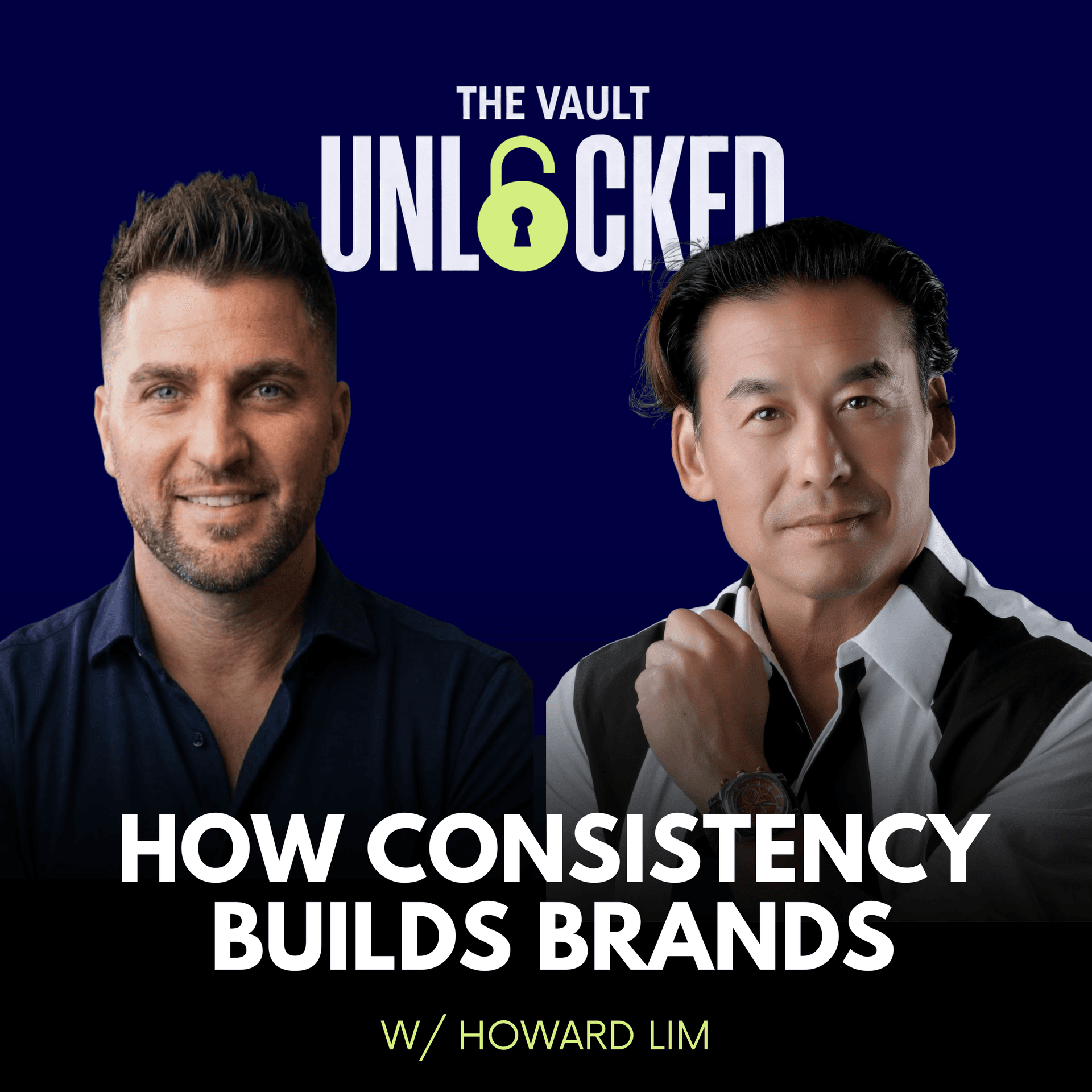
Howard Lim, branding expert/business brand architect; rebranded companies sold for ~$750M and IPO’d brands; background in applied art/design and advertising/positioning, combining design and advertising into modern “authentic branding.”
Written by AI. May contain mistakes. Listen to the episode to check what was said.
Chapters
Tap a time to open that second in VOUnderstanding Branding vs. Marketing
0:45 to 3:39
A deep dive into the core principles of branding and its distinction from marketing.
“I'm just going to start us off because I think it's a big question that I actually ask.”
The Evolution of Branding
3:39 to 5:59
Discussion on the history and evolution of branding and design principles.
“Talk a little bit about your past now, about how you've come up with this.”
Authentic Branding and Its Importance
5:59 to 9:06
Exploring the concept of authentic branding and its role in differentiation.
“And actually, that was coinciding with Apple because Steve Jobs was a natural brander.”
The Right Questions for Branding Success
9:06 to 12:06
How to ask the right questions to uncover your brand's true identity.
“Like, I mean, as you said, Steve Jobs was, I mean, yes, he was probably one of the top guys if you think about what he did with Apple, right?”
Perception vs. Intent in Branding
12:06 to 14:00
The importance of aligning brand identity with client perceptions.
“So then how do you ask those right questions?”
Building a Strong Brand Foundation
14:00 to 16:40
Learn the importance of aligning brand values with consumer perceptions.
“If it had been that, like not to say he would do this or not.”
The Role of Consistency in Branding
16:40 to 19:30
Understand how consistency in branding leads to trust and recognition.
“So yeah, so it's building your own tribe, what I call tribe.”
Target Market and Psychographics
19:30 to 22:40
Discover how understanding diverse demographics and psychographics is crucial for branding.
“So a lot of times what happens is that right now, what we do a lot, majority of the time, 80 % of my business is really redesigned companies.”
Common Branding Mistakes and Solutions
22:40 to 28:00
Identify common pitfalls in branding and learn strategies for effective positioning.
“And first thing I know is they look like Sybil, like that old classic movie, like a bunch of personalities.”
Unlocking Hidden Branding Insights
28:00 to 28:38
Learn how to identify and leverage hidden insights in branding.
“They haven't been asked the right questions to unlock those quote unquote hidden gems.”
Show all 24 chapters
Understanding Brand Strategy vs. Business Plan
28:38 to 29:25
Explore the differences between a brand strategy and a business plan.
“And that's when I get into the strategy to figure out their positioning and even goes further in positioning, but also gets into the finances as well.”
The Importance of Core Messaging
29:25 to 30:29
Discover the significance of developing a core brand message.
“Even having that, you can still do it wrong.”
Creating Inclusive Brand Manuals
30:29 to 31:35
Learn about the need for inclusive brand manuals that engage all stakeholders.
“So I've seen now it's become very popular where I see a lot of designers are creating style guides, like what fonts to use, what colors to use, which is great.”
Business Model as a Branding Foundation
31:35 to 33:58
Understand how refining a business model can enhance brand identity.
“when you do these strategies, is you'll do this with the whole business, like all the departments kind of in one.”
Identifying Outgrown Brands
33:58 to 34:31
Examine brands that have outgrown their original identity and name.
The Challenge of Brand Identity
34:31 to 35:03
Learn how companies struggle with outdated brand identities.
“So a lot of names, literally I see where they, a lot of companies will run into trouble and have run into trouble.”
The Science of Effective Logo Design
35:03 to 36:18
Explore what makes a logo effective beyond aesthetics.
“their full identity, the look and the feel.”
The Value of Brand Consistency
36:18 to 37:15
Understand the critical role of consistency in branding.
“Or who you're not speaking to or connecting with.”
Execution vs. Theory in Branding
37:15 to 37:48
Discover why execution is essential for successful branding efforts.
“What mistakes do you see traditional branding?”
Building a Strong Brand Blueprint
37:48 to 40:03
Learn how to create a comprehensive branding strategy and blueprint.
“And I said, well, let me take a look at what they've done.”
Maintaining Brand Integrity Across Growth
40:03 to 42:01
Explore the importance of maintaining brand consistency during growth.
“And the I is for implementation, which is 90 % of the work now.”
The Importance of Brand Consistency
42:01 to 43:29
Learn how maintaining brand consistency is crucial for business identity.
“A lot of times they get overly designed.”
Aspirational Design in Branding
43:31 to 44:16
Discover how aspirational design can elevate customer loyalty and pride.
Consultation Offer and Branding Assessment
44:16 to 45:56
Understand the branding assessment process and how to improve your brand.
“And, you know, if they're interested, the easiest way is to email me and I can email that link and there's a whole process to this.”
Transcript
Automatic transcript. May contain errors.0:00Howard Lim:Most businesses think branding is what they say about themselves. They're completely wrong. Branding isn't about your message. It's about what people think when they hear your name. It's the long-term position, the consistency, the trust. And here's the thing most founders miss. Branding and marketing are not the same. They're two completely different systems. Today we break down the three-part architecture that separates brands people love from brands people ignore. Strategy, identity, execution. And the one mistake that's probably killing your brand right now. This is Howard Lim. He's rebranded companies that sold for$750 million.
0:39Howard Lim:He's IPO'd brands, and he's here to show you exactly where most businesses get it wrong. This is The Vault Unlocked. Let's unlock it.
0:57today is all about the difference we have sales we have marketing and then we have branding and today we are going to break down what we think branding is what traditional branding really is and what people think branding is today and how they see it and today we have a special guest i'm going to call him the branding expert the master of all branding here we are have him Howard, how are you? Good, good. Thank you. How are you doing? I'm doing great. Thanks so much for being here. I'm just going to start us off because I think it's a big question that I actually ask. And I know that you have a unique way of answering it.
1:38So I want to ask the simple question. What is branding? Well, branding is a very deep and broad subject. And it's the most, you can say it's the most complex business language that we have in an arena of business. And there's actually three parts to branding. But ultimately, branding is about, it's not about what you say. It's about how everyone receives you as a brand. In other words, what matters most is what people think about you, what they're saying. So people have to kind of like a one-way street. They say, oh, we're building a brand, you know, such and such. and they don't quite understand.
2:18It's not really what they're saying, although that influences the outcome, but it's about really what people think about your brand. That's interesting because right there, I mean, boom, let's just kick it off. Ding, ding, ding. I love it. What I just heard you say there is one of the cores of branding where it almost is like where most people probably get it wrong is we think branding is about what we want to say to the market or what we're trying to say to the market. But true branding and understanding where branding actually what it really means isn't what I'm saying to the market. It's what the market's perceiving what I'm saying.
2:55Exactly. And so with companies, what's most ideal, if they understand how to position their product and service information, and so therefore the expectations is matched to the experience of that buyer, that client or the customer or consumer. So therefore, there's an actual, you could say, alignment between what they're saying, what's been received, and how that experience is actually matched to the expectation, which sounds simple, but most companies, every company I've ever met, quite honestly, has it where there is not an equilibrium. Okay. So let's talk about this. How did you come up? Talk a little bit about your past now, about how you've come up with this.
3:43Because obviously, I know you work with some big companies, and you've created this entire organization, your business is around the idea of true branding. Where did you come up? How did you learn all about this? What's the history here? Well, I was pretty fortunate because I was in school for years studying different, you could say, different subjects, but overall came out with a degree in applied art and science. But the point being is this, I started off by looking at design and advertising. And the funny thing is a big part of branding is strong designing because it's all about how to engage people in their senses, especially out of our five senses.
4:31We use our eyes 90 percent of the time to perceive and evaluate things. So graphic design is what I majored in applied art and design, but I also took on some other courses like, you know, computer science, for example. The point being, I all came into the workings of my company. So branding is a twofold where it used to be divided when it came to firms. You had graphic design firms and you had advertising firms like BBDO, Shia Day, so forth and so on. They're all about positioning. Advertising is all about positioning. So when I was in school, I was studying both. And I said, oh, there's something to this.
5:10And so I started building brands literally coming out of college. But I used to call it image marketing because branding wasn't in a category just yet. So I knew we're doing more than just design. And I know that we're doing more than just advertising that we're actually combining the two. And that's really where, hence, branding came from is those two core principles. from so branding came from the idea of advertising and advertising you said was positioning and brand and and then there was design of that positioning and then brand so brand isn't been around for a long time it sounds like it it seems like it's more of a newer concept exactly it became popular like you could say around it was around 2010 is where like but around we're 28 2010 we We're starting to hit like Ford Magazine, Time Magazine, Money Magazine.
6:02It's all about brand, you know. And actually, that was coinciding with Apple because Steve Jobs was a natural brander. But branding is actually even further than that. Honestly, what I call authentic branding, which is branding in the current modern day, is more than just design, advertising. now are including in the course is the parts to marketing and social media. And so we're looking at now where it takes on a deeper and wider scope. And a lot of it has to do now, quite honestly, with what I call authentic branding. What is the back end story of a business, the authenticity of business. So it's evolved to more, you could say what I call the DNA to building a strong brand.
6:48It involved more ingredients than just how it was before. Why is that important? Because it's all about differentiating from your competitors. And you have to be very clear how you're differentiating. So these ingredients create that DNA of what's going to make you different, look different, sound different and feel different. So as you walk in and you've seen and you're working with a lot of these companies, you said you've a lot of them get it wrong. Where are they getting it wrong from like from them? Is it the messaging? Is the positioning? is it just understanding you said that equilibrium the whole thing coming together i feel equilibrium comes from other things connecting so that you get this holistic uh brand approach that people can what you're saying is also being perceived of what you're of what you want it to be versus what you think it is exactly so a big part of what people miss is they think that branding is the same as marketing when they're totally two different animals branding is about the long term what is your overall position of who you are what makes you unique and why this matters marketing is about
7:58Howard Lim:the tactical side is sending that message out technically meaning through the different channels right so that's the first mistake people make they confuse the two and they collapse the two being the same we're totally are two completely different paradigms the second thing is that even if you hire a branding person, there's three parts to branding. There's those who come up with a strategy. They're called strategic. A lot of times they're referred to as strategic planners or strategic brand designers. What they're doing is really coming up with a strategy. Now, the second component to this is building the identity.
8:42And this is where most people will only go so far because branding and building the identity is an understanding of all medias. Because you want to create cohesiveness between your radio spots, TV spots, your social media, your website, your print, your product design, your vehicle wraps, your building. So the only way you can build things effectively, understand each of those different principles because they're all different. What I see a lot of times is people, brand designers are actually designing for, let's say, a newspaper ad for like a website or a website they think is a catalog and so what they're doing is they're missing the opportunity to truly engage that person based on that media of how to really engage their emotions okay okay or to use the wrong quote-unquote um principles when it comes to the layout so i've seen a lot of people like for example to design something like a package design but it is they design a package design like it's an ad and so they don't those two don't translate when it goes from media to media so that's where brand identity what i call brand identity um where you become a brand designer that's where a brand designer is different than a graphic designer a brand designer is understand has an understanding of we're talking decades of understanding these different medias and which media to use and actually how to design for those core principles so you're most effective when you're using those the medias but i think it's interesting because even even we talk start talking about the medias which i would say is getting closer to the marketing probably side of this equation there's something before this which is really the core the truth which is you said your identity what is the identity that you want so it where it's interesting because that alone goes okay well i know my identity i can go you know figure that out but it's not actually the case because you can think you know what your identity is or you can think you want the i would say your audience to want to know what your identity is but there's a nuance here that nobody talks about there's there's the there's the there's an expertise that happens in between that of actually really understanding what your identity is and how to actually land so that your potential customers, clients, whatever it might be, actually resonate and want to be part of that brand.
11:05Like, I mean, as you said, Steve Jobs was, I mean, yes, he was probably one of the top guys if you think about what he did with Apple, right? Like, what was Apple? What does even Apple mean, right? But when you think about it, you hear it, you know exactly what it is. Simplistic. You're exactly right. So I always say it's about asking the right quality questions to get the quality answers. Most people try to do, it's almost like they try to operate on themselves without having the expertise on the outside of what's really going to be able to scale and grow that company. So they're doing the same thing year after year.
11:37They might get their team together, their board together. We're not having an expert come on the outside to ask the right questions, right? It's kind of like, you know, there's an old saying, you know, you can't see the forest through the trees, right? It's like they're only taking one perspective. Their perspective, what they need is the outside perspective of understanding actually how to ask the right questions to get the right answers that are so sustainable. Those questions, those answers are so sustainable, they become the foundation, the backbone of that business slash brand. How do we ask?
12:07So then how do you ask those right questions? How does a business ask those right? Is that market research? I'm thinking branding research, I guess you would call it. But how do we ask the right questions and know we're getting the right answers? We came up with a proprietary process of what those questions should be. Okay. So just to give you an idea, okay? If you had to go to jail for a year, what values would you find so inherent that you would say, I would need to go to jail because of these reasons? You know, that would be a question like, what do you feel like are your – like, for example, when it comes to branding, there's usually five values, right?
12:49Those values are like, you know, almost like people treat them like, what's your personality? No, that's not a strong value. A strong value is what's going to actually dictate the culture. What's going to be so inherent in a culture that your business would cease to exist? Like, for example, Steve Jobs was a natural brander. His is all about quality. When a board member thought he was crazy charging that amount of money for a consumer to purchase, they thought they were looking at a profit. They weren't looking at the brand of what's going to supersede all other brands and stand above it all. based on quality.
13:25So he didn't want to create any corners to produce the best product. He understood it's going to take more money, more time, but you know what? It's going to keep them ahead. And not only that, but give the consumer what they ultimately want. So that's a value, a very strong value was that he wanted to make it a user-friendly operating system or I should say user-friendly computer in general. And so that meant that he had to do more programming I mean, to make sure that the interface, the GUI interface, everything about it was in create the best experience. So it wasn't clunky like a PC where it was inviting and allow people to get more creative.
14:02He was not going to bend on that value. If it had been that, like not to say he would do this or not. But the point being is like, you know, would it mean like a prison for a year that you felt so strongly about those values? Right. That's a core. So that's what I mean as a question, but to pose a question in a way that actually sinks so deep, it becomes part of the foundation. It's unshakable. See, I like what you said unshakable, but it's interesting because as you say that, from just my experience that I've seen, even in that one question, you can get it wrong. Like it doesn't matter. Like for me, it's like it doesn't matter what I think, you know, what I'm willing to go to jail for.
14:40It matters what my clients are willing to go to jail for, like what they're going to perceive that I'm willing to go to jail for. Because I could say, hey, I want, you know, X, but X doesn't land with my Y client. So I can sit there forever. Right. Thinking. And I'm going to hold and hold and hold. But at some point, there's like a test that has to happen. And that's what I never understood is you can't test without brand. You can't. How do you get that in between so that you actually have something that could be in alignment to go to the market? Because I'm sure when you go to market, it changes.
15:17Well, here's what's interesting. So there's certain core principles that will always remain true to the founder, to the CEO, the founder, you'd say, right? There's two parts of this. There's what's true to that founder and then what's going to resonate to the consumer and then building that bridge. Building that bridge is coming up with a statement that resonates with both. Yeah, yeah, I love it. So then that's the nuance, right, is the bridge. is how do you build the bridge between what the founder truly believes what he's willing to die for and then the bridge to what the consumer is willing to perceive or go i'm in or i'm out exactly now here's the killer part it's like you can't please all the people all the time but the great thing about it is that if you're really clear based on your your love your passion in your heart, you're going to build others that want to resonate with that.
16:20You just need to, that's where then, once you forget that part, that's where then marketing comes in place, right? Because now you're marketing it out there and saying, here's who we are. Here's how we are available to you. This is how you can resonate with us, right? So that's where marketing comes in. But you got to get these other components straight and figure it out first before you could actually market. So yeah, so it's building your own tribe, what I call tribe. and so you create a culture and a tribe that's so strong i remember when apple i was one of those guys that stood in line for eight hours getting the first iphone because that's my loyalty and that's the ultimate so there's two parts to this when it comes to a strong brand is building loyalty and building trust the more that you're consistent to what your values are your philosophy is for example the more and consistent you are the faster you're going to be recognizable as what i call instant recall in the mind and hearts of your customer.
17:17It's when you actually bend those, that's where the trust goes down and you start to break that trust. That's where the brand can deteriorate literally overnight after all the years of building up, boom. And that could be what? The product you're selling, the messenger, the color? Is that a combination of all of that where you can start losing the trust? Exactly. It's a combination of all. like so and again a little abstract but this will make sense so there's there's kind of like the universe that you're building which i call the context so there's certain components that make up that context your philosophy your vision and your values and your overall core message you're not telling you know you're not telling specifics but you're actually like it's almost like you know quite honestly it's like you know the declaration of independence yeah yeah it builds the context of this country, right?
18:12Then you fill it with the content. Okay. The content, when it comes to product could be like a series of different products or a different line of products, but they all follow a certain principle based on a context, which is the philosophy. So going back to like Steve Jobs philosophy, he wanted to use it for any interface, but he also wanted, he also believed, and he was a designer as well. He also believed in minimalist design. Most companies don't even know why you're copying an iPhone. It's the most simplest form you could design for a phone. You can't get any simpler than this, right? So you got Samsung and all these other companies that are copying it, right?
18:52They don't even know why they're copying it. But the point being is that Steve Jobs, with all his products, want to bear it down to the simplest approach, which is Japanese design, influenced by the Japanese, which is minimalist design. Everything they design is based on a philosophy for consistency and also for recognition. You could always identify a Apple Mac product because it has a certain look and feel to it. Absolutely. I mean, even their stores, they have a look feel, you know, when you're in one, right? Exactly. So it was interesting because as you were talking, I was thinking, so what comes first, the product or the brand?
19:28And it seems like the brand really dictates the product. Yeah. So a lot of times what happens is that right now, what we do a lot, majority of the time, 80 % of my business is really redesigned companies. They have the content, like they say, a product, but it isn't positioned properly to their target market because, first of all, they haven't defined themselves far enough. and second of all they haven't they haven't defined their customer not only that have they not defined their customer from the standpoint of demographic and psychographs but they also have sub category sub segments okay it gets kind of complex but you got four generations now the buying powers you got to be born you got the x you got the millennials which is y and then you got the z's anyways the point being is they all think differently that comes to the psychographics Are you designing based on one psychographic?
20:21Are you designing for two psychographics? Or are you designing for three? Should you be designing one product for one psychographic and create that same product and redesign it for a second group of psychographics? And so I say that nowadays branding goes beyond the demographics because we live in a global market now. It has to do with more generations in their psychographics, for example. it it's interesting because now we're getting into the deeper like so how as you say that i'm thinking okay so how do you do that if you if if you have a product let's just say or a business that you want to speak to all four demographics it's very easy if you know what your demographic your target market avatar whatever the name you want to use it but like it's very niche you can speak to them but if you're like if you want to be a household name or a product that let's just say works for all those different generations?
21:13How do you do that? How do you do that under one umbrella? So a lot of times what we'll do is we'll create sub-brands. If we find like, well, first it's taking the data. This is where now marketing and sales comes into place. We'll look at the data from the sales or marketing to find out, well, who's your quote unquote, who's your number one clientele from the standpoint of the demographic and psychographics, right? And then let's get from marketing and just get it from sales and look at the data and then start to look at, well, is it even worth considering, you know, why are Z generation because there's maybe 2%, right?
21:48And they're like, oh, we should design for all, right? And then they're like, well, maybe we should scale it to a specific one, a specific demographic, psychographic, excuse me, psychographic, because that's your biggest buying buyers are right there. Let's say they're 80%. So then it gives us an idea. Well, this is designed for that market specifically. specifically there's there's also looking at too another set of variables that we look at are you going to be price driven are you going to be value quality driven okay what most companies that we work with on nearly almost every company that we work with we tell them to be value driven because that will set us apart then price driven we're price driven you're beating up on pricing especially when it comes to the b2b okay they go well how can we get it where you know we're more than just uh we're price driven more than just price driven i said because you got to create a brand you never go through your website you're a totally commodity everything you're talking about is about the is about the features about your price that anyone else can say but it's not talking about the benefits it's not talking about the brand from an emotional standpoint how people could benefit from that quote-unquote product even it's a b2b so as you're saying that i'm thinking it comes to that question i kind of asked but we didn't really go deep into it is so when you what are some of the common mistakes or the common things that you come into businesses and you see right away i know you said the first one was like the equilibrium is not there but if we were to go deeper what are some other things that you you can just see and you're like yep that's a game changer like the things that really make the the difference so a lot of times i'm starting with a one hour intake where i'm reviewing all the material like everything they've produced to represent their brand or website, social media, if it's a product design or product design, everything.
23:39And first thing I know is they look like Sybil, like that old classic movie, like a bunch of personalities. Yeah, yeah. So there's different looks and feels, different fonts, different colors, and different tone as far as a copy. I'm reading a copy on social media. It doesn't relate to the actual brochure. The brochure does not relate to the website. so it looks like 10 15 different companies guess what you're now positioned in a way that you never get noticed because a company that looks like 50 different companies versus like one company like apple guess what the one company that's going to get noticed is the one company that actually is very clear who they are what they stand for and has a clear identity so the first thing i look at is the identity and understand that a lot of times well every time i ever work with a company where they're disjointed and there's no alignment there's no consistency it's no unification about and not even there's a unification like say they are using the same color same fonts there's no unification about still of who they are as an overall position and would you say not even just who they are but who they actually want to target it?
24:48Oh, very good. Exactly. So a lot of clients, they go, well, we're talking, you know, let's say X, Y, and Z. We're talking, we're, we're targeting, targeting Z. But when I look at how they're targeting is really to X and then they're trying to figure out why not or not getting their ideal customer. Well, yeah, because I know when I've walked into cost, like, you know, as you, as we build sales teams, we need to make sure obviously marketing and brand is on par or just sales becomes way harder. And one of the things I've realized is a lot of these, a lot of businesses that I've worked with, like they don't, they think they know, but they haven't really done the work on just, I'm talking about their actual ideal target.
25:27Like their other, you know, some people call it their avatar, IPC, whatever, ICP, whatever it might be. But I feel like in order to get your ICP, you, there's one even step before that, which is what I'm thinking I'm hearing you say is like that brand, which is before the brand, which is first, who are we? So what is this company? And what does this company want to represent? Number one, like, we don't really even on and it's not Hey, I want to make business better. Like, it's not like that's, it's there, there's a nuance in that right there. My question always goes, if you get that wrong, everything down the chain is off, Everything is off a millimeter, a millimeter, millimeter.
26:12And this is how then you get these businesses. You come into their fragmented. Nobody knows what's going on. So the challenge is right. How do you get to that right message right in the beginning? This is what we represent because it's based off of obviously the founder or whatever the founding principle is. how do we get the founding principle that we know is actually going to land and is going to speak to our target market before we even know the target market so to me it there's a there's a nuance here i'm trying to figure out uh and i don't know if you're not saying it because it might be giving away the kitchen sink but we can look at it all in silos i tell people all the time if you don't even know who your target market is and you don't know the message and you haven't figured out the right message to the right audience or the right offer that's what i always say stop immediately You're wasting money.
26:58You're wasting time. You're wasting energy. You don't have a sales problem. You got a marketing and in this case, a branding problem. So the way that we do it, we go through our SIM system. And it stands for strategy, implementation and management. So the first part is strategy. We do a one day, two day and three day. OK, so if you work on a one day, two day, three day, the core central is getting to that position. exactly what we're talking about. Like, who are you? What do you do? What makes you unique? The uniqueness is what's super critical because if you're saying, hey, we sell this widget, you're right.
27:35That just becomes a commodity. You have to look at it from the standpoint, what are you doing uniquely that is unique from everybody else that actually adds more value to your ideal customer? And believe it or not, like, again, when I work with companies, you know, usually it's repositioning them, rebuilding them, repositioning them, redesigning them. And what I find is that they have all the gems. They're just all buried. They haven't been asked the right questions to unlock those quote unquote hidden gems. Windows got a rock to the surface. When I look at all the data points, then we're like, okay, now we can make this into a brand.
28:18So now we've got, so they offer all the content. And then what I'm doing is looking at, Well, let's create now the dots and now let's connect the dots. Okay. That's a part they don't never get and understand. That comes back to being an expert in the space of branding and positioning. But the point being, you're right. They have all the answers. They've just been buried over the years and not been asked the right questions. And that's when I get into the strategy to figure out their positioning and even goes further in positioning, but also gets into the finances as well. Okay. I was going to ask that because I wanted to make sure people, because I think I understand this, but I want to make sure people listening here are not confusing what you're saying to like a business plan versus a brand strategy or a brand document.
29:02Like for me, I have, I have a couple of businesses and that's like, where's the brand doc? Like the brand doc tells me, right? What the message is, what the fonts are, what the colors are, how to use those colors, when to not use those colors. Like there's like, so there's this common ground that anyone knows and sees, you know, it's one thing. Funnels, emails, we all speak in a certain language. But even then, you'll see me always go here because I see it and I can't get my finger on the pulse. Even having that, you can still do it wrong. Like it still can, the whole thing could be wrong. It's not what you, and I love what you said.
29:38It's not so much what you like, it's about what the customer perceives. Right, exactly. It keeps going back there. So you go in and you do these strategy. This is one of your now we're talking more about you specifically. You have a certain way of doing a strategy, which is basically understanding the business, the core scene underneath the hood where most people are not looking and then be able to ask. Or I'm going to say extract the right information through the questions and through this sim system. I like that to be able to understand. OK, wait a minute. We have an idea of like, here's who we are.
30:13Here's what we represent or what we stand for. Here's where we're going. Now we start making a message happening. Yeah, exactly. So with the SIM system, by the way, what you're describing, which a lot of people get these two confused quite a bit too, is a style guide and a brand manual. So I've seen now it's become very popular where I see a lot of designers are creating style guides, like what fonts to use, what colors to use, which is great. Don't get me wrong. That's great. But it's still all in theory. What they're missing is the core content, what's our message, what's our philosophy, which comes from what I started to create a new category, which is brand manuals that are deeper.
31:00So therefore the culture, not just designers can understand this and marketing, but the culture at whole. So the more you have everyone working in a sense and going in the right direction, right? And that means all the stakeholders, literally. So a lot of people will design style guides for the creatives, but what about the culture? What about the actual VP? What about the actual partners? So manuals, the way we do it, we build brand manuals where actually it allows everyone to participate into the brand and see the value. And so you'll do this with, when you do these strategies, is you'll do this with the whole business, like all the departments kind of in one.
Read the full transcript
31:42Yeah, exactly. So when I do, well, that's a three-day strategy session. You're right, though. What I'll do is in these strategy sessions, the three-day strategy session, even a two-day strategy session, what I'll do is I'll look at their business model, look at their brand, but I'll go beyond. Most branding companies only work at the brand level, right? But I like working. The reason why I start with the business first is because if business is going to change how the brand should be shaped, say that again the reason why i like to start with the the business the business model specifically first is because a lot of times what i'll do is i'll look at the business model and they'll have let's say 10 components that will actually you know quote unquote create revenue and i'll say and all because i've worked in every single space i'm like combining my head what might be a space i haven't thought of that's used in medical but actually we're working in finances that has been effective medical and could be adapted to finances to actually get the company out there even further when it comes to more revenue.
32:43So what I'm doing is I'm looking at dots that have not been created and create a bigger and stronger quote unquote business engine. So therefore then that's going to change the way the brand identity is going to be shaped. In other words, if it was only shaped from what the business started with and what it may currently do, it might be that then it's half-baked. In other words, it might even be the name. They outgrown a name, which we had changed a lot of names as well, but the name itself could only be limited by their business model that they currently have. When we change some of these components, the name itself can change.
33:17Like, let's say all these containers. There are much more than containers. Containers, when I worked with them, was only a quarter of what they did. They were leaving three quarters of it buried, and everyone thought they only did containers when they looked at the name or heard the name. I said, no, we just changed to Aldez, which we ended up doing and getting, by the way. But the point being is that that changed my whole thinking about what kind of brand identity we want to create, starting a lot of times with a name and a mark. So why I like to do and work with the quote unquote business model, because the business model now we could build something bigger and stronger, you could say, and then reflect the identity on that so therefore the company looks literally more valuable than it ever did before and it could grow into their brand rather than outgrow it oh wow okay so where just so people have some context of that uh what brands can people that you can put your pinpoint on that have outgrown because i love something you can grow into versus outgrow what companies have you seen outgrow their brand?
34:28Sure. 20th Century Fox. Okay. We're in the 21st century. That's funny. Yeah. So a lot of names, literally I see where they, a lot of companies will run into trouble and have run into trouble. Okay. Like 31 flavors, Baskin Robbins, right. And that is, you know, call it Baskin Robbins, right. The BR, they had, and they did something clever with it, you know, adding a 3-1 in there. There's tons of companies where they were running in trouble, where they were outgrowing the name in their image, okay, their full identity, the look and the feel. So the name is part of it. Then there's the look of it, you know.
35:09That's why if I showed you Apple changed their identity to where they have it where it's super clean now, I think it was like five times before they got it right. But anyways, a lot of companies will outgrow literally their mark first. okay the mark what people call logos i call it a mark if it's done right where it lasts forever a logo is like anybody create like someone's brother but it misses the science into it like can it be reduced the size of dying to build can that can that mark be used to billboard can it work in black and white can it work for embroideries it doesn't take the science logos do not
35:45Howard Lim:take science and business into its approach it's like what looks good but doesn't make sense from a standpoint, how can it shrink down to, let's say, a thumbnail drawing, you know, let's say like an app. So a lot of logos, how they have outgrown, a lot of companies have grown, is that now let's say they start creating apps, where it can't even reduce the size of the thumbnail. I hear that. I like that. And then I was going to say, and then if you start grabbing, if you start getting attention on a brand, it's a lot harder to change the brand once it's moving versus the beginning of it. Yeah, it is.
36:20but there's always times to change the brand when you're actually not creating a maximum value is what i call the full potential brand maximum potential so a lot of companies that draw like a 15 at most most companies will reach maybe 15 and they're like well why should we change the brand we lose all of our followers died up and i say well the reason is because if you did change the brand you're getting about 10x or maybe 100x and we actually measure to 2000x so that's what That's what the hidden cost is, is what is it that you're actually missing out on? Or who you're not speaking to or connecting with.
36:59And you might have to take that step back to take 10 steps forward. But is the business willing to do that? So I know we talked about before the show, you're saying you're very different than other branding. Like you have a unique, I guess it's your SIM system. What mistakes do you see traditional branding? let's just say, you know, agencies making versus you? And where can people really connect with you and learn more about how your system, the SIM system is different? So I just have a potential client that came to me and she goes, she saw me speak because I'm also a speaker for the last 35 years.
37:36The point being is I was speaking at this event and she goes, oh my goodness, you spoke everything of what's not working about my brand. And she says, we've been working with two branding companies. We fired both of them and they did not even come close to what you're speaking on stage. And I said, well, let me take a look at what they've done. And they, she had literally a style guy and it was all conceptual, but nothing was executed, which is 90 % of the work. I said, well, they gave me the, they gave me this, this style guy, but why didn't they execute it? He said, well, they said it was up to us.
38:12I said, wait, that's so typical they'll get they'll be the client will be given a style guide and then leave it to the client to execute the client doesn't know how to execute it's a whole different language and the reason why they do that by the way because the client the company the brand companies that do that they don't know how to execute like remember i said execution is 90 % of it is understanding all the different medias you have to understand color theory rgb has color You have to understand the difference between that and seeing YK and Pantone colors. That's like years of accumulation of understanding how that works through practical means by actually going on the press or being on air and understanding and seeing the colors themselves.
38:52That's just color by itself. So that's the reason. That's the biggest mistake I see companies say that they received a style guide, but they didn't have any execution to that style guide. And they paid like, you know, 30 or 40 grand for that. You got to pay 30, 40 grand without any execution and you're back to the drawing board. Yeah. So I guess what the key is, it's not just getting a style guide. It's being able to, and I'm assuming that's what you and your agency does is, hey, we're going to first find the brand. We're going to find the message. We're going to create the look, the style guide.
39:25Let's call it the style guide. Most important, I'm going to call it the nucleus, the core of what we represent. and then we're going to be able to show that and then you're going to execute that so is that again building the plant like you know the websites and building the online presence and the emails and all that stuff that then the company can start using and understanding exactly so i call them a master blueprint there's positioning blueprint there's a two-day essential and then there's a master blueprint they're all blueprints right and you're right it's like a blueprint to a city you You got to start off the blueprint before you start building, right?
40:01So you're right. The strategy is all about the blueprint. And the I is for implementation, which is 90 % of the work now. And they're all equal components, you could say. But when it comes to executing, that's where the heart of it comes in place. That's the management. Yeah. So you actually see it coming to life. And then now it's now building. And so there's an architecture to it. I call myself a business brand architect. So everything has a similar look and feel and tone to it. The copy is written in a way of what we uncovered in the strategy session. The colors relate to our position and differentiate from the competition.
40:35So there's a lot of research R &D when it comes to implementation. The M's, by the way, stands for management. So a lot of my clients, they want to actually grow as a franchise. They say they want to go IPO, which several have gone IPO. And a lot of them, let's say, they want to go and start building new offices. So they have one office. They want to build multiple offices around the U.S. in addition to get around the world. So that's where the management comes into place is for consistency. Kind of think of it like this way, like McDonald's. Why is McDonald's consistent? Because people trust McDonald's.
41:08If they go to Hong Kong and they go to L.A., then they get the same flavor, and that's built in trust. So the whole idea behind branding besides differentiation is building so much trust, you build that loyalty. Yeah. Yeah. Well, you get the loyalty, I say, and the relationship and just. Relationship and consistency of those relationships. And I would say that's where you see a lot of businesses go wrong is just not having consistency. Right. Right. Exactly. Exactly. They don't have that consistency. So the consistency, and by the way, it doesn't take much. I have a client right now I'm working with and they're using this internal designer.
41:47And the first thing they start doing is they start to not go by our brand manual, start doing their own thing. I say, you're killing the brand overnight because that looks like a totally different company. So, you know, graphic designers want to get creative. A lot of times they get overly designed. They over-design to a point that actually works and backfires. Yeah. Again, Steve Jobs, keep it simple, right? Like it's, it's keeping, that's the whole thing here on brand. Got to keep it on brand. And it's a hard one because people evolve, people change, businesses change, but you can't the brand can't like the brand's got to stay the brand i mean if you think about i think about companies you say brand big brands like lulu represents something like lululemon is a brand like their clothes are crap but people still like they they sell 80 200 t-shirts because people just want the lululemon brand right and obviously we talk about the luxury brands and all that lifestyle brands and they the game is branding i see that like marketing is one thing but But you land the brand, people are going to buy just to feel part of what the brand represents.
42:57Exactly. Exactly. What's the brand? You're exactly right. And then people are proud to even show off that brand, whether it's a car, whether it's clothing, whether it's going to that restaurant, whether it's going to that destination location, whether it's that hotel. It's like they feel a sense of the extension of who they are, the extension of who they are. I love it. the brand needs to be an extension of who they are. So the question is, if you're listening here, is your business, does your business have a brand and are your clients feeling that they are the extension of who they are? Or I'm going to add who they want to become.
43:33No, I like that. That's great. And you're right. One of the biggest part for branding in my, it's not even my opinions, what I've seen as a result is aspirational design, aspirational design okay so i remember when we were designing when we were rebranding wss and um the the the founder was like well we don't want to chase away our local customers i said this is what's going to happen you're going to be an inspiration aspiration for them because you don't even feel like they've been listened to and now you're going to have more pride shopping at your retail places and it worked the company sold for 750 million dollars wow to footlocker wow yeah so yeah there's no joke yeah so they're happy but they had we had to be really rigorous with their team because they had an in-house design advertising team and i we we work on a master look and feel and i had to be really disciplined with them to stick with our system them otherwise it will it breaks yeah it would it would not be good so where can people uh find you they want to work on their brand they got a business they want to get a hell like hold of you where can they go well what i offer the for those who are really really serious is a um is an hour call i need to charge twenty five hundred dollars it's five hundred dollars and it's really an assessment on your brand.
45:04And, you know, if they're interested, the easiest way is to email me and I can email that link and there's a whole process to this. I want them to send me everything they have about their company, you know, besides their website, their social media. And then I start off with a dialogue, like a 10, 15 minute dialogue, understanding the person, the client, the business, and understanding what they're trying to achieve, but also understanding their obstacles. And then I start to go through and assess, quote unquote, their body of work that's representing their brand. And I start to pinpoint. We use Zoom.
45:37And I start to pinpoint exactly what they could change immediately to start to improve their positioning and their value. So what I do is ask people to email me at howard at howcreative.com. Howard at howcreative. Well, we're going to make sure that that's in the show notes as well. So if you're a business owner, you even you're looking to either recreate, start and or you're having some issues, I'm going to say in your marketing and sales, chances are it's probably a brand issue. So Howard's your guy for sure. I've seen the stuff you've worked with and I know we we've talked about doing something ourselves.
46:13So I can't wait to see what happens. And I love what you're doing. I think it's very important for businesses to understand the nuance and you have it. So we'll leave it there. Howard, thank you so much for being with us. Yeah. Thank you for allowing me and being on your show. I really enjoyed the conversation.
From the publisher
Most businesses think branding is marketing. It's not. And that single confusion costs them millions in lost trust, positioning, and growth.
Howard Lim has spent his career helping companies to build and rebuild their brands. He breaks down exactly where businesses get branding wrong, why consistency matters more than creativity, and how the brands people actually want to buy are built on systems, not slogans.
If your business isn't printing the value you know it's worth, this is likely why. Branding isn't about what you say. It's about what people think about you. The gap between those two things is where most companies fail.
Howard lays out the three core components of real branding and which one most companies skip entirely. He walks through the difference between branding and marketing, why your designer might be killing your brand without knowing it, and how McDonald's and Apple's consistency builds trust the same way every major scaled brand does. You'll learn why aspiration in branding actually increases customer loyalty rather than chasing away local buyers, and the one rule that breaks a brand overnight.
The framework here applies whether you're a personal brand scaling a service business, a product company expanding into new markets, or an operator building a brand that compounds over time.
Questions Answered
-
What are the three parts of branding, and why do most companies skip one entirely?
-
What's the real difference between branding and marketing?
-
How do positioning and customer experience create equilibrium and build trust?
-
What's the one consistency rule that turns a brand into a real asset?
-
Why does aspirational design actually outsell relatable design?
-
Why is brand identity different across media? (And why your social post isn't your billboard)
-
What's the cost of designer freedom versus brand discipline?
-
How do trust and repetition actually build brand loyalty?
Looking to dive deeper into these conversations and connect with our host and guest?
Follow Howard Lim:
Work with Howard: Email - howard@howcreative.com
Follow Kayvon:
Want to go deeper with Kayvon?