
 Ask ChatGPT
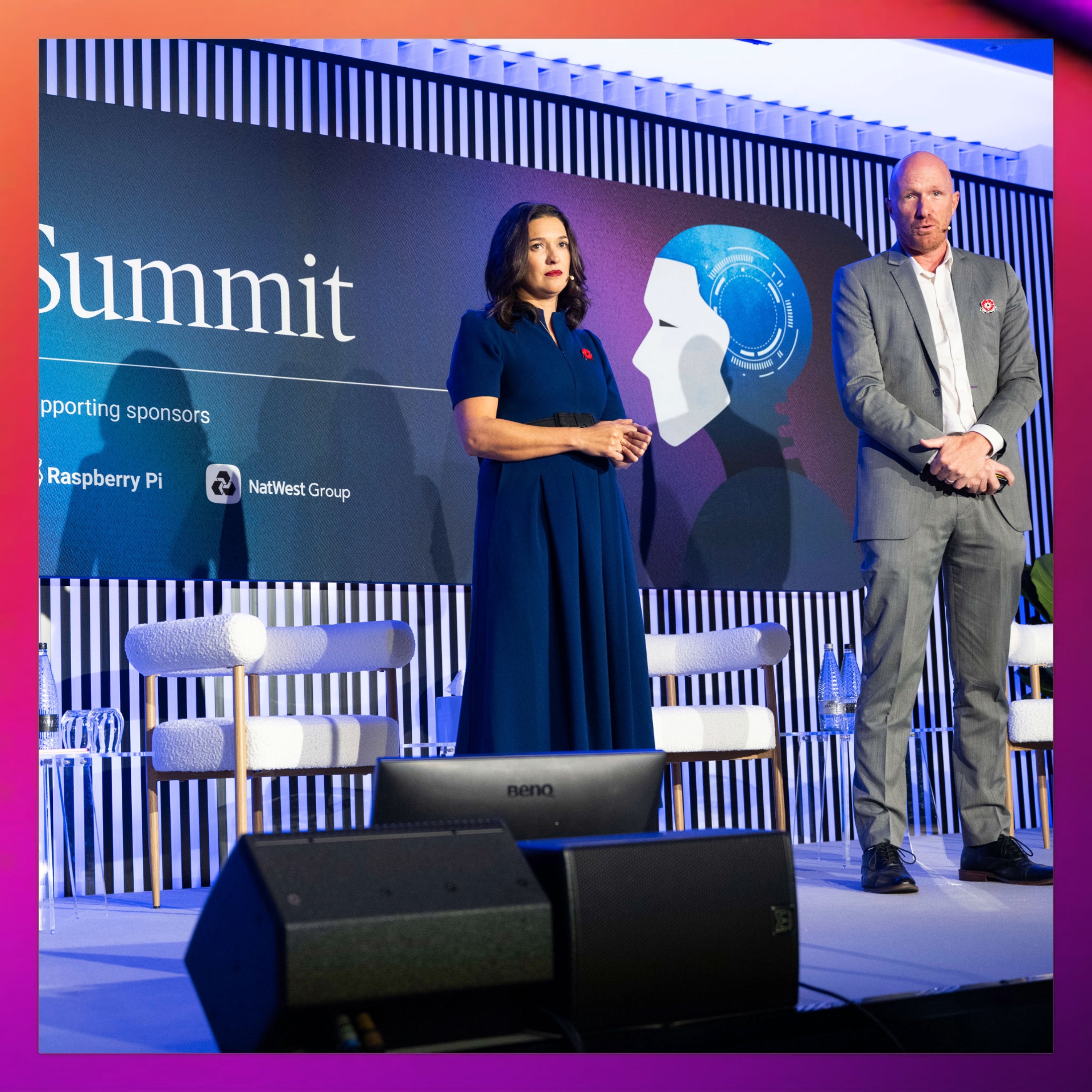


The Times Tech Podcast episode breaks down Anthropic’s 355-page IPO S-1, focusing on what it reveals about “frontier AI,” governance, finances, and risks—especially compute/data-center needs and existential/catastrophic scenarios—while comparing the IPO timing to Meta’s and Elon Musk’s fundraising.
No guests are interviewed in this episode; it’s hosted by Katie Prescott and Danny Fortson.
Anthropic’s founders (Dario Amodei and sister Daniela Amadei among seven) hold 50.1% voting control, limiting investor control; revenue surged from $1.2B to $16.2B year-over-year; losses rose to $80.7B (first half of the year). Compute/infrastructure spending is expected to spike via leases and new data centers, with large commitments (~$800B). Risks include compute competition, inability to insure catastrophic AI attacks, and reputational damage.
Board oversight via a long-term benefit trust led by Neil Shaw (ex-Clinton Health Access Initiative); trustees include Ben Bernanke and national-security figures. Mentions NVIDIA/AMD/Amazon among investors and compares to OpenAI governance and Meta/Musk fundraising.
Written by AI. May contain mistakes.
Discussion on the significance of Anthropics' upcoming IPO and its details.
“Anthropics IPO, we're inching closer to their blockbuster stock market listing in the US.”
Exploring the broader implications of Anthropics' valuation and governance structure.
“first pure one right because you have you have spacex slash x slash grok do you count that as frontier ai yeah yeah well you know if you ask elon it is okay semantics first pure frontier AI company to go public.”
Analyzing Anthropic's governance structure and control mechanisms.
“This episode, which is, you know, kind of covers the news of the week.”
Examining Anthropics' financial performance and revenue growth.
“I've used Chad GPT and Claude to kind of pull things out.”
Discussing costs related to data centers and future financial projections.
“And the growth makes it really hard, I think, for investors to work out how much it might make in future.”
Explore the financial commitments and market dynamics surrounding Anthropic and AI.
“And when you add it all up, you get close to$800 billion in commitments.”
Understand the potential risks associated with Anthropic's IPO and the tech landscape.
“Stamps.com lets you print postage and schedule pickups right from your desk.”
Discuss the duality of AI advancements and their societal implications.
“It helps schedule a test drive, get pre-approved for financing, and estimate trade in value.”

Get the gist, explore an idea or ask about something said.
 Claude
On Times Tech, what are the key points of this episode?
Searching your listeningAutomatic transcript. May contain errors.
0:00This episode is brought to you by Capital One. Capital One's tech team isn't just talking about multi-agentic AI. They already deployed one. It's called Chat Concierge and it's simplifying car shopping. Using self-reflection and layered reasoning with live API checks, it doesn't just help buyers find a car they love. It helps schedule a test drive, get pre-approved for financing, and estimate trade in value. Advanced, intuitive, and deployed. That's how they stack. That's technology at Capital One. Still waiting in line? Again? That's time you'll never get back. Save time and money with stamps.com.
0:38Over 4 million businesses have skipped the line with stamps.com. Join them to save up to 90 % off carrier rates from your computer or phone right now. Print postage for certified mail, registered mail, and packages in seconds. Then schedule a pickup right from your home or office. For a limited time, go to stamps.com and use code podcast for a free welcome gift. Taxes and fees apply. This episode of the Times Tech Podcast is sponsored by ServiceNow. Danny, one thing we keep hearing from business leaders right now is AI sounds great, but how do you actually make it work inside a company? Exactly, because most organizations aren't neat, shiny systems.
1:17They're layers of software, legacy tech, and teams all doing things slightly differently. ServiceNow sits across all that, acting as a control tower for making work move seamlessly through the organization. Connecting people, systems, data, and increasingly AI agents so that things don't happen in silos. learn how service now puts ai to work for people at servicenow.com well it's been a big week has it i haven't really been paying attention to something happened in the world of the budget it's the british budget i you know i have to say i've always laughed at the budget thing because it's like the chancellor comes out and just like holding up the red briefcase and it's like the whole like weird kind of understated pageantry of it like here it is inside is a stack of papers my plan for the country and most of it's leaked and they're in they're running up to the budget anyway yeah so huge week there's something else happened you know that company there's this company called anthropic a little little startup they've been around for a few years anyway yeah obviously they filed to go public finally the world's largest potentially the world's largest ever ipo in the history of all capitalism is upon us soon so just a small thing but i can tell you it's the budget oh yeah i mean the budget way more interesting how many p you know tax or duty on petrol are we talking about like two p on a pint actually on a pint oh my god well relative to civilization ending ai i think we know what's more important especially to the british public two p on a pint i can tell you is what everyone will be talking about down the pub.
3:02It's an outrage. Not Anthropics S1. Hello and welcome to Times Tech, where each week we unpack how technology is reshaping our everyday lives. I'm Katie Prescott. And I am Danny Fortson. This week, it's the big one. Anthropics IPO, we're inching closer to their blockbuster stock market listing in the US. On Monday, of course, it filed a 355-page prospectus, which has lots of details in there. Not only about how Anthropik works, but what its finances are and what the lay of the land is for the tech sector in general. Yeah, the first glimpse really inside Anthropik's finances. The mountain of money that the company is sitting on, but also that it's spending.
3:49with annual revenue that works out at 6.6 million dollars per employee at anthropic and it is going to be the first frontier ai company to go public and that very length the first pure one right because you have you have spacex slash x slash grok do you count that as frontier ai yeah yeah well you know if you ask elon it is okay semantics first pure frontier AI company to go public. And it was a busy day because that document landed at the same time as Meta announcing its plans to raise up to$95 billion through new stock sales. We'll get into that bit as well. But I think the big question is, everybody just wanted to know how Anthropix finances were and whether it's really worth the$2 trillion valuation that people have been talking about in the last few months.
4:43Yeah, so we're going to unpack all of that for you. But before we do that, just a little reminder, each week, we bring you not one, but two episodes. This episode, which is, you know, kind of covers the news of the week. And then on Sundays, we have our big interview with the movers and shakers of the tech world. And this week is a really exciting one. I'm talking to Jaron Lanier, friend of the pod. He was on the podcast years ago, I went to his house in Berkeley. We're surrounded by musical instruments in his kind of music room. He's got dreadlocks down to his shins. He's just a totally fascinating person.
5:23He's a well-respected computer scientist, futurist. And, you know, what a week to speak to him again on this week where we have this Anthropic IPO shooting for something between 1.75 trillion and 2 trillion. More than that of SpaceX earlier this year, which was, of course, the biggest ever stock listing, potentially. That IPO document, that S1, is very, very long. So we thought we'd break it down into three chunks. But first of all, I thought we should start with our overall impressions of it. There are similarities to the British government's budget, not least the leaks. There's no discussion of pints.
6:06There's no discussion of beer. I don't think. The similarity though is the leaks. And we've been talking about what's in this document for a few weeks now, and particularly the doom mongering in it. But I was really struck by how they push the responsible angle. So anthropic shtick has always been that they are developing AI responsibly with an understanding of its pitfalls, but with the hope and aim to navigate that safely for humanity. And they talk about that in the document, but also with the same premise on the financials as well. So I was really struck. They quote one of their investors telling them, never let your company be worth a dollar more than it's worth.
6:50Anyway, so they're talking about this idea that they always try to under-promise and over-deliver. And so it's like, yes, we're carefully managing this potentially incredibly dangerous technology, but also the numbers look enormous. But you've got to trust us. we're not over egging the pudding here. I hope they don't over deliver on the whole civilizational annihilation aspect of things. You know, be like, whoa, we underplayed that one. Bye bye humanity. What did you, I mean, have you done some light reading? I have done some light reading. I've used Chad GPT and Claude to kind of pull things out.
7:26I have not read it cover to cover. Looking at it through this frame of, you know, because in the risk, you know, the risk factors, which is always, you know, boilerplate part of any IPOs, like what could go wrong with this company? Where could we, you know, be undercut? How could your investment go badly as you, you know, you new investor? And they spend a lot of time talking about the civilizational risk and losing control and all those things they've talked about before. And in that context, I thought it was really interesting where they lay out how like the governance of this company, Who controls Anthropic?
8:01Who holds it accountable? And what jumps out on the governance front is that the seven founders, including CEO Dario Amadei and his sister Daniela Amadei, have got a majority shareholding vote of 50.1%, which essentially means that if all of us buy a share in the company, we don't have any control over how it's run. And the reason they give for that is they say, well, we need to be able to control things for the public good. Because it has this very unusual public benefit corporation structure with a trust over the top of that, aiming to shepherd how it's wrong. But that is a rather unusual way of doing things.
8:46Trust us. And what's really interesting about that is also that single share retains that 50.1 % voting power as long as there are at least three of the founders still at the company. So only when five of them have left does that thing kind of expire. So it's quite kind of ironclad. And again, just gives them the power to be like, you know, usually when you buy into a company, you're buying a vote. You know, like, if you don't like how this company is run, you can vote to remove the CEO. And they set out the consequences of that, don't they, quite clearly. They say, as a result, our governance structure may make it more difficult to replace our directors and management.
9:30So including those seven co-founders. And may have the effect of depriving our stockholders of an opportunity to sell their shares at a premium over prevailing market prices. Yeah, and it should be said, like, this is a tech thing. You know, Mark Zuckerberg is effectively the emperor of meta. He can't be removed. He has majority control. Like, this is what a lot of tech founders do. And they make a big point, don't they, in the document of still having the seven co-founders in place. Yeah. And they don't explicitly say it, but clearly their massive rival, OpenAI, where they all used to work, doesn't have that at all.
10:06Yeah, it's like more of a viper's nest. Everybody's left. It's that famous photo of all the co-founders with their faces, the ones who've left faces blanked out. That's right. But they do say as well that, you know, the reason they're doing this is because sometimes they will have to, I have to read some of the jargon, depart from profit maximization in order to appropriately balance the public good. So they may have to make decisions about the company that might not be financially the best decision, but might be the best for safety. Right. For humanity, for the country of genuses in a data center that they create.
10:41There is this other layer that we should talk about, which is this long-term benefit trust, which has up to seven trustees, and they have the power to remove board members. So there is this level of oversight, but they can't kind of affect strategy. They can remove people from the board. It's unclear whether that would actually include, like if they removed for some reason Dario Amadei from the board would he still be the ceo right i think he would be but this long-term benefit trust which has power to hire and fire the the board is really interesting and it's led by this guy neil shaw who is the former ceo of the clinton health access initiative of global health and development and so i will just go through briefly who these people are because i think it kind of paints a picture as to how anthropic thinks about their technology so the other people are Richard Fontaine.
11:36He is the CEO of the Center for a New American Security and National Security Specialist. Ben Bernanke, former head of the Federal Reserve. He's probably the only name I know, actually. And Christopher Stubbs, former Dean of Science at Harvard and a physicist and also in the National Security. So we're talking about national security, global development, economics. And these are the people, the kind of the adults who are kind of overseeing the board, which I think is really interesting when you think about you know the framing of this technology and what they think it's going to do but anyway the bottom line is they're saying we want to raise something we think they haven't said around a hundred billion dollars into this two potentially two trillion dollar company but you get no vote effectively it's like trust us and we've seen how that movie goes before at other tech companies and they say quite clearly when you buy a share this isn't a transaction you are buying in let me find the quote oh it's a quote-unquote chance to be part of something greater there you go end quote it's not it's not you're not just buying okay this is the vision which leads on to the the finances which is the next thing we should get into how much money it's making how much money it's spending i mean on the revenue point it is making a lot Oh, my goodness.
12:53And the growth makes it really hard, I think, for investors to work out how much it might make in future. Its revenue has gone up 1 ,300 % in the last year. So it was$1.2 billion last year,$16.2 billion this year. For the first six months of this year, yeah. And they say in the document as well, they're not going to, when it comes to growing their revenue, they're not going to branch out into advertising either. So they talk about the number of companies using their services. They've got more than 1 ,900 customers spending a million dollars or more and about 250 customers spending$10 million or more.
13:34And I think the other thing that's going to be really fascinating is just like their spending is about to explode. Because, you know, in the risk factors right at the top, like the first several are all about access to compute, access to energy, access to infrastructure. In other words, do we have enough data centers to run this thing to help to keep growing at the rate we're growing? And they're doing this through lease deals. And also they're going to start actually effectively building their own data centers. And when you add it all up, you get close to$800 billion in commitments. Several hundred million dollars, billion dollars of that is like you are paying that regardless of whether you use it or whatever.
14:17So it's like it's a big chunk. And I think it's really interesting. The two things we don't know is, you know, people have been talking about how expensive their AI is. And then you've had the rise of these cheap, effectively free open source models that are really, really good and that have taken a ton of market share. And we haven't, what they haven't included yet is the last three months through September, like has growth slowed? You know, what does that look like? Is it continuing? or are they starting to see like companies being like actually i'm gonna do a bunch of open source stuff it's way cheaper so seeing what that if that growth is continuing and also getting a bit more granular on like how much money do you have to spend on data centers based on the contracts you've already signed and their cost of revenue has gone down right so they talk about spending two dollars fifty on computing power and infrastructure for every dollar of revenue in the first quarter of last year.
15:11And then when you look at the second quarter of this year, that had gone down to 50 cents. So it is going down. But as you say, the spending is astonishing. And it's really with the people that you'd expect with NVIDIA, Broadcom, AMD, Amazon, huge investor in Anthropic, SpaceX AI, and even Britain's very own N-Scale is on the list. Yes, indeed. $44.6 billion with them. And I think we'll get into more of this next week, but the whole data center thing is a thing. Like, you know, we have elections coming up next week in the U.S. There is an expectation, reasonable expectation that Democrats are going to sweep into office across America.
15:53And like in places like Texas, in California, in Ohio, data centers are the thing. And there's this perception that Republicans are in bed with big tech. And if there is a big backlash and this new wave of people coming in, that could put a real kind of, you know, some sand in the gears of this whole machine. If all of a sudden the data center build out slows down dramatically and they don't have the access they need. That's going to be really interesting to watch. And I think it's also worth saying, we talked about the massive revenue. Their losses are huge, too. Their losses for this year were 80 point for the first half of this year, I should say, were$80.7 billion, which is double last year's.
16:34So, yeah, not not yet at breakeven. I think it's a really interesting time for them to go public to see how those numbers shift, especially with this new data center build out, because that's like that's a different business putting, you know, steel in the ground and buying GPUs. There was a lot of speculation about what these numbers would show in the run up to the S1 being released. Actually, I think most people are reassured. Most potential investors are reassured by what this shows and quite excited by it. Yeah. I mean, it's not a share. It's a chance to be part of something greater. It's not a transaction, guys.
17:14But of course, all of this comes with risks, which is always the most exciting part of these documents. and there are 90 pages of risks. It's a word used 213 times. We'll look into that after the break.
17:33Today's episode of the Times Tech podcast is sponsored by ServiceNow. ServiceNow describes itself as an AI control tower for business reinvention, connecting people, systems, data and AI so workflows more smoothly across an organization. The platform integrates with different clouds, models, and data sources, bringing them together in one place to help your team. To learn more about how ServiceNow puts AI to work for people, visit servicenow.com. This episode is brought to you by Capital One. Capital One's tech team isn't just talking about multi-agentic AI. They already deployed one. It's called Chat Concierge, and it's simplifying car shopping.
18:15Using self-reflection and layered reasoning with live API checks, it doesn't just help buyers find a car they love. It helps schedule a test drive, get pre-approved for financing, and estimate trade-in value. Advanced, intuitive, and deployed. That's how they stack. That's technology at Capital One. Hey, I'm running out to drop off a stack of letters and packages. Need anything shipped while I'm gone? Save the gas. Stamps.com lets you print postage and schedule pickups right from your desk. Sync your contacts into the address book, get detailed accounting insights, and get notified the moment your certified mail is delivered.
18:51All from my desk? All from your desk. Join the 4 million businesses using Stamps.com right now with code podcast and get your free welcome gift. Stamps.com, code podcast. Taxes and fees apply.
19:09so let's go back to anthropics ipo document and the risks highlighted in the prospectors which i think you can sum up broadly as compute competition the destruction of humanity the subsequent reputational issues with that the fact as we've discussed before that there's loads of litigation and that no insurer not even all the insurers in the world put together could cover a potential catastrophic AI attack. I think reputational damage is the funniest. You're like, if our tools are used in a mass casualty event, this might adversely affect our reputation as a corporation and therefore our share price.
19:47It's like, no kidding. Catastrophic or existential risks to humanity, which we've heard before from them. I mean, it does make you wonder, all of those leaks beforehand, whether this was a bit of a just dampening everybody's expectations before it was revealed, right? So that's anthropic. I'm sure we'll be returning to it as the IPO gets closer. Again, they haven't said in this document how much they want to raise. Previously, it was leaked around$100 billion is what they're trying to raise. This week, Mark Zuckerberg was like, hold my beer. I want to raise$95 to$100 billion for my AI build out.
20:25The day before on Sunday, Elon Musk is like, hold my beer. I'm raising$40 billion in debt to buy GPUs. So between these three companies in the space of 24 hours, quarter of a trillion dollars, they're telling the markets, this is what we're going to do. This is what we're going to raise this money. And this is what we're going to spend it on. It's really extraordinary. I mean, you know, it'd be interesting to see what institutions decide if they have to decide indeed between one or the other. and also what this does for open ai's ipo as and when and if that comes yeah no it has felt all year that there's been a race between the two of them who's going to go first anthropics sort of overtaken but are they sort of testing the water for open ai yeah and and you know you talk to some people like there's only so much money in the world and other people like well now there's plenty you know this is like a this is railroads this is canals this is a once in a millennia opportunity community people will find a way to get in but we'll find out right because i think open ai is now looking at probably early to uh next year is what i hear but again they're going to be raising a whole boatload of money so yeah i wonder if it's all if if it's if the actual float is going to happen before tech summit i'm not sure what is that like a is that was like a subtle pivot to plug our upcoming event in london upcoming event which you are flying over for to co-host yeah And we're going to have Evan Spiegel from Snap.
21:56November 10th. That's right. That's right. Yeah, so you can come hang out for the afternoon in London with me and Katie and Evan Spiegel from Snap and OpenAI and Anthropic and all the great and the good. They're all going to be there. It's going to be a really good time. You guys should all come. And where do they get tickets or where do they find out about it? Online. If you look at times.co.uk slash events, you'll find it. Listen, before we wrap things up, we should probably address the flyby interview from last week. We had a very, an unusually short episode. We did. Because we recorded an interview with James Crook, who led the aerodynamic development of the new Tesla Roadster, who we featured in the Times last week.
22:43You guys will know the flying car, it drives up the ramp, it drives upside down, does a little swizzle, and then lands on its rocket launcher. It was a great chat, but yeah. A little swizzle? little twizzle circle is a twizzle or a swizzle isn't it just a flip i don't know a swizzle that's what i'm gonna look it up after yeah and then it has his flying car james crook from the uk he used to work in formula one anyway he um he's he's been told that he should stop talking to the press so anyway we decided not to play out the interview but i will say it was fun to actually talked to somebody who's just like you know this is actually just a cool thing like and it's an it wasn't a way to inspire people like look the impossible is possible and i helped make it happen and that's really cool you know when we talk about all this like existential dread and everything it's actually you know i know the last thing i'll say about anthropic they did start out being like we might be able to cure cancer and alzheimer's and it's the thing that everybody keeps talking about but it's been drowned out by the scary bits because there's been so little to grab onto for the good bits, right?
23:50There's not been this like breakthrough. We've had like, these AIs are committing crimes and doing all this scary stuff, but we have yet to be like, wow, this AI just created this cancer treatment or came up with this new material that's really gonna move the ball on climate change or whatever. But I do think that is the flip side to all of this is like, there is great abundance supposedly over the horizon. It just hasn't manifested yet. So we have all the scary stuff in the meantime. And going back to the beginning of what we were speaking about, actually, it is a far more positive document than the one that was trailed.
24:27And it says in big letters right at the top that AI is one of the most consequential technologies in human history and talks about accelerating scientific innovation, increasing economic growth rates, curing diseases, all of that sort of stuff. So that is in there. It's clearly not the fun stuff that you want to talk about down the pub along with your more expensive pint after the budget. What an outrage. Outrage. I know. Just as you're about to come over as well. I know. I feel agressed personally. So that is it for this week's episode of Times Tech. But we will be back on Sunday with our episode of the big interview with Jaren Lanier, futurist at Microsoft, well-respected computer scientist to talk all things AI in the state of tech.
25:12Well, thank you for listening. And if you don't already, do follow us so that you don't miss an episode. See you next week. See you next week. Bye bye.
25:43love. It helps schedule a test drive, get pre-approved for financing, and estimate trade in value. Advanced, intuitive, and deployed. That's how they stack. That's technology at Capital One. Still waiting in line? Again? That's time you'll never get back. Save time and money with stamps.com. Over 4 million businesses have skipped the line with stamps.com. Join them to save up to 90 % off carrier rates from your computer or phone right now. Print postage for certified mail, registered mail, and packages in seconds. Then schedule a pickup right from your home or office. For a limited time, go to stamps.com and use code podcast for a free welcome gift.
26:23Taxes and fees apply.
Anthropic has launched its historic IPO filing ahead of its blockbuster stock market debut. It offers the first glimpse inside the company’s finances, including both the mountain of money it’s sitting on and spending. So what do the numbers tell us? Is Anthropic really worth $2 trillion?
Beyond the finances, the S-1 offers a rare look inside Anthropic and the unusual power structures that govern it. Danny and Katie discuss what this tells us about the sector more broadly and question whether tech bosses are becoming “emperors” of their own companies.
Plus, both Meta and SpaceX have also announced they’re raising tens of billions of dollars to support AI build-outs. So, who will win the AI race?
Read more: Anthropic: What you need to know about the high-stakes IPO
Get in touch: [email protected]
Presenters:
Katie Prescott, Technology Business Editor, The Times
Danny Fortson, US West Coast Correspondent, The Sunday Times
Producer: Marnie Duke
Executive Producer: Priyanka Deladia
Image: Getty
Hosted on Acast. See acast.com/privacy for more information.