
In short
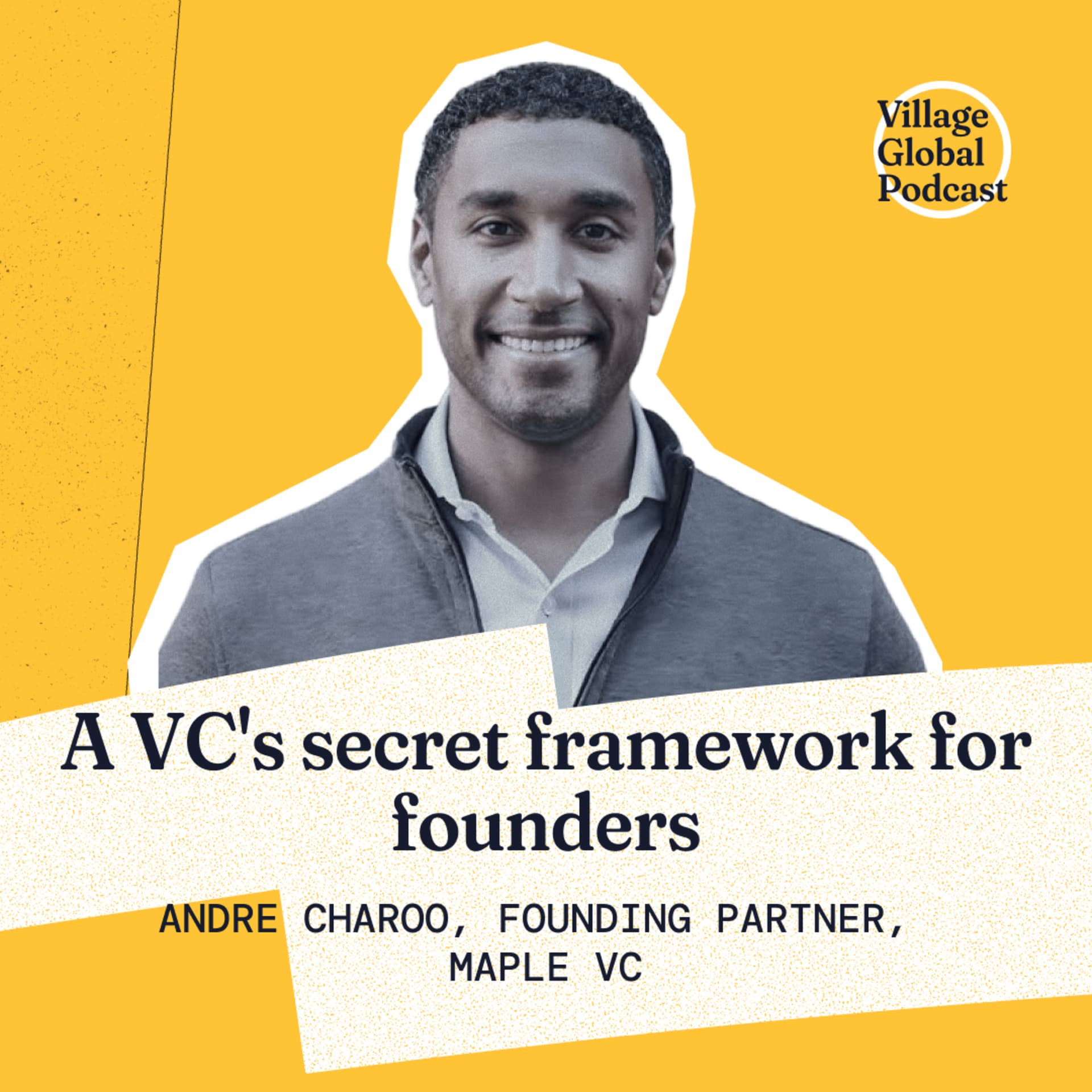
Andre Charoo (Maple VC) explains a 0-1-2 framework for evaluating founders as builders (create 0→1), inventors (dream/ideate and prototype the “zero”), and operators (scale 1→2). He argues seed investors can’t underwrite a linear future; they must back founders who can make an ambitious, non-obvious vision legible and who can attract a wide range of talent. He also shares how VCs should diligence “right to win” and how founders should pitch vision vs dream.
Guests (backgrounds)
Andre Charoo: Founding Managing Partner at Maple VC; Executive Fellow at Harvard Business School. Former employee #25 at Uber (early “limousine service”) and early at Hired.com; previously worked in M&A/debt capital markets at Wachovia/Wells Fargo. Built multiple seed-stage companies (2009–2016; two major wins).
Key claims
- Inventor = vision/technical dreaming; Builder = makes the vision real (non-obvious “next steps”); Operator = scales.
- Ones are context-dependent: Andre was a “2” at Uber, a “1” at Maple.
- Builders are often “illegible” to VCs because their backgrounds don’t match the domain; diligence should look for “right to win” via who they attract and their learning/slope of communication.
- Founders should pitch a vision that explains why it’s possible and how the journey works, not a linear plan or a pipe dream.
Notable examples
- Uber: Travis/“black car” logistics engine vision as a builder archetype; Ryan Graves early operator-like execution.
- Clay: Kareem (vision) vs Nikolai (prototype/ideas); Clay’s monetizable moment later (around 2023).
- Matt Lozak/Allo: example of convincing a rare domain expert and attracting a wide talent spectrum.
- Maple’s Canadian wedge: helped Andre access founders behind Uber/Slack/Notion/Databricks/Cloudflare/Roblox/Ethereum/Binance/OpenAI; later expanded beyond Canada.
- Maple investments mentioned: Stadium Live (Stadium Vault; $0→$100M+ GMV in <6 months), Inference.ai (0→$40M run rate in 11 weeks; raising ~$20M Series A).
Written by AI. May contain mistakes. Listen to the episode to check what was said.
Chapters
Tap a time to open that second in VOAndre's Journey from Canada to Venture Capital
1:33 to 2:01
Andre describes his background and journey into venture capital, touching on his early career and experiences.
“He uses this framework to identify strengths and gaps in early founding teams when there is little else to evaluate when he makes an investment.”
Navigating Challenges and Learning from Failure
2:01 to 6:39
Andre shares insights into his early startup experiences, the challenges he faced, and how they shaped his views on company building.
“Tell us about your journey from Canada to here.”
The Framework: Builders, Inventors, and Operators
6:39 to 10:50
Discover Andre's framework for evaluating founders and how each archetype contributes to a startup's success.
“And so the short version of that is I joined four companies all at the seed stage from like 2009 to like 2016.”
Understanding Contextual Roles in Founding
10:50 to 14:00
Andre explains the importance of understanding different contexts in which founders operate and how it relates to their impact.
“And so I think it really started with analyzing the team at Uber.”
Evaluating Founders: Builders vs. Inventors
14:00 to 15:00
Learn about the differences between builders and inventors in a venture context.
“Like Sheryl Sandberg is a two in the context of her role at Facebook.”
The Context of Founders and Their Backgrounds
15:00 to 17:31
Discover how the educational backgrounds of founders influence their potential in the U.S. market.
“that they're pitching us, they would likely make more impact if they were a two following another true builder.”
Identifying the Builder: Clay's Vision
17:31 to 22:48
Understand the importance of vision and execution through the example of Clay's founders.
“And most of those companies at the very beginning struggled at their earliest stages.”
The Role of Builders in Entrepreneurship
22:48 to 28:01
Explore the critical role builders play in shaping companies and attracting talent.
“And they had to stay alive and all of that.”
The Role of Builders in Companies
28:01 to 29:18
Learn how builders are essential in resource allocation and team inspiration.
“And builders need to be the best allocators of talent in the company.”
Why Builders are Illegible to Capital
29:19 to 30:51
Discover the challenges builders face in attracting capital due to their backgrounds.
“So, what makes builders illegible to the people who are supposed to back the builders?”
Show all 32 chapters
Assessing Right to Win for Founders
30:52 to 33:11
Explore how to evaluate a founder's potential through their right to win and team dynamics.
“So is right to win irrelevant, or are there a separate set of diligence tools to assess right to win?”
The Importance of Storytelling in Pitching
33:12 to 34:30
Understand how storytelling abilities impact a founder's pitch and investor confidence.
“And then their ability to communicate that to a generalist investor who believes I can get up to speed pretty quickly on any topic, but help me get there.”
Differentiating Vision from Dreams
34:31 to 36:58
Learn the critical distinction between a clear vision and a mere dream in business.
“It's a good question on positive signals.”
The Builder's Responsibility in Vision
36:59 to 39:26
Examine the builder's role in articulating vision and the steps necessary for execution.
“There's all these obstacles along the way.”
Personal Experience as a Builder
39:27 to 42:00
Gain insights from the speaker's journey and experiences in building and leading teams.
“For when the builder tells you what's possible, it's like, let's stop there and pause.”
Founding MapleVC and Initial Challenges
42:00 to 43:30
Learn how the founder's early experiences shaped MapleVC's vision and strategy.
“with, which, fortunately, I'm proud to have two partners now.”
Maple's Evolving Focus and Successful Investments
43:30 to 45:30
Discover how MapleVC shifted its focus and made significant investments in emerging companies.
“And today in Fund 4, you're no longer focused on Canadian founders.”
Identifying Unique Insights in Founders
45:30 to 47:40
Explore the importance of finding founders with unique insights that others overlook.
“which you guys are LPs in, and I'm grateful for your partnership, in a company called Inference.ai.”
High Conviction in Investment Decisions
47:40 to 49:50
Understand the role of conviction in making investment choices and navigating market skepticism.
“that is a generalist fund that we want to be known where we see what other people don't see, and we help make that legible to the market.”
Stress Testing Investment Ideas
49:50 to 51:50
Learn how the founder tests investment ideas by seeking contrary opinions from peers.
“You are one of those rare VCs who, when he has conviction, he really doesn't care what the market says about his founders.”
The Journey of Seed Investing
51:50 to 54:20
Examine the challenges and motivations behind seed investing and shaping visions.
“and we might not prove it wrong, and that's okay.”
Feedback from Peers and Finding Hybrids
54:20 to 56:00
Discover the value of peer feedback in identifying versatile founders who can navigate different roles.
“And it's motivating to be able to someone to put a vision out in the world and know that the likelihood is really low.”
The Illegible Partners of Maple VC
56:00 to 59:56
Andre discusses his partners' unconventional backgrounds and their potential impact on Maple VC.
“I can't help but project some of my experience.”
The Culture at Maple VC
59:56 to 1:03:15
Andre explores the evolving culture at Maple VC and the principles guiding their investment philosophy.
“It's like, without it, I don't know what I would do.”
Defining the Roles: Zeroes and Ones
1:03:15 to 1:10:06
The conversation shifts to the roles within the firm as Andre discusses the importance of having the right team structure.
“but it's like, I mean, can I pull it up really quickly?”
The Role of Advisors in Venture Capital
1:10:06 to 1:11:19
Discussion on how advisors can enhance venture capital operations and decision-making.
“But you can only optimize so much time when they were in that role or in that capacity.”
Navigating the Transition from Visionary to Operator
1:11:20 to 1:14:40
Insights on how founders can bring on operational leaders without losing their vision.
“And I think it's looking at some of those examples and I will look at some of the ones that I happen to witness and see early days.”
Lessons from Cinemagram and Uber
1:14:41 to 1:17:47
Reflections on experiences at Cinemagram and Uber, focusing on the timing and impact of hiring operators.
“Fourteen years later, he's the president and COO.”
The Timing of Bringing in Operators
1:17:48 to 1:19:10
Exploration of the ideal timing for hiring operators within a company's growth stages.
“It's tough to bring them in when you're still at the zero to one, one to two phase.”
Personal and Professional Moments of Being Seen
1:19:11 to 1:21:45
Discussion on important moments of recognition in personal and professional life and their lasting influence.
“In this conversation, it's just so transparent just how important it is to see people, see founders.”
Connections and Opportunities in Career Growth
1:21:46 to 1:24:00
Storytelling about networking and mentorship that led to career advancements.
“And then on the professional side, I think there's been a few people.”
Reflecting on Long-Term Relationships in Business
1:24:00 to 1:26:18
Learn about the importance of maintaining long-term relationships in business and personal growth.
“and while I was now going to invest in banking job, told me like only do that for like as short as possible.”
Transcript
Automatic transcript. May contain errors.0:00When you ask someone the vision, what's the vision? And then you ask them, so where do we start? What's zero to one? When the answer is linear, when you can connect those dots very clearly and it's legible to you as an investor, as a smart investor, you're like, oh, I see how we're going to get there. You're most likely talking to an inventor. My smartest colleagues laughed at me for joining Limitine Service. what they didn't know or see or didn't have the opportunity to ask the question was like that vision that strangely, if you know what TK is doing on atoms, he has an ambition that is still not fully satisfied, where the arc of the ambition is so big that it's coming through different entities to even achieve it.
0:52I'm Amrith Rao, General Partner at Village Global. Today, I'm joined by Andre Charu, Founding Managing Partner of Maple VC and an Executive Fellow at Harvard Business School. Andre is a full-time venture capitalist focusing exclusively at the earliest stages of company formation. Before he became a venture capitalist, he was employee number 25 at Uber and an early employee at Hired, as well as a number of other startups. On this podcast today, Andre shares his framework for classifying founders in three different categories, builders, inventors, and operators. He uses this framework to identify strengths and gaps in early founding teams when there is little else to evaluate when he makes an investment.
1:45We also dig into Andre's advice for how founders can pitch VCs, what VCs get right oftentimes, as well as what they miss, and how to fill in the blanks. All right, Andre, welcome to Village Global's podcast. Thank you for having me. Oh, it's a pleasure. So let's jump in. Tell us about your journey from Canada to here. So, gosh, where do you start? Born and raised in Toronto, suburb of Toronto. Studied economics at the University of Toronto. Wanted, for whatever reason, to be an investment banker. Don't hold it against me. Tried in Canada, but Canada rejected me. And so I landed in the U.S. and started my career as an M &A banker in a bank called Wachowi Securities, now Wells Fargo.
2:38And then Debt Capital Markets was like the second year. So your typical two-year analyst program brought me to the U.S. and like first job out of college kind of thing. But then when my peers went to the traditional routes, private equity hedge funds, business school, none of them interested me. And that's when I decided, with my flatmate at the time in London, to start a tech company. And just to give you context, this is 2006. And fortunately raised a bit of money for that from a fund here in the Valley. And I first stepped foot in the mission, San Francisco, 2007, with some, call it, pre-seed funding at the time.
3:28And big ambition. And shortly thereafter, 2008 happened. And while we shipped a product, got customers, and it was such a wild ride, the team got to maybe five-ish. The day of negotiating, call it the seed term sheet, was the day Lehman went bankrupt. Like on the day. And then one of the investors was actually on the East Coast, and we were selling a talent platform that, interestingly related to this topic, would discover talent from schools that big tech companies weren't recruiting from at the time. So call it Overlook Talent, or talent that we thought was interesting. And it's actually, we got Facebook as a paying client to enter Waterloo, actually.
4:27Wow. That was like the first time they entered Waterloo, obviously. You opened big tech to Waterloo. I don't know if I want to take all that credit, but helping put it on the radar was sort of the impetus.
4:44And Chamath Palahapitiya became a contact at that time. Happy birthday, Chamath. Oh, that's right. That's right. Yeah. Yeah. And we reconnected sort of a couple of years ago now, but that was when I first met him.
5:01And yeah, like on that day of negotiating that term sheet, you know, the investor was like, how do you feel about selling recruiting software in the environment we're about to go into, let alone for students? I was like, as much as I had every answer in the book that this was going to work, the writing was on the wall. And so pivot after pivot after pivot, the writing was on the wall. And so that then, I mean, I fell in love with company building at the earliest stages. You know, you have a vision. You've attracted people to join you on that vision. I almost felt like I had no even, you know, qualification to go after it.
5:46But you raise some money, you just get little wins after little wins. And then it kind of gets stripped from you. I was like, OK, I'm going to go when you first land here. Right. The plethora of ambitious founders just hits you like a wave. Right. And so part of it is like, oh, am I as good as them? Because you just failed. But the other part is like, whoa, I can go join one of them. and help them on their journey to go build something big. And it needed to be really early for me to get satisfaction. Maybe that's because I was wanting to recreate the founder moment that I didn't get to necessarily have.
6:29Or it was like, I just want to get as close as possible to be like, I helped in a significant way despite not necessarily being the founder. And so all of my options, or I chose all of my options to just like hang out with early stage folks and let the beautiful serendipity that this place, as you know, sort of operates on do its thing. And so the short version of that is I joined four companies all at the seed stage from like 2009 to like 2016. And two of them work out. And as you know, I was fortunate to be one of the first 25 at Uber when it was just a limousine service and the other being Hired.com.
7:12And while Hired, obviously not as big, clearly, those two wins put me in a position to found Maple, to enter sort of venture capital. And in many ways, while I might have been an operator or an early stage employee, I felt like I was basically a venture capitalist at those companies. And it felt like my spikes at those companies more aligned with the job of venture. So it didn't feel like I was doing a new job. It felt like this is just a continuation of joining other founders on their journey. I happened to be an employee when I joined, didn't stay really long, one to two years per company. And that's kind of what I'm manifesting through Maple.
8:05Speaking of continuous threads, it seems like not just entrepreneurship, but a real obsession or passion with evaluating talent existed from a very early state of your career. You developed a framework of builders, inventors, and operators. Tell us a little bit about that framework. Who are those different archetypes and how do you spot the differences? It was actually built somewhat with a founder in my portfolio. We would riff on the successes in the Valley. And I think Ben Horowitz had... There's a bunch of investors that would have frameworks over the years that I would argue took that mantle and built it on their shoulders, if you will.
9:07because I do think Ben has said the inventor, and maybe he calls it entrepreneur. I don't know if the operator is in there, and so I've added that piece. But it became a framework for how I could lean into what I was seeing and what I experienced firsthand working at a company like, let's take Uber. and how do these things become so big and special? And everyone points back to the founder, but they can't articulate what was legible or illegible about that founder at the time to make it replicable. Because we're in the business, especially when we are at Maple, a first check firm, much of what you're underwriting is the founder.
10:15And so perhaps just the way my mind works and in reflecting on my experience, I started to sort of obsess. And you're right. I didn't actually make this connection to the startup that I built was in talent. I worked at a company, Hire.com, that's in talent. And here I am with this framework. and Maple might be a new form factor, and maybe the last one, I hope it is, that is a manifestation of this long arc of what I've been trying to achieve or make an imprint in the world. And so I think it really started with analyzing the team at Uber. and then as you know in the post we tried to put a bunch of names against these three buckets but to define it as you asked to start inventors are the ones that are they're they're usually the technical mind behind something and they are the ones that actually have the capability to build whatever they envision and build that future.
11:35A builder, and so prototyping it, not to put people in necessarily buckets per se, and there is a sort of a conclusion with the talent framework, as you know, that people aren't necessarily in one bucket. Call it like your PhD hard tech person, like generally in the inventor bucket. The builder bucket is the person that is best known for taking something from zero to one. And then the operator bucket is someone that can help you scale it. And so the inventor kind of dreams it maybe. The builder creates it and the operator scales it. And you don't necessarily need all three from the beginning. but we have found that there is no important company in the world that doesn't attract all three at some point in the journey.
12:37And without the builder to start, you can't get the others. And I have found that when a company is built without the builder, while outcomes can still be spectacular, they're not enduring. there's an acquisition it's awesome a lot of people make money but they don't change the world per se I'll stop there for you to take it from there that's where it came from and that's how to define it super cool I think you alluded to this idea that you can be more than one archetype presumably at different stages of your career or all at the same time? So, good question. So, I was a two in the context of Uber.
13:32I am a one or a builder in the context of building Maple. And I think that our job as humans in general to get the best out of what you're talented around should be this journey of figuring out what is the context where I am a one, where I am the builder in. That's profound. And it's maybe my version of founder market fit. And it's completely okay. Like Sheryl Sandberg is a two in the context of her role at Facebook. She's a one in the context of the lean-in movement that she built. She's totally a one for that context. And so, I think it would be amazing if more founders knew what context they are best in, or they can make that big impact in.
14:29And again, impact is relative. But in the venture capital context, I think there are a lot of founders who aren't ones, claiming to be ones. And the likelihood is they're a zero or a two. And they might build something interesting. But the likelihood that they make that massive impact that they want to make likely might not come in the context of them trying to be a builder for this thing that they're pitching us, they would likely make more impact if they were a two following another true builder. They would actually probably make more impact in the world. And so this framework helps me sit across from a founder and try my best.
15:25We will get it wrong because, again, people aren't necessarily stuck in one bucket. But in the context that they're pitching me, my job is to try to figure out, are they the builder for this particular context? Because everything will change if that is true. And, again, we might not get it right, and we won't get it right every single time. But when you do, yes, I think you get to experience something like Uber. I think we were the first check in a company called Clay that we're so proud of, and we're witnessing it absolutely there, a thousand percent. Tell us a little bit about meeting Kareem six years ago, seven years ago at this point?
16:14Nearly 10 years ago. Wow. Actually, 10 years ago. Okay. Yeah, I met him in 2016. So Maple started, while we've expanded beyond this, Maple started as a fund with a wedge that focused on backing Canadians building in America. And really when we said Canadians, we were underwriting the schools that are in Canada that I happened to go to that we believed produced Ivy League quality talent. But in the context, when you come to America, we're not viewed as having that elite education and we're generally sort of overlooked when compared to the Ivy Leagues in America. And so, I just found that it was interesting that a slew of hits were founded by these founders who went to these all of eight schools that are generally overlooked and miscategorized.
17:21And I felt like that was my arbitrage. How do you miss Uber, Slack, Instacart, Notion, Fair, Databricks, Cloudflare, Roblox, Ethereum, Binance? I mean, OpenAI, Elliot Sitzkever, graduated from my alma mater, University of Toronto. And most of those companies at the very beginning struggled at their earliest stages. And so, the founders, Kareem and Nikolai of Clay, came from McGill University, but they were in New York. And another Canadian expat, call it, introduced me. They had sold their first company to a company called Sailthrough, and their manager happened to be Canadian and was like, You need to get your ass to New York because these guys are going to start something soon, and they're special.
18:06So I did just that. And it wasn't clear whether Kareem or Nikolai was the builder or the inventor. There definitely was not an operator out of both of them. That's for sure. And that's okay. But again, as I mentioned, it's important to have a builder. You can be looking at a team typically with two inventors, two PhDs or whatnot, and trying to suss out which is the person that can attract the other numbers. Because we as humans are attracted to other people like ourselves. It's natural. Usually a bunch of PhDs are attracted to a bunch of PhDs and a bunch of management consultants are attracted to other management consultants.
18:57Or the typical team you'll see is the PhD meets the management consultant. And an investor is like, perfect! You have the idea. You have the idea. You can execute it. You could build it. That's so legible. But it's literally missing the special sauce that makes something very enduring and very, very big, in my opinion. And one way to assess that, which I can share in the sense of Clay, was when you ask someone the vision. What's the vision? And they paint that vision. They paint that picture. And then you ask them, so where do we start? What's zero to one? And when the answer is linear. So when you can connect those dots very clearly and it's legible to you as an investor, as a smart investor, you're like, oh, I see how we're going to get there.
20:00You're most likely talking to an inventor. Okay. And when your mind is stretched of how are we going to go from black car to when I asked Travis Kalanick, what's the vision of Uber? And he's like, we're building a logistics engine for a city. We want to deliver people anything. But we're going to start with a black card that takes from point A to point B, and we're going to maniacally do that for however long it takes. What my colleagues who laughed at me for joining a limousine service... By the way, my smartest colleagues laughed at me for joining a limousine service. What they didn't know or see or didn't have the opportunity to ask the question was that that vision that strangely, if you know what TK is doing on Adams, it's literally he's doing the same thing.
20:50He has an ambition that is still not fully satisfied. That is a builder. Where the arc of the ambition is so big that it's coming through different entities to even achieve it. Right? And so when I asked the question to Clay, to the founders, you know, Kareem painted this vision that was like, the world doesn't produce enough software engineers. We're going to need to create a way to give superpowers to the other half of the world that doesn't code. We feel like we have superpowers. We're going to have to give those superpowers. And the context in 2016 was like, I was out of Hired.com. There was boot camp after boot camp after boot camp.
21:41A few years earlier, Andreessen's software's in the world. This is the best role ever. Engineers are number one job, number one thing you need to study, all of that. And here are the two guys saying, none of it will matter. We're going to have to give superpowers to non-developers. What the black terminal is to a developer, we believe a spreadsheet is to a non-developer. We're going to connect that to the internet, and we're going to give them superpowers. They can automate anything. What was the technology at the time? Well, low-code, no-code was the way that we were going to do it. But if you can piece together about how that vision aligns with AI, pre-AI, you can probably make that connection now.
22:32But the arc of that ambition had to be so big for, as we all know, the Clay story didn't take off, frankly, till the Chachi BD moment or till 2023, that the monetizable moment had to catch up to that vision. And they had to stay alive and all of that. And so that non-obvious starting point to where that ambition was, was communicated by Kareem when I think back. The ideas, what we're going to prototype, what we're going to build, was communicated by Nikolai. And he was generally building it all, for the most part. But he was the zero. He was the zero, yeah. So Nikolai was the idea inventor, rapid prototyping it all, has more ideas you can count.
23:28And Kareem was like, this is where it's going. Or this is where it could go. And so a visionary or the one is somebody who paints the vision. And the zero is the person who creates the sequence of steps to make it happen. That's right. That's right. But it's key that like the builder is the one who's going to say books are going to turn into the everything store. Colleges are going to turn into like something that's not that you're going to have to stretch your mind to think that this what this person is saying that I see today could turn like a black car could turn into a logistics engine. Not obvious.
24:13And and the more that it's not obvious. I know I'm talking to a builder. the more that I feel uncomfortable, the more that I'm like, I got to go sit with that. Like, because what you're saying is kind of nuts is like, oh, that's who I'm talking to. And when it becomes clear and it's very legible and it's linear. And then on the two part, not to bring them, bring them in. And the operator, if a founder is sitting in front of me, usually, no offense against the operators out there, but I don't get inspired by the vision. It feels more like an opportunity that you're going after that seems textbook-ish.
25:02And while that is great, we are capitalists at the end of the day. I think what I've learned on that side, having backed them and thought maybe they were a one, markets change. And that killer of an executor that said, we're going after that white space. Here's everything. And you're like, oh my God, yes, I see that. And you have every qualification to achieve that. and then the market changes. And I've just been like, oh, and then I've seen them fold up. And I'm like, yeah, that didn't work. When you're investing at seed, you're investing over a 10-year horizon. And there is likely no market in history that has stayed the same for 10 years.
25:49So you can't invest in something you can purely see. As a seed investor, you can't. Or you don't be a seed investor. Growth investors probably need a C, three to five years. But we can't C 10 years. That's impossible. And so I can't invest on something I can see, which when the inventor is telling me that the future is linear, I'm like, the future is not linear. Non-linear. We know the future is never linear. And then when you're telling me you can execute the hell out of the future, the market's going to hit you in the face. And so I need someone who's going to paint me a vision that's capturing my imagination.
26:26Tell me how we're not obviously going to get there and we're going to go on a journey. And who the heck knows? But what's amazing about this one is he or she gives the lanes. And the reason why the one is really important is if you don't have zero to one, you don't have step two or three or four. Right? And if you don't have the inventor going from negative one to zero, you also don't have the thing at zero to sort of create and get there. I don't know, the Elon story is so intimately, but he didn't build the first versions of these things. Not at all. But he attached himself to the inventor and was like, oh, you don't even know where this goes.
27:15But thank you for building it. I will take over now. And in many ways, if you know the Uber story, while they founded it, Ryan Graves kind of ran it for the first year. And it wasn't run by Travis for the first year. But it was like this moment where it was like, oh, this is what it could become? Put me in, coach. Right? So a lot of times builders, I don't even care if they came up with the idea. In fact, I actually, one signal that I use is when they tell me the founding story and they walk through the journey, I'm like, oh, you didn't come up with the idea? That's a good thing. That is awesome.
27:57Because now I know you're a killer. You took this idea and you see more than anyone else sees with it. And builders need to be the best allocators of talent in the company. That is why founder CEOs are probably the best. That's probably what they're really great at, the best resource allocators of talent. You go here, you go there, and inspire the two to go and, here's your lane. And what's great about the builder is they don't even have the qualification to have conflict with the two to be like, I can do it better than you. The two knows that they can't do it better than them. Literally, you couldn't run this company if you tried, which is oftentimes when people want to kick out the builder, because it gets to a point where, like, what do you do here?
28:48Like, I literally run everything. Like, what do you do? We already have the vision, you know? But we've seen what happens when you kick out a builder in the history books of venture capital. I love your enthusiasm for the builder. And at the same time, I think you've described online that most early-stage VCs don't know how to rate builders and are, in fact, builders are illegible to capital at the early stage. So, what makes builders illegible to the people who are supposed to back the builders? Their background. Meaning? Meaning, like... Not an obvious background. Just like any one of the greats, you're like, Elon, did you ever work in a rockets company?
29:44You know? Like, Olo and our portfolio, Matt Lozak. You came out of an HR tech company. What right do you have to make nuclear reactors? I don't really care what you studied in school. Sure. But you've never even... What? The guts, the gumption, the chutzpah, to say that you're going to go build the future of nuclear when you've just read about it. You're on the right to win. Right. And so that is hard for VCs to say, what right do you have? Yeah. For our capital to like – but history has shown just every single really important company in the world usually didn't necessarily spin out or come from a place that was perfectly legible to what they were building.
30:50So background is just one. So is right to win irrelevant, or are there a separate set of diligence tools to assess right to win? The right to win is important, but it shows up in different ways, right? And so back to the talent framework, if you look around the table and you're like, wow, you were able to convince, in the case of Matt Lozak at Allo, one of four people in the world, I think, or maybe in the United States, that was commissioned to build a reactor and got sign-off from the government to do so, and you convinced him to be your co-founder to join you, that's one check to understand.
31:40And, oh, your ability, again, half of the battle of anything successful is going to be people that you get on board to join you on that journey. And so you can get early signs of that, even from advisors that they're spending time with, that you could go and have calls with as we underwrite our due diligence on people around the table. And so one method and right to win is like, okay, who are the range of people around? And I try to look for a range. Everywhere from the most PhD person that would totally not want to spend time with you, seems to be spending time with you, to like the most investment banker, like the complete other spectrum that they seem to be hanging out with you.
32:30And you seem to inspire this massive spectrum. And you can just get signal really early. And I do the same as the opposite, which is if I find that there's a cluster that they're inspiring, I start to get sense that, oh, they're a zero or a two. Because ones have an ability to inspire a range of people. And zeros and twos have a tendency to inspire people in their buckets. And so that's one. The right to win, you're going to have to convince a lot of really smart people, wide range of people, to join you on this journey. So that's one. The other is, and again, I keep going back to Matt at Lozak because it's such a big idea he's going after, but it's their slope of learning.
33:21And then their ability to communicate that to a generalist investor who believes I can get up to speed pretty quickly on any topic, but help me get there. Walk me through the history. Walk me through how I should think about the history. Give me analogies. and that clear articulation, again, of this big ambition, here's where we are, here's kind of how we're going to get there to some degree, but you're going to have to believe. You're going to have to believe a lot. But at least you can walk me through, like, wow, you're speaking as if you've been in this industry for a while. I get a sense that, like, you sure you didn't work in this industry?
Read the full transcript
34:08Your ability to get up to speed is pretty remarkable. People talk about founders' ability to learn really quickly. How do you underwrite that in a pitch? How do you underwrite that as an investor, just underwriting them? It's like, how do they tell the story to you is evidence of how they've learned. Yeah. And what are positive signals around storytelling that get you excited that this person really has intuited their vision and will bring it to realization? It's a good question on positive signals. Again, it's probably down to just, I mean, one is, did I understand it? You know? And I will test that understanding because I will use my network as a way to diligence the founder and throw in people who might be specialists.
35:07And, like, how did they understand it, right? Based on their understanding. And so you can kind of get a sense, like, how deep can they go? How deep did the learning go? Can they break it down to a basic two-year-old learner, right? Because it was starting from scratch to a rocket scientist or someone that's super deep in domain expertise in that area and still come out with a positive signal that they actually know what they're talking about. They might not agree. And I don't actually look for the specialist and the domain expertise. I actually look for them not to agree. That's a really good sign to me.
35:51Because if you're disrupting anything, yeah, exactly, right? But when they come back saying that, wow, they know their shit, that's another positive signal. That's a couple. What are examples of bad advice that is commonly shared by VCs to founders on how to pitch a vision? You know, my partner, John Edgar, wrote a post, so I would go encourage folks to look at this post. He would articulate it way better than I can. Man, he has a really good—he believes on a summary level, because, again, I won't be able to go as deep as he can, but most people, in his opinion, confuse a vision with a dream. Okay.
36:45And he goes into... What's the difference between... I know. I don't know if I can fully articulate it as well as he can, but maybe we can pull it up on the blog post and read it verbatim. But one view of that is he's looking for founders that back to this ability to learn and to like to like help me connect the dots. he is looking for someone that can articulate a market, articulate why it's happening, articulate the tailwinds, articulate what has happened that hasn't happened before, that makes this more possible than ever before, that then can help the reader connect to why, while this is a big idea, while this could be, it could be possible.
37:40There's all these obstacles along the way. and someone that can, in his words, underwrite that for you or walk you through that journey, despite whatever their background is, to my earlier point, is someone that has a vision versus I have this dream or idea, but I can't legibly walk you through the components that make that dream more possible if you were to do a number of things or if these things were to happen. And yes, there's all these points where you have to believe along the way, and that's your choice to do so. But if someone can't walk us through that, you're just pitching a pipe dream.
38:34But isn't that a zero's job? Or maybe I misunderstood, right? The builder's job is to paint that vision and say, here's this non-obvious point to do that. And to your point, this is where the inventor comes in to say, I'm going to go create it. I'm going to go actually prototype it and build that. But it is the builder's job to say, the next step is this. Can you go build it? The next step is this. Right? But this person's capable of doing it more than the builder at the end of the day. But the builder is the one with the steps, if you will, and the narrative that will, again, require you to believe.
39:26I would argue when you hear the steps from an inventor, you might not have to believe. Again, because it's linear. Because it's more linear. Because you're like, yeah, that's... Methodical. Yeah, that's possible. That's possible. That's possible. That's possible. For when the builder tells you what's possible, it's like, let's stop there and pause. Tell me why. Tell me what circumstances allowed that to maybe happen. Yeah. But then you're getting history. You're understanding their point of view that usually is unique. There's an insight. There's usually something there that other people don't see as clearly as they do.
40:03Yeah. And that's what makes them really special. And so I encourage folks to read his blog posts. I've never heard someone articulate what he's looking for when you articulate a vision than I have seen out there. So hats off to John Edgar. And I'm sorry, John, for not being able to articulate it as well as my partner. We'll link it in the clip. And I think you already alluded to this. You're a one today at Maple. You were a two at Uber, probably Wachovia. Yeah, probably. And I knew this, Amrit. I knew this. The market started to give me feedback that I started to realize, oh, I'm the one for this.
40:45A couple things. One, start - I'm the one to be a one. Maple, yeah. I'm the one to do this maple thing. Okay. And one was like most people were confused of my initial thesis of backing Canadians in America. That while that was hard to take as someone fundraising and raising funds and people not understanding your thesis or thinking it's too niche. And advisors I look up to love you, Samil Shah. You know, but he was like too small, too niche. Like going to be rough with LPs. that actually fed that gave me more confidence that i see something other people don't and there's a much bigger vision that people might not see that maple will become it's not going to be just this canadian fund that people think it might be but i believe you got to own a niche and it was my uber black product um and so that was that was one the second was i started over the years.
41:50As you know, I built this bench of advisors who are from a host of really important companies that were early, like me, at Uber, that I shared a bit of my carry with, which, fortunately, I'm proud to have two partners now. So, Maple is not a solo fund, solo GP fund. Jane Lee, who was early at Shopify, and John Edgar, who was early at DigitalOcean have joined me as we go into Fund4. But I started to see the range of people that were attracted to what I was building, and that gave me confidence. I was like, wow. It's not just one archetype that was starting to pay attention or starting to want to work with me on this when they really got to hear my ambition and the vision for what I wanted to build.
42:47and so that gave me encouragement along the way that was like oh I this might be the thing that I'm a builder for because of the range of talent the thing I see that doesn't connect to the thing today the steps that have become clear in my mind of how we're going to get there so those are two things along the way that that while there was ironically like pushback from the community gave me actually strangely more confidence that, no, you're actually on the right path, but it's not legible to the market yet. That's okay. Keep going. It will be. That's beautiful. And today in Fund 4, you're no longer focused on Canadian founders.
43:35Correct. Where is Maple today, and where do you predict Maple will be in 10 years? Thanks for asking. The vision at the time was these Canadians, like the illustrious list I rattled off, were going to get me into some important companies. And then those companies across a wide range of industries, because I'm a generalist and I wanted to prove that it could be across a wide range and be in one of the most important companies in those industries. And then those companies will earn me the right to partner with a broader set, a broader set, a broader set, a broader set. And so proud to be in one of the most, I think, one of the top go-to-market AI tools out there.
44:16And as you would probably imagine, the set of founders we get to see and partner with, I wouldn't have been able to be in a position to do so before pre-Clay. We are in a company called Stadium Live that launched a collectibles product called Stadium Vault that has gone from zero to over 100 million of GMV. It's insane in less than six months. And it might be one of the most important companies in the collectible space. And that's so pure consumer. But a Canadian got me into that opportunity. And I could only imagine that's going to open up another broad range of opportunities. Jane, coming from Shopify really early and building a venture studio focused on consumer founders, can help us even more credibly underwrite.
45:11Let's call it like the application layer, which we're really excited about, making sure we can see opportunities before others. Like see as in not necessarily first, but just be able to underwrite and see something special that might not be as clear to others with her background. And then we're having a breakout at the moment in Fund 3, which you guys are LPs in, and I'm grateful for your partnership, in a company called Inference.ai. When I invested, it wasn't called Inference.ai, but it was a founder who was obsessed and had a belief in the future of what Inference was going to mean in the AI tech stack.
45:51And this has gone from zero to 40 million run rate in 11 weeks. Wow! Yeah, and I haven't told you that yet as an LP, but we're about to raise a$20 million Series A. And it's crazy to think that we might be in one of the most important companies in the infra stack all of a sudden. But again, in all these three scenarios, it took the niche that we focused on that I believed deeply that other people didn't see that were going to get me into a wide range of really important companies across a wide range of industries. And then those companies will start to earn us the right to partner with a broader set and a broader set.
46:31So it's crazy to think that now John, who has a CapEx-heavy developer-oriented, having built cloud storage with DigitalOcean from zero to IPO, can credibly help that founder and also credibly underwrite that space more than I can, having written the first check, great. But he can help underwrite that and more to come. Jane can help on the application layer on the consumer side. And I'll sit as the marketplace guy, let's call it, or just a generalist, keep doing what I'm doing. But Maple truly can see a much broader range of stuff than we could have ever done and seen before. It all came from this one insight that I had that other people did not believe or see.
47:17and it was painful for 10 years because it doesn't attract LP dollars. It's painful, but I believed in it deeply, and now we're reaping the rewards. Yeah, it's really exciting. Amazing. So what does Maple 20 look like? We are a top first check, I call it pre-seater seed fund, that is a generalist fund that we want to be known where we see what other people don't see, and we help make that legible to the market. And I think that will remain the case for the test of time in venture capital. And it's not just the founder. I would argue John Edgar is more markets-first driven investor. Jane is founder, brand, has a consumer lens.
48:16And I generally look for that insight. People might think I lean to the founder thing because of my talent framework. And while that is true, I've never actually written a check. You know this when we wrap on our updates. I've never written a check just because the founder is awesome. I've never done that. I needed to believe in Clay's ambition and the insight that he saw in the world. Yes, while I thought they were great, I needed to have that thing that they saw that other people didn't. It's the same for Stadium Live and his ambition around creating a participatory experience for Gen Z users as they relate to culture.
48:56And then for inference.ai, he painted this future that cloud storage is going to look very different in the age that we're entering. and it's going to be disrupted. And this would be the first time you could ever potentially imagine having a fourth or a fifth or a sixth winner. And I needed those insights. Like it wasn't just a blanket because you're a builder, let's go. And so I think that's the mission of Maple, is to find those founders who have something they see that the world doesn't see. and go on a journey to prove it. And that's what I'm doing with Maple. That's literally what I'm doing with Maple.
49:39It's really beautiful because you and I have had a close collaboration over the last few years, and I've gotten to see that up front in real time. You are one of those rare VCs who, when he has conviction, he really doesn't care what the market says about his founders. Totally. You know that for a fact. When you get feedback, obviously, you need success. That drives the confidence, right? And this is worth a plug. While I wrote the first check in Clay, and that's a tiny check out of a million-dollar fund, which is a 7x, by the way, and a 2x DPI, it put us in a position to write a$15 million check that's worth$160 million today when others didn't see what we saw because of the history we had the six years prior.
50:38And seeing one of the things they said early play out. And you're right. We are high conviction investors. And as you know, we're doing the same thing with Stadium Live right now. And we might do the same thing with inference. There's only going to be one or two per fund. But you're right. You're absolutely right. When we have conviction, we love it when other investors don't see it. That fuels me. It literally fuels me. So I actually don't think I would invest. If a bunch of investors see it, I'm not interested, to be honest. Because as a first check seed investor, if everyone sees it, then what journey are we going on?
51:23What's the journey? What's the point? What's the point, dude? It's a 10-year journey. You got to pitch me something that people don't see. And the way I'm going to know that is I'm going to call my friends like Amrit. I'm going to call my friends like, you know, like I'll call my mentors, Alfred, Lynn, Sequoia. I need a bunch of people to push back, right, to say, like, don't see it. And literally that's what I'm looking for, to write that check and then go on a journey to prove it wrong. and we might not prove it wrong, and that's okay. But I need that. I need that piece. That's beautiful. And obviously, I was joking, you have so many friends in this business.
52:04It's one of the things that I admire about you. I appreciate that. What's an example? So you're calling Alfred at Sequoia, and you're looking for him to basically convince you to not do the deal that you end up doing? Is that what I'm hearing? Well, I want to hear other smart investors who have a lot more resources to be able to see things that I might not be able to see in a tiny fund with strapped for resources. And so, yeah, you want to see what your peers that you respect see. And it's also a stress test of what the founder has said to you that they believe that other people don't believe.
52:45And the only way to test that is let's go talk to 10. I always say this in a pitch. I'm going to go call 10 of the smartest people that I can get to in and around this space or that I think has seen a bunch. And I want nine of them to disagree with what you're about to tell me. If they don't, then I'm not interested. I'm just not. I think I have this crazy chip on my shoulder. And it might have been through all of my experiences that when something was ridiculed or people didn't see it and then it turned out to be the opposite, I was like, oh. And especially when it's against my own belief system.
53:30So as simple as when I went to my friends, my smartest friends, I got this job offer at Uber, Uber Cab, and they were ridiculing me. I'm like, I love it. why do you think it's such a douchey product? But like, am I dumb? And so it's a check. And then obviously I went. And then funny enough, those engineers now work there. And I'm like, oh, you just took some time to get there. You took like six years to figure it out. Right. I was there early. And then just every single time I see that where, oh, I brought that and people poked holes. And it just comes down to it wasn't stupid. But it was just they didn't see it yet.
54:14It wasn't legible yet. And that's OK. And so I think that is what this entire job of seed investing really is. And it's motivating to be able to someone to put a vision out in the world and know that the likelihood is really low. But, man, they see something that other people don't. and just get on that journey with them to help in any way. Obviously, where VCs were passive in the passenger seat, but if you can help them go on, that just makes it so worthwhile. On the Alfred thing, he pointed out on the talent framework, which I thought no one else pointed out, was, Andre, you listed all the greats, and what's fascinating to me were the hybrids.
55:04I was like, oh, good eye, Alfred. He's just like, Mark Zuckerberg is your hybrid. Jeff from Amazon is your hybrid. And, yeah, I don't know. Again, I was an intimate in those stories, so I'm not sure. Maybe there was a zero around. But oftentimes, in Alfred's point of view, like maybe finding the founders who truly waffle between a builder and an operator and an inventor are actually the really great ones versus the ones that are just clear and then find the other people to fill the buckets. And I thought that was interesting to hear from him. And that was like the first thing he saw and said. And I was like, wow, thank you for that feedback.
55:53I wrote the thing and I didn't even think about it that way, that maybe I should be looking for hybrids. I was like, wow, thank you, Alfred. Chameleons. Or chameleons, yeah. That's amazing. Yeah, yeah, yeah. What do you think is... I can't help but project some of my experience. I think you and I both like finding the people who are illegible and making them legible to the market. Pre-consensus, if you will. What do you think... You described the journey for the last 10 years at Maple VC as one that was really hard, despite 7X, fun wine, et cetera, et cetera. What do you think is the most illegible part of Maple that we should get into here?
56:41Good question. All right. Well, my partners might not love this part, but I have brought on two people that I love dearly and so excited. I mean, in many ways, they've been advisors to me for seven years, so we've been building, but now full-time together as two full-time partners. I think when you look at us three, I could have chosen much more legible partners. We're a ragtime bunch of guys. And when you're going into a fundraise on a much larger fund that that have people on the other side that truly want legible investors. And you're like, this guy's doing it again. He's literally bringing two illegible people to the fold and can try to convince us that they are great because they didn't do venture.
57:45They've done it in their own light where Jane ran a venture studio out of Shopify that incubated consumer-oriented founders that she picked, and then they paid her to go and launch and build their product. I think she actually played the job of venture, but without the dollars. And then John, yes, he's legible from... Both of them, like, wow, both early at double-digit billion-dollar publicly traded companies. Insane. So the operating bucket, oh my God, totally checked the bucket. But like, you're lending them right checks? Like, how are you able to do that? John ran an accelerator that also picked founders where he didn't have cash.
58:33They paid him to have advice from him. So both of them, I saw this ability where like, you chose these founders. They chose to pay you to like do the job of like what we do. We usually give them money, and that's why they spend time with us, not the other way around. That's what I saw. And I'm now going to go on a journey to prove it to the world that I think they are amazing venture capitalists. And I'm pumped about that journey and excited for everyone and every rebuttal that's going to come my way that's going to be like, I don't know. I don't see it, Andre. And I'm just like, welcome to the next stage of the journey for Maple.
59:16I'm pumped about it. I literally think they are better investors than I can ever be. And the world is going to wait to see that. And the results are going to... And I feel grateful that I created this thing that was right for them. We all feel like the market doesn't recognize us. And performance will speak volumes. And thankfully, it's put us in a position to have a shot, thankfully, for what I did in the first 10 years. But this next 10 years, yeah, they're going to take it to the next level. I'm pumped about that. So that's it. Chips on shoulders. Chips on shoulders, man. It's like, without it, I don't know what I would do.
1:00:05It's a way of life for you. It's a way of life. Now, I got to ask, because you're a very soulful person. clearly extremely thoughtful. You've chosen two partners that are illegible to LP Capital. Tell us about the culture of your firm. The last time you were in this office, you had a box of candles. That chain. Yeah, it was great. It was so great. So I know where there's smoke, there's fire. Right, right, yeah. It's a really good question. I mean, this is a very timely topic that we are spending a lot of time codifying. And I'll go back to what we've landed on recently, which is what we all stand for, but from different vantage points, which is what do we see that they don't see?
1:01:08and let's go help them prove it to the world. And not to be religious per se, but I did grow up in the church as a Christian and I wrote this blog post when I announced them to the world that said in the title, which I credit Jane for encouraging me to write it the way we did, was that this business has always been about faith for me. And the definition, biblical definition of faith, is having hope in something that is not seen. I think that we come about that in three different ways, but the commonality was, you know, John likes to come about it from the market perspective and he is able to underwrite founders from their view of a market that other people might not be seeing.
1:02:13And his job in his accelerator was helping people articulate that when you go for your seed round. And here's all the things you need to do to get there. And Jane has an intuition on people that I literally believe is top 1 % in the world that can know people in a way that they might not even know themselves. And obviously, a lot of this is underwriting people. And in a consumer context, I think that is actually really important because you're probably underwriting mostly at the early stage pretraction the DNA of a human that's going to imprint themselves on some digital consumer product. And then as you heard about it from me, I'm looking for that insight that people don't see.
1:03:00And so there is a, and maybe it's chips on shoulders too, but that is the ethos of what the culture is going to be like. And it's going to come not just from, again, the founder perspective, but it's like, I mean, can I pull it up really quickly? Of course. Because this is awesome. It's very timely that we've been working on this. And last week is when we settled on it, and we're going to codify it very shortly, but we haven't yet. So here it is. So, yeah, what we see, we see what others miss, then help founders prove it. We look for three things before they become obvious. The person capable of building the company, the change in the world making it inevitable, and the specific reason the market is misreading both.
1:03:57So one, we see the person. Great founders do not share a resume, sort of personality or path. We look for judgment, resilience, learning velocity, self-awareness, the ability to attract exceptional people before conventional proof exists. Adversity is not a credential. What matters is how someone responds to the obvious path that fails. That's one. Two is see the inevitability. The best opportunities are non-obvious before they become obvious. We are drawn to hard businesses where the difficulty is the work itself, not merely competing inside whatever category venture is chasing. We ask, what is becoming inevitable?
1:04:38What is already true but not yet obvious? Why is this founder early rather than just wrong? And then last, we see the delta. So every investment needs a specific testable reason for us to believe something the market does not yet believe. The delta may be in the founder, it may be in the market, it may be in the product, or it may be an interaction of all of the three. But contrarianism alone isn't conviction. If we can't explain what we see, why others are missing it, and what proves us wrong, we don't have a thesis. Wow. Yeah. It was like when we summarized that, I was like, let's go. Dude, this is awesome.
1:05:22You guys are awesome. You're taking Maple to the next level. This is great. That's beautiful. It's awesome. That's beautiful. So thank you for letting me read that. Of course. Thank you for sharing that. Do you have a ritual that you have across the three of us in terms of communication? because each of you have such different backgrounds. Yeah, no. I think we've been talking about how we are going to operate as a team in terms of our weekly scheduling and all that, and the thing that I have been pretty adamant on, and I guess I get this from, you know, I look up to Bill Gurley. I met him during the Uber days, and he also happened to put a term sheet for the Series A at Hired.
1:06:14We didn't take it, but it's nice to know that he wanted to invest. And so everyone kind of does their own work, and we come together and have sort of unscripted meetings that don't necessarily – I think they do this Mondays where it's just like a seven-hour block or six. I don't know. And they just – you bring whatever. There's no crazy – That's what you do. So we don't have a seven-hour block, but we totally don't come to meetings with an agenda. I believe we are in the business of it's a bit random. There's a lot of edgy, edge case stuff. And so when they came on board, I was like, while John Edgar believes in systems, he's a systems thinker, very much a systems thinker, how he organizes his day, how he even communicates with us.
1:07:02Now with AI, he's built Maple OS. Like, I think I'm talking to his agent now on Slack, not necessarily John. All the time. It's pretty cool what he's doing. But when we come on person and we hang, it's open-ended. And I think that's how it should be. I also look up to Founders Fund and how it seems to be quite random. and when someone has conviction in something, you're going to hear about it or the whole conversation is going to be about that thing. And so I think as a first check firm, we're going to have to be as malleable and flexible and less rigid to mirror the job. Like, how do you notice things that aren't rigid and aren't going to be packaged well and are going to be random and they're going to come from wherever?
1:08:04Like, I think the culture needs to mirror that as much as possible while still professionalizing and institutionalizing a fund that started with one person to now three. There's obviously areas where we're going to institutionalize. the firm and the fund. But yeah, right now, that's a lot of open-ended conversations that zigzag wherever it goes and sometimes not even time-bounded. And a lot of beautiful stuff like that came out of that, came out of those spaces. Are Jane and John, I guess, zero and two respectively? Oh, we did the... So it's funny because, yes, I'm building the firm and I want to have the range of people at the table.
1:08:54It came out that I waffle between one and zero. Jane waffles between one and zero. And John was, I think, squarely in the zero. Oh, wow. So no twos. No, we don't have a two yet. I'm courting someone who I believe can be our two. Okay. And I do think it's important sometimes when the two comes in, right? You know the Clay story. Varun is the two. and he didn't join until four or five years into the founding of Clay. Yeah. And has obviously helped take it to the... Yeah, and you look at Eric Schmidt joining Google or Dara, while Travis is not at Uber, but you get the... There is a point in time when a two can come in and take this thing to the next level.
1:09:38Yeah. I don't know if we're there yet. Yeah. Maybe that's when we raise our$500 million fund. Probably. Or whatever it ends up becoming. But, you know, we're raising 75 for fund four. And the two will eventually come. But it's nice that I can lean on ones and zeros where I was all in my head. Or leaning on them as advisors. But you can only optimize so much time when they were in that role or in that capacity. That's been beautiful. And I've just seen where they've taken stuff. John building a bunch of stuff that I could have never built. Like really leveling up how our systems and how we think about the internal job of venture capital and what we can use with AI and whatnot.
1:10:34And yeah, Jane, even with the vision of what it could become and what we represent and this culture stuff, like articulating it all wasn't my strength. And so they are the right people for this stage. Yeah, it's great. It sounds like you probably advocate at some point in a company's journey, you need a two. You're about to be in that journey at that stage, it sounds like, which is exciting. What advice do you have for founders who are thinking about bringing on a two when they themselves are zeros or ones? How do you frame the role to unlock the benefits of a two onto an organization that's hit product market fit without tampering with the magic of a zero-on -one founder visionary-ness?
1:11:33Yeah. Great question. And I think it's looking at some of those examples and I will look at some of the ones that I happen to witness and see early days. The twos that wanted to join Travis early at my time at Uber didn't work out. Why? Maybe it was we weren't at the right point. And maybe it was also fit with Travis at that time. But it's not like he didn't try. There was a lot of effort to get COOs in the seat. And so I think the time will reveal itself to founders if there's not someone there already. Because oftentimes if they are there already, you will find yourself potentially moving or chasing stuff that might be too early for the time that it's necessary for that type of archetype.
1:12:43Like, for example, I was at a company called Cinemagram, which was— Five times so. Which I know, right? I know. But go Google Cinemagram versus Snapchat. We were number one in the app snorer. And obviously no one knows about us now. But Series A led by Menlo. And we had more downloads than Instagram had in a shorter period of time. And we kind of invented the three-second video and thought it was – I bet on the right category, wrong horse. But obviously Snapchat is the winner. And one lesson I learned from that, I don't know if the founder would say this, but I was hired as employee one.
1:13:23I'm a two in that context. I went out and struck all these distribution deals with Hollywood at the time, because they organically picked it up. It actually influenced the product at some point. I think I'm a good salesperson, I guess. And I think the reason we lost, despite a terrible name for our company, we influenced the direction of the product too early. And while I do believe distribution usually wins over the best product, usually, I think, especially for consumer, the product genius, which I believe those founders had and have, needed to be harnessed, needed to be cultivated, needed to be iterated on, needed space.
1:14:16And I think I fucked it up. I think I literally went in there and changed the trajectory of the company. and literally I think the company failed because of it. Because you're too good at your job. Too good. Too good. Too good. And so I'm mindful even now when I refer twos, which I can often do that. I helped hire Uber's current COO and president. I hired him, Andrew McDonald. I'm the one who brought him into Uber. Fourteen years later, he's the president and COO. And in many ways at Uber, they hired enough mini twos to get the job done of a two that the two needed to do, right? Like the operator needed to do.
1:14:55I was going to say, my wife's HBS class is full of early Uber people. Of course, of course, of course, of course. I told you they're all twos. Of course, of course. They hired a lot of twos. They hired a lot of twos. And I want to say I hired one of the very OG first twos, and everyone who came after basically looked the same. But everyone post early 50, sub 50, did not have the consulting investment banking background. They all came from a very wide range. We were testing, but Mac, who was consulting in business school or whatever, started to have the stamp. And it worked, right? Hats off more to Travis being able to witness that this guy was going to go really, really far.
1:15:39And he said that to me in the middle of the interview process. Like, I don't know how you found this guy. He's going to go really, really far. He now lived him, which is wild. And if Dara were to leave, I would argue Andrew would likely be, Mac would likely be CEO of Uber. But when you bring on that person is actually really, really important. It could change the trajectory of your company. In my case, to the Cinemagram story, I think it changed it for the worse. But in the Uber case, I think it changed it for the better. And so it's not going to be a perfect formula as to when to bring them in.
1:16:09And sure, product market fit should be there. But for product-oriented things, it needs to have been codified enough. Marinated. Marinated enough that someone coming in won't be able to box with this too much. They're going to have to work within this sandbox. I created the sandbox. I codified the things we care about. In clay, it needs to be flexible and powerful. You're not going to mess with that. Here's your box. Go. Do whatever you want in this box. If you don't have the box yet and you're still making the box, twos can come in and be like, they're dominant, dude. They're coming in like, you don't know what you're talking about.
1:16:52Like, we need to do this. We need to do that. And these builders are quite, I mean, they have their own personalities. But, like, oftentimes they can be swayed because they want their thing to be in the world. And you come in to tell me you're going to bring it to the world. Let's do what you say. Totally. You know? And that's tricky. So it is not a perfect science when to bring them in. But when you study history and the ones who started to bring the Eric Schmitz in, it's amazing. We're going to put Varun in that context or the Daras in for Uber. And there's probably a bunch of others that I don't know that weren't necessarily in the founding team.
1:17:31There's likely a pattern to emerge, is my guess, as to when they brought them in and when they were most valuable to say. And in my little blog post, right, in the zero to five, they need to come in at the two. Yeah. It's tough to bring them in when you're still at the zero to one, one to two phase. Yeah. You need to have some inkling of, like, there's something here. Now take it. When it's ready to scale. Take me two to three, three to four, four to five. I didn't even know how to scale this thing. Yeah. Like, go. That's your whole domain. Go. And I think Sheryl Sandberg would arguably be that version whenever she came in.
1:18:09That's another one. Yeah. I think probably four years into Facebook, I think. Right? And Mark filled it with other people. Because you're going to have to fill it. Maybe that was Sean Parker. Maybe that was Chris Cox. Maybe it was a bunch of folks. but that powerful COO-like type oftentimes might come later. Cloudflare was in the founding team. Michelle Zatlin is the COO and president of Cloudflare, so it's interesting. That's a good point. Also HBS. HBS team, though. HBS team, but the other two were so engineering heavy that I think she just like, I don't have a business if I don't let them do their thing to go after.
1:18:56So I'll just kind of take a back seat. I think she talks about that a little, of how they really led the early stuff. And she just filled in. But now it's her show in a way. It's incredible. One last question. In this conversation, it's just so transparent just how important it is to see people, see founders. illegible founders and see their value and their future legibility. I can't help but go back to the beginning of this conversation and how you couldn't get a job in Canadian investment banking. Sure. How dare they? Sure. What was an early time in your career or your life where you felt the most seen at a time when you might have felt the least appreciated?
1:19:52And how has that influenced the way that you meet folks today? It's deep, dude.
1:20:03Wow. Oh, man. Thank you for asking the question. Two things come to mind, and maybe one personal, maybe, yeah, and one professional. And it might be a little touchy-feely, but before the banking jobs or whatever,
1:20:34I happened to go to some private schools, and those schools wanted to kick me out. For what? They were like, don't think you can keep up with the other kids. Wow. And I have such an amazing mom that was like, no, they don't see it. And having that person behind you, in this case personal, was like everything because I thrived at the school from three years old through to high school, through to college at that private school. and grateful for it. It shaped me in all sorts of ways. But it was like, yeah, you can keep up. Like we'll figure out what's necessary. But like having that person in your court was like everything.
1:21:31I look back, like everything. And so it's mom on the personal side who like saw me. And I know that's like maybe cliche because like whose mother doesn't see them. But I still think it's special and wouldn't be here without her. And then on the professional side, I think there's been a few people. But it's the time when, right when, like, it's not the failure. It's what do you do after and the people that see what you're doing after. So to the investment banking time, it was like, oh, you just got rejected by these five banks. So what are you doing? Oh, you're getting on a bus to go to Wall Street.
1:22:26And one year before you graduate, you're going to insert yourself in an interview process. Lie, basically, and convince them so that you can practice. Like, I bet on you. Like, oh, that's your response to it? And so it was, you know, in that case, I was cold calling at a band called Bimo Nesbitt Burns. And it was like those people who were like, I'll make a bunch of intros for you. It was like, oh. Find your ally. Find your village. Yeah, you're going to. Yes, yes. Oh, you're going to help me get there? Like, wow. And so I got a bunch of interviews, scored really high. And I remember they were like, so we're going to extend an offer and you can start in September.
1:23:15I was like, actually, I have one more year of school. How did you even get in this process? You're not even graduating? I'm like, so you remember me when I come back next year? And they were like, you're insane. This is crazy. And so I was like, thanks to the people who opened up those doors. and I imagine that was really helpful to even whoever they were in the relationship, they had to even open the door. And even maybe lastly, as you know, I'm an executive fellow at HBS. I didn't go to Harvard. It's wild that I'm there as a somewhat quasi-assistant professor. It's pretty amazing. But it's tied back to this professor who taught me economics of entrepreneurship at the University of Toronto 24 years ago.
1:24:02and while I was now going to invest in banking job, told me like only do that for like as short as possible. I think you can do and make an imprint in the world in a much different way. And like, you're like, how do you see that? And this long arc of 24 years where he then calls me and says, guess what I'm teaching now at HBS and disrupting entrepreneurship there. I get four people to choose to help augment the course to the students. There's 200 of them that compete to want to take my course out of the 900. And it's Michelle Zatlin, Kevin O 'Leary, the guy who built KKR Europe, and I want you.
1:24:48I was like, these guys have Wikipedia pages and they're billionaires. Wow, this is wild. I have a global podcast, baby. And so I don't know if I ranked the highest in his class. In fact, I think he would say I didn't. But he said that I think he counted on three people. He said, stayed in touch with me over a 20-year arc. And that puts you in a very small group of people. And the ability to do that where I actually give a shit about you is kind of crazy. having he sold multi-billion dollar like it's just nuts how I feel about you and and um yeah hopefully this is helpful to Maple and all the deal flow you'll get from it and um and uh I yeah I I want to say that like he's probably someone that has seen me in a light that other people do not and frankly might not be able to because he has a 24-year arc.
1:25:56And so back to people who see me that other people might not be able to quickly assess has made the difference, and I'm grateful for them. And that's what I want to do to the world, and that's what I want Mabel to represent in the world. Beautiful. Thank you so much, Andre. Thanks for having me. This is great.
1:26:23Hey, this is Ben Kaznoka, co-founder of Village Global. Thanks so much for tuning in to the Village Global podcast, where we go deep on all of the biggest topics in tech. If you enjoyed this conversation, please subscribe to our YouTube channel. You can check us out on Spotify, Apple, wherever you get your podcasts. We'd love to see you for the next one.
From the publisher
Andre Charoo is Founding Partner of Maple VC, a first-check venture firm, and an executive fellow at Harvard Business School. Before venture, he was employee number 25 at Uber and an early employee at Hired.com, and built or joined four seed-stage startups between 2009 and 2016.
Amrit Rao, General Partner at Village Global, sits down with Andre to unpack the framework he's developed for evaluating founders: builders, inventors, and operators, and how he uses it to make sense of teams when there's little else to underwrite at the earliest stages. Andre traces the framework back to studying Uber's early team and the founders of Clay, walking through how he identifies which archetype he's actually talking to, why the most enduring companies almost always attract all three types eventually, and why founders with illegible, non-obvious backgrounds are often the ones VCs miss. He shares his personal test for conviction, deliberately seeking out smart people who disagree with a founder's vision, and breaks down real examples from his portfolio, including Clay, Stadium Live, and Inference.ai. The conversation closes with Andre's reflections on bringing new partners Jane Lee and John Edgar into Maple, the firm's newly codified investment philosophy, and the personal and professional moments where he felt truly seen at a time he least expected it.
Thanks for listening. If you like what you hear, please review us on your favorite podcast platform. Check us out on the web at www.villageglobal.com or get in touch with us on X @villageglobal. Want to get updates from us? Subscribe to get a peek inside the Village. We'll send you reading recommendations, exclusive event invites, and commentary on the latest happenings in Silicon Valley. www.villageglobal.com/signup