
In short
How to get VCs to say yes, and what’s changing in venture (fund bifurcation, compressed “seed” behavior, AI moats, IP, fundraising determinism, and AI/robotics infrastructure/insurance).
Guests
- Max Kilberg (Village Global partner). Background: seed-stage investor; works with pre-seed/seed founders; focuses on technical founders and infra/below-application-layer ideas; helps founders with fundraising storytelling and next rounds.
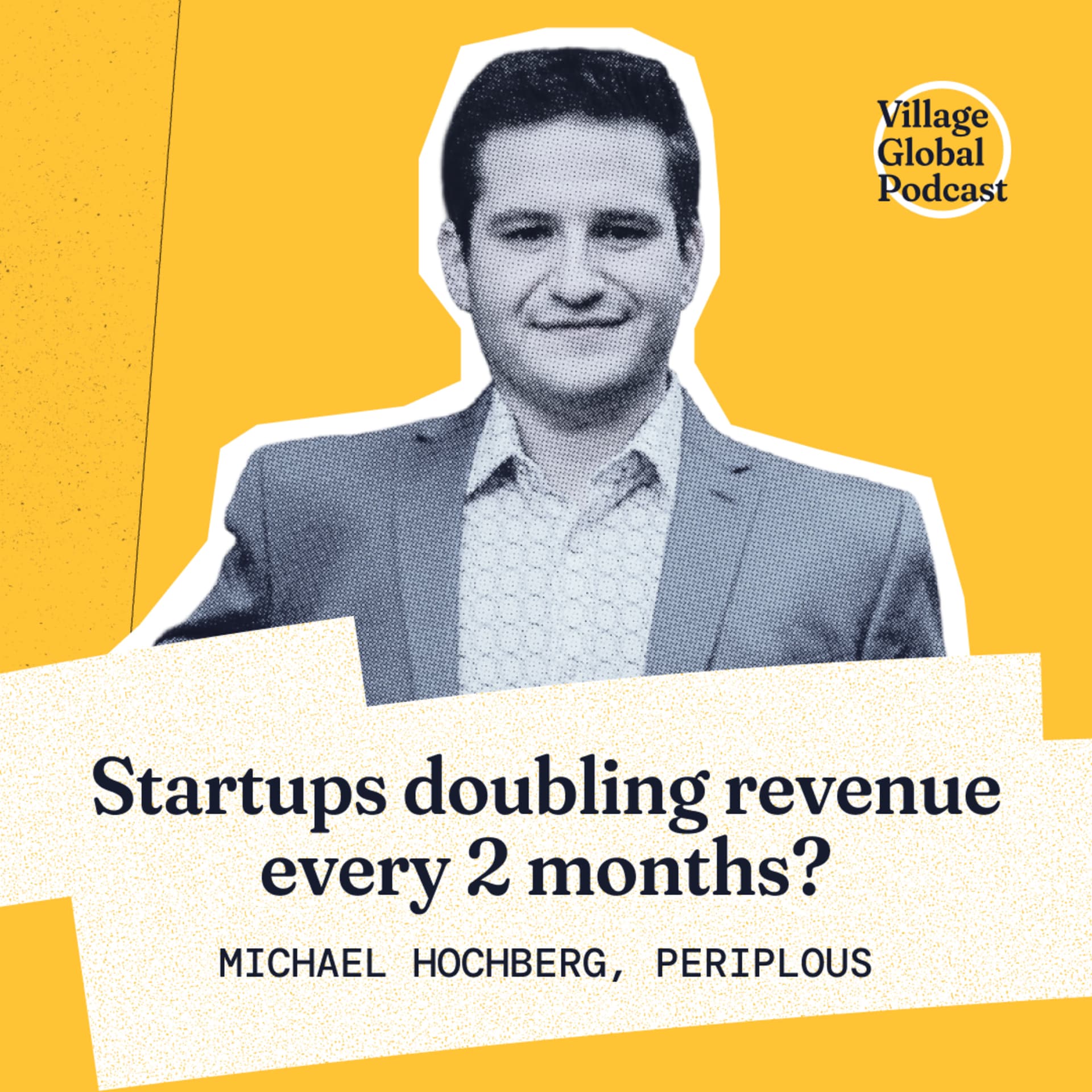
- Michael Hochberg (Periplous). Background: network investor; discusses venture industry state and AI/tech market dynamics.
Key claims
- VCs are “stupid, scared, reductive”: if you confuse or scare them, you get quick no; term sheet is the real “yes.”
- Venture is bifurcating: megafunds (Thrive/GC/Andreessen/Sequoia/Benchmark) raise huge capital for later “breakout” winners; smaller funds are more artisanal at seed.
- Growth capital is crowding earlier rounds: Series B increasingly does “seed-like” investing; outcomes hinge on team/vision and hyperscaling belief.
- Moats are shifting: “no moats exist” broadly; best moat is speed and team talent; brand/scale/network effects are domain-dependent.
- Patents matter less early; enforcement is expensive and delayed.
Notable examples
- Anthropic cited for revenue scale (adds $5B/quarter) to argue valuation gaps may matter less than execution.
- Palmer Luckey mentioned re: patents.
- “Decacorn plus” hunting for $100B+ outcomes.
- AI/robotics liability and insurance: insurance underwriting may lead regulation for embodied robotics and agentic LLM products.
Written by AI. May contain mistakes. Listen to the episode to check what was said.
Chapters
Tap a time to open that second in VOUnderstanding VCs and Their Behavior
0:00 to 0:43
Learn why VCs may reject investments and the challenges they face.
“I like to remind them that VCs are stupid, VCs are scared, and VCs are reductive.”
Current Trends in Venture Capital
1:00 to 2:00
Explore the bifurcation in venture capital and its implications.
“So you've settled here in San Francisco.”
Seed Investing Dynamics
2:00 to 3:30
Understand the compression of investment stages and its effects.
“Then I think at the earlier stage, which is the stage that we operate in at Village and and the job that I do, it's becoming way more of, or just as artisanal as it was.”
Fund Management Differences
3:30 to 5:00
Discover how managing a large fund differs from smaller investments.
“One thing historically was that the way you manage a fund that needs to deploy billion-dollar chunks, doing one-on-ten and trying to scale from a$10 billion valuation to a$100 billion valuation and then beyond.”
Capital Intensity in Venture Deals
5:00 to 6:10
Learn about the focus on high capital deals and its impacts.
“And so the people running those funds certainly are the investors writing the biggest checks.”
Changing Landscape of Venture Outcomes
6:10 to 7:20
Examine the evolution of venture outcomes and expectations.
“because that gives you a lot of independence and a lot of freedom of action.”
Entrepreneurial Opportunities in Venture
7:20 to 9:30
Find out how entrepreneurs can leverage current funding dynamics.
“our fund returns on our follow-on decision making, participating in future rounds of our breakout companies.”
The Evolution of Competitive Moats
9:30 to 11:20
Discuss how competitive advantages are changing in today's market.
“I think it's a product of these funds raising larger and larger and larger quantums of capital that they then need to promise to return.”
AI's Impact on Moats and Innovation
11:20 to 12:55
Explore how AI is transforming competitive barriers in business.
“Because AI makes it so easy to build so quickly that every new week, it seems that a new model is better than the last, that a new product is launched, right?”
The Role of IP in Venture Capital
12:55 to 14:03
Learn about the significance and perception of patents in venture.
“The more people are interacting with your AI system, the more data you get on what is good versus what is bad.”
Show all 33 chapters
The Role of Patents in Venture Capital
14:03 to 16:08
Understanding the importance and limitations of patents for startups.
“I think that in early stage, at least in the market that we've been investing in, it doesn't come up a whole lot.”
Focus on Key Objectives as an Entrepreneur
16:10 to 17:15
The significance of prioritizing essential tasks for startup success.
“I mean, my old CEO used to say that we can do anything, but we can't do everything.”
Optimizing for Determinism in Fundraising
17:16 to 18:37
How founders can create a systematic fundraising process for success.
“So the typical question that people love to ask VCs is, what do you think is hot?”
Understanding the Investor's Perspective
18:38 to 21:00
Insights on what investors look for from entrepreneurs during pitches.
“And then our goal is to really stay close to them, but help them effectively leave the nest and fly, basically.”
Navigating the Shades of No in Venture Funding
21:01 to 24:10
Recognizing the nuances of investor feedback and what it means for startups.
“I think investors don't really like to invest in things they don't understand.”
Building Relationships for Effective Fundraising
24:11 to 26:02
The importance of establishing connections with investors early.
“I say you need to start building those relationships fairly early, right?”
The Current Landscape of Venture Capital
26:03 to 28:08
Discussion on the challenges and trends in the venture capital ecosystem.
“they were friendly and maybe they're going to preempt and I'm not going to have to go do the full activity.”
Building Custom CRM Solutions
28:08 to 29:55
Learn about the advantages and challenges of building custom CRM systems versus using established solutions.
“If you wanted to build your own CRM system, you could hire a team and build your own CRM system, and it would probably be cheaper than what you were paying Oracle.”
Automation and Maintenance Challenges
29:55 to 31:57
Understand the balance between automation, maintenance, and responsibility in tech implementations.
“Where someone is making sure that it's right.”
Market Dynamics and Quality Competition
31:57 to 34:19
Explore how market dynamics affect competition in AI and tech solutions.
“But coming up with the specification of being able to say, here's what I want when you don't already have it, that's going to be a real challenge.”
The Role of Data and Human Expertise
34:19 to 37:52
Examine the importance of proprietary data and human expertise in the AI landscape.
“There's going to be other things where it's a competitive market where, okay, the place that has the AI that is generating higher quality output wins because everyone goes for the higher quality.”
Empirical Approaches in AI Development
37:52 to 40:00
Discuss the importance of empirical methods in AI development and their historical parallels.
“but I think it's become more commonplace to acknowledge that the scaling laws do exist and maybe it doesn't get anything but marginally better than this.”
Lessons from the Dot-Com Bubble
40:00 to 42:01
Reflect on lessons from the dot-com bubble and their relevance to current AI advancements.
“These labs are trained on however many, many million trillion quadrillion parameters they'll be trained on.”
The Evolution of E-commerce Infrastructure
42:01 to 43:13
Explore how internet infrastructure evolved to support e-commerce and its impact on consumer habits.
“I was dead wrong because in reality, once the infrastructure got built out to sell cat food over the Internet, now if you're buying groceries, many people get them delivered.”
The Immediate Economic Impact of New Technologies
43:13 to 44:25
Understand how new technologies are shaping immediate economic impacts and changing growth dynamics.
“I mean, I interact with a lot of people who, in effect, are still using Claude as a search engine.”
The Changing Landscape of Revenue Growth
44:25 to 46:48
Discuss the rapid revenue growth of startups and the implications for the venture capital landscape.
“But the number of places in Fortune 500 corporate America where they've managed to figure out how to use these tools to anything like the same effect is very small indeed.”
Legal Implications of Advanced Robotics
46:48 to 48:30
Examine the complexities of liability and legal frameworks in the context of robotics and AI.
“You're going to see that across a lot more industries.”
Regulatory Responses to Robotics Deployment
48:30 to 51:03
Analyze the different regulatory approaches between the US, Europe, and China regarding robotics and AI.
“And the liability flows to whoever screwed up in effect.”
The Role of Insurance in Technology Adoption
51:03 to 53:17
Learn how the insurance industry is adapting to new technologies and potential liabilities.
“And then in places like China, you're going to have a different model where the government just decides that this is going to be deployed.”
Investing in Emerging Technologies
53:17 to 56:00
Discover how venture capital firms evaluate and invest in emerging technologies across various industries.
“That's not something I've run into much.”
Investing in European Startups
56:00 to 57:36
Learn about the investment landscape for startups in Europe and the U.S.
“So I'd say I'm naturally drawn to maybe things beneath the application layer, at the infra layer.”
Challenges for European Founders
57:36 to 1:01:15
Explore the challenges faced by founders in Europe, including capital access.
“I think we found that a lot of the exciting companies in our most recent fund are actually either European founders or operating out of Europe.”
Evaluating Exceptional Founders
1:01:15 to 1:04:18
Understand how to identify exceptional founders and their potential.
“I think you're probably right in the broad sense.”
Transcript
Automatic transcript. May contain errors.0:00Max Kilberg:I like to remind them that VCs are stupid, VCs are scared, and VCs are reductive. I think investors don't really like to invest in things they don't understand. If you can confuse an investor or you scare an investor, that's a very easy way to get a quick no.
0:16Michael Hochberg:We're seeing things that five years ago I would have said violated the laws of physics. If you had said, oh yeah, we're going to see startup companies that are doubling their revenue every two months for 18 months, I'd have said, no way. Can't be done.
0:42Max Kilberg:Hello, I'm Max Coburg, one of the partners on the team at Village Global. And today on our podcast, we'll be speaking with our network investor, Mike Hochberg, on the state of the venture industry. Max, great to see you. It's a pleasure to finally record an interaction between the two of us. We've had so many conversations over the last couple of years.
1:00Michael Hochberg:Absolutely. So you've settled here in San Francisco. Yes. You're getting plugged into the San Francisco VC zeitgeist. What are you seeing that's going on that's not obvious from the outside?
1:12Max Kilberg:Well, I would say a lot of what's going on is very obvious from the outside, since VCs are spending a lot of time broadcasting everything that they see on social media to everybody. Probably the most obvious thing is just the bifurcation that's happening in venture right now amongst the megafunds versus everyone else. Thrive and GC and Andreessen and now Sequoia and Benchmark are raising larger and larger quantum of capital, they're sitting on those fees with the goal of pushing a billion dollars plus into a couple of breakout winners, while their early stage portfolios are really seen as ways to track those companies and gain access to those mega opportunities to push money in.
2:01Max Kilberg:Then I think at the earlier stage, which is the stage that we operate in at Village and and the job that I do, it's becoming way more of, or just as artisanal as it was. You know, it's really about individual investors, their individual networks, their taste in picking founders and ideas before they become relevant. And ultimately, hopefully front running a lot of the bubble is probably the negative term, but the quantum of capital that's being poured into later stage opportunities. I would say that amongst traditional venture investing, which I would categorize as pre-seed, seed, series A and B, you can think of B onwards as growth investing.
2:45Max Kilberg:A non-obvious trend that I think I've been seeing has been that everything has really compressed into the idea of seed investing. Even at the B, series B investors are doing traditional seed investing. Not much is being learned at the B as opposed to the A, as opposed to the seed. Put another way, if Anthropic can add$5 billion of revenue a quarter, does it really matter if your Series A company is doing$0 million in revenue,$5 million,$10 million,$20 million? It ultimately comes down to the team, the vision, and the belief that you can graduate into a very, very fast-moving, hyperscaling company.
3:26Michael Hochberg:That's super interesting. There's five things to unpack.
3:30Max Kilberg:Yeah.
3:30Michael Hochberg:One thing historically was that the way you manage a fund that needs to deploy billion-dollar chunks, doing one-on-ten and trying to scale from a$10 billion valuation to a$100 billion valuation and then beyond. Like the people you hire, the way you evaluate companies, like every single thing about the culture of the firm is completely different from the way that you would manage a firm that does one to$10 million checks. Right. How are these big firms bridging that gap? Because if you're doing something where you're deploying a billion dollars on two in 20, and then you're deploying a hundred million dollar checks on two in 20, the person who's deploying the billion dollar checks speaks a little louder in the meetings than the people who deploy the smaller checks.
4:32Max Kilberg:I mean, I think that's why there's been such an exodus of young people out of these multi-stage firms. Most of them are going into operating, right? That's where a lot of the alpha is early in folks' careers. But it's certainly correct that if you're at a multi-stage fund, a lot of the attention goes to the five deals a year that matter to that multi-stage fund and the people doing them. And most of those deals, if not all of those deals, are growth deals, right? And so the people running those funds certainly are the investors writing the biggest checks. And it can be hard to really do anything, gain the political alignment needed to get a deal done if it's just too small to matter.
5:14Max Kilberg:Part of what I really like about being at a seed stage fund is being a seed stage investor and getting to do the work that is important to the organization. You know, it's the common saying of you don't want to be doing computer science or software engineering at J.P. Morgan. You don't want to be doing, you know, finance strategic banking at Google, right? You want to be in the part of the organization that is the money-making part of the organization.
5:42Michael Hochberg:One of the sort of peculiarities of this is, you know, as an entrepreneur, when you formulate an idea, oftentimes you want to formulate something that is as low capital intensity as possible, right? You want something where, you know, in many cases, the ideal thing is something where you don't have to raise an immense amount of money in order for it to be very successful because you can choose to bootstrap it. because that gives you a lot of independence and a lot of freedom of action. It gives you, in effect, strategic autonomy. One of the things I noticed, I guess this is maybe 10, 15 years ago, is that a lot of venture firms were really only interested in deals that could absorb huge amounts of capital at multiple stages, because they basically saw much of their alpha as being, okay, I'm going to come into seed stage or A round for millions or tens of millions, but I need to be able to deploy giant chunks of capital later at low risk and still capture a lot of upside.
6:58Michael Hochberg:Is that becoming a dominant narrative now?
7:01Max Kilberg:I think it is the dominant narrative of our time, especially when the hottest companies have become so capitally intensive that they can actually take on these massive raises. It makes our job as seed investors slightly difficult sometimes. In our fund strategy, when we model out our fund returns, we make approximately 50 % of our fund returns on our follow-on decision making, participating in future rounds of our breakout companies. But now, when we write$1 to$5 million checks, 10 % ownership target, when we're writing that $1 at$10 million investment in the inception stage round of a company, we're seeing a lot of multistages come in because they've scaled AUM with their equivalent of 1 at 10, which to them is 10 on 100.
7:52Max Kilberg:And then we need to make a very quick decision on whether this company is actually breaking out or whether a multistage fund is just taking sort of a seed option check on that company because they want to be able to put in a billion dollars later when that company, if it really takes off.
8:09Michael Hochberg:Interesting. Part of what's interesting from an entrepreneurship perspective is that there used to be lots Lots of opportunities where VCs would get very excited about something, where the expectation, if it was successful, was you'd come in for a few million dollars on, say, a$20 million valuation, something like that. The upside of it was a few billion dollar exit. Right. So you're talking about a few hundred X, right? It seems like a lot of people nowadays are focused on the very small number of places that are going to exit in the hundred billion dollar plus range. And so the 100x that they're looking for that pays off the fund and does the 5x on the fund is going from a valuation in the hundreds of millions to a valuation in the tens to hundreds of billions.
9:25Michael Hochberg:Is that really – because there's so few ideas that can do that.
9:30Max Kilberg:I think it's a product of these funds raising larger and larger and larger quantums of capital that they then need to promise to return. It becomes a game of Decacorn plus hunting for these multi-stage funds. That said, there's no one way to make money in venture. For seed investors like Village, we can look at our portfolio and say, hey, one$10 billion dollar outcome, returns the fund and more for us. That said, we could also make our money on five low unicorn outcomes as well. And so there's a couple of conflicting tensions here. I think one of which is everyone wants to make money in venture in the way that, or believes that the right way to make money in venture is sort of just the first way that they ended up making money in venture.
10:22Max Kilberg:So a lot of folks who were very successful at maybe doing incubations early on in their venture career just focus on that. A lot of folks who are great growth investors want to just write the biggest checks in the room and command all the attention. But as these fund sizes are getting bigger and bigger and bigger as they are, the outcomes need to get bigger and bigger as well. I think the good news for entrepreneurs is it's really never been easier to raise 10 to$20 million seed round and really have a right to win a nascent market, to be able to hire whoever you want, to be able to scale an engineering team, a go-to-market team, pitch the best customers in the industry.
11:09Max Kilberg:I think the real winner of a lot of this is actually the founders.
11:12Michael Hochberg:One of the things that's been really interesting to me is that the shapes of the moats have been changing.
11:19Max Kilberg:I'm a no moats exist believer, actually. Oh, that's interesting. Why do you say that? Because AI makes it so easy to build so quickly that every new week, it seems that a new model is better than the last, that a new product is launched, right? Ultimately, I think the moat becomes how fast you can move. It becomes the people on your team, which I think is actually a fair moat. So it becomes about the talent. you can aggregate and the momentum that you can achieve with that talent in terms of go-to-market output.
11:55Michael Hochberg:So you don't think there's scale moats or network effect moats or incumbency moats or brand moats? You don't think any of that exists anymore?
12:03Max Kilberg:I think that there are certain moats around brand, for sure. And I think that there are certain moats around scale as it disincentivizes other people from trying to do the same thing you're doing. I mean, I think entrepreneurs really like new markets and being the first mover because you have a higher likelihood to succeed if you look at the historical data. But that said, I think traditional modes around customer lock-in or data flywheel effects are really, really decreasing over time. I think network effects still certainly exist. Obviously, consumer social platforms haven't been the hottest thing to fund recently, right?
12:44Max Kilberg:And that's, I think, where they exist most.
12:47Michael Hochberg:What about training modes? As you get more people onto your AI platform to do whatever, you learn to be better at whatever it is that you're doing. And I think of that as a flywheel mode. The more people are interacting with your AI system, the more data you get on what is good versus what is bad. and your product starts to improve over time. Do you see those modes going away?
13:17Max Kilberg:It really depends upon the domain. I think that brings us into something else that we were going to talk about around interesting ideas, and one of them is sort of LLM determinism issues, right? And so if that domain is verifiable and easily replicable, coding I think is the best example of that. Yes, your data mode is very, very powerful. That said, if your task slightly differs between industry or business to business, end customer to end customer, I think that moat is less than it was. That said, I do think the best moat is moving fast.
13:56Michael Hochberg:What about formal IP? Are you seeing people care less and less about things like patents?
14:02Max Kilberg:I recently saw, I think it was Palmer Luckey, speak about this on one of his podcasts about the importance of patents. I think that in early stage, at least in the market that we've been investing in, it doesn't come up a whole lot. I think as VCs, we really underwrite the likelihood that there will be fast followers and there will be copycats of any sort of proprietary system that you're building. I think for later stage investors, it probably differs in the calculus.
14:34Michael Hochberg:I mean, the way I look at patents is I think they're only valuable for people who are very sophisticated about how they write them. Because you have to be thinking about, are you going to be able to detect that someone is violating it? You have to be able to, you have to be thinking about how much are you actually enabling your competitors? Because, of course, enablement is a test for patents. If you're not teaching a competitor to do the thing, then you're going to have a lot of trouble enforcing the patent. And then you also have to think really hard about where am I going to enforce this, right?
15:12Michael Hochberg:And how much is it going to cost? Because patent enforcement is extremely expensive. And so there are plenty of places in the world that matter where you just can't do it, starting with China. All propaganda to the contrary. And so my sense of it is, what I always tell entrepreneurs is, yeah, you want to file some patents if there's something that you think meets all the criteria. Yeah, file a couple of patents, but don't spend a lot of time and money on it. Because the reality is, you're not going to be able to use those patents for anything other than performative purposes for at least five years.
15:50Michael Hochberg:Right? Like you're not going to get into patent litigation until you're very successful. And then it's useful, potentially, maybe. But it's mostly not a great use of time, except in very specific edge cases.
16:07Max Kilberg:But that's a very good point. One of the most valuable pieces of advice that you could give to an entrepreneur earlier in their journey is just around focusing on the things that matter and are important. We all have 24 hours in the day. Yeah.
16:22Michael Hochberg:I mean, my old CEO used to say that we can do anything, but we can't do everything. And so we have to pick the very specific one or two things that we're going to do that give us a right to win. And everything else falls, by the way, aside.
16:43Max Kilberg:Absolutely. And I think that's another very essential point to early stage company building, that 0-1, 1-10 stage, if you call it, which is playing games, that you actually do have a right to win. I think there's nothing more than we love as investors when we meet a founder in a pitch meeting and they tell us that there's really only one to two things that they're going to use our money to go accomplish. But then the unlock that accomplishing those things brings about in terms of the quantum of capital or the customer demand or the momentum that they're building in terms of their go-to-market is almost mind-blowing sometimes.
17:26Michael Hochberg:So the typical question that people love to ask VCs is, what do you think is hot? What are you interested in? I'm not going to ask that question because it's just not a very interesting question. The question that I do want to ask is one of the things that entrepreneurs want out of a fundraising process is they want determinism because they want to be able to get on with building their company. And I'm curious if you have a founder who is optimizing for determinism, both in time and in effort and in money raised.
18:07Max Kilberg:Define determinism in a fundraising context.
18:10Michael Hochberg:They want the fundraise to be successful.
18:13Max Kilberg:As everyone does, yeah.
Read the full transcript
18:14Michael Hochberg:They want to have a systematic process that they run in order to make sure that their fundraise is most likely to be successful on a timeline. What would you tell them to do?
18:29Max Kilberg:Well, I actually spend a lot of time with portfolio company founders that we've backed, helping them think about that next round. At Village, we spend a lot of time with our founders at the pre-seed stage, at the seed stage. And then our goal is to really stay close to them, but help them effectively leave the nest and fly, basically. I think there's a couple things that I find myself saying to founders over and over and over again. The first of which is that, as a founder, you're really raising money from an individual person more than you're raising money from a firm. I don't know if, back when I was a founder before I became an investor, I don't know if I fully grasped what the day-to-day, week-to-week, month-to-month, year-to-year job of an investor, a venture investor, really is, which is that you are making a very few amount of bets a year, and so they really matter.
19:26Max Kilberg:Right. And I would I would encourage founders to put themselves in investors shoes. You know, if you could only make three investments a year. Right. How would you spend your time? Would you be investing in the founder who you don't know who sent you a cold email? No, you probably would be spending time with folks who you think are incredibly intelligent ahead of their fundraise. You would be thinking very deeply over whether founders and ideas are exceptional, whether they have validity, but also momentum and, as we talked about, like Decacorn Plus potential. And so I find that when founders really understand that they're raising money from an individual person who only has a couple of shots on goal a year, they really up-level their game.
20:17Max Kilberg:Because you ultimately need to be the best meeting of someone's month, of someone's quarter, of someone's year. And I don't think founders, I didn't realize this when I was a founder, just how many founders are out there pitching the same VCs as you. The second thing is that, and when I work with founders on their storytelling and things like that, I like to remind them three things. It sounds a little crude, but I like to remind them that VCs are stupid, VCs are scared, and VCs are reductive. What I mean by that is not in the literal sense, but most investors are dumber or stupider on the subject of the company than the founders that are pitching them.
20:58Max Kilberg:I think founders really need to meet investors where they are. I think investors don't really like to invest in things they don't understand. And so if you can confuse an investor or you scare an investor, that's a very easy way to get a quick no. And then I think the third realization is that investors are reductive creatures. We're always trying to map whatever new information or pattern match whatever new information we're getting to something else that is known or is understood. And so educating founders about how to properly allow investors to be reductive in the way that helps them sell their vision most effectively is really, really powerful.
21:38Max Kilberg:You almost want to think when you're meeting a new investor about what is the one to two sentences that you want that investor to leave the conversation with and take back to their IC or investment committee to be able to effectively sell your vision to the rest of the partnership.
21:53Michael Hochberg:One of the things that I've seen many first-time entrepreneurs get wrong is that they'll have a meeting. It'll be a great meeting, like good conversation, interesting discussion, friendly VC. The VC says, oh, this is exciting. This is interesting. But no term sheet emerges. And one of the things that a lot of young entrepreneurs don't appreciate is that the way that VCs say yes is they issue a term sheet. Anything short of that is a no or a maybe. It's a no or maybe in the future or it's relationship preservation because they might want to do something in the future. And they don't necessarily want to give a bunch of negative feedback to someone who they've just met.
22:45Michael Hochberg:But it's a no. The shades of no are important to be able to understand because a lot of young entrepreneurs, they'll have – and I've had this experience with many people. They'll have 20 meetings with VCs that are all very positive in tone and very friendly. And then they'll be scratching their head. Why didn't I get a term sheet? Like, everyone's so positive. Where's my term sheet? Do you see people running into this same sort of dynamic?
23:16Max Kilberg:Yeah, all the time. And I think the cruel reality is that they are usually not the number one most important deal that the investor they pitched is working on. They were not the best meeting of the year, right? And if you can only do so many deals a year, you're going to drive to the most important ones and put all your energy into them, regardless of how the levels of good that the other ones were. And so that's where I think entrepreneurs have sometimes a misunderstanding of the process. I think it also depends for founders on what round, type of round you're trying to raise. I think that at the early stages of company building, there are individual investors that founders really want to work with, right?
24:07Max Kilberg:And when entrepreneurs come to me and tell me who those people are, I really advise them. I say you need to start building those relationships fairly early, right? You need to be a known entity if there are only a handful of people who you could really see yourself working with. If you're trying to raise a very large round to go after a very ambitious vision, I often advise founders to speak to a ton of people, right? To start to build momentum, to actually go get a term sheet that you don't want to take so that you walk in when you have the meetings with the investors that you want to take their money with an exploding offer to provide a little bit of time pressure and competitiveness.
24:43Michael Hochberg:You don't think that doing that scares people away? Because if you have a term sheet from someone and you're taking first meetings with everyone else, I've had the experience that some of the other VCs who you're taking those first meetings with, they'll shrug and they'll say, we're not going to move on that timeline. It takes us -
25:06Max Kilberg:It's a risk that you run. I think the art of actually structuring a fundraise is to be in process at the same time with a lot of different funds, both that you are very excited about as a founder and maybe some that you're less excited about. And then ultimately be able to push momentum forward on your round through one person gaining conviction and then the domino falling and another person gaining conviction. And when you see these massive rounds on Twitter, LinkedIn, startups raising$100 million Series A, you're like, how did that happen? It's usually because they went out to raise$40 to$50 and had two to three people fall in love with them.
25:46Max Kilberg:Individual investors at these individual firms fell in love with these founders and bit each other up.
25:52Michael Hochberg:Yeah, 100 % agreed. I mean, if you want to do a round quickly, one of the dynamics that I've seen again and again is entrepreneurs will fall into this trap of, I talked to this one VC and they were friendly and maybe they're going to preempt and I'm not going to have to go do the full activity. And there's no time pressure. And so, because there's no time pressure and there's no bidding war, they can drag their feet for three months, six months, ask for more information, ask for more information. And so, as an entrepreneur, unless you can set up a situation where everyone's coming to the table at once, nobody feels any pressure.
26:38Max Kilberg:Well, I think that's the ideal situation, especially at Series A. I think Series A right now is sort of the bloodbath of the venture ecosystem for founders, right? It's really the haves and the have-nots. There's a lot of exciting, mostly infrastructure companies raising as much money as they want. Everyone else, I think, is struggling a little bit. And whether you agree on whether that should be the case, it sort of is at this point.
27:05Michael Hochberg:What do you mean when you say infrastructure?
27:06Max Kilberg:I would say that anything involving chips, inference, neoclouds, developer tooling that's built off of those chips and neoclouds, anything below the application layer, I think is very exciting to a majority of VC land these days. And everyone's a little bit nervous about horizontal application layer platforms, especially newer ones, given how far-reaching the ambitions of the foundation model apps are.
27:41Michael Hochberg:It's funny because, you know, I have a peculiar view of this. Tell me. Just because you can build a piece of software yourself doesn't mean it's a good idea. And I look at a lot of software that businesses use, and it's always been the case that you could build it yourself. If you wanted to build your own CRM system, you could hire a team and build your own CRM system, and it would probably be cheaper than what you were paying Oracle. And you could do it, and it would probably be better because using Oracle is a nightmare, right? Unless you're Fortune 100, you probably don't need 99 % of what's in Oracle, and it's just implementation burden.
28:35Michael Hochberg:Something simple and straightforward is better than going and using Salesforce, for instance, because implementing that stuff and maintaining it is just a nightmare. But yet, people tend to be conservative and to use the proven solution because they don't want to get fired. They don't want to rule something themselves. And so even if the cost to implement something comes to zero, right? We get two more generations of foundation model, and I can sit down with Fable and generate multi-million line code base for tens of thousands of dollars of tokens, and it'll all be right, and it'll be well-structured, and it'll be maintainable, and it'll be a thing of art and beauty.
29:32Michael Hochberg:Okay, great. I can do that. But if I build some custom thing, someone has to maintain it. Someone has to pay attention to it. It could be a security problem. Someone has to check it. And even if all of that is highly automated, some human has to take responsibility for making the decision to do it in-house. As opposed to just paying for something that someone is selling you where there's a company behind it. Where someone is making sure that it's right. I'm not sure even if the feature moats fall, even if you can build whatever feature you want relatively quickly, I think we're going to end up in a situation where the branding moats really matter.
30:20Michael Hochberg:Because people will still not want to get fired for building something defective themselves.
30:26Max Kilberg:Well, I think that incentive alignment question is something that is pretty poignant and still needs to be figured out, right? There's certainly going to be a lot less humans in AI-native agentic organizations, but the humans that remain will still have lots of different moral hazard considerations to make. But there is a future of the world where you point Fable at Salesforce, at your CRM system of record, it copies the entire thing once. Boom, you don't need Salesforce anymore. You query and interact with your CRM or your Salesforce with a prompt directly in Slack or on your phone with that agent.
31:09Max Kilberg:And so the question is, do we really need the dashboards anymore?
31:14Michael Hochberg:Once it's working and once you know what you want it to do, sure. And I could see that. But the big challenge is specifying what you want. Right? Being able to say, okay, once you have a system that's up and running and you're reasonably happy with it and you have improvements you want, saying, I want a copy of this that's local, that's a compact and straightforward thing to say. I want a copy of this thing that I will then own. And if that thing that you're copying doesn't have a lot of magic behind it, if it's just a database or something, yeah, of course. If it's something that's got a sophisticated trained model behind it that's hard to replicate and that requires a lot of data, maybe not, right?
32:08Michael Hochberg:But coming up with the specification of being able to say, here's what I want when you don't already have it, that's going to be a real challenge. Absolutely. And the other thing is that I do think that in a lot of these cases, the fear that commercial SaaS or commercial AI as a service, that that's going to disappear and that everything's going to get sucked into the foundation models. I think that you're going to have lots of companies where they have their own models team. Of course. And where that's the moat. I think it's actually going to segment into two different kinds of problems. One is going to be things where there is a clear good enough threshold, right?
33:01Michael Hochberg:Where there is some version of perfection, you know, say where there's a mathematical limit on how good something can be or where, you know, like let's say you're doing speech to text as an example. Where at some point it's just perfect. It's good enough, right? Where the only way to make it better is to add more functionality, right? More interaction, more smarts, whatever. And you see this with a lot of traditional things in hardware, where it's like you run into a point where you just have a trade space. And where, yeah, you can make the transistor smaller, but you give something up. You're running into the limits of the physics.
33:42Michael Hochberg:And I think you see this a lot of the time in physical systems. And so, in cases where you get to the point where there's a first place that has just solved the problem with a specialized model, at that point the competition is just, okay, the problem is now solved, how do we make it cheaper or faster? But there's not a quality competition. That's something where it's going to commoditize. And you can make good money in a commodity market, but -
34:17Max Kilberg:You have to be better, faster, cheaper.
34:18Michael Hochberg:Yeah. Well, faster, cheaper, right? Better is the other side. There's going to be other things where it's a competitive market where, okay, the place that has the AI that is generating higher quality output wins because everyone goes for the higher quality. And for those, it's the sort of infinite spending model where money will pour into whatever's going to give you a better result because the whole market sloshes over to the model that's best.
34:56Max Kilberg:And when you ask why AI infrastructure is so hot amongst VCs, it's really because venture capital is an asset class sort of set up to pour as much money as possible into the fastest growing, highest upside opportunities. And right now it's that. Yeah. When people build hardware, if you're building a new chip, basically you have to call the ball on what chip the world is going to need two to three years from now.
35:28Michael Hochberg:Yeah. Do you think that we're still going to be in hyper growth mode for, say, token demand three, four years from now?
35:42Max Kilberg:I think so. I think the CapEx build-out is happening three, four years from now already. Those contracts have already been purchased. I think what happened with Kimi this week and the GVON's paradox around GPUs being at capacity, even when the market thought they weren't, was particularly surprising for some and obvious for many in the meantime. I think a lot of it depends upon the scaling laws of LLMs. Everyone got really excited when LLMs got really good at coding that these scaling laws were nonexistent. They were just going to scale upwards infinitely. I think now you see folks start to realize that a lot of the value within enterprises is actually the harness, right?
36:31Max Kilberg:You need the proprietary data. You need someone to build the evals, to structure that data, to build the evals, to do the RL, to build your custom model, to do that specific workflow. You have folks realizing that a lot of white-collar jobs are very different from software engineering, where a code base is a machine-readable document for excellence at the job of software engineering. There's no machine-readable document for being a great lawyer, investment banker, venture capitalist, things like that. And so a lot of the instructions for how to do these GDP-producing jobs very well in the digital world, let alone let's leave the physical world aside because robots coming is also a huge tidal wave too.
37:14Max Kilberg:The expertise really exists within the humans that currently do those jobs really well. So those insights need to be extracted and, again, structured.
37:25Michael Hochberg:And it's not enough to just read their email.
37:27Max Kilberg:And it's not enough to read their email because the internet's already been trained on and these things still aren't at ASI. Now you have also some other folks like, I guess, Jerry Torax, Nuneel, Abcorado, who are now saying that there needs to be a different architectural substrate to solve self-learning, right? And no one really knows what that is yet and whether that'll ramp as quickly as LLMs have. but I think it's become more commonplace to acknowledge that the scaling laws do exist and maybe it doesn't get anything but marginally better than this. No one knew that pre-training transformers was a transformative idea.
38:09Max Kilberg:That's not what OpenAI started with the idea of. It was some intern, I'm forgetting his name, had the first idea to do that. Then all of a sudden, chat GPT popped up or GPT-3 popped up.
38:19Michael Hochberg:It's funny because we're in this regime where there really isn't any unifying theory for any of this. It's all what I think of as pre-science. You go back to the days before we had chemistry. And people were doing things that were empiricist enterprises. But it wasn't really science the way we think of it now. It was alchemy. It was zoology. It was, all right, I see a critter. I'm going to draw the critter, and then we're all going to get together at the Royal Society and compare our drawings of critters and try and figure out how to make sense of all of this. Same thing with alchemy, right? Like before you had a theoretical framework for chemistry, you just tried stuff.
39:11Michael Hochberg:That's kind of where we are in a lot of AI in the sense that the interesting ideas are not theoretically driven. It's just people trying stuff. It's very smart people trying stuff. And the pace of progress is astonishing in terms of real economically impactful results. So, what that says to me is we haven't saturated the easy problems to solve.
39:39Max Kilberg:I completely agree. And I think the marginal utility of the 98 % to 99 % effectiveness at achieving a problem will continue to financially incentivize people to go after that last mile delivery. I think a lot of what we're talking about in AI right now is really about that last mile to liberty, right? These labs are trained on however many, many million trillion quadrillion parameters they'll be trained on. Yet they're still not effective in sort of that post-AGI promise of doing human work most effectively.
40:22Michael Hochberg:Yeah, I mean, one of the things that people forget is that many of the biggest results that we got out of, say, chemistry were before we understood the periodic table. Like gunpowder predated modern chemistry. Discovery of gunpowder, discovery of fire. These were the big, big results. And we've done some good things more recently. But just being purely empirical and trying stuff often gets you your biggest results.
40:57Max Kilberg:And you're a student of history and as an entrepreneur have maybe seen more cycles, not to date you, than I have. I'm curious if this current moment in the AI zeitgeist mirrors to you anything about the dot-com bubble, advancements in chips even earlier than that.
41:18Michael Hochberg:It doesn't. It doesn't. I mean, I used to joke when I was an undergrad about all of my – so at the time I was doing a chip company. And I used to make fun of some of my friends who were going into these e-commerce things that were just losing money hand over fist. And the joke I used to make was, you're going to do what? You're going to sell cat food over the internet? Choose a more noble quest? Yeah, I mean, you just did a degree in some fancy science thing from Caltech, and you're going to lose money selling cat food over the internet? Like, who wants to buy cat food over the internet? Like, even if you succeed, it's not important.
42:01Michael Hochberg:And I was dead wrong. I was dead wrong because in reality, once the infrastructure got built out to sell cat food over the Internet, now if you're buying groceries, many people get them delivered. And it's a meaningful thing for a lot of people because it makes their lives easier. I bought dog food over the Internet. I never had a cat. But it makes sense. So it was an idea that at its core actually made sense, but the infrastructure to do it just didn't exist for several years later. I mean, all of the things that were promised during the internet bubble.
42:42Max Kilberg:Well, a lot of the telecom overbuild out helped cloud adoption a couple decades later.
42:47Michael Hochberg:Yeah, in marginal ways. The big thing is all of the things that people wanted to do over the internet, they did show up. They just showed up 10 years later. And so that was a particular form of bubble where people were just getting ahead of the economic impact. This is different because the economic impact is so immediate for a lot of this stuff.
43:21Max Kilberg:It's also easily understood.
43:23Michael Hochberg:Yes and no. I mean, I interact with a lot of people who, in effect, are still using Claude as a search engine. Really? Yeah, all the time, including in the tech industry, right? There are, you know, from the perch from inside Silicon Valley, that view where people understand what you're talking about when you say, oh, I need to build a harness for this. I need to build a skill for this, whatever it is. Most people don't know what you're talking about, even in the wider tech world. There are a small number of very AI-forward organizations, and you see the impact of this. In startups that are very AI-forward, tiny teams doing amazing things.
44:15Michael Hochberg:Teams that are accomplishing things that used to require 10 times the people in the same amount of time and much less money. It's amazing. But the number of places in Fortune 500 corporate America where they've managed to figure out how to use these tools to anything like the same effect is very small indeed. And that says that there's a huge opportunity here. Right. Because the impact is clear, but we haven't even hit the inflection point where it starts to really have an impact out in the wider economy. I think we're just at the beginning of this. We're seeing things that five years ago I would have said violated the laws of physics.
45:08Michael Hochberg:If you had said, oh, yeah, we're going to see startup companies that are doubling their revenue every two months for 18 months, sincerely, without gimmicks, without weird circular payments, without playing games, with real honest-to-God external revenue, I'd have said, no way. Can't be done. Here we are. Yeah, and here we are. And it's being done, I wouldn't say routinely, but by dozens of places. And that is a secular change. And people now sort of take that for granted. And it gets gamed and all the rest. But it used to be that the only places that could grow their revenue that fast were like, okay, I've invented a viral video game.
46:02And maybe it lasts for 12 months, right, as it gets bigger and bigger.
46:08Michael Hochberg:You know, I've invented Angry Birds, right? But, you know, things where the interface was really easy. But no one was doing that for productivity software, right? You know, because productivity software, if it was powerful, was hard to learn how to use. So I guess I know the venture community, people are very skeptical of the application layer these days because they're concerned about software modes and all the rest. I'm much more optimistic about that because I think that you're going to get software that has superpowers in effect and people will consume more of it. The Jevons paradox where the marginal change in demand for small changes in price is huge.
46:57Michael Hochberg:You're going to see that across a lot more industries. The embodied robotics thing that you mentioned, the embodied AI thing that you mentioned a moment ago, is an area where I think almost everyone is underestimating the speed with which that's going to accelerate. Because right now, I don't think the limitation is the hardware primarily. I think the limitation is primarily just the training data. It is.
47:22Max Kilberg:And again, back to non-determinism issues, there's really no way for a robot to know if you pick up your mug this way or this way or this way or this way, right? And so you need hundreds of thousands of hours of humans picking up that mug.
47:39Michael Hochberg:One of the questions I have about all of this, and I've written a little bit about this, is, okay, so you have an embodied robot that's pretty smart, right? And that you interact with like you would interact with a human. And there's a problem, and it kills someone. Or it damages a piece of property. Who owns the liability for that?
48:03Max Kilberg:It is right now a completely unknown question.
48:06Michael Hochberg:I suspect that from a legal perspective, it is not unknown at all. It's just that the known is dysfunctional, in the sense that whoever owns it is responsible. And then there's a question of intent and there's a question of who generated the model. Is it the model or the hardware that went wrong? And the liability flows to whoever screwed up in effect. And it depends on who wrote what indemnities into which agreements. But it's not clear to me that we have a regulatory environment that's going to work for that. But if you have a fully self-driving car that causes a traffic accident, do you know how the liability associated with that has played out?
49:03Michael Hochberg:I'm not the most knowledgeable on this. I'm not either. It's just really interesting to me because if you have a Tesla –
49:09Max Kilberg:We should call your buddy from Arnold and Porter. We should call in on the pod.
49:13Michael Hochberg:I'm sure they could tell me, but it's an interesting question. If you're in self-driving mode and your car runs someone over and you're not driving, are you liable? Is that a criminal act on your part?
49:29Max Kilberg:I would presume the driver is still liable if they're sitting in the driver's seat.
49:33Michael Hochberg:Well, let me ask an associated question. I get into Waymo. I'm not sitting in the driver's seat. The Waymo runs someone over. That's got to be Waymo. Well, I'm taking a nap. Am I liable? Is Waymo liable? What happens if they get hacked and the Waymo runs someone over because they didn't have adequate computer security? I have no idea how this plays out, but that legal morass is going to be a big adoption.
50:08Max Kilberg:Well, I think what you're hitting at is that we still have a really long way to go in putting robots inside homes, putting them around children, having them do vague, ambiguous tasks, both in an industrial setting, in a residential setting. But there's a lot of money to be made in that last mile of deployment.
50:28Michael Hochberg:See, I actually don't think we have a long way to go. I think the Europeans have a long way to go because the first time that they have an accident, there's going to be a blizzard of regulations out of Brussels that say, you can't do this, you can't do that, you can't do the other thing. In the United States, we have a very different attitude about this, which is we don't really stop things until they turn into a disaster. And so what's going to happen here is this is just going to get deployed and then the legal framework will follow based on whatever weird exceptional things happen. And then in places like China, you're going to have a different model where the government just decides that this is going to be deployed.
51:13Michael Hochberg:Kind of like they have a cap on the number of people who can be killed in a natural disaster. Yes. Right? I mean, there's never a natural disaster with more than 50 fatalities in China. We promise. It's going to be the same kind of thing. Everything's going to go really well because the government decided that it will only be reported that it went really well. So, I think this is going to get deployed ahead of all of this getting figured out at scale really fast. And then we'll just sort of make the best of it.
51:45Max Kilberg:superpower of the American economy is figuring it out.
51:49Michael Hochberg:Yeah. I mean, one space that I'm watching really closely is the insurance space.
51:54Max Kilberg:Really?
51:55Michael Hochberg:Yeah. Because when you have things that front run the law, the way it gets worked out is by the insurance industry. Sure. You know, the spaces that are not regulated or where there is no law, like, you know, our time side or where there's law, but only sort of. If you want to know what the future looks like, you pay attention to what the insurance companies are requiring people to do. Because, you know, if I'm a company and I'm deploying embodied robotics into people's homes, I'm going to try and get an insurance policy from Lloyd's on that, right? Where fundamentally, if something goes badly wrong, they're covering it.
52:41Michael Hochberg:And then they're going to come back and say, okay, well, what are you doing to make sure that something doesn't go badly wrong? And I think that's where a lot of the action is going to happen before there's legislation, before there's litigation. It's going to happen at the insurance layer first.
52:59Max Kilberg:Well, I mean, we're seeing that already happen, not in the physical world, in the digital world with agents. A lot of neo-insurance companies are starting to offer insurance around agentic products. And a lot of the carriers are struggling to think about underwriting it.
53:17Michael Hochberg:That's interesting. Tell me what you mean by that. That's not something I've run into much.
53:21Max Kilberg:Well, how are you going to ensure if you are an organization that has a customer support facing chatbot, and maybe you're dealing with sensitive data, bank data, transaction data, things like that. What if something goes wrong? Who is insuring that that agent, that LLM, is not doing anything poor with that customer's
53:45Michael Hochberg:proprietary data? When you say insuring, do you mean creating technical guardrails, or do you mean literally legal indemnification?
53:51Max Kilberg:Legal indemnification. Interesting. That's going to be a whole new category of insurance that needs to be figured out. And from the couple contacts at the carriers, they have no idea how to underwrite it.
54:04Michael Hochberg:That's super interesting.
54:06Max Kilberg:And I think that'll probably happen first before the physical world insurance gets handled.
54:11Michael Hochberg:Yeah, I mean, what it says is that all of the things that we need as humans in terms of legal and contractual infrastructure, you're going to need at the agentic layer as well. which is super interesting.
54:29Max Kilberg:A lot of what we're trying to do, I guess, implicitly, and maybe explicitly in some ways too, is get these things to think and reason and behave like the human brain.
54:42Michael Hochberg:And like human communities as well.
54:44Max Kilberg:Like human communities, which is maybe an unrealistic expectation to put on them.
54:49Michael Hochberg:So are these the kinds of things that you guys are looking at specifically at Village? Is part of your alpha that you're looking into these particular kinds of activities right now?
55:01Max Kilberg:I would say we're a generalist firm. We can invest across industries, geographies, things like that. We work with a network of luminary LPs who were founder CEOs of the previous generation of transformative, magnificent companies, folks who are more sector expertise like yourself. We have geographic expertise tracking different ecosystems for us. Then I would say the individual investors on our team, of course, have our own little swim lanes of what they like and dislike and understand and don't understand and things like that. I could speak to myself personally. I've never had a real job. I went from early stage founder to early stage VC.
55:44Max Kilberg:I would say my knowledge of the intricacies around end markets and buying patterns is maybe less than some of my other colleagues. But what I do really understand is deeply technical founder, very good technical idea, big idea, stick them together, and let's go run at it. So I'd say I'm naturally drawn to maybe things beneath the application layer, at the infra layer. But no, we invest across the gamut.
56:12Michael Hochberg:Do you see stuff coming out of Europe that's investable these days?
56:15Max Kilberg:Yeah, quite a bit.
56:17Michael Hochberg:Yeah?
56:17Max Kilberg:Mm-hmm.
56:17Michael Hochberg:And do you find that the overhead slows them down, or are you equally excited about deploying capital in Europe compared to the U.S.?
56:29Max Kilberg:I would say that traditionally the fastest growing companies have been in the Bay Area. That said, there's a ton of AI and ML talent coming out of European universities. A lot of these founders are incredibly exceptional, incredibly entrepreneurial and driven, and they want to start companies. Most often, they actually form their companies in the United States. They form a Delaware C Corp. That is then investable very easily by U.S. venture firms. Whether they choose to move full-time to the United States or operate their companies in the EU is sort of variable. But no, I think a ton of companies are coming out of Europe.
57:11Max Kilberg:I mean, look at what has happened in Sweden recently.
57:15Michael Hochberg:So that's interesting. From an investability perspective, forming it as a Delaware C Corp from the get-go, you don't care as much where they're physically operating as long as it's a U.S. entity.
57:31Max Kilberg:I think it makes it very easy on our legal team and our conscious, of course, as American investors investing physically located in the Bay Area. That's at Village Global. Global is in the name. I think we found that a lot of the exciting companies in our most recent fund are actually either European founders or operating out of Europe.
57:55Michael Hochberg:So European founders I see all the time, right? People who move to the U.S., very common, very, very common. But do you actually have a bunch of portfolio companies that, independent of where the legal entity might be, they're physically operating out of Europe?
58:15Max Kilberg:Yeah, absolutely.
58:16Michael Hochberg:That's interesting.
58:18Max Kilberg:You're bearish on anyone operating in Europe?
58:21Michael Hochberg:I guess my starting point is if you're not prepared to move to the Bay Area or New York or somewhere where there's a concentration of talent and capital, my starting point is how serious are you? Is this really your priority?
58:44Max Kilberg:There is a concentration of AI talent in Europe.
58:46Michael Hochberg:There is, but it's not in any one place. It's scattered all over. And there's certainly not a concentration of capital. And so I guess when I talk to founders in Europe, whether it's hardware or AI or any of a number of other things, they're invariably struggling to raise capital. I see that again and again in a way that I don't see here in the US as often. And what I always talk to them about is, okay, what's holding you here? And sometimes there's a very good answer, right? Because there are clusters in Europe for specific things in specific geographies, right? There's a semiconductor cluster around IMEK, for instance.
59:37Michael Hochberg:There's a few others, right? There's an aerospace cluster in France. I'm forgetting the name of the town. But there's a lasers cluster outside Paris, right? There are places where there are geographic clusters with a high concentration, at least of talent and equipment and capability, if not of capital. I don't ask the question in an insincere way. I ask, what's holding you here? Because what I see again and again is you'll have a European company. There's one that I'm thinking of right now that I've chatted with the founders since before they existed. where immense EU money poured into it, immense activity.
1:00:24They've raised a big round, and they've realized that they have to move to the United States
1:00:30Michael Hochberg:because they just can't do what they're trying to do. In northern Italy, it's a semiconductors thing. And the depth of talent pool is fantastic, but the regulatory environment's a pain. it's impossible to fire people. The government money is non-dilutive, but it dilutes your attention, right? It slows you down. And they can't raise the kind of money they need to raise there. And maybe that'll change over time. But yeah, I mean, I always have a seriousness question when it's like, when are you moving to the US if you're really on a hyper-growth trajectory? because they always run into a ceiling.
1:01:15Max Kilberg:I think you're probably right in the broad sense. That said, the magical thing about our industry is for every broad point, there's a very specific counterpoint to disprove the rules.
1:01:26Michael Hochberg:There's always the counterexamples.
1:01:27Max Kilberg:Yeah. And I think what we come back to is I have a certain amount of bullets in my gun every year to use in terms of investing in exceptional founders. And I think that the founders that I work with are truly exceptional. They can really build companies anywhere.
1:01:41Michael Hochberg:What stops you from writing 10 checks a year instead of three?
1:01:51Max Kilberg:Well, we have a broad strategy with many investors on our team, right? So not everyone can write 10 checks a year. I think that when I think about my own allocation in our fund and deploying that effectively, there's the constant struggle of do I write fewer big checks or more smaller checks? Because each investor on our team has allocated a quantum of capital.
1:02:17Michael Hochberg:So it's capital. Yes. That's interesting. So it's not a tension, it's capital.
1:02:21Max Kilberg:It's not attention, it's capital. At least that's the way that we structure. I think that it's because we try and make every dollar really, really count. I would say investors pass for a multitude of reasons, but ultimately I think when I'm meeting a founder, I'm trying to diligence an investment, I'm thinking on the lines of, is this person deeply exceptional? What is the evidence of exceptionalism in their past? How does that transfer into what they're building now? Why does that give them a right to win compared to every other super genius or moderate genius with the same idea? Ideas have sort of become commoditized in early stage venture land these days.
1:03:02Max Kilberg:Why does that give them a right to win? Is the relationship that they'll be building with their customer an everlasting relationship where the customers derive a lot of actual value versus perceived value? and ultimately how quickly can this get to scale in a reasonable time since we're investing on fun timelines as well. And so I think for me personally, I've really tried to spend a lot of time with people at the frontier who are maybe not founders, who are in industry and really get a sense of maybe what is six to 12 months pre-consensus. And I think that that's really where our right to win is as early stage investors.
1:03:44Max Kilberg:I was playing sort of deal of the week my first couple months in venture where I was chasing sort of the hot thing and getting beaten by other firms and things like that. And then I think I really needed to internalize and realize that, you know, as a junior investor, no one knows who you are. You know, you don't really have a right to win. Obviously, like the brand of Village helps a lot, but ultimately you need to play games you can win. So the games that, you know, I can win are with founders that I know very well or that I believe in more than anyone else. Cool.
1:04:17Michael Hochberg:Let's end there.
1:04:18Max Kilberg:Let's end there.
1:04:19Michael Hochberg:That's fantastic.
1:04:19Max Kilberg:Thank you so much.
1:04:20Michael Hochberg:Thank you.
1:04:23Max Kilberg:Hey, this is Ben Kasnoka, co-founder of Village Global. Thanks so much for tuning in to the Village Global podcast, where we go deep on all of the biggest topics in tech. If you enjoyed this conversation, please subscribe to our YouTube channel. You can check us out on Spotify, Apple, wherever you get your podcasts. We'd love to see you for the next one.
From the publisher
Michael Hochberg is a semiconductor entrepreneur, Caltech-trained physicist, and network investor with Village Global. He's founder and president of Periplous LLC, and has built and scaled hardware and deep tech companies through multiple market cycles, giving him a front-row seat to both the chip industry and the venture capital that funds it.
Max Kilberg, General Partner at Village Global, sits down with Michael to unpack the state of venture right now, starting with the widening split between mega funds chasing billion-dollar checks and early-stage investors still doing artisanal, relationship-driven deal-making. They get into why Michael believes traditional moats around data and customer lock-in are eroding while speed and talent become the real differentiators, why patents rarely matter for early-stage founders, and the "VCs are stupid, scared, and reductive" framework Michael uses to coach founders on fundraising. The conversation turns to AI's economic impact, including the CapEx buildout already locked in for the next several years, the emerging question of legal liability for autonomous systems and embodied robotics, and a surprisingly detailed debate on whether commercial SaaS survives an era where founders can generate their own software from a prompt. They close on where Village is finding opportunity in Europe and what it actually takes to win a competitive allocation of a VC's limited checks per year.
Thanks for listening. If you like what you hear, please review us on your favorite podcast platform. Check us out on the web at www.villageglobal.com or get in touch with us on X @villageglobal. Want to get updates from us? Subscribe to get a peek inside the Village. We'll send you reading recommendations, exclusive event invites, and commentary on the latest happenings in Silicon Valley. www.villageglobal.com/signup