
In short
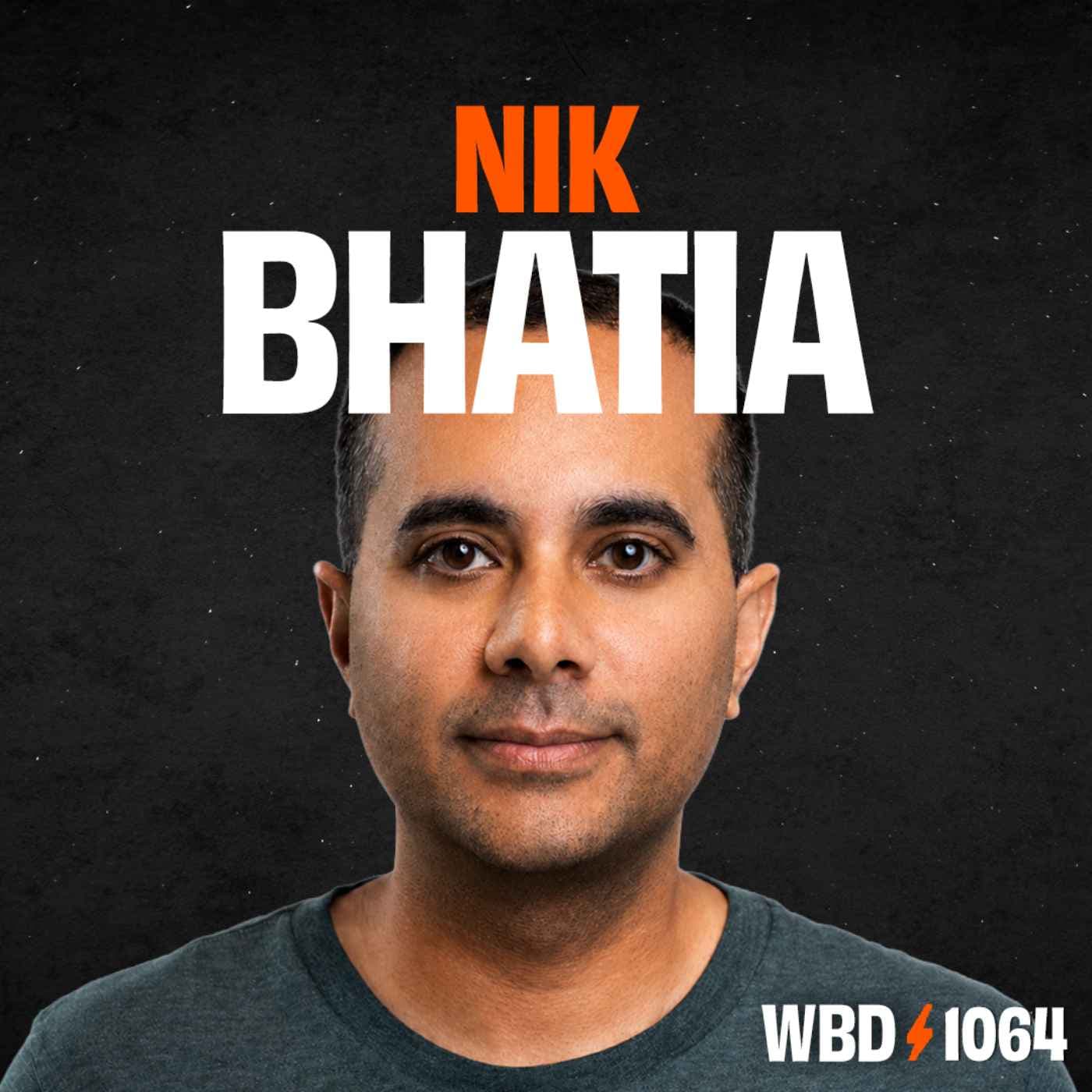
Nik Bhatia argues the US faces a “debt reckoning” where Treasury buybacks and “pseudo” yield-curve management can suppress volatility, but cannot eliminate the core issue: rising interest costs and eventual repo/bills funding stress that may force Fed intervention. He links macro liquidity to Bitcoin’s next move, citing seller exhaustion and on-chain capitulation, while warning Bitcoin remains reactive to global rates, volatility, and the dollar. He also frames “financial war” as power politics around the eurodollar system (Operation Economic Outcast), not direct US-China financial combat, and says Bitcoin is the best scarce asset under uncertainty.
Guests
Nik Bhatia (bond trader turned Bitcoin/macro writer; focuses on treasury liquidity, repo, and macro-Bitcoin relationships). Host: Danny (interviewer).
Key claims
Buybacks are small vs deficit; the real effect is shifting issuance toward bills, flattening the curve and reducing off-the-run liquidity gaps. Repo tightness is the likely trigger for Fed action. US interest costs (not just $40T debt) are the fiscal problem. Europe/UK/Japan are more likely to need intervention first. Bitcoin bottom may be in, but a bull market isn’t confirmed.
Notable examples
March 2020 off-the-run Treasury illiquidity; 2019 repo crisis and Standing Repo Facility; 2020 “rug pull” in bond markets; 2025 Fed bill purchases to stabilize repo; BNP Paribas/Libor widening in 2007 as early eurodollar stress. Mentions Ledn, Swan RBX, BitKey, Anchor Watch, Cape (ads).
Written by AI. May contain mistakes. Listen to the episode to check what was said.
Chapters
Tap a time to open that second in VOThe Financial Reckoning
0:00 to 0:47
Discussion on the impending financial reckoning and its implications.
“There is a point at which something has to be addressed.”
Bitcoin's Price Dynamics
0:47 to 3:16
Exploration of Bitcoin's price movement and influences from treasury buybacks.
“Great to have you back on the show, mate.”
Understanding Treasury Actions
3:16 to 6:12
Analysis of treasury buyback programs and their impact on the market.
“And I think it's important to admit that nobody actually knows how these things are going to go.”
The Shift in Investment Behavior
6:12 to 13:57
Insights into changing investment trends and the end of the global savings glut.
“As they continue to skyrocket, you're basically stuffing all that in bills.”
Understanding Treasury Yields and Risks
16:01 to 18:16
Explore the dynamics between corporate yields and treasury risks.
“Or is it the fact that people just have far less trust in the treasury market with the huge amount of debt the US government now has and the ever-growing amount of debt?”
The Implications of US Debt Levels
18:16 to 20:54
Discuss the impact of rising US debt and interest rates on the economy.
“They obviously have to roll that debt over as well.”
Addressing the Debt Crisis: Potential Solutions
20:54 to 24:57
Examine possible strategies to manage the US debt crisis and interest costs.
“enormous problem of the United States debt and the interest costs.”
The Future of US Fiscal Policy
24:57 to 28:00
Analyze the potential paths for US fiscal policy in light of current challenges.
“Politically, that might be feasible after 2028.”
Episode Discussion
28:00 to 42:00
“And so Besant and Warsh on the plane together, they have to be talking about how do we address this?”
Understanding Financial Crises and Bitcoin's Role
42:00 to 46:04
Explore how past financial crises inform the current outlook for Bitcoin and global economics.
“And so I don't, I don't know if these actions bring some big next crisis.”
Show all 17 chapters
Market Predictions and Bitcoin Strategies
46:04 to 50:09
Learn about current Bitcoin market analysis and strategies for trading based on liquidity indicators.
“So like you say, Bitcoin is the best bet here with all the uncertainty going on around the world.”
TBL Liquidity: Tools and Insights for Traders
50:09 to 55:44
Discover how TBL liquidity tools can help traders make informed decisions in the Bitcoin market.
“People get the indicator the second that it flips that are signed up with us.”
Navigating Bitcoin Trading Challenges
55:44 to 56:07
Discuss the complexities of trading Bitcoin and the value of research and indicators.
“I mean, that's impressive outperformance.”
Market Sentiment and Bitcoin's Performance
56:07 to 59:16
Explore current market sentiments around Bitcoin and its future performance.
“What people are doing are, you know, they're putting bearish bets on versus bullish bets on as the indicator moves around.”
Liquidity Trends and Bitcoin
59:16 to 1:02:05
Discuss the impact of liquidity trends on Bitcoin's market performance.
“So I'm not very short-term bullish on Bitcoin.”
Influences on Bitcoin's Future
1:02:05 to 1:06:33
Analyzing various factors that could influence Bitcoin in the near future.
“about, meaning that something could happen in the next week that turns the dollar lower, turns rates lower, quiets volatility, and sends liquidity higher, and we want to ride that.”
Concluding Thoughts on Bitcoin's Position
1:06:33 to 1:09:25
Recap of insights regarding Bitcoin's position and future market behavior.
“I don't over-anchor in narratives either.”
Transcript
Automatic transcript. May contain errors.0:02There is a reckoning. There is a point at which something has to be addressed. If the Fed raises rates, they'll be able to issue the debt. It'll just be all in bills. The bills will crowd out the money market. There'll be a repo crisis and the Fed will have to buy bills. The UK, France, and Japan are much more likely to see some massive central bank and or slash government intervention over the next six to 12 months than you are to see out of the Treasury and the Fed. What you basically just asked is, are we really at financial war? And who are we at financial war with? Great to have you back on the show, mate.
0:50so much has happened and so much of what has happened is right in your wheelhouse in the treasury market um bitcoin obviously what was it a week or two ago ripped 20 in a week up to like 80k we're now sat just below 80k and everyone was claiming that this happened off the back of the treasury announcing they were going to double the number of buybacks they were doing do you think that's what actually caused this move the treasury buyback announcement is a suppressant of volatility at the margin so from our liquidity perspective it's going to help because rates maybe come down a little bit volatility comes down because people are less worried the treasury has some backstop there and so at the margin yes there there's a positive liquidity move it It ends up in Bitcoin and there's some behavioral follow through.
1:45Then you get the short squeeze and a few levels get taken out and Bitcoin does its thing. So yes, zoomed in, Danny, where there was an impact there. But zooming out a little bit, I think Bitcoin in the grand scheme of things is going to seek the price where the whole market is. So the last eight months, the market has been bearish. And over the last month or so, you can see the seller exhaustion in the market. The dips are not as intense. All sorts of momentum indicators. There are a bunch of ways to measure it. even the most common on-chain indicators or the most frequently used on-chain indicators throughout cycles showed that capitulation had pretty much exhausted itself in the 60s.
2:44So then that sets up the next wave, which is Bitcoin resuming some bullish price action. What are the trigger points and how they can move? Honestly, it's anybody's guess. And my background is as a bond trader and a bond trader that became fascinated with Bitcoin. Then I started writing about the relationship between macro and Bitcoin. But I'm here guessing just as much as I'm analyzing. And I think it's important to admit that nobody actually knows how these things are going to go. And that's why the majority of fund managers underperformed the S &P. So I want to get into the bond market a little bit because with this move, people have called it like not yield curve control, yield curve control.
3:37There's obviously they're putting in a bigger backstop. But how do you assess it? What do you think this is? Do you think it signifies anything deeper than just$4 billion of buybacks? The buyback program has been active for many years since gone across administration. So when I think about the latest announcement on buybacks from a dollar for dollar basis, very small. And is it really a change? Not necessarily. The buyback program is targeting off the run securities. So it's targeting a better functioning of the market, not necessarily yield curve control. With that being said, they're going to be issuing bills to do this when they get involved.
4:21So it is dollar for dollar also, a yield curve flattener because you're issuing bills to buy longer-term securities. But the Treasury doing the buyback program, and actually this is part of Druckenmiller's critique of Besant in his Wall Street Journal op-ed, that you can't paper over what the truth is, which is how much debt there is, how much issuance there needs to be digested by the market. It really comes down to supply and demand. So the demand is its own dynamic, but the supply is what the Treasury has control over. And when you think about the Treasury supply and Scott Besant, he has no power, basically no power, to lower the deficit.
5:16It means that the amount of bonds he has to issue, whether they're bonds, notes, or bills, and what part of the curve, he's going to have to issue everything to make sure all the payments get made to the bondholders and all the government contracts and government employees get paid every single day and week that the government spends money. That, he can't change. He can't do anything about it. The only thing he can do is dance around the yield curve, try to issue more bills than bonds so that you're not increasing the supply of bonds. You can call the managed long-end supply, meaning the fact that he hasn't raised the size of 30-year bond issuance, you can call that yield curve control as well because you're not issuing, you're not increasing the supply.
6:11pro rata with the debt and the deficit. As they continue to skyrocket, you're basically stuffing all that in bills. That by itself is a much bigger yield curve control, de facto or pseudo, than anything to do with the buybacks. This is the bond trader in me speaking. The buybacks themselves are actually smart because these 26-year bonds that are 30-year bonds four years aged, nobody trades them. They have no liquidity in the market. And so in any period of disruption, they will gap lower in price, higher in yield. They'll trade sloppy. The reason we know they will trade very sloppy is 2020, February and March.
7:01Bond traders had never seen a chair, you know, a rug pull on the bond market like that. And it wasn't like yields were crashing, meaning people were just dumping money into treasuries as the pandemic was happening. Then at the first sign of, you know, yields got too low and there was, you know, there needed to be a liquidation. The off the run treasuries, like 26 year bonds and nine, eight and a half year bonds, these things traded, I shouldn't actually say the eight and a half, it was really the long end. These 20 to 30 year bonds, they traded so poorly that it caught everyone by surprise. So when we think of not to do too much of a sidebar, but when we think of the standing repo facility, it is a response to the 2019 repo crisis so that if we ever get it again, we have a standing repo and it will cap repo yield so they don't go to 10 % for any particular bank or dealer.
8:04The buyback is a little bit like the emergency response from the March 2020 price action in off-the-run treasuries. You can't let it happen again. So you have to do something to to mask this illiquidity in those parts of the curves. But the buybacks themselves are much less material to me. And I do agree with the common sense, which is that you can't hide from the deficit. And the last thing I'll say before I pass it back to you is that at the G20 on Monday, Besant specifically said, the equilibrium interest rate is not in my control. He told the market it was my favorite soundbite of the day.
8:57And it's honestly my favorite soundbite of the year. Because if you want credibility, you want it in the market, like for treasuries, the US Treasury needs credibility it needs the market to understand it's not going to just ask the Fed, hey Fed, can you print 10 trillion dollars tomorrow and dilute the dollar market and backstop the government because we can't get our shit together we can't stop spending so we need somebody to buy the bonds we're going to have the Fed bail us out. That's what the market, you know, half the market is worried about this. And when I say half, I mean, you know, that's the balance between buyers and sellers always.
9:46The sellers think, yes, that's going to happen. The buyers think, you know, no. And Besant saying that I can't control yields is the best thing he could do. And that tells me when he does the buyback program, it's not, and even the bills issuance and that type of yield curve control, which it is a type of yield curve control. You're flattening the curve by doing this. You're preventing these 10s, 20s, and 30s from hitting the market. They should be hitting the market, but they're not. They're keeping them in and they're keeping it rolling short. He is manipulating the yield curve where he can, but there is a point in which he cannot.
10:30There is no QE going on right now. Actually, the Fed had to increase bills at the end of 2025. That was because the repo market was tight. The repo market isn't tight. There's no tightness in funding. Funding is fine. The reason bond yields are going higher all around the world is because the time value of money is structurally higher. Interest rates go up and down and have for hundreds of years. The period in which they were going lower, it was a 40-year period. It put everyone to sleep. Now, whether or not they're going much higher from here, the move from zero to five is, in the grand scheme of things, to be expected, and it is a result.
11:26It's a direct result of global behavioral change in the economy. 15 years ago, it was sleepy money. Everyone was just sleepy with their money. There were no opportunities. There was no inflation, so there was no rush to get involved with anything. So you just hide out in treasuries. Now you get the pandemic. It triggers this global supply chain disruption, it triggers inflation. Then you get government response, it increases the inflation. Then you get an AI boom and an investment boom. And all of a sudden, the rates of return offered by investments are very handsome and secured by excellent cash flows and NVIDIA chips now, or you throw those into the mix.
12:10Then if a great company is offering you 7 % on your money backed by a cash flow that you are almost certain is going to come, why would you ever own a treasury in that environment? And that's what you see. The slow evolution of getting out of sleepy money, putting it to work, and then Warsh, my favorite soundbite from him yesterday, was that he said the global savings glut is over. And that was a term that was thrown around my whole career and and even by Bernanke this global savings glut money was hiding it's no longer hiding it's no longer asleep it's active the global savings glut has turned into an investment boom and Warsh has said it and and he's absolutely right if you hold bitcoin long enough there's gonna come a time when you need some dollars it might be a tax bill a business expense life getting in the way but whatever it is it might come at a time when you don't want to sell your Bitcoin.
13:16That's where Ledin comes in. Ledin lets you borrow against your Bitcoin instead with tiered rates that go as low as 9.25%. So you don't have to sell your stack if you don't want to. Ledin have operated through every market cycle since 2018 and have originated over$11 billion in loans. But the important part for me is the way Ledin handles these loans. Your collateral is held in custody and never lent out to generate interest. And Ledin's more than just loans. Tether Gold is now live alongside your Bitcoin with instant trading across 10 pairs. And later this year, you'll be able to borrow against gold in the same way that you do with Bitcoin.
13:49Ledin really is an awesome company. I've used them multiple times. The applications have taken me less than 15 minutes and you have the dollars in your account within hours. If you want to check out Ledin, go to ledn.io and use the code WBD for 0.25 % off your first loan. That's ledn.io and use the code WBD. If you own a Bitcoin ETF, especially if it's GBTC, you need to listen up. spot bitcoin etfs provide price exposure to bitcoin not direct ownership you can't withdraw it you can't self-custody it and they charge you a management fee every year to hold it well swan recently announced swan real bitcoin exchange and it's ready to use right now rbx is a structured in-kind exchange that converts your spot bitcoin etf shares into real on-chain bitcoin it does that without selling on the open market and it's designed to support a tax efficient outcome.
14:36So for example, if you hold GBTC, you're paying 1.5 % a year in management fees for Bitcoin price exposure. But by swapping GBTC for real Bitcoin with RBX, you can drop that figure as low as 0 % by just holding it in self-custody. This is designed in a way that maintains your cost basis and in a manner that supports the deferral of capital gains tax. So if you own a Bitcoin ETF, especially if it's GBTC, you need to talk to Swan Private about RBX today. Head over Go to swan.com forward slash wbd and book in a call with one of their team. That's swan.com forward slash wbd. You wouldn't reuse a Bitcoin address.
15:12So why does your phone broadcast the same identifier for life? Every sim has a static ID and carriers, ad networks and bad actors all use it to track you. The big carriers have been caught selling that data over and over again. Cape is America's privacy first mobile carrier. Their identifier rotation feature changes your ID every 24 hours. so you look like a different subscriber every single day. And sim swaps are off the table. Your number can't move without a 24-word phrase that only you hold. There's also no name at sign up, no social security number, and there's no profile to build on you.
15:45If you're a Bitcoiner in America, I honestly don't know why you'd use any other network. You can head over to cape.co forward slash WBD and use the code WBD for 33 % off your first six months. That's C-A-P-E dot co forward slash WBD. But is that just the fact that there's great investment opportunities elsewhere? Or is it the fact that people just have far less trust in the treasury market with the huge amount of debt the US government now has and the ever-growing amount of debt? No, because it's always a relative game, Danny. So when you talk about a yield of Amazon at 6 % and the yield of treasuries at 4.8%, that is the market telling you Amazon is a higher risk to the treasury.
16:28The treasury yield going up is a response of people selling the treasuries. The price goes down. They sell the treasury to buy Amazon. It's not a, Amazon is a better risk than the government, then the yield would be lower. And so the corporate spread is the market telling you exactly what the relative risk is. But is that risk shrinking in favor of those like mega cap companies? Well, corporate spreads are very tight and they're not going... Tech has had waves of credit spread widening, meaning some increased risk coming into the market, over the past few months. That comes with a lot of bonds being issued.
17:13Nevertheless, on aggregate, corporate spreads are near the lows. They're not on the lows. they're near the lows and they're not widening, meaning we're not getting to the end of the credit cycle. You are in a period where confidence is high, credits are issuing, and spreads are not widening to the point that anybody is alarmed by it. Of course, like there's Oracle. Oracle has really struggled. They've issued a ton of bonds and some of their corporate spreads are wider. I'm not a corporate bond trader by nature. I watch spreads in general and the averages. And right now, corporates are doing well.
18:02There's no big reversal in US government risk versus credit risk. There's still a spread. It's not on the lows, like I said, and it's not gapping higher. The thing that I can't quite figure out is the The US debt is now around 40 trillion. They obviously have to roll that debt over as well. And the 10 year, I'm just having a look now, is just under 5%. When does that become an issue? Those high yields become an issue? And at what point? How high can this go? Yeah, it's already a massive issue because the interest itself eats into the tax revenue to a point that it's already a big issue. So the plug, by the way, is with bills, so just more and more bills onto the market.
18:58And the bill supply will increase such that you will necessarily get a repo market shortage because there's only so much cash to buy those bills and there's only so much cash to finance them in the overnight market. So at a certain point, the bills that are issued by the Treasury will end up in a repo market tightness. And that repo market tightness will have to be addressed by only one player. That's the Fed. And that's when you'll see this not QEQE that we got at the end of 25 where they bought bills into 26 a little bit. Then they didn't need to because they grew the balance sheet enough they address the repo market, repo market stabilize.
19:46So we'll watch the repo market for when they are unable to fund it via cash. But the crazy thing is that it's not on a deficit basis by itself, meaning that even if interest costs go up and up and up, they plug it with bills, the bills get sold only up until the point where it causes repo market tightness, then it forces the Fed to buy. So maybe a little bit of a repeat of 2025. And we'll watch, you know, we watch the repo market every day. But the repo market is one that sometimes you just can ignore it for years at a time. And then all of a sudden, oh, the crisis is coming, it's building up, you can see it's widening.
20:32And then boom, the Fed comes and does what they did at the end of 2025 with their repo. But let me also say, Danny, that there is a reckoning. There is a point at which something has to be addressed. There are a few. There are really only four moving parts here that can be addressed to fix this enormous problem of the United States debt and the interest costs. The debt by itself is fine. 125 % of GDP is bad, but it's not death. Japan is much higher. It's the percentage tax revenue that's going to interest, which is at like a quarter now. That's the thing that's bad. Okay, so forget the$40 trillion.
21:33It's the$1.2 trillion out of the$5 trillion of tax revenue that's going to interest. That's the number to focus on. So you have, let's call it a trillion in interest cost, five trillion in tax revenue. You have three plus trillion in Medicare and Social Security.
22:02you have a trillion in in defense but you can't assume you have to move that way to the back of things that could change so essentially what are the things that you can do to address this the interest has to come down the rate has to come down so that the roll is cheaper because the roll at a trillion is really really painful but if the roll goes to 500 billion that's a lot easier for the government to stomach because that's a collapsing amount relative to your tax revenue. So how can you get a lower rate? You have to have a recession meaning people go back to sleepy money they hide out and they drive rates lower the Fed cuts in response to a recession and all of that.
22:52You have to have inflation come way down so that the compensation for inflation goes down, meaning the demand, people's demand for compensation goes down. They just are willing to take three and then two percent because there's no inflation. We don't have any of that. We don't have signs that we're going into disinflation or deflation. Inflation isn't raging, but it's not coming down. That's very clear. And we're not in a recession. There's an investment boom. Even the employment levels are quite good. And so you don't have anything there. So the only way to get rates down is for there to be a managed, meaning all of the 1940s, the Fed coming in and capping the yield on treasuries.
23:54And by the way, they didn't really have to buy. They just said, we will buy at this level to keep the yields. The reason why is because the United States spent so much money on World War II, and they had to manage the interest costs. And that break in independent monetary policy lasted for nine years until the 1951 Treasury Fed Accord. So my point here is that unless you get some grand agreement or some closet agreement also that actually gets the Fed to drastically cut rates, that interest portion of the tax revenue, that is not going to go away. The rest of it we can get into, like, what's the Medicare solution?
24:42Because there is one there. It's not necessarily feasible tomorrow, but there is one. That's something important. And then on the tax side, can the United States raise its tax revenue, not via economic growth, which they're trying to do, but via increased tax rates? Politically, that might be feasible after 2028. So we're still a couple years away from that tax revenue line item conversation. So then And so then you're basically left with Medicare reform in some way or Social Security reform. Those are also politically very unlikely. Like, I can get into specifically how we might address the Medicare.
25:29That's not in the political conversation. So it's a waste of my time for us to have, you know, how to fix Medicare. I think we've even talked about this once on the show before. You know, I have a whole rant about how you could fix that. it's not feasible. So the only thing they can do right now is something very drastic, like a managed interest rate cut by the Fed. And last thing, Danny, if you'll allow me, there's this other scenario in which the Treasury creates this new separate style Treasury bill, which is explicitly for stablecoin reserves and they artificially keep that rate near zero and they use that to finance a little bit of their debt on the margin but that's like again a long shot and it doesn't really address it doesn't address the 40 trillion which is already averaging in the threes and is rolling in the force.
26:39It's getting worse every single day at these yield levels. And so they have to do something on the interest side or else there will be some other force function to get it more in check. Of all those options you outlined there, none of them really seem likely. Like, I think the only one that does is actual yield curve control from the Fed. um like that one seems like potentially doable i don't know if it would work i don't think it necessarily be a good thing but it seems doable at least but they couldn't really cut rates now with inflation way above target like you'd imagine inflation then runs up even higher so so what what will they do do you think my guess right now is a managed situation between the Treasury and the Fed.
27:31What does that mean? I mean, it means that Kevin Warsh, if he were to hike rates sometime over the next three months, he is going to cause a bond market disruption. I don't want to call it a crisis. He's going to cause something bad. If the Fed raises rates here, that that's not good for the u.s fiscal picture they're gonna in the end if the fed raises rates remember what we said about what will happen they'll be able to issue the debt it'll just be all in bills the bills will crowd out the money market there'll be a repo crisis and the fed will have to buy bills so they're they're gonna they're gonna shoot themselves in the foot by doing this.
28:24And so Besant and Warsh on the plane together, they have to be talking about how do we address this? Like you and I having this conversation, we are not the only ones talking about what are we going to do? Besant and Warsh are trying to figure out what are we going to do? And let me also say something from the bullish side, because we've been quite bearish on treasuries, there is a yield at which money stops pouring into the data centers and comes back into treasuries. Because right now, repo is funding below four, and treasuries are carrying at above five in part of the curve. And that one, let's call it one and a half percent carry, can get multiplied by 30, 40, and 50 in the repo market through leverage.
29:23And now all of a sudden you're talking about an extremely attractive leveraged carry opportunity for bond investors because leverage is quite cheap in treasuries. And so any yield curve steepness will bring buyers. So you should be worried about Europe. Like you should be really worried about Europe. You should be worried about the UK, worried about France. France can't print its own money. These are the places that you should be expecting, like massive money printing, before the Fed is forced to do it. I honestly believe that. I'll say it again. Again, the UK, France, and Japan, not so much Germany, but these three, are much more likely to see some massive central bank and or slash government intervention over the next six to 12 months than you are to see out of the Treasury and the Fed.
30:38they are in some ways the conspiracy because uh conspiratorial side of me thinks that warsh and besant are fine with yields going up as long as somebody over there breaks first and and that the ecb baby has to do some sort of uh reverse course qe but the ecb is hiking rates to respond to this uh higher time value for money so but what do you think the us would do in that situation if europe does you know start printing money start falling um because presumably they would open swap lines and try and help like that's that's what that's happened in the past around around the world do you think that would happen again that's wow that's the best question because that's what i've been writing about danny you know that the euro dollar system is at the core of my framework here.
31:31And so is the United States trying to attack the offshore dollar system deliberately, break something, and then not provide the swap line? Because you didn't play ball, you didn't send a ship to Hormuz, you didn't do the stablecoin thing, that is a very possible yes. I think that that's where things are going. I wrote a paper earlier this year for policymakers, my first one. It was, if you want a stablecoin adoption, you have to address the fact that they are free riding on the Eurodollar system, which is not asset-backed by stablecoins. It's leveraged on correspondent banking. And now, take that bit of information and go listen to Scott Besson's 17-minute press conference on Occupation Economic Outcast.
32:32And listen to it with a euro-dollar lens. And what you hear him saying is, we're going to prevent you from dollar banking in the ways that don't agree with us. and we're going to cut you off if you do it. So the question you just asked is the granddaddy of them all. What you basically just asked is, are we really at financial war and who are we at financial war with? I have big theories about this and I absolutely don't know the answer. If you're already self-custody Bitcoin, you know the deal with hardware wallets, complex setups, clumsy interfaces, and a seed phrase that can be lost, stolen, or forgotten.
33:19BitKey fixes that. BitKey is self-custody built for real life. It gives you an intuitive, easy to use wallet with no seed phrase to sweat over. And it has a strong recovery system and built-in inheritance for long-term peace of mind. And BitKey's just had a massive upgrade. The new device now has a screen. So before you approve something, you can check it on the BitKey itself. The transaction, the address, or any account changes. It's a big difference. You're not just trusting what's on your phone, you're seeing it for yourself on the device. It's simple, secure self-custody without the stress.
Read the full transcript
33:48Go to bitkey.world today and use the code WBD to get 10 % off the new Bitkey. That's bitkey.world and use the code WBD. Every Bitcoiner eventually has to answer one question. If something happened to me, would my family know what to do? Could my wife or parents recover my Bitcoin? And would my children inherit the Bitcoin that I spent years stacking? That's where Anchor Watch builds Bitcoin custody models to protect you and your family against real life, accidents, errors, kidnappings, and even your own death. Every Anchor Watch custody solution includes their inheritance protocol, designed so when the unthinkable happens, your Bitcoin reaches the people you intended it for.
34:24Whether you're a self-custody expert or want multi-institutional support, your Bitcoin estate plan shouldn't be an afterthought. Bitcoin is only generational wealth if it can actually be passed down through the generations. so make sure they can access in the future what you've built today anchor watch is your custody your way visit anchorwatch.com to get started that's anchorwatch.com so what what's your big theory though because like if you if you say who we're at financial war with like china's the obvious one and i think china are squeezing the us i think they're trying to i think that's a at least a reasonable part of the uh the ai battle that's going on right now and the open source models coming out of China.
35:03Like they see the AI, the open AI is the anthropics of the world, and they're essentially cutting them down at the knees. So China is an easy one, but being at sort of economic war with Europe is, is that unprecedented? Like certainly in our lifetime, that's crazy. Yeah. So let's, let me be a little more specific. I don't believe we're at financial war with China. We're in a Cold War of sorts, a tech war, a tech race. And actually, China is an ally in many ways to the United States. So we are in a race with them. We are in a defense buildup. That's not financial war. Does China launch financial weapons at the United States?
35:49sure and and but they're actually more china's more of a deliberate slow-moving society they're trying to play for the long game yeah and they still have this shame of the opium wars that they're that they're still trying to get rid of so china thinks more in in decades and centuries then we might want to give them credit too. So I don't think the US and China are firing direct financial weaponry at each other.
36:26China leverages the euro dollar system which is an international banking system. It is housed in Europe but Europe is not the only place where the banks operate. They operate in London, Paris, Zurich, Singapore, Toronto. And the first bank to be sanctioned in Operation Economic Outcast was a United Arab Emirates bank. All of these banks use the euro-dollar system. they all facilitate China or I shouldn't say they all they facilitate China Iran and Iran is the you know it's the avenue to launch this I'm not saying that they're I don't actually think that Iran itself is the main target it is the euro dollar system and it's this it's about U.S.
37:31power So U.S. and China are in a power game. They are in a war for power. They are in a global dominance fight. I'm not ignorant to that. But I don't think the United States and China are the ones, when I say financial war, I'm not talking about China. I'm not talking about Europe either. They're not at war with Europe. European banks are the architects of the euro-dollar system. and so maybe the puppet masters are mostly in Europe. That's not, I mean, it's not my game to try to get too much into that, but I don't want to say the United States is at financial war with China. It's not at financial war with Europe.
38:17There is an international dollar system that works to the disadvantage of the United States. As per the U.S. diagnosis, go back and read the Stephen Myron speech. days after the Rose Garden speech. I believe Rose Garden was on the second Liberation Day, second of April last year. And then the Myron speech to the Hudson Institute was on April 7th of last year. That is your instruction. The current administration views it like a free ride. Myron called it the dual public good. We provide, and I mean America, United States of America provides a navy to the world for free for them and provides a dollar system for free for them both are going to be addressed by this administration it's in their speech I covered it the day it came out they tell if you don't read the speeches from Besant Myron Warsh you're gonna miss what they're doing I'm trying to figure out what they're doing, when I see what they're doing with Operation Economic Outcast, Iran wasn't mentioned by Dr.
39:35Stephen Myron in April of 2025. Okay? But you can see the trail. You can see the crumbs being laid out for you where they want to go with this. The Genius Act. Here's the last thing I'll say before I pass it back to you. The Genius Act. It was the first thing that they did. One big, beautiful bill and the Genius Act. They got the Genius Act. I wrote a paper about the Genius Act several months after it was passed into law, fully law, already in the past. And I'm thinking how the government can use the Genius Act to its advantage. And what was my conclusion, Danny? What I'm writing, they already know this or else they wouldn't have passed it.
40:19Like if you read the what they're trying to do, they don't need me to tell them, use this as a tool of statecraft to wrestle some control back over the euro dollar system and get it onshore again and take some, now it's where it affects China, take some firepower away from China at the margin by damaging this system and bringing it back. They did not need my paper. I'm telling you the truth. I wrote this. I spent months on it. And halfway through writing, when I had my aha moments, the aha moment was they already freaking know this. They passed the law last year. They know what they're doing. And what is that?
41:05So for a layman, this can all sound like financial plumbing. What's going to happen here? If the UK fails, like it or you can start printing a lot of money same with germany same with france like what does that mean for the world what does that mean for the u.s what happens i i don't i don't know danny i mean i what i know is that they're trying to wrestle back power i you know the the last financial true collapse that we had was in 2008. And the one that we briefly touched up against in 2020 was arrested very quickly by policymakers in a very unprecedented way that had a lot of ramifications.
41:53But we didn't lose the system. We didn't lose countries. We didn't go into revolution anywhere, you know, they, we didn't. And so I don't, I don't know if these actions bring some big next crisis. I see it more as part of the power game, diminish the ability at the margins where you can and try to live for the next 250. So I really don't know. And I, I try not to, I try to stay in my lane. I mean, I just, I'm just being honest with you. And when you, you ask me the questions, when I had, when I have an answer or an opinion, I tell you. And when you ask me a question that, you know, I would have to pause, take your question, write it down, think for a week, bullet it out and come back to you and spec it out.
42:48I think that Bitcoin is the best representation of what you would want to own, not knowing what's going to happen with all of this stuff, because it can't be printed. And so the big thesis is Bitcoin. And people have liked gold for many years. I was one of them before I liked Bitcoin or I was aware of Bitcoin. They like it for this reason. They understand. But they also know they don't really know how it's going to play out. They know they need to own something scarce. and so that's the best answer i can give you is what do i do not knowing i i think bitcoin is the play and if i thought it was gold i would be in gold but i'm not the the last thing on this because i do want to get into bitcoin is in 2007 2008 which was the last like real global global financial crisis like covid was quite short-lived like you say um policymakers stepped in really quick and and we had high inflation but it wasn't the same as 2007 2008 but that started in the us and then there was obviously contagion all around the world it definitely hit europe very hard as well it sounds like what you're saying is this might be a european crisis that the us manages to distance themselves from and not be as impacted by?
44:18So I think that there will be something that happens in Europe to the extent, what extent it impacts the United States. I don't know. To say that it won't come back home, I think that's naive. But I do want to correct you. The crisis started in August 2007 with BNB Paribas. It did not start in the United States. The mortgage insanity was U.S. underwriting. So the bad assets were American. That's for sure. You can check out The Big Short. The first fund to say we can't mark a price on our assets was French. and it was a crisis in funding because in the end there weren't enough euro dollars to go around.
45:18But 2007, December, is when the first euro dollar backstopping central bank swap line was issued to the European Central Bank and Swiss National Bank. December 2007, August 2007, four months before that, was when the LIBOR spread to onshore rates started to widen. And that happened the day after BNP Paribas said, we can't publish marks on these assets. They were subprime mortgage derivatives of some sort. So it actually didn't start in the United States, the financial crisis itself started in Europe. There's some history. I got that wrong. Let's do the Bitcoin part then. This is why we're here.
46:09So like you say, Bitcoin is the best bet here with all the uncertainty going on around the world. But what like looking at this in a sort of very Bitcoin specific way, how are you looking at the market right now? Do you think the bottom's in and we sort of in the next bull market? I think the bottom is in. Next bull market, no, you can't say that yet. There's not enough momentum at all. You haven't even really cleared 82 ,000, 83 ,000, which is the local high post-bear drop. So no, not in a bull market yet. Yes, I think the bottom is in. I was picking up the seller exhaustion over the summer, and yes, I think the bottom is in.
47:00But Bitcoin is still very reactive to global liquidity. And so even if I think the bottom is in at 60, and now Bitcoin closer to 80 than 60, could it leak lower, stay flat, not get any escape momentum over the next several months because rates go up, volatility goes up, the dollar strengthens back after a period of several weeks of weakness post USD JPY intervention, again from Scott Besson's name coming back in here. that that's all quite possible so what we have done at the bitcoin layer is we've tried to strip out my opinion for the short term and so we're fully quantitative in our approach in the short term it makes my job a little bit more relaxed because i can think about what is happening over the medium term.
48:07Think about what Warsh and Besant were discussing on the plane and what that means for the next year, not what it means for markets today. TBL Liquidity is designed with four pillars, banking assets, interest rates, treasury volatility, and the dollar. And together, every day, we get a read on what's happening in liquidity. And then for the math people, we go into the rate of change and then the first derivative of our cyclical wave. And we try to basically isolate for people, are we in a buy zone or a sell zone? Is it green or red? And with that green dot, red dot approach, Danny, we've tried to make it really simple, like what's happening in the short term.
48:54We got a green dot on August 13th. It was about a week before Bitcoin's pop. so we were in a red dot before that um we we captured the up move we also captured a couple of the large down moves with the red dot earlier this year it's led to some pretty large out performance if uh with our active strategy versus just buy and hold bitcoin so we're trying to offer valuable signal to people especially people that are making portfolio decisions more often than not We're not really for this indicator itself. It's not really for the long-term DCA people or the buy and hold people. If you want to be more active in your DCA or more deliberate in when you buy, then this is a tool to help them.
49:49For people that like to hedge on both sides, this is a tool to give you a sense of, hey, the market is leaning against us right now. So I've taken my opinion out. We're full, you know, in this methodology. We back tested it. It's worked so far this year. We're going to continue to publish our track record. People get the indicator the second that it flips that are signed up with us. Okay. So this is, we've got the liquidity cycle. We've got the index relative returns. Okay. So talk me through it. What am I looking at here? Yeah, so this right here is available to everyone for free. This is our TBL liquidity index, and you can catch that at thebitcoinlayer.com.
50:31This is available to everyone. This tracks those four pillars I was telling you guys about. This is the index, and this is basically synthesizing what we're doing. So you can see here, liquidity peaked at the end of January. And this is, by the way, has nothing to do with Bitcoin. The inputs here are rates, vol, and the dollar. This is the peak of liquidity and then the bottom somewhere at the end of March. And you can see since then, we've basically flatlined. So Bitcoin has kind of mirrored it, right? I mean, Bitcoin peaked around here at the end of the year and then saw a big drawdown. It's bounced and it's kind of been flat since it first hit 60, except for that little pop that we've had.
51:21So this is what we publish every day. Then we've taken this data and we've applied a cycle, done some math. We don't have to get into it. This is what the cycle looks like. So right now we're cycling up and then we've taken this information and we've given you our indicator. So these diamonds are when we send our signal, hey, we've gone from buy to sell or we've gone from sell to buy. So this is our last diamond here, confirmation green dot on August 13th. So that's what we provide and that's a look at it just on a raw basis. Now, I'll show you relative to Bitcoin so that you can get a better sense of what we're talking about here.
52:07Okay. TBL liquidity performance. I'll come back to this performance chart in a second. But you can see here a little summary of what is going on with the trades. And then here you have our dots lined up on the chart. And you can ignore these little circles here. It's the diamonds that matter. those are our confirmations. So you can see, this is when we started, by the way, Danny, in we started in 2026, which is right here. So no position, a sell in January, a buy here, a sell here, a buy, sell, buy. So you can see that's the dots on the Bitcoin price itself. And you can see them on the stock market if you're interested in that too.
52:54We test everything versus both the S &P 500. This is the track record line by line, basically the trade history of the year. Now, the chart I shared with you was this one. This is the relative performance. So the orange line is Bitcoin. So Bitcoin now down 11.3 % on the year. The purple line is us. So selling here, this period, it's leaking higher because we own bills to accrue a little interest. Then we buy here. So then you can see from this period to this period, we're the same as Bitcoin. Then we got a sell. So then we're flat. Bitcoin went down. And then we buy. So then we're tracking with Bitcoin again and so on.
53:36So you can see our active strategy again. And this is reflecting perfect timing, no tax, capital gains, tax implications. Listen, guys, we are not a hedge fund. We don't manage outside money. We're a data researcher. And we're trying to help people and we're trying to help your portfolio. We're trying to help our own portfolios here as well, actually. Spoiler alert, some of us are trading TBL liquidity more actively than we were before we had our, you know, dots published to everyone. So anyway, you can see that here we have over 60 % outperformance versus Bitcoin. And it does compound every trade because when we avoid those losses and we buy again those gains compound as opposed to having the high watermark in Bitcoin where if you're down and then you go back up, you're just getting back to where you were.
54:33So it's worked well. We don't want to pat ourselves on the back ever, but not even with this green dot that we got a week before the pop because unless we get a red dot before it goes down, it's not a closed trade. It's an unrealized gain. And so we're thinking of this current one as an unrealized gain. We think, and we can see, we've done a lot of work on this, that macro drives Bitcoin and that you can actually use macro to trade Bitcoin or to get a sense of if it's a bullish or bearish impulse. This is the short-term look. This is what I've removed myself from. This is purely quantitative. A lot of R &D has gone into this and that allows me to you know, do more zoomed out thinking and also teach, like, why does this work?
55:25So I spend a lot of time writing and recording about why it is that this is actually happening. Why is macro affecting Bitcoin like this? And now we've added all sorts of stuff like back testing it against other assets here. You can play around. So a really powerful tool that we've built called TBL Pulse, and people can start for free at thebitcoinlayer.com. I mean, that's impressive outperformance. And obviously, so you're never going short Bitcoin here. You're just going getting out of your position. Correct. We're not insane, Danny. And, you know, we don't want to advise people, recommend people to do that sort of thing.
56:07What people are doing are, you know, they're putting bearish bets on versus bullish bets on as the indicator moves around. We've gotten some fun messages from people saying that they have been using it to their benefit. So we do want to help people. We need people to understand that we are not an investment advisor and that we don't provide that money management service. What we're doing is research and we hope that people will do their own research in addition to using our tools. So, I mean, it's very impressive. Outperforming Bitcoin is hard. trading Bitcoin's hard. And for me, I don't bother trading Bitcoin.
56:48Obviously, you've done incredibly well. And this is a very short-term view. What's your more medium-term view and how are you looking at that?
56:58The financial war is there haunting me. It's in the background, it's haunting me. And what is behind the next move from these people, it's hard to know. Bitcoin remains my play. Like, you know, people talk their book, Danny. We know that. And so, you know, my book reflects what I'm saying, which is that I think Bitcoin is the right place to be positioned looking out. So I'm a young person with a young family. I can take risk to the point where I think Bitcoin is still the place to be allocated for me. And that's my view over the medium term. Now, I think Bitcoin can catch back up to maybe even some of its more recent levels.
58:05Bitcoin was at$120 ,000 not that long ago. So I think even that is a nice little 50 % pop from where we are today. Those are massive gains, and I think that's out there for Bitcoin. So unless, and I can just go back here for a second to TBL liquidity, just look at the raw index that everyone has access to. We can zoom out here a little bit more. Liquidity trended down during 2022. This is the rate hiking cycle. I'll zoom out even more. This is the rate hiking cycle, the inflation wave. since 2022 at the end liquidity had been supportive it clearly has topped in january february of this year it the moving averages are heading south we are below the moving averages and it doesn't look like it's popping zoomed out at all it doesn't look like it's popping So is there a lid on liquidity that is preventing the bull from getting going?
59:16Possibly yes. Possibly yes. So I'm not very short-term bullish on Bitcoin. There is a green dot. Maybe a lot of that gain has already been captured as rates have gone a lot higher this week to open September. volatility spiked yesterday in the bond market. There is clearly a move out of fixed income in Europe, all around the world, that damages collateral values that directly affects TBL liquidity. So I like now having this purely quantitative side where I can just look to the chart and say, hey, it doesn't look supportive. This doesn't look supportive. The fact that this drop has not been even flirted with is good.
1:00:13The fact that this peak is not being tested is not, it's not very good. I mean, it's not anything to celebrate. And it does, you know, liquidity does cycle up and down, but we don't yet have a cycle approach to liquidity. It's one of the things we're working on in our research and development so that we can maybe identify that this peak was in fact something to mark as a turning point in the market and maybe something that you don't want to get back into Bitcoin until you get some sort of much larger swing higher on the medium to longer term of TBL liquidity, we're still working on that. And there's probably great answers there that we'll just have to wait until we get to.
1:01:02But that's what we enjoy doing. We enjoy the work. And I think our TBL pros are enjoying it as well, Danny. So just to close out on the liquidity thing, because I had Michael Howell on the show, who you actually introduced me to a few months ago, and he was saying the same thing, that liquidity had already peaked and that we were in basically like the downtrend at this point. How long do you think that will last? And is there no way that Bitcoin has a very sustained long rally while liquidity is down? We've learned a lot from Michael Holland. This is where I would suggest that he and I differ a little bit, but maybe it's because we haven't done that cycle work that I just mentioned.
1:01:40so that's my answer is actually the same we don't have a cycle approach to liquidity uh in in the sense that he has this uh 60 65 month cycle i believe it is if i remember and it's and it's a sine wave and he lines up his cycle against that we don't we don't have one of those we're doing the work to see if there is something that we want to establish there but we don't have a 65-month sine wave, so we don't have any anchoring in what he's talking about, meaning that something could happen in the next week that turns the dollar lower, turns rates lower, quiets volatility, and sends liquidity higher, and we want to ride that.
1:02:23We'll get a green dot, or we'll maintain our green dot, and we'll want to ride that. So we don't anchor in a cycle. Maybe we should. Maybe that's our inexperience. He has 40 years on us. And by the way, the reason why we read him and why I made that introduction, he's a great teacher and he brings a school of thought that isn't well known to the masses so that we can consume. it. I've tried to do that in my own little way with repo because, you know, I've traded repo. So I want, I want people to know what I know. I know repo because I traded it. Well, Michael Howell worked at Solomon brothers and watch flow of funds data and witnessed this school of thought from the inside.
1:03:17I did not. I have actually learned this from people before I got to Michael Howell. my mentor's mentor is harley bassman the creator of the move index bond volatility and so my mentor worked for harley on the street and i was very lucky to get that liquidity school of thought you know taught to me when i was on the desk but then when i read howell then i learned so much more and a shout out to my friend joe consorti joe was the one who said hey you got I interviewed Hal. Joe interviewed Hal on TBL before I ever did. So everything happens for a reason. And I'm really glad that people are learning from Hal because I'm one of them.
1:04:05And we've tried to do right by his teachings and really, really learn it and do all the math from scratch. Everything we do is our math. It's not copied from hell. We didn't, you know, lift anything from him. We just read his stuff, interviewed him a ton of times and built it ourselves. Another shout out to Augustine Carrasco from the Bitcoin layer. He's our lead statistician and our head quantitative analyst. He's the architect of the numbers that you see that have come from what I have learned from Hal and others over the years. So I'm interested, though, in terms of like Bitcoin performance while liquidity is dropping.
1:04:50In Bitcoin's sort of short history, has there been a time when liquidity has been dropping and Bitcoin's performed well, or does that not exist? It's a good question. It absolutely exists, Danny. And what we have seen is that But post-2022, Bitcoin has responded to liquidity a lot more than it did before. And that would make sense to the casual observer. Bitcoin was more of a hobbyist asset until 2017, to be very honest. and then during 2018, big boys started to arrive and you didn't get ETFs coming online until 2023. So now Bitcoin is much more intertwined with the markets. I don't want us to over-anchor in the past data.
1:05:45Since 22, 23, Bitcoin has responded nicely. There are always false calls or calls that it doesn't work 100 % of the time, of course. But what we want to express is that when liquidity leans positive, that's when Bitcoin can really achieve great things. And when liquidity is negative, that is when to not expect the runaway moves and to have huge down moves as part of your realm of expectations, your probability distribution. So it's never going to be 100%. And maybe the signal runs out, right? Maybe it stops working. And we have to be open to that as well. We can't just, we can't over-anchor. And you know that I don't do that.
1:06:53I don't over-anchor in narratives either. Like, clearly the world is in a different place after Trump 2 and Liberation Day. And that was only a year and a half ago. So, you know, how can you anchor in like a Biden era CARES Act, you know, way? that narrative has to shift in some way. And some of them stay the same, like the fact that the U.S. is, the deficit is still what it is. Actually, the CARES Act and the$2 trillion fiscal deficits that we started getting during the pandemic, that by itself is its own regime shift.
1:07:44So a lot of moving parts. and we've actually identified about 25 of them in global macro that we're trying to assemble for people to again you know just take that teaching and understanding to the next level because even people that spend all day every day on this are not able to juggle every moving part all the time there's just too much but again that's what makes my job fun i love it man so to distill your ideas it sounds like you think the bottom's in, but you think there could be time until we see a real bull market again. The dollar, the financial war, these are keeping a lid on things. And until there's some more clarity, like the USDJPY Scott Besson intervention of a few weeks ago, that felt like a shift.
1:08:41That was like, okay, maybe the dollar is going to stop going up now and it's going to trend lower. Those are the shifts that I look for. And even with that, the path to some grand pump in liquidity isn't there yet. So I'm a little cautious as we go. And I'll, again, remove myself and my opinion as I'm seeing the markets digest, you know, what's coming out of Washington, New York and the rest of it. I love it, man. Well, thank you very much, Nick. I'll make sure I include all these links in the show notes so people can check this out, but always good to speak to you. Thank you. Thanks, Danny. Appreciate you.
1:09:36Thank you.
From the publisher
“There is a reckoning. There is a point at which something has to be addressed.”
Nik Bhatia returns to get into America’s $40 trillion debt problem, why the real danger is the share of tax revenue being consumed by interest, and how continued Treasury bill issuance could eventually trigger stress in the repo market and force the Fed to intervene.
We discuss whether Treasury buybacks helped drive Bitcoin’s recent 20% rally, why the UK, France and Japan may face major monetary intervention before the United States, and how Washington is attempting to reclaim control of the offshore dollar system. Is the world entering a new kind of financial war?
Nik also explains why he believes Bitcoin’s bottom is in but the next bull market has not yet begun, what his liquidity indicators are signalling, and why the bond market could determine Bitcoin’s next major move.
THANKS TO OUR SPONSORS:
FOLLOW:
Danny Knowles: https://x.com/_DannyKnowles
Nik Bhatia: https://x.com/timevalueofbtc
The Bitcoin Layer: https://www.youtube.com/c/TheBitcoinLayer


