Ask ChatGPT

 What's The Trick?
27 Mar 2026 · 40m · 16 chapters
This Easter Special is a roundup of advice from episodes 1–10 of “What’s The Trick,” plus Ben’s “Fast Five” with Jeremy Vine. Core topic: making creative work that “works” by testing quickly, doing the thing, and iterating (e.g., Simon Squibb’s “idea test it now,” clay-pot quantity vs perfection, and “write one page a day”).
passion is a litmus test (Nile Gray); last-resort pivots can unlock success (Callie Hart); reputation and being nice matter (Andy Nyman); ideas emerge when “bubbles” collide (Matt Edmondson); long shots can pay off (Tom Basden’s Kerry Mulligan email); don’t quit too early—graft first (Scott Bennett).
Tesco/Pizza Express “what’s your dream?” recording; BookTok rescuing Quicksilver; Walmart game pitches; Wallace Island short-to-feature testing; Jeremy Vine’s early-morning TV+radio schedule.
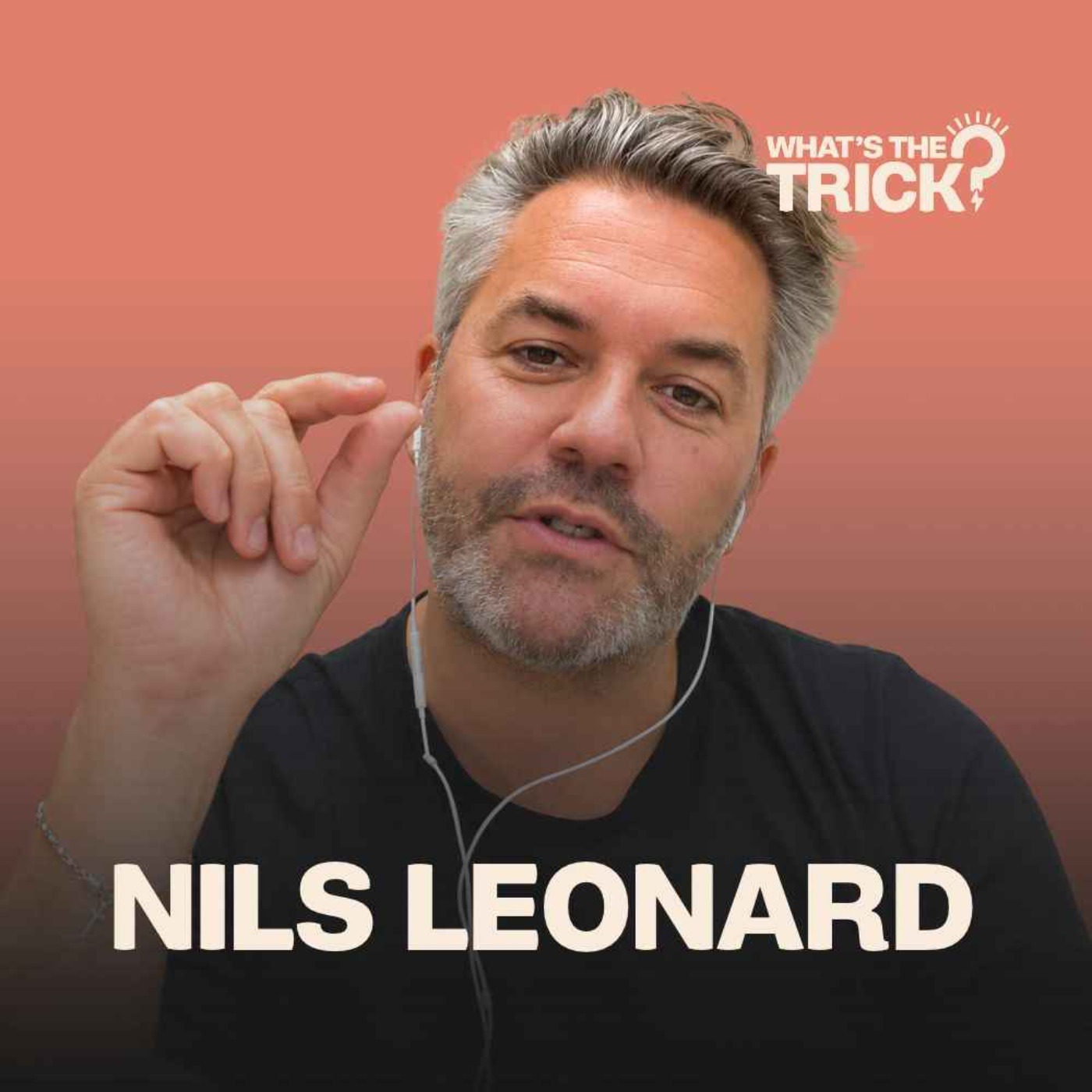
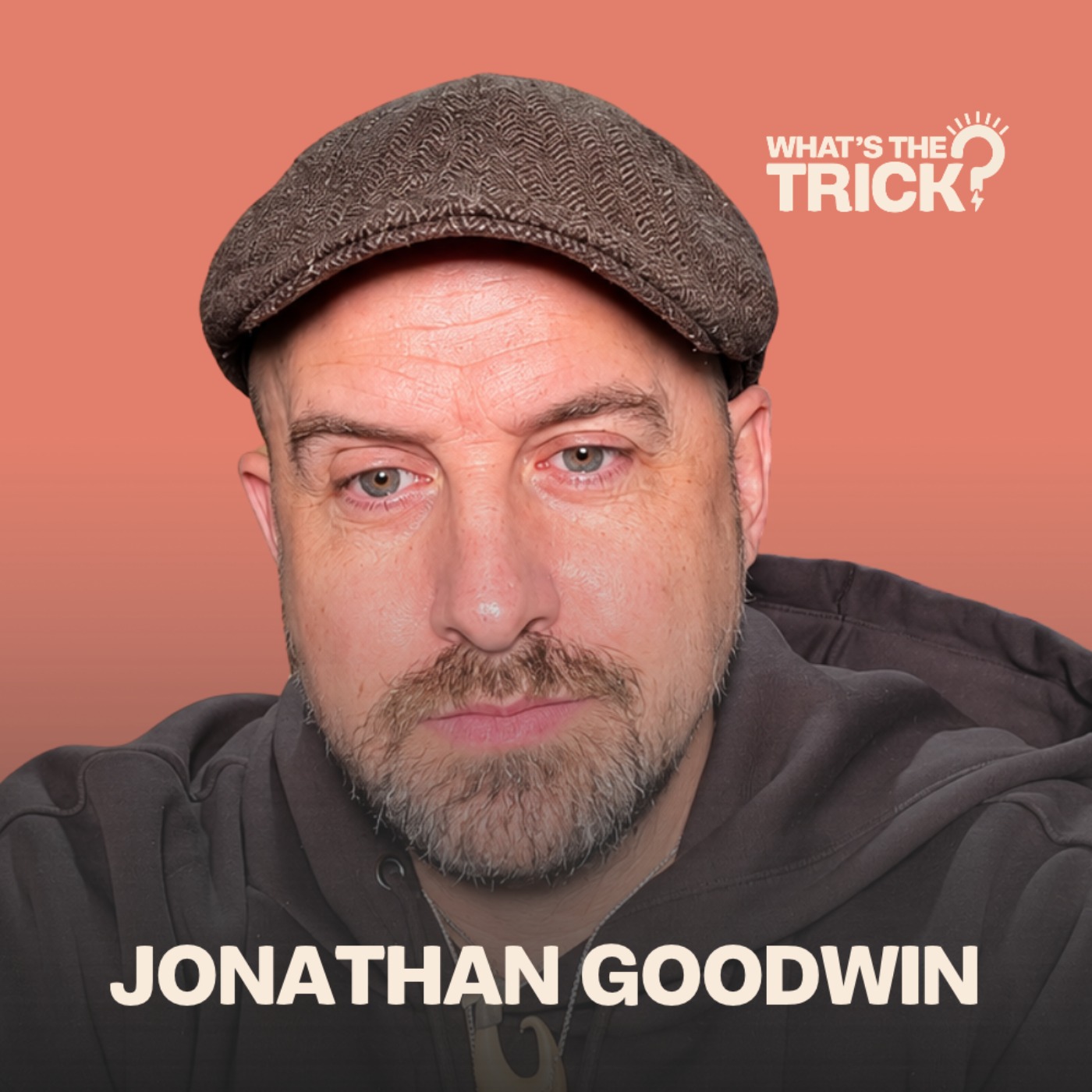
Simon Squibb; Nile Gray; Callie Hart; Dan Rhodes; Jeremy Vine; Andy Nyman; Matt Edmondson; Tom Basden; Matt Barry; Simon Brodkin; Scott Bennett.
Written by AI. May contain mistakes.
Ben summarizes key takeaways from his conversation with entrepreneur Simon Squibb.
“And also, if you've listened to them all and you want to have an old OG, as I'm calling you, you may have forgotten some of the tips.”
Ben shares insights from Nile Gray about passion and effort in content creation.
“Like he only wants to make content that he finds funny and then it comes from his place of, well, if I enjoy it, that is the litmus test of whether we move forward or not.”
Ben discusses Callie Hart's journey as an author and the importance of persistence.
“My next one is Callie Hart, episode three.”
Ben reflects on how unusual actions taken in last-resort situations can lead to success.
“But also what I really liked about Callie Hart is she said very simply, everyone's always asking for advice.”
Ben shares his experience on the Jeremy Vine show and its impact on his podcast.
“But I thought she thought she was great.”
Learn about Jeremy Vine's thoughts on creativity and career longevity.
“So here he is, Jeremy answering my Fast Five.”
Explore Jeremy Vine's daily routine and his energetic approach to work.
“And the thing is about Jeremy Vine, right, is he's very passionate and animated.”
Discover key lessons on reputation and collaboration from Andy Nyman.
“I don't know if you can tell because I've mentioned him a few times since, but I bloody loved this episode.”
Understand the creative process behind the hit show Ghost Stories.
“He says, as an actor especially, reputation is everything.”
Learn about the collaborative writing process behind Derren Brown's shows.
“Is he sat down and they just brain dumped all of the things they loved about horror and went, right, we love making people literally jump out of their seats, write that down.”
Explore how Matt Edmondson generates creative ideas through observation.
Discover the importance of effective pitching in the media industry.
“evanson i can't not talk about this the guy is a salesman i mean he's built his whole career of the ability to pitch.”
Learn about the journey and testing process behind the film's success.
“that really went mega viral for the show.”
Learn how taking risks and making long shots can lead to unexpected successes.
“That's that's going to be a hit or it's going to be great.”
Explore key takeaways from the first 10 episodes featuring various guests.
Discover practical advice on how to transition careers and pursue passions effectively.
“And then we've had a couple of comedians in the first time.”

Get the gist, explore an idea or ask about something said.
 Claude
On What's The Trick?, what are the key points of this episode?
Searching your listeningAutomatic transcript. May contain errors.
0:01Welcome back to What's The Trick. I'm your host Ben Hanlon and this is the podcast where I sit down with the world's most creative people and try and understand their creative process. And this is the first ever roundup episode. So at the point of recording this, we're about 17 episodes into the series and I thought it'd be a good time to do an episode where we stop and take a look back over all of the great stories and advice we've heard from all of our guests so far. In particular, this episode is going to focus on all of the episodes from episode one to ten. I'm going to try and sum up a load of the gold nuggets, a load of the value that all the guests had.
0:37So this is just either if you're new here to the pod, if this is your first time listening, this is not a normal episode. So there's guests and other ones. But if you're relatively new, I'm going to sum up some of the episodes you might have missed. And also, if you've listened to them all and you want to have an old OG, as I'm calling you, you may have forgotten some of the tips. So I'm just going to reiterate some of the good stuff. And also as well to tease, I was on Jeremy Vine this week and I asked him my fast five. And I've got that which we're going to play out later in the show. So let's begin.
1:08We're going to start way back when I forget when this came out. I think it was November. I think this was episode one, Simon Squibb. So looking back now on that episode, what were the things that jump out at me? So first of all, Simon's group, if you don't know, he's that entrepreneur on TikTok, on social media that goes up to people and says, what's your dream? And really interesting. There's a few things from that conversation that jumped out at me. First of all, he told the story of how he came up with that, which was that he was already dabbling on TikTok, making videos and testing things.
1:38And he was in a Tesco one lunchtime and he saw a woman and he went up to her and he said something like, what's your business goal? and he literally had that idea. He pulled out his phone and just went up to someone and recorded it and then they gave an answer and he went back and out of Tesco and he sat there eating his lunch and it was pretty good but he thought, ah, do you know what? It's not quite going to resonate with people. Business goal sounds a bit formal. So he finished his lunch and then he walked into a Pizza Express and he went straight up to somebody and he said, what's your dream?
2:07And then from there, that all was the catalyst, the first video that went out that started off his whole journey on becoming massive so and also off the back of that he makes so much content now that he's getting more views than the BBC which is nuts so the things that I think I took from that was I mean first of all gosh the guy's prolific he's was filming live on TikTok and Instagram as we were recording he's always making content but it's for me with him it was about how quickly he comes up with an idea and then executes he's like I've got an idea I'll test it right now whilst I'm in Tesco's whereas a lot of us a lot of people especially creatives think about it for months and months he's like idea test it either it goes well or I get rid so I thought that was quite inspiring and also I asked him you know he makes so much content I was like well how do you do it how does your team break down and he gave me some of that he was a little bit cagey is exactly how the team is but he kind of was told me that there's lots of people who worked in different areas but the thing he said about that was he says just build it one little piece at a time because if you try and build something and you try and get to this perfect scenario straight away it's too overwhelming it's not possible he's like just do the bare minimum get it tested and then one piece of a time keep adding which is how he built his social media empire so i thought that was really interesting one thing i've not spoken about is that we edited this out of the first episode at the end of the episode he said to me um how's this podcast and I said you're gonna be episode one and I said I'm gonna do 10 episodes and stop and he challenged me he said don't stop you've done all the hard work why not challenge yourself to do 100 episodes or every episode for a year and at that point I felt quite uncomfortable saying yes because like that's what you should do do 100 without stopping and that's another glimpse into his mindset of yeah why are you gonna stop why don't you just keep going so that i committed to him and i said okay fine simon i'm gonna do 100 episodes so that's what's made me keep going past episode 10 so thank you for that right second piece of advice i'm gonna some of these can be short some of these can be longer um and a second episode was nile gray the tiktoker who was famous for catch flights not feelings that but loads of other viral content he makes nostalgia style content and makes sketches I think the thing that I took from him was, well, number one, absolute passion.
4:33Like he only wants to make content that he finds funny and then it comes from his place of, well, if I enjoy it, that is the litmus test of whether we move forward or not. So just finding passion, really, really simple. But sometimes we do things that we're not passionate about, right? But actually, he said what I think the audience really appreciated. This is a great tip on how to go viral with content, but making any kind of content. he used to make loads of effort in his videos so if he was doing a thing with an estate agent he'd go and get into a suit and tie and so many comments would be like oh my gosh you've made the effort to go and sit in your car in a suit and tie and i think that's a real glimpse into us as humans we love seeing people make that extra little bit of effort that 90 of people wouldn't have made and that's how he thinks is a big part for his content going viral and getting his audience to engage with him.
5:24So I've taken that on board. I'm like, oh, is there anywhere that I can make that extra bit of effort that 90 % of people wouldn't do? Because that's a good chance that my content is going to pop off a bit more. So there we go. My next one is Callie Hart, episode three. Now, Callie Hart is the Romanticy author for Quicksilver. Now, Romanticy, if you're new to the genre, is this genre of fairy, no, fantasy and romance, fantasy and romance, romantic, right? And a lot of it is around mythical magic and et cetera. And a lot of raunchy scenes. It's getting big. And I want to ask her about her book, Quicksilver, which is a massive seller.
6:07And what did I take from that? Well, first of all, her story of how she got this book made was great. So she has been an author. She'd written 42 books beforehand. She'd made a good living, I think, making romance books. But she fell out of love a little bit. She hadn't followed her passion down certain avenues and genres. And she came up with, she loves fantasy anyway. She loves that world. So she was like, well, I love that and I'm good at this. So I'm going to put those two things together. And she released Quicksilver. And it was her 43rd book. She gave it to a publisher for the first time because she normally independently publishes.
6:46This publisher said, this book's too long. You need to cut it. You need to change this, this, and this. And she essentially refused and doubled down and said, I'm not going to change what I think is great. And she said, I'm going to just do it myself. So she released it herself and it flopped. It did badly. It didn't hardly make the charts. It was going out of the charts. She was going to make no money. And she was like, oh, God, I'm panicking. I'm panicking. I've made a big wrong decision. And as a last resort, she reached out to BookTok. So these are all the TikTokers that comment about books and especially romantic books and said, can I send you a copy?
7:26Have a read. She sent it them out on like the Friday and by the Wednesday or Thursday the following week, they started making videos about it. And through all of these influencers, these book talkers, it started to climb back through the charts and eventually became a number one bestseller and it became massive. And the thing that I find if we really zoom out from that is that was her last resort. She was literally like, I'm going to have to go get a job. This is bad. And as a last resort, she did something she would never normally do. And I find that mind, that weird behavior, not weird behavior, that unusual behavior is something I've seen pop up a few times.
8:05So I'll give you a really random example. I've not anything I've spoken about this on the podcast. I once heard a keynote by a great, great woman called Benita Norris. And she is a mountain climber. She's climbed Everest. She was one of the first women, British women to do so, I think. and anyway she talked about how when she was trying to fund Everest that she needed this funding by certain date otherwise the climb wasn't going to happen and as she hadn't she was about to hit the deadline she had hardly any of the money she needed like 15 000 quid for this to happen anyway as a total last resort she phoned a local radio show told them what she was doing they put her on air she made this plea and i think by the end of the day someone stepped forward and helped fund the climb and she said she would never have done that if it was a last resort and both of these worlds were totally different right from an author and a mountain climber but both when it was a last resort did something they never would normally do and I find that kind of interesting I'm like oh what if we just did the last resort thing first what would happen then I don't know it's just an idea that I'm I think it's really interesting that people get really creative when they really have to So that was what I took from Callie Hart.
9:13But also what I really liked about Callie Hart is she said very simply, everyone's always asking for advice. How do you get good at being an author? How do you become a good writer? And she said, quite simply, if you want to get good at doing the thing, just do the thing. And she said, it's as simple as that. You can overcomplicate this. But in essence, even if you whatever you're doing in your world right now, she said, you want to be an author? Write one page a day. If you write one page a day for a year, at the end of that year, you've got yourself a book. And she said the only way that her book Quicksilver was such a smash is because it was the 43rd one she'd done.
9:54she honed her craft over 42 other books and she said sometimes there's no excuse for just sitting your ass down in the chair and just writing and just doing the thing and eventually that will be the craft will come out of that and someone something similar if we flip that so dan rhodes who was uh also in the first 10 episodes he's one of the most followed youtubers in the world he's a magician as a magician he's got like 22 million followers on youtube and his short form magic videos go crazy and i in essence he gave the same advice he's like you can overthink things you can do whatever he says but i was posting three to five short form videos a day by the time people had just tried to upload one so for him he said i can upload three or four or five videos i can learn from the data and the audience's responses of what works and what really doubles down on this theory of the clay pot analogy where he says if you've heard this analogy is a clay making teacher clay pot person said to the class you lot we're going to split the class into is that right an art teacher let's call it an art teacher right i don't i'm not a potter is it potter maybe it is right says right class we'll divide the class into two halves this one half your goal is over the next is the whole of the afternoon is to make one amazing pot each go and then you on this half of the class your goal is to make as many clay pots as you can go and the idea was at the end of the day the group that focused on the quantity making as many pots as possible overall their final pot or the pots towards the end were much better than the group that spent all afternoon focusing on one pot because they had put more work out into the world they finished pots they'd learnt so many more lessons and every time they finished they learnt a lesson they adjusted they went again so they improved so much more than just focusing on one thing which is again another way of just summing up like getting out of our own heads and putting the work out there and doing the thing and not just talking about doing it one thing I will add to that as well which I find that whenever I speak to anybody especially on social media there's people here that do social media or even maybe have a job and they think about LinkedIn it's the biggest tip I think is people think about for ages how to put a LinkedIn post out and they end up not posting it I post six times a week on LinkedIn because I'm like right I'll get it out done it might not be perfect but I'd rather it out and I'm not worrying about perfection I'm just trying to get it out there do the thing and learn from it in the future so anyway so that was Callie Hart but But I thought she thought she was great.
12:45And she's just so simply put, if you want to get good at doing the thing, do the thing. Right. We're going to take a little break from the insights because let's talk about Jeremy Vine. so if you've seen my socials the last few weeks you'll have seen I went on the Jeremy Vine show to talk about this podcast which why is this exciting because I think I even said it in a social media video that normally to get on a TV show to promote something you have to hire a PR person and reach out to these shows and say hey can Ben come on the show and talk about it and for the first time in my life I haven't done that they've come to me which has never happened before which basically means somebody on the show who's been keeping an eye on what we're doing, maybe listened to the show and said, oh, let's get Ben on.
13:29So that was really cool that they approached us, went on the show, spoke to Jeremy, promoted the pod. Let's be completely honest because you guys are core listeners here. Does something like that rocket the audience figures for this podcast? Not really, if I'm honest. I think they barely move off the back of somebody listening to Jeremy, watching Jeremy Vine on Channel 5 in the morning, isn't necessarily going to listen to this pod. However, it creates cool social media content and it also helps me then send this to potentially future bookers to maybe get booked on on other shows. But the reason I'm telling you all of this is because during that interview, I got to ask Jeremy the Fast Five.
14:09So here he is, Jeremy answering my Fast Five. Jeremy, do you want Ben's Fast Five? Yeah, no, someone mentioned them earlier, but I didn't give them very much thought. We'll see what Jeremy says off the top. So at the end of every episode, I'm going to start. My first question is my Highlander question. Are you familiar with the film Highlander in the 80s? Yes. It was about immortals that killed other immortals. But when they did that, they stole somebody's skills and expertise. So if you had the power to steal anyone on the planet's skills or expertise, Jeremy, who would it be? Keith Richards.
14:40Keith Richards? Yeah. Didn't think you'd say that. Fine. Next thing, this time capsule. You've done lots of work over your career. If you could take one project, one thing you've worked on, and it goes into a time capsule and it's kept, and the rest of your work is incinerated forever, what piece of work or interview or anything are you keeping? Weirdly, I'm just starting to write crime books, novels, cosy crime, and I'm loving it. So pride is that thing. You would keep one of the novels? One coming out, yeah, coming out soon. Perfect. Third thing is culture vulture. What is the one thing you've seen, watched, experienced lately that you'd loved?
15:18I saw an amazing country musician, Kezia Gill, at not a massive stadium gig, but it blew my mind. And I saw her and I thought, oh, she's going to be absolutely massive. Fine. Okay. And I'm going to give you my magic wand for the fourth question. In my magic wand, you have the power to make one thing vanish. So from your industry, let's talk about TV, radio, presenting. One thing can vanish forever. Britain's Got Talent, because it's convincing people that everyone could be famous. We should have instead a show where you pick fruit and you're judged on that. Fruit's Got Talent. It doesn't matter, but just something that's a more realistic job.
15:55OK, interesting. Is that all right? It's your list, but I mean, I don't think... No context. It wouldn't get a clip. I don't know if it's going to get the numbers, to be honest. What are you doing? I'm watching that fruit-picking show. Britain's Got Talent. that isn't people standing on a stage singing. And then my final question. I finish every episode with this. Obviously, it depends on who I'm interviewing. But Jeremy, what is the trick to having a long career as a presenter? You've got to be enthusiastic. Enthusiastic. That's all. You've just got to think, this is great. I love it. Never get bored.
16:26And love meeting anyone who walks in the studio. So there we go. That was Jeremy Vine. And the thing is about Jeremy Vine, right, is he's very passionate and animated. I've met him a few times. He's got, I've got quite good energy, but gosh, he's got good energy. Do you know how his day is, right? So I think he gets up about four o 'clock in the morning. I think he cycles to the ITN building. It's on Grayson Road in London. He gets there, I think, for about six or so, or 5.36 o 'clock. Reads all the papers, gets briefed for the show. We start recording, I think, at about eight o 'clock, 8.15. He then pre-records part of the show.
17:05He leaves that filming on Channel 5 at 9.30ish, cycles over to Radio 2, then does his Radio 2 show, and then he's done by 2 o 'clock. So he's produced a TV show, a radio show, all by lunchtime, which is pretty insane. And like I say, his energy is nuts. So anyway, that was Jeremy Vine. Let's dive back in. Next up was the Andy Nyman episode. I don't know if you can tell because I've mentioned him a few times since, but I bloody loved this episode. I'm a magician. I've grown up loving Andy Nyman's work with Derren. What did we talk about? So Andy Nyman, if you don't know, he's an actor. He's been in the new Wicked films.
17:45He's been in Peaky Blinders. He's been around for decades. He also co-writes a lot of Derren Brown's shows as well, the TV stuff. Some of his big stunts on TV, some of his big live shows. So he is a legend. What was the main tip? If I look back, that episode's full of gold. Do go and listen to it. And it's not just for actors. It's just for people in life. I think he's just very clever and smart with his views to things. And the summary is, don't be a dick. That's it, right? He says, as an actor especially, reputation is everything. Because let's be honest, there are millions of actors, loads of people that want to take your spot.
18:28And the first thing he would do is if he saw an actor that he was maybe going to cast on something, he would do his due diligence and see well if I'm going to spend six months of my life with this person do I want to hang out with them are they going to be good for the whole show and he'll go and do his research so he just said it's good a it's good business and it's just easier in life to just be nice don't be a dick um but what I also loved is I've obviously followed his career I've never heard him talk about how he's come up with his ideas which is exactly essentially why I want to start this podcast.
19:01And the way he came up with Ghost Stories, so if you don't know, Ghost Stories was a massive West End theatre show. It then toured the world, and then he's made a film of it as well. And the idea is it's a horror-based show with very few casts, and they tell multiple stories, and then they all interweave, and it's very scary and well-written. And how he came up with it, so the fact that he knew exactly the moment he came up with this idea, I said to him, where did it come from? And when he talked about he went to see a show called Vagina Monologues, which was massive at the time, he hated it. But he also there was another show at the time called The Woman in Black.
19:39There was a horror based Victorian horror show, the theater show. And he loved that. But he went, ah, if if we take what was great about the Vagina Monologues, it was only basically three people in the cast, each telling an individual story. So very cheap to run, very cheap to produce. Actually, you've got a chance of surviving because it doesn't cost much to run. So he remembers literally walking down the street and phoning his mate and going, oh, Jeremy Dyson. And go, that, you remember that? If we take that thing, which I hated, but I loved the production of it, and then take that thing that we love.
20:15And he loved horror. He's like, I absolutely love horror. And smash them together. We're going to have something completely brand new. and it's got a good chance of surviving because it's essentially affordable. And then the way they formulated that, because I've always wondered, well, what do you do next? Is he sat down and they just brain dumped all of the things they loved about horror and went, right, we love making people literally jump out of their seats, write that down. We love how the vagina monologues had three individual stories, write that down. And he wrote all these things down. And they had this set of rules then.
20:50So before they thought about plot or character or anything like that, they were like, this is what it's going to be. The feelings that the audience are going to have, et cetera. And then they started writing. So I thought that was really interesting. And I also thought it was really interesting how he talked about smashing two ideas together, which is going to probably pop up again in a minute. Oh, teaser there. And then obviously, right, I can't have Andy Neiman without talking about Derren Brown, some of the things that they've written. And I said to him as well, because his live shows and a Darren Brown live show is incredible.
21:22If you've never had a chance to see, he's back on tour at the moment. And I said, well, how do you write a Darren show? And what's interesting about if you go back to that ghost stories story there, the first thing they do is turn the spotlight on themselves and look inwardly on the things that they love and that they're passionate about. And they get all of that down. And this was a bit of a theme in that episode. He does the same when he's an actor. He tries to turn the spotlight inwardly to see how he connects with the role. But with Derren, how do you start writing a Derren show? He did exactly the same.
21:57He says he used to sit down with Derren with a cup of coffee and go, what's going on? How are you? What are you thinking about in life? What's going on in your every day? And essentially really put the spotlight on him and Derren. And because they're similar-ish ages, I think, similar experiences, They could talk about what was going on in their lives. And then from there, they could then put all of that down and go, oh, right. So we're now both dealing with middle age. We're now both dealing with having to pretend to be something we're not in front of strangers, etc. All that. And then after they brain dumped it, then they turn it into start thinking about show and a plot and characters and tricks.
22:38So there we go. I think on the whole, turning that spotlight inwards is really an interesting technique. technique um and then what else have we got oh moving on so we're getting towards the end of the first 10 episodes i think that we're going to start wrapping this up so it's going to be a shorter episode this week but i'm going to keep i'm going to go on so sticking with that leading on from andy niman was then matt edmondson who is just oh my god he's just an ideas machine i think out of everyone we've interviewed he's the most prolific ideas machine on the planet he's a radio one presenter he writes tv shows he writes board games he's just released a podcast himself he's been writing a musical he's ridiculous and i said to him right come on how do you come up with so many ideas and he views it as two ideas coming together again like like andy nyman but he says said described it as two bubbles so he sees something in everyday life he might be watching a tv show and he sees something he likes and go oh i like that little bit of a tv show that's one bubble and it sits in his brain and he said i've got no control of this and then sometimes there's other bubbles and other things he likes and he said a new idea happens when those two bubbles just smash together in his brain and when they smash together in his brain he goes ah i've got it if we take that and that we've got a new tv show or if we take that and that we've got a board game and that's how his ideas start he just lets these ideas enter his head and then he just they just smash together and he's like i don't know when an idea is going to smash together but when it does i jump on it and that can lead him down the aisle of like i say it could be a podcast a ballgame or anything but he's constantly just collecting thoughts and things that he likes he's very observant on what's going on in the world and then he just waits for them to collide so there you go good luck with trying that at home um the other thing i loved oh with matt evanson i can't not talk about this the guy is a salesman i mean he's built his whole career of the ability to pitch.
24:34When you get a TV show made, it starts with a pitch. You sit down with a commissioner and you've got half an hour to describe your TV show. And I've heard about this for years with Matt, for like a decade. He was brilliant at going into the room and pitching it. So if it was a game show, he'd play the game show with the commissioner there and then. And when the bit I loved the story of was how he pitched his games to Walmart. So this is a relatively small company that he's made with his brother-in-law and now they're pitching to Walmart. And the way that works is you get this distributor who basically sets up a call with Walmart and they've got something like an hour to pitch as many games with Walmart and then that's it.
25:17They either take the games or they don't. And the distributor never lets the person who comes up with the game on the call. And Matt forced himself and said, look, I have to be on that call. Basically, no one's pitching my games but me because he knew how good he was at pitching. So he gets on this call with Walmart. He's got half an hour. He's got three games. He pitches three of them and Walmart end up taking two of them out of the three. And that's the only games they took from that distributor that year. And he did just, and he described, you've got to listen to him describing it, but his energy and effort in pitching.
25:52And I always think that's really interesting. I had a background in sales many years ago and I actually quit that job because I stopped believing in the product. But I do think if you really believe in it and you can tell anything Matt does, he believes it like with his soul. So when you hear his energy and excitement, you're like, yeah, I'm as excited as you are. Give it, I'll buy it. Let's have it. So I just think he's amazing at pitching. So there you go. Next up was one of the first videos that really went mega viral for the show. And it was Tom Basden, The Ballad of Wallace Island, which I know a lot of you have since seen and they've won some awards since doing this not because of this show by the way because the film's brilliant and that is the film if you haven't seen it where Tom Basden and Tim Key are on an island and it's a very low budget amazingly done British film and Richard Curtis called it one of the best British films ever but what again if I look back what are the things that stand out for me so first of all that film started off well over a decade ago or whatever, a couple of decades ago, as a short film of about 20 minutes.
27:01And what I think is really interesting about that is if you zoom out from that a little bit, basically what they've done is they've come up with a concept. They've filmed a tester version. They've tested it and they showed that to loads of audiences and it kept getting incredible results. So I always think that's interesting. It's like come up with an idea, test it as quick as possible, get it in front of an audience. Soon as we can. Let's go. Which again, go back to Simon Squibb. Come up with an idea, test it. It's the same thing, right? and they tested it and it kept coming out and they still had this passion for it and they're like we have to do something this and then also thinking about that testing it and cheap as quick something i don't know if i've spoken about this on the pod but that reminded me of the founder of netflix mark randolph said when they were starting netflix one of their biggest strengths as a company was their ability to test things as quick as cheap as possible so even when they first came up with the idea which before Netflix was um for what you know now it wasn't originally sending DVDs in the post and he's talked about this and he said look we came up with this idea driving to work in the car I was like wouldn't it be cool to get your DVD through the post and not have to go to blockbuster whatever so that day they grabbed a DVD they grabbed an envelope and a postage stamp and they just posted it to themselves to see if it actually worked and the next day the DVD comes through their letterbox and they went ah we got it fast forward when they were doing the landing page on the website he said oh we wouldn't everyone always thinks you have to build an app and spend months he said we just create the most basic version of something that was really terrible but it got it tested to an audience to see if they even liked it and as soon as they liked it we would double down but if they didn't like it we'd get rid of it and that idea that sometimes people spend years focusing on something that they don't even know if people want so i think even with the ballad of wallace island they knew that it had audience reaction there i think whether he didn't say that in the podcast but i just thought that was really interesting they'd already made this short and then obviously the thing that i've got to talk about with that is how they got rejected from every film producer and i kind of rightly so you're about to give up millions of pounds and with these people that have got an untracked unproven record um so they changed their approach and they went oh god okay how do we de-risk this for the producers let's get a big star on board so they took this long shot in emailing kerry mulligan and you've got to go back and watch the social media video of him describing it it's just there's no way it's it's not funny and um he says they took this long shot they emailed her said do you want to be in this and she went yeah okay and they're okay and then with her attached They went back to producers and producers went, oh, well, she's in it.
29:43Then, yeah, cool. That's that's going to be a hit or it's going to be great. And what I think about that, really, and I don't know if anyone talks about this much, but sometimes long shots pay off, don't they? Like sometimes just on the off chance that if you don't ask, you don't get, you might as well ask because you never know. It might pay off. And I really, A, we all love those stories anyway, because it makes for a great story. but b i do subscribe to this and i think even if you're taking a minor small version of this even with this podcast i am dming people all the bloody time so many people um and so many guests that if i was to say to a book i've dm'd so and so they will laugh in my face and go you've got no chance that is a long shot but if i do that like 500 times there is a chance that one of these megastars might just go, do you know what?
30:38Go on then. I've got nothing else to do. And then we're off, right? So I do love this idea that long shots can pay off. And also, I think what often people think is, like, it cost him no money to send an email. It cost, like, what, 30 seconds of his time? So in my head, I think of that. I mean, I'll tell you something now, and you're going to let me think I'm an idiot. I actually DMed Harry Styles the other day to see if he wants to come on this podcast. I have not heard but it took me 10 seconds of my time whilst I was waiting for a train so that's long shots can pay off people that's what I took from that you're going I used to like Ben but he's um it's actually just a bit hard isn't he let's take a very short commercial break um and when you know this is an episode um I for regular listeners I don't have a commercial break because I've got no sponsors but let's take a break from just analyzing the last first 10 episodes to quickly giving you a recap of where are we at then so this is quite a good opportunity i suppose for me to tell you where i think things are at um and in essence i think i think the pod's in a really cool place we've done the tv spot um the messages that you lot have all been sending me over the last months every week people getting on board enjoying it even regular listeners going i've listened to that one that was really good it that really helps and it kind of reiterates some of the things i've just spoken about is that it's really great feedback to know that i think we're on to something here and i think you guys are early adopters as they would say in the biz um i do think that this has got it's really special and we're having some great conversations so all those messages are really really helping the hardest challenge that i didn't expect i suppose with this um is the uh how well the time it oh god it takes way more time to make this thing than you you think but it's not that from the making and with the guests that's the easy bit because i just love chatting to them booking the guests is by far the hardest thing known to man trying to get guests to do this because the pod hasn't got any momentum so that's what's taking a lot of time and a lot of energy um but when we get a guest and we're having these chats i think they've been great so that's a little summary from me but thank you for all the messages as always uh you can share this with maybe this episode if you like um or you could share you know one of the one of your favorite episodes with a friend of yours um and say hey give this a listen what do we think uh so there we go and then oh again if you're going to put one advert in this episode because we've got no sponsors uh ben what do you do when you're not making a podcast i am doing a lot of corporate events and i do keynote speaking and hosting etc so this week i um what do i do well last week i hosted some christmas awards i did a keynote this week i'm hosting what am i doing this week i am hosting an awards on uh wednesday night in london and i'm doing a keynote also about human connection on another day as well and interestingly as well for back this podcast i did another keynote about creativity which was lovely so all of that stuff um is all available on benhanlin.com right let's get back to the final parts of the show um last couple of guests in the first 10 episodes were Matt Barry the writer who co-wrote uh who wrote on the Sabrina the Teenage Witch series on Netflix he started his career on EastEnders he gave loads of great tips about writing the behind the scenes of how that's done but I'm going to share as we're getting towards the end of the episode I'm going to share one quick tip that he said um and it's a slightly different tip to what Callie Hart said about writing he said and I think this can apply actually when you're writing speeches or presentations or anything he said his tip is every day he goes back to the start before he carries on where he left off he said sometimes the hardest thing is opening your laptop and carrying on where you stopped so he said to ease himself back into that day he'd go back to the start and just read the draft make a change make a change make a tweak so when he got to the end of where he'd finished his juices were flowing and he was ready to keep start typing so I think that's a real simple tip that if you've got a presentation or pitch coming up or speech, write a bit every day or write chunks and then just go back to the start and then just keep doing it.
34:47And it will seem less of a daunting task than, oh, my God, I write this whole speech today. So there you go. That was Matt Barry. And then we've had a couple of comedians in the first time. We had Simon Brodkin and Scott Bennett. Now, Simon Brodkin was Lee Nelson and Lee Nelson was a massive character. and I think the thing I took from that now looking back and I keep it very simple is that the character of Lee Nelson if you've not seen him he was a bit of a like supposed to be back then what we would call a chaff you know that kind of all right all right I'm not even going to do the accent I'm not even going to do it but essentially like a lad from the street type thing but what was a good thing about Lee Nelson as a character is he was extremely likable to the audience and I think that was quite clever is that he never made anyone in the audience a victim and he always made the audience feel good and get on his side.
35:38So I thought that was a real, he was very charming. And I think as a performer on stage, having that likability and charm was really quite interesting. And also let's move on to Scott Bennett, who in my opinion is one of the greatest comedians we've got in the UK at the moment. I think he's brilliant. I would love him. I'd love to see him doing bigger, bigger venues. He's great. and he had an interesting story because he quit his job later i think he was in his late mid to late 30s he had a mortgage he had a wife he had two kids he had a great paid job as a product designer and he eventually quit it to follow his dream as a as a comedian and i said to him go on give us some advice and his advice was not what you think he said don't quit your job too early he said i've seen it before loads of people get a taste for something they get a tiny bit of momentum they quit their job and then they panic because they have to pay their bills they have to pay their mortgage and then they end up taking loads of jobs and load of work they don't actually want to do and before they know it they're a year or two in and they're doing loads of jobs they don't want to do just to make ends meet and they've lost that will and that passion for it he said instead his approach was and this is i mean like he still does it day he He said he just grafted really, really, really hard.
36:56And he essentially worked two jobs. He had his day job and then he'd finish his day job and he'd go and work his night job. And he did that for eight years because that enabled him to really build up a name and a brand and a reputation. So by the time he quit, he had that he could actually pick the jobs that he wanted to do. And I thought it was kind of interesting. It made me reflect, actually, on the time. And I don't know if I spoke about this in the episode. I don't think I did on the time that I quit my job to do this as full time. And that was 2009. And I was a recruitment consultant and I was in sales.
37:31It was a pretty good job. And there's lots of people in my office making like loads of money. And it was quite fun. It was quite fast paced. But I fell out of love with the product of selling recruitment. But I was always doing magic on the side. And after a bit of a heated ish argument with my boss or just a bad month, I just went, I quit. And to his point, I probably quit too early because I then went back to my flat in Birmingham and I went, oh, sugar, I've got I've got bills to pay. so first thing i i realized is that if you're going to quit your job you've got to be prepared to absolutely smash and cut your overheads and i don't think this is spoken about enough in when people say i want to oh how do i get my passion to you know how do i live my life doing my passion well make your life cheaper i was driving a persia 106 that i bought in cash not in cash not in cash that I bought for a thousand quid that cost that owed me nothing to keep on the road I had this crappy car but it ran I had a flat which I then the moment I quit I handed my notice in on my flat and I asked my parents who were very kindly and I wouldn't be able to do this without their support if I could go back and live in my parents house for a year or two whilst I set this up so I cut my overheads to virtually zero and I said to my then girlfriend now wife Brian I was like I'm not going to be going on a load of holidays this year.
38:57It's not going to happen. Cut it all down. Cut, cut, cut. So actually to make ends meet, I think I only needed like 500 quid a month. So all of a sudden to make a living was really achievable. So that would be my tip is be prepared as well. If you are going to quit your job, just sacrifice for those first few years. But I honestly, I didn't mind. I never looked back on those times and think I'd sacrifice because I used to look at my mates who had like BMWs and fancy cars, but hated their jobs. And I'd be driving around in my little Persia 106 going, I'll take that. I'll take that deal any day of the week.
39:30So anyway, there we go, everybody. That has been my Easter special slash episode one to ten roundup. Hopefully you've enjoyed it. I know it's a bit of a different take, but hopefully it's reminded you of things that maybe you've forgotten because we all have a tendency to love these podcasts, but then actually forget them about a week later. And if any of those episodes I've mentioned you've not listened to, go and give them a listen. Let me know what you think. and we'll be back. When will we be back? Good question. I think we're going to probably take a break for a couple of weeks. It's Easter.
40:01I'm turning 40 and I'm going on holiday with the kids for a couple of weeks. So I'm going to take a break because as you've heard, I'm doing this all independently. So we'll be back in a few weeks and we have got some fantastic guests lined up. Genuinely, it's getting really cool as well. So thank you for your support and I'll speak to you all soon. All right, bye-bye. Thank you.
This episode is a little different, and that is exactly why it matters.
Instead of focusing on one guest, one project, or one creative journey, Ben steps back and looks at what the first 10 episodes of What’s The Trick? have actually revealed. The result is a smart, generous roundup of the ideas, habits, decisions, and mindset shifts that keep showing up across very different creative worlds.
Across these first conversations, the people featured have built companies, books, films, comedy careers, social media brands, stage shows, and creative bodies of work that took years to sharpen. This episode exists to pull the best lessons back into focus: not as a greatest-hits package, but as a practical guide to how creative work really gets made.
If you are new to the podcast, this is a useful entry point. If you have been listening from the start, it is a strong reminder that the real value is not just in hearing a great story once, but in noticing the patterns underneath it.
FOLLOW BEN:
SUBSCRIBE: https://www.youtube.com/channel/UCM0oXTRP-zWlJ_IiNykTLag
FACEBOOK: https://www.facebook.com/benhanlin
INSTAGRAM: http://instagram.com/benhanlin
TIKTOK: https://www.tiktok.com/@benhanlin
WEBSITE: Benhanlin.com
Hosted on Acast. See acast.com/privacy for more information.