
 Ask ChatGPT


- Podcasts
- What's The Trick?
- The World's No.1 Creative: How to Make People Care About Your Work
What's The Trick?6 Nov 2026 · 59m · 21 chapters
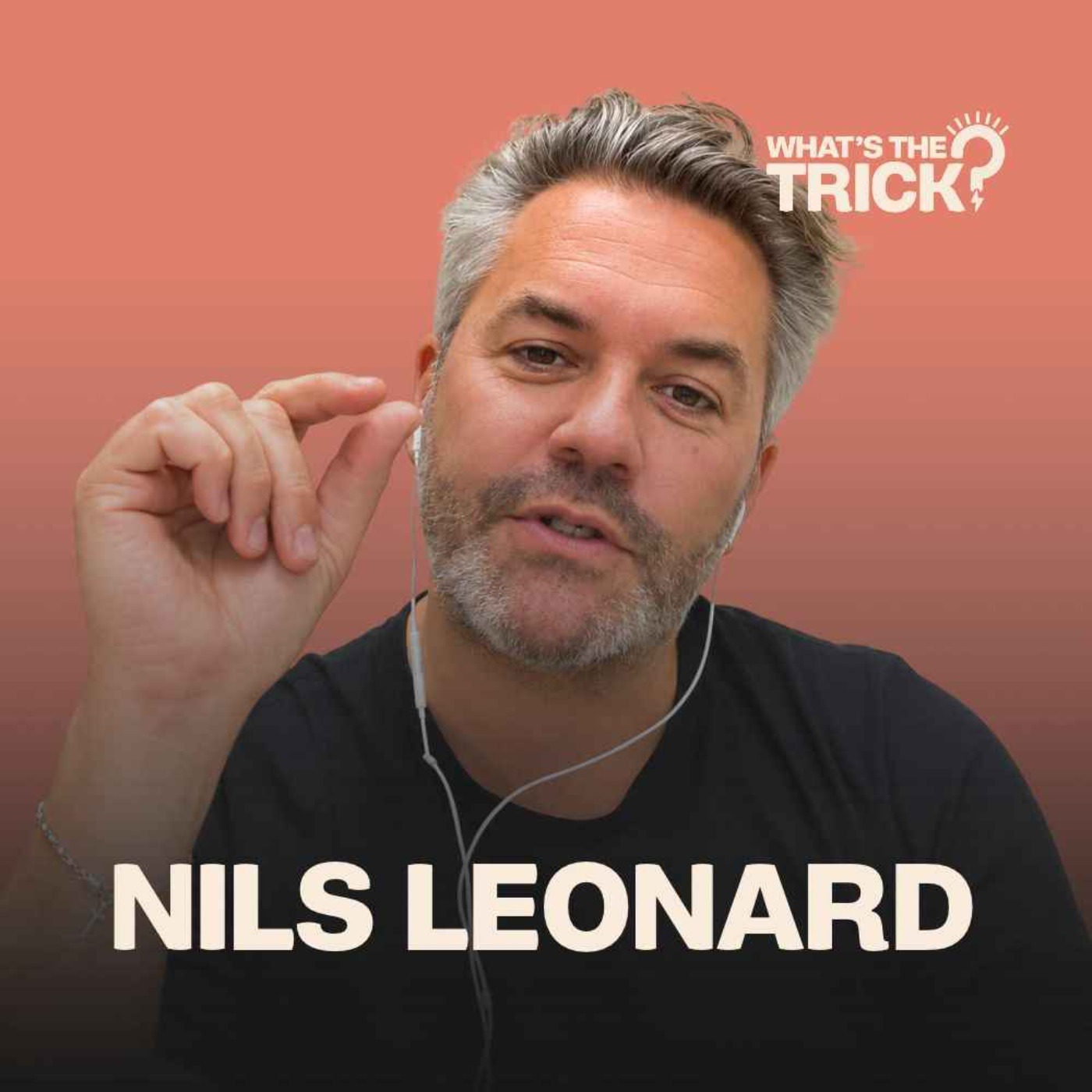
The World's No.1 Creative: How to Make People Care About Your Work | Nils Leonard
In short
Nils Leonard (Uncommon Creative Studio) explains how to create work people remember and share, by defining “success” clearly, building evidence through output, and using provocative “narrative objects/experiences” instead of conventional ads.
Guest background
Nils Leonard is co-founder of Uncommon Creative Studio, ranked #1 creative globally by Business Insider. The studio has made major campaigns for British Airways (including its safety videos), EA Sports, Nike, and The Ordinary. Uncommon was founded in 2017 and has won multiple European awards, including “Agency of the Year Europe,” and is based across London, New York, and Stockholm.
Key claims
Ask “what is your definition of good/success?” Don’t beg for permission; create “regardless.” Vision becomes real through remarkable work. Write “headlines” for what you want to be famous for. Don’t over-explain; provoke so audiences complete the idea themselves. Make beliefs visible as evidence (products, systems, events), not just statements.
Notable examples
Uncommon’s “Power Your Life Differently” for Ovo Energy (Slayer soundtrack; references to Trump and Paris Agreement). The Ordinary’s “Periodic Fable” and a $10.5M celebrity-endorsement “money pile” experience. British Airways safety videos reframed as “British original,” including “May We Have Your Attention” and earlier versions with celebrities. “Rat boots” (bespoke boots with rat cages) that went viral with “Ratatouille” music. BA poster ads with copy-only prompts like “Business Leisure Mischief” and “to eat an olive the size of my fist.”
Written by AI. May contain mistakes.
Chapters
0:44
Exploring the Concept of 'Good'
Discussion on defining 'good' ideas in creative work.
“If you've ever seen that safety video and you've smiled at it, you can thank Nils for that.”
1:40
Defining Success for Uncommon
Nils shares his vision and goals for Uncommon Creative Studio.
3:00
The Power of Confidence in Creativity
Nils emphasizes the importance of confidence in creative endeavors.
“And I had this fantasy of a studio and a studio is very different to me to an agency and thank you for calling us a studio because we're going to make regardless.”
4:50
Overcoming Limitations in the Advertising World
A discussion on how external perceptions can hinder creativity.
“And I wanted to be in control of our own fate.”
7:30
Manifesting Success and Vision
Nils talks about the significance of having a clear vision of success.
“the fearless, unworried people in our lives about how they've gone about doing what they're doing.”
10:00
First Steps and Initial Clients
Nils recounts the challenges faced while acquiring initial clients.
“I think you have to picture not just you opening your company, but what are you making?”
12:00
The Importance of Saying No
Understanding the value of choosing the right projects from the start.
“So on the very first day all we had really was a press release.”
14:01
The Creative Process and Client Relationships
Learn how to effectively engage clients and understand their needs in the creative process.
“You know, we'll make decks, we'll go to meetings, we'll go to board meetings, we'll sell things up the line.”
28:22
Ben's Substack and Upcoming Events
Ben discusses the launch of his Substack, community building, and upcoming events.
“So outside of the podcast, we launched Substack.”
30:43
Nils Leonard's Creative Process
Nils shares how he filters and evaluates creative ideas, using unique examples.
“It was on, you know, it was in the news.”
Show all 21 chapters
33:12
The Importance of Attention-Grabbing Ideas
Nils discusses the strategy behind creating attention-grabbing ideas and headlines.
“Do you have a filter that you've thrown through your head that makes a good idea or a bad idea?”
35:28
Embracing Specificity in Goals
The conversation delves into the significance of being specific about one's goals and dreams.
“Someone will coin the headline though, and then we'll make better work because we've landed on the headline.”
37:38
Revolutionizing BA Safety Videos
Nils explains how they transformed British Airways' safety videos into engaging content.
“But most of us don't give ourselves permission to ride the end point, mate.”
41:31
The British Original Concept
Nils elaborates on the overarching concept of 'British original' in their work with BA.
42:00
The Importance of Originality in Brand Messaging
Discover how British Airways transformed their safety video into a creative statement.
“It informs their food, which is all from original sources and all the above.”
44:28
Memorable Ads and the Power of Emotion
Explore iconic advertisements that evoke strong feelings and challenge norms.
“And the reason I've got it in there is because it says on the front, our original, you know, British menu and all of the way it writes about everything from the beef to the, to the cheese we use is all via that lens.”
48:28
Innovative Brands Disrupting the Market
Learn about emerging brands that are redefining industries with unique approaches.
52:22
Assessing Brand Longevity and Identity
Discuss the sustainability and identity of trendy brands in a fast-paced market.
55:16
Influential Figures and Lasting Creations
Reflect on the impact of influential figures and the significance of memorable creations.
56:00
Creating Lasting Impact in Creative Work
Explore the philosophy behind creating work that resonates over time.
“The crew that work in there are flawless.”
57:48
The Trick to Making Meaningful Work
Nils Leonard shares insights on the importance of aiming for lasting value in creative endeavors.
“Most of us try to make things right now for success, for sales, to cross something off the list, to complete the task.”

Ask about this episode
Get the gist, explore an idea or ask about something said.
 Claude
On What's The Trick?, what are the key points of this episode?
Searching your listeningTranscript
Automatic transcript. May contain errors.
0:00Ben Hanlin: Your mind will try to give you ways to not do things. We forget to just be provocative, disruptive, gross, outrageous, audacious. And so we took ten and a half million dollars and we put it in a big pile in a store for a weekend in Manhattan. And there is no bigger act of genius than just progressing on your own steam. How delusional were you at the time? For anyone that doesn't know Nils, Nils is the co-founder of Uncommon Creative Studio. He has been ranked number one creative person globally by Business Insider. And I can't call Uncommon Creative Studio a marketing agency. I'm not going to do that because he'll probably walk out of this interview.
0:39Ben Hanlin: But what I can tell you is they run some of the biggest campaigns in the world. We're talking British Airways. If you've ever seen that safety video and you've smiled at it, you can thank Nils for that. He's worked with EA Sports, Nike, The Ordinary. We're going to talk about loads. they're basically long story short they started in 2017 and then after a few years they've gone to be uh they've won creative agency of the year europe's agency of the year they've been called once in a decade company they're in london new york stockholm you get the basically neils is a big deal okay that's what you need to know and um neils the reason i've got you on is to very simply ask you can i just print everything you just said please because most of the time everyone gives me sticks so i'm just going to take that and live in that for about fine i'll come and be your hype man um but the reason you're here is i'm going to ask you what is the trick to creating global ad campaigns and how can we all learn how to grab attention and be remembered but that's a big question well well go on i mean well i'm quite mechanical strangely so i uh think a lot and probably far too hard about things like that um i mean i'm not going to ask answer necessarily the global thing we can get to that but i think there's one thing you highlighted when you talked about the studio which is really this idea of a good idea or what is a good idea or what is a good thing and i think the the thing that i woke up to a few years ago is that everyone's version of good is completely different and we never have that out so if i were to say to you hey what's a good idea you might go you know it's something that's consistent or it's something that's integrated or it's something that's famous i'd ask the guy next to you and he'd say something completely different and yet nobody in our companies and nobody in our client relationships ever really says well what's your definition of good what's your definition of success so what we try to do is as fast as possible but in our own way decode what we think success looks like what's our type of idea what's good for us and asking that question of your organization or your process I think is the first step to really working it all out because I think we all say we want to be successful and I think we all say we want our work to be you know lauded and talked about but we never really picture what success looks like so how could we possibly hope to achieve something we haven't envisioned for ourselves well let's start there then let's start with Uncommon about your version of success for Uncommon so I've heard you talk about what do you want in fact let me not paraphrase it summarize for the listener that maybe hasn't heard of Uncommon what your goal was for success when you started and then we'll unpick a bit of that so um most people when i say the word say advertising and my background is advertising for many years you know we have a button to skip ads you know that's how much we love them uh name name another industry that the people are paying money to avoid um someone asked me a question years before i started the studio and it's a very cunning question and it was in a pitch you know a process where they select an agency and they said Nels I want to know how I go from being a company that sells crap to people to being a company that people wish existed and I thought a company that people wish existed like really think about that and then I went off and I went well hang on a minute never mind you how do I name an agency or studio that people in the real world wish existed and I became obsessed with that because when you look at architecture companies like Foster and Hadid and Heatherwick they're in our papers they're in our lives we discuss them in our conversations you know when you talk about design you know we talk about Johnny I if we talk about the iPod we talk about all this other stuff yet advertising is this weird sort of pervy whispery fucky little role on the side that's always wound me up and I didn't want to do that and I wanted to make a company that people loved and remarked on.
4:36And I had this fantasy of a studio and a studio is very different to me to an agency and thank you for calling us a studio because we're going to make regardless. And what I mean by that is most agencies are completely dependent on their clients to create. Please can we make this ad for you? Please will you like our work? Please can you pay for this to happen? And I wanted to be in control of our own fate. have a big problem with dependency so i was like well a studio a design studio an art studio well they just make regardless and we're going to do these things anyway we're going to have these ideas we're going to do these things anyway and people will fucking love them and by the way if you're a client and you like to work with us we may consider that too it's a completely different model so the quick answer to your question forgive me it's a long way around is you know i wanted to make a company a that people in the real world knew and liked and wanted around but but b that that might be somewhere that people would refer to in years to come.
5:30You know, my version of success, you ask that question, what's success for uncommon, is to be what we call a reference point or try to be. That someone in the future might say, do you remember those guys? Did you see that thing from them?
5:43Ben Hanlin: So you've just said something there about we're going to make regardless. And I think that's really interesting. It's almost about this creating an energy of, and I always think this whenever I've tried to pitch TV shows or make anything is kind of like, well, I'm going to do this with or without you. It's that kind of confidence that this is happening. And do you want to be on? Which is more attractive? Dude, I fucking love this conversation. Which is more attractive? Please, can I do this thing? I've had this idea. It's a bit like this and I promise it will work and blah, blah, blah. And immediately it backs up.
6:16You're like, oh my God, this sounds like a lot. Whereas if someone says, I've got this thing, I've already made it. It's awesome. It's going to happen. Would you like to come on board? Completely different power dynamic. And most of the ad agents, ad industry, sorry, are completely addicted to doing the former, you know, which is begging for permission, probably from people who are less ambitious than them, by the way, to make their dreams come true. And I just find that infuriating. So if, you know, that's the experiment.
6:43Ben Hanlin: And then I think, you know, because you are obviously a big thinker in certain things. Let's stick with this uncommon story of where it all started. How much was, I mean this politely, how delusional were you at the time? like what was were you what was the big goal and were people thinking you're nuts and how important was it to to be like that massively and i still am i um i've had heroes my whole life and i i cannot conceive oh this might be weird i don't know i can't i can't abide or conceive that people settle because for one second they assume they can't do what someone else has done that bothers me.
7:22And I looked at people like Alexander McQueen, Lee McQueen, who's a hero of mine. I looked at people like weirdly like the KLF and the work they've done in the world. I look at really the fearless, unworried people in our lives about how they've gone about doing what they're doing. And I really realized that most of us are measured by things we don't set for ourselves. Other people's opinions, other people's fears, other people's permissions, costs, average companies all the above and i was like well why couldn't we be one of those i'd spent 20 years in an ad agency listening to people say things like but they'll never buy it but we couldn't do it and then they said no all these other statements and i started to think to myself why am i allowing all of this to make my life worse i feel personally impeded by that behavior and offended by it and frustrated by it.
8:14Whenever anyone goes, that's fucking genius. I look at it sometimes and I am filled when it is really good with the venom of jealousy, but also the frustration of, well, they just didn't ask permission and they just went and did it. And there is no bigger act of genius than just progressing on your own steam. The world loves new things, man. And I know you know this because of what you do and build, but it's amazing how many comfort blankets we put in the way of our own progression. I think the human mind is terrifying. I don't know why we do it, but your mind will try to give you ways to not do things.
8:53And I don't know why that happens.
8:54Ben Hanlin: And the world will try to help you. Honestly, I really believe it. I think that the act and endeavor of trying and making something and putting it out there, everything changes. And it changes on every level. where if you do something tiny to something huge you realize the world really does actually want you to win i believe um and i and i think the more you do that the more i call it evidence other people call it like receipts or whatever but i i'm i'm fascinated by the evidence of our trying and even early days with the company you know some of the very first things we said to ourselves which were delusions you know your company mission and purpose before you've made anything by the way is just a fucking pipe dream and um we were like no we're going to do this stuff we're going to go and actually what i found is it attracted the briefs like that so in some ways did i imagine this reality for ourselves well yeah but someone's got it so um and i think the more mechanical you are by the way with that imagining the more tactile you are with it what does it smell like what does it look like how are you rolling what car are you driving what has changed who fancies you that never used to like make it personal so what you're saying is it the clarity in the vision like it has to be clear if it's vague and fuzzy you know we can work with anyone we can work with them we can work with them we can you'll end up working with no one basically but like the clearer you can stay yeah and but also but also go beyond opening the doors i know it sounds awful everyone's like god it was just such an amazing feeling just to open the doors like you see people in my industry launch a lot of companies and they're like well we we were you know three people we were quite good we're gonna launch something quite good it's like it's not enough it's just not enough to hope that it will be good.
10:29I don't believe. I think you have to picture not just you opening your company, but what are you making? How are people responding to it? What will people be saying about you? Where will you be a year after opening your company? Just dare to do it for a second. Give yourself permission to do it because it will make everything clearer. And by the way, it really helps your decision making. I think manifesting or deluding yourself or whatever you want to call it is a great way to help you make decisions so if success for uncommon is people on the real world knowing about us well of course we're going to make a feature film in it cave of course we're going to go and make art alongside advertising because art is universally loved by people you know yeah and so i think it helps you it's like a compass well let's dike this let's put
11:13Ben Hanlin: some meat on the bones then so let's talk so we can start to visualize it what was the first client how did you win that because that's the other thing is so so i'd imagine people are sat here going okay well i get this this guy and a couple people set up this company but you still got to get the get into the door and convince people to give you shed loads of money for these campaigns so how did you get that first one or two through the door then nils this is a good story so um so we came out we had kind of a profile but we didn't have any clients and we didn't we literally didn't have any clients because i was being sued by my previous employer martin sorrell for leaving and he just didn't want us to start and so he made it incredibly hard so we weren't able to do the things people would normally do and go and drum up secret clients or any of that shit because if I did that I'd be in breach of my contract and I wouldn't be able to start my company.
12:02So on the very first day all we had really was a press release. Now we had a bit of a profile but you know we put all this stuff out into the world you know and it talks about the things I've just told you being you know building brands the world which has existed and all that other sort of stuff. um we also sort of had this this phrase that we still use which is really about the removal of fear which is a quote from death of a salesman um and i'll explain why in a minute but if the quote goes i'm not interested in stories about the past or any crap of that coin because the woods are burning there's a big blaze going on and in the book or the play i don't know if you know he uses he's trying to rouse them you know he's like the woods are burning and he wants them to respond it was a great quote for us because it sort of said the world not your category is out there in the woods are burning so fucking do something meaningful do something that matters be punchy be out there be whatever anyway we open a company we put all this out the very first brief that comes along actually is i won't say who it's for but it's for a big tech company and we were so on the one hand we were like yay we're saved you know it's a big fee two weeks later they didn't really want what we wanted to do they didn't really come for the right reasons we were arguing about a b2b 15 second bit of content and then we just said fuck this and no one knows this story but we walked away and so we were like this is not it we're already arguing we walked away the very next day we get a phone call from ovo energy um you know renegade punky energy startup in the uk who said we've read that loads of stuff is that true and we went to make the first piece of work that the studio made which is power your life differently from ovo it has slayer on the soundtrack it references trump pulling out of the paris climate agreement it you know it is the defining bit of work i think for the studio probably still if anything candidly it's more of an advert for the studio than it was for for over um but but that told me somewhat psychopathically probably that the world wanted us to win it said okay if you dream these things we'll give them to you and then it's over to you you make the fucking best of them but also you've highlighted something
14:05Ben Hanlin: there is you very clearly know even on day one which has been hard to do I'd imagine you've got all got mortgages you've got bills to pay you got families and you're getting a paycheck and you're like well it's not quite what I wanted but it's a paycheck knowing what to say no to on day one yeah a lot of people don't know always know that do they no they don't and and if you just do your job for money and you haven't pictured what good is you will just take the money and it won't be your fault you just will because you'll assume that's good what i realized when we started was and this sounds moronic when i say it but the product the evidence of our beliefs is our work and if our work isn't very good all that stuff i've just said it's just bollocks but if our work is good suddenly we have a very clear and original point and a part to play in the industry and And, you know, there are companies, certainly in my game, who spend a year not making things.
15:05They get paid for it. You know, we'll make decks, we'll go to meetings, we'll go to board meetings, we'll sell things up the line. But there'll be no output. And that dawned on me is basically that's how you kill a company before you even started. If I got paid for a year for not making anything, what have I really started? And so we had to be in market. We had to make work that was remarkable and, you know, played to our values. and the moment we did it I just saw the pattern and the pattern is incredibly simple when you do it which is you have a vision you execute on it you create evidence for your vision and then other people seek you out for the same thing well and that sounds madly simple but that is pretty much
15:41Ben Hanlin: the model well let's thank you for clapping me like you say simplicity sometimes is key there let's let's dive into your process so imagine I'm I'm now the intern I work with you Nils and I'm following you around and a pitch lands or a client lands on your desk and you're going to work. You can talk about a real one you've made if that helps us visualize it. I'd love to dive into the process because there's a lot of people here that have never sat in these rooms and have no idea how, you know, they see these ads and they either love them or hate them, but they have no idea all the creative process.
16:11Ben Hanlin: Can we dive into one and let's go through it? Well, most of the time, so a client will come to an agency or a studio and the agency will just be so desperate to win them. There's this process called pitching that we'll just be trying to get all our good stuff out and showcase our stuff and be like, look at us, we're amazing and we're fast and we're cool. And a lot of the time we're cheap, we'll also be discussed. And we realized that a lot of the time, if you win a client like that, no one's ever really worked out why they came and you've never really told them what it is you're trying to make.
16:42So you're basically sabotaging the relationship before you started because six months later, when you were trying to make something awesome, they're like, well, we didn't come for that. So the very first thing we do at the studio is we say, why are you here? And, you know, if they say, hey, I saw BA Windows, or I saw the ordinary work, or I saw a big hairball that you made in New York, or whatever, we know we're onto a flyer, because it means they've already seen what we do, they want a bit of that, and all the above. That's a massively important part of the process, by the way. Anyway, once they're in the door, and we've decided to do that, because by the way, the people that tend to turn up who haven't seen our work and haven't seen for instance of this podcast or me talk or anything we tend to probably not work with them because what it tells us is they don't really know what we do right you know often those brands are the bigger brands and they're like yeah we love your stuff and i'm like well tell me about it and they can't and i'm like well maybe we won't work with you then yeah because it will be a waste of our time um so that selection process is is really important once we're in um we ask the same stuff which is okay say you're you're a brand you pick any one of us if you like but the questions remain the same and this is what I mean about being mechanical.
17:48We're like, well, where does this brand play? Not just in its category, but in the world. What tension does it dance on? So does this brand live in a space where the way that people are living doesn't match with their values? Or does it play on frustrations that people have in the category it plays in? You know, and we start to pull away at those things and say, well, how could this brand solve a problem, fuel a passion, resolve a friction, offer up a conversation that people wish they were having but aren't? because all that stuff I've just described is where the heat is and where the energy is in in you know in the world you know let's play it out so so genuinely the questions we ask internally and with the client the ones I've just given you but let's just play it out say say a bank approaches us okay and you know they come in and they go hey we love Uncommon's vibe we saw a few things we kind of want to be famous what do we do I'm looking at banks and I'm going well let's just say it's UK versus global or whatever what's the UK's relationship with money what are the insights or news there that we need to unearth in order to find something interesting well the truth in the uk is that we've learned our money habits by the age of seven the uk has a broken relationship with saving the uk has a broken relationship with debt and what that means you know the the uk are you know what i mean there are these truths in the way we're living the way we're engaging with our banks that you know there's another truth which is if you move banks every six months they'd be paying us to move instead of charging us for overdrafts right yes So there's all these things we know to be true in our guts that no one is out there yelling about.
19:15So the very next step is right. You guys, as bank dot dot dot, can exist in this space where you're starting to speak to or unearth or solve these things that people are feeling already. So if you look at Monzo, we worked in Monzo for a few years, but Monzo, you know, in almost everything they did when they started, tried to resolve that. They were like, well, why are bank cards shit? Why don't they look cool? you know why doesn't a bank allow you just to freeze your card temporarily why doesn't a bank allow you to do all these other things and they started to fix that in the ux of the bank itself then of course when they were out in the world we were like well look how do we make banking fun banking isn't fun it's like this pretend grown-up thing except money really is about freedom money is about power you know we worked with a company called communion who was a financial startup and their whole thing was money is freedom or saving is freedom and the idea behind that was that you know and i don't mean freedom in a lens fair advertising crap way i mean it in the most tangible powerful way which is if you want to leave that boyfriend or you want to leave you know your parents or you want to change your circumstances you need money the real reason people compromise their lives is they don't have so so speaking to things like that are very very powerful and you'd be surprised how few advertisers or brands actually do that then the result would then be somehow tell people your why tell people why why you why us why we correct or even better make them feel it so don't just tell them about it so i think this is the big shift in modern advertising where advertising used to that you're absolutely right it would it would do exactly what we just described and then they would pop up with an ad and the ad would say at dot dot dot we believe and you go okay nowadays i think what is even more interesting is when there is no ad and And as evidence of that belief, they go and make something.
21:05They go and make a product or they make a change to their system or they make a pop-up event or experience. And that lives those values. It doesn't say, hey, we believe this. It's like evidence of it.
21:17Ben Hanlin: Right, yes. Can I give you an example? Go for that. Perfect. Go for it. So the Ordinary skincare brand that we work with are brilliant at this. The Ordinary worked out that the entire beauty industry had been lying to us for fucking 80 years, overcharging us for stuff that everyone, frankly, has access to, using celebrities to sell shit to us that we don't need. And The Ordinary said, we're going to be about science and we're going to democratize beauty. As a result, we could have made an ad that said, we believe. But instead, we didn't. We made something called the periodic fable, which was a periodic table of all of the bullshit words that the beauty industry's made up.
21:53so elixir age defying youth enhancing you can't defy age like what the fuck are we saying so and we made and we made this table so that everybody you me celebrities opinion formers bloggers podcasters could unpick it themselves and could see bear you know laid bare the bullshit of the industry now that's better than us making an ad about you know we don't believe in this or
22:19Ben Hanlin: we believe in this so there's two things that so i'm going to carry on with that brand in a moment because i've heard you talk about other things you've done with that brand but the so you talk about physical object quite a bit yeah can you go into that a little bit please because so i'm yeah i'm kind of obsessed with this so um there are things in the world that say more than any advert ever could we call them narrative objects or narrative experiences and by that we mean you go and make something that has a story inside it. So for The Ordinary, we worked out that the average amount of money given to a celebrity for a beauty endorsement was$10.5 million.
22:57And so we took$10.5 million and we put it in a big pile in a store for a weekend in Manhattan to show people that. And now most people have never seen$10.5 million, but that is, you know, in the posh way, that's a narrative experience. Truthfully, what it says is, look at the amount of money that these guys are giving away in order to make you buy crap you don't need and you know it tells a much bigger story about what the ordinary believe in it says we're not like that it says that we're happy to highlight the people that are it you know it has all these values inside it but the act of making an experience is twice as powerful because you or i can walk in with our phones and we can take a photo of it on our own terms we can share it in our own words you know sometimes people call it an idea with a hole in and what they mean is you've made a thing that everybody can encounter in their own way they can come in and out of they can share or be revolted by or rage about you know and it allows people to make the idea their own which is always more powerful you know that bit in inception where they're like they plant the idea and it has to be his own it's kind of a version of that which is there is this thing happening in the world that represents how you feel and you get to share it on your own terms as opposed to being advertised to, which feels almost like only a quarter of that story.
24:11Ben Hanlin: So I suppose, again, if you want to be remembered, the more you can make somebody feel something and experience something, the more they're going to remember the thing. And then you've just said there about, and I've heard you, I think, where you talk about this whole in the idea. Talk to me about this theory that you should never really, not should never, but often don't complete the full image. Don't give everybody everything and make them work for it. because i think that's really interesting uh the ad industry is insanely guilty of um assuming that everyone is thick and uh also trying too hard to rationalize everything we have research for for all sorts of things that tries to make everything somehow efficiently successful what we've discovered is actually like great entertainment or great magic or whatever sometimes not everybody has to be able to decode it in very very posh words but they will feel something far more than they will understand it so my thing is like provoke people i'd rather do the first 50 of an idea which is garner their attention provoke them in a way that's new and allow them to make their own minds up with it allow them to be inside the idea and share it um you know yeah go on please could you give an example like how would that then play out similarly they'd be completely differently you know we made a poster campaign for ba and this sounds mad we've done a lot of british airways work which i'm very proud of but some of the posters we made you know uh the very first work we made for them if you think about airlines and travel and all that didn't have a single imaging we made 500 ads and every one of them was just copy and all it did was it took the construct of business leisure dot dot dot you know so why have you come here business leisure and we realized that there was always a real reason so one of them was business leisure mischief you know one of them was business leisure to eat an olive the size of my fist.
26:01One of them was, you know, and they were all the reasons we all travel, right? Go with me here. The thing I'm trying to unpack is these are completely white ads with a bit of type on. And it would be tempting to go, none of this is going to be emotive enough. None of this is going to show people the joy and power of travel. Actually, the opposite's true. People were reading that. And when they read mischief, they were envisaging their own mischief. Now, I don't have to show you a dodgy picture of a couple getting up to no good in bed or some lads out on a night out everybody completed that picture for themselves now it's so it sounds really simple when i say like that but you'd be so surprised how dumbed down the industry tries to to make itself in order to appeal to people and the opposite is often true and sometimes if something hits you and you just feel it almost don't be drawn by other people's critique of something strategically if you know it emotionally works so another filmic example and go with me here is Tenet.
26:55Ben Hanlin: So you're a Nolan fan by the sounds of it. I'm a Nolan fan. I'm a Nolan fan. But the reason I love Tenet is no one really understands what the fuck that film's about, but it's cool anyway. What happens in Tenet to you? Try and explain it to me, please. Because, yeah. Go on. Well, you can't. Something about time, something about reverse, what? It doesn't fucking matter. It doesn't matter, actually, which is insane. Yes, the premise of the story matters, of course it does. What matters is character, emotion, tension. And for some reason or another, you are drawn into a story that you enjoy regardless of your complete understanding.
27:30And I think that's an amazing point to deal in in our industry.
27:35Ben Hanlin: Hello, it's me, Ben. This is a very short commercial break and I can give you a little update of what I've been up to. And when I say short commercial break, we only really have one sponsor for this podcast and that is the podcast rooms now if you are in london birmingham brighton up and down the country they have podcast studios and it's great because the team there are very friendly which is lovely they are really helpful their cameras are great so you get great video you get audio the studios look great all of it i think is really reasonably priced so if you've got to film a podcast series or if you're trying to film a load of video content for yourself or for your company, give them a look.
28:16Ben Hanlin: It's the podcast rooms. So if you just give them a call, I'm sure they'll be able to help you out there. And I'm going to give you a plug for myself now. So what's been going on in my world? So outside of the podcast, we launched Substack. Thank you for everyone that has gone and followed us on Substack. Ben, what is Substack and why should I bloody subscribe to it? Well, I'll tell you people, because Substack, if you don't know, is where you get these weekly newsletters. So what I'm doing, I am trying to create this community now of What's the Trick listeners, where if you follow me on Substack, which is free, I will send you a weekly newsletter that sums up the best bits from the episode.
28:54Ben Hanlin: So if you don't listen to every episode, you can get all the value there. It means you won't miss an episode either. And also I'm doing other bits where I'm sharing golden nuggets from creativity and communication. So if you're enjoying this whole community that is about creativity, communication, performance, it's all going to be there and for three pounds a month you can help subscribe and you get extra stuff as well you get bonus content you'll get uh welcome to the chat room you can chat to me etc we can talk about upcoming guests all of that good stuff and for three pound a month it also supports this podcast and i'm hoping that if i can keep reinvesting the money and growing we're going to keep taking this thing further with bigger better guests etc etc so that's substat you can have a look at that and if not if that's not your vibe and your old school in like instagram you can follow us what's the trick pod and just drop me a dm and say hello that's what the main thing about this is really knowing that you guys are really enjoying the episodes and if you've got people that you haven't shared this with honestly this this grows one listener at a time if you're part of any whatsapp groups or facebook groups or anything and you can just drop this little link in there that would be incredible um so that's it from me what am i up to i'm recording this on a tuesday as of tomorrow i'm down in london for the rest of the week i'm at the savoy i'm at the intercontinental and i think i'm at the hilton uh part lane all doing different things hosting a lot of awards uh i think as you know i tell a lie all two two awards and one charity event this week so that's what i do i uh when i'm performing is mainly doing things like that all that information can be found on benhanlin.com there we go all right shall we get into nils i'm really enjoying this conversation and i'm going to tell you at the end what my takeaways were so you can stick around for that soon a bit bye-bye so obviously what's been good is we've dived into your process a bit your filter then how do you know when you're looking at all these ideas and the team are going i've got rat boots i mean i've not even mentioned rat boots very quickly actually tell us about rat boots just okay yeah rat boots a good example that's a narrative object okay this is a very posh term for a pair of boots that rats can live in so we landed in new york we opened the studio there and we said we want to matter uh and we said okay how do we do it well fashion week's a huge deal in new york sam uh my creative partner there discovers that there are apparently you know eight million people and 12 million rats or something in new york he finds a data point which is horrendous and we were like well why don't we celebrate that we made one pair of boots bespoke fashion boots it in the bottom of were cages that our little taxidermy rats could live in uh and we made one pair of these boots and we had planned to launch this at fashion week at a show and in our minds we were there and we got this model and she was great we were there the day before she turns up to try them on and she can't walk in them and i'm like oh god they're really heavy and i said to her look try the boots on please and this sounds ludicrous by the way this is my job but go with me here i said try the boots on i said please walk to the end of the road and back and just get used to them she said yeah okay fine she struts down the road in these boots to the end of the road spring street in soho 25 people are already filming her on their phones one person puts the ratatouille music on it and it now has 160 million views that film yeah so so you know and we were like great and she turned up at the show the next day and did it the next day too but by that point it already had something like 60 million views it was on the New York Post.
32:26It was on, you know, it was in the news. That sort of thing is mad. But that to me, right, and now I can talk about the strategy and all those other brilliant things you talk about. I can talk about the brilliance of a British original for BA. One of the most famous things we've ever made, and probably one of the reference points for the studio, whether I like it or not, will be that pair of fucking boots with rats in. And I look at it and go, sometimes as well, we forget to just be provocative, disruptive, gross, outrageous, audacious. These are the things in our museums. The things in our museums and in our lives and in our books are not these deeply clever strategic masterpieces often.
33:06They're really not. They're the things that capture a time, you know, and I think that's really what we're trying to make.
33:12Ben Hanlin: And so my question is then the filter. So you've got a client, you've got this brief, if you're doing all this exercise, you've now got loads of people that work for you and they bring you in and go, come on then, Niels, tell us where the gold is in these ideas. Do you have a filter that you've thrown through your head that makes a good idea or a bad idea? Yeah. Honestly, depending on media as well, because what makes a good poster may be slightly different to what makes a good object or whatever. But yes, the ultimate questions are, will this be famous? Why will it be famous? Why would it be discussed?
33:41What tension does it dance on? what message does this contain that people will be provoked by or celebrate on their own what would someone take a photo of on their phone and share with their friends how would someone refer to this how would a magazine refer to this we write all of these things for every idea and if you can't write them it's crap so if you if you can't write the headline that fast company or forbes or the wall street journal or the new york post or hypebeast would say about your idea and i I am asking everyone to delude themselves with every idea we make, which is what would hypebeast say?
34:15So the periodic fable, you know, we wrote way ahead of that deck, way ahead of even the client seeing it. There were headlines in our deck that said, you know, the ordinary cool bullshit on every buzzword in the beauty industry.
34:26Ben Hanlin: Right. So what you're doing is testing and prodding the idea to see if it can instantly be summed up, clarified, explained. So whether that's... Explained, shared, celebrated, reviled, all the above. And so, yeah, it's almost like, does it make someone feel something? Is it easy to be shared? Is it easy to be summed up? So actually, I think about it in magic tricks, right? Whenever we come up with a magic trick, we always come up with the image first. So I'm always thinking, you know, the magician cuts the person in half. You can visualize that. That is a still image that's the end result. And I can describe that in one sentence.
35:06Ben Hanlin: and if you can't do those two things so like dynamo when he launched his tv career walked on water on the temps yeah that was an image that was shared everywhere yeah and i just described it to you in four words or whatever there you go and that's it yeah yeah another way another way i kind of love dumbing these things down is we always do this thing which is holy shit did you see that dot dot dot thing so you know never mind me writing headlines in fast company there's a load of you in the pub and one of you holds up your phone and goes have you fucking seen this how are they referring to i completely agree the other thing that happens though which is interesting about that exercise which is that is as true of a company as it is of our work so you asked me about uncommon whatever but i wrote the headlines for the studio before they existed you know we're talking now as a good exercise yeah yeah yeah yeah this is what i'm trying to explain and i've explained badly so far but but don't stop at the work you do and imagining the future of the work you do write the headlines for your company write the headlines for yourself i've never done that that's so good yeah yeah write the headlines for yourself you know and and once you do that dude you'll be so surprised because what it does say you're writing this future this headline for yourself you change and and and tweak and craft all the things you do now in order to head toward it so often the raw idea we start with in a meeting will be okay.
36:28Someone will coin the headline though, and then we'll make better work because we've landed on the headline.
36:33Ben Hanlin: How do we grab attention? How can any of us, or how do you think about grabbing attention? Well, honestly, a little bit to the previous conversation by imagining you have. So, you know, when you define grabbing attention, well, what does that mean? It means there's headlines. It means there's conversation. There are phrases people are saying, people are sharing it talking about it being disgusted by it write those write those headlines and it will define the idea in your mind so if it's a bank you know some of the even some of the original thoughts let's just say we're riffing on off on our imaginary bank right now yeah you know dot dot dot bank you know makes banking fair in the uk for the first time in 100 years dot dot dot bank changes the relationship that young people have with saving in the uk dot dot bank just revolutionized what it means to get a mortgage you know dot dot bank just put more money in everyone's pockets by unpicking tax yeah you know dot dot bank just changed the school curriculum by putting money next to maths yeah whoa now the brand that did that i have no idea how you do that i don't quite know why yet but i know the brand that did that would be universally loved acclaimed and talked about and then you go well how the fuck are we doing so so first step is imagine yourself in that world what are you famous for what have you rebalanced what have you put a dent in then worry about how you do it afterward it's very much like you must have heard the walt disney three rooms where and he says you know just you've got to just and i i try to talk to companies about he says you've got to give yourself permission to dream and get excited about these big crazy ideas because that is fundamentally what's going to a fuel you and b be you know if yeah hopefully yeah get those attention get attention but it's the specificity that most people miss for me like let's just make it clear i i really hope that people don't take from this but i'm asking them to dream i'm not i'm asking you to be incredibly specific about your future success yeah that's the difference like you going i'm going to be rich how where why you know like like be forensic and i think the more forensic you are life and your brain will then give you the clues of how to get there.
38:48But most of us don't give ourselves permission to ride the end point, mate. That's the bit I'm saying.
38:52Ben Hanlin: And I'd say, so let's explore that. So I'd imagine somebody sat here listening to this going, okay, well, I've got a company and I'm going to play this imaginary game. And this is the company that transforms X to Y or changes this or now tackles and solves this problem. Other people would then go, well, hold on, that's going to put people off. that's going to be a narrow market i'm you know it's a lot safer being in the middle here because i don't offend anyone and i can appeal to everyone i mean what are your thoughts to that well i i mean look it depends what business you're trying to build i i don't ever want to be the guy that's like provocative for the sake of it i mean if you want to be in the middle that's fine but how big do you want to be and and genuinely if you go well i don't want to offend people, that's also fine.
39:39You don't have to offend people to be successful, but that still doesn't stop you having to have a dream. So I would argue Coca-Cola's dream was to be the Coke can in absolutely every person on the planet's hand. Like now that's fucking huge, arguably much harder to achieve than the niche or edgy dreams we're talking about. But the main thing I think what I heard in your question, being honest, is I don't want to offend anyone or there's a risk of offending people or you know i had a client once who asked me in a pitch he said nils you keep talking about this fame word why do you keep saying that what if we don't want to be famous and i remember thinking to myself well a why are you here because that's literally what the studio sells but being like i just can't conceive of any brand in the world now being successful unless they are unless something about your business behavior or product is comfortable with being referred to and passed on and loved now it can be loved for entirely positive reasons you know the ipod was universally acclaimed when it came out it wasn't insanely provocative its innovation was new though and what they did was they boiled it down like you said a thousand songs in your pocket do you remember that yeah right huge so not only have they come up with this innovation that totally changed how we made store and listen to music they boiled it down into a way that we could all eat it we all understood it we could all talk about it now apple weren't trying to offend anybody but they absolutely ruffled feathers were disruptors um and i think for me that that's the big key is seeing yourself in the world and being unafraid to be discussed i don't i worry about these people presume their jobs are hiding you know trying to get through every meeting and trying to not be discussed i don't buy that that's uh i don't buy that that's a root you've done a lot with ba
41:25Ben Hanlin: and I mentioned it briefly in the intro the BA safety videos which I'm going to say thank you because it turns it so for those that don't know let me explain if you've not been on a BA flight in the last probably what four years the safety video that they play at the start of every flight used to be very boring please put your masks on if there's an emergency blah blah and you've changed it and made it a funny video and you've they've clearly spent loads of money and there's full of stars all the British icons you can imagine and I remember sitting there as a ex someone from tv going how much money have they just bloody spent on this safety video so can we talk about that what was the problem how did you decide to solve to deal with that like where did all that come from well a few things uh so so first of all we uh have an idea for ba that plays across the whole business which is a british original right and go with me for a second And, you know, that informs their people and who they are and how they behave.
42:25It informs their food, which is all from original sources and all the above. But it also might inform how we do everything that we do. So the idea that we can't possibly just do a safety video, we have to make it more original. It has to be British. And so we were like, well, how might we do that? And so we took, you know, and we love this at Uncommon, by the way. We love looking at what we call the surface area of a brand and finding things that people have made their minds up about or stop noticing. things that are hiding in plain sight safety video is viewed by millions of people every week and everyone fucking forgot about it and we were like well how do we use that to make a point about how british we are how original we are how provocative we might be so the so and it's interesting you say that because we've made a couple now the first one had uh quite a few famous people in and all
43:09Ben Hanlin: of them were you know i've got some names you had emma radhicanu yeah tom kerritch little sims robert peston steven bartlett a few others go on yeah and well no the first and the first one came out and it was like basically britain telling britain you know to look after itself which which was sort of a beautiful sentiment when we wrote it and then we realized though wow on a minute you know if we're looking at british originality how many other canvases have we got so the one we did most recently was you know may we have a through your attention which is kind of like i I guess, a Bridgerton version of affairs.
43:42And we sort of made that. Now, that doesn't have anybody famous in it, actually. It's absolutely chocker full of crew and full of their people, which, of course, for an organization, really helps them feel proud of what they're doing. But that video, and if you fly a lot, I kind of also want to apologize because you probably know it off by heart now, too. It's on every plane. But the idea of enriching that and trying to play a part in that was great. And honestly, Mantua, our earlier conversation, you know when we're talking about the reference points or the fame it's like did you see that safety video have you seen that safety video oh i love this film you know i was i was imagining people saying oh the safety video is coming how many people look forward to the safety video
44:20Ben Hanlin: and so so that's that was the intent so is it for you in that sense what you've also is looking at and i think we could all do this and whatever we do is look at all of the ways in which people interact and look at where do we think the most boring bit of the interaction is and turn that into the most exciting bit and then the most boring bit the most familiar bit the part they touch every day and are forgotten about like i think bills contracts at icons uh you know that there are the forgotten sort of um places that every brand has that are often far more powerful to tell a story than any ad could be so i look at you know in my bag upstairs dude i've I've literally got the business class menu from British Airways in my bag.
45:07And the reason I've got it in there is because it says on the front, our original, you know, British menu and all of the way it writes about everything from the beef to the, to the cheese we use is all via that lens. And it dawned on me that that was an amazing evidence of the power of a creative idea. If it's made its way way past advertising into the menu of an airline. And I would urge everybody with a business or everybody with their own their own sort of space and experience to think about all the places they can storytell it and often those places are far better told uh in the in
45:40Ben Hanlin: the forgotten ones um let's talk about we're going to go because i'm just conscious of time i know you're busy guys so if you could have been in the room when any ad ever was created um we're going about hall of fame ads here what would you want to be in the room for when it was made or just see i don't live i don't yeah i don't live for when it was made or conceived i've seen so many great ideas be conceived and never happen okay well why don't i say why don't i go top three ads of all time okay fine meet the superhumans channel four uh un-fucking-believable the very first time we you know you saw channel four advertise the paralympics uh not just because the ad put the hairs up on your arms but because it was the very first time strategically we had a conversation about disability that didn't say they're just like we are actually didn't say that it said no they're fucking better it said they're better than we are i was like oh that puts hairs up on my arms now talking about it i was just like so that shift absolutely insane um cabri's gorilla where he played phil collins in the air tonight nuts uh because it makes absolutely no fucking sense and we all feel it and love it that's the rat boot of advertising by the way makes no fucking sense but we love it so can you tell me this so that gorilla story i heard the agency made it cabri said this is dog shit this is awful and they put it out anyway and it was this like they no one knew it was going to be a hit is that correct have i have i ruined that story uh i don't i don't know the details of it either but i do know that that also sony balls from the same agency at that time were both not very understood by the organizations they'd made them for and there was a lot of worries from those organizations about clarity message coherence is it going to make any sense and both were loved because they did the thing that most ads don't do which is they made you feel something um and so both of those are i think a reference point and then lastly for me like i'm also candidly more obsessed with things that aren't ads you know when patagonia put vote the assholes out on that label in the back of their jeans i i'm obsessed with shit like this so i don't know if you saw it like on every pair of patagonia jeans just around the election they didn't really tell anybody they didn't do anything just change the label and put it in the back of the jeans that just said vote the assholes out and i was just like that is how you fucking roll because that cost them absolutely nothing they're already manufacturing their jeans they're already printing labels they just changed that it was in every news channel all over the world now there are examples of things like that that i fucking live for um and we channel that whatever that spirit of heist or magic trick is inside that we channel that every day so i you know the thing i'm most proud of recently from us and i know that's not the question you asked no but is the statue is the statue we just made in in florida i if you've seen that no go on go for it so ron de santis famous climate change denier in america um you know the the senator of florida uh we made a statue of ron um to commemorate him and his term you know famous climate change denier and everyone was like yay and we put the statue up this is about a week ago um uh what people didn't know was the statue was made of gallium which is actually a metal that melts at incredibly high temperatures which are obviously the temperatures that climate change people are denying uh we made a statue of him everyone turns up and loves it and then the statue melted and revealed a skeleton underneath the statue's called denial um and all the news channels covered it and everyone covered it when you um look at work like that and i'm very proud of that work and sam and the team in new york did that work is insane but when you have this conversation with us and you see the work that i'm now referring to be it eve klein or you know vote the assholes out you'll understand now the type of approach we're trying to employ which is how do we do this thing that is something you've already made your mind up about and everyone is already stacked there looking at and then suddenly there's a magic trick or a reveal or a heist of some sort that allows people to suddenly take what they want from it you know and so with with that if you look at those both examples you've given we're not going to talk politics because this isn't a politics show but you've clearly explained what you as a person or a company feels about the world and the types of politics and things you're into and therefore i'm guessing you will alienate potential customers but the people that do like you who feel the same will really like you so it's almost yeah i think that's true i mean but look i i think we we try not to be i wouldn't say we're trying to be political but i would say there are issues we are issue led and we are conversation led and climate change is an issue we are happy to play a part in you know we're never going to be right or left wing i don't imagine although we might but we're not currently and and i think that that is a slightly different more nuanced more difficult place to play but but when there are places where the studio has a clear role for itself and sees a role in a way of doing something and having a conversation we're absolutely going to do it can we talk about brands today so i'd imagine this is something you're constantly looking at you can either talk about ad campaigns but all or actual brands what are the brands around the world that we're looking that are emerging or growing that you're from your side of things really drawn to at the moment um i i think that's a really interesting question that there are and don't confuse that with brands that i wish i could work with because i've also learned that that's a folly yeah often often the best brands that we've worked with are the brands that no one sees coming but i think the world at the moment is a really interesting place i think starting a brand um and i don't want to demean this but it's never been so easy it's never been so fast to get to market as it is right now and i think you're seeing amazing stories of brands that are coming out of nowhere and just changing entire categories so i'm obsessed with fragrances but i think the guys at ds durga uh have done an amazing job there and grown cdlp underwear like men's pants my favorite brands are the brands that spot a category that everyone else forgot so i don't know these men's pants go on right so blokes pants name the last time you bought some new pants please uh oh gosh uh it'd be christmas my mom buys me calvins every christmas right there you go someone else buys your pants you probably don't replace them i'm gonna yeah it's your mom i'm gonna argue you've you've probably got a pair of pants in your drawer that are maybe five to seven years old maybe more and the rest yeah okay so cdlp swedish uh sexy swedish underwear brand launched men's underwear made in lyosil whatever that means it's basically sexy calvin's not over branded but their whole thing was you never change your pants so buy these and if you want to subscribe and every six months you get a new set of pants because men should be changing their fucking underwear and it's like yeah good point they're amazing they've grown they're huge there are examples of that i love any category people have forgotten so hunter wellies is an example name an iconic welly what there's only one you know and i just find that incredibly inspiring so so my favorite brands are the ones that come out of nowhere and you're suddenly like oh my god i love them so and there are there are stories of those like you know whether you like or hate it liquid death is a great story of how everybody looked at water and just said why is why is water just like that why why is it all blue or white why does it all exist in the same ways was it all talk the same why are they all chasing purity why you know and it felt like an exercise let's be honest in not being noticed if we don't tell the world everyone will just keep buying water you know and and so they popped up and honestly man you know it's water in a can i mean how the fuck are you gonna sell that there's no rational reason anyone would buy water in a can except the brand what about there's a thing at the moment i think it's way bigger in london than it's coming now to the rest of the uk but it's big globally and i might sound old but you might be going this was so last year is it um um not bleaker street coffee yeah yeah bleaker street no is it bleaker no you mean blank street black right blank street coffee yeah people like i was in london on a saturday night and it was eight o 'clock on a saturday night people are chewing out of the door for this coffee so here's but here's a question for you yeah it's good well i'm not going to answer why i mean honestly it's a trend it's cool they've nailed a palette they've used machines i often have this phrase which people do the right thing for the wrong reasons so so go with me like tesla you know when they first came out why are you driving that tesla you know and people will be like oh because it saves the world and the battery life is 3.8 seconds longer it's fucking horseshit you're driving a tesla because it's the cool thing to do right now uh the difference though i think is that tesla had a deeper mission whether you love or hate elon had a deeper mission underneath it blank street i i think is also an example possibly though of one of those brands that will be absolutely here but its shelf life is 18 months right because i don't know what they stand for i don't know what they're about you can't articulate it either outside of a palette what is it they believe in are they creating a certain type of experience what would they you know my friend tor who is the um is the head of marketing apple uh he said something brilliant to me once he said nils the best brands you can imagine them making something they have no reason to make and you can still picture what it looks like so go with me audi imagine if audi made a hoover yeah you know what that looks it looks it's the most badass hoover ever made now if blank street made a dot dot dot i had no idea what the fuck that would look like candidly and other than that green you know like and so my my question there is um some startup brands like i look at cdlp weirdly in the storytelling they're doing and where they're playing and i can imagine them doing um garden garden furniture i can imagine them doing you know towels i don't bloody know but i think we should be careful that we don't mistake speed of growth with brilliant brand building i think they're different my fast five question number one are you familiar with the film highlander yep yep the film highlander in the film highlander one immortal kills another immortal and when you do that you steal their expertise and skills if you could steal the expertise and skills of anyone dead or alive who would it be uh honestly they're alive it's thomas heatherwick he is the most articulate human i've ever met in my life the architect he can tell you about an idea or concept in a way that he doesn't use a single word no one understands but every way he talks to you about that idea is the most intoxicating spellbinding um sonic experience of your life so i would steal his articulation fantastic you've got a lot of the highlander reference though there you go um i will move on to my second question which is you get to keep one thing you've ever made and that stays with you forever all your other work is evaporated can i keep two things oh nils go on then go on then well i i think i exist what we've discussed right we exist at two ends of a spectrum i'd keep the menu from british airways and i'd keep the rat boot because both are insanely valid both are evidence of our impact on the world but in incredibly different ways culture vulture this we could probably do a whole episode on this with you but what has been the one thing book film piece of anything you've seen recently that you want to share with the world
57:04uh i would say thomas straker's opening at his restaurant in new york is a masterclass in energy, personal storytelling, photography, the layabout chef, sexy mess, Thomas Straker. The crew that work in there are flawless. The door is running insanely. 30 ,000 reservation requests in 14 days. It's a masterclass in parking tanks somewhere you don't belong and just winning.
57:35Ben Hanlin: So Nils, what is the trick for any of us to create something that gets attention and is spoken about for years to come? Literally try to do that. Most of us try to make things right now for success, for sales, to cross something off the list, to complete the task. very few of us ever give ourselves permission to imagine that something we make might matter and by matter i mean be talked about in five years 20 years just try like i know it sounds weird most of us don't even try we how did the launch go the launch went amazingly we sold this many we made this many the act of trying to make something of lasting value changes your entire approach it changes your relationship with the world now you may not succeed but the act of trying to do it will make you a better human it will make you a better place to work it will make a more meaningful place for you and your people to exist because you are trying to leave the world better than you found it fantastic nils lennon i absolutely love this conversation thank you for joining me thanks mate no of course man thanks so there we go that is another episode of what's the trick that was nils leonard you can go and find him and you're gonna have a look at uncommon agency their studio should i say and um if you want to hear my thoughts on my takeaways go over to substack and i will uh can send you them which would be pretty cool and obviously you can always follow us on what's the trick pod uh on instagram and drop me a message and i'll drop you on back Have a lovely week.
59:16Ben Hanlin: We'll see you all next week. Bye-bye.
From the publisher
Most great ideas never happen. But what’s really stopping ideas from becoming reality?
Is it fear of failure, self-doubt, or the belief that you need someone else’s permission to make something extraordinary?
On What’s The Trick?, Ben Hanlin sits down with Nils Leonard, co-founder of Uncommon Creative Studio, to uncover the psychology of creativity, why brilliant ideas never become reality, and what separates people who dream big from those who actually make things happen.
Recognised by Business Insider as the world’s number one creative person, Nils has helped create some of the most memorable advertising campaigns for global brands including British Airways, The Ordinary and OVO Energy.
In this fascinating conversation, Nils reveals why being a little delusional might be the secret to success, how your own mind can hold you back, and why waiting for permission could be killing your best ideas.
Discover how to overcome creative barriers, develop a clearer vision for success, grab people’s attention and turn ambitious ideas into something truly unforgettable.
00:00 Why Most Great Ideas Never Happen
01:40 What Actually Makes a Great Idea?
03:19 Building Uncommon Creative Studio
06:05 Stop Waiting for Permission
06:43 Why Being Delusional Can Lead to Success
09:58 The Power of Visualising Your Future
11:11 Starting a Business With No Clients
15:42 The Creative Process Behind Famous Campaigns
21:21 How The Ordinary Challenged the Beauty Industry
25:24 Why Great Advertising Makes You Feel Something
27:35 Midpoint Break
30:42 How Rat Boots Went Viral With 160 Million Views
33:12 How to Know If an Idea Is Brilliant
36:33 The Secret to Grabbing Attention
41:24 Reinventing British Airways' Safety Video
46:15 The Greatest Advertising Campaigns Ever
48:35 The Melting Statue That Made Headlines
50:39 The Brands Changing the Game
55:29 Fast Five With Nils Leonard
57:35 The Secret to Creating Something That Lasts
About Ben Hanlin:
Ben is a magician, presenter, and keynote speaker who helps companies create engagement, connection, and memorable experiences. He hosts corporate events and interviews world-class creatives on this podcast.
About the podcast:
"What’s The Trick?" explores how creative people think, create, and turn ideas into reality.
Topics covered include creativity, communication, storytelling, content creation, performance, and building creative careers.
🎧 Listen / Watch:
YouTube: https://www.youtube.com/@BenHanlin
Apple Podcasts: https://linktr.ee/benhanlin
Spotify: https://linktr.ee/benhanlin
📩 Work with Ben:
https://www.benhanlin.com/
---
FOLLOW BEN:
YouTube: https://www.youtube.com/channel/UCM0oXTRP-zWlJ_IiNykTLag
Instagram: http://instagram.com/benhanlin
Facebook: https://www.facebook.com/benhanlin
TikTok: https://www.tiktok.com/@benhanlin
---
🎤 FOLLOW NILS LEONARD:
Instagram: https://www.instagram.com/nilsleonard/
LinkedIn: https://www.linkedin.com/in/nils-leonard-373b2b3/
Website: https://www.uncommon.studio/
How do creative people turn ideas into reality?
Ben Hanlin breaks down the mindset, process, and decisions behind it.
Hosted on Acast. See acast.com/privacy for more information.
More from What's The Trick?
All episodesWe use cookies.They keep VO running smoothly and help us improve it. Privacy policy