Ask ChatGPT
 What's The Trick?
11 Sep 2026 · 1h 3m · 27 chapters
Simon Painter’s path from classical fiddle/violin performer to major theatre producer, and how he built large-scale magic theatre—especially The Illusionists—and is now adapting the Lionsgate film Now You See Me Live for stage.
Simon Painter is a former fiddle/violin player who worked on Spirit of the Dance (Irish-dance style; David King’s production) and later produced Le Grand Cirque. He co-founded Works Entertainment, which he sold to Cirque du Soleil in 2019. He also collaborates with performers and producers like Tim Lawson.
Big magic needs modern presentation and audience-first packaging. He credits poster-driven marketing (“what’s on the tin”) and shortening acts (magicians often run too long). He argues most audiences have never seen large-scale stage magic, so “simple” tricks can be the biggest hits if presented well.
Spirit of the Dance (10,000+ audience nights); an African dance show in South Africa that collapsed after an investor died; Le Grand Cirque (Chinese acrobats; opened 2004); The Illusionists (began at Sydney Opera House ~2012; record 42,000 tickets in 8 days); Now You See Me Live (West End run; Vegas/Broadway planned); ambitious card trick as a standout example.
Written by AI. May contain mistakes.
Discover how Simon transitioned from a violinist to a major theatre producer.
“So I'm going to bring it to speed on Simon.”
Explore the success and concept behind the show The Illusionists.
“Because I wanted to know where did the idea start and how do you get an idea off the ground and get investors and then create this thing?”
Hear Simon's story about producing an African dance show and its challenges.
“He basically saw Riverdance, essentially copied it, but with English people, and went to every market that Riverdance hadn't been to before Riverdance had a chance to get there.”
Learn about the setbacks Simon faced during the production and how he overcame them.
“So we're at the biggest theatre in South Africa.”
Understand Simon's approach to producing a Cirque-style show and the journey involved.
“But let's look at this, the Cirque thing in particular.”
Discover how the show became a hit at the Sydney Opera House and its impact.
Learn about the struggles of touring and the unexpected challenges faced.
“And David was all in and I was going to get a piece of the profits and I thought I was so good.”
Discover how Simon Painter transitioned from musician to producer of a magic show.
“because you've obviously got all that experience.”
Explore the state of magic shows and their potential in the entertainment industry.
Learn the importance of compelling marketing materials in show production.
“I've made hundreds of posters for him, for ideas that he had on a Monday and one stage on a Wednesday or maybe a Tuesday.”
Understand the pressures and unpredictability of a show's opening night.
“So I, you know, I have a WhatsApp group of friends and colleagues and what have you, and I'll sort of like knock up a poster and be like, what do you think of this?”
Simon Painter shares the challenges and emotions of opening night for his show.
“And because all magicians just lie, the show was three hours and 45 minutes long because everybody did twice as much time as they said they would.”
Ben shares personal updates and discusses his keynote on human connection.
“Anyway, I'm about to go to Hull to host an evening tonight, hosting awards.”
Ben emphasizes the importance of audience engagement and growth for the podcast.
“weeks but i've got some good ones planned as well uh what has been happening if you're new here Obviously, like any other podcast, they say do hit subscribe so you don't miss next week's episode.”
Simon discusses the essentials of producing successful magic shows.
“What do you think you got right now looking back that other shows had totally missed before?”
Simon identifies frequent mistakes performers make in magic shows, particularly length.
“So like Jeff Hobson, if someone was pitching me an egg in a bag, I'd be like, get out of town.”
Simon explains the blend of spectacle and humor necessary for successful performances.
“You've had you're in a very unique position because you've been able to see audiences from 40 odd countries, all different cultures, backgrounds, watching similar ish material.”
Simon recounts the origin and development of the Now You See Me Live franchise.
“and these are people that you're trying to tour the world with, what have you noticed about the ones, the best ones?”
Learn how the Now You See Me Live show came to be and the process behind it.
Understand the complexities of working with intellectual property in live performances.
Explore notable flops in show production and the lessons learned from them.
“And then amazingly, Jeff Hobson came skipping out the wings and said, that's what was meant to happen.”
Discover the motivations and ambitions driving Simon Painter's ongoing productions.
Hear about Simon's aspirations for larger productions and creative projects.
“You had like Harry Potter and then you had kind of Game of Thrones is another huge brand, right?”
Discover Simon Painter's cherished memories of his theatrical career.
Simon shares his thoughts on Lily Allen's live show and its brilliance.
An exploration of the need for collaboration in the magic community.
“So you've probably worked with a lot of people with magic wand, Simon.”
Insights on crafting a successful career in theater and performance.
“Very honest there and really great conversation.”

Get the gist, explore an idea or ask about something said.
 Claude
On What's The Trick?, what are the key points of this episode?
Searching your listeningAutomatic transcript. May contain errors.
0:00If you've not understood what the show is in half a second, that's it. To do to magic what Cirque du Soleil has done to circus.
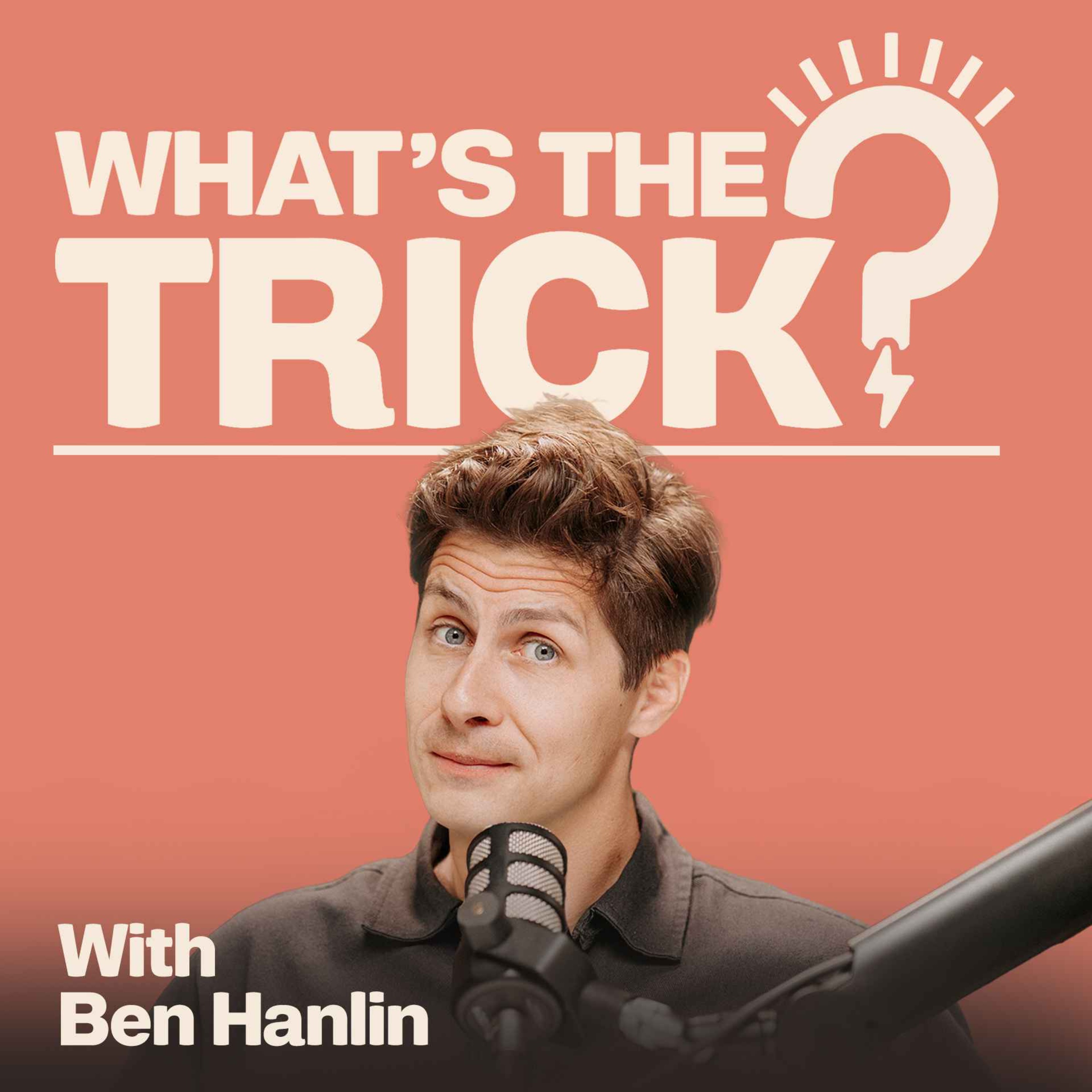
0:08Ben Hanlin: Welcome back to What's the Trick? I am your host Ben Hanlin and this is the podcast where I sit down with the world's most creative people and try and understand their creative process. And the question today is, how does a violinist become one of the biggest theatre producers of all time? All right, today's guest is Simon Painter, who was responsible for creating the show The Illusionists, which obviously magic people know. But if you may have seen it, it toured all over the world. It was one of the biggest selling magic shows of all time and one of the biggest selling shows on Broadway that's not a musical of all time.
0:45Ben Hanlin: So how do we get there? So I'm going to bring it to speed on Simon. he started his career as I said as a violinist and he played in lots of successful shows and even played in the show Spirit of the Dance as the fiddle player that was an Irish based show and long story short he travelled around doing that eventually he got a break to produce a show Le Grand Cirque for a friend of his that became big and then he met his friend Tim Lawson and they created a show called the illusionists which became a phenomenon it started off in the sydney opera house i think in around 2012 and the show went on to as i say break all records and to give you some context on that show it was basically about creating a lineup of really cool magicians and they'd have about seven or eight per show and one would come off do their act and another one would come on and that would be the show but it was all made really looking cool and they used to He tore multiple shows all over the world.
1:40Ben Hanlin: And I myself was in it for a few weeks in the West End as well. But he went to build on this is called the Works Entertainment. That was his company. And then he eventually sold that to Cirque du Soleil in 2019 for, from what I hear, quite a few million pounds. Right. So why did I want to talk to him? Because I wanted to know where did the idea start and how do you get an idea off the ground and get investors and then create this thing? So he really tells us about that. I also asked him as well, what's driving him today? He doesn't have to work now. Most recently, I should fill you in as well.
2:18Ben Hanlin: He's just launched a number of shows, one of them being Now You See Me Live, which is an adaptation of the Lionsgate film Now You See Me Live, which they've done multiple films. they've got the rights to it and they're making the stage version they've just been in the west end all summer i went to see it it's a great show so i want to understand that a little bit as well as how does that conversation come about how do you take a film turn it onto the stage so he tells us about that also i wanted to find out what he looks for how he puts a show together and finds acts that he knows are going to work versus the ones that don't so he's really honest with us about this as well.
2:54Ben Hanlin: For a bit of context, we recorded this over the last few days ago and I was in my house in Birmingham. He was not in Birmingham. He was in his house in Santa Monica and one of the reasons we got to talk was because he normally goes surfing every single day and the weather has been bad. So he's like, yeah, I'll speak to you. It was 8.30am his time. So it's very nice of him to jump on a call and we had a good chat. And we're going to kick things off where before he did his big Cirque show, which was, as I said, Le Grand Cirque, he put his violin down to try and produce his first ever show in South Africa and create an African dance show.
3:32Ben Hanlin: And that's what he did. And just I wanted to hear about that. How did that all start? So that's where we kick things off. Him talking about his African dance show. You've got to hear this story. And this is What's the Trick with Simon Painter. how do you go from classical violinist to owning one of the biggest magic shows ever produced that's what we're going to discover today but most importantly let's start in South Africa with the dance show okay well um thanks having me on um it is it is a crazy story and when I'm sort of saying it I almost can't believe it happened to me to be honest but um so I was the I was a very unemployed fiddle player for a long time living in South London and then I my brother answered an ad in the lute and for your listeners that will know like old enough the lute was a paper that you kind of that's the only place before the internet you could find any gigs at all and it said fiddle player required um for an Irish dance show and it turned out to be Spirit the Dance which was the sort of like the knockoff of Riverdance but it was massive um this guy called David King.
4:43He basically saw Riverdance, essentially copied it, but with English people, and went to every market that Riverdance hadn't been to before Riverdance had a chance to get there. And it was a huge show. It played to sometimes 10 ,000 people a night. And I ended up being the fiddle player in Myrtle Beach, South Carolina, in the Palace Theatre.
5:01Ben Hanlin: And I bet you when you were a kid playing the fiddle, I bet you never thought one day I'm going to be on the stage in front of 10 ,000 people playing the fiddle. It's crazy. Or 300 people at the Golden Nuggets as the early show before The Amazing Jonathan, as it may have been. So I did a lot of, and actually that was my first sort of real seeing anybody doing magic. But essentially I did that for quite a while and ended up in South Africa. And David is a very famous producer. He's sort of very controversial, I suppose, the way he produces things. But he just back in the day, he literally used to make up a poster on a Monday and put the show on stage on a Tuesday.
5:42Brilliant marketeer. And I learned an awful lot from him what to do and also what not to do. But I saw what happened with him with Spirit of the Dance, which is essentially he turned up and made a poster and made a show and made a ton of money. I mean, tens and tens of millions of dollars. And I got to South Africa with the show with Spirit of the Dance. It was a really big deal out there because Riverdance hadn't been in South Africa. So it was like a, you know, they didn't get many shows. So we're at the biggest theatre in South Africa. And I was on this trip in Soweto, one of the townships, and saw this gumboot dancing thing and decided this was going to be African river dance.
6:18And so just like David King, I made a poster. I made a sizzle. I raised some money. And essentially over the next, I gave up playing the fiddle. I met this lovely girl that I kind of fell in love with and moved in with her. And this was it. I was going to create this massive African river dance show. And for the next 18 months I did. And it was with the guy that wrote The Lion King, Lebo M, was one of the composers, this very lovely investor from India who's going to be sort of one of the producers and this large theatre in South Africa in Joburg. And I got to live in Joburg and it was crazy. Like it's a pretty dangerous city.
6:57Like you can't stop at lights at night. You know, I had many friends getting hijacked and things. So it's pretty crazy place to be, but very inspirational. And essentially after 18 months of working on this thing, just before we opened and I was completely out of control. So to be clear, like I really didn't know what I was doing. Like I had a good idea when the show was going to be good, but like on the deal side, I kind of owned everything, but I was with these people that were just so much more, you know, they were far richer than I was. They were far more experienced. And so I decided to kind of like sell off my share to them before the show opens because it was just all getting very hectic.
7:35And about five days before the show opened, I got a phone call and I was actually drinking champagne on this like lovely mountain overlooking Joburg Zoo. So you can sort of imagine it's kind of like a like something out of a painting like giraffes below. And I was with my then girlfriends drinking champagne and the phone rang and my investor had died of a heart attack. and instantly within a matter of seconds um I realized I'd lost everything and literally the show never opened um I ended up driving to the township and telling 50 uh Zulu dancers with spears and shields that they were no longer required for the show um and I literally lost every penny I had I'd put all my money into the show and I'd gone from thinking you know god I'm gonna you know be a millionaire to having literally nothing left uh which sucked you know that was a terrible terrible thing and obviously one of my friends had died as well which is even worse um and then about a week later um my car got hijacked which wasn't my car it's my girlfriend's car so i had to then buy her a new car i helped try and buy a new car and i think i phoned my mum to get me a flight back to london um they couldn't really afford to do that either but um i ended up having to sell my drum kit that's how broke I was so I was back on the streets of South London as an unemployed fiddle player drummer having to sell my only possession which is a drum kit to pay some rent to live in a squat so it was quite a kind of meteoric rise and very quick crash and I bumped into David King again and he said do you remember that theatre in Myrtle Beach South Carolina I'm bored of doing the Irish dance show I want to do a cirque show could you produce me a cirque show so literally of course I said yes and I didn't even agree with any money so I I flew off to China and I found an amazing troop of Chinese acrobats.
9:22And essentially what he wanted to do is produce a Cirque du Soleil-esque show. And I went to South Africa and built all the sets and the costumes. And I had these puppet zebras. And we opened in 2004 in Myrtle Beach, South Carolina. And essentially I ran the theatre, produced the show, created the show, created the marketing. And put on this show, this Cirque du Soleil-esque show for him. not having done any of that before other than this Irish dance thing and the African dance show, which never made it a stage. Can we just... And it opens.
9:51Ben Hanlin: Before we go any further, because, I mean, you've just covered a lot of... I could do a whole episode just on that story, I think. But let's look at this, the Cirque thing in particular. So what makes... I'm just like for stiff, just deliberately a little bit facetious here. What makes a fiddle player go, I'm your guy to produce a Cirque show? is it you watched a lot of Cirque shows and you were passionate about it or did you just think I'll say yes now and figure it out and then how did you start putting a Cirque show together um so it was definitely say yes now and bearing in mind you know people say what a risk you took there was no risk because there was I had no money I had nothing left and you know he was paying me 300 quid a week to be a producer so that was great um and I had I was always very entrepreneurial I'd done a ton of stuff before I'd really been a fiddle player in terms of producing parties and nightclubs and things.
10:44I was always very commercially driven. And my dad was an entrepreneur and, you know, of very differing success, I'd say. But he was very, very amazing salesman. And so I just was, you know, I was entrepreneurial and said yes. And David was someone that really liked employing people that were in, like everybody that worked for him had been a dancer or been at the bottom rung of the ladder. right and um so he was just someone that took you under his wing and he was going to do it with or without me like he would have sent someone else to china so he had a contact in china that had acrobatics i had a contact in south africa that built sets for cheap because the rand was so um you know cheap i suppose um and so i just put this thing together and um a very amazing director called um brian uh what was the actual didactic drink i created the show and so we put it on stage and the thing was a massive success it had a dog act a wheel of death act 30 chinese people 12 english dancers a break dancing clown called dizzy who still works for me to this day he's actually in new zealand with sir callis right now um so and he was my best mate at my wedding so um we did this show and it was in myrtle beach it's like tourist central it's like black ball in the song i suppose uh does 14 million family tourists a year so after the show opened it was a big success he said you want to run the theater uh because he didn't have anyone to he bought this 3 000 seat theater and didn't want to run it so i was 23 maybe 24 and running this theater had 150 people and i was like the the sort of the young english guy putting the show on and running the theater and annoying everyone from south carolina so it was really like trial by fire and the show went on and on um every year we'd sort of and we started having different versions it came to london and then the real tipping point the moment that changed everything was that a guy came to see me called tim lawson from australia and he um said he might have a spot at the sydney opera house for our le grand cirque show and the sydney opera house used to close down at christmas because you know the australians like ah no one will come to the theater at christmas but actually you know the concert hall at Sydney Opera House was it was this amazing place so I persuaded David I said David I'm going to go to Australia and try and do this deal and basically the deal was that we didn't really get paid any money we got our expenses covered but there was no profit and David really did not want me to do this and he I flew to Australia he called me said get back home it's a crap deal I said no David it's gonna it's gonna make a fortune and then I signed the deal anyway and he basically said it's your neck on the block if this goes wrong it's up you know you're the one to blame and then i called him on opening night about four months later and we'd made a lot of changes to the show so it'd gone from sort of like a slightly knockoff certain stage show to we had a live band and they had acts all around the world and the show had really it's about three years into the show so now we'd sort of figured out what we were doing and we sold 42 000 tickets in eight days broke the sydney opera house record and he called me on opening night said didn't i tell you not to do this show i said yeah david you did he said good fiddler come on home i'll give you a bonus so i flew back to london and he and he gave me um he gave me some money which is really nice uh first time i'd ever earned any money in my life really
14:00Ben Hanlin: and the show went on for years yeah and and is that because when you saw that as an opportunity to go what if we if we get sydney on the map then all the other big places will follow suit is that how it works yeah just such an accolade to be sold out the sydney opera house and what an amazing to like to this day I've done 11 seasons now at the Sydney Opera House of various shows over the years and it's still my favourite building on earth to put a show on it and it's incredible we carried on and the show was now making money we had we were in you know Latin America and touring Europe and I was running around the world and I saw this opportunity to have a second sit down because the Myrtle Beach version was making good money in Destin Florida which was like the panhandle of Florida and we found this town called Destin which is called the Redneck Riviera and I found the money and I got the hotels invested and the timeshares invested and we put it in a tent in the middle of town.
14:54And David was all in and I was going to get a piece of the profits and I thought I was so good. I thought, this is it, I'm going to make it again. And then five days before we opened, someone called me and said, have you seen the news? And the bloody oil rig had exploded in the Gulf of Mexico and the Deepwater Horizon oil thing. and it basically, the oil just hit the beach. I mean, there was CNN, like, literally pulling dead dolphins out the water. And the show basically just lost all its money. And at that point, David and I had probably had enough of each other. And he said, fiddle player, I think I've had enough.
15:33And so that was it. I was gone. I was done. Back to square one.
15:39Ben Hanlin: Well, not quite square one, because you've obviously got all that experience. And then this is where the story starts, really, that a lot of people know you from, I suppose, because at some point between this and you then come up with The Illusionists, which is, I think, the biggest selling magic show ever and spent on the history of Broadway as well. One of the most successful non-musicals ever on Broadway. way so let's go to that bit then Simon where were you when you had the idea that I know where my future lies as someone who's not a magician to go I'm going to do a magic show how did this come about so um I had produced a bit of magic for David in Myrtle Beach we tried a kind of slightly last minute magic show Myrtle Beach and I'd worked for the amazing Jonathan as his chainsaw appearance guy in the golden nugget so i'd been i'd sort of seen a bit of magic and knew a bit of magic and we produced a magic show in myrtle witch but i was very much not really in the thing and then the opera i moved to la so i got married and moved to la um and we really my wife and i my wife also directs and creates shows and we're like where in the world should we live and um i had someone in america to get me a visa so um and i was at shanghai sydney a bit far away new york oh god it's a bit cold LA sounds lovely and sunny and I had someone to get me a visa so we moved here then the Sydney Opera House called me in about August um and I'd done three seasons for them by then so we were probably like five years into the relationship of doing shows with them and our really good friend from there said listen we were going to do a big show but it fell through what have you got and I literally said I remember I remember this to the day I've got an ice skating show a variety show and a magic show and um I didn't have any of them but I sort of had the idea that maybe i'll produce one of those three things and he said i fancy magic it's not going to be like paul daniels is it because he was english and you you know had grown up at the same time as me i was like it won't be like paul daniels don't worry it's gonna be the 12 greatest illusionists in the world obviously we realized we couldn't afford 12 eventually and then um you know i started putting it together with a sort of with neil dorwood my friends and brett daniels was involved at that point helping cast it which was but you just you've just skipped over this thing that I think you take for granted and I want to press you on this because you've just gone mate you on a phone call you've gone ah you've looked oh magic show so you must have had the idea bubbling that okay there's variety what and it's a popular variety and you just casually have just said it's the 12 greatest magicians ever or where did this idea of this format spring into your head do you think so um well i i do know so um in the journey of doing shows with david we did a lot of shows like he used to kind of be like make me a poster for i mean the 12 irish tennis was the best he literally got like 12 dancers to mime and do irish music with tennis and it worked or he'd come out on a monday make the poster to be out on the wednesday i employed been to put this show together or david did and i flew out to vegas to watch a show and i saw in some grotty casino i mean it was really grotty had a gunshot hole in the door i think it was like out the back of the new orleans the world's greatest magic show which was like i had had quite a lot of people in it that i had jeff hobson in it and i had dan sperry in it and it had mike michaels in it and it had but like in a really i mean this was this was dodgy this was dirty and performers graveyard and i was like and i sort of saw through all the very like there was no audience and it was like but jeff was amazing and i'd seen jeff before i'd done a corporate event with jeff and thought it was the best thing in the world so i sort of thought look it's a circus of magic and very early on i said to the opera house who had asked me i said i want to do to magic what Cirque du Soleil has done to circus which is contemporize it and modernize it and make it great if you take the act then you put this great production because magic for me was just stuck in 1985 it was sort of sequins and tigers and misery and I wanted to contemporize it and make it sort of modern so I had had the idea prior to mention this the opera house um so that's I suppose where the genesis of it came from can I spend Loki and seeing the world's greatest magic show so obviously yeah you being around the scene and see you know having inputs really so you're seeing bits and you know it's all pieced together but something you just said there is the state of magic was not in a good space right do you think there's that's a good starting point of almost going what's not big right now what's not great therefore there's i mean there's two reasons it's either because nobody wants it or there's a different way to do it is that a thought process i think yeah i mean i just think that you know if you even today right i think if you look at and it's you know we'll sort of jump forward 20 years because we're about to open now you see me in las vegas in david copperfield's showroom so my argument is compared to circus if you look at number of circus tickets sold every night in las vegas you know for cirque de soleil and absinthe and um all these other things there's a lot it's in the sort of tens and tens and tens of thousands of tickets and number of magic shows while there are a lot of magic shows in vegas there's not that many big ones and so there's real room and most people like i reckon if you were to poll the audience in london we just did 96 000 people in five weeks for now you see me in london and of that 96 000 my guess is 95 500 had never been to a magic show before so i think that there is or stage magic show they might have seen a magician in a bar or a wedding or a corporate event or something like that but where else would they possibly seen large-scale magic on a big scale there just aren't any shows i mean where do you go especially living in london i mean maybe if you live in vegas so we go to vegas you will have seen chris angel or penn and teller or maybe david copperfield but so i just don't think the world has been exposed to big large-scale magic and so i think hardly anyone's ever seen it and i often say this to magicians like they're you know i remember even saying to kevin james early on he was like asking him what he did and he's like well i did the you know the famous sawing and half act which we'd seen him for i said what else do you do he said i've got this rose thing but everyone does that you don't want to see it and i saw the rose i was like it's the best thing i've ever seen he's like yeah but all magicians do it so people have seen it i was like no one's seen it no one has seen this act like it doesn't matter 99.9 percent of the people that come to this show have never seen the rose act so we should put it in the show because i know you think people have seen it but the world hasn't seen it and i think that's that's the thing with magic is that magicians are way too close to it so let's get into and this is where i think this is your genius here so you've come up with this idea and you've you've kind of gone on the you know it's quick on the fly 12 12 guys we're going to package it you kind of you get it it's like a rolling for those that haven't seen the show obviously it's essentially magician comes on magician comes off and you're seeing the best acts do the best things and that's all packaged together with really good sound vision band live music great great visuals but let's talk about the next step you've got to finance this thing you've got to take this show to Sydney and get it off the ground was the next step literally poster marketing how do you get an investor yeah what how does somebody go from having an idea in their house to getting this on a stage well back then it was harder now you can just do it in AI so it takes five seconds but I mean back then you've got to make a poster and because I'd learned from David, making a poster was something that came very naturally to me.
23:19I've made hundreds of posters for him, for ideas that he had on a Monday and one stage on a Wednesday or maybe a Tuesday. So yeah, making a poster. And the poster for me, so even to today, that's what we do. So I have a new show opening in Australia in January called Cirque Empire and we had Cirque Alice running in Reno. so I went to Reno re-costumed the people re-shot the show made a sizzle and a poster called Cirque Empire and it opens in Australia so we make the marketing materials first which I think what you have to do and the marketing materials have to speak to you know the buyers that are buying it and basically saying hey I think this thing's going to make more money than it costs and ultimately that means that a poster has to be compelling to the audience and you know I make it sort of sound easy like making a poster is really hard like most people can't do it like just it's got to be an idea that's good enough it's got to sell off the back of you know literally i mean david used to do this thing where he'd he'd come up with posters for like a christmas show or something and he'd and i'll try and i'll show you exactly what he did he didn't do it with a phone but he would do this he'd be like okay ready to see the poster and go and he'd be like what was it he said you're half a second if you've not understood what the show is in half a second that's it like when you're going past the billboard on the road you're not analyzing it and looking at it either catches your eye and tells you what it does and i think the kind of english saying if it does what it says on the tin is what i've always done like things that instantly you know what they are the illusionists very hard to you know the world's greatest magic show the illusionist very easy to see what that is um Cirque Alice you know we you know the things that haven't worked as well have been less obvious so my stuff works because it's very obvious to what it does and I know that sounds really easy to do but knowing what that is I think is quite a thing that most people don't seem to get very
25:19Ben Hanlin: quickly yeah it's a it's like you say it's really putting the audience member first of going yeah how do I convince you to give up your money and spend an evening here and interestingly we've only ever had one other theatre company I said to you before we hit record on the show and that was the Mischief Theatre who did the play that goes wrong and he said one of the secrets that he believes to the success of that show was the title the play that goes wrong everyone went oh that's interesting I get that that's and he put a lot of energy in the title of the show so it's interesting that that that formula you say start with making it as easy as you can for your audience to get excited about it, I think.
25:58And also share, I mean, I share it. So I, you know, I have a WhatsApp group of friends and colleagues and what have you, and I'll sort of like knock up a poster and be like, what do you think of this? And, you know, I'm pretty confident now that if my first response of the WhatsApp group I send it to is good, you know, and I just have lots and lots and lots of ideas. So there's another hundred shows in here that I want to do, but we haven't had time or, you know, it hasn't been the right timing to do. And probably of that hundred, we'll make, you know, half a dozen or something. but you know it's it definitely is is this something that's going to sell tickets and um and knowing and knowing um and whether things are going to be really successful or not um to use an american analogy this business is essentially it's like baseball you're just going for singles and doubles so you know um you're just knocking these shows out and hoping to get a single and like you know not lose any money just break even make a little bit lose a little bit mate you know just like stay in that thing and once every five or six shows you have a game of thrones and you knock it out of the park and it goes nuts so you don't know when they're coming you can't predict it the illusionist was just another show we did you know it could have been the ice skating show the variety show the irish show the 12 tenors the christmas show it just happened to be the next one on the list and we got the timing right um and that one went bananas and
27:18Ben Hanlin: you know there we go and even in that the way you you kind of like you said you sold the idea you've got the date it's booked in you've got the poster how and let's fast forward to opening night in Sydney then now obviously a lot of work and I'd imagine you give it your 100 % on the lead up to that but how bothered are you on opening night that this thing is a fully formed brilliant idea or is half of it about just getting the show up and going and then make knowing that you'll fix it as we go rather than because some people go I need a year to make this thing incredible do you know what i mean well it's much more important you sell tickets than anything else so and it's much more important than the audience like it than anything else i'm always very worried about how the show is like in hindsight i'm probably too worried like i've had panic attacks on opening night before because you know we've had opening nights i mean just to give you an idea of how quickly the illusionist was put on we had about three days in a rehearsal studio that was like an old garage and then we loaded on a Monday and opened in on Thursday.
28:18And because all magicians just lie, the show was three hours and 45 minutes long because everybody did twice as much time as they said they would. So the first night, the illusions were three hours and 40 minutes. And thank God Jeff Hobson saved us because the show was pretty bad. And Jeff Hobson came out and every time he came out, it was like, it's the best thing ever. And that's all they remembered is Jeff Hobson and some other good bits. But it wasn't a great show. But the audience did like it. um and because jeff hobson basically and um the band were cool there's some of the magic was good i mean people hadn't seen magic so yeah you know it was so under rehearsed it was but um you know we knew we had a hit so i mean i actually was one of the worst nights of my life opening night the illusionist i just was so depressed because the show was so bad even though we're sold out and i just was like oh god if you were doing that now knowing what you having all the experience
29:11Ben Hanlin: you've got now if you were back in that place would you go do you know all of that is fixable like we've got the venue we can take an hour out today and we'll fix it tomorrow and is that what you do or would you have gone we maybe should have had a bit more rehearsal time and prepping time and whatever well we just didn't have any more money so we spent all we didn't you know we'd sort of raise the money through selling the show to various places and we were using it was me and my partner tim you know throwing a bit of cash in each but not much so we we had as much time as the money allowed so there wasn't really an option for hey let's have more time because you know magic's expensive with the pyro and the lighting and the time and the thing so but i think you just got to go for it really um but you know it's um you know it's it's the show and the business right the two have to go hand in hand the show has to be great and the business has to be great and those two are completely co-joined and you've got to be um you've got to get both right hello it's ben and this is a short commercial break for regular listeners uh you'll know it's not really a proper commercial break it's me just having a little chat with you for a second because we don't really have many sponsors we do have one though which is the podcast rooms which if um i'm in london or if i'm filming and we're going to record this in person i use the podcast room which is in birmingham london brighton i love them because they're all up and down the country and their team are always really friendly.
30:37Ben Hanlin: Their studios always look great. Their video quality is great and their audio quality is great. And I think their prices are great. So I honestly, I use them. If you're looking for a podcast studio, have a look at the podcast room. If you want me to do an introduction, DM me and I can link you direct. It's also good if you need to record any content for your business or for yourself, you've got a great space. As I say, a good price. But if you're new here, by the way, hello, welcome. This is what we get up to every week. This is Simon. If you want to check out Simon, you can have a look at Now You See Me Live.
31:13Ben Hanlin: It's his latest magic show. That's just about to launch in Vegas and it's just about to launch in Broadway. In Vegas, I think they're playing in Copperfield's old theatre at the MGM Grand. So hell of a space. And obviously they're in Broadway. I think they may come back to the UK at some point. I think they're launching in Australia again as well. and he's got another show called Cirque Alice which is this combination of Cirque du Soleil meets Alice in Wonderland and it's coming to London from 12th of December so if you have got an inkling to go and watch an interesting creative Cirque show have a look at that, it's called Cirque Alice what's been going on with me this week so we are back from summer, from holiday did a couple gigs last week as I record this I'm literally just about to get in the car and go to Hull.
32:01Ben Hanlin: You're getting mauled by the Tigers. Anyway, I'm about to go to Hull to host an evening tonight, hosting awards. And then I'm in Birmingham for an awards. And then tomorrow, not tomorrow, sorry, next week, I'm doing a keynote in London. And that's what I wanted to talk to you about, really, is the main thing I've been working on. It's going really, really well on my keynotes about human connection. So I take all of this stuff that I learned as a performer and some of the things I'm learning from these guests. And I talk to teams and leaders and businesses about how to create human connection because that's ultimately what us performers are trying to do is connect with audiences and there's ways to do it and we can all learn how to do that for more information on all of that stuff go to benhanlin.com there we go uh let's talk about the podcast we're back now we're up and running so i'll start announcing some guests in the coming weeks but i've got some good ones planned as well uh what has been happening if you're new here Obviously, like any other podcast, they say do hit subscribe so you don't miss next week's episode.
33:01Ben Hanlin: We've got our Instagram page, which is growing really well. I think we've got well over a couple of thousand people now in the last couple of weeks. If you haven't already, it's at whatsthetrickpod on Instagram. Give that a look. Give that a like. Drop me a DM. I literally run that page, so I will look at the DMs and I'll reply to you just to say you're new or you're enjoying the show or an episode you listened to recently. And we'll have a little chat about that. and the request I ask really is I'm trying to spread the word on this podcast so if you have a WhatsApp group with some friends or a Facebook group you're part of and you think you know a group of people that might like this if you're part of a theatre community or whatever share this link with them or some people that you know are into this kind of stuff especially magicians listening to this you can share this out as well that'd be amazing and the idea is each week we gain a few new listeners and we keep growing and growing and eventually take over the world okay that's not the actual plan but it'd just be nice if you would hit share okay right that's pretty much it for me i'm going to talk about simon i think at the end of this episode i'll give a bit of a debrief of what i took from this episode a bit of a chat there but uh let's get right back into a little chat with simon painter and then let's talk about getting it right then so as you said you were coming off the back of magic wasn't the most modern thing ever it wasn't that probably there weren't big touring shows.
34:24Ben Hanlin: What do you think you got right now looking back that other shows had totally missed before? Well, mainly the poster, right? So the poster sold tickets, which is more important than almost anything. And then also me not being a magician is hugely important because magicians make terrible producers because they are looking at things through the eye of a magician. It's like I went to FISM once in Italy And I was like, this is the dumbest thing I've ever seen. A room full of a thousand unemployed magicians judging another magician. Like magic should be performed to people that don't know what magic is, because that's the point of it.
35:03The whole point of a magic trick is to fool the person you're doing it to. Right. So if you have an audience that aren't fooled, what on earth is going on? And it's, you know, they forget it's not what you do. It's the way that you do it. Right. So like Jeff Hobson, if someone was pitching me an egg in a bag, I'd be like, get out of town. But best magic trick ever. Jeff Hobson's egg bag trick. Best ever. Right. And so it's not the technical proficiency of magic that makes it good, which is what vision is being judged on. That's irrelevant. It's are you creating a moment that the audience are generally wonderstruck by?
35:40Right. That's what magic's about and always has been about. whether you're in a bar making someone's ring appear on a wine glass if you're in a cocktail lounge reading someone's mind or taking a word from a book or if you're on a large stage making someone levitate or disappear it's about you know it's about fooling and astonishing the people in
35:59Ben Hanlin: the audience that's the whole get up so you've seen that that's you bring you nicely onto this so you've seen a lot of acts right you've seen and you've had to as you said you had six shows at one point you had all these acts working with you what are the common problems you've seen and it doesn't have to just be magic acts but when you've watched it's these standalone people that have their act what are the common problems you see that people get wrong that you you keep giving the same notes to over and over again being too long is the first one every magic act is twice as long as it needs to be so you know the good ones and even saw this in the illusionists like the great people did less time on stage the bad people did wanted to do more and more and more so it's like an indulgence thing like you know it's just cut it down four minutes great get the hell out of there it's yeah the speed is that magicians are looking at things from a prism of magic what's going to impress other magicians because that's the world they live in and that's just again so unbelievably irrelevant and i'll give you a real world example so for people that don't know magic which is 99.9 % of the audience.
37:07Like the ambitious card trick is a very wonderful card trick. And, you know, the audience member signs a card, a kid signs a card, and it appears in all these magical places. Turns out it's quite an easy trick for magicians to do. Like most magicians, hobbyists, and people can do the ambitious card trick. Adam Trent's ambitious card trick in Now You See Me Live is the best part of the entire show for the audience. And that's when we, us polling the audience. That's us asking the audience, What do you like the best? They like that trick the best because it's the best routine. It's got wow in it.
37:39And magicians will tell you time and time, don't do that. Don't do the ambitious card trick. It's so simple. Well, we've seen it.
37:44Ben Hanlin: You could go to a wedding today all over the country and you will see that trick. Right? Yep. But the audience have never seen it. 99 % of the audience. So they've got, magicians have got to see that it's the style and the presentation over the actual technique. And that's what makes a great magic trick. It's not whether you've done it without a gimmick or a thing. And that's the number one thing that people get wrong is that they're trying to outdo other magicians. And it's just it's just irrelevant. So let's look at the audiences for a second. You've had you're in a very unique position because you've been able to see audiences from 40 odd countries, all different cultures, backgrounds, watching similar ish material.
38:24Ben Hanlin: what are the things you notice about audiences globally that consistently entertains blow their mind makes them come back for more what is it a room full of people laughing is essentially what we're doing now you see me in the illusionist is essentially a comedy show with some magic going on as the vehicle that takes you to begin the end but it's if it's funny it works serious magic where people say i am going to levitate this thing that's that's 1985 no one no one cares no one believes it big illusions very hard to pull off no one cares no one believes it you know anything where you have to kind of you know you have to anything you're sort of basically saying to the audience i'm going to do this thing that's impossible the audience like no you're not we know you're not like well it's an interesting they will believe you if you're going along for the journey of a comedy you know a comedy routine because it's an interesting thing isn't it you could you on paper you'd sit there me and you and go right we're going to write a show and we're gonna make a helicopter appear and you go wow and then that costs tens of thousands of pounds to produce and then someone's gonna go i'm gonna do a car trick with a normal deck of cars that cost two pound fifty and the connection and the reaction on the car is the most soul destroying thing isn't it you spend all these tens of thousands on this massive thing and it's the small car trick and it's that's quite interesting right that the big illusion well you do need both I mean, so in our show, because we're sort of billing it as one of the biggest magic of the world, you need both.
39:50Right. So we've got an appearing helicopter. We do it for about five seconds. You know, empty stage, boom, helicopter. Let's not take a seven minute routine to make a helicopter appear. Let's do it as quick as possible. And maybe you'll forget it in a minute. I mean, it's very impressive. But trying to say, like, we are transmogrifying the molecules of this thing to make this thing appear. People are just like, get out of town. So do the impressive big stuff quickly. and get on with the stuff that's funny and heartfelt and it's going to warm people's hearts. That's our thing. But you need a mix of both, I think, because a show full of card tricks doesn't really work on a big stage.
40:24Well, we have found it doesn't. You need some spectacle.
40:27Ben Hanlin: And when you're working with performers with egos, and these are people that you're trying to tour the world with, what have you noticed about the ones, the best ones? Obviously, you said sometimes being funny and being relatable, I suppose, is helpful. But is there certain traits you've noticed in the best performance? Yes. So certainly easiest to deal with from a contracting standpoint. Like you can tell within five minutes if there's a magician is a nightmare because you're just like, oh, can't be bothered. So the contracting part is really important. It's just that it's easy. And we pay people a lot of money.
41:07and um you know you can tell pretty quickly how nightmarish the journey is going to be based on that first interaction and then also people wanting to do too much in the show so you know the really great people want to do less leave them wanting more that's the saying right and the really good people want to come on knock it out the park and get the hell out of there and they're the ones that people remember you know these acts that go on for 12 minutes i mean it's a constant thing sending notes being like your axe too long the axe too long the axe too long you know and so just knowing that it's the quality of laughs as opposed to like you know I got 100 laughs in 12 minutes so I got the 10 best laugh in four minutes you know you're better off going shorter and making it punchier so that's that the good ones know that let's talk about now you see
41:55Ben Hanlin: me live which I've already mentioned in the introduction and how again how does that idea start did you watch the film and go because again they've got that right as lionsgate the film works the poster works as a brand what what made you want to put that and that together um so amazingly the the now you see me live franchise in mexico is called los illusionistas the illusionists so when we did the illusionists in mexico city everybody thought it was now you see me this was 10 years ago and then um we were we were offered the rights before the pandemic and we did one tour of china which was very chaotic and then the pandemic happened and then when the new film came out lionsgate amazingly in la is five minutes bike ride from my house so um the lovely producer from lionsgate called me and i cycled to the studio around the corner and had a meeting and they said the new film's coming out do you want to do a live show with it and then we have this lovely relationship with the opera house and so we said look we've got this and so they wanted to have another big magic show and so we greenlit now you see me live and and that's really how it happened so they they contacted us or i well i mean we're just in contact because we've worked with them before and we were supposed to be able to make it so so this idea of taking what is already well-known ip well-known shows got already got an audience and then turning them into a live stage event is that quite are you thinking that's a bit of the future where you might go in the next few years more of that type of stuff 50 50 50 so um i like doing stuff that i originate the ip in you know my studio because um or when i'm surfing or i come up with an idea like Circus 1903 or I've got a new Christmas show coming next year in America and that was that's something I literally was thinking about while I was surfing and I was like oh I should do a Christmas show and then we're selling it to a big um a big arena group and we're going to do a big arena tour so that one we will own the IP right and so we've got no we've got no owner like we've got no you know we've got no artist we've got no um family to go to or you know IP holder that's so nice so we do for 50 50 i suppose like when the right ips come up but ips are hard because it's not yours right and so you have to you have to have quite a you know you have to quite a relationship with the people that do it and within the case with george and game of thrones like it was an awfully long road and that's just because he's built this amazing world and it took a long time to convince everybody that we could do justice to it and the team were right and the story was right and yeah it was going to be you know additive to the brand but now you see me it was a little bit more obvious because our stage show the illusionist was very similar to their brand anyway yeah um so when the right ip comes up um for sure we'd love to do it but it has to be sort of you know the ips have to be really big to make them work so much bigger than you think in fact and they have to be ones that are able to sort of trust you a bit and take a leap of faith because you know you have to be able to be malleable with it and make it your own while sort of paying complete homage to what they're doing so it's it's it's just tricky it's not it's not like a it's something that just takes a lot of time that's all and we talked about obviously doing these uh collaborations and working with other ip and obviously there's financial pros and cons etc and we're not going to talk finances too much um but i did want to ask you this question having been someone that has put on so many shows and probably tried so many things if you don't mind for a moment just indulge me any big flops that spring to mind especially maybe an act or a prop or a thing that you got went oh we spent all this money on this thing and it never eventually happened is there any of that that's knocking around in the archives for you i mean certainly my first show in africa where we lost everything that was no fun okay yes um we we have actually tim lawson and i have never actually lost money on a show in 20 years in terms of having an idea putting it on some of them have done a lot better than others so the illusionist obviously was massive and i'm sure game of thrones will be massive uh but most of them they do good they go and play you know tours and arenas and things and they make a bit of money this year and a bit of money next year and they last for a few years and our buyers like them the biggest flop i've had in terms of a trick is i i mean i will never forget it opening night of the illusionist at the pantages and i designed um i got the idea from mark kalin and it was the thing that secret and roy used to make the tiger appear in the crystal casket so it was like a kind of a box that hang on the air cloth fell down bengal tiger boom and i was like that'd be amazing if we put people in it so we had this box that the crew always called the bastard because it never worked it was this massive hundred thousand dollar hydraulic thing that their cast was sort of trapped inside them the curtain fell and boom they appeared and so thundering music opened up the pantages in los which is los angeles biggest theater sold out i was there with all my investors all my colleagues but all the neighbors come and see my show the box went up thundering music flashing lights and the curtain only fell about that much and then like you could sort of see him crawling out of it and I literally died in my seat.
47:26I was like, oh, it was horrendous. And then amazingly, Jeff Hobson came skipping out the wings and said, that's what was meant to happen. And you're lucky you didn't get eaten by a tiger. And everybody just kind of laughed it off. I still thought it was the worst thing ever happened. I got to intermission. I was like, that was just, I mean, you'd literally seen exactly how the trick had worked in the first 30 seconds of the show. Awful. and the audience didn't really know what they'd seen because Jeff had totally saved the day so but at the moment it was pretty bad I have to say did you get that trick eventually work in the end it did work but it was really inconsistent so every time it had we did it live on America's Got Talent and it did work on America's Got Talent but the dress rehearsal did not work at all so um yeah the curtain just never fell quite straight and it was just it was just a you know because and i'll tell you why it's because magic builders is another magic whinge coming up here i've had one already here's the second one magic builders are just not engineers so in the real world of theater right if you're producing like a throne for game of thrones or a piece of kit it's engineered and there's risk assessments and there's drawings and there's and it goes to an
48:45Ben Hanlin: entire business who makes props and that's what yeah and if something's hanging from the ceiling it's like been you know it's like they've engineered the safety and the thing magic builders sort of like they're sort of like you know people that knock these things together and they turn up and invariably they just don't work and they never have flight cases and it's sort of like you know i've had so many props made over the years that just don't work or they'd like nearly work or they're almost ready or they broke after three moves or they don't travel well it's a very hard business illusions so you know i maybe it's just really hard maybe it's just really hard it's not their fault it's just bloody hard business i don't know well let's talk about obviously it's been documenting you you sold uh the illusionist and and you are your production company to certesolet and obviously i don't want to talk numbers or money or anything like that but from all accounts it probably was a good amount of money i would imagine so i would imagine you don't have to be as busy or do this stuff anymore and yet you're consistently making things and i was quite intrigued as to that as to like why why do you keep putting yourself into these big shows and i guess the pressure and the or dealing with all these people is yeah what's driving that for you now it's a really good question because i sort of asked myself that yeah so the answer is i did get very lucky with this sale to cirque and especially because a year after it happened the pandemic happened and so it went through a bankruptcy so I essentially sort of almost retired for a couple of years which was amazing because I got to meet my children who I'd been traveling I was averaging 80 90 flights a year my poor wife had been in the business and then just you know had just been a mum for you know eight years so i could have got out you know covid for me was essentially you know lost some weight started getting fit um started surfing saw my kids every day and so emerging from that um i was like god i really you know i don't know if i want to do this again because it is you know it's quite a lot of pressure um and then um i think my wife really wanted to do cirque Alice so she kind of spearheaded because that's what we that's how we met we were producing Le Grand Cirque for David and she was one of the directors and choreographers so she wanted to do Cirque Alice I was like oh I will give that one a go um and that did really well and then um Game of Thrones had sort of just been percolating like we never really knew if it was going to happen or not we thought it would but you have to get the creatives in the right place at the right time and then you've got to find a theatre that wants it and get the money raised and it's really complicated and so that just happened to fall in line the royal shakespeare company decided they had a window and then at the same time lionsgate contacted us so we got in touch and said now you see me three's coming out and so i sort of just said yes to those all those things because they were just kind of happening and all of a sudden we got six shows out so so it wasn't really an intention it just was like you know bloody hell now we're really busy and we're really busy again and i'm i'm not regretting it but i'm i'm trying to manage the stress of it because you know you wake up at 6 a.m and open the phone and look at the sales reports and be like oh god or great depending on what it says and then you're constantly plagued with magicians whatsapping me all day long about how many minutes they're doing in a show whether they're in the show or out the show or whatever which is like you know it's a thing being back in the magic world um and there There is, you know, an enormous amount of financial risk as well, which is, you know, is always sort of sitting there on the back of your mind with, oh God, do I have to do this?
52:25But I think I am driven by doing bigger and better things. And certainly I've never done anything as big as important as Game of Thrones. It's far bigger than I'd ever possibly imagined I'd be doing. It's on a next level of production for me. And so that's a very big joy. like I was I'm very very proud of it like having seen it now on opening night and seen the response and George and the and the and the the fans of Game of Thrones it's it'll probably be the best thing I ever do not that I created it but you know so I feel very very very proud and accomplished of that because I feel that was something that was sort of my idea 12 years ago and I've led it through this various stages of development to a point where it's on stage and I can't quite believe if I'm anything to do with it, to be honest, because it's beautiful and amazing and I'm super proud of it.
53:15Ben Hanlin: It's one of the biggest brands, isn't it, from a TV and film point of view in the last 20 odd years. You had like Harry Potter and then you had kind of Game of Thrones is another huge brand, right? Which is amazing. Well, it's estimated 500 million people have watched at least one episode worldwide, legally and illegally. And so, yes, it's a big one. It's a really big one. But that inspires me, right? So like having that success and doing that thing really i was very proud of it so that has actually given me a bit of a new lease of life of like what's next what should we do and do you so it's quite interesting because you've gone big you've done big tours you've done arenas you're doing this does part of you think if you're going to do something in the future do you still are you still thinking what's next bigger or do you go oh maybe i can twist and do smaller like have you got things in your mind now of a bucket list of other shows you're wanting to try i do want to do bigger because you know i think there's a misconception that there's a really fun part to the job right of sitting and creating stuff and like that is about one percent of it of being like oh should we make the lovely aerial duet wear pink that'd be nice what about that piece of music let's let's use a a schubert aria for that lovely thing like that bit is one percent of the job and 99 of it is dealing with the bullshit of just the risk and the marketing and the pr and the artists and the agreements and the insurance and the visas and the you're not selling it to me well it's it's it's it's not the so doing it bigger means that you have more time and more money to spend on making shows so yeah there's a couple of circuses i want to make that are that would be like sort of a bit out of my price range right now that would be really fun.
55:07You'd need a few months to rehearse. You'd need, you know, and now I've seen it with Game of Thrones. They had long rehearsal periods. And my God, what a difference that's made.
55:16Ben Hanlin: I'm going to finish with my fast five, Simon. My final five questions of the show, starting with my Highlander question. Are you familiar with the film Highlander? Long time ago, but yes. You could do a stage version. Anyway, in the film Highlander, immortals kill another immortals. And when you kill another immortal, you steal all of their skills and expertise. If you could steal anyone's skills or expertise, dead or alive, who would it be? Guy. Guy LaLiberté. Because he had a much bigger understanding of risk and reward than I do. I mean, he sold his company for, you know, over a billion dollars.
56:00he produced arguably the biggest show on the planet that still is what amazing brand that was and um and he sort of just sent it you know then he then and after he sold it he took a rocket up into space and flew around space for a bit so i just think like he had a very big sense of what could be done he sort of set the bar for where the roof is but you can't really do better than him i
56:23Ben Hanlin: don't think right done okay you've got that moving on time capsule oh i wonder what i'm trying to think what you're going to answer to this if you can keep only one it could be a show or it could be an act or a moment of your career to keep forever in a time capsule everything else is evaporated from the world what are you putting in the time capsule probably the moment where the elephants came out on stage in circus 1903 so we had these extraordinary i did a turn of the century circus and i had the guys that made warhorse make me these amazing elephants that were puppets incredible and the moment they walked onto stage at the at the beginning of act two out of the mist they looked like they were real and it was amazing and people really loved it it was a very very amazing moment and i don't think to be repeated again actually because it was a real moment where um you know english audiences we did the we did at the royal festival hall and english audiences hadn't seen um elephants on stage for a long time because obviously it's terrible to have real elephants so these looked and felt like real elephants and when they just came through the mist and the tusks were coming out it was a really magical moment so that's that's one i would i would keep for sure well it's going in that's it it's there let's move on culture vulture so what is the one thing you've seen recently a book a film tv anything can't uh you can't promote your own shows because i'll do that for you fair enough what is it uh that you'd like to shout about oh um well it's a this is you'll be surprised at my choice for this but i saw um lily allen's live show of her new album west end girl and it was absolutely brilliant We'll move on to magic wand.
58:14Ben Hanlin: So you've probably worked with a lot of people with magic wand, Simon. I am going to give you my magic wand for a moment. You can make anything in the world of theatre or entertainment vanish forever. What are you doing with this power?
58:30Oh, magicians. Oh, shut up, Simon. No, not magicians. I'll tell you what it is. it's like magicians moaning that's what I want to that's what I want to get rid of magicians moaning like I think that magic has all of its best years ahead of it it has all of the all of the artistry ahead of it if people were to collaborate and magicians don't want to collaborate they want to just moan about who's stolen what and done this and if magicians collaborated more and were more open to the fact that most art is created in collaboration the best things are inspired by other people you know all of the future of magic's ahead of it and i said earlier like 99.9 percent of the world hasn't seen a live magic show there's the opportunity collaborate you know look forward make tricks most magicians make two or three tricks and give up and that's all they do for the rest of their lives so i now i'm back in the magic world having had five years off it's reminded me of how you know insular it is and how claustrophobic it is and they all sort of you know they don't really like each other and are competitive and maybe that's just the thing but god i wish i could wave a magic wand and just change the outlook for how magicians are because i think that i think magic could be 10 000 times bigger than it is right now if everybody
59:54Ben Hanlin: collaborated rather than competed fantastic i love that answer and then final question of the entire show so simon painter what is the trick to having a long successful career as a theater producer um making amazing posters done there you go you've said it already yeah done So there we go. That was Simon Painter. Very honest there and really great conversation. I'd heard a couple of those things that you mentioned before, but it was really good to really dig, dig, dig into some of the thoughts as to how he's built his massive, massive business. And the fact that he puts you just heard it there right at the end.
1:00:41Ben Hanlin: The poster is that important. if that's one thing you take from this episode is so I've been thinking about there's been a theatre show that I've been thinking about pitching and working on I've come up with a little treatment and I try and put it through his test does the poster make you stop do you get it and I don't think it does and I think that's really interesting and then there's like some other projects I'm working on where I've been thinking about this idea for a while and I do think about not the poster but what about the website landing page if you have a business or idea if you land on that home page do you get it straight away is it instant and I think that's really just a simple model isn't it having a super clear poster but whatever that is in your world and then the other the other thing it's a bit more niche to perform me that I took from that is time as a performer which is basically just said you don't ever need every act is longer than it should be every act could be cut down and I think about that all the time I've in general I've got quite a low attention span, so I try and keep my act quicker.
1:01:43Ben Hanlin: But as he was mentioning, acts just they naturally just get longer and longer and expand over time and they all could just be cutting down. But not just in performers. I always think that when I watch a speech or a talk or a presentation or even a sales pitch, whatever it is, you can always take 20 percent off 30 percent and probably still deliver the same information. So I think we can all we'll do one thing after this. It's cut down our acts, whatever that is. So there we go. I even think that with music, I'm like, that song could have been shorter. But anyway, right. That was Simon Painter.
1:02:16Ben Hanlin: Really, really interesting guy. If you've liked this, hit subscribe so you'll hear another one next week. If you liked this episode, Henry Lewis was from Mischief Theatre, a play that goes wrong. He was a great episode. Similar, actually. He didn't talk about the poster. He talked about the title. So if you put those two things together, poster plus title, there we go. So that's 90 % of our theatre success. That's it. And so there we go. As I've said, whatsthetrickpod on Instagram. You can give that a follow and drop me a message. And as always, if you know anyone that loves these kind of conversations, I'm guessing there's a few magicians listening to this.
1:02:53Ben Hanlin: Give it a share to your community, to your WhatsApps, to your Facebook pages, that kind of thing. And I'll see you all again next week. This has been Ben Hanlon with What's The Trick.
1:03:07Thank you.
Simon Painter went from an unemployed classical violinist to creating and producing some of the biggest live entertainment shows in the world, including The Illusionists and Now You See Me Live.
He joins Ben Hanlin to reveal how he built a global theatre career, sold 42,000 tickets at the Sydney Opera House in just eight days, why he creates the poster before the show, the disastrous opening night of The Illusionists, and the lessons he’s learned about risk, creativity and giving audiences what they actually want.
This episode is for:
- Creatives (writers, performers, content creators)
- Business owners and entrepreneurs
- Speakers and presenters
- Anyone looking to improve communication and idea generation
---
About Ben Hanlin:
Ben is a magician, presenter, and keynote speaker who helps companies create engagement, connection, and memorable experiences. He hosts corporate events and interviews world-class creatives on this podcast.
About the podcast:
"What’s The Trick?" explores how creative people think, create, and turn ideas into reality.
Topics covered include creativity, communication, storytelling, content creation, performance, and building creative careers.
🎧 Listen / Watch:
YouTube: https://www.youtube.com/@BenHanlin
Apple Podcasts: https://linktr.ee/benhanlin
Spotify: https://linktr.ee/benhanlin
📩 Work with Ben:
https://www.benhanlin.com/
---
FOLLOW BEN:
YouTube: https://www.youtube.com/channel/UCM0oXTRP-zWlJ_IiNykTLag
Instagram: http://instagram.com/benhanlin
Facebook: https://www.facebook.com/benhanlin
TikTok: https://www.tiktok.com/@benhanlin
Check out Now You See Me Live: https://londoncoliseum.org/events/now-you-see-me-live/
How do creative people turn ideas into reality?
Ben Hanlin breaks down the mindset, process, and decisions behind it.
Hosted on Acast. See acast.com/privacy for more information.