Ask ChatGPT

 What's The Trick?
23 Oct 2026 · 1h 12m · 31 chapters
Al Barratt explains how he built Grenade from a 2006 gym-supplement idea into the UK’s top-selling chocolate bar, including product development, low-budget marketing, and retail expansion (gyms, BodyPower, Tesco, then petrol stations). He also discusses failure risk, pivoting from supplements to food, and a legal dispute with the host.
Al Barratt is the founder of Grenade. He previously sold gym supplements via a distribution business, then created Grenade (protein/weight-loss products) and later expanded into protein bars and “carb killer” chocolate-style bars. He and his ex-wife Jules ran the early company with minimal staff.
He named “Grenade” after a friend described capsules as “like I’d swallowed a grenade.” He says big brands outspend startups, so he focused on creativity (“noise”) and avoiding direct budget battles (e.g., “borrow a tank” at expos). He claims 40+ bar iterations were tested before success, and that the “carb killer” bar sold 50,000 units in two hours after board approval with a buy-back risk clause. He argues bars succeeded by solving repeat purchase and availability/price gaps versus supplements.
Borrowed a tank at BodyPower; sold T-shirts for £10 instead of giving them away; used a Belgian high-protein, low-sugar chocolate coating (maltitol-based); got Tesco placement (front-of-store after the sugar tax changed chocolate placement); bridged the price leap using Mars-style positioning and then scaled into ~10,000 petrol stations by proving margin and sales lift in a trial store.
Written by AI. May contain mistakes.
Al Barratt shares the initial struggles he faced as an entrepreneur.
“You know, we pretty much thought we were going to lose the house.”
Al discusses the inception of Grenade and its branding journey.
“This is What's the Trick with Alan Barrett.”
Al explains his unique marketing approach against larger competitors.
“Because your career, again, if you look at that, when I think of you, weirdly, I don't know why, the word noise springs to mind in a good way.”
Al shares his experiences with unconventional marketing tactics and facing failure.
“First time we've had that on the show, we borrowed a tank.”
Al details the evolution from nutrition products to the Carb Killa chocolate bar.
“which thought we were going to lose the house.”
Learn about the struggles faced during the early days of building Grenade.
“And also for someone who's well known in the fitness industry, I don't want someone breaking into my warehouse, stealing my stuff and selling it back to my customers.”
Discover how Grenade carved out a niche in a declining market.
“So I wanted everyone to get the benefits of what we'd learned about supplements and nutrition over the years and opening it to a more wide stream amount of people.”
Understand the strategy to make supplements accessible to everyone.
“but we always wanted a mass market following.”
Explore how direct consumer feedback shaped product offerings.
“And I got people coming up to me at shows saying, I really love your product, but I can't take it.”
Learn about the gaps in the protein bar market and Grenade's approach.
“So then when we looked at the protein bar market, which I was very familiar with because of my distribution business, I'd sold everyone's protein bars.”
Understand the importance of branding and booth presence at shows.
“You wouldn't go and meet at, you know, Joe's supplement brand necessarily.”
See how social media trends helped propel Grenade's visibility.
“Because they all wanted a picture anyway.”
Discover the evolution of Grenade from a supplement brand to a food brand.
“And I mean that in the nicest possible way because this helped everyone.”
Explore how Al dealt with the board's reluctance to pivot the brand.
“Well, so we spent two years finding out, well, we found out really where bars were currently made.”
Learn how Al Barratt navigated board disapproval and pursued his vision.
“But yeah, I mean, again, if we had started another company fresh from Grenade, you're almost back to square one in starting in a game with the brand.”
Discover how Grenade distinguished its products through creative marketing.
“You're not allowed to make claims in the food industry.”
Explore the challenges and creativity in product development in the food industry.
“So you just, again, it's just being creative.”
Understand the strategies behind getting Grenade products into major retailers.
“but it just wasn't there because no one else had done it.”
Learn about the profitability challenges faced by petrol station owners.
“And some of them have got, you know, one petrol station, some have got 500, but we had a list of all the petrol stations in the UK and I'd go and see them.”
Discover how Grenade increased sales significantly in petrol stations.
“So then you start going to the shows where there's conventions of petrol station and you can meet them.”
Explore the importance of networking and proof of concept in business growth.
“and actually I've got a brilliant story with him because he's such a phenomenal entrepreneur and he's so OCD about his petrol stations.”
Understand the competitive pressures faced by Grenade in the market.
“So he, and he said, and he said it many times, he said that basically he got muscled out by the big boys apparently.”
Learn the importance of trademarks and brand protection in business.
“Because again, you don't want it to look like the last turkey in the shop.”
Discover the significance of collaboration and kindness in business dealings.
“This is what it taught me, that experience.”
Learn about the importance of protecting your brand and establishing a strong foundation.
“And there are certain retailers that are known for it as well.”
Discover insights from Al Barratt's experience at Necker Island and his thoughts on success.
“And so first of all, just kind of, if you don't mind, transport, you go to Necker Island.”
Explore valuable lessons learned from Richard Branson during Al's interactions with him.
“And he was pointing at various islands around and he went, oh, that's Eustatia and that's Mosquito Island.”
Engage with Al Barratt's rapid-fire responses on brand creation and industry insights.
“I think I would have done Facebook and Amazon, probably.”
Al discusses what he would change in the retail industry and shares his dream improvements.
“If you can keep one thing you've ever done, whether it's one product, one bar, one anything, can be anything you want into a time capsule, the rest of your work is going to be evaporated.”
Al shares the secret to long-term success in business: consistency.
“So nothing specific against Coke, but I think it'd be nice to have a bit less shelf space there and have something different in its place.”
Learn how hard work and being likable contribute to success.
“So I think that willingness to put in the graft, I think, is a huge part of his success.”

Get the gist, explore an idea or ask about something said.
 Claude
On What's The Trick?, what are the key points of this episode?
Searching your listeningAutomatic transcript. May contain errors.
0:00You know, we pretty much thought we were going to lose the house. What do you do when you're bored, say no, is you just, as an entrepreneur, just do it anyway? We had 50 ,000 bars I wanted to water, and I said, if these don't sell, I'll buy them myself.
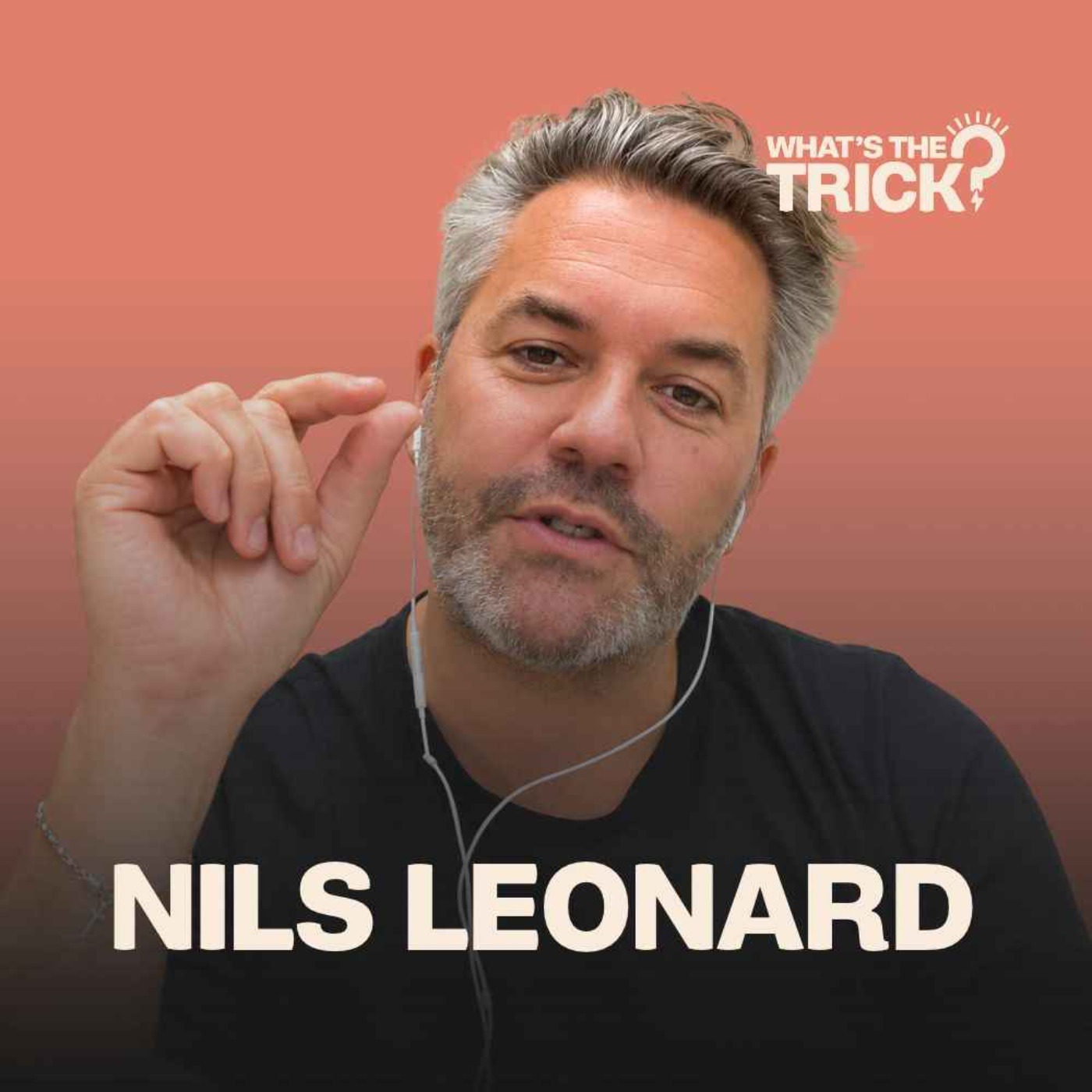
0:12Ben Hanlin: Welcome back to What's the Trick? I'm your host, Ben Hanlin, and today's guest is Al Barratt, the founder of Grenade. Now, Al went from selling gym supplements to creating the number one selling chocolate bar in the UK. how did he do that so you'll have all seen his grenade uh protein bars in they're in every single shop ever and uh a few years ago he they became so big that cadbury's or mondelez bought grenade and now they're valued over a billion dollars so i wanted to know all about that how he created all of these things how a chocolate bar is made etc and also he's the only guest we've had on where me and him have had a legal dispute and we had to get lawyers involved.
0:58Ben Hanlin: And I've not really spoken about this before, but we're going to talk about it with him in this episode. It's a really great one. You're going to enjoy it. This is What's the Trick with Alan Barrett. First of all, welcome to What's the Trick. And thank you for joining us. So what I'll do, let's just jump in. Let's take our minds back to about 2009, 2010. And you just sold the supplement distribution business. Tell me, if you can, where the idea came from in your head. Can you remember the moment you went, right, I'm going to create my own product, my own brand? Where did that start? It had gone on for about four years.
1:35So first I had the idea for Grenade back in 2006. And I was actually out running and I'd already developed a, not a magic pill. There's no such thing. Well, I used to say there's no, you know what I'm going to say here. There was no such thing as a magic pill. nowadays there kind of is because obviously we've got the glps and stuff so there is kind of a magic pill now so um and this is why people need to learn the art of diversification because nothing lasts forever but rolling back to 2006 there wasn't a magic pill but i'd come up with something that i thought would help with all the aspects that i know people struggle with when they're dieting so i'd worked in a gym for 10 years at that point so i spoke to a lot of people 90 % about weight loss so I've come up with um some capsules and then I was really stuck on how to make them stand out on the shelf because all of the current products on the market in my industry of the sports nutrition industry was all very scientific sounding complicated names difficult to remember so I wanted something simple that was memorable and um I'd given some of these capsules to a friend of mine who was training at the time for special forces which is I'm very close to the military as most people probably know and um he'd had some of these capsules he said they were fantastic it was like i'd swallowed a grenade so basically then got got the name grenade in my head did that literally hit you like a light bulb yeah the moment he used the word came out of his mouth did you go ding yeah it did and i thought as well there's no way that's people other people haven't trademarked this this product which actually they had in the us but they hadn't in europe so that was a whole separate story but ultimately that that was the idea of you know grenade the name.
3:12And then it was actually, how can I, you know, how can we get a bottle? I thought, wouldn't it be cool if it was in a grenade bottle, which no one did. So we had to find a tool maker to make us a tool to make a bottle to get. So talk about, you know, going back a lot of steps. We had to literally create everything from absolute scratch. And I'm an unqualified personal trainer, basically. So that's my skill set. So everything we didn't know, we had to go and find out and this was you know before chat pg tips i call it but you know definitely before you could
3:45Ben Hanlin: google a lot of this stuff you had to go and learn the hard way so you you've come up with this fat burning product and i think you've heard you talk this before you partnered with a scientist type person to create this product and you've got all that made and then you've got that in a bottle and then to sell this bottle were you going gym to gym door to door at this point so pretty much i've got good contacts within the sports nutrition industry because i had had a distribution business So I understood about importing products, which is mostly American made or European made into the UK. I knew I'd got a network of gyms, a network of distributors.
4:18So I knew a lot of people, but I also knew it probably wasn't going to fall into that network. So in a way, I did this the way a lot of entrepreneurs do is I did it backwards by actually not necessarily knowing what to do, but probably knowing what not to do. I knew what I didn't want to do with it I knew where I didn't want it to go I wanted this to be sold in all the places that you couldn't necessarily buy supplements you know which again is a whole other story and it's kind of how we segued into bars which of course is what's made Grenade like stratospheric but again I think just to have that the first that foothold with that weight loss product in that iconic Grenade bottle and just to go out there into the wild with no money and no skills, no talent, but just a work ethic, you know, really resonates with people.
5:08Ben Hanlin: Because your career, again, if you look at that, when I think of you, weirdly, I don't know why, the word noise springs to mind in a good way. Like when you started and everything you've done is you go, we'll create as much noise and as attention as possible. And by just the nature of gravity, stuff will happen. Was that very much your, when you had no, like you say, no money, you didn't have loads of knowledge and obviously had knowledge about because you'd sold but you didn't really have a team behind you you just went how noisy can this one person oh yeah so it was just me and my now ex-wife jules and i got divorced in 2018 but it was still great friends but yeah it was jules and i at the time you know four cats basically so that was it and we found our swim lanes and everything i'm terrible at which is quite a long list she was great at and vice versa so we we found our swim lanes there just to go out and and graft um and the noise part of it i mean a couple of years ago someone i think it might have been it was someone from kellogg's or mars or someone called us ankle biters yeah um and i think which he didn't really take as a compliment to be fair but i think i always say a lot of these big corporates have got a lot of budget and money to burn and i think cash is the killer of creativity i think if you fight you know if i gave you 20 million now to market a podcast you go and spend it yeah would you spend it well you know but if i gave you 500 quid you know that's different you've really got to think about it so just because you throw money at something doesn't make it disruptive or creative so we really had to beg borrow and steal and that's where you learn that the art of personality gets you a long way and i think just being able to borrow a tank and you know blag a space at a fitness expo that no one else wants because you're kind of tucked out the way which was perfect for us with a tank well let's talk about that because not everyone would have heard this story so you've Just throwing the phrase in.
6:56Ben Hanlin: First time we've had that on the show, we borrowed a tank. So talk me through that moment. You've got this fitness expo coming up at a trade show. You've got this new product and you're like, how do I get people to see me? And we've got no money. You've got no money. So yeah, what did you decide to do? Well, we just did the opposite of what everyone else did. So all of our competitors at the time, like if we take, for instance, Maxi Muscle, they'd just been bought by GSK for$162 million. so you're not going to out muscle gsk because they've got you know more money than god and then you know again in our fitness industry you've got muscle tech and they would go to shows and they give away a hundred thousand t-shirts so what you do go and give away 105 000 t-shirts you know it's just a it's just a road to nowhere so you i don't believe you should ever i love competition i think it's a great thing but you should never compete with someone where they're strong you know you don't have a you don't have a challenge you saying bolt to a race to you because you're 100 meters because you're not going to win.
7:50So there was no point trying to outspend the competition. We had to outthink and be more creative in the competition and work harder and make our marketing dollars work harder, so to speak.
8:02Ben Hanlin: Well, I mean, there's two things. Obviously, from the budget point of view, like you say, you had to be smarter and that's it. But the thing you've just said there, and I've heard you say this a few times throughout your career, is you never go toe-to-toe with the competitor. And it's funny, actually. Weirdly, in my career, when I tried to get on telly, there was Dynamo doing street magic. Yeah. If I'd have pitched a street magic show, there's no chance I'd have beaten him. Yeah, that makes sense. So I pitched a comedy-based show. You are better looking, though. That is. Thank you, Elk. But it's exactly that of, if I give them what they've already got, it's so comparable.
8:31You've got to create something new. And I think this is where the creativity comes in. So, yeah, we thought, look, we call Grenade. So we've already got this military theme. The whole sports nutrition market, certainly then, I mean, maybe not so much now, was kind of gimmicky anyway. So we just took it to like the next level, really, of, you know, making the bottle the name and the name was the bottle. So we just it was all about being memorable because when you create a business, certainly from scratch, all you can do is just you don't know what you don't know. and if you ever sat and thought about this and if you did know more than you know, you probably just wouldn't do it because you just think this is never going to work.
9:13So I think you did a lot of healthy amount of naivety with a startup and drawn your experiences and my experiences were, you know, I knew from training people that they didn't want to take lots of capsules a day, people forget to take them or they don't like taking capsules or they can't remember the name of the product. So I knew a lot of the problems that people had with product that were out there. So I wanted to solve all these problems and make them go away. And then when it came to doing body power, we just thought, look, everyone else is going to give away T-shirts. So hopefully we'll create a brand that people want to be part of.
9:49And we spent our last£500, I think we spent the last£12 on two T-shirts. But we had some T-shirts there available to buy. And we sold them. And it sounds really obvious now to sell T-shirts for£10. quid. But no one did that at shows before. They were all free because people just did what everyone else was doing. And you've probably heard the phrase many times before, if you look at the competition, you start to look like the competition. So we kind of just ignored everyone else and just did our own thing. We thought we've got a really good product. We really believe in it. We're back in the military.
10:23We were giving 10 % of our profits, not that we made much, but 10 % of our profits were going to Help for Heroes, which was a big charity at the time. So we knew we could do some good with it and military routes like i said earlier and we just wanted to help people with all the aspects of weight loss we knew they were struggling with from having worked in gyms for 10 years and i think if you can solve a problem people do or don't know necessarily they've got and you work hard and it's well branded and you do what you say you'll do when you say you'll do it these are just all the basics of just building a building a great business and and ultimately if this failed we were screwed so we were down to 27 quid at one point i mean you know we pretty which thought we were going to lose the house.
11:02But Jules and I had a conversation about that and we knew the worst thing was we'd lose a house. We could end up in a one-bedroom bed, sit somewhere, and we'd start again. And if you think that's the worst that can happen, but you're together and you've still got each other, fine. So you discuss the downside. That's the worst that can happen. Can we live with that? Yeah, let's give it our all. And I think a lot of people probably don't do that. They've got too much to lose with kids.
11:20Ben Hanlin: Well, also, a lot of people would be really bothered with how that would look, right, to the wider... People are so bothered about how they're perceived. Yeah, that idea of, oh, I've had to sell the car, I've sold the house, I'm living in a one-bed sit. To so many people. I've done that multiple times. The thought of publicly failing is such a barrier to a lot of people, don't you think? Yeah, absolutely. The thing is, because they see failure as the enemy. Yeah. And failure's your friend, provided you realise quickly. Like, if you're failing at something for 20 years, it's a problem. Yeah, something's gone wrong.
11:55The audience is telling you. And this is the skill of an entrepreneur. And we tried 40 plus ways to make our protein bars, 41 of which, were they failures? No, there were just 41 ways to make the bar I didn't want. So would people have given up earlier? Undoubtedly, a lot of people would have done that. But we were getting so close. It took two years. We were getting so close. We knew what we wanted. So that's the first thing. But then if there were a thousand variants that all failed and it took 10 years, at some point you've got to think, I'm wasting my time here. So you've got to be able to have conviction in what you're doing, but also the realisation you've got to be able to pivot and think, where's this going wrong here?
12:42So you've got to be very honest with yourself. It's tricky.
12:44Ben Hanlin: Well, you've alluded to the chocolate bars. Right, so this is what I want to get into because I've never spoken to anyone who's invented a chocolate bar, let alone one of the biggest… Not many people have. The biggest selling chocolate bar in the UK, right? So, carb killer. How do we go from these fat burners in a grenade-shaped tub to a carb killer chocolate bar? Can you talk us through? I can talk, Ben. Yeah. But talk us through, step by step, where did the idea come from? Did you know the name, the flavour, and what happens next? Because you're not a chocolate maker. You're not. No. So where do you go next?
13:17And also, I've got nothing against chocolate. I really like chocolate. Yeah. but I know you shouldn't be having it every day and lots of people do and you shouldn't be having it every day so it's it's a treat it's not food so you know that's one thing to uh to to clear up
13:31Ben Hanlin: because for years I've been saying you know sugar's the enemy um and and it's not it's just the fact that you know it's the enemy if it's in everything and it's in every meal you consume so the we we built what I would call what I would call actually a really nice lifestyle business with grenade this is kind of 2013 now we've had investment the business was valued about 35 million which again is incredible but you've also got to remember that we haven't had it we've never drawn a salary we've not had a single day off four years so we're pretty tired you know it's it's just absolutely relentless doing this and you know it it it's it's it's incredibly hard and we were getting broken into at the time because you know grenade was on paper again and reality was the perception was we're really punching above our weight with grenades so people thought we were a lot bigger than we were and we were getting our warehouse broken into it it broken into three times in three weeks like someone stealing product and we were sleeping in the warehouse and you know we just we couldn't afford to you know to to lose this uh this stock and again actually that was something that reputation as well i thought was potentially quite damaging.
14:40And also for someone who's well known in the fitness industry, I don't want someone breaking into my warehouse, stealing my stuff and selling it back to my customers. I'm just not putting up with that. So we were very, very tired at that point, but we'd had a good valuation on the business. We sold some shares in the business, hit the reset button and carry on. But I realized that we were everywhere that we could be. We were number one in Holland and Barrett and GNC, number one in tesco nutricenter we were and we were actually growing i thought in a in a declining market so to speak so we were two percent of the entire turnover for gnc if you remember gnc 60 stores in the uk um but we were growing and they weren't and it worried me that we were just we were going to be really pigeonholed and i always wanted ever since i worked in the gym i always wanted supplements to be for everybody not just people that went to the gym or who trained because when I first invented my supplement brand and I had a supplement distribution business, footballers really were just for elite, supplements were for elite athletes and footballers and whatever.
15:45And there's just not that many of them. So I wanted everyone to get the benefits of what we'd learned about supplements and nutrition over the years and opening it to a more wide stream amount of people. So we always said with Grenade, it's a hardcore product, but we always wanted a mass market following. a bit like Red Bull really. Red Bull's pretty hardcore, but it's got a mainstream following. So we wanted to pitch it like that. That was very much deliberate. And then I was driving home one day and I was driving past a cost cutter and you couldn't buy our stuff in there because, you know, the supplements.
16:21I drove past two or three petrol stations. You couldn't buy us in there. I drove past a couple of supermarkets that we weren't in. And I'd done a 40 minute commute home from uh from solely hull or coventry rather to um to stratford and i hadn't passed anywhere i could buy my product and i just thought if i can't buy my product on my drive home how could anyone else and i thought you know we need to be in these stores are we going to put 50 pound fat burners and pre-workouts into a lot of these stores no you know but what have we learned over the years We've learned, you know, protein's good, sugar's bad.
17:00We knew, again, we were quite expensive. We were very, very military themed. And I got people coming up to me at shows saying, I really love your product, but I can't take it. And when I asked why, and this is why I call it hand-to-hand combat. This is why as a founder, you've got to go out and talk to consumers face-to-face because they just tell you stuff whether you want them to or not, and you'll learn from it. And the two most common answers I got as to why people didn't buy our product were they couldn't afford it or because they weren't in the military. And I thought we can solve both of those.
17:32Because, again, if you think it's a grenade bottle and, again, you're only really actively marketable to the military, then, you know, it's very kind of male-orientated product. So we thought, okay, so we need to take what we've learned from three years of hard work, both in how to run a business and how to make product, and to tail it towards what we think people want. We've got to take all of that and put it in a product that we can put everywhere and people can afford. And we came up with protein bars. So we didn't invent protein bars, but we invented good ones. So then when we looked at the protein bar market, which I was very familiar with because of my distribution business, I'd sold everyone's protein bars.
18:07And I knew they didn't sell particularly well. but they didn't sell particularly well because nobody made a good one. And then no one made a good one because they didn't sell well.
18:15Ben Hanlin: So at some point you've got to break that cycle. Well, there's two ways of thinking about that, right? Because some people would go, well, protein bars don't sell because there's no demand. Yeah. And you looked at that. But why is there no demand? Well, there's two, there's potentially, I mean, you've proved that I would be wrong in this statement, but people would go, well, because people don't want protein bars. Whereas you looked at it and went, ah, there's an opportunity there. Because people were buying them, but they were buying them once. Right. so and as a as a brand it's easy to sell anything once right it's the repeat that matters repeat purchase matters so and it took the price factor out of it to a point because although we were still expensive next to a chocolate bar yeah um the you know we weren't necessarily expensive compared to a sandwich or a power something else you'd find in in those stores so you know to answer your question there were that they were you know we wanted to solve the price and availability issue and again there were there were 60 gncs in the uk nowadays there are zero but there were 10 000 petrol stations so all of a sudden we had all this white space ahead of us and we went from having nowhere to sell our product to to having everywhere to sell our product well we've jumped right which is good so can i say one more thing go on it's important to finish the answer to the question also we were doing shows and i was next to other sports nutrition brands with a tank and people were coming up to see us and they'd heard of us but hadn't heard of our competitors and we were doing shows and i i think actually we really helped the industry because we did help elevate the industry which is fine but then everyone wanted to be next to grenade at a show because they knew the tank was there and everyone like people would meet at the show at grenade because that everyone could find the tank.
19:55You wouldn't go and meet at, you know, Joe's supplement brand necessarily. They'd go, I'll meet you at the grenade booth, meet at the tank. Because they all wanted a picture anyway. This also, luckily for us, was 2010, 2011. So Facebook was out there, social media was just growing. It was just prior to Instagram and people had just started getting camera phones and everyone took a picture of that tank and uploaded it, which was really, really helpful because we had something that was very photographable, which a lot of booths just didn't. so that was important as well so we we can't take credit for the timing of that because that's lucky to have that timing but we did we did make the most out of it but i actually i said to one of my team this is going to sound really arrogant i've probably never said this before but i just said i don't want to be standing next to you know uh maximus at a show i want to be standing next to mars and monster and red bull because i just wanted to put our brand that we knew was good and memorable and a quality brand.
20:50I wanted it to stand with the very, very best of UK or global brands and not just be in some dusty supplement hall at the back of the NEC with a bunch of brands that no one had potentially heard of if you weren't in the fitness industry. And I mean that in the nicest possible way because this helped everyone. So the fact that we think we could compete on a global level was really important. So all these things just segued into creating bars and coming up with a bar that didn't exist, basically.
21:20Ben Hanlin: So you've done all that and you've gone, I've got it, we're going to do this. And you've all gone, yep, let's do it. What happens next? How do you, because you're not a chef or a cookcorer, how do you then get a bar made? Hello, it's Ben, and this is a very short commercial break because I want to tell you about Substack. And this week is big news because I've launched on Substack, which is a platform I've been keeping an eye on for a long time. I've been really excited about this. and we've finally done it. So if you're not familiar with Substack, it's a really amazing platform where you can follow your favourite creators and you get their weekly newsletters.
21:56Ben Hanlin: So here's what's going to happen. If you subscribe to my Substack, I'm going to email you each week with all of the best bits from this podcast. So it's going to have all of the key takeaways. So even if you don't catch every episode or you forget things or whatever, it's all going to be summed up there. And it's going to be the home of this podcast. so for just three pounds a month which is let's be honest less than a cup of coffee you're going to support this podcast you've heard me talk about this before i'm doing this all on my own it's a complete self-funded venture which i love but for three pound a month it will all go to support this pod and what you get for that three quid is you get to be part of our community where we can literally have dms and messages and we can talk about episodes together so it's a place that If you want to talk to other people who are enjoying the show, we can go there.
22:43Ben Hanlin: We can do a debrief. We can chat. And when it comes to future guests, you can help come up with the questions. There's also in the future, as I build this community, there's going to be bonus content. There might be extra episodes, bonus things from guests. We might also do other things as well. So I'm not going to kind of list all the other things. But apart from just the newsletter, you're going to get as well. You're going to get other thoughts from me. So it's going to be a real amazing creative space. it's so if you want to find that it's sub stack.com slash ben handling i'm sure all the links are going to be in all my uh bios and notes in this podcast etc so you'll be able to find it and you don't have to pay there's a free version if you just want to get involved but if you want to pay for three pound a month support the pod that would be incredible and also who knows where this can end up um anyway right those are my ramblings is what time is it is currently 11 o 'clock on a Thursday morning right now, I'm about to hop in my car and drive to Surrey, where I'm performing a 30 minute show for a corporate this evening.
23:40Ben Hanlin: And then after that, tomorrow morning on Friday, I'm driving to Eastbourne, where I am hosting an awards for Eastbourne Chamber of Commerce or whatever, or something like that, which is great. So that's kind of a snapshot into what I'm doing outside the pod at the moment. Lots of traveling, lots of corporates, which I love. Lots of awards do's. If you want to find out all about that side of my business, it's all benhandling.com. I love it. I love seeing all sorts of different crowds. And anyway, right, let's get back to Al Barrett here on What's the Trick? Well, so we spent two years finding out, well, we found out really where bars were currently made.
24:18There were only a couple of places in Europe, not necessarily big facilities, but who were making protein bars for everyone else. And then I approached them and said, I'd like to do this. And they actually wanted us to have almost like, if you remember Quest, Quest still sells in the US. You never really find them in Europe. But the biggest selling bar in the world at the time was called a Quest bar. And it was a very specific, high-protein, low-sugar, chewy bar that was just quite hard to eat. It wasn't my sort of thing. They sold a lot, but it wasn't for me. And I couldn't work out why people were buying them and how they were having a moment.
24:54And I just thought, I wouldn't want to eat that. So I just wanted to make something better than that. And actually, or just make something I would enjoy. So the suppliers at the time were offering us stuff that was very similar to Quest because Quest was doing well. But I didn't want something that everyone else had. And I thought, well, I don't want to eat that. So why would other people? So I've always trusted my own judgment as what I would like. And if you think, well, if I like this, why wouldn't other people? Again, maybe it's stupid or naive or arrogant.
25:22Ben Hanlin: Well, actually, no, because actually, when you think about creating anything for an audience, everyone who's... You don't like it. Well, everyone is saying with comedy, with music, with anything, you're trying to guess what's the audience going to like. Yeah. Whereas actually the common, the focal point or the compass that keeps you straight throughout your entire career is your taste, isn't it? Exactly. Because a comedian wouldn't tell jokes they didn't think were funny. Exactly. Just because it wouldn't work. Well, you can do and that's where you get lost. And that's where you, whereas if you have, if you want a common through thread in everything you do, you have to be the North Star.
25:55But I mean, and say, you know, comedy, comedy is just going to be an extension of the comedian. And a brand is an extension of the founder. So if, I mean, if you take Red Bull with, they like Formula One racing, the founders did. So their marketing was Formula One because that's what they wanted to do.
26:12Ben Hanlin: So you were customer number one. You thought, what's the bar I'm going to make? So you're back and forth with this factory. So from April 2013 to about April 2015, we go backwards and forwards. and I think they were getting pretty fed up with us. But again, Grenade was still doing well with our sports nutrition range. But, and when he said, what's the next step? So I'm going backwards and forwards to the factory. I said to the team, okay, right from now, really, we're not a supplement brand anymore. We're going to try and be, we're going to become, we're going to pivot into being a food brand.
26:44And no one ever wants to sell the founder or the CEO that you might be wrong. I'm sure people were thinking it, but as always, you know we got the we got the the backing of the team and then after two years of to-ing and fro-ing we've got a bar that actually i thought was really really great and very moorish edible ticked all the boxes and um presented it to our board at the time who absolutely hated it so and then we were a bit shocked because they you know they'd invested in a supplement brand and i was saying what you've just invested in we no longer want to be i don't want to change and do something else and as an investor that's just a they hate that where you told them you're going down one route because they don't understand the art of being able to to pivot i say art you know
27:30Ben Hanlin: perhaps as a distraction wouldn't that wouldn't a logical thing be there at that point most people go okay well let's sell this business that's done that is the supplement and then we'll start a start a fresh one yeah but and actually if i could maybe that's what i should have done but The thing is as well, we were putting, Grenade was trusted at this point. Yes, you've got the brand. Exactly. We're making really great pre-workouts, vitamins, weight loss products. And it was just an extension of that brand. But yeah, I mean, again, if we had started another company fresh from Grenade, you're almost back to square one in starting in a game with the brand.
28:12But yeah, the board absolutely hated it.
28:14Ben Hanlin: So you spent two years, which is a long time. And I'd imagine the vibe I'm getting is you like stuff done quick, I'd have thought. Yeah, I'm really impatient. Yeah, so two years to get this first time for me. Yeah. And then they've said no. And then you, I mean, we know, spoiler alert, you've done it. Oh, yeah. So what do you do when you board say no? As an entrepreneur, you just do it anyway. So to be fair, they didn't want to do it. There was actually, there was one, I mean, our team wanted to do it. but I got quite pissy in the board meeting to be honest and which I do tend to do because I don't I also I don't like I don't like being told what to do anyway yeah so I do my very best to be sort of play nicely but um you know these the guys and they're a great bunch of guys actually our board they were from Grove Point Capital but they were very uh very serious investors all ex-investec I got a lot of time and respect for them but um but they didn't know the sports industry and if that one of them who would normally be probably the least friendly he was the guy that said do you know what Ali said we've backed you as well as the business and trust your gut your gut feeling your gut instinct actually Leon messaged me a couple of weeks I speak to him quite regularly um and he said just just trust your gut and there were but and the way I protected the downside for the business and the board was I said if these don't I said it kind of quite flippantly so I'm would have done this but i just said if these don't sell we've had 50 000 bars i wanted to water that was the minimum the moq and i said if these don't sell i'll buy them myself so they were like okay then so there was no risk to them so and we sold them in two hours go on yeah so i yeah we just we literally said gnc bought about 25 i think tropicana bought about 25 um couple of phone calls to distributors i only had to sell literally um and these again that we know we called it carb killer and it was very gray grungy packaging which grenade was quite known for quite military packaging which we quickly pivoted away from to realize that we couldn't if we wanted to be on the confectionery aisle we couldn't get away with our sport nutrition military style packaging so we had to learn quickly move away from that so every every iteration of print we started to add color into the into the packaging but yeah we called it carb killer because it was a it was a a zero carb bar.
30:35Calling it a zero carb bar is a claim. You're not allowed to make claims in the food industry. So I just called it carb killer because carb killer makes no sense whatsoever because you can't kill carbs. So carb killer is not a claim. It's a bit like with our weight loss products, you can't call something a fat burner. So we just said declare war on fat. It told everyone what it was. And again, declaring war on fat makes no sense. So it's a bit like the Red Bull gives you wings. It doesn't give you wings. They're not allowed to say it gives you energy. So you just, again, it's just being creative.
31:03Ben Hanlin: Well, so just quickly on that, I'm going to pick up on the Red Bull thing. So to get to that point. You don't know where to go now, do you? No, it's just, it's great. It's great because I was driving here today going, how the hell do you actually come up with a choice? So you've explained it. I've never heard you explain it. You went to a factory, back and forth, done this thing. So to get to that 50 ,000 bars, how much, do you remember me asking, how much money would somebody have had to sink in for the testing, the ordering, to get these bars landed? It probably would have been around the magnitude of probably about 100 grand, something like that.
31:37Because there's MOQs for packaging and boxes. You order one run. You also order the second backup run, probably the third run. So the MOQ, which is the minimum ordering quantity, at the time was, say, 50 ,000 bars. I mean, now, you know, they're in the millions for us, but tens of millions. But if they sell out, and let's say there was a three-month lead time, you know, and they sell out. and you don't know when they're going to sell out, it might take you a year to sell them. They've got a year shelf life. But yeah, no one expected to sell them in two hours. And you think, okay, when's my next order coming?
32:07My next order's not coming for three months. But you'll have to pre-book all of that because again, they'll have to pre-book all the ingredients because a lot of the ingredients were specific to us. We came up with the idea when, what I'm saying about the other bars that I didn't enjoy, the Quest bars, everything, we kept the high protein, low sugar, but we changed everything else. So because I wanted to basically sit alongside the chocolate industry, we thought rather than have the pie sugar chocolate, we'll have low sugar chocolate. So we used a specific, and we still do, use a specific high-protein, low-sugar chocolate.
32:42It's only made by one manufacturer in the world, which has got maltitol in it rather than sugar. And it's made by Barry Callibout in Belgium, and it's Belgian chocolate, but it's just got no sugar in it. So we specifically use that to coat our bars, which then makes them a luxury item. So there's VAT involved because it becomes, so it's quite complicated and it drives the cost up.
33:00Ben Hanlin: And you've mentioned Red Bull a few times, but going back to then when you were starting out, I think anybody starting anything draws from inspiration from other places. Do you remember at the time, which are the brands or non-brands or things you were drawing inspiration on? Absolutely. I mean, a lot was, any brand really that was everywhere, well known, I mean, yeah, aim low, well known. most importantly as a distributor i sold thousands of products and let's if i was a distributor for say 20 brands each brand might have had 10 50 100 or a thousand products you just can't hold all those in stock and the vast majority don't sell so i became really good at cherry picking what people wanted out of each individual brand i had to do that because at the time nobody wanted supplements so if i went into a gym to sell supplements even the gym owner wasn't interested let alone he's if the gym owner doesn't want them he's not going to he's not going to sell them on your behalf because you know they're not going to buy supplements and people in the gym say what are they and they go yeah they're rubbish you don't want them so um i the only way i could get supplements into gyms was putting them in on sale or return see if they sold i got paid and if and if they didn't i didn't so you quickly learn what sells and what doesn't sell because you're tying your money up and you know it's a fast way to go bust so to answer your question i admired any brand that just had one product because like you know and i know pepsi have got more than one product but ultimately it's different variants of pepsi but pepsi coca-cola red bull so you just think as as a brand why do we need a thousand products why can't i just have one because the customer knows if i want what if i want that i'm gonna get one thing yeah so and ultimately we only ever had the plan to just have a weight loss product that was it we were never going to have anything other than grenade for two years we didn't have anything other than grenade and it was only because people started asking us what else can you make you know we love this i bought 10 of them um and and the repeat sales were off the charts like 80 repeat purchase rates i'm not sure many brands would have an 80 unless it's maybe apple i'm not sure we'd have a repeat purchase rate that high nowadays so and then you think actually i wonder what else we can make and then you start thinking well actually these pre-workouts aren't they good i could probably make a better one so again we came up with 50 cal and put it in the ammo box and made that stand out and that did well and then we come up with a vitamin called ration pack and again did something different with vitamins and they weren't big markets but we had great fun disrupting them and i've learned really from there as well you don't have i think people think they've got to come up with something from scratch and actually you don't you just have to look at an industry or a product or a service or a brand and just think, people like that.
35:36I wonder if I could make a better one. Yeah.
35:39Ben Hanlin: And it's just that simple. I like simplicity. And it's almost not about being the first, is it? And not trying to convince people. You weren't trying to convince people that protein bars are good. That had already been done. Yeah, it had been done, but didn't have a repeat purchase rate exactly. So, and I thought, and no one really had pitched them against chocolate bars. And I hadn't realised at the time, but a lot of people were falling away from chocolate because they were eating too much of it and knew they shouldn't be eating as much. And they were looking for an alternative. And I'm not even sure they realised they were looking for an alternative, but it just wasn't there because no one else had done it.
36:11Because who would take on the chocolate industry?
36:13Ben Hanlin: There'd be no disruption in chocolate until we came along. So this is the bit I want to get into now. Because actually, it's probably spawned a thousand brands, what we've done. How do you mean? Because we've proven that you can outsell dairy milk. So I think now everyone that's sat at home with an idea for a bar is probably going to go and do it. So like a Huel now have got a bar. Yeah, and again, they'll go, I mean, someone asked me yesterday, they just said, can you do vegan bars? I went, no, that's nice. We've tried that. We couldn't sell. You know, go and do a vegan bar. So, you know, people just do bars just specifically for dogs.
36:45Ben Hanlin: Yeah, yeah, yeah. So I think, yeah, it's actually, everyone's done well out of Grenade, even though they haven't necessarily realised they've done well out of Grenade. So you've got this bar now that you've sold the first 50 ,000, but that still hasn't solved your problem, which is you've sold that to your existing customer, but you haven't actually got into the petrol station. So how do you, how does somebody go, okay, we've got 50 ,000 there over there. How are we going to get these into a petrol station? So I'll tell you if we're really, we've missed a step out. I'll tell you if we're really, in fact, I've missed two steps out.
37:12At the time, Mars had seen the same thing that we'd seen really. So Mars had started to do a Mars protein bar.
37:19Ben Hanlin: Yes. Which actually, I hate it, just wasn't very good. Okay. But what they did for us and for the industry, and you can still get those, they just don't particularly sell. But... The problem we had was how do you get consumers to go from spending 50p on a chocolate bar to spending£2.50 because it's a leap? And that was the other step that we missed out, which is Tesco. So Tesco were very helpful with us. And the guy who was one of our buyers at Tesco is now the CEO, Ashwin. So I've known Ashwin forever. And he happened to train in the same gym as one of our athletes at the time. So again, we were just taking all this information and learning from the market and thinking, you know, where can we put this?
37:59because again, you know, we want to get these bars in Tesco. They've got 30 % of the British grocery market. But where do they go? You know, you don't want them necessarily in, you don't want them at the back of the store. You don't want them in the health bar. Because no one knows they're there. You don't really want them in the health hall where everyone else is. I want them at the front of store. And this was around the time, and I think we partly encouraged this, when they stopped selling chocolates at the front of store because the sugar tax came in. So it was actually really good timing for them.
38:26and they didn't think that they said, we love what you're doing. We get it. We'll help you. We'll put them at the front of store because frankly, they've got nothing else that could go at the front of store because there was this traffic light system that nothing really complied, but we did. So they were really stuck thinking, well, do we put fruit there?
38:42Ben Hanlin: Do we put nuts there? But even to get that meeting, that was because you knew a friend in the gym that could set up this meeting. You showed them this bar. You said it's selling in Holland and Barron. It's not selling in your stores and they gave you a chance. Yeah, well, we were already supplying Tesco with our weight loss product with Thermodetton ATSA. So we had a relationship with Tesco. And again, it was going well, but it was a considered purchase. You weren't doing shopping at Tesco. You walk past a weight loss product that's 50, you can think, oh, I'll chuck one of those in. So, you know, the products we were making prior to bars were products that were generally sold with a bit of assistance.
39:18So there isn't, and you got that in GNC, Holland and Barrow Nutri-Center. You don't get it in a petrol station. someone's not going to go can i help you when you're looking at the aisles so uh in gnc's in holland and barrett's that was really helpful for us they want to lose weight oh yeah you should try this this is how it works so um we had to get away from that that sort of secondary selling but it was really helpful with with sports nutrition um but actually a friend i spoke to a friend of mine yesterday in the us and he's just pulled out of a big us retailer with the exception of just bars because you're actually the products he's selling longevity products and And he just said, he said, they're too complicated for consumers to understand.
39:54It needs someone selling it on your behalf. So whereas bars, people take a risk on three quid. So you've got Tesco that are going to give us a chance, but are concerned about how do we get consumers to spend 250. And I said, I just think they'll do it. I'd do it. I was sick of going to petrol stations or supermarkets and wanted something that was better for me. And I pause when I say the word healthy, but I definitely say healthier. Yeah. So, you know, they're not as good for you as having a, you know, a dry chicken salad, but not everybody wants a dry chicken salad. I want to stop people eating a Pasadena Red Bull and a Mars bar and get some protein in that they'll enjoy and they'll come back for and stop them having something else.
40:34and then the second bit was mars so mars then got people their mars bars the protein bars were two two quid and they helped bridge that gap because everyone went from a mars bar to a mars protein bar and they paid the difference we went again so we were an extra 50p but we were also better we had more protein and the issue that mars had with that bar which i still think is probably the case um is the fact that it wasn't a very good protein bar and it also wasn't as good as a mars bar they fell into no man's land so for me if i want a chocolate bar lovely i'll just eat a mars bar if i want a protein bar i'll have one of ours but i didn't want something that was kind of
41:10Ben Hanlin: half pregnant if that makes sense and with that then to get into the petrol stations was that just hustle was that yeah that was a lot of hustle um i've actually got some really good relationships in petrol stations since but that was uh almost a okay where can we put this product where people are, where they'll spend, you know, two quid. And like I said, we'd mentioned GNC. They had 60 stores and declining. And petrol stations, there were 10 ,000. So it just felt like, and who doesn't go into a petrol station? I mean, nowadays, it's extremely rare that I say to someone, you know, I've heard of Grenada, it comes up, and they genuinely have not seen us somewhere.
41:51I dread that. Like, where do you shop? Because I say, have you ever been into a shop in the UK? Ever. and if they go yeah go we're in it like any shop we're in it but uh the the idea with the petrol stations was i i knew from a friend who owned a petrol station again learning from experience and people i knew uh that they don't make any money on fuel i actually with everything going at the moment with fuel i find that really hard to believe but they will tell you they make very little money on fuel so the money in the shop is that's that's really when i make the money for like an independent owner and fuel sales in the uk are very very flat especially diesel it's flat all year because it keeps the country running petrol is fairly flat but it spikes in the summer because people spend a bit when they go on holiday so generally fuel sales we looked at the chart are just fairly flat bit of a blip and then it goes on um and the average spend in a shop was probably about a fiver people go in chocolate bar coffee newspaper magazine something like about a fiver we come along and we trial it in our friend's petrol station on the a14 and we spike his shop sales to 20 quid really which is unheard of so they've got this graph that's just like flat flat flat bit of a blit flat flat doink and then comes down as they sell out so i bet you were loving that day yeah well also i i went i i gonna call it hand-hand combat as we started to get into the petrol stations, I'd go and see the owner and they, and again, we were supplying Rontech and Eurogarages.
43:25And some of them have got, you know, one petrol station, some have got 500, but we had a list of all the petrol stations in the UK and I'd go and see them. And again, I'd pick on Mars and I'd go, you know, how many, how many Mars bars do you sell a week? Oh, you know, we sell 10. Okay. How much do you make on a Mars bar? 13p. I say, okay, if you imagine if you could sell that instead of a mars bar you'll make a pound on that um so you make 10 times the margin and we also proved they'd sell 10 times the amount so rather than make one pound 30 on 10 mars bars they'd make 130 quid selling 100 grenade bars so you're sat here today with a company
44:00Ben Hanlin: valued over a billion dollars and did it generally start from you obviously you're in the tesco stuff you were going to you walk into a petrol station go who's the owner can i have a chat with you Yeah, basically. And again, you can go to this thing. And that became very ineffective. So then you start going to the shows where there's conventions of petrol station and you can meet them. But they all talk. And all you've got to do is prove the concept in one and then 10 and then 50. And it's a question I get asked a lot when people approach me with their brand or investment or how to get into supermarkets.
44:31And I'll say to someone, okay, who do you want? Which supermarket do you want? And then also Tesco. I go, okay, how many Tescos do you want? All of them. You do, but not on day one. You want one. Because if you put in all the Tescos and it doesn't sell, what do you do? You've got nowhere to go. You're just screwed. So I like the proof of concept. And going to Rontech and Rontech sort of backing us. Also, our first investors had a 1 % share of Rontech, which helped us get an introduction to Gilles Ronson, who, again, I got on well with, who just kind of liked me because he was an entrepreneur. and actually I've got a brilliant story with him because he's such a phenomenal entrepreneur and he's so OCD about his petrol stations.
45:14Founders are OCD about the brands and the businesses, which you just have to be. And he's so OCD about his petrol stations. He used to go around them in a car on a Saturday and visit his petrol stations. He turned up at one one day and he was just discovered that there was no fuel. The fuel was low, it was dirty. He wasn't happy with the condition of his petrol station. So he walks in, he sacks everyone on the spot. The staff all leave and then they have to send a team to come in and the petrol station is closed and then they have to send, and you can imagine like this guy standing and he's literally sacked everyone.
45:41And then his team turn up with a replacement team. Oh, you've done it again. Well, they'd never done this before because when the team turned up, it wasn't his petrol station. So he'd gone to the wrong one. He didn't own it. Sacked everyone. Imagine being sacked by someone who doesn't. I mean, just like, okay, but imagine having the power to go and literally sack people who don't work for you. So sacked everyone. And they said, oh yeah, it's not yours. yours is down the road to get her back again but i mean it's just just brilliant but my point being as well because you know i couldn't have given a monkeys about petrol stations but he did yeah and again and moshing that owns euro garages uh did as well and again it for me protein bars are sexy for them petrol stations are sexy if you can have a conversation with another founder and and again the the problem they've got they just realized they were getting was the fact they were selling a lot of pasties and Red Bull, let's say.
46:34And I said, I've got something that I think will outsell pasties and Red Bull. And he went, have you got any idea how many pasties and Red Bull we sell? I went, no, but I just think we can sell them all. I mean, it was just a stupid answer,
46:45Ben Hanlin: but I was right. So here's the other thing I've heard, and I know you're friends with Richard Branson and we'll talk about him in a minute, but I've heard him tell this story that he really loved Virgin Cola that they created. That's right. Yeah. Oh, don't get him started on this. Oh, really? So many conversations about this. You don't have it. So he, and he said, and he said it many times, he said that basically he got muscled out by the big boys apparently. Was it Coca-Cola and Pepsi? Did not let a newbie come onto his turf. So I don't know if you're allowed to, but when you were coming up and sales, and these other companies aren't mugs, they're not idiots.
47:19Ben Hanlin: They're starting to see you outselling. Was there anything that, any muscle applied to try and stop this happening? Anything underhand? Not underhand. I just didn't know if it's hard for them to break into the new market. It's going on at the moment with Newtonic. Is it? So I'm an investor in Newtonic. And it will have to come back to that. Well, actually, it is what competitors are doing to Newtonic, actually. We know that people are going in and turning the cans around. So a lot of the big boys, you know, the Cokes, the Red Bulls, the Pepsi's, they've got people, they've got store teams that go around.
47:55Yeah, the reps that go around. Now, at Grenade's height, before we partnered with Cadbury, we had one guy on the road, Dave Manning. So Dave was on the road. And again, you just cover as much territory as you can cover. Even that's bananas that you're going to service all these independent little places in one blood. Well, Cadbury have got 200.
48:17Ben Hanlin: Yeah. So even 200 in the UK, it's difficult to get the coverage. I forget the number that Coke and Red Bull have, but I know that if we could go and we could, if one of our guys could visit a store once a week, they've got someone that could visit it once a day. Yeah. And I also know they'll visit some stores three times a day. So that's what you're up against. So a lot of the time, if you're going into a Tesco and all the Coca-Cola is facing the correct way, that's the Coke guys doing that. That's not the person that puts it on the shelf. because the person that puts it on the shelf doesn't give a monkey's.
48:54You'll do well if they actually rotate the product at all. But to get it all lined up nicely, and again, how we like to see a grenade positioned and all the boxes full, nicely opened, facing forwards, not mixed. Even now, if I go into a store and the bars are mixed, I have to mix them and I have to make it look nice. Because again, you don't want it to look like the last turkey in the shop. If somebody's shopping, that presentation is important. so we've definitely had competitors in the past just out muscle us in in that capacity which you know you know it's it's it's perfectly fine you know they'll they might go and hide products and whatever i'm not sure but again like you know they can't keep doing that across the whole country because you do you do clock it and i think now and james smith's brilliant at doing this so james He's just gone out to his following and just said, if you go into a store and you see cans turned around, can you turn it back the right way?
49:50Take a picture, share it, and I'll send you some free products. So, again, if you then can turn all of your consumers into unpaid employees, it's absolute genius. And that's the key. Coke can't do that. I don't think Red Bull. I don't think many big corporates can do that. They've got the power to. Even Cadbury is probably one of the nation's favorite brands. I don't think could empower a million people to go out and make it look nicer on shelf because what's in it for them? Whereas I think because who owns Cadbury or who owns Coke or Red Bull, those consumers are too far from the sun. They're too far from the founder.
50:28Whereas if you look at me or a James Smith, then they'll do it for me or they'll do it for James.
50:35Ben Hanlin: So I think that's a power that a founder has that the corporates just don't have. can we talk about trademarks yeah we can talk about trademarks I know a bit about trademarks so so you got any Ben so well I do now yeah so you're welcome just to bring people up to speed so and this and I'm going to say this absolutely with love and this is a great thing that um a couple years ago I started a company called pull the pin which is a digital marketing agency and at the time did someone else own the trademark by any chance at the time you had a podcast called pull the pin and what happened was we then got this letter from the monderleys who you're now owned by uh lawyers saying he's essentially ceasing this issue you're in trademark infringement and the reason being as a digital marketing agency we were offering to our customers the ability to create podcasts so yeah we weren't trying to build a podcast called pull the pin but we clearly hadn't and this is us being green and you missed it yeah we hadn't done our research properly really and we hadn't done that um but what happened next was so in theory it could have gotten quite quickly quite serious we'd have had to rebrand and all this stuff but i know i knew you at this point we'd done an event together we met and you're local as well we're both in sully hall at the time so you so what i think is really interesting here is i remember literally where i was i was in my mom and dad's house uh i got a phone call from you and you said did your heart sink when you got that letter from mondelis well there's nothing worse than getting we had a lie over the years your heart just think oh it's just grief well it sounds so official when it's a lawyer it's money company and it's cease and desist and we own this.
52:06Ben Hanlin: And it also, it does feel like David and Goliath. Which we were using as well, to be fair. So we weren't sitting on the name. We were using the name as well. Yeah, yeah, yeah. And you had this podcast. And so, but why I wanted to bring it up was two things really. First, but first of all, you called me up and went, look, hey, let's just have a conversation. And we had a conversation and we talked it through. What do you want to do? How do you want to use it? Let me help you. And almost within one conversation, you went, look, if you could take the word podcast off your website and be a digital marketing agency that doesn't do podcasts and you don't create a podcast, we'll move on.
52:37Ben Hanlin: And we got there quite quickly. So first of all, thank you for that. Oh, you're welcome. What is it really telling about you as a character there, I think? Well, they say to treat people how you want to be treated yourself. And I think over the years, no one had ever done that with me. So trademarks are tricky. I think at the peak grenade, we had 202 trademarks, pending patents, design marks, so a lot. and the secret is you use it or lose it so you have to keep them active keep them trading and of course keep them and because they're valuable and this is really where all the money we made grenade all wins on protecting it for future value so um and you know we'd we fell foul of one once for grenade gloves they weren't very helpful um when we wanted to do something with clothing and i think yeah the conversation that we had um i'd never had so i'd been in your position and just and again we'd done an event together and again you're local and i just i like helping and working with nice people and it's not in my nature to be difficult because you'd always been you'd always been friendly and helpful with me so why be difficult if you don't have to be difficult i find it really frustrating actually because nowadays even um you know where i am currently a lot of people's default position is just to be difficult life's hard enough so i thought and And again, I knew that you'd taken a big risk to do what you were doing.
54:01And again, you've got family and kids and, you know, this is work and it's important. So why can't we find a way, you know, and we had to protect the grenade elements that Mondelez, you know, and Cadbury had come in and paid for. We had to protect that. But I quickly got the gist that everything you wanted to do as well, we didn't want to do. So we didn't want to stop you doing it. So as long as we were covered with the podcast, yeah, that was absolutely fine. and say genuinely if I can help someone I'll help them but there's a saying that my nan used to have as well which was if you want something doing ask a busy person and because you I was flat out at the time running a business and and again we were just getting towards this billion dollar valuation and I hate anything to do with trademarks and stuff anyway just because I find it boring our trademark lawyer Lucy's amazing she likes she loves it but that's that's what that's what floats her boat so I just want to pass it on to her but I think we actually did do it through Lucy and said can we just do this this and this it's probably lucy walkie dealt with actually and she's just lovely yeah and um and again it's not an age to be difficult and so i want to clear my desk and just think oh we can solve that i can solve that i can solve that there's it's nice as a ceo to actually have problems that you can't solve and that was just something we could have solved if i hadn't have known you i genuinely wouldn't have done it because there'd have been
55:14Ben Hanlin: no reason to do it yeah yeah but why be difficult with someone that you already you already know And speaking of trademarks, I did hear that once you, in the early days, you spent almost all your savings on an American trademark. Yeah, we did do that. And I think this, what genuinely. I know how important it is. This is what it taught me, that experience. It's like, you know, when you make all these little mistakes and you learn. I've learned since then, oh, the first thing you should do is look at your trademark before you start. And it seems like you're not obsessed, but it seems like it's a big thing for you.
55:43It's because, again, the industry that I know, which is sports nutrition, is very, very, very copycat. But I think I've learned since then that every industry is copycat. And you've only got to look at the car industry and you'll get other manufacturers pop up and go, that looks a lot like that. I don't know how to get away with it. And there are certain retailers that are known for it as well. But business is pretty cutthroat. So any way you can protect your brand, I call it a moat. If you can build a moat around your brand,
56:17Ben Hanlin: the deeper and wider the moat, the safer the fortress is. And it's the thing that a lot of people listening to this might be creative or inspired to start something and get going, but that foundation underneath behind the scenes. So, for example, this podcast didn't launch until I got the trademark, which I wouldn't have done unless we'd have heard that concept. Does that mean I kind of half own the podcast-ish? You think you own enough out, to be honest. Can I have the podcast? I'm really glad you did. I'm really glad it was helpful. It is helpful. Because also, you could probably sum it all up, couldn't you?
56:50But just don't be a dick. Yes. So many people love being a dick. And I can be. Trust me, I can be a massive dick. But it's not my default position. I don't wake up in the morning and I'll be as difficult as possible today. Conscious to everyone.
57:04Ben Hanlin: No. Conscious to pop you, Lee. No. Well, let's talk about, if we can, let's go on a different journey to Necker Island. Have you been? Not this week. No. But you have. And so first of all, just kind of, if you don't mind, transport, you go to Necker Island. I suppose the interesting question I had was, when you get there, maybe for the first time, and you're with all these people and you're with Branson, all these, I'm guessing other billionaires, etc. And you're, this was a few, 10 years ago, maybe your first time. Yeah, it was the first time I went, yeah. Do you think, I'm a lad from Birmingham that used to go around selling supplements in a gym.
57:41Ben Hanlin: Constantly. And I'm now on Necker Island. How do you deal with that? Do you go in there with a game plan or I'm just going to be? I'm just me, honestly. I know you don't. And honestly, it hasn't sunk in and it probably never will sink in. And I'm not one of these people who, a lot of people I know think they don't deserve to be places. And in fact, he probably wouldn't mind me saying it, but Luke is one of the founders of Newtonic. When we were, he came out to NECA with him and James last month and I'd invited them out. that actually had an invite to go to a different event, but I invited them to something called Strive, which was separate from what they'd already been invited to.
58:22And I explained the difference between the two events. And we basically just tagged onto the Branson family holiday is what happened. And it was a bit less businessy. There's quite a few business events on NECA, which are great. I've been to loads of them. But also sometimes as a business owner, you don't want a business event. You want something that's a bit more relaxed.
58:39Ben Hanlin: and um and luke said i think words to the effect of you know i don't know how i deserve to be here he was trying to process how he deserved it or how he got there because i remember saying you absolutely deserve to be here you know no one gets there by accident they just don't no one kind of wakes up one day there's an invite to necker and they're there you have to be moving in the right circles have some i don't think i'm successful but you have to be doing something i mean aside from fact it's a big commitment of time and money to go as well so you've got to be in a position where um you know you can afford to to um maximize the opportunity and and you've spent some time with him has there been anything over the years that when you look back was a light bulb moment for you that he said in passing or in conversation i mean there's there's lots the First time I went to NECA 10 years ago, I was standing on, Richard let me have his room.
59:37And he moved out, don't worry. And he was pointing at various islands around and he went, oh, that's Eustatia and that's Mosquito Island. And the owner of Eustatia is Larry Page, who owns Google. So, you know, you're Richard, who's pretty successful. And I said, how does it feel like to get there? What's it feel like to actually finally get there? And he went, I don't know where there is. and I said what do you mean he went my neighbor owns google yeah you know and I just thought oh fuck yeah um so I realized then there's always someone who's got a bigger brain and a faster plane so you success is careful so I learned from there never compare yourself to people who've got more than you only ever compare yourself to people who've got less so I'll try and make a point I only follow people on socials that I know and I do I'll try and make a point of just following people that again I where they've got less than I have I think that's quite otherwise if you're always looking at people who've got more than you you're never going to be um happy one of the things about richard and actually now i i and he did actually we were sat in india i'd never actually called richard a friend he was the first person because i know he knows a lot of people but he was the first person to send me he tried to buy grenade years ago um so and didn't get it and i knew him before that and and um we we even we improved the relationship after that and he probably emails me and I emailed him.
1:00:55And he was one of the first people to send me an email when we did the grenade deal back in 2021 to congratulate me on creating such a valuable business. The title of the email actually was the one that got away because he'd missed out on it, which again was part of my talk. I was asked to do a talk last month on NECA, so it was quite cool doing a talk and winding Richard up about all the opportunities he'd missed out on. But you know, Richard and Virgin and that network have actually been a big part of the grenade story in all sorts of different ways over the years. and um he yeah again he's incredibly humble but he's one of these we were sat in india last year and i looked at an opportunity with him which i've signed annd about so i can't i can't talk about but we looked at an opportunity and he actually said oh you know you're a friend i'd love to do this with you and that was actually really nice because i thought wow for you know to sit there and richard say just that we had just a private dinner and um and yeah for richard to say to me, oh, we should do this and you're a friend.
1:01:48It was incredible, really. But aside from that, they say, don't they, don't meet your idols? And I know a lot of people listening to various ages. I mean, my niece and nephew just met Richard last month and he went to school and he had to do a biography on someone. And he did two. He did one on me and one on Richard Branson. But actually, people in the class had heard of me and Grenade, but they hadn't heard of Richard because it's a different generation. But their parents have. I said, well i'm pretty sure your teacher's heard of richard um so he did that which i thought was really sweet but from the first moment i met richard he's got this incredible energy about him
1:02:25Ben Hanlin: well we're gonna i've been told we've got uh about 10 minutes left so i'm gonna zip through i'm gonna go to fast fire questions then al i'm rubbish i'll do my best well fastish let's start with i'll tell you what so here's one for you over the last 20 years if you could have created any other brand or any other product that exists, which one would you have gone? That would have been one I'd have had. Can I go back a bit more than 20 years? Sure. No, probably falls within. I think I would have done Facebook and Amazon, probably. Does that fall within? Fine. I'm not going to ask why. But yeah, fall within the last 20 years.
1:02:58That would have been a good one.
1:03:00Ben Hanlin: Fast five. Let's start with my Highlander question. Do you remember the film Highlander? I do, but I've not seen it for years. I'm not convinced I've seen it all the way through. Which I know is criminal. In that film, immortals kill other immortals. but when they kill another person, they steal all of their knowledge and expertise. So if you could steal, dead or alive, anyone's expertise or knowledge, who would it be? Oh, it's probably a couple, actually. Some of the characteristics, I'd love to absorb some of Richard's characteristics. I know it's probably an obvious one, but yeah, Richard's been in business 50 years.
1:03:31So what he doesn't know isn't worth knowing. So yeah, I always try and learn a lot from Richard. And I think a contemporary version, although we did just say he's a contemporary Jeremy Clarkson, off camera yeah i i could learn a lot from james smith yeah you really rate him right james yeah he's a marketing genius and just a super nice guy as well which is important very quickly i know
1:03:51Ben Hanlin: it's supposed to be quick fire but you mentioned something off camera which i haven't i'm gonna ask you no email yeah so i said to richard a couple of years ago um what success look for like look like for you now i just said no email so i've been trying to have no email ever since and and And actually, James is particularly good at this, not with the email, but James Smith hasn't answered his phone for like seven years. There's only two people. I couldn't ring him now. He won't go through. He's only two people that can ring him, which is his fiancée, Taya, and Luke, his manager. And everything's on WhatsApp, is that?
1:04:26Yeah, so just WhatsApp. He doesn't do WhatsApp voice notes as well. And I think James is, and I realise actually we've got, I was doing this, but I was less vocal about it. everyone's got a chance at contacting someone else and anyone really can contact me if they blow it then they've blown it you know you end up just getting blocked or ignored because you just get so many and that's not a yeah you know just just a fact of time but it's nice to hear from people um if people get sort of too salesy too quickly or it's too repetitive or whatever you just quickly to move on james is really good at that as in like you know he'll put his email or his number on, with definitely his email, on LinkedIn and go, you can email me, but, you know, anything spammy or, you know, if you blow it, you're kind of done.
1:05:09Most people blow it, to be fair. So he blocks a lot of people, you know, like I do. But there's a lot to be said for that, you know, be reachable,
1:05:16Ben Hanlin: but just don't take the piss, basically. Fantastic. Right, second question. Time capsule. If you can keep one thing you've ever done, whether it's one product, one bar, one anything, can be anything you want into a time capsule, the rest of your work is going to be evaporated. It's going to have to be thermodetonator. It would have to be, I think it would, which I know people think it should be the first grenade bar, first carb killer, which is kind of what's been this really successful part of grenade. But I think it would just be that first, that grenade bottle and that first weight. It all started there.
1:05:48Ben Hanlin: It all started there. And we didn't even dream that we'd go on to do bars. We just wanted to disrupt the industry which we've done. So I think it'd be that grenade bottle. Culture Vulture. What is the one thing, book film anything you've seen or experienced lately you want to share i'm rubbish with books but i did just buy a book which i've only flipped through which i quite like and it's the lost art of civilization basically and it's pretty much what you'd google if google finished tomorrow if the internet went down tomorrow all these questions you want to know and you think if you yeah and it's actually it's quite clever and you think you know when you google how to light a fire or all this.
1:06:24It's all in there. So it's actually, it's just a very useful book. It's beautifully presented and it's a nice coffee table book. So that's quite nice. So I just got that. And film-wise, the last really good film actually I enjoyed was, you'd have to be a certain age to probably appreciate this, but it's the film Blackberry. Did you ever have a Blackberry? Well, do you know what? We had... If you had a Blackberry, it's well worth watching.
1:06:49Ben Hanlin: We had the Pulp Kitchen podcast guy, the film guys on this show and they recommended that and see how good it was. Yeah, that's a good film. It's a bit like The Social Network. It's quite funny. It's obviously based on a true story. I think, hopefully, it's pretty accurate. But again, it's a really eccentric bunch of guys who created BlackBerry against all the odds. And it's well worth a watch. You're the second person now that said that. Right, we need to do that. Right, my magic wand. Al, I'm going to hand you my magic wand. With that, you have the power to make one thing vanish from your industry, a genre.
1:07:18From retail.
1:07:19Ben Hanlin: It can be retail. It can be whatever you want to make the world a better place. It can be a good one. in that genuinely so okay if i could make and i know it's a retail question if i could make one thing go away that wasn't retail it'd be conflict if i could wave a magic wand tomorrow and end conflict i would do that that would make the world a better face but from retail it's going to be unpopular it'd probably smell like coca-cola it really would why just because i went out for a meal last night and i went to a thai restaurant in um just at the road from me and just the soft drinks and it's just coke diet coke and it's just do people really want that anymore i'm just i'm just so sick of seeing it and i think it's just a lot of it especially diet coke it's just i just feel like i'm just drinking chemicals to be honest we're gonna get sued now but um i just think times have moved on yeah have it on the menu but don't only have that so i think it would just be quite nice if i love to see people i'd like to see more people do what we've done and actually i'd like to see a few less big brands on shelf they've just always been there yeah probably We always will be there.
1:08:20And I'd love to see more disruptors, more startups, more products with benefits. So nothing specific against Coke, but I think it'd be nice to have a bit less shelf space there and have something different in its place.
1:08:30Ben Hanlin: Great answer. And the final question I ask everyone is, Sal Barrett, what is the trick to having such a successful career creating? I'm not even going to say a chocolate bar protein. I'm just going to say as an entrepreneur. So I don't think I'm successful. I do believe the trick is consistency. I think it's something that no one ever talks about and it's the most important thing whether it's like with training you wouldn't go to the gym once would you walk through it and expect to see results you have to go again and again and again same with diet you've got to keep doing it if you've got to get better at anything you've got to keep doing it and people forget that with business they start something and then it hasn't taken off after a month or a year or whatever and I think you know our grade is a you know I'm 50 it's a 50 year overnight success because everything everything I've ever learned from my whole life has gone into that brand.
1:09:17So consistency is key, the most important thing. So you've just got to keep chipping away at it. Fantastic. Cheers, Al. Thanks for your time. Cheers, Ben.
1:09:25Ben Hanlin: So there we go. That was the fantastic Al Barrett there, my first ever billion – well, someone who's built a billion-dollar company on the show. Listening to that back, there's two things, obviously, that jump out at me there. First of all, yes, he talks about consistency, and I think it was clear that part of his success is he was a workhorse, wasn't he? I think I've heard him talk about it many times. No one was going to outwork them. They were going to work harder, faster, whatever it took. That kind of vision of, well, if we have to go physically go to every petrol station, let's just go to every petrol station.
1:09:59Ben Hanlin: That's what we'll do. So I think that willingness to put in the graft, I think, is a huge part of his success. But the second thing I think when I think of Al is he is so nice and likable. And I think that's such an asset, isn't it? Because, you know, so many people think to be this high flying entrepreneur, you've got to be a bit of an arsehole. You've got to create deals where you win and other people lose. And Al's mindset is he doesn't have hardly have much of an ego. He knows his value. He knows his worth. But he's not walking in there thinking he's the smartest person in the room. and he's not trying to create deals.
1:10:37Ben Hanlin: He's trying to create deals where everybody wins. And he also is trying to say, well, why can't we do business and also get along and have fun? And his energy and attitude, I think is infectious. And people I could imagine on his way up thought, I want to help this guy because, you know, he's nice, he's likable, let's help him out. And so much of getting up in the world is people taking a punt on you or helping you when they don't have to sometimes. So I think that's something we can all think about is, and I do as well actually in my career, the amount of times I've pitched ideas or I've pitched to work on certain projects.
1:11:15Ben Hanlin: And a lot of it is, well, do I like this guy? Do I want to help him? Do I want to be around them? So there we go. Those are my two things from there is work really hard and try and be likable when you do it. So there we go. And also Substack, as I said before, it's this founder's offer for the early starters that get in on the community at£3 a month it's going to go up in a few months so for a cup of coffee you can be part of the community you can support this podcast we can have a chat you can help with guests you're going to get bonus content at some point when that comes out so if you don't do it though you can join the Substack and get the free newsletter anyway so have a look at Substack I'm really proud of what I think we're going to do over there and you can be part of this amazing community and meet other like-minded people but whatever you do this week have a fantastic week and I'll see you next week here on What's the Trick
How do you turn just £27 into a billion-dollar business? Grenade founder Alan Barratt joins Ben Hanlin to reveal the incredible story behind building one of the UK's most successful nutrition brands.
From almost losing his house to creating the hugely successful Grenade Carb Killa protein bar, Alan shares how he disrupted the chocolate industry, challenged some of the world's biggest brands and built a business valued at over $1 billion.
In this episode of What's The Trick?, Alan reveals how his investors initially rejected the idea for Grenade's protein bars, why the first 50,000 bars sold in just two hours, and how an unusual marketing strategy helped turn a small supplement company into a household name.We also explore his friendship with Sir Richard Branson, the business lessons he's learned on Necker Island, and an unexpected legal dispute between Alan and Ben involving the Grenade trademark.
From entrepreneurship and branding to marketing, business growth and taking risks, this episode is packed with insights for anyone looking to start or scale a business.
This episode is for:
- Creatives (writers, performers, content creators)
- Business owners and entrepreneurs
- Speakers and presenters
- Anyone looking to improve communication and idea generation
⏱️ Timestamps:
00:00 The Risk That Built a Billion-Dollar Brand
00:13 Introducing Grenade Founder Alan Barratt
01:10 How Grenade Started
06:41 The Marketing Stunt That Changed Everything
10:51 Down to £27 and Almost Losing Everything
12:44 The Idea Behind Grenade's Protein Bars
21:20 A Quick Message From Ben
24:13 Two Years Creating the Perfect Protein Bar
26:48 When the Investors Rejected the Idea
29:27 Selling 50,000 Bars in Just Two Hours
36:51 Getting Grenade Into Tesco and Petrol Stations
44:46 The Petrol Station Owner Who Fired the Wrong Staff
46:44 Competing Against Coca-Cola, Mars and Red Bull
50:41 The Legal Dispute Between Ben and Alan
57:11 Richard Branson, Necker Island and Billionaire Lessons
1:02:30 Alan Barratt's Fast Five
1:08:30 The Real Secret to Entrepreneurial Success
1:09:25 Ben's Final Thoughts
About Ben Hanlin: Ben is a magician, presenter, and keynote speaker who helps companies create engagement, connection, and memorable experiences. He hosts corporate events and interviews world-class creatives on this podcast.
About the podcast: "What’s The Trick?" explores how creative people think, create, and turn ideas into reality.
Topics covered include creativity, communication, storytelling, content creation, performance, and building creative careers.
🎧 Listen / Watch:
YouTube: https://www.youtube.com/@BenHanlin
Apple Podcasts: https://linktr.ee/benhanlin
Spotify: https://linktr.ee/benhanlin
📩 Work with Ben: https://www.benhanlin.com/
FOLLOW BEN:
YouTube: https://www.youtube.com/channel/UCM0oXTRP-zWlJ_IiNykTLag
Instagram: http://instagram.com/benhanlin
Facebook: https://www.facebook.com/benhanlin
TikTok: https://www.tiktok.com/@benhanlin
🎤 FOLLOW AL BARRATT:
Instagram: https://www.instagram.com/al_barratt/
LinkedIn: https://www.linkedin.com/in/al-barratt-101b1731/
How do creative people turn ideas into reality?
Ben Hanlin breaks down the mindset, process, and decisions behind it.
Hosted on Acast. See acast.com/privacy for more information.