Ask ChatGPT
 What's The Trick?
18 Sep 2026 · 56m · 21 chapters
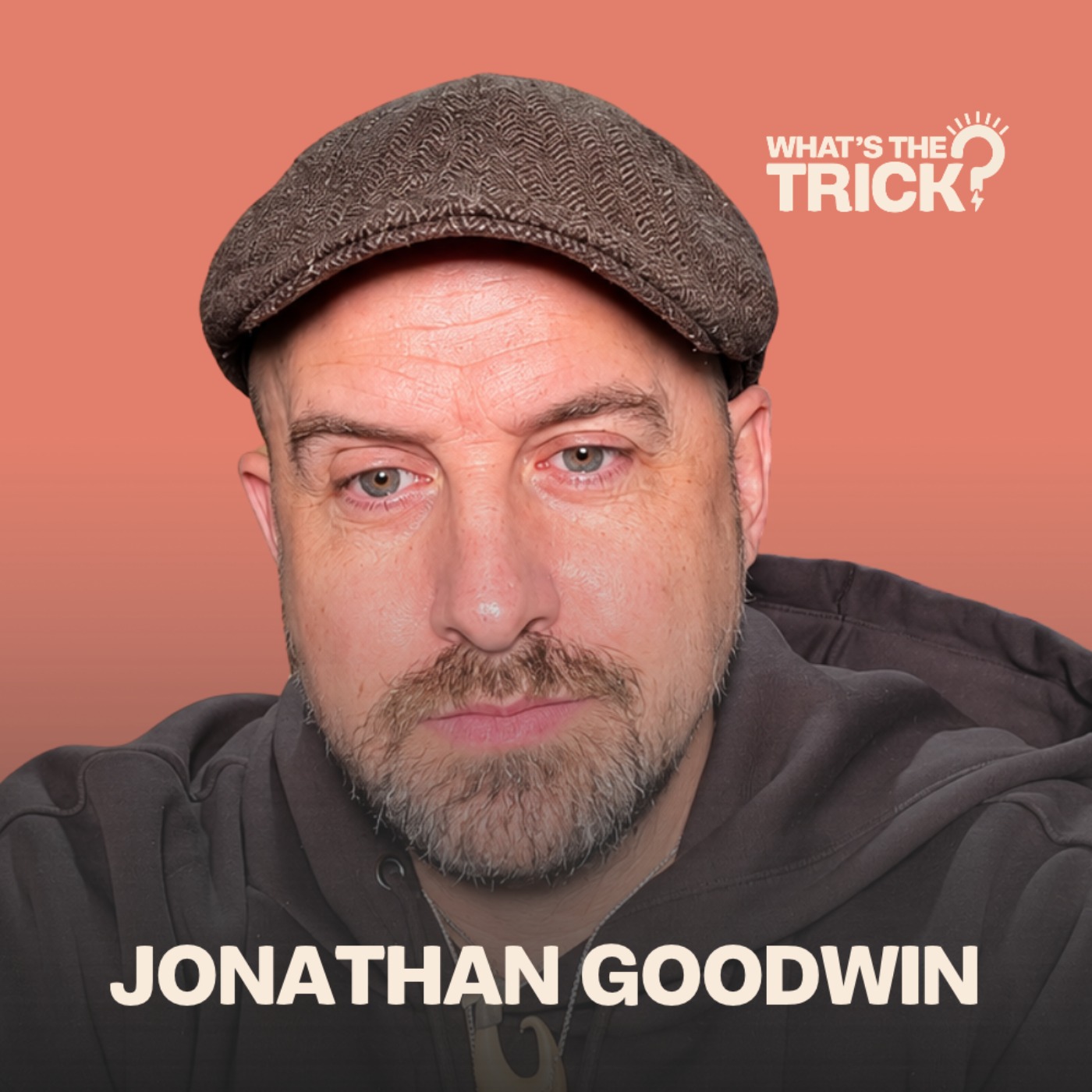
Rob Law’s journey from designing Trunky (ride-on kids suitcases) to pitching on Dragons’ Den, scaling globally, selling the business, and later building ZP (a bedtime clock + sleep podcast app) using sleep science and MVP testing.
Rob Law is an industrial/product designer. He studied industrial design at the University of Northumbria (started Trunky idea in 1997) and later worked as a product designer for major clients including Unilever.
Dragons’ Den rejection turned into a sales breakthrough when the public responded; Trunky’s patent strategy focused on patented plastic clasps and design registration for the suitcase shape; product-market fit came from e-commerce and niche retail before national listings; ZP improves bedtime by using correct sleep-color cues and calmer, lower-arousal bedtime audio.
Dragons’ Den “Wheelie Rubbish” moment (Theo Paphitis ripping the bag; Peter Jones questioning lack of patent); John Lewis eventually stocked Trunky after TV; Trunky sold ~5 million cases in 100+ countries; ZP launched after registering in Oct 2023 and first Amazon sales in Feb 2024; ZP sold ~25,000 clocks and reached ~250,000 podcast plays.
Written by AI. May contain mistakes.
Rob Law shares the inspiration behind creating Trunky during university.
“Can you remember the moment you had the idea for Trunky?”
Rob recounts the process of getting Trunky licensed and the initial challenges.
“you know what, Rob, you've got quite a commercial idea here.”
Rob discusses the difficulties and rejections he faced while trying to commercialize Trunky.
After a licensing deal falls through, Rob decides to take charge of Trunky himself.
“And I was kind of starting to lose the plot a bit.”
Rob explains how he established a supply chain for Trunky and his marketing strategy.
“So the toy company that had used to make metal tools to produce the product, so it was in production, I just had to then buy those tools, which I offset the royalties that they owed me to buy the tools.”
Learn how Rob Law identified his target audience and leveraged e-commerce.
“So if you find a good agent, they then talk to the factories and handle all that kind of stuff.”
Rob shares his challenging experience on Dragon's Den and its unexpected outcome.
“By the time I got to the bottom of the stairs, it suddenly dawned on me that this would make a theatrical TV edit and I'll probably be ridiculed on national TV.”
Understand the role of patents and design registrations in product protection.
“John Lewis finally picked up the phone and said yes, we'll put it in stock and we could not keep up with demand for the next two years.”
Explore Rob's thoughts on impactful products released in the last 20 years.
Rob discusses how recent innovations, like the iPhone and audio players for kids, have changed the market.
“I do my corporate keynote like yesterday.”
Discussion on effective children's products like the Yoto Box and Tony's.
Examination of sleep trackers and their impact on sleep quality.
“Wake up in the middle of the night and check their sleep stats.”
Rob shares insights from his early business mistakes and the importance of mentorship.
Rob discusses the reasons and timing behind selling his company Trunky.
“But yeah, that's really important to build that support network.”
Exploration of how ideas evolve and the iterative process of product development.
“Do you look back and agree with that decision still that it was the right time and you're happy you've kind of dealt with one chapter and you've moved on and you can create something else now?”
Discussion on ZP, a product aimed at improving children's sleep through innovative features.
“So it was an interesting process with ZP because that kind of leans into a little bit about our previous conversation on being inspired by other products.”
Rob and Ben discuss the challenges parents face during bedtime routines and potential solutions.
Learn how to navigate the process of bringing a product to market effectively.
Discover the importance of iteration and market feedback in product design.
“And yeah, I think that's just reminded me, Ben, that quite a few people want perfection.”
Explore personal insights from Rob Law through rapid-fire questions.
“Thank you so much for your time today, Rob.”
Reflect on the insights shared in the discussion and their implications.
“and I loved hearing the behind the scenes of how he got that idea out of his head and how he eventually threw a few twists and turns and what seemed like failures at the time.”

Get the gist, explore an idea or ask about something said.
 Claude
On What's The Trick?, what are the key points of this episode?
Searching your listeningAutomatic transcript. May contain errors.
0:00By the time I got to the bottom of the stairs, it suddenly dawned on me. I had manufacturers said no, investors said no, retailers said no, but my target market finally saw it on national TV and said yes.
0:12Ben Hanlin: Welcome back to What's The Trick? I am your host, Ben Hanlin, and this is the podcast where I sit down with the world's most creative people and try and understand their creative process. And today's guest is Rob Law. Now, you might not know Rob by name, but you will probably know him by his product and the business that he created which was Trunky. So Trunky are those ride-on kids suitcases that you see in every airport in the world and his story was really quite amazing. So a bit of a backstory, he was at university and he's a product designer. That's what he wanted to do, design some of the best products in the world and he got set this competition to reinvent luggage as we know it.
0:52Ben Hanlin: One thing led to another and he came up with Trunky and we're going to hear about where that idea came from and it had a bit of a tricky start to begin with and then eventually fast forward it was getting a little bit of traction he went on dragon's den and this was at the height i think it was uh is it third series and loads and loads of viewers everybody watched this clip but it got pulled apart by the dragons they all pretty much said no said he'd overvalued his company peter jones questioned why he didn't have a patent and because you don't have a patent he said i could just create this myself in a few a few weeks time and theo perfetus very famously pulled the handle off the bag and ripped it apart and said look this is made of rubbish it's just going to fall apart and i wanted to speak to him about that moment after that how did he deal with it and did he know what was going to come afterwards because it has become a huge success i think they have sold something like five million cases worldwide wide they're in a hundred plus countries it was huge and then he'll tell us all about that journey and i really wanted to understand how do you take an idea and then actually get it manufactured and actually then get it onto shelves in places all over the world so he tells us all about this process which was really interesting and then uh three years ago he sold his stake in trunky he's no longer there and he's got a new idea which is zp which is a product all are designed around helping children go to sleep in a calm and consistent way.
2:23Ben Hanlin: And there is a product, there's a clock, there are podcasts, there's other things as well which we're going to talk about. So you're going to hear about how he came up with other ideas and how he decided to execute on them. So it's been a really, really interesting conversation. We've never had a product designer on the show. So this is the fantastic Rob Law here on What's the Trick? Can you remember the moment you had the idea for Trunky? I was a second year industrial design student at the University of Northumbria back in 1997 and we were learning how to make products using injection moulding and plastics, trying to invent the future, which is why I went to that course, it was amazing.
3:08And we were asked to enter a national luggage design competition so I was thinking about luggage I thought I'll go down to the local department store Fenwick's in Eldon Square to look for some inspiration and back then the whole luggage department was black and boring but there were these kind of molded suitcases that used plastic I kind of drifted off and found myself in the kids toy department maybe it's the big kid and me and it suddenly dawned on me that these toys were made using a different manufacturing technique that wasted a lot of the internal space. It's called rotational moulding, but I won't bore you with that.
3:44But you're probably familiar with those toys with a little seat that you lift up with enough storage space for an apple or something. And I thought, well, why not use that hard plastic injection moulding technique that the adult suitcases use, but fundamentally create a ride-on structure that a child or toddler could sit on and ride around on, because I know kids get bored in the airports.
4:07Ben Hanlin: Well, let's go through it, because there's a lot of people that probably go through their everyday lives and go, I've got an idea for a product. I've got an idea for a thing. So very quickly, what are the stages that you then have to go through? Obviously, you sketch it out, and then what happens next after that? So there's a couple of things that you don't have to necessarily follow in order, but you want to kind of get the idea of a concept down. You want to try and visualise that, capture the idea. ideally you should then start getting some feedback from your target market your target customer um i ended up building a kind of a prototype in fact i've got one one here very early prototype this is so just so you know if you're listening rob is in his i'm guessing his office and if you can't see this on the screen at the top of his uh office shelves are about 14 15 different trunkies all of different colours all in a row, like an army of luggage.
5:04Ben Hanlin: And then he's holding up what he's looking. Is that polystyrene? So this is like insulation foam we used to use. So I hacked this up to get a scale model, one-on-one size, to try and figure out what the best size was to take down to a local primary school and get kids sitting on it to try and figure out, like, the ergonomics of it. But you can kind of see, even back then, it has a similar shape. It's got the circular saddle, the wheels in the corner, trying to take inspiration from kind of horses' saddles to make the kind of form of the product. Okay. So you can do that in polystyrene. You can show it to some people.
5:41Ben Hanlin: At this point, have you gone to potential buyers and gone, before I spend a load of time and energy on this thing, would you buy this product? It was a slightly different process for me back then that ended up spanning nine years. but all I wanted to do was get into the final of the competition. So it was just producing prototypes and samples and mood boards and your design thinking to get into the final of the competition, which I ended up winning. And the judges took me aside and said, you know what, Rob, you've got quite a commercial idea here. Maybe you should try and talk to some luggage manufacturers and license it.
6:16And I had never thought of doing that. All I wanted to be since I was 14 was a product designer. Yeah. So that kind of opened a door into a whole new world of business, which I knew zip about. And unfortunately, through some of the judges contacts, I ended up managing to get a meeting with Carlton Luggage, who used to be a UK manufacturer similar to Samsonite. And I went down to their showroom down in Croydon, I think it was. And back then they were actually still injection molding suitcases in North London. and I was really excited. I fine-tuned all my mood boards and my presentation and told them, pitched them how we're going to revolutionise family travel.
6:59There were just two people sat in this room and they were very quiet. They had no emotion on their face. And after all my excitement was oozed out into the room, they kind of said, Rob, you do realise we make luggage? And I said, yeah, that's why we're here. We're going to revolutionise family travel. and they said but but you've invented a toy maybe you should go and see a toy company so that was a bit of a lead balloon but always a glass half full that door closed on me another open maybe it wasn't luggage maybe it was a toy maybe i should go and talk to some toy companies so i got the yellow pages out back then scouring for toy companies and um had a really productive call with one um who were famous for making swing ball and other products like that in the uk and they took about six months of consideration and eventually said um we can't decide whether this is toy or luggage the argos buyer wouldn't know where to put it we're not interested so that door closed on me too um and then i had to focus on my final year my fourth and final year so i focused on that and trunky was just there in the background kind of as an idea it got me some great work placements and some jobs but um trying to commercialize it was always a kind of a distant idea after those rejections and then i mean this isn't the usual process but it's a story nonetheless so then i was traveling around australia um with my girlfriend back then and um we were doing the whole camper van up the east coast and everyone we met didn't know what they wanted to do with their lives they're bumming around both me and her knew exactly what we wanted to do she wanted to do environmental science and i wanted to be a product designer so I had a laptop an old titanium macbook and every day I was hacking away trying to build the trunk in 3d cad so that I would actually have a final fully resolved product that I could try and license because I thought that's where I'd fell down previously it was just a concept but if I actually had a final product so we both cut our year short by a couple of months came back to the UK and then I started knocking on doors again trying to get trunky licensed and and found a startup toy company that had been founded by a couple of industry execs who were bowled over by it and thought this was a great idea and I signed a global licensing deal to them and started thinking about booking my uh my plane tickets to Barbados and I'll be sipping cocktails on a beach in my kind of mid to late 20s uh and after three years um well it started off well actually this licensing deal they had uh the first customer was at in the middle east it was a brand that or a company that owned a brand called fuller which is the equivalent of barbie out there very culturally sensitive uh barbie figure uh and instead of buying ken the boyfriend you buy their male teacher figure for them to play with but um but they branded it the the trunky fuller travel case right and ran tv ads and it was really exciting um so yeah really excited that i was finally going to get the product to market fast forward three years their global licensing deal only still had one customer in the middle east they'd never managed to sell trunk in the uk the us or europe and it was all a bit disappointing um the one thing i learned from them was that clearly it's not a toy because it's not selling in the toy category it was more expensive than ride on toys and i took a phone call in i think it was october 2005 um telling them that they they were winding their company up they hadn't made a success of trunking a few other things and that they couldn't
10:35Ben Hanlin: represent the brand anymore can we just pause there for a second just pause because there's lots of things you're talking about that that um i have no experience of and i'd imagine a lot of people listening though so the idea of licensing is just so i'm clear you have the brand you have the name you have all of this living in a computer file and you go right you you make it you are in charge of selling it and i get a royalty for every every item that is sold essentially so you can sit there yeah that's just getting a paycheck is it but obviously the benefit is you don't have to invest in anything uh but if it goes wrong you've got no control of the business is that effectively got no control you're handing it over to the experts who have the sales channels the manufacturing so it's very low risk from a financial point of view but like you say ben no control fine so then the market has told you at this point that they can't sell it that's their job these are the experts and they haven't been able to do it in three years at what point do you go ah this just isn't isn't right or did you think you just didn't agree with it was right they were just selling it to the wrong audience what are your thoughts there well i had a deep down belief thought I was on to something and everyone I spoke to kind of thought it was a good idea I mean you've got to be careful of friends and family because they're always going to be biased yeah now at the same time I've been a professional product designer working at a design firm in Bristol one of my major clients was Unilever and I was designing electronic devices that could put more bleach down the toilet electronic deodorant cans that required six triple a batteries to operate yet it was a green product because it had no CFC gases.
12:14And I was kind of starting to lose the plot a bit. I was like struggling to get out of bed. I wanted to be a product designer, but I was just designing junk that people didn't need that would just fill up more landfill. So I was at a pivotal point of my career where I was kind of losing the faith. I really truly believe you want to use product design for good, improving people's lives. So when I took the phone call saying they were going into administration, it took me all of five minutes to think, actually maybe I could have a go at this myself um maybe this is a new new direction for me to explore so um I decided to take it on I went part-time in my design job until the first container of trunkies arrived in Avonmouth docks and um when they did I quit my job and started uh
12:59Ben Hanlin: started trading full-time well hold on this is the bit that nobody ever sees and is the bit that I was really wanted to ask you so you've just jumped ahead to a shipping container arriving with your product so how does a bloke in bristol get this do you just make phone calls to people in china did you have to fly out to china do you have to sit there with them and hand them like what what is this how does that just arrive so this wasn't too difficult for me at the time because there was a supply chain already in place. So the toy company that had used to make metal tools to produce the product, so it was in production, I just had to then buy those tools, which I offset the royalties that they owed me to buy the tools.
13:47And one of the founders of this toy company went back to her original job, which was sourcing in the Far East. So the sourcing part was kind of sorted and quite often you use agents who have the relationships with the factories. So if you find a good agent, they then talk to the factories and handle all that kind of stuff.
14:04Ben Hanlin: Then your thing was instead of selling to the toy buyer of John Lewis, hypothetically, or the toy or the luggage buyer of John Lewis, I'm going to go for the lifestyle buyer. It is a different person. And that's going to be the unlock. That's what you thought, right? To some extent, but also e-commerce just started becoming a bit of a thing. and I had met someone in my travels in Australia who's a programmer and he built a custom e-commerce site for Trunky. Shopify didn't exist back then so you had to custom everything build everything yourself so I had a website and I knew with the website I could get to market no matter how many nodes I had I could still get to market.
14:43I was getting lots of nodes from the reasonable buyers so the John Lewis buyers were talking to the luggage buyer who passed me on to the toy buyer who passed me on to the apparel buyer who passed me on to the sports buyer no one wanted to take the call essentially but i had the product had it in the market um and actually internationally sales actually started going before the uk so quick quick side story there as a product designer working in an agency i used to have time to read design blogs and be inspired by the products i'm seeing online and i thought oh maybe one day i should just send a press release to my favorite design blog it was called mocaloco.com and to my absolute delight a week later trunky featured on this design blog all my design peers happy for me i was a totally happy boy went home really chuffed um i also went home to a full inbox and crazy web stats and the first email i opened i distinctly remember it was from a moon chew at moma.org i'd done an internship in new york and i was very familiar with m-o-m-e the museum of modern art and she was the retail buyer and she wanted to buy trunky for her retail store in new york i was like wow this does not get much better as a product designer ultimate kudos um and that was my first customer um wow but the uk was really struggling
16:01Ben Hanlin: really struggling to get in the door but but with that though what you've done there is you've and it's still applicable today as you've gone right i've got a product where's my audience at the time it was a blog now it might be so it's funny we i spoke to it sounds completely different i spent spoke to an author uh callie hart who wrote a book called quicksilver which was romanticy and it flopped and she believed that this book was a great book so she reached out to all the tick tockers the book talkers sent them the book and they started making tick tocks about how good this book was and it became a number one but even though the platform has changed the model is still the same it's find the people who've got the community and the passion see if you can get them on board and see if you can grow it each one at a time it's quite yeah find the audience so the small scale shops i was getting traction in the uk were like these kind of design led interior stores that was hand delivery literally five trunkies at a time to in and around the kind of bristol area but cracking national retail was was a real challenge and i think well i mean we're a few minutes in and this might be the longest interview you've ever done rob where they've not mentioned the dragon's den right but we're gonna have to mention it just because it's part of your story and i think you've spoken about it a lot and it's quite clear for people to see and i think people will know it but let's just when you did that and they all said no and and i watched it again this morning they were so and i think that is telly back then they were so dismissive of it and so like this is rubbish the strap broke or all this garbage anyway were you in that moment because I'm looking at you on camera are you sitting there secretly going this is brilliant keep going everybody because you're all making me a fortune or did you walk out of there and went oh I've just been embarrassed on telly that's the end of my product yeah so this was season three back in 2006 and I needed I needed funding I needed marketing and I needed business expertise I got one of those things but after the pitch unrolled unraveled in front of me I was really frustrated with myself not being able to get it back on track and being told my business was worthless and that the dragons could make a better product than me and they didn't see the business opportunity so when we finally finished filming I was at the top of the steps and I was absolutely gutted because I could really done with the funding and the marketing and the um the invest the business device.
18:29By the time I got to the bottom of the stairs, it suddenly dawned on me that this would make a theatrical TV edit and I'll probably be ridiculed on national TV. And I genuinely wished I invented the time machine and not a ride on the suitcase.
18:41Ben Hanlin: So you were dreading that airing, essentially. You were not looking forward to that. Not looking forward to it at all. And I was going down to the local news agents, picking up the Radio Times to see when it was going to be aired. The BBC told me They give me six weeks notice. Season three started. Hadn't heard from the BBC. Halfway through the season, still hadn't heard. So I was picking up the Radio Times. And then one day, down at the local newsagents, pick it up. It was a Tuesday, BBC Two, nine o 'clock, Dragon's Den, Wheelie Rubbish was the episode title. Colour drains from my face. Like, oh, I thought it was going to be bad.
19:19This could not get worse.
19:20Ben Hanlin: Okay, well, I mean, now looking back, you're like, well, that means you're getting serious airtime, which how much would you pay for those viewing figures now? Anyway, so that airs. And then in my head, this is how like the film version, the website just goes bonkers instantly. Like what happens the moment it airs? Is it sales? On the way home, I was thinking, well, where's the opportunity here? I'm going to get lots of web traffic. No one's going to want to buy a Trunky, but I'll try and talk to my target customer and get some feedback. So I put a survey monkey up on the website. And that night it aired.
19:54We had over 3 ,000 people fill out that survey. We had loads of sales. It went bonkers, but everyone filled out the last question on the survey, which was like a blank box. Please leave any other thoughts here. I still get a bit choked up thinking about it, but 3 ,000 people saw Trunky's potential. and I had manufacturers said no, investors said no, retailers said no, but my target market finally saw it on national TV and said yes and that really was a massive pivotal point for us. John Lewis finally picked up the phone and said yes, we'll put it in stock and we could not keep up with demand for the next two years.
20:31Ben Hanlin: So, Horne, you said there was a comments box on the last question of the survey. What were the kind of comments that people were leaving then? Oh, people just thought it was a brilliant idea and if they didn't have kids, they wish they had one for when they had their kids younger. And just huge support from the public that this was an idea that kind of made sense. One comment they made on Dragon's Den, which, again, as somebody who's not in your world, I don't know how significant it was or not, is one of the things I think Richard Jones might have said was, you've got no patent. And we hear this a lot of, you know, has your product got a patent?
21:07Ben Hanlin: How important, now looking back, is it for something like a product like Trunky to have had a patent? What would have actually meant versus, you know, it didn't matter at all? Yeah, that's a great point, Ben, and there's a whole story around that, so I'll try and keep it concise. So a patent is a technical innovation that protects that specific piece of engineering in most cases. So the idea of a ride-on suitcase cannot be patented. it's too broad we patented the way our clever plastic clasps connected because they got rid of all metal and it was all 100 plastic um hinging and special um thinking around how we created that so we we patented the clasps but that's not going to stop anyone creating a ride-on suitcase what i did have was a design registration that protected the shape the side thing on a patent is if you do have a technical innovation that you can patent, you have to patent it in every single country that the product might have sales in.
22:10Otherwise, someone else can make exactly the same product in that country where you don't have a patent. So it only protects you geographically where you file it. And these things can be quite expensive. So you could be looking at£100 ,000 to try and patent something across the major markets. And then you have to renew that every year. so it's really expensive um and and it doesn't stop someone doing exact same thing in a country where you have no protection so you kind of go for like china us uk europe are the main markets sometimes japan um but it's it's insanely expensive so i didn't have that mill stoned around my neck i didn't have to spend the cash i didn't have on on filing a patent what i did have was a design registration that protected the shape yeah and then when the first couple of copies started coming out my design registration European registration stopped them selling in Europe and then more more as we became more more popular more more people tried I we ended up with 50 odd copies in total and one of them was an aggressive UK company that copies everyone from Joseph Joseph and Tangletease so I knew when I was trying to get them off the market it could go all the way so that's what we had that's kind of what helped us but yeah patents are a bit of a double-edged
23:29Ben Hanlin: sword wow wow so so then not the rest is history but then obviously you built a successful brand etc so just pause in there for a second um i mean we're gonna go back to trunk in a sec i've not had a product designer on this pod before so i've got to ask you it's a bit of a curveball of a question over the last 20 years what are the products that have come out into the market that you've looked at nothing to do with trunk or anything but that you've you see as a fantastic product as a product designer hello it's ben and this is our short commercial break for you regular listeners you'll know it's not really a proper commercial break because i don't really have any sponsors although we do have one sponsor and partner uh is when we record these in person so these are a remote recording today with rob but if i am in person i usually do it in london or Birmingham or other parts of the country and I use the podcast room who are a fantastic company with multiple studios they've got great cameras great audio lovely people that work there friendly staff so if you are looking to record content either for yourself or for your business or for a podcast have a look at the podcast room there might be one near you right what do I need to tell you first of all if you are new here hello you're very welcome I hope you're enjoying this episode if we want to if we want to support rob we can can't we um because rob has got a new company it's called zp z e e p y you can have a look at um the zp app or zp sleep on podcasts and what that does is the whole business is about helping children calm their sleep and go to sleep better and if you can regulate their sleep and the rest of their lives will improve as well so So he's really passionate about this, as you'll hear.
25:17Ben Hanlin: So have a look at that ZP app or ZP sleep would be great. I think I put the links in the show notes as well. And you might be wondering what I do outside of this pod. Ben, how do you actually make a living? Well, I am. This is our silly season now for corporate performing. So I do a lot of corporates. I do my corporate keynote like yesterday. I was in London and I did a keynote for a big law firm all about human connection. and tomorrow I'm in Norfolk hosting corporate awards and charity night. So it's a range of things like that, but mainly my keynote and hosting corporate events. So next week, I think it's my busiest week of the year.
25:53Ben Hanlin: I'm doing about six gigs all across London, Alton Towers, Brighton, Surrey, a whole mix. So there you go. All of that and more can be found on benhanlin.com. Right. What am I wanting to tell you? What's the trick family? I need to tell you that things are bubbling away I shouldn't really tell you this but things are bubbling away in the sub stack space so I think we're going to launch sub stack in the very coming few weeks it's a thing it's a platform I've been looking at a lot so I won't say much now but I'll let you know in the next few weeks what what do I need to mainly tell you is as always as with any podcast I am trying to grow this one listener at a time so if you've not followed the what's the trick pod page on instagram drop it a follow and you can drop me a message and i do reply to every single message so if you've never messaged me before say hi and let's have a chat um if you've liked this go and have a listen to the matt edmondson episode because he created board games and sold them into walmart so i thought there's a very lot of similarities there so go and have a listen to that episode i think you'll like this um and thank you for the messages from last week for Simon Painter, who created The Illusionist.
27:05Ben Hanlin: He's a massive theatre producer, and he was really interesting. He's got an unbelievable brain for how he creates and launches massive theatre shows. Completely different conversation to this, but also interesting. And as always, if you do like this and you haven't shared this with any friends, or if you're in any Facebook groups or WhatsApp groups, just go, hey, I listened to this. and one person at a time will get a new listener each week. That's all from me. I'm absolutely loving doing these. We've got some nice ones to come. But let's jump back in now to what's the trick with Rob Law? I always thought the iPhone was an amazing tool, a hugely incredible invention, but it has its downsides now, as we all know.
27:56and that was just a huge industry changing product from brick phones to smartphones and yeah I mean there's it doesn't have to necessarily be one fantastic new thing it can just be small increments and and things that kind of work really well there's a great product in the kids space um called the yoto box and that's a little audio player for kids and that's um that's a fantastic product that empowers kids to be able to choose and listen to their own audio is that
28:31Ben Hanlin: hold on i think my kids might is this we have a square box that you put your so white white square or there's another product that's similar called the tony's we have the tony's well that's what we have yeah and my kids love it and they listen to it every night before they go to sleep um yeah the same the same story shrek or matilda or whatever it is they're putting on so yeah that is a good product isn't it it's essentially for those that haven't seen it it's a box that has these action figures that you can buy each one sold separately so they're getting some good money on it and then each action figure has some sort of chip in it that when you place it on top of the box plays the story and the music from that film or that character so if you buy a character you get a whole new story and film and it's just just a clever way of combining toys and music and stories together isn't it yeah and taking them away from the screen and giving them a real physical tangible tool to be able to control what they listen to what about a bit of a curveball what are the products that you see in the market could be brands or products that you think are slightly overhyped and you go i just don't get that i mean because you're looking at things slightly differently to what we do um and there's an interesting thing that's slightly side to this but um having done a lot of research into sleep because that's my new business um sleep trackers and tracking devices for sleep um this is an interesting one i used to do it but not massively um and it taught me some good sleep habits of trying to hit eight hours a night and not watch the next episode of Game of Thrones or whatever.
30:07But people take this far too seriously. Wake up in the middle of the night and check their sleep stats. They're not sleeping. Try not to go to the toilet in the middle of the night to improve their sleep stats. And it becomes too much of an overpowering tool that has the negative effect of what it's supposed to be able to do. So lots of people talk about tracking their sleep. And I think we've talked to sleep scientists, and they say, look, when you wake up in the morning, do you feel like you've had a good night's sleep or not? You don't need a device to touch it.
30:36Ben Hanlin: You know what? I've read a lot about sleep, and there's a guy called Matthew Walker who's… Yeah, Matthew Walker's book's amazing. Yes, and he gives about 10 or 12 really simple things everyone can do to improve their sleep. But I have this theory about that, and it's exactly that. I'm like, if I wake up, will that score dictate my mood and my energy? And how much of a placebo effect does the score have on the rest of my day? That's kind of what I think. but yeah yeah but you could could wake up with a bad night's sleep look at your scores and then just have a miserable day because you just yeah and then also people use it as a way of justifying well i'm a bit ratty today because look at my sleep score you're like well okay or just have a coffee and shit up anyway right and then here's a question so imagine you could go back in time now and sit down with your younger self having done all this experience been through growing this company sold this company which we'll talk about what would you if you could sit down for 10 minutes and go right listen up rob i've got to tell you some stuff quick what would you tell yourself i think one of the mistakes i made early on was being a product designer i wanted to just create a whole portfolio of travel products for kids um but there were still some things that could be fixed with the trunky um like in retail the trunkies kind of couldn't um were a bit hard to display they ended up being put on top shelves of retail stores where people couldn't see them so if i had spent a bit more time trying to think about that proposition in store we ended up developing that later on but that's that's probably why i should have spoke spent more focus um and what else um i mean it becomes a very lonely business when you're a solo founder building a business without virtually any of the answers as most people don't like you kind of assume business leaders have all the answers they have experience and they have an the ability to make a decision but they don't necessarily have the answer so and there's a product i'm a natural problem solver so when i built a team everyone was asking us what we should be doing next and i was like i don't know but we can figure that out right let's go and talk to some people so um yeah having a group around me much earlier on than I ended up building would have would have helped as well having some support mentoring well go go and find more educated more informed people quicker get you know mentors or leadership team yeah quite often they're like business clubs and groups where founders kind of get together and talk and share their their woes and cry on each other's shoulders and I found one of those a couple of years into Trunky.
33:20But yeah, that's really important to build that support network. And also back then it was all about hiring people and building a team and people are hard to manage. In fact, there's a great example of my first employee as a product designer. You just worked really hard in the agencies. You'd buy pizza and you'd work till eight, nine o 'clock to get the job done. And then my first employee was like knocking off at 5.30. I was like, where are you off to? I'm getting pizza in. We're going to burn the midnight oil. Completely different culture. But I was used to most people and quickly learned that wasn't what most employees expect or want.
33:59So trying to then kind of understand not everyone's as driven as you are and we'll break the back to get a job done. Great.
34:10Ben Hanlin: And then eventually you sold trunking and you have spoken about it. But for those that maybe don't know your story as much, what was the trigger for you? And how did you know it was the right time to sell your babies, essentially? Yeah, well, COVID was not very kind to us. There's something called a travel ban, which badly affected our sales. yeah um i was still amazed that people were still buying trunkies uh despite the global ban but in very small quantities one of our other products which was a car seat that doubled as a backpack absolutely canned because no one was going out hiring cars and oh yeah using that product uh and it just dragged on and on so we had two years we like we were turning over 10 million pounds and sales slipped by well over 60 for two full years which made it very painful We survived, which was incredible.
35:04The team really pulled together. We did everything we could to survive. But after that really rough experience, I was just so batting and bruised that it just felt like after 18 years, I had achieved everything I wanted to. And it was hard to see what else would really kind of tick the box. So it was time to exit Trunkey, give it a new home and go on to greener pastures.
35:28Ben Hanlin: And now looking back a few years on from that, do you, I mean, obviously hindsight and how the world's panned out is a wonderful thing. Do you look back and agree with that decision still that it was the right time and you're happy you've kind of dealt with one chapter and you've moved on and you can create something else now? yeah yeah definitely definitely moved on i've closed the book on that i i kind of i absolutely love what i was able to build and actually looking back at all these copies now it's actually i have a completely different mindset now i'm not in control of that p &l um uh it's actually amazing that i've created something that so many people have copied uh how cool is that whereas at the time it was like ah they're copying us how dare they how dare they steal my ideas but as we know creativity is all about stealing ideas or being inspired should we say from other things we've seen well do you know what let's talk about that for a second because with the trunky if you think about its origins you went i've got to do this luggage thing but i like toys and toys and look you've taken two things and you've smashed them together to create a new thing and that idea is not again new on this podcast we had a guy called matt edmondson who is an amazing ideas machine who makes board games and other games and formats for tv and he said a lot of his ideas start off as individual bubbles are quite like this and quite like this and if i smash two bubbles together i've now got a new thing how much do you think your ideas are that where you go well i like this and this now if i put those two things together now we've got something fresh is that how your brain thinks a little bit or i don't think you can always pinpoint where the inspirations come from it's just there in the background somewhere so everything we kind of think of has been probably an experience or something we've seen so we always think it's completely unique and novel but it's like you say it's a mash of other ideas and it's quite hard to then draw the line of where are you kind of getting too close to something that's happened before but the whole idea ideation process is just iteration iteration iteration so it's never I've had an idea this is what it is and it stays static it's always evolving and morphing to the extent that the trunky we had five generations of trunky where the first one was very basic and then the last one was made in the UK it had all we stripped out all the metal from the production so it was 100 plastic fully recyclable and learned from things that had caused problems in the past like straps being pulled off by strong greek men who are very rich so so even your point of view is like get the product out but the product's not finished there's always you can always get feedback keep altering it and have different variations of that product going forward basically yeah in fact the best case study there would be um the very first trunk he didn't have carry handles on the top because my research said children damaged their backs carrying heavy bags so it was literally the toe strap that doubled as a shoulder strap for the parent um and then the most common request we got in customer services was i've got to take this thing up the escalators put some bloody carry handles on it so we added the carry handles even though my initial idea was to remove them completely so yeah listening to customer feedback is absolutely critical to evolving and mind tuning your product and then for you obviously you stepped away from drunk you've now got zp which if i'll try and sum this up i'm sure you can do a slightly better job but in essence you're doing it's a it's a way of helping children sleep better and that is through a podcast app and you've got a physical product a clock as well but have i kind of summed that up essentially in its essence or yeah so zp is basically trying to help families have better bedtimes and then kids can get better sleep parents don't get woken up so much and everyone's happier Yeah.
39:19So it was an interesting process with ZP because that kind of leans into a little bit about our previous conversation on being inspired by other products. So at the time, kind of going through COVID, my kids were kind of that kind of toddler age. We had the market leading product to try and help them see when it was time to go to sleep and wake up. Yeah. That was called the Grow Clock. We had one. It's a fantastic product. You've had one. I think one in two children at their peak had one. And I've always admired the product. It's always been an incredible bestseller. And it suddenly occurred to me when we were using it, having read Matthew Walker's book on sleep, that actually the colours were wrong, like it's blue at night, which we now know is a bad colour to have at night.
40:03And it's orange in the morning or yellow in the morning, which obviously reflects night and day from the sun point of view. But from a sleep science point of view, it's the wrong way around. It should be a dark red or warm colour at night and a bright blue light in the morning to suppress melatonin production. so that kind of that got me thinking and then also the the my real learning at trunky was you've got two customers you've got the parent and the child the parent buys a product for functionality and the child wants to fall in love with a character and there was nothing to fall in love with with the crow clock and this is a toddler product so i was thinking well maybe we can make a a sleep clock for kids that have real personality that has an animated face and has the colors the right way around but then also thinking and chatting this through with my brother who's my co-founder um it's all very well for a child to kind of see when it's time to go to sleep and wake up but they need to be psychologically safe and ready to go to sleep and and to have closed the day so we started experimenting with a podcast as quite a lot of people using podcasts for kind of when you leave the room at night and tuck your kids up and most podcasts are far too high high octane uh even sleep stories for kids to actually properly settle so we went deep into the science child psychology mindfulness and started pulling together the ultimate kind of structure of a story that could then calm and settle the child to make them ready to go to sleep and then we launched the podcast and now the business is evolving and we're hoping to put the two together in one product but yeah it's been a fantastic journey using everything i've learned from trunky to create a kind of a media and device type company to to help kids sleep you know what i
41:49Ben Hanlin: love about that is as a parent the amount of nights and early mornings and middle of the nights i've spent lying on my kids floor holding their hand with one arm and then just like just sitting there thinking and i can just imagine you were doing the same you're lying on on the nursery floor and everyone else is just thinking about what and you're there going hmm that clock could have some improvement you're just like working on because it's eating into your time yeah you spend the whole day with the kids you've given them everything and now you want your own time and and you can't leave that room and you want to just go downstairs and do whatever yeah you want to do next and you're just tied back so yeah handing over the the bedtime routine to a device so a cute character that the child can follow and it kind of takes that friction away from the parents so quite often as you know ben you're kind of arguing with the child about his bedtime um and that trying to negotiate but if it's really clear and simple that this the cat says it's sleep time it's not me it's the cat like listen to the cat and they're familiar with the cat because they followed the cat and the story's kitty then then you can hand over that kind of friction point and leave with a cuddle and not the frustration yeah don't blame me blame the cap um but here's the thing though right so i would imagine you have lots of ideas and i'd imagine you are kind of thinking well there's a product how did you know with this one or any of them which one to go with and which ones to abandon do you have a filter process um yeah you kind of gotta like like i think i said earlier you've got to go out and start testing this with the market as well and talking to potential customers but actually that i took a very different approach with this new business than i did with trunky where trunky i invented the whole thing put loads of time and effort into it and had to invest massively in in getting it to market this time it was like this could be an idea what can we do what it's called minimum viable product mvp what's the minimum viable product we could just test to see if this works and we don't have to reinvent the wheel we could actually go to china to a factory that makes these things make a few changes not have to make our own tools and then just get this to market and see and and now you can just sell on amazon quite easily where most of the market shops and prove product product fit without having to get into retailers and prove to retailers that they should list it and you can just get going that way um so we ended up selling 25 000 of these clocks on on Amazon proving it really works.
44:21Our podcasts are 25, sorry, quarter of a million plays now, proving that people want to listen to it at bedtime. So we've proven product market fit and now we're able to then raise funding to help develop our brand proposition product range.
44:35Ben Hanlin: So what you're saying, I can imagine if you were launching Trunky today, I would imagine that would be, that would almost be, so this game plan of come up with an idea, speak to an agent who can get you into a factory in China, get something made an order get it on amazon and test it when you were doing that with this one how quickly from you saying to your brother or yeah let's do it to that getting listed on amazon and sold do you remember is it are we talking weeks months a year um so we registered the company in i think october 23 and we our first sale was made on amazon in february uh 24 so it was it was five months five months which is which is pretty quick yeah considering you got like um place the order with the factory ship it over it's 120 days so yeah um great so yeah so you're not overthinking it you're not going well we're not going to sit here and debate it for months It's let's get it ordered.
45:37Ben Hanlin: Let's get it tested. And yeah, I think that's just reminded me, Ben, that quite a few people want perfection. They want it to be absolutely perfect. But whatever you think absolutely perfect is, is not going to be perfect for the customer until you've sold a few of them and listen to the feedback. So it's be less precious, get something out, the MVP, and then listen at this rate. because you could spend all this money creating what you think is the perfect product and then need to change it anyway. And you've always got to be open to pivoting. It's a bit like life. Life is not a straight line from A to B, is it?
46:11It's a massive wiggly line. Yeah. And launching a product is a wiggly line. It's like, oh, I think it should be like this, but actually no one needs to be like that. No one needs to be. And you're constantly changing and tweaking and always adapting and pivoting your strategy.
46:25Ben Hanlin: One last question. Has there ever been an idea for a product that you've had in a notebook that you've never done, but you thought, you know what, if I'd have had the time, that would have been a bank. Is there anything sitting in the back of your brain that would have been a good one? Or is it still potentially to come? There was, when I was at Trunkey in the kind of luggage space, there was the adult sit-on suitcase. um something that the adults could sit on not necessarily ride around um but something they could sit on that was strong enough to take their weight um and actually we did create um a teenage trunky called the journey which was a sit-on trolley bag made all out of plastic that was strong enough to sit on um and we made it really cool i remember the mood boards were like nikes and iPads and Apple.
47:15Let's make this look really cool for kids. We made it too cool and loads of international business travelers bought it and slated it because the quality was like for teens and tweens, not for international business travelers. So we actually created the product that half stepped into the ultimate adult product but wasn't actually designed and made to meet that demand. It was an amazing product, but we ended up having to pull it because we had too many teething problems, too many bad reviews. And at the time, I wasn't fully in control of the company because I had investors, a board, and other people's money at play.
47:52And we ended up having to pull the product.
47:55Ben Hanlin: Right. Thank you so much for your time today, Rob. We are going to move on to my final five questions of the podcast. It's Ben's Fast Five. Are you ready for my Fast Five? How fast do I need to respond to these? Not that fast. I mean, in that entire sentence, The word fast is not always applied, to be honest, but it's fast enough. So first question, question number one is my Highlander question. In the film Highlander, where one immortal kills another immortal, when they kill another immortal, they steal that person's expertise and skills. If you could steal anyone's skills or expertise, dead or alive, who would it be?
48:38um well actually i am very jealous of children's creativity um and the curiosity and imagination of a five-year-old is just mind-blowing and as adults we've just taught ourselves all these ways to just not be as free and as creative and i'll just love to relive being a five-year-old and just dressing up in that pink flowery dress and being a mermaid or a princess and don't really care what anyone thinks.
49:07Ben Hanlin: See, I had on my list, I thought you were going to say Steve Jobs, but no, you've gone for a five-year-old, but that's good. Okay. So time capsule, you can keep one thing throughout your career, one product or now obviously you might go for the entire business of Trunky, but if there is a moment or a particular Trunky, whatever you want, what is the one thing you would keep in a time capsule and the rest of your work is evaporated oh yeah it's probably got to be a trunky but the first trunky um i launched was well the first two called terence and trixie pink and blue and they're still exactly the same colors 20 years later and i have a particular affinity to terence the blue one uh who's been on many a business trip with me so i would keep him as a a time capsule but actually we sort of suggest kids can keep their trunkies as time capsules of their childhood anyway and keep them as memory boxes.
50:00So there's something around that.
50:03Ben Hanlin: Terence is in there. He's kept. Right. Culture Vulture. What is the one thing, book, film, anything you've experienced lately that you'd like to share?
50:18So there's a film recently that kind of completely moved me to tears, Hamnet. and the end of the film finishes with Max Riches on a Nature with Daylight track, which I find is an incredibly powerful track. I've heard it a few times. It completely got me sobbing. The sadness of that track and then the hope. And Hamlet's obviously about Hamlet, sorry, Shakespeare losing his son and I actually lost my twin sister when we were teenagers. So that kind of really, really hit me quite hard.
50:59Ben Hanlin: Oh, wow. Okay. I've heard a lot of amazing things about that film. But you have just prompted me to go and give it a proper watch. So thank you for that, Rob. We're going to, Hamnet is in there. We're going to move on. Magic Wand. So we move from film to my magic wand. I'm going to give you my magic wand, which you could look at and probably redesign and make it better. but uh with this magic wand rob you get the power to make anything from the world of we could say business or product vanish forever something you don't like it's gone what are you making vanish okay i am i'm waving the wand and removing unrestricted screen time and smartphones from kids I think it's really stealing their childhood and the root creativity is boredom without kids being bored and using their imagination to come up with all sorts of imaginative play we're stealing that ability to be really creative in in in later life so I dropped my my 11 year old off last year to hang out with her mates in in the village and she had a brick phone and all the The others had these smartphones and they were there free for the first time on their own to do what they wanted.
52:21And everyone else was sat looking at their screens rather than experiencing their first proper bit of freedom. And it kind of really struck me.
52:30Ben Hanlin: Yeah, it's, you know, I often say this. There's no way I would have been a magician if I, in my house, I had YouTube and all of that available. I was bored. I had nothing else to do. So I'd sit there in my room for hours practicing card tricks because it was just something to do. That's led to a career, you know. But if you haven't watched Toy Story 5, if you watch Toy Story 5, you will definitely, I mean, that's pretty much the plot of the film is all of that. Oh, really? Yeah, they've tackled it really well, to be honest. And then my final question of the entire show is always the same, which is, Rob Law, what is the trick to having a successful career as a product designer and entrepreneur?
53:15I think never be too proud or precious of your own ideas and be open to evolving them, iterating them and finding the perfect product market fit. Fantastic.
53:29Ben Hanlin: Thank you very, very much. Cheers, Rob. Really appreciate that. It was lovely. So there we go. That was Rob. and I loved hearing the behind the scenes of how he got that idea out of his head and how he eventually threw a few twists and turns and what seemed like failures at the time. He then carried on and picked the ball up and kept going and got it all over the world. But do you know what was interesting? Listening back to that, it seems to me his ideas come from almost a place of frustration where he sees something. He's like, well, there could be a better version of this. so with Trunky he was looking at luggage going it's all boring it's all black it's all pretty basic and then he went and found something else he loves which is clearly the toys the colors the energy and went oh I'll just fuse these two things together and we have something new so I thought that was really quite interesting and he's kind of done the same in the sleep space he's seen the product and gone well that's not perfect it could be better and he's reinventing it and then the other thing that i thought was interesting i've never heard anyone explain it as simple as this is how quickly now in 2026 an idea can go from a thought in your brain to speak to the right person who's a broker to get it made in china get it over landed in the uk get an amazon shop and then from the amazon shop you are testing and selling that product whereas i'd imagine before that didn't exist you would have either had to put it on a market stall or you'd have had to get it into a retailer so it feels like i've never heard anyone say how much they use amazon to test those kind of things um anyway that was my take i've enjoyed this one and as always if you are new here hit subscribe if you haven't already so you don't miss next week's episode go back and listen to some others as always what's the trick pod on instagram and you can dm me ben handling anytime tell me what's going on and what you've been listening to and i always love hearing from you anyway have a lovely week and i'll see you next week here on what's the trick Thank you.
Dragon’s Den told Rob Law his business was worthless. What happened next turned Trunki into a global success story.
Ben Hanlin sits down with Trunki creator Rob Law to uncover how a university design idea became a product sold around the world, what really happened after his infamous Dragon’s Den rejection, and why the public response changed everything.
Rob also breaks down how to take a product from idea to market, why rejection doesn’t always mean you have a bad idea, the importance of listening to customers, and how he’s applying everything he learned from Trunki to his next business.
This episode is for:
- Creatives (writers, performers, content creators)
- Business owners and entrepreneurs
- Speakers and presenters
- Anyone looking to improve communication and idea generation
---
About Ben Hanlin:
Ben is a magician, presenter, and keynote speaker who helps companies create engagement, connection, and memorable experiences. He hosts corporate events and interviews world-class creatives on this podcast.
About the podcast:
"What’s The Trick?" explores how creative people think, create, and turn ideas into reality.
Topics covered include creativity, communication, storytelling, content creation, performance, and building creative careers.
🎧 Listen / Watch:
YouTube: https://www.youtube.com/@BenHanlin
Apple Podcasts: https://linktr.ee/benhanlin
Spotify: https://linktr.ee/benhanlin
📩 Work with Ben:
https://www.benhanlin.com/
---
FOLLOW BEN:
YouTube: https://www.youtube.com/channel/UCM0oXTRP-zWlJ_IiNykTLag
Instagram: http://instagram.com/benhanlin
Facebook: https://www.facebook.com/benhanlin
TikTok: https://www.tiktok.com/@benhanlin
---
Check out http://www.zeepy.co/
Podcast - Zeepy Sleep: Calming Bedtime Stories for Kids
https://podcasts.apple.com/us/podcast/zeepy-sleep-calming-bedtime-stories-for-kids/id1732709328
Zeepy app
More calming audio for each phase of the bedtime routine:
https://apps.apple.com/gb/app/zeepy-bedtime-sleep-routine/id6763519115
Our Zeepy Bedtime Clock is also now available at John Lewis, Currys and Amazon.
How do creative people turn ideas into reality?
Ben Hanlin breaks down the mindset, process, and decisions behind it.
Hosted on Acast. See acast.com/privacy for more information.