Ask ChatGPT
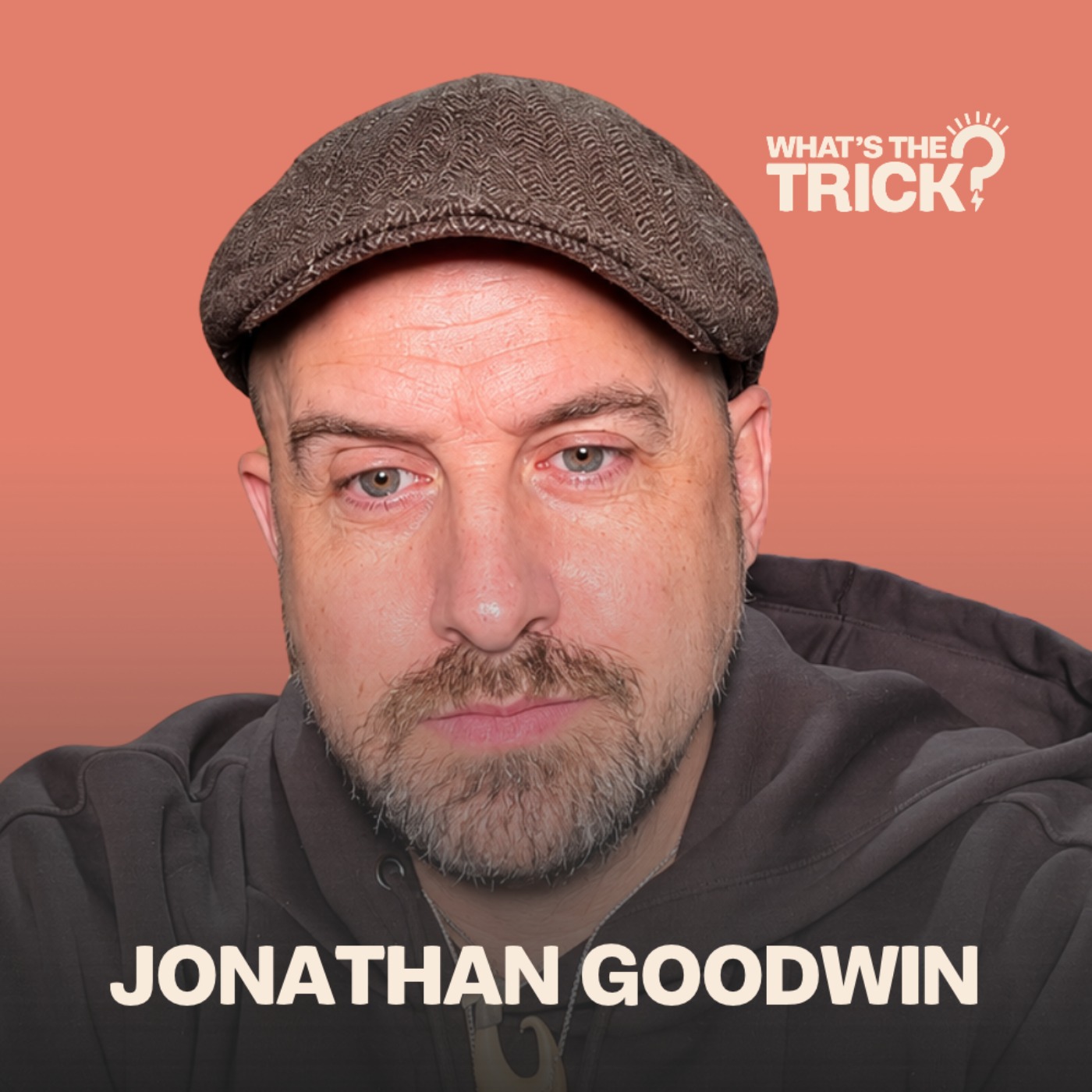

 What's The Trick?
30 Jan 2026 · 56m · 22 chapters
In this episode of What's The Trick?, host Ben Hanlin interviews comedian Scott Bennett, who shares insights into the journey of becoming a full-time comedian later in life. The discussion revolves around Scott's approach to comedy, the risks of pursuing a creative career, and the day-to-day mechanics of writing and performing stand-up.
Written by AI. May contain mistakes.
Explore the challenges of perfectionism in career choices.
“That ethic is great, but it's also quite damaging when you're a perfectionist because you can't stop.”
Scott discusses the pivotal moment he decided to pursue comedy full-time.
“If you imagine this meter, this little tank of like, what if, what if, got to a point of like, I don't want to get to 50 or 60 and go, oh, what if I'd have given it a go?”
Scott reflects on the fear of regret and the impact of taking risks.
“You never want to think what you, but you were, what, about 40 at the time?”
Discussing the challenges and uncertainties of self-employment in comedy.
“the energy level to go into, I accelerated and achieved more in that first year of being full-time comedian than I did in eight years of doing both.”
Scott emphasizes the need for financial security before quitting a day job.
“I see people going, I've got to get going with the dream.”
The dedication and hard work required to succeed in comedy.
Scott shares his writing process and how he develops his comedy material.
“But you've already alluded to it slightly, but let's go into it.”
Learn how Scott Bennett approaches writing comedy routines, from initial ideas to performance.
“But I stitch it together with bits that are sort of, I try and say it as cleanly as possible to get the point across.”
Discover the importance of aligning your material with audience expectations and personal experience.
“So you've mentioned that thing of, there's a few things that I can see is like, I guess, threads running through your comedy, but let's talk about rules.”
Explore how Scott's favorite jokes evolved and the impact of influential comedians like Seinfeld.
“And I know you don't tell jokes you do routines, but favourite joke you've ever written?”
Understand Scott's perspective on treating comedy as a business and the challenges of perfectionism.
“And I remember when I watched him do that routine about Halloween.”
Learn about Ben's recent activities and his aspirations for the podcast.
“And tonight I'm off to Bath to go to the Forum Theatre in Bath, not to perform a show, but to host a corporate awards.”
Discover the nuances of effective crowd work and the creative process behind it.
“Are you sitting there and getting there early and going right let me what have I got and you just how's it coming to you?”
Uncover the strategies comedians use to win over audiences quickly.
“If you see a comedian literally start the script and stop the script, it's kind of passive.”
Learn how comedians cope with stage fright and tough performances.
“So, effectively, I've written lines at Corporate that I know will get a laugh within four or five seconds.”
Learn about the hard work and dedication required to succeed in comedy.
“This is not, you're not, this is not and you were doing a whim.”
Understand the misconceptions surrounding quick fame in the entertainment industry.
“This has been lovely, by the way, Scott.”
Discover how personal experiences can transform into impactful comedy.
“Scott, if you could steal anybody on the planet's knowledge or expertise, I think I know who it might be, but I might be wrong.”
Explore the significance of genuine storytelling in comedy without being overly sentimental.
“So the fact that this dropped out organically, it's the easiest thing I've ever written, because it's just the story.”
Hear about the powerful theatrical adaptation of the film Jaws and its emotional impact.
“Oh, it's them as the actors, not the characters.”
Reflect on the language used in comedy and its impact on perception.
“I'm going to give you a fourth question.”
Learn from Scott Bennett about the essential work ethic required in comedy.
“Never again will a comedian die on stage.”

Get the gist, explore an idea or ask about something said.
 Claude
On What's The Trick?, what are the key points of this episode?
Searching your listeningAutomatic transcript. May contain errors.
0:00Do not quit your day job too early. That ethic is great, but it's also quite damaging when you're a perfectionist because you can't stop.
0:14Ben Hanlin: Welcome back to What's The Trick? I'm your host Ben Hanlin and this is the podcast where I sit down with the world's most creative people and try to understand their creative process. How do they go from an idea to turning it into something incredible like music or art or acting or writing, whatever it might be? And today's guest is comedian Scott Bennett, who I think is genuinely one of the funniest comedians in the UK today. In my book, I honestly believe he's up there with all the other arena comics right there. And comedians call him the comedian's comedian because they all love him as well.
0:46Ben Hanlin: and a bit about Scott's history is Scott quit his job slightly later on in his career when he was getting paid really well and he had a great career he had a wife he had kids he had mortgage he had bills and he jacked it all in to pursue comedy and over the last decade he's appeared on things like Live at the Apollo, Raw Variety Show, he's had Edinburgh shows, he's had tours, he's supported people like Mickey Flanagan, Rob Brydon. During the pandemic because of his work ethic as you're going to hear he had to do something so he went down to his shed and he did stand-up from his shed virtually every week and he built his own online audience then he carried that on after the pandemic by putting up social media clips of him doing stand-up and a lot of them have gone viral especially his crowd work which you may have seen and I wanted to talk to him because I just think he seems effortlessly funny especially his crowd work if you've ever seen it it's just spectacular and it feels like he's creating comedy out of thin air but that can't be the case I wanted to know how he does that where the inspiration for routines comes from how quickly he can come up with jokes on the spot and also how all that gets turned into a finished tour and as always there is genuinely something I believe for everyone in this episode I think we're all going to get something from Scott on the things that he does and we're going to jump in right now when I ask him the moment he quit his job as a product designer to go full-time in comedy so enjoy this one it's what's the trick with scott bennett 2017 what was the trigger point for you to go i can now leave being a product designer and do this as a job i think you reach a point here's here's what happened with me was i loved i i loved my job it was i was a product designer for my mum and dad they was like oh well he's done he's sorted you know he does what he wants for a living he's designing things he's in a really good company he's got offered the role as a director this is it now we can forget about him and then comedy came along and comedy is exactly the same so it was literally like creating being able to do something creative and passionate about but then the problem with comedy was it keys into your personality so what you actually realize is i if i'd have given up uh comedy it would have been more difficult because it's part of who you are yeah i think it muddies the water then because you go well um the job's the job which i love you know but then you go like if i this feeling of what if is more powerful than failing in your job does that make So is that where you got to?
3:35Ben Hanlin: If you imagine this meter, this little tank of like, what if, what if, got to a point of like, I don't want to get to 50 or 60 and go, oh, what if I'd have given it a go? The agony of, I didn't want to watch someone on telly that I gigged with and go, I could have had that. Because then you're that guy then in the pub, aren't you? When there's a band on stage or like there's a band, I don't know, doing Glastonbury and you went, yeah, you was in the back of a van with him. I used to be the drummer. Yeah, well, what are you now? Well, I don't, I didn't, it was too hard. And you feel like, yeah, I don't want to be that guy.
4:09Ben Hanlin: Yeah, he took the risk and I didn't. Yeah, and then it's that feeling of you just don't want your kids to be like, if they want to do something and you turn around and go, well, daddy nearly did. But, okay, so what you're saying makes sense. And that's what every creative wants to hear. Oh, yeah, just give it a go. You never want to think what you, but you were, what, about 40 at the time? I was 31. 31. You were 31. Yes. Why? Kids? Oh, no, that's when I first started comedy. When I gave up my job, yes, it was 2017. So I was, yeah, so I was nearly 40, on the cusp of 40. So you're 40, and this is the thing.
4:48Ben Hanlin: I started full-time magic when I was in my mid-20s, and it was easy. I could move back in with my mum and dad. I could eat beans on toast, and I could live off a couple hundred quid a month, and I could give it a go. but you've got wife, mortgage, kids. So your starting point is so much harder, right? Yeah. And what that does is, of course, I always say, people say it's brave to do comedy. It's brave to let someone you love do comedy. Like Gemma, effectively. I introduced it. I didn't do it when we were together, when we first met. So I introduced it like a mistress. Do you know what I mean? And the difficulty you get is, I think someone said to me once, you're either a comedian or you're not.
5:27And that resonated with me because I feel like you can just carry on doing both, but you hit a ceiling. And what happens is you become average at your day job and you become average at comedy. And in some people, you can be like, well, that's fine. But for me, if I'm doing it, I want to be as good as I possibly can be. And the only way, when I gave up my job, the energy level to go into, I accelerated and achieved more in that first year of being full-time comedian than I did in eight years of doing both.
6:04Ben Hanlin: Yeah, because you, well, also you needed that to work, right? Well, that's the other thing is that what you've said there is you've gone to a roulette wheel and you've put everything on red. And, and there's that fear, the fear of failure is what got me in my car and got me right in and got me, you know, I used to come in here where I've got this shed of writing and I'd come in here and I'd write for like three or four hours every day and just start creating. And I feel like for me, it took me a while though to process that because I felt guilty because effectively I kept saying to Gemma and I went and saw a woman and had CBT.
6:48And I remember because I couldn't process the decision, I felt like I'd been really selfish. And she said to me, Scott, we're wasting our time here because all that's happening is you come in every week and you're asking me to tell you it's going to be fine.
7:02Ben Hanlin: Yeah. And I can't do that. And that's not how life works. And that's not how being self-employed works. And that's not how any of it works. She said, and it was really interesting because ironically, I think she was annoyed with me, but we made more progress because she was honest. Because then she said, if you start your own business, I can't tell you it's going to work out. if you're doing if you're if you're going to work for another company and you get offered another job i can't tell you that they're not going to make you redundant i can't tell you that their company's not going to go bust and then what was really interesting is i did two years as a full time comic or three no two and a half years then covid happened and and what that actually did for me was go ah you see no one's safe no one's secure anymore and and so everything now from my point of you is everyone's fluid everyone's transient no one's got any anchors anymore oh in their in the employment world i always think that i always think you know what okay we work for ourselves effectively you could you could have the most steady job in the world and you're one phone call away from being fired one meeting of like oh we've changed our minds see you later and then you're a risk as us right i'm risk averse that's the thing i i'm not that sort of person so for me to do it I still can't believe I've done it if I'm being totally honest I still can't believe I did it and if it wasn't comedy I wouldn't have done it and there'd be some people that are listening to this that are probably on this cusp or think that what if like even like you say it might be something less risky like I could be a photographer or I could be this that is actually your viable work did you have a little checklist or a thing in your head of going right well what I did was is I, and my advice to people is you cannot, do not quit your day job too early.
8:50I see it all the time. I see people going, I've got to get going with the dream. This is holding me back. And then what happens is they quit their day job and then they've got a financial pressure. So the dream has to pay instantly. And what that effectively does is dilute what you're trying to do. Cause it makes you hate it or it makes you worry about it and it kills your energy levels and so what I did was I thought I'm going to work I'm going to do both and so like if you ask Gemma I was ashen I was bags under my eyes we had Olivia who was tiny at the time and I was going to Glasgow and then I was going getting up for work with two and a half hours sleep I was in my 30s I could do it then I couldn't do it now and I was sitting at my desk and my job was high pressured and I never I told my boss where I'd been because I didn't want to bring those conversations in.
9:43So effectively, I was running on three or four hours sleep for eight years, pretty much. But then once you do do it, have a bit of money behind you, save money. But then once you do do it, try and make the right decisions. And my philosophy was, and still is, if it doesn't move me to where I want to be, I don't do it. Go on. so effectively i i try and do the things that are going to get me to where i want to like that are going to move me forward but i'm going to at least you know it's very difficult because this problem with this job is opportunities don't look like opportunities because they come out of nowhere don't they you can do a really crap gig and then there's someone in the audience who sees you for something but i think it's that thing of trying to work and focus on getting in with the bigger clubs and getting in with all these before you quit your job so you've got that framework in
10:41Ben Hanlin: place you know no i mean it's what you've just described there in one word is graft isn't it like there's going to be a period where you're doing two things at once and you're stretched yourself comedy's got that weird entry point where it is just work for eight years for 50 quid and suffer and then you'll see who's left at the end of that won't you yeah yeah i think i've got a theory that there's a million great comics who are not comics because they didn't stick in it they didn't keep their hand in and i think there's loads out there who could be brilliant and it was just too hard and they lost too much or they felt like they were going to lose too much yeah and i think that's the reality you've got to stay in the game no it's good right let's get dive into and And I've been really excited about sitting down with you because there's loads of stuff I want to talk to you about.
11:28Ben Hanlin: But you've already alluded to it slightly, but let's go into it. Very simply, how do you write your comedy, Scott? It's an interesting one, actually, because I will come in here and I'll do a couple of hours every day. Now, so what I tend to do is I have ideas that I jot into my phone as I walk around, and now I've got an idea of something's funny. I've been doing it that long. I go, well, that is funny. Straight away, that's funny. So we're recording this at half five, quarter to six at night. Have you today been in there, done a couple of hours and gone through? Yeah, I've done, I've done, well, we recorded our podcast this morning and then I've been in here since we finished about two.
12:10So I've done about two hours. And basically what I've done there is I've had a couple of ideas for routines over the weekend. So this is for the next tour. And then I've just started noodling with them as ideas. and then what I'll do is I'll try them at a new material night and that moves it on quick for me.
12:29Ben Hanlin: I write on stage. So breaking this then, so you've had an idea over the... Can we talk about one of these ideas? Because I'd love just to kind of go... So you've had an idea over the weekend. What was it? Go on, talk to me about the idea. It's an interesting idea in that I do do these spider diagrams where I put the idea for the punchlines and I put the idea for where the joke's going. But the issue with that one that I know is there at the moment is I've got to get the context right. I've got to start it right. And it's how I introduce the idea. So for a lot of my material, I try and introduce the bit in a funny way.
13:06So for example, like the setup or feed line, I'll try and do it in even an interesting way or a funny way. So I've got a bit about in my current show about how I love the fact that Gemma's really honest with me. There's no filter. We're honest with each other. And it borderlines on, if we did it in the outside world, people will think they're getting divorced. They hate each other. But it's not. It's just because you don't need to filter each other. And I said, and I introduced that idea on stage. It's like, you know, I talk about everyone online's got the, you know, they're showing the perfect version of each other, where actually it's the honesty and the authenticity that you should cherish.
13:48And so when I say that, I really love saying things like that because that goes in amongst the comedy. But that's like a thread of, there's a moment where they go, oh yeah, yeah. And they're thinking and then you hit them with a really funny routine. But I stitch it together with bits that are sort of, I try and say it as cleanly as possible to get the point across. So there's no waffle.
14:10Ben Hanlin: So you kind of set them up for, you know, that thing in life where we're all rushing around or all doing this. And then so you say, yep, I'm with you. And then you can start from there. Yeah, yeah. So I try and bring them into the world of what we're going to talk about in the most concise way. And then I write that in, when I'm writing out the stuff, I write it out long form then. And I'll write that in a different colour so that I know that when I try that at New Material Night, that's the bit where I'm sort of trying to explain the context of it. And then you can go straight into the first punchline.
14:42So as long as you get them into where your brain is, that's when the stuff starts working.
14:47Ben Hanlin: And then are you somebody who can walk on stage with a full-on script? or do you just go with some bullet points and you just go, I'll play in the space and figure it out? Yeah, yeah. But I tend to, I write stuff out long form, so I've got it as I think it is. And then I'll try it out. And then what normally happens is there's a period where the bit's working, but not like six out of 10, seven out of 10. And then I start to engineer it. And then I start to play and write with it. I like to leave stuff with a bit of giving it so I can have a play with it on stage and I'm still excited about it.
15:21And then sometimes it can take a year for a routine to really be boxed off. Like I've got one routine in my current show now about going to a hand car wash, you know, whether people wash your car, how awkward it is and like, you know, you're watching other men do something you should be doing, right? Yeah, yeah, do something you should be doing. So I know they don't come around and hoover your house and, you know, that sort of thing. So that's in my new show. But then it was like, it took ages. there's like I did a bit where I did an act out of them looking at me through the windscreen. And as soon as you introduce that, the whole routine's elevated.
15:57Because not only is it funny as words, it's now funny because they all can relate to that awkward moment. Yeah. So it's how I think comedy is not just about saying the words. If you want real relatability, you've got to share the experience. that's when comedy that's when the routines become absolute bulletproof it sounds like
16:22Ben Hanlin: you walk around life almost with like a feeling meter and go oh i feel something i feel awkward here yes or if i'm feeling awkward it goes on the list or my wife says she's feeling awkward because i'm acting weird like it's almost like yeah the moment a feeling is is introduced that's the starting point of something there's that's exactly how i do it because i think i think saying things that are generic because there's a way of doing that routine about a car wash where you're generic where you go you're they're watching you you're in your car right and you just start listing everything that happens yeah and it'll work but when you say i feel uncomfortable i feel this awkwardness that's when the routine elevates because you're showing your own personal experience that they can relate to and it makes it about you and if you put yourself at the center of a routine it's always funnier every single time and you can and i've had it before audiences we don't give enough credit because people don't what i've had before is i've had routines where i've talked about something and it's not gone as well and i think yeah because you don't believe i would do that and there's a lot of that and I had a routine about um uh what was the routine oh yeah that was routine about being the only dad at playgroup and in loving it amongst all the mums right because I was I was the only game in town right yeah so they we go out for coffee and stuff it was like being I felt so popular you know and I and it was it was wonderful and then I said like you know another dad joined and I had to face him off in the car park and stuff right yeah and when I first said it I faced him off in the car park and stuff it used to get a little laugh and then I and then I realized it's because they don't believe that happened but when you actually then add a juxtaposition step and you go there was a rumor of another dad joining you know not on my watch I'd have had to face him off in the car park and then yeah they know you're just having fun and then you can take it so much further.
18:30Yeah. And they're laughing because they are on board now.
18:34Ben Hanlin: So you've mentioned that thing of, there's a few things that I can see is like, I guess, threads running through your comedy, but let's talk about rules. And I've asked this to a few different people, whether it's actors or writers. Do you think you've got your own written down or subconscious rules of what makes the cut that you filter everything through and go, it has to have this or it has to have that, or if it doesn't have that, and that's what makes it to the next step in your opinion. I think also as well I've learned this is I've learned what my voice is on stage because audiences, when you start doing a set, they look at you and they go, oh, this guy is this person.
19:14This guy is going to talk about this. This guy, and if you venture out of that, so say for example if I started doing stuff about politics, heavy politics or dark material or something. I've had it before where I've written routines about politics with a dark edge that on paper, I like, yeah, that's some of the best stuff I've written. And I've done it and it's got nothing. And I come off stage and I go, what is going on there? And they go, oh yeah, because before that, I was talking about going on holiday as a family and being in one bedroom. And they've gone, well, you're that guy. and then now you've done too much of a gear shift.
19:57Ben Hanlin: Yeah. And they go, no, well, that can't be the same guy. So much as you like it or not, audiences control your, they tether you to certain themes. And if you go beyond that, they'll go, you're not that guy. Yeah, do you know what? I've seen magicians do this and, you know, certain magicians that are likeable and warm and lovely and they start doing a dark routine. And the magic's okay, but I'm like, no, that's not what I want from you. I want you to be the nice, lovely guy. I don't want you to be putting a... Like, just no, it's not what I want. And I think how I write is I find the shared experience.
20:40I then try and find an original angle that they've not seen. And then I try and sell the routine through my experience. And that's how I try and do it.
20:52Ben Hanlin: and are you hoping that everyone goes yes i think the same or you don't care because it's just well your angle on life the uh the best routines i've got and in particular in this show is when you get the laughter of the introduction of the idea and i've got a couple of those where i'm like oh we've we're on here we've we've hooked this and and as soon as you get the the laughter of oh i can we're together, then if your routine's good and the punchlines are good, it's that feeling, I guess, where people are ribbit, like elbowing their partner and going, that's you, that's you, and you're off. Well, let's talk about jokes then.
21:35And I know you don't tell jokes
21:37Ben Hanlin: you do routines, but favourite joke you've ever written? The favourite one are so many, really, that could be, I mean, it sounds like, let's say, bloody many. I don't know, I think the favourite one, well, the one that may, yeah, yeah, I don't know, I've thrown so many away, Ben, that would have made the cut. I think one of the ones, I'll tell you the one that really unlocked it for me was when I used to say my daughter is five. Well, she's three when we go swimming. And then four on a bus, three on a train. And that was the first routine where I had such a big hit. and I was like those moments where I've introduced it in the right way there's jokes on the way in they know exactly what they're on about and they know exactly what page I'm on and so those moments like that they're so they're so rare but you just go like I saw that and I tried doing that in so many different ways and as soon as I add that one line three when we go swimming you just you can hear them going and I go like yeah because everyone's got the kids to lie about their ages and then you just then you're then you're away at the races then aren't you because you can have so much fun with it after that do you have it in the comedy world where you're obviously amazing you've made a career out of this you're doing you're hilarious but do you look at other comedians and go that's the Ronaldo or the Messi I can't understand what's going on there is there anything that it'd be interesting to hear from your point of view yeah I mean there's quite there's quite a few.
23:13I think the one that when I first started was Seinfeld when he did I'm Telling You For The Last Time. And I know it's an interesting one because it's clean, totally clean. He doesn't swear at all. It doesn't do anything contentious. And I remember when I watched him do that routine about Halloween. I don't know if you know that routine. Go on. And so it's basically, it's got that line in where he said, you know, you knock at an old lady's door and she just goes, and what are you supposed to be? We're supposed to be next door. Do you want to speed it up? You hit the bag, we hit the road. And when you've got jokes like that, you just go, oh, come on.
23:54That's just, it's the most, and what I think about Seinfeld is everyone's done stuff that Seinfeld's done, right? But he's got the best take on it every time for me. It's the most perfect take. and it's the most it's it's done in a way like in terms of comedy for me it's virtuoso it's it's like a it's like monet he does it in the most economical the the surgical precision and i actually watched some of those bits and i'm talking i'm not sure it's the same now i think still good but i think that's special i watched it so many times because i just go like yeah i I don't know how you can make that better.
24:40Ben Hanlin: But so interesting, you mentioned Seinfeld. So I always think of Seinfeld when he thinks about writing, because apparently, and you say you do this every day, and I wonder if this is inspired by him. He says comedy is actually really easy. You get up every day and you write jokes. The end. That's it. And after enough time, there'll be enough. Do you, is that kind of what makes you think, well, if Seinfeld's doing it, I'll just do that. Well, I knew when I quit my job that I was going to treat this as a job. and I've not had the benefit of those glory years of comics have where they live together with other comics and they go out and they party and I didn't have that.
25:15I came into this with two kids and one kid, one kid, one kid on the way, a tracker mortgage, you know what I mean? Debts and I came into this and I had to treat this seriously from the get-go. So from my point of view, I decided to approach it like a business. I'm passionate about it and I think it's I do it because I love it and I love making people laugh but the work ethic was this is my business and I've got to keep this going which has made it it's I mean me and Gemma talk about it a lot it's probably not healthy I'll be honest with you I've not balancing it well because I I've replaced, I've got this perfectionism gene and I've got this, my mum and dad worked, my dad did two jobs, my mum worked until she couldn't stand up.
26:12And that ethic is great, but it's also quite damaging when you're a perfectionist because you can't stop. So my problem I've got now is the success I've got, I attribute to working really hard. whereas actually it could be well you're good at it yeah that's great but if i stop working hard will that stop and so i've kind of i've kind of jumped from one job which is about being scrutinized and criticized and having to produce stuff into another job that's exactly
26:49Ben Hanlin: the same problems hello it's me we're just taking a very short commercial break and every week i say commercial break but we have no sponsors so it's just me saying hello for about 30 seconds as regular listeners will know first of all this is scott what a lovely man i just genuinely he's so funny and so lovely i want to support him wherever we can so you can go to scott b comedy uk on instagram give him a follow at scott b comedy uk maybe dm him let him know you listen to this he might like that um and also he's on tour with a very funny stand-up show called stuff so go and see him live and also it's really reasonably priced i think the tickets are around 20 to 30 pounds and you get him for a couple of hours just side splitting comedy very good he's got another show as well on tour called blood sugar baby now i saw this in edinburgh a couple years a year or so ago really lovely show really different it's a story and it's about how his daughter fell ill with a rare genetic condition spoiler alert he says this from the beginning she's fine it's all fine at the end there's a lovely ending so you don't have to worry too much but it's a great story and obviously because it's got there's a little bit of comedy we've done as well so you can go and check out either of those the tour stuff or the tour blood sugar baby um and also he's got a podcast brew with the bennett's with his wife jemma you can go and have a listen to that so also before we dive back in let me as this is the commercial break i'm going to promote myself if you don't mind for two seconds what have I been up to this week Ben is a feature we might or might not work on uh who knows uh what I've been doing so this week I've been in London and I was hosting a conference where I got to bring on stage and do a Q &A at the end with Professor Brian Cox which was amazing I might talk about that in more detail in the future and also the other keynote speaker in the conference was Daniel Priestley so if any people are into Daniel Preece's work.
28:48Ben Hanlin: He was a legend as well. And tonight I'm off to Bath to go to the Forum Theatre in Bath, not to perform a show, but to host a corporate awards. They're taking over the entire theatre and it's a corporate awards for some mortgage brokers. So that's been a bit of a glimpse into my weeks and they kind of are like that. And also on the side of that, I also do keynotes about human connection or creativity. So if you're planning a conference or a corporate event and you think that might be of interest, you can go have a look on LinkedIn or you can go to benhandling.com. And also one final thank you to everybody that keeps DMing me and sharing this podcast.
29:24Ben Hanlin: As you know, this might be, by the way, your first time listening to this. I'm trying to build the biggest creativity podcast in the world from scratch each week, growing a little bit, and it is working. We're slowly growing. And all I request, I say all I request is if you can drop a review and a five star and a follow, that's amazing. I know every podcast asks that, but it really does help. It also means you won't miss next week's episode as well. And the big favor that I would ask you every week is if you're listening to this episode and you know someone that loves comedy or you think would just love this podcast, get out your WhatsApp and just drop them a share of this episode or of this podcast.
30:01Ben Hanlin: And if we can each share it with one person every time we listen and then they share it with one person and they share it, you get the idea, it will grow. And that's how this thing will build a lovely little community. and as I always say thank you for the DMs I'm Ben Hanlon on Instagram all of you people that are watching that drop me a message I do reply personally back and I've said it before my ego kind of needs to know that people are listening and then you're getting joy from it and if you're getting joy from it I'm getting joy from it and I'm going to keep making more and more so shall we jump back into this week's episode this is what's the trick with Scott Bennett can we talk about your crowd work because crowd work there's crowd work for me there's crowd work and there's crowd work I'm going to be honest with you sometimes it's just bloody annoying because you're watching comedians just mucking around doing really average conversation where you actually want to see that good stuff and then you've got your crowd work and I've mentioned this to you before which is talking to the crowd but it's for me it's like a well-worked piece of material and you should just go and watch any of you Scott's social media clips and you'll see what I mean he's he talks to somebody on the front row and then you're going off on these tangents and a lot of it is about the venue you're in like you might be playing in a leisure centre or this or that random or whatever it is and then you're in and I want to just be honest are you writing that stuff?
31:21Ben Hanlin: Are you sitting there and getting there early and going right let me what have I got and you just how's it coming to you? Yeah and this is I am writing it so I go in a room and I will look for anchors straight away so I go in there and I look at something that can reference it gets harder when you're playing lovely theatres because everything's set up look at this beautiful sound system but then I will look at the area I'll look at the journey to the venue I'll look at the people on the front row I'll look at the body language of the way someone's sat and I'll look and it's never personal in that that I don't, it's not really about them.
32:03It's about using something that I can write with. So I use the audience as a writing tool, really. I find the younger people. I find the people who are reluctant to be there. I find the couple that have got great body language. I find the people that won't make eye contact. And then they become part of the tour show because then they are the characters that I weave the material through. And what that will do is, so like, for example, I'm amazed. I've been to gigs before and I've gone on at the end and I've said, has anyone mentioned such and such? And they've gone, no. And I'm like, how have you gone on stage and not mentioned the fact that there's like scaffolding around the edges of the stage?
32:47How have you not? I'm amazed that you've not seen that because it's like it's such an obvious, such an obvious thing. I don't know why you would not even see that.
32:58Ben Hanlin: It seems insane to me. It's a complete free hit. But that's because that's a muscle or like a lens that you've got on. I'm a magician. I'm slightly entertaining, but I'm not a comedian. That muscle just doesn't, you have to turn that on, don't you? You have to turn that eye on to look around. Well, this is the argument I'm having at the moment with people who are going like, you don't need to do as many gigs or you don't need to do this or you don't need to do that. and I go, the sharpness keeps that antenna on. If you stop gigging, you lose that very quickly. And the only reason I'm able to do that crowd work is because I'm sharp.
33:37Like, you know, I walked on at, I did two shows in Sheffield this weekend. Before the show, I had a walk around Sheffield, found out a few things on the route to the venue and opened the show with it. And it all lands because they go, what audiences want, I think, when they go and see a comedian, they know the jokes are written. They know there's a script. If you see a comedian literally start the script and stop the script, it's kind of passive. If you see a comedian go on there and start doing stuff about the room or the people and they start writing stuff live in front of you, they don't know what.
34:18they go my god this is completely organic and you're in the room you're extremely and i don't
34:24Ben Hanlin: mean this in a negative way at all but you're extremely likable like super likable and i've got that kind of character little ones and i know that it helps me a lot and i think a lot with you is worked really well that people just really like you yeah how much do you do you are you aware of that and how that well i don't know i i think i mean jemma jemma would argue likewise i do you know what happens is and i i think what it is is that over the years i've i've become the same person on stage as i am off stage and really i'm in comedy because i love comedy like that i know that sounds weird but i've met stand-up comedians who don't watch comedy and when they say to me oh i don't really like comedy i go what are you doing how can you do this go and be a bricklayer then what what yeah what you're doing because for me i love there's nothing better for me than in making people laugh so so for my my whole motivation is to do funny things i know that sounds really weird yeah yeah but but there's so much different comedy now there's a lot of issues based comedy there's a lot of comedy where people i've seen comedians come out and tell them about something that's happening to them or how who they are and i feel like going oh that's all well and good but you are there to create to make these people and entertain these people and make these people laugh and so for me it's all on the laugh i'm all all on the laugh and if it's funny it's getting said that's how i it's very simple filter do you have so a lot of people would be maybe you listen to this that have to go on stage in different capacities yeah you're again you come out the blocks and i think i've watched you do this you know you you disarm an audience extremely quickly a room full of strangers and you make them like you very quickly do you have tricks or tips or things that you do to win over that crowd especially you do corporates which are drunk people that have not asked to even see you yeah yeah you have to someone told me once i think it Might have been Alan Cochran told me this, and it's a really good bit of advice, is to be funny first.
36:42Ben Hanlin: Now, a lot of comics forget that. Be funny first. So, effectively, I've written lines at Corporate that I know will get a laugh within four or five seconds. And I've deliberately written an approach of, you know, no one wants you there. I don't know why I'm here, you know. are in the nicest possible way. It is a bit odd me coming and trying to make you laugh now in this room. And you start to write things because you go, what that first laugh does is gives you something to build on. The confidence, they go, he knows what he's doing, it's fine. And it's amazing how if you look like you're backing off the gig, it's all about confidence.
37:28If an audience loses confidence in you, you're in trouble. and it's it's about i think it's i've learned over the years to to write things that are right for the room and the gig so when i when i come out on my tour my first lines is about how wonderful it is that that people are there you know that they've come out and they've bought a ticket so there's a whole routine in why they've chosen me who these people are who i think these people are and that first couple of minutes always works because people are like oh yeah we're now together he's aware of us and he appreciates us and and it's a very i'm amazed how many comics
38:13Ben Hanlin: can't haven't thought i need to write that and also i suppose if we break down a bit it's first of all you i you're saying i appreciate you and i really like you and i respect you now I'm going to take the piss out of you and that is exactly it's mercy then because you just go like you see I'm nice and then it disarms them but it's coming from a place of love as opposed to if you come out and did it the other way around they don't know the context that you actually like you say love doing your job love that they're there and is that letting them know where it's coming from right? It's that thing of like you know when you walk out and then there's someone someone who's uncomfortable rather than attack them i i agree with them and then i had a guy who was who was body language on on saturday was lovely he was just looking at a spot on the stage and i was like no i get that mate i i know i know this has been this is a nightmare for you and then gradually he thaws out and you know then i make him a bit of a character and then everyone in the room is almost willing him to have more confidence and to some people standing on stage with no props no material just a mic and words is scariest thing in the world so how do you kind of deal with that from a fear point of view or if let's say worst case it's bombed everyone you think everyone's hated you it's gone which i don't think probably happens that often with what you do because you're a pro but and you get in your car how do you deal with that I think for me the frustrating gigs aren't the one where you die the deaths are easy to protest because it's a complete disconnection the ones where it's been a 6 out of 10 battle where you've had moments and you've wrestled with them and you've never fully got them they're the ones that stay with you all the way to services where you go I don't know what happened there but I've learnt over the years to to try and not replay it, to try and say to myself because there's a moment and I think someone else said this to me I was backstage at a big gig and we're talking like you know we've done them before I think it might have been an arena actually the first time I did one of those as support and I was I was really dry mouth and going I can hear you know when you can hear the amount of people and you're like this is this is going to be either brilliant or traumatizing and but then i had a little word with myself where you go do you want to do this as a job do you want to be successful because you're going to hit this at time and time again if you want to sell tickets to people you're going to have to get on you're going to have to deal with this because there's no way to avoid this do you see what i'm saying it's either like it's like it's like you if you're in the army you're gonna have to fight if you're a comedian you're gonna have to go on stage otherwise go and be a writer for someone else well that's also where you that also you're in arena 15 000 people 10 000 people and again no disrespect for you they haven't paid to see you right they're paid to see the other person the other guy and you're the barrier between them and you but yeah you walk out that's where i suppose in the back of your head is like that is why i've done a thousand gigs yeah all that hard fighting you've done all up and down the country it's all of that well and you have to remember to enjoy those moments because they're not normal and they are seismic moments and and i think sometimes we and i do this we keep going well we're not there yet you need to we need more and i need more and i need more whereas actually what you can go is go but yeah but we've done that you know and that's a massive moment and and so i think sometimes you have to give give yourself a break i think mentally and go well that was an a major a major achievement and and you could you did it and people laughed so i think i think there's a there's a there's a point where you have to steal yourself and you have to have that self-confidence and know that people pay you to do this.
42:29This is not, you're not, this is not and you were doing a whim. This is now people pay you because you've, and the reason why they're paying you, the payment is for all those years of driving up and down the motorway, for all those years of writing stuff and trying stuff. I think that's what people don't get about comedy. You're not, you're paying for the experience of that act. You're not paying for, You're paying for their ability for that 20 minutes, but you're paying for all the graft that they've put in.
43:03Ben Hanlin: Yeah, and it's that, you know, you look at you at a corporate or you on your tour and you ad-libbing and you find someone on the front row. That's because you've got that decades of just muscle ready to go. And you've seen everything. Yeah. You've encountered everything. You've encountered the quiet person. You've encountered the miserable man who was with his wife who didn't want to be there. This is not unusual. Right. Tell you what, we're going to wrap things up. I'm going to go on to my... This has been lovely, by the way, Scott. Thank you for this. And it's just been nice to hear. I mean, again, the word I would sum this up is just graft, isn't it?
43:38Ben Hanlin: And I know creatively we want to think about how ideas come to us and how we get good. But actually, you get up every day, you sit your ass in the chair and you just noodle over the notes from the day before. Well, and it's not exclusive to comedy. because I always cite Oasis and people forget that every day, apparently Noel Gallagher used to get them down to the boardwalk in Manchester and used to have them rehearsing for hours every day, playing the same song over and over again. And apparently the people there used to play the same riff over and over and over again. And without all that graft, they're nowhere.
44:20And I think people, we're in this era now of people getting famous, it seems easy. And it seems easy online. And there's a lot of people getting famous. And then in our industry, they're crossing over. You're getting this TikTok stuff and then they're putting them in rooms and it's not working. And you go, because you cannot shortcut the graft. And I think people, I don't care if you are creative, if you've not got that graft and work ethic, you'll not get there. I'm 100 % convinced. there's no one who isn't selling millions of albums who are doing arenas who hasn't sacrificed and grafted it just doesn't happen it's not like a God given thing that you've got it's work it's always been work
45:07Ben Hanlin: oh mate it's great thank you for your honesty right let's sum it up with my fast five I've got five questions to end on real simple I'm going to start with my Highlander question so like in the film Highlander When you kill someone, you steal all their knowledge and expertise. Scott, if you could steal anybody on the planet's knowledge or expertise, I think I know who it might be, but I might be wrong. I was going to say Seinfeld. No, it's a very similar sidestep. It's Larry David, actually. Really? Curb Your Enthusiasm. And as a writer, if you've seen Curb Your Enthusiasm, he's pretty much nailed every single observation of society's problems and there's not an episode that I watch where I go, God, that would be a brilliant bit of stand-up.
45:56God, that would be a brilliant bit of stand-up. And it's endless. It's absolutely endless. So his brain and observational antenna I would love because I think it's so sharp. I still watch Curb all the time. We watch it all the time. And there's not an episode where I just don't think, like this there's such subtle the subtle little observations that that you go like oh god that's
46:24Ben Hanlin: so good right next question time capsule there we're creating a time capsule only one of your jokes or bits or even you can put a whole show in there if you want anything you want only one bit of your work ever is going to survive in the time capsule everything else is gone yeah what you're throwing in there um so it's a show i did uh i did two shows i did one called stuff which is what I'm touring now and then Blood Sugar Baby which is a long story but I'll keep it short, it's about my daughter who's now fine but she had this rare blood sugar condition and we went on this massive adventure, we flew to Berlin, we got her cured and it's an incredible story, it's still stand up, still funny but it's the first time I've written something that feels cathartic for one, that felt like the right time and it's a bit of family history that I'll look back on and go god that was a mad time but i've i've communicated it and i've and i've and and i've managed to do it and the in the thing the way i'd like to keep it is the response from other parents is overwhelming and i'm still getting it and when i go on tour i do like a chat to him afterwards and this parent's going my kid was in hospital my kids you know had this we had this and no parent every parent backed off it and i feel like it's the one bit of work that's transcending just making people laugh oh it's and they don't come along very often oh yeah you did didn't you i did i saw a few years ago and it's lovely and yeah so i think if anyone wants to check that out it's radio four you can check yeah it's on radio four now on the iplayers the half hour version and then i'm touring again because the full show is 90 minutes so we're touring it again um in 2026 it's a lovely show and as a parent i mean i remember the feeling of we're in edinburgh and i just make obviously touch wood we've never had anything like that happen to us and you tell the story extremely well and you're right you you look at the description you think how are you weaving comedy into it but you do so it's fun like it's a great story um but you just walk out and go i need to go and hug my kids yes it just makes you and and we we were incredibly lucky and and i feel like it's almost a love letter to uh olivia and to gemma and i feel like It's the first time.
48:41And do you know what I love about it? Is there's so much stuff in comedy that I feel cynical, where people are looking for those heartstring tugging stories, and they write them in a way where you go, I think you're deliberately making that mawkish, and you're making people uncomfortable. And I never wanted to be that comedian. So the fact that this dropped out organically, it's the easiest thing I've ever written, because it's just the story. and it felt it doesn't feel mawkish and I don't feel like I'm pulling any heartstrings. The emotion you feel is the same emotion I feel when I tell the story.
49:22So none of it's, it doesn't feel manufactured and that's why I love it because I feel like going, yeah, I don't think I could have done it in any more effective way. And I don't really say that about stuff I've written.
49:37Ben Hanlin: no it's lovely go and check it out on iPlay it's Blood Sugar Baby yeah Culture Vulture yeah so what is the one book TV show film something you've seen recently that you've loved I saw something at the theatre actually I very rarely go to the theatre but I saw The Shark is Broken do you know what this is it's the it's the film Jaws which is my favourite film which I can see behind you yes there you go you see it's the backstory between the three cast members so Richard Dreyfuss, Robert Shaw and David Schneider and basically it starts with them on set and it's the tensions between them. Oh, it's them as the actors, not the characters.
50:21Yes, it's phenomenal. And what's brilliant about it is Robert Shaw's son wrote it and he's in it playing his dad, which is bizarre. And it was so good. I saw it in Nottingham. it's straight through there's no interval and um when the cast come out so when the guy came out uh david rob i always get this from it rob schneider that's it rob schneider uh who plays um chief brodie anyway he's he came out and it was so accurate there was a gasp because he he had the they did it they they embodied these characters and and it and it's it's wonderful it shows the tensions of people working together and the film was a real like it was it never really it never went smoothly but yeah it was the first time i've ever watched something never looked at my watch never felt fidgety and it flew and i was just like it's one of the best things i've ever seen and it really sticks with you it's it's brilliantly done you know the fact that his he the son wrote about his dad and played his dad, you go, oh, God, that's such a...
51:31It resonated with me. It's almost like a love letter, the full circle of what he's done. Brilliant. So that's called The Shark is Broken. The Shark is Broken.
51:41Ben Hanlin: Right. We've not had a theatre thing in, so that's good. Go and check it out. It's brilliant. Right. I'm going to give you a fourth question. I'm going to give you my magic wand, metaphorically, Scott. And with that, you have the power to make anything vanish. We can say from the world of comedy, Yeah. Is there anything that you think, do you know what, let's get rid of that? Yeah, there is. Go on. Go on. I think we need to stop using the term died. They died. They died on stage. Death. I think it's so final and so brutal and so unforgiving because in no other industry would they go like, oh, I saw that comedian.
52:20He died on his arse. They wouldn't do that. You wouldn't have a plumber coming around and going, I tell you what, he died on his arse in that bathroom Radiate was on the wrong way around it was awful and it's so final and it's so and I feel like going do you actually know what the comedian's trying to do do you know how difficult it is to know I've seen some of the most miserable people at comedy nights in audiences and I'm sure you see and I feel like stopping the gig and going down and going I can't save you from whatever tragedy's happening in your life I can only do 20 minutes I'm not Bob Geldof mate I can't, this is too much pressure on my short set.
53:01And I think this idea of there's a final, and the word death as well is like, there's no coming back. There's no salvation. It is, you died. You died. And I feel like going, no, we died. The audience is involved. It's a 50-50 bit. Yeah, I struggle, but you didn't help me. You didn't resuscitate me. You let me die. So when they say a comedian died, I feel like going, no, you let the comedian die. So I should not use that term. I struggle, you know, found it difficult, average, fine.
53:36Ben Hanlin: Death, brutal, too brutal. Fine, it's gone. You've vanished it. Never again will a comedian die on stage. Final question. Yeah. Scott, what is the trick to being a professional comedian? Oh, God, what is the trick? work ethic i think i think you can dance around it you can say you know i've got a natural ability you can say i'm speaking truth you can say i you know but you've got to work at it you've got to learn you never complete it you know you never you will never it there's never an end point and you've got to keep working at it. I think the moment you stop working is the moment you flatline in your career.
54:27You start coasting. Because the whole point of stand-up is that you get better at writing jokes, but only if you keep doing it. Do you see what I'm saying? You've got to keep that work ethic going because that's why incredible acts who do arenas do tiny pubs unlisted to try material. They're not doing that because they need to keep their ego in check. They're doing that because they know that if it works in here, I've got to win over people. That's why they go on mixed bills on a Saturday night because it's going to work when they go on their tour because people already like them. But that's what I'm talking about.
55:07That's the work of always making sure what you're doing is at the highest standards, I think.
55:15Ben Hanlin: No, fantastic. Scott, absolutely loved talking to you. Thank you for being on. It's been a lovely chat. Thanks, mate. So there you go. That was Scott Bennett. And it's another episode of What's the Trick? Done. And as I've said before, thanks for all the DMs. Thanks for sharing. We release an episode every single Friday. Hit subscribe so you don't miss the next one. And I'll see you next week. Thank you.
55:42Thank you.
Scott Bennett didn’t “accidentally” become a professional comedian. He built it the same way you build anything that lasts: years of reps, ruthless attention to craft, and a willingness to bet on himself when the “safe option” stopped feeling safe.
In this episode of What’s The Trick?, Ben Hanlin sits down with Scott to talk about what Scott has actually made: a sustainable stand-up career, a writing practice that runs like a job, and a set of repeatable methods for turning everyday life into material that lands in rooms full of strangers.
It’s a conversation about creative risk when you’ve got a mortgage and kids, and about what happens when you treat creativity like a system, not a mood. You’ll hear how Scott writes (and rewrites), how he engineers punchlines without killing the life in them, and how he handles the psychological weight of being judged in real time.
If you’re trying to build any craft-based career, comedy, content, design, music, writing, performance, this is an honest look at the unglamorous part: the work that makes the work possible.
Most people love the idea of making something - a show, a set, a body of work, a creative life - but get stuck on the parts that don’t look romantic from the outside: repetition, uncertainty, slow progress, and the reality that the room doesn’t owe you anything.
Scott’s value here isn’t motivation. It’s clarity. He breaks down the mechanics of getting good - how ideas become routines, how the right sentence replaces ten weaker ones, how you earn confidence by building evidence. And he’s honest about the trade: you can build a life doing what you love, but you don’t get to skip the psychological load that comes with it.
This episode is a reminder that “creative success” often looks like structure, consistency, and decision-making - not lightning bolts.
Hosted on Acast. See acast.com/privacy for more information.