Ask ChatGPT
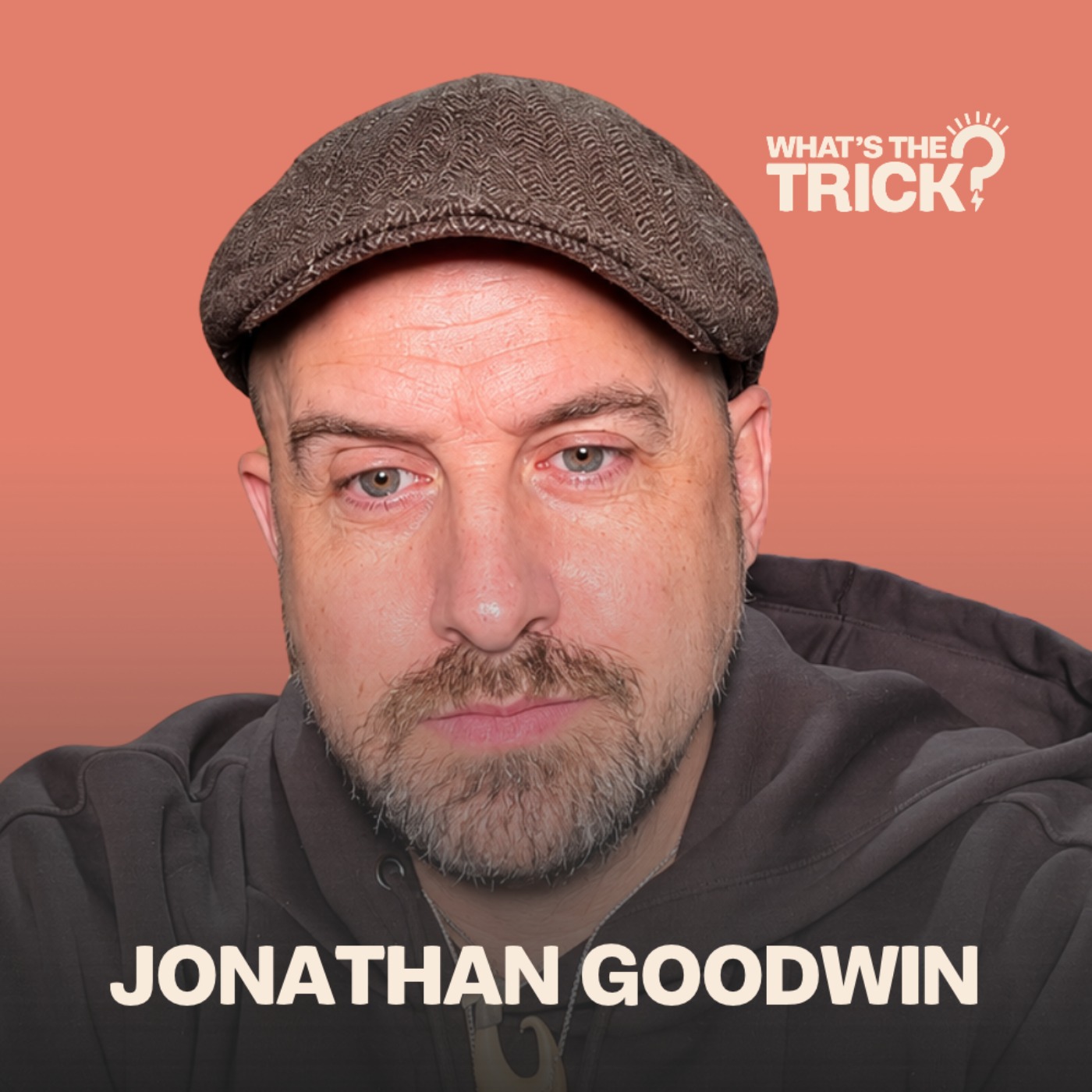

 What's The Trick?
22 May 2026 · 59m · 22 chapters
Shoot From The Hip’s rise from weekly comedy-club improv to viral TikTok/YouTube and sold-out major venues, plus how they structure improv and handle hecklers.
Shoot From The Hip improv group members Sam, Tom, Luke (AJ also mentioned but not present). They met at Royal Holloway University (Holloway Players). They funded an Edinburgh-bound play via improv, then ran long-term free “bucket” shows at Top Secret Comedy Club and later regular slots at Camden Head/Angel Comedy. Sam has BBC comedy radio production experience; Tom and Luke are actors/improvisers; AJ is a filmmaker/editor.
COVID forced them into live-streaming; a BBC-linked iPhone-filmed sketch series became TikTok fuel. They post a TikTok clip daily for months and use short game formats to funnel audiences into longer improvised plays on YouTube (77+ long-form plays). Their “yes” is performer-focused (accept the offer, don’t agree with harmful character actions). Audience training in the first five minutes reduces heckling.
“Letter of Complaint” game; long-form “Jack the Stripper”; “pirate in a hospital” genre mashup; heckler shutdown via incorporating disruptions into characters.
Written by AI. May contain mistakes.
An overview of improv, its distinctive elements, and the guests' journey to success.
“So we dive into the art of improvised comedy.”
The story of how the improv group started at university and their evolution over the years.
“I'll do a speed run and we can embellish if we need to.”
Discussion on challenges faced by the group, including the shift during COVID and its aftereffects.
“One got deported, but he did end up marrying a princess, which is good.”
Exploration of how Shoots From The Hip adapted to online platforms and gained popularity on TikTok.
“Yeah, it was basically, I was working at the BBC at the time as a comedy radio producer.”
The strategy behind producing long-form improv plays and how they monetize their content.
“And I pitched it and they went, that's good.”
Insights into the group's fan interactions, community building, and their unique relationship with fans.
“The one I was just watching a couple hours ago was Jack the Stripper.”
Discover the reasons behind the improv group's widespread appeal and success.
“So there's been over the years, lots of improv groups, but there's not many that have got millions of followers that can do national tours, that can play big venues, that are doing it.”
Learn about the group's journey on YouTube and their audience growth.
“which we're slowly revealing to the patrons.”
Explore the improv shows and comedians that inspired the group.
“with a bit of improv in there in just a minute.”
Understand the mixed perceptions of improv in the comedy industry.
“and then you guys can speak for the audience side.”
Explore how improv performers create engaging narratives on the spot.
“and I'm going, right, we're going to go into this play.”
Learn how improvisers collaborate to enhance stories and character dynamics.
“And also going, what does the story need as we go along to make sure you're not just coming and going, I'd have fun doing this.”
Understand how audience interaction shapes improv performances and dynamics.
“And Sam is clearly having a lot of fun trying to talk to this American doctor as a pirate.”
Discover strategies for managing hecklers and maintaining flow in performances.
“And let's jump back in with Shoot from the Hip.”
Explore how experience shapes confidence and creativity in improv.
Learn how improv skills influence various career paths and job opportunities.
“And it's also problem solving is when you are in a place where you don't know what you're going to do next.”
Dive into a rapid-fire segment discussing inspirations and skills to steal.
“What's Prince going to add to your business?”
Discover recent media recommendations and the importance of original content.
“maybe there was a particular play, maybe there was one thing that you've all done that you can keep in a time capsule and the rest of your work is going to get incinerated forever.”
Discuss the logistical and administrative hurdles faced by comedians.
“I'm going to give you all my magic wand.”
Gain insights on building a successful career in improv through persistence.
“I went in to get a coffee and I ordered a flat white web and the guy was like, oh, yeah, yeah.”
Learn how the improv group invested their time and savings to succeed.
Discover insights on creativity, facilitating laughs, and content generation.

Get the gist, explore an idea or ask about something said.
 Claude
On What's The Trick?, what are the key points of this episode?
Searching your listeningAutomatic transcript. May contain errors.
0:00So we weren't filming anything, we just did the shows weekly in a comedy club for free and then had a bucket.
0:06Ben Hanlin: We train the audience how to be good guest givers within the first five minutes of the show. Welcome back to What's The Trick? I am your host Ben Hanlin and this is the podcast where I sit down with the world's most creative people and try and understand their creative process. And today's guests are the first time we've ever had an improv group on the show. they are the improv comedy group shoot from the hip so let me tell you a little bit about these and why i wanted to get them on the show because they are the world's most followed improv group on social media they have got millions and millions of fans so let's just recap what is an improv group for those that aren't initiated these are you may have seen this uh either in real life or on tv or whatever it is people that go out to do comedy shows where they don't have anything prepared they have a selection of games that they play with the audience where the audience shouts things out and they improvise live comedy sketches and what makes shoot from the hip i suppose a bit different is in their shows in the second half they also do improv plays where they can do anywhere from 30 minutes to almost an hour of a completely improvised play that will happen there and then once it'll never happen again so i wanted to sit down with them to figure out how do they do that how did they first of all get to become so followed online and the great thing about improvisation is obviously it's different every time so it created a load of social content but what was really interesting I don't want to give too much of it away is it very nearly didn't happen something happened around COVID and then it changed the game for them so you'll hear their story about that and I also want to know how do improv groups work is there any secrets to this Are there any plays or strategies they have?
1:55Ben Hanlin: So we dive into the art of improvised comedy. And I think there are lessons here for everybody about how to get up on a stage with essentially no material and to know that you're going to be OK. But also, I think there's a big lesson here as well of how they learned their craft. So, again, I don't want to spoil too much, but it's a really great sit down conversation into a world that I know very little about, which I hope you find interesting as well. a couple of things to note as well three out of the four of them joined me for this so we're joined by Sam Tom and Luke and as always we are recording this is on YouTube you can go and watch it there but I think you're really going to enjoy this one they're also about to go on a national tour and sell out Hammersmith Apollo or sell tickets at Hammersmith Apollo which is unbelievable for an improv group so they really are absolutely crushing at the moment and it was lucky they could take the time out to talk to us so anyway without further ado enjoy this one this is what's the trick with shoot from the hip you are the most followed improv group in the world you're on a national tour you're about to do hammersmith apollo my question is how so how obviously i know you you met at uni and you did improv group at uni and then you left uni but it'd be really lovely to try and understand if you can how we've got to this point go as geeky and as granular as you want.
3:20Ben Hanlin: I'll do a speed run and we can embellish if we need to. That sounds fun. So we did All Me at Uni doing at the Royal Holloway University and there was an improv society that was called the Holloway Players. Shout out. Which was a really great sort of crucible for us to begin to learn how this craft sort of worked because the audience were all our same age. We had the same references and we did pub shows and we did some student union shows. When we were about to leave university Tom had written a play that me and Luke were both acting in and we needed to raise money to take that play to Edinburgh because Edinburgh is incredibly expensive.
3:55Ben Hanlin: And so we had been doing the improv. So we said, OK, let's do a few fundraising improv shows for the play, which we did in London. We did about two or three and we fully funded the play, did the play, got some very nice reviews, came back and said, do we want to do another play? And said, no. I said, do we want to do some more improv? And said, yes. and we had no idea sort of really where to start. So we went to see the comedy store players that we'd been to see in university, you know, some of the original British Who's Line cast. So sort of idols of ours. And we saw the show and they brought us back into the green room and we said, we'd love to do this.
4:30Ben Hanlin: We'd love to do improv as a profession. What should we do? And Lee Simpson looked me dead in the eyes and said, don't. But he said, if you do, go and find a comedy club that has a free night and offered to put something on that free night. So we found the Top Secret Comedy Club, which was its original location below the Africa Centre, and they didn't have shows on a Tuesday. So we said, we'll do a free show for you on Tuesdays. You keep the bar and we'll keep the bucket of money and change that sort of gets thrown in there. And we did that probably for about sort of seven to ten years and we added to it.
5:08Ben Hanlin: So we started doing a regular show at the Camden Head, Angel Comedy. And then when the Bill Murray opened up, show was there. And then up the creek for a little while. And then COVID happened. And everything sort of like live comedy became illegal. Well, it did. But let's just look at that for a second. So for 10 years, it was always the four of you? No. We had eight people at the beginning. One got deported, but he did end up marrying a princess, which is good. Is this one of your improv plays here? No, that's true. Weirdly true. So one went to become a silversmith in Kent. And there's a few other people in there who just, you know, didn't stay with it for various reasons.
5:47It's been us four for about four or five years. Yeah, AJ joined later as well. He's not here today. Yeah, yeah.
5:53Ben Hanlin: But he joined a little bit later because he was two years below us. So when you're doing that for 10 years, because there's so many of you, that is never, I'm guessing, going to be the career at that point. That's just something you guys are doing on the side for fun. Partly we started doing it whilst we were leaving uni. And we'll all go get our proper jobs. We'll go do auditions and things. And I went, oh, no proper jobs? We're going to double down on the improv. Okay, so where was the trigger for the four of you to go, right, this is going to be our career? Just before COVID or during? It's hard to say, after five years at Top Secret, we were earning quite good money in the buckets.
6:25Ben Hanlin: I was paying my rent off just doing one or two improv shows. We kind of weren't reaching out beyond that. So we weren't filming anything. We just did these shows weekly in a comedy club. for free and then had a bucket so you're doing this you're doing your buckets you've got you guys together and then you said you're working quite regularly every week slotting this around you're the jobs and then covid yeah then what happened yeah well first off those clubs went actually we we want to like focus on stand-up so we were like okay we we did a couple of shows elsewhere put on our own stuff and then when we might actually be finishing yeah um various people are moving we're all moving on with our lives etc then covid and then we did some live streams um from our flats where all of us grow terrible beards and look very unwell i kept mine he kept his and it's become a trademark and we love it um so we so we did these uh shows online yeah and some people were very generous and donated during covid to us which was fantastic and again help keep us going whilst we were locked in our flats also kept us sane and then after COVID we did some more of those streams but fewer people had places to go once again and through a variety of circumstances Luke was going to do a few sketches at a comedy club Sam was producing it and I think Sam suggested oh well we need something to pad that out let's have Shoot from Hip do a show either before or after it and let's film it on an iPhone for posterity and maybe whack it onto TikTok.
7:56Ben Hanlin: Yeah, it was basically, I was working at the BBC at the time as a comedy radio producer. So I was doing things like the news quiz. And then part of that job is you pitch new comedy shows. And I was like, I've never written sketches before. Luke has. I've got a concept for one. And I pitched it and they went, that's good. We need to hear a version of this. And I was like, okay, cool. You got a budget for that? They went, no. I was like, well, who's going to be in it? That's up to you. And so we basically booked these four hour long shows at the Bill Murray to do these sketches. which we didn't have enough time to fill the hour but we needed the sketches up on the ground so we thought, okay, I need free performers and I need people that can pad out the show between the sketches and so we got Shoot from there back basically to do those four shows and as Tom said, we've just filmed the whole thing partly for the BBC but also for us on an iPhone and I'd been doing a bit of stand-up on TikTok and so he just sort of said, should we just whack it out and see what happens?
8:50Ben Hanlin: Sam had gone mini viral for his Elmo impressions on TikTok I used to do sort of a bit which was pissing off cold callers by responding as Elmo from Sesame Street yeah what do you want to talk about? It's going to be really exciting yeah, Elmo's got cancer too and yeah so one of those hit I think just below a million but then we started putting the shoot from the hip ones up and the first few weeks it was like maximum sort of 10k 15k and then one of the letters jumped to 100k and we all sort of were like do we dive back in should we dive back in and we just slowly did and slowly built and again it was an iphone and maybe a little recorder on stage for a first few aj who's not here today really went all in on posting a tiktok clip every day on your shoot from the ship account for about six months to a year yeah um and would these be for those who obviously know improv would this be something like a game where like i know a couple minutes long where you'd start with something from the audience going shout this out shout this out we'll do a game and that whole thing just goes out as a clip yeah generally speaking we might trim off sort of the start or end uh but yeah so there's sort of about 20 odd game formats we do and we'd kind of go oh we like this one and pop it out and see how it does and we had a couple of formats that really took off so one is a letter of complaint where you luke join me in this uh where you write a letter so it might be dear sir or madam i am writing a letter like that right okay and then you say something funny after yeah um but yeah just one word back and forth so it's really nice and sort of accessible if someone starts watching a video they go oh i get what they're doing straight away and those really took off so you started going viral on tiktok and obviously i'm fast forwarding but you've got the holy grail which is 800 900 000 on youtube which is a completely different beast and that's where you start to monetize so i'm guessing at some point you went from the short form to then what putting putting that was that was very uh we we decided to do that just before we went off to the fringe a couple of years ago partly because tiktok kept changing their algorithm yeah and partly because the thing we do but i think i'm right in saying we're all sort of most proud of first half we'll do these games which were great for tiktok second half we do improvised plays which are roughly 25 to 50 minute long plays we get a title sometimes a genre and we just make up a whole comedy play and that wasn't really going to work on tiktok yeah so we put those on youtube and we now have 77 of those out in the world.
11:36Maybe by this point, 28, by the time this goes out. And yeah, so those are sort of more ambitious and will have more complex characters. So these are 30 minute videos
11:46Ben Hanlin: on YouTube where you have stood in front of an audience and you've, like you said, you've improvised an entire play. The one I was just watching a couple hours ago was Jack the Stripper. Great one. And the great thing is obviously you can do that almost every night of the week if you wanted to and it would be different every time, which is this perfect was infinity of content, right? That's probably why we were able to take off on TikTok initially, because we went, oh, we don't, we're not going to run out. So I remember like when I was doing it on standup, I'd be watching back my whole set and go, I've done, I've already put that clip up.
12:18Ben Hanlin: I've already done that bit. Okay, I'll just take that bit of crowd work. I've kind of done that bit of crowd work in a similar format before. But our show, if you come and see our live show, the first half is those short form improv games and scenes. So nothing is really longer than about five minutes. and sometimes things are about two minutes long. And then the second half is that long-form story, which basically means when we turn that into online content, people discover us via the very quick, very high-energy games, and then we have linked everything to the long-form stuff, and that's what they fall in love with.
12:51Ben Hanlin: So these are really funny guys. Oh, they have even longer stuff? And then they watch that, and that's the thing that really gets them invested. That is key for our revenue as well, that you get people into that longer stuff. because the longer form videos you get more money for. You get more repeat viewings as well because people are more engaged, because they love the characters, they love the storylines more than in the short form stuff. And that's where the fan art comes from. And we love fan art. Oh, yes. There's fan art, there's like models, people have come in costumes. I love the costumes because they make costumes based on characters we played on stage.
13:22But the characters we played on stage were not in costume. So sometimes people come along and are like, huh? This is based on what is in your mind,
13:31Ben Hanlin: but i love well we have one of the most lovely fan bases that i've ever heard of they are all incredibly um supportive of each other they have you know people have become friends from like different parts of the world who sort of talk every day and then they sometimes come to the uk to see a show together they are you know everyone when you think you're going to start putting things online you're going to look at the comments and there's going to be some nasty stuff in there, I could probably count on one hand how many negative comments that we've got. So here's going to be my question. So there's been over the years, lots of improv groups, but there's not many that have got millions of followers that can do national tours, that can play big venues, that are doing it.
14:14Ben Hanlin: And be as honest as you want here. Why do you think you've been able to cut through that? I've got two reasons. Go on. You can go first. I'll go with two initial reasons. I think one is that we came up through comedy clubs. So a lot of people do improv in improv clubs, etc. in a place where everyone already likes improv and they understand. They're playing to their own audience almost. Whereas we kind of came through a bit of a trial by fire of several years. And actually 10-ish years of that of playing to people who are like, I did not come here to see your show. So we had to win most people over, which is then perfect for putting on the internet.
14:55of going, you didn't choose to watch this. You were just scrolling, but we're used to talking to people who don't want to hear this. So that. And then the second thing, which is the much drier thing, is AJ is a filmmaker. So he's editing stuff fantastically. Sam, BBC radio comedy producer and also the most natural funny man I think I've ever met. I have a few years experience in TV and film production and script editing. So I know how to sort of organise all that kind of thing. And Luke has a fantastic beard. He's also a brilliant actor and also probably sort of the emotional anchor for just sort of keeping things calm in what would otherwise be a boy band level drama.
15:40I am actually the glue that holds the group together.
15:41Ben Hanlin: I would also say that Luke probably has the most intellectual and sort of has done the most reading on improv out of all four of us. So yeah, I think it's that sort of super group formation that Tom was talking about. it's the baptism of fire in the comedy clubs i also think from someone who's you know been producing comedy and worked in comedy the whole sort of vibe of it now is very in groupie like it's easy that it's usually attacking someone or it's political yeah or there's you know there's a butt of the joke whereas our comedy you do not have to know who the chancellor the exchequer is yeah you no one is being attacked you the audience are the people who are affecting what the content of the show is and we have so many people around the world who go english isn't my first language but you i can see your physicality i can see your physicality i can see your emotions um and it's just and i don't need to have anything i don't need to have a knowledge base to understand why this is funny it just is so i've never thought of it like the way you've described there it's like it's really inclusive it doesn't exclude anyone it's it's quite like a warm blanket of anyone can come in just come in with positivity and you can be included in this thing and so you were on the brink in in covid of splitting up the the band was splitting up essentially you're all going your separate ways and on a whim and this is what i love about these conversations it's kind of on a whim ah screw it's almost changed everything it's brought you back together and gone right we can make a career out of this and was it pretty instantaneous when you started doing youtube was it because i mean you've got in a short time five or six years almost 800 000 and followers on YouTube is pretty amazing.
17:22Well, really, I mean, this started, we posted the first TikTok video in 2022. Wow. So it's been even shorter than that. August 2022. August 2022, yeah. And then did we go to Edinburgh in 2023? Was that the first Edinburgh? Well, the weird thing is as well that YouTube had actually been up since we were at uni and had like a couple of hundred views and our first improvised play that's on there, that's now, so I make the thumbnails on it. So I've made a thumbnail that matches all the improvised plays we do now. That was up there since about 2017. And we had like 200 views. And then once again, AJ sort of led a push of, okay, we should switch over to YouTube.
18:00It's more stable. There's revenue. We can put longer form content on there. And so it was all sort of shifting it around and rebranding it a little bit. But it had been up there and not. Oh, and there were also some sketches on there, which we're slowly revealing to the patrons. But yeah, so that stuff had been there, but there was a very conscious decision of sort of right we'll we'll move from tiktok we're still on there we still love being on there but we're able to put all that short and that long content on youtube i also like that very first video is shot at the stratford theater yeah in east london uh and it's shot with proper camera so it looks really nice then the second one is just like on iphones in this tiny little
18:40Ben Hanlin: and did you notice straight away or when all this started bubbling away and getting the views when you were going to Edinburgh? Because obviously I looked at where you're touring and I thought, well, I wonder what came first. Was it the fans and then the views? But it seems like obviously the views, people have gone, I want to go see those guys live. It was symbiotic really. It's like, you know, pre-2022, if we'd been trying to do gigs, it would have been maybe a hard sell to try and get the punters in to watch it. So we'd been playing much smaller gigs. But as the kind of the online videos hit, they feed the audience that wants to come.
19:12And the bigger audience you have, the more content you can make. so you can put more stuff online. So they kind of grow together in size. And we're still, it's like a constant question of, actually, what's the biggest room that we can play? Or how many seats can we fill in London in one month? Now we've taken a gamble and gone for the biggest one.
19:27Ben Hanlin: Well, this is it. Hammersmith Apollo is 4th of October. Still some tickets left. It's a hell of an achievement. It's a hell of an undertaking. We haven't achieved anything yet. It's the biggest venue. Correct me if I'm wrong here. The biggest venue played by UK improv group in the UK. That's so cool. And that's essentially come from, I'm going to go back to the core of it. Oh, let's just chuck that on TikTok. Who cares? And it's gone bang. Look at that journey. It's amazing. Right. Let's get into it. Very quickly, inspirations. Other improv inspirations when you were kind of over the last 15 years, what were the ones that you'd all be talking about?
20:03The big one, I think for all of us, which I only discovered literally the year before I went to university because they showed the reruns on Channel Dave back in 2008 or something, is Whose Line Is It Anyway? Yeah. Like the only real kind of successful TV improv there's been. Prior to us. Yeah. Thanks for just commissioning us in the week since we filmed this, guys. One day, one day, one day. Yeah, they shot those back in like the early 90s or something and onwards. They've brought it back. Originally it was a British programme. It's a British radio show. British radio show. And now it's mainly an American thing.
20:40they took it over there and they carry on over there but those episodes were great and it was a real like watching that for the first time and being what the hell is this this is incredible and when I went to uni there happened to be a society that was doing that so I was like oh I need in on this. Yes that wasn't actually my Was that not yours? No. Oh yours was the Masterson Inheritance There it is so there's a show called the Masterson Inheritance which Paul Merton is in and I've had the delight of being on stage with him and so it was like the improvised play format we do the master and inheritance was basically we'd be in a different era each episode and you follow a member of a master some family who sort of rags to riches and then brags again and all over the shop um and so that was longer form improvised radio plays so there's that and then also for me things like i'm sorry i'll read that again and no i'm sorry i haven't a clue which came out of i'm sorry i'll read that again which is obviously a panel show with a bit of improv in there in just a minute.
21:37So, yeah, I'm going back to like 70s influences because I'm out of date and these guys are cool and new. Mine was in the 90s. Yeah, that's cool and new. My family's not as middle class, so I didn't even know Radio 4 was. We were looking at Radio 4 on in your house, didn't we? Aggressively middle class. Well, I couldn't sleep as genuinely as a kid. So I'd be like seven. You should turn the radio off. I'd be like seven. I couldn't sleep. It'd be about 2 a.m. and I had a tape recorder and I'd re-listened to episodes of Just a Minute. I'm sorry I'll read that again I'm sorry I haven't a clue get to sleep about four and there are episodes of that I can speak along with still if you start it but don't so do you think that child Tom would be a massive shoot from the hip fan I think so I don't think he'd be on board with the swearing I used to if I was annoyed as a little kid I would go oh that's so bleeping annoying wow
22:27Ben Hanlin: how did he ever get married that was lame that's very cool very cool boy quickly Sam any your early inspirations i mean i remember i watched a lot of comedy stand-up and mainly american stuff and i would watch interviews with um the character the comic actors and stand-ups afterwards and they kept sort of dropping these things of like well i did that at second city and i was in the groundlings i was like okay what is all this and in america pretty much every comedy actor you love has probably done some improv at one point and some of them and some of the best ones have done it very seriously for years like they take it they go to school for it and they do it for a long time and then they work that improv into sketch writing or into script writing and therefore when you i think why one of the reasons i like american comedy so much is yes they'll sometimes do a line that is you know they're going to get a safe one but then they get to muck around afterwards so if you look at a show like it's always sunny in philadelphia yeah they have a script and they have a plot but they also give themselves so much freewheeling time to try and see if they can push it anywhere funnier.
23:33Ben Hanlin: And I think that it's wonderful that over there it is a respected art form. Well, did I read, is it Jason Sudeikis? Yep. And his co-writing partner for Ted Lasso, weren't they, I think, from an improv background? I think that's how they met. And they do a lot of that on set. Any American working in comedy has done improv stuff, basically. That's the general rule, like 95%. So you've tipped on something there, Sam, where you said in America it's kind of deemed as a more respected art form. So let's quickly, I don't want to be negative, when you handle this how you want, but some comedians or some people in comedy, and I'm a magician that does a comedy.
24:11Ben Hanlin: I get stuff all the time, but some people don't like improv, right? It's a bit of Marmite. Why do you think that is? What's the deal with that, I suppose? I think I'll speak for the industry side and then you guys can speak for the audience side. if you are a producer you go i i've got this amount of time to record something or film something yeah i've got i can either have the safe act that i've seen in three comedy clubs doing their stand-up special or their edinburgh show and then bring them in and record that and i can read through the script and i can give notes and then they can do it yeah or i could get a boot bunch of booch i could get a bunch of improvisers a bunch of improvisers and i have no idea what they're going to do yeah so in terms of like something to invest in you really have to take um you know you have to really believe that they are going to be able to deliver yep what they do so i think you know we have had some shows which are 11s out of 10 we've been doing this for so long now we very rarely dip below a six yeah but if you get a stand-up and you get them in a room for the people who like that stand-up they're probably always going to be an eight yeah yeah Okay, fine.
25:17And then, cool. Following on from the industry side, because the industry prefers stand-up to improv, lots of, you know, the average person in the UK has seen loads of stand-up on the telly. Yeah. So they've seen good examples. So if you go to an open mic night where everyone is a bit rough because it's their first time doing it, you don't look at that and go like, oh, well, obviously stand-up is terrible. You look at it and go, oh, those are clearly like some beginners. I know stand-up can be great because I've seen it on Library of the Apollo or whatever. Yeah. was with improv you haven't seen loads on the telly so you might go to a night maybe they're all beginners it's a bit rough and a lot of people just write off the art form entirely
25:50Ben Hanlin: because that's their direct experience of it let's get into the nitty-gritty of how you do it right so i mean this could be a very short conversation because it's improvised i'll start with my knowledge of improv which is very basic but you can build on this and i know you do classes and teach people this so my understanding of improv is the mindset of yes and which is if you're on stage with somebody and somebody suggests something the other people in the cast have to mentally agree with what's been suggested and add to it to build the scene so that's how i've been told improv works is things get shouted out and one person makes a suggestion and everyone then builds to it but i'm guessing there's more to it technically than that so i think the yes and thing i think that can be very misunderstood by people just starting out okay um and obviously See, that's the thing that always gets quoted.
26:39Because you are trying to say yes to the performer, not necessarily the character. And so you will see some improv where someone sort of... So the most obvious example is if you've got a character muggy another character, you don't actually want someone to go, give me all your money.
26:56Ben Hanlin: Yes, and please take my credit cards too. The pin is 45678. There, that's actually... I don't want you to do that. To say yes and to that would be me going, give me all your money. No, please. I need this for my therapy. Because he's going, I see that you are doing a mugging and I'm building on the reality of what that would be. It's not actually the words yes and. It's the mindset of, yes, I hear your idea and I will help by adding some audio. Yes, you're not saying you're not a mugger. You're not shutting the idea down. Yeah, that would be a no or block. So that would be, and that's what I think most improvisers know, don't do that.
27:32But there's also that intermediary thing of you can say yes to the situation in character and that might not be good. But you want to be saying yes as the performer. And there is a gap between.
27:45Ben Hanlin: I suppose it's basically going someone's going to come in with an offer. You meet them in the reality that they've created and add a new offer on top. OK. Like a cake. So when that's happening, I'm trying to dig into if I was joining your group, right, let's say I'm the newest member. and I'm going, right, we're going to go into this play. I'm going to do my yes and stuff. What other advice have you got? What else are you doing behind the scenes? Have you got like a structure in your head where you kind of go, oh, okay, we're probably going to have this. I think what it is, we don't have a set structure, but after so many years of doing it, you have a kind of underlying feeling for what the story needs, how much trouble to get your protagonist into, what kind of blocks you need, whether you are sort of bridging and delaying the thing that the audience is waiting for.
28:34So go on. So you've used phrases like blocks. What do you mean by that in that sense? This is a different block to the kind of problem we're talking about. Yeah, so... You know, obstacles in your protagonist's way. So you might go, we need a villain here. On the most baseline, you might go, we need a villain because at the moment, everything the hero is doing or everything our protagonist is doing is going to work out. All he wants to do is marry his childhood sweetheart. Oh, we need a villain to come in and go, actually I have a contract saying she will be marrying me at noon tomorrow ah so actually so
29:05Ben Hanlin: the way you guys talk about it obviously like it's a second nature but actually what you're all doing is looking at the scene if you're not in it and just being storytellers yes going oh if I was telling this story like a like a fairy tale in the next 30 minutes what story and in your head you might go okay it's about a crime drama there's going to be a twist and there's going and then you And then you come in with your character that then provides the story that you've written in your head, essentially. Right. Rather than I was assuming you're all sat there going, oh, what character can I be?
29:37Ben Hanlin: Here's a character. Yeah. No, yeah, yeah, yeah. Actually, you've already gone. You're quite far ahead in your mind of. Ideally, yeah. You're having a mix of I'm an actor going, what would be a fun character for the others to get to perform with and for me to perform? And also going, what does the story need as we go along to make sure you're not just coming and going, I'd have fun doing this. So yeah, who cares about what the story wants? And one of the great things about all this is we will have four different ideas. And so the interplay and that's why we've been able to hundreds without yet repeating a narrative.
30:10Yeah. Is because I will go, I think this would be the full story. But then Sam will throw in a wrinkle. I'm like, I didn't think about but that's great. So I had a character recently who I was like, oh, he's very lonely. He's got nothing. He's all alone. And then Sam walked up behind me as my daughter who wanted to go to a jazz club. I was like, that's great, because I would not have...
30:29Ben Hanlin: We had one show recently where the two genres that the audience were excited about evenly was medical drama and pirate. And the other three started off a very sort of soap opera-y medical drama. We officially took medical drama as the genre. And I fully committed to being a pirate in the hospital. And now you're a pirate in a hospital. I'm one of the patients. It was so good. And then, you know, and I think that's a big, bold... That would seem, if I was teaching, I would never tell anyone to do that. But we've been doing this for so long. And by the end of it, the pirate used to be a doctor, but then he went off, he didn't want to be a doctor anymore, so he became piracy.
31:09Ben Hanlin: He'd known some of the other doctors who were working in the hospital. And so eventually some big, crazy offer, because we are all so used to working, will work into the narrative that therefore it makes sense why there is a pirate going, ah, there's something wrong with my leg in this, I think it was American hospital. Yeah, yeah, yeah. this also plays into I think part of the reason why we've had such success is that it's kind of a bit different to the American style in the British style of improv there's much more emphasis on like mischief and mucking around with each other so that was really fun because we know we're going to do medical drama and then Sam is coming in as a pirate essentially to piss us all off the one other thing that we've not talked about yet is and I think this is another reason why it has got quite a dedicated fan base and a growing audience is in most shows you have you just have a game which is just the narrative that is being presented to you that you suspend your disbelief and you go that is hamlet the prince of denmark on stage okay and you don't really think about who's playing hamlet really you shouldn't if they're doing a good show whereas our show has that a game of these two are doctors and i'm a pirate and we're seeing those people live in their reality, but there is the B game of Sam has just fucked Tom and Luke by being a stupid pirate in their medical drama.
32:28Ben Hanlin: And Sam is clearly having a lot of fun trying to talk to this American doctor as a pirate. It's great. So it's the B game of it, which is almost, it just adds another layer of enjoyment for us. Hello, it's me, Ben, and this is a short commercial break. But for you regular listeners, you'll know it's not really a commercial break because I haven't got any sponsors. No, in fact, I am losing money on this. But anyway, let's talk about why we have this break. It's for us to have a little chat. So first of all, this is Shoot From The Hip. So if you want to go and check them out, they're on social media.
33:00Ben Hanlin: Go and give them a follow. They're also on tour. You can see their tickets at the Eventim website. And their big gig at the Apollo is the 4th of October. Still some tickets left. Have a look at that. If you're going to Edinburgh, make sure you go and see them from the 14th to the 16th of August. and you can go, like I say, see their socials and they're also on Patreon as well. Shoot from the Hips on, or SFTH is on Patreon. So there we go. Let's quickly talk for those that, by the way, if you're a new listener, maybe you're a Shoot from the Hip fan and you've found this podcast. Welcome. You are very welcome.
33:33Ben Hanlin: We talk about this every week. If you're into comedy, we've had previous guests like Scott Bennett. We've had Simon Brodkin. We've had actors. We've had writers. We've had all sorts. So go and have a look at some of the previous episodes. Hopefully you'll like them as well. And as always, I do say drop me a message on Instagram. DM me Ben Hanlon and let me know how you're getting on with the podcast. I always love literally every week. It sounds really silly, but my ego is this precious. I do love getting messages from you, even regular listeners that have listened to a load. Tell me what you're thinking and what can I tell you about what's going on in my life?
34:09Ben Hanlin: I'll be super quick. You might be wondering, what do I do as a job? I'm still a keynote speaker, a magician. In the last week or so, I was in Birmingham this week in my hometown performing to an after dinner entertainment slot. This week I'm in St. Albans and weirdly, not weirdly, but sometimes I'll host conferences. So I'm doing a what they call a fireside chat with two big CEOs this week where I'll host that for an hour. And then in the evening, I'll host the awards as well. and then on the Thursday I'm in London for another gig as well and then next week I'm in Scotland twice actually in Edinburgh and Glasgow all in the corporate space so you can see all of that on benhanlin.com and what do I need to tell you about this podcast so if you haven't subscribed do hit that subscribe button so that you make sure you don't miss future episodes that would be lovely if you've got time to drop a review honestly they do mean a lot especially for the newer podcast like myself and here is the thing I always say I suppose the two things that I would love if you are a potential guest if you are somebody in the creative space and you think oh wouldn't it be cool Ben might want to know that I listen I'm always up for guests if you know anyone if you work with anybody any writers any creatives any in any sort let me know because it'd be great if you as the community could help me find our pipeline of guests because I'll be honest with you it takes a lot of time so um any help there would be appreciated and the main thing i would ask is if you are enjoying this episode and you know people that are into comedy or into creativity pull out your whatsapp or your messenger and just share this link to one person and say i think you'll like this podcast and here's my plan if every week we can just share this with one person this community is going to grow and it's going to be lovely i'm really enjoying doing them and i I think we're about 21 episodes in now.
35:57Ben Hanlin: So we release episodes every Friday. So there we go. That's enough from me now. If you want to pick this up and chat, like I say, DM me on Instagram. It takes me a day or so, but I will definitely reply. Okay. Right. Enjoy the rest of your week. New episode drops every Friday. And let's jump back in with Shoot from the Hip. We've talked about it all going right. Let's talk about it going wrong. Okay. Because, and again, feel free to be honest here the bit that i had to watch this earlier what do first of all what do you think of that scene in ted 2 where they're in the improv club yeah yeah and he goes give me a historical event in the yazan 9 11 he's like no okay we're in starbucks give me a celebrity bill cosby and it's like they're just messing them up right yeah and it's just a silly bit of humor but obviously it's them just trying to have a bit of fun with improv but in essence does it ever go wrong where people either call out stuff or they're just there to disrupt the show or there are just days where it's just not clicking how how often is it i mean i know you've probably tried and tested now but it's quite fun with the hecklers we had more of that coming up in the comedy club when people were like coming for a stand-up night so they assume they can heckle and it will work yeah uh so we actually got quite experienced at like shutting people down yeah either when they're giving uh stupid suggestions like that yeah uh sometimes you take them occasionally you will take a stupid suggestion just to show like i can do that yeah so what uh but also sometimes they it out during scenes or things and then you find a way to kind of like incorporate them into the scene but also shut them down so let's talk about because this i think applies in lots of things in life how do you deal with a negative person without attacking them and alienating them and making them still feel part of the show but also basically saying shut up how do you get control of them do you have a technique uh well yeah you kind of just have to be firm like I try and stay in character in a way, but find a way to address them as if they are part of the scene.
37:52Maybe they are an animal that won't shut up, or maybe they're a rebellious son. Maybe you go into the audience, talk to them and embarrass them as if they're my son. I don't have to do that as much anymore.
38:03Ben Hanlin: I remember there was one which was called Moist and Magical, where Luke was Scottish witches, and Luke basically addressed his audience member as his grandson. And basically told him to shut up when he's talking to his friend. And I then came on as the grandson. So the disruptive audience member invented the character that then became the main character for the show. So unless someone is genuinely there to try and ruin it, like even most hecklers, they just kind of want to join in. And especially I can imagine with a magic trick or with stand up, they know the comic timing it needs. It's really disruptive when someone heckles.
38:44Ben Hanlin: When someone heckles us, unless it is genuinely they're not paying attention or they're just shouting or they're usually wanting some sort of feedback. And that's an offer. In improv, that's just, OK, you've added something else into this thing that we've made. We might not use a lot of it, but it's much easier to bounce off than in any other form of creativity. I think also our show, because again, it was delivered from the comedy clubs, we train the audience how to be good guest givers within the first five minutes of the show. So the first five minutes is usually one of us doing the intro to improv and warming up, going, I will show your first names on three.
39:23Ben Hanlin: One, two, three. What's your favourite animal? One, two, three. All right. Where do you work? Where do you work? These are all perfect suggestions. Everything in the year is great. So by the time we're actually doing that first game and asking for a location, they are excited and they kind of know how to be a good member of the audience. So you're not walking. If we just walked on the stage and went, we're here to do some improv. Can we get a location, please? Then they would probably be very quiet and you might get one confident dickhead going, oh, the Holocaust. And so then you and but you've jazzed them all up.
39:50Ben Hanlin: So if you do get some stupid ones, if you do get some stupid ones, you've got 10 that will work great. Do you know what? That's something not many people think about. But again, because my show is very audience member driven as a magic show, pick a car, think of this. And your show is 100 percent audience driven. Yeah. The running time, everything can fluctuate. Right. But equally, you need the best out of them. So something I do in my show, which I've never talked about, is conditioning the audience. And about, like you say, using that first few minutes to go, hello. No, let's get the energy right.
40:20Ben Hanlin: Let's get this call and response right. And then once I've got the call and response going, then we can start the show. And I think there's a lot of people, even I watch speakers or people at conferences and things like that, that don't ever think about how to engage with their audience and take a moment. If the audience aren't quite with them, just dial around with them a bit until they've got them where they need to be. Well, I used to do a lot of comparing for stand up shows. And I did a few like sort of people would ask, what's your hot tip? And I'd say, if you are hosting a show and we are always hosting our own show.
40:53Ben Hanlin: Yeah, yeah, yeah. if you're not the most excited person to be on that stage, why would you expect them to be? So every show, even though we've done it a few times, and we might be incredibly tired and had a long train journey and all that, but every show is, ladies and gentlemen, welcome to the stage, show from the hip. And we all run on with huge energy. Woo, woo, massive cheer. And then they're like, these guys that are having a great time, so I'm going to have a great time here. Whereas if we walked on, yeah, hey, we're shooting the hip, they changed now. Then I think you'd feel the room going to go, oh, okay.
41:22Ben Hanlin: I mean, these skills are transferable. So there's a lot of people that in general would think standing on stage anyway is their biggest nightmare. The idea of public speaking or being in front of an audience. And then to top that, being in front of an audience with no material is petrifying to some people. So the fact that you can confidently walk out with no material, obviously, you've got formats and games, but that confidence to be in front of a room full of strangers with nothing and feel confident. Is there any? we haven't got nothing we've got our buddies we're each other i was literally gonna say the same thing is you're if someone said to me you've got to do that alone for two hours even after doing improv for 15 years i'd still be like that's an undertaking right i don't want to do that fine but you always have someone else to bounce off of so it's not you doing it you don't you're never alone yeah and what is it you think that keeps you confident and relaxed is it is it just knowing that you've done it that many times you've just got all of the material prepped in the back of your head there's no material but the mechanisms yeah the skills are sharp yeah i suppose it's like if you've done something a thousand times before and nothing's ever caught fire then why should things catch fire this time yeah and so you just kind of trust the process i suppose there's also as well even like throughout the first half there's the excitement of being like oh i'm interested to see what the story is that we come up with in the second half right it's like you doing your word almost yeah it's new for you every night yes yeah the newness to be genuinely excited and intrigued by what it is that you're going to produce like in the first half it's literally just like we're just going to have fun and mess around with each other yeah the second half is like oh what's the what's the content i'm going to make what's the story about transferable skills yeah it's like yeah i think that in every other job or side hustle that i've done my improv training has been incredibly vital and useful and why i've got certain jobs and the other thing of like going so i i became a journalist for two months because i saw an application for and i needed a job and then i saw and was like these are the things you got to do i was like i think i could do those yes and i'll try and i worked there for two years and you know this improvised your career pretty much and you know presentations if so you know some people go like okay you're gonna pitch the show to me and they you know they really sweat about it's like and I can talk about something that I like for five minutes pretty simply and easily.
43:43Ben Hanlin: And it's also problem solving is when you are in a place where you don't know what you're going to do next. We've trained ourselves to always at least make a choice, even if it might be the right choice. But any choice is better than no choice. Yeah, right. We're going to finish things off with Ben's Fast Five. You ready for Ben's Fast Five? Yeah, yeah. We'll start with my Highlander question. Are you familiar with the film Highlander? Yes, there can be only one. Correct. And in that film, mortals kill other immortals. When they kill someone, they steal all their knowledge, not just their power.
44:13Ben Hanlin: So if you could steal anyone's skills or expertise on the planet, dead or alive, who would it be? Prince. That was straight off the bat there. Andrew? No. What skill is it that you like? We don't do political. There you go. Always working on the improv. Prince, why Prince? He's just one of the most incredible musicians who ever lived. He was, yeah. I think he's like the only rock musician who's been on the front cover of Total Guitar magazine, whatever the main bass magazine, piano magazine, and drum magazine. He can do it all. Incredible. Wish I could steal this talent. Tom? I will... I was going to say Prince Andrew, but now...
44:56No, I'm going to go with Stephen King for just the prolific nature of a million different brilliant ideas. and before I started doing improv I was going to be a novelist I'm going to be a novelist I did one graphic novel and was like I'll get back to that after the improv so one day
45:18Ben Hanlin: I'll go with an American content creator called Brennan Lee Mulligan who is a fantastic improviser is a dungeon master for the Dimension 20 dropout show did a show D &D show at Madison Square Gardens has two kids is on basically seems to have a i want his work ethic basically and his energy levels because he is always working still has seems to have time for family does really exciting projects writes his own things to performs and things guests on game changer and lots of other projects and just yeah however he has managed to create and be as brilliant as he is in so many things at the same time i would want that power but also he's picked someone that could actually benefit the rest of the group there, guys.
46:04Ben Hanlin: What's Prince going to add to your business? Hey, hey, hey, we're trying to add music stuff to our shows. And Stephen King, if you want to join us on stage, you know, you just save a word, you're in. But you mentioned there D &D at Madison Square Garden. So you're referring to Dungeons & Dragons. So I find there are, I guess, two types of people, people that understand Dungeons & Dragons and people that don't. I am probably one of the people that don't, but I'm really fascinated and interested in that world. And I'm kind of like, I'm looking over the fence at it. So this guy played Dungeons & Dragons at Madison Square Garden.
46:32Ben Hanlin: sold out. Jesus, okay. They also sold out at Wembley as well, didn't they? Yeah, they sold out at Wembley I think three days in a row and another company, Critical Role, are doing it at the Edinburgh Castle this year as well as doing the O2 Arena. If only we did D &D. We do. We've started doing it on our sister channel which is called Roll From The Hip which is, again, I was one of you people about three years ago. I'd never seen any of it before but I was watching I had COVID and I was in my bed I was like, I've got nothing to do. And I went on College Humour, which is what Dropout came from.
47:06Ben Hanlin: And I saw that a bunch of improvisers and comedians that I liked were playing D &D. Never played it before. Didn't know any of the rules. And I was like, this episode is two and a half hours long. I'll probably get bored after 20 minutes. I watched 12 hours in a row. Wow. Because it is improvising. It is telling a story. It's also gameplay. I mean, me and Luke have played lots of board games before. Tom played a lot of video games. and it is sort of, you know, and you get to do something. You get the longest we've played our characters ever in Shoot from the Hip is 50 minutes. Whereas in the Roll from the Hip stuff, we've got to embody and develop a character over the space of 12 hours.
47:43Ben Hanlin: And some people develop the same character in the space of five years. And so it's... Some people play a character, a Dungeon and the Dragon for years. Wow. Okay. Amazing. I make a lot of money doing it. Yeah. I'm fascinated by it. Every time I see clips of it, I'm like, this sounds fun and interesting. Right, second question. Time capsule. If you can keep one, we can be broad, but one project, one show, maybe there was a particular play, maybe there was one thing that you've all done that you can keep in a time capsule and the rest of your work is going to get incinerated forever. What are you keeping?
48:19Ben Hanlin: It's hard with an improv group because unless there's a particular thing that jumps out at you. You know what? If we're going to pick one of our own, it's... One of our sheep and hip things, I'd say The Milkman. Long form. I really like. What was that? A play, was it? Yeah, it's one that's like, yeah, one of our improvised plays number like, I don't know, like 15 or something, maybe. The Milkman. Okay. Yeah. It's a sort of kitchen sink thing. And we all have really nice, complex, rich characters. Done. It's in there. Right. We're going to move on. Culture Vulture. What is the one thing you've seen recently?
48:50Ben Hanlin: Book, film, TV, anything that you've loved that you would tell people to go and check out? Can't do your own work. I would say get yourself a dropout subscription and watch the comedy stuff that they're putting out there. It is incredibly original. It is a very wonderful company in the way that they fund things. You've got Game Changer in there. You've got Dimension 20. Very important people. Just a really exciting hub for comedy. Cool. Mine is going to be a very big Hollywood thing, which is Project Hail Mary. Love spaceships. Yeah. Love little guys walking around. We had an animatronic on. You'll have to go back.
49:31Ben Hanlin: Matt Denton, who's the animatronic for Rocky. Was he also the voice in the end? He wasn't the voice, but he's made BB-8 for Star Wars and things like that. So the animatronic for that. I haven't seen the film yet. I love that the voice of the alien is... No spoilers. Yeah. No spoilers here. Don't worry. They were going to cast someone to be the voice of the alien. Until then, the puppeteer or similar, you just do the voice and we'll replace it later. And he did it so well. We're keeping that now. I love that. So it's Project Hail Mary. It's a Hail Mary in the book. The other day I watched Rental Family with Brendan Fraser.
50:10Rental Family? Rental Family. What's that one? He's like an American living in Japan. He's a struggling actor. And this company gets in touch with him because they want like a token American on their books to be, you fill in as like, and he's like kind of, it's a real concept over there. Oh, the White Monkey? No, not that. More than that. Because it can be like Japanese people as well. You fill in the role that's missing in someone's life. So he's employed to be various people. He's employed to pretend to be like an interviewer for someone because they're like, oh, my dad is like, he was a famous actor, but now he thinks someone's forgotten him.
50:41So come pretend to be an interviewer and just like interview and make him feel good. For someone else, he's employed to be like their dad. Like it's a young girl. The mum is trying to get into school and he has to pretend to be her dad so that the school is convinced that like, oh, yes, this is a reputable family. And that's a real job. It's a real thing that happened the other day. Yeah, yeah, yeah. Wow. The film's really good. It's on Disney+. There we go.
51:01Ben Hanlin: Thank you, Tom. And next question, magic wand. I'm going to give you all my magic wand. Be careful. With this, you're going to have to improvise here. Good luck, everybody. With this magic wand, you can make one thing vanish from the world of comedy, from improv. You get a choice, whether it's a genre, whether it's a style, whatever you want. You can make it go from theatre and comedy. What would you want it to be? Commuting. Commuting. I would like to have the having to get to the venues and shows. I would like to be able to just if it's magic wand, I open my front door and I'm in the theatre.
51:33Ben Hanlin: Fine. So no more commuting. No more commuting. No more travelling. Done. I might go the admin because I'm the admin. I could just perform again or I would take away the need to. I would like it if you could just do the art side. And, you know, this is two ways of saying the same answer. just do the art side and that is how you make your living whereas there's so much you know you have to push things on socials you have to have 10 000 spreadsheets and meetings it'd be lovely i say it's 80 20 i think for me performing is 20 and the marketing and sales and getting the stuff going and all that is 80 we're just starting to get in some people to help but i think it's there have been points where it's sort of 95 five very times i forget but i'm one of the people in the show yeah and this to tom oh i'm tom tom sent an email to himself yesterday this week yeah it was very funny it was really appreciative yeah you're like what do you mean i'm fired anyway uh loose um even something we weren't prepared for even with our low level of internet fame uh stalkers really go on discuss no i'm not sure i can discuss much more but that's what i I think I'd get rid of just like fans have become too hyper obsessed.
52:52Wow. It is lovely having me support of the fans. Yes. 99 % of them. 99.99 % of them. Fantastic. Lovely.
53:00Ben Hanlin: That's a small amount. But also, if we're going to zoom out a bit, from a fame point of view, you've got this lovely thing that you can tour theatres, you can tour big venues, you've got your YouTube, you're in control. But I'd imagine as well you can walk down the street without having, you know, you can live normal lives as well. This is a balance. Yes, yes. Yes, I had actually in the train station the other day, I got up to Northampton. I went in to get a coffee and I ordered a flat white web and the guy was like, oh, yeah, yeah. It's like, where are you off to today? I was like, oh, I'm doing a show in Northampton.
53:26It's like, oh, what kind of show is that? I was like, oh, it's a comedy show. And he was like, are you in like the improv, like shoot from the hip? I was like, yeah, yeah. I was like, oh my God, oh, I sort of thought I kind of recognised you a little bit, but I wasn't sure. So it's nice at the moment. We can still kind of like, if you don't say anything, they won't know. it probably happens
53:44Ben Hanlin: you know one to five times a month yeah so the last time someone did that to me oh you and my improv group was serving me fish and chips I was like oh yeah oh thanks he's like well I didn't say I liked it also Tom gets recognised the most because he's six foot five and a half yeah and they go oh a freakish tall guy like that guy in weight they're the same one whereas AJ he's walking down pretending to hold a suitcase. Whereas AJ's like just another bald guy, so he never gets recognised. I'll get into retort and I'll add that in. Right, final question of the whole show. I end every itch is, what is the trick?
54:26Ben Hanlin: So what is the trick to making a career out of improv and comedy? It could be something you've already said. It could be one piece of advice. I'm going for trust in each other and in ourselves. well i refuse to elaborate it was actually a very old friend of mine came to the show i haven't seen in years yesterday and we were talking about this exact thing and it was luck exists but you'll be more lucky the more rooms you're in so basically don't expect to just sit at home and wait for something to happen you could go out and nothing will happen but if you go out enough times eventually those that venn diagram will cross over and you'll be in the right place at the right time yeah look i i was a podcast producer for a right-wing political magazine didn't know how that happened which got me the job at the bbc which got me uh to having to pitch this show which got us to bring role from the hip back which led to this and if all those domino faces just basically say yes and to being in enough rooms where these these dominoes can start to fall fantastic thank you uh well other improv groups have asked us and they haven't wanted to hear the answer but invest in the tech go on you're an online group if you want to be successful online invest in the technical side of things like you have someone here diego yes shout out to diego uh sitting behind there making sure that the audio is good the visuals are good you have a light you have cameras you've got to think yourselves as an online and live thing at the same time yeah and both as important we kind of took on extra jobs when this was starting to take off and invested all our savings into it to start it off which is tough and now it is three four full-time jobs fantastic um guys shoot from the hip luke tom sam thank you very very much so there you go that was shoot from the hip really great different conversation as well so many takeaways for me i'm going to kind of just waffle for a minute and let's see what i come out with so first of all the um their story i didn't realize that they were almost going to jack it all in and then just on just a social media video shot on a phone bang has completely changed their trajectory and i love those things and we've heard this a few times in the series is that you can plan and plan and plan things but sometimes you just throw stuff out there and see what happens so that always inspires me to think do you know what just keep trying things because you feel like you're far away and you never know what's going to tip the scales and also they've done the craft they've done their 10 000 hours so when it did happen they were ready for it which was interesting i also love how their system creates infinite amount of content they can do a different show every night and you think gosh if there's a way of capturing content in a way that creates it so you're never going to run out that's really interesting um one thing that's actually I thought about was they talked about when they're on stage not always doing the big getting the big laughs themselves and we spoke about this quite a bit off camera that they said that sometimes they might not be in the mood so they set other people up and I think that's always good to know as well you we don't always have to be the one getting the laughs for the audience to have a great time sometimes you can just be there facilitating those laughs and I always think about who does that really well someone like graham norton just creates a situation and he peppers in little lines and questions to create an amazing show and all he's doing is setting other people up so i think that's quite interesting in improv that you don't always have to be the star you can help being part of the ensemble which is um equally as important so there we go right anyway loads of other takeaways hope you enjoyed this one as always dm me on instagram let me know exactly what you you think of this episode i'll chat to you if you are new here welcome you're really welcome go and have a look at some of the other episodes and uh if you think other people might like this episode go and drop a little message now and each week we're going to build this lovely community i'm back next friday and this has been another episode of what's the trick with me ben hanlon goodbye
In this episode of "What’s The Trick?", Ben Hanlin sits down with Shoot From The Hip to explore how they turned an improv group in a full time career.
If you want to discover how to make a success improv show, this episode breaks down what actually works.
This episode is for:
- Creatives (writers, performers, content creators)
- Business owners and entrepreneurs
- Speakers and presenters
- Anyone looking to improve communication and idea generation
About Ben Hanlin:
Ben is a magician, presenter, and keynote speaker who helps companies create engagement, connection, and memorable experiences. He hosts corporate events and interviews world-class creatives on this podcast.
About the podcast:
"What’s The Trick?" explores how creative people think, create, and turn ideas into reality.
Topics covered include creativity, communication, storytelling, content creation, performance, and building creative careers.
🎧 Listen / Watch:
YouTube: https://www.youtube.com/@BenHanlin
Apple Podcasts: https://linktr.ee/benhanlin
Spotify: https://linktr.ee/benhanlin
📩 Work with Ben:
https://www.benhanlin.com/
---
FOLLOW BEN:
YouTube: https://www.youtube.com/channel/UCM0oXTRP-zWlJ_IiNykTLag
Instagram: http://instagram.com/benhanlin
Facebook: https://www.facebook.com/benhanlin
TikTok: https://www.tiktok.com/@benhanlin
---
🎤 FOLLOW SHOOT FROM THE HIP:
YouTube: https://www.youtube.com/@shootimpro
Instagram: https://www.instagram.com/shootimpro/
TikTok: https://www.tiktok.com/@shootimpro
Website: https://www.shootimpro.com/
---
What is this episode about?
This episode explains how to make career as a improv group.
How do creative people turn ideas into reality?
Ben Hanlin breaks down the mindset, process, and decisions behind it.
Hosted on Acast. See acast.com/privacy for more information.