Ask ChatGPT
 What's The Trick?
21 Nov 2025 · 44m · 16 chapters
Episode 1 of “What’s the Trick” focuses on how entrepreneur Simon Squibb creates viral social media content, why he goes live so often, and how he turns personal knowledge into repeatable audience engagement. It also covers his “What’s Your Dream?” brand concept, his content/team system, and his beliefs about money, work-life balance, and using AI.
Simon Squibb is an entrepreneur/creator with 15M+ followers and billions of views. He was homeless at 15, later built and sold multiple businesses, including Fluid acquired by PwC in 2016. He’s a Sunday Times #1 bestseller with “What’s Your Dream?”.
Go live for transparency/community; don’t rely on money to start; build content stamina gradually; trust editors/teams; “What’s Your Dream?” is an iterated tagline; live is in-the-moment; AI may be useful for search/editing but “real people” are the differentiator.
He started on TikTok after selling Fluid and seeing “fake gurus.” The “What’s Your Dream?” idea began after a TikTok gift led him to ask strangers in Tesco and PizzaExpress; early videos went viral, including one with 18M views. He runs a ~45-person content/business team (editors, cameramen, copy/post, brand partnerships, CTO/CEO for Help Bank).
Written by AI. May contain mistakes.
Ben presents Simon Squibb, detailing his journey and accomplishments.
“He's been very open and honest about this.”
Simon discusses the value of live streaming for community engagement.
“Because I've been following his content for years.”
Simon recounts his journey on TikTok and his motivation to share knowledge.
Simon reflects on his approach to providing free business knowledge on social media.
“They can see it all from behind the scenes, you know.”
Simon discusses his choice to create educational content instead of following trends.
“We're going to start, I think, about 2019, TikTok.”
Simon shares the backstory and significance of his viral tagline.
“And when I put that video up, a lot of people that do YouTube videos copied it because it did so well.”
Simon explains how he reconciled his mission to help with the unexpected monetization of his content.
“And then it kind of dawned on me as I was playing around with TikTok and having fun on it with my kid.”
Learn how Simon Squibb uses social media to explore and fund people's dreams.
“And I thought, oh, OK, I've been helping someone for free, but then someone's dropped me a gift.”
Understand the common limiting beliefs about money and business success.
Explore Simon's approach to consistent content creation and its importance.
“So they get hundreds of millions of views in a couple of months and then no one ever sees them again.”
Simon discusses the myth of work-life balance and his approach to work.
“See, that is not balance, in my opinion.”
Simon shares insights on managing a team for content creation.
“So, you know, we are running a very tight ship for the scale that we're actually at.”
Simon explores the impact of AI on content creation and editing.
“Talking about content specifically, how are you getting on at all across the team with AI?”
Simon discusses how to effectively manage time and increase productivity.
Learn how owning your time and making deliberate choices can impact your entrepreneurial journey.
“But it's very likely when I come back after a big hug from my eight-year-old, he'll want to spend the rest of the afternoon playing with one of his friends.”
Discover how creativity is intertwined with discipline, consistency, and passion.

Get the gist, explore an idea or ask about something said.
 Claude
On What's The Trick?, what are the key points of this episode?
Searching your listeningAutomatic transcript. May contain errors.
0:00Honestly, I never thought in a million years I could be the what's your dream brat.
0:08Ben Hanlin: Do keep in mind, you know, we get more views in the BBC.
0:13Ben Hanlin: Hello, welcome to the first ever episode of What's the Trick. My name is Ben Hanlin. I'm a magician. I'm your host. And our first ever guest is entrepreneur Simon Squibb. But before we dive into the episode, let me tell you about this podcast. This has been in my head, no joke, for about two years. And the goal of this podcast is I was thinking there's lots of podcasts out there where people talk about life stories and what they're about, etc. I wanted to create a podcast that just focuses on the creative process. I wanted to sit down with the most creative people in the world and try and understand how the hell they do what they do.
0:53Ben Hanlin: how does it go from an idea on a blank piece of paper to then turning into reality and throughout this series we're going to talk to so many different types of people uh we're going to talk to authors comedians some entrepreneurs some tiktokers musicians magicians uh all sorts so and the idea is really is to find out are there things we can take from what they're doing and can i use it to inspire me to be more creative and in turn hopefully you'll enjoy that as well especially also if there's people that you've really liked and you get to hear a different side to them and hear how they're thinking so that's the point of this show i've waffled long oh by the way i should also tell you we are recording these for video purposes so if you want to go ahead and watch this on youtube you can see my lovely face and the guests or you can carry on listening the way you are right so let's talk about episode one guest one simon squibb so Today's guest, he's an entrepreneur and a creator with over 15 million followers and billions and billions of views online.
1:56Ben Hanlin: A quick summary about Simon. He's been very open and honest about this. His journey started, he was 15, he was homeless, and that experience really lit a fire under him to become independent. He then built and sold multiple businesses, including a company called Fluid, which got acquired by PwC in 2016. and now he's often best known for his social media content where he goes up to strangers and he asks them what's your dream that's right you've probably heard this you've probably seen this and these videos have gotten viral and off the back of this he's had huge huge success across all different socials and also he's on this mission to make entrepreneurship totally accessible to everyone hence why he's doing all this and doing all over social media he's also a number one Sunday Times bestseller with also the book, What's Your Dream?
2:46Ben Hanlin: But before we dive in, why did I want to speak to him? Because I've been following his content for years. And from a content creator point of view, he's one of the most followed creators in the world. He's making more videos than almost anyone. And I've got no idea how he's doing it. So I really want to sit down with him and figure out and pick his brains and find out how he actually does it from a day today the team he's got behind him um also where did that tagline where did it all come from what's your dream and also how can he balance running multiple businesses with also being a full-time content creator all of that stuff his general views about creativity and we're going to dive in and this is just shows how prolific he is he started the episode by going live on both tiktok and instagram so he doesn't miss a trick every minute he's creating content somewhere which is where we're going to start hope you enjoy and i'll speak to the end thank you
3:43so i go live because i think the future of everything is community and so i think right now on my live i've got a thousand people on instagram and climbing quick 538 people on tiktok and so you know they're my core fans and i want them to get behind the scenes of what it's like to build a business what it's like to help people build businesses i want total transparency i think that's the future of business and you know transparency and community connection and so now thanks to technology we're always always complaining about like what we don't have and not really realizing just how exciting a time it is that we can just press a button on your phone and have thousands of people joining you in your business in your dream and so yeah i'm doing a podcast with you today and i'm like why can't people hear it before you release it why can't people who are big fans and big supporters get a little you know behind the scenes of what it's like to build a business yeah and with you going how i mean just simple numbers how often do you go live a day a week is it every day pretty much unless i'm sick or i'm looking after my child and i i want to focus on that um normally i go at least an hour today i will be live for six hours i'm living my whole day from now until my last call at six o 'clock today um so all day i'll be live um when i go out and in the streets and ask people their dreams i've done live streams nine ten hours long so people can see i met these people randomly it wasn't set up people see everything so they there are a lot of people like oh it's all set up it's not real and i will go watch the live and you'll see that we did a video last week where someone got 18 million views on the video i literally walked into them in the street so i never met them i didn't know them So it's a good way of just kind of like also quieting down your haters or the people that don't believe you're doing good.
5:39They can see it all from behind the scenes, you know.
5:41Ben Hanlin: And with that going live, do you think it's massively underrated? Because I don't go live, if I'm honest. But I know people like you. Are you seeing that it's really helping from a content point of view? I think it's underrated, but a lot of people are using it. I think like anything, it's just another channel, right? So some people just focus all on LinkedIn or they just focus all on TikTok. And some people just focus on going live. I think everything has its strength and weakness. The downside to live is everything that people are listening on live to now generally is just the people listening now.
6:19So it's not like if I make a video and I post it, it's there forever. People can listen to it forever. But live is very in the moment. The other downside to live is that you generally have to personally do it. I will have to be on the live all day you know today to make the live interesting for my hardcore fans that take the time to go on the live right so it's um it's effort for some people live won't work you know I'm sure like for a magician for example going live might be a problem because people see you practicing how you do your trick no it's good right let's well I'm conscious I
6:52Ben Hanlin: want to I've got so much one to ask you about today so let's start from I'm not going to go all the way back in your career. We're going to start, I think, about 2019, TikTok. And you've talked about this a lot. So I think people have heard this story, but you joined TikTok. Let's go from there. Just give us the quick snapshot. What were you doing around that time? Because obviously you were back in the UK. What made you go, I'm going to pick up my phone, let's get going and let's start making entrepreneurial content. Let's start there. Yeah. So I had sold my company, a company called Fluid, to Price House Cooper.
7:26It was based out of Hong Kong. And so I sold the company in 2017. I was kind of free. I had a baby. I actually moved back from Hong Kong to England and then spent the first two years of my son's life just being a present father. And I loved it. But after about six months, a year in, I started to feel like I'd worked my whole life from the age of 15. I started working. I really felt like something was missing from my life, even though I had this amazing new little boy in my life. I was thinking, I've got this knowledge. I've managed to make it. I had nothing when I started. I've got to put the ladder down.
8:07I've got to help other people learn what I've learned. and then I started going on TikTok you know it was a bit everyone was talking about TikTok and you know the rise of TikTok and people young people were dancing on it and going viral and I as a marketing person I was just interested so a combination of my marketing interest and then me wanting to give back I went on TikTok really just to play around with it and the first few videos which I've never deleted by the way the first few videos I kept them up me at the zoo with my son just playing around with the filters and music and just you know learning how this new marketing tool worked and what i noticed doom scrolling through tiktok was a lot of fake gurus a lot of people talking about drop shipping talking about how to get rich and i just saw through it i was like this is just total rubbish what these people are saying is not true and then the end of this content that i would see people posting up it was always like and now buy my drop shipping course yeah and so i thought you know what this is not good information this is not useful information this is get rich quick rubbish i'm gonna go on tiktok and tell people it all when i don't need to charge a course fee because i don't need money so i'm just gonna give it to people because i can so that's what i started doing just sharing my knowledge um and i was the first person on TikTok in the world who was actually a business person who's actually done it who was giving everything they knew for free so now there's loads of people that do that because they know that you can get millions of views doing that but at the time I was probably the first proper business person on TikTok giving knowledge for free and I say the same thing on YouTube by the way later I did a big YouTube video two hours and 26 minutes all my business knowledge that's now the most popular business video on YouTube in the world, right?
9:58It's 14 million views. And when I put that video up, a lot of people that do YouTube videos copied it because it did so well. But before that, people were always doing half knowledge videos. So they tell you something and then say, if you want to know more, join my course. So I kind of pioneered the whole like, if you've got knowledge, give it for free and help the world that may want to follow their dreams,
10:19Ben Hanlin: follow their dreams. And with that, though, with TikTok in 2019, there were lots of essentially see young people dancing, right? It wasn't even a spoken word app as much as it is now. Do you think, is that just from a marketing background, you're like, it's new, just try it and just test things? Was there any deeper plan than that, than let's just try this thing? I've always been curious. I love marketing. That's my hobby, right? So when I hear about TikTok and all the young people are going on it, I really wanted to fix the education system in 2019. I was remembering when I was 15 years old and I left school and I hadn't been taught about money.
10:57I hadn't been taught how to sell. Everyone can sell introvert or extrovert. It's just different systems. But I was just thinking about all the things that education hadn't given me in the 12 years I'd been in school. So when I went on TikTok, that was going through my head. Like, why is this knowledge not being taught in schools? How can I fix the school system? And then it kind of dawned on me as I was playing around with TikTok and having fun on it with my kid. that actually this is where kids can learn because they're on here anyway so why not put some stuff in here that's useful and so i thought instead of trying to fix the school system which feels impossible because it's built to get people to get a job so for the people that built it it's working just fine so i i thought okay maybe i can put the knowledge in tiktok and then that's when it kind of the two worlds collided my interest for this marketing thing and like now you're right Like no one was really, I was not about to do dancing and lip sync.
11:49I'm not that guy. Funnily enough, yesterday someone asked me to lip sync and dance and I did it, but it was really awkward. And it's just not my skill. And so I thought, you know what, I'll just try it. I'll speak to the camera. We call it talking heads in the trade, right? I did a talking head where I'm like, this is how you raise money. And I was quite shocked how many people enjoyed it. so i think it's like anything again like on youtube nearly everybody was doing 10 minute videos on youtube until i did two hours and 26 minutes then after that everyone's doing you know one hour 21 minutes and one hour 51 minutes i was the first person to pure business knowledge for two hours and 26 minutes on youtube so i think you've got to push the boundaries of what you think these platforms are there to do and then maybe apply your skill to that platform because at the end of the day, people may be listening to lip syncing.
12:45That's cool. But at some point, that makes you different if suddenly there's someone saying, hey, do you want to figure out how to raise money to start a business? I'll show you how. Then people are like, oh, and suddenly you're different, right? You're not following the herd. I was tempted to do lip syncing, so don't get me wrong. It's kind of fun. But it wasn't me. I wouldn't have been the best at it. Whereas I am a business, one of the best. I know everything. In 35 years of doing business, there isn't a thing I don't. So I just apply what I know to the TikTok system.
13:14Ben Hanlin: And then if we fast forward to three words that everyone, I've got your book right here. What's your dream? And those three words, what's your dream? Where did from a social point of view, because we just see you now and I'd imagine you probably get this stopped in the street all the time. And you're the what's your dream guy. When did that idea pop into your head? And was it instant? Were you like, oh, I'm just going to I've come up with an idea. I'm just going to make a video on that. What was the process behind how we got Watch Your Dream? Well, I mean, it's quite an interesting story. It might be a bit long for the podcast today, but I'll give you the sum up.
13:49It's like I always wanted to just help people without earning any money. That was my original thing, right? I just wanted to give knowledge. I didn't want to sell a course. I didn't want to be one of those guys. I just wanted to – I have knowledge. I want to give it to people. and then um one day on tiktok they changed the system so that people could gift you so i was on tiktok i was giving someone some advice it was actually about two o 'clock in the morning and um i was just giving someone advice on tiktok and then someone dropped a big gift on tiktok and i didn't really know what it was because it was new and then i closed the live and I basically made 150 something dollars.
14:31And I thought, oh, OK, I've been helping someone for free, but then someone's dropped me a gift. So I now earn money helping people, which at the time fell against my mission. Right. I was like, oh, I'm supposed to be helping people for free. Now it looks like I'm helping people to get money from gifts, which wasn't my, you know, wasn't my mission. So I thought, I know I'm going to give that gift money away. So I went to the bank and drew out the money. And then I went and got some lunch at Tesco's. And then when I was at Tesco's about to pick up a sandwich, there was a lady there filling the counter up.
15:04And I just turned to her and I said, hey, what's your dream? What would you love to do in life? And it wasn't really very structured or very, you know, very well thought out. And then she just gave me this amazing answer about an old people's home she'd like to build because her mum died alone at home. And I just this person I probably would have ignored. Just I saw her eyes light up. she told this whole incredible story and it just kind of inspired me and i and i um i gave her actually i gave her 50 50 pounds of the 150 pounds i gave her 50 i would like to make deposit to be your first customer in that old people's home in the future and she kind of looked at me like i was mad and looking around for like what is this and i just said i just really love your idea you have to do it i wouldn't want to die alone like you've just described you have to do this um and she's
15:51Ben Hanlin: like oh okay thanks and i walked out and i kind of i didn't get the food uh i made a mistake at eating food because i got so excited about her idea and i walked out and i thought okay that's amazing and i suddenly had this almost like addiction to like wanting to know more people's dreams um so quickly that when it first came out of your mouth with that woman in tesco was it just instant it just flowed out or do you thought about it beforehand it would just just just came out i just i just like people so i think it's just like actually interestingly what happened next maybe go back to what's your dream so what i what i then did is like oh that's really interesting asking someone what is their dream but i'm a business guy so maybe i thought to myself maybe i should be asking like what business would you start what would you do you know so i actually um didn't get lunch in tesco's and i thought i saw pizza express across the road so i walked into the pizza express and this time i had my phone with me because i thought i didn't record that person's dream what a shame i didn't record it because maybe i could put it on my social and share it with people and they could help her so i thought okay this time i'm going to record these dreams these are amazing so i got my phone pov you know point of view put it in front of me and i walked into peter express and the guy that was standing behind the counter was like hi hi how you doing um table for one table for two i was like just a question for you what business would you start um so i actually changed the question the second time because i thought i'm a business person i should make it more businessy um and it was interesting because the guy basically gave an answer and it was quite interesting and then I gave him 250 pounds this time to pay for his website and pay for his branding stuff um and and this time I had it recorded and I put the video up and it went viral did really well um and then for quite a while the next three or four videos I think I was just asking people what business would you start and then some people were like I don't want to start a business I'm not interested and I thought oh as I started asking that question I realized that it was a bit closed-minded just the business because a lot of people don't realize they're in business like a lot of designers artists um you know magicians comedians whatever they all actually don't realize you're in business sometimes right and and i think you know i thought actually i'm being a bit i'm cutting off i'm feeding people's limiting beliefs by asking the question what business would you start because they will then give me an answer like i don't want to start a business i hate business and i'll be like so what i thought instead is i'd ask a or back to my original question which is what's your dream and then you allow people to also say something that could be ridiculous without sounding ridiculous yeah business you feel like you've got to say something really smart you've got to say i've got this linkedin idea but it's better it just helps people like that was my pitch for help bank right so it's like i think it's like people could just say something silly like i'd love to just fish all day i love fishing you know i'd love to be the best fisherman in the world and you'd be like all right it doesn't sound like a business does it but actually to make it happen you need a business model so it allowed me to apply my knowledge of business modeling to people's dreams which made it genuinely more open um so i stuck with what's your dream and just and also you're a marketing guy so like it's it's a short sentence it's repeatable through that honestly that was not honestly i never i never thought in a million years i could i could be the what's your dream brand i'm not mcdonald's with i'm i'm loving it you know brands my whole life i've built brands and brands do have taglines right mcdonald's i'm loving and they can blast that and advertise that and spend hundreds of millions trying to own it you know like i never in a million years for personal brand could own a catchphrase like tell me anybody apart from arnold schwarzenegger who has a catchphrase oh okay now i'm thinking of another actor but you know like there's not all right all right what's his name but master all right all right i'll be back yeah there's not that many no but i've noticed since like keeping an eye you've got some content creators so if you were thinking of like joe wicks had lean in 15 and that was his and then that's like the six minute abs it's a bit yeah i know yeah marketing label isn't it yeah you're probably right yes honestly i don't want to claim that I'm some marketing genius and I sat down with a bit of paper and I thought right I'm going to come up with a tagline it's going to be global I really didn't I didn't I'm not I'm I wasn't I don't think anybody clever I think often iterates like Mark Zuckerberg has iterated he had an original idea and he's just iterated it so the original idea was I want to hear people's stories right and and so then i iterated based on what allowed me to get the most exciting story from that person right without them closing i don't want a business and so it wasn't really some genius spark it was a simple idea that i iterated over time and bear in mind now i probably asked that question and over 30 000 times i've done the world's largest human survey on what people's dreams are by accident right so yeah well here's a question if you've asked that saying if you've asked that question 30 ,000 times are there a core fundamental kind of answers if you always say what is the result of your research are there three or four or five things that you think humans gravitate towards this wasn't where I was going with this podcast but I think it's a hell of a lot of research you've done there yeah I mean I have put a lot of this in my book um because I think is interesting for people to understand but the the excuses are the ones i find most interesting so of course as you'd expect a lot of people feel like can't follow their dreams unless they get money a lot of people have been they have they don't understand how money works and they don't understand how much money there is in the world and at school they were never taught financial literacy so they don't understand you know how how money money operates so the number one excuse generally speaking for those that haven't gone deep on their dream and how to make it happen is money they've watched too much dragon's den or shark tank and they think the only way to make a business work is stand in front of someone wealthy and ask for money so uh that's the first limiting belief that people have you don't need money to start a business it doesn't matter what business it is you don't need money right um you might eventually need money but you can start and often get it to a point of even profitability with no money in fact I've invested in 81 companies now I've just recently invested in other companies, I'm 81 now and I have noticed that companies that have too much money fail and those that have very little money innovate and win Right So it's ironic that people think money is going to solve their problem, like WeWorks for example raised 21 billion and that's why they failed because they didn't have to make each lease equal profit they could get a lease, outbid someone else have no logic to it because I had 21 billion to spend.
22:59I don't know if anyone's watched Bruce just millions here, but there's just no logic to it. You have to get rid of the money as quickly as possible. And that's a mistake. And so people don't, I mean, even the business I'm building now, I've got unlimited resources, both my network unlimited resources and personally I've got enough money I'll never need to work again in my life. But I don't act rich when building a business. It's a big mistake because you don't work, you know? you don't go live you don't bother making content you try to outsource it to someone you get lazy
23:31Ben Hanlin: and i suppose also before you scale anything it has to work in its small model right it has to work lean before you otherwise what's the point in making it bigger because it's just that's even with we work good case study at the beginning ironically it did work and it did it was a profitable business but then as they raised capital based on that profitable business they built an unprofitable business whereas if they had no capital they would have kept having to assign profitable locations yes sustain it and so yeah the question i'm burning to ask you when it comes to content is i've seen you at an event walk in with six seven people and a team of people and i think what's amazing about when people see you whether it's youtube or tiktok you are as you've already mentioned one of the most prolific creators on the planet you're probably making more content minutes videos per year than 99.99 % of people so the real and we can get as geeky and as detailed as you want here Simon how do you do that right how do you make so much content and if you want to be specific about the team you've got around you I'd love to hear more about that if possible yeah so making content is a combination of things first of all it's like anything like running a marathon you've got to build up your stamina you've got to build up your um content muscle you've got to build up your ability to execute so if you're if you're if you're how do you run a marathon well if you've never run a marathon you start by running you know for 10 minutes and then you know then you watch you die a little bit and you know you get the right clothing and then you you run 20 minutes and then you know and then you get yourself a running buddy so you stay motivated um i think i think it's exactly the same with content when i started it was me and my phone there was me my phone and a microphone because i did podcasts and there was me microphone phone and then i hired an editor and it was me microphone phone editor and then i hired an assistant and so like as i as i got better at presenting like i think the thing i would love people to understand is like you don't want to come up quickly everyone i've seen come up quickly I mean, we've probably all seen very famous people on social media.
25:46Then they're gone completely. What happened to them? Right. So they get hundreds of millions of views in a couple of months and then no one ever sees them again.
25:56Ben Hanlin: Yeah. So I don't know if it's too early to say this, but the final boss, let's say what's happened to the final boss? Well, yeah. I think I think the thing is you don't want it too quick. You want to build up to it. right so i have built up to it and so i built the stamina the team the knowledge figured out what works what scale what works try a lot of things that didn't work um it i could get specific about the actual team i think that in self would be an interesting thing like what do you need to do what i'm doing but now for example everything i do is content i'm doing live now it's content I'm doing content with you.
26:39I'm making notes on content. As I'm talking to you, I've got an idea to release my research notes. Right. So it's just and the thing is, I'm not doing anything else. So I again, one of the few people that is full time doing content creation. I have a company help bank. I've got a CEO that runs that company. I'm not your drinks brand soon. Someone else is running that company. all I'm thinking about is how to get knowledge into the hands of people that need it and how to help the people that have dreams get noticed and get the help they need and I think powerful way to do that is content so there we go this is Simon Scrib it's not over there's some more I'm
27:21Ben Hanlin: just having a small commercial break not for our sponsors because I don't have any it's episode one give me a break but what I can do is just have a little chat with you to just say a couple of things first of all i've really really enjoyed putting this series together i'm about to tell you who episode two's guest is in a moment but i also want to hear from you and let me know if you've just if you enjoyed this episode find me on socials at ben handling drop me a message or a little dm or anything like that and uh it'd be really nice to hear from people who are enjoying these episodes and also i know you hear this a lot and you're very numb to this but if you can hit subscribe it's all you have to do on this on the podcast button and hit a like and a review hopefully five stars then it really really will help because as a new pod it just gets it out into the ether so you will and if you know anyone that's into kind of creativity or these kind of conversations please do feel free to share it to them i would absolutely love you forever um oh my guest for next week is tiktoker niall gray he's the tiktoker behind catch flights not feelings we talk about how he has changed his life through making these short little skits and then in upcoming weeks got some authors got some comedians as i mentioned before got some actors so i'll announce them as and when we go right that's enough of this commercial uh interlude it's not even really because i'm not sending you anything but uh here is simon squib
28:46Ben Hanlin: so your main driver nine to five monday to friday is you wake up and your number one focus is i'm here to make content is for you at the moment honestly there's no nine to five either again and this is the ingredient that people probably need to sustain this there is no work-life balance that is a lie peddled by the companies that want you to go to work monday to friday nine to five Because they will tell you that balance is having evenings with your family and weekends and two weeks holiday a year. That is balance, is it? See, that is not balance, in my opinion. There is no work-life balance.
29:25That is a lie. That is sold to us as a lie. It is not balance. For me, balance is I will do what I love every day and I will bring everyone I love along for the ride. so my son is back at one o 'clock pretty sure he'll run in here and say hello and we'll do some content together he'll tell me about his day i'll probably be live when he does it like i'm not separating everything right so you'll work over the weekend you don't like as in you don't it's not yeah again but i will also just not work when i don't want to work yeah right so i i'm in control of my time so if i i decided today i didn't want to work i'd just cancel this podcast
30:06Ben Hanlin: the end yeah thanks that's it i mean i i would hopefully i would do it politely and wouldn't offend and no i'd definitely be booked a studio and it's costing you any money but i'd be considerate but what i'm saying is like i i think it's important to understand that if you're in control of your own day i don't want to retire you know the retirement is again another structure that says i will do everything i hate to do for 45 years so that 65 i can do what i love to do that doesn't make any sense right oh yeah so when we look at today say the team you now have to go specific but roughly obviously your it looks like you're in your house now how many people have you got working on your content any given day or week so uh totally on the team is 45 people in total yeah do keep in mind you know we get more views in the bbc so how many employees of the bbc got I think they're at 4 ,000 people or something.
30:59So, you know, we are running a very tight ship for the scale that we're actually at.
31:05Ben Hanlin: And so, you know, we get more views in our content than a major broadcasting corporation. And I think a lot of those people, so it's about seven editors, two full-time cameramen, three people helping post the content and write the copy. I've got brand managers. I have brand partnerships. So I have an account manager. I have a CTO and CEO for Help Bank. And then we have something called Startup Kit, which helps people start businesses. And that's a team of four. So because we're not just making content, we are actually also then helping people with their businesses. So I created content all day yesterday, and I will create content all day tomorrow.
31:55today I'm taking phone calls and doing podcasts and with this were you were that content that
32:01Ben Hanlin: you filmed yesterday will it end up back on a list for you to review or are you happy to go you trust your team because that's the bit that I think a lot of people make content the bottleneck is that they struggle to trust other people to edit and deliver how have you do you have to sign stuff no I think I think again like I was saying earlier you have to build up your system so when I first started doing it I I hired a not so good editor I didn't know what a good editor was because I'd never hired an editor before so the I had to check the editor all the time so I thought my job was to check the editor and then luckily because I'm a business person first and not a content creator uh first I I was like in business normally you hire the best people to do this so maybe I've just not got the best person because I I'm not a good editor giving someone who's not a good editor advice on how to be better at editing so then I spoke to a friend of mine who is a very good editor very very well paid for another big creator and and they gave me some advice and then I said well can I hire you actually instead of me getting your advice to give to my editor who's not very good being advice for me who's not very good can I bring you on and they said yes so i think i realized that you know as i iterated i thought okay editing isn't hard the video the content is what matters and then i got an editor who wasn't great and it turned out that editing is very important and then i learned but then i got someone who i i think knows better than me why would i be interfering now it doesn't mean to say that sometimes a video comes out and I have an opinion on it for various reasons, that's fine.
33:43But I have competent people that I have to trust to do the things. I'm good at communicating and I'm good at business. I'm not a good editor, so why would I be the bottleneck on something I'm not good at? It would drain me, I could do it, but would it make the content better? I'm not the best at it.
34:02Ben Hanlin: Talking about content specifically, how are you getting on at all across the team with AI? is it is it getting involved in your content at all in any way yeah we've been playing around with it i think it's quite an exciting development um i think ai will be doing editing in the future so all of my editors already talking about what they'll do next when ai takes over their job um because they're all good people and they've got skills um all of them are self-taught editors as well so they can teach themselves stuff which is very powerful so uh so i think right now though it is a bit overplayed the ai stuff and now this could date one month from now one small update and this will date very quickly but um and i do think ai is going to keep taking leaps and bounds we use it a little bit in voiceovers and we use it a little bit to find content so for example our doorbell of dreams we can go into our archive of videos and we can type in doorbell of dreams and ai will find all the videos where i've ever mentioned our doorbell of dreams so from a search point of view it's really useful from an organizational point of view it's really useful from an actual video creation and editing point of view the reason the content we do work so well is because it's got real life people in it the people that can relate to they're not famous people they're me and you you know um or you and i are both very famous maybe oh yes you know what i mean you know like it's just normal people and i think ai is kind of the opposite to that so um for my content i don't see it being a big part of our future in fact i think our content is going to become even more unique as more and more fake people fake ai fake humans are being shown on screens people are going to want to know the real people uh and they don't want to follow fake do you want a fake person telling you their dream and then a fake person's dream happening that that's that's missing soul and this might date badly and we will certainly experiment with it especially if it ends up educating people and people are watching it we will use it but right now i i don't i don't feel it and on youtube for example we were using ai for voiceover and ai is now being penalized on youtube we weren't even using it extensively just to fill gaps here and there in some of the scripts um and and the videos get punished for being having ai in them uh which is deemed as fake content right so i think that's where it might go they'll they'll probably be a channel for fake content and a channel for real content i can see youtube doing that yeah and um final i suppose final wrapping up question it's a big thing i've been thinking about chatting to you and i was like if i can really ask you one thing and it's about time and you've mentioned time and I've heard you talk about time a lot and there's gonna be a lot of people listening to this that are either maybe they're creative maybe they're running their own business maybe they are they've got passions and the thing I think about you is you're a creator you're a business owner you create more output across many different things and the thing I always think about is and you've alluded to it but I just want to double down on how can people do that and I'll give you a personal problem of mine and i think this is really interesting like not interesting but i think other people relate is there are so many projects that i would like to do that i'm passionate about so tick i'm passionate but the moment i start thinking about them i think god i can't i've got no time to do that or that or that or that and then there are people like you that are creating 10 15 20 times more output than everyone are there is there anything obvious that you see that you do slightly differently that a lot of people don't understand with that that makes sense this could get me cancelled you know this this this particular question if i asked it truly what's in my head it'll be that you know everyone's got 24 hours in a day you know everybody gets cancelled for saying that right you've got the same 24 hours as me i think i think um look it's a combination of things a couple of ingredients that are important first is if you do it does it make a big difference in the world matters so if i don't make content if i stop which you know sometimes i'm tempted to like i i could be swimming in my swimming pool right now and like going for golf this afternoon and then the gym this evening like but instead i'm here with you you know going live right so it's like but i know if i don't do it someone dies you know and and someone doesn't get their dream uh go happening and i i it's it's it motivates me because this is why nurses go to work right they're underpaid they work long hours you know right now a nurse can't afford to buy a house can't afford to rent a house it's correct we can't afford to pay them more it's crazy but they've only gone strike once in 150 years right why they don't go to work someone's in pain someone dies so i think you have to and it's also stages in life right like i think you've got to look at your stage in life and what can you commit to but i find that if i'm doing something i enjoy and and it has a mission beyond me i'm like contributing to society then i will find the time i will find the time you know it's like anything if you're suddenly told you're going to get diabetes unless you go for a run tomorrow.
39:35If you go for a run tomorrow, you won't get diabetes. You will go for a run tomorrow. But if you miss the run tomorrow, you will get diabetes by the end of the day.
39:45Ben Hanlin: Yeah, and I see that because I've been at events where you've gone from a thing to a thing to you are constantly working and maximizing your time. But then you've invested in multiple businesses. Even with that, all the 24 hours in the world, do you have a system in your head of if i'm going to take something on i do it in a way that means i don't have to get involved in everything because there's so many you've got your fingers in so many pies how do you balance all of that i suppose and then still have fine time to do other things that you want to do does that make sense yeah again it's tricky to answer it because in some respects you asking the question makes it sound like i've got it all figured out and i'm i'm still learning how this all works i don't think i get it right all the time i i do think life is like a wobbly stool and so you know like this morning i exercised i didn't have any meetings i didn't make any content i just went to the gym and i plugged in and i just exercised and i had an idea but that's just the way my brain is but and then you know and then i'm committed to going live all day today and chatting to people I promised on their podcast like you and so on.
40:59And so I think what I'm saying is like, if I looked at what I'm doing a week from now, I'd probably get stressed. But I just look at what I've got to do today and tomorrow. Tomorrow I'm going to Riyadh, Saudi Arabia, and I've got a seven-day recording event there, right? So I've blocked out time, and my family's not coming with me, so I'm going on my own, which means I can literally, I can work 24 hours a day. well 25 days i can work 16 hours a day right yeah and and um but when i come back i have blocked out two days to catch up with my family yeah and so my i might work those two days i come back but i don't have to work those two days when i come back so i think it's giving yourself the freedom this is my problem with people that are stuck in jobs they hate they don't have choice right they get allocated two and a half weeks a year, whatever is holiday.
41:51And that's the only time they can have off the way I, the reason I love being self-employed so much is not because it's easy. It's because I can choose what I do with my time. And so I have blocked out those two days when I come back from this trip and it will be my choice whether I work or not at that on those days, but I can spend the time with my family if they need me and I want to give them that time. But it's very likely when I come back after a big hug from my eight-year-old, he'll want to spend the rest of the afternoon playing with one of his friends. If he wants to play with one of his friends, I'm there for him, but I will probably go live or do a bit of work or relax or whatever.
42:28I think having choice, owning your time is the most valuable thing you have as an entrepreneur. And I think you've just got to maybe, when you're talking about motivation, that's one part, like have a mission bigger than you that motivates you and then allocate chunks of time to do things like recording days, like give yourself Monday, you are going to create content on that day. you plan for it maybe you hire a crew so you've got costs you therefore you've got no choice but to do it because people are going to turn up you know like having a bit of a accountability is pretty pretty pretty important all right sign up for gym memberships and don't go so paying doesn't make people go people always think if you don't pay you don't pay attention that's not true right you you need you need you need to have an element of pain to pay attention thank you for
43:08Ben Hanlin: letting me absolutely pick your brains for an hour and i think we started off with creativity but there's so much that we that fits into that if you want to be creative and create things it's the discipline the consistency the passion all of that which has been great 100 and uh yeah if i can ever help anyone with thinking about purpose um and what your purpose might be go buy my book little plug at the end
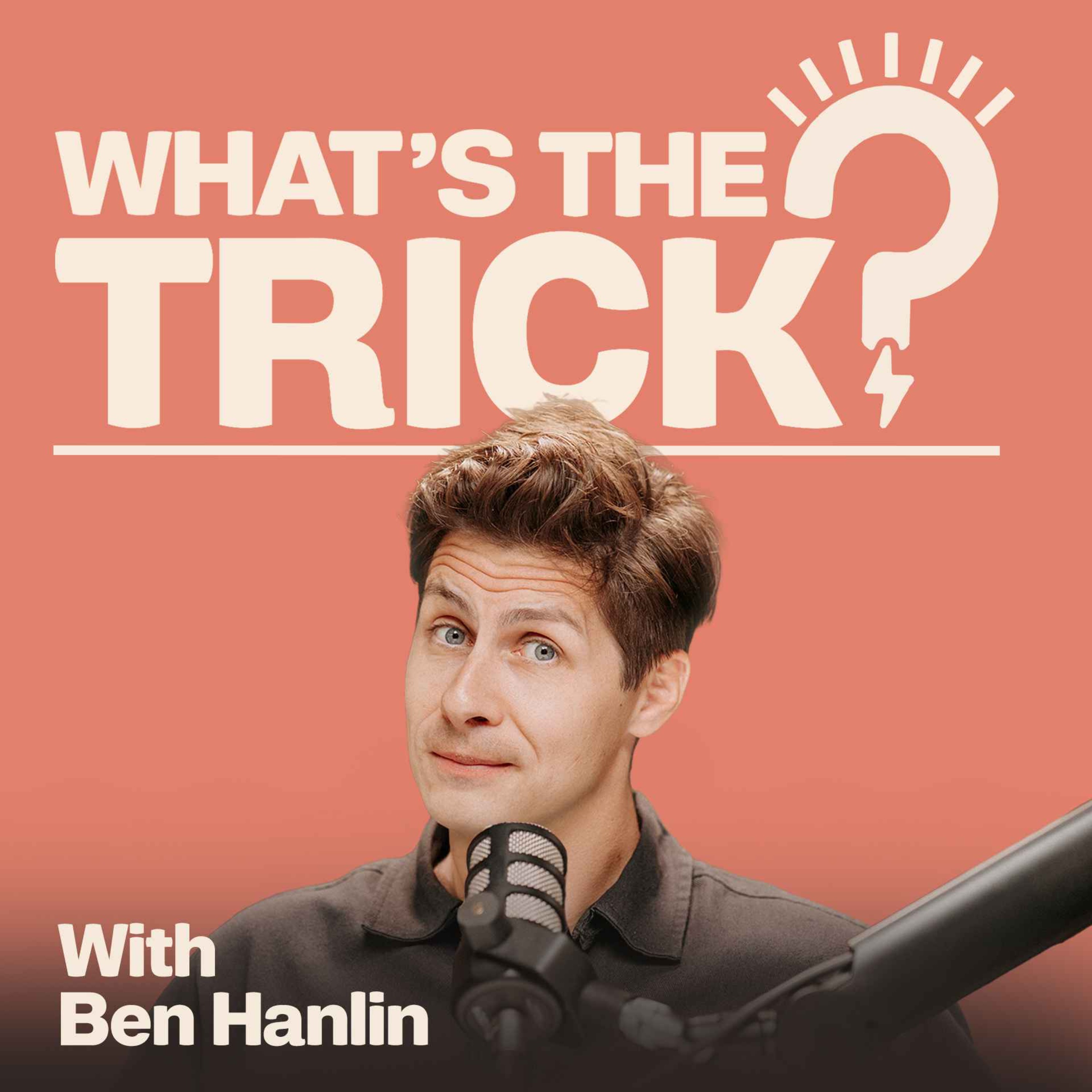
What's The Trick to becoming a Viral Content Creator?
Ben Hanlin interviews Simon Squibb, exploring the intricacies of creativity, content creation, and the entrepreneurial journey.
They discuss the importance of community, transparency, and the role of social media platforms like TikTok in sharing knowledge.
Simon shares his insights on financial literacy, the creative process, and the significance of time management.
The discussion also touches on the impact of AI in content creation and the necessity of accountability and consistency in achieving success.
Hosted on Acast. See acast.com/privacy for more information.