
In short
When Shift Happens Podcast - Episode 102 Summary
Podcast Overview Podcast Title: When Shift Happens Podcast Podcast Description: The host engages with influential figures in the crypto industry to foster deep conversations about Web3 and educate various audiences about the opportunities in the crypto space while adhering to the core values of the sector.
---
Episode Title
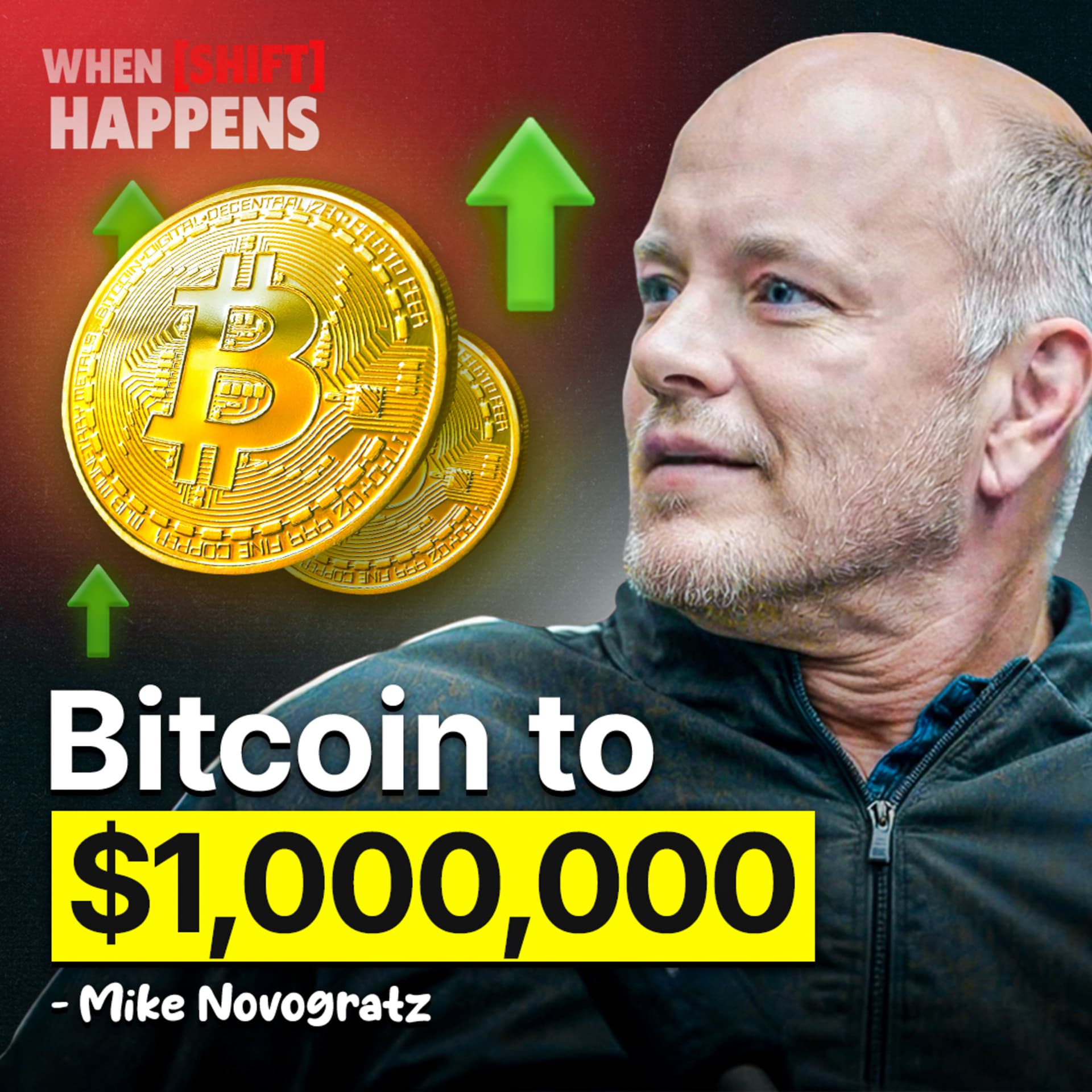
E 102: Mike Novogratz: Why $100,000 Is Just the Beginning (Don't Miss Out)
Episode Description In this episode, the host interviews Mike Novogratz, founder and CEO of Galaxy Digital, a prominent asset and blockchain firm. The discussion ranges from Mike's professional journey, personal struggles, and healing processes to his insights on the future of finance and the impact of AI on the crypto landscape.
Key Topics Covered
- Rising Costs in the U.S.
- Discussion on the increasing wealth disparity and its societal implications.
- Dating Crisis for Men
- An observed imbalance in dating dynamics, particularly affecting younger men.
- Childhood Drives Success
- Personal anecdotes relating childhood experiences to motivations and success.
- Joining Goldman Sachs
- Insights into Mike's early career and the pressures of success in the finance world.
- Reinvention After 9/11
- Reflection on personal growth and the impact of the 9/11 tragedy on his life and career.
- Money, Drive & Purpose
- Exploration of the relationship between financial success and personal fulfillment.
- AI's Impact on Crypto
- Predictions about AI's integration into financial systems and its potential to reshape the landscape.
---
Detailed Breakdown of Discussion Points
- Rising Costs in the U.S.
- Observation of Wealth Gap: Increasing costs and economic inequality are prevalent.
- Impacts on Younger Generations: Many young individuals express hopelessness regarding home ownership and financial stability.
- Dating Crisis for Men
- Statistics: One in three young men report not having had sex in the past year.
- Cultural Shifts: The rise of social media and changes in educational demographics (more college grads are women) are contributing to this crisis.
- Childhood Drives Success
- Personal Reflection: Mike shares how his childhood shaped his ambitions and fears, highlighting the complexity of familial expectations.
- Joining Goldman Sachs
- Career Journey: Started at a young age with aspirations in finance, eventually becoming a partner at Goldman Sachs.
- Work-Life Balance: Discusses the pressures of corporate success and the pressures that come with it.
- Reinvention After 9/11
- Impact of Trauma: 9/11 served as a turning point prompting personal and professional introspection.
- Therapeutic Journey: Mike shares insights from a rehabilitation experience that led to significant personal growth.
- Money, Drive & Purpose
- Motivation: Discusses the drive for financial success as intertwined with personal purpose and self-identity.
- Self-Actualization: The importance of finding fulfillment beyond monetary gains.
- AI's Impact on Crypto
- Future Predictions: Anticipates significant advancements in AI that will enhance productivity and efficiency in the crypto sector.
- Concerns about Centralization: Addresses potential risks associated with AI and how blockchain technology could mitigate these issues.
---
Key Takeaways
- Diverse Perspectives: Mike's insights reflect a blend of personal vulnerability and professional ambition.
- Evolving Landscape: The intersection of AI and finance poses both challenges and opportunities for the crypto industry.
- Importance of Self-Awareness: Mike emphasizes the need for personal healing and self-discovery through challenging life experiences.
- Community and Mentorship: The value of working with younger generations and fostering a culture of learning and curiosity within the industry.
---
Follow Mike Novogratz
- [Twitter](https://x.com/novogratz)
- [Instagram](https://www.instagram.com/mikenovo/)
- [LinkedIn](https://www.linkedin.com/in/novogratz)
- [Website](https://www.galaxy.com/)
Follow Kevin & When Shift Happens
- [Twitter (X)](https://x.com/KevinWSHPod)
- [Instagram](https://www.instagram.com/kevinwshpod/)
- [TikTok](https://www.tiktok.com/@kevinfollonier_)
- [LinkedIn](https://www.linkedin.com/in/kevinfollonier/)
- [Website](https://www.podpage.com/when-shift-happens/)
---
Disclaimer The information provided in this podcast episode is for informational purposes only and should not be construed as financial, legal, or tax advice. The speakers do not guarantee any particular outcome, and cryptocurrency investing involves substantial risk.
Written by AI. May contain mistakes. Listen to the episode to check what was said.
Transcript
Automatic transcript. May contain errors.0:00$100 ,000 per bitcoin is just the beginning. High status males are crushing it right now. But the intermediate, lower status are extremely hopeless. Guy that shot President Trump certainly looked like another incel who was angry, who wanted to show off to the world. But how do we solve that? No, the right question is how to support young boys becoming young men. And the answer to that is... Mike Novogratz, the founder and CEO of Galaxy Digital. A publicly listed asset and blockchain leader helping institutions, startups... And individuals shape a changing economy. One of the parts that you've done is building Galaxy.
0:31What is Galaxy? We were an ecosystem company originally. We invested all around the ecosystem, banking business, trading business, and asset management business. And then we were like, well, that gets a little boring, but Galaxy's role will morph a little bit. Broadly, we are trying to understand what's good and bad in the space and transmit that to our clients in lots of different ways. You went to this rehab place and then you kind of reinvented yourself. So it was like five years of therapy in 28 days. And the people there, some were heroin addicts, some drank too much, some were sex addicts.
1:00And what you realized with all of them, that there was something that happened in their life that created a hole. And that's when I realized who I am. What's your biggest prediction for the next 12 months? I think with 12 or 24 months, we're going to have the first jump in AI. Right now, it's like a novel thing for most people. But I think you're going to see your AI agent start actually working for you. What's the most transformative thing you've done in your life for healing?
1:52Thank you.
2:00Solana and the largest DAO in the world. Sui, a scalable layer one blockchain that's fast, secure and affordable, built by previous Facebook developers and that delivers the benefits of Web3 with the ease of Web2. And Mantle, an Ethereum layer two that builds two products I particularly like. FBTC, which enables you to borrow and lend Bitcoin in DeFi and METH, one of the largest ETH liquid-staking protocols that, by the way, just launched its token called Cook.
2:33How is skiing in Switzerland better than in the US actually? Well, it's literally the food. Okay, so the food is a big part for you? Yeah, I love food. I love food. It's in my belly, I eat too much. Well, it's the whole, you know, it's the music on the slopes, it's the lunch places. In the US, unless, like, we're lucky, we have a hotel in Jackson Hole and we can kind of ski in and we have good lunch. but most times you go to the lunch chalets on the mountain and it's like a cafeteria. Europe, it's a beautiful meal. It can be small. It can be big. It can be a party. It's interesting because you're saying that but I would also argue that a lot of places are in the mountains.
3:13Like if you go like high in the mountains, like it's kind of cafeteria but where your Coca-Cola is like 20 bucks or 25 bucks, right? We're much more expensive to ski in the U.S. too. Is it only to ski? I've been here for three weeks. Holy shit, I'm Swiss. It's expensive in Switzerland. I live in Singapore. It's expensive in Singapore. But when I come here, I feel like my pocket is bleeding money. Whatever I do, right, it's crazy. You know, what's happened in the U.S., well, it's happened all over the world, but specifically in the U.S., since I left college in 1987, one direction has been the rich-poor gap.
3:55and the wealthy just keep getting wealthier relative to the broad index. And so in places where lots of rich congregate like New York, there's almost an unlimited price you can charge people on stuff. It used to be you could get a nice hotel room in the city for 400 bucks a night. Now it's, you know, 1 ,500 bucks a night. And that's not even a suite. You had a suite that's like 4 ,000. You're like, 4 ,000 bucks for a freaking room for the night. And you're seeing that all over the world. And you're going to live, because you're a young-looking guy, you're going to live in a pretty wealthy, you know, crest of want to go to the right restaurant, the right club.
4:30Expensive as hell. So expensive. Like most of the people of my age, I'm 32, like late 20s, early 30s, they're just saying, man, I know I'm never going to be able to buy a home, actually. It's a conversation I had with Raoul Pal. Yeah. Like how does the 25 or 30-year-old? Well, it's showing up in lots of ways. I mean, this is a crisis in lots of ways. I was out at the Hamptons this weekend, and I have a bar that I'm a part owner of. It's the best bar in the world called Stephen's Talk House. And I was talking to the doorman, and I'm like, God, we have so many more women coming this year than normal.
5:08Groups of three, four women and only, you know, less men. And then my son had a huge party, and it was all – it was a rosé rodeo. So everyone – and he's 26. My daughters are 28 and 29. So they're friends. So kind of 26 to 32-year-olds at this party, maybe a few younger, and probably two girls to every guy. I was like, what's going on? And exactly what's going on is it's so hard on young men now. One out of three young men aren't having sex in a year. One out of three. When I was a kid, that was one out of 20. and some weird combination of social media where everybody tries to pick the same guys and money, right?
5:53Right now we have 60 % of college grads are women. We used to have 60 % of college grads men. And most college grads are only going to date other college grads. And so you start off already by having this huge advantage. It's a good time to be a male. If you're doing well. If you're doing well. Absolutely, yeah. High-status males are crushing it right now at the expense of, you know, the broad population. Yeah, there's a lot of research actually on that. I mean, there's one called like the tall girl problem, which is basically they're overeducated for the men, right? And then the problem is that they're hypergamous.
6:31So they only want to have sex or date or marry someone who is equal or likely better, right? And with the social media. Women want to marry up. Absolutely. And so with the social media, you have, there is some studies, one is from OkCupid, where it's a five out of 10 woman, right? She's average, five out of 10. She goes on there, she receives 400 messages within a day. And then there's a guy, nine out of 10, nine out of 10, almost perfect. He receives 100 messages within a day. So a guy who is almost perfect receives 25 % of the messages than a woman who's average. Yeah. And it shows the problem, right?
7:09Because what about the women who are above average? What about all the guys who are less than, you know, 9 out of 10? Huge problem. There was an article I read this week which was interesting. They asked women to rate men. And it was a, when men rated women, it was a complete bell curve. Just what you would expect. When women, it was, all of them thought everyone was ugly except this small group. I've seen that. Lots of problems. How do we solve that? Yeah. For men, because the only message today, like, is what do you tell men? What do you tell? Scott Galloway, who has— I wanted to talk about Scott because I absolutely— This is his shtick.
7:52We're stealing a little of his shtick, right? There's this crisis of young men in America. And, you know, to say, oh, my God, we need affirmative action for men seems like a radical statement. But we certainly need better infrastructure around, you know, how to support young boys becoming young men. And some of that is through sport. Like I was a wrestler my whole life. You can't go through a wrestling education and not have some self-esteem, not learn to lean off the front foot, not to be scared. And so it's hard to see me taking a whole group of guys to do a wrestling education, let alone a good academic education, and them not turning it okay.
8:37But we don't have as much of that structure anymore, right? Even in sports, like if you're not great, you don't even play anymore. Colleges have less opportunities in sports, not more opportunities. And in America, different than in Europe, the moment you leave college, there's no opportunity, right? Then it's like a few rec leagues and whatnot. And so how do you get men some self-esteem back? You know, it's a very good question. And a lot of it's economic. It's, you know, we have a have and have not world. And it's only getting harder with AI.
9:12Right? And so, like, if you have a high-paying job in New York City and you went to a good school, you're doing really well right now. Right? Again, the high-status male having the time of their life. But the intermediate to lower status, really hard. And that's where you're getting all the school shootings, like this guy that shot President Trump. You know, who knows exactly why? But he certainly looked like another incel who hadn't been laid, who was angry, who got teased, who wanted to show off to the world, which is almost the profile of all of those school shooters. could also be the profile of people who are doing really well in life if you think about it because I have a chip on the shoulder one of the things I often talk about and ask the people I have conversation with is if you're so successful it might be because you want to prove something to the world because something happened in your childhood I blame it on my mother all the time what did she do or what did she not do you know to be fair I had a I'm a One of seven kids.
10:18I was the third child, second son. My mom was a young mom. She got married at 19. She had, I think, me at 21 as her third kid. My dad was in the Army. But I was blonde hair and blue eyes and cute. And my mother told everybody, I talked a lot. He's going to be a senator one day. And so I was kind of a golden child. and somehow I'm guessing I picked up this message that I better be perfect otherwise I better succeed otherwise my mom would love of course my mom would love me anyway but you know young kids don't pick that up and so when at one point in my life I was had been drinking too much and was kind of going through therapy and everyone had these issues what they gave them their drive and I was like I think my mom was too nice to me you know you pick up a story that was my story And so I cheated in like second grade.
11:16There was a contest. How many books you could read, you would get another circle and you'd make an inchworm. And my inchworm went all the way around the class. I didn't read any of the books. I read the first page and the last page and wrote the book report. Like this drive to win, to get attention, to get affirmation. My mother could have cared less if my inchworm was this big or this big. But somehow the five-year-old brain, if I got a B on a test when I was in first and second grade, I would roll and throw it in the trash. So my mom never saw any bad grades. But that's not healthy at all. That's completely unhealthy.
11:59But I think that was part of the drive. Is it also part of the drive of why you joined Goldman Sachs? you know i left the army i thought about trying to get a job in dc and i realized none of them pay well and all my friends were in wall street and so it felt fun i always wanted to make money uh i remember i wrote my first cool book report when i was in like fifth grade on the robber barons john rockefeller john d rockefeller and carnegie and vanderbilt and so i was kind of fascinated with wealth. But I also thought I'd go into politics. So I spent right out of the army. I went to D.C. and I interviewed all kinds of people.
12:42Finally got a job and they were like, we'll pay you$14 ,000 a year. I was like, I owe my roommate from college$14 ,000.
12:50And so that wasn't going to work. So you went down the Wall Street journey, right? I went to work in Goldman Sachs. I was a salesman. I had one of the easiest starting jobs. I was a money market salesman. So the bad part is you had to get in really early, like 6.30, 7 o 'clock. The good part was probably the day was over by 1. And you had to hang out until 4 o 'clock, 5 o 'clock. 5.01, you were out of the office. And I had all mostly female clients that were at lower stress jobs. They were putting corporate cash out. And so it was a lot of, you know, fun conversations and easy, less stress. Still had the long blonde hair.
13:35No, I was bald. I was starting to be bald. I still had good hair until I was about 29. And then it started going and then it went fast. It was a tragedy. Bam, tragedy. How did you feel about that, actually? Because a lot of male, right, can feel very insecure about that. Absolutely. Listen, losing your hair is not an easy thing for any guy. and you can joke about it all you want now. My son says the last bald man has been born on the earth because they have so many good treatments now, right? You go to Turkey, you get new hair, you get these shots in your head, these blood shots. They've got Propecia and Minoxidil and so it's a lot easier to preserve your hair.
14:13You might want to. I got massively fucked by Propecia but I think that's going to be a conversation for another podcast. It would take five hours to talk about it. I when I originally I was like I'm just going to ball with dignity and then when you're starting to ball it you're like there's nothing dignified about this and then finally you get over it and then like now of course the day the technology is going to get hair put back on but you feel like an idiot like you've been balled so you do you develop a new identity and there's something you know there's like a ball guy culture. Oliver came that one step further.
14:45You know you got Teli Savalas there's a tough guy to it there's a testosterone story behind it. yeah so there is absolutely positive aspect of being a man behind losing your hair absolutely absolutely but when you see those guys with the flow and you're like George Clooney you're like damn you mentioned before going to therapy because drinking too much right is this is this related to when you said I left Goldman after the IPO because I was partying like a rock star yeah Listen, when I look back on my life, I think I had lots of successes. I got into Princeton. Like, if I wasn't a success, I really would have screwed up.
15:33But I didn't think of it that way. I did feel a trueness and a pressure. As a matter of fact, when I made partner at Goldman Sachs, I remember Lloyd Blankfein called me up and he said, don't tell my wife this. Don't tell her I told you this, but even if I include my wedding, making partner at Goldman sacks was one of the most joyous days of my life and he was teasing about the wife thing but uh and all i could think of was oh for me it's just a relief check i checked the box if i hadn't made partner i would have been like oh and so it was a terrible way to and i didn't realize where that pressure was coming from at the time and i didn't realize what the release valve was and the release valve was boom drink and it wasn't like i was drinking in the in the office or you know in a closet where the traditional alcoholics end up going down a really slippery path.
16:21It was, I needed a release. And I loved partying, so I would stay out really late and drink too much. And that didn't make a ton of sense when you had a wife and three young kids. Those things usually end up in a car crash. So how did you, there was these moments of kind of, yeah. I left Goldman Sachs. It wasn't a graceful exit. I was a rising star and I loved it. I loved everyone I worked at Goldman Sachs with. I liked the senior management. They treated me well. I'd gotten paid well. I was a partner. I was a young partner running a big business. And so it was humbling and shameful. And then I was like, how do you get out of this self-pity soup that you end up in when you fuck up in life?
17:13and I went off to Morocco and ran the Marathon of the Sands. It's a 160-mile race to the desert with 800 people. That was the first thing where I felt like life. But I also went to a rehab place, 28 days. And I remember I never had a shrink. I had a shrink. He said, you should go to this place. And I was like, I'm not a drug addict. I'm not an alcoholic. They tell you, and he was like, you talk so goddamn much. You're going to tell everyone on the street. you know, what your issues were and they don't deserve it. You have a right to privacy. You need to learn to put up boundaries between you and other people.
17:54And I want you to go to this place because you can talk all you want there because it's all confidential. Get it all off your chest. That was kind of, he snookered me because I got there and they slap a bracelet on you like you're at a mental health institution. I was like, But I got good mental health. They're like, you're one of us. And so it was an amazingly transformative and insightful 28 days because a lot of us don't start looking at ourselves until we fuck up. Absolutely. We get divorced. We lose our job. And I got a great chance to start that process. So it was like five years of therapy in 28 days.
18:35and there were all kinds of different modalities they dealt with. And the people there, some were heroin addicts, some drank too much, some were sex addicts, some were people suffering terrible depression, some were bulimics and anorexics. And what you realized with all of them, that there was something that happened in their life that created a hole and to fill that hole, they medicated it. They may have medicated it with exercise or drugs and then that process just repeats. And so that understanding – and I gave one commencement address in my life at University of Iowa and it was all about know thyself.
19:14That you don't have to wait until you screw up to start the journey of figuring out like why do I behave the way I behave? Who am I? And that was my start. And it was – I didn't – you don't start and finish. You start. And then it's a constant learning process. Who are you? Very complicated man is a complicated question. But, you know, why do you act the way you act? Where's – what's the fear come from? Where's the fake courage or the real courage or the – and people are all very complex. Wrestling is a big part of my life. I had a conversation with a friend of mine recently and, you know, when this idea of asking Joe Biden to step down because he was too goddamn old to be the president.
20:03But I was pretty vocal and me and guys I work with, you know, started talking about it and we're putting a pack together and came out publicly. And a lot of wealthy donors that I spoke to were like, oh, man, you're so courageous. And I was like, that's not courage. And they were like, courage is action in the face of fear. And I realized talking to so many people, they were really fearful of pissing off somebody or having retribution. And I was like, I'm just not that scared. What are you going to do to me? Like smush me, punch me? And I realized being a wrestler, you learn not to be scared. And it's earned, right?
20:46You suffer so much. You work so hard. You get beaten up so many times. You learn to walk on your front foot. And so part of me is a wrestler. And I don't live with a lot of fear, physical fear. or even reputational fear. Absolutely, because you're able to take a lot of risks, right, in your career multiple times over and over again. And so a lot of that's coming from, who are you? I'm part of a wrestler, but I'm also a son of a big Catholic family. And if you grow up in a big Catholic family in a Catholic community, it's community and giving back. And to people who are given a lot, a lot's expected.
21:30that story. And so part of my life is, like when I die, what my tombstone to be, while alive, he shared. It's sharing, sharing your wealth, sharing your energy, sharing your wisdom. And so that part is like, I mean, I don't go to church anymore, Catholic church anymore, but I'm definitely a Catholic in that respect. Who are you? Like that being raised by a big, loving family. I just had met this weekend. I think I saw 27 family members. You can't get rid of them. I got so many family members. But that also gives you a sense of where you come from. And, you know, not everyone has that. There are less and less big families in America.
22:18So that's a blessing. So you went to this rehab place and then you kind of reinvented yourself, spent a few years. You know, I kind of thought about I'm going to do something completely different than finance. And Outward Bound, which is – I don't know if they've had it in Switzerland. It's a project where they take kids both in high school and sometimes in early college. And they bring them into the wilderness for two weeks or a month. And they teach them all these skills and like life skills course. And it's one of the best in the world. And they were looking for a CEO. And I thought, I'll do it, the Outward Bound CEO.
22:54That perfect – again, I was a wrestler. Not that I'm a great outdoorsman, but I figure I can learn. And I remember having this burning hitch that I didn't love the way I left. And then 9-11 happened. And a plane hit the building. And my brother called me. My brother, 15 months older. He was working as a retail stockbroker for Payne Weber or somebody. And he was at a building right next to the – he's like, oh, my god. Oh, my god. A plane just hit the building. Like the teacher chaser. What should I do? And instead of saying you should immediately get out of the fucking building and come up town, I was like, buy euro dollars.
23:43And he was like, what? And I was like, yeah, you know, like two-year futures. Like buy fixed income now. And he was like, what the fuck are you talking about? And I was like, oh, oh, get out of the building. Get out of the building. And I was like, wow, I am a – to be a very good speculator, you have to be able to compartmentalize and shut off your empathy for a second. And that's just the way my brain works. I'm not saying it's a good thing. And I was like, buy your dollars. And so that happened. And then my old partner from Goldman Sachs, Pete Brigger, who had been a good friend of mine, he called me up and said, hey, let's office together.
24:19And we had this great deal that we would share our businesses. and we joined with a guy, Wes Edens, who had already started a business and bought into a company called Fortress. And literally six years later, I took it public. We were the first hedge fund slash private equity company to go public on the New York Stock Exchange. And so kind of zero to hero in six years. Did you buy the euro dollar that day? No, because I wasn't set up. I was sitting unemployed. The next thing I did, I picked up my, probably one, let's say that was a three-year-old son. And I went sprinting. We were in Chelsea at the time.
24:58I went sprinting and you couldn't see from my name. But if you went down to the West Side Highway, you could see up. So I went sprinting down the street with him so I could actually see. And about halfway down the block, he started crying. And I was like, I had not a good idea to run into the fire with a three-year-old. So I ran back and we watched the TV. And then the other plane hit. And then next thing you know, it was chaos.
25:23you said zero to hero in six years well fortress was an amazing story we we built a giant asset management company and they're really wes edans built a private equity company p burger built a still one of the best credit businesses in the world and i built a macro hedge fund uh with adam levinson and a few other partners and when we took that thing public we were the first public there was a 15 billion dollar valuation uh and so all of a sudden you know you go leaving goldman sachs with your tail behind your between your legs in 2000 and in 2006 you're bringing the bell at the stock exchange and you're the goat you're yeah you're wealthy and smiling because i'm swiss i have to ask 2007 i saw there was a big bet on the swiss franc right Right.
26:15Which, because what is really interesting for me is the personal development journey, right? And so, a bet on the Swiss firm that went wrong? Yeah, that was 2014 when the Swiss de-pegged from 120. It was 120 versus the euro. You know, it was an interesting story. I had brought a new partner to work with me who's a dear friend, still a dear friend. And he had had a big Euro Swiss position on it. And my fund, he was working in the fund. And so it's any position in the fund is actually your position. But the way you run these businesses is you give people allocations of capital. And, you know, those were carry trades that are good until they're not good.
Read the full transcript
27:06And I can remember it like yesterday, actually. I was at the Fed, Federal Reserve, talking to a bunch of smart guys. And we started talking. And I just got this very uneasy feeling about the Swiss.
27:21And I called the desk and I said, hey, does this guy still have the big Swiss franc position on? I said, yeah. I said, well, tell him I got an uneasy feeling about it. And he should probably get out. I didn't tell him to get out. She'd probably get out that I have an uneasy feeling. young guy on the desk. Unfortunately, my buddy, if he was there, I'd have gotten on the phone with him and he probably would have gotten out of the position. He's in Chicago. He said, well, yeah, maybe I should just get out of the thing. And the guy, the young kid on the desk, he says, well, why don't you buy options just to protect yourself?
27:53Yeah, good idea. Instead of just getting out. So the pricing of, oh, you're not going to have a lot of liquidity until the morning. All right, wake me up in the morning. I go to bed. Three in the morning, the phone rings. Oh, my God. I literally remember. I don't pray a lot.
28:15I threw a hail there. I said, please tell me we got out of the position. They're like, hold on. 26 later. No. Oh, God. And I knew how big our position was. Where's the Euro Swiss? It's at 80. I said, we can't be at 80. That's down 40%. 45%. I said, it can't be at 80. No currency has ever moved that much in one day. They're like, it's at 80. And bizarrely and instinctively, I said, buy 100. Buy 100. He's like, what? I said, buy 200. I don't know. We bought 200 euro Swiss at 80. I don't think he'd ever traded there again, ever. And hung up the phone. I'm sweating. I'm thinking, I'm out of business.
29:02and by the time i got out of my bed two minutes later the guy called me back he said well now it's at 100 i was like i just you don't sell it all sell the 200 and so at least we made a tiny bit of money to but it was painful and you can't get mad at a guy because he's a lovely guy and there was a series of bad like it was a dumb position we shouldn't have been in it uh it did And it was the start of why I ended up shutting my hedge fund down. And it's funny. I don't get angry at people, which is a weird trait because it doesn't do you any good. Absolutely. What am I going to yell at the guy? It's not good for him.
29:42It's not good for you. He's beating himself senseless because he made a mistake. He's thinking, oh, my God, if I had only been in the office, he's going through all the rumination. So to me to make it worse is A, is mean and B, it doesn't do any good. And so I'm proud of the fact that we're still great friends. And, you know, we could have recovered. We kind of did. And finally I said, you know what, it's time to leave the hedge fund business. And so I left in 2014. And what's interesting is every time the door slams in your face, right, another one opens. That's a cheesy freaking expression. You should get a new version of that.
30:21But like it feels like shit. It felt like shit to leave Goldman Sachs the way I did. I mean that was horrible. And it didn't feel great leaving Fortress the way I did. Even though I still had a lot of money, you know, you lost. You lost the last game. And you'd like to go out winning. But every time. People often remember the conclusion, right? They remember the last chapter. Yes. But every time it forces you to say, okay, what next? and it doesn't happen today. In the case of leaving Fortress, it took, I actually went to India and I went to this beautiful camp, knowledge camp, meditation camp, life camp, what do you want to call it.
31:09And after a week, I still wasn't sleeping. I was blaming the lawyer and blaming this and my partners. I didn't like the deal and I'm never going to make the money. And I was just ruminating and ruminating. And rumination is literally the most horrible thing that anyone goes through. You can't sleep and it's just a waste. And this beautiful monk, Uptama, who was actually named Matthew from Pittsburgh, he sat with me and he was doing some meditation, trying to help calm me down. And he was like, let me ask you a question. Like, did the lawyer make the decision or did you make the decision? I said, well, I told the lawyer what to do.
31:42He said, then. And so he took me through and he was like making me really look at all the decisions I made, even on my exit, were my decisions. He said, so it's not really fair to blame this guy or your partner or this guy or that guy. And let me ask you another decision. Does you sitting here like a whiny bitch, not sleeping, spinning your head, help your family, help your friends, help yourself? No. He said, so this suffering really is you in this wildly egocentric pity party. It's obsessive self-centric pity party, obsessive self-centric thought. Who are you? Like some idea, some fake idea who you were just got smushed.
32:30It's a waste. Stop wasting your goddamn time. And I said another week, I left this place and I remember posting a selfie on Facebook. I'd lost some weight. It's all healthy food and you're meditating all the time and so I look good. And on a normal selfie, I get 50 likes or something and it got like 25 times more than I'd ever gotten. And I was like, what? People notice the energy of feeling full, of feeling healed, of feeling blessed that was coming through that picture. It was just a picture of my freaking face looking like a smiling, you know, beatific, you know, 50-year-old. And so I never forgot.
33:15And then I went back and I had made an investment in a friend's movie, Birth of a Nation. It was a movie about the first slave rebellion. And next thing you know, it's at Sundance. and he said I need to come to Sundance that'll be fair I made an investment I shook his hand I cheered him on I had nothing to do with the movie that's what an executive producer does writes a check didn't even read the script I just trusted this guy and it becomes the number one independent movie of all time selling highest selling independent movie of all time I'm at Sundance it's electric this guy gets a 25 minute standing ovation I'm on stage next to him it's just and I realized you don't need a lot of wins to get your mojo back.
34:03Like, that was a win. I did nothing to get the win other than make the investment, but I bet on the right horse. And then I was like, I'm back, I'm back. And I got my mojo back. And, you know, two years later, we started Galaxy. And so I always tell people, do something to get a win. Get your mojo back. Does that be a huge win? Small win. Yeah, small win compounds. Same as in finance and in investing, right? Yeah. Absolutely. But so much is getting your emotional energy back healed. What's the most transformative thing you've done in your life for healing? You know, for me, they've stacked. Like I don't think if I took a guy that's never looked at himself and said, we're giving you ayahuasca, it would necessarily be nearly as effective as someone who already has the framework of themselves.
34:57selves, so has done the Hoffman process or just therapy or understood how your parents impact you. Tony Robbins once told me this. He said, there are 8 billion people on the planet and 8 billion people all think the same thing. I'm not enough. I'm not good looking enough. I'm not smart enough. I'm not strong. I'm not tall enough. My boobs are too big. My boobs are not enough and therefore you won't be loved. And like he says, like, this is Tony. He's saying, your life's journey is realized we're all enough and it takes a while. Like if you start that process, there's so many modalities. Ayahuasca is, is, is like, it's like mainline, uh, you know, the, you drink the, the, the brew, uh, and the shamans and, uh, but MDMA therapy is also, if you're traumatized, if you have trauma in you.
35:56And most people have trauma in them. Have you tried that? I have. I had this idea, and I haven't been completely faithful to it, but I was for a while, that every single year, everybody should take one week just for themselves. Not with your kids, not with your family, not with your friends, not with your lover, just yourself. And go somewhere where you learn about yourself. I did a 12-day silent meditation. It was miserable. You did the Vipassana. I did the Vipassana. Oh, brutal. I talked so much. 12 days. But I did it. And I learned some things. And it makes you better. Because even if you don't take a ton from it, you take something from it.
36:42And so this camp in India called One World Academy, I've never sent someone there that didn't come back. Oh, my God, it was amazing. But the hard part about those experiences, like the first time I went to One World, I met these monks. It was one of the first times I was not drinking and completely joyful. Like I love drinking. I gave a couple of drinks to me. Then I really get joyful. I was just joyful the whole time, connected the whole time. And I was like, oh, this is great. And, you know, they gave you the things to do to keep it going. Three weeks later, I was right back to my old stuff.
37:16So I was like, wait a minute. I found the best way to live. But no, no, I'm coming back. I'm coming back. For later. I do think at one point you start tying the threads of all that stuff together. I hope.
37:36You said every politician should do one week of ayahuasca. I did. Why? You know, again, with my preface that I would love them to do a little work on themselves, it literally forces you to look at reality, right? To look at some version. It's a mirror. Like the grandma ayahuasca, she knows how to slap you when you need to be slapped. And so you're there looking at your own stuff and with a real clarity. And most politicians, they don't know who they are. They're so full of shit. I mean, like, you know, like I like some of them. but, you know, I hate this person. I like this person. I hate Israel.
38:17I like Israel. They're so worried about getting reelected. They have – if you work in my industry and you've made a billion dollars, you by definition have a decent dose of narcissism and you know a lot of people that think very highly of themselves. We look humble next to the politicians. It's an amazing sense of narcissism. and ayahuasca at least tries to beat that out of you for a week. At least for a week. Yeah. I mean, remember, you're literally lying on the floor, you know, so the guy next to you is shitting his pants, you're throwing up, and you're like, okay, you know, your status in the world doesn't really matter.
39:02Shit. You are just part of this universe. And when you realize you're just part of this universe, it is liberating because you don't need to be so important. How much do you feel like that when you wake up in the morning and you come to this office with all these employees or all your employees? You know, I don't think that way, which is interesting. I flew helicopters in the Army and then I had a helicopter here and I hired my best friend from Alabama when I was in the army to work with my family office. And he does all our aviation. He does our real estate. He does lots of stuff. And one of the first things he did was sell my helicopter.
39:52Didn't tell me. I was like, eh. And he bought a seaplane. He's like, you know, a seaplane's safer. He had a lot of reasons and it made sense. But he was like, I don't really want you flying. I was like, what do you mean I like flying he said you're kind of a shitty pilot you have no self-awareness when you're flying you're talking you're on your cell phone he said like we take our we take our flying seriously and he said by the way you have all these people that rely on you and i would feel horrible if you got into a crash and i was in charge of the safety and i i was like i really thought about all the people that rely on me it's just funny i think one way i deal with pressure is i don't think about the responsibility.
40:30It's not that I'm irresponsible about it, of the philanthropy or the people, because it starts weighing on you and then you get passively aggressive, angry about it. And so I look at most of my friends, employees, people I meet on the street as peers, and I meet them where they're at. And that's a superpower in some ways. It often is unfair sometimes because you think, oh, we're just buddies. And you're not smart enough to think that other guy's saying, oh, this is the most important conversation because he might be able to fund my business. I had a funny thing. We were interviewing. We have a fellowship we give in the criminal justice space.
41:12And we were doing interviews. And my guys are so earnest. They do a lot of interviews for this. It's a very hard fellowship to get in. And I was tired. So I'm doing the, and it was the Zoom era. So I'm doing the interviews from Zoom. I'm lying on my bed in my PJs and I'm on the interview from my bed. And one of the old fellows texted me and she said, jackass, like this is his most important hour. And you're lying there on a fricking bed in PJs. Can you at least get up and put a shirt on. I was like, I'm so sorry. I'm so sorry. And so, you know, it's nice to have friends around that can call you out and help you not make mistakes.
41:54But I do think it's just one of the way I'm wired is to kind of... Do you think you've reached a point where you can go to a restaurant, talk to a waiter and feel like they're equal to you and you're equal to them? I've always felt like that. I never felt different than that. And it drives me insane pain, like the trait in life I hate the worst is the opposite of that. To the point where like, I don't fight a lot, but I always want to smash people when I hear that. The entitlement of class or the entitlement of intellect or the entitlement of, I was like, Jesus Christ. Like, I remember using the expression.
42:33So I went to Princeton as an 18 year old from the middle class. And my first roommate was a rich kid from New York. Not just a rich kid, he was like royalty. And I went home with him and he had one of the nicest houses in the city. And I was fascinated. We went to Studio 54 and all these places. I met all these fancy people. And I remember my mom said, well, so what's it like? I said, mom, their sheets are so nice. Like I never understood what like a 300 count sheet was back then versus the sheets that we had. I was like, it's not that much different, but man, they have good sheets. But about a month later, I was like, you know, and I got to know him.
43:12He was a lovely guy. He had his own insecurities and like anybody else, I was like, yeah, we shit in the same toilet because we're sharing a room. His poop's just as stinky as mine. Yeah, absolutely. And I literally have always kind of seen people as equals. That's something my mother, she always told me. She was like, you know this person who is impressing you, especially when you're a kid, right? They have to pull down their pants when they take a shit, like everyone else. Like that's it, right? That's what she would repeat to me. Yes. Yeah, it's true. That's it. That's it. Don't let people wow you too much.
43:47The good advice, mother advice. So in your last reinvention of yourself, one of the parts that you've done is building Galaxy. What is Galaxy if you had to explain it to your mother? It's full of good advices. When I started, like I said, I'm not going to go back to work full time unless I can do three things. I want to learn and venture. I'd never done venture before. And so there was this curiosity of like what venture investing was. But also just the process of every venture pitch is a new idea. And so I love that piece of it. I want to have something to add to the community. And I thought, well, you got a bunch of crazy crypto people that don't really understand finance in the traditional way.
44:35They don't understand how traditional finance works. And I could be a bridge. I can help translate crypto to Luddites and help these young guys understand that there's a world they got to live in and they've got to participate with. And I got to work with young people. I think the only way you stay young in life, the only way you grow old happy is to be curious and work with young people. And so I surround myself with young people and I do think that you learn that way. And this is a weird business. In every other thing I've ever done, from army helicopters to Goldman Sachs to Fortress, the people that worked for me or the people that worked for the bosses knew less.
45:28And in crypto, the young guys know more. I could take 10 of my 30 youngest guys and put them against six of my most senior people and the young guys would kick their ass in a lot of crypto. They just would. How does a bridge work? I'm 32 and I feel like a boomer in crypto. Yeah. I'm 59. I'm a grandfather. I used to say I was the oldest man in crypto, but I met one or two older. Not many. Yeah. And so for me, that was the exciting. What does Galaxy do? We were an ecosystem company originally, right? We invested a lot around the ecosystem. system, we said, okay, how do we build businesses that mirror traditional finance to bring traditional finance in?
46:16So a banking business, a trading business, an asset management business. So that was our first shot. And then we were like, well, that gets a little boring because where's the puck going? And so we have been working on infrastructure a ton. So staking validators, DeFi lending, DeFi trading. And as I think of it, the world will slowly move on chain. We will slowly start using blockchains for real world use cases because they're now going to be cheap enough and safe enough and trusted enough. Not there yet, but we're going to get there. And so Galaxy's role will morph a little bit, but broadly, we are trying to understand what's good and bad in the space and transmit that to our clients in lots of different ways, right?
47:09Through sales and trading or credit lending or asset management or venture investing. And so there was a little bit of Golden Sacks DNA in there, which is be the smartest guys in the room and then sell that. And so - Before people even understand, right? Yeah. And so that's what we've been trying to do. And so, again, I stand by that fact. I think my smartest employees with the best understanding aren't necessarily my most senior. And I feel proud that we now have an army of really – because we used to get criticized. Well, you're not crypto enough. I was like, I'll take my 30 best crypto guys and put them up against anybody.
47:47Like we really are a group of professionals that care about the space, that are trying to push the space. I care about more than just money. which is probably not the case for most people in crypto let's be very honest they will learn, I'm older I'm older my dad's 87 and I don't know if he's going to be 88 or 89 or 90 but he ain't going to be 95 given his health well I shouldn't say that, take that back maybe he'll be 95 you sit with him, he's happy, he's laughing I don't think it matters if he's got a million dollars or 5 million or 500 ,000 or 50 he got his kids it's less important the older you get it's just really interesting it's so important when you're your age and it is like you want to accomplish things you need to have money money is energy you want to take that energy you can put other places and you want to attract the woman yes you'd be in the top 1 % the only reason I used to say this all the time absolutely I needed to get a job because I needed to pay my bills so I could take women out that's it it was all about women And I always say being born a rich kid is harder because you have no – you have to find purpose to get a job.
49:05Being born middle class, I needed a job or I was not going to get laid. Yeah, absolutely. Yeah. Absolutely. And so where do people find that self-drive? Most people are forced into their first job and then they pivot from there. So what are you doing with your kids? They have a much harder life. No, listen, we try to raise nice kids. I think you model hard work and you model kindness and you model your dysfunction and how you deal with your dysfunction and your kids become who they become. They are all working, knock on wood. But they certainly, two of the four, have wrestled with, well, what do I do?
49:51Because I don't need to work just for money. I need to work for purpose. Self-actualization. That's a lot harder to figure out in your 20s. Yeah. That's the problem of most of the kids who get rich too quick, especially in crypto. Yeah. And like, before getting wrecked on Luna, I had this problem too. I was like, what the fuck do I do now for the next 35 years of my life? I thought being retired before 30 was it, right? What's the goal? And I was like, I found myself super lost and being like, what the fuck do I do? Do I travel 35 years? If you think about money not as a mechanism to buy stuff, but if you think about it as energy, and you're just going to be an energy mover like that goddamn guy on the Super, whatever, one of those Avengers, it makes it easy.
50:36I work just as hard as you do probably, and I'm 59. I get up early. I'm constantly on my thing. I'm doing lots of different things. And it's not that I need any more money, but it's energy. It allows you to start philanthropies. It allows you to send kids to school. It allows you to dream big. And people say it's a scorecard. It's not a scorecard. It literally isn't because you'd get bored of the scorecard, right? Like at one point, how many games of ping pong can you beat your friend in before you're like, okay, I'm a better ping pong. Let's play again. Right? Like, okay. I got the scorecard.
51:13It's right. It's not. And if you think about it as energy and you're responsible for removing that energy, and energy has to move. Energy can't stay still by its principle. It's a nice way to think about it. And you'll never retire. You might spend less time on one thing than another. But you're going to retire. You're going to get old, fat, and die. yeah I'm the anti-retirement guy
51:41my wife says keep that to yourself like other people when they retire don't make them feel bad about it or what does she think about that? I think my wife gets who I am in that respect but I think she's also sensitive like you're probably anti-retirement this guy just retired you're going to make him feel bad and she's very very keyed in on very empathetic very empathetic and so I was like okay for me What's your biggest prediction for the next 12 months?
52:11I think with 12 or 24 months, we're going to have the first jump at AI. Where right now it's like a novel thing for most people. Right? You get on, write a poem in the words of Walt Whitman to, you know, my 14-year-old son. Now he goes off to prep school.
52:34but I think you're going to see these agents, right? Your AI agent start actually working for you. And I'll tell you a funny story. I'm not sure I should tell the story, but I'll tell the story and I'll get some shit from it. So one of my friends asked me to do a forward for his book and he's a lovely guy. And I'm like, yeah, sure, I'll do it. I was thinking he meant blurb. Blurb is a sentence. And I said, well, I have a forward. She's like, a Ford's like three pages. I'm like, what? Three pages? So I Google, what's a Ford? It's 1 ,000 words. That's the average Ford. I'm like, oh, I've got to write a 1 ,000 word essay because I've got to read the book.
53:13I see where you're going. And I had postponed this thing. So I'm like, oh, okay. And, you know, it was a book on hedge funds that had been published in 2012, and it's being republished this year. But, you know, so I ordered the book on Amazon. I'm like, oh. I read, I'm writing a person and I've read what a Ford takes. I went, this is going to take all day. I said, I had an idea. So I used perplexity as my interface with AI. I dumped the book into perplexity. It takes two seconds. Then I say, perplexity, write me a Ford in the voice of Mike Novartis.
53:59And originally he came back with 750. I was like, make it a thousand words and make it a little more forward looking. And this is what I think is cool in the hedge fund space. Took me 10 seconds to say that.
54:15And I was like, it's a little generic, but it's pretty damn good. And so I said it to the editor and they loved it. And so I thought I was going to have to use that. And I was like, so instead of spending. This is not the 2080 rule. It is a 199 rule, right? Instead of spending seven, eight hours. Yeah. Now, would it have been better if I spent seven or eight hours? Maybe. But it got all the. And I put a few sentences myself to personalize a little more. But it was a 20-minute exercise. 20 minutes versus eight hours. That was crazy. It was the first time I've seen AI really help my own productivity.
55:00How does this affect crypto?
55:05I think for all coders, you know, you're not going to be able to code without using AI to help. And so hopefully you see an acceleration in development because of AI. I intuitively think that AI is really scary. I go back to the Minority Report, that movie, you know, with the precogs and the pictures. And so it is one of the great centralizing forces on the planet, right? Huge database centralized. And so the yang to that yang has to be blockchain. Absolutely. And I don't know how it works. I'm not smart enough. I just intuitively know there's got to be something that protects us from Big Brother.
55:58And blockchains have that capacity. And so we've been investing in – and the other piece of it is these AI agents. Your agent is going to know what to shop for you like groceries. Where is it going to get the money? It's going to have to go into your account, send the money. That stuff is going to operate much smoother, I think, on crypto rails than on the rails Amex uses or MasterCard uses. The AI agents, the AI girlfriends and boyfriend, especially girlfriend, are going to exacerbate even more the point we talked about in the beginning, right? Yeah, and then the robots.
56:42Blade Runner is one of my favorite movies. and then Blade Runner 2, not as good but watchable, but they had that AI girlfriend. Do you remember that? Blade Runner 2, you got to want the AI girlfriend and he's in love with her. And then they did something crazy. They put her image onto a normal prostitute. And so now the guy was having sex with his AI girlfriend and it felt like his AI girlfriend, but it was an actual person. And I was like, whoa, whoa, Blade Runner 2 ahead of its time. Like, yes, the world's going to go to crazy places, but it is going to exacerbate this thing. And I love that movie, Her.
57:25Absolutely. It's always so interesting to me how goddamn smart science fiction writers are. They're 10 years, 20 years, 30 years ahead of everything, all the time. And they're always right. Yeah. I mean, Her was brilliant, and now we got Her.
57:42Thank you so much for doing this, man. That was amazing. Awesome.
From the publisher
In this episode, I sit down with Mike Novogratz, founder and CEO of Galaxy Digital, a publicly listed asset and blockchain leader helping shape the future of finance. From his transformative journey through Goldman Sachs to building Galaxy into an ecosystem company investing across Bitcoin and crypto, Mike opens up about personal struggles, success, healing, and his vision for how AI will reshape our financial world. This episode covers: - Rising Costs in the U.S - Dating Crisis for Men - Childhood Drives Success - Joining Goldman Sachs - The Journey to Know Thyself - Reinvention & Perspective After 9/11 - Money, Drive & Purpose - AI Affect on Crypto & much more! __________________________________ Follow Mike Novogratz • Twitter: https://x.com/novogratz • Instagram: https://www.instagram.com/mikenovo/ • LinkedIn: https://www.linkedin.com/in/novogratz • Website: https://www.galaxy.com/ FOLLOW KEVIN & WHEN SHIFT HAPPENS👇 Twitter (X): https://x.com/KevinWSHPod Instagram: https://www.instagram.com/kevinwshpod/ TikTok: https://www.tiktok.com/@kevinfollonier_ Linkedin: https://www.linkedin.com/in/kevinfollonier/ Website: https://www.podpage.com/when-shift-happens/ __________________________________ DISCLAIMER The info contained herein is for informational purposes only. Nothing herein shall be construed to be financial, legal, or tax advice. The content of this video is solely the opinions of the speakers who are not a licensed financial advisor or registered investment advisor. Trading cryptocurrencies poses considerable risk of loss. The speakers do not guarantee any particular outcome. #Entrepreneurship #Crypto #news24 __________________________________ 0:00 Trailer 1:32 Partnerships 2:32 Rising Costs in the U.S 4:54 Dating Crisis for Men 9:48 Childhood Drives Success 12:02 Joining Golden Sachs 13:32 Balding and Male Identity 15:06 The Journey to Know Thyself 19:32 Defining Who You Are 22:21 Reinvention & Perspective After 9/11 25:23 Overcoming Failure & Rumination 34:33 The Journey to Self-Healing 37:36 Why Politicians Need Self-Awareness 41:59 Seeing Everyone as Equals 43:48 What is Galaxy? 47:47 Money, Drive, & Purpose 49:18 Finding Purpose in Work 52:05 Prediction for the next 12 Months? 54:35 AI Affect on Crypto


