Ask ChatGPT

 When Shift Happens Podcast
19 Nov 2026 · 1h · 19 chapters
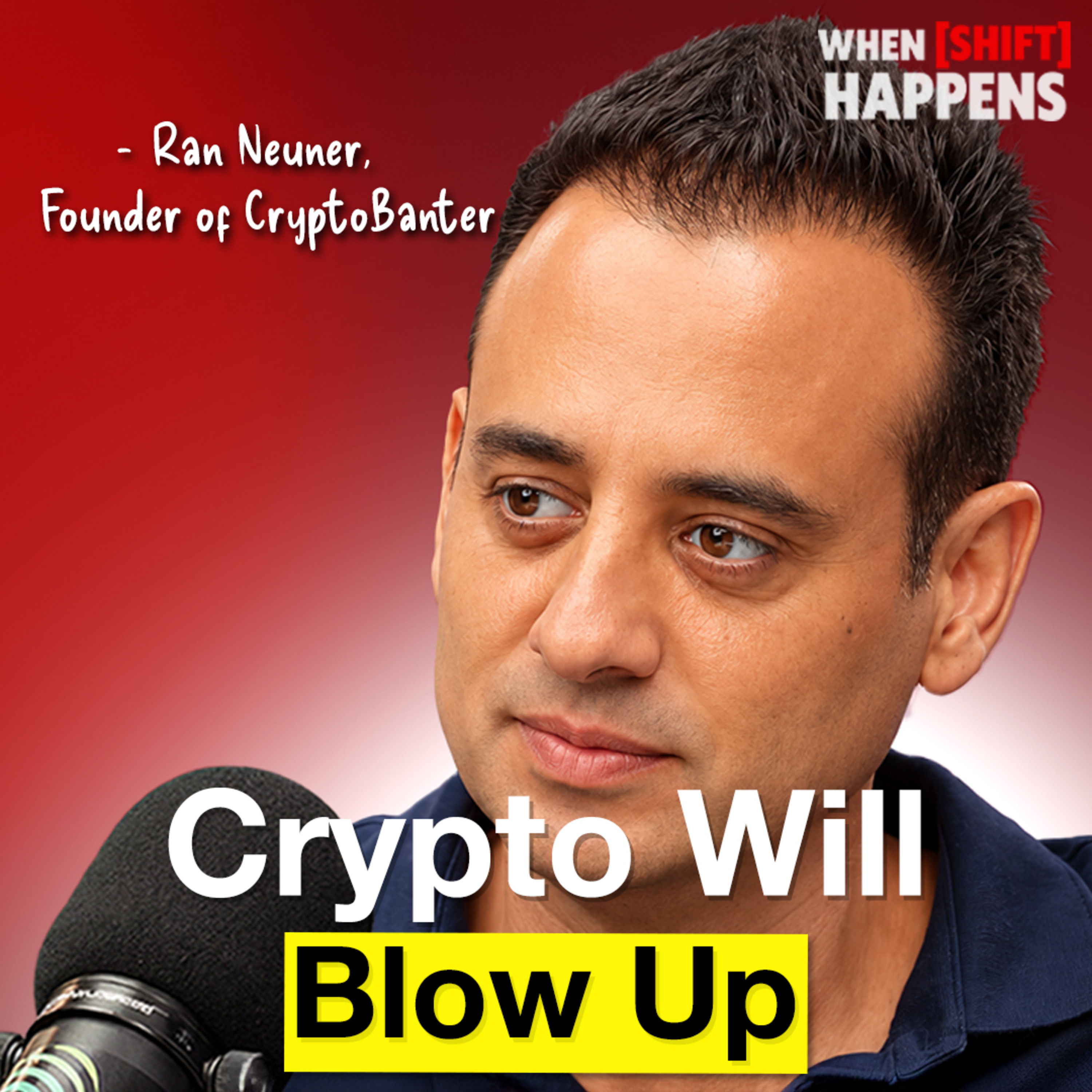
CryptoBanter founder Ran Neuner argues crypto is in its first real bull market (crypto, not Bitcoin) because it has finally found product-market fit beyond “send value” (Bitcoin/stablecoins). He claims the next big winners are trading venues and “social trading” platforms, plus certain altcoins (“others” excluding top 10) and tokenomics designs that create scarcity and buy pressure.
Ran Neuner is founder of Crypto Banter, a major crypto media platform with 1.5M+ YouTube subscribers, and a longtime investor known as a recognized industry voice. He previously worked in mainstream media (CNBC) and says he became a worse investor when he stopped getting crypto information, prompting him to return to media.
Trading venues (e.g., Hyperliquid, Uniswap) are most important because value creation leads to trading first, then DeFi compounding. Altcoins excluding top 10 could outperform Bitcoin by ~5.7x (with Bitcoin ~3x), implying total market cap could exceed $20T. He argues tokens should be valued by “buying pressure in the pipe” (scarcity + demand), not earnings multiples.
Hyperliquid (staking/lockups + buybacks), Pump.fun (meme-coin launches; discussed as needing stronger token lockups), Zcash (shielding likened to staking/creating scarcity), Bitcoin (21M supply, lost keys/ledgers reducing supply), and ETH vs BTC history (ETH BTC downtrend until recent breakout).
Written by AI. May contain mistakes.
Discussion on the concept of social trading and the importance of trading venues.
“We discovered two things in crypto that we didn't know we were looking for.”
Exploring the potential for altcoins to outperform Bitcoin in the current cycle.
“One of our absolute favorite things at WhenShift happens is to look at our data to improve what we're doing for you every single week.”
Insights into the speaker's investing philosophy and the importance of timing in the market.
Reflecting on the balance between family life and investing in crypto.
“And so what happened was I was the only guy doing mainstream.”
Key lessons on profit-taking and risks associated with crypto investing.
“Bitwise is a global crypto asset manager with$11 billion in client assets and more than 70 crypto solutions.”
Explore effective strategies for investing in crypto and traditional assets.
“I mean, if you want to, if you want to call all investing gambling, great.”
Understand the changing landscape of cryptocurrency and its use cases.
“Up until now, the only use case for this technology that actually proved itself and got product market fit was Bitcoin.”
Learn about the unique aspects of valuing cryptocurrencies compared to traditional companies.
“And I think for the first time, crypto, not Bitcoin, Bitcoin found product market fit last cycle, or maybe even the cycle before.”
Learn how to value crypto tokens through the concept of 'pipe pressure'.
“So like hyperliquid is probably the best example of it.”
Understand the mechanics of token scarcity and automated buy pressure for success.
“that you think are doing a really good job both at making the pipe smaller or maybe might be on their way there and at pushing more pressure through it.”
Explore how scarcity and demand affect the value of cryptocurrencies like Zcash.
“I would argue also that's why Zcash has been doing so well because the shielding is the staking, right?”
Get insights into the performance of altcoins relative to Bitcoin in upcoming cycles.
“I must say probably the best status symbol that there is is like, you know, you pull out your tap, tap, your swipe card, your cast card.”
Learn the key criteria for selecting successful tokens in the evolving market.
“So is it going to be the traditional 4-year cycle?”
Explore the essential criteria for successful layer one blockchains and the current contenders.
“The race for layer ones to a greater or less extent has been one.”
Understand the pivotal role of trading venues in the crypto ecosystem and their impact on value creation.
“Blockchain technology is the ability to create digital value.”
Discover why this crypto bull market is unprecedented and offers new opportunities.
“It's the first time that crypto has had real product market fit, real users, real revenue.”
Learn how social trading networks leverage dopamine to drive user engagement and trading activity.
“Without regulation to slow us down and limitations.”
Explore the potential impact of AI agents on transaction volume and the evolving financial landscape.
“So use case number one, use case number one, Bitcoin, store of value.”
Learn about the potential of blockchain technology and investment strategies in the crypto space.
“How are they going to settle the transactions?”

Get the gist, explore an idea or ask about something said.
 Claude
On When Shift Happens Podcast, what are the key points of this episode?
Searching your listeningAutomatic transcript. May contain errors.
0:00If you think about the use cases that crypto gave us, we only created one use case, the ability to create digital value and to send it between one person and another. That's what we've created in the last nine years. Now, however, we're in crypto's first real bull market. Crypto, not Bitcoin. Bitcoin found product market fit last cycle. It's the most exciting time to ever be in crypto. You know why? Because Ran Neuner, the founder of Crypto Banter.
0:19Ran Neuner: One of crypto's largest media platforms with over 1.5 million YouTube subscribers. He is a longtime investor. And one of the crypto industry's most recognized voices. Let's talk about trade. We discovered two things in crypto that we didn't know we were looking for. Two of the biggest prizes in the world. Crypto was a solution looking for a problem. Imagine if the world's biggest social media network and the world's biggest casino had a baby. That would be what we've created in crypto. We call it social trading. By 2029, there's going to be 1.5 billion AI agents in the market. All of a sudden, you're going to get billions and billions and billions of transactions a day.
0:51How are they going to settle the transactions? BlackRock wrote a report, and in that report, they said that they'll need to use blockchain technology. What is blockchain? Blockchain technology is the ability to create digital value. The most important investments in this cycle are the trading venues. That's why you've seen Hyperliquid, Uniswap, all the trading venues. Because naturally, when you create value, what you're going to do with it is you're going to trade it. That's the first thing that you do. The second thing that you do is you start looking to invest it and compound it, which is what we call DeFi.
1:17Two reasons why trading is important. Do you think altcoins massively outperform Bitcoin this cycle? I think altcoins are going to outperform Bitcoin by 5.7x. 5.7 times 3, 17.1x. You realize you can't beat the market, but Bitcoin is the market. Yet you say you should not own Bitcoin. I think that's the crux of really what I want to discuss with you today, because I think that we are now.
1:43Hey, everyone. One of our absolute favorite things at WhenShift happens is to look at our data to improve what we're doing for you every single week. And one of the things that we notice every week when going through our data is how many of you regularly watch this podcast but still have not subscribed. And so if you want to help us get even better guests every week, take two seconds and click that subscribe button just below this video. Thank you for being with us today and for supporting us every week. And now, let's get to today's show. You can see DJing in your eyes, bro. He's a dopamine addict like all of us.
2:19but like a next level i mean he has this i mean we're all adhd driven right but you but you've also notched up a little bit on your on your dj-ness like before you never used to speak about tokens and then all of a sudden i see you talking about zcash and nia and ah well i was doing all this stuff but i was for me i'm i am i've always said in my life that um i i will never talk about things until i truly made it because i feel like once i made it yeah i kind of people can listen to me and i'm not going to feel i'm swiss right in switzerland we don't talk too much we just do and then we talk potentially right so all the entire like documenting your journey thing um is um it's not very swiss it's you do it and either you never talk about it or you say okay now i can talk about something because i i did pretty well i understand how these things worked so that's why i was never talking about it too much i was just like i'm going to show people first i'm going to show people first uh uh and um but then but then you start to realize after a few cycles like you you can pick like the right place like early on because i talk to all these people like you but because it's in face to face we do dinners and all that stuff and all the information comes in those dinners like one-on-one and and then i'm like oh shit like literally if i talk to all the biggest people and it's all converging towards four token like a year ago right or like hype a year and a half ago i mean i had j for the for the tge but then like zcash a year and a half ago like they were coming to me and like kevin look at zcash and they're like oh shit actually well you have this information and then you just have to um you just have to act on it and because media is very good cash cow you can invest all that money during the bear market in these four or five picks that the people who are going to pump these coins are telling you what's happening before it happens and so then it becomes almost like a like a cheat like cheat code so what everyone talks about now well i know it's since a year year and a half right and i'm like i'm smiling because i don't even remember the first time we met that's exactly what i said to you i said you're basically like a sponge of information yeah and that's the only reason why i ever did this was because when I started with CNBC, remember no one was broadcasting anything to do with crypto.
4:41And so what happened was I was the only guy doing mainstream. Everyone was just giving me information. And so you had this like fucking ton of information. And then you just act on the information. And then that was almost a guarantee of making money. And the story of why I started Banter was because when I stopped doing CNBC, I became a shit investor because I just wasn't getting information. So I had to start getting back in the media again. And that was... What did I answer to you when you told me that? I don't remember. You were still learning. At the time, the last time we met, it was much closer to the beginning.
5:12Yeah, much closer to the beginning of your journey. I actually offered to interview you. I don't know if you remember. And I said to her, I want to interview you. You weren't ready yet. I said, because you've got so much information. You've met so many people. I actually have a lot of information, but for me, I need to sit on the numbers to prove myself. Yeah, I'm there. I know all this stuff. Well, now I'm like, well, if this is us, I was talking to Raoul and I was like, if this is really just the beginning of the bull run, I'm kind of like, I shouldn't say that, but I'm kind of scared of like where this stuff goes because like, I'm so ahead based on all these investments that, um, my, my portfolio now is funny.
5:53Funny enough, my portfolio is at an all time high and it scares me. I'll tell you why it scares me. We all think it's going to be bull run, you know, like bull run, bull bear, bull bear. But what, what if this one catches us out and just gives us another leg down or something like that? It just, it just feels, I feel like I'm in the beginning of the race and already my portfolio feels like I've won the race. You know what I mean? It's like, so it's a, I don't know. I think it's a, we must be cautious, cautiously optimistic. I think that's maybe, maybe the way to look at it. For those who even watch our first podcast together, tell us, who are you?
6:32Um, I am a champion. You said last time. I said last time, yeah. I think by nature, as I said before, I think I'm an obsessive compulsive champion, which is a good thing and a bad thing because on the one hand, everything I do, I have to win. And that drives you mentally crazy because you have to be the best at everything that you do. Whether it's doing shows on YouTube, whether it's being an investor, whether it's learning about influence, you always have to be the best at what you do. And I'm obsessive, so I can't stop. I go into these crazy places where I just can't stop. But also being obsessive, I also want to be the best dad.
7:09And I think for me now at this part of my life, I'm much more hungry about real life experiences than, I'll give you a very good example. There used to be a lot of weekends where the crypto market was running. And I used to make a lot, like being in front of your computer on the weekends because it was low liquidity, low liquidity markets, lots of liquidity on weekends. I could make a lot of money being in front of my computer on weekends. And there were a lot of weekends where I actually stayed in front of my computer instead of going outside and spending time with the family. And what I realized after being here for multiple bull and bear markets was that actually that doesn't matter.
7:50Like I gave most of that money back and whatever else. And so like right now, like much, a lot more of my time is, I just want to be, have the best fun with my family and with my kids and stuff like that. So trying to balance being the best at everything that I do, but also like, I think I now know what, what counts, what, what really matters. I think a good story is, um, I'm obsessed with my kids football. My kids play soccer. Um, yesterday my kid got into one of, into the finals. He's seven years old and I was watching, my wife was filming it with her iPhone, the whole game. And my wife was filming it with the iPhone and I was sitting in the hotel with friends and we were watching a seven-year-old on an iPhone and that was for me and he won that they won the tournament and for me that was better than any thousand x that I got on any old coin or any like that was like the the the level of achievement on that was was much better so yeah that's that's who I am how long do you need to realize that um I think really after losing money in two cycles when I say losing money in two cycles, you know, you make a lot of money in a cycle and in your head, that's real money.
8:59And then you lose it, right? Because we all gave back, we all gave back gains, you know, except the two influences on Twitter who sold it up. We all gave back all the gains. And then after the second cycle, I was like, hold on. So you mean I wasted all this time and I gave up all these amazing experiences to, like experiences that I'll never get back for something that I landed up giving back anyway. And then what you realize is you realize that some things are repeatable and some things are not repeatable. And I think the amazing thing about crypto is that I think crypto is the biggest opportunity.
9:35There is no other industry that has so much opportunity, not even AI. We can probably discuss that. And that if you miss an opportunity today, it's okay, because tomorrow there's going to be exactly the same opportunity. Absolutely. And by the way, that for me is the biggest lesson that I've learned in crypto. It's the single most important thing that I've learned is no FOMO. And no FOMO, why? Because I'm blessed to be in the best industry in the world with opportunities in abundance. And so if I miss the token, it doesn't matter. There'll be another one tomorrow. If I miss 10 because I was out with my kids on the weekend, it doesn't matter.
10:13There'll be another 10 tomorrow. So it's a loop that never, ever finishes, or maybe it will finish one day. But for now, the loop's just getting more and more fun. So I think I made like 10 rules for the bull market. I don't remember the 10 rules. I know you're going to say to me, what are they? But the last rule was never delay time with your loved ones for time in the market because the market will always be able to opportunities and like your loved ones probably won't at some point. Yeah. You know, I'm sitting here with a broken collarbone, I told you. um also gave me some some great reflections in that point the problem with crypto is we go all in and i'll explain to you later in the show why i think we go all in on crypto um and i realize now that like one little glitch to your health like this is not even a serious i mean it's a serious injury it's a broken collarbone it's my my collarbone's cracked i can't move my arm really but you realize that when that happens you can't spend time with your family you can't spend time with your kids you can't go for around you can't go play football you can't go cycling with your kids anymore, that's one little health element.
11:12It's not even a heart attack. It's just one little So like, and those are the things that are really important. On most trading platforms, crypto lives in one app, stocks in another, and commodities such as gold and oil somewhere completely different. Variational puts perps on all of it. Crypto, equities, commodities, FX, and even pre-IPO names in one single account with zero trading fees on every market at any size. Visit variational.io to see why Variational has quickly become one of the largest on-chain trading platforms. Big thanks to my friends at Bitwise Asset Management for backing today's conversation.
11:54Bitwise is a global crypto asset manager with$11 billion in client assets and more than 70 crypto solutions. That includes ETFs, index funds, SMAs, custom option strategies, staking, vaults and more. However you want to invest in crypto, the experts at Bitwise have you covered. Yeah, I think the saying is a healthy man wants a thousand things or a thousand an ex, a sick man, only wants one. How do you avoid giving it all back? I'll tell you, I think I'm getting better and better every cycle. A couple of things. I think the more you're happy to give up gains, the more you land up keeping. So the reason why usually you hold on is because you want to try and squeeze the last bit of juice outside of the lemon.
12:53The minute that you change your mindset, which is what I did and said, you know, there's so many opportunities in this game. If I take profits, you know, I took profits now. We're filming this, Bitcoin's at 86 ,500. We've had a great run from 60 to 86 ,500. I took a lot of profit now. I'm sitting with a big pile of cash. Now, on the one hand, that cash is not going to earn me any money because it's sitting in cash. On the other hand, I know that when that dip comes, that cash is going to be like the best thing in my life, right? Like that's going to be worth 10x what it is. It's only in this cycle that I can say that I'm mature enough to not want to squeeze the entire juice out of the lemon.
13:32So you don't have a rule where you say, when I sell this money, you should leave crypto. I do now. Because you're saying this money is going to buy the dip. The point with that is this works until it doesn't and then you give it all back. Whereas if you just sell and you say, now I'm going to put in cash or buy some, something like in the real world, well, you're forcing yourself to not, uh, play this gambling game, which is, so it is that at the end of the day, even with the good coins, et cetera. I mean, if you want to, if you want to call all investing gambling, great. I, you know, there's a case to be made there, but I'll tell you a few things.
14:13If it's investing, then you will not take profit. You would say I'm investing for the long run. No, of course you'll take profit because otherwise you just keep holding the same coins and you don't write. Let's say, for example, you're holding Google, Apple, Amazon, Netflix, right? And then you want to buy something new. You want to buy Meta. Where do you get the money from? You take a little bit of each one and you invest in Meta. I would say you work, you make some cash, and then you invest. Yeah, I mean, yeah. I think, look, let's maybe talk about a couple things. The first thing is, unlike a lot of people in crypto, this is not my first radio.
14:44So remember, I sold the business for over$150 million before I got into crypto. So I have a lot of investments on the side. I have my house. I have like when I got into crypto, I was already at the point where it was just it wasn't because I needed to work. Second thing is I got into crypto in 2014, 2015. So I've been here for a long time. And to be honest, if you've been here for a long time, you pretty much made money. The third thing is that I do take money and I do put money outside of crypto regularly because I do know that I don't want to have too many eggs in one basket. Why? Because the majority of my investments are in crypto, but also my work is in crypto.
15:22So when we go through a one-year bear market like the one we just had, not only do your investments do badly, but going to work is shit every day and you're not losing money, but your performance at work is not a good performance. So just to diversify, I do move stuff out of crypto. That being said, though, I've also realized that every time that I try and invest in anything that's not crypto, either I invest in the index or I land up losing money relatively. Absolutely. Yeah. So I was talking to a bunch of guys who made like at least$50 million, 55-0. Like I know a bunch of them. And I was like, there's a moment where, you know, 50, 100 million, they talk about this family office view of things.
16:03I should do some VC. I should do some real estate. I should do this. and they all tell me the same they say i've done all these things okay maybe it's over the last five or six years i've done all these things i lost money everywhere except in nasdaq and smp maybe it's okay smp nasdaq did really well that period etc but like i think it just shows the you know what you're just saying right it's like all this shit like except for an expert well rarely makes you money there's a few things that you when you're young when you're young that you learn, that people, older people tell you, and you only, you only agree with them when you get slightly older.
16:40So the first thing is around index investing versus passive index investing versus active investing. Okay. You always think you're going to beat the index because some guy on Twitter has told you to buy this stock or that stock. Okay. I tried it for so many years. You know what I did? Eventually what I did is I just sold every single individual stock that I own and I put it all into indices and I have no more stress. Okay. So I remove stress from my life and I'm growing. The second thing is, um, the fallacy of owning property. Okay. So, you know, humans and specifically males have this thing around owning.
17:12Okay. We have to own property. So I built an amazing property portfolio. I can tell you, I'll be honest, like I've, I've never, ever made money on an investment. Okay. Maybe once or twice I've made money in an investment property. Okay. You, you buy investment properties, you rent it out already one out of 12 months of the rental goes to the agent that rents it out then the tenant leaves and doesn't pay for two months now already you ate there's nine out of 12 months you never make you know what i did i sold all my investment properties i went to the market i bought a real estate investment a rate rate bro making the same amount of money making real money Don't give a shit.
17:51Check it once a year. So I think index investing is one of those things. Another thing which more mature people tell you when you're young and you don't want to believe it because you think that you're going to, is diversification. When you're younger, you always bring the quote that says, you cannot make money diversifying. You can only make money diversifying. Because let me tell you that if I wasn't diversified, when crypto went down 50 % in the last couple of months and NASDAQ went up 100 % or whatever it was, or 40 % in the last couple of months, actually to me, it was like, I was feeling great.
18:31Now, you only get that when you diversify. Like, you know, when you see things on crypto, like, hey, I own crypto, I own gold. So you can't own gold if you own crypto. And how can you believe it? I own crypto, I own gold, I own real estate, I own NASDAQ, I own Korea. in japan and you realize that when you get to a certain level of wealth you have to be diversified yeah so that's like i do take money out of crypto pretty regularly i do realize that i have an advantage in crypto which is why the majority of my money is in crypto i have an advantage there and and where you have an advantage you can double down and that's what i do so i want to do as you say you realize you can't beat the market but bitcoin is the market yeah in crypto yet you say you should not own bitcoin you should own i will other coins i think that's the crux of really what i want to discuss with you today because i think that we are now in crypto's first real bull market okay that's what that's where i think we are now i think that up until now we've had price bull markets in altcoins which were bullshit to be honest they were let me maybe liken it to something for you let's say that 2000 can be is called by people like a like a dot-com bull market can I go back to 2000 in hindsight do you think that was a real bull market for internet or do you think that was just inflated prices on the promise of what the technology could do the answer is it was inflated prices on what the technology could do that's not a bull market that's prices going up in a market which fundamentally isn't a bull market.
20:14Up until now, the only use case for this technology that actually proved itself and got product market fit was Bitcoin. Right? You'll agree with me that if we go back to ETH versus Bitcoin, ETH launched, everyone thought ETH was going to be better than Bitcoin. ETH did this massive thing, right? If you look at the ETH BTC chart, it's been on a nine-year downtrend. We can actually show the chart, that we asked your producers to search out, but it's been on a nine-year downtrend. In 2017, we had an uptrend. It was the ICO uptrend. We know that that use case wasn't a real use case. It died. The chart goes down again.
20:49It goes back up again when we had DeFi summer, when we thought we could reinvent finance on DeFi rails. It was slow. It was expensive. It kept getting hacked. It didn't give a real return other than token emissions, which is not a sustainable return. And then it crashed again. And now, after nine years, the ETH BTC chart's broken out. Why? For the first time since the beginning of this technology, we have a use case other than being able to send a store of value from one person to another. For nine years, the only real use case in this industry was being able to send value from one person to another.
21:26We did it when it came to Bitcoin, and we did it when it came to stablecoins. We created digital value, Bitcoin. and then we created stable coins, which was just dollars, fiat dollars wrapped or tokenized and we could send them to one another. That was the use case of a technology. Well, I would argue there was another use case, gambling, 24 seven casino from anywhere at any time. That's been the case since a long time already. Anywhere where there's value. Is it really valuable? I'm not sure. Does it create value? I mean, for the gambling platforms and exchanges, yes. uh for the users what is what is what is finance finance one of the biggest industries in the world what what what actually is finance it's being able to speculate on instruments right that's really what finance is whether it's the price of a home or the price of a car or the the one asset against another that's what finance is probably one of the biggest industries in the world i mean i don't know exactly if it's the biggest or second biggest but it's one of the top three biggest industries in the world so if you think about the use cases that crypto gave us we only created one use case, the ability to create digital value and to send it between one person and another.
22:38That's what we've created in the last nine years. Now, however, we're in crypto's first real bull market. And I think for the first time, crypto, not Bitcoin, Bitcoin found product market fit last cycle, or maybe even the cycle before. For the first time, crypto has found product market fit and it's so it's the most exciting time to ever be in crypto you know why because unlike the nasdaq which took 15 years to get back from 2000 levels back to to the nasdaq took 15 years to get back we're gonna get we're gonna get back there next week i was thinking about that actually so that means that uh the opportunity now is to find the next google or facebook or right amazon after the dot com crash but in crypto the real businesses except in crypto because i mean raul pal um thesis was always on the layer one because it's too hard to find the new amazon and the new facebook well actually in crypto it's not that hard because there's not that many businesses that actually make money and that that are profitable and that are run by teams that are serious so if you are in the industry it's not that hard to find them yeah but once you find them yes, agree.
23:55You could, you could invest today in all the big protocols. I mean, we could have a discussion as to where the L1s are the best investment. I'm not sure that L1s are the best investment. I don't think either. Yeah. I think, I think the L1s, the L1s, in order for a token to, to have value today. So maybe let's go like one step back in order for a company to have value, a company needs to have earnings. And you take the multiple of its annual earnings and you multiply it by a multiple, so it's a multiple of 10, and that's what you call the fully diluted value of a company, right? Crypto is much more sophisticated than that.
24:31It gives us another couple of dimensions. So you take a protocol, and the first thing about a protocol, a protocol, a company can or cannot become a network and have network effects, okay? Like there are companies, like for example, gold mining companies, oil companies, they're not networks. Every additional user to the network doesn't add value to the network. The best or the highest valuation companies in the world, Google, Amazon, Meta, Facebook, Uber, those companies are all networks. Why? Every additional user adds value to the network exponentially. So with crypto, there's an added dimension because the token is a representation of the network.
25:16because, you know, the one thing about meta is the network continues to grow, but there's no scarcity. You can, as many people as you want can join Facebook. It doesn't create a layoff scarcity. The difference between that and a real token network is it has the same kind of network effects where each user adds value to network exponentially, but at the same time, it removes a token from, it removes an availability from the network. I have a very crude example for it and I'm going to use the example the example is like a gay person okay now hear me out yeah okay I know it sounds crazy but it's the best example I can give you when a let's assume that there's an equal number of guys and an equal number of girls okay and then one guy comes out and he says I'm gay that's great because what he's done is he's taken minus one off the market for men but he's added plus one off the market, he's added plus one for women.
26:13Do you understand? I know it's funny and I can see in your face that you're thinking, how am I going to air this? But hear me out here. Hear me out here. That's the ultimate fucking tokenomics. Okay. Because that is what a network is. The more people that join, the more scarce the asset becomes. Right. So again, let's go back to meta. The more people that join, no scarcity. Everyone can join in abundance. The more people that join solana network a network let's call it a solana the more tokens off the circulation of the market which means that all of a sudden the pool gets smaller and and and that's where tokens fundamentally differ from companies okay so just i was talking with michael saylor a few a few months ago thanks to you by the way um he's not talking to me by the way and he and um he was giving this example for bitcoin this example he was saying he was mentioning a random billionaire who was had not heard of but he was saying when this billionaire joins facebook yes he brings 50 friends yes when he joins bitcoin he brings 50 billion dollar and so on top of like And you remove it.
27:28Exactly. Like one person, the additional impact of one person, especially if they're wealthy or they have means, is actually so much bigger than the same person joining a social network, right? The biggest difference between tokens and companies is the element of scarcity. Shares are not scarce. So one, every user that joins a network needs tokens to power the network. Scarcity. Great. Second thing is tokens have this innate design where they become scarce. So like hyperliquid is probably the best example of it. Number one, hyperliquid is, let's say, I don't know exactly, I think they have a billion tokens FDV, right?
28:08Of that, let's say, I know the numbers, but let's say X percent are not in circulation yet and need to be, they'd be mined, but they need to be released into circulation. Of that, X need to be staked in order to list a token on hyperliquid. In a company, there's no corresponding... Okay, so how do we value a company? We say number of earnings times multiple 10 equals valuation of company. Okay, hold on. And that's how we all value protocols. So we look at hyperliquid. We say price,$90. The number of tokens in circulation, a billion. FDV,$90 billion. Wrong. Wrong, right? Wrong. Right. Explain us how hyperliquid should be valued.
28:52Okay, so I'll explain to you. Number one, how many tokens are actually in? Because unlike a company that can issue shares whenever they want, here, transactions have to happen. I don't know what the mechanism is. Okay, cool. So let's reduce the number of shares by 50%. Okay, number of tokens by 50%. Okay, then now, so the pipe is now this thick. Okay, then next thing is we say users who want to use Hyperliquid need to hold tokens. Okay, now the pipe becomes that thick because they've taken that many off. then we say uh you want to launch tokens in hyperliquid stake tokens we've locked now the pipe is you got a hundred billion dollar a 90 billion dollar pipe but now the pipe is that thick okay now and that's a lot of token by the way to stake to be able to launch a token usually the majority of the network usually in a good network the majority of the network is being used okay now here's the catch crypto has programmatic buybacks as you use buybacks happen so now you've got a pipe that's this thin and think about the buybacks as the pressure that needs to that goes through the pipe right and now you realize that actually the way to value a token is the pressure in the pipe how much pressure how big is the pipe so can you make the pipe smaller and can you programmatically make the the flow in the pipe bigger and that's how you value a crypto network not by earnings times a number of tokens times price times that's not the valuation so you mentioned hype this is a very good analogy by the way can you give us another few examples that you think are doing a really good job both at making the pipe smaller or maybe might be on their way there and at pushing more pressure through it.
30:45So hype is the number one that I can give you. Probably the other one that's big is pump fun. So again, pump fun haven't got it exactly right. So I'll give you an example. So one, there's not a lot of tokens in circulation. They do have the added element of, of, of buybacks. Now where, where's the problem? They don't really have a staking mechanism where you says, let me give you an example. let's say that for pump and it's not going to happen but if you would wanted to launch a token you had to put a million tokens absolutely lock them up absolutely to prove that you're not a scammer and a serial launcher or something like that right um that would then lock up a whole lot of tokens yeah where will that happen let me tell you where that will happen pump if pump had to pair each of their meme coins with pump so the liquidity pools were all uh meme coin paired with pump, not meme coin paired with Sol or meme coin paired with Ys.
31:38Then you would create scarcity of the pump token because you get all these liquidity pools that are locked up with pump. So what is your objective in terms of building a token? Number one, create a network. A network means that every user must add value to the network exponentially. Cool. Two, create as many mechanisms as you can to lock up and limit the supply of the tokens for as long as possible. three, create the most automatic buy pressure that you can. Because if the mechanism works, the tighter the pipe gets, the bigger the pressure in the pipe gets. That's why Hyperliquid has it so right.
32:18That's why when people say to me, but hold on, Hyperliquid now has a bigger FT, fully directed valuation than NASDAQ or than Coinbase, I say, you don't understand. It's got nothing to do with the fully directed valuation. It's got to do with the buying pressure relative to number of tokens in circulation. Quick shout outs to our legendary long-term WhenShift Appends partners, without whom none of this would be possible. Thank you to Cast, my go-to global money app to store, earn, move and spend stable coins across 170 plus countries directly with Apple Pay or a physical card. On top of that, I can also get paid in USD and Euro with my Cast virtual account.
33:01Use my promo code SHIFT, S-H-I-F-T and my link below to get 10 % off your membership, earn up to 3 % instant USD cashback on every card spend and get up to$250 in cash for referring your friends. No banks, no borders, just money that moves with you with stable cash rewards. I would argue also that's why Zcash has been doing so well because the shielding is the staking, right? And the rich people are the buying pressure. Obviously it's not, it's not a business, right? Obviously different kind of mechanism. But if you think that way, every time there's a new of seizure or higher taxes for rich people and all that stuff, like this is actually pushing more pressure in the pipe, but remember that the tokens that are shielded are still tradable.
33:58They're still movable between one person and another. It just, you just can't see the moving. They're not used in the network. There's no proof of work. I would say, as far as I know, no proof of work network has utilization of tokens to power the network. An example would be if you wanted to run a Bitcoin validator, a Bitcoin miner, you had to buy the ASIC, but also had to lock up two or three Bitcoin. It would be a combination of proof of work and proof of stake. And that would basically lock up tokens in circulation. But again, I think for tokens to work, they either have to have, they have to have, they have to have scarcity.
34:39And the more scarcity that they have relative to the buyback, the better. How do you value a store of value? Like a Zcash? Scarcity. So you take the total demand, the total supply, which will be 21 million. And you take the specific demand. You know, the difference between, that's why if you think about, ETH and Solana versus Bitcoin and Zcash. ETH and Solana can keep minting tokens. There's more tokens coming out. Bitcoin and Zcash, you know that the number of tokens is actually going down. You know that people are losing their private keys every single day. You know people are losing ledgers every single day.
35:20You know that the supply is going down every single day. And it'll be at a maximum of 21 million. And that's why those work. And you assume that the demand will be exponential. And that's pretty much why, you know, right now Zcash and Bitcoin are the two winners in terms of proof of work. I was about to do that. To our friends at Cast. Yeah. Amazing card. Are they your friends too? They're my friends. I must say probably the best status symbol that there is is like, you know, you pull out your tap, tap, your swipe card, your cast card. This is the plated gold card. They told me it's solid gold.
36:01Yeah, this is the card. Solid gold, yeah. Yeah. Tell me a bit about CAST. Talk about them. I'm sure they're going to be so happy. I mean, look, just so you know, I'm not like paid to show CAST, but it's genuinely one of my best pleasures in life. I can't explain to you. It's just, number one, the cash back that you get is like, it's crazy. You know, people think, oh, it's only like 4%, 5%, whatever number, it's 5%, 7%. Book a plane ticket, book accommodation, tap, tap, tap, You look back at your card, you got serious money back. Yeah. Yeah. I agree. And also, I don't know, there's like a social value of a gold card that actually fills and makes this noise.
36:39Because every time I put it out, the response is the same response. So no Apple Pay for you. You're back to the card you say to.
36:54Yeah. Now you don't have to do a cost segment on this card because it's been done. Yeah. Talk about organic integration. Talk about organic integration. We only do organic stuff here. You think altcoins massively outperform Bitcoin this cycle? Yes. Like massively. Why? Like I think altcoins outperform Bitcoin by 5.7x. How do you get to that number? The other day you told me 11. No, I think that total altcoins. Okay, so. Ah, okay. I see. I see. In USD. Let's just do something. Let me ask you, what do you think Bitcoin is going to be at the end of the cycle? Give me a number. 200. What? 300? 200K.
37:39For numbers, can we say 250? Because I think it's going to be higher. 250. Okay, that's 3X from here. Yeah. I think altcoins are going to outperform Bitcoin by 5.7X. So 15. So 5.7 times 3, 17.1X. So it's 17.1X. that's what i think altcoins are going to do excluding the top 10 altcoins and excluding excluding top 10 altcoins i'll tell you why also because it's not so if you look at the altcoin the others versus btc chart it's a it's a chart that looks i mean i'll show you yeah you can actually put on the screen for your for your trade yeah you might you might want to keep the mic so you can just you can you can show it you can show it i'll connect it you I can explain it to you and you can put it up on the screen.
38:23But ultimately, if you look at the others versus BTC chart, it goes up. Others versus BTC is the altcoins less the top 10 altcoins divided by Bitcoin. Yeah. You can see in 2017, they had a run and they crashed. In 2017, there was a promise of all what these altcoins are going to do. I was there. I bought into it and I lost all my money. 2021 there was the defy run and altcoins went crazy against bitcoin and they crashed just some stats in 2017 others outperformed bitcoin by 16x in the bull market in 2021 others outperformed bitcoin by just over 6x in the bull market just so if you look at the chart that's that you can show the chart which means that if bitcoin did like a 8x then you are up 50x right yeah okay so So if you, there's a channel and I'll actually, I'll draw the channel and I'll put up on the screen for you.
39:15But actually, if you draw a line of where others is and you take, let's just go back to the top of the channel, then it works out to about a five or six X. I said 5.7 X. And I think Bitcoin is going to do a three X from here. And I think altcoins are going to outperform Bitcoin. Let's just do some numbers in terms of what that means for the market cap. Bitcoin market cap today is$2 trillion. Okay. So let's say Bitcoin at the end of the cycle,$3 trillion. So now it's$1.5 trillion. Let's say it will be. Five. It'll be 3 trillion, but Bitcoin will be 3 trillion. Altcoins today are 1.3 trillion. So you take that number, you say altcoins times 3 to get to Bitcoin, times 5.7.
39:55I say total market cap goes above$20 trillion in this cycle. Right now we're at 3. What's the cycle length? I don't know if it's going to be 4 years, but I think there or thereabouts. So is it going to be the traditional 4-year cycle? I don't know. okay but basically you're looking at altcoins which means others which means out of top 10 but what we learned both of us throughout the last couple of years is the majority of your money is invested in and not not in those coins because it's way too risky well if you think about what like if you think about what are the top 10 today so it's bitcoin eth uh tether i think tether is going to go up exponentially, even though we can't influence it.
40:41I think Zcash top 10. So I mean... Hype, Zcash are already there, right? Yeah. So they're not counted. I think they're going to go up. I think when I said they're going to go up, I think they're also going to go up. Maybe they're not going to go up by 17x, but I think they're going to go up by 510x. So how do you allocate? Depends. So for me or... Let's say you have 100k to allocate now. what do you do knowing your thesis of others so these altcoins after top 10 go up that much well let's look at where we are in the life cycle of a technology here right so we know bitcoin we know bitcoin works and now it's just a matter of adoption and people adopting it like gold you agree with me so bitcoin will go up it'll go up as we both said 3x is probably a good a good target from here is a conservative target from here bitcoin goes to 250k 3x we've had a decent cycle yeah so you can you can kind of take it um but this is not bitcoin cycle right so let me say okay well is it the layer one cycle i don't think it's a layer one cycle i don't think either okay so let's talk as to why it's not the layer one cycle one but they had their cycle last cycle yeah you could say that's when uh soluna vax yeah yeah you mean 20 2021 cycles i mean sorry two cycles ago you could say that yes um what are the tokens that win you have to have product market fit you have to have revenue and you have to have a way of giving revenue back to your token holders those are the three things you have to have product market fit you have to be a network can grow, you have to have revenue, and you have to give the revenue back to your token holders.
42:29Let's look at a layer one. The race for layer ones to a greater or less extent has been one. ETH, but not ETH, layer twos on ETH. We kind of know now that the highly regulated institutions are using the L2s on ETH because they can control them, they're fast enough, and they can be cheap enough robin hood robin a chain base chain there'll be lots of there'll be lots of others right okay so that race is one solana probably is if you want a monolithic chain a single layer one chain solana's probably the winner there's one curveball that needs to we need to find a home for and that's what's going to be the l1 chain for ai agents okay that is for me the biggest prize in finance and the biggest prize in crypto there are a couple of contenders here which are um from a design point of view strictly sui so from a design point of view i think sui sui is written with an in an object-based design for an ai agent it's just a more native way for an ai agent to interact with a chain but from a biz dev point of view from a biz dev point of view, Sui have got this cycle to get it right.
43:46Like Sui, you've got this cycle. I'll talk to you later about what my thesis is for a cycle, but it's around AI agents. And if they don't get it right with AI agents, they may as well close the shop. But if they get it right with AI agents, they could be one of the biggest chains. But regardless, that being said, the layer one blockchain race, you could say pretty much like between those guys, maybe there'll be one more for the extra one with all the different experiments that are happening, probably not worth taking bets on layer ones. Okay, next layer. What is blockchain? Blockchain technology is the ability to create digital value.
44:25That's all it is. Whether you bring real world digital value onto chain or whether you create new meme coins, which are digital assets on digital rails, that's all blockchain is. What is the single, when you create value, What is the single layer that's the most important? Being able to trade the value, right? So the most important investments in this cycle are the trading venues. Okay. That's why you've seen Hyperliquid, Uniswap, Lighter, all the trading venues. Because naturally when you create value, what you're going to do with it is you're going to trade it. That's the first thing that you do.
45:06the second thing that you do is you start looking to invest it and compound it which is what we call defy right put it in earn interest put it in earn arbitrage etc etc but that only happens after trading first if me and you have an asset i want yours you want mine i need to trade it okay later oh well let's find a use case you loan it to me i loan it to him first the trading this for me the most important protocols of the cycle are the trading protocols that's like the the most important protocol of the cycle is trading two reasons why trading is important so okay let's just go down the stack first then there's defy and then there's everything else we don't know about okay let's talk about trading because this is where i think like i get goosebumps just thinking about it this this what we've discovered in crypto is like it it blows my mind like we what we discovered now in crypto blows my mind we we we discovered two things in crypto that we didn't know we were looking for and they came to us when they came to us it was like two of the biggest prizes in the world landed up with us now i say this because i've been here for 14 years or 13 years and for 12 of the 13 years crypto was a solution looking for a problem i don't know like Like, we had these tokens.
46:29No one knew what we needed the tokens for. We built these layer ones. No one knew what we needed decentralization for. They gave us transactions that everybody could see. No one knew why we needed the transparency of transactions. Actually, it was a negative thing. And then two of the world's biggest use cases ever landed up in crypto. And to be honest, for me, that came at a time where I was the most demotivated in my life in crypto. It was in the middle of the spare market. The Bitcoin price hasn't moved. The views were down to nothing. I love crypto, but like, bro, it's not fun coming to work every single day for a year and nothing happens and everything is just down.
47:08It's not fun. And then two of the biggest use cases in the world came to crypto. And I think that if people start to understand how big these use cases are, then you start realizing, holy moly, like you don't even understand what's about to hit us here. And as Raul Paul says, don't fuck this up because you have one opportunity here. You have one more bull market to make insane amount of money. It's crypto's first real bull market. It's the first time that crypto has had real product market fit, real users, real revenue. And guess what? It's not getting regulated. It was supposed to be regulated with the Clarity Act.
47:49But guess what? They gave us one more bull market. Without regulation to slow us down and limitations. Because regulation is limitation, right? No, there's no regulation. In fact, because there's no regulation, the SEC basically came out and said, what we'll do is we'll give you rules to try and experiment as much as you can because we were unable to pass regulation. So let's talk about what the use cases are because they are massive. And I'll start with the smaller of the two, which is massive. Okay, so we said blockchain is about creating digital value. Okay. Cool. What do we do with digital value?
48:26We trade it. That's what we do. That is. I think that humans are going to carry on trading, but if a human's going to trade, it's only going to be for one reason. Because in the future, AI agents are going to do most of the trading. And the only reason why humans are going to trade is for one simple reason. Because otherwise, even now, if you think about finance, there's no real point in trading against the quants or the bots or whatever, right? The algos, right? Because a human can't out-trade a bot or an algo or whatever else, and that's before AI. So why would humans trade? So I call this a combination of imagine if the world's biggest social media network and the world's biggest casino had a baby.
49:11That would be what we've created in crypto. We call it social trading. What are the most successful applications today in crypto? FOMO probably one of them PumpFun probably another one of them Hyperliquid probably another one of them what do they have in common? Effectively they're all social trading networks okay now let's just quickly understand what that is okay because it's much bigger than it seems why do you wake up in the morning every morning? Have you ever thought to yourself like why does Kevin wake up every morning? To look at my phone yeah but let's I know the answer let me ask you honestly to check to check my notifications and my blog folio i mean honestly if i were to say to you i know i know coke's not a sponsor so i'm not gonna put it there um why do you wake up in the morning like why does a human wake up in the morning to achieve to achieve right that's what you wake up for what is that what is that achievement when you achieve your brain releases a hormone which is actually a drug called dopamine and the addiction to that dopamine makes you continue wanting to achieve that's the only reason why you wake up in the morning not the only reason but you wake up in the morning and you wake up in the morning with a to-do list every morning today i'm going to do this i'm going to go to gym i'm going to do this ultimately you're doing it because you want to achieve that is why why do you want to achieve because every time you achieve your body rewards you with the reward hormone which is called dopamine and actually a lot of the reason why you wake up in the morning is an addiction to dopamine you wake up you get an addiction to people that are depressed usually have a problem with their pituitary gland and therefore they don't want to wake up in the morning right because they don't have the reward the hey you've done this you've achieved here's your reward which is dopamine dopamine is a hormone but it's also a drug it's a it's it's it's addictive it's why we wake up in the morning and the more you achieve the more dopamine you get the more the more you want to wake up in the morning right so So surely in your business, you found when the markets are hot and you've got more momentum, you want to sleep less because you want to work more.
51:19That's because your body is rewarding you with more dopamine. Okay, what is dopamine? Dopamine is a process. It's something that's released by your brain. But it's released by your brain for a very specific pathway. And the pathway is that says you have to have motivation. You have to do work. It's not if it just comes to you without work, it doesn't count. You have to do motivation. you have to do work you have to realize your target and then you have to be recognized so i do the i let's go back to social media i wake up i write a tweet i think about it i delete some i'd write a tweet again i post it i get recognition which is the likes i get a dopamine hit because my body says congratulations, validation.
52:10Outside validation, validation from the outside is much more validation and better than validation from the inside. What do you do when you've had a good tweet? You get back on your phone. Okay, let me just think of another tweet now. Quick shout out to the legendary team at Jupyter, the DeFi super app. Anything you want to do on chain from trading to earning yield, you can just use Jupyter. Personally, I recommend getting the Jupyter wallet on either your phone or your laptop. 10 times faster and 10 times cheaper than the competition. You're going to love it. Thank you to the awesome team at Athena for backing today's conversation.
52:46Athena is one of the fastest growing projects in DeFi with over$7 billion in stablecoin supply and an average 11 % APY on SUSDE. And importantly, zero DPEGs since launch, which is exactly what you want from a stablecoin. Go check them out by following the link in the description down below. you're gonna have to give us the takeaway for that and then you're gonna have about a minute to tell us about the second use case because we're running out of time okay so i don't want to stop that but the people will kick us out the takeaway the takeaway for that is that the biggest and best businesses in the world are social media networks why because they are dopamine machines why do you go on a social media network you write a tweet you write a tweet you get the likes you get the validation and then it's like you want to do it again and they've built businesses out of that how much does it how much better does it get when when it's a tweet about money and also now your pnl is going up and everybody can see it of course so that so we've created the ultimate dopamine machine in this we've created a social network that is based around finance and now twitter's trying to do the same thing by adding the buy and sell buttons because they realize that if they don't do it, they're going to lose to someone like FOMO.
54:02So use case number one, use case number one, Bitcoin, store of value. Use case number two, the ultimate mix between a social media network and a casino, which gives a human validation, income, and you work to make money and to get recognized at the same time. And it's the biggest and most powerful social network in the world. It's more powerful than all the social networks put together cool second one because you've given me a minute and now the minutes down to like a couple of seconds okay second one um the human workforce today there's 8 billion humans in the world the human workforce today is 3.3 billion people of the 3.3 billion people how many in how many internet transactions do you think each person does per day it's like throw a number 3.3 billion people imagine a lot of them are in rural areas they don't do any internet transactions how many internet transactions they do a day per person yeah five per person in indonesia transactions action not actions transactions i buy you sell transfer of money i think less than one okay they the numbers say that there's going to be ai agents there's going to be by what by 2029 there's going to be 1.5 billion ai agents in the market okay maybe it's right maybe it's wrong who cares let's just let's just work on that number they reckon that those AI agents are going to be doing 217 billion actions a day.
55:26Let's say that only 10 % of those are transactions. Let's say only 1 % of those are transactions. All of a sudden, you're going to get billions and billions and billions of transactions a day, exponentially. If 3.3 billion humans are only transacting once a day, which is not true, but let's say it's just once a day, and you've got an extra 1.5 billion transacting 21 billion times a day. Okay? And that's just 2029, let alone 2031, 2035. You've got an exponential workforce doing transactions. How are they going to settle the transactions? They're not going to settle the debit card. They're not going to have lawyers.
56:08BlackRock wrote a report, and in that report, they said that they'll need to use blockchain or similar technology. and they also said in that same report that existing rails such as ACH and they named a whole lot of other existing rails are not suitable for this use case. So now you've got the agent economy transacting, contracting, and settling using some kind of blockchain rail, and the number of transactions that they're going to do is exponentially higher than what you can comprehend. You can't comprehend. 50 % extra workforce in two years transacting at a velocity of a thousand times what humans transact?
56:47You can't even imagine that. Well, I think to close this conversation in one sentence, how do I bet on that? I don't know how big it's going to be, but it's going to be big. How do I bet on that? So you want to have some chips on the layer ones. Why? Because the reason why the layer ones aren't attractive is because they don't have a mechanism to be scarce and to give the revenue back to their holders. But they will. At some point, they'll realize that that's the only way to accrue value and they'll solve the problem. Two, you look, you say, okay, what are the AI agents going to do? The first thing they're going to do is they're going to trade.
57:22Trade, hedge, options, derivatives, because they're hedging. If I'm an AI agent and I know that I'm going to be picking up a lot of Chinese internet currency, and I know that my P &L is actually in dollars, then I'm going to start hedging and transacting between the two currencies, right? So you want to bet in the layer around that. And the layer around that should be trading first, hedging, which is derivatives, options, trading, and whatever else. And then the next layer is investing. To me, investing is great, but it's not as attractive as trading because the velocity of trading, just think how many trades happened versus locking up$1 ,000 for six months to try and earn yield, right?
58:04So to me right now, if you want the best bets for the cycle, have some layer one bets. But this is a cycle where we're going on to the application layer of the blockchain. And specifically, you want to look for high frequency trading because then you're capturing all the fees. Obviously, with the same rules that we said earlier, which is scarcity of token, making the pipes and et cetera, et cetera. And that's really where I'd put my money in the cycle. And I think that it's honestly crypto's first real bull market. where we can actually look and look for these value adding protocols. And if you use your head and you say, is it a network?
58:40Does it create scarcity? Does it make revenue? Can I take the revenue and does it have a mechanism to take the revenue and pass it back to token holders? It's game over. And as Raoul Paul, our friend says, don't fuck this up. It's like, it's that simple. Don't fuck this up. Thank you so much, Fran, for doing that. Thank you, my friend. It was awesome. It was good to see you. Thank you. Awesome. So as you probably know by now, I host some of the biggest names in Bitcoin and crypto on my podcast. But a lot of the best stuff never makes it on air. The Shift newsletter is where I share that raw behind the scene alpha, the insights, stories and lessons straight from my guests that you won't hear anywhere else.
59:17If you want the real inside take on Bitcoin and crypto, join my newsletter, The Shift, in the description down below.
59:29you
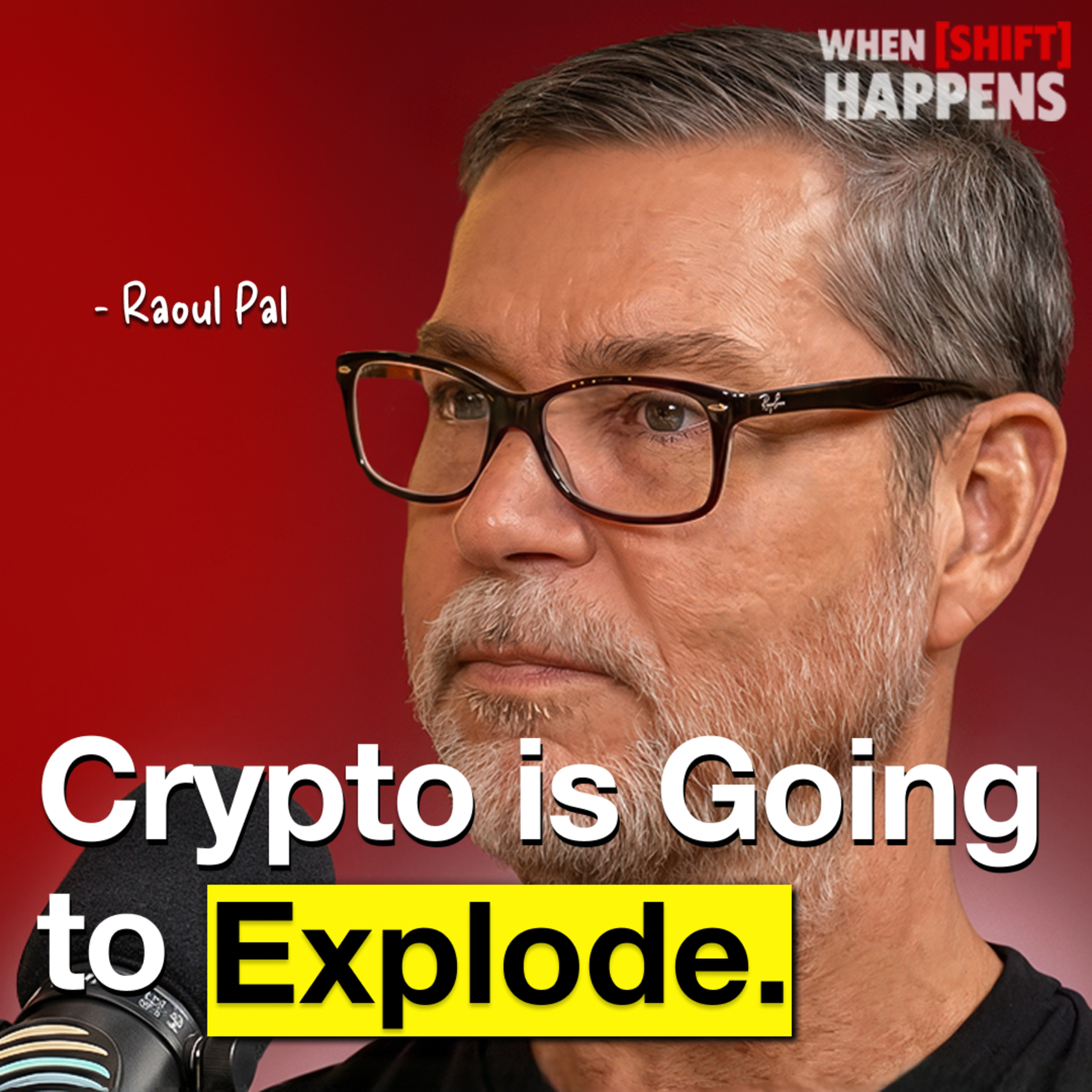
Ran Neuner, founder of CryptoBanter, one of crypto's largest media platforms with over 1.5 million YouTube subscribers, explains why he believes we are in crypto's first real bull market.
He shares what two cycles of giving back gains taught him, how he thinks tokens should be valued, and why he sees trading apps and AI-driven transactions as the biggest opportunities ahead.
Along the way, he breaks down where he would put his money this cycle and how to avoid giving it all back.
THE SHIFT NEWSLETTER
💡Go beyond the mic - subscribe to The Shift, my new weekly newsletter where I share the uncut stories, raw takes, and behind-the-scenes notes from When Shift Happens: https://www.kevinfollonier.com/crypto-web3-newsletter
___________
PARTNERS
⚖️ Variational aggregates liquidity to offer industry-leading depth on crypto, equities, commodities, and more: https://www.variational.io/
🌐 NEAR is a high-speed, low-fee Layer 1 blockchain built for scalable apps and AI agents: https://near.org/
🚀 Jupiter is the most used Decentralized Exchange in Crypto and the largest DEX by volume on Solana: https://jup.ag/
💳 KAST lets you manage and spend stablecoins or crypto with a Visa Card or Apple Pay. Live in 100+ countries: https://go.kast.xyz/VqVO/SHIFT
🌱 Bitwise Asset Management manages $15B+ across 30+ crypto investment products — ETFs, index funds, alpha, staking, and more. https://bitwiseinvestments.com/
⚖️ Ethena is a synthetic dollar protocol on Ethereum, offering a crypto-native, non-bank-dependent stablecoin called USDe. It uses a delta-neutral hedging strategy with staked ETH to maintain a $1 peg. https://ethena.fi/
♾️ Coinsilium provides vital funding and expert advice to Web3 and AI-powered early-stage technology companies.
https://www.coinsilium.com
___________
FOLLOW RAN NEUNER👇
• Twitter: https://x.com/cryptomanran?s=21
• LinkedIn: https://www.linkedin.com/in/ran-neuner
FOLLOW WHEN SHIFT HAPPENS
Twitter (X): https://x.com/KevinWSHPod
Instagram: https://www.instagram.com/kevinfollonier_
TikTok: https://www.tiktok.com/@kevinfollonier_
Linkedin: https://www.linkedin.com/in/kevinfollonier/
Website: https://kevinfollonier.com/
DISCLAIMER
The info contained herein is for informational purposes only. Nothing herein shall be construed to be financial, legal, or tax advice. The content of this video is solely the opinions of the speakers who are not a licensed financial advisor or registered investment advisor. Trading cryptocurrencies poses considerable risk of loss. The speakers do not guarantee any particular outcome.
#Crypto #Bitcoin #Altcoins #CryptoBullRun #BullRun #CryptoInvesting #CryptoTrading #CryptoNews #Ethereum #Solana #Hyperliquid #Zcash #DeFi #AIAgents #AI #SocialTrading #Blockchain #Web3 #Innovation #cryptobanter #RanNeuner #TheShiftNewsletter
0:00 Intro
2:14 The Information Cheat Code
4:26 Why Ran Started CryptoBanter
5:32 Portfolio at an All-Time High and Feeling Scared
6:26 Who Is Ran Neuner?
8:45 What Two Cycles of Losses Taught Him
9:47 The Biggest Lesson: No FOMO
11:23 Partnerships: @Variational @BitwiseInvest
12:15 How To Avoid Giving It All Back
13:32 Should You Take Profits and Sit in Cash?
16:36 Why Ran Sold Everything for Index Funds
19:10 Why Not Just Own Bitcoin?
22:41 Crypto Finds Product Market Fit
24:10 How To Value a Token vs a Company
28:38 How We Should Be Valuing a Token
31:48 Three Rules for a Winning Token
32:37 Partnership: @KASTxyz
33:24 Scarcity as a Store of Value
37:06 Will Altcoins Beat Bitcoin?
39:29 Could Crypto Hit a $20 Trillion Market?
40:58 If You Had $100K To Allocate
42:29 Which Blockchains Already Won
44:17 Why Trading Is the Biggest Bet
45:54 Two Use Cases Crypto Wasn't Looking For
47:23 One More Bull Market Without Regulation
48:58 Social Trading: Social Media Meets a Casino
52:24 Partnerships: @JupiterExchange @Ethena
53:07 Why Social Media Networks Are Uber Successful
54:37 The AI Agent Economy
56:50 How To Bet on The AI Agent Economy