Ask ChatGPT

 When Shift Happens Podcast
4 Nov 2026 · 56m · 24 chapters
The episode argues for “user-owned AI” paired with crypto/blockchain to prevent centralized control of data, prompts, and financial/health/legal decisions. It claims AI should be private, aligned with users’ success, and verifiable via cryptographic guarantees, while blockchain/markets coordinate a “multiplayer” ecosystem so no single company controls everyone’s intelligence.
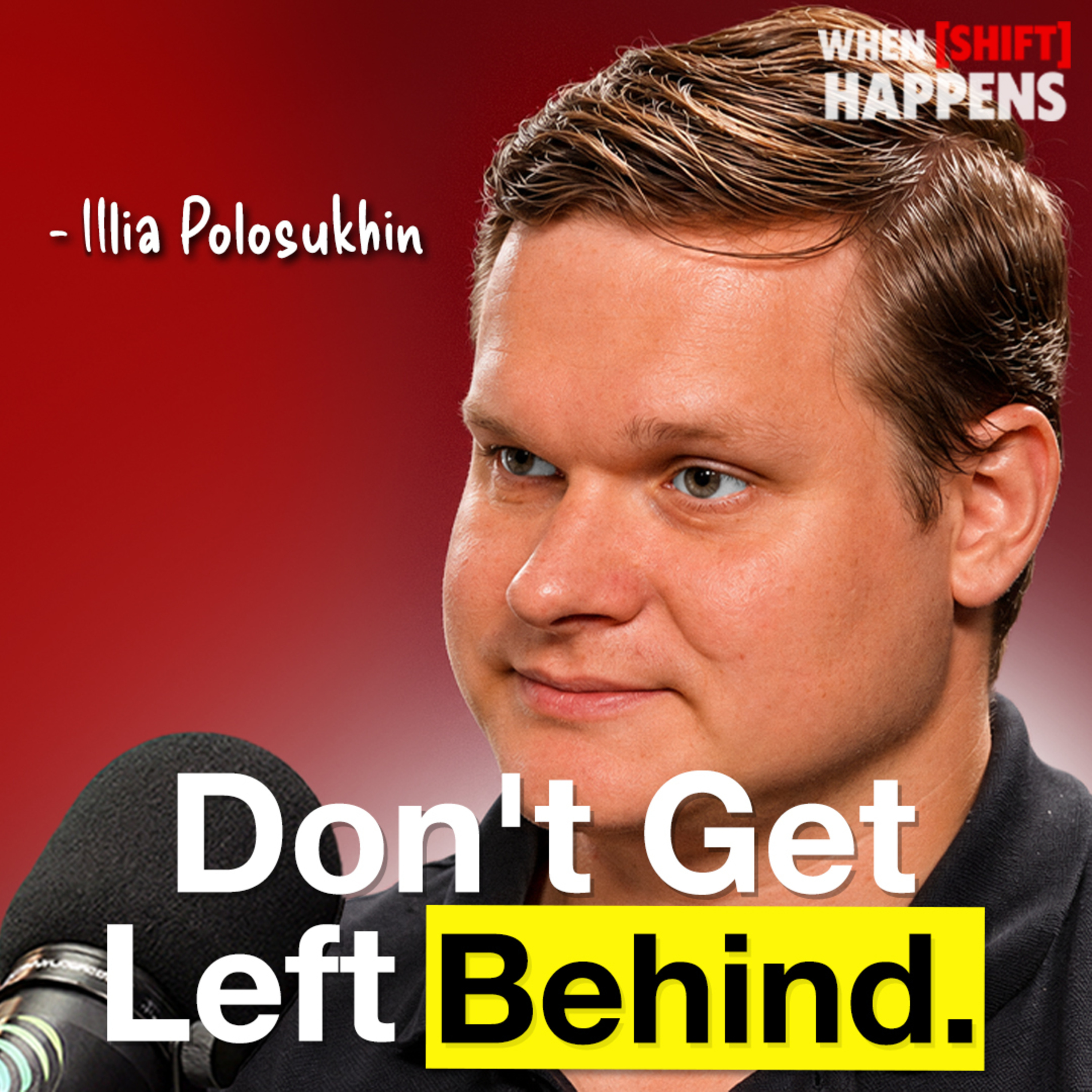
Illia Polosukhin is co-founder of Near Protocol and CEO of Nir Foundation. He is also co-inventor of LLMs and the transformer architecture (“Attention Is All You Need,” 2017). He previously worked as a researcher at Google and later left to start NearAI/NEAR.
Centralized AI providers expose prompts and can be subpoenaed; user-owned AI should use private inference with end-to-end encryption and verifiable execution. Near combines blockchain + markets + private AI infrastructure. Crypto economics can fund scarce inference compute and align incentives.
transformer parallel attention enabling GPT-like speed; subpoena example for legal logs; “private AI” for healthcare/financial data; Zcash analogy (encrypted balances) and “encrypted Ethereum” (private smart contracts); Near smart contracts signing transactions across chains; personalized medicine via AI-designed mRNA/peptides.
Written by AI. May contain mistakes.
Learn about the concept of user-owned AI and its implications.
“Can you explain the concept of user-owned AI?”
Explore the next shifts in technology, including personalized medicine.
“Hey everyone, one of our absolute favorite things at WhenShift happens is to look at our data to improve what we're doing for you every single week.”
Discuss why certain areas should avoid using public AI services.
“So we want everyone to own their data, their assets, and their power of choice.”
Hear about the speaker's mission for data ownership and personal sovereignty.
“So you lost all the money that was on there or.”
Learn how the speaker overcame challenges through programming and AI.
“How do we get machines to understand people?”
Discover the pivotal moments that led the speaker to leave Google.
“So I think Google, and we've seen this kind of what followed in five years after Transformer paper, which was 2017, right?”
Discusses the trajectory of AI and its potential to replace traditional roles.
“So I was reasonably familiar with that is coming, kind of in having a lot of friends working at OpenAI and some of the other labs.”
Explores the challenges and opportunities at the intersection of AI and blockchain technology.
“I think we're in the world where AI researchers, I call it playing a single player game, they're trying to make one AI smarter and better.”
Details the founding journey of Near Protocol and the philosophy behind its creation.
“Because there was also like this kind of, there's these markets, right?”
Shares strategies for building a successful blockchain project during market downturns.
“Where we want to get, you know, as we continue evolving is effectively the vision, the implementation of this mission is that AI is going to be the interface for computing, right?”
Envisions the future where AI mediates interactions within decentralized blockchain ecosystems.
“No banks, no borders, just money that moves with you with stable cash rewards.”
Learn how Near enables interactions across different blockchain networks.
“And so we can add other chains pretty easily.”
Explore the importance of data privacy when using AI services.
“looking data from your data, which in a way kind of creates that the new model will have all of that already embedded.”
Understand the legal implications of using centralized AI for sensitive information.
“Hopefully, I don't find it out the hard way.”
Learn how cryptographic technologies can enhance data security in AI.
“I mean, at the end, it needs to be, you know, when you're using a browser, right, you have this green lock, right, which means you're encrypted.”
Discover how Zcash enhances privacy in the financial system.
“And with Near, we're actually going one step further.”
Explore the concept of user-owned AI and its implications for the future.
“dominates the consumer interface with AI, they will also centralize money underneath themselves.”
Discussion on the sustainability of blockchain economies and user ownership.
“Yeah, so that's why this is only possible in blockchain space, right?”
Exploration of safety concerns regarding user-owned AI systems and their implications.
“What's the strongest argument against your entire philosophy of user-owned AI?”
Explanation of open weight models in AI and their benefits for privacy and validation.
“Can you explain what open weight model is?”
Discussion on the risks associated with AI and the evolving defenses against them.
“You're one of the inventors of this transformer technology.”
Insights on personalized medicine as the next big technological shift.
“And this is something I wrote over a year ago saying, look, we're actually going to have a lot of problems with cyber attacks using AI.”
Discussion on how society will adapt to the automation of outcomes versus processes.
“Everything where we care about the process is something we're going to continue doing.”
Discover exclusive insights and stories from guests on the podcast.
“that raw behind the scene alpha, the insights, stories, and lessons straight from my guests that you won't hear anywhere else.”

Get the gist, explore an idea or ask about something said.
 Claude
On When Shift Happens Podcast, what are the key points of this episode?
Searching your listeningAutomatic transcript. May contain errors.
0:00Can you explain the concept of user-owned AI? AI should be on your side. If I'm a company and I'm making an AI model, my motivation is not to make you successful. Core motivation is to make the company successful. User-owned AI is effectively the opposite. It's how do we build AI that is on your side. It needs to be making you more successful. It needs to be aligned with you. What's the strongest argument against your entire philosophy of user-owned AI?
0:22Illia Polosukhin: Illia Polosukhin, the co-founder of Near Protocol. And CEO of Nir Foundation, a blockchain platform advancing user-owned AI. He's also the co-inventor of LLMs and the transformer architecture. You've been early to two of the biggest technological shifts of our generation, transformers and crypto. What's the next shift? One shift I'm really excited about is personalized medicine. You can have your blood test fed into AI and produce a specific mRNA or peptide for you that solves exactly the problem you need to solve. What NIR is today and what NIR is going to be in the future? AI is going to be mediating and transacting with each other.
0:58That's really what we're building NIR for. You want privacy and you want the markets because that'll enable the whole ecosystem to find the optimal resource allocation. What should people not use a GPT or a cloud for and why? Finance, health, legal, because everything you ask OpenAI, it's not privileged. So use NIR AI for that. If you have IP, if you have workflows, if you're making decisions, again, use private AI. You believe AI could become the most powerful centralized system humanity has ever created? What scares you about a world where a handful of companies control everyone's intelligence?
1:29So, I mean, the...
1:36Hey everyone, one of our absolute favorite things at WhenShift happens is to look at our data to improve what we're doing for you every single week. And one of the things that we notice every week when going through our data is how many of you regularly watch this podcast but still have not subscribed. And so if you want to help us get even better guests every week, take two seconds and click that subscribe button just below this video. Thank you for being with us today and for supporting us every week. And now let's get to today's show. How are you doing? Yeah, good. vibing vibing yeah I mean everybody wants to talk about the cryptography now so it's like crypto is back to cryptography well we will not talk about it too much today so you're gonna have a break a break from that a big break we try to do more general things yeah no no it's good yeah I mean I was just I just tweeted saying like more accessible things the crypto space really needs to get better at comms because like when we have like Justin and some other cryptographers tweeting about stuff and not explaining really well.
2:45It's really bad for the whole space. We explain everything to our moms here and our Uber drivers. Exactly. So let's start. What is your mission? Explain to your Uber driver. So we want everyone to own their data, their assets, and their power of choice. That's kind of core mission. And so what it really means, you know, I was born in a country that just kind of was born out of USSR. My grandparents had their savings accounts in USSR and Sberbank. You know, when USSR fell apart, their savings were effectively not worth the, you know, the book it was printed in. You know, I've seen hyperinflation in Ukraine.
3:33I've seen, obviously, the power of choice being done with government. so really want to create a kind of a world where everyone has their kind of power and their ownership and their sovereignty and their really dignity altogether. Who are you? In what sense? You decide. I'm a father, I'm a builder, I'm an entrepreneur.
4:08there's a common pattern amongst my guests they have something that happened in their life in their childhood you actually mentioned it already a little bit often a childhood trauma that explains their incredible achievement and their fire in their belly today what happened in your life can you go a bit deeper that can explain your success and your fire in the belly today? I mean, yeah, as I mentioned, like growing up in Ukraine, single mother, I mean, we literally were growing our own food for, you know, better part of like 90s because there was not like the market didn't work, right? The hyperinflation meant like it didn't matter how much money you receive from a salary, right?
4:52Like everything got 10 times more expensive a few months later. and so kind of pretty familiar with like effectively institutions not working and crumbling uh i mean again back then corruption was there as well obviously even now right ukraine is kind of in a crossfire uh and so you know for me like these things are not like abstract i mean for a lot of like you people in u.s you know like banked and banked and stuff like this is kind of like abstract term for me it's like very you know i've actually had three bank accounts in Ukraine, those banks don't exist. Right. And like, I'm not doing that old.
5:30Right. So like, I'm very familiar with like. So you lost all the money that was on there or. I didn't have that much money in them, but like they're just, you know, those banks closed up. Yeah. So bankrupt.
5:45How do you get out of that? When you're a kid, when you're a kid, there's probably a lot of people struggling today. maybe they're nothing good or in the wrong place like how do you get out of that you actually have to move like what's what's possible or how what do you advise I mean honestly internet and now AI is the is your leverage right so for me you know I started programming when I was 10 I was learning how to do this this opened up you know as a kind of through internet learn more started doing competitive programming then you know got a job and so you kind of like lift yourself up by doing this and then that presents opportunity to move to a place you want to move um but yeah like think where you want to get to what do you need to do and then right now i think honestly right now is the best time like ai removed any boundary that before you know oh i needed to go to the school to learn about this or like it was really hard to get some information now as ai you have access and it's open like you can download some of the weights right now So they're pretty good now for learning and you can learn any topic, go deep and then turn it into some action and make things happen.
6:58What's the one thing, big thing or big move that changed everything for you?
7:06Well, it's been a lot of moves. I mean, obviously the biggest move is leaving Google starting the year, right? But I always wanted to start something. I believe kind of in smaller teams doing kind of more impactful things. And so Google for me was always a great place to learn, great place to build network. Obviously, I did some really cool research, but I wanted to do something. So left and started near AI originally. Yeah, that was a pretty big move. and you know like in Ukraine for example back then entrepreneurship is not like always a normal thing so I remember even some of my family like oh why are you leaving you know Google is like great job by leaving that to start something so like kind of stepping into the unknown you mentioned that you were a researcher at Google and while being a researcher at Google you wrote attention is all you need 2017 with seven other people can you explain simply to your Uber driver, the main idea behind this paper?
8:13Yeah, so maybe if we kind of zoom out broadly, right? So what we're trying to do is we're trying to machines to learn how to understand the way we talk, the way we think, right? Right now, obviously, you know, most people have tried some form of AI. If not, chat GPT or Claude, you know, Google now has this. you know if you've moved backwards 10 years right AI was there machine learning was there but it wasn't a product it was a back-end feature right you would you know scroll your TikTok or Instagram there's AI actually running there but it's not the interface is not human language right it was kind of just a back-end thing and so I actually joined Google because I wanted to work on exactly this problem.
9:02How do we get machines to understand people? How do we get them to show that they're intelligent themselves? And the same way we check intelligence for other people is we ask questions. And so we worked on how to effectively teach machines to answer questions given some, let's say, Wikipedia article. Right? Now at the time the The approach that was kind of used and researched is approach so-called recurrent neural networks. So this approach where the machine reads one word at a time, kind of similar how we do. The thing is, when you give it 10 pages, you give 10 pages to a person, reads one word at a time, takes a bit of time, then you ask questions, it's very slow.
9:56When you go to Google and you ask a question, you won't answer right away. So we cannot actually put these kind of models at a time on Google.com, which is the biggest product out there. And so we were working on how do we really kind of get that intelligence of being able to read large Wikipedia articles, lots of search results, but extremely quickly. And so what attention is all you need, and specifically this transformer architecture. One of the key ideas behind it is it actually consumes all of the text on a page in parallel. So instead of reading one word at a time, one paragraph at a time, it reads every word in parallel.
10:39It tries to make sense of it through this mechanism called attention. And then it does multiple times through effective layers in a way that transforms all of these different individual words into a meaning. and then you can ask questions and now obviously, you know, do a lot of things with it. So this is what a GPT or a cloud does in the background? Exactly. And you're one of the seven or eight person who built the original version.
11:11Did you have any idea that you were laying some of the foundations for what would become the biggest technological revolution of your time and our time? So for me, I joined because I wanted to work on exactly what we see right now. This was like my vision from when I was 14. I'm like, computers should understand how we talk and they should program themselves. And so, I mean, it wasn't clear that this specific architecture will be the kind of the architecture. We were doing a lot of iteration and there was a lot of different options that didn't pan out as kind of researchers. researchers in the broader Google research group.
11:53But it was clear that we are making massive progress toward kind of, hey, these models are starting to work. That's why I left Google to start NearAI, because I'm like, okay, let's start applying this now to code, to actually like trying to build effectively vibe coding back in 2017. On most trading platforms, crypto lives in one app, stocks in another, and commodities such as gold and oil somewhere completely different. Variational puts perps on all of it. Crypto, equities, commodities, FX, and even pre-IPO names in one single account with zero trading fees on every market at any size. Visit variational.io to see why Variational has quickly become one of the largest on-chain trading platforms.
12:40Big thanks to my friends at Bitwise Asset Management for backing today's conversation. Bitwise is a global crypto asset manager with$11 billion in client assets and more than 70 crypto solutions. That includes ETFs, index funds, SMAs, custom option strategies, staking, vaults, and more. However you want to invest in crypto, the experts at Bitwise have you covered. You said that's why I left Google. but we've seen especially in the last two years these big companies spending an insane amount of people on a few an insane amount of money on a few people making them super wealthy so the logical kind of thinking could be you could have spent an entire decade building inside google and probably become extremely wealthy and influential why did you leave what was not happening there that made you leave?
13:35So I think Google, and we've seen this kind of what followed in five years after Transformer paper, which was 2017, right? The ChatGPT as a kind of first product came out of OpenAI, not Google. And Google has more compute, more engineers, and had the original paper, right and so the reality is it's really hard to make disruptive products inside such a big organization that especially makes a lot of money from effectively something that ai would replace right the search engine and search ads absolutely ai in this format would replace and so kind of in a similar vein you know the teaching machines to code uh that we started in 2017 was also very much like look you will not be able to build that in the same way uh inside google right and for clarity i've tried to build a few different products inside google and it was really hard to launch them because there's so many different boundaries on that chat gpt came out 2021 22 october right 2022 october and suddenly the entire world realized what transformers could do what was your reaction?
15:00So I was reasonably familiar with that is coming, kind of in having a lot of friends working at OpenAI and some of the other labs. But obviously it was exciting to see kind of this now being in a product and really working. And again, the way to always look at this technology is not a point in time but always as a kind of trajectory right i think um it it's important to understand i mean and years now proceeded from there like we're kind of four years in now right we can see improvement all the time right and things are improving and so what i remember people complaining like oh it you know yes it's cool but it cannot do this or it will never be able to do this right and it's like, well, this is, you know, like five years ago, it could barely like make a sentence, right?
15:55So like this is all about trajectory that this is going to keep improving. I've now watched almost a decade of AI progress from the inside. What are the smartest people in AI still getting wrong? That's an interesting question. I mean, there's obviously a lot of different opinions,
16:22And so there's some people who are still like, oh, yeah, this is a statistical parrot, right? It's only on distribution. I think especially last couple of days, right, was, you know, a bunch of new papers from OpenAI and kind of new mathematics being done by OpenAI. I think it's starting to, like, challenge that. I think we're in the world where AI researchers, I call it playing a single player game, they're trying to make one AI smarter and better. Where the gap is, and this is bringing to our blockchain conversation in the future, is how do we actually make the multiplayer work? work right how do we create an ecosystem infrastructure and incentives and make sure that we don't collapse into one company ruling them all and i think that is probably the biggest risk because the smartest AI people are just not thinking about it they're thinking just like how do we get this thing better versus like how do we make sure the planet as a whole right works together how did you get so fascinated by the world of blockchains and cryptocurrency So our journey started, we were actually doing a lot of data labeling, crowdsourcing for our AI.
17:45And we had a lot of students, computer science students in Eastern Europe, Southeast Asia, China. And we needed to pay them, right? We were paying them like 15 cents to do some like coding task or explain, like write some comments for the code for training data. And it's really hard to pay, right? This is 2017, 2018. In China, students don't have bank accounts. They have WeChat Pay. In Eastern Europe, a bunch of tools don't work. And so crypto started mostly for us. It's like, hey, this global payment network that should just enable everyone to easily move money around and do payments. But back in 2018, there was nothing that would be fast, cheap.
18:32The fees were, Bitcoin, Ethereum fees were way higher than actually what we paid in one transaction, right? And that was kind of where we're like, okay, well, we would have a use case and a demand for a network. And we see exactly where there needs to be things changed and fixed, right, in the blockchain architecture. So let's go and research into it. Now, as we were kind of going down the rabbit hole, you also get more pilled by the values and the philosophy. So I would say like started very utilitarian, like, hey, we need to pay people. Like there should be Internet money that just works. And then, oh, the philosophy of sovereignty ownership.
19:19And that's when we formulated our vision was, you know, everyone should control their data assets and power choice. is like, oh, actually it fits really well with, I don't know, again, coming from kind of the ex-USSR land. It's like this is an opportunity for everyone to have this ownership that's independent of state, that's independent of company, that's independent of any organization, but instead governed by the code, governed by the kind of systems built around it. does that mean that you set the AI work aside to focus on that? Or were you doing two things at the same time? What was the plan back then?
20:02Because there was also like this kind of, there's these markets, right? Bull markets, there's these rushes, there's this layer one kind of like trends. How much was the thing tactical? how much and how much how can you put focus on these two extremely different things especially six years ago so we did set ai aside so the way we were thinking ai was too early and it was too early right so the we actually didn't have compute enough compute and the compute the gpus themselves were not like at the capacity that needed and so we put it aside to focus on the blockchain We raised a bit more money from Metastable, Naval, Accomplice and other guys to focus on blockchain.
20:46And we were pretty confident in ourselves. So we thought we're going to ship it pretty like in six months, in eight months. It did took two years, but effectively it led us to kind of build out the Near protocol. Give us the TLDR of like the Near journey in the last six years. probably a lot of ups, probably a lot of downs, multiple bear markets. How did you survive? So we started in bear markets. So to your point about Layer 1, Rush, we actually started already when it was down. And I remember fundraising when ETH was probably like$80. and yeah you're not sure if people still believe in layer ones but like hey look we actually have a use case we would use it so like we need to build this and so yeah it it's good to start in bear market because just like it cleans the the aura and kind of the ecosystem and so we did a lot of talking to other projects in the blockchain space.
22:00We have, I think we had like 300 companies in our CRM to talk, uh, just to do effectively customer discovery for how we design the blockchain. That's 2019? Yeah. 2019. Yeah. You have an edge, you have a mega edge in AI, then you kind of find this crypto opportunity, but it's a shit time. you don't know if it's gonna even like come back why do you stay? Because I mean it's like hey we would have used this this is like there's a clear need this infrastructure should exist right and again like we should have a financial system that just works and works on internet that was really like true belief is like and again we thought we were like let's build this and then you know now we can use it for other things right so we also just wanted to build on it ourselves and you know fast forward we are building on it ourselves so it's very it's very useful but yeah so 2019 we also did a lot talking to other blockchain protocols so we have this whiteboard series a youtube series where we interviewed a lot of other protocols not sorry not for uber drivers this is like very technical we're like grilling them for like all the technical details but it allowed us to also have a really good overview of the space and all of that we were putting back into designing your protocol and making it better and better.
23:22And so as we launched, we effectively had a really good infrastructure, really kind of solid protocol, and then started growing an ecosystem, which coincided with kind of a bull market of 21, 22, built out that, and then everything crashed. And so, but we had enough resources to continue building and continue now thinking through, OK, now that we have core protocol, core infrastructure, how do we actually build the products and actually deliver that value that we set out to do in our mission right so yes you need the blockchain it is kind of a root of everything but at the end users are not like you know people still go to a centralized exchange at the end they're not actually getting the self-custody the sovereignty the owning of their assets if we cannot deliver them experience of effectively centralized exchanges and centralized even financial systems banks and fintechs if we cannot deliver them that experience on chain and so kind of over the past i guess like two three years we effectively built it out now near.com is this on-chain exchange and on chain financial app and hopefully we can get to on full on chain kind of commerce and you know business being done fully on chain so you started with AI then you moved on to blockchain
24:51explain me in one sentence what near is today and what near is going to be in the future so right now we are vertically integrated stack of blockchain and AI attack focused on privacy So we have blockchain, we have this markets infrastructure that is especially designed for agents, and we have AI infrastructure for private AI to offer to everyone. Where we want to get, you know, as we continue evolving is effectively the vision, the implementation of this mission is that AI is going to be the interface for computing, right? You're going to just talk to AI. Maybe you'll talk out loud. Maybe it will be projecting things on your screen.
25:38But AI is going to be the mediator, not pieces of software, not operating systems of today. But it will be an AI engine. And blockchain, the markets are going to be how we do this multiplayer. How you're going to book this room. Your AI will effectively talk to AI of this venue and book the room for a podcast. how my AI will get me tickets for my family to go fly back to San Francisco. So AI is going to be effectively mediating and communicating and transacting with each other. And so that's really what we're building the Nier for. You want privacy because privacy is a core value of sovereignty.
26:21You cannot have sovereignty without privacy. You want user ownership. You want your keys, your crypto, and we need to make sure keys are secure. And you won the markets because that enables everyone to get the best results and have the whole ecosystem find the optimal kind of resource allocation. Quick shout outs to our legendary long term Windshift Appents partners, without whom none of this would be possible. Thank you to Cast, my go-to global money app to store, earn, move, and spend stable coins across 170 plus countries directly with Apple Pay or a physical card. On top of that, I can also get paid in USD and Euro with my Cast virtual account.
27:06Use my promo code SHIFT and my link below to get 10 % off your membership, earn up to 3 % instant USD cashback on every card spend and get up to$250 in cash for referring your friends. No banks, no borders, just money that moves with you with stable cash rewards. Give me one or two examples of something that can be done or built, something very tangible on the top of this near stack that can't be done on another stack or cannot be done as well on another technological stack. so some things that already we're doing right um let's say a new uh new blockchain just launched and uh their asset you know needs to be traded somewhere and historically effectively need to go and get some exchanges to list you and on chain because every exchange and like dex is on chain are limited to just that chain with kind of near intense we can just add that chain because we have and Near smart contracts can sign transactions on other chains.
28:21And so we can add other chains pretty easily. And now you can trade and you can interact and you can transact and you can hold their assets through Near. So that's kind of one aspect. The other aspect you can do right now, we call kind of with private AI, is effectively guarantee that, let's say your organization doesn't leak all your information, all your IP, all your personal data, all your medical data, all your financial data companies or other companies, you have a guaranteed, effectively end-to-end encryption for your prompts and from your outputs. And for companies, it's extremely important because you, A, you don't know where your information right now goes, right?
29:02Companies are actually giving up all the information to AI providers. What's happening right now in the centralized AI world? How does that work? So let's say you're using one of those frontier providers, right? Like all your information is plain text, right? in their database, they effectively see all your, everything you sent it to them. And if you're using agents, your agents are probably sending your emails and your, you know, documents and your whatever, internal Wikipedia, wiki knowledge of your organization and your decisions, right? Because you're effectively like discussing possible options for decisions.
29:36So you can reconstruct the full company from that data, right? And now there's some things where like, oh, well, we don't train on that data, but they may actually run so-called like synthetic data generation process where they effectively generate similar data, similar looking data from your data, which in a way kind of creates that the new model will have all of that already embedded. Right. So your business effectively gets ingested into the next model. and so that is kind of one aspect the other aspect is just your personal information like if you're using again these uh this frontier model providers right now first of all there's a very sneaky button there that says you know do not train on my data but not everyone on clicks and sometimes it's like turns on again itself but even if you unclick that right again they may be extracting and synthetically generating data.
30:38So you never know how much of your information is gone. And this is on top of any kind of cybersecurity issues where, again, your data just sits there in their database, like somebody can hack and steal it. And we may not even know that happened. Do you use Cloud or GPT today? I do, but not for... How do you feel about it? What do you use it for? What do you not use it for? Yeah, so that's a great question. Yeah, so I use it for some of the research where it's mostly done on like open data. open open information and then we do have near ai inference which is private right i use that for all my private personal financial and other use cases so like healthcare if you want to run healthcare analysis on your scans or like i have my crypto so my crypto is controlled by ai agent as well and so that all data runs through our near ai inference so in summary what should people not use a GPT or a cloud for and why?
31:36Why would you not recommend your family and friends? Yeah, so finance, health, legal. I mean, legal case, there was the, they effectively subpoenaed information logs from OpenAI for legal case, right? Because everything you ask OpenAI is subpoenable by, and so it's not privileged. And so if you're asking legal questions and trying to build your legal defense, that can get to your opponent. So use NearAI for that. Medical data, use NearAI. Financial data, use NearAI. Like for corporations as well, if you have IP, if you have workflows, if you're making decisions, again, use private AI. Well, I would guess most people, yeah, I don't think about that yet.
32:24Hopefully, I don't find it out the hard way. you said before when I asked you what do you think the smartest people are getting wrong in AI right you mentioned like they're basically like pushing for this one AI that's going to win everything you believe AI could become the most powerful centralized system humanity has ever created it is becoming what scares you about a world where a handful of companies control everyone's intelligence? So, I mean, the scary part is obviously 1984 style society, right? Which is? Effectively, I mean, your phone, your computer is controlling, like observing and controlling what you do, right?
33:15I use this example that if you want to influence a billion people to vote for someone or, you know, make some decision, actually being a front-end engineer for chat gpt is probably the simplest way because you just need to update the system prompt that's being sent uh like every user when you ask a question on chat gpt and then there's other stuff gets appended which is a system prompt and so there you can say hey you know vote for this candidate or you know you really should subtly convince a user to believe in this fact right and so models would do all the heavy lifting of trying to convince a user and embedded in the context of what you're discussing.
33:55And so that is, right now, I mean, this is kind of a conspiracy, right? But this is like a very practical thing that can be happening. What's happening today? Do we know? We don't. That's like, there's no verifiability of what is happening. Because the question, I mean, the logical inference, right, is all this shit happened with social media a couple of years ago. Facebook, Instagram, YouTube, like you would get kind of banned or you would be shadow banned or there was some shady shit happening with the government behind it. Why would not the same happen with a GPT or a cloud? Exactly. But we don't know.
34:36How can we test for that? How can you test for that? I mean, you can test for it, but again, on the other side, there's AI sitting as well. So if AI can detect your testing, it may just back off. So I think instead of testing for this, we can use what we're building, which gives you cryptographic guarantees, not just of privacy, but also exactly the system prompt, the model, the code that ran. So like the full verifiability of the path that you're using. What does that look like? Cryptographic guarantees for someone who is just a normal person like me? I don't understand all this stuff. I can even understand that near AI is better for me than GPT.
35:22I mean, at the end, it needs to be, you know, when you're using a browser, right, you have this green lock, right, which means you're encrypted. Whereas, like, the information is encrypted with the server. We kind of need to get to the same level of using, you know, a near GPT and you see a green lock and, you know, you can click on it and you can see more information if you want and kind of explore how it works. but at the end that is like you know green shield is what i make sure you're private i mean similar to like zcash as private money right you want to like you want to shield your money this is you know you want to shield your problems is it possible that there there is ever a world where there is a near gpt or a near cloud or do you need to rebuild the whole thing including the the end application, the user app, and then you need to onboard everyone?
36:15So right now we already used InBrave, which is a privacy browser. So if you're using their Leo AI, Near AI is a provider. Venice as well, which is a private AI app. They have an end-to-end encrypted AI, which is provided by Near AI. So we are actually integrating in existing applications that focus on privacy and delivering that experience there. And then on our near.com, which is right now mostly on-chain finance, we're going to be adding AI agents as well and kind of really bringing this AI and blockchain experience into one place. And so that is kind of our consumer surface. You mentioned Zcash and privacy.
36:57Can you explain Zcash simply to me? Why does it matter? So at the most fundamental level is we went from a financial system where we have a centralized players that can ban us from using our money, can go bankrupt and see all of our money, like all of our balances, but everybody else doesn't see it, right? Like you don't see how much I have in my bank. we went to a blockchain where everyone see how much everyone else has, but at least you cannot censor it and you cannot do anything. And so it has better properties in censorship resistance, but we lost a lot of the effectively privacy through this.
37:46And the reason why, because when Bitcoin was coming out, there was no technology to do this. The only way to verify how much money you have is to effectively broadcast it to the world. What Zcash offers is effectively a way to encrypt that information. And so instead of your balance being completely public and when you pay me, I can check how much money you have. With Zcash now, you can just send me effectively an encrypted proof that you send me money. I received it, but I don't know how much money you have. So that's what Zcash effectively offers. And with Near, we're actually going one step further.
38:26I was about to ask. So basically Zcash is, people call it private Bitcoin. It's like the money that is private or encrypted. Give us a similar analogy for Near. I mean, you can think of it as encrypted Ethereum, right? So we have not just now a specific Zcash cryptocurrency, but we have private smart contracts, private trading private stocks so you can have all the assets that near supports which is effectively now multiple hundreds we just added like 500 stocks tokenized stocks as well you can trade you can do lending and you can do earn right yield um perpetuals so you can have all of the different financial instruments now as well private and so if you have kind of through near.com, you have an account, everything you do there effectively doesn't broadcast to everybody else.
39:22So it's a private operating system on top of which private application can be built. Yes. And so kind of both on the money side and on the AI side. And so that's kind of where we bring all these pieces together. If OpenAI, Google, Entropic, and a few other companies become the interface through which billions of people understand the world, isn't that potentially more powerful than owning the words banks. So it is, and that is why we as Near are working on AI stuff. Because I actually think if, especially one of those companies dominates the consumer interface with AI, they will also centralize money underneath themselves.
40:13And so I think this is an existential threat to Web3. and so that's why we need an alternative stack that is fully private that includes ai and money because then we have kind of guarantee that and like there is effectively a contrabalance to a centralized solution can you explain the concept of user-owned ai so it's effectively just summarizing our mission right own your assets data and power of choice into something that I can pitch to AI people, right? It's this idea that you should have, AI should be on your side, right? Like if you think right now, if I'm a company and I'm making an AI model and I'm offering a product on top of it, like a cloud or chat GPT, my motivation is not to make you successful.
41:04Like core motivation of a company is to make the company successful, to make more money, to keep growing. and eventually start extracting more money from your users. And we've seen this with every company. As soon as you achieve your target audience, you kind of need to continue growing your revenue. You need to start making more money from every individual user. And so you start doing things that are not particularly always good for your users. User-owned AI is effectively the opposite. It's how do we build AI that is on your side? It needs to be private. It needs to be aligned with you. It needs to be making you more successful.
41:42And it cannot be the one who tells you, oh, you cannot do this, right? The way I kind of explain it is you want user and AI is almost like your mom, right? It should be on your side. It's always aligned with your success. It doesn't always agree with you, right? It may like give you feedback, but it needs to be aligned with you. Quick shout out to the legendary team at Jupyter, the DeFi super app. Anything you want to do on-chain, from trading to earning yield, you can just use Jupyter. Personally, I recommend getting the Jupyter wallet on either your phone or your laptop. 10 times faster and 10 times cheaper than the competition.
42:23You're going to love it. Thank you to the awesome team at Athena for backing today's conversation. Athena is one of the fastest growing projects in DeFi with over$7 billion in stablecoin supply and an average 11 % APY on SUSDE. And importantly, zero DPEGs since launch, which is exactly what you want from a stablecoin. Go check them out by following the link in the description down below. How does that build a sustainable, not company, but system or economy or network? How is that sustainable? Yeah, so that's why this is only possible in blockchain space, right? Because you cannot build a company with that because this is in contradiction, right?
43:06of like the company will need to raise money and like return it to shareholders. And so you will end up doing the same thing. And we've seen this opening. I started this foundation, right? And without a blockchain infrastructure, they effectively became a for-profit company. They kind of like shattered their nonprofit and like global mission part. And so you need the kind of economy where everyone is an owner, right? Of this system itself because, yes, AI is on your side, but you need to be an owner of the whole system so the system gets better. And so this is where crypto economics and tokens come in as a venue.
43:46A very simple example that we've already launched is if you hold some near, you have access to some amount of inference, private inference. And so this allows, you know, if everybody holds a little bit of near, now everybody has access to inference, right? But then in turn, NIR itself is scarcer and scarcer. So there's more resources to keep effectively bringing more compute into the system. And this makes the NIR price go up. I'm just trying to understand about this. Before you said the companies, they need to kind of screw the users at some point to make more profit or more money. Someone needs to extract some money.
44:26Like how does that work in the NIR ecosystem? Yeah, so that's the idea. Like let's say there's a billion tokens of NIR. There's 1.2 billion. And there's a billion people who have one near, right? So then there's no more near left on market, right? So obviously from supply, demand side, the price will go up. So now everybody is actually an owner of this whole system because everybody holds a little bit of ownership. And then this ownership also gives them access to AI and guarantees they have access. What's the strongest argument against your entire philosophy of user-owned AI? One strong argument is safety, right?
45:08That's what Entropic effectively uses. It's like, hey, look, it's unsafe. Giving people private AI is unsafe because they can do bad things, right?
45:21And so this is where you go into a philosophical debate. But then it shows, hey, we're checking everything that you're saying. Oh, yeah, they are. i mean so on terms of service right now it says like hey we retain all your data so we can check for safety interesting good excuse so so what's the solution here like giving less powerful models that are private and more powerful ones that are transparent like what's the so i think i mean right now we are i mean we have open weight models which are a bit less powerful indeed and we're offering them privately. We do now also show that even with open weight models, you can actually do a lot.
46:05So we are number, so there's like few benchmarks on kind of mathematics that we are now number one, Near AI is number one by using open weight models. And part of this is because they're so much cheaper to run. Can you explain what open weight model is? So open weight models is DeepSeq is GLM is, um, so it's where the weights of the model itself are open source, right? They all kind of, and so we can run them then inside this, our private compute environment. We cannot take like, you know, open AI's model and put it in. But because of it's open, everybody can validate that indeed your inference ran on this model, right?
46:47So through us, if you run it, you get effectively a signature that says it was run with DeepSeq, you know, 4.1 flash, and this is a hash of your prompt and this is a hardware it ran on and this is a serving stack and this is a system prompt. So you have a full verification. Again, not for everyone to validate, but like experts can validate and then you have effectively software that gives you a green check mark. So Brave team, for example, validated our whole stack and then do that and then in a browser give you effectively show that it's encrypted end to end. I had a guy called Jordi Alexander on this podcast a couple of weeks ago.
47:27He's very close to a lot of guys in Silicon Valley, in AI, a lot of big guys, talks to Simon Altman, et cetera. And he says that they've always been super worried about kind of like the end of the world, AI taking over, et cetera, saying it's going to happen, it's going to happen, it's going to happen. And he's always been saying, no, it's not going to happen as soon as you guys think. What's your view on that? You're in Silicon Valley. You talk to all these people. You're one of the inventors of this transformer technology. Yeah, I'm in general very optimistic. I think we, as a society in general, are very resilient and we always come up with ways to solve for problems.
48:12And I see this doomerism approach as just, it's a great marketing because it's really hard to argue against it. it's like a you know you can throw it out and then people like just get scared it's an action what do you do and so like it it it kind of gets a lot of attention and a lot of like emotion so it's great for marketing but it it's not it's like you know saying okay well going into like more nuance where like okay what's the probabilities what exactly the risks how they're going to be implemented, how they can manifest. That's when people just don't do that because too much detail. But if you actually go into this, there's a few different risk factors that are worth investigating and understanding.
49:01But all of them have already either existing systems. So like by risk, one of probably the highest kind of safety questions. right like what if somebody designs a new virus right and you know kills everyone right and it's like well okay well i mean right now a smart virusologist can do this as well right and yes maybe they they will not come up with so such a radical one but there's actually a very uh kind of robust system of even if you have a virus idea right to actually get it produced right like there's a whole process there's a lot of checks and balances design right in that so like when you go to actual physical world right there's already a lot of checks and balances on things that are dangerous and so kind of when we talk about raw intelligence right this is uh pretty i would say kind of looking down in a way and people saying like oh you know only like our sophisticated AI can come up with, you know, things that are like go beyond this and then they're going to make bad things.
50:17So I think there is already a lot of checks and balances on kind of implementation physical world. The other big risk is cyber, right? And this is something I wrote over a year ago saying, look, we're actually going to have a lot of problems with cyber attacks using AI. And we've seen this effectively unroll as models got better. At the same time, these models are helping us to protect against it. And at the same time, we now have models who are really good at mathematics. And so we can do so-called formal verification. We can prove that this code does exactly what it needs to do. So we can actually not just patch the holes, but actually make sure that this whole system is correct.
51:03And so generally speaking, right we have kind of as attack advances so is defenses and defenses actually you know in many ways can be more advanced because you know there's resources and kind of interest in making things more secure you've been early to two of the biggest technological shifts of our generation transformers and crypto what's the next shift you're seeing that most people still aren't paying attention to? One shift I'm really excited about is personalized medicine. I think we are entered now reality where we don't need pharma, large pharma companies to produce medicine. You can have your blood tests, your DNA, your kind of scans fed into AI and produce private Exactly, always.
52:01And produce a specific mRNA or CRISPR or kind of peptide for you that solves exactly the problem you need to solve. Right? And people are already doing this, right? There's like few cases where people, you know, actually solve their cancer, right? By doing this or recover from long COVID or, you know, address some of the other diseases which normally are long tail and like pharma not even touching because it's not economical for doing that. And so I think as this becomes more mainstream and becomes easier to do, right now it's actually like it costs a lot of money. So people who are doing this are pretty rich usually.
52:46Who do they go to? Because you can go and say, okay, I might do all my stuff on my private AI, but then I need to go to someone to like put these different things together to create that peptide that's a missing startup okay okay this is this doesn't exist yet i i just i haven't found it i'm literally researching this right now because i'm like this is a missing piece it's like aws of medicine wow like you effectively call an api and say hey i need this peptide and it arrives to your mail and i mean obviously it's like i need a combination of things and yeah yeah right i mean right now the people who've done it either like build a lab in in their garage or worked with like sophisticated labs or who don't know who don't have a scale and so i think there's actually an opportunity to create like a massive mass scale personalized like lab that produces personalized medicine wow makes a tough sense i i think i think this is like as you said it's next wave how long do you think this is going to take i mean obviously you can't know but like to give some hope to people these are the people suffering from a lot of different things i know um i mean i actually think i mean things are moving quickly right this is probably next couple years we're gonna see some of this like at reasonable scale and then it's gonna accelerate from there what do you think humans will find hardest to adapt to in the next decade So my thesis in general is everything that we care about outcome will get automated.
54:23Everything where we care about the process is something we're going to continue doing. So to give you examples, I want some food delivered outcome. I don't really care what is the intermediate steps to get there. Me watching people, watching soccer, right? I don't really care that robots can do it 100 times faster, right? and accurately kick the ball from every angle. I want to see people playing. So sports, nature, art, music. Yes, a computer can play violin perfectly, but there's actually a difference how different musicians play violin. So that is kind of my thesis in general. But that would mean entertainment is the process and all the other stuff is automated?
55:11I mean, effectively, yeah. And so there's going to be some adjustments to do that. So to, to your question, right. I think, uh, people will still hang on to some like, oh, especially, you know, in us, a lot of people associate themselves as profession. Right. And so, uh, they're going to be a transformation that society will need to go through. Thank you so much. Yeah. That's going to be, I think, good conversation for a second episode. That was amazing. And I think we did a pretty good job. You did a really good job at explaining things simply. because I understood them. That's the ultimate benchmark.
55:47Thank you so much. It was awesome. Thank you. As you probably know by now, I host some of the biggest names in Bitcoin and crypto on my podcast, but a lot of the best stuff never makes it on air. The Shift newsletter is where I share that raw behind the scene alpha, the insights, stories, and lessons straight from my guests that you won't hear anywhere else. If you want the real insight take on Bitcoin and crypto, Also join my newsletter, The Shift, in the description down below.
Illia Polosukhin, CEO of the NEAR Foundation and co-founder of NEAR Protocol, also helped create the transformer architecture behind AI like ChatGPT and Claude, explains what really happens to your data when you use AI and why a handful of companies could end up controlling it.
He also shares how he went from AI to crypto and how crypto's privacy tools are being used to build AI that can't see or use your data without your permission.
THE SHIFT NEWSLETTER
💡Go beyond the mic - subscribe to The Shift, my new weekly newsletter where I share the uncut stories, raw takes, and behind-the-scenes notes from When Shift Happens: https://www.kevinfollonier.com/crypto-web3-newsletter
___________
PARTNERS
⚖️ Variational aggregates liquidity to offer industry-leading depth on crypto, equities, commodities, and more: https://www.variational.io/
🚀 Jupiter is the most used Decentralized Exchange in Crypto and the largest DEX by volume on Solana: https://jup.ag/
💳 KAST lets you manage and spend stablecoins or crypto with a Visa Card or Apple Pay. Live in 100+ countries - Get $20 Signup Bonus - https://go.kast.xyz/VqVO/SHIFT - promo code: SHIFT
🌱 Bitwise Asset Management manages $15B+ across 30+ crypto investment products — ETFs, index funds, alpha, staking, and more. https://bitwiseinvestments.com/
⚖️ Ethena is a synthetic dollar protocol on Ethereum, offering a crypto-native, non-bank-dependent stablecoin called USDe. It uses a delta-neutral hedging strategy with staked ETH to maintain a $1 peg. https://ethena.fi/
♾️ Coinsilium provides vital funding and expert advice to Web3 and AI-powered early-stage technology companies. https://www.coinsilium.com
🚀 Kalshi is a US regulated financial exchange that allows users to trade on the outcomes of real-world events : https://kalshi.com/category/crypto
___________
FOLLOW ILLIA POLOSUKHIN
• Twitter: https://x.com/ilblackdragon
• LinkedIn: https://www.linkedin.com/company/near-protocol-project/
FOLLOW WHEN SHIFT HAPPENS
Twitter (X): https://x.com/KevinWSHPod
Instagram: https://www.instagram.com/kevinfollonier_
TikTok: https://www.tiktok.com/@kevinfollonier_
Linkedin: https://www.linkedin.com/in/kevinfollonier/
Website: https://kevinfollonier.com/
DISCLAIMER
The info contained herein is for informational purposes only. Nothing herein shall be construed to be financial, legal, or tax advice. The content of this video is solely the opinions of the speakers who are not a licensed financial advisor or registered investment advisor. Trading cryptocurrencies poses considerable risk of loss. The speakers do not guarantee any particular outcome.
Timestamps
00:00 Intro
02:57 His Mission: Own Your Data, Assets and Choices
04:08 Growing Up With Hyperinflation in Ukraine
05:46 Why Now Is the Best Time To Learn Anything
06:58 The Big Move: Leaving Google
07:56 "Attention Is All You Need" Explained Simply
12:12 Partnerships: @Variational @BitwiseInvest
13:05 Why Google Didn't Launch ChatGPT First
16:01 What the Smartest AI People Still Get Wrong
17:33 How a Payments Problem Led Him to Crypto
24:44 What NEAR Is Today
26:43 Partnership: @KASTxyz
27:30 What NEAR Handles That Other Stacks Can’t
29:05 What Happens To Your Data With Big AI Companies
31:29 What You Should Never Ask a Chatbot
32:52 The 1984 Scenario: Who Controls AI's Instructions?
35:07 How You Can Verify Your AI (The Green Lock)
36:55 Zcash and Private Money Explained
40:31 What Is User-Owned AI?
42:05 Partnerships: @JupiterExchange @Ethena
42:49 How Is User-Owned AI Sustainable
44:58 The Strongest Argument Against Private AI
47:23 Is the AI Doom Story Overhyped?
51:21 The Next Big Shift: Personalized Medicine
54:10 What Humans Will Struggle To Adapt To