Ask ChatGPT

 When Shift Happens Podcast
22 Oct 2026 · 1h 1m · 20 chapters
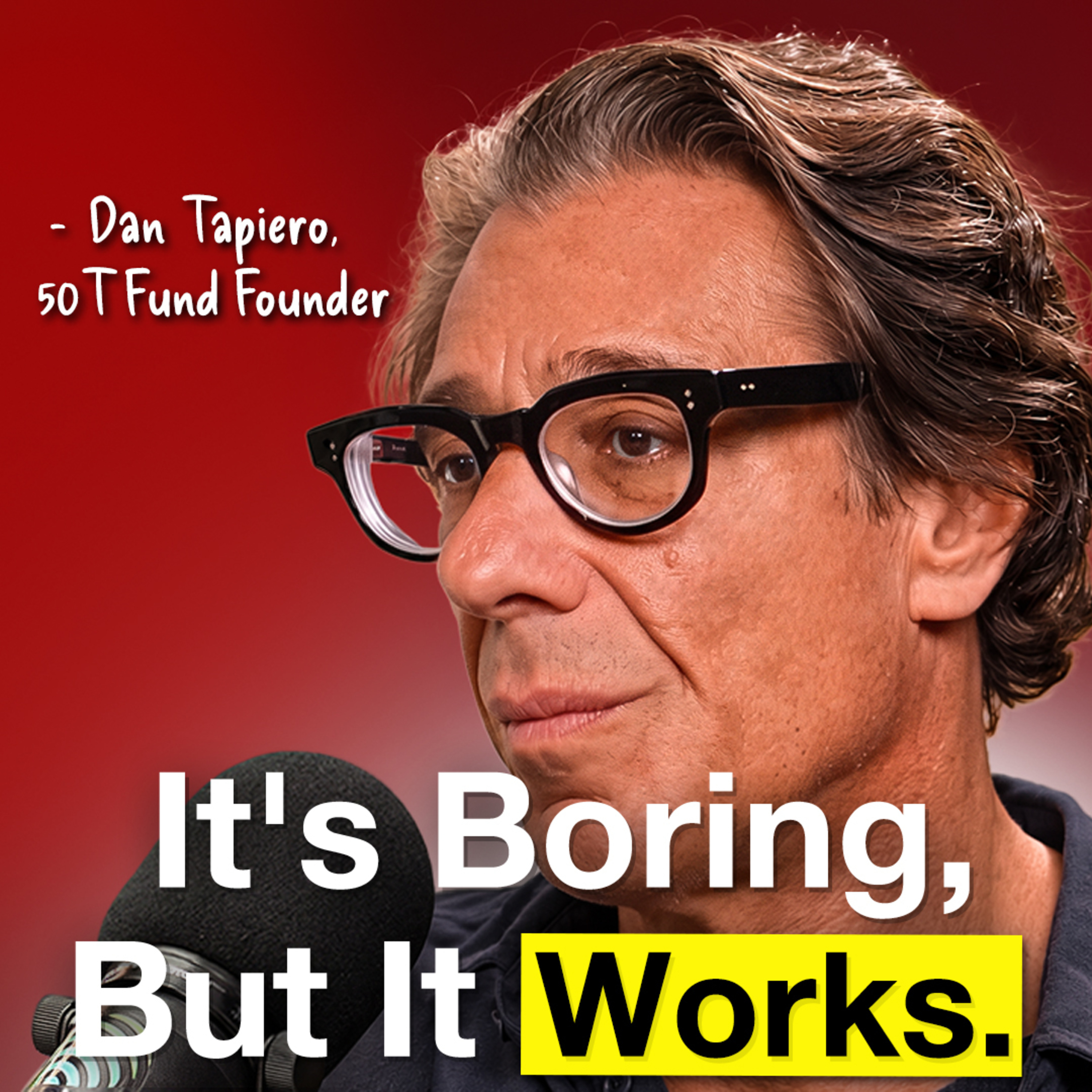
Dan Tapiero (50T Funds) discusses how to get rich in crypto by focusing on long-term holding through bear markets, managing risk and emotions, and positioning for the next “wealth cycle” driven by tokenization of liquid assets first and illiquid assets (RWA) later. He argues crypto is easy to make money in but hard to keep, because bear markets recur every 3–4 years and wipe out most participants. He also claims value will migrate on-chain, enabling faster settlement and more unified ownership records.
Dan Tapiero is founder of 50T Funds, a ~$1.7B digital asset investment firm. He’s a veteran macro investor backing Bitcoin and blockchain infrastructure, with interest in AI-crypto convergence. He previously built a physical gold business (GBI) and has decades of investing experience (35 years), including learning from hedge fund leaders (Julian Robertson, Steve Cohen, Stan Druckenmiller).
Wealth comes from having money, not spending it; avoid FOMO; take measured risk and be comfortable in uncertainty; patience is a learned skill; sell winners via a predefined plan (e.g., take partial profits); emotional trading is a contrarian indicator; Bitcoin/ETH may stagnate short-term while tokenization narratives expand.
GBI grew to ~$10B AUM before gold’s rapid price surge; 50T Funds’ Fund 4 raised capital during the bear market (2023–2024) and still returned 250% gross with early liquidity (30% returned after ~18 months), despite FTX-era skepticism. He cites Circle’s pivot to stablecoins after Poloniex-related issues, and Deribit’s persistence through bear markets before being acquired by Coinbase. He mentions Zcash’s privacy narrative and his own hacked Solana project (“Zenrock”). He references investments/ideas like Circle, Circle stock bought during a seller-driven dip, and “variational”/perps as ways to bet on on-chain trading growth.
Written by AI. May contain mistakes.
Understanding the mindset of wealthy individuals towards money.
“What do rich people understand about money that most people don't?”
Dan shares insights on wealth management and social media impacts.
“What do rich people understand about money that most people don't?”
Debunking common myths associated with wealth and success.
“They were like, Daddy, you can't have an Insta account.”
Understanding the relationship between risk and financial success.
“They want to have their friends telling them they're smart.”
Discussing the challenges of investing during market hype and FOMO.
“And you have to, you know, as long as you stay within your process and your discipline, you invest in a certain, we add a certain multiple.”
Learn about the journey and success of Deribit in the crypto trading market.
“They should do the Netflix series about Darybit, not FTX, but it's less sexy.”
Understand the common mistakes young investors make regarding patience and risk.
“What are people optimizing for today that they shouldn't be?”
Explore the emotional aspects of trading and the balance between conviction and selling.
“But they're willing to take the risk, which is good.”
Learn why patience is a crucial skill in successful investing and trading.
“And in that time, I worked for Julian Robertson and Steve Cohen and Stan Druckenmiller.”
Discuss the importance of high conviction in investments and awareness of uncertainties.
“Again, I just don't think it's for most people.”
Learn about the critical role of having a clear exit strategy in investing.
“Well, there's people not realizing what they don't know.”
Explore the current state of the crypto market and future trends in digital assets.
“Where are we in the great crypto wealth cycle?”
Understand the significance of tokenizing illiquid assets for investors.
“I mean, at least 100 million we'll invest.”
Explore the potential and challenges of blockchain technology and NFTs.
“which is the Bitcoin network and certain other blockchains, has application to the entire economy.”
Discuss the generational divide in understanding and engaging with crypto.
“And I didn't hear the word Bitcoin or blockchain mentioned the entire time.”
Examine common misconceptions smart people have about value and crypto.
“What are people getting wrong in crypto?”
Understand the rationale behind the migration of value to blockchain.
“And the problem is, is that they're all over the place.”
Discover the secrets and strategies for building wealth in cryptocurrency.
“If someone is 25-year-old today, where should they spend their energy?”
Learn how Bitcoin and Ethereum's trading behavior is impacted by hedge funds and market strategies.
“And that's why Coinbase now has a very strong correlation with Bitcoin, even though arguably it shouldn't.”
Explore different perspectives on what constitutes a rich life and the importance of independence and balance.
“But I spend a lot of time also in Dorado Beach in Puerto Rico, which is completely different.”

Get the gist, explore an idea or ask about something said.
 Claude
On When Shift Happens Podcast, what are the key points of this episode?
Searching your listeningAutomatic transcript. May contain errors.
0:00Crypto is the easiest place in the world to make money. It's just the most impossible to hold on to it. And the most difficult thing is that every three, four years, you have a bear market. It attempts to wipe out everyone and then a few survive. What are the secrets to getting rich in crypto that nobody wants to hear? I said this before, the trick is not. Dan Tapiero, the founder of 50T Funds. A$1.7 billion digital asset investment firm. A veteran macro investor backing Bitcoin, blockchain infrastructure. and the convergence of AI and crypto. What do rich people understand about money that most people don't?
0:34I always say something to my kids. You are wealthy because you have money, not because you spend it. When you spend it, it goes away. You see in all the social media, all this excessive spending and jets and this and that. The reality is wealthy people are a little more careful and more practical. Where are we in the great crypto wealth cycle? We're in the first inning of the digitization of liquid assets. But digitization of illiquid assets is the holy grail for our space. That's when people understand the value of blockchain. If we find a company that's making 50 to 100 million dollars in revenue, that is doing something in the tokenization of illiquid assets for real, we'll put hundreds of millions into that.
1:15This illiquid asset coming on chain, but it's nothing big yet. But on the liquid side, it's becoming massive. What's some good ways to bet on this trend? Variational is one way to play that. I think hype is another and you have things like... Hey everyone. One of our absolute favorite things at When Shift Happens is to look at our data to improve what we're doing for you every single week. And one of the things that we notice every week when going through our data is how many of you regularly watch this podcast but still have not subscribed. And so if you want to help us get even better guests every week, take two seconds and click that subscribe button just below this video.
1:57Thank you for being with us today and for supporting us every week. And now let's get to today's show. Dan, you've spent 30 years around some of the world's best investors. What do rich people understand about money that most people don't? What do rich people? Well, I always say something to my kids and especially to my wife. And I say, you know, you are wealthy because you have money, not because you spend it. So when you spend it, it leaves you. It goes away. So I think that that is something that wealthy people understand. that, you know, you see in all the social media, all this excessive spending and, you know, jets and this and that.
2:51And the reality is that wealthy people are a little more careful and more practical. You know, if you can do something in a reasonable way, that's a fraction of the cost, you do it. And the people who are excessive, I mean, look, I, you know, we lived in Granite, You have all sorts. You have the very old money Americans who are descended from the people who landed in Greenwich in 1630 or 40. And they live in very modest homes and yet they own big tracts of land in Greenwich and they live modestly. And then you have people who are, you know, nouveau, who've just made money 10 years ago. And they go out and they buy the 40 ,000 square foot house with the horses and this and that.
3:43And so I think balance is, you know, balance and perspective. And you have to be a little careful and have some limits, you know. Is Dante up here on Instagram? Because you mentioned social media and all these people showing their life. My daughters banned me from Instagram when it came out. They were like, Daddy, you can't have an Insta account. And so I don't have Instagram. Why? I think they just didn't want me to see their posts because they were in high school and they're posting at parties maybe. And, you know, the last thing they want is for me to see them, whatever it is, and then I complain.
4:25And my wife supported that as well. So I have no Instagram. I have X only because the blockchain crypto community was in a way demanding. And after I did that interview with Raul Pal in 2019 about Bitcoin, within a few weeks, they said they had all of these requests to get in touch with me. And I had to set up an X account so that they could do that. And I didn't need all of the attention. but then I really like X. I mean, I use X Twitter extensively. I mean, as for news feeds, for, you know, getting a read on, you know, all sorts of things, not just, you know, crypto or macro. It's, I mean, it's fantastic.
5:16So. What are the biggest myths people have about getting rich? This is going to be a getting rich podcast. What are the, say it again. what are the biggest myths that, well, obviously the most basic one is that everyone thinks it will solve everything and it solves some things. You know, you lose your privacy today because everything is so transparent on the internet. Now you just put anyone's name into the, into chat or into any of the AIs and like, it will find out everything about you. I mean, unless you're 85 years old, then you have no, you know, you have no footprint at all. So I think, you know, the myth is, yeah, that it solves things.
6:07It solves some things, but it also brings with it, you know, a lot of responsibility. You know, and as you get older, it's even more so. Like if you, if you're 30 years old and you've inherited money or you've made it, you still have your privacy. At 55, at 60, you have a pretty big network. You've done many things in your life. And you try to simplify a little bit. And so you have some of those comforts, but then you also have, you know, a lot of external things to deal with. What's an advice that sounds good, but actually keeps people poor? That's a good question. Um, well, I know this is probably a theme of your heart and probably many themes, which is that, oh, you know, the nine to five job.
6:59I think, I think you have to develop a relationship with risk. Okay. So the clearest thing I can say is that if you don't take any risk, guarantee you're not going to make money or be successful. So you have to be comfortable living a little bit in the gray with uncertainty. I'm not saying you should never break the law because life is too short for that. But you have to feel uncomfortable when you make a bet, when you're making an investment, when you're doing the research. There has to be a sense that you could be wrong. And so I think that that's where, you know, people have difficulty. People want to feel secure.
7:44They want to have confirmation. They want to have their friends telling them they're smart. So you have to be comfortable being an outsider, being at the cocktail party, having your idea and everyone telling you, you know, oh, that guy's nuts. It was like when I started my physical gold business, GBI. People were, I mean, not interested. They didn't care. Like, why are you doing this? Does anyone want this? And today, you know, almost, or I think at some point we were over 10 billion in AUM is the third largest vaulter of physical gold outside of the banking system. And, you know, it did nothing for many years.
8:25You know, it was had a certain amount of AUM. It was good. It was moving along. My co-founder and partner, who's now the CEO, you know, is always telling me the struggles. And then of course, gold goes from 2 ,500 to 5 ,000 in a nanosecond. and the business is, you know, completely changed in a good way. So the point is, is that I had many years of people looking at me like I was a weirdo in Greenwich with my gold, you know, my gold view. And it's of course much worse even with Bitcoin and crypto and blockchain. People are, you know, they don't understand what we're doing. They think it's weird.
9:06And the point is you have to feel comfortable that that is the only way you will eventually have success, that you have that constant insecurity, uh, people telling you, you know, that you're, you know, you're off base, et cetera. So by definition, you're always doing the thing that's not cool because if you're doing it at the right time, it's when it's not cool. Right. And so you will, if you're looking for external validation, probably building a business is the last thing you want to do because if you're doing it right, investing your time or your money, well, people will never be interested at you because you're doing it at a time where people are not interested, which is the right time to do it.
9:49Correct. Which makes the business nearly impossible in some ways, especially when you're raising capital. The investors want to give you the money at the single worst time, usually. When they're reading about it and they have FOMO, FOMO is the wrecker of wealth. I see it in the five funds that we have, the 50T funds. Our most successful fund, Fund 4, also happens to be, unfortunately, our smallest fund in terms of capital raised. And I raised that capital in 2023 and 2024. And it was very difficult. We'd had success with the first three. But then the bear market hits. Our funds held in relatively well.
10:29Certainly, the max drawdown was like 10 % to 15%. Bitcoin was down 80%. You know, ETH was down a lot. This was in 22 and 23. And we'd made our investments. And I thought, okay, now is the time to really go big. I'm going to raise a huge amount of capital. We're going to deploy it into the bear face. And it was very hard, even with my track record, you know, 35 years in the investing world, already had over a billion dollars of AUM. And people, even my own investors, people who'd known me for 30 years, were like, Dan, we don't know. This FTX thing is really bad. And I had very, very successful, well-known investors say to me, well, you know, is the space going to come back?
11:19And I was like, is it going to come back? It hasn't even started. You know, is it going to come back? So, you know, that fund for it, you know, is up over 250 % gross. And I've already returned 30 % of the committed capital. That's a 10-year life fund. 18 months into the life, we had some big hits. We had Figure, which IPO'd last year. We had Darabit, which got bought by Coinbase. So imagine you're going into a 10-year life fund, and you got 30 % of your capital back. We're top one-tenth of 1 % or top 1 % of private equity funds. But it was very hard. My point was to raise money, to convince people.
12:01And that was me. I would have thought that someone younger with less experience with no fund, it's virtually impossible. Yeah. So what do you do? You raise when there is FOMO, but you don't invest that money? Right. You try to do that. Correct. There is no pressure from the investor saying, I want you to invest my fucking money. Right? There is pressure. But it's the wrong time. There is. Correct. There is pressure. And you have to, you know, as long as you stay within your process and your discipline, you invest in a certain, we add a certain multiple. We don't really invest at more than five to 10 times revenue.
12:35We just tell that to the investor. But in 22, I had investors telling me, Dan, you have to invest. My own people, you have to invest in FTX. It's the leading edge. He's the smartest guy. And I did a few talks with him. And, you know, there were some red flags. I didn't think he was a complete fraud, but I was never going to invest it, you know, 50 times revenue. And we at the time were investing a deribet. And I was buying Deribit at six to seven times a net profit, net profit versus 50 times revenue or whatever it was. So I could make the excuse to the LP that this is outside of our valuation range.
13:18I think that that's really the key, that if you have a process, you spend a lot of time on it, and you can argue for why you're not doing something. And we've passed on over 400 deals in the last six years. Then they leave you alone. But oddly enough, you know, I had several LPs that went around me and invested directly into FTX. So that's what I said. I said, look, you can do it, but we liked there a bit better. Which sounded boring at the time. Well, I thought it was very exciting, actually. But yeah. Compared to. Compared, correct. Yeah. Well, they just released a Netflix series now about the whole FTX saga.
13:58Oh, it's unbearable. I couldn't possibly watch that. Yeah. They should do the Netflix series about Darybit, not FTX, but it's less sexy. Correct. Even though, I mean, imagine a company for six, seven years has a monopoly on Bitcoin and ETH options trading. It's phenomenal. Like what an incredible business story. How do two guys from Amsterdam who are trading options on the Amsterdam exchange come up with this idea? The business was very small for many years. They persisted through bare faces. This is John Jansen. And, you know, end up selling to Coinbase in the largest M &A transaction in the history of the market.
14:45So, like, that's exciting to me. but you know, it's, there's no, there's no drama. There's no drugs and kids in a house together going crazy. No, there's lots of volatility. Like you could, if you interview John and he doesn't, he doesn't really talk much, but if you, you know, publicly, but if you interviewed him, he would tell you through all the bare faces, the angst and the, you know, imagine living through a 50 % single day Bitcoin drop and you have a massive options business. but they were very skilled and they decided to sell it to Coinbase. So, you know, that was a big hit for us. On most trading platforms, crypto lives in one app, stocks in another and commodities such as gold and oil somewhere completely different.
15:33Variational puts perps on all of it. Crypto, equities, commodities, FX and even pre-IPO names in one single account with zero trading fees on every market at any size. Visit variational.io to see why variational has quickly become one of the largest on-chain trading platforms. Big thanks to my friends at Bitwise Asset Management for backing today's conversation. Bitwise is a global crypto asset manager with$11 billion in client assets and more than 70 crypto solutions. That includes ETFs, index funds, SMAs, custom option strategies, staking, vaults, and more. However you want to invest in crypto, the experts at Bitwise have you covered.
16:17What are people optimizing for today that they shouldn't be? What do you mean? In our space? Or what do you mean? In general, in life. Oh, in life. Well, what are they optimizing for? I don't know that many. I mean, like, it's hard for me to speak to the general population. I don't have Instagram, right? Well, then in the space. In the space, what are they optimizing for? But they shouldn't be. Well, it's obviously the quick gain. And I don't fault them. Young people want to make things very quickly. But the reality is like 10 years is not very long. And, you know, if you're 26 years old. Look, I made a very similar mistake in my 20s to try to optimize for something that was a little short term.
17:05I think until you're 30, you're very prone to error. And that largely drives the error that you want it all now, right? That feeling is almost a guarantee of failure. Like when you start feeling, it's a guarantee. But the value almost, people said, well, oh, you know, holding Bitcoin, you know, those people got lucky. the people who bought Bitcoin at$100, at$1 ,000. And I always say, no, they didn't get lucky. They were paid for their patience. And that patience to hold Bitcoin for 10 years is a skill and a character trait that the world rewards. And it's very hard to understand, like, what is the world reward?
17:58And it rewards it because it's extremely rare. And that's what this whole game basically comes down to, is you're looking for things that are rare, that have value. And you wait until that value is realized. And then when you read about it in the newspaper, it's time to sell. So you mentioned patience is one of the big issues. Yeah. What's one other or two other mistakes, expensive mistakes that people make in their 20s and in their 30s that you've seen? I mean, I just talked from my own experiences is that. But, you know, I look, you're supposed to be taking, I don't want to call it excessive risk.
18:44But when you're managing money or making investments, when you're young, you're supposed to be taking risk because you have many years to recover from it. The problem is that that risk, the failure, sometimes people don't recover from. It's a lot more painful than you think. You have an idea. I have young analysts who come to work for me, and then they say to me, oh, Dan, growth equity in blockchain crypto. Oh, you're buying Ledger and Kraken and QuickNode. This is so boring. I need to go off and go full degen. And I'm going to, you know, launch something in DeFi and YOLO, you know. And the idea is there and they're very excited by the idea.
19:35But they're willing to take the risk, which is good. They've learned some things about investment from us, from me. But the reality is, is they can't imagine, you know, the pain that comes with the loss and failure, and it goes on for a while. You could lose over multiple years, and then you have to recover from the losing. So in my career, 35 years, I had multiple episodes where I've had loss, and then I had to recover from that loss. It's not pleasant. I mean, I don't particularly want my children to go through it. It suits my personality, but I don't really recommend it for people. Like I get, I get bored.
20:20I get bored, you know, easily sometimes, and I need to be moving forward. So, you know, but I don't think it's for everybody. I mean, it's nice that crypto democratizes. We have digital wallets now. It's wonderful that people in Argentina can get out of the peso and can own Bitcoin or stables. And I think that's a main driver for us in our world. But the reality is, is that most people who are speculating will lose. Absolutely. So there's this narrative. Everyone is a trader now. Everyone is becoming a trader. Well, maybe, maybe not. But if everyone becomes a trader and 99 % or 98 % of traders lose money, well, everyone maybe should not become a trader.
21:07Well, that would be my advice. it's hard to dissuade somebody who's 30 under 30 that that's that that's the case they love the action they love how it feels when it goes up but the reality is is that when you're feeling best and i've had this many times in my career that is the moment to sell everything or sell or sell some i think that that's a skill that people should have that um uh that they don't they should be able to part with some portion of their position. They can't completely marry it. That's why it's so difficult because on the one hand, you have to have insane conviction to hold, but on the other hand, you have to also be able to release some portion.
21:53Probably the hardest part. Yeah, I always had a say back in my day of all these little pithy sayings that, first of all, no one ever went bankrupt taking a profit, right? If you take a profit, you theoretically can't go bankrupt. So, and then always that, you know, you get rich because in the selling, like it's easier to buy when things are bad, if you have conviction in what you're doing. Absolutely. Okay. But then you're feeling victory. Something's up 5X and you're like now I'm a genius and uh your sense of self-worth is tied to the victory that you have and so you have to remove yourself from that and that takes years and years and years I mean it it took me 15 years before I had complete confidence that I was a commander of my universe from 23 to 38.
22:59And in that time, I worked for Julian Robertson and Steve Cohen and Stan Druckenmiller. So I had those guys that I learned from, and it still took me 15 years. So I'm just like, good luck out there. And then I always say, and I probably said it the last time we spoke, crypto is the easiest place in the world to make money. It's just the most impossible to hold on to it. Yeah, absolutely. Yeah, that's true. Because the biggest drug, especially for men, is like the I told you so part, right? When you're right, you have like this crazy dopamine. It's not even the money, it's like the being right.
23:33And then if you're finally right after waiting so long and suffering so much, why would you sell now? It makes no sense. Yeah, you have to completely remove yourself from... And that's why people who are very emotional are absolutely the worst investors and traders. In fact, they're fantastic contrary indicators. I've had over the years people who work for me, for periods of time who I used as counter signals because when they were getting excited, I knew it was over. And when they were about to shoot themselves, I knew it was the bottom. So, and by the way, many of the well-known hedge fund managers who have larger operations, some of the guys I used to work for, they, you know, have that same instinct.
24:20Yeah. They hire some people. And one of the tests is how emotional are you? and you were hired because you're emotional so I can counter trade you. No, I know. You can go on Twitter and then you'll see all these people who are extremely bearish at the wrong moment and extremely bullish at the wrong moment. And you don't need to hire people for that. Yeah, I don't know how it works exactly today with all the quants and algos. And, you know, the hedge fund business that I was in, you know, 20, 30 years ago is dramatically changed today. But for the older, certainly successful traders, they definitely trade other people's emotional conditions, right?
25:04I have a good one for you. You can just go in the comment section of our podcast and you can see how bad the comments are. This is an amazing indicator for a market. So what is it saying now? well now it's not too bad but it's not great okay a couple of months ago was extremely terrible well when i did the the interview with you months ago it was the bottom it was so bad it was terrible yeah it was super bad so why did that video get so many views where they was like giving them hope and inspiration to hold on well i think i think it's a combination of you being known plus this beautiful picture that we put oh that was the worst picture i've ever had and the title and then all of it together was a recipe.
25:49The worst picture. People were in shock. How much of wealth building is skill and how much is patience? Well, I mean, I think they're one in the same thing because patience is a learned skill. So, you know, you have to be, you know, look, you have to be analytical and you have to be comfortable, as I said before, operating in the world of uncertainty. You have to really like risk. You have to feel comfortable. And then you need to take all of that and put it to the side and observe it from a distance so that your own emotional components is not involved with that. And so that whole thing is just a skill that you learn if you're willing to put yourself through many years of volatility and ups and downs and trials and tribulations.
26:56Again, I just don't think it's for most people. I think, you know, you find a great manager or you have a few people who really do this for a living and you let them, You know, you keep some portion that you maybe do for yourself, 10, 15%. But, you know, I always say this is a, our world is for professionals. Would you go and do dentistry on yourself? Or would you go to the dentist? You know, I'm not doing dentistry for myself and I, on myself or, you know, and I do think, I do think about that a lot, that the people who are civilians in the investment world don't realize how much they don't know.
27:45And that's really the problem. Whereas I know how much I don't know about dentistry. It's obvious. I'm not going to extract my own tooth, right? I'll go to a professional. So I feel it's a similar concept, but people don't think about it that way. Well, there's people not realizing what they don't know. And then there's people knowing for sure, right? And he's saying that it's not what you don't know that kills you is what you know for sure that ain't so. Yeah, that's true. That's true. But I don't quite believe that though, because there has to be some sense when you're making an investment after all your work, not that you know it for sure, but that you have extremely high conviction.
28:32I'm not very diversified in my exposure. So I need to know almost for sure, I guess is what the caveat I would say is. Or I'd have to have a very high conviction. But yeah, that's an old phrase, that one. You mentioned patience, and you mentioned that the rich is in the profits and selling. The point is people often sell their winners too early. Why do people constantly sell their winners too early? Well, I mean, you gave the answer before. They've sat through pain and anguish, and then it pops its head up, and they say, oh, thank goodness, I don't have to suffer any more pain than they exit. That's very commonly understood.
29:24Yeah, I think it's a lot easier if you have a plan. so you have to have a process and a plan and it has to be clear beforehand so let's say you're buying something at one dollar the plan in the beginning is where does the value get realized to the degree that you're you're now comfortable exiting it now lots of things change but you can say oh i'm buying it at one i'm going to risk one and i'm going to make five and when it gets to five it's there and if you don't take some profit i always say it's a sin against the market god and you will lose everything you if you have a plan and it happens which is it's so hard to actually get this right that if you don't sell you'll lose you'll end up losing it all i mean that's been my experience not losing but losing in that trade or that investment so um fundamentals do change along the way.
30:23So if one goes to five and then all of a sudden you find some new things that are new about the investment that maybe make you think it can go to 10 and you want to hold on, okay, but sell half at five. You know, it's just a process. Quick shout outs to our legendary long-term When Shift Happens partners, without whom none of this would be possible. Thank you to Cast, my go-to global money app to store, earn, move, and spend stable coins across 170 plus countries directly with Apple Pay or a physical card. On top of that, I can also get paid in USD and Euro with my Cast virtual account. Use my promo code SHIFT, S-H-I-F-T, and my link below to get 10 % off your membership, earn up to 3 % instant USD cashback on every card spend, and get up to$250 in cash for referring your friends.
31:26No banks, no borders, just money that moves with you with stable cash rewards. This is a crypto podcast. Let's talk about crypto investing. Where are we in the great crypto wealth cycle? You gave us a hint in the beginning, I mean about 2023, 2024, and you were saying, guys, this has barely started. What about now, 2026? So the space has changed a lot because sort of my original view in 2019, 2020, was that I was a hardcore Bitcoiner, which I still am, but that we were going to have this broad digital asset ecosystem grow. And the original view, which is now playing out, was that all things of money, all things of value and money were going to be on the blockchain.
32:21I didn't know which blockchain. This is why our funds invest in the equity of the companies in the digital asset world, the picks and shovels. Because even in 2019, 2020, when I laid out the process and I had my view, I had no idea which blockchains were going to be successful, like over a 10-year period, and that there were going to be certain blockchains with certain use cases that hadn't even been found, hadn't even been invented yet. And so the view basically implied that liquid things, such as stable coins, cash, would come on chain first, and that was one of our early investments in Circle.
33:06The stable coin business, you know, in 2020 basically didn't even exist. And then we were fortunate in 2023 during the bear market to pick up a nice block of stock of, of circle at a very low value. It basically three, four times revenue, which is, which is nothing. Because of the USDC DPEG? No, no, because everything went down and there was a seller that needed liquidity and he had some circle stock. And that was the price that I bid him, you know, But the point broadly is that now we have RWAs, we have prediction markets, we've got all of these perps now, hype is fantastic success. And the view about the broadening value of the digital asset world, again, the internet was the digitization of ideas and information, and blockchain and Bitcoin is the digitization of money and value.
34:04so that is making huge progress now but didn't even exist two years ago and i just gave a talk now at the digital asset summit here in asia um about the next stage so for me we're in the first inning of the digitization of liquid assets right that's the treasuries and interest rates and then now you have some commodities oil gold and the trading the perps trading and all those things But the holy grail, Form E, and it has been the whole time, is the tokenization of illiquid assets. For example? Because real estate, land. And I've thought this for 25, 30 years. You know, I had this agricultural farmland REIT that I founded with Druckenmiller called Agcoa.
34:58and that was a belief that land in certain areas of the U.S. that produced certain crops was going to increase in value and we aggregated, became the largest private holdings of farmland. This started in 06 and we sold it in 13. My point is there are only four at the time, there are only four and there aren't that many, large pools of farmland like that. And I always thought to myself, Why shouldn't the investor have access to that asset class? There are four basic funds. That was it. And this is a trillion dollar asset class back in 2006. One trillion dollars frozen. So I've always been thinking digitization of illiquid assets is the holy grail for our space.
35:48that's when uh people understand the importance the value of blockchain and of course beneath that is the bitcoin code and you know understanding bitcoin can be a little more complicated there's a theoretical aspect it's like many people don't understand gold that it's benefits for many different fundamentals so i think you'll get people as as we've seen at this conference you know, the institutionalization of blockchain, they understand that. And so I think that's going to happen very rapidly of liquid assets. And it hasn't started yet for illiquid assets. So look, if we find a company that's making 50 to 100 million dollars in revenue, this sort of our bottom threshold, that is doing something in the tokenization of illiquid assets for real, I mean, we'll put hundreds of millions into that.
36:43I mean, at least 100 million we'll invest. But I don't see anything yet. So the point is, is that that whole world is separate from number go up, Bitcoin. I think Bitcoin, you know, can go up to 200 ,000, 300 ,000 here. Maybe long term, I think it can go to a million, you know, but that's a 10x. People who bought Bitcoin at 100 or 1 ,000, they've made 100x. They're not going to make 100x from here. So it changes. But then you have things like Zcash. Zcash is up 25 times in the last 18 months. What's your thoughts on Zcash? Why do you think that's been picking up? Well, the privacy narrative is extremely important.
37:31And it all kicked off after these hacks. And I also think the institutionalization of Bitcoin through the ETFs, through the DATs, potentially removes the privacy aspect that the early Bitcoiners really valued. So Barry Silbert is a very big proponent of Zcash. So are the Winklevite twins. And there are other people who are OG Bitcoin who felt that, and this is all public. I'm not saying anything that's different. But I think they all felt that there's some component of privacy that has disappeared if your Bitcoin is wrapped and sitting in your Morgan Stanley account. you know so i and then those the kelp dow and hack and some of the other hacks but i you know hold any z cash in your personal portfolio no is that important that you would hold it or it's like you're just saying this is very interesting but still too small for the kind of thing no i i would i just didn't you know you can't do everything and that's my that's another saying you just you you just can't.
38:44Um, we had a project internally that we were incubating. Um, and that project had decentralized wrapped, uh, Z cash on Solana. It was called Zen rock. Unfortunately it got hacked and we had to close the project. It was very small. Um, but we've been very bullish on Z cash for, you know, and my team posted on it, you know, 18 months ago, um, because there is value, There is value there that's something unique and it's very deep, deeply crypto. So as the old world, the TradFi people come in, the space, you know, I've always believed that the old world and the new world would meet in the middle. And so the old world is now understanding Bitcoin and ETH and Solana and you have these dats.
39:34but the original crypto crowd,
39:43those assets are less interesting for them.
39:49You mentioned this illiquid asset coming on chain, but it's not the case. There's nothing big yet that you can bet on. But on the liquid side, it's becoming massive. Yeah. What's some good ways to bet on this trend? Well, I think hype is a great bet. I've liked to securitize as well, historically. You know, the valuation has, you know, gone up and down. You have to buy things at the right price. But yeah, I think RWA perp trading is something that will be very big with a near infinite TAM, a very large TAM. So variational. Yeah, variational. Tell us. No, is one way to play that. I think hype is another.
40:49And you have things like, you know, their other perp. You got me. I had to. All right. No, that's in its infancy. It's very small. But it makes so much sense. So when people say, oh, this hype thing is so big, it's overvalued, et cetera, like it's up already 33x, you're saying all this sector is still super small compared to what it could be. Yeah, there's only a handful of ways to play it. Just think about how many centralized exchanges there are. I'm not saying they're all great, but you have Binance, you have Coinbase, you have Kraken, BitGet, OKEx. I mean, there are a lot of centralized exchanges.
41:36So this is just the very beginning of perps. and I think RWA perps because that's something innovative. And look, I come at this from the market and trading perspective. I've always, and finance, I've always, that's been my interest. The application of the decentralized ledger that is impenetrable, which is the Bitcoin network and certain other blockchains, has application to the entire economy. You know, all documentation, for instance, should eventually sit on a blockchain. A blockchain as the verification validation system for everything hasn't even started yet. And that's not financial. The digitization of property rights, which was part of the reason we had the boom in NFTs and metaverse that hasn't quite come back yet.
42:39But the thesis behind that, I think, is very valid. Digitization of property rights. The fact that artists, for instance, could have their work product tokenized, but then also earn a recurring fee every time something trades. It's just it was too early. You're big into arts, right? Well, I don't know if I'm big, but I have some paintings. How bullish are you on NFTs in the future? You said it was too early. Is this thing coming back? Well, it never, so it died for a little bit, but it's been growing nicely, quietly in a very small way. And so there are certain digital artists. And look, you could have an entire interview with Raoul Pal.
43:29I had the other day. Did he talk about NFTs the whole time? Every time we talk about NFTs, obviously, a bit. Okay, he is very focused there. And I know a handful of other people who are very focused on that. And we have a small residual investment in a company called Candy. And that is part of that whole world. It has more to do with Major League Baseball cards. And the CEO is an ex-partner of ours. And he's doing a great job to lift that up. But it's slow because it's not necessarily natural for people. And I also think it's generational. I think it's generational. So much innovation in our space, but the reality is, is that no one, almost no one over 60 and very few people over 50 are, you know, are engaged in it or get it or care about it.
44:27You know, they have, so I went to the, here, I came for the week, I went to the Forbes Global CEO Conference. And that was traditional people. And I didn't hear the word Bitcoin or blockchain mentioned the entire time. And these are very, these are the CEOs of large Asian companies, famous people, Ray Dalio, you know, Jenny from Templeton. I mean, these are, you know, the establishment. And I went to go to hear, I mean, I know some of them. I have a good friend of mine who's gone for years and says it's one of the best conferences. And it's fascinating. But they're not really interested in this world, I think, because it's too weird still.
45:13And it's too small. And of course, most of the conversation was just about AI. And I don't think they realized that AI and blockchain really go together. and that blockchain is the money for all of these independent autonomous agents. I mean, that's how they'll be sending value back and forth. What are some smart people getting wrong right now? Getting what? Wrong. Well, which smart people? I mean, smart people are always getting things wrong. What do you think the most? And then learning. The smartest, most of the smart people in crypto are getting wrong right now. Well, I mean, forget about, I'll answer this thing, but, you know, Elon Musk is saying that there'll be no money in three years.
46:02I think that's wrong. I just, I don't see how value is just going to disappear. And I don't see how in the span of three years, humans are not going to attach value to things they like and want to own them. so you know it's one thing to believe in infinite abundance which i think is possible but i don't see money going away in three years for goodness sake do you remember 15 years ago they were talking about cash disappearing cash is still around paper cash so you know it's funny everything is happening so quickly on the one hand but then on the other hand things some things never happen as quick as you think they will.
46:52So I would say that that camp is wrong. And that's why I think there's tremendous value still. And there aren't enough people who understand why value will migrate on chain. So why is that comforting for me? Because that means my view has time to run long-term. And what was the second? What are people getting wrong in crypto? What was the... What do you think the smart people are getting wrong right now? You know, that's such a tough question because everyone, everyone, I mean, a lot of people in crypto are very smart. Most of them are getting things wrong all the time. And then they're learning and iterating.
47:39We have companies that were going down one path and then they pivoted. And then, I mean, like the example, for instance, just take a look at Circle. And, you know, Jeremy in, what, 2016, 17, 18 was caught up with the Poloniex and that almost pulled him under. And then he pivots to stable coins in 2019-20. So I think that is the more, you know, interesting thing. Who is pivoting to the right, you know, spots? The Winklevii, for instance, the Gemini IPO was obviously a failure. The exchange has definitely gone down in volume. And now they've pivoted to prediction markets, to white labeling their prediction market product.
48:19And we'll see. You know, I think it's a good idea, but we'll see. Quick shout out to the legendary team at Jupyter, the DeFi super app. Anything you want to do on-chain, from trading to earning yield, you can just use Jupyter. Personally, I recommend getting the Jupyter wallet on either your phone or your laptop. 10 times faster and 10 times cheaper than the competition. You're going to love it. Thank you to the awesome team at Athena for backing today's conversation. Athena is one of the fastest growing projects in DeFi with over$7 billion in stablecoin supply and an average 11 % APY on SUSDE.
48:58And importantly, zero DPEGs since launch, which is exactly what you want from a stablecoin. Go check them out by following the link in the description down below. you said i feel comfortable today because a lot of people still understand that value will all the value will go on chain yeah can you explain simply why you believe that all the value will go on chain to all these people who still don't believe it yeah well because it's it's a it's the most easy thing you can imagine i think about its ease and what does that mean I think about my entire life, all of my documents, whether they're, you know, from the IRS or legal or trust or all the various things you own, properties and your different portfolios.
49:48And the problem is, is that they're all over the place. Once everything migrates on chain, it's in your digital wallet. It's in one place. and then it becomes fungible, which is incredible. Meaning? Meaning if you want to, let's say, sell your house, the value of the house is there on chain, boom. It can be settled almost immediately. I mean, settlement takes forever. This is why a real estate transaction, I think, in New York, goes through 17 different steps. that's crazy you know with notaries I mean it's like 19th century France the notaire right we're sitting around still notarizing things I think eventually that's how this technology gets applied it's it's the it's the ledger of truth of knowledge that is cemented and the most important thing to have cemented is value right i think opinions come and go ideas come and go you know um something you you can't have it that the value you've created in your life it can just disappear so does that make sense are you convinced why you don't need to convince me.
51:16I know, I know, I know. We all believe that. I wouldn't be here otherwise. If someone is 25-year-old today, where should they spend their energy? Oh, I mean, learning from the AIs, you just, it's the most incredible thing. It's like, I remember when we were in 1994, before Netscape, there was no search, and then there was search. Things that would take weeks to find or at your fingertips. It's the same thing now. Chat, whatever, Claude, any of these, any of them, they're phenomenal, Grok. And you should be sitting there and learning and asking it as many questions as you possibly can. I mean, we've built a bot internal to my firm that has taken all of, you know, the last seven years of information on our hard drive, all of the things we know about all of the companies in the space.
52:15We've had it ingest every single interview of yours, of everybody in the space. We've had it read everything that's in the public domain. And it's by far the smartest analyst I've ever had. I mean, it's no comparison. I sit on my telegram and I just ask him the question. I don't have to wake my analyst up, at two in the morning because I'm doing a call with a company and I don't know anything about it. The power of that is mind-boggling. So it's really, there's no excuse not to educate yourself in any area of your interest. Our last episode together went quite viral on YouTube, more than 350 ,000 views and counting.
53:02The name of the episode was The Secrets to Getting Rich in Crypto that nobody wants to hear. People loved it. So Dan, enlighten us. What are the secrets to getting rich in crypto that nobody wants to hear?
53:19I think it was mostly bots from China that drove up the viewership. I still don't believe. You're being too humble here. I don't believe the 350 ,000. You know, and I said it a little bit in the previous podcast we did, and I was thinking, do I have anything left to say after that? But the short summary of it is, and we've alluded to it during this, uh, during this talk, um, which is that it's very easy to make money in the space, holding onto it is nearly impossible. And the most difficult thing really is that every three, four years, you have a bear market that completely wipes out everybody.
54:01Okay. And not everybody, we, we didn't get wiped out, but it attempts to wipe out everyone and then a few survive. And so I said this before, the trick is not to say, okay, I'm going to make a hundred X and I'm going to, you know, you know, in three year, in this year or next year, I'm going to, you know, make enough money to, to, to never have to work again. That's, that's when you know it's never going to work. it's to take a longer view and to say, look, these are my objectives. This is the capital I'm going to allocate to this view. And I'm going to sit with it. And at the end of 10 years, this is what I expect.
54:46And if you can't do that, I just think it's extremely difficult. Or you can maybe set a shorter timeframe, five years. But the problem is if you set a five-year framework and if you bought in 22, so this is really the problem, okay, with our space a little bit now. We haven't touched on this. But Bitcoin is essentially the same price as it was five years ago. The same thing with ETH. So we don't have enthusiasm for the core assets because there's been no price change. And it's unlikely that those things are going up 100 times like they did previously. If you bought in 2015, 2016, you're up 100x.
55:25But if you look at the five-year window between 2017 and 2022, there was the same problem. The price was the same, depending on when you bought. That's why 10 years, you have to hold. And I think, you know, back then, it was really only Bitcoin. I think Bitcoin, ETH, Solana, potentially, there are, if you want to have a bit of diversification. But what's happening now is because there are public stocks and there are DATs and ETFs, is that the traders in the trading community, in the hedge fund world, are trading all the assets together. so bitcoin and eth potentially should be trading independently but because they're liquid assets they're being lumped into that um bucket by the very large the trading world like people don't realize there's five six trillion dollars in hedge funds but it's leveraged multiple times And so when those hedge funds, and many of them are quant algo based, when they turn on an asset, they turn on the whole thing, even if it doesn't make sense.
56:37And that's why Coinbase now has a very strong correlation with Bitcoin, even though arguably it shouldn't. Arguably it shouldn't, but it does. Keep a long term view. Yeah, I know it's boring and people maybe don't want to hear that. That's what works. But yeah, or I would say this, or start a business you really believe in or move into a business that is like, you know, not fully mature, where you think you really can carve out a niche. owning equity in a business is very powerful and also removes you from, you know, the price volatility, which is the key thing, because you're thinking, okay, I'm trying to build this business and I believe in this business.
57:28Now, there's risk there if it doesn't turn out to be right, but that's another way and I felt that with my physical gold business that the way it's structured is certainly a way to play the price in gold and it has without all of the also impatience gold price went sideways for six seven years you know you want to shoot yourself but we had a business that was growing every year a little bit and then it took off so what's a rich life well I mean it's just so different for everybody what's a rich life for you well I think I have it I look the ability to be independent and have freedom have nice balance with family have nice balance with my interests um not be restrained from focusing on things i i want to focus on being able to travel widely and get out and and see different uh places and experience i i don't i didn't need to come this week it's an 18-hour flight it's not easy you know uh from new york but i force myself often to push myself out of complacency, out of my environment.
58:58But I spend a lot of time also in Dorado Beach in Puerto Rico, which is completely different. All my friends, you know, most of them are in Palm Beach and, and, you know, more traditional guys, but a lot of them are, you know, out playing golf. And I'm not like, you know, I don't, I don't think that life is, is for me. so you have to push yourself to come to events like this i've done i don't know how many different interviews how many different lps i've spoken with companies i told you i went to the forbes conference we were the main sponsor for the das here in asia um 2049 so you go you come you experience like where's the action what's interesting um i wish it was spread out a little more and also not all on the same days, you know, because that makes it incredibly exhausting, but, and then also rewarding.
59:53So that like being able to do those things. Thank you so much, Dan. Yeah. You've been doing amazing. Warrior after all this conference, he's still managing to do an hour with us. No problem. That was amazing as usual. And I'm sure people will love it as usual. Okay, we'll see. As you probably know by now, I host some of the biggest names in Bitcoin and crypto on my podcast, but a lot of the best stuff never makes it on air. The Shift newsletter is where I share that raw behind the scene alpha, the insights, stories, and lessons straight from my guests that you won't hear anywhere else. If you want the real insight take on Bitcoin and crypto, join my newsletter, The Shift, in the description down below.
Dan Tapiero, founder of $1.7 billion digital asset firm 10T Holdings, returns to reveal the boring secrets to getting rich in crypto that actually work, from why he passed on FTX to the selling rule that keeps you from giving it all back.
After 35 years in investing, including working under legends Stan Druckenmiller, Julian Robertson and Steve Cohen, Dan explains why crypto is the easiest place in the world to make money and the hardest place to keep it.
THE SHIFT NEWSLETTER
💡Go beyond the mic - subscribe to The Shift, my new weekly newsletter where I share the uncut stories, raw takes, and behind-the-scenes notes from When Shift Happens: https://www.kevinfollonier.com/crypto-web3-newsletter
___________
PARTNERS
⚖️ Variational aggregates liquidity to offer industry-leading depth on crypto, equities, commodities, and more: https://www.variational.io/
🚀 Jupiter is the most used Decentralized Exchange in Crypto and the largest DEX by volume on Solana: https://jup.ag/
💳 KAST lets you manage and spend stablecoins or crypto with a Visa Card or Apple Pay. Live in 100+ countries - Get $20 Signup Bonus - https://go.kast.xyz/VqVO/SHIFT - promo code: SHIFT
🔓 Trezor offers the safest cold-storage wallets for crypto and true financial independence.
Buy with 10% off - promo code: WSH10 - https://affil.trezor.io/SH12h
🌱 Bitwise Asset Management manages $15B+ across 30+ crypto investment products — ETFs, index funds, alpha, staking, and more. https://bitwiseinvestments.com/
⚖️ Ethena is a synthetic dollar protocol on Ethereum, offering a crypto-native, non-bank-dependent stablecoin called USDe. It uses a delta-neutral hedging strategy with staked ETH to maintain a $1 peg. https://ethena.fi/
♾️ Coinsilium provides vital funding and expert advice to Web3 and AI-powered early-stage technology companies. https://www.coinsilium.com
🚀 Kalshi is a US regulated financial exchange that allows users to trade on the outcomes of real-world events : https://kalshi.com/category/crypto
___________
FOLLOW DAN TAPIERO
• Twitter: https://x.com/DTAPCAP
• LinkedIn: https://www.linkedin.com/in/dan-tapiero-22b41b191/
FOLLOW 50T HOLDINGS
• Twitter: https://x.com/50TFunds
• Website: https://www.50tfunds.com/
FOLLOW WHEN SHIFT HAPPENS
Twitter (X): https://x.com/KevinWSHPod
Instagram: https://www.instagram.com/kevinfollonier_
TikTok: https://www.tiktok.com/@kevinfollonier_
Linkedin: https://www.linkedin.com/in/kevinfollonier/
Website: https://kevinfollonier.com/
DISCLAIMER
The info contained herein is for informational purposes only. Nothing herein shall be construed to be financial, legal, or tax advice. The content of this video is solely the opinions of the speakers who are not a licensed financial advisor or registered investment advisor. Trading cryptocurrencies poses considerable risk of loss. The speakers do not guarantee any particular outcome.
0:00 Intro
2:05 What Rich People Understand About Money
3:54 Why Dan Isn't On Instagram
5:18 The Biggest Myths About Getting Rich
6:43 Advice That Keeps People Poor
9:49 How FOMO Becomes The Wrecker Of Wealth
15:25 Partnerships: @Variational @BitwiseInvest
16:17 What People Shouldn't Optimize For In Crypto Today
18:20 Mistakes People Make In Their 20s & 30s
20:54 Knowing When To Sell Is A Skill All Should Learn
25:54 Skill vs Patience In Wealth Building
28:54 Why Do People Sell Their Winners Too Early?
30:46 Partnership: @KASTxyz
31:34 Where We're At Within The Crypto Wealth Cycle
37:20 Dan's Thoughts On Zcash's Progress
39:50 The Best Ways To Bet On Assets Going On Chain
43:01 How Bullish Is Dan On NFTs?
45:38 What Smart People In Crypto Get Wrong Today
48:26 Partnerships: @JupiterExchange @Ethena
49:09 Why All Monetary Value Will Go On Chain
51:21 Where Should A 25-Year-Old Spend Their Energy?
52:57 The Secrets To Getting Rich In Crypto
58:04 What Does A Rich Life Look Like For Dan?
59:58 Closing Thoughts