Ask ChatGPT

 When Shift Happens Podcast
29 Oct 2026 · 44m · 19 chapters
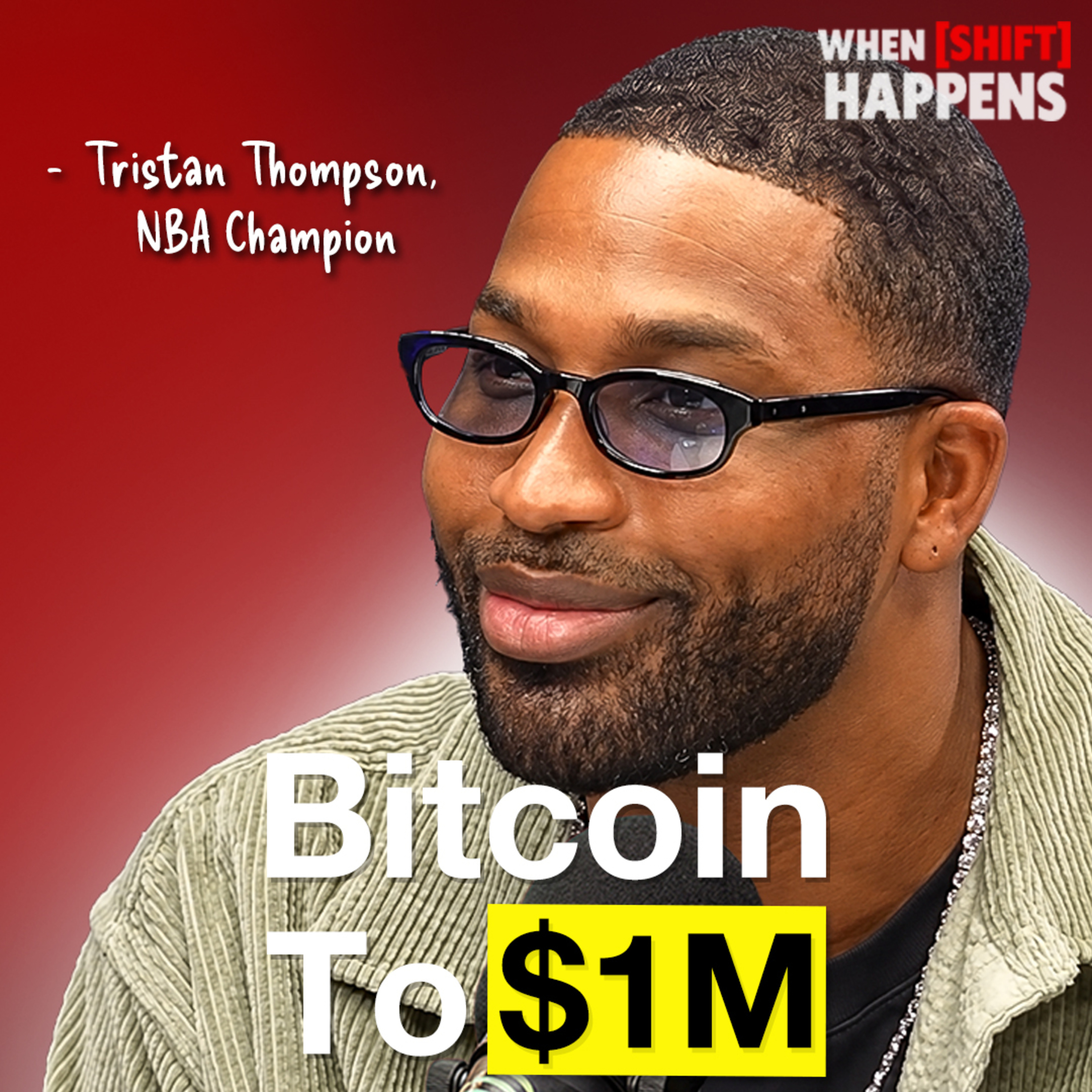
Tristan Thompson discusses how basketball shaped his investing mindset, then pivots to crypto and venture investing—especially Bitcoin (“digital gold” and a “digital 401k”), Solana DeFi usage, and “physical AI”/robotics. He argues AI wealth accrues to companies that attach AI to real services and operations, not just LLMs. He also covers risk management, greed, and taking profits.
Tristan Thompson, NBA champion (over 800 pro games; won an NBA championship; earned 120M+), entrepreneur and investor focused on emerging tech, venture, and crypto. Background includes growing up in Toronto, tough-love upbringing, retiring his parents, and family hardship (mom working three jobs; brother with epilepsy; unemployment/government assistance).
Hold diversified exposure (10–15% personal wealth in Bitcoin); hedge with other crypto; nothing is guaranteed except taxes/death/Bitcoin; creativity and human interaction stay crucial in an AI future; physical AI will improve efficiency and reduce returns/damage.
LeBron/Kobe/Steph adaptability; pre-seed investment in Poppy (acquired by Pepsi for ~$1.5–2B); Amazon warehouse robots; Zcash privacy narrative; meme coin gains with partial exits; missed pre-seed protocol later acquired.
Written by AI. May contain mistakes.
Discover how lessons from basketball can be applied to investing.
“What did basketball teach you about people that now you use as an investor?”
Explore the realities and risks associated with investing.
“every investment is going to make a hundred X not every investment's gonna make a 10 X nothing is guaranteed in life except taxes death and Bitcoin to one million dollar How much do you believe in this?”
Learn about personal investment strategies and crypto exposure.
“I have a lot of soul and I have a lot of Bitcoin.”
Hear about various cryptocurrencies and investment strategies.
“that subscribe button just below this video.”
Tristan shares his experiences growing up and entering the NBA.
“So I feel like, you know, when something's not going right, you just got to go harder.”
Discussion on how personal struggles shaped Tristan's determination.
“But at the same time, I used that, you know, for good to put myself in position to take care of them.”
Exploring what comes after a professional sports career.
“But in the NBA, you know, every possession can have some type of big highlight, whether it's a dunk, a crossover, a big three, you know, even a tussle or a fight, right?”
Understanding how being an athlete aids in business ventures.
“People thought I was crazy thinking I could be a top, you know, at that moment, the highest drafted Canadian player ever.”
Tristan discusses the challenges athletes face in managing their wealth and the importance of education in investments.
“How do you learn all that stuff, the investing and business game?”
An exploration of Bitcoin's potential as a digital asset and how to approach investments.
“You know, I'm definitely an orange pill.”
Tristan shares insights on his investment mistakes and the importance of diversifying investments.
“So it's basically using it as a money in the Solana ecosystem.”
The discussion shifts to the importance of inspiring others and the definition of true leadership.
“I think I like a little bit of everything, right?”
Exploring the role of AI and robotics in the future, and the irreplaceable value of human creativity.
“You've been around some of the most competitive people on earth.”
Tristan talks about preparing his children for an unpredictable future shaped by technology.
“I think what becomes scarce is, you know, it's the positions where, I remember I was talking to a buddy of mine.”
Tristan discusses the importance of teaching kids human interaction and limiting screen time.
“I think those jobs become, you know, empty desks.”
Tristan shares insights on investing in AI and the impact of robotics in industries.
“The harder question is, where does the money actually accrue?”
Tristan reflects on the pitfalls of greed and shares his personal experiences in crypto.
“I think, you know, I think that's kind of where our world's going in terms of being able to operate, you know, behind closed doors.”
Tristan Thompson discusses the importance of enjoying life and spending money wisely while saving for the future.
“So I have to make sure I put the money away for my kids and save it for my kids.”
Tristan and the host reflect on the blessings of life and the importance of gratitude.
“Thank you so much, Tristan, for doing that.”

Get the gist, explore an idea or ask about something said.
 Claude
On When Shift Happens Podcast, what are the key points of this episode?
Searching your listeningAutomatic transcript. May contain errors.
0:00What did basketball teach you about people that now you use as an investor? The beautiful thing about sports is that you learn about people's strengths and weaknesses. I invest in great founders that will do whatever they can to achieve greatness, but also still have some sense of reality when to pivot. That's what makes the guys like LeBron, Kobe, Steph Curry so good, is that they're able to adapt to the game changing as decades progress. What's your biggest weakness? My biggest weakness? um hmm Tristan Thompson an NBA champion entrepreneur and investor focused on emerging opportunities a forward-thinking investor exploring the future of technology finance and culture how do you learn all that stuff the investing and business game when it comes to investing you gotta be cautious nothing's guaranteed in life except if you're in America death and tax not every investment is going to make a hundred X not every investment's gonna make a 10 X nothing is guaranteed in life except taxes death and Bitcoin to one million dollar
0:58How much do you believe in this? Bitcoin to 1 million. Yes, no, I believe in a lot. You know, I'm definitely... How much of your portfolio do you put in an asset like Bitcoin? My personal wealth, probably about 10 to 15 % of it. I think it's a good amount. You got to have exposure and a little bit of everything. And sometimes you got to hedge yourself. Do you own any other crypto asset than Bitcoin? I have a lot of soul and I have a lot of Bitcoin. I have a little DJ in me. I have a little bit of the casino, which is fine. Everyone knows AI is important. The harder question is, where does the money actually accrue?
1:24How do we capture this crazy wealth creation in AI? Yeah, well, I think if you...
1:54that subscribe button just below this video. Thank you for being with us today and for supporting us every week. And now let's get to today's show. Oh, Jupiter. Jupiter. There you go. Good sponsor. Do you know Jupiter? Yes. Friends? Meow? Tell me about Jupiter. They're going to be happy. Make them happy. Yeah, good exchange. Good swap fees. Low swap fees. do you trade of course a lot yeah yeah do you well less i'm more like a i look at these good businesses i buy and i hold and i wait a couple of years you know what i you know what i was told by uh i buy bitcoin but then i short bitcoin on the market so if it goes up you're happy if it goes down you make money still i learned it from an og i'm not that sophisticated I'm just a builder and I just buy what I believe in.
2:51And hold on to it, right? If I tell Jupiter that I'm shorting their token, they're probably not going to be happy. Oh, yeah, no, it's a sponsorship, right? How are you doing, Christian? Good. How are you? Good, good. When did you arrive? Traffic is crazy. I got here Sunday night. How long for? Late Friday. Okay. Back to LA. Back to the US? Yeah, back to LA. Nice. on the road for about two weeks now i miss my kids i saw you were in uh dubai i was in new york and then dubai and then now here man nice world tour in two weeks exactly right hey where are you from originally switzerland oh nice i actually live here really i live in singapore you live in so i do my world tours to come to the u.s to do podcasts yeah i come back here come back here opposite of me huh uh where's uh in switzerland is like a city called lugano right yeah lugano I got a buddy that lives out there.
3:48It's very nice. It's very kind of romantic, very calm. It is, right? Like family friendly, right? Absolutely. In the middle of the mountains, there's a lake. It's very nice. You spend your entire life competing against the best people in the world. What did basketball teach you about people that now you use as an investor? I think, you know, the beautiful thing about sports is that you learn about people's strengths and weaknesses. And I think it's no different than you're investing in a company, right? I invest in great founders that will do whatever they can to achieve greatness, but also still have some sense of reality when to pivot.
4:28And I think that's what makes, you know, the guys like LeBron, Kobe, Steph Curry so good is that they're able to adapt to the game changing as decades progress. What's your biggest weakness? My biggest weakness? Hmm. I am, you know, I grew up on tough love. So I feel like, you know, when something's not going right, you just got to go harder. Or sometimes you might have to take a step back and recalibrate. But I've always been the guy that, you know, if you put the hard work in, you keep, it's almost like if you keep cracking at that drywall, it's going to break, right? It's in a break and you're going to get what you want.
5:09But sometimes you got to take a step back and wonder if you're actually hitting the right spot to break the drywall. When did you learn that? Or how did you learn that? Becoming a parent. I think becoming a parent, you understand that, right? I think not every child is the same. You know, even if you could be growing up in the same household, it doesn't mean, you know, to get the best out of that person. It's the same tricks of the trade. Who are you? Who am I? uh man living a dream man living a dream what's the dream i mean growing up where i where i come from in toronto you know being able to play in the nba and winning a championship and and and having so much blessings and success you know it's not it's not common from where we're from so being able to achieve that is uh it's quite you know quite remarkable there's a common pattern amongst my guests they have something that happened in their life that gave them a chip on the shoulder what happened in your life or in your childhood that can explain your firing the belly and success today i mean retiring my parents i mean you know having my brother uh have epilepsy seeing my mom work three jobs uh you know seeing the struggle you know with with you know unemployment government line and government assistance, stuff like that.
6:33You know, for me, I wanted to be able to provide for them a better life, right? I think they made a lot of sacrifices. And I think what they were able to do shaped who I am today in terms of my grit, my hard work, my determination. But at the same time, I used that, you know, for good to put myself in position to take care of them. How did you realize that basketball would be the thing that would help you retire everyone and take care of everyone? Yeah, I mean, it started with football. If you're in America, you're going to call it soccer. You know, me being Jamaican, you know, the reggae boys back in 1998 making the World Cup was a big thing for our country.
7:12So, you know, I grew up watching football, soccer. My parents loved it. But like anything, when a growth spurt kicks in, you might have to pivot in sports. And that was around the same time, around 97, when the Raptors became a big thing in the town. and then obviously in 99 drafted Vince Carter and him winning the NBA dunk contest at All-Star weekend it kind of made basketball kind of the new kid on the block the cool sport in Toronto interesting so you basically saw and kind of anticipated a new mega trend and said I need to pivot in my sport career because it's going to be bigger or did you also feel I have better skills there?
7:53I think it was height was one thing, but I think basketball was just more cool, the fun, and electric. You know, I think in football, you know, you can go 90 plus minutes with injury time and just, you know, no goals or one goal be scored. But in the NBA, you know, every possession can have some type of big highlight, whether it's a dunk, a crossover, a big three, you know, even a tussle or a fight, right? So I think as a young kid, as a nine, 10 year old being able to witness that night in night out with local television uh it definitely created this uh this wow factor what's the day you looked back and you realized shit like i actually made it i think the wow factor was shaking david stern's hand the commissioner you know that was always a dream of mine you know i remember being at university of texas and looking at the pictures of all the guys that went first round the draft shaking his hand and taking that photo because I think that photo represents, you know, that you're part of a fraternity that only the 1 % of 1 % can get into.
8:58You played more than 800 professional games. You won an NBA championship and made more than$120 million in your professional career. When did you realize that your next championship was not going to be and to come on a basketball court? I think for me, it was, I realized, you know, life, I think just me being Canadian, you always want to know, like, what's next? What's the next accomplishment, right? Because people thought I was crazy for moving away from home at 16. People thought I was crazy thinking I could be a top, you know, at that moment, the highest drafted Canadian player ever. People thought we were crazy that we could come back from 3-1 deficit.
9:42it so i feel like my whole life people always think i'm crazy for the ideas and dreams that i have so i think this doesn't change now it comes in a form of instead of wearing a t uh you know a jersey and shorts now i'm wearing a you know a nice uh unico black t a button up some tom ford pants and and some penny loafers with the chrome hearts glasses
10:10when did you start thinking i need to think about the next steps like how early was that like you know okay i'm doing really well but there is an after to all that stuff and an after that a lot of people in sport don't necessarily think about yeah i think father time is undefeated unless you're lebron james he's the only one that's been able to fight against father time and still be able to play you know 24 going into 24 years at the age of going on to 42 or yeah going to 42 so the rest of us we gotta figure out what's gonna get us going right i think a lot of athletes have done a great job pivoting to the podcast world and sports broadcasting because that's a way to still stay part of the game which is important because the game has been so good to us and our family and i think you should always have some type of footprint in that which I do as well but I think for me it was about um you know how can I inspire the generation behind me how can I be in a space that there's not many people that look like me walk like me talk like me what could still bring some great great value and um you know this public private market space venture space is kind of a sector that I'm enjoying how much does being a professional athletes help you get into these deals?
11:27Yeah, I think, you know, if you look at a lot of these Fortune 500 companies, right, a lot of the CEOs that they hire are either former athletes or former military people that have served, right? Because I think the beautiful thing, the reason why a lot of companies like people from that sector, whether it's sports or people that have served in, you know, in the arms force is because we learn about discipline, routine, and foundation, right? I think we've all, you know, in those sectors, you have to go through adversity. And when you're running a company at a high level, you have to understand adversity is going to come.
12:01And the question is, who do you have at the head of the snake that can galvanize a troop, troops, and bring them together to believe one common goal? And I think that's why a lot of us and a lot of these companies see value in people like us that look like me or come from those sectors because we bring something different to the table. And I think the beautiful thing is that the name, image, and likeness also helps as well, right? Because I think we are people that, whether you followed us because you were a supporter or you just loved the sport and loved our journey and path and you respect it because you understand the hard work that we have to do.
12:40put in to achieve just a chance to be successful, right? It's never guaranteed. Quick shout outs to our legendary long-term WhenShift Appends partners, without whom none of this would be possible. Thank you to Cast, my go-to global money app to store, earn, move, and spend stable coins across 170 plus countries directly with Apple Pay or a physical card. On top of that, I can also get paid in USD and Euro with my Cast virtual account. Use my promo code SHIFT and my link below to get 10 % off your membership, earn up to 3 % instant USD cashback on every card spend, and get up to$250 in cash for referring your friends.
13:26No banks, no borders, just money that moves with you with stable cash rewards. On most trading platforms, crypto lives in one app, stocks in another, and commodities such as gold and oil somewhere completely different. Variational puts perps on all of it. Crypto, equities, commodities, FX, and even pre-IPO names in one single account with zero trading fees on every market at any size. Visit variational.io to see why Variational has quickly become one of the largest on-chain trading platforms. Big thanks to my friends at Bitwise Asset Management for backing today's conversation. Bitwise is a global crypto asset manager with$11 billion in client assets and more than 70 crypto solutions.
14:11That includes ETFs, index funds, SMAs, custom option strategies, staking, vaults, and more. However you want to invest in crypto, the experts at Bitwise have you covered. How do you learn all that stuff, the investing and business game? I would guess a lot of athletes i mean a lot of athletes round trip all their wealth and lose it then there's a bunch where like okay let's do something let's continue on the the path of wealth building but i i don't understand this stuff i don't want to understand this stuff i need to hire someone else and then there's those who actually do it themselves how do you go out there and learn well i think you know without getting too screwed because you have this money yeah there's probably a lot of sharks out there where I just want to take the money.
14:57Of course, because, you know, the way, you know, now it's not even about waiting for the guys to become the NBA, you know, the EPL. It's not even about that. Now they're getting kids at younger ages, right? Teenagers, right? Especially in America, you have the NIL where, you know, high school kids are making millions of dollars, right? So the sharks are, the sharks are even attacking younger kids now, right? And I think for us, you know, I've always been the guy that's been the OG, they call it, where I want to give the free game and free knowledge, right? Because I had some great veterans and some great OGs, men that were before me that were able to give me the game.
15:33And they taught me. And I did a good job being a sponge and listening and absorbing that information and then be able to take it back and kind of digest. So, you know, for me, I try to do the same thing. But I also tell people, you know, when it comes to investing, they have to be, you got to be cautious, right? I think you have to understand that, yes, nothing's guaranteed in life except if you're in America, death and tax. If you're in Singapore, you guys might be a little bit more fortunate. And Dubai. But what I say to my other brothers and sisters around the globe is that not every investment is going to make 100x.
16:09Not every investment is going to make a 10x. And I think you have to understand, dive into what you can afford to probably not get back. right because i think if you have that appetite and you start small what i tell a lot of guys start small and and and take small risks right and you know if it's if it's late stages of of seed rounds of companies i think that for entry level investors that's good things but if you're a guy like myself that wants to be able to get in seed and pre-seed and series a and b and really make these uh hundred x's and really you know make a lot of money you gotta have a little bit of both So it all depends on your risk appetite.
16:50Nothing is guaranteed in life except taxes, death, and Bitcoin to$1 million. We say... How much do you believe in this? Bitcoin? Bitcoin to$1 million. Yes. No, I believe in a lot. You know, I'm definitely an orange pill. That's why my phone is orange for a reason. I'm orange-pilled up. But I'll be honest, the way I look at Bitcoin and the way I tell people, it's two ways to look at it. I think it's the digital gold. I think from the 08 crisis, we realized that the banking system had a chink in their armor. And there was a lot of loose ends. And you can tell that that system can fail you. And I think right now, even if you look at the bond market right now, it looks very similar.
17:38Where even I think digital assets are becoming much more valuable. and also the way I look at Bitcoin it's kind of like your digital 401k, right? I think what I tell guys is just keep stacking them and store it, right? So you see Bitcoin as a savings account. Yeah, I think it's another form of savings account, right? And I think about anyone that was, got into the Bitcoin mining and then were able to, you know, maximize that opportunity. I think they did a good job starting their own 401k without even knowing it. What's your goal when you invest in an asset like Bitcoin? Yeah, I think it's a long-term hold.
18:13I think it's no different than me being a guy that lives in Alabama or a guy that lives in Switzerland or a guy that lives in the Middle East that likes to just collect gold bars and have it stacked in the central bank or wherever they feel that it's the most safest. I think it's the exact same thing. Instead of it just, you know, having metric tons, it sits on a ledger and you just got to keep it somewhere safe. Do you own physical gold too? Yeah, I own gold as well. How much of your portfolio do you put in an asset like Bitcoin? how how because this also shows um your level of conviction in crypto in general yeah i think i have about my personal wealth probably about you know probably about 10 to 15 percent of it i think it's a good amount um for me i i have the same mentality as you know i watch you know the the greats right then i think if i mentioned the greats it's like the jeff bezos the elon musk you know the ken griffin you know the jamie dime those all these guys that have had very successful financial careers and you notice that they all have even if you look at bill gates or warren buffett right i think warren buffett's a great example he has exposure to so many different sectors where you can't you know i would never tell him to put everything in one right i think you'd be a fool to think that you got to have exposure in a little bit of everything and sometimes you got to hedge yourself do you own your crypto asset than bitcoin um because i do a lot of lp pools i have uh your dgen yeah i'm really a dgen i do lp pools whether it's like you know i won't say the plot uh i do i have a lot of soul um i have a lot of soul and i have a lot of bitcoin because i have a little dgen in me i have a little bit of the casino which is fine the soul is not is is less of a i believe in solana as this kind of like future infrastructure of the internet is more like, I need these to do these pairs on these green pools.
20:12So it's basically using it as a money in the Solana ecosystem. Yeah, using the ecosystem. But I also think Solana, they've done a good job with all their products, making it very easy to onboard retail, right? And I think, and it gives it automatic use case where you can explain to somebody, right? The fact that Sol's around 121, right? You're like, hey, you know, take your Sol and stake it on one of your sponsors right here, Jupiter, and make some APY, right? It's very easy where people can understand it's no different than going to Wells Fargo, but instead of having to pay the bank their crazy wild percentages, you keep all the money, right?
20:52Obviously, you know, these companies make money from transactions, which is very little, which they should. So I think that's the beautiful thing about Sol. It's ways to explain right away, like, here, that's what you can do. They say you make your money. There you go. You know, you're on chain. Absolutely. What's the biggest investment mistake you've ever made? Biggest investment mistake I've ever made. I think I was thinking about this a couple of nights ago. Which one was one that I missed out on? So you're seeing that as missing out. That's what people usually say, right? Some people say, I bought this thing and then it went to zero.
21:29But most people say, I sold too early. Or as you just said now, I missed out on that thing. Yeah, I missed out. Yeah. There was a protocol, I remember, and I was able to get in at like pre-seed. And I think they ended up getting a big acquisition. And that would have been a nice exit. But it happens. It happens. And I think now it's like, now I probably go too much like no stone go unturned. And now throw a little exposure to everything. But like, you know, investments. You invest in 10 things, more than likely, 8 are going to go to absolute hell. and two will do well where we'll cover all the capital that you put in and some more.
22:12Absolutely. I mean, it depends the stage also. Yeah. You like very early stage stuff. I think I like a little bit of everything, right? I think, of course, I think you make your most money in the early stages, but at the same time, that's where you have your biggest risks, right? So do I do early stage? Absolutely. But will I do some late stages? Of course, right? I think it just all depends. what's your best investment either well i would say my best your best investment is based on when the exit actually happens so a really good one i had was poppy which was the health soda drink that got acquired by pepsi for about i think it was about over you know a billion and a half two billion um so i got in at pre-seed so that made me some some good money um so that's one i'm very excited about i was happy about that one i had a good summer that summer what's the goal with all of this is it's like to grow wealth is to become a billionaire like you have like these big goals i think um my goal is to inspire others to know that you don't have to just be an athlete or a rapper or an actor to take care of your parents because that's all we i mean the reason why we do this is because you know not for ourselves it's for for people that we love that we want to be able to give them a better opportunity and if that means you know i become a billionaire that's a blessing that's amazing um but if i can be able to inspire others you know because you know for me the way i look at it's almost like kingsmanship right i don't want to be at a table and be the only king at the table.
23:50I want to be at the table with a bunch of kings and queens, right? Because I think the true power of leadership is being able to inspire others to be just as successful as you or even more, right? A guy that gate keeps it and always wants to keep his people below him is not a true leader. And that just shows a level of his insecurities. You've been around some of the most competitive people on earth. What separates someone who's talented from someone who's actually going to become great? See, for me, I was always the guy that would put the effort in. You know, those guys that were naturally more talented than me, more God-gifted talent, but I would never let them outwork me.
24:30I would refuse to let any man outwork me that I'm going against in my matchup. And I have that same mentality now in this space, in venture, where I refuse to have a guy outwork me. And I think that's what kind of is my moat and my edge. you could invest in almost anything. Why are you particularly excited about AI and robotics? Yeah. I mean, the reason why I'm very excited about, you know, AI and robotics is because I think that's, that's where the world's going, right? I think I want to get exposure into where the world's heading now, where the world's currently at, right? I think, you know, specifically, you know, physical AI is a big thing right now.
25:10I think LLMs are great, but that's just software. But I think we're now moving into the stage now where, you know, So AI having a real use case is becoming a thing.
25:23What happens to the world when intelligence is no longer trapped inside a human body? Not only trapped in human body? When it's not also when it's in robotics, right? I think the way I look at it is very similar to the industrial era, right? I think when industrial era came around, a lot of humans were scared or upset. And they're like, how are these machines going to start doing our work? and like machines were now helping build cars before we had humans building cars. Now you had machines. But I think now with physical AI, robotics, however you want to call it or classify them, I think this is just going to help businesses become more efficient.
26:01But I think I'm the most bullish on humans, right? Humans, every time there's a new thing that challenges humanity, I think humans become even more creative. and i think that's what separates us why we will always be ahead of the curve what do you think is a skill that 22 year old needs to develop to be still relevant in 10 years or to be super relevant in this kind of super new world i think creativity is everything right i don't it doesn't matter how many times you want to talk to your cloud or your chat gbt and talk about your feelings and your stress and what you're trying to build human creativity they can never replicate how do you train for that well i think they're just being yourself right i think the ideas that we have as human beings ai could never do that it just doesn't have that it doesn't have it doesn't experience life life creates creativity stress creates creativity heart it creates creativity you know being around your friends and being around human to human interaction gives you creativity and that's something that if i'm a young kid at 20 years old is addressing a market where it could be something very simple and small but i can make an impactful difference with my creativity plus using ai and infrastructure to help you get it along the way AI makes everything abundant.
27:31It's going to make it even more abundant in the future. What becomes scarce in a world where everything becomes abundant? I think what becomes scarce is, you know, it's the positions where, I remember I was talking to a buddy of mine. He owns a production company, very, very famous, very famous production company. I won't say their name, but he basically said, you know, he walks in his office and he sees about 100 people working every day in cubicles and he can't tell you what 80 % of them do. Right. I think those jobs become scary. I think those jobs become, you know, empty desks. I think those jobs you have to.
28:14It's no different in sports. You have to figure out how you can become a valuable asset to a franchise where they can't replace you. It's no different than a job. Right. How do you become a valuable asset where they can't replace you? If they try to replace you, the company won't operate the same way. It's going to be missing. So us figuring that out is the golden ticket to staying relevant. How old are your kids? Nine, eight, and four. What are you doing or are you going to do with your kids for them to be prepared for this future that even we can't kind of comprehend ourselves? I mean, my kids know how to do stuff on the iPad that I don't even know how to do.
28:57So my kids, technology-wise, I think they are good. That's why we have to limit screen time to an hour a day because they are so advanced and so ahead of the curve. So I'm not worried about that. I don't know if you have children as well. Not yet. Not yet? Okay, well, don't worry. Once you do, you're going to realize they are so far advanced. for us as parents we have to stay tapped in because they can run circles on us technology wise at such an early age now so for me if anything i'm just going to push more of the human to human interaction for my kids right you know less screen time and more just going outside and getting dirty and smelling like sweat i remember being a kid i would be outside until the lights street lights came on absolutely that's our childhood yeah absolutely those are the good It was amazing.
29:48What? It's the best. Quick shout out to the legendary team at Jupyter, the DeFi super app. Anything you want to do on chain, from trading to earning yield, you can just use Jupyter. Personally, I recommend getting the Jupyter wallet on either your phone or your laptop. 10 times faster and 10 times cheaper than the competition. You're going to love it. Thank you to the awesome team at Athena for backing today's conversation. Athena is one of the fastest growing projects in DeFi with over$7 billion in stablecoin supply and an average 11 % APY on SUSDE. And importantly, zero DPEGs since launch, which is exactly what you want from a stablecoin.
30:29Go check them out by following the link in the description down below. Everyone knows AI is important. The harder question is, where does the money actually accrue? how do we capture this crazy wealth creation in ai yeah well i think if you look at a lot of these companies right now i think creating technology or software that can actually do a service i think that's where you capitalize on this ai bubble is not just investing in lms i think it's it's a like being able to uh you know there's one gentleman they're based out of california I think they raised$40 million where they now, their software is obviously AI generated, but it's able to help you with like sourcing out service, like your plumber, your electrician, you know, your day-to-day housework where you're not, you know, going on Google and typing in number one plumber in LA and getting this random guy that's probably been in and out of jail in your house.
31:35you know so i think you know attaching a lot of software to you know products that can actually service the community and actually help people's life become easier what are some the some of the things that you're investing now to bet on these categories or sector that you think will accrue the most value yeah well i'm very big on physical ai i think um if we use you know the best example is that let's use Amazon, right? I think what Jeff is doing with Prometheus, which I also invested in as well, I'm very bullish on that, is that imagine now the Amazon warehouse, it works 24 seven. And now you have robots being able to package, package, put things together.
32:26It basically operate their warehouse from top to bottom, 24 hours a day where you don't have to worry about labor laws. You don't have to worry about fatigue. All you have to worry about is obviously, listen, we will have people, humans still in there working and monitoring everything. Will the workforce in terms of how many human bodies get cut down? Of course, but there'll still be jobs and positions because you have to monitor and operate these physical robots. But I think it's now being more efficient where they can package it perfectly. If something's damaged, they can scan it, understand it.
33:00It's not good enough, right? Because I think with AI, the number one thing is your bottom line number. And if you're able to reduce the amount of returns or damaged packages and goods, then that's how it helps these supply chain companies. There are plenty of athletes to make it big and then lose it all. Why does that happen? Well, I don't think it's just athletes. I think it's just people in general. I think the reason why athletes get talked about the most is because we're on the biggest stage. Right. But, you know, Leopold, you know, his portfolio was over leveraged and he lost about I think it was about close to 40 percent or something around there, maybe 40 to 30 percent of all the assets that he was managing under under their their company.
33:48We don't talk about it, but that was about, you know, 20 billion dollars of money being gone. Right. So I think the reason why they talk about athletes, it's very easy. right we're on espn we're on sky sports bbc al jazeera whatever whatever network and because we're very known people talk about it but i mean there are guys in venture that have lost it all there's guys that are investment bankers who's lost it all i mean if you think about it the biggest money crash was in oa and announced to the bank right jp morgan failed us blackrock failed us so so mostly greed yeah i think people just sometimes you know like i said pigs get slaughtered you can't be greedy you have to pick and choose and and sometimes it's always i always tell people take profit like in crypto take profit how did you learn to fight against greed because i would say as males that's the biggest problem we have we have this ego we want to make all this money we want to be right being right is actually the biggest drug right it's not making the money and looking at the number up it's actually i told you so you know it's crazy i was going to say the same thing you just took a word out of my mouth i told you so that's the biggest thing we get the biggest high as men is to say, I told you so.
34:56You should have listened. How do we balance that? It's not easy because don't get it wrong, right? I definitely had a meme coin where I was up multiple seven figures and I definitely exited with like one third of that. So it was, we've all found it the hard way. I think the sooner we're able to realize that and say, man, like even right now when i'm leverage trading you know i was an hour you leverage trade too of course i do everything i leverage trade lp pool i spot buy i angel invest i late stage secondary do you actually make money leverage trading yeah i do make money when did you start when did i start leverage trading you know i started uh about what three years ago ah okay so you've been through like one or two of these big crashes without blowing up completely.
35:50Oh yeah, I was on 1010. Yeah, yeah, yeah. I wish... Still alive after leverage trading on 1010. Yeah, I didn't do like what the bank guy did and did 40 million leverage trading. See, that's just being greedy. But you know what? I think for me, the reason why I'm different than the rest that are in crypto is because... And it's not a bad way. Let me explain. The reason why I think I'm still around or still like... and leverage trading and still on chain doing kind of this DGEN stuff is because I've come from a world where the value of a dollar actually meant something. Right. And I think in crypto, a lot of people became overnight celebrities and God bless them.
36:34Right. God bless them. Like the fact that you're able to sit on a computer for eight hours a day and you're able to make millions of dollars, it's amazing. But you have to value that no different than your parents making$150 ,000. The problem in crypto, a lot of these guys think it's pretend fairytale money. But no, it's actually real money. And they've, you know, played with it like it was fairytale money. Not understanding that this can actually, like, change your family. Especially if you take some of it and put it to, like, real-world assets. Whether it's real estate. So, you know, for me, yes.
37:06Have I got wrecked leverage trading? Yes. Have I lost six figures on a long and end up shorting? um yes of course but i've made it back and slowly like you know i'm in the green and i've made six figures leverage trading on my am i i remember when i was doing a z cash long and i did a hype long and people thought i was nuts and i ended up showing my pnl and i made so much money before i flew to qatar so i had a great trip in the middle east of people trying to people trying to look at me too at the same time do you have a thesis on z Zcash. Zcash, yeah. I think it's a great privacy narrative. I think, you know, I think that's kind of where our world's going in terms of being able to operate, you know, behind closed doors.
37:51So the narrative's good. So you hold some spot Zcash. Yeah. I mean, I think everyone's trying to call it like the privacy Bitcoin. That's a great narrative to use to get headlines. Well, is it Bitcoin? No. I think it's just its own lane, its own category. You already won an NBA championship. What are you trying to win now? I want to be the best. What does that look like? I want to be the best. I want to be the guy that where people are like, how the hell has he won a championship and been able to come in this sector and venture and fucking smash it? Like, that's what I want. Like, I want to disrupt the space.
38:34You know, I did it as a Canadian, be the number one player in America. I've done it so many times in my athletic career that I want to do it again now in the financial sector. What do you want people to know you for 20 years from now that has nothing to do with basketball? It's about inspiring the younger generation, inspiring people, letting people know that you don't have to be the Harvard grad or went to Carnegie Mellon or went to Oxford to be able to be the best in a sector you don't have to go to do like it's it it's all about the opportunity and it's all about how much do you want it it doesn't matter about the name or the alma mater you went to do you think it ever mattered or it's something that we're kind of like in the matrix condition too yeah because the thing about the thing right now when you when you're looking at investors and investment what's the first thing they tell you oh we have a Stanford one of our devs is a Stanford grad he's a Cal or he went to Harvard as soon as somebody says our Harvard grad mind you know the funny thing about all that is this when you are looking at these decks and they're like yeah he's a Harvard grad you're like what did he do his undergrad at because everybody likes to claim the Harvard the Brown the Cornell the Columbia the Stanford because everyone goes there for like their masters like where'd you do your undergrad at when you start looking at the undergrad it's like I went to University of Texas which is a real school but like their undergrads are like you know university of illinois or like these other like small like you know uc irvine or like these small mid-major schools that like texas will run laps on them three times around so it's just funny like people like if think about if you right now had a company startup and you had said i have four harvard grads you could probably raise 25 million dollars in probably six weeks how much do you care about that these credentials university when you invest?
40:31No. It's good to have because, you know, the beautiful thing, and I'll say this though, when you have that tag or label, those alma maters are very strong where they help their own people. So it's a good way as a venture, you know, in venture to be able to raise capital. But for me, I bet on the founder. So I don't give a damn what school he went to. If I like him and I know he's willing to jump off the Golden Gate Bridge to be successful, that's the guy i'm betting on so he's more the the kind of guy that you are you were when you said like when something gets hard i just fucking go for it yeah and you want to like him to see the the person uh in front like being the same right there's a wall i'm just gonna smash the wall yeah it's a guy that loves like loves what he's doing and he eat breathes sleeps it right like the fact that in sf you have these multi-million dollar founders and they're fine sleeping in a studio and like just keep their head in the like keep their head in the books and on the computer because they love what they do so much they don't even care about the glitz and glam yeah like those are the guys i want to bet on those are the real ones and i think more and more i mean i interview a lot of them and i realize the people who are mega wealthy are like often the simplest people they just lock the fuck in and they barely do anything beside and they barely care about any of this money stuff yeah they just do their thing all day long and all night long yeah you know the thing you know the funny thing is that they won't spend the money but the wife will that's the funny thing he's like yeah i live a very simple life i drive a tesla and then you'll see their wife and then she has like a burkin and she's like all the cartier and she's at sax fifth on market street but you know what i always tell people if you don't spend the money somebody else is going to spend it because someone else sees that account and if you're not touching it somebody else will So what's your view on that?
42:19You spend the money for yourself, wife? Well, I have kids now. So I have to make sure I put the money away for my kids and save it for my kids. But like I always tell guys, it's kind of like my running joke. It's like, if you don't spend it, somebody else will. So you got to enjoy it a little bit. You have to have a little bit of like good time. You work hard. Like going on vacation and like putting your phone on Do Not Disturb for two weeks. You've earned that right. You know, or taking your kids to Disneyland. Like you've earned that right. Enjoy life. Thank you so much, Tristan, for doing that.
42:48That was awesome. Loved it. I'm sure people loved it too. I hope you loved it too. Of course. That's amazing, man. I mean, appreciate, you know, life is good, man. It's a blessing. Amazing. Thank you. Thank you for having me. As you probably know by now, I host some of the biggest names in Bitcoin and crypto on my podcast. But a lot of the best stuff never makes it on air. The Shift newsletter is where I share that raw behind the scene alpha. The insights, stories, and lessons straight from my guests that you won't hear anywhere else. If you want the real inside take on Bitcoin and crypto, join my newsletter, The Shift, in the description down below.
NBA champion Tristan Thompson breaks down the simple Bitcoin strategy he uses to build long-term wealth, and why he believes in Bitcoin going to $1 million.
He opens up about growing up around government assistance, the memecoin trade where greed cost him most of a seven figure gain, and why so many rich people end up losing it all.
Whether you’re new to crypto or already stacking, this is a rare look at how a pro athlete really thinks about money, risk, and getting rich.
THE SHIFT NEWSLETTER
💡Go beyond the mic - subscribe to The Shift, my new weekly newsletter where I share the uncut stories, raw takes, and behind-the-scenes notes from When Shift Happens: https://www.kevinfollonier.com/crypto-web3-newsletter
___________
PARTNERS
⚖️ Variational aggregates liquidity to offer industry-leading depth on crypto, equities, commodities, and more: https://www.variational.io/
🚀 Jupiter is the most used Decentralized Exchange in Crypto and the largest DEX by volume on Solana: https://jup.ag/
💳 KAST lets you manage and spend stablecoins or crypto with a Visa Card or Apple Pay. Live in 100+ countries - Get $20 Signup Bonus - https://go.kast.xyz/VqVO/SHIFT - promo code: SHIFT
🔓 Trezor offers the safest cold-storage wallets for crypto and true financial independence.
Buy with 10% off - promo code: WSH10 - https://affil.trezor.io/SH12h
🌱 Bitwise Asset Management manages $15B+ across 30+ crypto investment products — ETFs, index funds, alpha, staking, and more. https://bitwiseinvestments.com/
⚖️ Ethena is a synthetic dollar protocol on Ethereum, offering a crypto-native, non-bank-dependent stablecoin called USDe. It uses a delta-neutral hedging strategy with staked ETH to maintain a $1 peg. https://ethena.fi/
♾️ Coinsilium provides vital funding and expert advice to Web3 and AI-powered early-stage technology companies. https://www.coinsilium.com
🚀 Kalshi is a US regulated financial exchange that allows users to trade on the outcomes of real-world events : https://kalshi.com/category/crypto
___________
FOLLOW TRISTAN THOMPSON
• Twitter: https://www.instagram.com/realtristan13/
• LinkedIn: https://x.com/TThompson
FOLLOW WHEN SHIFT HAPPENS
Twitter (X): https://x.com/KevinWSHPod
Instagram: https://www.instagram.com/kevinfollonier_
TikTok: https://www.tiktok.com/@kevinfollonier_
Linkedin: https://www.linkedin.com/in/kevinfollonier/
Website: https://kevinfollonier.com/
DISCLAIMER
The info contained herein is for informational purposes only. Nothing herein shall be construed to be financial, legal, or tax advice. The content of this video is solely the opinions of the speakers who are not a licensed financial advisor or registered investment advisor. Trading cryptocurrencies poses considerable risk of loss. The speakers do not guarantee any particular outcome.
0:00 Intro
3:55 What Basketball Taught Tristan About Investing
4:41 Tristan’s Biggest Weakness
6:04 Growing Up With A Chip On His Shoulder
6:52 Why He Switched From Soccer To Basketball
8:58 Life After The NBA
11:20 Why Companies Want Former Athletes
12:46 Partnerships: @KASTxyz @Variational @BitwiseInvest
14:24 Why Sharks Target Athletes’ Money
16:49 Bitcoin To $1 Million?
19:37 Tristan’s Crypto Portfolio Beyond Bitcoin
21:08 His Biggest Miss & Best Investment
23:03 The Real Goal Behind Building Wealth
24:09 What Separates Talented From Great
24:49 Why He’s Betting On AI & Robotics
27:29 What Becomes Scarce When AI Makes Everything Abundant
28:44 Preparing Kids For An AI Future
29:51 Partnerships: @JupiterExchange @Ethena
30:35 Where The Money In AI Actually Goes
33:16 Why Rich People Lose It All
35:02 The Memecoin Trade That Got Away
35:35 Does Tristan Make Money Leverage Trading?
37:39 Tristan’s Thoughts On Zcash
38:03 What He’s Trying To Win Now
39:25 Do Elite Degrees Still Matter?
41:57 If You Don’t Spend It, Someone Else Will
42:46 Closing Thoughts