
In short
When Shift Happens Podcast - Episode E110 Summary
Episode Title
Bybit Founder: How I Survived The Biggest Crypto Theft Of All Time
Guests
- Ben Zhao: CEO of Bybit
Episode Overview
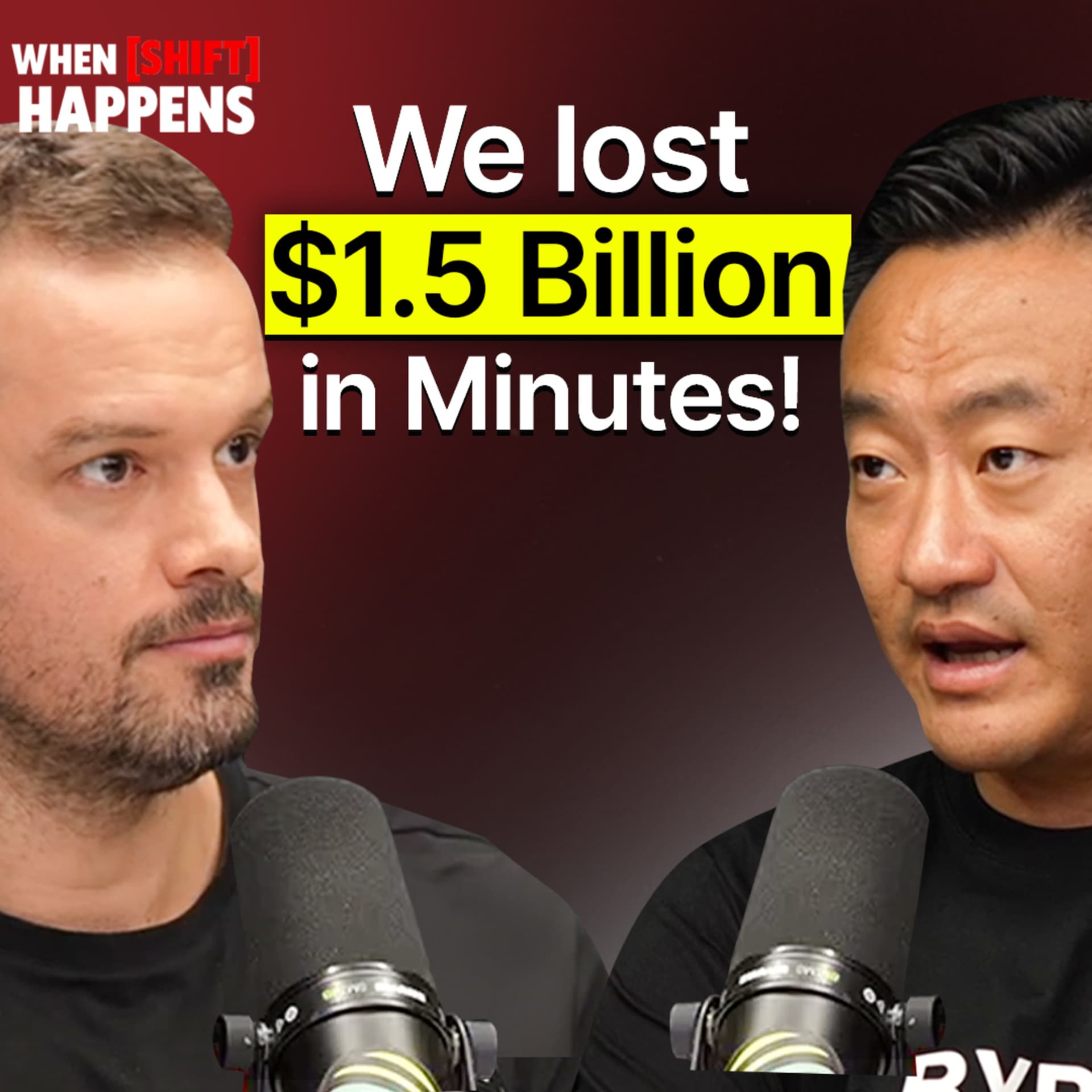
In this episode, host Kevin engages with Ben Zhao, the CEO of Bybit, shortly after the exchange experienced a significant hack amounting to $1.5 billion in Ethereum. Ben recounts the rapid crisis management strategy they employed, successfully managing to secure withdrawals for 350,000 users without halting operations.
---
Key Highlights
Crisis Management
- Initial Reaction:
- Ben received a call about the hack while signing a transaction.
- Immediate realization of the hack's scale when informed that approximately 400,000 Ethereum were compromised.
- 72-Hour Response:
- Bybit managed to keep operations running and process withdrawals while securing financial stability.
- Emphasis on the importance of having a well-prepared crisis management plan.
Leadership During Crisis
- Judgment vs. Procedure:
- Ben discusses the balance of making judgment calls versus following established procedures during a crisis.
- Highlighted the need for effective communication and transparency with stakeholders.
- Personal Philosophy:
- Ben does not typically experience stress; he believes in taking immediate action to address issues.
- Reflects on the importance of leadership and remaining composed to guide the team through crises.
Restoring Trust and Future Outlook
- Rebuilding Trust:
- Ben highlights the importance of transparency and communication to regain customer trust after a significant hack.
- Bybit’s approach contrasts with that of other exchanges that may have fallen into disarray during crises.
- Future Security Measures:
- Discussion on the need for in-house security solutions rather than depending on third-party services.
- Plans to enhance wallet security and operational protocols to prevent future incidents.
Innovations and Initiatives
- Launch of HackBounty.com:
- Ben introduces a new initiative, HackBounty.com, aimed at helping victims of crypto theft locate their lost assets.
- The site will function as an aggregator for tracking stolen funds and will involve the community in bounty hunting efforts.
Industry Perspectives
- Crypto's Image Problem:
- Ben acknowledges that while the industry has faced numerous challenges, he believes in its growth and resilience.
- He emphasizes the need for continued transparency and innovation within the cryptocurrency sector to improve public perception and trust.
---
Key Takeaways
- Crisis Preparedness: The importance of having a crisis management plan in place and being ready to act decisively and transparently.
- Leadership: Effective crisis leadership involves making informed decisions quickly while maintaining open lines of communication.
- Trust Restoration: Transparency with clients and stakeholders is critical in the aftermath of a security breach; rebuilding trust takes time and consistent effort.
- Focus on Security: The transition to in-house security systems can enhance resilience against future threats and improve overall security protocols.
---
Conclusion
This episode sheds light on how Bybit navigated a significant crisis through effective leadership, transparency, and community engagement. Ben Zhao's insights serve as a guide for other crypto entrepreneurs facing similar challenges in the rapidly evolving landscape of cryptocurrency. The emphasis on self-custody and the launch of HackBounty.com highlights a proactive approach to improving security and accountability in the industry.
Written by AI. May contain mistakes. Listen to the episode to check what was said.
Transcript
Automatic transcript. May contain errors.0:00I got a call from my CFO. The 30 ,000 is all gone. He says no, no, no, no, no. It seems like it's the whole wallet. I asked what did we have in the wallet He said about 400 ,000 Ethereum Okay, how much is that in dollars? And that's when his voice started shaking And he said 1.5 billion dollars Crazy week It's just the same as last time man Really? Bybit Bybit was hacked for 1.4 billion dollars Ben Zhao, the co-founder and CEO of Bybit one of the largest crypto exchanges in the world with over 60 million users.
1:05My employee says, Ben, just use Twitter space because that's most used. No. Let them see my face. Let them see Ben. Our liquidity act to 100 now. All the institutions are back. You posted a picture of your stress score on your group. Then you showed up to say, hey, guys, I'm actually not stressed. If you can't stress out with an event like that, what can make you stress out? I think my wife makes me stress out. We need to stop laughing. This is a serious show.
1:3569 % of the people who watch this podcast have not subscribed. If you enjoy this show, if it provides value to you in one way, shape or form, can I please ask you a little favor? Can you click that subscribe button, give this video a like and leave a comment down below? It helps this show more than you can imagine. My goal is to bring the absolute biggest and brightest people on this channel. And the best way to get there is to have all of us rally together and build the when shift happens family. Thank you.
2:28and that delivers the benefits of Web3 with the ease of Web2. And Mantle, an Ethereum layer 2 that builds two products I particularly like. FBTC, which enables you to borrow and lend Bitcoin in DeFi, and METH, one of the largest ETH liquid-staking protocols in crypto. Crazy week. Crazy weekend, actually. Weekend.
2:56Why are you laughing? because you're just like you're just the same as last time man really just laughing I mean what else what else can you do at some point just crazy what would you expect come here and cry no no no I was not expecting anything anything less from you so yeah as you can see we we improved the quality we have some penguin on the table we have a nicer room your own NFT your own NFT or something I have a bunch of NFTs yeah we have more sponsors sores good uh the toilets if you go there it's not a hole anymore i don't know if you remember the other place was just like yeah the old chinese building yeah yeah it's nice so we're improving okay but as you said like crazy week crazy weekend crazy weekend how are you doing man good good getting back yeah already getting back yeah yeah all hands on deck there's a lot things to do.
3:52Yeah, I think we can talk about it. But I think there's a lot of things positive came out of it. Right. Yeah. Can you tell me what? I mean, it's been three days, right? Yes, only three days. Exactly. Which must feel for you probably like a couple of weeks. It feels like one or two weeks, actually. It feels like. But it actually only been three days. And if you think about it, the gap is closed. we are back to our liquidity is actually back to 100 so all the institutions are back and so it's pretty insane to think about did you manage to get any sleep? I had one hour sleep on the day maybe three hours sleep next day and then about five hours yesterday last night basically so hopefully you get to seven tomorrow yeah five to six hours one three five seven what's your honest thoughts on what just happened you just said there's a lot of positive points which is pretty amazing just after three weeks already talking about that like that yeah what do you mean what do i think happened like how the heck happened no first before we talk about the details let's talk about for example you said i mean you you've watched some of those things I've done, right?
5:12The podcast or the space. Have you? Do you know the detail of the things? Yes. You have. So you have an idea of kind of timeline. But we're still going to repeat some things here because. Yeah, that's fine. And I feel like also it was not as detailed as it could be, which I don't mind sharing. The ID will be to detail everything. Yeah. But first you said you're already seeing after three days positive points. do you want to talk about that yeah i think the by bit um the silver lining is that our transparency and the way i think made the whole world see that how we are we handled crisis in such a professional ways and that actually gives a lot of people confidence for some reason um i guess it's the phrase that what doesn't kill you makes you stronger, right?
6:10So we've already seen clients coming back, VIPs start to come back, institutions. Yeah, I think, and then we're going to have a few initiatives, try to chase the money, which is going to be industry first. We're launching a site tomorrow. The whole team has been up for two days since the hack to build a website to really help future victims as well to chase the money. How are you going to do that? We'll launch it tomorrow. You'll see. We're launching a site. Actually, it was a lot of designers. It was really cool. But tomorrow, well, hopefully tomorrow, but maybe the day after tomorrow. But in a few days for sure, yeah.
6:54Which is more or less when this podcast is going to be released in the next few days. Yes. How can you stay laser focused when you run on so little sleep? um are we on record already yeah oh we are oh i didn't know that i saw we i saw i i saw we were still waiting for the start button or something there's no start button we do it the organic way okay okay yeah so how do i stay laser focused i think when you have a when you know there's so many things you need to do you don't think about focus or not focus you just focus because there's a priority of things that I need to be doing. Actually, if we want to talk about priorities, when it happened, the second day and third day, it's all completely different priorities for me, which is quite interesting.
7:44But somehow when you know it, you'll be focused. And then you actually kind of get the satisfaction from completing whatever you want to focus on. You came on this podcast already more than a year ago. and asked you, what is your mission? And you said, I want to be useful and I want to solve problems. Yeah. And the word gave you some pretty big problems over the last couple of days. You said before, one of the positive points is that people actually trust us even more because you did a sort of masterclass in leadership. Usually when someone gets hacked or robbed, there are a few phases that one goes through.
8:28feeling violated then angered and depression and then you realize that you're the master of your own destiny the captain of the ship and you bounce back and you literally skipped or you seem to have skipped the first three stages and you went straight to the last one what's the very you talked about priorities what's the very first thing you do when you learn that your exchange got hacked for$1.5 billion on a Friday night at 10 p.m. You mean that first 10 seconds? What do you do?
9:00So I got a call from my CFO. So after I signed the transaction, about 30 minutes later, he called me. When I get the call, it was already, I know it's bad news because he typically don't call me. The guy likes to send a message. He just doesn't like call. he calls me the moment I pick up it's him and my security team that I know it's most likely a hacking happened but then the transaction I signed was 30 ,000 Ethereum so I was in my head trying to calculate 30 ,000 I forgot the price of Ethereum so I was like okay 30 ,000 30 ,000 30 ,000 okay how much is that and then Ben something is very bad I said okay well we got hacked I said yes I said okay the 30 ,000 is all gone and that's when his voice starts shaking and that's when I start to get a little bit shaky.
9:51I was like, okay, this is much worse. He says, no, no, no, Ben. It seems like it's the whole wallet. And I ask, what do you mean the whole wallet? What do we have in the wallet? Because I don't know. He said about 400 ,000, 410, 400 ,000 won, 1 ,000 Ethereum. and I was like okay how much is that um and he said 1.5 billion dollars and so that's when the moment I get uh I had butterflies in my stomach when I see the people that's calling me right after I sign 30 minutes I get a bad feeling but that's when I felt oh my god okay I was kind of a bit shaky, a bit sweating. And then I know no point to worry about the money and think about the money and the damage and the consequence, but to focus, snap out of it.
10:49So about 10 seconds took me to snap out. And the next question I asked was, how did it happen? They said, well, you signed this wallet. My security team is the one answering me now, saying you signed this transaction, which lead to, they believe, a hacking of the whole wallet. And I said, what about our other wallet? Are they secure? And my security team confirmed that it's all secure, only this specific wallet. And I asked like three times, Masi, are you guys sure? Because this answer is very critical for me to make the next move, to know how is the problem contained. Do I need to shut down the system to find out what happened?
11:34Or do I need to now go to the next crisis to face the bank run? There's multiple things that's happening in my head. So they said that. Then I stopped worrying. I said, okay, then the system is intact in my head. I think about we are not being penetrated. It's the third party because it's the cold wallet that got hacked, which we use Genesis Safe. So I asked them, only Genesis Safe is hacked. They're like, correct, 100%. I said, okay, what other wallets do we have? Under Genesis Safe. They said, we still have a stablecoin wallet. How much? $3 billion. Guys,$3 billion safe or not safe? You got to give me a fucking answer now.
12:11Confirm. Ben, safe. $3 billion safe. Loss 1.5. I said, okay. And I said, asked my CFO, can we cover the loss with our money? And he says, yes. then at that point I know I don't need to worry about trying to sell the company or get investment I know that clients monies are safe at least I don't have to face legal consequences the moment I make a decision it's all under my control that I pay clients are safe so this was the biggest relief and I took a big breeze and then I started the whole next part which is commanding the team and everything but these were the first few questions that I had to make sure and so I know what I'm going to focus next yeah
13:10what did you do next? I called my COO and then she come online we briefly updated her and she went into the crisis procedure. We have what we call incident in the company or P-1. P-1 means very, very critical incidents. We've had critical incidents before. We have a monthly draw on all the critical incidents that might happen. Can you give an example of a previous critical incident and how big it was compared to this one? Nothing was this big. We've never experienced a hack. previous maybe the website was down or the matching engine is down nobody can make a trade in derivatives let's say or the withdrawal system is down is not responding it will be considered a P-1 P-1 in our term is impacting more than 10 ,000 clients any function down that's impacting more than 10 ,000 clients or causing damage more than 1 million dollars in terms of USD.
14:22So any of these one we find, it's a P-1 incidence. And there is a P-1 button that anyone can call. You click on that button, it immediately wakes up all the management of the company. And it's a actual phone call. And it's by sequence. If the guy doesn't pick up, automated call follows. So it's a master control system. It's automatic. So you want and everyone gets a call. If you don't pick up, Kevin don't pick up, your deputy head will get the call next in case it's midnight or whatever. Everyone then get online. There is a meeting room already created for them. They join. There's someone taking notes, someone doing commanding, someone giving the instruction, and then it's all done.
15:08So we have a drill every month for this P-1. After I told her, this is definitely P-1, so she proceeded with the P-1 procedures. in the company. Dear When Shift Happens family, the following message is probably the single most important thing you should take away from today's podcast. If you're serious about your crypto investing journey, please take some time to learn how to self-custody your assets to make sure that nobody can take your coins away, ever. If you don't learn how to be your own bank, it is very likely that one day you will lose all your hard-earned crypto. The safest way to hold your crypto is in a cold storage that we also call hardware wallets.
15:48Hardware wallets are not complicated and they give you peace of mind. I personally use a hardware wallet called Treasure. It is open source, very easy to use, and the first hardware wallet created ever. As we like to say it in crypto, not your keys, not your coin. You can order your Treasure wallet with a 10 % discount by following the link in the description down below and by using the promo code WSH10. And now back to the episode do you tell everyone exactly what happened you say it's a p-1 no so in this case actually we just told the team that we got hacked yeah you have to tell everyone that what happened in within the team yeah you said you have this procedures right and obviously one of my question was how much because the procedures are there which is very important but there's a lot of judgment going on too which is what you showed just before starting this kind of procedure but also probably during the crisis management there's a lot of judgment coming in there how much is it judgment how much is it pure procedure a lot of it is judgment because this time everything is different uh previously our incident my role was really inside i would make maybe one post about what happened to the site.
17:08Let's say website is down because the only thing you can say is our website is down. As you all see it, we're working on it. That's really all you can say when your website is, and that's the worst can happen to exchange other than hacking. Imagine Binance website is down or Bybit website is down. That's literally the next thing that happens worse than a hacking. That's the worst possible can happen. When it happens, you don't need to do so much publicized streaming to tell the public what happened. It's more like, hey, I'll tell you the site is done. Already clients coming in to complain. They cannot open the site.
17:45They cannot place the order. Then my role is mostly internal facing, working with the tech team, find out what happened, which system we need to shut down first to test which part of the system is wrong. Is it Amazon server problem? Is it our front end? Is it our coding? What happened? Did we release a new bug or whatever? But this time it's different. The whole system is functional. It's a hacking that happened just now on the external and it was such a huge amount. So everything is different. We have all the template to tell clients that this system is done. We are working on it. Please wait.
18:25So none of that is working because everything else works. So actually we have to redo everything. Yeah. You said most of it is judgment. And so a lot of judgment is needed to make the right decision under this intense pressure. What previous bad experiences that did you have in your personal life or entrepreneurship life that one way or another helped you deal better with this situation?
18:55dealing with stress or sudden incident, right?
19:09Number one is I don't feel stress. I don't really feel stress. When people say I'm so stressful, it's typically when you have things in your mind that you know you can do something about it and you are not doing it about it, right? For me, if I have something in mind, I'll just fucking do it. So I don't understand the stress. So when this happened, I know there's things out of my control. The 1.5 billion is out of my control, at least for now. So that's out of my mind. I'm not even thinking about it. Then what is the next thing I need to worry is the bank run. is that everyone in the world is going to find out about this whole thing very soon.
19:54What do I need to do to calm the market down and to still build a trust? And in my head, I'm thinking whatever we do from now on, we'll decide the fate of Bybit in the next five, 10 years. And my goal is to make sure that we as a company still there after 10 years. And how do I handle this? Is I look at, that's where I am going to be. so we need to handle this with such a professionalism with transparency uh and uh and show the world that we can handle a crisis like this so i'm immediately in the kind of battle mode um if you ask me what how i reacted i think i think even in the last podcast i told you i've been away from home since i was 12 living by myself um i'm not i wasn't with my parents it was alone kind of in New Zealand dealing with even life issues with my host family the school and everything so I think since I was a very young age I learned that to think things on my own and trying to find out solutions on my own not panicking because there's no use my parents was not in the country I was in New Zealand is they're in China so even if I I want to find them It's a 15 hour flight.
21:12So whatever emergency, for example, I was got stolen ones. I got maybe in the morning, got one of the host family didn't like me, kicked me out when I was 12. I have to deal with it myself. There's no one else. So I think that's how it kind of came, came to, I guess it developed in a way that whatever issues that comes, I have to fucking deal it, deal with it. So I don't think about the step one, step two, step three, I don't have the luxury. It goes to the step five or four, whatever you just mentioned. You mentioned the bank runs, right? And we had multiple examples of bank runs in 2022, Celsius, FTX, many other big players in the space, and it all started on Twitter.
21:57How did you concretely manage the PR side? What goes on in your mind to say, okay, now you said, my goal is for Bybit to be here in 10 years and be at the top. what do I need to do now so that it doesn't end up as a PR catastrophe, which is what happened to so many other big players in the space. And that killed all of them. One of the big problems people don't know this is when they have a PR department, they think let the PR department do the job. That's never the truth. When you face an incident like this, it's not the PR, it's you, the founder, the CEO yourself. Look, if it's my PR team drafting a message, sending through Twitter, or one of my PR guys standing there, it would be disastrous.
22:42No one would trust him. So the moment I think about it, I know that the bank run is going to come. I know clients will have many questions. So right after I called my COO, the next thing I do, I know she's going to handle all the calling everyone and informing the next steps. Customs are all hands on deck, basically. I told her, handle it. I'm gonna sit down and draft the first tweet I want all the media Everyone to get information directly from me Me only Even my team don't know what happened My PR team have to get secondhand message I'm the only person that knows exactly what happened And I'm the only person It's fitting to do this role So from that moment I know that I am the PR guy And I am the PR of the whole damn thing So I want to control the media by I will say everything and tell them everything, the fact, so that everyone gets the fact direct.
23:41There's no speculation. In an event like this, the worst is people are guessing. And people think, you know, Bybit is going to shut down. You know, we're going to rock pool. If you notice the way we handle it, after my first tweet, my next thing we did was a stream, online stream, which happened about 40 minutes after the incident. and then there was a lot of discussion in the middle number one is we use twitter space and most almost my employee says ben just use twitter space because that's the most used i tell them no let them see my face let them say let them say ben it's very critical that me on my face looking the camera tell everyone what happened as the founder and ceo of the company and that people will trust that i'm telling the truth i shouldn't be the one hiding and i shouldn't be the one passing these messages because I don't have time to pass it to someone else to do it for me.
24:42So that's, I think, on the PR side. But luckily, I think I'm able to do all this because the team is extremely solid. They are making all these moves behind me. I can assign key stakeholders to do everything else. Even you look back three days, many things have happened on top of what I do. So that's, I think, we show the world that it's not only about Ben, it's about the whole team executing everything. So priority number one, avoid bank run. What do you do next? One of the things you did, so first you contacted people internally. One of the other things you have to do is contact key players in crypto.
25:27Who did you contact first and why? so the bank run establish trust I have to be there tell them and then although I do all this I know the bank run is going to happen and what I'm scared is what's the absolute worst that can happen at that moment well the absolute can happen well first of all Bybit is actually very transparently one to one backed with client asset so I'm not afraid of bank run The only thing I'm afraid is I am short of Ethereum, which just happened. So I am not one-to-one at that moment. If client wants to withdraw Ethereum, I don't have Ethereum.
26:14So my logic is that I want clients to withdraw. I want all of them to withdraw to test me so I can prove that I'm actually one-to-one. But the only missing part is I don't have Ethereum to give it to them. And I know when they see the news, Ethereum is what they want to withdraw. So in order to establish this trust, and again, the goal is to be here for another 50, 100 years, is that I have to show them I need to give them Ethereum as soon as possible. So then I assigned one of my key personnel, actually my finance team, to go out, talk to partners to get a bridge loan of Ethereum. It's not realistic to buy Ethereum off the market because we will just pump the price and then we will end up paying a huge amount.
27:06So we need to find people to immediately give us a bridge loan because the bridge loan is easy. We give them collateral, Bitcoin, USDT, which is what we have. And then they will give us the Ethereum to top up, make sure we are back to one-to-one. yeah so you don't have to okay so you don't have to prove anything to anyone because you're giving collateral right because one of my questions was how do you convince because everyone is in panic right how do you convince other key people oh no you don't convince you don't convince if you are actually one-to-one and if i am truly able to cover the lost it means that i'm not in panic mode it's just that i don't have that much ethereum but what i have is bitcoin usdt and cash in the bank right for operation um so which is yours by the company right it's not it's not the client asset is here my my money is here client asset got stolen i'm putting my asset there but it's not in ethereum but in order to restore one to one i need to go put ethereum so i exchange my asset into Ethereum, put it back, which happened today, fully backed.
28:23And that's it. So, yeah. And so what do the clients, the partners ask? They ask one-to-one? They ask even more. They ask more. They will typically ask more. So maybe 110, maybe 120. Depends on whatever you give them. If it's Bitcoin, it's 100, maybe 10. If it's a stable coin, it's better. Then we have other shit like, I don't know, XRP and, you know. It will be higher. It depends on the volatility of the asset.
28:55So you mean you have XRP in Bybit? No, we have a number of different tokens. I'm just giving you an example.
29:12What's a great leader? Sorry? What's a great leader? What's a great leader? I think to give clear instruction during a time like this, you do this, you do that, you do this, and you can divide and everyone is clear what their focus on. I mean, during this whole process, there was many issues that pop up. We never imagined. I'll give you an example. Because we were hacked unsafe. So we informed Genesys Safe immediately. They shut down their service. That means nobody can withdraw anything using Genesys Safe. Funny enough, the people we talked to try to get a bridge loan. After we signed the contract, they would come back and say, Bam, sorry, we cannot transfer because our money is stuck in Genesys Safe as well.
30:12So you're kind of stuck. You're like, okay, that's one issue. That's one of the first issues we find out. The second issue we find out is, remember I just said we have 3 billion USDT. 3 billion USDT also in SAVE. Now, even if SAVE didn't shut down, I don't have the balls to touch this money. But I'm experiencing a bankrupt. All the clients are withdrawing assets. And within our system, we can clearly see how much withdrawal that comes in predicted amount each wallet how much stock we have and how long we can last from our prediction with this bank render trend within the first hour we got 200 000 requests withdrawal with this trend happening we can last about six hours until our existing stablecoin wallet runs out then i have to tap into that 3 billion but i cannot so at that point which is during my live stream i took a break i had my other uh colleague on the live stream talking for me while they when they are coming down the clients i will come back and i find out this information so immediately i call my wallet team stop looking for what happened i need a new way to get the three billion out safely and the team come back later and tell me we're going to develop a software now, which we will test now.
31:42And you will transfer 3 billion out of it. And if I don't do that, then I have to shut down withdraw, really. And then, so I said, go ahead and do it. So I think to answer your question, there's a lot of emergency that comes up. The leader, look, there's a leader in different times. I think your question is during a crisis time is that your head needs to be cool and you need to understand what are the priorities. And I understand my priorities and making sure that everyone knows by a bit is okay, even after this. So I need to make sure I get a 3 billion out to give clients the withdrawal. Yeah.
32:24So, yeah. I need to have massive trust in the people that you come in too, because they could be not as cool as you in their head and they could make mistakes. yeah so in order to pull this off again it's not a one-man job it's it really shows the whole team every single the person that was talking about the loans you notice that we we got we covered the whole ethereum within three days uh even the otc desk is extremely efficient um and um so you have the wallet team you have the support team that's coming all the clients you have institution team that's coming down all the institutions making sure the liquidity is back so there's yeah i think each leader have to be completely cool and make sure they execute on point you're wearing a whoop yes i have to ask about that you posted a picture of your stress score on your on your whoop yeah after pulling an all-nighter i think it was like saturday morning like 10 or 11 a.m.
Read the full transcript
33:25Yes, yes. So basically 12 hours all night long working straight. Yeah. Then you show that, you say, hey guys, like my stress is, I'm actually not stressed. You said before it's because stress is when you don't take an action on something you know you should, right?
33:46If you can't stress out with an event like that, what can make you stress out? I think my wife Makes me stress out
34:01The honest truth Maybe my kids Maybe my kids and wife Make me stress out
34:11They have this super power No whatever they say I cannot do So this The only thing I can do Is stress yeah no when it comes to work it's not that bad
34:30oh this is funny yeah we need to stop laughing this is a serious show it's serious but at the same time i mean the majority of the things are good now and also it shows that i mean you're able to like laugh about things which is extremely important what's your biggest fear in life so what was the question what's what's your biggest fear in life um
35:08um i think not knowing my own limit i think this is something i mentioned why I work, why I push everything so hard is I don't know where the limit is. The biggest fear is looking back when I'm old and already knows that that's where I am. My life is defined. That I didn't push as hard as I could. So that's one. Yeah, and I think the second fear is to really, I don't want to disappoint people. I don't want to disappoint people who especially trust me, whether it's my team or my customers. I think that's something extremely important. On the first point, you said, I don't have limits. What's enough?
36:01What's enough? What do you mean? What's enough for you? What's the day you say, I'm happy like that. that's when my energy and my health is no longer able to do things i think that's how i defined i'm i'm settled it's the energy level is the health i think yeah last question on stress was the most stress the most stressful moment you've ever experienced in life
36:41Most stressful moment.
36:47Sorry. There's someone calling me.
37:02Most stressful moment. Honestly, I cannot think. When is my most stressful moment?
37:16I would say it's still this event, but it's different because this event, I think we tried our best to handle it. I think there were times that although you know there's an issue, it is out of your control to handle it, it's probably even more stressful.
37:43you said before that you did some other shows some live streams but you didn't go as deep as you wanted on those what exactly happened for bybit to get hacked for 1.5 billion dollars oh no i think i went pretty deep um yeah there's some small like discussions and how certain decisions have arrived um but yeah no i think what really happened was yeah it was it was our our code ethereum code wallets was was hacked um we're still trying to find out what exactly happened um with different security team and external security team internal i think by tomorrow they probably have something uh which which we will tell the world what happened and hopefully no other people will become a victim again um yeah but i guess you got to be more specific on on the question because otherwise I can talk for a long time.
38:58I think we could get back to what you did in sequence. Before you said, there's something I do on day zero, on day one, on day two. We talked mostly about day zero. What do you do afterwards, day one? So day one,
39:19the priority is so by 12 hours we've already completed all the withdrawals pretty much the second day I have time to think about what now so the first day was all emergency reaction crisis management PR calming the market down, tell everyone we're still okay. Day two is I have a little bit of time and luxury to think, holy shit, this happened. What's next for the company? What are the priorities today? So day two, the priority, or day one, or day zero, day one, day two, if you want to say, or day one, day two, day three. So the second day, I think my head is around, And we need to see an impact report on what exactly we lost in terms of how many clients from what region, institution clients, VIP clients, liquidity, these major things.
40:26And then so I was with BI team looking at all the numbers. And also, we have a bit of time to try to find out what happened, engaging external security teams to help us do forensics and all that. and then also have a bit of time to think about what we're going to do to chase the money. Can we get it back? So I think these are the three things in my head, and I would even out the time spent on these three.
41:00You said we have the money, right, for this, to cover this? Yeah. how many months or years will it take by me to cover this with the money you make um well then you are essentially asking me what i make a year right there's some people who talked about it out there yeah so i mean maybe they're coming with rough numbers so i don't know if it's like a public information you want to share or not
41:29um yeah i think some people say it's it's something we make around one year that's roughly right i think about that yeah but you know obviously there are other expenses and stuff like that yeah you you said before we can't just buy back the ethereum because it's good it would affect the price. So the first thing, actually today there was a tweet where you said that the gap is closed. Through loans, deposits of whales, ETH purchases. But you will need, from what I understood, maybe I might be wrong, you will need to rebuy about 400 ,000 ETH at some point. Yeah. How do you do this without losing even more money with an asset that is very volatile and that might squeeze up?
42:18Um... Well, that's what the market is commenting now. Even with buying bloody 1.5 billion, it's not moving. So all the Ethereum haters, all the Ethereum haters are hating fucking Ethereum for now, which is very funny. But no, we bought it all through OTC. So when you buy OTC big amount, it doesn't really move the price. So, and we have, the infrastructure of the market is so mature now that you actually, even with about 1 billion something a month purchased, you can do it without impacting the market so much. So you've seen Ethereum move a little bit. And that's actually speculation of us buying.
43:04It's not really us buying it causing it, right? Because we are just doing OTC that doesn't move the market. We've bought, I would say, we lost 400. we bought like close to$300 ,000 already. So the borrowed amount or the loan is only, you know, about$100 ,000 something. And that's been gradually also bought and swapped. Because essentially they are holding my collateral anyways, and they're charging me interest. It doesn't make sense for me to keep the loan for too long. So I'm actually incentivized to buy it all back and replace it. But as of today, the gap is already closed. Yeah. when you're building an exchange or you're building a business in general, there are many moments where you could cut corners to grow faster, which is exactly what ultimately killed most businesses.
43:56When times get tough, what are some examples of corners that you didn't cut and that could have cost you your business this weekend? Oh, there's many things. There's a good question. So there's many things that's hidden underneath that you don't see, but people see the surface, how we managed to pull it off.
44:21For example, I was able to make the decision that all system withdrawal will be sustained. We're not going to hold any withdrawal, which is very rare. When the exchange gets hacked, they hold withdrawal. If you think about all the previous exchange hacked, they just stop withdrawal, right? How can we do that? Not because we are just, we have the balls or whatever. It's simply because we run in such tight shape that we have many dashboards. The Bybit is run on numbers and on dashboard. We have margin calculation, wallet level, but all of that is real time. The difficulty is to build it in real time.
45:02You typically have T plus one or plus 10 hours, whatever. But we have real time. so when withdrawal comes we see exactly which chain have how much stockpile and we're able to do predictions on how bad the things are how bad is a bank run when you see a bank run 100 % bank run and 10 % bank run is a very different concept but the difference is how do you know FTX didn't know so he they didn't have anything to measure to give the CEO to be cool to be able to make decisions you're going to make decisions based on something so i was able to make many decisions based on all the numbers all the system internally it shows that how well we run the company and how the company has so you cannot cut corners in things like that do you invest in building your own product internally for the staff so your finance team can see exactly what's happening your risk team can know exactly where liquidity is missing so we can do something about it for example today or yesterday we are able to pull out the impact report to see exactly which country which client was impacted during this and so we can do a targeted campaign to get them back so these internal things you have to invest you cannot cut corners and if we cut corners i will be freaking out and i i wouldn't be able to make these type of decisions so that's one example I think so this example is basically you spend a lot of time and money to to build amazing business intelligence systems that are in real time internally so you know exactly you keep the pulse on your business at any time yes correct do you have another example and while you're saying it I'm just going to give you more water thank you
47:05maybe just one just one one word on that um just just one word on the data analytics and business intelligence i actually run a business intelligence company and what i see everywhere is that no one understands their data yeah like most companies they don't understand their data and even very simple things or what they sell the inventory, all that stuff. And so it's a big problem. We started a business in 2015 and I was thinking 2015 in 10 years, this is going to be a problem. That's going to be long gone, right? 10 years later, it's still a problem everywhere. So the fact that you guys are, and when you say real time, real time, like this is something that's, I've never seen anywhere at the client where we arrived.
47:48Yeah. Basically. So it kind of shows how seriously you take the whole thing. Absolutely. What other example you have on corners that you didn't cut? I think it's invest in the team, making sure that it's really a team that takes you to where you want to be. I think we have a world number one team. That's what I truly believe. And this whole system showed. With all the withdrawals we process within 12 hours, we've experienced around 350 ,000 requests. of withdrawal. It all achieved and happened and finished within 12 hours. So we handled, not only we had a bank run, we handled it in such a speed that shows the support team, the approving team, the review team, and the risk management team.
48:40Everyone was on point. Otherwise, at least from my experience, I've never seen exchange handling nonstop withdrawal 12 hours, completely finishing it in the end. And this all happened at night. We're in Asia hour mostly. Yeah. That means we were able to wake up everyone and handle it and do it in a such efficient way. It shows that the manage of the, of the company is such precise ship. So when you run a precise ship, you can imagine a hole happened, a draining water in everyone knows what to do. So, and, and, you know, the PR team, even the live stream that it did was such nice lighting, everything.
49:20I was thinking about that before. I was like, you said it's 40 minutes just after 40 minutes and it's working it's there there's good light it's i have i have a camera like i have thing i have touch up you know everything yeah so um what's really funny is my stream team is a bunch of girls and they normally look phenomenal makeup and everything and that day they all came out was the first time i see them without makeup and everyone's here everyone's here like this everyone look grumpy but no they were so professional they were so professional right they put me in the camera and you notice everything was designed in such a precise way when i'm away getting update there's a slide holding slide the holding slide typically says be right back but they put a time we'll be back uta times 6 30 or 10 o 'clock or whatever so that clients know and we know we have thousands of people online if you only give them be right back they think you will never be back but we'll be back in 30 minutes exactly at this clock this time everyone is waiting for the new update and then we were judging how long to sustain this live stream based on how many people is watching not by so by the end of one hour 45 minutes initially we had i think 40 000 people watching by then was 4 000 then i know the sentiment is down so from the number of viewers i know it's time to stop if i still have 40 000 people online i would never stop i would just continue to do the stream and so that was all planned with my team and so imagine they're able to do this with such a short call it also shows that the team is managed in such a way so i think at the end of the day is you got to invest in your people in your leaders and by saying invest it's a fucking painful process it means you got to do a lot of harsh firing people don't understand you somehow just get a magic team no you have your standard you never back down your standard and you have you have to fire 10 people to get that one person that gives you the standard and it's it's hard to do one it's harder even to do that many people that every single leader is on point so there are a lot of i would say in by bit even the interview process is hardcore but then a lot of people don't pass probation three months we're letting a lot of people go because they simply cannot fit and that's eventually you filter you filter you filter you have a team that's really going to deliver you to where you are i think yeah so business intelligence data live and people invest in people yeah i have another one that i think is extremely interesting babit is one of the rare exchanges that doesn't have a native token why did you never launch a token um there was there's many reasons yeah i think we've had the temptation of thinking of launching something but to be very frank when we were in the game we were already very late binance launched the token okx actually no there's exchange behind us later than us that launched but i never understood the point because if the exchange is making money you can simply raise or if you need money let's say typically if you're your exchange you're already sustainable you normally don't need investment then why do you need a token token is typically you want investment right unless it's a what they called an ecosystem you want to get, meaning that you want to somehow get users from your ecosystem.
53:08But Bybit was never in any time trying to build an ecosystem like myself. We've always seen us as part of the ecosystem. We start the whole business based on working with influencers and QoS, be a part of them. Then when we have Spot, we started working with Solana, Tong, all these ecosystems by blinding in. And what we've always found is when we don't have something that's essentially what other people have, there's no conflict of interest. The problem I see with other exchanges when you have an ecosystem, essentially you're competing with other exchanges and then you're competing with other ecosystems like Solana and Tong and nobody wants to work with you.
53:52And this game can be played only when you're the number one, I think, very big you have an ecosystem you can extend many things but we've never been the never what what we've always the we're always the what they call the the underdog yeah so we never had the luxury to use that so we in the end we just never launched it yeah would this weekend situation have been different if bybit had if bybit had a token no i don't think so i don't but to be frank i don't think it has anything to do with with this whole thing we if we have a token or not why would you why would you think there's anything because people start to short the token the token price goes down then people decrease more fud then people panic more and then you have another problem to take care of right which is like yeah i never thought about that like this uh no i i never thought about this because we don't have a token so it was never in my head but no you're right maybe you then you have another thing to to explain um and to to solve yeah
55:03you had i think about 4 billion in withdrawals overnight how do you bounce back and rebuild trust um we're already bouncing back i think it's through how you've handled the crisis I think it's transparency and communication and make sure you're professional at any given time you would earn respect of the community I think throughout this event we earned respect a lot of people was giving us a pat on the shoulder saying that we did a good job even under such a crisis by being acted completely professional that resulted even more trust so I think even in the long run we will work out stronger. People will understand we've been battle tested.
55:53And this has been seen from even regulators around the world. We are applying license through multiple regulators. Over the past few days, many reached out and saying that, hey, you know, I think Bybit did a really good job. They even have more trust now that in the future, that if we see any incidents or any issues, that we will handle it in such a way. so I think if you look from that perspective it is actually one of the best way to demonstrate to the world how we conduct things and our philosophy what will you change in terms of risk management by a bit moving forward I assume you talk about security wallet security and things wallet security and also I'm thinking a question would be logical would be is it normal to have 1.5 billion dollars in a wallet?
56:52How much do you split? What's too much? What's not enough? So these are all questions that's been populated over the few days. I think my security team is definitely working on a future solution that will prevent this from happening. I think we're going to try to build everything in-house that's for sure and also prevent this from by splitting the wallet so that given one time one wallet is even one wallet is breached it's not going to hurt us this bad there's also talks about what technology we should be using because I think Ethereum have developed a lot. We're talking about Ethereum code wallet here, right?
57:43So you have many other solutions that can, doesn't involve online signing because one of the problems with the save that we use is online signing. Use a browser, right? Which makes it not really code. Whereas we have a lot more money with Bitcoin, let's say, in our code wallet. But that cold water is not penetratable because it's completely cold. Meaning that all the signing, everything is happening completely offline environment. Unless, you know, they physically break through, you know, otherwise it's not penetratable. So I think we're going to design things focusing on the area that is not physically, it has to be done in the physically ways that penetratable.
58:38yeah I think these are some of the key key focus yeah it introduces for me one of one big problem in crypto overall right this self-custody in crypto we say not your keys not your coin and usually we say that to individual people hey you should not keep your coins on an exchange you should keep it in self-custody so on a treasure or ledger but when you see something like that happening actually it doesn't make a difference right because you guys are using much more security than the majority of the people who would self-custody right with the treasury ledger yet you can be hacked which means that pretty much everyone can be hacked what's the solution to crypto self-custody and i'm thinking overall for like the space to move forward yeah one of the issue is we're a huge target if you're a hacker you're probably trying to think about hacking Bybit, right?
59:40So being that big of a target, I think one of the biggest learnings we also had is we are even bigger than the safe company that we're using. So it makes sense to hack us just to reach them. I'm not saying that's what happened. I'm saying that logically. So no matter how secure we do our stuff or, you know, we are such a big target, right? So we shouldn't be even thinking about using a third-party solutions. Even if we use Ledger, I'm not saying Ledger is not secure. And by the way, Ledger in this case is not the problem here.
1:00:29But the hacker would try to penetrate Ledger just to get to me. or even Binance, right? Why wouldn't they, right? So number one is we're a huge target. But if you talk about, your question is for regular users, I think not your coin is true, but also spread the eggs, I think. Spread your eggs, I guess. If your asset level reached a certain level that you'll become a target, right? Yeah. so you're basically applying the self-custody concept to even bybit and saying hey we need to self-custody with our in that case our own technology because we can't even i don't want to say trust third parties but because we're bigger we need to take responsibility for what we need to take responsibilities this is the biggest thing we learned uh and um so it's not to point fingers, it's just we should have already used our own solutions.
1:01:32Again, we spend days and nights looking into our own security. And this happens, which impact us. Ultimately, it was our decision to use this solution. It could be the front end that our laptop got hacked or whatever but why did we choose to use a you know a solution that involves a browser signing right so that doesn't make sense but again uh safe is the industry standard i mean that's why when we try to borrow the ethereum these guys cannot send it to me because they also use safe um so i don't think we should rely on the too big to fail and and the industry standard that you're assuming but you should focus on your own stuff and we will be more careful and if we've been always using my own stuff we will be more careful when you are somehow rely on a third party you you leave that trust to them not saying that they cannot be trusted because you leave them then you become careless that's my point my point is you become careless and then you're not taking your own responsibilities so i think that's what we should do yeah and you're making the case here for every business in crypto to do their own security or if they're bigger than the third parties that they're using i think if you get to a level especially as exchange if you've been running for more than a year i'm sure you're on some sort of target right do you know what other exchanges are doing out there yeah yeah so we've we've talked to since this incident, we've talked to a few call, you know, industry friends.
1:03:24I think all of them are using in-house solutions. So that's kind of the, the first thing they say, Ben, why, why, why do you use like not saying that whatever the third party's problem, but you leave that problem to other people and now you get hacked. You have no control over. So it's a matter of life and death. You shouldn't be living your life and death to other people's control, which makes sense. But again, our Bitcoin and all other coins are our in-house. So that's all secure. And Ethereum, the problem is Ethereum has always been hard because it's a smart contract thing. You need to hire a bunch of smart contract experts to build this thing.
1:04:09That's why we never bothered to do, which is now my biggest regret. you know, we should have had, at least when we established the policy, we didn't have. But now today we have these experts in the company, but the system was never updated. So I think that's one of the issues. You said you are not the kind of person to point fingers when talking about third parties. I would point fingers if there is concrete evidence, but currently we are still under investigation, so we haven't found anything yet. How about this decision that was not made to upgrade to your own infrastructure for this Ethereum wallet?
1:04:49Yeah. You're just saying, oh, this is my, I take it on my shoulders. I'm the CEO, I'm the founder. I'm the one who should have made this decision. Correct. Yeah.
1:05:02how much does what what happened this weekend make the case more compelling for etfs
1:05:12um what do you mean i don't think has not anything to do with etfs what would you mean an etf i mean again that actually would have been an interesting one an ETF needs to custody the assets somewhere what do you think they're doing oh yeah is there a similar risk I'm not technical enough to know is there a similar risk for an ETF company as to what happened to Bybit or is it something completely different no no it's the same so someone who is lazy like me for example could just say or someone maybe I would say older who doesn't want to hold their coin or has too much money in crypto and says I have too much money I want to delegate responsibility and the easiest way is to do that through an ETF because it's safe that's not really true it depends on the underlying logic how do they secure these ETFs now you have to also bear in mind that by bit is exchange our code wallet solution requires almost weekly movement I don't think ETF is almost like a thing sits there and most time is just depositing and maybe at some point withdrawing.
1:06:26I'm not in the ETF business, but I assume it's not like exchange. We have so many withdrawal deposit every single day, right? You have small deposit, big deposit. So the infrastructure required on the exchange is quite different than let's say a custody or ETF. So they can opt to a very secure solution because they will sacrifice efficiency. we cannot sacrifice too much efficiency because the clients will be crying and complaining that they need their withdrawal within minutes so the exchange faces a unique set of challenges and ETF I'm sure they also face a set of challenges but it's just different How much did Bybit have in assets and liabilities before the hack?
1:07:19On top of my head, I don't remember. What do you mean? All clients' assets? Clients' assets. We have about 20 billion before. And after the hack? Three days after the hack? I think 14. But at some point, we dropped to 10, 12, something, and then it bounced back. So now it's about 14. How can you prove that customers' funds are safe?
1:07:46Our approval reserve is audited. So it's definitely one-to-one. And actually, I don't think any other exchange can claim, especially after I went through this whole weekend, I can pretty claim that I'm one-to-one backed because my withdrawal was completely open for anyone to bank run during this whole process. And I didn't let reject any single withdrawal. I think only if you had one-to-one, otherwise you'd be trying to at least stop the withdrawal a little bit or block it a little bit to get the money. but we didn't we didn't we didn't really worry about that so it's I think this was the ultimate test right how do you test a bank reserves you bank run it and I just got a bank run so I'm tested right has this thought ever crossed your mind in the last 72 hours about what stopping the withdrawal no no no
1:08:49you've been saying for a few months that the future is on-chain? Yeah. Have these weekend's events pushed the agenda forward for the importance of decentralizing Bybit?
1:09:10Look.
1:09:16the future is on chain but it doesn't mean sex don't have a future i think it means that on chain activity the on chain uh infrastructure will get better there's going to be more flow the same as how crypto have been growing over the last few years that if you look at five years ago until today, crypto as a whole industry, we've grown tremendously. But it doesn't mean the stock market is dying. Right? So to my logic, it's the same. The centralized exchange is still extremely critical to the whole ecosystem. A majority of the people need a centralized product to be able to navigate and stay and kind of facilitate all the product.
1:10:05Even the example of Trump that was launched with Moonshot, you see people come in, they gamble a little bit, and they left. There was no in-between because there's nowhere for them to stay. And that's the part of the centralized exchange. It's really about offering a multiple ecosystem of product so they can stay and explore. And then they become a native crypto user. And then at some point, maybe they go explore. But even most of the people that are on the chain, they also still have a centralized exchange account and possibly some balance in both places. In some case, majority the balance on SX.
1:10:43So I don't think this event, this weekend change any of my views. This is still the same. And we treat on-chain Bybit as the same as we want to build infrastructure for the future. But again, we are still a centralized exchange. you mentioned the trump coin how do how does this industry ever get taken seriously by the general public when every week we have another mega drama trump launching a coin melania launching a coin the argentina president launching a coin rugging 400 million dollar and we have by bits literally every is almost every friday something happening right by beginning getting hacked which definitely hurts the outsider view of the industry.
1:11:34What do we need to do to get taken more seriously?
1:11:48I think we also need to look at the progress we've made. Don't want to be sounds bragging, but the way we handle this whole thing is tremendously different than other hacks. I see a lot of people compare Bybit to FTX when it first happened. This is not FTX. But I don't think it ended like FTX. We wrap it up within three days. Nobody could expect an exchange handle this in such a short, efficient manner. So although it was unfortunate the hack happened, which I think points to my next mission is trying to fight the hackers. And also we're going to launch this site this week, trying to help the victim.
1:12:32I think it's a problem that we need to solve. It's a problem that we as an industry needs to face. But other areas of the industry, I think is already improving a lot. Even the on-chain part of it, on-chain activity, you have a lot of DAX solutions for people to choose. Previously it was not available. so I think again the industry is young if you look at internet adoption in the beginning there's a lot of issues a lot of problems, infrastructure was not ready but then it takes time so crypto is still very young so I think but I have no doubt that people don't even think of crypto as a scam now most countries legalizing and regulating crypto as an industry and so So I think we are, again, like my post said, it's the only way up from now.
1:13:29So I think that's what I think. You mentioned before that one of your biggest regrets was to not have this in-house infrastructure for the ETH wallet. Is there another big regret you have in this entire situation? For our security team? Or like our security measures and things like this? I would say in general.
1:13:54Well, for sure, I think from this weekend, we've actually listed down a few things we could improve. How our withdrawal system can be built in an even neater manner that allows clients even more efficient to withdraw. I think even during this type of crisis, we should be able to make it even more smoother. the only regret is we did hold let people wait in queue some clients wait for maybe six seven hours simply because they were in queue um and again during a time like this you tell them you're in queue they think you're trying to intentionally block them right but it was not our intention and i was really hoping that we could just let everyone withdraw whenever they want and again ultimately is letting them withdraw that gives them the trust and gives them the comfort they see the coin in their own wallet right so um based on that i think there's a few improvement we need to address in the system so that if god forbid it happens again or in any type of similar situation we can even do it better um and then i think the wallet security team there's many key takeaways uh even look i'll give you a thing maybe other people don't see it is that uh my head of finance was signing was the first signer and then you have the co-founders.
1:15:19Now one of my regrets today is why do I put such a critical rule to be a signer? Because when shit like this happened, how does he face his colleague and even how does he face me? Although we all know it's not his fault. I'm putting one of my most critical positions ahead of finance in such a position that I never thought about it because I never thought we would get hacked. When hacked happened, although we all know now it's the North Koreans, but he would be facing such a pressure and his family and himself. And I might end up losing him. And this is a guy that worked together, fight with me in battles for four or five years.
1:16:12And I trust the guy 100%. But just the thought that he will face such a guilt that he might leave the company, you know, it gives me the biggest regret that I shouldn't let my such a critical rule be part of the signing process. You know, and... So who should it be? It's someone I trust, but not so critical to the company. Right? Because at the end of the day, why do you need a CFO signing? You don't. You just need someone you trust. Let the CFO... Because if he was not part of it, he would never feel this way. Right? And so that's another thing I'm going to make sure I implement in the future is that I don't want to risk any of my key personnel over this bullshit.
1:17:09Right. And I cannot I cannot imagine the pressure he faced this weekend. You know.
1:17:21what's your message or your advice to a crypto entrepreneur who in the future because it will happen experiences tragic events like you had this weekend I think the beauty of this industry is we also need to compare us to banks and whatever I don't think even banks can handle things like that in such transparent ways. So the beauty with our industry is transparency and the direct communication between the entrepreneur and your client base. So if there's anyone that had this to happen, I think transparency is the key and making sure that you keep communicating, you are there and then the market will reward you for the transparency that you have, I think.
1:18:18it's Monday evening about 10.20 10.30 you've been at it non-stop for three days what are you going to do when you get home or to the office in half an hour no I still have certain things I need to push like get update on what's going on with we find out what happened we are starting a whole task force on chasing the money and we're going to use this opportunity to help the industry not only us because during the crisis the industry helped us a lot of partners everyone reached out for help without asking for anything so i feel the obligation that we need to do something about it and this whole whether it's lazarus or there's a hacker issue is ongoing in constant fucking problem and the problem that i see now is when you're a victim you're really helpless because what the what the hacker does is he knows you will chase him but he also knows that you're one man if you're a victim right or if you're a company a small company you don't have the resources to be keep chasing and looking at the balances and the and the hardest part of getting the money back is that he would divide the money into small quantity such as 100 000 apiece and he will go to a mixer a bridge or a small exchange or a big exchange and by the time you get to the exchange their legal department replies the money is gone and you try a few times you give up and that's how it happens with most people because there isn't a information platform that aggregates everything and only about chasing money.
1:20:11There is chain analysis, but then by the time you get to an endpoint, which is the endpoint we define is the endpoint that whether you can freeze the money or an endpoint that you can no longer chase, untraceable. It's a mixer, a bridge, an exchange, or something you can freeze, USDT, USDC. The hacker will avoid the immediate freezable asset, USDT, USDC. you try to use exchange mixers and bridge to drain your energy and patience and then in the end you realize you have two three guys keep changing the exchange they reply you within even they're fast they reply you within half a day and the money is gone right and and the hacker is betting on this game so how do we solve that as an industry is that we need an information platform that shows all the endpoints that money is untraceable or disappear or mixer and then you show a clock of how fast are these guys responding to your help and you show a ranking of all these guys and how many transactions went there exactly 200 transactions aggregated to about 50 million dollars went to this mixer and this mixer is nowhere to be found then you can ask legal or regular help to see hey these guys if the money is with Lazara is sanctioned imagine 1.5 billion what kind of bet can it do?
1:21:47Sanction money go to nuclear development whatever so whoever is not helping you're not just not helping the victim you might be violating a sanctioned OFAC law but who knows who's helping the the hacker nobody so we're building this site i'm actually launching it with you called hack bounty.com it's a it's an aggregated thing like what i just told you what's interesting is you can become a bounty hunter yourself you can submit help us to trace any trace traceable thing you want the moment you will submit that money reach the end point we will register you as the bounty hunter for this line. And then we will have, our team will reach out to that endpoint.
1:22:35And then the clock starts. And then the endpoint is on the ranking, saying how much balance they have. You are either freezing it or tell me where the money went. Give me the next endpoint or you are not responding. By maybe a few days or a few weeks or a few months later, you will see who are those, the bad actors in the industry that's not responding to victim help at all. And then we can do something about it. And when this website becomes popular, let's say all the bounty hunters are on it, everyone's looking into it, exchange is going to help because they don't want to end up on the list.
1:23:17They want to respond ASAP so they can get themselves off the hook. I'm a fucking exchange. I exactly know how it works. I don't want my regulator to see me on their bloody list because I don't want to be helping North Koreans. sanctioned, whatever. So I will for sure have a team removing myself and responding to these things ASAP. And if you are a mixer, then gradually you'll be on some sort of list. So I think at the end of the day, we need to use what blockchain is really good at to solve a blockchain problem. That's transparency. And then everything is aggregated and anyone can come here, issue a bounty and become a bounty hunter.
1:23:56And we are hoping this website, will help all the victim to chase the money. HackBounty.com HackBounty.io Crypto. This is the website you told me about in the beginning of this conversation. I didn't want to tell. We'll release this podcast just after you release the website.
1:24:20Thank you so much, Ben, for doing this. Thank you. Thank you for showing the crypto world that we have serious people and stellar leaders in the industry. you showed everyone what being a true general in wartime means obviously our industry didn't need another tragic event but we needed to see that we've come a long way since 2022 and the collapse of too many major crypto lenders and exchanges and during this very painful weekend you just did that you showed us that the industry has grown stronger and that we're moving to the right direction thank you so much thank you man thank you thank you for the interview
From the publisher
In this episode, I sit down with Ben, CEO of Bybit, just days after the exchange suffered a $1.5 billion Ethereum hack. Ben provides a detailed breakdown of their 72-hour crisis response, revealing how they managed 350,000 withdrawals without halting operations, all while securing replacement funds.PARTNERS💳 Trezor is the safest cold storage wallets for crypto security and financial independence.Buy your Trezor Wallet (use PROMO Code from the video for a 10% discount): https://trezor.io/?transaction_id=1026f18ed46409e495c6db4bff90ab&offer_id=133&affiliate_id=35356🚀 Jupiter is the most used Decentralized Exchange in Crypto and the largest DEX by volume on Solana.https://jup.ag/🌱 Bitwise Asset Management is the crypto specialist asset manager with more than $10 billion client assets and more than 30 crypto solutions across ETFs, index funds, alpha strategies, staking, and more.💧Sui is a first-of-its-kind Layer 1 blockchain and smart contract platform designed to make digital asset ownership fast, private, secure, and accessible.https://sui.io/🤖 SwissBorg is Europe’s top trusted crypto app offering user-centric investment platforms and DeFi asset management with reliability and innovation.Sign up with this link and earn up to €100 : https://join.swissborg.com/r/kevinH6E7♾ Coinsilium provides vital funding and expert advice to Web3 and AI-powered early-stage technology companies. https://www.coinsilium.com🔘 Mantle Network enhances dApp development with Ethereum's security, low fees, and quick transactions through innovative layer-2 technology. Users can stake ETH for mETH, contributing to a transparent, community-driven ecosystem governed by $MNT token holders, fostering innovation and collaboration.https://www.mantle.xyzFOLLOW BEN ZHOU & BYBIT• Twitter: https://twitter.com/benbybit• LinkedIn: https://www.linkedin.com/in/ben-zhou-b979ba28• Instagram: https://www.instagram.com/benbybit• Twitter: https://twitter.com/Bybit_Official• Instagram: https://www.instagram.com/bybit_official/FOLLOW KEVIN & WHEN SHIFT HAPPENS👇Twitter (X): https://x.com/KevinWSHPod Instagram: https://www.instagram.com/kevinwshpod/ TikTok: https://www.tiktok.com/@kevinfollonier_Linkedin: https://www.linkedin.com/in/kevinfollonier/Website: https://www.podpage.com/when-shift-happens/DISCLAIMERThe info contained herein is for informational purposes only. Nothing herein shall be construed to be financial, legal, or tax advice. The content of this video is solely the opinions of the speakers who are not a licensed financial advisor or registered investment advisor. Trading cryptocurrencies poses considerable risk of loss. The speakers do not guarantee any particular outcome.0:00 Trailer1:35 Please Subscribe2:00 Jupiter Sponsorship2:08 Bitwise Sponsorship2:21 Sui Sponsorship2:32 Mantle Sponsorship2:46 Bouncing Back in Three Days4:50 The Fastest Crypto Comeback6:58 The Secret to Laser Focus7:56 How to Handle a $1.5B Hack15:21 Trezor Sponsorship16:13 How to Handle a $1.5B Hack16:35 Judgment vs. Procedure: Making the Right Call18:33 Why I Don’t Feel Stress21:47 Handling PR in a Crisis25:13 Ethereum Shortage: Restoring Stability29:12 What’s a Great Leader?33:14 The Only Thing That Stresses Me34:48 Biggest Fear: Not Knowing My Limits35:50 The Only Time I Stop36:25 Most Stressful Moment37:44 The Next Steps After a Crisis41:01 How Long to Rebuild?41:46 Buying Back 400,000 ETH43:45 Why Cutting Corners Kills Companies47:53 Investing in a World-Class Team52:06 Why Bybit Never Launched a Token55:04 Rebuilding Trust After a Crisis56:31 Lessons in Crypto Wallet Security58:45 The Future of Crypto Self-Custody1:05:03 ETFs vs. Exchanges: Security Risks1:07:13 Bybit’s Assets Before & After Hack1:08:50 The Future Is On-Chain1:11:03 Crypto’s Image Problem1:13:32 Key Lessons and Unexpected Regrets1:17:21 Message to Future Entrepreneurs1:18:18 Why Crypto Hackers Keep Winning1:22:04 Hackbounty


