
In short
Podcast Summary: When Shift Happens Podcast - Episode E125
Overview Podcast Title: When Shift Happens Podcast Episode Title: E125: SUI NETWORK FOUNDER: I Left Facebook at 50 to Build What Crypto Couldn't Host: Kevin Guest: Evan Cheng, Co-Founder and CEO of Mysten Labs Release Date: [Specify Release Date]
The episode features Evan Cheng, who left a successful career at Facebook (now Meta) at age 50 to address the challenges of decentralization in the crypto space. He discusses the founding of Mysten Labs and the development of Sui, a Layer 1 blockchain aimed at overcoming the pitfalls of existing blockchain technologies.
---
Key Topics Discussed
- The Motivation Behind Leaving Facebook
- Evan describes the challenges he faced while leading the Libra project at Facebook, which ultimately got shut down. These experiences motivated him to create a solution that genuinely addresses the problems within the crypto industry.
- Quote: "Every crypto attempt has completely, repeatedly failed and fallen back to centralization."
- The Vision of Sui Network
- Sui is presented as a next-generation blockchain that aims to restore the original ethos of decentralization within the internet.
- Evan emphasizes the need for technology that works and can scale effectively without reverting to centralized systems.
- Decentralization vs. Centralization
- A central theme in the discussion is how past blockchain implementations, including Ethereum, have led to a re-centralization of power within the ecosystem.
- Evan argues that the convenience of centralized services often leads developers and users back to traditional systems despite the promise of decentralization.
- Building a Company at 50
- Evan shares insights on founding a company later in life, emphasizing that starting a venture is not limited by age.
- He highlights the sacrifices involved, including changes in family dynamics and social responsibilities.
- Company Culture at Mysten Labs
- The culture at Mysten Labs is developed around the concept of "high agency," where team members are encouraged to take initiative and act without waiting for permission.
- Evan discusses the significance of trust among co-founders and how their shared experiences foster collaboration and innovation.
- Future Predictions and Industry Insights
- Evan predicts that within 24 months, the understanding of what technologies like Sui can achieve will evolve, and the potential impacts will be much greater than currently perceived.
---
Key Takeaways
- Decentralization Challenges: Many blockchain projects have struggled with the challenge of remaining decentralized as they scale, often reverting to centralization.
- Evan's Transition: Leaving a stable job to pursue a risky entrepreneurial venture at 50 reflects the belief that it's never too late to start something impactful.
- Company Culture: High agency in team dynamics can lead to greater innovation and responsibility, promoting a proactive work environment.
- Sui's Unique Position: Sui aims to be a comprehensive solution addressing multiple challenges faced by current blockchain technologies, differentiating itself from competitors like Ethereum and Solana.
---
Conclusion Evan Cheng's journey from a leading role at Facebook to establishing Mysten Labs and developing Sui encapsulates the challenges and opportunities within the crypto space. The podcast emphasizes the importance of maintaining a focus on decentralization and creating technologies that truly serve the users' needs while promoting a culture that empowers individuals within the organization.
---
Further Reading and Related Links
- Evan Cheng's Twitter: [EvanWeb3](https://x.com/EvanWeb3)
- Sui Network: [Sui.io](https://sui.io/)
- When Shift Happens Podcast: [Podcast Website](https://www.podpage.com/when-shift-happens/)
*This summary reflects the discussions and insights shared in the podcast episode, providing an overview of key themes and takeaways.*
Written by AI. May contain mistakes. Listen to the episode to check what was said.
Transcript
Automatic transcript. May contain errors.0:00Every business can benefit from decentralized technology Because every business can do away with responsibility they don't want to handle. If you're using a phone, a tablet, smart TV, some payment happen, or you're buying something, selling something, that's most likely Involve Street. Why is Sui the best blockchain out there? So, Evan Cheng is the co-founder and CEO of Mistin Labs. The creator of Sui, a next-generation Layer 1 blockchain. Formerly an engineering leader at Apple and Meta. He's now building the foundation for the future of Web3. What is Misten Labs? Misten Labs is the inventor and builder of SWE.
0:36We're building the AWS decentralized future. The company's mission is to enable decentralization. What is SWE Network if you had to explain it to a mom? It's a software company, but you don't need to know the details. All you need to know is if you're using the internet, there's a good chance it touches the SWE Network. Some people call SWE the next sol. Does it make sense? No. Why? There's never a new version of something that is successful. It's like, is Airbnb a better way to hotel? We have very first principle about identifying what problem we're solving, building a solution to solve that problem.
1:09What do you think has won in the crypto ecosystem? Nothing in this space has won. Bitcoin hasn't won. I think Bitcoin has established itself as incredible asset class. I don't even think even the Ethereum folks will argue they won from their perspective or their vision. You said at the one year anniversary, we're probably going to be at 1 % forever. what's the day where you can say I'm proud of what we've achieved and it really made a difference I think
1:4069 % of the people who watch this podcast have not subscribed if you enjoy this show if it provides value to you in one way shape or form can I please ask you a little favor can you click that subscribe button give this video a like and leave a comment down below it helps this show more than you can imagine. My goal is to bring the absolute biggest and brightest people on this channel. And the best way to get there is to have all of us rally together and build the When Shift Happens family. Thank you. This conversation is supported by Jupiter, the most used decentralized trading platform on Solana and the largest DAO in the world.
2:13Bitwise Asset Management, the crypto specialist asset manager with more than$10 billion in client assets and more than 30 crypto solutions across ETFs, index funds, alpha strategies, staking and more. 3. A scalable layer 1 blockchain that's fast, secure and affordable, built by previous Facebook developers and that delivers the benefits of Web3 with the ease of Web2. And Mantle, an Ethereum layer 2 that builds two products I particularly like. FBTC, which enables you to borrow and lend Bitcoin in DeFi and METH, one of the largest ETH liquid staking protocols in crypto. To support this show, please check the sponsors' links in the description down below.
2:56Welcome to the podcast room of the Miston Labs office. Well, thank you. I heard that it was never used before for podcasts. It's the first time. Really? Yeah. I wouldn't thought it happened a few times. How are you doing, Evan? Yeah. Yeah? Yeah. How is life treating you? It's a lot going on. It's very busy. Incredibly busy. the life of a CEO in this crazy market, crazy industry. Very much so. If you had to summarize what it is you do and why you do it, what would you say? We're building the most advanced infrastructure that is going to enable a way for business transformation to actually finally fulfill the vision of the founders of the internet.
3:47That's what we do. That's what is driving us, right? We're seeing how it went from this peer-to-peer platform for everybody to have the equal playing field to build anything, get the audience in need, to being completely controlled by a centralized middleman to extract value from the customer, to the evolution of introduction of crypto to see it being re-centralized yet again. This is what drives us, right? The mission is much, much bigger than pretty much anybody realized. That's what drives us. You said finally. Finally. Why do you say that? Because it hasn't been done. It has completely, repeatedly failed.
4:39Why? It is really, really hard to build. And we have seen over and over again that any chance, any mistakes you make in terms of the infrastructure you're building, it is very, very convenient to fall back to centralization. And every time you fall back to centralization, the same thing happens. Which is? it's almost forcing companies to go back to being evil because with centralization comes responsibility. You are forced to you'll be holding to contain the integrity of your customers information, their assets their data and something has to pay for the work you have to put in to be responsible for the information, for the data, for the content.
5:44And the way to do it is to take a cut. Central as an entity, everything from a bank to a web service, they all are providing
6:02assurance of some sort. You're almost like insured. Like I leave my information, my content with you, you better not kind of when I need to retrieve it, it better be pristine. Hasn't been compromised. I'm, I'm trusting you with my secrets, my key. Okay. It's fair for me as a customer to pay you some, something, right? That that's, that's the take, that's the cut. so it's a very convenient way to it's a very convenient business model and for everyone it's not their fault if I have to do the work I want to get paid for it so what we are trying to do is say you don't have to do the work when we talk about business transformation imagine you're building business where you don't have to do the work to to care for customer secrets because it's guaranteed because the decentralized infrastructure guarantees and all of a sudden you don't have to do the work then you don't have to think about how I get paid for providing that trust providing the assurance You mentioned you said finally right and then you said there was a few attempts that all ended up going back to being centralized?
7:33Do you have some examples of a few attempts that didn't work? Well, take the most recent example, Ethereum. I'm going to elaborate on that. Well, Ethereum was supposed to be this coordination layer for the world, the world computer, everything completely permissionless, accessible, and all that. And look what's happening on the Ethereum ecosystem today. Where are most things happening? The number one, L2, is base. They don't even pretend it's decentralized. They're very proudly saying it's centralized. And that's where things are happening, right? That's a re-centralization in Ethereum is happening right in front of us.
8:20Why do you think that's happening? Well, the infrastructure doesn't work otherwise. Right? Who is I mean, everything about the scalability, the cost issue, which they cannot solve because architecture is built incorrectly. The how to access the network, how to onboard customers and all that, it doesn't work. Security-wise, it's proven to be very fragile. It's very easy to hack. You know, you go down the list. so now you have a big company comes along and say we solve those problems for you trust us because we're coinbase the biggest player in crypto is behind it you trust them they're reapplying you know they're providing our trust once again we have a centralized entity incoming and providing trust and and there's no wonder remember the the infrastructure is built on top of optimism so So it can't even say it's fundamentally better than other L2.
9:28Why is the one that's growing the fastest? Because you have a public company behind it. It's trusted. So, you know, distribution is much simpler. A lot of people have Coinbase account. So onboarding customers is much easier. But nowhere, and it's probably centralized, right? and we're seeing the freshest example of once again peer-to-peer or decentralized model just very very hard to scale very hard for it to be performing very hard to build for customers I actually had Jesse Pollack on this podcast and we talked about that and also kind of poked him with a tweet that Kyle Samani who is very pro Solana obviously he often says the future of Ethereum is Coinbase and I'm not trying to make an ethical moral judgment here this is the thing that's hard if you I think this industry is very naive in a lot of ways look at the narrative we've been pushing for many years what's good for consumers for consumers to have control of the asset.
10:52We talk about not your key, not your Bitcoin, or not your key, not your crypto. It's a very naive way of thinking about it because what's the flip side of that? Somebody have to build service, product, and business. And if you're building a business, you need to make a living. If you don't have a path to make a living, nobody will be building business or services that's good for customers. so there's a two-sided dynamic and if your infrastructure doesn't allow that to happen because you have all these other issues inconvenience, too slow, too not scalable I can't trust it of course you're going to fall back to a centralized solution that's very refreshing to hear I mean we're here in Palo Alto, Silicon Valley San Francisco and I'm here recording a bunch of podcasts with other people who are very down to earth like you.
11:49There's not many people like that in crypto. Talking to Brandon from Phantom, right? And I can definitely feel also your kind of Facebook background and like just being on earth and being like, hey guys, if we don't know two keys, it's great, right? It's a great concept in theory, but in practice, it's very complicated for normal people. And also even for people who could do it or who can do it when you have a certain amount of money, you don't want to do that. Right? We want to delegate the responsibility we said before, right? And so, very complicated. Very complicated. And very refreshing to see someone who is just down to earth in this very nerdy world where everybody thinks, you know, it's very theoretical always.
12:34So you are a down to earth person. Who are you? Well, I mean, I was an engineer for, or technical leaders, you know, if you would say for 20, 25, 26 years before I decided to leave the comfort of big tech, comfortable, cushy position and to try to do something that's really hard. That's who I am. That has sort of been my MO for my entire career is I like to take on things other people find very difficult. Dear When Shift Happens family, the following message is probably the single most important thing you should take away from today's podcast. If you're serious about your crypto investing journey, please take some time to learn how to self-custody your assets to make sure that nobody can take your coins away, ever.
13:31If you don't learn how to be your own bank, it is very likely that one day you will lose all your hard-earned crypto. The safest way to hold your crypto is in a cold storage that we also call hardware wallet. Hardware wallets are not complicated and they give you peace of mind. I personally use a hardware wallet called Treasure. It is open source, very easy to use, and the first hardware wallet created ever. As we actually see it in crypto, not your keys, not your coin. You can order your Treasure wallet with a 10 % discount by following the link in the description down below and by using the promo code WSH10.
14:06And now back to the episode. What made you wait 20 years to start to something that is extremely hard? Well, there are many factors, including personal reasons, but ultimately two reasons. One is I feel like if we don't do it, we have to prove ourselves, right? If, you know, we can just talk about it. if we don't do it I don't see anybody else recognizing it and have the ambition or the ability to execute on this vision the other one is we feel like we had an edge at that point in time when we in late 2022 this is the time for us we have the talent we have the know-how so that combination the conversions of those two two understandings is what drove us to come out and start a company there's a common pattern across many people I talked to on this podcast were very successful working on very hard things taking a lot of risks they have something that happened in their life either in their childhood or later on in their life that gave them a chip on their shoulder and that's why they're such they have this fire in the belly what happened in your life that might explain your hunger for success and huge fire in the belly um just give you a couple examples um I worked at Apple for 10 years um I was recognized internally if you ask around at Apple at that time one of the people who know what they're doing who do hard stuff um And I remember we, my partner and I received this ACM award.
16:05It's a pretty big deal. Once a year, they give it to some project, typically open source project. They have made like massive contribution to the world of computer science. It's kind of like software system everybody uses. Apple didn't even say anything. I read that the World Wide Web inventor also received this award yeah or Unix Java web browser so you were recognized externally externally but for something that you did at Apple yeah internally there was not a peep why
16:48it's yeah it's a good question like I didn't think a lot about it at that time. Later on, I recognized it doesn't matter for the business. It didn't matter for the company. It didn't necessarily immediately at that time contribute to the business. Therefore, there was no recognition. We can talk about the politics, company politics as well. But that part is not really important, right? I'm sure if the world comes with a billion-dollar contract to Apple, they would care. They would recognize. That's how it is, right?
17:36So I think that one understanding, one realization at the time was, well, I need to go somewhere where my work is really fully recognized. clearly there's something that I need to do better for myself to get the recognition the reward I deserve and also understanding there's only so much I can do to influence the direction of a very big corporation like Apple which is was kind of reinforced that learning later on at Meta, at Facebook. It is very, very difficult to change people's minds because they focus on what is in front of them. And that applies to big companies too. What is the big company's focus?
18:38What they want to accomplish? You can't be just shouting. You don't have your soapbox. I could stand on a soapbox and yell about how important it is to decentralize, otherwise the world is going to go to shit, right? And that sort of was the understanding. It's like, if you want something, you want to enable change, you kind of have to do it yourself. You have to do it yourself. Yeah. That's pretty simple in a lot of ways. Especially because in these big companies, there's not only people doing what is in front of them, but then you have also doing what's best for themselves as an individual in the company just because, hey, I want to do well in my career and therefore, yeah.
19:31How, just a parenthesis here, how did this Apple experience of not being organized influence the kind of culture we're building at Miston Labs? because it's probably much easier in, again, theory than in practice to even say, hey, let's build a company that at a certain scale, we have a certain amount of people. We make sure like if something happens that's really important to someone, we are even aware of it, right? Let alone celebrate it, but it's much harder than it sounds like, you know, make it work. Yeah. I mean, people often say, oh, it's a big company problem. then a smaller company wouldn't have the problem.
20:12That's completely not true. It's where every individual feel like if they have the agency to do what's right, what's important. If their first thoughts, do I do this? Do I do it this way? If it's important for the company first, rather than thinking about, is this good for me? So that's ultimately the difference. So the company culture has to be everybody has an agency to do what's right. Can you define agency? What's a high agency person? They are not asking for permission. They know exactly what needs to be done. They are now waiting around for somebody's permission. That doesn't mean they're just kind of reckless and go ahead and do things, right?
21:06First, they have to have recognition of what's right. secondly they have to have the ability to pull it off and number three is to convince other people you know their team members and the people who need to know and help them to accomplish things you know they have to be able to convince them with concrete information concrete data so that's the kind of company we have here everybody have the agency to you know basically say this is how it should be done let me explain to you let me prove it to you this is what needs to be done they're not waiting for someone to tell them to do something how do you find those people?
21:49how can you judge in the beginning this is a high agency person? you know I think a lot of people are like that you know I think if you if you talk to there's a lot of smart people and everybody will agree this is the kind of environment that we want to be in I think it's most importantly just
22:14you know I think the whoever's starting funding the company needs to show lead by example that's how we do things they need to believe they have the trust of the founders to do that right this is why using an example of Meta again a founder let company typically enable changes like shift in how company operates much much quicker much faster because they don't have to look over their shoulder and I think that's come from the founder first and foremost setting example most people want to operate that way most people love to be in an environment that allow them to do what's right and don't have to ever watch, worry about company politics and waiting for permission.
23:14And the waiting for permission part is really hard. At big company, sometimes we get sort of almost beat down, afraid to ask for permission, right? Because you think about the amount of work you have to do, the people you have to convince. A lot of people would misalign with what you want to do. You know, we remove all those friction, remove all those worries. So it's very, very easy. It just kind of naturally happens. That's the way we operate. So you mentioned you have quite a few things that happened with this chip on the shoulder. You mentioned the Apple story. What else comes to your mind that makes you really want to kill it with 30 and Mr.
24:02Labs? I can tell you early on, in the conversation about building a Misten lab and building SWE, the number one question, the question we get asked the most is what's your EVN compatibility story? What do you think about the Solidity engineers? You know, all that feedback we receive about oh, Ethereum is already one, Solidity is already one. If you don't have a solution, don't have a story there, we're not interested. That is very much, you know, the make the chips on the shoulder even bigger. So it's to prove people that they can be wrong or that they are wrong, or it's based on all the feedback that you had from the actual field saying, actually, hey, the way it's being done until now is not going to work on scale?
24:59Or is it a combination of both? I mean, early on, there were no evidence of that. I think we have high conviction. We're right. And we very much want to prove people wrong. Because I think it's almost like it was a statement. It was not a question. And it was not one that's invite debate. It was not one that invites, you know, sort of this very principled discussion about why, right? There wasn't a lot of like, you know, why do you not do this? Rather than we believe that should be true. The market tells us that's true. Therefore, what's your answer to that? And I mean, I think even today's, right?
25:57I say most of the projects, a lot of infrastructure projects still very much focus on being compatible and attracting the few thousands of developers to the platform, which to us, given the background we have, is insane. It's a small, tiny developer base. it sounds like again it sounds like a corporate problem where you go around and there's things for example in the IT space some reports or systems hey why are we looking at that or why are we looking at that that way and they're just saying ah it's because we've been doing that for 10 years they don't really question the thing and try to yeah to get better and like we that's kind of the human way of thinking is like we like to feel comfortable I guess but just I mean how many times have you heard some kind of statement something has won right surely this is all you need what do you think has won in the crypto ecosystem nothing do you think there's one thing that can say no for example Bitcoin you would say Bitcoin hasn't won I think Bitcoin has established itself as a credible asset class do I call that won.
27:19I don't even think even the Ethereum folks will argue they won from their perspective or their vision. Remember, the vision of Bitcoin is really money. It's a form of money. I don't think they won. It was a pure-to-pure cash system, not just all value. He's evolved into something that's different, which is great. I hope Bitcoin, believe in Bitcoin, but now Not necessarily, I would definitely not say as one as money. So nothing in this space has one. How did you get so fascinated by the world of the blockchain and cryptocurrencies?
28:05It really is, it's really, really, really different. That's the first reason why people are fascinated by it. people are fascinated there are people fascinated by this phenomenon you know a lot of people outside the industry are looking for when it's going to blow up that's a form of fascination and I think there's a lot of people fascinated by it because it's once you understand it just seems so right you know a form of hard money a way of infrastructure where you can trust something that's infallible rather than human who are you know fallible by definition and not trustworthy by definition so it's really really easy to kind of understand those concepts and you know same thing how I got into this space fascinated by this concept of distributed trust and trusting software rather than trusting human.
29:11Totally can understand the fascination. And this was while at Facebook? This was while early days of Facebook. I actually discovered Ethereum and blockchain and Bitcoin late 2015. You worked at Facebook in something, in a team called Novi Research. What was Novi? So Novi was the subsidiary of Facebook that was kind of responsible for not just building the blockchain, the Libra DM project, but also building financial services on top of it.
30:00What's the single most important thing that you learned while working at the Novi team? I
30:11it's a good question there's a number of learnings I think perhaps the most important learning is I saw with first hand how a motivated highly talented group of people who are believing in the same thing and moving in the same direction how much you can get done my teams before were much bigger much much bigger and I somehow forgot the early days of Apple when just basically two engineers started a project that actually changed the world in a lot of ways right my software my partners work on this thing together it's literally in billions of devices now and impacting billions of humans. I mean, probably not billions, but maybe I don't know how many people own smartphones and smart devices, but it's probably approaching it.
31:13How many millions of developers using it? The foundation of a lot of software. We started with two people and growing into a bigger team. Somehow through that process, then from Apple, then Facebook, I forgot what it's like to have this lean, and highly motivated, highly talented team, what can be done. And that sort of reawakened that desire to do it again, to show what's possible. Novi research got shut down? The whole project got shut down. So the Libra DM project got shut down. So then Novi as an entity within Meta, I think it merged with the broader sort of financial service or payment organization that lived for a while.
32:11But effectively, everything that was involved in blockchain was shut down. How did you feel when that happened? to be honest by the time it was shut down it was we knew you know the moment that hurts the most when when we were now you know we sort of shut down the blockchain development came earlier the you know the you know the mission was to have this kind of new payment rail that will power everything that was killed earlier and we struggled along trying to identify a different product using the blockchain technology we developed for a few months I think roughly about four months before I left for good we tried again to use it for for internal other kind of project later on remember Instagram adopted polygons that you know we were meant to build something before that was there really an adoption it was more like a I remember the headlines and everything but the ambition was bigger the ambition was much much bigger but it was supposed to be this identity layer supposed to have a way of it never got anywhere again internal challenges working at a big company made it impossible So by the time the group was shut down, sort of like we were kind of numb, right?
33:57Because it's sort of the first regulator came and said, you can't launch this. You can't launch your currency. You can't launch your blockchain. That was shut down. And then we struggled a bit for another product and it wasn't going anywhere. So by the time we were ready to leave, we were not feeling anything at that point. So you left directly with the idea of Miston Labs? Mm-hmm. That's what happened? Yeah. You left with your team members and started Miston Labs? I left with my co-founders. I left first. My co-founders want to join, you know, for various different personal reasons. they couldn't join right away, but I was fine leaving first to get things started.
34:51But we already knew directionally where we're going. We didn't know, we didn't have a design for three yet. We didn't have a design for, definitely not worse yet. We didn't have a design for what that future would look like, but we had a directionally know where we're going. You left Facebook to start your first company, Mr. Labs, around the age of 50. I think I was 51 or 50. So past 50. What's your message to anyone who feels they missed their entrepreneurship chance in their 20s or 30s or even 40s? And who think they're too old to start a company? Clearly it's not too old to start a company.
Read the full transcript
35:32Not only did I start a company in my 50s, it's a crypto company.
35:39There's this Gary V. quote. He says, man thinks 40 is too late. and never became a fried chicken billionaire. Probably talking about the Kentucky Fried Chicken. Yeah. For you, it's 50 and it's crypto. It's not fried chickens. So it's like definitely another level. What's the biggest challenge when starting a business at 50? There's a lot of sacrifice. Family.
36:11my family was used to me being around all the time I was mostly in engineering there wasn't a lot of you know it was pretty I mean stable is not the right word you know predictable just focus on work focus on engineering work running teams which is completely different than running a company have to jump on a call at any point in time have to travel when I need when I need to travel have to deal with all kinds of crazy stuff have to be on Twitter all the time have to deal deal with crisis PR crisis people attacking attacking you out of blue reputation risk I mean I had friends who were like, why did you go to the dark side?
37:10They believe crypto is full of bad actors. People are just, you know, this is, this industry still don't have the best reputation even today. It's a lot of bad actors, a lot of people, Rockpool. And they're just fundamentally not believing in the vision of decentralization. Even today, a very, very difficult message. So I had a lot of those conversations with friends and colleagues and explaining to them what I'm trying to accomplish. Big vision. Generally, it was not easy conversations. How do you negotiate with your wife? Well, you don't negotiate with your wife, first of all. I've been happily married for many, many years.
38:0620 some years there's no negotiation so fair enough so what do you do you're like okay I'm 51 I was pretty busy before but we had a lot of time together now I'm building this this company and our goal is to change everything and finally finally realize this mission that the internet has right which is a mega you said before and in the beginning you said, this is much bigger than people think. What do you tell your wife? You don't tell her. Trust me, I know what I'm doing, basically. And sort of buy some credibility along the way. Able to raise money, able to build a team, and then building product, launching product, and then go through the up and downs for a period of time to prove the Prada has Prada market fit.
39:06There's interest in the market for Prada. Just along the way, earning credits. Yeah. It's like, you know, I have to prove myself over again to hurt.
39:19I mean, when you raise$300 million, like, you can say, hey, look, we kind of, like, are on the right track. Or at least, like, is a sign that could be a bit more chill. you know if I were in her shoes I probably have the same skepticism you know here I was over 50 years old being a geek a nerd my entire life never really enjoyed you know really like socialized with people definitely not a business person all that right and have to to learn and do that at a right right young age of 50 years so yeah i would be skeptical too that's so interesting you're an engineer at heart but you are the ceo of missing labs right you said i didn't like to socialize why you out of the other four co-founders out of the five co-founders of mr labs well probably because I stood up say you know I'm going to start the company you guys want to come along we all agreed
40:35while I was leading Novi Research my co-founder will work with me they trust me I think the first thing that may you know kind of qualify me as a CEO is I earned their trust I earned their trust on two fronts One is what I'm trying to accomplish. And two, my ability to do the things I say I was going to do. Building teams and help them with everything and learn and execute on everything we were trying to do. Yes, they had that trust in me. I'm grateful for that trust. So far, so good. Yeah. was the hardest part of being a CEO, especially when you're more on the geeky side all your life. People say that, and I'm learning that's true.
41:33Being a CEO is a very lonely job because ultimately the weight of all the responsibility fall on the CEO. It's literally that I can't blame everybody else. I don't have an excuse. I can't look to someone else and say, you know they should have told me what to do it's me I answer to myself and myself I answer to everybody but at the same time I don't have someone to to guide me to tell me to show me what to do you sometimes wish you had another role at Miston Labs no the Libra failure and the Novi research shut down were most likely one of the biggest disappointment for everyone was involved and working for years.
42:22It was also the reason why you started Missing Labs with your four other co-founders. You believe in destiny. I don't think that way. I don't say I believe in we're destined to do something. I just have the overwhelming confidence in our destiny. because all we are trying to build is the right way to do it to go we believe in this potential of transforming business and we also if you also look back to again if you think about what internet was built for what it's trying to enable we're just carrying on a lot of that vision we're trying to fulfill that and that is right I think everybody would agree that's right.
43:18To have a way to even the playing field. To give everybody, every competitor, an opportunity to compete fairly. I don't want to come across as sort of like a more high ground kind of thing, but it's the right thing to do. Coupled with when I look around the people at Miston, And you're here, right, in this office. You saw the energy of our partners. It's amazing. It's amazing. Everybody was like, we arrived. I was like, is this a party here or what? Right, like it's so cool. So, yeah, we have overwhelming confidence in the future. And believing what we're building is worthwhile. What is Misten Labs?
44:07What is Misten Labs?
44:17It's a very complicated question. You can have a very complicated answer. On one hand, you can say Mison Lab is the inventor and builder of three, which you all know and love. You can say it's also the builder of wars, and you can expand upon it and say, we are going to, we're building the sort of the AWS of decentralized future the way I would think about it is Missing Lab is a collective a collection of highly ambitious people who believe
45:05the future is going to look quite different than it is now and we want to be there to pave the way for everyone. I don't know how to define it, which is what I like about it. It's not simple. You know, it's not like the company's mission is to enable this. We can say that the company's mission is to enable business transformation to decentralize, to decentralization. but at the same time I don't want to limit to put out any kind of statement that would limit limit our potential How do you manage five co-founders on the human level? You don't manage them you know I often joke around to say you know with people with folks I'm company and manageable as an individual my my past manager have learned to let me do what I want to do because they learned that hard lesson and not try to manage me so and I look around I think all five of us are quite like that none of us are manageable we are meant to do what we am doing right now I think we we just have a lot of trust in each other and I think we have we were lucky to have the opportunity to come together and experience what it's like to work together at Emetta.
46:47I'm forever grateful for the experience there and Novi, that's the best part of it. And since then, we only strengthen our trust and belief in each other. So there's not much to managing five co-founders. I think all five of us believe this is it for us in terms of career. We're going to keep building and keep building together.
47:18And because we have that belief, everything else is not that important in a lot of ways. Whenever we have any kind of conflict, if you approach a conflict saying, regardless of what happens, we will find a path forward. We will have a resolution that we all will be comfortable with. You approach things very differently with that mindset. You're never in fear, oh, this is going to be something that breaks us apart. It's almost like if you're approaching any kind of relationship problem with that mindset, it's like you never have to worry about something will cause the the kind of damage will force you to consider a bad outcome and I think you approach every situation in a very positive mindset so that's what we have as five co-founders but that's much harder than it sounds like I think the third I think co-founder breakup is the third reason why businesses fail running out of money, co-founder disputes.
48:32And, and, and, and obviously product market fit. I think it's product market fit, running out of money and then co-founder disputes. And it's one that is actually pretty documented that people don't really talk about. Yeah. Because you never think, probably like when you get in a relationship, you don't really think like, hey, this is going to not work, right? But it happens a lot. And, yeah, most of these people probably won't fund a team there with five co-founders. To them, the ideal three spot is probably two. Solo founder is a little scary. Is it? Beyond two is scary. Is it something that you actually faced in the beginning?
49:08They concretely asked you, like, do you need five co-founders? Like, what's the... How do you convince them if you say that most VC will not fund a company with five co-founders? I think we got... I think we... Well, I don't know if we're lucky, but I think we were able to articulate the roles very clearly from the very beginning. And you think about it, you have three, let's just say three technical co-founders. I don't even cut myself among that anymore. And they are in dispute, kind of a, you know, like leader in their respective field, distributed system, program language, cryptography. Okay.
49:55and that maps almost perfectly to what we're trying to build. Then you have my co-founder, Eddie Nee, who's one of the few product person in the industry that have experience in large institutions and corporations, as well as kind of have the experience of building a very crypto-centric startup himself. And then I somehow bring them together and provide leadership and they have both a technical background and understanding of product and everything else. So we complement each other very well and we have worked together well so that has never arrived as a concern from an investor. Maybe it has but it has not been an issue.
50:49What's your thought on because again this is like something I've seen so much especially for people who start their first company how do you pitch shares in the beginning multiple co-founders who owns what yeah for us it was really easy we kind of just knew I mean basically the story I shared before was Edini and I were thinking about leaving to do something together. So when I decided to do it, I asked him to say yes. And he said, but we need these kinds of talent. And he pointed to the other three co-founders, Sam, George, and Costas. And then I approached, I think the second person I approached was Costas.
51:41And Costas said, if I just have Sam and George and Edini, this is a done deal for me. And I approached Sam, he said the exact same thing, point to the other three people. and George was like, oh wait, you got these other people I'm in. It was, we just decided because we saw immediately how the five of us come from each other and we all enjoy working with each other. We all on the same wavelength. We all want the same thing. We all have the same or have the same ambition. What we were trying to do, it was very natural. We never had those arguments about who does what. You know, we had a little bit debates about, you know, titles or roles and all that, but never any dispute about responsibilities.
52:28Did you have debates on who owns what? That's a stupid one, but it's actually talked a lot in Y Combinature. Like, I mean, there's different ways to think about it. But when you start a company who owns what, then it actually can create problems in the future. You know, this is what we about how do you set example how do you create a culture of how high agency people how do you recruit them how do you enable them i think that's what we had among the co-founders we never had these debates about who owns what and who should be doing what and we just start doing them it was just very natural I never did fundraising before I just say we say okay now we have people starting to be interested in working with us and we should talk about fundraising I just start doing it as CEO I'll do it I don't need to ask for anything anybody just start doing it I had to figure out building our team we need to figure out how to I mean I never even worked with a lawyer before I have to hire a general counsel and start interviewing people, talking to people.
53:42We just start doing things. And if we had anybody has opinions or suggestions, we just offer them to each other. There was never any debate about who owns what. And that's the foundation. This has been the way we operate from the very beginning. I asked you before, what is Mr. Nlam? You said it's complicated. I'd like to do what I call the mother test. What is 3Network, if you had to explain it to your mom?
54:19Oh, hard one. To my mom, I would say...
54:31It's a software company, it's an infrastructure company, but you don't need to know the details. all you need to know is in five years if you're using a phone if you're using a tablet you're using a smart TV or whatever that's something is happening on the internet something happens there's a good chance it's handle it touches the street network in some way you know if it's like some payment happened or you buying something, selling something, some product you interact with that's most likely, you know, involves three. Some people call three the next soul. Does it make sense? No. Why? Because that's not the right way to think about anything, let alone three.
55:36there's never a new version of something and that is successful. Every, it's like, is Airbnb a better way to hotel? There's fundamental differences there, how they approach the business that make that product different. so I never want to think of ourselves as a better version of something that's already happened we are very first principled about identifying what problem we're solving and finding and building the solution to solve that problem that's what we would think about it do we compete with Solana in the market? Yes do we think of self as an iteration of Solana or from every angle how it's designed, how it works to what we want to enable to our business model it's very different so no I don't I don't agree with that at all.
56:50How advanced or what's the progress in terms of this big picture of SUI and Mitten Labs to finally kind of tackle this big internet problem. Where are we at? I scared my team at our one-year anniversary saying one year done. We had a t-shirt that said one year done, 1 % solved. I know that's kind of cliche, but I think we're going to be forever at the 1 % level because there's always something that can get better, something can improve. Even if you say every internet interaction today involves three, which we don't know how long, how far away that is, probably many years ago, we can probably still find improvements.
57:48A lot of things that we are dissatisfied with, we think can be even less friction, is even more seamless, even more, even better. I think at the same time, we have, we come a long way. We come a long way. But if you look at ultimately the amount of impact we deliver to the world, we're so early. It's very, very early. We have established three as a notable platform. we have partners and customers who clearly love what we build people are benefiting from their investment in 3 we have now have business there successful using 3 technology they have established themselves it's great progress but it's really really far from that next chapter where we are seeing a new type of business being built, new products being built.
58:54We're not even there. What's an example of a new type of business that could be built? We fundamentally believe every business can benefit from decentralized technology because every business can do away with responsibility they don't want to handle when it comes to involving their customers, data and information, the money and anything. So there's not one thing that we cannot provide as a positive impact. Obviously, not every business is going to change. But we also imagine new business that currently doesn't exist will take advantage of the technology to approach the market very differently.
59:45You name it. what's the one service you can live without today? That I can? You cannot live without. Something you use every day. Twitter. Twitter. I mean, absolutely. Twitter, YouTube is just prime example. Very easy example. YouTube, such an easy example. Content distribution. Why wouldn't it be better if it's using decentralized storage like Wars where you can provide absolute guarantee the content hasn't been you know changed by the creator and why couldn't you automate the distribution why does it have to go through a centralized entity and say I will pay to unlock this content or you have performed certain functions that will unlock the content for you why can't you share the content in a way that's much more seamless.
1:00:50Shouldn't the platform be your curation platform, discovery platform? Why does it have to handle every aspect? And one example that is actually already pretty useful, I mean, it's still pretty centralized, but that is so useful for me. I think a lot of people are not there yet. In our industry, probably a lot. Outside, probably less. but stable coins. Just being able to like not have to use these freaking banks. Yeah. I just... Payment, obviously. It's horrible. Like I just... In my businesses, like just the money just stuck there. I need to send so much paper to... And then they just canceled all the payments.
1:01:33And I'm like, my business is frozen. It's going to die. You're not letting me pay. Then I use a this cast stable coin card, right? Which is like a basically on-chain bank account, like a Revolut or... Yeah. Or a Robby, like Revolut on chain and it's just working and I don't I'm just sending them I mean it's USD to USDC it's still centralized right? But it's so amazing. Well it's immediately settled that makes all the difference for a small media business you don't have to have a buffer to pay your employees or pay your bills because you can you can budget much more down to maybe a day right? as long as I receive this payment in Sablecoin on that day, I can pay these bills right away.
1:02:20I don't have to have the buffer and reserve. Making money, this is essentially making money move faster and cheaper. It's life-changing for business. I have a business outside of crypto, Data Analytics, since 10 years. I have a business in crypto and the difference is just, as you say, making money move faster. It's so stupid, but I'm like, oh, we do a sponsorship contract, whatever. Money is paid upfront. Boom, done, received. Normal word. It's fucking horrible. Like, it's horrible. Like, you always like playing the bank. They're paying late. Therefore, I pay people late, contractual, all that stuff.
1:03:05And it's horrible. Dynamic is terrible. I mean, think about it. if you are a producer of content and you want to know exactly how your content has been utilized and has been re-shared on say YouTube or any other platform has been re-shared outside the platform who's providing the content of that is properly monetized for you who do you trust right right now you say I can trust YouTube sure I have to you have to I'm the choice and because they have that trust it's impossible it's almost impossible somebody to come in and say I'm going to undercut YouTube I'm going to share more to the content producer it wouldn't be sufficient because it's the trust issue it's the audience they have already so that these are the things that makes possible these are the technologies that make it possible to build competing products and have a chance you said at the one year anniversary, you had this t-shirt, 1%.
1:04:14And then you said, we're probably going to be at 1 % forever. What's the day where you can say, I'm proud of what we've achieved and it really made a difference? I think when the moment comes, we don't, I don't know how to describe it, but it will be obvious when it happens. So,
1:04:39in a lot of way every day I'm very proud of what we already accomplished, achieved I'm very proud of the team I'm very proud this team with hundreds of people can build so much and continue to ship continue to build I'm proud of the energy we have in the office today and the partners incredible, I have to acknowledge incredible But that moment when you say you have made it, when maybe something you can point to to everybody who's outside the industry is like that use of technology, it might be coming very soon. It might be coming very soon. I'll push. Weeks. What could that be? Well, you're going to have to guess.
1:05:30You have to imagine. bit. I think yeah. I'm very hard to impress. People who know me, work with me for a long time will say that. I think we're going to have one of those moments in a few weeks. In a few weeks. I think we have a podcast coming out then in a few weeks to talk about that with George. Well, the worst is another thing that's also something we're very proud of. you know that's a very very difficult question for me to answer just because the way I am I'm very very difficult to impress which is also why I think we're going to be stuck at 1 % forever because along the way of building towards the 100 % we're going to discover so much opportunity so many things that still can be better so it's the sort of the ideas their potentials will probably grow faster than even we can produce a product or address them.
1:06:35Are you happy? Yeah, I'm very happy. What makes you happy? The feeling of accomplishments. And the feeling of being among people who I trust, I respect. That makes a lot of difference. It's not like I don't respect or trust the people I worked with, you know, before, but not. But, you know, I always felt like I was hand strong. I wasn't able to do what I want to do all the time. Now I get to do what I want to do all the time, regardless how hard they are. So that made me happy. Raoul Paul is an advisor to the SWE network he's on the board on the SWE foundation the foundation board member what's the kind of value that no one else than Raoul can bring to an ecosystem like SWE visibility he really really helped a lot drive visibility this is a very very noisy industry a lot of narrative changing everybody thumping their chest about how good they are he has a way not just because he has a big audience but the way he articulates he explains things it's very easy to understand and you know a good track record helps so that's huge what's something that you believe in that most people would not agree with
1:08:24um I think most people don't agree with us all the time uh and that actually to me is always an opportunity you know I think I think if everybody already agrees SWE is the best and everybody's building on SWE then that job is you know you know then we'll we'll move on to the other things that people disagree with there's always something you know the audience gets bigger and bigger the more success you have, the more believer you have, that means it's going to attract even more naysayers even more people who don't believe in decentralizedization decentralized technology most things we are building, majority of the world don't agree with and that's completely fine with me what's your biggest prediction for the next 24 months what's my biggest prediction prediction
1:09:29people in 24 months will look back and look at this moment and say our understanding of what medicine's trying to do our understanding what streak can enable what the broader field of called Web3 or crypto their imaginations were too small. I think in 24 months everybody's gonna go back and say we were thinking too small. It is literally the potential impacts is orders of orders are managed to bigger.
1:10:11I said before I think most people still don't agree with us that 3 is the best blockchain out there. Why is 3 the best blockchain out there for people to use and for developers to come?
1:10:31It is not one thing because a lot of people say, oh, you're fast and cheap and all that. You're more scalable.
1:10:42It's also, or some other people will say, well, it's a move programming language that's much more expressive and easier to reason with its developer experiences better. Some other people will say, well, because you solve a lot of consumer onboarding problems, ZK logging and whatnot, that makes it better. Some will point to the DeFi protocols are much more interoperable than anything else out there. Or Programmer Transaction Block being this amazing client-side primitive that allow you to compose things together. Even others that are working in games will say I love 3 because we now have data composability that we can model hierarchical assets.
1:11:30It's all the above. That's what people don't understand and fail to understand. It's everything together. This is this is not just engineering it's design especially today people always are talking about engineering it's almost like become easier because you anticipate ai to replace software developer a lot of time but people can always say you still need to have that design taste you need to have taste you need understanding you need to understand how things come together that's what makes it different you feel the Apple influence here to have design taste yeah you absolutely have to design taste we could have easily come out and say VN was pretty good we can just improve upon it and make a better blockchain or we can go down any other approach and say why don't we build a better version of an EVN chain that solves some problem we want we decided to to take a different route say no actually everything should be different but for very good reason uh and there's not one thing you can point to um you know it's everything this really is everything it's all the above and all the above is not possible if we didn't come out and try to rethink everything from the ground up thank you so much Evan thank you this that was a really amazing conversation thank you for being so open and for sacrificing some time with your wife to make this happen and to make this entire blockchain revolution possible thank you thank you
1:13:35Thank you.
From the publisher
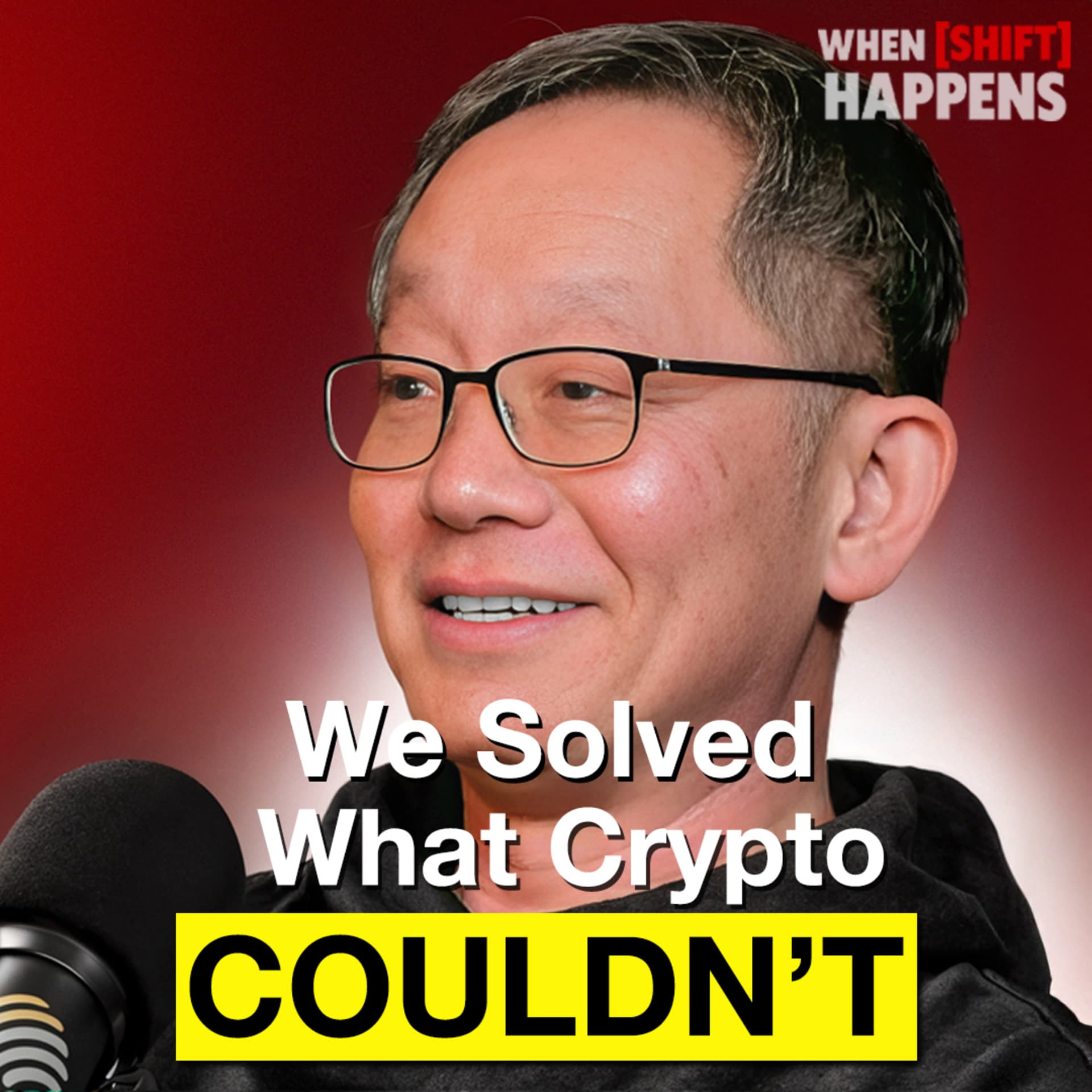
Evan left his position at Facebook at age 50 to solve what the entire crypto industry couldn't: building technology that actually works.
After leading Facebook's $3 billion Libra project that got shut down, Evan realized every crypto attempt has "completely, repeatedly failed" and fallen back to centralization. So he started Mysten Labs with 4 co-founders to build Sui - what crypto was always supposed to be.
__________________________________
PARTNERS
🚀 Jupiter is the most used Decentralized Exchange in Crypto and the largest DEX by volume on Solana: https://jup.ag/
💳 KAST is a global financial platform that enables users to manage and spend stablecoins and cryptocurrencies using a Visa Card or Apple Pay. Available in over 100 countries: https://kastfinance.app.link/SHIFT
🔓 Trezor is the safest cold storage wallets for crypto security and financial independence.
Buy your Trezor Wallet (use PROMO Code from the video for a 10% discount): https://trezor.io/?transaction_id=1026f18ed46409e495c6db4bff90ab&offer_id=133&affiliate_id=35356
🌱 Bitwise Asset Management is the crypto specialist asset manager with more than $10 billion client assets and more than 30 crypto solutions across ETFs, index funds, alpha strategies, staking, and more.
https://bitwiseinvestments.com/
💧Sui is a first-of-its-kind Layer 1 blockchain and smart contract platform designed to make digital asset ownership fast, private, secure, and accessible.
https://sui.io/
🔘 Mantle Network enhances dApp development with Ethereum's security, low fees, and quick transactions through innovative layer-2 technology. Users can stake ETH for mETH, contributing to a transparent, community-driven ecosystem governed by $MNT token holders, fostering innovation and collaboration.
https://www.mantle.xyz
★ Forza! is Coinsilium's Gibraltar-based Bitcoin treasury company. Coinsilium’s shares are traded on the Aquis Stock Exchange (AQUIS:COIN) and on the OTCQB in the US (OTCQB:CINGF).
Find out more at https://www.coinsilium.com/
__________________________________
FOLLOW EVAN CHENG
• Twitter: https://x.com/EvanWeb3
• Twitter: https://x.com/SuiNetwork
• LinkedIn: https://www.linkedin.com/in/chengevan/
• Website: https://t.co/S0laxwqTPP
FOLLOW KEVIN & WHEN SHIFT HAPPENS👇
Twitter (X): https://x.com/KevinWSHPod
Instagram: https://www.instagram.com/kevinwshpod/
TikTok: https://www.tiktok.com/@kevinfollonier_
Linkedin: https://www.linkedin.com/in/kevinfollonier/
Website: https://www.podpage.com/when-shift-happens/
__________________________________
DISCLAIMER
The info contained herein is for informational purposes only. Nothing herein shall be construed to be financial, legal, or tax advice. The content of this video is solely the opinions of the speakers who are not a licensed financial advisor or registered investment advisor. Trading cryptocurrencies poses considerable risk of loss. The speakers do not guarantee any particular outcome.
#Entrepreneurship #Crypto #news
__________________________________
0:00 Introduction
1:40 Please Subscribe
2:06 Partnerships
2:55 The Problem With Centralization
7:23 Why Ethereum Is Centralizing
12:35 Who is Evan Cheng?
13:15 Self Custody with Trezor
14:08 Timing a 20-Year Vision
15:11 Motivation From Being Ignored
19:31 Giving Everyone Real Agency
20:45 High Agency Person
22:47 Proving Skeptics Wrong
26:51 Nothing Has Truly Won
27:55 Cryptocurrencies Fascination
29:29 Lessons Learned From Novi
35:17 Starting a Company at 50
40:09 Why I Became the CEO
41:22 Challenges of a CEO
42:14 Not Destiny, Just Conviction
44:03 What is Mysten Labs?
45:51 Five Unmanageable Founders
48:11 How Five Co-Founders Work
54:02 What is SUI Network?
55:19 Is SUI the Next SOL?
56:50 Progress on Big Vision
59:55 Decentralized Business Potential
1:04:06 Proud, But Never Satisfied
1:06:34 What Truly Makes Me Happy
1:08:13 Non-Consensus Beliefs
1:09:17 Prediction for the Next 12 Months
1:13:10 Concluding Remarks


