Ask ChatGPT

 When Shift Happens Podcast
1 Oct 2026 · 1h 54m · 49 chapters
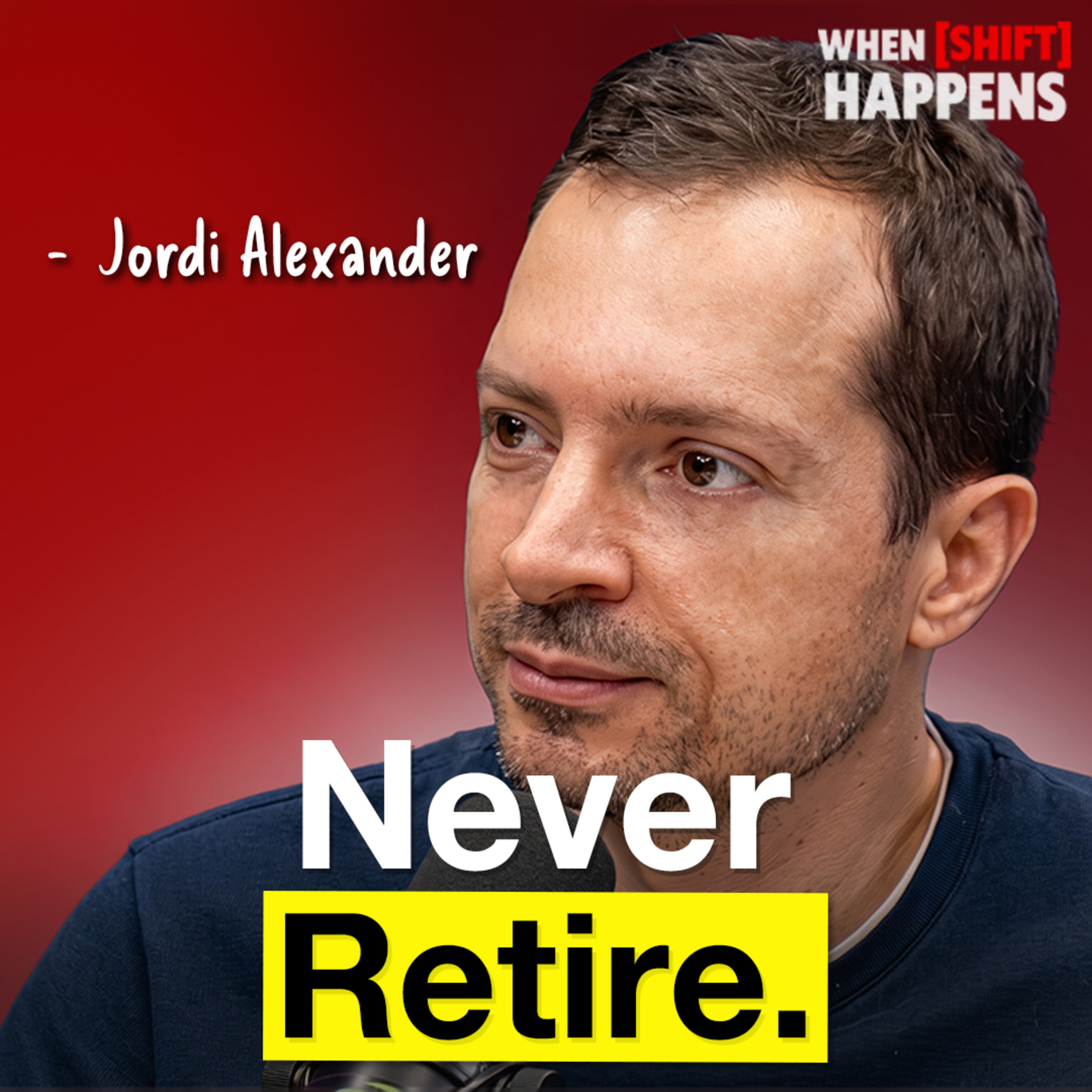
Jordi Alexander (Cellini Capital) argues there’s “no amount of crypto” (or money) that guarantees retirement. He frames wealth as something you must keep up with because the “puck is moving” (prices, opportunities, and required capital change). He also connects this to AI/AGI timelines, human “2.0,” and the need for “taste” (judgment) to filter AI “slop.” He discusses peak performance, recovery from chaos, and protecting peace of mind amid constant global change.
Jordi Alexander, founder of Cellini Capital, a digital asset investment firm using macro and game theory; known for challenging prevailing narratives. He describes big “check sizes” leading to access to high-profile figures (e.g., Sam Altman) and long discussions with top entrepreneurs/traders.
Written by AI. May contain mistakes.
Discussion on the notion that no amount of wealth is sufficient for retirement.
“And you're like, this person doesn't really have the aura.”
Jordi shares his journey of reaching influential social circles and what it means.
“One of our absolute favorite things at WhenShift happens is to look at our data to improve what we're doing for you every single week.”
Exploration of imposter syndrome and the journey to self-acceptance in success.
“You have to get there and then stay for three months.”
Insights on peak performance and strategies to build wealth effectively.
“And also you're, you know, you're, you're also evolving as well.”
The importance of courage in decision-making and achieving success.
“And then you're like, I don't know if this is fully congruent with my own 24-7 kind of feeling of myself.”
Discussion on the perceived versus actual traits of successful individuals.
“Part of it has to happen naturally where, you know, you do get invited to places.”
Exploration of what makes successful entrepreneurs stand out and their mental challenges.
“You know, that's, that's where I think the judgment of understanding, if you run a simulation of the world, you know, a thousand times, which one of these people is always going to end up in an amazing place?”
Discussion about the timeline of AI advancements and the concept of AGI.
“And you say pretty different things than most of the people out there regarding AI.”
Examination of how evolving technology affects human capabilities and societal divides.
“It is pretty cool to realize that, you know, the frontier of human knowledge when it comes to that, for example, like just like health, there is like an objective truth that people are congregating around.”
Examination of how evolving technology affects human capabilities and societal divides.
“Crypto, equities, commodities, FX, and even pre-IPO names in one single account with zero trading fees on every market at any size.”
Dialogue about financial stress, Bitcoin, and the need for nuanced understanding in a complex world.
“like I'll take the analogy of the financial world and inflation and money printing and Bitcoin.”
Explore how AI tools can simplify health and financial tracking.
“It makes it a lot more tangible, especially for, you know, lazy people like me to be able to keep on top on top of stuff.”
Learn about the importance of intuition and judgment in trading decisions.
“but you trust them a lot, became really good at that.”
Discuss which skills will be vital for young professionals in an AI-driven future.
“2.0 human 1.0, human 2.0 what's the skill that a 22 year old should spend the next decade mastering that AI will struggle to replace?”
Understand the need to balance logical reasoning with real-world evidence.
“So taste is like kind of narrowing in on through the slop.”
Examine how intelligence and traditional skills are becoming less valuable.
“What's the realization that made you believe that intelligence is becoming commoditized?”
Explore the diminishing value of quick mental math and the importance of varied thinking styles.
“I've realized, you know, there's, there's like super quick thinking, which is first few seconds.”
Learn about the balance between grinding and finding inspiration for peak performance.
“Why do you think so many ambitious people struggle to know when it's time to switch?”
Discuss alternative, more productive ways to spend leisure time compared to traditional entertainment.
“I could tell you like everything about the NBA and tennis between like, you know, 2005 and 2015.”
Understand how to cope with anxiety in a rapidly changing world and the importance of adaptation.
“Because people, I mean, happen in Dubai.”
Challenge the traditional notion of retirement and propose continuous engagement for mental health.
“So like there's a collective intelligence as humans, just like ants, you know, ants like have their colony, like they make individual decisions, but there's also decisions made on like their colony level.”
Examine how perceptions of wealth are shifting and the implications for future generations.
“So you have a bunch of rich dudes on the internet, on some podcasts who say last year, 10 million isn't enough or 20 million isn't enough.”
Examine how perceptions of wealth are shifting and the implications for future generations.
“And some, you know, there's, you see across the world, there's obviously geopolitically, you have the Middle East where they've done a pretty good job of investing in AI.”
Discuss the challenges faced by those in survival mode and the impact of AI on economic disparities.
“who don't have the luxury of oscillating between exploration and execution.”
Explore how AI affects the value of assets and the competition for status.
“Because they can barely save money, let alone invest.”
Discuss the modern parallels of societal distractions and political maneuvers.
“Ultimately, sexual selection is still alive and well.”
Learn about health optimization techniques and the discussion of shortcuts in fitness.
“Not everybody is really going to have input or a say on, you know, how things evolve.”
Discover the importance of risk-reward evaluations in health practices and supplements.
“You know, there's a lot of people even younger than me that are, like, you know, injecting testosterone.”
Examine how valuing one's time impacts decisions and productivity in daily life.
“Three years ago with our first podcast and you told me, I don't remember if it was on the podcast or afterwards, probably on because I think your sister made a meme about it.”
Gain insights into the future of Bitcoin and its potential as an investment.
“It's great to talk about peak performance and retirement or no retirement and health and all that stuff.”
Discussing the current state and future potential of Bitcoin investments.
“I think, uh, we've talked about this before, much better version of gold.”
Exploring strategies for asset allocation and managing capital effectively.
“I think now stocks have been kind of steady for some months now.”
Analyzing the increasing trend of financial gambling and its implications.
“It does have an impact for the world because ultimately, you know, how we waste resources or direct resources is one of the most important things for a civilization.”
Diving into the characteristics of trading assets like Zcash and their market behavior.
“Like there is like a certain element of like evolution and inevitability.”
Speculating on the potential future price movements of Zcash based on market trends.
“Are you aiming for like a 2X over three years?”
Discussing macro strategies for building a personal investment portfolio.
“Zcash can be in that like 5 to 10K range.”
Explore the behavior of various cryptocurrencies during market fluctuations.
Learn how AI developments impact asset evaluations and portfolio management.
“So it seems like there's a cohort of people that just like blindly will throw money at anything that has AI in the name and I don't think that necessarily is the answer either.”
Discuss the importance of spending and allocation of wealth for happiness.
“but staying rich is the hard thing keeping your money is hard right and the way you spend it is obviously a skill why do you think society teaches accumulation but almost never teaches allocation?”
Analyze how people convert wealth into unhappiness and common pitfalls.
“You wrote that some people commit money only to spend it in ways that actually reduce their utility.”
Understand the fine line between generosity and creating dependency in relationships.
“and I sometimes have to think about, you know, what does compensation look like?”
Discuss the emotional and financial implications of status-driven spending.
“and you said it's cool to, or it's nice to invest or to spend money on some other people when you can have a big impact for them.”
Reflect on the challenges successful individuals face in selecting partners.
“They have a girlfriend and like this, again, Mykonos, Saint Tropez, and then it's fucking Ibiza.”
Understanding the importance of using money wisely for meaningful experiences.
“So I'm pretty sure I'm not going to fall in that category because I'm not, you know, stingy at all with money.”
Discussing the emerging divide between healthy and unhealthy individuals in society.
“And I think even the ones that, on the surface kind of, you know, act normal, look okay.”
Examining how parenting shapes adult confidence and mental stability.
“I'm always, when I talk to friends, I'm always like, you need a freaking driving license to go and drive, but you don't need a parenting license to...”
Exploring the potential of psychedelics in treating mental health issues.
“I do think that, you know, some, some substances can, can help.”
Highlighting the importance of mindset in viewing life as an ongoing journey.
“or ketamine therapy to treat my depression.”
Discover why focusing on the journey rather than just goals brings lasting happiness.
“of not looking at trying to just hit a certain goal, certain target, you know, certain amount of money, and then I'll retire a certain body fat, and then I'll just chill.”

Get the gist, explore an idea or ask about something said.
 Claude
On When Shift Happens Podcast, what are the key points of this episode?
Searching your listeningAutomatic transcript. May contain errors.
0:00We have a bunch of rich dudes on the internet on some podcasts who say 10 million isn't enough or 20 million isn't enough. People should not be thinking about any kind of retirement. Like there is no amount. Don't think of retiring on like a beach. This is maybe like a 20th century dream. Jordi Alexander, the founder of Cellini Capital.
0:20Jordi Alexander: A digital asset investment firm applying macro and game theory to crypto markets. A distinctive market thinker. Known for challenging, prevailing narratives. I've reached most of my lifelong goals already. The main one, which I always had, was I would see all these famous people. They all seem to know each other in this cabal. And I always wanted to be in that cabal. I felt like there's 10 ,000 people that just all cross different fields, but they hang out and they all know each other. What does it look like? Our check sizes are big enough that we'll be invited to talk to Sam Altman. We got like 15 minutes.
0:49You sit down. It's like, okay, shoot. What do you want to know? Some people impress you a lot. Some people don't impress you. And you're like, this person doesn't really have the aura. What's the skill that a 22-year-old should spend the next decade mastering that AI will struggle to replace? So right now, I would say we're in this sweet spot where AI is accelerating the people that are doers, the builders. They're telling me that I'm spinning up 100 agents. Right now, doers are in their amazing golden era for a couple of years. As a young person, you probably don't necessarily want to just be a builder.
1:17You do want to start figuring out, some people like to call it taste. Taste is like kind of narrowing in on something through the slop. How the hell do I make money? A lot of money. In this day and age, one of your favorite frameworks is to look at where the puck is going. So enlighten us. Where is the puck going? In late 2026, 2027 and beyond. Yeah, I think, you know.
1:41Hey everyone. One of our absolute favorite things at WhenShift happens is to look at our data to improve what we're doing for you every single week. And one of the things that we notice every week when going through our data is how many of you regularly watch this podcast but still have not subscribed. And so if you want to help us get even better guests every week, take two seconds and click that subscribe button just below this video. Thank you for being with us today and for supporting us every week. And now let's get to today's show. You being on your laptop like just reminds me. Yeah. Reminds me these dinners we're doing like two, three years ago.
2:18Oh, yeah. when you were trading before we started or just after like oh guys like we're done with the mastermind but let's go to dinner yeah let me just 15 minutes going to the room in the hotel trading i was like guys this guy's built different that's true but that's what you need to do right yeah like if you if you do that over and over again it makes a massive difference it's a mindset obviously it's a mindset looking good you too brother looking good I was impressed when I saw it the guy taking care of himself nice I guess everyone tells you I mean it's like you know it's a gradual process so you don't hear it overnight but it's addictive once you get there it's addictive in the sense like it self-reinforces itself you look at yourself in the mirror and you're like oh, this guy looks good.
3:17And then you act well because you feel good and then you kind of reinforce yourself. How do you make sure you don't break this and go from like vicious... No, inevitably you'll have some chaos comes in and screws you up for a while. And then it's just like how well you recover. And I think most people struggle to get kind of consistent on recovering. And the skill is really like... you know, you can't stop the chaos from happening. You'll get these like negative surrounding events happening and you just have to get back on. I've tried to tell the people that, you know, have been taking my advice on the, you know, the fat loss and the health side that you should look at it as like a moving average rather than looking at it as a target and saying like, oh, I want to get to 15 % body fat and that's my target or I want to get to this weight, instead of looking at it as just hitting the target, you should look at it as what's been the average over three months.
4:25You have to get there and then stay for three months. If you just bounce off, it's useless. So once you start having the mindset that it's not a destination, it's like you have to create a stability there, then that's how you get consistency. It's a lifestyle change. It's not just like, it lets me go from there to there. And it's like, literally you're changing your life and that's why you have different results. Yeah. So yes, like it's a target initially, but once you start getting to the target, you have to switch your mindset around, like not just getting a result, but more creating a consistency.
5:02Yeah. It's like everything in life. I guess so. So I structured this podcast. It's going to be pretty long. I hope you're ready. I hope people are ready. It's going to be long, but hopefully good. First part is about AI, AGI, and impact on humans. Second part is peak performance to build wealth. Third part is about valuing yourself and your time to build wealth. Fourth part we have to talk about is about retirement numbers in this rapidly changing world because we talked about it last time and people went kind of crazy. Then obviously, if we talk about retirement, how to make money to reach these retirement goals.
5:41Then once you have the money, the art of spending money and not lose it all or spending on dumb shit. And then we'll finish with what wealth really brings, the life expectancy inequality gap. Let's start with the basics. Who are you? Oh, I mean, you know, this is our third time doing this type of format and it's nice to, you know, have these on the internet or you can kind of go back 2023, 24, 25, 26. And each year, it's interesting, like, you know, that saying that it's not the same man, it's not the same river. So I feel like I'm not the same man. And also you're, you know, you're, you're also evolving as well.
6:28So both of us sort of like the environment and as well as like my thinking evolves and I'm hopefully, you know, evolving in a, in a way that's keeping up with all the changes that are happening. So, um, yeah, every year you probably ask me this question and, um, I think right now I'm in a bit of a, um, a growth to like a new level of how I think about, you know, what is a good life and what is my goal in life? I think I've reached most of my lifelong goals already. Financial-wise? Financial-wise, a long time ago. But I would say the main one, which I always had, was I would see all these famous people, the ones that are the most successful or the most famous, whatever it is.
7:27And they all seem to know each other and they're in this cabal. And I always wanted to be in that sort of cabal. It felt like there's 10 ,000 people that just all across different fields, but they hang out and they all know each other. And now that I'm accepted to a certain extent within that circle, I can kind of bring my own and be a part of those circles. It's probably the most gratifying thing. I knew that it was something I always wanted. And now that I'm in there, it is indeed like how I expected where just being surrounded by like the most kind of talented and sometimes lucky and sometimes successful.
8:10You kind of see the mix, you know, like you have people that are just born in certain positions. Some people like got very lucky with how they were and some people are actually talented. And those are the ones that are obviously like the ones that you really want to learn from and just like be in their aura and just pick up these like small things about how they think and how they act and having the opportunity for me to interact with them and just have long discussions with these people. It just accelerates my own growth. So still growing. I'm almost 42 now, but I feel like a kid in many ways.
8:47What's a good life? I think growth should never stop. And we're in this age where the technological advances are helping you if you're open to it, to stay on that path for as long as you want. And hopefully a lot of the people listening will just want to stay on forever like I do. I just don't see that it needs to stop.
9:21When did you realize, hey, I kind of made it? I reached this circle. How did it happen? I would say it's been mainly the last few years. We talked in the past about imposter syndrome. I certainly had imposter syndrome like most self-aware people do. You're around yourself 24-7. Other people just see you in pieces. They see you at an event or they see you maybe at work, but you're with yourself 24 seven. You're in your own thoughts and you know, the mistakes you make, you know, sometimes that you've, you know, had bad judgment and, um, you've had weaknesses, you know, you've had impulse impulsiveness.
10:06You can kind of see it for yourself and it's good to be your own worst kind of judge in a way, cause that'll really give you the awareness to improve. But at the same time, it does create this imposter syndrome where the people that only see you in certain situations, you know, they're maybe impressed by you having high expectations. And then you're like, I don't know if this is fully congruent with my own 24-7 kind of feeling of myself. And the way that like you really kind of make it is in essence, you, you show yourself in those other times when no one's around, um, that you are like in essence, proud of yourself.
10:47Um, you are generous, kind without feeling like you're losing, uh, your sharpness, your ability to get outcomes. having a lot of reps put in and seeing successes through really hard times starts to overcome this imposter syndrome. And then now I'm on the other side of it where I have a lot of confidence with my decision-making. And I would say that that starts to unlock another level of performance where you can make bold decisions quickly and I see how like, you know, the best entrepreneurs in history have always just been able to make like snap decisions and just rely on, you know, the models they've built of the world.
11:36They have these like sort of shortcuts that they can use to evaluate someone they just meet or some situation. Like a great trader, like these like, you know, historic traders like Soros, you know, you hear about like, Druckenmiller will present him a trade and explain and then he'll just like instantly get it and be like, yeah, go all in. Like there's these models that are built through experience and through talent that you start to just be more courageous with. And I think for that next level of performance, for me, it's about courage now. How do you get into these circles? Do you achieve so much that people come and invite you?
12:18Yeah. Yeah. Or do you achieve so much, but still have to go and kind of advertise yourself out there? I think like, because it's always been a lifelong goal for me, I have been a little bit more strategic around it. Part of it has to happen naturally where, you know, you do get invited to places. And then there's, like I said, a lot of these people will just hang out together because they want to be around other successful, important people. And you, you meet them, you have conversations with them. Certainly like some you vibe with more than others, but as long as there's a good amount of them that you feel like are kind of your people, like your style, and you are able to show that, you know, you belong, like you're sort of making references to things that, it's a lot of signaling, I would say.
13:09Like you kind of show that you have certain knowledge about some idiosyncratic things that not everybody knows about. I was certainly like nervous the first time meeting, you know, a lot of these like people, I would say. Is it conferences? Is it mastermind? Is it, I don't know, hikes? Is it parties? Like, what does it look like? You know, initially it's a mix of like either, um, you know, our check sizes as an investment firm are big enough that we'll be like invited to talk to Sam Altman or these kind of people and you get one-on-ones with them you get to you know discuss whatever you want for 15 minutes that's all they'll give you you get like 15 minutes you sit down you got Sam there and it's like okay shoot what do you want to know and then you ask him stuff and you know it's not necessarily that you'll get the wisdom right away but it's more sort of noticing and understanding how people think how people are structured some people impress you a lot some people don't impress you and you're like okay like this person doesn't doesn't really have the aura that i expected i wanted to ask yeah because people normal people people who are not in this whatever 10 000 people circle will always like think that these people are so special and incredible i have a ton of these billionaires on this podcast yeah they seem pretty normal yeah some of them are what do you think?
14:43It's a mix. It's really a mix. You know, that's, that's where I think the judgment of understanding, if you run a simulation of the world, you know, a thousand times, which one of these people is always going to end up in an amazing place? Like, you know, obviously someone like Elon seems to just be adapted to so many different type of challenges. It's not luck at all. Have you met him before? No, I've not, I've not met him, but I've met a lot of people that have met him. And so I feel like I've heard a lot of the behind the scenes, uh, things already. Um, but I have met a lot of the other luminaries of our time.
15:25Some of them are truly exceptional. And, you know, one thing that is clear is that to really be a, like a very world-class As entrepreneur, you do have to multitask to an extent that is like almost inhuman, just being able to, you know, have this like ADD, but like the good kind of ADD, where you're just able to kind of have your mind juggle 10 things at the same time. And, you know, I will say that it's hard and it's taxing. And I saw this interview of Sam Altman recently where he was asked like, what is the one thing that people don't know or that we don't see? And he gives us like such a sincere answer.
16:14He just says, I'm tired. Like I'm so tired. And I understand what he means because I feel like I've similarly pushed myself for the last years. There was a period between like 23 and 25. I think I was, I felt it and I knew it at the time. I was like the hardest working person in the industry. Like I was sure about it, but it's not around like how many hours you put in. It's around how many things you have to mentally juggle at the same time and like not let any plate drop. And this is like what really makes you tired. It's like the number of tabs you have opened, the amount of like RAM your brain needs to keep your brain's Google Chrome running 200 tabs is just so tiring and taxing.
17:08I don't think it's sustainable. We were talking about that like two years ago. You're telling me I sleep four hours or six hours every two nights. And then one of the guys, one of the entrepreneurs that you invested in, he was like, I'm supposed to work harder than my fucking investors, but it's impossible to work harder than Jordi. Yeah. I think it's, it's okay to do that for a while. I remember that coffee we had and you were there like, but you were still functionable, like functioning, but you're just like, and I was like, fuck man, like this is. Yeah. I think, um, there was something I had to reconcile in my head between just being like locked in and the amount of like locked in that, um, you know, you just are on it.
17:55that you're not dropping anything. There were certainly times where I knew that if we were one hack from North Korea away from blowing up, let's say, if they just hack one thing and they get all your money there, you're gonna be in trouble. That kind of stuff certainly keeps you hyper tense and alert. I think it's not really the state that you wanna stay in. And ultimately I found that there is a mode where you do like let some things go. You're not going to like perform in every little, you know, opportunity that arises. You let a lot of opportunities go, but you don't miss the big picture. And I think, you know, in this age right now with the amount of change happening in the world, it is more important to catch the big trends that are happening and look at a much wider lens.
18:55Well, you mentioned Sam Altman, so we have to talk about one of these first big trends, AI.
19:03And you say pretty different things than most of the people out there regarding AI. You spent three years hearing from, you've been talking to all these people, right? and they're very smart. They tell you, they've been telling you since three years, we're 12 to 24 months away from AGI and you've been saying they're wrong. It's not because you've become less bullish on AI, it's because you were not bullish on their timeline. How do you distinguish between being early or simply being wrong? I think things just look different than people projected. You know, we had a certain intelligence artificial intelligence being created.
19:44And then people just thought, okay, at this rate of improvement, if I extrapolate two years, this is where we're going to be. And do you want to call it AGI? They want to call it whatever they want to call it. I think what we've seen is that in some of these categories, yes, it is just seeming to be, you can project the progress, but in some of them it's not, it really sort of stalls. And so you get what they've started calling like a spiky intelligence where, you know, you get these spikes of like really high performance and then other things are lower. So it's very uneven compared to ourselves because we're always just judging these things compared to what humans can do, which is maybe.
20:29Maybe a bit biased because we ourselves are very spiky, you know, like our own intelligence, if we compare it to other animals or, you know. other theoretical objective forms of intelligence, we're extremely good at some things. And like, you know, the amount of cognitive biases people have and the amount of like, you know, dark spots they have in their thinking for being able to have these heuristics is huge. Ultimately, you know, I don't think that if we call it AGI matters much, what really matters is like, are people being replaced as part of the productive economy? And it doesn't seem to me that or anywhere near that happening.
21:13I think in certain categories, yes, like certain skills, certain jobs are probably going to start going away and they already are. There's going to be like less people that are productive. And I think we do have to start thinking about human 2.0 as being a different race of humans than what we kind of started as at the beginning of the century. There is going to be, I would say, an evolution of people who are using the technology that is quickly becoming very powerful and the people that are just stuck in their ways or they don't have access, whatever it is, they're not. This is obviously part of the inequality picture as well.
22:07But it's less inequality around resources, which is historically what, if you look at French Revolution, the king has all the money, we don't have the money, we have to cut some heads. It's more around capabilities and really being replaceable or being productive. So we talked last time about NPCs. You don't want to be an NPC. I think it's becoming clear that the human 2.0 is sort of going to cause a rift of,
22:44you'll see it like in every category, everything from like life expectancy, which you'll see dramatic shifts of life expectancies between different groups of people, depending on not just like resources, but like how much education and awareness they have about things that they can do and things that, you know, are unhealthy. It is pretty cool to realize that, you know, the frontier of human knowledge when it comes to that, for example, like just like health, there is like an objective truth that people are congregating around. Like there's a lot of people that are ending up with the same conclusions around like what's good and what's not good.
23:35And the scary part is that 99 % of the things around us are not built in congruence with that. Like there's so many unhealthy foods and clothes and like, you know, air, like so many things around us that are pushing against that. I think if you manage to cut through the noise and break through, there's like another evolution of humanity on the other side. On most trading platforms, crypto lives in one app, stocks in another, and commodities such as gold and oil somewhere completely different. Variational puts perps on all of it. Crypto, equities, commodities, FX, and even pre-IPO names in one single account with zero trading fees on every market at any size.
24:24Visit variational.io to see why Variational has quickly become one of the largest on-chain trading platforms. Big thanks to my friends at Bitwise Asset Management for backing today's conversation. Bitwise is a global crypto asset manager with$11 billion in client assets and more than 70 crypto solutions. That includes ETFs, index funds, SMAs, custom option strategies, staking, vaults, and more. However you want to invest in crypto, the experts at Bitwise have you covered. How do you not become crazy if you think about all this stuff? like I'll take the analogy of the financial world and inflation and money printing and Bitcoin.
25:05And the people who understand Bitcoin, they stress out. I mean, not necessarily the message, I'm just going to buy Bitcoin, but they understand all this shit that most people don't understand. And they're like, fuck, fuck, fuck. This person, there's the meme, right? In the corner of the room at the party, right? They don't know, blah, blah, blah, right? They don't know their fiat currency is getting devalued 15 % a year, right? Yeah. So Bitcoin is the answer or one of the answers to like this kind of financial stress that most people feel but can't explain. Some people don't even care. I would say majority of the people.
25:42And then a bunch of people like us are stressed about it. At least for some time, they will work harder to make it, et cetera. The next step is all this, you said, clothes and food and all this stuff, right? Which is the next dimension. But if you don't find a Bitcoin of food or clothes, you'll go crazy because you're going to spend your entire life just not sleeping at night. Yeah, I mean, like you said, people like to simplify things because it just sort of makes it digestible for them. and most people don't like to have very complex models in their head of, you know, multi-factorial things with different vectors and different dimensions.
26:26Most people are not looking for that kind of complexity. Some are. Sometimes they go too complex. I will say, first of all, like Bitcoin, I don't think is like the one solution. Like, you know, put it all in Bitcoin and chill is a simplification that works in certain, you know, ways that the world goes and will not work in a lot of other ways. Obviously quantum is one and there's others as well. So even in that, it's not that simple and you do need to have a more complex nuanced view of the underlying, whether it's like, you know, economy or like, you know, the things that matter for like human health.
27:12That's the bad news. The good news is these like AI tools are making it a lot easier for anyone that wants to to be able to like organize and have a much better understanding of these systems. So historically, you know, the limiting factor all of us have is that every day all of us only have 24 hours. Within those 24 hours, we need to rest, we need to eat, we need to relax, we need to do other things. So let's say you can stretch your productive hours between 8 and 12, really. That's not a lot of time. And if you're having to organize complex systems by hand or just through your memory and not forget stuff, it's extremely taxing and very difficult to do.
28:01I would say that the tools now, even though LLMs are not really meant to be a journal or something, but they do actually like just help you keep track of, you know, all the things that you need to be doing for your health or like kind of, you know, a financial view of the world or what's happening. It makes it a lot more tangible, especially for, you know, lazy people like me to be able to keep on top on top of stuff. So I do think we have to level up, Like having a one dimensional view of like Bitcoin is the answer to this. And then, you know, eating, what would people say in the past? They would either say like, oh, I just eat vegan and that's it.
28:49You know, that, that fixes everything. Or they'll say like, I eat, I eat like keto and that fixes everything. I think the world is forcing us to get away from these like simplistic realities. and kind of have a better representation of what the underlying truth is. You talk a lot about your intuition and judgment, but you trust them a lot, became really good at that. What's a time when you trusted your intuition and it costs you? Well, I mean, every lesson is still valuable. you know I would say like usually the answer to that question is going to be misjudging a person you you meet someone whether it's professional or personal you make an estimate of who they are you just sort of get an intuition about them you go with your intuition and there's a new parameter that you haven't seen before and that changes like the game And that's obviously happened.
29:59It's happened even in trading. You know, I remember, for example, like back in the day, I was trading a lot of like government bonds, like US government debt. And I had a system in my head. I was like, okay, here's how it reacts to equities and to like the dollar. And here's like the pieces. And then one day oil just went up a lot, which is actually happening right now again. and yields just flew way past what my previous like intuition was saying. And it costs a lot. Like you're like offsides, you don't understand the impact that this new parameter has because it's very rare that oil will just like spike massively, you know, out of nowhere.
30:43And of course you start to put it back in your system. You're like, well, oil will, you know, increase inflation. That will like force the Fed to keep rates high. And that has all these like other effects. When it comes to people, it's very similar where you might see a model of someone's behavior and then they act very normal. Some external rare thing happens and it just brings out a completely different side of them that you've never seen. so I think the solution is just keep improving your your mental models and don't be like too sure always keep a little bit of uncertainty that you're missing something you said before there's this human 2.0 human 1.0, human 2.0 what's the skill that a 22 year old should spend the next decade mastering that AI will struggle to replace?
31:53If we look at the next 10 years, so right now I would say we're in this sweet spot where AI is accelerating both like the people that are doers, the builders, because those really proactive people, they're telling me that, oh, I'm spinning up a hundred agents and my agents are doing all this stuff every day and I have an army of them. And like, you know, they're burning a lot of tokens, but tokens are also getting cheaper. So it's fine. And they're just, you know, sending like armies out everywhere and they're able to just keep constructing. So it's, it's good for them. And it's also good for people like me that are, I would say, uh, I called myself lazy, which is true.
32:32You know, I'm more of a, of a thinker. Um, I like to like, just kind of use intuition go deeper. And AI is also accelerating people like me because it really, first of all, gives you like instant access to like a 90th percentile expert answer. The answer is that LLMs give are not going to be the best in the world, but they'll, you know, they'll be like, like instead of me calling the doctor or calling a lawyer, I can just get like a two second, pretty good doctor, pretty good lawyer answer. And that will just sometimes get me like where I need to be to kind of put something together. I do think that in the next 10 years, I've reflected upon it.
33:19And I think the doers will struggle more because if you look at what these labs are doing, they're starting to abstract everything under the hood. And they're telling you already that like in a few years, you won't even have to prompt stuff and spin up the agents and figure out how to divide them and whatever. It'll just happen all under the hood. So I think right now doers are in their amazing golden era for a couple of years. And then as a young person, you probably don't necessarily want to just be a builder. You do want to start figuring out this other thing. Now, some people like to call it taste.
34:09I've heard this word a lot. You've heard this word? No, but I would guess that's like having a conversation with an AI where you fine tune ideas and things. We had Sailor on this podcast and he basically said on this podcast how he built STRC with AI. And it was, I sit down and I start to talk to the AI and I generate ideas and then I go out there and I get some feedback from lawyers because you cannot like and then you just do this fine tuning and back and forth until you get to it's kind of like doing but it's like doing with your brain and thinking right and you're having this conversation that enables you to fine tune a product or an idea or a business idea or whatever you're trying or or food optimization whatever kind of thing you can bring things to life a lot better faster easier than you could, you know, a few years ago by like a factor of 10.
35:07And probably that's going to increase even more where you can just think about something and it'll just get created. It might even just get 3d printed in front of you. So in a world where that's what you mean by taste. Well, taste is not that taste is like having good taste, like having good taste in music, having good taste. So that, you know, this is a Silicon Valley word. I think it's related to judgment, which is the word that I've always used in some ways, because, you know, to have good taste, you need to have judgment, but they mean taste in the sense of like, really it's going to be able to, uh, have an LLM and AI just give you a lot of options really quickly.
35:45If you have taste, you get to choose, which is the one that is like a little bit, you know, more refined, better. and that's really like the human kind of improvement to the situation. Because you've heard about AI slop. There's a lot of slop. Absolutely. So taste is like kind of narrowing in on through the slop. Yeah, because a lot of people use AI to ask, what should I do? And then the AI will tell them what to do and like, this is, no, no, like you need to be on top and say, actually, it's interesting. This makes no sense. This I can go and test out there and bring the feedback in my conversation with you until you get to like the not perfect thing, but like something that's so much better than you could have thought originally.
36:26Right. So if you ever ask the AI about something that you know extremely like detailed knowledge about, you'll realize that it's, I mean, you might even ask it, you know, about like your friend or something. So like someone that you know really well and you ask the AI, it's not going to have that much information. And there's might be topics that you're just an expert in. Like if I ask it about, you know, evaluate these poker players? It's going to give me like a really bullshit answer because it just sees some public results and it tries to make some assumptions about them, whatever. While you know the reality of, you know, who's actually skilled, who's not skilled, you can evaluate, you know, different poker players better.
37:08That's true for every subject. You know, there's this like understanding that it's easy to write things that look expert level but if you actually find an expert, you think that it doesn't make any sense. Like there's a lot missing. And that's true for everything. So like I said, it gets you to the 90th percentile. You can call it taste, you can call it judgment. There's a certain like element of refinement that is always gonna matter because no matter how good things get, they won't be like refined for every local situation, every local topic. and I think when it comes to like how the technology progresses, there are unknowns.
37:55We don't know exactly what innovations will come. You know, I'm kind of open-minded that the probabilistic thinking might get better. You know, right now there's a weakness on that side. LMs don't really know how certain they are about things. They'll just give you an answer. but coming back to taste you've seen like this writing recently I think even Drunken Miller had a post talking about Besant and it was all AI generated we just recognize LLM output so quickly so easy and there's a value to someone like being able to do better than that in terms of just like the having the theory of mind of the people reading it and being able to present something to them.
38:44I was talking to Alex from Lansing and he was like, I went on this podcast and I could see that this guy wrote all his fucking questions with an AI. Yeah. Like literally. Yeah. And the sad part is as the AI gets better and better, it probably will be doing a better job at writing everything than almost everyone. I'm writing all these questions. Yeah. These topics, I go, I take your tweet where you do a brain dump on the thing. Then I'm giving a title to the tweet, to the brain dump. Then I say, give me, the AI knows when shift happens style and all that stuff. And then he said, here's the best when shift happen question.
39:23Here's the best Jordy slash trader slash probability question, et cetera. And then you go, you say, okay, not that good. Mix this, boom, boom. And then you just like do all this thing. It's the same process, right? And you're like, shit, like this thing, write much better question than me, but obviously on top, I'm going to give my taste. because I know what I want, right? And I know what I think is good, but it's really helpful. If you don't do that exercise of back and forth and taste, like then it looks like you're, I mean, people will probably take it personally. They're like, this guy thinks I'm retarded, like that I don't see what you're doing, right?
39:56Yeah. So. But you can understand that in the past, like taste has always mattered. If you look at Steve Jobs, you know, what he really brought was just like out of the box thinking of what design looks like, what aesthetics look like, what function looks like. And you ultimately like will value that more and more as it becomes easy to, you know, Apple still needs a factory to still need the economics to make sense when they create an item, whatever. But as that stuff becomes ubiquitous, what matters is really like having the creativity, the vision. And like, I would say even the underlying philosophy is important.
40:28So in my head, I'm trying to always balance two things. One is like first principles, because if you have a first principles answer, it's going to be, lossless. There's no loss. It's, it's a hundred percent accurate because it's literally just built from logic, from first principles. And then on the other hand, you have empirical evidence, like what the world is actually showing from, you know, you run an experiment, you try a hundred things, this is what seems to be happening. And that, that is like information that is also true because it's coming directly from, from like reality, from the environment.
41:05So balancing these two and getting like a marriage of first principles and like, you know, what evidence is showing, that's going to be the skill that really drives the human frontier in this age of AI. So you have to be good at both. You said book smarts are dead. Yeah. What's the realization that made you believe that intelligence is becoming commoditized? I mean, there's so many things becoming commoditized. If you really understand how easy it is, like I said, to just get on your fingertips quickly, that like encyclopedic guy, you know, there was always one guy in school who just like memorized encyclopedia and can just memorize facts.
41:55They can just blurt out what year this happened and all these things. that is probably the most useless like skill in this age um doing like math in your head like maybe that was impressive like 100 years ago you could you could really like get value out of it obviously that's that's really not the case anymore i remember my mom and my dad always testing me out on this stuff at home well it was useful for a long time actually to be able to like quick mental math i mean quick thinking is useful anyway, I would say. I've realized, you know, there's, there's like super quick thinking, which is first few seconds.
42:37There's like this 30 seconds to like five minutes thinking. And then there's like the, you know, deep thinking, you know, partly because of, you know, being in this kind of trading crypto finance industry, I can't really like be in the long-term optimizing. So I'm usually in the 30 seconds, a few minutes. In that level of thinking, you do need to be pretty quick and get answers.
43:06You like to talk also about peak performance. Describe performance as a dance between inspiration and execution. Problem is most people are stuck in one mode. They're either endlessly consuming or endlessly grinding. Why do you think so many ambitious people struggle to know when it's time to switch? I mean, it is an art figuring out when to stop kind of grinding on something and try to get bigger picture inspiration. I think I'm still learning myself. I am realizing that, you know, we need downtimes where we're relaxing our brain. I try to like choose activities that take more than one box. So, you know, if you're going to go for a walk, you should do it in a park with like some sunshine and you're just like hitting multiple positive things at the same time.
44:14You're kind of like taking a lot of boxes on like things that you need. In the past, you know, for years, the way I would relax was like, I might play like five minute, like bullet, Blitz chess or something. And just sort of, it's like shaking off my like brain cells with just giving them like a, a game to, to play and, and think about. And it was good for a while. I think a lot of like Elon and Demis and all these guys, they, they, they, they did that for years as well. Like they just. We already talked about, I think one of the Elon pod, with the Joe Rogan, the first thing they talk about is like, I'm gaming just, or you do either gaming because all your focus is on there, or you go and you do very extreme sports because you have to have your focus there.
45:01That's basically the way to meditate. You cannot think about anything else. Yeah, there is like a value to being so focused on something that it just like clears everything away. It shakes it all off. The more you can do it in things that are also, you know, I know this sounds like ridiculous and I'm going to get like flamed because there's so many people that just want to take it easy in life and just want to watch sports, stuff like this. I've tried to like make a post in the past about like, I don't really watch sports anymore. I like sports. I used to watch a lot of sports. I could tell you like everything about the NBA and tennis between like, you know, 2005 and 2015.
45:40But I just don't really watch sports a lot anymore, very rarely, unless it's like World Cup final, that type of thing. I think there are more productive ways for entertainment. And like people get very sensitive about this. For example, what's one more product? I mean, obviously it's not, I haven't watched sport in 10 years. I used to be also like big tennis fan and so forth. But give me an example of like, even if people get mad, that's what we want. Yeah. What's a more productive way of entertainment for people? I mean, look, I think there's so much knowledge being created that I am on YouTube a good amount of time.
46:23I will like watch, you know, discussions, podcasts, whatever it is. You do need to like find things that are not, because there's things that are like work. Like you have to focus and it's like, it feels like work. It's not relaxing because you're learning, but you're not really in this like playful mode. like when we do our Steady Lads episodes and occasionally like we do one it's meant to be like productive educational but also it's kind of you're hanging out it's more fun so insofar as like you can consume content or consume something and sometimes it's just like having a walk with a friend and having a conversation that is going to be a productive conversation but it's also like de-stressing and so I like to find those hacks, those ways to spend my time rather than, you know, yeah, watching sports or stuff like that.
47:22How do you protect your soul and your peace of mind in this world? Where do you move? Where do you live? What do you do? Because people, I mean, happen in Dubai. Yeah, exactly. Right? I mean, first COVID, right? Yeah. They're like, okay, COVID was like two years, bad luck for our generation. And you have a bunch of shit. I mean, like, shit, this is like, it's not the same, but it's similar. And you're in this constant state and this Dubai thing is not done. I was talking with the Bitcoin conference guys. They're like, hey, do you wanna come to Bitcoin Europe? I'm like, I'm gonna be there, but Bitcoin Mina can do.
47:56Probably not happening in December because of the war. And you're like, shit, like, okay. And then, so basically you're saying, we're gonna be in this kind of constant state of weird world. What do you do?
48:14Yeah, I mean, I've said that beneath the surface, all of us are feeling certain amount of like anxiety because we can sense that, you know, there's so much change happening. There's so many dangers that we don't even understand or predict. And it does create like this underlying anxiety for all of us. We do need to collectively get better at like centering, centering ourselves. And part of it is like accepting that we can't really change it. We're going to be in this state of high danger and high anxiety. We have to adapt to it. Humans are good at adapting. So like our baseline has to be that we accept.
48:59We have to just be alert, stay on it. I think I don't even want to discuss with you today about like retirement. people should not be thinking about any kind of retirement like there is no amount there is no like don't think of retiring on like a beach this is maybe like a 20th century dream and it's not even that nice like you talk to like retired people and like you know they start immediately decomposing once they stop being productive like our brain and ourselves know they get signal you You stay younger and sharper if you use your brain forever, for sure. So like there's a collective intelligence as humans, just like ants, you know, ants like have their colony, like they make individual decisions, but there's also decisions made on like their colony level.
49:57As humans, I think our DNA is wired or if it sees that you are like unproductive, you're not really doing anything, it'll just start to switch off and you'll die faster and that's it. And it's good for society because if old people lived for 300 years but they were retiring at 60 and there's just a bunch of young people having to sustain them, that's not going to be good for the society level. So it kind of makes sense that biologically we're designed this way. The solution, especially nowadays, is like, stop imagining the beach. Just accept that the ball is going to keep moving. Yes, if you need a holiday, take a fucking holiday.
50:45It's fine. You know, it doesn't mean like you work every day, but just don't imagine that there'll come a point in your life at which like, you're like, okay, I'm done. I'll just, you know, just chill now.
51:03How can normal people process this information? So you have a bunch of rich dudes on the internet, on some podcasts who say last year, 10 million isn't enough or 20 million isn't enough. Or we saw this year. We all saw this clip from, I think it was Ice Coffee Hour. The guy is like, ah, 30 mil, give me 30 mil. That's a 100K a month. What's this billionaire guy, right? And it's fine, right? Basically like less than 30 mil isn't enough. You're saying there is no retirement. I think these people are like semi like delusional talking about stuff like this. First of all, the math is always like, oh, you, you get 5 % on your, on your thing.
51:45You know, you put it in bonds, whatever you get 5 % and you know, you only need to spend, you know, 300 K and then the rest you save and whatever. They seem to be forgetting that the puck is moving. The amount of dollars that you needed to spend for the same lifestyle five years ago, 10 years ago is like infinitely more. Like now, like, you know, there's seed stage fundraisings happening in the billions. Before, like that was like your exit. Now it's like the seed round. Obviously, like, you know, these numbers are meaning completely different things. You can't project even five years in the future and say like, oh, this is what you're gonna need.
52:27This is enough and then you can just chill. You should be like thinking about it more optimistically, which is, I've said this before, the amount of wealth notionally or even in real terms that is gonna be created over the next five to 10 years is such a multiple over all of history's wealth that if you happen to have been born in a rich family, all these things are not going to matter in like five, 10 years. If they don't follow the puck, right? They won't. I mean, like the only way they'll follow is if they're like working, educating, becoming, you know. And some, you know, there's, you see across the world, there's obviously geopolitically, you have the Middle East where they've done a pretty good job of investing in AI.
53:16Like Tech Noon, all these guys, they've gotten big checks in all the labs really early. I would say that the Middle East has taken the oil money and managed to, at least for this stage of like 2020 to 2030, they have positioned themselves very well in terms of like their wealth and their investments. The oil has become like pretty good technological investments. Less good in Saudi. I think they have kind of like, you know, maybe being like way too optimistic in certain areas. But ultimately what's happening right now, like why there's like such a redistribution is that yes, natural resources matter.
53:52We know this. It's, you know, you can't print natural resources. But all these like family offices in Malaysia and Indonesia, all these like billionaire natural resource families are sort of being forced to, you know, invest at Anthropic at 2 trillion. And like, they kind of have to, because that's where like the, you know, the productivity is being created. That is to say that like, first of all, as an optimistic mindset, even if you're behind, it's going to be so much easier to catch up over the next like five, 10 years because that's really where the game is happening. Obviously you want to have as much, you know, information and access and like initial capital as possible.
54:38And these things do matter, but you can really catch up quickly as long as you make good decisions. And really making good decisions is what it really is going to come down to. Quick shout outs to our legendary long-term Windshift Appents partners, without whom none of this would be possible. Thank you to Cast, my go-to global money app to store, earn, move, and spend stable coins across 170 plus countries directly with Apple Pay or a physical card. On top of that, I can also get paid in USD and Euro with my Cast virtual account. Use my promo code SHIFT, S-H-I-F-T, and my link below to get 10 % off your membership, earn up to 3 % instant USD cashback on every card spend, and get up to$250 in cash for referring your friends.
55:29No banks, no borders, just money that moves with you with stable cash rewards. I still want to think about most of these people who don't have the luxury of oscillating between exploration and execution. They're just underwater. We talked about that last time. You said you are in survival mode, right? Most people are in survival mode. So it's probably very discouraging when they hear people, like you say, there's no retirement, 10 million, 20, there's no number, forget it. Because they can barely save money, let alone invest. Then I have another Jordi on my podcast called Jordi Visser. He says AI is abundant.
56:09Yeah. Which logically would mean that most things become not free, but very cheap. Is this not good for most people? And therefore this thing about like, just take a holiday, but you can never stop. Doesn't apply to... do we have just two different categories of people and just follow a different thing, but they're both going to do well because AI is going to make normal things cheaper. And then you have the ones who are basically competing for status, which goes through accumulation of assets and capital and all that stuff. And everyone is fine. Or you think, no, no. I think you're inflating two separate things.
56:51Like fighting for status, you know, Naval calls it like the, you know, the status games and the money games. and they're like sort of separate ladders. Obviously, like the status games are alive and well. I mean, when you look at this trend of like looks maxing, it's sort of like people realizing, okay, we're not really gonna become, you know, billionaires. So let's just compete on the things that we can control, which is, you know, our looks and like these maybe like social media. Performative luxury. Performative luxury. Yeah, you go to Saint-Tropez, you show that you are at this event and to add this thing.
57:28You were in Central Bay a couple of weeks ago. I was like, oh man. I didn't post about it. No, you didn't. But you told me, I was like. I told you. I'm not playing these games. I think it's pretty NGMI to play these. I understand why people do it. Ultimately,
57:49sexual selection is still alive and well. We're not mating through robots yet. and we're still trying to status seek towards like the opposite sex. And, you know, girls like to do it between themselves as well. You know, there's a lot of status games. They try to show where they're at and what bag I have and, you know, things that like guys are not even looking at, which is interesting. I think ultimately like, you know, I'm very much reminded these days of the, the old Roman empire, you know, bread and circus, where you have, you know, the emperor and they're really trying to play these empire level games of, you know, acquiring countries and playing like, you know, who's taxing who and all this stuff.
58:39And then you have the people that are complaining and you just throw like entertainment and like bread. And, you know, this is like a wisdom that got really kind of realized thousands of years ago. And we're kind of like, it's not never fully gone away, but now we're coming really hard full circle in this where, you know, you have like the politicians and the technologists that are playing these games, these like big empire level games. And then for most people, they're just like throwing them stuff to be entertained with and just occupy themselves. And to a certain level, like that's inevitable.
59:19Not everybody is really going to have input or a say on, you know, how things evolve. And I think some people are not capable of it. I don't really believe what Naval says, that like every single person is like, you know, has like their talent that's so big that, you know, they can contribute. I would say like maybe realistically it's like 10, 15 % of the population max that really like if they push themselves can sort of still, you know, have like an impact and be useful, be important. I think a lot of people listening to this podcast are in that 10-15 % because they're the ones seeking out knowledge, information and are able to filter through the noise enough to get to this conversation but realistically speaking I've gone away from your question so status games
1:00:24you know insofar as like there's games that people feel are achievable, which is having a certain look, whether you artificially create it or not. I'm not a huge fan of like artificially creating looks. I think if you do it by health maxing and then you end up looking better, you know, you're fitter, you're everything looks better. That's great. But if you're like breaking your bones to like be taller or like whatever crazy shit people are doing these days um if it's like purely performative but it doesn't actually make you any healthier i would say like that's probably going to be looked at in the future as like a very beta behavior so any sort of shortcuts we always say any sort of shortcuts probably not good for longevity I think shortcuts, look, it's not about shortcuts or not.
1:01:25It's just, are you doing something purely for looks or are you doing it because it actually is going to improve, you know, your machine, like your body? There's shortcuts for sure to improve that. It's not a problem. And I think, you know, some peptides might be shortcuts for certain things. Nothing about that. Yeah, and that's totally fine. Like there's nothing wrong with shortcuts. A short term. All these gym guys who take these tears of hepatitis. I mean, actually, there's a bunch of crypto guys who are very big who are on this. Actually, I don't know. We probably cannot talk about it, but some people we talked about on this podcast, they're taking that forever because they've never really been into sport and they're like, this is the best drug in the world.
1:02:11I can stay fit, right? Yeah, I don't have anything against people doing these things. They do sometimes have bad side effects and there is a compromise you're making, if you're too, like, unable to get the motivation to do things a different way, it's still better to burn off the visceral fat and maybe, you know, you have some side effects in the future, whatever it is. The net effect might still be okay. You know, there's a lot of people even younger than me that are, like, you know, injecting testosterone. Obviously, that has some side effects in like, you know, specific ways. I don't have anything to say against those people doing it.
1:02:55Like it can make sense for your circumstances. And I think, you know, in my fifties, I'll probably do the same at some point. Like you want to be able to optimize your hormones.
1:03:06So I look at these like health optimizations from a risk reward standpoint. If the reward is like just purely you look better, but like there's risks to that unless it's like really affecting your self-confidence to the point where like you're depressed about it then sure do something but if it's just like a vanity thing or a status thing or like some kind of like you know addiction to playing this like clavicular type of game that doesn't seem to be like a good risk reward if you're doing something that is potentially going to have side effects but really is addressing something like you know I've taken a few things that are I've talked about that are like a little bit more unstudied.
1:03:50For example? Like there's a peptide, like the SLU peptide, which I take small amounts of orally only. So I'm like still minimizing like the risk of it. It's something that like really can potentially like waken up your metabolism, just like your mitochondria get activated. So I take quite a few things to try to activate my mitochondria. For what purpose? So if your body's producing energy better, first it burns fat better, of course, everything like that. What I've noticed is once you reduce inflammation, so many of the things that are like wrong with you go away by themselves. So just like having better functioning mitochondria and lower inflammation will fix like, you know, like I can list like 10 things that I used to think were things I need to deal with forever.
1:04:42and like they've just completely gone away. For example, two, three things? Like life-changing things? I mean like, you know, I feel like I would get like eye infections, I would have like stomach pains, I would have like, you know, all kinds of things in my body. I'm just like realizing everything's cleared. Everything's fine. And it's just like, everything's just like working better. It's sort of like when you're young, your body's more forgiving to like, you know, pulling all-nighters or, you know, like taking a bunch of alcohol, like stuff like this, which it stops being later. I think doing a bit of a metabolic reset is important.
1:05:26And I am a bit of like a nerd on this stuff where, you know, I'll go down like the research rabbit holes on a lot of things. I'll really try to like aggregate knowledge and information. I'm happy to share this with people. You know, I often get people asking a lot of like tips on health in general. And I think ultimately the thing that makes me useful because I'm not a doctor is that I am a world-class risk reward evaluator. And I can look at a bunch of information and aggregate it and tell you, okay, this is worth doing or not worth doing. Well, I'll be your first online review. I had all this stomach problem all my life and you told me take this it's not only BPC it's BPC, KPV GHKU and another thing yeah you're flying gone and I look at this other peptide and I'm like anything I need to inject I'm like this just feels so wrong so I don't do it I think you have the same kind of idea and I don't even take two dose a day only one before I sleep fucking gone Yeah.
1:06:38Like amazing. Yeah. So. There's nothing wrong. There's nothing wrong with shortcuts. Like I said, like some shortcuts work. Gone.
1:06:51Three years ago with our first podcast and you told me, I don't remember if it was on the podcast or afterwards, probably on because I think your sister made a meme about it. You said each of my hours are worth 25K. I think it was 50K for a coffee. It was 50K for two hours of podcast. whatever. And then she said 50k for coffee, right? Has this number changed? Well, inflation is high. You know, I still have this mindset. I really, it pains me sometimes to do like operational things that, you know, I'm sort of just like scraping a bunch of my wallets on chain and like, oh, there's a thousand dollars I don't want to leave it to here.
1:07:38But like, it just takes so much time to try to pull everything together. It is weird when you start to value your time very high, your behavior starts to being non-typical and other people are kind of sometimes perplexed by your behavior or like standard things where like, you know, I have health insurance and I don't even like claim anything because the amount of time that it would take me to fill out a form is not worth the thousand dollars I'm getting back. I was about to say that. I still need to get 3.5k from an insurance but for that I need to go open a new bank account and I can't fucking be bothered.
1:08:16It's retard. I mean the insurance thing is just Yeah. I think ultimately like there will be I mean this is this is going to be a business for somebody all these things is like picking up all these like in the US I remember I would get these letters in the mail saying like, you know, you're owed$800 by Verizon because they never paid you your deposit back. Just sign here and we'll get it for you and keep 30%. So like they take away like the work of it and just try to like, you know, get like a slice. That's probably going to happen in like a bunch of other domains. Time is valuable. Time is short.
1:08:58Time is limited. I realized that my productivity is kind of being squeezed to less and less hours of the day because I'm trying to give myself more time every day to like, you know, go to the gym, do some like red light, go for a walk, talk to friends, have like a more balanced life. And so like, I really need to be, like when I'm going to be on, I really have to be on. And yeah, so to answer your question, probably now it's like at least, at least double, at least a hundred K. That's a hundred K podcast session. At least. It's great to talk about peak performance and retirement or no retirement and health and all that stuff.
1:09:46But people want to know how the hell do I make money? A lot of money in this day and age. one of your favorite frameworks is to look at where the puck is going so enlighten us where is the puck going in late 2026 2027 and beyond
1:10:07last year you said ah for the next five years probably if you buy some bitcoin you're good this year you're saying well this is only in one of the scenarios yeah i think you know certainly like the technological risk of quantum and like, um, the fact that Bitcoin really doesn't have a dedicated team that's coordinating things creates a bit of a tail risk. I'm still in Bitcoin. I think it's very undervalued. I think, uh, we've talked about this before, much better version of gold. Um, and it will go through a period now where it's outperforming. I I have very high expectations for the next 12 months.
1:10:51Mainly because when stocks were doing really well, it was hard for anything else to be justified for anyone to allocate to. I think now stocks have been kind of steady for some months now. Like NASDAQ hasn't really moved much. And now they're talking a lot more in the mainstream press around you know, bond intervention and dollar devaluation. And as soon as like dollar devaluation starts being like a broad theme, obviously gold and Bitcoin are immediately like, you know, what people go to. I have started to like, you know, look at things in a broader lens though, when it comes to like asset allocation and the intelligence of allocating capital and managing capital is something that I'm quite passionate about.
1:11:45I feel like this is probably where I want to be spending a lot of my focus on for like these next years. It does have an impact for the world because ultimately, you know, how we waste resources or direct resources is one of the most important things for a civilization. so on an individual level it's pretty clear that things are changing you can't just do one simple thing historically of course it has worked quite well to just have stock indices S &P, NASDAQ whatever these things have just sort of performed quite well for the last call it like you know since 2008 I think there's an element of inevitability in that because the government sort of is very incentivized to get votes and keep those like mostly like distributed assets going.
1:12:49You know, unfortunately, like people, like you said, have been asking this question, like, how do I, how do I get rich quick? I need to make it now. There's a lot of hyper gambling going on. It's become so mainstream. I almost feel like disgusted, like, you know, seeing like the Kendall Jenner or whatever advertising sports betting, this kind of level. You call that financial death wish, right? Yeah. People think they can make it or, I mean, now we have the same in crypto again. We have another wave, but supposedly now it's transparent. Everyone is becoming a trader. Yeah. It's the same, but repackaged.
1:13:31I'm always split between like one, like the inevitability of going through this, you know, increasing hyper financialization of everything. Meaning you're an investor in this? I don't think it's like, you know, I've always said this, like I will not like stay away from this kind of chaos. Like I'll get in. Like ultimately, um, I don't think it's beneath me to get involved insofar as, you know, people are gambling. Uh, um, I'm an ex poker player. I used to bet sports professionally. I've, I've gone in the trenches and I, uh, I do believe to a certain extent this saying that it's immoral to let a sucker keep his money.
1:14:19Like there is like a certain element of like evolution and inevitability. And like, I believe in evolution. I believe in selection and natural selection. So I'm not saying like, oh, there's all these dumb people and like, I don't want to trade against them. I don't want to be a part of it. No, like we'll be a part of it. Um, I think on an individual level, there is like a sadness I have knowing that, you know, like we've seen the stats in every category, whether it's like poker, hyper liquid, FOMO, whatever it is, most people are losing. And that's like inevitable mathematically. And that has like a real consequence for like, you know, actual, actual humans.
1:15:03Sports betting is another one where, you know, it has like a hook where one, people think that there's like a skill where they can beat the market by looking at the game and like, oh, this guy's better than other people think he is. So I'm going to bet on them. And like, you know, it gives you this illusion of control or like being able to like be right and profit on it. But these like systems, once you really understand how like the probabilities and the numbers work and like really like how everything comes together. Very few people are sharp enough to have like alpha.
1:15:51So do like on a societal level, do I wish that people will gamble less? Yes, I do. I don't think it's good. It's not going to be the solution for people trying to make it. But given that it's happening,
1:16:05you know, do you stay out of it? No. I mean, you participate, I think. So basically in the crypto does well in the next 12 months, maybe the next couple of years, stock indices keep doing well because of government incentives, et cetera. Gambling, most people will lose everything, but if you're smarter, or if you're an investor in the platform or in the infrastructure, you will probably do well. Depending on, yeah, when you get in,
1:16:40and choosing the right platform. What are some platforms that you think are, I mean, you mentioned a couple of names before, said FOMO, said Hyperliquid. I mean, FOMO is very new, so it's kind of hard to say. Yeah, it's hard to say. Hyperliquid, obviously, Jeff is an amazing builder. I think it's done tremendously well. I'm not convinced that at the current prices where we're, you know, you know, like 80, 90 billion FDV that there's too much value at this, at this point, like the revenue is, you know, not even 1 billion. So trading at like these kinds of multiples, it's not clear to me exactly what you're aiming for by investing at 90 billion.
1:17:33Are you aiming for like a 2X over three years? I mean, is that, Is that the goal? I don't know. Not too exciting at this price level. I do still think that as a builder and as a product, he's obviously surpassed everybody else over the last years.
1:17:58I start to have a clearer view on these assets. I've been reflecting for years on what is a Layer 1 token? And what is like Ethereum? Is this money? Is it not money? What are these things? I think things are becoming clearer. Like we're starting to have enough. We're in the longterm now. These things have been around a long time. There's less things that are surprising and everything is sort of falling into buckets. So yeah, I know you want to talk about some of the specific assets. I think, you know, you have at this point, Bitcoin has always been like the prime monetary asset. You have other attempts like Zcash, which has done tremendously well over the last months.
1:18:44And that's a very tricky one. It's a very complicated asset, probably the most complicated of all the assets in crypto in terms of like really having an evaluation of it. The nearest I would say is like, I think of it as like a Bitcoin in 2016 in many ways, or in 2015, where you don't really know if this is going to make it long-term, but it's going to have waves of speculation and it's going to out extend itself both up and down. Like it's going to be very volatile. And that gives it a lot of utility as a trading asset. Some people like love trading. They want volatile things to trade. and probably Zcash being like, it doesn't have cashflow.
1:19:33It's trying to be a monetary asset. It has like the perfect trading characteristics. And so insofar as it has a high trading volume and has good volatility, it has value just for that sense. It's not clear to me whether it will ever have monetary sense because it's sort of insurance for Bitcoin. And if Bitcoin works and Zcash means it's not needed. So it's an exciting trading asset that is like insurance for Bitcoin having a quantum issue or some other issue. So it's interesting. What do you think when Kiao Wong, who is one of your favorite podcast guests on SteadyLads, and definitely a very high signal to noise ratio person in crypto and in investing in general, when he says Zcash is the best or most interesting venture bet since ETH in 2014, do you think he's just like pool posting his bags?
1:20:41Or do you think he really means it? I mean, we don't have too many venture bets in crypto right now that are potentially, you know, able to have a lot of upside. So it is interesting from a venture standpoint. Like I said, it's insurance. And sometimes insurance pays off and it pays off big. Now, in many states of the world, it doesn't really do anything. You know, Bitcoin becomes quantum resistant. It works well. Zcash just sort of becomes this like sort of Litecoin alternative thing that some people really like. I think the thing that has made Zcash do really well, which is why I bought a bunch around like the 300, 400 level.
1:21:25I remember you were saying that on some, if people paid attention, you were saying that on some podcasts, you're saying, oh, we're buying in the 400s here. Yeah, I publicly made the bold bet. I was lucky enough to talk to Naval about it, and I got invited to some event where he was, and he's kind of shilling. And, you know, one thing that you want with these assets is that the big holders, and in this case, let's say it's like this Cabal, the Naval Balaji kind of cabal, they're not necessarily like looking for 3X and dump on you. Like they're not maybe even like looking at their portfolio more than once every like, you know, six months or something.
1:22:07So it's less predatory of an asset. Like the holders are sort of in it for some philosophical expansion. That really gives an asset room to breathe. So it can go up without instant profit capturing. And then, you know, given that there's more of a tech focus on it than Bitcoin, of course, it makes it less, you know, Lindy, but it also makes it more able to adapt to like the recent threats. Obviously, they had their own hack or, you know, security concern that AI found. That was a bit of a shakeout. I think probably now we've run enough where there's going to be some resistance by people trying to take profit ultimately these assets don't really have any you know PE ratio there's no price to earnings or anything so you're sort of trading it based on like liquidity and flows and mindshare and these things last Zcash question you said you can think about it like Bitcoin in 2016, you've been in crypto for a long time, you've seen pretty much it all.
1:23:29You understand these things. What's a price that you would not be surprised to see for Zcash in the next one or two years? If Bitcoin really does that well, as you're saying, right? That you think it will, which means probably the market in general of crypto will go up. I mean, if Bitcoin goes to like 200K, which I think is definitely possible, Zcash can be in that like 5 to 10K range. If Bitcoin breaks, then maybe Zcash does even better because it sort of becomes the only thing working. and then in the scenario where like
1:24:16you know Zcash seems to act like it has a ceiling and people get tired of holding it because it doesn't move which we've seen a lot of assets do and then people just sort of capitulate down and then everyone's just like slowly capitulating like this has happened even across like things like Solana you know it hit its peak went back to all time high and then it just sort of like helps out and then everyone just starts capitulating out because they don't see it progressing so they don't want to stay in so that can happen to these assets as well it's entirely possible
1:24:50what else are you looking at in terms of kind of more macro way of building your personal portfolio I mean certainly like if you're not looking at what innovations can happen with AI and how that can affect assets and you're not doing your job. So it seems like there's a cohort of people that just like blindly will throw money at anything that has AI in the name and I don't think that necessarily is the answer either.
1:25:23I would say like every week or at least every month, I'm evaluating which assets are being influenced by the new technology that just happened. There's a new model out, agents are doing this, which assets might be benefited from agents now being able to do this. So that kind of thinking, I think, is really where the puck is going.
1:25:50Once you start to make money, what matters is how you spend it. and actually I mean crypto we say that a lot it's obviously the case for wealth building in general but in crypto it happens very quick right getting rich is actually not that hard but staying rich is the hard thing keeping your money is hard right and the way you spend it is obviously a skill why do you think society teaches accumulation but almost never teaches allocation? So there's two separate things. One is allocation and one is spending. I think both are important. One is important for your portfolio. One is important for your own personal, you know, happiness, life, utility.
1:26:41So both of those are good to dial in on. Allocation is more like, you know, a million dollars 20 years ago is not what a million dollars is today. If you just sat on it, you'd be screwed. if you had put it into, you know, like Google or something, you'd be in a good spot, right? So allocation is really like, are you sort of staying in assets that you're sort of like trading from one to another where you're keeping productivity gains in your portfolio? That's very different from spending well. Spending well is like, you know, Some people just buy super expensive watches or cars or whatever, and maybe there's a certain level of that that brings them happiness and is worth it, and that's fine.
1:27:34I'm not saying don't spend. I think if anything, I try to tell my successful friends to spend more because, you know, first of all, everything's going to, like I said, everything's getting devalued anyway. So not spending it is not some wise thing. You should spend at least 10 % of your income, I think, in any circumstance.
1:28:09Having people that you can learn from is very valuable. So I like to see if there's some world expert at something that you can hire for some hours and learn from them, that's extremely valuable. I would say having really nice quality experiences with your family or people close to you is one of those things it's hard to put a number on, but really worth spending on.
1:28:46Obviously, anything health-related is probably number one. Like that's going to just multiply everything so much. So there's an art of spending that people focus much more on. Like how do you make money? And not so much on like converting it into like a personal utility. Quick shout out to the legendary team at Jupyter, the DeFi super app. Anything you want to do on chain from trading to earning yield, you can just use Jupyter. Personally, I'd recommend getting the Jupyter wallet on either your phone or your laptop. 10 times faster and 10 times cheaper than the competition. You're gonna love it.
1:29:27Thank you to the awesome team at Athena for backing today's conversation. Athena is one of the fastest growing projects in DeFi with over$7 billion in stablecoin supply and an average 11 % APY on SUSDE. And importantly, zero DPEGs since launch, which is exactly what you want from a stablecoin. Go check them out by following the link in the description down below. You wrote that some people commit money only to spend it in ways that actually reduce their utility. What are the most common ways people accidentally convert wealth into unhappiness? I mean, look at these like athletes, for example. You know, they're really not educated in like good ways of spending.
1:30:11Most of them, I mean, there's exceptions. You know, you see like Kevin Durant invested in Hugging Face or something. I don't know. Like you see some exceptions sometimes. But, you know, mostly it's like, oh, they'll just end up with a big entourage that are all trying to, you know, get something around them. And I think all these people have realized that if you give money to people around you sort of blindly, one, they get very used to it. Like people are really getting like adapted very quickly and their expectations change. And like, they're not even like, I would say appreciative after a while.
1:30:51So like, that's a direction in which you end up with negative utility very quickly. Do you have some experiences that you can share about that? And not specific one, but maybe say like, this is, I think Kevin O 'Leary was talking about that once. And he was saying, I never give money to people. I just give one off. I say how much you need. Yeah. but you never fucking asked me for money ever in your life ever again. Yeah. And he says like, yeah, there's this whatever, like a family member who was like, I need 200K. And then he says, okay, here's 200K, but you never asked me for money ever again.
1:31:24And the family member, I think is like a nephew. He's like, oh shit, had I known, I would have asked for 250. Yeah, I mean like, yeah, that sounds more like a way for him to deal with his own, you know, family situations or requests that he's getting rather than like the wisdom of like how to actually, you know, think about these things. But, um, you know, fair enough. Everyone has to deal with different things. Um,
1:31:57yeah, obviously like if you're in a position where you can be generous, I think I always lean on the being generous side. Um, you can have much more impact for somebody else and you can have for yourself in many ways. And insofar as you care about those people, you should do it. But then what I'm also seeing is that there's a line between that and there's a line between sort of, you know,
1:32:24creating some expectation. Or dependency. Dependency where it just sort of becomes unappreciated, becomes the new normal, and then like unhappiness gets created if it's not there. that's not good for anyone. So that just like destroys dynamic from both sides. And, you know, even as a, you know, I have a hundred employees and I sometimes have to think about, you know, what does compensation look like? In general, you see some firms like Citadel and these guys have kind of settled on a situation where you never get paid less than the previous year. Either like you're fired or you're paid more. There is no like in between.
1:33:06and that's a way for them to deal with the fact that, you know, as wrong as it is, it is wrong. So you don't do that? No, no. I'm saying like, I understand. Well, I understand why they do it because if someone gets like a pay cut, even if, you know, market was worse and it makes sense, like for the business, it makes sense. Like now we had a good year, we had a bad year. When we had a good year, we paid you more. Now we have a bad year, we paid you less. Like you kind of want people to have this like beta to things. But actually like there's a psychological effect that 95 % of people who are not entrepreneurially minded, they'll just get very stuck on looking at it as like, you know, this is my baseline.
1:33:51I got created and anything lower than that, it feels like it's a loss for me. It feels like a loss. And psychologically losses feel much, much bigger than gains. You know, you learn that gambling as well. Like any loss feels like magnified compared to like a game. And so Citadel has just realized like, yeah, we don't want to deal with like all this stuff. So we'll just, you know, try to keep people on something going up. Otherwise they have to get fired. What do you do? So I've like, I've realized that it is very personality dependent. There are some people that are completely like mentally okay with the fluctuation and they do want the upside.
1:34:29So I have some people that are, you know, more sort of portfolio manager style. And then, say more conservative personalities, it is better to just sort of hand walk them through like a yearly increase that kind of feels like safe and steady. And you do have to adapt to different personalities. So there's no single solution. I have like a matrix kind of approach. You said before there is no retirement and you said it's cool to, or it's nice to invest or to spend money on some other people when you can have a big impact for them. At what net worth does making more money stop having a meaningful impact on your quality of life?
1:35:19Or on someone's normal's quality of life, right? Because there's probably an amount where everyone is like, oh man. I don't think buying a lot of... property, stuff like that, I would put that in the investment category. Like, are you making good investments? You're not really spending the money if it's meant to have some return. So it's like, how much are you spending that you're not going to see again?
1:35:47So that's how much you need to really spend to max out the experience, I would say, is like in that like range. How much do you need to make to feel comfortable spending that? you know that's a different question you wrote you wrote a thread on all this art of spending right the world is full of people spending millions to impress people they don't even like why do you think status is such a portrayed financially and emotionally and can you balance that with what you said before which is We all know it's fucking stupid. But if you think about men and women and the game, there is still a status game to get the girls, right?
1:36:37So even if you know all this shit is completely stupid, if you're living on an island on your own and no one fucking knows about you, well, you're not going to get the woman or the woman that you want. How do you balance that? So what are you saying? Balance which two things? What are you saying? Which two things? very balancing. Well, because, because I think we all know, especially people who are really successful, like you, that all this money is spending on impressing people or doing this status game or doing this performative luxury, all this shit is dumb, right? And it's not the ideal way to spend money.
1:37:17And it's not even fun. I'm talking to another, a bunch of other very successful people. They have a girlfriend and like this, again, Mykonos, Saint Tropez, and then it's fucking Ibiza. And I'm like, do you want to be there? I don't want to be fucking there. I don't want to be fucking there. But she's happy or they're happy, right? And they do it and they know it's retarded and they don't even really like it. But like, if I want to get this girl, or if I want to have this girlfriend or I still do it. You know, like the funniest thing, I just generally like, now that I meet a lot of successful people, I think that, Um, the one thing that seems to be very, uh, bad at these successful people are doing is like choosing a good girl, like choosing the right mate.
1:38:12Um, you know, they might be so good at their jobs in so many ways and building things and investing in things. And like, I don't know, like some of these things can be quite questionable. What's a good girl? I think ultimately, you know, everyone of course has their own things, their own needs that they're looking to fill with a girl. And insofar as we're talking about, you know, a straight successful male who like is looking for a girl. but you probably want someone that's gonna help you you know be the best version of yourself and usually like yes that might mean that you're attracted to them and you want you know you feel um this like motivation because these guys sound motivated there are somewhere they don't want to be and clearly like there's some motivation happening so they're being inspired in so far as like, you know, maybe there's some attractiveness, inspiration or whatever it is.
1:39:19But ultimately like, if you're becoming a less productive, less kind of like stable, less healthy version of yourself, doesn't seem like a good trade off, even if like, you know, there's some excitement.
1:39:37So I think ultimately a good mate is gonna be someone that just gives you positivity. You know, I'm not like one of these guys that does all these like affirmations. I hear some clips of some, you know, billionaires that say that they just told themselves every day 50 times, 100 times, they just repeat the same thing and then it became reality. I don't think that you can break the laws of physics by just, you know, repeating something 100 times. But there is something to be said for like priming your subconscious for like good outcomes. And just like, I think positive mindset and happy people being around them, whether it's a girl, whatever it is, that should be the goal.
1:40:26And being around like a grumpy, insecure, hot girl doesn't seem optimal to me. personal opinion. Imagine you're 90 years old or 120 or however long you think you'll be able to live. Looking back on your life, what would make you feel that you used your money well? I don't think money is going to be on my mind at all. First of all, I agree that we're going towards an economy where the type of things that are scarce are very different than what they are now. and so like you know the way that money is used I don't think we're even I don't think we're ever gonna go post money post capital there will always be something scarce even if intelligence is not scarce there will be things that are scarce and we will have some currency to like be able to barter those things so that's gonna still be the case I think you know it's gonna be less about like, you know, you might have regrets, I think, if you don't spend enough money, where you're not, you know, having quality time with people that you want, or you're not having experiences that you want, like you will regret that.
1:41:48So I'm pretty sure I'm not going to fall in that category because I'm not, you know, stingy at all with money. I see as like, I've always had this mindset that, you know, you can only cut costs to a certain amount, but revenue, you can increase unlimited. And so I just always in my career, in my life, have focused on just like increasing revenue instead of trying to like cut 10 % here, save 5 % on the coffee, you know, don't pay this person as much. Like I just think that that's a very limiting game.
1:42:24So insofar as looking out, I think the regret I will have is if
1:42:33I haven't sort of like used the capital that I have strategically and gotten the things that are scarce and sort of stayed with the times, then that would be sad.
1:42:52Most people worry about wealth inequality. You seem much more concerned about health inequality. we talked about that a little bit in the beginning of this conversation. You believe the biggest divide in the next 20 years won't be rich versus poor, but healthy versus unhealthy. Yeah, but not only physically, but also mentally. You know, mental health is, I am seeing so many people struggle with mental health. And I think even the ones that, on the surface kind of, you know, act normal, look okay. There is just like so much happening inside that is, is like unstable.
1:43:42You know, I, I said this before, I think like wealth itself, guess there is inequality, but like there's a lot of dynamic things moving there. I think the thing that is really scary is like people just getting stuck on like a very poor sort of mental and like physical spiral down.
1:44:10If someone feels like that, what do you advise? Yeah, I mean, I've definitely been able to relate. I mean, I've had in my 20s like a, you know, mental and physical breakdown. And so I can definitely relate. I think you have to find circle breakers that stop the decline. I do believe that most of it is driven like internally. Many people haven't had the best parenting, haven't had like, you know, the most support and it's easy for them not to have self-confidence, self-belief. Even if they're talented, they might just have like this negative self-talk, like internally, it's sort of deep, it's hard to get it out.
1:45:10So, you know, focus, I think, on improving people's lives is less about, you know, what Trump is saying now, like he'll give $5 ,000 to everyone if they win the election or whatever. It's less about like just these handouts and more we need to really make it easier for people to find inner stability, inner confidence. The easiest, of course, is good parenting. And so far as we can make people better parents, I think it has such a huge impact. How do you do that? I'm always, when I talk to friends, I'm always like, you need a freaking driving license to go and drive, but you don't need a parenting license to...
1:45:54to get kids. It makes no sense. Yeah. It is the saddest thing. The thing that sort of makes me almost tear up often is just seeing the facts in adults around me, people I talk to and just seeing the fact of bad parenting and it affects adults. I was talking to this super nice lady. She's like, 50, 52. And she's just now starting to like overcome some of the confidence issues and being able to like not have anxiety when trying to like perform in any type of situation. Like she would just break down when anything was like, you know, high stress situation. And you can always trace these things back to like, you know, parenting and things that happened.
1:46:46I think the fact that we're getting so much smarter at aggregating knowledge. and I think the abstractions that AI is allowing, I'm hopeful that a lot of these new, just like we have Harvey for AI legal stuff, we are having a lot of people try to do AI apps for mental health, for things like this. Hopefully that makes a big impact. I do think that ultimately, we've talked about this last year, I do think that sometimes like some substances can unlock certain mindsets, certain mind frames. I think about our brain a lot as there's habits that just form pathways, like highways, and like things will just automatically go down the pathways.
1:47:38And if the pathways are negative self-talk, negative self-thinking, you have to create a new road. like you need like new snow and just create like a new piece. Like it has to be like a new path. And it's really hard sometimes with words. I've tried to talk to people with just words and unless they're super open, it's very hard to really create new pathways. I do think that, you know, some, some substances can, can help. And we're seeing psychedelics increasingly be used for researching how to overcome PTSD, how to overcome different kinds of depression, different things like that. I think LL Lilly bought out a tie, which was...
1:48:30I'm trying to get him on the podcast. You're trying to get Christian on? Actually, I'm getting an introduction that another podcast yesterday said, you should talk to this guy. He's the co-founder of Plasma. I didn't even know, right? Yeah. He's a good friend of Novogratz. Sure. He has some implication in crypto. and obviously it's such an interesting topic, right? So I would say it's pretty likely it's going to happen. No, I can arrange it for you if you want. Amazing. But I would say like this category is going to be sorely needed because like I said, even for high functioning people, there is so much anxiety beneath the surface from just knowing that, you know, what is the world going to look like in two years?
1:49:13Like we know that there is so much uncertainty. And like that just automatically creates anxiety. Because all this psychedelic stuff, it still seems or feels at least like, okay, there's maybe some, I mean, if it's worth that much, right? These companies, it probably means that it's working or at least there is some interesting results. But it feels like it's still like a treatment for the riches. Most people will say, oh, yeah, go to therapy. And then the therapist will say, take these pills because the freaking therapist will get a cut of the pills that they prescribe. And then you stay in this thing where it feels like these psychedelics for mental health is kind of like the stem cells for the knees, right?
1:49:59For example, it's like a rich thing. It's something that only like another type of people will think about. I have this knee problem or this back problem since so long. Let me go and do some stem cells, which costs a lot, right?
1:50:14I haven't heard any normal person say, let me go and do some psilocybin or mushroom or whatever, or ketamine therapy to treat my depression. I mean, when you say normal person, what do you mean? I mean, like the average person who most of them are depressed or anxious. I think like, you know, working level professionals are starting to do things that are historically maybe meant for just the 1%. And I think increasingly it'll be the case. Who do you need to go and see to get prescribed these kind of treatments? I mean, in the UK and Europe, I think there's plenty of therapists that will do it.
1:51:02I haven't done it myself, but I know you can talk to Christian about it. You know, he'll give you much more details. He's deep into this.
1:51:15What's the one thing that people should remember from today's conversation? Good question. Like, uh, I'm already thinking about what the LLM is going to summarize. You know, I've, I've, I've had so many things I want to listen to. And the ones that I realized after like two weeks, I'm just not getting to this one. I've started just putting it into chat GVT and asking it for like the summary. Give me like the five points that are the most interesting. So insofar as chat GVT is looking at the transcript right now and trying to summarize. Jordi GVT.
1:51:56I think the most important thing is just like the mindset of not looking at trying to just hit a certain goal, certain target, you know, certain amount of money, and then I'll retire a certain body fat, and then I'll just chill. Like hitting something is really not going to give you like long-term benefit or happiness or even just matter that much. It's good to put in the reps and, you know, do a push. That's fine. But I think seeing things more as like an ongoing, journey in essence. I don't know if you watched the Odyssey, but twice. Okay. You know, the lesson from the ancient Greeks on the Odyssey is like there's the destination he's trying to get to and then there's all these learnings from the journey.
1:52:53It's funny that it sort of starts to become a very relevant thing right now. thank you so much Jordi third time amazing that was awesome let's see what we're going to be talking about next year looking forward already to it thank you as you probably know by now I host some of the biggest names in Bitcoin and crypto on my podcast but a lot of the best stuff never makes it on air the shift newsletter is where I share that raw behind the scene alpha The insights, stories, and lessons straight from my guests that you won't hear anywhere else. If you want the real inside take on Bitcoin and crypto, join my newsletter, The Shift, in the description down below.
Jordi Alexander, founder and CEO of crypto trading firm Selini Capital, explains why retirement is a 20th century dream and why no amount of money will ever be "enough" in a world being rebuilt by AI.
He also shares the skill AI can't replace, where he sees Bitcoin and Zcash heading next, and why health, not wealth, will be the biggest divide of the next 20 years.
THE SHIFT NEWSLETTER
💡Go beyond the mic - subscribe to The Shift, my new weekly newsletter where I share the uncut stories, raw takes, and behind-the-scenes notes from When Shift Happens: https://www.kevinfollonier.com/crypto-web3-newsletter
___________
PARTNERS
⚖️ Variational aggregates liquidity to offer industry-leading depth on crypto, equities, commodities, and more: https://www.variational.io/
🚀 Jupiter is the most used Decentralized Exchange in Crypto and the largest DEX by volume on Solana: https://jup.ag/
💳 KAST lets you manage and spend stablecoins or crypto with a Visa Card or Apple Pay. Live in 100+ countries - Get $20 Signup Bonus - https://go.kast.xyz/VqVO/SHIFT - promo code: SHIFT
🔓 Trezor offers the safest cold-storage wallets for crypto and true financial independence.
Buy with 10% off - promo code: WSH10 - https://affil.trezor.io/SH12h
🌱 Bitwise Asset Management manages $15B+ across 30+ crypto investment products — ETFs, index funds, alpha, staking, and more. https://bitwiseinvestments.com/
⚖️ Ethena is a synthetic dollar protocol on Ethereum, offering a crypto-native, non-bank-dependent stablecoin called USDe. It uses a delta-neutral hedging strategy with staked ETH to maintain a $1 peg. https://ethena.fi/
♾️ Coinsilium provides vital funding and expert advice to Web3 and AI-powered early-stage technology companies. https://www.coinsilium.com
🚀 Kalshi is a US regulated financial exchange that allows users to trade on the outcomes of real-world events : https://kalshi.com/category/crypto
___________
CONNECT WITH JORDI ALEXANDER
Twitter: https://x.com/gametheorizing
FOLLOW WHEN SHIFT HAPPENS
Twitter (X): https://x.com/KevinWSHPod
Instagram: https://www.instagram.com/kevinfollonier_
TikTok: https://www.tiktok.com/@kevinfollonier_
Linkedin: https://www.linkedin.com/in/kevinfollonier/
Website: https://kevinfollonier.com/
DISCLAIMER
The info contained herein is for informational purposes only. Nothing herein shall be construed to be financial, legal, or tax advice. The content of this video is solely the opinions of the speakers who are not a licensed financial advisor or registered investment advisor. Trading cryptocurrencies poses considerable risk of loss. The speakers do not guarantee any particular outcome.
00:00 Intro
03:23 How Do You Not Break The Streak?
05:56 Who Are You?
09:24 When Did You Know You'd Made It?
12:15 How Do You Get Into The Inner Circle?
14:23 Are Billionaires Actually Special?
18:55 Early Or Just Wrong On AGI?
24:00 Sponsor: Variational, Bitwise
24:57 How Do You Not Go Crazy?
29:10 When Did Your Intuition Cost You?
31:30 The Skill AI Can't Replace
41:25 Are Book Smarts Dead?
43:03 When To Stop Grinding And Recharge
47:17 How Do You Protect Your Peace Of Mind?
51:03 Is "No Retirement" Bad Advice For Normal People?
54:45 Sponsor: Kast
1:01:13 Are Health Shortcuts Worth It?
1:06:52 Has Your Hourly Rate Changed? 50K For A Coffee
1:09:41 Where Is The Puck Going?
1:16:07 Which Platforms Win?
1:20:18 Is Qiao Wang Serious About Zcash?
1:23:19 Where Could Zcash Be In 2 Years?
1:24:50 What's In Your Macro Portfolio?
1:25:50 Why Nobody Teaches Allocation
1:29:08 Sponsor: Jupiter, Ethena
1:29:48 How Wealth Turns Into Unhappiness
1:34:56 When Does More Money Stop Mattering?
1:36:07 Why Spend Millions To Impress Strangers?
1:40:37 At 90, What Would Make Your Money Worth It?
1:42:47 Health Inequality Vs Wealth Inequality
1:44:10 What To Do When You're Spiraling
1:49:16 Can Normal People Access Psychedelic Therapy?
1:51:15 The One Thing To Remember
1:53:01 Thank You Jordi