
In short
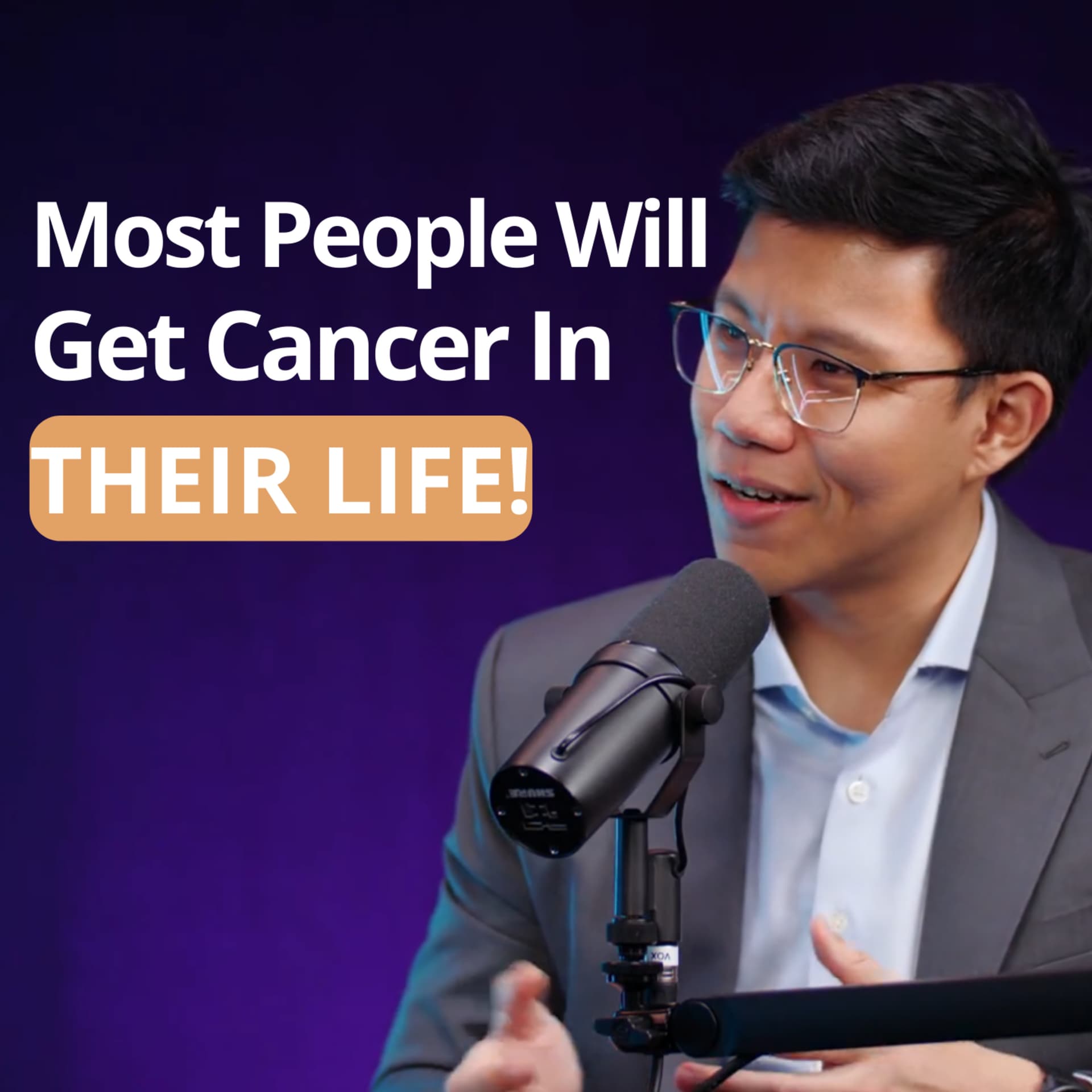
When Shift Happens Podcast - Episode 45: Kenneth Lou: You have a 50% chance of getting cancer in your life
Overview In Episode 45 of the "When Shift Happens Podcast," host Kevin Follonier interviews Kenneth Lou, Co-Founder and CEO of Mito Health. Kenneth shares insights on preventative healthcare, cancer awareness, and personal experiences that shaped his approach to health and wellness. The conversation dives deep into various topics including the importance of health in relation to wealth, early cancer detection, and the role of lifestyle choices in maintaining a healthy life.
Key Topics Discussed
- Cancer Prevention and Early Detection
- Statistics revealing a 50% chance of developing cancer in one's lifetime.
- Importance of early detection through lifestyle choices and medical interventions.
- Introduction of liquid biopsy technology to detect cancer early through blood tests.
- Health as the Basis for Wealth
- Kenneth emphasizes that health is foundational to achieving wealth and success.
- The detrimental effects of neglecting health for financial gain.
- The Role of Insurance
- Kenneth argues that health insurance is a crucial investment that can provide financial security in times of medical crises.
- Lifestyle Factors Affecting Health
- Discussion on the impacts of alcohol consumption, the importance of quality sleep, and a balanced diet.
- Kenneth mentions the need for systemic changes in food production and economy to promote healthier eating habits.
- Meditation and Mental Health
- Kenneth shares his experiences with a 10-day Vipassana meditation retreat and its transformative effects on his mental well-being.
- The increased recognition of mental health in society and its importance, especially post-COVID.
- Entrepreneurship Insights
- The challenges of leaving secure jobs to pursue entrepreneurship.
- Balance between business demands and personal life, particularly during family crises.
- Future of Health and Longevity
- Kenneth discusses Mito Health’s mission to extend the healthspan of individuals through preventative care and lifestyle optimization.
Important Takeaways
- Health is Wealth: Prioritizing health is essential for long-term success and happiness.
- Preventative Measures: Regular health screenings and a proactive approach to diet and lifestyle can significantly reduce cancer risks and overall health issues.
- Community Support: Family and community support are crucial during personal and health crises.
- Mental Wellness: Practices such as meditation and mindful living can enhance mental health and well-being.
- Innovative Solutions: Advances in technology like liquid biopsies can revolutionize cancer detection and treatment approaches.
Kenneth's Personal Journey
- Kenneth’s motivation to enter the health tech space stems from a personal tragedy—the loss of his father to cancer.
- His background in building a successful finance community (Seedly) in Southeast Asia laid the groundwork for his current venture into health.
Conclusion This episode of "When Shift Happens" presents a compelling conversation about the intersection of health, technology, and personal growth. Kenneth Lou's insights serve as a reminder of the importance of proactive health management and the potential of innovative solutions to improve life expectancy and quality of life.
Follow Kenneth Lou and Mito Health
- [Mito Health Website](https://mitohealth.com/)
- [Mito Health LinkedIn](https://www.linkedin.com/company/mitohealth/)
- [When Shift Happens Website](https://www.when-shift-happens.co/)
- [Kevin Follonier on Instagram](https://www.instagram.com/kevinffollonier/)
- [Kevin Follonier on TikTok](https://www.tiktok.com/@kevinfollonier)
- [Kevin Follonier on LinkedIn](https://www.linkedin.com/in/kevinfollonier/)
- [Kevin Follonier on X (Twitter)](https://twitter.com/yieldlabs)
Episode Chapters
- 00:00 Meet Kenneth
- 03:43 The Influence of Kenneth's Father's Cancer
- 05:52 Health is the Basis for Wealth
- 08:28 Why Insurance Matters
- 13:21 Kenneth's Upbringing in an Asian Family
- 20:57 The Genesis of Finance Startup Seedly
- 26:24 Studying vs. Entrepreneurship After College
- 31:23 Leaving a Stable Job to Start a Business
- 43:29 Kenneth's Experience at a 10-Day Silent Meditation Retreat
- 53:56 Understanding Healthspan vs. Lifespan
- 01:04:41 Promoting Healthy Food Choices in Singapore
- 01:12:22 The Latest Research on Alcohol Consumption
- 01:15:32 How Mito Health Measures Health
- 01:22:08 Why Quality Sleep Matters
- 01:29:46 Cancer Prevention and Early Detection
This episode is a rich resource for anyone interested in health, entrepreneurship, and the future of preventative healthcare.
Written by AI. May contain mistakes. Listen to the episode to check what was said.
Transcript
Automatic transcript. May contain errors.0:28What is health span? One line, insurance is the best investment that pays you the most when you need it the most. You get cancer, that's a payout. If you get heart attack, that's a payout. If you get into a car accident and you're in the hospital, there's also a payout. Or they even pay for your bed. Vipassana meditation is a silent retreat. So it's a 10-day silent retreat. It can be done everywhere around the world. And you spend 10 days essentially just meditating and not talking to anyone. my wife did it, changed her life. Then my mom did it, changed her life as well. Did you change your life?
1:05You did.
1:11Yeah, so I'm Kenneth. I'm the co-founder, CEO of MytoHealth. And we've been around for about a year now. And we exist very much in the longevity tech space, which is a very new field that is up and coming in this part of the world. So before we dive into that, you also built a finance community called Seedly. And I'd like to understand your upbringings. Can you describe what your childhood was like? Yeah, so I grew up with a brother, an elder brother, and then wasn't a very bright student for a while, but was very naturally inclined to the sciences. So I always knew that I was going to do something in science.
1:57but back then when we were growing up tech wasn't a thing right so I mean there was like Game Boys there were Nokia phones but I was never really good at like programming or Dreamweaver right website building so I was always exploring the idea of tech and during my university days I really got into it so I realized that tech and back then mobile phones were really becoming a things so iOS app development Android development and then I realized that actually there's a lot of business to be done in terms of bringing business and tech the the two worlds together yeah so I I dive deep into that my father was an entrepreneur so he was doing paper trading for his whole life very traditional business and you saw how money flowed so it's interesting because you...
2:49Can you explain what paper trading is? Yeah. For the agents. So basically, he would import and sell paper. There's a bit of import-export element without actually holding the stock. So it's the first version of dropshipping. So the idea there is you buy huge reams of paper. So really like huge containers and pallets of paper from Europe. You would sell them to Indonesia. You would go to Indonesia. You would process the paper. You would sell it to somewhere in Southeast Asia. So you would always be the connector. Back then, internet wasn't a thing. So you would fax, you would call, you would email, early days of email.
3:25And then there was a business for that. But when things were this intermediated, like with Alibaba, with online exchanges for paper, even there's exchanges for paper as well, then the middleman, the role of the middleman became less and less important. So what did he do at that moment? So he was slowly winding it down. And then suddenly he got into a very bad accident. When he was 50 years old, he was cycling. He got hit by a taxi, did a full body MRI, found that he had brain cancer, which is also something crazy because I was going through that tough period while building my first startup in year two, I think.
4:05Yeah, of building Sidley as a personal finance community. And I saw how important like health was, right? Because immediately everything before that was irrelevant. The businesses he's built, the money he's made, the properties he's owned, everything is irrelevant because now the most pressing problem was the disease. So 50 to 54, very poor quality of life. And then he left us at 54. Yeah. You're saying 50 to 54, very poor quality of life. Do you think that the life quality that he had before that contributed to a cancer? There was a lot of stress, definitely, as an entrepreneur, because the whole business was on him.
4:53He had mouths to feed, right, two sons, a wife, various properties that he's purchased, he would need to pay the mortgages. There's a lot of innate desire to want more because entrepreneurs always want more and more and thereby doing more and more late nights trading. So I think there were elements of that. But I think the big one was really not knowing that there was a tumor growing in his brain until it was too late. So I think knowing earlier would help a lot, which is also where it's part of the inspiration of like why we're doing what we're doing in mito health. Yeah. So obviously it impacted your main activity because it's what you're doing right now, right?
5:48But also how did this change your way of thinking about life in general? Without health, there is no wealth. Yeah. So that's the big underlying motivation of what we do. we understand that that wealth is this ladder that everyone climbs but only recently I would say within the last three to five years you start realizing the people who have achieved wealth are moving all their efforts to health right so yeah it's almost like you you get yourself to a miserable place to achieve wealth as quickly as possible and then you realize man yeah I have this money but I feel like shit and you not only you feel like shit right you can't spend it so there is there is limited time to spend the amount of wealth you've created so one school of thought is that how do you balance both enough because that is important right that is very very important and that's also why we focus on the younger audiences in our marketing so how do you balance how do you balance wealth building which you don't have to get there in three years you have 30 years 40 years because you you don't want to retire anyway otherwise you're going to be bored yeah how do you balance wealth building with with health keeping your health yeah and thinking about that much earlier how good are you at that because yeah you're talking about all this stuff but you're building businesses and we both know that when you build businesses you can have all your best principles yeah and then you the practical and then you're like man i'm again on the edge fuck i'm almost burning out yeah or i burnt out or you know like so how do you balance this yourself knowing all that stuff preaching that stuff yeah with your new business and having had this experience with your dad yeah so what's interesting was that the moment my dad got cancer i realized how important insurance was like that's of us a very big point yeah that's an amazing point yeah we need to talk about that okay because yeah i'm thinking about my ex-girlfriend but probably a lot of people here right i'm like yeah do you have any insurance for the big stuff right because oh she's an actress self-employed so basically oh you're an entrepreneur yeah well i'm an entrepreneur we need to have an insurance I don't exactly know how it works for employees if they have an insurance.
8:19Why is it so important for people? Why should it be a priority for people to have a health insurance? Everyone should have a health insurance. Why? In one line, insurance is the best investment that pays you the most when you need it the most. So let me break it down there. If you think about investments, you're always riding the wave. right? S &P 500, Bitcoin, crypto, Ethereum, right? Stocks like Tesla. You never know when it will pay you, right? So you never know when the dividends come. You never know when your growth stock is really going to grow. But insurance is the investment that you pay every year that pays you the most when you really need it the most.
9:05So if you frame it up, insurance generally pay out when there is a big problem or big disease that you have encountered. You get cancer, that's a payout. If you get heart attack, that's a payout. If you get into a car accident and you're in the hospital, there's also a payout or they even pay for your bid, right? It's the bottom line, yeah. So in my previous life in personal finance, we always talk about insurance as a goalkeeper. No matter how many strikers you have, no matter how many Ronaldos, Messi, Mo Salahs you have, If you don't have a goalkeeper, a good goalkeeper, it's not about how many goals you score, but about the net score, right?
9:45How many goals you concede. Yeah. So that's incredibly important. Did your dad have an insurance? Yes. Which is why we didn't need to sell our homes. And that's a very real story. Do you have examples of people that you know or that you've heard of who had a cancer or a heart attack and had to sell their home or many yeah it's very real because treatment is not cheap and even in singapore where subsidized care is generally available if you want private care which is faster quicker better more advanced in terms of chemo radiation and surgery generally speaking you need to pay a lot more and what happens is again at that point you realize that without health there is no wealth so if a loved one is starting to go through those phases and you start to realize that you know what I don't have enough to cover his surgery that by this top neurosurgeon or this top oncologist to to do the cancer full-up treatment you tend to like you know what everything is not important right I need to gather the funds and pay for this treatment because I value this person's life but that could have all be prevented if you value this person's life before all these things happen yeah do you have some concrete numbers on like how much an operation for obviously depends on a cancer or a heart attack but these things that happen much more than people think because we see yeah one person out of two will have cancer in their life yeah one of one of two to three yeah so i read woman yeah one out of two men one out of three yeah then i was like shocked then yeah if you dig a bit deeper it's because people are getting older yeah and you are but still you're gonna have a cancer let's say you have one chance out of two to get a cancer yeah how much do i spend just like some rough numbers so people think fuck do i even have this money somewhere or am i going to actually lead my entire family parents uh children brothers sisters to ruin yeah financial ruin just because i'm not taking an insurance?
12:00I can give a real example. So my dad's neurosurgery top doctor, like one surgery is$50 ,000 sing, right? So put it in context, maybe it's about 30 to 35 grand USD. Yeah. And that's just the surgery. It doesn't include the warts. It doesn't include the chemo. It doesn't include the radiation that followed thereafter. And all those things were covered, thankfully, because of insurance. That's a big one. and even the out what we call outpatient care. So outpatient is like the follow-up therapy. So he couldn't walk, he couldn't speak, he couldn't eat. So he had to have help. So some of this is covered by the government.
12:44There are policies for that but a lot of it was insurance related. So very grateful for that. So we're talking about hundreds of thousands if not millions. Hundreds of thousands, yeah. Hundreds of thousands is the average. Millions is if you want more advanced therapies. So there are more advanced therapies even in Singapore and US Hong Kong where you there's more advanced radiation techniques like gamma knife right you go very specific there's precision oncology which is becoming a big thing as well so all those things are happening and all those things cost money yeah some insurance allows for those yeah what was your relationship with your parents when growing up great great I think they were both working parents and they always catered time for my brother and I and always allowed us to fail which is very different I think when it comes to most traditional Asian families where you know you have to do well in this area and then like do well in your studies become a doctor lawyer which is a great path but I think my mom and my dad allowed me to experiment with businesses they funded my first company failed horribly and then the second one we were out on the streets raising capital but you sort of learn you know as you go along so I think them putting in at first however much thousand dollars right so I think they gave us 10k like to try something out failed I paid back paid it back to them over time but yeah I think that belief that it's okay to fail, right?
14:19And then you go out, yeah. Where do you think this was coming from? Because it's really not the way a lot of parents, I would say, in general and even less so in Asia. Yeah. My mom was an engineer. So she was an electrical engineer, spent quite a bit of time in the States. So she understood innovation and then she didn't understand the startup and mobile tech wave, but I think naturally that innovation in itself is a lot, it's building on failures, right? So even in the startup world, every day we are experiencing some form of failure. It's big, it's small, running out of money. It's all part and parcel of the process, right?
15:00Team members falling out, investors not wanting to continue to fund you, finding an alternative. Yeah, we would know this as entrepreneurs. Yeah. So it's a lot of failures. Every day. Every day. Every second of the day. Yeah. So you grew up in Singapore and we talked about, I mean, you have parents who are very open minded, very lucky for that. I had a guest previously, she's called Simone Heng and we talked about the Asian upbringing. Often pretty tough and how it actually results in our generation. having more mental health issues than ever before because of how we're being raised. I mean, especially Asian people, right?
15:51Yeah. What are your thoughts on that as a smart dude who is building something in the health sector? Yeah. And more generally, how much do you think Singapore is doing a good job to kind of promote mental health and help people talk about their mental health issues? Yeah, I think COVID was a big push for that because once, you know, we tend to forget this by now, but people were stuck at home for a long time during COVID. And I think it really showed how important mental health was because people were lonely, they were detached, there were little to no social interactions. So it opened the door for conversations around mental health.
16:37And I think most recently we are seeing more suicide by youth. and yeah. Continue. I have something to say regarding that. Yeah. Because when I came to to challenge basically what you're saying, when I came to Singapore in 2021, I was thinking, oh man, Singapore mastered COVID. No. I mean, it was before the re-lockdown. Exactly. But I was thinking, oh, they mastered COVID. There is only two or three hundred cases in the beginning, right? What they were not saying at the same time Yeah. You said COVID is good for, it was good to for these mental health things, right? What I kind of understood, or at least read is that maybe Singapore had 300 cases of COVID, right?
17:28And zero death. But they were 10 % of these 300 cases of COVID suicides, or even more. and they were not talking about the suicide. No one was talking about that. No newspaper, right? So it's, we mastered COVID, we're good, no one died. But actually there is many people who died from suicide because of these rules, right? Yeah. So do you really think Singapore is doing a decent job at talking about mental health issues? Or do you think they're trying, but there is also this Asian culture where it's a kind of a stigma to talk about mental health and suicide and all these things, which is happening a lot.
18:08Yeah. I think the stigma definitely exists. Much like the stigma around money exists. Much like the stigma around inheritance, around LGBTQ rights. Like all these things still exist in pockets or rather in broad strokes. But I think in various communities, it could be in your company, it could be in our social circles. like people, I would say, tend to find ways to talk about their problems, to learn. So we ran a community, finance community. I'll talk about the stigma from a finance because it's sort of parallel to a thing that people don't talk about. And not earning enough high inflation rates, cost of living.
18:55We had a lot of anonymous questions. And you would see how the community would rally around problems and give creative and constructive suggestions to help the individual online. And this was like peak COVID. So we started realizing people gathered online. We had frequent podcasts, meetups online again, virtually, AMAs where people would come and then they'll talk about their problems financially. So I'm not an expert in mental health, but when we look at the parallels, people, you know, divorce with two kids. How do you split up the custody of the kids? All these things were talked about quite a lot online.
19:37Why is there a stigma around these themes? Why is, for example, let's take personal finance one. Yeah. Why is there a stigma in Asia or in Singapore, at least, around personal finances and around money. Yeah. There's this thing in the Chinese culture in particularly is called mianzi, which is a face. So it's a lot of ego and perception that you should put forward a front that is a lot more wealth focused. So even if you know, like in Chinese New Year, all the greetings in part, right? It's all about wealth. Like, you know, I wish you wealth and then you wish me wealth. It's not so much about health, it's usually more about wealth.
20:24So it's about money, it's about making more money. So money is a very touchy topic and a large chunk of it is growing up. Not everyone might have been as fortunate. So they will have earlier years where money is gas. You grew up thinking you need to get a degree to get a job, to earn a decent salary. So it's been inculcated since a very, very young age for a lot of people. Yeah. So that's culture. Is it one of the reasons why you started Seedly? Yes, we started it because it was not well spoken about in the community. So when we started eight years ago, the only real places to get information around money were very traditional financial bloggers.
21:12So on Blogspot and Tumblr and those. And not only those, right, you get like forums like Hardware Zone, which is very trashy. So people would screw manage each other. They would, it's those online forum bots, right? So then it's not very constructive, it's not designed well. And then there was a growth in terms of what we call Finfluencers, familiar with the term, financial influencers. So people who are willing to put themselves out there to say, this is how much I earn, this is how much I spend, this is how much I invest, this is how much I save. Mostly through blogs? Mostly through Instagram.
21:46So Instagram was picking up seven, eight years ago. Already seven, eight years ago, people on Instagram saying, okay, this is how much I, okay, this is how I manage a budget. This is how I invest my money. This entire fire. Exactly. Fire movement really started picking up. And the cool thing was that - Can you explain what fire movement is? Yeah. So financial independence, retire early. The goal is to amass enough wealth so that you have a very sustained income flow so that you wouldn't have to think about your cost of living, right, it's all covered. You have a house, you have a roof over your head.
22:18You can take care of your basic necessities. So it's almost a revolution from youngsters against the you need to work until 65 or 70 or 67 or 64 depending on the country to retire. You can take control of your finances and future today and stop working at 30 or 35 or 40. And it doesn't mean you're going to become ultra rich. just understanding the basics of budgeting and making money, saving, investing a trend of it. And then making sure that my nest egg at some point is big enough to cover my expenses that could be low, right? For the rest of my life. So I can stop working earlier or work on something that is more meaningful to me or move somewhere else.
23:06Yeah. And the cool thing in all of that is that five years ago, people were more and more open to talk about finances because it was no longer this thing where you could only get it from financial advisors so this was a shift uh are you familiar with the concept buy term invest the rest btr became a so the concept around life insurance there's usually two types there's whole life and term life so whole life you pay a lot more premiums and then there's some there's some stock value cash value at the end of the day term life you're just paying for protection. So you're paying for exactly if you die today, what's the payout for you?
23:43At the end of the day, like maybe when you're 60, 70, there is no longer any cash value associated. So people started realizing that, hey, there is this vehicle that is designed for protection. So it's my goalkeeper. So now I can take that money, you know, and then with the rise of robo-advisors, it all came hand in hand. Robo-advisors offered the opportunity to invest in low-cost index funds that are globally diversified. So then with the marketing, with the upheaval of the financial do-it-yourself movement, finance became something that is very well talked about. We think the same will happen for health.
24:21So that's long story short of like why we think that in health and mental health being one of them, cardiovascular health being another one, more and more people coming together to talk about biohacking, like all these things are very grown up it's very diy do it yourself yeah are you a fire movement i'd say fun or are you part of this yes are you since a young age saying how do i make money and invest so i can not retire because you don't want to retire especially if you're an entrepreneur you would like yeah you would go crazy yeah uh having nothing to do and not having a bigger mission, but how are you personally doing on that stuff?
25:06So having worked for seven, eight years, like I've personally amassed a decent amount of money, right? To be able to go into another startup because like not many people with liabilities in the early days, like kids, right? So kids, no matter what we talk about them, they're great, they're cuddly, but they cost a lot of money, right? So you have a kid, you have a house. The thing is not to overstretch yourself. So I live in public housing. So I live in a HDB, BTO with my wife and we're happy. So we don't need to overstretch ourselves. There's no reason to do that. And the thing about FIRE is it's really that principle.
25:44Absolutely. It's not how I'm going to become a multimillionaire and retire early. It's more how can I live? How can I be smart about my money and live as simply as possible to be free as quickly as possible? Exactly. Exactly. Yeah. You started Seedly right after university, if I'm not from. In university. Yeah. Okay. Do you think aspiring entrepreneurs should jump straight on the entrepreneurship train after uni, or do you think they should spend a few years getting some experience out there and maybe building a network before starting a business? There's two schools of thought. so for my school of thought i feel that if there is going to be more and more opportunity costs to starting later then you should do it from day one so the other path i could have taken is to join management consulting investment banking private banking you know so that's a very very clear path right so it's a very clear defined path but by going on to those paths like you naturally have higher and higher opportunity costs because of your standard of living, your increased expenses, the social circles you would be around.
27:05So I made a decision very early on. I love startups. I love, love startups. Like 10 years in, I still love startups every day. It's just what problem are we solving, right? How do we really get things done, right? Don't just beat around the bush. Don't just talk, right? Just come together, do things. And that has been my belief. It might not work for everyone because some people would prefer stability. The risk appetite is not as strong. There's no such thing as stability in a startup. No. Yeah. Rollercoaster of emotions. Yeah. It's interesting because I started my first company right after uni too at 23 years old.
27:42Yeah. And I had the same kind of same experience as you. Yeah. My parents helped me out for my first year. Like by helping me pay the flat. I was in London building the first business. We are lucky, right? Super lucky with two other dudes. Actually, I would even like say instead of having your parents funding an MBA or whatever kind of masters, if they can fund you your first year of entrepreneurship, just the basics like a flat or a room, like a shit room somewhere and some shit food. Yeah. Like this is the best freaking investment they can do in yourself because the potential returns after that are limitless.
28:25And I had the same thinking also. I was thinking, I was actually, before being in London, I was in Hong Kong and Singapore for some internships. And my idea was like you, I want to be a McKinsey consultant. Why? I don't know. Because it's hard, you know. It's hard. It's the hardest thing. It's perceived to be hard. Yeah, especially to get in there. Exactly. And I was like, and then they tell you, you will get hired by client and you have a good position, et cetera, which makes a lot of sense, I think, still today. But I was talking to these McKinsey consultants, I mean, previous Goldman Sachs bankers or previous McKinsey consultants who were 45 and now running a startup, right?
29:06You meet them everywhere in Singapore, in Hong Kong. It's very easy. You go out, you can randomly talk, and then they'll tell you, I'm building this company. I'm 43. I wish I had started my company when I was your age, 22. and then you're like I thought I wanted to go to McKinsey but you're telling me that you wish you hadn't gone to McKinsey and you had started at my age what? and that's where I realized that this thing where you take basically no risk especially if you have some support from your parents you take zero risk because you're starting right away it's going to be very hard because you have no network no one trusts you in terms of business yeah so business connections you have none which is hard because you can have a lot of friends a lot of people who have great you know jobs or who are very powerful they're they're gonna like you as a person but they don't trust you in terms of business so it's gonna be useless you have to prove yourself and when you're 22 or 23 no one kind of yeah believes in you yeah i mean you need to have like that person who's gonna believe believe in you but still hard but you don't take any risk you don't have a family you don't have and you're not used to have a certain lifestyle yet that comes with the mackenzie or exactly whatever other type of salary right yeah so i had the exact same thinking and i was talking to my friends were all in bcg mackenzie ubs and like they would tell me man i'm earning i'm earning a dad's salary you know like especially in switzerland i was in london but like my friends because I'm Swiss they were in Switzerland working for McKinsey making like first salary 15k$1 a month you know and I was like I'm making zero every month for the first year negative and second year I was so proud I was like oh now we pay ourselves 1.850 pounds net net per month yeah because there's a big difference between gross and net especially in the UK and especially when you earn that not much right yeah but I was like man I know it's the right thing to do because this keeps you alive.
31:13I realize I can live on very low means and as long as I'm able to do that, I'm able to work on whatever I want and build something that's potentially much bigger later on. So, no brainer. I would love to share a story as well. So, it's one that with this recent medical startup, it's interesting because we had to convince a doctor to leave the public service to join us and my co-founder or chief medical officer, Ryan, right? Like he would have been able to easily get a job as a specialist anywhere to set up a private practice like his own GP. But it's interesting because after talking to him and really in depth, the way he rationalized it was that these opportunities will always be there.
31:59Absolutely. And then that opportunity cost becomes so much bigger because how often would you have a chance to build something with great smart people. And again, startups, you need to start things with people you feel like you can learn from. And I felt like very happy because it's very clear to him that this other lucrative house, he realized and rationalized that it's there. So this is a very natural decision to make because none of his peers would be able to do that. Do you think he would have made the same decision at a much younger age coming out of, you know, I don't know how many years, six seven eight years of medicine is very hard yeah seven years yeah so seven years of medicine and then you're like i'm just gonna kind of ditch my seven years of study to start something health tech field or do you think he would have been able to that or is because he has he's a certain age he's like i know what corporate medicine looks like yeah right it's not going anywhere anyway i can set up my own practice but i'm also more mature to understand And like, I know what the doctor life looks like already.
33:08Yeah. Right. Yeah. I think for this setup, definitely. So there's a lot of clarity in thought what the other paths might look like. Right. And it's very different from someone coming out from school. So like when we came out from school, when we started, it was a very natural path. And quite honestly, when I share with you is because when we started, investment was already like we were lucky and the networks compounded so for my first earlier days of networking we found investors so the moment investors put in money you have to start so so that was like the first startup where uh or rather the the seedly right when we when we were in school we were leaving school and then investors came and said okay you know i'm gonna fund you better start a company because i need to put the money somewhere right and then for you to to try and make that into something for this one it's very much thought through right it's like okay there's this big problem we are trying to solve around preventative longevity health.
34:02Like, do we have the best skill sets? We think so. Do we have the best capital structure? We think so. Like, finding the best investors. Yeah. So, to attack the problem. What would you tell
34:1620, 21, 22 years old student who studied five years law, for example, or accounting, right? What most parents are very proud of or medicine what most parents are very proud of here right yeah plus you studied all these years but now today I feel like I should be building a startup in music which has nothing to do yeah with my background right so I have two things one is my parents pressure yeah again in the world in general probably even more here in Asia and Singapore And second, I even feel like I've kind of wasted my time the last five years. And it's, if I don't leverage what I've done in these studies for my future.
Read the full transcript
35:06It's wasted. Yeah, exactly. It's a kind of a certain cost, you know. What would you tell them to do? I would tell them to put together a business case. Yeah. So I did that as well with my parents, right? So if they are fortunate enough to be in those fields of study, highly likely they have parents who are pretty logical in terms of the way that they think through problems the way they think through uh forks in the road right so this is a fork in the road right you close door a you open door b so put together a case why is door b going to be way bigger an opportunity what are the safety nets in door b so for asian parents they love the concept of a safety net, right?
35:51What is the strike zone, right? Off-door B. So even if it doesn't work out, you could lend yourself at a job at one of the big four consulting. Because you completed your master in accounting, for example. Exactly, exactly. So you got to give the scenarios, put together the case, talk about market, right? Like why is this such an exciting market to build the music industry product? You've thought through, you've met enough people. So I think going in without a business case generally feels like a bad idea because parents in this part of the world are very logical, generally speaking. So you, Sidley, I think there was about at the top 1.1 million monthly users.
36:35Yeah. How did this turn out as a venture experience? What went well? What went wrong? What went well? So overall, we knew we were very mission driven. So the mission in Sidley was to make better financial decisions for everyone in the community, our readers, users, partners. So that meant that we could play the role of the connector. So the connector being that if a client or user comes to us, we would tell them which is the best card to use, what is the best robo-advisor to use, brokerage, savings account. So that was consistent all the way through. and we had an exit to an e-commerce company.
37:17We divested to a financial group. So that was great for us, for the team. And the team made up quite well from that whole experience. I think what's not so good was in terms of certain strategic things, we could have done better naturally. Hiring could have been better, setting up the team structure, the capital structure could have been better so that we could actually decide various more options and not just be forced to certain options that we were going to choose at the end of the day. So these things are very tactical. So you learn as you go and then you get better with every startup because this is going to be a long, long journey, right?
37:57You're not just going to start one company. You're going to start five, six companies, seven companies. Why did you leave? It was time. It was time to go. So seven years in, we achieved what we wanted to do in Singapore. There wasn't really like a regional play because we joined a group that was regional in nature. So we had bases in Hong Kong, Taiwan, Singapore. And it was right time to hand over the reins to a new kind of successor to take the business forward. And I personally, I'm more of like a zero to one guy. And most startup entrepreneurs are like that. They are not in it for like the one to hundred.
38:39So two things happen. they hire someone in to do that part of the business or they just leave and sell the business to someone else who could do that. What did you do after? Took a break, a long break. Why did you take a long break? So we have aligned that this journey is crazy, right? In terms of the hours you put in. Like last night at 3 a.m., I was just thinking about problems to solve. So it's crazy. like you you can never really have a good night's rest so i think that period was actually a very good period because it's really like there's no worries at all you know you have enough savings you can draw down for x amount of months so i took about six months off um yeah and then traveled a bit went to europe went to a few conferences here and there get inspired again get inspired like a child right so not not like a oh i mean it because i have an agenda i want to i want to make a business partnership i want to network with this person because just you know very pure want to know people and we met so many different people in that time really no agenda yeah really no agenda just want to be inspired yeah or i'm gonna take a break to find the what's my next big thing there's always there somewhere there's always there yeah but it's more it's more latent it's not it's more like I'm sleeping it's like when we have an idea but you sleep on it right there's no rush no pressure so there was not like a six month kind of deadline it's more like okay it's gonna be more or less a few months but I don't really know when don't know where yeah and I know a few people going through that now so very top executives in startups series CD companies and then they just took a break because they can afford to take a break.
40:30And it's very lucky to be able to do that. So you kind of need to be very conscious about taking a break. You know, it's a big thing about mental health is that you need to be conscious about those down times, be it in the day, right, late at night, or in your life, in your work life. After two years, you take a break. Says the one who thinks about work at 3 a.m. Yeah, unfortunately. I'm very conscious about the day taking a break. Today, but not the night. That's true. That's true. Yeah. You did an Ironman during this break, right? Why? I met someone in Switzerland, actually. So I was there for a conference, a Web3 conference, interestingly.
41:15And I went to the top of Pilatus, Mount Pilatus. Yes. And there was this 60-year-old man who was doing a run. He ran up the mountain. one side of the mountain. And then I was sitting there at the top, enjoying the view. And then it was quite crowded. So we had to share seats. So he was in his running gear. I was like, did you take the cable car up here? Or what? Like what? He said, oh, I parked on the other side. I ran up. He's like, I've done so many Ironmans. I've done ultra marathons. And I'm like 60. So... How did he look? He looked good. He looked good. Yeah, he looked definitely not 60, right?
41:51Maybe 40s, late 40s. And I was very inspired. I was like, if I would want to do those things when I'm 60, I have to try to start doing them now. And there's no reason for me not to. So again, I'm addicted to challenge. I'm addicted to pain in some sense. So I decided that why not I give myself a challenge? The goal is to not die. The goal is to finish, right? So I did a 70.3. So it's half, but it's still a crazy kind of swim, bike and run. and the distances really like, you know, you would feel like six hours, seven hours of a race, right? How long did you prepare for that? So I spent around three months.
42:35Full time, preparing on that. Yeah, full time. So got a triathlon coach, went to swim squat twice a week, went to track squat twice a week, had my own biking sessions on the weekend. I got my own bike. I got my own trainer at home in terms of like the thing you attach on to the bike. So it's a bit safer than going on the roads. So it's really all in, you set aside a budget. So I think setting aside budgets are crucial for this kind of endeavors as well. Yeah. You told me you also did the Vipassana retreat. Yes. Was it during that time? Yes, it was during that time. So it was exactly about a year ago.
43:16So September last year. And soon after I did it, I realized that many entrepreneurs reached out Because when I talked about it, many different entrepreneurs started reaching out to us about the experience, what I learned. So first, what is a Vipassana meditation and why did you do that? So Vipassana meditation is a silent retreat. So it's a 10-day silent retreat. It can be done everywhere around the world. There are centers all over the world. And it's all almost pro bono. So it's a donation basis. you go there there is no expectation of any amount that you would pay the food is provided accommodation is provided bathing facilities are provided and you spend 10 days essentially just meditating and not talking to anyone and the reason I did it is because my wife did it back then girlfriend she did it in between jobs as well changed her life then my mom did it after my dad passed away changed her life as well in terms of how she thought about her problem and then I wanted to do it because there isn't a better time in between jobs like you don't have any commitments no emails to check yeah did it change your life did it how so spending 10 days alone as an adult without talking to anyone it's a very big challenge and you start to realize how to think so you you learn how you think and a lot of people don't understand what that means but essentially you start to realize what is going on in your brain from a very latent point of view and also a very surface level point of view.
44:56So things where we, system A, system B thinking, right? So reactive thought, right? So those are very natural top of mind, but you start to realize and you listen to that voice in your head. And that is the little voice that guides you in every single decision that compounds, right? Being at this podcast today, right? not eating or eating certain foods, right? Or drinking, right? So all these things are habits that is because of the little voice in your head that you start to get comfortable with. It's hard, no doubt. But you learn a lot from being with yourself. So you would say it's like going to this Vipassana meditation is like dissolving a lot of the things that you have in your mind and kind of understanding a lot more about how it works.
45:44Yes. So the first three days is really just breathing in terms of like knowing how to breathe. And that's like a challenge because you do it so organically every day. So three days of just learning how to breathe again, that was eye-opening. And then the next seven days was really like going deeper into like, why? Like, what do you want? And it's non-religious. I think that's an important point to bring out. So there is nothing that is religion focused, but it's very much on like the self sensation, meditation. So everyone would have a bit of meditation, right? You use an app, you know, you've done a corporate workshop, but after you spend like a full 10 days with yourself, you start to realize how to think.
46:34Is it something that you keep inside of you or that you should repeat every year or every couple of years to understand again. For example, you did an Ironman. Probably you looked really good. You were super fit. I was, yeah. But then if you don't continue to train, you lose your fitness. You can even become fat, right? Yeah, yeah. The same with the mind. Yeah. You can do all these things. You can spend 10 days doing a silent retreat, but probably you're going to forget how to catch your feelings and how your own kind of feelings and emotion system works after a while if you don't do it again.
47:13Yeah. The recommended guideline is to do it every year, like a 10-day retreat every year. And again, in practice, to meditate every single morning and evening for 30 minutes. Do you do that? I don't. Yeah. Zero minutes or not 30 minutes? Almost none. Nothing? Yeah, none. So the reality, again, in theory and practice is very different. objectively. Always. Being very real, right? So, but I would highly recommend everyone to try this at least once in their life because it's a challenge, right? It's almost like a like a diet you would go on. It's really like in terms of like a social media diet. No access to your phone.
47:53You don't talk to anyone for 10 days. But you see people. You just cannot talk to people. You just can't even look at them in the eye. So, the goal is to not have eye contact. What happens if you have an eye contact? You quickly look away. Karma punishes you. Yeah. So it's great for introverts. It's challenging for me being more of an extrovert. You know, I love to talk, to feel the silence, right? Yeah. So, you know, it's difficult to continue the practice every single day. But if I could, I would have gone every single year. But now with the baby, again, circumstance. But I would definitely do it again in my life.
48:31Yeah. Maybe we do it together next time. I'm very interested. Yes. And it's everywhere around the world. So you could do one. Where did you go? I went to Korea. Korea? Korea. Amazing facility. Shout out to the Korea. Where is that? In the mountains? The Jonju. Yeah. It's actually quite high up. But it's near to a farm. So it's nice. Different. What do you eat there? Vegetarian. So no killing. Yeah. Only vegetarian because it kind of, it helps you. Yeah. Helps you. And you lose weight. Presumably muscle mass as well Because you just sit there And meditate every day But you know You feel a lot cleaner In terms of thought In terms of like The body systems And you only eat Two meals a day Yeah How many meals a day Do you eat now?
49:18Now I've gone back to three So I used to do Intermittent fasting For a while But after a while It's also difficult To keep up Because of lifestyle Because of social With my family We eat breakfast together So in the end, I went back to three meals and tried to work out at least three times a week. Have you ever tried fasting? Yes. Or prolonged period of time? Maximum one day. 24 hours. Very cranky. Yeah. Water, very cranky. Very cranky. Yeah. At the beginning, that's normal. Yeah. I've done nine days on water. Yeah. And I had a guest a few weeks ago who did, we talked about that. And I was like, you know, most people I say, I've done five days, seven days, nine days on water.
49:58Yeah. People are like, what? are you crazy? And this dude was like, yeah, I've done 21 days. I was aiming 28, but at some point, you know, I wanted to eat. Yeah. So I ate after 21 days. Okay. And he said, my goal is 40 days. Maybe we can do it together. I was like, yeah. Yeah. I'll think about it. The 10 days retreat. Absolutely. The 20, the 40 days on water. Yeah. Probably not going to happen for me. Yeah. I don't know. Like it feels, it feels very not biologically natural. So after to stop eating that's very interesting for someone within the health space because there's a lot of benefits to fasting.
50:43That's also what we read. For me it saved my life. It's amazing. I had a lot of positives from the and I had like three years like terrible disease and syndrome and it really helped me. It was the first stepping stone of my recovery, a seven day water fast and then a nine day water fast and then a five day water fast with biohacking, taking herbs, nootropics to generate neuroplasticity and a bunch of stuff. Absolutely amazing. Interesting. Because of the autophagy process for actually for your could be physical pain or mental health pain. Absolutely amazing, but not fun to do, to be honest yeah because the the the you know eating is just so such a social moment as you said and yeah when you lack this social moment your life becomes i don't want to say empty but kind of a bit sad you know like oh you we we unconsciously look forward to the dinner or the lunch yeah social because because it tastes good gives you dopamine but also because i'm what else do I do otherwise?
51:53I'm just going to work more. Oh, I'm going to, where is my kind of break? You know, there's none. So people say, oh, it's much better. It makes me more productive. You need to sleep much less. Also, you sleep four or five hours. You're good. Yep. Because you don't, you know, 50 % of your energy is used for digestion. So if you don't eat, you have twice as much energy to not only live your life, but also perform better, but also heal yourself, right? That's why it's so amazing. but it's a bit sad. It's a bit sad. Yeah. You talked about biohacking? What's the definition, right? I guess everyone has a definition of biohacking.
52:37What have you learned about biohacking and how does it kind of fit into what you guys are doing with Mito Health? So my earlier versions of biohacking when I was working on the finance startup was weight loss, right? So I've naturally been a very big guy, right? So from young, always very 90th percentile in terms of weight. Lost a lot of it when I went to the army and then tried to keep it off. But naturally, I'm quite big. So weight loss has always been my version of biohacking. So anything related to that, like keto, I was trying paleo, I was trying calisthenics, like all these were my versions because biohacking is very different, right?
53:16For you, if it's mental, then the techniques for mental biohacking would be very different. Yeah, so that's earlier days. But right now, the way that we are very focused on is really preventative health. So it's not so much the traditional way of biohacking, but it's around extending health span. So that has been like the main mission and thesis of what we do as a business at Mitohealth. What's the mission in one sentence? Yeah, we want to extend health spans of the population, right? So that's the massive vision. Like healthspan extension is key to everything that we do. So every diagnostic we do, every intervention we do is around extending healthspan.
53:56What does healthspan mean? Because we have something called lifespan, which is I live longer. But I don't want to live longer if I feel like crap or if I'm not healthy, right? Exactly. So what is healthspan? So if we imagine it as a curve, right? Healthspan is like the years that are free from disease, right? So it could be cancer, it could be heart attack, stroke, it could be Alzheimer's, dementia or metabolic syndrome like diabetes, right? So the moment you would contract any of this one disease, your curve just shifts down below the 50 % line. So 50 % quality of life, as explained with my own father, was very bad, right?
54:35You can't eat on your own, you can't change your clothes on your own, you can't move on your own, you have to be in a wheelchair. is not a great place to be, right? In terms of quality of life. So by keeping people healthy for longer is the idea of a health span. So a health span might be 60 years, but your lifespan might be 63 years. So the last three years might not be in the best quality of life because you don't want to live to 63 example. And then like from 30 to 63, you're in like below 50 % of your quality of life. That's not what we want to do. We want to keep people healthy for longer.
55:11That's healthspan. Yeah. Before counting on the mito health and healthspan subject, because you talked about your dad.
55:25You know, something that people say at work, I mean, in life in general, they say there is the work version, I mean, less and less, but there's the work version of yourself and then there is the life, personal life, right? And it's separate. Our generation, we're more realizing that it's all one person. Yes. I'm absolutely terrible at splitting both so for example if I go if I have a girlfriend and we're having issues it's gonna fuck up my mental health and brain so much yeah that business I'm like fuck the business like because you know as a man you're like I need to solve a problem what's the biggest issue if the business goes more as well like yeah problem girlfriend problem or issue.
56:07But then like, so like managing, for me, at least managing multiple things at the same time, you prioritize and then the rest is like pretty much not taken care of until the priority is sorted. How the hell do you build a business when your father is going through cancer and is in such a bad place? Yeah, not great. So I think that I have to really thank my mom and my brother who did a lot of the heavy lifting because I think as a family unit you know you come together to like help each other at different points in time so I think our families were very understanding like my family was very understanding that I was dealing with problems at work every day but also you know was dealing with like a family issue so they were stepping up to help out and my then girlfriend wife as well was very understanding uh in that scenario um but yeah i think it's not easy so whoever is going through a very tough time with your family and also running a business i understand how you feel um just hang in there it will get better it's a phase you just always have to remember that it's a phase uh things will get better either way right either you know one story ends another starts again yeah it's it will get better yeah
57:32What's the size of the challenge with mito health? the size of the challenge is uh 8 billion people right that's a way to frame it so 8 billion people are aging so that's the population of the of the world today so the 8 billion people who are aging and we think that there will be a silver tsunami of what we what we are seeing in japan and Singapore across the world very soon. So yeah, which is? So the tsunami basically represents the shift in demographic of older people to younger people, right? So people who are beyond 40-50 years old would soon be a larger population than the people who are younger, right?
58:18And it's very natural because as if you check out the global stats, you can actually go online and search the world population, you can look at the amount of deaths and the amount of births every day. Yeah, there are a lot more births than there are deaths because people are living longer and longer. Quality of life might not be great, but people are living longer. And what that means is that the population starts to expand across the world. And there will be a lot of sick people that we need to take care of. So the population is extending. There's more and more people. because if you listen to a lot of very smart people, Elon Musk included, there is actually not enough children.
58:59There is not enough babies and we're probably going to plateau around 9 billion people and that's a catastrophe for humans because we're not reproducing at the fast pace enough. There is the projection of that. But if you look at the today's situation of healthspans and lifespans, the immediate problem that I see beyond the population of the world not being sufficient to sustain life and stuff, is the shift in the demographic. So I'm more concerned about that because if you look at the strain on healthcare systems, it's actually not sustainable. So what we need to do is to move upstream. We can't just treat people when they're ill or when they're sick.
59:41We need to look at preventative methods. We need to look at longevity biomarkers before this becomes such a big issue. Do you think people actually care about that? Well, for now, the interesting start for us is really the executives. So we are targeting executives because executives are the ones who realize that health is wealth. So that's our start. That's our beachhead market. Yeah. So people who earn a decent amount and they realize that without health, there is no wealth. Right. So we start with those who are willing to pay. So we have paying clients very happy. We are helping them optimize their healthspan by looking at their biomarkers, interventions, supplements, nutrition workouts.
1:00:27And then the goal from this is to learn enough so that we could build the next version that is more downstream and more downstream. I think every kind of customer profiles would require different kind of messaging, different kind of feature sets to allow them to have the same ideal outcome of extending healthspan. Yeah. We talked about... us being at university and wanting to become a consultant, right? Or accountants. There's something we call the big four in accounting. PWC, KPMG, EY, and Deloitte, right? But there's also something we call the big four in health. I mean, something you call the big four, which are the four things or diseases that kill the most people today.
1:01:16What are these big four? Yeah, so it's popularized by Peter Thier from the book Outlive, right? So we subscribe to that. So the idea, the first thing is actually cardiovascular problems like heart attack and stroke. So that's a big one. So it's to do with your heart. Second one being cancer. The cancer, we already align one of two to three people would get cancer in their lifetimes, early stage or late stage. The third one being metabolic syndrome. So metabolic syndrome would be problems like type 2 diabetes, which is diabetes that is not inherited by being insulin resistant. And then the fourth one is neurodegenerative problems like Alzheimer's and dementia.
1:01:56So very key body systems in any human. The moment you get one of these four, it's highly likely that your mortality and death becomes a lot nearer. Yeah. insulin resistance what does that mean that means that your body can't create enough insulin to keep your glucose levels down and that creates havoc in all your different body parts your kidneys your livers and it's because of overconsumption of glucose or sweets yeah and then it's type 2 diabetes yeah so those things we track as well so that's an interesting one because now back to I mean you said now you are talking to executives probably these people already doing some gym and thinking about their health right but now let's look at everyone else right you are a Singaporean right yeah yeah do you think that the traditional meals that are prepared by loving aunties in the Asian household are good at preventing diabetes?
1:03:06One of the diseases that kills the most people today. Yeah. Well, it's a tough question because on the one hand, they're so delicious most of the time. But on the other hand, I do think it's also in balance. So, you know, you can have a great meal today in terms of like the quality and quantity might be very unhealthy. But on the other days, you compensate for that. So I think it's more like finding that balance and everyone has a different balance. and the government is doing a lot. So they are making, if you watch the blue zones, one of the big themes there was about making healthy the default option.
1:03:45And that's interesting because, yeah, healthy the default option, meaning that every time you go to a hawker, there is a lower cost product that is actually healthy. So in different parts of the world, the lower cost product is naturally the more unhealthy ones. but locally the government is actually funding like brown rice like vermicelli like all these products are actually discounted because they wanted to make it the default option so it's easy to get a healthy meal for affordable price at a hawker actually so you are saying that in singapore yeah the government is kind of subsidizing brown rice or other sort of healthy options to hawker centers so that people don't even have an excuse to say it's too expensive to eat healthy.
1:04:36Exactly. Is there a certain type of hokers where you have like a certification of like health? And so there is the healthier choice. So that one is where you see a pyramid that tells you that it's healthier to eat brown or red rice versus white rice. So that's one example. Another example is the Nutri Grading. So that just came out this year. so if you visit the supermarket whole milk like might be graded C but a low fat skim milk might be graded B so it's easy to know but every hawker today is subsidized by the government I can go to any random hawker place and not have to worry too much about you have to look for the option the option is there but again like what you said it's default it's like there is no reason to say like oh no, I need to buy a salad.
1:05:29No, you don't need to buy a salad. Like, you can go to what we call a mixed rice shop. So you can just choose brown rice, vegetables, and stir-fried vegetables, lower fat, lower oil. They are all available there. You can get eggs for maybe$3,$4. You don't need like a salad that costs$12. The macros are similar, you know. Yeah. So there's this thing there, but there is still the traditions, which is meals. I mean, it depends on the culture. There's different culture in Singapore. If you think about Chinese or Malay or like all these very rich foods. Yeah, coconut oil. Coconut milk. Yeah. Where you might also almost be seen as, I've been criticized already by my previous girlfriend.
1:06:19Yeah. Yeah, you don't adapt to local culture. When I was in my early 20s, I lived in Shanghai, Hong Kong, Singapore, and I was eating in hogar center all the time, right? But now, now I mega healthy. And for me, mega healthy is basically what's boring for most people, you know, chicken breast, brown rice. I count, I don't count everything anymore, but I used to count two years ago, macros and all that stuff. So there is this big clash of like, for me, there's still a big clash between like actual health and culture and traditional food that are very rich. And if you look at, because you're in the longevity space, people who are really focused on that go to the very extreme, right?
1:07:01So you said that you talked about balance, which is probably like more healthy for most people in terms of like how they think. But if you really want to optimize your health span, as you called it, right? It's probably good to be more extreme than not. Because we all know that the problem is the human brain is, I'm not going to drink Coke, right? But then I drink Coke one day because, oh, why not? Yeah. The problem is the day after, I want my Coke. Yeah. I want it. I feel the sugar. The high. The same as the coffee. Same as the coffee. You want it, right? So I want to have the sweet and sour pork, right?
1:07:41Or chicken or like, because it tastes good. Like it is much better than a chicken breast with brown rice with zero sauce on the top, right? So is it even possible, right? Especially given how food is kind of ingrained in the culture. Yeah. It is challenging, no doubt. But I think it's, again, goes back to what your priorities are. So I guess if you are younger, you know, if you have a bit more what we call reserves. So we like to talk about reserves. So muscle reserves, cognitive reserves. So if your reserves are more, you have more caloric deficit. deficit like you can actually consume more because your basal metabolism is higher then yeah i think go for it right you you need to try that curry chicken in once in your life twice i mean you don't do it every day because if you do it every day then naturally it becomes a self-fulfilling prophecy of of a of a bad habit but once in a while what's once you for example in gym yeah right there's the cheat day cheat day is how people should look at that they say the cheat days i'm gonna have that nice chicken curry yeah but only once a week or is it like only like how should people concretely approach this yeah so there are studies that show that um if we start off with the mentality of the cheat day is probably not gonna sustain i'm sure you read those as well so like mentally if you go in you know seven days one day a week you want to eat all you want it's not going to be sustainable so the approach here is like how do you look at replacements right so So instead of having that sugary drink, how do you replace that sugary drink with sparkling water?
1:09:18Kombucha. Kombucha, right? Yeah. I love it. Kombucha is the best freaking way to replace any soda. Yeah. Recently, I've tried this probiotic, pro and postbiotic soda. Yeah. So zero calories. So they put stevia and some replacements, but it's fizzy. So it tastes nice. And there's probiotics in the soda. So that's another way to replace. So, okay, that's more expensive, granted. Yeah, that is definitely more expensive. That's very interesting because you talk about stevia, right? Yeah. Which is a good way to replace sugar. But if you... Because the poem is like the rabbit hole is endless online.
1:10:07Yeah. I can replace this with that, but this thing also has another problem. For example, if I drink Coke Zero instead of drinking normal Coke, I'm not going to have my 15 or 34 sugar pieces in there, right? But I'm going to have some other type of product that actually are very bad for testosterone. And then you start to think, I've been through this journey and I'm like, I'm drinking only Diet Coke now because two years ago I was counting my macros and everything, right? but then I learned later that this is not good for my testosterone level which is very important so I'm like do I choose the sugar or do I choose the testosterone I'm probably going to choose the sugar and it's kind of endless yeah and also there is a theory for everything right there is kind of like data supporting every opinion online every yeah that's a very big challenge so like how do people think about all this stuff and not get you know we always say analysis paralysis by Yeah, yeah.
1:11:08The way we approach it at Mito and personally as well is to experiment, right? So you experiment, you take this for A-B tests, right? So you take this for your own, use some wearables, right? Track your weight, you know, track your sleep, HIV levels, sleep cycles, and these things help, right? So over time, you find what replaces the best for you. I'll give you one real example. So I love watching football and having a bag of chips. I love, I used to love it a lot. It's all good. the natural one with just the salt yeah or do you like the one with like the weird shit yeah the black pepper sea salt so I love those but I realised that the replacement to that was actually popcorn so popcorn that is sea salt popcorn coconut oil and sea salt popcorn so there's this one that is a blue bear if you've seen it on the shelves and you look at the calories it's definitely like one fifth and it gives the same feeling of of having that.
1:12:07So that I find is a lot better because it replaces the same craving at a much lower cost. Yeah. So that is the approach. Cost for your health. Cost for health. Yeah. It's more expensive. You're right. It's more expensive. Yeah. So that I agree some are more expensive. The research shows also right like there is no amount of alcohol that is good. What does it show? Exactly. So the one that I read I mean it's I can't remember the exact research paper but basically no amount of alcohol is good. like at all. So even though, you know, you read things like Blue Zones, if you watch the Blue Zones thing.
1:12:40I didn't watch it, but everybody talks about it. Yeah. So there's this phrase that, I mean, there's this study that says wine every day at 5pm that leads to longevity. Yeah. But that's very anecdotal, right? So you're just looking at people in, in, where is that place? Okinawa in Japan. You're looking at somewhere in Italy, somewhere in Greece, Icaria, right? And then. they talk about singapore yeah i think we had a sixth blue zone it's good though do you know why yeah um the medical system is very is very well built yeah and it's really taking care of you all the way to when you're old and there's a lot of nuances to that i mean some examples personally is that for the guys we are all expected to maintain some level of fitness all the way to 40.
1:13:31Yeah. Because of the military and stuff. Yeah. Okay. So you're so what does that mean? It means like because you have to be in military until 40? Yeah. Every year. Every year we go back for two weeks. It's two weeks. Two weeks. Yeah. Until 40? Until 40. At least. So for some people it's until 50. Even if you do so what so you do what two years? Two years. And then you do two weeks every year. Exactly. Wow. Because in Switzerland it's a yeah. Oh it's required as well. Yeah. It's required. Exactly. but it's either you do a lot more in the front I think it's like you do 11 months 11 months I think because I didn't do it I skipped it oh but anyway I think it's 11 months like up front yeah and then you're pretty much done and maybe like you have two weeks or one week every year okay until 30 30 or you do six months and then you have more to do every year until 30 but it's actually until 30 uh That's interesting.
1:14:31Regarding the drinking, it's really interesting because I remember my mother, she was always telling me, we're talking about the Queen of England. And she was kind of not really famous for drinking one glass of red wine every day. And that's the reason why she would go on to live. Yeah, long until... 90s, right? 100s? I think it might be 100s. Okay. And so I kind of like have this kind of a myth also in my mind. Yeah. But if you, exactly if you read studies and if you just do the experiment with yourself. Yeah. Like of not drinking for a month or two months or six months. Yeah. You realize that alcohol is basically poison.
1:15:12Yeah, it is. It's poison. And why would you do that to yourself? I mean, it's cool. For me, I'm not against a few glasses of wine here and there. Yeah. But you know the heavy drinking that you would do in your early 20s? 20s, yeah. Like I don't even understand like why we would, because it tastes so bad. Just the taste is so bad, why do you do that to yourself, you know? We have clients, I mean this is a bit on the work that we do, but we actually see the values in the liver scores. so the AST, ALT, biomarkers that shows early fatty liver disease it shows up based on their lifestyle habits How do you measure that?
1:15:53It's in the blood Yeah, but what do you how can you say okay, you drink that many times a week and therefore at this age now we can measure that or is it more if you stop now after six months or one year or a few months we'll see a difference it's usually the first one so it's because of the heavy drinking and then it leads to like scarring of your liver okay that has irreversible damage potentially can you not reverse that you it's difficult to and yeah it's difficult to because once the liver is scarred it's generally quite difficult to to unscar the liver but what we generally recommend our clients is to know whether it's their values are in order so that is part of like the biomarkers we test for generally but it shows you right it shows you that by heavy drinking like it does lead to such liver disease early liver disease what do you mean by heavy drinking yeah more than so we have a criteria so less than five units a week it's okay generally what's a unit Unit is less than half a pint.
1:17:03Yeah, that's a specific definition. So less than half a pint. One pint is not one unit. So 2.5 pints a week is five units. Five thereabouts, yeah. Therefore, that's heavy drinking. No, that's actually low. More than 14 is heavy. More than 14. 14, yeah. So that's about seven pints, more than seven pints. So one per day. One per day. and it's actually worse if you do all seven pints on one day. There's also research to show that. It's worse than if you do one per day. Yeah, it's worse than if you do one per day. I mean, it's not an encouragement for anyone out there to just like drink every day instead of like once a day every day.
1:17:44Exactly. But I think it's worth noting that all these lifestyle choices add up. How much sleep. Yeah, exactly. Compound. It compounds like how much sleep you're getting as well. All these things actually matter quite a lot. And they're all interconnected. Yeah. Because if you drink, you're going to sleep much less well. You are familiar with the HRV, your scores. You have wearables that track your sleep scores as well. You can do a simple experiment. The amount of alcohol or caffeine even, like caffeine, alcohol that you drink prior to your sleep. How does that affect your sleep scores? And you can A-B test over time.
1:18:22Yeah. Can you talk about the caffeine one? It's really interesting one because I have some friends who tell me, I can drink as many coffee as I want. Yeah. It's not going to affect my sleep. I can drink cafe. Yeah. Or coffee just before sleeping. Yeah. It's not affecting my sleep. And usually these people have crazy anxiety problems already. Yeah. And they can't even link one to the other. I'm not even talking about the sleep itself. Yeah. Like if you have anxiety problem, don't drink alcohol, don't drink cafe. Yeah, but I love coffee. Fine. So how does coffee and caffeine affect sleep? And is there such thing as people who are not affected in their sleep by caffeine?
1:19:04Yeah, I think there's two ways to look at it. Like the first way is that there's actually genetic studies you can do to figure out whether you are more predisposed to caffeine sensitivity versus other people. That's one way in terms of nutrition. The other way is actually to actually do an experiment, right so the general rule of thumb is to not drink beyond 3 p.m 3 p.m 3 p.m right uh or six hours before you sleep right so it's either or depending on what time you sleep so the best time to sleep is 9 p.m right okay yeah three things why six hours because of half-life or like how do ah i i don't have the specifics yeah and why 9 p.m uh 9 p.m i mean you have to go through the different sleep stages so if you're familiar with the sleep stages like sleep deep sleep REM sleep and awake.
1:19:54And then we go in cycles. So I track my sleep using an Aura ring and a Garmin watch. So every morning when I wake up, it's a bit of a habit. I look at what my score is. And generally speaking, it's true that if I drink coffee late in the day because of work or just because of habit, it's not great. Because we're a bit addicted. Addicted, yeah. Caffeine is a drug. It's very addictive. It's a drug. Yeah, it is. Yeah. And it tastes nice. It tastes nice and it's very addictive. Like you remove caffeine. You tell people, try stop drinking for a month or two months or three months. You're like, okay, yeah, no problem.
1:20:34Probably won't manage to do it, but it's fine. Try telling them, try to remove caffeine for a week, not a month. Are you crazy? I love my coffee. It makes me feel so happy. And so we're completely addicted to this. We are. Me included. I have only one per day, but like, it's, it's like just thinking one day, I'm going to remove caffeine today. I can definitely do it. But like, there is like this lack, there's this lack. Yeah, exactly. It's bad. Yeah. It's bad, especially because caffeine, people say, I mean, there's a lot of positive side defects, et cetera, but like there's also, it's also a very strong, actually, nootropic that creates a lot of problems to sleep and anxiety for people.
1:21:20Yeah. Yeah, so I think you have to understand yourself at the end of the day, like how it affects everyone differently. So for me, I take it twice. I drink two cups of coffee a day. So one in the morning, one usually after lunch when the slum, after lunch slum comes. And so far, it's just for me personally, before 3 p.m., it's fine. And my sleep scores hold up. I go through enough cycles, sleep cycles. so yeah that's how long you sleep per night now with a baby it's hard yeah because i wake up every 3 a.m but in the past from 10 p.m all the way to 7 so it's quite a decent amount of wow at least that's also yeah 10 hours yeah nine hours yeah nine hours in the bed or sleep time in the bed yeah in the bed so maybe i take around 15 20 minutes to sleep roll around a little sleep routine so something interesting right now we have a baby and we realized that uh we we got a sleep coach for him sleep coach yeah it's a very common thing for parents right now and you never thought about it but the same things applies since we're babies the concept of sleep training right the environment we are sleeping in the words you use to tell him to sleep and not only that right yeah it's very interesting and you start to realize that we are conditioned from a very young age to sleep and sleep is a large chunk of our life and a lot of people forgot tend to forget this down down the road as well a lot of people put sleep secondary yeah to everything I need to wake up I need to work and all that stuff when if your sleep pattern is not in check yeah or I would say even mastered yeah the rest of your day yeah and therefore the rest of your life yeah is not going to be mastered and in check at all because you can't think straight when you're underslept.
1:23:17Yeah, exactly. And too many people just don't understand that. Or at least when you're young, you don't understand that and you start to realize, man, if I want to be productive and do some useful things with my days and my life, I'd rather understand how to sleep better. So sleep, we always measure in two ways, quantity and quality. So the way to measure quantity is easy, is the amount of time in bed, but the quality one is the big one. And so it's like, do you wake up feeling refreshed? Do you not wake up feeling refreshed? So that's a nice proxy for sleep score. And we always tell our clients, right?
1:23:51Lack of sleep is actually carcinogenic. Like there are research to show that it is carcinogenic. Meaning it gives you cancer. Yeah, it could give you cancer because not enough recovery. Your cells are not recharging. Yeah, so then it can lead potentially to cancer. Yeah. So how, for example, for me, I mean, for you too, you're an entrepreneur, right? So technically, I mean, you have teams who rely on you, but technically you can wake up whenever you want in the morning. If you don't have meetings in the morning. So it's kind of easier to say, I'll sleep until I wake up and feel refreshed. I wake up, I feel like, you know, I've got hit by a truck.
1:24:33I can still sleep a bit more. because you know that it's not the input that matters during your day it's the output it's not like i have to be eight hours at work it's i have to get shit done so i'd rather spend a bit less time working or working later but get shit done so i can sleep longer right now for people who have the classic lifestyle which is i need to be at work at 9 a.m there's this additional kind of unconscious pressure on like I need to sleep now or better I need to sleep well but I have this kind of time constraint how do you do what do you recommend for people who have this they need to show up at a certain time to still wake up fresh despite the constraint of time I believe in the concept of the circadian rhythm which you are familiar probably with with the concept of sleep.
1:25:27So you can actually adjust it over time. And it's the same thing we see in babies. Like when the babies go to sleep at certain time, let's say, so they sleep at around 7 to 8 p.m. every night and then they wake up all the way at 6 a.m. So they really sleep a long time. Maybe there's a feed one or two times in the night where they get hungry because their stomachs are not big enough. Same for adults. You realize that after a while, you can condition your body to sleep at a certain time and to wake up at a certain time. And then you would get enough sleep cycles within that time period. What's a while?
1:26:03Sorry? You said after a while? After a while. What does that mean? It depends. The classic 21 days to change a habit? Is it... Depends, yeah. So like, for example, when people travel into a different time zone, it takes them three days to be adapted to that time zone, right? Because if not, you'll be waking up at strange times in the night. Like I have trouble adopting to European time zones when I fly there. Is there a such thing as it takes a certain amount of days by hours of time difference? Because, I don't know, because you're saying like three days, for example, if I go to Europe, honestly, I love it because you adapt quickly to the time.
1:26:42The thing is, it makes me, it forces me, I'm not someone who wakes up very early in the morning. So it kind of, I wake up naturally early because I go there and, you know, let's say there's six hours time difference now with Switzerland. If I go to Switzerland now, I'm gonna wake up if it's here 1pm if it's here 12 it's gonna be 6am there so I'll wake up naturally anyway at 6 and I will have plenty of sleep because it's the equivalent of 12 here right so it's fine when I come back to Asia every time I need a week a week at least because my brain doesn't really understand at all what's happening I feel there's an aging element to it I don't know it's not research back But when I was younger, it was easier.
1:27:27And then as you start to age, you kind of, these things start to take a bit longer and longer time. It's the same for exercise. When I gym now, the time after training, the recovery time and the DOMS, right? Like the delayed onset of muscle soreness, it comes in harder, like for some reason. Is there something you recommend for people who travel a lot and experience a lot of jet lag to recover from jet lag faster? There is a way, which is something that I personally do, but I don't recommend, which is melatonin. So actually by taking melatonin personally, I realized that it helps my body get into, even though it's artificial, right?
1:28:13It's almost like a nootropic. It tells your brain, it is a synthetic hormone, right? to create that feeling of feeling tired. And then you go to bed and it helps. When do you take it? Once you're back or before coming back? When I'm supposed to sleep. So within like 15 minutes, I feel really, really tired. And you can get it off the shelf also. And then I find it works for me. It might not work for other people. Then I feel like, okay, it's time to sleep. And then usually when you wake up, it's really, really crappy. But it shortens the time to adjust in my view. Yeah. One thing I do is, for a lot of different things, but for that one too, acupuncture.
1:28:54Oh, wow. Acupuncture is amazing for so many things, but one of them is, every time you feel out of whack, or you feel like your body's imbalanced, you just do it, and jet lag is completely an imbalance in your body, so you go once. In Singapore? Everywhere I go, I go to acupuncture. Wow. I love it. I'm a needle addict. Interesting. Actually, Maybe it's the same thing with tattoo, right? Like maybe it's the same thing like... With tattoo? I've done it. I've done acupunctures twice. I've never done tattoo, but I know that people, when they do like, there's some pain involved and then you feel...
1:29:32Actually, did you feel pain in acupuncture? I do. Maybe it's not a good acupuncturist. Okay, interesting. I mean, sometimes you feel some things, but I never experienced like real, like sharp pain. It's more like a lifesaver for me. Nice. We talked about cancer before. And we said one out of two or three person will basically have cancer during their life. We talked about that in the context of the insurance. Let's talk about that in the context of the prevention. What can people do to prevent cancer? So I think prevention comes from a few things. I think the ones that we feel as a company, the most important are like lifestyle factors.
1:30:12So sleep and smoking. so people will always think like it's some diagnostics and stuff but smoking is the very low hanging fruit to not smoke in order to bring down your risk of cancer by two to three types like that's proven and not only cancer right all your different horsemen that we talked about earlier and not only learn cancer no every type of cancer it's carcinogenic right yeah so it affects all of your cells and the people around you because secondhand smoke is proven to increase the the prevalence of cancer. So that's one. What about the elephant in the room? Vaping. Everybody now thinks, oh, it's okay, I stopped smoking, I'm vaping.
1:30:55It's okay. Forbidden in Singapore, everybody. It tastes good, it's different, blah, blah, blah. What about vaping and cancer? Yeah. I don't have enough research to back any of those, but I can see similar to how people are looking at the replacement, right? So I think like for like, my understanding, this is not medically bad. My understanding is that it's less dangerous based on the nicotine. There is no tar, right? Because it's not smoke. But my understanding is still addictive. It's still not good for your lungs. That's my very basic understanding. I don't have medical... And we don't know the potential effects it can have, right?
1:31:36It's very new, right? It's like e-cigarettes. I mean, they've been around for what, four years? Three, four years now? since like I think start of COVID so very new many people are doing it can't yeah can't be good can't be good can't be good because the cigarette yeah you smoke a cigarette every now and then the freaking vape is all day long and some people even in the bed oh wow they all say at home they all say the difference the cigarette you're done with the cigarette it's done right you take another one right the sun keeps going right and also you can't smoke inside yeah like the vape you can vape everywhere non-stop all the time.
1:32:12Yeah. Don't have enough medical data. But if it's likely not good for your health, it probably is not good for your health. So just, yeah. So I think cancer, that's one. So prevention is one. Detection is another one. So we look at cancer in two ways. Prevention, detection. So prevention, lifestyle factors, don't smoke, sleep well, eat well, right? Eat less sugary foods. This generally decreases your risk of cancer as a whole. On the detection side, there are cancer markers. tumor markers that debatable in terms of false positives and false negatives but it's a nice precursor to what we call uh something we're very excited about is liquid biopsy you familiar liquid biopsy so liquid biopsy is this new uh like technology that allows you it's a new kind of blood test that looks into your blood to look for fragments of a shedding of dna's of cancer cells in your blood.
1:33:07So if it's very early stage zero cancer, the tumor would be somewhere and then you start to shed. So from the DNA that is shedding, you are able to tell what cancer that is. So it's very new, very expensive, but we are starting to offer it also in Mito Health starting Q4 this year. How early should people start to think about those things? When should I start thinking if let's say I'm 20 or 25 a woman or a man listening to this when should I start thinking about stressing out about that oh man I should get a test every year or every six months or whatever like how do I start my kind of health journey yeah when we look at our clients what we do is we send them for a base panel so we look at 63 different things in your blood so 63 biomarkers and it covers the four diseases we talked about.
1:34:03But most importantly for any young person, so you reference the range is like 20s, right? The cardiovascular problems and the metabolic problems are the big ones that they should be looking out for because this can happen just purely based on bad diet. So if you're obese, you hardly move, you smoke, highly likely your arteries are lined with cholesterol, cholesterol particles are a lot bigger and we can actually look for those in your blood. Things like cancer, a lot of it is also due to bad luck. So some small part of it is due to genetics, but a large chunk is also due to luck. And those things can be detected later on in life.
1:34:44Luck or lifestyle or both? A lot of luck actually. So you might have heard of people who have smoked their entire life. No problem. No problem. People who did a lot of sports. Yeah, but that's the excuse that a lot of people use to eat like shit and to not do any sport. On a baseline, it's better to not do those things. But it's also based on research shown that a lot of it is really also due to luck. So on a baseline, you just don't do many of those things because it just increases your risks, right? But if you do those things and then you're also unlucky, then it's going to be even worse for you.
1:35:20So you're better off if like you don't do those things and you are unlucky and then you can detect it and then you can treat it, you can remove it. And then you get a better life expectancy. That's how we think about the different horsemen. So young people look out for cardiovascular problems and we actually see it quite a lot. So yeah, we just take care of your heart and your arteries and your blood vessels. Yeah. So if I'm someone in my early 30s and I want to start to get to the next level in terms of health, what do you recommend me? key pillars. So the first one that you should do is to set a baseline.
1:36:02So what does that mean is that go for a checkup, understand your values and set targets, right? So you want to set targets in terms of reducing certain values by certain degrees and work with a medical professional. We can be a medical professional if you don't have one. So that's number one, setting baseline, going for a checkup and then building a strategy. What fits into your life? What do you enjoy doing? So a lot of people, like you shouldn't force yourself to do strength training if you're not someone who enjoys strength training, but do a similar activity. So some of them, we have clients who don't like to do PT, personal training.
1:36:40So then they end up going for group strength classes, like I think BFT, F45. So it's circuits, but there's elements of lifting weights at different parts of the circuit. So yeah, I think to find activities that fit into your life and not to force fit the recommendations into your life. Nutrition, the same thing. Look for replacements. A lot of the low-hanging fruits are replacements. How important is strength training for good health? It's very important. For both men and women. Yes, more important for women actually. Because of the risk of... So post-menopausal for women, the brittle bone disease like osteoporosis is very real.
1:37:24post 50 years old. So someone like my mom, she's 58 now, we are sending her to a DEXA scan. So DEXA scan is like a gold standard for body composition in terms of fat, muscle and bone density. So strength training basically helps build better bones, better skeletal muscle mass and also stronger and also more muscle reserves. So that allows them, allows most people as they age, beyond the age of 30 for everyone, male and female, you tend to lose muscle mass every single year. So it's research back that if you don't do anything, don't do strength training, don't eat enough protein, you are generally going to lose muscle mass every single year.
1:38:08Yeah. Last one. Yeah. Regarding enough protein. Yeah. Is it possible to have enough protein by being a vegan? So the problem is actually the concept of the bioavailability of like the protein. So generally speaking, based on what we know and the research that we've read, plant-based protein, like you would need a lot more plant protein to actually compensate for the amount that you would get in traditional meat based protein. So you need to stuff yourself more, yeah. A lot to be able to match the amount of protein absorption and and availability of the the the plant-based protein yeah so it's not impossible um i mean if you look at the there was a netflix documentary i think it was about the the athletes right yeah so it is possible um but i think it's it's it's consuming more based on again the research that we've read um clients ask that question quite a bit as well because Do you take whey?
1:39:12Do you take pea protein? Yeah. Soy protein. Can you, I mean, we talked about the protein, but now can people get all the necessary nutrients on a vegan diet?
1:39:26Well, I don't know enough on the full diet point of view because there's like so many different replacements, right? I think there's like soy, there's plant-based. Yeah. Yeah. So I don't know enough about the complete diet, but specifically like protein, that's the big question we always get. Amazing. Thank you so much for doing this. Thank you. Thanks for having me and I enjoyed the conversation. That was awesome. Where can people connect with you? You can find me on LinkedIn or Instagram. LinkedIn is health-related stuff. We talk about what we're doing as a company, what are the latest signs that we are actually injecting into our diagnostics, into our AI models.
1:40:09That's LinkedIn. Instagram is like, I talk about my family trying to grow a young one, an NFT, a young newborn, right? How do we build logic into his thinking and grow him as a person? Amazing. Thank you so much. Thank you. Thank you so much.
From the publisher
Kenneth Lou is the Co-Founder and CEO of Mito Health, an AI-powered preventative healthcare company helping people increase their life expectancy. He launched Mito after losing his father to cancer at the age of 54.
Before tackling the longevity space, Kenneth built Seedly, the largest finance community in Southeast Asia which he sold to Money Hero Group, a company listed on the Nasdaq.
Key Topics:
- Cancer prevention and early detection
- Alcohol consumption and health
- Getting quality sleep
- Rethink the food system and economy
- Healthspan vs. lifespan
- Why everyone should have insurance
- 10 day Vipassana meditation
- Leaving a stable job to start a business
Sponsor:
We are proud to partner with Coinsilium, a focused Web3 investor and venture builder supporting innovative startups building a decentralized future. Coinsilium provides vital funding and expert advice to Web3 and AI-powered early-stage technology companies.
Coinsilium also provides strategic advisory services to projects looking to issue tokens.
With deep expertise across crypto, DeFi, and Web3, Coinsilium helps accelerate ambitious Web3 startups to the next level. Learn more at
https://www.coinsilium.com
Follow Mitohealth
https://mitohealth.com/
https://www.linkedin.com/company/mitohealth/
Follow When Shift Happens:
Website: https://www.when-shift-happens.co/
Instagram: https://www.instagram.com/kevinffollonier/
Tiktok: https://www.tiktok.com/@kevinfollonier
Linkedin: https://www.linkedin.com/in/kevinfollonier/
Twitter (X): https://twitter.com/yieldlabs;
Chapters:
00:00 Meet Kenneth
03:43 The Influence of Kenneth's Father's Cancer
05:52 Health is the Basis for Wealth
08:28 Why Insurance Matters
13:21 Kenneth's Upbringing in an Asian Family
20:57 The Genesis of Finance Startup Seedly
26:24 Studying vs. Entrepreneurship After College
31:23 Leaving a Stable Job to Start a Business
43:29 Kenneth's Experience at a 10-Day Silent Meditation Retreat
53:56 Understanding Healthspan vs. Lifespan
01:04:41 Promoting Healthy Food Choices in Singapore
01:12:22 The Latest Research on Alcohol Consumption
01:15:32 How Mito Health Measures Health
01:22:08 Why Quality Sleep Matters
01:29:46 Cancer Prevention and Early Detection


