
In short
When Shift Happens Podcast - Episode E50: GGs Founder: Future of Gaming, Dopamine & Children Addiction
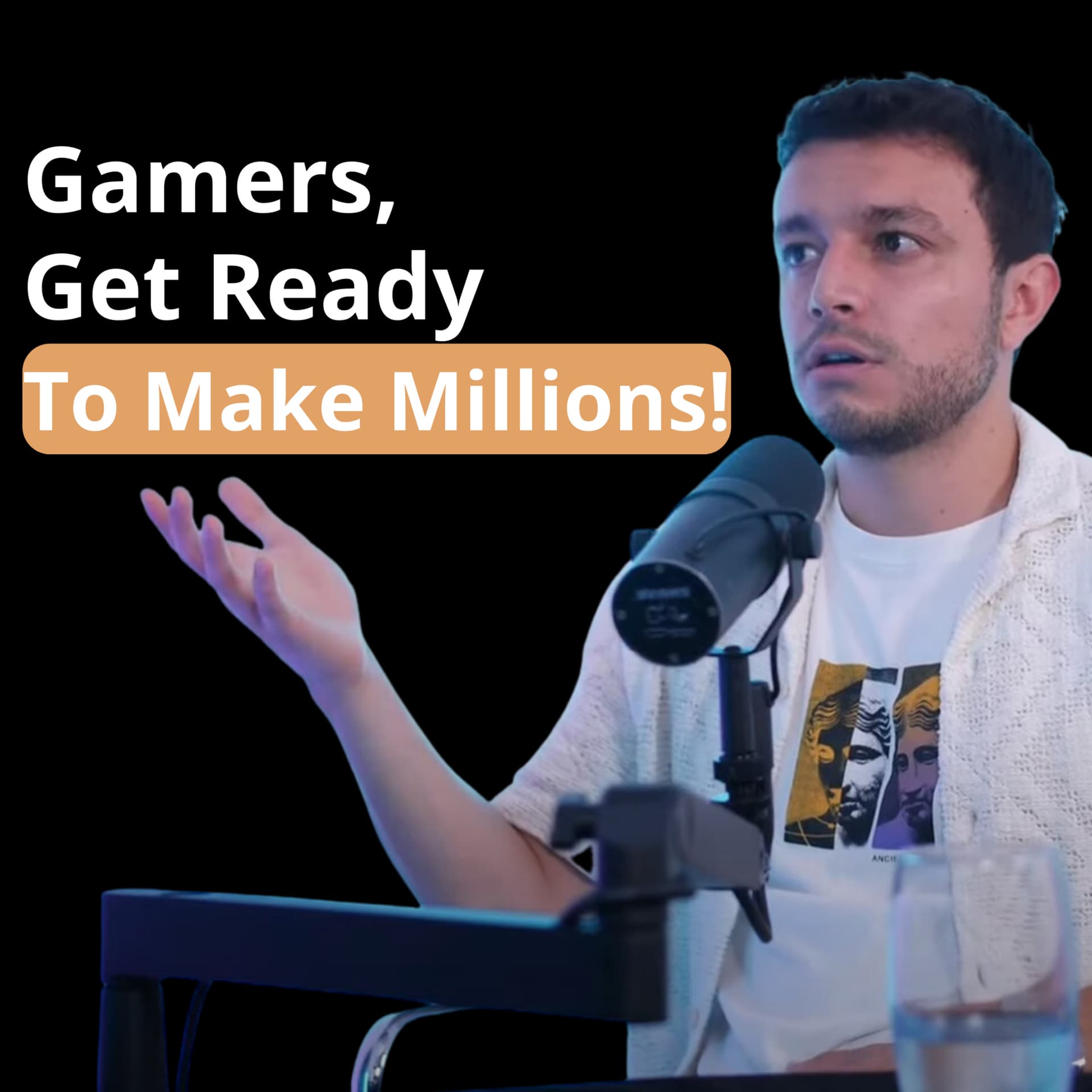
Episode Summary In this episode, host Kevin Follonier talks with Nicolas Cortes, a young Colombian entrepreneur and founder of GGs.io. The conversation delves into the future of gaming, the impact of dopamine on children, and entrepreneurship within the context of gaming in Latin America. Cortes emphasizes the potential of Web3 technologies to create sustainable income opportunities for gamers while also addressing the challenges of addiction and responsibility in parenting.
Key Topics Discussed
Introduction to Nicolas Cortes
- Background: Young Colombian entrepreneur, founder of GGs.io, which aims to help Latin American gamers earn a living through gaming.
- Mission: To create a sustainable and ethical model for gamers in Latin America, utilizing the potential of Web3.
Health and Fitness in Gaming
- Discussion on the importance of fitness and health for gamers.
- Cortes shares insights on how physical well-being can enhance mental performance and overall productivity.
The Dynamics of Hiring Friends
- Cortes shares personal experiences regarding hiring friends and the associated risks.
- The importance of professionalism in maintaining business relationships.
Investor Relations
- Strategies for dealing with investor pressure and expectations.
- Importance of finding the right investors who align with the company's vision.
Future of Gaming and Web3
- Current Landscape: The gaming industry is valued at nearly $200 billion, larger than movies and music combined.
- Web3 Potential: Emphasis on ownership of digital assets, trading, and sustainable income models compared to the failed “play-to-earn” models.
- Discussion on the impact of Web3 technologies on gaming, creating opportunities for meaningful earnings for players.
Child Development and Gaming Addiction
- Dopamine and Addiction: Exploration of how gaming and social media can lead to addiction, particularly in children.
- Parental Guidance: Advice for parents on managing children's screen time and setting healthy boundaries.
- Cortes stresses the importance of balancing gaming with outdoor activities and other forms of engagement.
Entrepreneurship and Self-Improvement
- The necessity of a strong work ethic and self-regulation for entrepreneurs.
- Cortes shares his insights on the entrepreneurial mindset and the importance of continuous self-improvement.
- Discussion on the intersection of gaming skills and entrepreneurial success, including decision-making under pressure.
The Role of Parenting
- Discussion about the challenges modern parents face with technology and gaming.
- Cortes emphasizes that being a responsible parent requires effort, and that children should engage in healthy activities beyond screens.
Pursuit of Happiness and Self-Control
- Cortes discusses the importance of inner peace and how personal experiences shape one’s outlook on success and happiness.
- The balance between professional demands and personal well-being.
Key Takeaways
- Opportunity in Gaming: The gaming market presents vast opportunities for financial gain, especially for players in underrepresented regions.
- Dopamine Management: Understanding and managing dopamine levels is crucial in countering addiction, especially in children.
- Parenting Challenges: Effective parenting requires active engagement and setting boundaries regarding technology use.
- Entrepreneurial Mindset: Success in entrepreneurship often stems from resilience, decision-making skills, and the ability to learn from failures.
- Continuous Growth: Personal development is a lifelong journey, vital for both personal and professional success.
Conclusion This episode of "When Shift Happens" provides an insightful look into the intersection of gaming, technology, and personal development, emphasizing the potential of Web3 to transform the gaming landscape while addressing the critical issues of addiction and responsible parenting. The conversation encourages listeners to reflect on their own relationships with technology and to strive for a balanced, fulfilling life.
---
For more information about GGs.io and Nicolas Cortes, visit:
- [Nicolas Cortes LinkedIn](https://www.linkedin.com/in/nicolas-cortes-acosta)
- [GGs Events](https://ggs.io/events?game=ALL)
Follow the podcast
- [Website](https://www.when-shift-happens.co/)
- [Instagram](https://www.instagram.com/kevinffollonier/)
- [TikTok](https://www.tiktok.com/@kevinfollonier)
- [LinkedIn](https://www.linkedin.com/in/kevinfollonier/)
- [Twitter (X)](https://twitter.com/yieldlabs)
Written by AI. May contain mistakes. Listen to the episode to check what was said.
Transcript
Automatic transcript. May contain errors.0:00What else did you learn from your dad that you think is very useful? He said that it's always better to be one time red than a thousand times pale. So what that means is it's better to say the things you don't want to say once. Okay. Just maybe like get out of it or just like be frustrated a thousand days. You know? Very interesting. It's very true. We have to gaming how much money they actually make with these in-game purchases. Huge. It's almost a$200 billion market this year. and everybody says this cliche thing but it's true like it's bigger than movies and music combined like it's the biggest form of entertainment by far you know we started ggs because we saw an opportunity to help uh latin american gamers make a living off of gaming which is like every gamer's dream right yeah like if you play and you play a lot and it's your passion like imagine if you could make money out of it and it wasn't really possible to do until web 3 if you are concerned to be bothered by being a parent you shouldn't be a parent and same thing with relationships right like i i feel like from our generation down everybody wants it easy but wants the whole thing they want the whole cake without the effort so what does that mean it means i want this amazing person to be my partner.
1:24I want this amazing dream relationship, but I'm not willing to work for it. I'm not willing to go through frustration. I'm not willing to go through conflict. I'm not willing to work on myself. I'm not willing to see what I'm doing wrong.
1:43Like, right now, I'm like the typical gamer. Okay. Yeah, nice. And focus on the health and fitness, counting macros. Yeah, Exactly. So you want to be the dude who looks really good and who also, who does all basically turn your passion into a job. And you leverage the internet to scale, basically. Yeah, ideally. For leverage. So macro counting, yeah? Yeah. Why did you start that? I wanted to be healthier and fitter. Like I want to be ripped. You know, like I want to look good. I want to feel good. Why do you want to be ripped? You said, I want to look good and I want to feel good. Yeah. Is it the same thing or not?
2:24Yeah. So for me, I remember like I have this friend, he's a CEO as well. And he always says that wealth starts with fitness. And when you look at the mirror and you see yourself looking good, your mind also starts to feel good. And you start thinking like, okay, if I can make my body look good, what else can I do better? Right? Absolutely. And for me, that's like the main thing. You know, it sets my mind to be better. at something. That's why I also take ice baths like every day. So it not only sets your mind to feel better, but actually it sets the expectation on the other side when you meet people, especially in business.
3:03That's true. Like you're just showing people realize, oh man, this person is fit. Like you basically set a certain level of respect that you would just not have if you were just like not fit or actually even fat. Yes. Right. You're like, oh man, this person takes care of themselves in addition to building a company or having this interesting career. So like - It's a set of things, right? Like it's being fit. It's learning how to dress. I'm not saying like you should dress, you know, fashion and whatever, like dress how you like, but dress well, like be well presented. I think that's important.
3:34Good posture is important. Having a good tone of voice is important. Like those things in business do command respect and it does make a difference, especially as a CEO, when you're pitching say investors, or when you're pitching clients, that does make a difference. Did you study the posture thing or? No. I just had a very strict dad. Okay. So he told you? Yeah, like stand straight, stand up like a man. Okay. Yeah. Interesting. What else did you learn from your dad that you think is very useful? Quite a bit. I don't know if the saying, it's in Spanish because I'm Colombian, But he said that it's always better to be one time red than a thousand times pale.
4:19So what that means is it's better to say the things you don't want to say once. Okay. Just maybe like get out of it or just like be frustrated a thousand days, you know? Very interesting. It's very true. So that's very important in business. A lot of founders, we have Luca Nets from Pudgy Penguins later on today. And he talks about that. he says one of his biggest mistake is not making the key decisions earlier. For example, I know I need to fire someone. I'm going to try to find an excuse and I'm going to do it. Yeah. And like, that's the classic being a big, basically being a people pleaser.
4:53I'm a people pleaser. And that's very problematic in business because you don't want to be too mean. And you're like, oh man, maybe this person is going to get better. But like, as you say, if you're read once, but you say, okay, I'm sorry. It's not going to work out. instead of like just being there and building up this frustration. And it's such a, it's, it's a balance of things, right? Because on one end, like in my personal life, I am a people pleaser. Okay. But I've learned how to do it in a healthy way. Like not disregarding myself, like not doing it for the wrong reasons, like not doing it to fill in voids in myself.
5:30And in business, I went to the opposite side. Like I went like full, almost dictator mode, right? And none of them are good. How do you even do that? How can you be different in business than in real life? For me, I found like it's all one. And obviously you get fucked a few times in business. Like you learn to be less nice, but you still, I think your true nature is still in there. So how do you become a dictator in business when you're a people pleaser in real life? More than being a dictator, I think it's learning to rely on objective things like data and purchases and revenue and follow that.
6:15And also qualitative feedback from like your clients and mainly your clients. So I was going to see investors, but you shouldn't always listen to your investors. And so it's measuring objective things. and then when you're sure of something, like let's say you're growing revenue, right? You have a good product. People are saying, I love it. But your team for some reason wants to launch this and that and they want to focus on this and that and they want to do. It's your job as a CEO to say, fuck no. Like that's not going to happen. This is the way and that's it. You don't like it, get a job elsewhere, right?
6:50So that's the way that you, it's a dictatorship in that regard, but it's aligned with the vision and the purpose of your business. and it's tied to objective metrics, not just because I want to say them that this is the way that we're going to do it. It's because there's something to back it up, right?
7:10Okay, you do that during the day, but then you go home. Can you sleep at night or not? Because for me, I would be like, oh man, I remember having to fire some people who were actually not even bad. It's because we would lose clients and we didn't need these people anymore. Otherwise the business would not do properly, you know? and I would remember spending entire nights without sleeping you know so like the this connection between the business and my own personality and like yes you can have all these I mean you need to follow the metrics you need to follow the data that's for sure and you also need to follow your intuition because people often don't understand it until it shapes into like truth actual truth because you have your vision obviously and you need to be I think it's really good as an entrepreneur to be you're very stubborn like you need to get the feedback but If you have your idea and your vision, you need to stick to it.
8:01It's a very hard balance because there's moments when you need to trust your gut. And there's moments when you just need to stick to the metrics and you need to find when are those key decisions. And there's no right answer to that. Like it's a mix of experience and screwing it up a couple of times and just learning. Do you have co-founders? so i'm i'm i was a solo founder okay and i brought in two co-founders later uh when when when we raised our first round why did you do that um because they're really good like they make the company better so and i've been working with them six years one uh with one of them six with the other one we're almost best friends since we were like five and we worked like six years ago as well together.
8:52Yeah. To work together. Yeah. That's a risky one, actually. Building business with friends. Yeah. It's, um, it off, you can often lose your friendship. Yeah. So I think the difference here is that we've been working together quite a bit. We've gone through a lot, uh, in business and working together over the past few years. So it's funny because there's, there's like four of my friends work for my company, but they don't work because they're friends. They work because we've worked previously. They're good. Just because organically, it was like, hey, I got this thing. I got this project. They're all gamers as well.
9:28So it got into that. How do you manage negative feedback towards them when they're your friends? Or they're so good? You don't have any negative feedback. I'm very strict and I'm very demanding. Sometimes it's a good thing and sometimes it's not. I'm still learning how to balance that as well. In general, in my life, it's hard when you're doing a startup and when you're trying to do a top startup, like a top 1 % startup, right? Like before the podcast, we were talking with one of my investors, right? With Eddie. And he was saying like, you asked him like, how many times do you say yes to a deal?
10:11And he said like, very few, right? Putting some pressure on you. Additional pressure on you. Maybe, but more than that, yeah. I mean, it also gives you motivation. I'm the one who was selected. It gives you merit as well. Yeah. But it also gives you, it sets you on a standard that you know you need to live up to. Yeah. Right? So, for example. You don't want to disappoint. Another of our funds is called Boost. They literally invest in 1 % of the businesses they talk to. Okay. So out of a thousand, they invest in 10. And we were like the 10th company on the, they call it tribe. So it was like the cohort that we were in.
10:51And that was last year. And we were, so it was, it was Coincilium. It was, it was Boost. Then one of the biggest exchanges as well in Latin America invested in us. So, and we're like, I think the right now, the only startup that's doing what we do in my region in Latin America. So then when you have all those expectations, yeah, like you feel some pressure. but you also feel the need. And at least in my case, I don't feel so pressured by my investors because I honest to God, I love them. I have the best investors. They're aligned with what I want to do. Like they're like, if that's your vision, go for it.
11:26If you screw it up, we don't care. You know, of course, if we do screw it up, they're going to care. Obviously. Okay, that's very interesting because I was about to ask, how do you deal with investors and probably they all have their, they want, I mean, they mainly want a return, obviously, but they all also have their own kind of vision or ideas. But like, if you're with people, we just say, we trust you. So it's finding the right investors. I think in everything in life and relationships, what I learned is it's about finding the right people who you can speak the same language, right? And get to middle grounds.
12:01With my investors, I don't need to explain them. I don't need to, I have founder friends that they raise money and they have nightmares with their investors. Like they don't sleep at night. They get calls at midnight because their investors are literally pressuring them to hire more people, fire people, move business models around. I don't do that. If one of my investors did that, I'll give you back your money. You know, I don't do that. If you're aligned - I can see the father character here. Yeah, yeah, yeah. But again, it's because there's a vision, there's a purpose, and I'm going to stick to that, right?
12:38And you invested, if you invest in me, you need to invest in the purpose and in me as a founder. And if you invested in that, then you need to let me do my job and I'll take care of it and I'll make this a success. So what's the vision and the purpose? Well, in GG's, we want to have - What does GG stand for? So GG's is like the main term in gaming. Whenever you finish a match, you say, hey, GG, bro. Ah, okay. So it's a good game. I see, good game. Yeah, well done. So if you played the whole night, let's say you and I played the whole night, it's like GG's. Okay. So it's like we coined that term in Latin America, everybody that's a gamer understands it immediately.
13:18And we started GG's because we saw an opportunity to help Latin American gamers make a living off of gaming, which is like every gamer's dream, right? Yeah. Like if you play and you play a lot and it's your passion, like imagine if you could make money out of it. And now imagine if you're a gamer in, I don't know, Nicaragua, Ecuador, Mexico, like these countries, and you can make sort of a living by playing. It's insane. It's like for us, it was like a utopian scenario, right? And it wasn't really possible to do until Web3. and then with play to earn, it was sort of possible, but unsustainable.
14:04So subsidized by a... Like a Ponzi model. Yeah, like horrible. And we knew that. And we were actually, when we were raising Preseed, we were one of the few companies that said that out loud. Like we, I remember when we pitched our investors, we were like, this is going to blow up. Like this is not, this is not the thing. Cannot work. And we know it because we come from Latam, there's hyperinflation, There's screwed up currencies all over. Like we understand when there's - This is just another currency that's being printed out of thin air to give to people and it's not going to be valuable. Yeah.
14:37With the added unsustainability of you needed to buy an NFT to get into the game. So it was literally a pond tsunami. So no, that doesn't work. Of course not. But ownership is really cool. Trading skins, it's something that's been proven in gaming time and time again. And CSGO is a great example of that. CSGO moves more volume today, trading volume, than the blue chip NFTs combined. And it's web too. Like they don't even own those skins, you know? It's moving more volume than that. Illegally, there's plenty of black market sites where you can buy in-game currencies, when you can get people to get into your character in a game and grind it out and make gold.
15:19For example, in World of Warcraft, that was a thing for years. in different MMOs. You could level up your character. You can then sell it on like, again, it was very insecure because there's no Web3. There's no ownership. So you would need to say, I want to sell you my character. I would need to give you access to my password and you would need to send me money for it. So if I gave you access and you didn't send me money, like I lost my account. So Web3 does solve those things, but people got it confused. They thought like, okay, play to earn. Let's all be rich. Let's put like, you know, 2 ,000 Filipinos and 10 ,000 Argentinians and let's get them to work.
15:56And that's it. That's the model. Of course, that doesn't work. Like, that's not it. So what's the model? Ownership and trading. I think that's skill-based earning. So I'll give you an example. I spent like, I don't know, 500 bucks or so on Warzone 1 on Call of Duty. I love Call of Duty and I'm good at it. And so I bought like a premium character scan, like an operator scan. I had like this amazing set of weapons. I had like a Rolex as well in that. And they closed Wars on 1, I think last week or this week, like they're closing it like forever. I lost it. What does that mean? That means the game's shutting down.
16:35The game's not working anymore. So now there's Wars on 2, but I couldn't bring. Why did they do that? Because Wars on 1 is an old IP. So they're focusing on the new one and they want to make, of course, more money from the same people. So it's Web 2 gaming. So they're basically screwing their first loyal customers and saying, if you don't upgrade. It's one way of looking at it. There's no bridge between this first version and the second version. No, there's going to be a bridge from the new ones. And a lot of Web 2 publishers are doing that now. That's very interesting. Which is cool. But it's not Web 3, right?
17:11It's like only within my titles. Yeah, yeah, yeah. Which is good. I think it's a very good step. CSGO did that. Warzone has sort of been announcing it, like saying it. So you build this character and all these sort of assets, digital assets, but you lost them. Yeah. And you have no control over that. Yeah. And I would like to at least be able to resell them, trade them. If say I bought my character I'm not using anymore, I would like to have those options. And I think Web3 does solve that. And that's, people don't understand that that's a huge business. How valuable is what you built? to give an idea or like how, how valuable is something that someone could build?
17:53Like the best guys out there who also lost everything because they couldn't move to this second version. So it depends, right? If, if it's a skin of someone like me, that's nobody, like maybe nothing, maybe the price I paid for, maybe the price I paid for on a discount. I don't know. Or maybe I can trade it for a similar skin, which is nice. Like I get what I want anyway. But let's say I'm a very, let's say I bought this skin. And I became like a very famous content creator. Now all of a sudden, that's the skin of whoever, right? Like a celebrity. So now that skin can be worth like tens of thousands of dollars, right?
18:29Now it's a legendary, very rare skin that I used. So I think it works very similar to brands like Jordans, to brands like Rolex. It has that same component if you look at it that way. Okay.
18:46okay so you're trying to solve this problem
18:53of people being able to keep the sort of digital assets they've built and move on not only to next versions but also go across games so what's the goal the ultimate goal is to help gamers in latin america make a living through video games that's important because it's very hard to make a living in Latin America and it's the hardest it's ever been. Can you give some examples of how much people earn in Colombia? What's the average or median salary and what's possible with gaming to give an idea? For example, if we talk about, we had a co-founder of YGG, Yield Yield Game on the podcast and there was the Axie Infinity kind of craze where people were like, oh man, I can earn more money just playing games and doing anything in my normal job, you know, like, do you have some example of what people earn by doing, I don't know, an office job or whatever, and then what's possible in gaming?
19:53Obviously, let's not look at the top 1%, you know, streamers. Yeah, because this is, obviously, like, we know about that, but, like, more how can most people actually understand, oh, this is an opportunity for me. And also,
20:16also even for investors who invest in your company saying, oh, you're actually going to the long tail, the mass market. Yeah. So there's no easy answer, simple answer to that for a couple of reasons. Player earn is dead. Like Web3 gaming right now is dead. and most good Web3 games are launching next year. So there's nothing right now. Like if you try to make money and get, like there's no good games right now. And the main lesson from Axiom, from Peg Axi and all these Web3 games was that you need to first build a really good game and then you can build an economy on top of that. Not do it backwards, right?
20:59Like not start with the economy. And it needs to be sustainable. And like, there's a whole thing. Onboarding alone in Web3 is like super hard right now. So it hasn't even solved that yet, Web3, right? Like there's no solution to onboard mass users yet, like a Google login or something of that nature. So it's not built yet. So that's one part. The other part is that there are ways to earn in Web2, but they're also limited, as you said. Like there's eSports, there's streaming, but you make good money if you're actually like top 1%, top 3 % within those pools. But we're not gearing up. So there's two things that we're doing.
21:43We said like, okay, we can't solve, make a living for gamers right now. So then what's the next best thing, right? So what we're doing right now is we're giving them more value for what they pay. So what we do is we have like a premium subscription where they pay$6.99 and they get up to 70 bucks in value. So we make at least their gaming experience like a lot more valuable right now. And that's step one. Step two is when you pay the subscription, you start getting skins, items, currency, and your favorite games. Web2 games. These are not NFTs. These are not tokens. None of that. And so we found like this is very recent that we've been iterating with this.
22:26And we found that sometimes gamers get a skin that they don't like. Or gamers get a thing that they're not going to use. And so now we're enabling them to trade that for something else with someone else. And it's Web 2. It's not an NFT. So it's very manually. It's horrible. It's not the ideal. But here's the opportunity that I see. Next year, when all these games launch, the good Web 3 games, and they do have those components, and you can become good at those games, you can start minting and trading, and it's all secure, and it's a lot better. We can have that infrastructure ready. and we can tell gamers like, hey, you join GGs and we help you build your gaming portfolio.
23:07And that I think is very sustainable because it's already been happening for years with CSGO. Like that's proven. It's a proven model. It just needs better security. It needs interoperability. It needs more openness and safety for users. But that's a thing you can do to make money. And if you're also good at a game, but let's say you're not e-sports level, but you're good, right? Like you can go in rank mode and you can rank up quite a bit. games web 3 games have in for example dota 2 has a similar thing um where part of the revenue that the game receives it gives back to the users in the shape of price pools in in this type of stuff i think that's a brilliant model and if you're maybe not top one percent or you're top 10 in a game you can still make tokens out of it and that's great how big there's some numbers on um, web to gaming, how much money they actually make with these, um, sort of in games purchases.
24:08How big is this also compared to like the revenue? Is it like a majority of their revenue? Because people, you think about people who have no idea about gaming and even no idea that there is a, there is a massive market with this gaming and e-sports and everything. Basically. Yeah. It's huge. It's almost a$200 billion market this year, which is, and everybody says this cliche thing, but it's true. Like it's bigger than movies and music combined. Like it's the biggest form of entertainment by far, you know? There's 3 billion gamers in the planet. This includes, of course, casual gamers. This includes people that play Candy Crusher.
24:48It includes everything, right? If you play solitaire in your phone, that's in that. A gamer, okay. Mid-core gamers, it's a little bit smaller, but it's still like huge. And about 70 % of that market, like over 200 billion, is owned by the AAA publishers. And most AAA publishers are owned or invested by Tencent. So gaming is a huge thing that's also very like... What's a AAA producer? So like Blizzard Activision, those type Supercell. What's the problem if it's a monopoly? So one example of a problem that, so EA, EA is a very famous company for not being that kind to gamers. So it was with the Star Wars game years ago, they had control of that IP, right?
25:42And so what they did is they launched like loot boxes. And since they kind of knew that they could do whatever they wanted with it, then they just overpriced it. You need to pay like, I think it was like a thousand bucks for like unlocking the characters that you actually wanted. Like it was abuse. But gamers did started like complaining about that. The stock went down. They had to change it. Like it's good. Like, yeah. Yeah. Okay. But those are the risks of a monopoly. What would you tell parents whose kids are spending, according to them, way too much time playing video games? Because I'll just say something regarding it.
Read the full transcript
26:24I'm not a gamer. I didn't play. I mean, I played one or two games when I was a, I would play a PlayStation, like more sports game. And I would realize I had like a volatile character, like smash a few remotes and everything. It happens. And also I have a very addictive personality, which is why crypto.
26:44And like, I got hooked to one of these games. actually. It was a 24-7 online game where you go, it's called all game, conquer planets. But the whole thing is happening even while you're at school, so you can get attacked while you're at school, but you're not there. So every morning before going to school or every lunch and every evening, I had to go run home, check if I was attacked, et cetera. And I was like, oh man, this is not sustainable for me. But what I realized, for example, in crypto, a lot of the really good traders or the people who did really great in crypto or even in entrepreneurship in general are previous gamers.
27:20And the reason they say that is the reason why gaming really helped them is because of strategy, understanding strategy and how to manage scarce resources at a young age, which is really interesting when you put this into perspective with parents who, you know, you have all these phones, all these things that I don't know how to control that. My, my, my child is hooked and like, he's spending too much time playing these weird games and this is really bad. And so what would you tell them? So again, I think that's a, it's a complicated thing. Um, on, on one regard, it is true that especially online games do build critical thinking and especially it builds the ability to make decisions under pressure can you give some examples call of duty wars in any shooter game uh for example i'll give you an example like the whenever i used to play in wars on one something called solo quads which is you play alone but you're playing against squad of fours people so every team that every battle that you go in, you're at disadvantage because you're alone and there are four, right?
28:37And there's insane amount of variables. Like they can be camping in a building. You need to figure your way out. Like you need to shoot them through the window. You need to throw a smoke grenade. You need to throw a stun. Like there's so many options and you need to think like this. And once you see an opening, you have literally like a second or a little bit less than a second to make a decision and decide to take cover or not take cover. Decide to take cover or push. Decide to go into that door or take the window off. You know, it's a limitless amount of decision making within a minute. And that does build character for entrepreneurship.
29:17That is literally entrepreneurship. It's making decisions all the time, plenty of them, under pressure. And you wish that you can make them a little bit slower. You wish like your business could wait for you just a little bit, but it won't. And so you need to do them now. You need to do them well. So it helps with that. Now, there's also issues, health issues, especially with kids. Overall, I don't think a kid should be watching. It's proven. Like you shouldn't watch as a kid small screens in general because your eyes are not built for it. So your eyes form badly. What's a kid? So literally like three years old plus, right?
30:01Right. So what age can you start watching too much from screen time? From 12 onwards. Okay. Like even sounds early. I have. Even your brain is not fully developed, I think, until even like 21 or 23. Exactly. So 23, 25. Yeah. So I have two little half brothers, which they're my brothers. I don't call them half brothers, but they're from a separate marriage of my dad. And they have like five and three right now. Or seven and three. How old are you? 30. 30. Okay. And literally the doctor just prohibited like screens for them because they're starting to get like their eyes screwed up. Okay. So they can't watch like on a phone.
30:46They can only use like the big screen and everything. How did your family realize they have problems in the eyes? They just went to a consultation with a doctor and they just said like, stop it. You know, you can't, you can't do that. But beyond the screen thing, there's the dopamine thing, which is even worse. Especially with games. Especially with games built for kids. Those games tend to be designed to a granular level to give you as many dopamine hits. So it's the same as social media, basically. How do I hook you up as much as possible? And that's very dangerous. Because dopamine, I think you know this.
31:24like dopamine has highs, but then it's very, very difficult. The second and the third and the 15th and the 50th time to get to that same high. You need more dopamine hits to get to that same level. So you need to be, you need to be using your phone a lot more to get the same level of arousal, excitement. That's horrible. It makes you more addicted. And then the thing is dopamine has a base level. and with most addictions, you get to the peak, but then you drop below your base level and that makes you depressed and anxious. So basically, phones literally are designed to make you anxious and depressed.
32:04And so are those games. Yeah, especially casual games. So what's the solution to that? That's a tough question. That's a money-making question if you resolve that. but for now, I'd say if you're a parent, don't let your kids play that much. Like it shouldn't be, a kid should be outside. Like I'm a gamer, I play a lot. And I think my parents, that they only let me play for two hours a day. And that was it. Yeah, but it was another generation because now you're saying go outside. For us, I'm 31. I used to go outside a lot. You know, we didn't have all these phones and we're the old generation, man.
32:45Like what are you going to do with your kids? because the problem is, obviously you set the rules, but like if most parents are lazy and as soon as there is an issue with their kids, play this game, watch this, leave me alone. And even in the restaurant, you go to the restaurant in this city, man. Every kid has a three years old kid, just because the parent doesn't want to be bothered. The problem is you can be an outlier parent and like want the best for your kid. But if your kids, then they start to go to school and they see everyone else with a screen, you know, like they will come and say, hey.
33:24Yeah. But then I want my candy crush too. Yeah. I mean, and you can have it, but maybe just an hour a day. Right. Like, and you need to set rules for that. Like, for me, if you are concerned to be bothered by being a parent, you shouldn't be a parent. And same thing with relationships. Right. Like I feel like from our generation down, everybody wants it easy, but wants the whole thing. They want the whole cake without the effort. So what does that mean? It means I want this amazing person to be my partner. I want this amazing like dream relationship, but I'm not willing to work for it. I'm not willing to go through frustration.
34:04I'm not willing to go through conflict. I'm not willing to work on myself. I'm not willing to see what I'm doing wrong. Like everybody's just giving me the other one. I have two completely different questions. I'll go with the first one, which is linked to addictions and dopamine. Your phone is on the table. What's your relationship with your phone? Very honestly. Yeah. When I'm traveling, I'm a little bit more, how do you say it? On it for two reasons. One, I want to make the most out of these events. So I'm scheduling meetings. I'm replying with my team. I only have normally till noon of this time zone to be able to talk with my team.
34:54So normally the first part of the day, I need to be like super on it. And on the other hand, I have my girlfriend. And it's also the only part of the day that I get to speak to her. So for this first part of the day, I try to be like way more on it. Second part of the day, I try to just focus on meetings and like not use it. do you think you're addicted to your phone? Do you think you spend too much time scrolling social media? No. LinkedIn, Twitter. I have an app. If I open, so I don't have Twitter. If I open Instagram, it pauses my app and it says, take a deep breath. Do you think it's enough?
35:36Yeah, it helps. To hold you from? Well, I'm also like, I want to do it, right? Like I have intent behind it. So I remind myself why I installed that app and I'm not a kid. So I'm an adult. So I think I can, you know, like I'm, I'm mature enough to put the phone down and not watch Instagram or say like, I watched it today, like for 30 minutes, it's enough. Right. And that's the thing that people sometimes want to get around and have like hacks for that. I don't think there's, there's hacks sometimes for like mental toughness and just being a grownup. Like again, in entrepreneurship and everything.
36:10I can see your dad speaking there like, this is how it works. This is how life works. I love it. I love it. It served me in entrepreneurship because it's like, yeah, I wish decisions would wait for me. That would wait that I'm ready, right? To make them. Fuck no. Like you have to make them now and you have to make them well. And so if I'm sleepy that day, tough luck. If I'm not feeling that good, tough luck. you know I what I do is I do the best of it that's why I take my ice baths that's why I meditate that's why I go to the gym the best I need to be mentally good because I need to make sure that I'm giving my best self and it may not be a hundred percent every day some days it's like 70 I'll admit to that but I'm okay with it because I know that it's the best that I can do that day why do you need to do all these things why do you need to why do you feel you need to to be making your best every day?
37:09Because I'm trying to play at the highest level. And if you, if, if you want to play in the majors, you need to do major league training. You can't, you can't have it all. So it's a lifestyle. I don't see it as a lifestyle. Is it, no, but what I'm saying is like, is it something that a common pattern that you see amongst people who are really successful? They look what they're eating. I mean, more and more, the new generation, they're really careful what goes into their body what goes into what kind of content they consume what goes into their mind who they hang out with all these things like do I have enough sleep do I drink alcohol all these things I feel like it's more and more the case that's the thing that NPCs like you know talking about gaming NPCs they to non-player characters they don't want to recognize.
38:06They say, oh, yeah, this guy got lucky, or he's working hard. They don't see that. It actually takes an entire, completely different mindset and lifestyle, which we love. I love meditating also. I love to go to gym. I felt 10 times better, but this thing is literally going to set me up to do much better in life. And if I'm saying, guys, I'm not drinking any day of the week, or I'm drinking once a month only, or sorry, tonight I just drink chamomile tea with honey on the side when you're all drinking alcohol. Like, it's not because I'm boring. It's because, hey man, I have one podcast on Monday, yesterday, seven podcasts on Tuesday, today.
38:44Like, and I want this podcast to be next level quality because the entire future, the relationship I built during this podcast, it's going to be online forever. And the intros I'll get from that and everything, I just want to do my best. So it's definitely a lifestyle. I feel exactly the same thing. Where do you think this entrepreneurial mindset comes from? Mine? Yeah. Both my parents. They're entrepreneurs? No. They're just very strict. So how does having a strict childhood impact or influence becoming an entrepreneur? Because they always expect they didn't want me to be the best. What's your definition of being the best?
39:28Because you could continue. like because i have so many um their definition was one and i didn't agree with it what was it they wanted me to go to college they have a nice job the classic one yeah i had the classic one which is super fair they're from yeah absolutely um i didn't i dropped out of college um and and i and i went and did my own business what you drop off of college um i didn't feel that it was
40:03I think that would have been, for my case, I'm not saying people should quit college. Like if you're going to be a doctor, you should. I do think there's also careers that aren't that good in college. Marketing, for example. If you want to do marketing, you should learn it doing marketing, not in college. So, I think that's what I'm going to do. I'm going to do a lot of things. I'm going to do a lot of things. I'm going to do a lot of things. So that was the path that they set. I didn't like it. I didn't do it. It was the best decision. And success has been evolving from being financially well to like when I was 18 and 20, that was like the main thing in my mind.
40:44Now I just want to be more happy, a little bit more happy every day. How do you deal with this? Because happiness, for me, what I realized is happiness is obviously you want to have a drive. especially as an entrepreneur, you need to have a drive and a passion and feel that you're working and struggling. Actually happiness is in the struggle, not in the results. Because once you reach your milestone, like feels kind of empty because it's like, if you don't set the next one, you're not really going to be happy. But what I realized also by doing really well and fucking up a lot and like massive fuck ups, like for example, last year in crypto lost millions of dollars in two days.
41:22I realized happiness is, you know, this coffee tastes good. I meet a cool guy. I go to a nice place and I'm present. The simple things that you don't need to build companies and make a lot of money for. Yeah, for sure. So how is this related to trying to become the best and making money and being successful? Yeah. Versus like, for me, it feels like almost two separate things. Obviously, one can fuel the happiness. the feeling that you're working towards a greater goal and like a real passion can feel but i think it's still linked happy true happiness still linked to like the very small things yeah um so it all depends on what happiness is for you um what is it for you it's it's the lap it's having inner peace it's having a life where i have inner peace and my inner peace doesn't depend on external conditions.
42:17Do you think that's even possible? I wish. Because, I mean, so it means there is always shit going to happen, but it's not going to impact you that much anymore, right? Yeah. Because you are trained mostly through meditation. No. And also, so what? Through life experiences? So I see life as a school. And I think that as you learn your lessons, you don't need to repeat them and they don't need to affect you. I'll give you an example. years ago I would get like insanely insanely frustrated when something didn't go my way especially in business because I was repeating the patterns of my parents of you need to be the best and that's it and you can't be mediocre you can't be a failure um and so I was repeating that and I was being very hard on myself because that's the way I was taught right today I still do that in some areas like I'm far from perfect, but I see it as a school and I see it like, okay, why can I learn from this?
43:18And so when something doesn't go my way, I try, like I said, in business, go back to the data, check out, don't check my feelings, check the data, check what the market is saying, make a decision based on that. And then like in my relationship and with my girl, we're starting to become like super good at this. Like when there's an issue, we don't start to see like oh you did this to me or you hurt me after how much time in the relationship a year how much training and a lot and a lot of training yeah a lot of yeah ups and downs yeah a lot it wasn't easy and she didn't know how to do it i didn't know how to do it we've been learning to do it very recently and we're just starting to become good at it i'd say um do you use external help not like Like each of us, yeah.
44:03Podcast, psychologists, whatever, therapy. Yeah, I have a life coach. Okay. And I have things I invest in myself like to improve. She has also like a therapist. And yeah, like we both do it separately, but we both work a lot on each other. And the conversation with her whenever we have a conflict goes from, oh, you did this to me or I feel insecure and need to fill my insecurities. to, hey, this is my insecurity, but I am feeling it. And I want to tell you about it and see how we can together resolve it as a couple and as a team. And that has changed the whole thing. I think to end this podcast, I read yesterday and he was really telling, a previous guest on the podcast was, he's called Loic Lemaire.
44:56He was, he built LeWeb. He was early investor in LinkedIn and Twitter, he knows Jack Dorsey and all these guys from the Silicon Valley. And he now is into spirituality, goes four months per year in Amazon forest to live with tribes and do all this kind of stuff. And he posted this thing where it was written something like, if someone is able to make you angry, it means they have control over you. It's exactly that. It's basically whatever someone does or triggers you with, obviously, much easier to, in theory, than in practice. But like, if you can become a master of yourself and not get affected, then your life is going to be much easier.
45:40It's understanding that there's no outside. At the end of the day, it's you and your mind. And your perception and your program. Yeah. How you receive things. Somebody can be insulting you right now, but if you have enough self-love and you know that that's not true, you don't need to react to that. I know that it's way harder. Like I react to it still. You know, like I'm still not there, but I'm trying and every single day I try a little bit more. Amazing. Thank you so much for this. That was awesome. Muchas gracias.
From the publisher
Nicolas Cortes is young Columbian Entrepreneur and the Founder at GGs.io
GGs platform helps Latin American gamers make a living of their favorite game.
Key topics:
Health & Fitness
Hiring your Friends as Employees
Finding the Right Investors
The Future of Gaming
Dopamine and Children Addiction
Self Control & Happiness
Sponsor:
We are proud to partner with Coinsilium, a focused Web3 investor and venture builder supporting innovative startups building a decentralized future.
Coinsilium provides vital funding and expert advice to Web3 and AI-powered early-stage technology companies. Coinsilium also provides strategic advisory services to projects looking to issue tokens.
With deep expertise across crypto, DeFi, and Web3, Coinsilium helps accelerate ambitious Web3 startups to the next level. Learn more at https://www.coinsilium.com
Follow GGs & Nicolas
https://www.linkedin.com/in/nicolas-cortes-acosta
https://ggs.io/events?game=ALL
Follow When Shift Happens:
Website: https://www.when-shift-happens.co/
Instagram: https://www.instagram.com/kevinffollonier/
Tiktok: https://www.tiktok.com/@kevinfollonier
Linkedin: https://www.linkedin.com/in/kevinfollonier/
Twitter (X): https://twitter.com/yieldlabs
Chapter:
00:00 Nicolas Cortes
01:47 Discussion on Health and Fitness in Gaming
08:53 Risks and Rewards of Working with Friends
09:54 Dealing with Investors and Pressure
12:48 The power of Ownership of digital gaming assets
12:52 The Vision and Purpose of GG's
16:02 The Problem with Current Gaming Industry
17:56 The Future of Gaming with Web3
21:44 Current Solutions and Future Plans for GG's
22:22 Web3 gaming
23:56 The Size and Scope of the Gaming Market
26:13 The Impact of Gaming on Children
29:37 The Risks and Downsides of Gaming
31:15 Dopamine game for a video game
32:20 The Role of Parenting in Gaming
33:54 The Intersection of Gaming and Entrepreneurship
40:30 The Pursuit of Happiness and Success
44:44 The Power of Self-Control and Perception
#Entrepreneurship #Crypto #News


