
In short
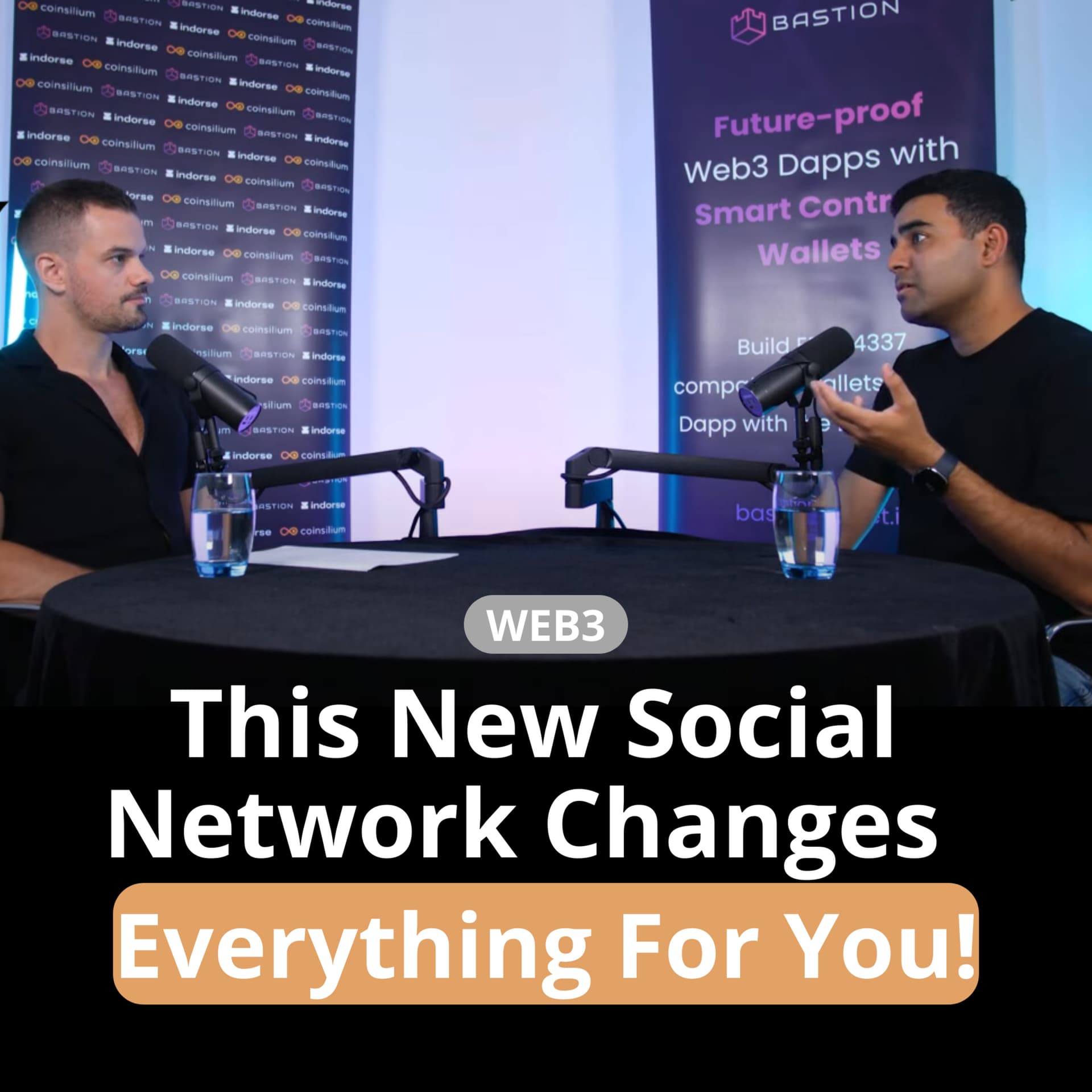
Podcast Notes: When Shift Happens Podcast - Episode 51
Episode Title
E51: Indorse CTO: Creators: "Own Your Audience, Control Your Future"
Host
- Kevin Follonier: Host of the podcast, focused on deep conversations with leading figures in the crypto space.
Guest
- Gaurang Torvekar: Founder of Indorse and CTO of Byzant, a decentralized social media platform. Notably, he was the first to post a prenup on the Ethereum blockchain in 2016.
---
Key Topics Discussed
- Ethereum vs Bitcoin
- Gaurang emphasizes the importance of *smart contracts* which are unique to Ethereum compared to Bitcoin’s primary function as digital currency.
- Byzant: A Blockchain-Based Social Media
- Byzant aims to enable content creators to own and monetize their work and communities.
- The platform seeks to rectify the problems faced by traditional social media platforms like LinkedIn.
- Revolutionizing Advertising
- The discussion touches on how decentralized networks can change the advertising landscape.
- Current advertising methods on social media are seen as intrusive and ineffective.
- Smart Wallets: Future of Transactions
- Introduction of *smart wallets* utilizing a new standard (ERC-4337) to improve user experience.
- Smart wallets allow for features like multi-signature ownership and session keys, enhancing security and usability.
- Blockchain in Education
- The importance of using blockchain for diploma verification and credentialing.
- Gaurang discusses his previous project that involved issuing degrees on the blockchain.
---
Detailed Breakdown of Discussions
Meet Gaurang (0:00 - 02:27)
- Introduction of Gaurang and his background in blockchain development.
Indorse & Byzant Overview (02:27 - 12:36)
- Discussion on the founding of Indorse and its mission.
- Overview of Byzant as a new decentralized social media ecosystem.
Importance of Blockchain in Education (12:36 - 19:23)
- Gaurang shares insights on how blockchain can be utilized for educational credentials to ensure immutability and trust.
The Evolution of LinkedIn (19:23 - 19:57)
- Critique of LinkedIn’s limitations and the need for a more modern approach to professional networking in the crypto space.
The Value of Experience in Crypto (20:52 - 21:24)
- The guest discusses how experience and contributions in the crypto space differ from traditional job markets.
Interoperable NFTs (21:24 - 22:52)
- Gaurang explains the concept of interoperable NFTs and their potential impact across different platforms.
Overview of the Byzant Ecosystem (22:52 - 23:55)
- Description of the various components of the Byzant ecosystem, including a decentralized ad network.
The Smart Wallet
A Game Changer (26:29 - 36:53)
- Discusses how smart wallets will simplify the crypto experience for users.
- Emphasis on user-friendly features and security improvements.
Decentralized Ad Network
A New Era of Advertising (36:53 - End)
- Gaurang outlines the decentralized ad network's function and how it differs from traditional ad platforms like Google.
---
Key Takeaways
- User-Centric Development: The discussion highlights the critical need for a user-friendly experience in crypto, particularly through smart wallets.
- Decentralization in Content Creation: Creators should have ownership and control over their content, a core tenet of both Indorse and Byzant.
- Blockchain's Impact: Blockchain technology has the potential to revolutionize various industries, including education and advertising.
- Professional Networking Evolution: There's a need for professional networks that reflect the fluid, meritocratic nature of the crypto space.
---
Additional Resources
- Byzant Website: [indorse.io](https://indorse.io/)
- Follow Gaurang on Twitter: [@gaurangtorvekar](https://twitter.com/gaurangtorvekar)
- Follow When Shift Happens: [Website](https://www.when-shift-happens.co/)
Sponsors
- Coinsilium: A Web3 investor supporting innovative startups in the decentralized space. [Learn more](https://www.coinsilium.com)
---
Conclusion In this episode, the conversation with Gaurang Torvekar offered valuable insights into the future of decentralized social media, the importance of user experience in crypto, and the potential of blockchain technology to transform various sectors. The episode serves as an enlightening resource for anyone interested in the intersection of technology, finance, and social media.
Written by AI. May contain mistakes. Listen to the episode to check what was said.
Transcript
Automatic transcript. May contain errors.0:00They need to install a wallet like Metamask or Coinbase wallet. If they forget the password in these 24 words, the money is gone. And by this time, they're like, why am I writing 24 words on a piece of paper? I'm doing this futuristic crypto thing with a pen and paper. Gorong Torvaker, the founder of Indoors and the CTO of Bison, a decentralized social media ecosystem enabling creators and users to fully own and monetize their content. He is also the first person who officializes his marriage on the Ethereum blockchain in 2016. We want to build a new LinkedIn on the blockchain, but we want to avoid all the problems that LinkedIn has right now.
0:35We grew that meter from like five people sitting in a pub, sitting in a bar to like 2 ,000, 3 ,000 people at the end of the last bull run. We believe that all your skills, all your credentials, all your degrees have to be immutable. They can be proven on the blockchain and they can actually tell you who you are as a person, who you are as a professional. Some people's posts are really valuable. Let's say you have a celebrity who posts something and that post becomes really viral. That post could be sold as an NFT. Kim Kardashian posts something. It has a lot of likes and a lot of eyeballs. It becomes valuable.
1:07Or is it still valuable the moment it kind of like reach peak virality and then it's just there? I've been at Endoos for seven years as a founder, but I have worked on so many projects over the time. Some of them worked, some of them didn't work. I'm proud of what I built. I'm proud of the stuff I've done here. I've learned so much. I want a place where I can showcase that. Where I can showcase my amazing achievements. And failures too. And failures too, yes.
1:38How are you feeling? I'm good, yeah. I landed at 7.30 in the morning. Did you sleep on the plane? Yeah, I managed to sleep. But it's not deep sleep, you know. It's like... It doesn't count. It's okay. I'm used to it. I keep saying that I'm used to it. Do you travel a lot? Yeah. You're used to it but you're not used to it. I used to. Not in COVID man. In COVID I didn't travel anywhere for like two years. I was not traveling. Where were you based during COVID? London. Are you in London already? Okay. I didn't go anywhere. How do you deal with this jet lag thing? I used to deal better with it when I was younger.
2:12But now I'm getting older. So you arrived this morning. Did you sleep a bit? Yeah, I slept for like half an hour. Half an hour, power nap. Power nap and took a shower. I can see you fresh. Good to see you in person. Yeah, same here. So maybe let's start with a bit of your background. What led you to being the person you are today, building this Byzant ecosystem in crypto? Yeah. So yeah, hi, I'm Gorang. I'm the CEO and CTO and co-founder of Endorse, actually. Endorse, yeah. Endorse, yeah. That's the company. It's like a blockchain development studio. And we started this company about seven years ago in 2017.
2:55And since then, we have worked on numerous projects in the blockchain space. So right from NFTs to DeFi to token sales to, you know, you name it, we have, you know, Web3 games. We have worked on all of those projects. And personally, I'm a software developer by background. And I got into the Ethereum space because I wanted to write smart contracts. unlike other people who got who came to bitcoin first i came to ethereum first because i was really attracted by the concept of smart contracts because you know the way you could write code on the blockchain that concept just got me into the space you know how you discovered it uh yeah so actually it was one of the first ethereum meetups in london uh vinay gupta who is one of the co founders of ethereum he was talking about uh you know blockchain and all these things i knew what Bitcoin before then I had read the Bitcoin white paper but I didn't really you know get into it because Bitcoin was only about money right.
3:53You couldn't build anything on the top. Yeah I couldn't build anything and then when I was talking about it he was talking about like building Airbnb on the blockchain building some other apps on the blockchain and that really you know that just clicked like a light in my head and since then I just got into the space. I also became the co-organizer of Ethereum Singapore meetup at the time. We grew that meetup from like five people sitting in a pub, sitting in a bar to like 2 ,000, 3 ,000 people, 10 ,000 people even at the end of the last bull run, you know. So yeah. But not in one place, right?
4:27You mean like the online community? No, no, just the Ethereum Singapore meetup. It was the second largest meetup in the world actually. Okay, but when you would organize an actual meetup, how many people would show up? Yeah, so at the height of the bull run. At the height of bull run, when Vitalik came, that was in early I think 2017 or 2018 we had 400 people in a small room and the capacity was like 150 or 200 people people were standing in a queue outside and we were like standing like bouncers at the door and we were like really small nerds I can imagine the nerds camping during the night outside no no it's not the next iPhone it's the Ethereum meetup with Vitalik coming and you know half the people Even I didn't understand half of what he was talking about because he was talking about sharding and all those things at that time.
5:15Sharding, yeah. Yeah, blockchain was just coming up. Ethereum had just launched the year before and no one knew what is sharding. People just wanted to see his pretty face. His nerdy, pretty nerdy face and his pink clothes. So you got into crypto, so not through Bitcoin, as you said, but through Ethereum, which is like not that common. I mean, there is some people like you, but usually people start with Bitcoin first, but also you got in crypto because you wanted to build and you understood the smart contract potential and not for the money. Because usually it's the money that tracks people first.
5:53They're like, oh, I see this thing. Even people who are very technical. Oh, I see this thing going up and down. I want to make money quickly. I'm going to buy this and then I'm going to get interested because it's going up and down like crazy, right? So for you, it was really the building side. Yeah, I bought Ether, which was very early in like 2016, 2017. I bought Ether because I wanted to deploy smart contracts on the blockchain. How much was the release? It was like$1 or less than that. You bought each at$1? Yeah, but I was like a stupid guy. I didn't know it was going to be worth so much, right?
6:23So I'm like, yeah,$1, I was deploying smart contracts. I was giving it away in meetups to people to understand, you know. We actually used to give away Ether and Bitcoin to people at that time. Just to help them, you know, get on the blockchain. It was to give it like 0.01 or 0.05 a third of people. It was quite common at the time. Like, hey, when is that? Probably most of them lost them and are still looking for it today. I'm like, man, that would be worth like 5K. Yeah. Actually, in 2014, I was in Madrid doing an MBA and we had an entire week on Bitcoin. Really? And at the end, yeah, we had an entire week on Bitcoin and no one believed in it.
7:01Obviously, the students were like, I would just think like, how do I understand these things? So I was just thinking, oh, I'm Swiss. So from a countryside and in the village where I come from, there is that one dude who like made it in life according to our parents and everything because he was working for Credit Suisse as a banker. He was 30 years old and we were all like 21, 22. You know, the classic path. He's working for Credit Suisse. He has a great job, a great pay, et cetera. So obviously me, I'm thinking I'm going to have a Skype with this dude from Madrid to Switzerland to understand what he thinks about Bitcoin because he's banking.
7:43He should understand, right? And the guy is like, ah, doesn't make sense. There's no central bank behind it. So you can't regulate the supply and it doesn't make sense. Obviously, I came back as a proud guy, just like repeating what he had told me. Ah, this is all shit and everything. And at the end of that week, we had a one hour speech from a guy called Felix Moreno de la Cova, was CFO of Xapo. Oh wow. Yeah. And he was actually making people set up wallets and sending, he was like the first five people who download this wallet, I send you some Bitcoin. Yeah. And he was doing it live and he was like, oh look, you have the Bitcoin now.
8:21Exactly. And the people obviously remember that. And that's how I got into crypto four years later. I remembered that dude. Yeah. I was like, I need to go and back to Madrid and talk to this guy. Yeah. You know what we used to do? Sometimes we used to print out private keys as QR codes on small pieces of paper and used to give it away. Like each private key had like... I actually learned about that. 0-0-0-0-0-1 Bitcoin or something. I learned about that yesterday. The paper wallets. Yeah. I didn't know about that. It was quite common in meetups at the time, actually. Yeah. You have like the, you have the public key outside and the private key inside.
8:52And yeah, it sounds like so... Crazy, right? Crazy. crazy even even the even the cold wallets today if you think about it is probably much better than paper wallets but still for normal people to use it's nonsense my parents can't use it it's impossible what what do you think of as a builder someone who builds infrastructure of like all this ecosystem we're going to talk about one specific ecosystem later what do you think about the progress of user adoption. I mean, the user experience. Yeah, the UX has been horrible and it is still horrible. And that's what I'm saying, right? Like my father, my mother, like they trade crypto, they buy some crypto sometimes, but I tell them to go on Coinbase and just keep it on Coinbase because I don't want them to deal with those 12 or 24 word seed phrases and all that because they lose those things.
9:47Do they hold crypto? Yeah. Actually, my mother-in-law was shilling Polygon to me, Matic to me. Really? Three years ago. Yeah. Okay. How come? Yeah, my whole family is in crypto. My wife works at Metamask, actually. So I got everyone out there. But the difference between wife and mother-in-law. Yeah. Talking about Matic, I mean, Polygon a few years ago. Yeah. Because in India, it was a big thing at the time and everyone was talking about Matic. Okay. So she's based in India still. and okay, obviously the team is from India and okay. So basically it was the investing what we call the home buyers, right?
10:22You invest in your own country only. Ah, there's this new crypto. Actually, the thing did amazingly well. There's this new crypto in India. Let's invest in that and she ended up outperforming you massively. Oh, yeah. I was like, I don't know what matter, you know. I don't know. Yeah. She made a lot of gains on that. Good for her. Yeah. Continue. No, good for her, I'm saying. Yeah, very good for her.
10:52You said you told me you are the first person who got married on the blockchain. No, I wrote my prenup on the blockchain. So my co-founder actually wrote his marriage certificate on the blockchain. So I wanted to do something different. So I wrote my prenup on the blockchain. And I was the first one in the world to do it. Do you have a normal prenup? It was just for fun a print up on the blockchain so you don't have to go to your wife to explain hey, this is just for fun on the blockchain but it's actually blockchain is not the reality. It's all in the matrix. So it's okay. Don't worry. So we had like really funny clauses in there like if I watch Walking Dead with her no, if she was just Walking Dead with me I'm going to watch Seinfeld with her all these kind of things or we have to keep the room temperature only at 23 degrees all night.
11:41Okay, you wrote all that stuff? yeah we wrote all these clauses actually some really like prank or we had to go on a date night every 15 days you know things like that every 15 days yeah we still do that which you still do so one thing is there something else from the prenup that you still do the temperatures temperature for sleep or for house or yeah for the house like it has to be like 23 degrees you decided that she she how do you think about the about that I don't like it but you know it's written on the blockchain irritable can't be changed warmer you prefer warmer or colder i want colder you want colder how do you feel about the temperature in this room it's a bit hot it's a bit hot yeah yeah it's okay lights and all that too many brains in this room too much uh too much creativity going on energy good energy positive energies amazing okay so you talked about indoors right since seven years.
12:40So how did the company start? Yeah, so before indoors, we were doing another startup called Atarus and we were doing diplomas on the blockchain. Diplomas on the blockchain, okay. So we worked with Neon Polytechnic and did a pilot with them. So we helped them issue degrees for one of their batches on the blockchain. And since then, the government kind of took over that project. And right now in Singapore, all degrees and diplomas are issued on blockchain, like all schools all universities and we kind of did the idea ideation for that i would say why is it useful or even important for degrees or diplomas to be deployed on the blockchain uh yeah so i think uh it starts with your degrees which is like your credentials on the blockchain right and after that what they want to do is they want to create like a whole backpack digital backpack uh what they mean by that is uh not just your degrees but all your credentials all your skills uh they will go on the blockchain and I think that's the future and that's one of the products we are building I'll talk about that by hand afterwards we believe that all your skills all your credentials all your degrees could be have to be immutable they can be proven on the blockchain and they can actually tell you who you are as a person who you are as a professional yeah you want to develop on that let's talk about that now yeah yeah sure we can talk about the other parts of the ecosystem later talk about Bison because it makes a lot of sense based on what we just talked about.
14:08Yeah, so by his hand, we are building a new social media app based on Lens Protocol. What is Lens Protocol? Yeah, so Lens Protocol is a protocol which helps build social media apps. It could be Facebook, it could be Instagram, it could be LinkedIn, something like that, right? It has all the components to build a new social media app on the blockchain, completely on-chain. So Lens Protocol is sort of an iOS or an Android to build social media applications on the top that are decentralized. And Lens was built by the Aave team, right? Yes, yes. Stunning. Yes, Tony. Okay. So you can think of Lens like Lego blocks, right?
14:49You have these different blocks like comments, posts, your wall, your shares, your likes, your retweets, all these things. And you can pick and choose different blocks that you can use in your social media app. And, you know, you can build it quite easily. so we are building byzant which is a new professional app so essentially we want to build like a new LinkedIn on the blockchain but we don't want to call it LinkedIn really but it's kind of similar to LinkedIn but we want to avoid all the problems that LinkedIn has right now you know if you go on LinkedIn you get like 10 messages from recruiters saying hey are you looking for a job or are you looking for developers we can give you developers this and that and if you look at all the posts on LinkedIn they're so cringy right now.
15:34It's like, oh, I saw a dog on the road and I gave him some water and then I went to the interview. So LinkedIn became Facebook. Yeah, it's worse than that. Yeah, it's worse than that. And plus like, you're not able to get any value out of it. There's so much noise there. Also, so everyone is a, everyone is a superhuman on LinkedIn. Oh yeah. Everyone turns like a small thing into like a life achievement because that's what it is about, right? Showing off and... And not just that. So LinkedIn and I think the traditional recruitment model, it's very linear, right? It's like, what do you mean by linear?
16:11Yeah, it's like you worked at this company for two years, then you worked at this company for two years, then you took a break for six months, then you worked at this company and then the recruiter asks you, hey, why did you take a break for six months? Because it's a bad thing, apparently. But if you look at Web3, if you look at crypto, people like us, we might work on a project, then we might take a break we might go to Hawaii or I don't know Bali take a break for 6 months do some surfing and then come back and work on the next project or at the same time we might be working on 2 or 3 projects as well right so it's not linear in web 3 and not just that it's also what now let's say we are going to token 2049 tomorrow we meet a new person and I say hey Kevin I'm Gorang I own a Bored Ape or I own a CryptoPunk I don't do you I want you to ask do you I don't.
17:01Do you own NFTs? Yeah, I own NFTs, but yeah, I don't own crypto punks. Only the shit ones. You made all the wrong decisions. You had the crypto punk and the body, but you sold them, right? You sold them too early. No comment. So what I'm trying to say is, let's say if you meet someone and he says or she says that I own a crypto punk, you immediately know that, okay, this person is an OG and they're likely millionaires and essentially you can form a conception or some kind of perception about that person. They help to filter out the person or keep it to realize that this person is serious because they if they have that either they have money and they got in late but they still have enough money to keep it either they actually understood the game early therefore they're knowledgeable about the space.
17:48Yeah or you know it's like a community thing as well if you say oh I own a board ape you own a board ape let's go for a beer afterwards. Yeah. Absolutely. It's not just that like so in Web3 you know a professional profile, it's not just the jobs you're done. It's not just the breaks you're taking. It's not just the NFTs you have. But it's also about the events that you go to, right? So you and I, we are going to the same side event. That means we are in the same circle. We know the same kind of people. And all these things, they combine together to make your professional profile. And that's what we want to showcase on Biza.
18:23So all these things should be showed up. So you can basically match people much easier, either automatically, either they see that we have a lot of different common things. Yeah, much more than we would know if we're just going to LinkedIn because obviously a lot of these things, for example, I can't have, I mean, some people do it, but like having a CryptoPunk profile picture on LinkedIn right now, I mean, you can do it if you don't need any job or whatever, I don't care. I'm just going to kind of troll LinkedIn, but like, it's really not the place for that. Right. Exactly. On Bison, you can showcase your NFTs.
19:04You could showcase the events you're going to. You can showcase the AMAs you're attending or you're conducting. You can showcase your skills. You can showcase your projects. So it's not a linear thing. We want to build a place where you can showcase and highlight the awesome things about you. So it's kind of like Instagram for professionals. So essentially, think about it. LinkedIn was built in 2023. how would that be? And Neungin was built in what? 2003? Yeah. 20 years ago? 25? 4? 20 years ago almost. And yeah. It hasn't changed. It hasn't really changed. It's kind of the same, right? Yeah. I mean, there's a lot of customers kind of sticky.
19:42Yeah, it makes money. And it's catered towards the normal world, the real world. And mostly these big companies and these big companies they have a very specific way of looking at people which is very traditional and very linear, as you said, obviously. Yeah, even like, let's say, even like women, if they take maternity leave, they see like a six month, nine month break and sometimes recruiters don't like it, you know? And in crypto, it's not like that. It's like, okay, you worked on this project. Amazing, I want to hire you, right? So let's say if you meet a person who was a marketing director at Board Apes, you want to hire that damn person, right?
20:18Because you want that person in your company. It's as simple as that, you know? Even if you worked for one year and then he didn't work for three years. Exactly. If he was, oh, I can see you were in the inception of like Bored Ape and you marketed this thing and then you made so much money that you could just chill for a few years. Yeah, I don't care. I want you. So it's much more, I mean, it's basically a social media, professional social media network that reflects much more the crypto ethos, which is meritocracy over years of experience and all this stuff. do you feel that your own life reflects more crypto ethos or the classic LinkedIn path no absolutely I've been at Endorse for 7 years as a founder but I have worked on so many projects over the time some of them worked some of them didn't work but I'm proud of what I built I'm proud of the stuff I've done here right and I've learned so much and I want a place where I can showcase that where I can showcase my amazing achievements.
21:21And failures too. And failures too, yes. For example, I wrote an EIP, which I'm really proud of. I wrote an EIP, a new standard about interoperable NFTs. What is an EIP for people? EIP is Ethereum Improvement Proposal. So essentially, NFT, so ERC20, the tokens, that was an EIP before it became ERC20. NFTs, ERC721, that was also an EIP. So it's basically the same as when you want to have a new law, for example, in democracies, some people can come and say, hey, I'm going to propose this thing and then we're going to vote on it. And if it's accepted, it's going to become a law, right? So you can do the same on Ethereum with EIPs that become ERC tokens.
22:04ERC standards, yeah. So for example, I wrote that standard, but on LinkedIn, for example, I don't have any way to kind of showcase that. What is the standard about? Sorry? It's about interoperable NFTs. Multiverse. We call it multiverse NFTs. So NFTs that can be used on multiple metaverses, multiple Web3 games. So anyway, that's... Multiple chains? Multiple chains as well. Yeah. So yeah, that's just one example. What I'm trying to say is... Is it used already? We just published it early this year and we're trying to get adoption for that. you know, there's like so many standards coming up. Some of them become popular.
22:45Some of them take time, but yeah. Okay. Anyway, moving on. So coming to the ecosystem. So the Byzant ecosystem, it's not just about one social media app. It's like an ecosystem which has four pillars. The first one is the social media app itself, Byzant. The second one is a wallet, essentially a new kind of wallet called Bastion. Yeah. third one is a NFT marketplace where you can kind of sell and trade your NFTs so with Lens Protocol essentially everything that you do is an NFT so your post would be an NFT your comments could be an NFT it depends so all these things could be sold on that marketplace and all your other NFTs can be sold as well everything becomes tradable because everything can be traded on a market if there is demand for it And the last thing is we have a decentralized ad network because we just want everything to be decentralized on this network, in this ecosystem.
23:48So if you want to place any ads, if you want to buy any ads, yeah, you can place them in a decentralized fashion. So let's start with, I think for me, the most logical is the NFT marketplace. Why? Because we talked about the social media platform decentralized where, because it's on the top of Lens, everything is an NFT. right? And then you say everything can become tradable. Yeah. Why would people buy and sell posts, tweets, pictures? Yeah. So the idea is it's not like they need to sell it or need to buy it, but some people's posts are really valuable, right? So let's say you have a celebrity coming there who posts something and that post becomes really viral.
24:34that post could be sold as an NFT which becomes really valuable. I think Jack Dorsey's tweet was sold as an NFT for a few million dollars. Yeah, but both by Justin Sun, no? I think so. I think so, the guy was... Because my question is, okay, I understand the concept. Kim Kardashian posts something. It has a lot of likes and a lot of eyeballs. It becomes valuable. But is it because someone would want to trade it from the moment it's still viral i'm gonna buy it now and say it later because it's gonna become even more eyeball or is it still valuable the moment it kind of like reach peak virality and then it's just there how is that valuable if it's if the effect is is done no i think i think that's what right it depends on it right so as a as a buyer as a speculator you could think or you could speculate that okay whatever Kim Kardashian wrote is going to become viral and you essentially buy it early on and then you could sell it for a year Kim Kardashian tweet boom buy boom sell actually makes sense makes sense you might lose a few cents but you might make a few millions interesting What else could be done with this NFT marketplace?
25:58Yeah, so literally, it's like a normal NFT marketplace where you can sell any of your NFTs as well, where you can trade any NFTs. So it's not very special, but it's like an NFT marketplace, which is an integral part of the ecosystem. And what we want is we want people to have a seamless experience. So essentially, they can go to OpenSea and sell it, yes, obviously. But if they want to sell it on the ecosystem itself, they could do it very seamlessly. that's where we have the marketplace very interesting then there is a wallet what does the wallet has to do with the ecosystem so let me take us back to our earlier conversation about horrible UX so let's think about the journey of a normie who comes to crypto a normal person this person he or she they need to install a wallet, browser wallet, like Metamask or Rainbow wallet or Coinbase wallet.
27:00That itself takes 20 minutes. What do they have to do when they install this wallet? Yeah, then they need to create the seed phrase, the 12 word or 24 word seed phrase. They need to write it down somewhere. They don't write it down, they don't lose it. Write down a password. If they forget the password, it needs 24 words. if they forget both the password and the 24 words, the money is gone. And by this time, they're like, why am I writing 24 words on a piece of paper? Like, this doesn't make sense, right? We're in 2023. Exactly. Yeah. I'm doing this futuristic crypto thing, the future of the internet, with a pen and paper.
27:38Yeah. Why? Anyway, so they do it just because we tell them to do it, right? And now they want to send some ether to Kevin. And how do they do it? they don't have an Ether. So they need to go and buy Ether. And then they realize that, oh, I need Ether to, no, no. Let's say they want to send you some USDC, right? So they have some USDC in their wallet and they can't send it right now because they don't have Ether for the gas fees. So now they have to go and buy Ether. You need to pay the transaction to send the dollars in ETH because it's an Ethereum-based wallet. So you need to have some ETH that you need to buy somewhere else and send to your wallet.
28:14What a nightmare. You have to send it from your bank account, send some money from your bank account, Or you need to pay using a card. You have to do KYC. And then you get completely like hammered by fees and everything. Yeah, like normal people don't do that. Like I do very few transactions in crypto. Very few. And every time I do them, I'm like, oh yeah, I'm going to do that quickly tonight. And it takes me an hour and a half because nothing is working. We need to change network to go to a layer two. And then I need also gas fees on this layer two. It's a nightmare. like and then i don't even know where the money is anymore and you're like even and and i'm not too like i've been doing crypto for what six years five six years so like i'm not too stupid but like man this is this is stupid like this is okay so you're building a wallet that's called a smart wallet smart wallet exactly and it's how is it smarter than the current wallets yeah it's based on this new standard called erc 4337 and this eip was actually written by Vitalik and a few other people like Christophe who proposed this new standard for wallets right and these wallets are called smart wallets yeah in reality they are actually smart contract wallets so now so just to recap Vitalik Buterin co-founder of and kind of almost I wouldn't say CEO but like the key figure of Ethereum and a few other guys knew that these current wallets hot wallets like metamask or coinbase wallet that we're using are very inefficient and complicated for people so they wrote a new law on ethereum to pass because they anticipate that we need to do something better and that's what you're building basically on these new new standard yeah new standard yeah and uh so yeah each of these wallets essentially is going to be a smart contract now that's a very important difference so if you look at your metamask wallet you have a public private keeper which you see in your browser at the top and that's just that right it's a public private keeper it can only send transactions so it can hold ether and send transactions you can just do that yeah but with a smart contract wallet or a smart wallet it can do multiple other things so your smart contract wallet can be a smart wallet it can be smart it can have logic inside it can give some examples yeah so let's start with the essentially the ownership of the wallet right so let's start with that so a smart wallet could be owned by a single person like a normal wallet or it can be owned by multiple people like your multi-sig wallet so a smart wallet like inherently can be owned by multiple people every time there's a transaction on that wallet multiple people need to sign in to accept that transaction okay then the third option is it could have session keys that means you could have a key or an owner for that wallet only for let's say like one day or two days and then that ownership can be revoked essentially that's the third option okay and there are multiple such schemes for ownership of this these wallets that's just the beginning of it okay now again let me walk you through an example of like a journey of a gamer right okay so let's say Because you're focused on gaming for the moment, right?
31:29Yes. I'm a gamer. I love gaming as well. So I can talk about this very well. Perfect. So what's the problem of gamers with current wallets? And how do you solve that with a smart wallet? Yeah. So let's consider a gamer, a normie gamer, who wants to play your Web3 game, right? Kevin, let's say you have built a really awesome Web3 game and you want people to play this game, right? Yeah. What you do is you do some ads on Twitter or LinkedIn or not LinkedIn. Twitter or Reddit, you get a person, not for LinkedIn, sorry, you get a person who wants to play your game, they come to your game and the first thing you ask them to do is what?
Read the full transcript
32:10Install Metaask. Yeah. And we just talked about it, how long it takes to... You lost most people, yeah. You spend a lot of money on nice ads and people are like, no, I'm not doing that. Yeah, I'm not doing that. So now, so yeah, that's a stumbling block, right? You lose a lot of people there. Yeah. but with smart wallets as I said just like the multi-sig wallets now you can also have a scheme where this wallet can be owned by your google account or your facebook account so if you go to amazon or something right or netflix you can say there's an option to log in with your gmail log in with your facebook log in with your linkedin similarly for new smart wallets there is an option to log in with your gmail again this is just one option as I said there are multiple options right there can be a multi-sig wallet session keys all these things so login with social media is just one option now let's take an example of your gamer the gamer comes to your game and they see an option to login with Gmail that's awesome right?
33:09they login with Gmail no need to download MetaMask what happens is when they login with Gmail in the background it creates a public private key pair essentially like your MetaMask wallet which becomes the owner of this wallet new smart wallet and your game using our bastion SDK it will automatically deploy a new smart contract wallet on the blockchain for this gamer and all this is happening in the background right the gamer just clicks on login with gmail in the background there are three four things happening and the person gets a new smart contract wallet voila and now everything that a person does all the NFTs they own all the you know rewards they're getting they go in that wallet if it's linked to my email.
33:56What if my email gets hacked? That's one of the problems, for example, today with normal exchanges, we have two FA, two-factor authentication on ideally another device. But for example, I have a Binance account and I have all my crypto on Binance if I don't have a Binance account. No, but if I have a Binance account and all my crypto is on Binance and I get... Don't say that, but... I get my Gmail hacked. someone actually have one of my friends in dubai it was a few years ago but he showed me like the screenshot of 400 bitcoin stolen from his binance account so so now you're linking this smart wallet with a with a gmail yeah how is this different than having a gmail because it's gmail right that's a great question so yeah that's where these other ownership schemes can come into place so So you can have several security mechanisms there.
34:54You can have a multi-sig wallet, right? So Gmail could be just one of the signers. Your game could be the other signer. You can have someone else to be the other signer on that. You can have multiple signers on that. You can have session keys. That means you can revoke this Gmail signing after a day and you make them sign up or create a new owner every day. So you can have multiple schemes like that, right? That's why smart wallets are flexible and smart. You can have multiple types of logic, multiple types of security mechanisms. and that's just the first step right so after creating this wallet your game Kevin can actually pay for gas and the transaction fees for this gamer so the gamer doesn't need to go and buy ether to pay transaction fees or Matic or anything for that matter right you can pay the transaction fees for them and you can not just that if the gamer actually wants to buy some ether or USDC they can buy them using their credit cards that's called fiat on ramp so there's multiple solutions out there multiple projects out there who help doing help with doing this right you can pay with your amex or with your visa or mastercard and they get usdc in their account in their smart wallet all this happens completely seamlessly so in the background everything is happening on the blockchain but at the front the ux is similar to the web to ux and again the beauty of smart wallets is you can have any of these pieces you can remove any of these pieces if you don't want let's say if you're at on ramps you can remove that if you don't want the social logins you can remove that you can only pick and choose anything that you want and i think that's the beauty of smart wallets because they're going to change the ux of crypto completely and vitalik has written a blog post mentioning that smart wallets are going to be the standard default wallets on Ethereum in the next three to four years.
36:43So you're at the forefront of that, basically. Yeah. So every wallet will be a smart wallet. Okay. Simple as that. Can we talk about, to finish this podcast, about fourth pillar, the ad network? Yeah. So yeah, that actually brings us to the ads, right? because most of the social media apps are actually sustained by advertisements. And ads are important to make revenue, to do all these things. And not just that, right now as a crypto project, if you want to advertise your project, Google makes it really difficult. Facebook makes it really difficult. They keep banning your ads. Absolutely. You can't use the words like crypto or Web3.
37:33I don't know, some keywords, you can't use them. So we want to make it really kind of easy and really inclusive for Web3 projects to advertise their own projects. So again, we will have some, you know, blacklists. We won't let them do any scams and all these things, no content schemes, obviously. But yeah, we will make it crypto-friendly and we want to make it completely decentralized. So this ad network will have decentralized moderation, decentralized payments decentralized ad placement as well so it's like a whole ad engine similar to Google ad engine but on the blockchain what does that mean decentralized versus a Google ads concretely a decentralized ad network what does it concretely mean?
38:17yeah so on Google where's the money going? token holders? what's the actual difference between I want to do a decentralized ad network and I have Google ad network which is owned by Google yeah exactly exactly So with a decentralized ad network, it's more democratized, right? So let's talk about moderation, for example. If you want, let's say Kevin, your Web3 game, right? It wants to advertise itself on this ad network. You say that, okay, I submit this ad to the network. And then this ad needs to be moderated. Now what happens is on our ad network, we have a community of moderators. We have like, let's say a community of moderators.
38:58And any of these moderators can come and moderate your ad. and they get actually rewarded for this moderation. So essentially that money, part of the ad revenue goes to the moderators. And again, there's like moderators of moderators. If some moderators act maliciously, we can ban them, remove them. That's just one thing, right? The placement of ad itself, it goes on multiple crypto websites, multiple social media apps and all these things. All that is done in a decentralized manner. Does it mean that the main difference is, I mean, Elon is trying to do that more and more with Twitter. Yes. But basically, no type of ad would be censored or banned, even the bad ones.
39:43This theoretically means that he could run his ads, I mean, he or she, without being shut down because it's a decentralized ad network, right? Not really, because... Oh, you have the moderators. Yeah, that's why we have the moderators. We have the guidelines, right? we will yeah so essentially it won't be like Google right so we won't ban the word crypto yeah but we will not I don't know how the guidelines are going to take place but we will ban obviously bad stuff and obviously harmful stuff for people so it can still be banned yeah obviously your scams will be banned your Ponzi schemes will be banned so anything that is bad for people will be banned yeah amazing Anything you would like to add?
40:29No, I think that covers most of it. Thank you so much for this, goreng. That was awesome.
From the publisher
Gaurang is a pioneer smart contract developer who first posted his prenup on the Ethereum Blockchain in 2016.
He is the Founder of Indorse and the CTO of Byzant, a decentralized social media ecosystem enabling creators and users to fully own and monetize the content and the communities they built with their sweat and tears.
In this episode, we talk about:
- Ethereum Over Bitcoin: Smart Contracts
- Byzant: Blockchain-Based Social Media
- Revolutionizing Ads: Decentralized Networks
- Smart Wallets: Future of Transactions
- Blockchain in Education: Diploma Verification Sponsor:
We are proud to partner with Coinsilium, a focused Web3 investor and venture builder supporting innovative startups building a decentralized future.
Coinsilium provides vital funding and expert advice to Web3 and AI-powered early-stage technology companies. Coinsilium also provides strategic advisory services to projects looking to issue tokens.
With deep expertise across crypto, DeFi, and Web3, Coinsilium helps accelerate ambitious Web3 startups to the next level. Learn more at https://www.coinsilium.com
Follow Byzant:
https://www.coindesk.com/markets/2016/06/01/prenup-built-in-ethereum-smart-contract-rethinks-marriage-obligations/ https://indorse.io/
ttps://twitter.com/BastionWallet
https://twitter.com/gaurangtorvekar Follow When Shift Happens:
Website: https://www.when-shift-happens.co/
Instagram: https://www.instagram.com/kevinffollonier/
Tiktok: https://www.tiktok.com/@kevinfollonier
Linkedin: https://www.linkedin.com/in/kevinfollonier/
Twitter (X): https://twitter.com/yieldlabs
Chapters:
0:00 Meet Gaurang
02:27 Gaurang, CEO and Co-founder of Endorse
12:36 Introduction to Byzant and Lens Protocol
12:44 The Importance of Blockchain in Education
19:23 LinkedIn's Evolution and Limitations
19:57 The Traditional Job Market vs Crypto
20:52 The Value of Experience in Crypto
21:24 Understanding Interoperable NFTs
22:52 The Byzant Ecosystem: An Overview
23:55 The Role of NFT Marketplace in Byzant
26:29 The Smart Wallet: A Game Changer
36:53 Decentralized Ad Network: A New Era of Advertising


