
In short
When Shift Happens Podcast Episode Notes
Episode Details
- Title: E58: Annabelle Huang: Leading a $3bn Company at 30 Years Old!
- Description: Annabelle Huang, Managing Partner at Amber Group, a $3 billion global digital finance leader. Discusses her journey, challenges, and insights as a woman in a male-dominated industry.
Key Themes and Topics Discussed
- Annabelle's Background
- Early Life: Grew up in Guangzhou, China, navigating cultural differences between regions.
- Education: Transitioned to the U.S. for college, where she experienced a shift in thinking and culture.
- Career Path: Started in traditional finance (investment banking) before moving to cryptocurrency in 2018.
- Digital Nomad Lifestyle
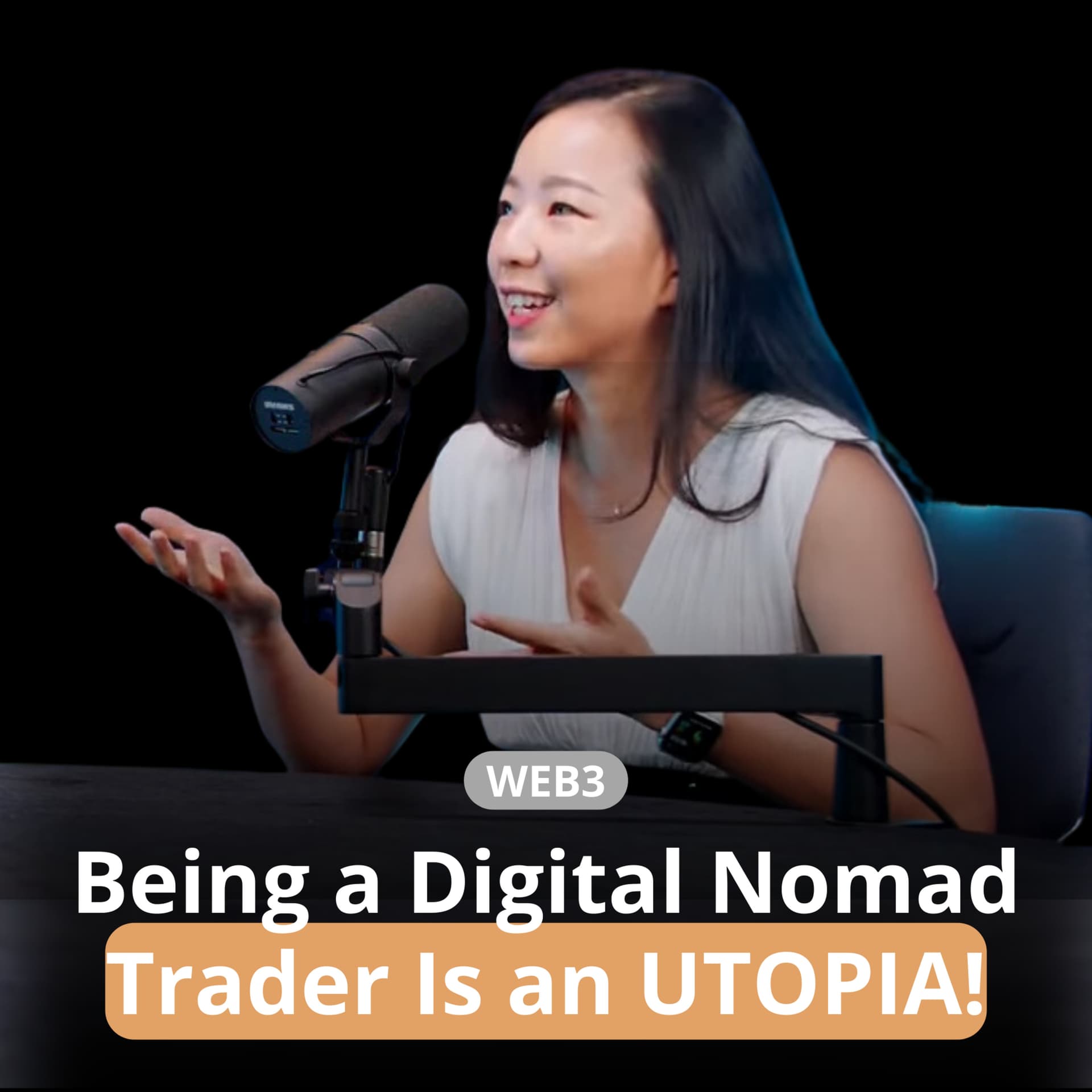
- Discussion on the misconception of the digital nomad trading lifestyle as glamorous.
- Reality Check: Many find it unsustainable long-term; importance of building something meaningful over merely trading.
- Cultural Insights
- Cultural Duality: Balancing Chinese roots with Western experiences.
- Communication Styles: The difference in societal norms between China and the U.S., particularly in expressing opinions and assertiveness.
- Gender Dynamics in Crypto
- Female Leadership: Annabelle is the only woman in the management team of Amber Group.
- Challenges Faced: Discussed gender gaps in leadership roles, particularly in tech and finance.
- Importance of Diversity: The need for diverse perspectives in decision-making, especially in a fast-evolving industry like crypto.
- Personal Growth and Mental Health
- Reflections on mental health challenges, particularly in high-stress environments.
- Loss of a close friend prompted a deeper understanding of life's fragility and the importance of living authentically.
- Success Beyond Money
- Annabelle's views on happiness: seeking fulfillment beyond financial success and status.
- Emphasis on physical and mental health, relationships, and overall life satisfaction.
- Market Predictions
- Concerns about geopolitical tensions affecting global markets and crypto.
- Anticipation of regulatory changes in the U.S. impacting the crypto landscape.
Key Takeaways
- Adaptability is Key: Annabelle's adaptability to different cultures and environments has been a significant factor in her success.
- Importance of Building Relationships: Genuine connections and support from her team have been pivotal in navigating the challenges of leadership in crypto.
- Mental Health Matters: Acknowledging mental health struggles is crucial in maintaining balance in a demanding career.
- Rethinking Success: True fulfillment comes from health, relationships, and personal satisfaction rather than purely financial metrics.
Sponsors
- Coinsilium: Provides funding and advice to early-stage tech companies.
- Byzant: A Web3 social network for creatives.
- SwissBorg: A trusted crypto app for investment and asset management.
Resources
- Stay connected with Annabelle Huang and Amber Group:
- [Amber Group Twitter](https://twitter.com/ambergroup_io)
- [Amber Group Website](https://www.ambergroup.io/)
- [Annabelle Huang Twitter](https://twitter.com/_annabellehuang)
- [Annabelle Huang LinkedIn](https://www.linkedin.com/in/annabelle-huang/)
- Follow When Shift Happens Podcast:
- [Website](https://www.when-shift-happens.co/)
- [Instagram](https://www.instagram.com/kevinffollonier/)
- [TikTok](https://www.tiktok.com/@kevinfollonier)
- [LinkedIn](https://www.linkedin.com/in/kevinffollonier/)
- [Twitter (X)](https://twitter.com/yieldlabs)
Timestamps for Quick Navigation
- 0:00 - Meet Annabelle
- 03:17 - Digital Nomad & Trading Illusion
- 05:34 - Finance to Crypto Shift
- 06:45 - China-U.S. Cultural Insights
- 14:00 - The Optimal Time to Settle Down
- 23:18 - Math & Finance Journey
- 32:32 - AirSwap & Amber Group
- 39:15 - Lone Woman in Leadership
- 40:40 - Gender Gaps in Startups
- 44:52 - Money vs. Validation
- 45:49 - Beyond Wealth: Fulfillment
- 50:20 - Mental Health Struggles
- 53:26 - Losing a Dear Friend
- 01:07:06 - Adrenaline in Extreme Sports
- 01:11:51 - Journey of Personal Growth
- 01:16:11 - Crypto Market Predictions
By capturing these insights, the episode offers a nuanced view of leadership in the crypto space, emphasizing the interplay between personal growth, cultural identity, and the evolving landscape of digital finance.
Written by AI. May contain mistakes. Listen to the episode to check what was said.
Transcript
Automatic transcript. May contain errors.0:00To me, I think it was just a big realization that life is so fragile. I used to think, you know, I'm so young, we're invincible, we're healthy, but it could be taken away so quickly. How does losing someone so close to you change your views on the meaning of life?
0:22Annabelle Huan, the managing partner at Amber Group. A globally renowned digital asset managing company. Offering liquidity solutions with over$1 trillion in cumulative trading volume. I studied math and one of the pieces I did was on a stable marriage problem. When is the optimal time that you select your spouse? It's not by going through all of them. There is some sort of optimal solution to that. What is it? Now, this is where it gets tricky. If you think you're going to be able to meet or date 100 people in your life, then after you met or dated 30 people, then it's when you should pick the best out of the first 30.
0:57Within a few years, you become the managing partner of a 3 billion crypto company. How the hell do you do that? Adaptability has always been my biggest strength. I've lived in different places. I spoke different languages. I like new challenges. How important is money to you? I think it's just a more straightforward, quantitative number that you can put on it. But it's more about what are you really seeking in your life? What brings fulfillment or happiness? So you mentioned a tragedy that happened a year ago. What did you change concretely after this happened? I think that changed a lot of perspective that we held before.
1:30I was thinking that, oh, I'll always have another chance to catch up with you. I'll talk to you next time. But then one day I realized there's no next time. A lot of experiences like that make you realize the importance of you really living the path that you want to, because life is not forever. Are you living the path that you want to right now?
1:55So my name is Annabel Huang. I'm a managing partner at Ember Group, who are a global digital asset manager and liquidity provider. I would say I have a pretty traditional path. Growing up in China, so school is always very important. And then I did all the way till high school in China. And then I felt like I wanted to experience something different. Because in China, you basically spend all 18 years of a life to prepare for that one national entrance exam. And then after college, it doesn't seem like you're actually doing too much after. So I felt like I wanted to do something a lot more with those four years.
2:41And then I've always loved new languages, new culture, new experiences. And that's why I decided to go to school, go to university in the U.S. So that's what I did. I packed up everything. I just went to the U.S. by myself. And then that was probably one of the best decisions I've made in my life. And then after university, also a pretty normal path, I would say, going to investment banking, similar to a lot of my peers. And then I think the only bigger risk I've taken is leaving TratFi for crypto around 2018. So regarding the trading, have you ever had this kind of dream that a lot of people have, which is, I would love so much to, you know, trade full time and work remotely and live remotely, kind of like the digital nomad lifestyle?
3:36I don't think I have this dream per se. I know a lot of my friends or people that I know, acquaintances that have done that. But to me, I think it's more interesting to maybe build a product as opposed to just trade. But maybe eventually that could be sort of the semi-retirement route, just a day trade. What's the experience of your friends who did that? I think it also comes in cycles. A lot of them are kind of just chilling over the last year when things are not happening. Most of these people are the ones who made it already and don't need to do this to survive. So, yeah, it's very different.
4:19Because there's a lot of people who, I mean, I'd say more people who have normal jobs. Yeah. Whose dream is to move to Bali or Phuket or, you know. Well, be careful with that because I know people who moved to Bali or Phuket or even Puerto Rico or for the U.S. citizens. and then I think they all kind of got bored after six months and then now trying to find something else to do. I'm not very surprised with that, to be honest, because, I mean, first, as you said, you want to be building something probably. Otherwise, at some point, you realize that you're just, maybe it's a bit strong as a word, but like almost a parasite, you know, like you're just making money, but you're not building anything.
5:01You're not creating any value. Yeah. And also, I would go as far as asking, is it even possible to and sustainable to be a full time trader? And what most people don't understand is that you probably can, but you need to probably lose everything many times beforehand and still stay there. A bit like crypto in general. You have to survive, right? And that's people only see the survivors. So there is that survival bias, but a lot of people didn't make it over the last different cycles. And then to your point, I think the reason I left my traditional finance triathified job is because part of me felt like I'm moving FX or currency around.
5:48Sure, it's as an intermediary, you're providing liquidity to the market, and there is actually more real supply demand in FX land than crypto. but a part of me already felt like you know what really is the value there um so then wanted to move into something new and build something concrete that's part of the drive the main drivers that i am where i am now so then i think the idea of then going back to just you know kind of clicking buttons and then moving flows around doesn't seem that enticing so let's talk a bit about china because i have a tough questions and people online seem to love china we have a few videos going viral and it's not about crypto it's never about crypto or help or tech people don't care about that they like money they like china they like you know all this kind of more kind of local stuff you told me you grew up in gongzhou in china guangzhou but your parents were not from there.
6:55And you told me that you always had a kind of identity crisis. Why? That might be a strong word, but I think also just because the culture is so different even within China. It's where I grew up in Guangzhou, which is closer to Hong Kong, very Cantonese culture. But my parents are from Wuhan, more towards the middle of China. So that culture is very different. It's interesting because I spend more of my life in Guangzhou, but whenever there's important festivals or holidays, I always go back to my hometown, Wuhan, and even the kind of food I like and the language I prefer to speak is very different from the local Cantonese culture.
7:39So even though I was born and raised in Guangzhou, a lot of my Canto friends said, oh, you know, you're not really Canto. But then... In what sense? Because my first language is not Cantonese. I don't speak Canto at home. And even my name in Chinese is not very Canto. And then I love spicy food, which is kind of a taboo in Cantonese culture. Is it? Why is it? It's just kind of like the culture. I think they think that it's too, the spicy, the pepper is not good for your health. But where I guess in my parents' culture, we love that. Why do you love spicy food? I just grew up eating it, really.
8:27But do you feel, that's very interesting. Do you feel, I was, eight years ago, I came to Singapore for like six months. and I was going to have, I was doing internships and I was going to have dinner with my colleagues and I would see all of them kind of cheering and saying, Kevin, eat more spicy food. Look at us, look at us. And then I'm like, okay, but not too much and I don't really like it. And at some point I see them crying. Yeah.
8:58And they're literally suffering there. And I'm like, first, you don't taste, you don't feel the taste anymore because it's so, you know, spicy. And second, you're crying. Like, what's the pleasure? What's the thing I'm not understanding about spices? I think there is like a long, it's not just kind of like you're suffering and you taste nothing. There's still a lot of flavors in between. Obviously, I don't think I'm kind of searching for that pain and suffering. although sometimes it does happen if I eat too much. But I think there's a big part of in the middle of the flavors and the sensation.
9:36Like in the Sichuan culture, it's more numbing. And where I'm from, in the Hubei province side, it's just more hot and spicy and flavorful. So I think I seek that kind of flavors as opposed to maybe just the pain. And I think because I grew up eating spicy foods for so long that I build up my tolerance. You get used to it, of course. Yeah, that you can have a lot of that middle part of the flavors to experience. So you realize that you're not exactly the same as your peers, but I mean, how did this concretely impact your childhood and your way of thinking? I think it just made me understand different languages and different culture from a very young age.
10:28And that maybe that search of the new experiences in a way that maybe I felt like a global citizen from day one, because I never felt a very, very strong sense of belonging in one place only. And then I think growing up speaking both Cantonese and Mandarin also helped me understand language much better. Because I do think you have different personalities speaking different languages. I don't know if you feel this way. Absolutely. Yeah. Absolutely. Even a different voice. Yeah, exactly. I would be very different. Yeah. So then I think understand that when you're younger and then kind of prompt me to search for more of that growing up.
11:16Do you think not feeling like you belong kind of anywhere is a good or a bad thing? I don't think it's a bad thing. And I think honestly, maybe a lot of people, at least in my generation, felt that way. And then now we have this whole digital nomad or global citizen community because maybe people do feel like we cannot be singularly represented by just one place anymore or one culture, one language. Because we do, all of us grew up in the globalization era. Might be different now for the Gen Zs growing up. That's a lot more increasingly, a lot more nationalistic. But I think in the era that I grew up, that was sort of the pursuit.
12:02How do you think about this? How can I call it? Kind of all these choices that we have. If you think about it, it's amazing. That's why we are basically here in Singapore, you know, and everywhere else. You lived in Hong Kong, also lived in Hong Kong, you lived in the US. I mean, but at the same time, there is always this, especially in our generation, right? This, you know, the grass is always greener on the other side. I'm not sure I'm in the right place. I'm not sure I'm with the right person. I'm not sure I'm doing the right thing in my life, the right job. How do you deal with that? Like, do you see all these things as a positive thing?
12:44Or are you actually thinking, oh man, maybe you look at your parents, you know, I look at my parents switzerland village happy happy you know still together after 33 years you know yeah no i think sometimes having too much optionality can be a curse if you are kind of absorbing to that mindset of always um i think it's funny so i remember whenever i go on road trips with my friends, we need to select a radio station, right? I would insist on listening to all of them before picking one because I worry that there's something better that we could listen to. And I think that's so typical of maybe our generation in a sense or people in our line of work.
13:32But I think as I grow older, then I think starting to realize that there is a balance, Searching for more, experiencing more, or you don't have to always exercise all of your optionality before you settle on something. And it's interesting because so I studied math and at Cargimellan in university. And one of the thesis I did was on a stable marriage problem, which is, you know, how when is the optimal time that you select your spouse? Or that's basically the setup of the problem. And then it's not by going through all of them. It is, you know, there is some sort of optimal solution to that. What is it?
14:17Because, you know, before you said that, I was exactly thinking about a podcast I listened to with a relationship specialist where she was basically saying, who should you settle down for? Because you have infinite optionalities today, especially with, you know. living everywhere, dating apps, everything. So I was exactly thinking about the same. And now you're telling me that you basically did this. So what did you find out? Of course, it's like a lot of assumptions, right? Going into the setup of the problem that you're trying to optimize for. Basically, you're saying that if you can clearly rank everybody that you meet and then you have a finite number of people that you'll meet in your life, then when is the most optimal point?
15:04I think the simple question is, I think what I found out at least, it's probably going through after you should decide and pick the best out of everybody you've met so far after you think you've met about a third of the total amount of people that you might meet during your life, essentially. So if you think you're going to be able to meet or date 100 people in your life, then after you met or dated 30 people, then it's when you should pick the best out of the first 30. Obviously, I don't think live works like this, but I think... Because you need to be very lucky for the number 30 or even 31 or 32 or 35 to be the best.
15:45And it's a statistical problem, right? When it comes to individual situations, it's not guaranteed. So, yeah, it's an interesting model to think about life. But again, it comes down to practice. So what I don't remember the exact story, but from what I remember from this podcast, she was actually saying something similar. She was saying she calls this the secretary dilemma, something like that. So you're basically a boss and you're looking for a secretary. But you have a lot of people who are applying for the job, right? So who do you choose? because the next one might always be better. It's kind of the same.
16:24So what she was saying was, for the dating one, she was saying you need to look at all the people you've dated
16:35until I think she came up with like 26, the age. Interesting. But I don't remember. There was a statistic also on why 26. She was saying probably 30. And because you look at, you need to stop at 70 % since you started dating, something like that. Yeah. I don't remember exactly. And then she says there was one person who was really above, you know, or who was amazing, and we probably all have like that person.
17:03The next one who is as good or better, you stop and you settle down for it. Interesting. So there is sort of like a stopping time when you make a decision, right? Like she was saying that by 26, everybody would have met that at least one person was really special and it could not have worked out because, you know, long distance, you travel or you move somewhere else or you're too young or you don't really realize what you want yet. So basically you kind of fuck it up. But you kind of have this definition of what's, I don't want to say perfect, but like kind of like ideal for you. It's already have your benchmark, right?
17:39This is it. And you settle for the next person who is same or better than this person. Interesting. I guess we should all practice that. I'm thinking about that every day now. I'm like, who was it at 26? I know who it was. Who is the next one? I don't know. Anyway, so you lived in the US. So you basically lived in China and then the Western world. What are the key cultural differences that you experience that most Westerners will never understand? because I still feel like, even for me, I mean, I went to China, but 10 years ago, and I found a few things there that I found kind of like weird, almost sometimes very impolite way of some people, like a bit rude, but I'm Swiss.
18:32You know, we have like our principles and everything. So we're not, so, but you grew up there, right? And then you went to US and there was probably a few things you were like, wow, this is so different. So if you had to tell people who never lived in China, what are the few things that you think are culturally completely different and they will never understand, what would those be? I think there's as much differences as much similarities, actually. So when I first got to the U.S., maybe some of my classmates were even asked, oh, how did you even apply to school in the U.S.? Or, you know, what was Internet like in China?
19:11or you didn't have Google, which is true. But I think China has changed so much in the last three, four decades that I don't think the difference is as much as people would think in terms of at least, you know, the technology or other similar areas. But culture-wise, of course, it's very different. I think the key difference is maybe related to politeness, But I think it's more about the freedom to speak your mind almost. At least that's how I felt. I felt like growing up, there's always a correct answer on tests. So you're always just trying to answer the question as opposed to really saying what you think.
19:54We read all of these literature, but there is one correct answer to interpret that. So to me, I've gotten used to just giving the correct answer. But when I went to the U.S., it's actually really, I was encouraged to say what I really believe in. And there's a lot more tolerance towards that. So in social situation, it's the same. I think so. Than in tests, right? Yes. Can you give some examples of like some moments where you're like, maybe something that you really remember, like, this is not okay. Like, I wish I could, this is what I think or I believe, but I can't say it. And why? I think a lot, even growing up, I think even in social situations or interactions with your classmates, your teachers.
20:43And I think even more recently after I went back to Asia, the way that business is conducted and the way that a lot of times that being maybe a younger woman in business, how I'm treated, it's really different than how I'm used to in a very professional setting in the Western world. And I think that also comes into when I speak Chinese and when I speak English, I feel like I'm a completely different person. in English setting, I think I'm okay being very straightforward, speak my mind, or even be a little bit more confrontational because it's more socially accepted. When I speak Chinese, especially when I'm talking to an older person, then I have to be very careful what I say.
21:30And a lot of times maybe in uncomfortable situations, you don't choose to bring it up because there's a lot more kind of social norms that are at stake here. Where do you think it comes from? I think really the culture, right? But is there, I mean, maybe you don't know, I don't know, that's why I'm asking, is there a reason why there is this big kind of pride and like, I'm not sure how to say that in English, having to show face, you know, like basically almost don't not show weakness. Well, I think it's just when you grew up in a big country where there is, it has to be very centralized ruling, right?
22:23And then versus in the US or Western world, it's a lot more focused on individuality. but in a lot of times Asian cultures it's emphasis on community um we can go into maybe all the political you know reasons behind that as well but that is the setting you were brought up and then it's very effective um depends on where you grew up so I think it's interesting for me to be able to experience both um and it's interesting because once you're exposed to the new idea of that you can really be who you are, speak your mind and still be accepted and fight for yourself almost and having that freedom. And then then going back to China, then I think that was actually more of a reverse culture shock for me.
23:16What happens there? So university first? Yes. Math? Yes. Math and finance. So I think naturally kind of went into investment banking or sales and trading because of that. The math thing is because you're super technical. It's because in China, it's very important to do, I don't know, math or engineering or things. There is, depending on countries, for example, I think in India, you need to be an engineer or a doctor. Or else you're no one. Right. Pretty much, you know. what it's like in China and is it the reason why you did math or is it because you're very technical and you like? It is an interesting question.
23:58I think growing up in China, you're always taught that if you're going to science, engineering, you're the smarter one versus going into liberal arts, for example. So every milestone, you know, going to middle school or high school, you get the tests and the test subjects are very heavily on science. And then, so you're a good student if you're good at that. So because I've always wanted to be the top of my class, then that means that I have to be good at sciences. But then it's an interesting question. I don't know if it's because of that that I put a lot more work. But I think ultimately I still really enjoy physics and maths, for example.
24:38And I think when I was not sure what I really want to do with life, I think math is always going to be important in terms of teaching how to solve problems, how you define problems and how you solve it. And I think that would be useful regardless of what I do. A part of me wanted to go into academia also, but I think that ship has sailed after I spent a semester doing a research assistant to some of the PhD students. And I just realized that doing that for five years is a lot. Yeah, I don't think I could do it. So then I think that kind of led to my path. you said when I was not sure about what I was I wanted to do right and I think a lot of people are in this situation and probably maybe forever like was there a moment in your life where you're just thinking I know what I want to do or it's more uh I have opportunities I'm going with the flow kind of thing I think it's always I'm always open to trying new things that's part of it that brought me to the U.S.
25:45and then I think while I was in university tried mostly sort of math and finance related roles like interned at banks or consulting firms or other places to really figure out what I wanted to do. I spent a summer doing an investment banking internship. I realized I like maybe the finance setting, but I didn't really like the lifestyle of being an investment banker. That required basically 100 hours. No life. Yeah, and zero life for a few years. You have to really grind it through. And that's why I switched to sales and trading full time, where I think I enjoy the environment of a trading desk a lot more while having some sort of work-life balance after the markets close, which is ironic when I find myself in crypto back to the 24-7 grind.
26:48So why did you leave trading and traditional finance? I think a lot of things happened around that time. So first part of it is I've been doing that for maybe three, four years. I really liked my team. But then there is obviously this notion of the future of finance. Right. And then you see in China, there was the boom of Alibaba and Tencent, you know, with Alipay and fintech apps and all these newer notion of finance. that's very interesting. And a lot of my friends had gone to Silicon Valley and then started doing some sort of, building some sort of apps or products. And I think that's what planted that seed in my mind that what else is out there after you've seen maybe how institutional financial markets work for a few years.
27:46It's also the same time that I just met in pure social occasions, a few people in New York. I think a few of them actually have been on your podcast before. Yeah. That they started telling me this idea of them building something on top of Ethereum. It's decentralized finance. At that point, I've only traded ETH as part of, you know, for the sake of trading it. I never realized what else can be done on top of it. So you were already trading-ish crypto. You're already involved and like, oh man, I mean, this thing is going up. and down and up a lot. Yeah, we have this like Bloomberg chats within a couple traders in my class that when market's kind of slow, we're just talking about like, oh, you know, did you trade Bitcoin?
28:37Did you hear about this new thing called Ethereum? Okay. And then we're figuring out the best way to buy it, the least amount of spread we need to pay because most people are buying directly on Coinbase app and paying sort of 3 % spread. And we're like, oh, they also have another market called GDAX and it's much cheaper. The Coinbase Pro. Yeah. And then so we started doing that and I started telling everybody else on my trading desk, I was like, stop buying through the app. Like, you know, we're in the FX business. We haggle for like one pip, right? One basis point. And you paying 300 basis points is insane.
Read the full transcript
29:17So then we went through a little bit of that that talk on the desk and actually a couple other traders also went into crypto later. So it was a fun time. So you meet some guys, you said in social settings, who are doing this crypto thing. Yeah. That's kind of a weird thing and also kind of intimidating in the beginning, you know, Because I mean, for me, it was, at least for me, it was. And for a lot of people, it's because you don't really understand it. You're like, what is this thing?
29:55So you, you're open to the idea of maybe trying, but now like the key question is because there's probably a lot of people, guys and girls who met people doing crypto a few years ago. probably the majority were like i'm not sure i'll wait a bit but you go for it not only and second within a few years you become the managing partner of a three billion crypto company as a woman and you're 30 years old yes how the hell do you do that like what happened that made you basically become who you are today? I don't think anything sort of incredible or extraordinary happens. I think it's obviously timing and luck that put me there in the first place.
30:53And I think I was naturally drawn to this environment. And I think everything else that I've experienced in my life also contributed to this. I think being open-minded, willing to jump into a new situation is important. I think adaptability has always been my biggest strength because I've lived in different places. I speak different languages, been put in different situations, and I kind of seek that. I like that. I like new challenges. So I think that set me up well in the beginning. and being able to learn fast also because there's so much information, even to this day, right? Every day I wake up and it's new information about the market and you have to be able to absorb them fast and have some sort of pattern recognition, which I think mathematics really helped in that sense.
31:50And then I think I was also just very grateful to have a very incredible team that kind of helped me transition the space in the beginning and the AirSwap team who I met in New York, two of the co-founders and the first engineer all went to Corky Mellon as well. So I think that gave me so much comfort into jumping to this new thing with them and they've all taught me a lot and also the role actually required me to move back to Asia, which I was also very grateful for. after I think spending a very defining few years of my life in the US and coming back to Asia and being in this very new industry also just helped me expand my understanding of crypto market in a more global sense.
32:46What's so different about this industry? Where do I even start? What's not different, right? I think first of all, the people. And you'll see, I think, the different cycles attract different kinds of people. I think the era that I got started getting involved, right, the 2017 era was actually a lot of people similar to myself, maybe has a career in finance or something else in tech and finance, and then start getting involved after the 2017 run. And the people I met who started getting involved before, I think they have a different ideology in terms of what drew them to crypto before it was well known in the first place.
33:32And then I think then you start to see the 2021 era, which is also a very different crowd. So it's interesting to think of us as different vintages. You worked for AirSwap for, what did you do for them? Originally, it was to do... And what was it? Right. Originally was to really look at growth for their APAC markets. But what's AirSwap? AirSwap is one of the first decentralized exchanges or decentralized trading places built on Ethereum. It was actually a spoke under consensus. And yeah, the first product is called basically AirSwap. It's a widget, and then you can atomically swap one ERC-20 asset to another and then have it settle atomically without sort of going through any intermediary.
34:31And that was the idea, really. But that was before DeFi was really a thing. So you moved to Asia to lead AirSwap in Asia? Correct. Part of it is to onboard new market makers to provide pricing on our RFQ platform. which is very similar to maybe a lot of the current RFQ DeFi products that are built right now. But the difference is that there's maybe two market makers back then that's open to market making on chain. And I think Amber was one of them, which is how I met them very early on. Who was the other? The few others are actually based in Europe. There's some maybe Belgium or Israeli shops.
35:23There are small shops that are willing to do that. Yeah, it was a very different time. So you made the Ember Group team. I think it was probably their beginnings or near their beginnings. Exactly. What happened then? I've always enjoyed speaking to the Amber team in Hong Kong. They're one of very few, even though they haven't market-maked on-chain before, but open to the idea. And we would have hour-long discussions about the future of DeFi and what we're building now, what really makes sense, and essentially what parts of that really needs to be decentralized and how does that work. And I think I was pretty surprised at the thoughtfulness of the team, even though their business or Amber's business was primarily in CeFi back then.
36:18And I think that also brought me to think about liquidity very differently after seeing the reality of that. But all in all, just because the team, all of us came from very similar background. Most of us sort of born and raised in Asia with the exception of one and went to school in the US or UK, had some sort of traffic experience and then now fully bought on, bought into crypto. So I think that was some instant click and also trust built over time. And then eventually they convinced me to join their team. What is Amber? So if I say AirSwap is DeFi, then I think Ampere is CFi plus DeFi in a sense that in terms of market making or liquidity and also in terms of the asset management side, where our role is to really aggregate the liquidity and the yield and all these trading opportunities wherever, whether it is on centralized venues or on chain.
37:30and aggregate them to offer to any clients, institutional clients are interested. So really playing this similar to investment banking role in the Trafi sense, but in crypto land. Most of the big crypto companies or protocols, they have a leader who is I'd say kind of almost famous you know that everybody knows about right but for Amber it's not really the case you need to be in the field to know who these people are it's kind of like these low-key people who build this big company how is that possible I think most of us are low-key people. Or at least myself, I'm very terrible at social media because I think that just requires constant engagement and all of that and a lot of mind space in that sense.
38:35I think kudos to a lot of people who are very successful at doing that. And I think I've recognized a brand new value. But to us, because we're primarily an institutional business, that we didn't need to be a so-called retail household name because our target audience is a much smaller group and a lot of that is word of mouth and building a reputation track record within that. Similar to a lot of the hedge funds or HFD shops that are big but still remaining pretty low-key. I think that's at least my dream.
39:17I checked the website, the management team, and you're the only woman. That's right. But my team, though, has more women than men, so I'm very happy about that. How does it feel to be the only woman in the management team? A lot of times I forget. Why do you forget? Because I don't think we really see ourselves that different, at least consciously. But I think on a subconscious level, I think it is important to have that diversity. Because I think we react to different situations still differently. especially in crypto where you go through so much basically sort of all walks of life within maybe three four years so I think after experiencing that then I start to see even though I don't think my team ever treated me differently because I'm a woman or I treated them differently because I felt different from them and we've had plenty of arguments where maybe I'm the louder one in the room.
40:24But I think subconsciously, now I reflect, there are situations where I think our first reaction is so different that it is still important to have more female representation and a voice there. I actually wanted to start with that, but we're getting to it right now, which is I I read some pretty shocking stats yesterday in a Forbes article. Women represented just 14 % of solo startup founders in 2021 and received just 2%, 2 % of the venture capital deployed in 2022. We're not talking about 1980s or 1990s, we're talking about 2022. Companies established by all male teams, which basically is the case for Amber, right?
41:16received more than 82 % of the funding. It is shocking stats, but I think a lot of it's also just how the reality is there's very few solo female founders. I don't know why that's the case. I can maybe imagine it does feel very challenging and uncomfortable building something on your own. and maybe at least for me I know um I would feel a lot better if I have co-founders regardless of gender but I think it would be difficult for me to um get comfortable with the idea of being a solo founder because that just requires so much of you like even within my entrepreneur friend group there's maybe just one um solo female founder I can think of um yeah that maybe goes back to the subconscious thinking that we might have.
42:14I also read about investors bias because most of the investors in VCs are men. They're basically biased towards investing in men. And I also read something that's really interesting, which is it's not the right thing because Boston Consulting Group, they did some studies on that. Women are better, are better founders. And how they measure that is how much women return per dollar invested compared to men. And I think the difference is like 80 cents for women and like 36 or 39 for men. I think that's interesting because I think maybe a part of it is just the risk management in general. I think especially we've seen in crypto where you can grow so fast, so quickly.
43:09And then actually then where do you go from there? I think for at least for me, I would optimize for longer term return survival versus maybe what is so immediate that can satisfy my so-called ego. So I think it's interesting. Maybe women tend to optimize the geometric mean of return, but the men would just kind of go for the arithmetic where, you know, 100 or zero, like I would, you know, I would still want to optimize for that. So basically, women are less money driven, at least in the short term, and are less likely to take like reckless risks. That's another thing I read, actually. That's why kind of a Madoff-like situation or, I mean, SBF, there was Caroline.
43:58But anyway, like, it's much less likely to happen if there is more women involved or if they are the ones who make the decisions because they think differently. I think so. I mean, I've seen firsthand, again, it's a generalization. And there is bias because there is more men in our industry or in general. But you do see when the market blows up, you know, you know, the high, there's only higher highs, there's no lower lows. And in this up only situation, I do see more men tend to get carried away with that because you're chasing some sort of ego, some sort of status. But at least for women, I think we hopefully are more rational in those situations thinking, you know, still be able to think clearly about the downside risk, even though maybe it's only upside for now.
44:54How important is money to you? It's an interesting question. I think I've been lucky that I never had to worry about money growing up. Um, and money to me is also some sort of, it almost feels like some sort of validation of how valuable you are or, you know, your work is. Um, so it's more of maybe seeking that sort of validation than to maybe improve my daily life. I don't know how much more you can spend on food or other things. I'm sure you can, but, um, but to me, I think it's important because it's at least to me validates how valuable or how much worth I am.
45:42Do you think it's the right kind of validation to seek? Yeah, I mean, that's something that I've been thinking about more so now. Essentially, you know, what are you really seeking in your life? What brings fulfillment or happiness? Is it money? Is it status? Is it, you know, what you built and how do you really evaluate that? I think it's just a more straightforward, more quantitative number that you can put on it. And obviously, I think all of us are sort of taught that way growing up. But, yeah, and I think even you speak to the crypto OGs who made, you know, a lot of money. what do they really want right now and what are they optimizing for right now.
46:34So I think the more you realize that it's not really the ultimate goal, then you start to reflect on what else is. What is it for you? I think after a lot of things that happened maybe in the last few years, ultimately it a lot of it is prioritizing health both physical health mental health your relationship others your family and that's that's already a gift in and of itself i know it sounds very cliche but right that's that's really the most important thing you can have and um and then mental health a lot of it comes from how you view your life um are you happy not because you've a certain amount of money, but are you really going towards the path that's most fulfilled for you, I guess?
47:31That's very interesting. When you say it sounds so cliche, but it's so true. And most of the people who come here, big entrepreneurs or crypto people, you go through these mega wealth swings, you make a lot, you lose a lot, it gives you a lot of perspectives. Yes. And also there's this thing where most people out there, they always say, oh man, if I had a million, I would do that differently. I would go travel. I would change my job or whatever. And then when you get to your first million or whatever amount it is, like you realize nothing changed. Exactly. And if you were not happy before that, you're not going to be happy after that.
48:18So basically you'd rather change your life before your first million, then think that the day you get there, something will change. And there's always this realization for all the people who come here. And for me, it was the same, which you go through all these things of, I want to build businesses on my twenties, or I want to make money. I want to retire before 30, blah, blah, blah. And then you realize it's lonely as fuck. It's boring as fuck. Yeah, what do you do after you retire at 30? And you're alone. Like everybody's working anyway. Like, so what's the point? Oh, spending 50, next 50 years on holidays, but who is going to come on holidays with me?
48:57No one. Everybody's working. Even the people who made it are working. Like, so you're just thinking like, what's the actual point? And one really, I always talk about that, but Jordi Alexander, he came on the podcast and he said, making money is good, but you should not make it too fast
49:14because there's these different kind of stages you go through. And like, if you make it too fast, then you will want to make even more and even more and you're going to end up blowing up. And even if you make it like too fast, you're going to be in this kind of zone, like limbo where like, I don't even know what the fuck I'm doing. I have imposter syndrome. There is all these weird things happening. And everybody comes back to the same thing, which is the simple things, as you said before. Oh, I have a nice coffee. I'm so happy. I have a nice friend. I'm so happy. Yeah. Ah, my parents are healthy and I can spend some time with them.
49:47I'm so happy. So I don't think it's cliche at all. I think it's just the truth. But a lot of people need to go through the whole process to just realize. It's true. That it comes back to the basics. I should be grateful that because so much things happen so fast, so many things happen so fast in crypto that you get to see so many different perspectives very quickly. um again i don't know if it's a blessing or a or curse but i think at least we know ourselves much better now you talked about mental health have you ever struggled with mental health um it's it's an interesting concept because again growing up in china it's sort of taboo right you don't really talk about it and i think one of the bigger culture shocks i have is just so how open that people in the Western world talks about it and then actually seeking, seeking not help per se.
50:43I think of maybe going through these therapy or coaching sessions as many as really maintenance. There's this, I don't know if you watch Rick and Morty, the pickle Rick episode that's pretty popular. Essentially, the therapist was telling Rick that you brush your teeth twice a day for maintenance, right? And you should do that, take care of your mental health as well. And I think that was sort of some sort of moment when I realized that, you know, it's not like you have to have a big problem for you to go seek some sort of improvement. and unfortunately I think it's still a lot more accessible at least in the US than here in Asia I know a couple founders that are working on similar projects in Asia, in Hong Kong, Singapore but yeah I think it's still more or less talked about here
51:49How do you deal with mental health challenges when you have an entire team that depends on you? Do you do it more the Asian way? I don't say anything. I don't show anything. Or do you go more the kind of candid, transparent way of like, I'm a human being, I also have my challenges, but kind of lead by example of like, you can be open about that. It's not because you have mental health issues that's going to be fired, right? Yeah, so it's an interesting question. I think also depends on your relationship with the specific people on your team. I can't force my way to them. So I think it really depends on how they feel about whether or not they're comfortable coming to me or maybe, you know, they talk to each other about some of the things.
52:40But in retrospect, I think I kept a lot of some sort of stress or struggles I have mostly to myself or maybe just within the founding team where we would share, especially in case of tragedy or whatnot. but I don't think we are as open as we probably would have been in a more Western setting perhaps because there's still that cultural aspect. But yeah, I think you should speak to your team and also just people who are unrelated to the situation, right? Someone who's professional as well that can perhaps help you look at this better. Yeah. So you mentioned a tragedy that happened, I think, about a year ago.
53:32Yeah. So Amber Group lost one of its co-founders, who was also a close friend of yours. And this is after this crazy bull market where people make a lot, lose a lot. So you have all these emotions coming together, right? How does losing someone so close to you change your views on the meaning of life? Yeah, I mean, I think I'm at least still processing. I don't think, I think grieving is processed, maybe it never ends, but it's helpful to reflect on it. to me I think it was just big realization that life is so fragile we I used to think you know I'm so young we're invincible we're healthy but it could be taken away so quickly and for really no reason at all life is not fair so to speak so I think coming to that realization then a part of is like, okay, what am I really doing in my life?
54:38I think a lot of decisions we made as a team, as a firm the last maybe during 2022 was more to chase some sort of statistics or some sort of status in a way. Maybe it was our VC investors, maybe it was the market, maybe it was where our competitors, where Sam SBA was already at that point. So I think that that was a lot of noise and destruction and then went into different directions and maybe what we really wanted to do and what we set out to do.
55:15So and with what happened with Titi and he was the one who I would say I was closest with. And Amber, he was the reason that I joined Amber in the first place. And that was shocking because you can lose such a bright mind that a lot of times I depended on in just, you know, in a day. And then it does help me reflect on what is it that I set out to do. It helped our team reflect on what is this business that we set out to do. and certainly put a lot of perspectives around not just business, but I think in your life, what are you really optimizing for? Is it your health? Is it your relationship with family?
56:03Because that doesn't necessarily last forever. I think that was the first time that I came so close to that realization. I've also had a friend of mine from high school that also passed away from a very sudden illness maybe a few years ago because we hadn't been speaking too much, even though we both lived in New York, I was thinking that, oh, I'll always have another chance to catch up with you. So, you know, I'll talk to you next time. But then one day I realized there's no next time. So I think that a lot of experiences like that make you realize the importance or sometimes the urgency of you really living the path that you want to because life is not forever.
56:52Are you living the path that you want to right now? Are you able to? What did you change concretely after this happened? I think I spent a lot of time reflecting at least upon everything that happened right in the last few years in doing some sort of reflection that I probably didn't do before. And as a firm, I think we also change directions, we let go of a lot of the peripheral business that we're building. And just be where and we're okay, just focusing on a core business with a much smaller team. And I think that changed a lot of perspective in that way. And, and to me, I think, also just changing a lot of the, even the habits, focusing on mental health, physical health.
57:43I started sleeping, you know, sleeping more at night, which I think is important. And also not going too extreme in situations, you know, pull all nighters, whatnot. I think that that definitely impacts your, your health and then spending more time and family. And I think that's also the part of the reason that want to stay in Asia and be closer to them. I'm the only child, so I'm very close to my parents. I just took them on a trip to Tokyo recently and just really cherish the time you have in that sense.
58:24You're a really successful young woman. I'm not sure about young anymore, but... I feel like I've aged, you know, four decades in the last four years.
58:40You're more mature, but you're still super young. Actually, when you told me you're aged the other day, I was like, oh man, still a baby. how do you deal with the fact that most men would probably find you intimidating in a more sort of dating environment? I think it's interesting. I'm sure a lot of them do, but it's also a great filter, right? I don't think I would want to speak to or spend time with people who can deal with their own insecurity and confidence. So, yeah. How have you dealt with your own insecurities? I think that's part of maturing. That's part of growing up. I think as I was growing up, and maybe because I'm the only child, I don't think at least us among our friends have very close relationship or, you know, siblings in that sense.
59:46And then, and in China is very heavy competition, right, for the best grades or whatnot. So always wanted to be the best because that signals, right, that I am the best. You know, I've scored the highest on the test or, you know, I'm the number one in my school or my city or in these math or physics competitions. So I always kind of seek that because I think that is some sort of, again, validation and it's very quantifiable. And then even maybe subconsciously choosing some of the career paths because it is the more popular or the better choice. So I think I've largely lived my life in that sense.
1:00:31then I at some point I think I realized that that's when I realized when I felt like seeking approval from others it's actually really just from myself because my parents have told me they're proud of me since day one they've never asked me to do a lot of these other things and I think it really stemmed from within and I think a lot of things that happened the last five years for me in crypto really made me, you know, the perspectives, the up and downs that we've seen in your life, realize that I think I really matured from that perspective. And knowing who I am, there's things that I like and I don't like and things I'm good at and maybe not so good at and accepting that.
1:01:16When I first started managing a team, I was very eager to get to know them all or trying to get them to like me and even change myself so much in my own style, management style, or personality to try to cater to them. And then that's not sustainable. I burnt out very quickly and I realized that ultimately I am who I am and maybe I cannot work well with everybody out there, but that's okay. You should build a team that works well with you, right? that shares similar culture or personality or ideals with you and can handle you as a manager. And maybe that means I'm not, maybe sometimes I would lose some good talent because that just didn't click.
1:02:04But you have to also understand that this is who I am and that's what's going to be sustainable going forward. So you said you always wanted to be the best when you were younger. and now you're managing teams. So this kind of always wanting to be the best and competing because that's how it is in China, right? Yeah. And now managing teams and being only surrounded with guys in the management team, you have to, basically you have to rely on your more masculine side a lot. how do you manage to stay feminine in a relationship? It's a great question because I don't think it started in crypto, like back on the trading floor.
1:02:55I think arguably it's probably even worse. It's no joke. I think my whole team in New York, at least, all men globally maybe wanted to their female. and I tried so hard to fit in, you know, being very bro with them, been to questionable venues with them and, you know, tried to outdrink all of them under the table to show that, you know, I can hang, you know, with the bro gang. And a part of me likes that. I know it's not like I hated all of it, but I think looking back, a part of me is also trying to prove to them that I'm a bro, right? even laughing at some sort of inappropriate joke sometimes on the trading floor and now thinking back that was me trying too hard to be a bro and I think after after I grow up a bit more I think now as I get older then I'm comfortable just being who I am maybe I do have the more masculine side just because who I am, but I don't shy away from the feminine side either.
1:04:07And being vulnerable is actually much harder than pretending to be strong all the time. And that's what I realized later on. So I think in a personal relationship, you know, with family, with friends or in a relationship, like I don't I think I stopped pretending or only emphasizing the one sidedness of myself. Yeah. so you still would ideally want in a relationship to be, to have a man who embraces masculinity and provides and protects you like, oh no, I want this, you know, equal thing. I mean, we could go very deep down this rabbit hole. But what's your perspective on that and your thought on that?
1:04:52I think it's just being able to be vulnerable to the other person. And I don't think it's a competition per se, you know, who's more masculine or who's more feminine. But I think it's important that both people really know who they are. So there's none of, there's less of that insecurity going on or everybody's comfortable and confident in terms of who they are. And that's, I think, the base of a healthy relationship. And you can express yourself the way that you want to. You don't have to think too much. You know, should I act this way or another? You can just be yourself. And I think even outside of a very, very intimate relationship, even in your daily lives, I think that's also a healthy way as opposed to maybe living to one persona of yours.
1:05:40Because, again, if you want to build this business for a long time, unless you have a distinct online persona for the sake of it, then I think I really learned to at least embrace who I am in all aspects. Last one on dating. I promise.
1:06:03Women are hypergamous in general. So they want to date or be or marry someone who earns more money or has a higher social status. How do you deal with that as a super high achiever woman? Actually, it's speaking to a lot of my friends who I guess also are what you call high achieving women. I think what we're optimizing for is very different. I don't think we just need to. We're chasing someone who earns more money per se. There's this baseline that I talked about, like someone who's sure of themselves, confident enough, which means that they can probably take care of themselves on their own. but also at least to me I think it took me some time to realize that maybe being with another super alpha high achieving person who doesn't prioritize me wouldn't really work because I don't think I would necessarily prioritize the other person right then if nobody like if I'm putting some I only have 24 hours a day my focus is purely on work and career then I think there is less aspect maybe to how much you put on the other person.
1:07:25So finding that balance, right, if both of you are optimizing for something else and who's really working on a relationship. And I think a lot of my friends, myself included, realize that we need to find someone who is also very happy to prioritize us or happy for our success in life as opposed to feeling intimidated about that. And their success, I think, you know, obviously I think as the other person, the other partner in a relationship, you also cheer for, but it doesn't mean that it has to be a competition per se.
1:08:06you love extreme sports i do i do you love crypto and extreme sports surprise big surprise why do you love extreme sports and adrenaline um as as crazy as it sounds i think a lot of times when i put myself in these extreme situations that my mind actually just shuts down i'm just enhancing my senses. I'm living the moment, really purely the moment, looking at everything, experiencing everything, as opposed to maybe thinking about so much else, you know, having all these programs running my background. And that to me is a very Zen moment. It's almost like meditation. So that's why I think I seek, you know, these sort of skydiving or skiing, bungee jumping or these sort of sports.
1:09:04Is it because of the kind of pleasure and adrenaline it gives to you or is it because you're trying to escape something? Oh, that's a great question. I don't think I've thought about it that way. I don't think I'm escaping something because the experience itself is not too long, right? There's always coming back to reality. but I think I've just really enjoyed the process of reminding myself that I'm so alive and then living the moment and sort of a meditative state where your mind is not going everywhere. You're just focusing on the beautiful things you see or the speed or the wind you feel on your face and that sort of sensation.
1:09:48And I think it's part of a reminder of how alive you are as well. Have you ever tried scuba diving? Yes. It's not extreme at all. It's not. But it's so peaceful and it's like a meditation. I love it. Yes, the breathing, right? Because you're just like, you're only here on breath. You're looking at another world. It's another world. Absolutely. That you didn't really think about much. You only look at what's on land, but under the sea, it's a whole other world and you appreciate life a lot more after that. What's the most extreme experience we've ever lived in this context of sports and adrenaline?
1:10:34Something memorable. I think my first skydive, my first jump was definitely very memorable. I think the subsequent times, I already know what to expect. So I'm focusing more on maybe looking at what's around me. But the first time is really about the sensation and what you remember from it. Also love kind of skiing the Elves, these really, really long slopes. And you kind of just go at it, not saying, you know, crazy speed, but feeling that wind on your face, hearing your own breath. And I think all of that is just, again, a reminder of how amazing life is and focusing on the moment, everything that you're experiencing.
1:11:22It's sort of like meditation where maybe the voice will tell you to focus on your breath or focus on all parts of your body, what you're feeling. But I think it's sort of tough for me to just sit here and listen to the voice and guiding and then do that. But much easier for me to feel that way in these situations. if you met your 18 years old self, the Annabelle who left China to go to the US, what would you tell her?
1:11:54I would tell her to, I guess, be more bold, to try to experience a lot more things and focus maybe a little less on grades. Like remind you back when I was 18, I was still wanting to be the best in my class, wanted the 4.0 perfect GPA in school because again I did because it's quantifiable and I like that I like perfection I guess. How did you feel when you got your 4.0 grade? There's just no other way no other way that I would have it and to be honest I probably spent a little bit too much time trying to seek that marginal perfection and maybe optimize a little less for the other things I could experience or do in college.
1:12:44Even though I do think I had a pretty full college experience, I've tried to join all these different clubs, sororities, fraternities, and met a lot of interesting people, smart people when I was there. But I do think I spent a little too much emphasis on that sort of perfect grade. So despite everything you've done, you still feel you haven't been bold enough and haven't tried enough things? I think so, because college is an amazing time where you just experiment. The point is to find yourself. I know probably everybody felt the same way. I wish they'd done more in college, care less about grades, did more experiences or have more experiments.
1:13:28Yeah, but I do think that was just a wonderful time to experiment with anything in your life. Yeah. What's your biggest prediction for the next 12 months? In the market? Any topics? Wow. I think there are some concerns I have for what might happen in the next 12 months in a more global scale. I think we, like I mentioned earlier, I think we're past that globalization, peace era, and now we're seeing a lot of regional conflict, a lot of geopolitical uncertainty. And I think me being from China, having family there, and then there's also a big focus on that. I don't think, you know, things necessarily would go bad in the next 12 months, but I think there's a rising concern over that.
1:14:23And I think that also prompts you to think about, you know, in a very different scenario, like I'm not saying there's World War III, But if there is more and more regional conflicts, how do you really live your life? You know, that's probably a very different path than you are currently on right now, optimizing for a very peaceful time. But I do feel like there's a lot more turmoil happening or boiling than maybe what people really realize. So I think that's a concern in which I think it's also interesting how crypto could come into play in these scenarios. So I think it added a different sense of maybe what we're building for.
1:15:08Maybe, you know, being a crypto bank, quote unquote, has more value than we would think of down the line. Not just people buying some shit coins to get rich overnight. Exactly. You know, go rich overnight or go broke the next day, right? Absolutely. So that's part of it. And I think in terms of broader market, next year is actually a lot more sort of like political events happening. I think with the election in the U.S., that might change a lot of the regulatory landscape for crypto, which set the precedent for regulations in the space globally. so the more you're involved in this business the more you realize that things are not so black and white right when you think we have nothing to do politics but maybe at the end everything is related to that in some sense so yeah I think that's also part of maybe seeing the world in a more mature lens amazing thank you so much for doing this thank you for having me I'm going to do this one.
From the publisher
Annabelle Huang is the 30-year-old Managing Partner at the $3 billion Amber Group, a global digital finance leader with over $1 Trillion in cumulative trade volume. She is a perfect blend of a bubbly and vulnerable personality, a brilliant mind, and a truly inspiring leader.
Annabelle is like a chameleon person, effortlessly switching between her Chinese roots, language, and mindset, and her Western persona developed through her experiences in the US, Hong Kong, and Singapore. This makes her a prominent business leader in the crypto space.
We discuss:
- The Digital Nomad Trading Life Illusion
- Being the only woman leader in a 3 Billion Crypto Empire
- Seeking Happiness Beyond Money and Status
- Hypergamy and how being a successful woman affects dating life
- How losing a dear friend changed her life’s perspective ---- Sponsors:
-♾ Coinsilium provides vital funding and expert advice to Web3 and AI-powered early-stage technology companies. https://www.coinsilium.com
-👾 Byzant is a Web3 social network ecosystem for creatives. Get ready to create, connect, and collaborate using Byzant's user-friendly tools and decentralized applications.
https://www.byzant.xyz/
-🤖 SwissBorg is Europe’s top trusted crypto app offering user-centric investment platforms and DeFi asset management with reliability and innovation.
💰 Earn up to €100 by Registering to Swissborg via the following link:
https://join.swissborg.com/en/r/dylanJSAB
👇 Stay Connected:
Follow Annabelle & Amber Group:
https://twitter.com/ambergroup_io
https://www.ambergroup.io/
https://twitter.com/_annabellehuang
https://www.linkedin.com/in/annabelle-huang/
Follow When Shift Happens:
Website: https://www.when-shift-happens.co/
Instagram: https://www.instagram.com/kevinffollonier/
Tiktok: https://www.tiktok.com/@kevinfollonier
Linkedin: https://www.linkedin.com/in/kevinfollonier/
Twitter (X): https://twitter.com/yieldlabs
🕒 Timestamps for Quick Navigation:
0:00 Meet Annabelle
03:17 Digital Nomad & Trading Illusion
05:34 Finance to Crypto Shift
06:45 China-U.S. Cultural Insights
14:00 The Optimal Time to Settle Down
23:18 Math & Finance Journey
32:32 AirSwap & Amber Group
39:15 Lone Woman in Leadership
40:40 Gender Gaps in Startups
44:52 Money vs. Validation
45:49 Beyond Wealth: Fulfillment
50:20 Mental Health Struggles
53:26 Losing a Dear Friend
01:07:06 Adrenaline in Extreme Sports
01:11:51 Journey of Personal Growth
01:16:11 Crypto Market Predictions #Entrepreneurship #Crypto #news


