
In short
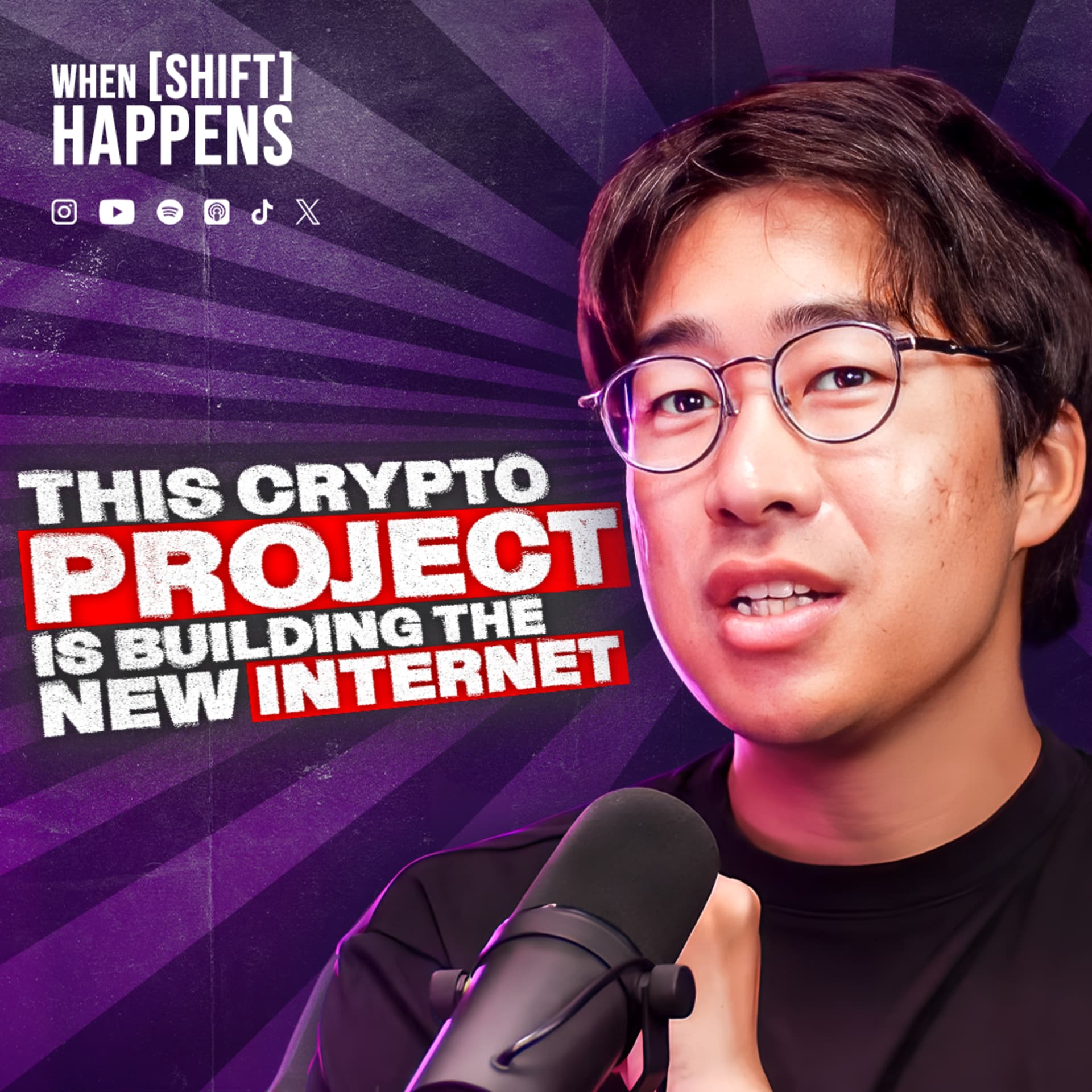
Podcast Summary: When Shift Happens - Episode 62: Sota Watanabe
Episode Overview In this episode, host Kevin Follonier interviews Sota Watanabe, the founder of Astar Network, the leading smart contract hub on Polkadot with a total value locked (TVL) of $1.5 billion. The discussion covers Watanabe's background, his entrepreneurial journey, insights on the future of Web3, and the importance of culture, community, and humility in business.
Key Points Discussed
- Introduction to Sota Watanabe
- Background:
- Grew up in Kawasaki-ku, Japan.
- Holds a degree in Economics from Keio University and a certificate in International Business from a program in San Francisco.
- Gained exposure by interning at Silicon Valley startups and visiting major tech companies (Apple, Google, Facebook).
- The Vision and Mission of Astar Network
- Astar aims to drive mass adoption of Web3 technology globally, targeting everyday users rather than just DeFi or NFT enthusiasts.
- Collaborations with major corporations like Sony, aiming to make blockchain easy to use without requiring technical understanding from users.
- Cultural Insights
- Japanese values such as harmony, politeness, and attention to detail are core to Watanabe’s entrepreneurial spirit.
- The importance of fostering a strong company culture and mindset among team members.
- Entrepreneurial Mindset
- Watanabe emphasizes the distinction between being a tech person and an entrepreneur.
- Success is defined not just by financial metrics but by the impact and contribution to society.
- The necessity of a strong reason behind entrepreneurial efforts beyond money.
- Adapting to Market Trends
- Watanabe discusses how many startups fail to see beyond current trends, emphasizing the need for consistent execution over chasing fleeting opportunities.
- The need for a long-term vision while navigating short-term challenges.
- Community Building in Crypto
- Importance of community in the crypto space, particularly during market fluctuations.
- The need for honest feedback and the ability to discern between genuine community members and those solely driven by profit.
- Challenges and Opportunities in Web3
- Asian companies have potential in Web3 but often lack the global visibility compared to Western counterparts.
- The fragmented nature of the Asian market can be an impediment to creating significant global impact.
- Future of Astar and Web3
- Plans to expand Astar's reach beyond Japan to a global audience by first establishing a strong foundation in local markets.
- The strategic approach to remain a competitive player in the blockchain space by integrating various layers of the technology stack.
- Leadership and Humility
- Watanabe highlights the need for humility and the importance of developing new leaders within the community.
- The significance of personal branding in building trust within the community and attracting investment.
Conclusion Sota Watanabe’s conversation encapsulates the ethos of entrepreneurship within the crypto space — focusing on execution, community, and maintaining a grounded approach amid rapid technological advancements. His emphasis on building a future-oriented company that prioritizes the end-user experience positions Astar Network as a pioneering player in the evolving landscape of Web3.
Key Takeaways
- Focus on Execution: Consistent effort and commitment to long-term goals lead to success.
- Community and Culture Matter: Building a strong, supportive community is crucial in navigating the volatile crypto landscape.
- Be Humble: Maintain a grounded perspective, regardless of success, and foster leadership within your team.
- Think Big, Start Local: Establish a strong presence in niche markets before expanding globally.
Written by AI. May contain mistakes. Listen to the episode to check what was said.
Transcript
Automatic transcript. May contain errors.0:00What is ASTAR if you have to explain it to your mother? If I explain ASTAR to my mother, the core underlying technology of the future internet. Soto Watanabe, a 28-year-old entrepreneur and founder of ASTAR, is making waves as the leader of Japan's number one crypto project. Valued at$1.5 billion, ASTAR is set to drive mass adoption of Web3 globally. Our target is not DeFi user, not NFT user. Our main target is the ordinary people who are walking outside right now. This population is much more than the first one. How we deliver blockchain to them is to work with really big companies such as Sony.
0:39A lot of the people are using internet today, right? But they don't know TCP, IP. They don't know HTTP. Similarly, a lot of the people are going to use Asta. That's why our token economics works. But they don't need to understand how it works. Asta is 1.5 billion dollar network. And my co-founder is still sleeping on a mattress. In a room where there is just a mattress on the floor. Yeah, mattress. No bed. 11 executives gathered, but no one complained because we have a similar mindset, culture, and so on. That's a pure entrepreneur mindset, which is even if you make a lot of money, why would you overspend if it's not needed?
1:11We started our project from the University of Tokyo. I donated roughly 100K or something to the University of Tokyo along with Toyota and other companies. What's the most important value that you learn from the Japanese culture that you will keep with you forever? I think Japanese people does not believe.
1:42Thank you very much for the coffee. Cheers! Cheers! Good to see you. Good to see you. Yeah, you know, Japan used it to be number one in terms of the economic size. 30 years ago, 40 years ago. And after that, our economy has been very stable. And I'm 28 right now. So our country is not growing since I was born. You know, then a lot of the legend has been already passed away, such as founder of Sony, founder of Toyota, and so on. They have already, you know, dead. And currently, we don't have enough role model who can play uh who can be a global leader and then i think we are the last generation to make a global company i think in terms of the the you know country's economic size in terms of the uh narrative trends and so on so in terms of the hardware um a lot of the technology has been invented in the US, such as even car, transistor, and so on, semiconductor, and so on.
2:52And we, Asian, imported a lot from the technology from US and the UK. And then we commercialized it, and we make it compact, smaller, and then export. And now you can see a lot of the Sony products, Toyota products across the globe. and now you know in terms of the semiconductor industry tsmc from taiwan and samsung from korea are really strong and when it comes to software it is also led by the us more specifically see company such as the google facebook and so on and but in terms of web3 probably this is the first opportunity for Asia to take the lead because in terms of the regulation, the US is not the, the government does not have a positive, it's controversial, but does not have positive mindset.
3:53But when it comes to Japan, we use it to be number one, but we are losing right now. We completely miss Web2. We don't have a global Web2 company in Japan. Do you know why? Because it's kind of a dilemma of the innovators, right? Because we are, we used to win and then probably a lot of the Japanese companies are satisfied with the status quo. And then they did not invest in the next technology. In terms of these 30 years ago, it was internet. but now they understand that is why we lost and Web3 is coming. It does not need to be Web3. It can be quantum computing, it can be AI, it can be fusion, nuclear fusion and so on but Web3 is definitely one of the biggest opportunities Japan can take and now we are backed by Sony and some of the angel investors.
5:03In January, we announced that we also raised capital fund from Samsung and also UOB. So we are now backed by Asia and I would like to make a global product from here to US in 2024. so you're basically surfing on this trend that you have this kind of older more legacy company that are huge in asia that realize that they might not be the ones or they're probably not going to be the ones who are building the future but they can back up yeah the ones who are building the future yeah i think we are strategically doing this the one other reason is crypto is great uh web3 is great but um right now only geek people i mean tech people use web3 completely right and probably in terms of the percentage it's less than two or three percent of the human being and in internet used to be like this only tech guys create a server in your in their house and then make light, you know, a lot of the programming codes and publish web page.
6:18But now, thanks to a lot of the company, general people, like, you know, my mother, you know, my grandfather, and only a child are using internet without knowing the backend of the internet and what's happening over there. They don't know, but they're using it because it is beneficial and UI, UX is really great. But when it comes to Web3, only tech guys, not only, but the majority is tech guys. And UX and UI are still very hard. So we would like to make mass adoption. And good things is 60%, 70 % of a human being living in Asia. So my mission is to make the mass adoption. And the fastest way is to work with the Sony work with Samsung, work with other big companies.
7:13Do you consider yourself a geek? I think so. Yeah, it depends, right? It depends on the criteria. Yeah, but I'm more like entrepreneur rather than, you know, techie guy. Who are you? Good question. My name is Sota Watanabe, founder of ASTAR and CEO at Startup Lab. I'm from Japan and I'm 28 right now. I started Web3 career back in 2014 when I was a college student. And when I did Wired, Wired is the tech magazine. It was the blockchain. It was all about blockchain. And I read it. And I realized that this can be the technology which changed the world. So I decided to visit Silicon Valley back in 2015 to understand tech more.
8:16And at the time, I wanted to work on AI or Web3. The reason is I have been to a lot of the countries by myself alone, like India, China, Russia, US when I was a college student. And I saw a lot of the social issues such as poverty, you know, discrimination, global warming and so on. And I wanted to contribute to the society through my knowledge, my technology and so on. And being a Japanese is kind of lucky because I didn't choose, right? I didn't choose to be Japanese, but I'm born as a Japanese, which is pretty lucky because Japan is kind of developed a country. and I have been never asked for money when I was in Japan.
9:13But when I go to India, a lot of the children come to me and they say give me money. I could not understand, so I ignore. But my Indian friend translated Hindi to English and he said they are asking money. So I was kind of shocked to understand the world as it is. So I wanted to contribute, but I did not know how. So I decided to work at a non-profit organization in Japan. But I also realized that without leveraging tech, without capital, it is very hard to make an impact. And then I worked at a soft bank, robotics, and I was researching robots. But AI and the robots are already very mature industry.
10:05it's not mature in the long run but uh you know compared to blockchain and web3 it was already mature so i decided to work on web3 because bitcoin was invented in 2008 so i joined the blockchain space back in 2014 so there there was only seven years history in this domain. But this can be big. So I joined the Wave3 space and started our product when I was a researcher at the University of Tokyo. You said you went to a few countries, right? You said you went to India, China, Russia. Russia and the US. You went to Russia to teach English? Yeah. Why? I wanted to see the world by myself. general Japanese people just stay in Japan.
10:58They cannot speak English first and they are in Japan because they can stay in Japan with family, with happy life. They don't need to go outside. And that's why a lot of people see Japan as the world. In Japan, right? In Japan. It's the same as Switzerland. Is it? It's the same because it's like a bubble where everything works, right? Actually, Singapore, probably similar. Yeah, similar. Why? Because I moved to Asia when I was 21. Shanghai, Hong Kong, Singapore. Oh, really? Nice. And when I went back to Switzerland just for a while, because then I was like, I can never come back to Switzerland in my 20s because it's too slow, right?
11:41Yeah, yeah, yeah. People ask me there, why would you leave Switzerland? Like my friends from universities, smart people, right? Educated people. Why would you leave Switzerland? And it's kind of like makes sense because you can have great jobs, great salaries and everything, right? So I think it's very similar to what you experienced. But yet, you said, hey, I want to go and see the world. Yeah, I think that one of the most important things for young people is to find a passion and a mission and the reason why they live. Without that, I think it is very hard to be successful as an entrepreneur because especially in the crypto and the Web3 space, everybody getting rich very fast right so it's true and everybody getting poor also very fast at the same time yes let's be let's be honest there is two sides to the equation and a lot of the people just misunderstood the reason why they can be rich or why they can be poor everybody is talking about other people but the truth is it's because of your choice so it is really important to have really strong reason to do a business or to make a product some people some people really would like to realize the world of the decentralized society well which is great but uh some people like me would like to make the mass adoption i would like to make the world where ordinary people are using web3 as uh just like internet and my another motivation is Japan I'm from Japan so I feel that a lot of the people a lot of the Japanese company the government people expect us to be a global product by reading the Asia or by reading the world I would like to encourage other young people to do the same yeah what's your message to entrepreneurs who want to start a business in crypto or not necessarily in crypto just to make money or to make a lot of money because this happens a lot right yeah
14:08one of the other ways I can give is I'm not successful yet but one of the other ways is the focus on the execution and don't fuck up the culture so two things um the first thing is the a lot of the people just over estimates the impact of trends so right now you know is anybody to account abstraction or maybe real world assets these kind of things are trends So a lot of people just work on this to gain short-term benefit. So financial incentive because this is the next wave, so I'll jump on it, right? Not because I'm trying to solve an issue which happens to have its kind of turn on the trend.
14:58Yeah. What I'm saying is basically the daily execution is much more important rather than seeing the trend doing the trendy stuff because the making great product takes time so we have been developing for four years right now and um we improved every day and we see execution as the most important factor to be successful so sometime it is it might be really difficult to get attention from the market because we are doing the trendy stuff, but sometimes it was difficult to get attention. But we really believe the power of the execution. And the culture is also the most important thing. Because the stronger the culture is, the faster we can achieve the goal.
15:56And the culture is kind of simply the way the company shares. when we do, you know, something with passion. So the stronger culture is, the more leadership the team has. So we can achieve the goal faster. So culture and execution. You said I'm not successful yet. Yeah. Right? You said you're 28 years old. You got all titles and accolades in the world already before 30. Mm-hmm. But you said you're not successful yet, right? And I think even Astar is worth probably today more than 1 billion. Who read that variation is 1.5 or 1.6 billion. So and it's probably growing much higher, right? In this cycle and in the future.
16:48So what's your definition of success if you say you're not successful yet? I would say top ten or top five at least. so it's still a very number driven approach to success this is one definition another definition is potentially the impact we are bringing right now our impact is only limited in the Web3 domain but Web3 is aggressively speaking just one of the industry there are a lot of industries like semiconductor you know maybe head on the environment food a lot and web3 is small industry so this is my first step to be successful in the web3 domain but i also really interested in let's say nuclear fusion or maybe AI and others.
17:52By combining a lot of the industry, we can make huge impacts to change the world. This is what I would like to do. But in the long term, maybe 20 years, 30 years and so on. Yeah, I can talk about the Web3, but I'm not talking about the Web3 today. We will, don't worry. No, no, there is a Web3 part because that's what people are here for. But I love to talk about a lot of other things because at the end of the day, you have a lot of knowledge that is Web3, but also not Web3 related, right? And so I want people to really see the full picture. I mean, in whatever time we have, which is not much. You said I'm happy.
18:33I've always been happy. I'm born happy. Why? How can you say I'm happy, right? Because it sounds kind of trivial. Yeah. But obviously it's a feeling in the morning when you wake up, but why? And more generally, I would say, how can youngsters in their 20s and 30s become the happiest version of themselves? I think different people feel differently when it comes to happiness. For me, I'm running a company and we are making products every day. probably seven days in a week. I'm intentionally taking a day off on Saturday, but I will say seven days. You manage to take a whole day off every Saturday?
19:27Yeah. You manage to not answer to emails or to messages? I'm messaging. Okay. But I'm intentionally doing PlayStation 5 right now to intentionally forget the change, my mind. Yeah. And when it comes to happiness, as I said probably I have been working very hard so the job is really hard work is really hard probably 98 % are really hard but only 2 % that makes the huge impacts in the world so let's say thanks to ASTAR and our small success the Japanese regulation has been changed twice So I feel that we are bringing the value to Japan. Can you give us an example of how the Japanese regulation has changed thanks to us, Tara and yourself?
20:27Yeah, so let's say we came to Singapore three years ago because of the tax on unrealized gain. so it was not possible to issue the token in Japan so let's say if ASTAR was we issued a token in Japan our valuation is let's say 1 billion to make it easy and then foundation our company own let's say 50 % to make it easy right 50 % is 500 million US dollar and then without selling the token just having token by having token the 30 percent will be taxed at the end of the year even if you don't sell right yeah okay yeah so it really makes sense yeah if we issue token today and the 1 billion we own 50 percent next year i have to pay 300 million us dollar in japanese yen i cannot use token as a tax so i have to i had to sell right the 30 percent which is not possible, feasible.
21:38So we moved to Singapore. And the way we moved to Singapore, our team was small. But right now we have more than 70 people across the globe from 19 different countries. And our valuation exceeded 1.5 billion. And then the Japanese government realized that if we make Asta in Japan, we had to pay 300 million, which is not possible. They realized. And then from the last year, they changed the tax law. And now there is no tax on crypto. The crypto issued by own company. There is no tax. And from this year, there is no tax on unrealized gain for a company. So we are constantly changing the Japanese law on tax, which is, I think, very good when it comes to adoption.
22:37Absolutely. But I'm not satisfied because I have been doing this in Japan, but only Japan. So I would like to do it in Asia and in the world. So this is my next step. So your next step is to have an impact on other regulations from other countries. Not only regulation, but also impact of the products. Yeah. You grew up in Japan, right? Yeah, I grew up in Japan. I'm a typical Japanese. Yeah. So what's the most important value that you learn from the Japanese culture that you will keep with you forever? Good question. I think harmony. Harmony. Harmony. Yeah. I think Japanese people does not believe strong religion or strong opinion, but we respect others generally speaking right so let's say the Japan has a lot of the gods yeah we believe that there is a gods general Japanese general Japanese believe that there is a god in a table maybe in a sky in the woods in the river everywhere there are a lot of the gods you know more than thousands probably so we accept the diversity so we respect American people we respect the way how Chinese people think we respect how European people think so probably the harmony is the one with the strength we have yeah and another one is maybe politeness and probably the power of detail.
24:32Very important to build things. There is a Japanese quotes, the words there is the got in detail. Share I think generally we are good at making something very small and we really care about detail. So in Japan instead of saying the devil is in the detail, you would say the God is in the detail, right? So I understand the kind of very positive aspect that growing up in Japan had in your life. But there is also often some limiting factors, right? Yep. You moved to the US? You worked there for a bit? Yeah, yeah, yeah. A year. A year, right? Yeah. Is there something there that you realize, oh man, my view, so there's so many great things about Japan, but there's also many limiting factors on what's possible maybe.
25:31And when you go to the US, maybe you realize, oh man, now I see what's possible. Sky is the limit.
25:42So what is something that you think in Japan is very limiting for entrepreneurs who want to, you know, who have a great, like a huge vision and want to take over the world? Yeah. I have been traveling a lot. So even this year, I was in US, Japan, Korea, Singapore, in Dubai within 1.5 months or two months. so I think I have been I have been seeing a lot of the thing in the right now the problem is a lot of the Japanese people are seeing inside of the country not outside and I would say Asian there are very few successful products in the company from Asia so let's say even crypto and web3 if we see the ranking probably only you know five six or seven projects in top 100 from Asia so we have a population and we have a lot of the buying power from Korea, China, Japan and so on.
27:09But we do not have very strong projects from Asia. So this can be the problem. Do you think it's because the culture is more risk averse? Yeah, I think so. And Asia is very fragmented. The Korean culture is different from Japan. but similar. But Malaysia is different from Indonesia. So a lot of the people see inside of the country, not outside still. So if we see Asia as the one market, probably we can see a lot of the great products or great entrepreneurs. But right now people are seeing Japan as Japan. Or Singapore as Singapore. Singapore is not probably the exception, but Malaysia as Malaysia, Indonesia as Indonesia, right?
27:56But US is such a big market. China is such a big market. So if they see US as the market, which is enough. It's enough at least to get enough scale to build something of importance, right? Yes. What do you think is a potential solution to this problem in Asia?
28:19So basically, I'm founder of Asta, right? And also CEO at Stated Lab. The Started Lab is the company and Asta is the network. And our strategy for Started Lab is two vertically integrated products. So I see Web3 industry like layers, the blockchain layer, node layer, index layer, wallet layer, and application layer. Right now, a lot of the people are seeing industry horizontally. So let's say a lot of the people say Solana is faster than Ethereum. Or maybe this app is better than this app. But the problem is because there are a lot of the layers, the UI and UX are fragmented. So what happened if we could provide vertically integrated service?
29:13If we own blockchain node indexer wallet app by ourselves, probably we can adjust the user experience. right now when we when we make application i have to optimize this application for blockchain let's say ethereum or let's say asta but if we own from bottom to top we can customize bottom stack based on what we would like to do at application layer then probably this can be a game changer and we can make very scalable web 2 like use case this is what we would like to do and when it comes to blockchain layer uh we have we are working on ASTAR ASTAR is layer one and also ASTAR ZKEVM E3M layer two will be deployed and we are also working with Sony right now to make a public blockchain so this can be one of the biggest projects and we have a started web cloud so we are going to deploy node service and indexing service and after that we are going to create wallets and app so probably it takes three or five years but we are on the right track to deliver the master adoption probably I'm not answering your question no no but I mean there's very like a lot of different ways this conversation can go and like definitely one of them is obviously what you're doing as star And from what I understand that you're talking about, it's you are kind of working towards a cross chain world, right?
30:55Because you can't be fragmented between like, okay, Solana, Ethereum, Polkadot. And so otherwise we'll never, we're never able to build anything that the normal people use and don't know that there is blockchain underlying, right? yep the only way this can happen is if there is an integration between the different blockchains yeah and uh and um and we focus more than on the on the application layer and a better user experience which today is really bad right yeah um in terms of the technical stuff in the web3 narrative it is really difficult for us to compete with let's say arbitram or maybe optimism and so maybe Serena if we compete with them in a DeFi area probably it is very difficult because they have networking effects the more liquidity better for the network right and they have 3 billion or maybe 4 billion the billions it is really hard for us to compete with them from scratch so we need to find a sweet spot which we can win and this is going to be probably mass adoption area so our target is not DeFi user not NFT user they can be a target but they are not core target, main target our main target is the ordinary people who are walking outside right now this population is much more than this the first one and how we deliver blockchain and web security body to them is to work with really big companies.
32:49This is the fastest way to make mass adoption, I believe. So that's why we have been working with a lot of enterprises, a lot of the company which has touch points. And we are also making our touch point too. You said that your niche then is normal people, right? such as your mother. Yeah, yeah. What is ASTAR if you have to explain it to your mother?
33:21Probably I'm not answering your question, but my mother does not need to understand ASTAR when they use internet, sorry, when they use ASTAR. So let's say a lot of the people are using internet today, right? but they don't know TCP, IP they don't know HTTP at all literally at all but they are using internet so similarly a lot of the people are going to use Asta that's why our token economics works but they don't need to understand Asta and how it works the brands or you know tech stack and so on but they are using this is what I would like to make but if I explain Asta to my mother, probably the core underlying technology of the future internet.
34:17Absolutely. Yeah. What are the few key things that a crypto founder needs to get right in order to launch and operate a successful crypto network? Because there's so many flavors out there, right? And most of them will not be successful and most of them will not reach the scale that you reached. I have been meeting a lot of the Web3 entrepreneurs from the old one and the young one. And probably one of the best entrepreneurs I have ever met is Sandeep, the founder of Polygon. He is a very nice guy and I was in Dubai to meet him. What I like about him is the balance between the aggressiveness and humbleness.
35:07I also have similar mindset. Sometimes to win, founder needs to be very aggressive. But if they became extreme, they will be arrested. Or maybe they will fail. And we see a lot of bad examples, right? We've seen it two years ago. Yeah, we have been seeing bad examples in the past years. So we should run from them. And the humbleness, and that's why humbleness is needed. Because even though how much they are making money, we are still small. Web3 is still a small industry when we compare Web3 to internet, Web3 to foods, Web3 to housing, and so on. So we are still small. So we have to see us as one of the entrepreneurs.
36:05in the world. If we see them as one of the Web3 entrepreneurs, they can be big. But if we see them as one of the entrepreneurs, we are still small. So, light mindset. So, founder cockiness is a big red flag. Yeah. And potentially, or let's say it's more likely that the project, even if it's kind of very successful now, it looks like it. it's more likely to fail. Yeah, I think so. It's very easy to spot founder cockiness because usually the cocky founders, they have the biggest mouth, right? Yeah. So that's why the balance. But maybe on their, to their defense, right? Because crypto is a, crypto essentially, every crypto project is an echo chamber because there is a token linked to it.
36:57And therefore people's money, net worth is tied to the token. Yep. So do you have this, every project almost becomes a religion, right? Yep. So you're much more likely to have people attacking other projects. Yeah. And so, I mean, obviously the role of the founder would be kind of to ignore that and keep building. It's probably easier said than done, right? Yeah. What do you do if someone attacks Astar? It is okay. One of the strengths of the Japanese is just like I said, I respect. I respect their opinion. But I disagree sometimes. But I respect their opinion. The feedback is just a gift, right?
37:47If they say something, we have a room to improve. That's a great thing. That's an amazing way to look at that. And actually the other day, because we released trailers for this episode, kind of Hollywood-like trailers. And we had a lot of great feedbacks on those. And then the other day we released the one from Wintermute and internally we checked with the team and it's amazing. The co-founder also loved it. And then the other co-founder, I mean the founder, and he just posted on Instagram, on Twitter and said something like, Hey, some people will need some time to recover from that because it's too intense, right?
38:28In terms of like, you know, it's a very kind of like YouTube way or Instagram way of doing like trailers because our generation, we need people entertained. So you have zoom in, zoom out, things happening, right? And so, and then obviously if you have someone who is of a certain influence saying that, then you have all the people in the comments starting to attack, right? And then I showed that to the guy who does our trailer who I think makes an amazing job, right? And I'm not the only one thinking that, but I was thinking the same way. Feedback is a gift, but I just said nothing. And I could see that he was really kind of, oh man, this is really bad.
Read the full transcript
39:03For me, I was just thinking, oh no, man, every feedback is a good feedback. Even if it's a terrible feedback, you don't necessarily have to acknowledge it, but take it into account and realize there is other people with other opinions and maybe it can help you make this last 1 % or 2 % difference that's going to be even better at the end, right? Yeah, 100%. I got a lot of attacks, especially when the star price goes down. I love how you laugh about that. Because like... The interesting thing of crypto is if price goes up... Your project is the best project in the world, right? If price goes down...
39:41Yeah. The same person changes their mind. Yeah, yeah. Yeah. Which this is a very interesting one because it leads us to the community, right? Yeah. And in crypto, there is a big focus on the community. Everybody talks about community, community, community. which is definitely very important and which you've been able to do really well, both with your personal brand, but also for Astar, build a community of almost cult-like community, like very sticky, engaged users. But let's kind of like play a bit of the devil's advocate and be very frank and honest about this word community in crypto. It's a community when price goes up, but when price goes down, you start to realize that the community is not as strong as you might think.
40:30Yeah. And it's more the money that people make that's kind of tying them up together rather than, you know, the kind of meme I'm in need for the tech. What do you think about that? How much do you think the majority of the people are really there for the tech? Yeah. Right? Versus, hey, man, my bags are going up. Therefore, I love everyone. You know, I'm a pudgy penguin. I love everyone. I'm an Astar holder I love everyone Like it's amazing It's the best project in the world But there will be Like there is every three to four years There will be a top Yeah And then there will be a mega correction Yeah And there will be people who are very angry People who are losing everything Yeah And people who Again attack Yeah Right and attack you We had the The founder of Request Network Also like went into the billions Yeah And then down 98, 99 % and he said he said it destroyed him because he said I realized that in the discord the community that I thought we were building was just there for the money yeah I can imagine and it's true a lot of the people join the community because of the money they can make but at the same time everything is opportunity the price goes down price goes up this is you know It's not only crypto, but also stock, right?
42:00Everything goes up and it goes down. There are trends. And we can find real friends when the price goes down. The one lesson I learned during the crypto winter is the core people who are passionate about tech, who are passionate about the future of the Web3 and the vision of the ASTAR survive, remain in a hard time. and we have to treat them as the number one customer this is the essence i learned in the winter market and when price goes up goes down this is the good opportunity to find one absolutely yeah and this is the one of the things one of the reasons why our star culture and our team is potentially stronger than others because we hire the people based on the mindset and the culture fitness.
42:54And we hire the people because they can work even harder when market goes down. We don't hire people who are really passionate about money, short-term trends, and so on. We need people who have the right mindset over skill and over capability. What's the key to building a strong community for a crypto network? the first thing is the leadership a lot of the crypto people and crypto entrepreneurs consider leadership in a different way the decentralization is the beauty of the Web3 and the power of the community but many people think trading themselves out is kind of decentralization just like Satoshi which is Satoshi is good but we cannot remake Satoshi, right?
43:52And instead, we should, the leader should increase other leaders to be more decentralized. Making himself phase out. So 1 to 0 is not a decentralization. Increasing number of the leader, 1 to 100, 1 to 1000 leaders means decentralization for me. so I'm still taking leadership in the Asta community I think but at the same time I'm allocating my resource, my knowledge my job scope to other leaders and then right now other leaders are taking more responsibility and we are increasing number of the leaders in a community and in a company so this is the way and so for that obviously you need to put yourself in front, right?
44:49And you need to, I mean, you basically need to every, each of these projects, they need to have almost a cult-like leader, right? It's like a religion and then people are kind of admiring the leader. And it's something you've done really well, right? Yeah, I think so. And it all comes down to personal brand, which obviously can be crypto very important, but it's actually the case in every business today. Every, I think it's Balaji who said every company is a media company, right? Yeah. And it started with the leader and his or her personal brand. Yep. So how important is personal brand to you?
45:29For me? I'd say for you and for other people who want to build businesses.
45:40I think, generally i think the if we see a market the investors i mean when it comes to stock market the investors and uh people invest in dream right majority of the people does not see a profit and loss majority of the people does not see a company's financial statements majority of the people buy dream that's why Elon Musk is such a big man he is very nice to make the narrative and make dream people believe in right in in this case I think taking the leadership in the community and clearly state what I would like to do is very important in my personal life too. In Jack Ma, the founder of Alibaba said the money follows people and people should follow their dreams.
46:47So I'm following dream and money follows. And what I would like to do is I, to be honest, I don't really care about my personal money. I'm single. if I'm married and if I have a kid, maybe different, but I'm single right now. So I don't really care about my personal money right now. But probably if I became 30 or if I became 40 or 50, probably what I can accomplish or what I would like to do can be very big. Like, you know, go to the space or nuclear fusion or maybe, you know, AI data center or something, right? it takes billions at the time probably even though how much i have how successful i am probably i'm not going to have trillion us dollar in my pocket and then it is more important to be trusted by market trusted by investors and they can invest in me without due diligence because they trust me in reputation which means that for you having a million followers is much more important than having a million dollars in your bank account yeah 100 percent like influence eats money for breakfast right yeah ish ish why i i'm really like a minimalist I like Uniqlo as you can see and my house is just a bed like a good Japanese yeah yeah yeah actually this is Uniqlo too oh nice it's so good Uniqlo is so good I just spend my days in Zara and Uniqlo and just yeah yeah yeah and I only have Uniqlo on this face yeah and when I go to and only black yeah black all black because I don't need to think about my clothes and when you come to my house you can only see sofa and bed and desk So far bad desk.
48:45Nothing against the wall? I have some pictures. One of my habit is to get local painting of each country. So when I go to Dubai, I'm going to a local market and buy painting. Local painter painted. and I have Dubai, Malaysia and Vietnam and yeah in Japan right now I'm collecting right now you're a minimalist but the problem is you have to get a bigger place soon because the more countries you visit the more space you need or the smaller the pictures even though but if you ask me to move to another house I can do it today because I'm minimalist So you had that kind of, I'm the same, like you basically live your life with a suitcase, right?
49:36Yeah, yeah, yeah. You could put everything in a suitcase and just move. Yeah. What do you do with your money?
49:47No, I don't know. My bank account, the money in my bank account is just increasing. That's it. And somehow I started a donation. So let's say we started our project from the University of Tokyo and we graduated from the program. And then now I, it's going to be announced by the end of this month, but I donated roughly 100k or something to University of Tokyo along with Toyota and other companies. then a lot of the young people join the program and they consider new architecture of the blockchain or they can be the web3 entrepreneurs and so on so yeah this kind of the stuff and i'm buying i'm buying bitcoins that's it and obviously yeah right obviously
50:51You position ASTAR as Japan's go-to blockchain platform. Right now, yes. Why did you choose a more regional approach to blockchain building when one of the key strengths of the blockchain is that it's borderless? That is a really good question.
51:12I'm like Web3 entrepreneur. are more like philosophist. So when it comes to ASTAR, we intentionally started from Japan and we are making layer 1 and layer 2 and if we see only tech, probably it is really hard for us to compete with Polygon, compete with Optimism, Arbitrum, and so on. One of the strengths is geological presence. We really have strong presence in Japan right now, in Korea, in Asia potentially. And then in the long run, no one talk about Japan. It's kind of startup strategy. So first of all, what we have to do is to become number one in a niche small market. and then expand horizontally.
52:14Japan, then Korea, then Asia, then probably the global. So this is the right strategy and approach, even though blockchain is global. Which makes a lot of sense. Yeah. I mean, I always ask the question, but I kind of, I mean, I knew it's exactly what every startup or project should do, right? Even we talked in the podcast with James Hu, and he said that one of the things he really likes about, I mean he loves about Astar but like the one of the things he's looking for in these different blockchain projects is which one are solving a specific problem in a specific place. He talked about Turkey and he talked about Astar obviously in Japan and what's really interesting is it kind of goes against, I mean it's very logical.
53:00Every company should start with a product in a niche right and a specific target customer specific country does this but but yet you you you have your mission which is yeah web three four billions right yeah do you believe in silicon's valley think big right and blitz scaling and you know we should like go as quickly as possible and kind of I mean you know the the uber uber model airbnb which is I just go out there I spend a lot of money and just try to acquire market shares at all cost and which is the opposite of what you've been doing right yeah um but I think web3 is more like more decentralized when it comes to market engineers people and so on i think 70 percent of the web3 plan are living outside of the us or something and uh a lot of the trading volume still in asia like korea so we have geological strengths but at the same time web3 is not so really uh yeah it's it's all about it's It's not all about, but somehow Web3 is competition because there are so many people, so many entrepreneurs, so many similar projects.
54:28So I think the kind of breadth scaling and more startup mindset is also needed. But at the same time, the difference between blockchain and the Web2 product is the security and also how to develop the products. So in terms of the blockchain, once we deployed, once we deploy the products generally we cannot change the smart contract because this is the beauty of the blockchain but in w2 just deploy and let's see how it works right get it done is better than perfect but in terms of the blockchain we needed to deploy the perfect project without perfect codes or without bugs people can you know people cannot use it so this is a huge difference but uh yeah uh winning in a niche market and go global is kind of strategy and right now everybody is talking about the ASTAR and Japan when when people come to ASTAR they consider Japan and vice versa but in the long run so let's say in 10 years if we people see ASTAR they don't think about Japan and I have been making this strategy so we will see.
55:47If you have to say what's the one thing that ASTAR is doing better than its competitors? Uh-huh. The one thing is the clear strategy. I don't see any geological chain when it comes to competition. so a lot of people are fighting and competing in a web3 tech domain which is good and we also need to compete with them in some way but when it comes to competition and the idea of the mass adoption still they are in a web3 web3 wall and i'm also seeing web1 and web2 all outside of the web3 to make Web3 ecosystem bigger. So my market is very different from other Web2 founders' market, the market Web3 founders consider.
56:48So this can be the difference of the strategy and this can be a strength of a star. And I believe that Web3 ecosystem can be much bigger by connecting Web3 to Web2. So not only are you going local, starting local and then growing, but also you're going for different target customers, which is Web2 and normal people who don't really understand and don't really care about Web3. Whereas the other blockchains, they compete on this Web3 very techie user base. Yeah, which is good. And we should be techie. And we are investing a lot of the money, a lot of people to develop innovative products. So we are also competing in the tech domain.
57:33But when it comes to tech domain, other competitors are also very strong. So we need to find other strengths. And this can be geological strengths. This can be connecting to Web2 and Web3. And I think there are a lot of people who can understand Web3 idea and philosophy in a Web3 domain. but there are very few people who can understand both web 2 and web 3 the business scheme and how they behave in their speed is really different yeah the way how we work with sony is really different from the way i work with web 3 company yeah and the we are also speaking with the government, talking with the government and understanding their mechanism.
58:23This is way different from others. We're very different from other web three companies in the things. So understanding both is kind of very tough, but this can be our strengths.
58:44You decided to build ASTAR on Polkadot. Yeah. right? Astar is the largest chain in the Polkadot ecosystem. Why did you choose to build on Polkadot? This is also a good question. Probably, as I said, I'm more like Web3 entrepreneur who is good at making strategy. So when I started the Web3 project, Ethereum was already big. There are a lot of great project a lot of the great layer twos and so on so it was really hard for me to compete in a webc sorry ethereum ecosystem so my our idea was start from polkadot and i really like founders of the polkadots and i believe the mission of the polkadot founders and at that time polkadot ecosystem was smaller than Eucidium.
59:45And when I started a project, there was no Solana and there was no Avalanche and so on. And Polkadot was not started yet. So that's why we started from Polkadot and Polkadot grow as the growth. And then we became the largest project in Polkadot ecosystem. And then we're going to deploy Eucidium layer 2. So the bet is probably you would have said, oh, Ethereum would have been a good match, right? But it's too difficult to differentiate yourself because there's too many projects. Therefore, what's one of the next big chains that I think is going to be big and that is still not big today? Polkadot.
1:00:26Yep. And let us become one. Yeah. I mean, now you are the one. The largest chain, one of the largest chains on the Polkadot ecosystem so people know about us. Yep. and then expand to other to other chains from there yeah that's a plan um the other entrepreneur the most important things is to make the future and wait in times comes this is important a lot of the entrepreneur just follow trends then they will lose and let's say ai um ai was a big trend last year and then a lot of people pivoted from crypto to ai or you know you know a lot of place to AI. Everybody is talking AI. That's why they're going to lose.
1:01:08The OpenAI was founded in 2014 or 2015 or ish. And then they have been developing a lot. And now they're winning. So it takes time. So they created a future and wait and time comes. It's going to be the same. So we have been working on Polkarl, wait, time comes, and we became number one. And then ECDM Layer 2 is the hot topic. and we have been developing right now and we're going to launch and we're going to onboard a lot of the mass people to Web3.
1:01:45So James Wu, the crypto billionaire and founder of DFG, he was on the podcast a few months ago, a few weeks ago. That's the reason why basically you're here, right? And he thinks that you and Lucanets are some of the best builders in the space and you both are, I think Luca is 25, you're 28. So basically you're super young. I mean, James is also young, he's 30, but he was like, they're younger than me. They're amazing, right? In crypto, there is no age or race discrimination. It's a very meritocratic system. Why is crypto the absolute best place to build for hungry youngsters with a big vision?
1:02:30um that's a good question but i have really clear answers because the industry is not mature yet the reason why i chose web3 back in 2014 or 15 is there was almost no history and everything is chaos but let's say ai a lot of the professors a lot of the people there and their age is 50 or 60 or 70 and some people already passed away so there is the hierarchy in the industry but web3 it's not yet and if i was born let's say 30 years ago i would work on internet if i was born 20 10 years earlier i would work on iphone phone mobile and web3 was born in 2014 sorry um 2008 and probably the concept of the web3 became popular in 2021 or 2022 so we just started and we are here to be the first pioneer to make the history, make the industry.
1:03:48So this is the reason why aggressive entrepreneurs and the young people should join us. So the next big thing, I mean, obviously now it's crypto, but the next big thing is something that people don't talk, it's not the cool thing, right? Yeah. Obviously. And a good way to identify the next big thing is look in the industry, how old people are. Probably very helpful, right? Yeah, yeah, very helpful. And another way is, which is what I've done when I was, I joined 2017, 18, after the bubble crash, basically. Yep. 2018. I looked at who are the big smart brains. For me it was, you know, Chamath, Naval Ravikant, Balaji.
1:04:38Yeah. And I was looking at who are these dudes who have been kind of following for years, I think are amazing. Often people don't agree with them and are leaving everything to just work full time in crypto. Yeah. There is a lot of projects being built right now in crypto. Yeah. There's a lot of crap. Yeah. There's also good projects. Yeah. What are the absolute best projects in crypto right now for you? For me? Yeah. Your favorite ones. And why? It's not a probably a fun answer, but I really like the people who I'm working with, who I have been working with. Like, you know, Polygon, the Polkadots, and, you know, other layer 2 projects and so on.
1:05:35I really like people inside of the project rather than the project itself. What's special about, let's take Polygon, for example. What's so special about Polygon, what they're building and the people who are building it? I mean, you talked about Sandeep before. Yeah. But why do you think Polygon is such a good project that has huge potential? Yeah. when it comes to technology I think there will be a lot of layer 2s in coming years and historically speaking when we see history of the internet history of the operating system I think Polygon's approach is pretty correct rather than instead of making very one strong layer 2 provide SDK to make layer 2s.
1:06:31And then they can make aggregation layer and they can benefit from here. And this approach is very correct in terms of history. And this is kind of Android OS strategy, right? Android, Google allow a lot of companies such as Samsung or Sony to make Android smartphone. but they are making money through android and google upstore and so on so which is similar but arbitram and arbitram is taking another approach like it's it's it's like apple approach one strong apple and then a lot of the layer three on layer two well i think so so polygon you would say is a platform yeah for others to build layer twos yeah on the top right yep And so by doing that, they're kind of like diversifying the risk.
1:07:27I mean, lowering the risk because they're becoming the platform themselves. They don't have to make a specific choice. And also it probably, I mean, it can only become much bigger because platforms themselves become much bigger than applications themselves, right? In pretty much any industry. Yes. And Polkadot is also taking the same approach. Polkadot allow other people to make layer one and connect. so it's kind of android strategy and the difference is making android outside of the ethereum or inside of the ethereum so i think this approach is correct so outside of the ethereum we are working with polkadot inside of the ethereum we are working with polygon yeah in terms of tech and in terms of the people uh let's say i was in dubai last one last week and uh Polygon's people are really humble.
1:08:23When I visit their office, you know, nothing shiny, basically, in the office. And the office is not big. Potentially to save the fund or, you know, potentially to be humble. But I really like this kind of mindset. That's the pure mindset, entrepreneur mindset, which is, I mean, what it should be. Even if you make a lot of money, why would you overspend if it's not needed? Yeah. Because there will be tougher times, right? Where you are happy to have the money that you didn't spend in a lot of bullshit, right? Yeah. And we have our company has very similar culture and I'm still using the a lot of the economy rights and my co-founder stay in my house when he comes to Singapore to save.
1:09:10That's amazing. That's amazing. Yeah. In a room where there is just a bed, but there's just a mattress on the floor. A mattress. No bed. Yeah. No bed. He is sleeping on a mattress.
1:09:24That's amazing. Ashtar is 1.5 billion US dollar network, but he is still sleeping on a mattress. And we had a company camp in Dubai and 11 people from I think five or six countries gathered at one place. and Martin Hensken, he is the head of the foundation, booked Airbnb for 11 people. And he said, I booked the Airbnb and your room is here and the bed is only one there. And you and your Shin, he is CEO, is going to sleep on the same bed. He said to save fun. It's okay, yeah. By the way, we had a lot of money, by the way. It's kind of culture, right? I think it's much more that also The cult It shows what the values are Yeah And probably I mean not only Hey we don't waste money Fine But also It's much more fun I mean if it's a bunch of people In their 20s Or in their 30s Or even I would say Like probably Community is one of the things That make people happy Right I'm part of something So I probably I mean I have kind of the same approach When I go on holidays With my friends Oh let's Should we take a mega villa I mean some of my friends They don't have the same approach Right But like should we take And sometimes we have clashes Should we take a mega villa Where we each have like a big room With like a big bed Or Hey Look For example next month I'm going to Brazil Yeah And We're four people In the group Going into Brazil And then Some of the guys I mean they're from Switzerland It's kind of Oh man There's Just two rooms With single beds Right Or Whatever Two double beds And me I'm like Who the fuck Like let's just do it Like first it's more fun.
1:11:09Second, it's cheaper. Yeah. And third, like it's just part of like, hey, it's more fun to be with someone. Right. Part of the culture. Completely. Completely. I love this example. It's really good one. People will love that. Yeah. People will love to hear that. Like, hey, look, we are not, I mean, it just shows all the right mindset. Yeah. Basically, which in crypto is so rare because, again, as you said, people will make so much money so quickly that it's very easy to kind of lose. I mean, you kind of, it's very easy to lose the, how can I say that? To track of what money represents, right? Yeah.
1:11:54Hey, like I can upgrade my lifestyle. I can fly business class all the time. I can take the best places. I can, you know, start. I was also kind of doing that three years ago. At some point, you have to kind of learn like by making mistakes. Oh, look, I'm just going to take the most expensive hotel because probably if it's the most expensive, it's probably the best, right? And then you start to learn, actually, it's more expensive just because of the brand. And the brand makes it more expensive, but it's not necessarily the best price to quality ratio. Yeah. So, amazing. Yeah, we would like to have light mindset.
1:12:29and we really think we are not successful from our bottom of heart. That's why we are doing this. And executives lead by example. And then other people and the community do the same. Absolutely. Yeah. And the good thing is 11 executives, 11 people gathered, but no one complained. This is also good because we have a similar mindset, culture, and so on. and if you think about it the the happiest moments when you start a business is when you start the business yeah right this startup culture how look our our office was like crap or it's still kind of crap but it does the job and like you're kind of struggling and as long as you can keep this kind of culture it's kind of counterintuitive but it's not it's the struggle that makes you happy and hey, we can live simply.
1:13:26And if we live simply, by the way, we almost have no risk, right? Yeah. Because it's a classic freedom kind of concept, which is freedom is living below your means. Yeah. If you always live below your means, you're free, right? And you don't need that much money to live, right? Especially if you're single and you have a family and you can just, hey, look, like if I have a bed or a mattress on the floor and some, you know, to buy some food, like I'm free. And therefore I can work on my dream. And that dream can take as long as possible to realize. And that's kind of the mindset that every entrepreneur should kind of jump into business and startup with.
1:14:13Right. And one of the, I'd say for me, for you too, you started, how old were you when you started? 23 or something. So I was the same when I started my first company. And at that age, as much as there's always this thing, like should you start kind of right after uni or should you do a few years of experience, build your network and everything, right? And obviously building a network, having years of experience is an advantage on one side because you don't start with nothing. But being 21, 23, starting right after uni or from nothing is a huge advantage just on that side because you start very humble and you realize, oh man, with a thousand bucks a month, I can survive.
1:14:57And if I need five years to build something, it's fine, right? Whereas if you start and you have a normal job, a good job, you get a better pay, you're going to have this lifestyle inflation, right? Upgrade your lifestyle every time your pay goes up and the day you have to take the leap, it's going to be very difficult. Yeah. Yeah. One of the lucky things for me was to start my business when I was 22 or 23, when I was a college student, when I was poor. And my first salary at my company, I can decide a salary, right? But my first salary is like 700, 800 US dollars per month or something to save company money.
1:15:42how long did you keep that for for our company we were we're in london yeah we're paying ourselves 1850 pounds per month yeah net so after tax yeah and we're just like and we're making good money we're just like i was like you know very swiss or very japanese mindset kind of like you keep all the money in there you don't know something could happen blah blah blah and we don't need money to leave anyway right so how long did you keep that seven thousand seven hundred i think i'm per month? 1.5 years. Yeah. It was crazy. No, it's so good. Because you don't need more, right? And also you want to be with people who are like-minded.
1:16:20Yeah. And I, at that time, I was managing my funds, the company's funds, just like mine. My fund, my personal fund. And then, I also understand how difficult it is and how tough it is to make money and how tough it is when the bank account, the money on the bank account is decreasing. You know, I was really stressful every month when I have to pay salary because no money comes in, money comes out. So it was really hard. That's why I understand how difficult to make money from customers in how important it is to keep me hungry, to work more. Yeah, that's why, you know, even though us that is 1.5 billion, we are still very humble.
1:17:18Absolutely, and not only to make money from customers, but then to get paid, right? Right, right. Because you have all the employees. I mean, so you invoice your clients, but they don't pay directly. Most of, I mean, I'd say like at least when you start a company, So you use 30 days, 60 days. And then you have like these cash flow problems. Yeah, yeah, yeah. Something that I always try to explain to my friends who say, oh, I'm an employee. I'm not free. My boss this, my boss that, my company. I'm like, you don't imagine how lucky and privileged you are to have every 25th of the month a freaking salary that comes into your book.
1:17:56And you don't understand that someone needs to kill themselves behind just to be able to have this salary at that date. Because if it doesn't fall that date, you're going to be like, what the fuck is happening with this company? It's not a normal company. Right. They don't see all the mechanics behind it, which is you need to find clients. Then you need to do the work. And then you need to work like you need to be delivered. And then you need to get paid, which you're not necessarily paid directly. Right. And there is all. And it's an amazing exercise. Very young to see both sides. I'm an employee from my company, but I'm also the employer and have this money to manage.
1:18:31And fuck, man, it's going down. And it's not right. And then you understand, ah, the more we're simple on the employee side, the more it's going to be, the less it's going to be stressful for the employer side. Right. And the more you keep this culture longer, the more you have time to build your dream. Yeah. I have been very lucky because I have done a lot of, I have done a lot of the things by my own. let's say paying salary by myself making invoice by myself making company's logo by myself so I can understand how hard it is and how stressful it is what's your key takeaway from today's conversation be humble and and be humble is the number one thing and having the right mindset and um Aim higher.
1:19:26I mean, achieve more with right mindset. Which would mean don't change your life habits, even things get better. And instead of becoming more complacent, aim higher and keep the same lifestyle. Yeah. And people should consider the reason why they are here. I mean, in a Web3 space. or maybe why they live. Some people only want to make money. That's okay for me. But to be successful in the long run, we need a social reason to work harder. It can be on behalf of Japan or it can be representing Japan or a specific nation or you know solving social problem whatever yeah having these kind of these social strong the reasons is the key successful factor for entrepreneur thank you so much for your time man yeah thank you very much yeah thank you very much for having me today awesome thank you thank you
1:20:49Thank you.
From the publisher
Sota Watanabe is the founder of Astar Network, the #1 TVL Smart Contract Hub on Polkadot with Total Value Locked of $1.5B.
Sota Watanabe was born and grew up in Kawasaki-ku, Japan. He has a degree in economics from Keio University in Japan, after which he relocated to San Francisco, USA, to study and earn a certificate in the International Business Program.
While he was in San Francisco he made the most of his time in the San Francisco Bay Area by attending art and language exchange meetups and IT events in downtown San Francisco. He visited technology headquarters in SILICON VALLEY and completed an internship with Chronicled, a Silicon Valley start-up. In addition, Watanabe visited Apple, Google, and Facebook and left San Francisco to start his own company.
__________________________________ SPONSORS:
💰 Earn up to €100 and be eligible for multiple airdrops by Registering to Swissborg via the following link: https://join.swissborg.com/en/r/dylanJSAB
🤖 SwissBorg is Europe’s top trusted crypto app offering user-centric investment platforms and DeFi asset management with reliability and innovation.
-♾ Coinsilium provides vital funding and expert advice to Web3 and AI-powered early-stage technology companies.
https://www.coinsilium.com -👾 Byzant is a Web3 social network ecosystem for creatives. Get ready to create, connect, and collaborate using Byzant's user-friendly tools and decentralized applications.
https://www.byzant.xyz/ __________________________________ FOLLOW SOTA WATANABE & ASTAR
• Twitter: https://twitter.com/WatanabeSota • LinkedIn: https://sg.linkedin.com/in/sota-watanabe-b962b3110 • LinkedIn: https://sg.linkedin.com/company/astar-network • Twitter: https://twitter.com/astarnetwork?lang=en • Website: https://astar.network/ __________________________________ JOIN THE WHEN SHIFT HAPPENS CLUB
• Instagram: https://www.instagram.com/kevinffollonier/ • Spotify: https://open.spotify.com/show/7JqCB5tnRky7XS7NRFWQJt • Apple podcast: https://podcasts.apple.com/gb/podcast/the-yield-labs-podcast/id1596083462 • Twitter: https://twitter.com/yieldlabs • Telegram: https://t.me/joinchat/WmwpRFGjRIIyZTdk • LinkedIn: https://sg.linkedin.com/in/kevinfollonier?trk=public_post_feed-actor-name • TikTok: https://www.tiktok.com/@kevinfollonier?_t=8kLZf4aPbSQ&_r=1 __________________________________ Chapters:
00:00 Intro 01:42 Why Asia will Lead the Technological Advancement 07:13 Who is Sota Watanabe 12:03 The Mentality of an Entrepreneur 16:20 What does success look like for Sota Watanabe 18:30 Taxes & Happiness 23:02 Japanese Culture 25:41 Sota’s Revolutionary Project supported by Sony 34:20 Cryptocurrencies are still Small 39:53 The Importance of a Community in Crypto 44:43 Influence is Money 50:52 Sota’s Strategy for Success with his Company 1:01:46 Web3 is the best Niche for Young Entrepreneur 1:04:53 The Best Crypto Projects 1:08:15 The Power of Humbleness 1:19:09 Conclusion #Crypto #WhenShiftHappens #Cryptopodcast #Cryptonews #Bitcoin #SotaWatanabe #Astarnetwork #Ethereum #Polkadot #Cryptoworld


