
In short
When Shift Happens Podcast - Episode 98 Summary
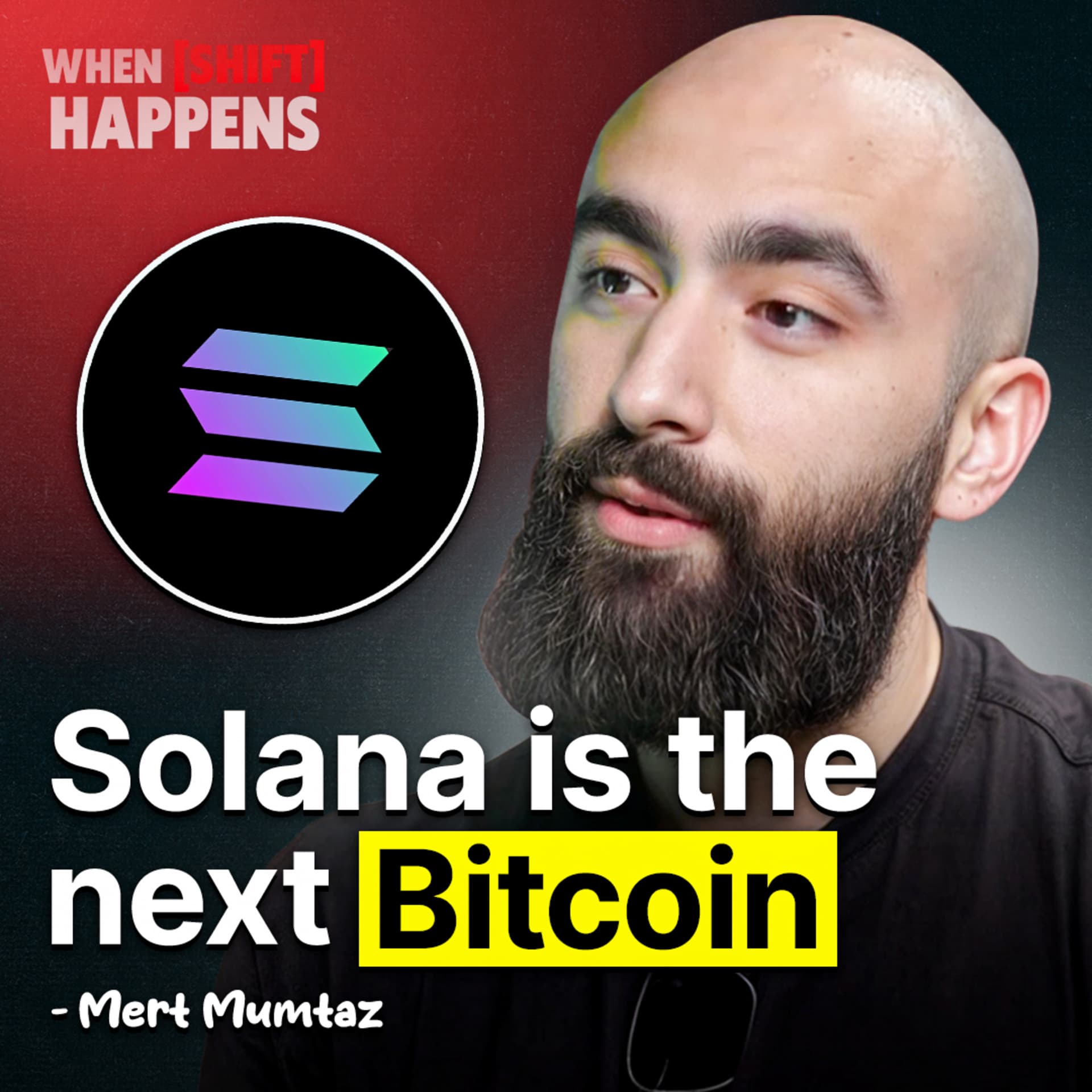
Episode Overview In this episode of the *When Shift Happens Podcast*, host Kevin sits down with Mert Mumtaz, co-founder of Helius Labs, a leading infrastructure provider for the Solana blockchain. The conversation dives into Mert's bullish stance on Solana, the implications of the FTX collapse, and how Helius contributes to the ecosystem's growth.
Key Guests
- Mert Mumtaz: Co-founder of Helius Labs and a prominent figure in the Solana ecosystem.
Key Topics Discussed
- Solana's Growth Potential
- Mert argues that Solana is poised for explosive growth despite skepticism in the market.
- He emphasizes the $1 trillion opportunity within the Solana ecosystem.
- The Role of Helius
- Helius enables developers to build faster and more efficiently on Solana.
- Mert describes Helius as the "Home Depot for internet apps."
- Impact of FTX Collapse
- Mert posits that the FTX collapse was ultimately beneficial for Solana by removing a predatory entity from the ecosystem.
- He believes that Solana can now thrive without the negative influence of FTX.
- Philosophical Insights
- Mert discusses stoicism, risk-taking, and how personal loss has fueled his drive for success.
- He shares that he doesn't optimize for happiness but instead pursues meaning.
- Mindset and Resilience
- The importance of a proactive mindset in overcoming life's challenges is emphasized.
- Mert expresses the need for constant acceleration in business and personal growth.
Highlights and Quotes
- "I think of Solana as a world computer where anyone can just build products and then they're judged by the market."
- "Nobody's coming to save you. You have to figure things out on your own."
- "Happiness is arbitrary; pursuing meaning is what truly matters."
Insights on Personal Development
- Mert shares personal anecdotes about losing his mother at a young age and how it shaped his understanding of life and resilience.
- He discusses transforming challenges (like baldness) into a source of empowerment.
Predictions and Outlook
- Mert confidently predicts that Solana will continue to grow and possibly reach a valuation of $1,000.
- He believes that the next 12 months will bring significant developments for Solana, including addressing potential outages.
Conclusion The episode wraps up with Mert reflecting on his journey in the crypto space, the importance of fighting misinformation, and the necessity of continuous progress in both business and personal endeavors. The discussion exemplifies Mert's passionate belief in Solana's potential and his commitment to fostering a thriving ecosystem.
Follow Mert & Helius
- Twitter: [Mert Mumtaz](https://x.com/0xMert_), [Helius Labs](https://x.com/heliuslabs)
- LinkedIn: [Mert Mumtaz](https://www.linkedin.com/in/mertmumtaz)
- Website: [Helius Labs](https://www.helius.dev/)
Follow Kevin & When Shift Happens
- Twitter: [Kevin's Podcast](https://x.com/KevinWSHPod)
- Instagram: [Kevin's Instagram](https://www.instagram.com/kevinwshpod/)
- Website: [When Shift Happens](https://www.podpage.com/when-shift-happens/)
Partners
- Jupiter: [Decentralized Exchange](https://jup.ag/)
- Sui: [Layer 1 Blockchain](https://sui.io/)
- SwissBorg: [Investment Platforms](https://join.swissborg.com/r/kevinH6E7)
- Coinsilium: [Funding for Web3](https://www.coinsilium.com)
- Dvin: [Wine Industry Solutions](https://www.dvinlabs.com/)
---
Disclaimer: The information discussed in this episode is for informational purposes only and does not constitute financial advice.
Written by AI. May contain mistakes. Listen to the episode to check what was said.
Transcript
Automatic transcript. May contain errors.0:00I think of Solana as a world computer where anyone can just build products and then they're judged by the market To send money from Canada to Australia, it hops between jurisdictions and it's super inefficient. I think Solana is the best place to do that. And so my current mission is how do we accelerate this thing to something the world has never seen before. Mert Mumtaz, the co-founder and CEO of Helios. The top infrastructure company in the Solana world. Mert is also one of the most influential people. And the biggest advocate of the Solana ecosystem. What is Helios? Home Depot for internet apps.
0:31Just imagine a hammer and a nail, but on the internet. Why did you start Helios instead of any other crypto company? I've always been super annoyed by it is the lack of applications in crypto. Okay, how do I change this? And I figured the best is like make it much easier for developers to bring ideas into life. Are you able to be happy? I actually don't optimize for happiness. I've had a lot of early death when I was a kid. One day we got this phone call and they're like, yeah, your mom was like a car accident. And she was like in this coma. and she passed away a few days after that. But the sun still comes up the next day, doesn't it?
1:11We've come such a long way since the disastrous end of 2022 in crypto. How does it feel today to have been the most outspoken character on Solana when everyone was against you and mocking you to not be proven right?
1:26Um...
1:52Jupiter, the most used decentralized trading platform on Solana and the largest DAO in the world. Sui, a scalable layer 1 blockchain that's fast, secure, and affordable, built by previous Facebook developers, and that delivers the benefits of Web3 with the ease of Web2. And Mantle, an Ethereum layer 2 that builds two products I particularly like. FBTC, which enables you to borrow and lend Bitcoin in DeFi, and METH, or meth, one of the largest ETH liquid-staking protocols that, by the way, just launched its token called COOK. I had Joe McCann on the podcast, and he actually said the medical system is not made or built to heal people, it's to keep them sick.
2:35He's actually had very strong views on that. Yeah, I mean, he has very strong views on many things, right? Yeah, I think I've seen that view expressed pretty commonly in the recent years, where people treat like medicine is like this giant bureaucracy where they're just trying to milk you with money. Perhaps the system does that overall, but I don't think the individual doctors think that way. I actually think there's just, I think it's simply a problem of training and education. Like they don't think like scientists or physicists or engineers, they don't, they're not solving problems from first principles.
3:15They kind of just have this body of knowledge that they've recited for four straight years or five straight years. And then they just, when the time comes, they just blurt it back out. Surgeons on the other hand, actually, I think are very, very skilled people because like you can't, the results of a surgery are tangible. So if you have a record of like, you know, 500 successful surgeries and whatnot, that's actually something I trust versus the doctor, I often find out to get multiple second opinions and then do my own research. And I do think AI will actually, like these, like I use perplexity now, which is like basically Google replacement.
3:58And obviously you shouldn't go do for everything, but for like dosaging of medicine and stuff like that, it's actually been super helpful. I mean, if you think about it, you're in control of your own destiny, right? For everything. Life, finances, and health is the same. And like, even these people also don't necessarily think that there's this system that's against everyone. But just the fact that they are so busy, right? That if they have five minutes or 10 minutes or 30 minutes to see you, then there's the next one. At the end of the day, you can get some hints. You go see a few people. You hope that you're going to get some kind of converging information.
4:35But you are the one who should kind of take the lead and I don't want to say be your own doctor, but almost right. And be like, okay, now I'm the one who makes my own decisions. And no one's going to make it for me. And I think too many people, the same with finance, the same with work, actually kind of, or, you know, retirement, same, right. Kind of rely on the system to make their decisions. And it's probably not the right way to do things. Yeah. I mean, basically the way I just think about it in my mental model always is like, nobody's coming to save you. 100%. Especially as a male, like nobody's coming for you.
5:14You have to kind of just do that on your own and figure it out. Do you want to develop a bit on the, especially as a male part? Yeah, I think society like expects a bunch of stuff from males specifically. because like, you know, as a, I mean, I don't want to make any offensive remarks, but, um, generally as a male, you kind of go out into the world earlier on your own and you need to kind of just figure things out. There's less empathy for you. There's less sympathy. They're like, oh, just a guy, whatever. You got to figure this out on your own. And you got to make all this money. You got to kind of provide, you got to do all this thing.
5:56And that's, that's fair and that's fine and that's how it should be i think but like um certainly there is less sympathy i found towards um males in society especially in the western societies i would say perhaps it's different east or like middle east um but like in canada um it uh my dad used to have a bunch of jokes about this so maybe i'm kind of swayed by him but basically the the the point i'm trying to make is like there's just you guys just do it on your own there's obviously you can have friends and family and all this stuff and that's fine but fundamentally like nobody is coming you need to just figure it out i think it's naval who says something like life is a single player game right Yeah.
6:45You're just on your own for everything. And the faster you realize that, the better. Yes. Yeah. It's certainly single player. I have to mention quickly, like the Trump tweet the other day. Yeah. So Trump tweeted your X handle the other day to his like 91 million followers. How the fuck did that even happen? I was the... I'm actually not quite sure. I think because it's I'm not the only one there was other ones that were mentioned I believe it's like if you engage with certain tweets um perhaps I engaged with one like a few months ago about voting or something um I think it's just an automated bot that comes and mentions you now the funny part is that people started getting like all these weird theories about like oh like Baron was probably on Mertz account and then forgot to like because you know when you're on somebody's account and you click tweet it's actually their name first because it assumes you're trying to reply to them um and so people just kind of had all these weird theories and i was like this is not correct but it was funny um and like i knew it was a bot obviously i think everybody knows it's a bot or i mean i guess not not the theorists but um i thought it was funny because I was able to like make it into a shitpost basically.
8:09Cause we had the, I got my, so we actually have a meme guy at Helios, a creative director. And anytime I think of a meme, there was that picture of when Trump got shot and then he got up and then he has like the fifth pump. And I was like, okay, just replace the American flag with a Solana flag and put some pit vipers on him. And so I replied with that. So then like that went pretty viral. So I don't know, just gotta, It's going to make a lemonade, I guess, with lemons. Bully stollana, I guess. Yeah. Who are you? Who am I? I am a bald Turkish guy that's very angry on the internet. You don't seem to be that angry in real life.
8:55Yeah, I actually get this a lot when people tell me this. And the reason is quite simple. is because people generally don't say ridiculous things in person, but it's the norm on the internet. So just before, when you kind of brought me in the studio, I just saw a tweet and it was like, this guy was like, Starknet did, you know, 800 TPS bursts, which burst means like all at once, basically. And then he's like, this is impressive. And then he just randomly brings in Solana out of nowhere. um and he's like solana's max is like 1300 tps lifetime and then i'm kind of like why did you have to kind of go ahead and mention solana there because that's an incorrect number like what why are you just making shit up and then i had to go dune because i have like this thing where i'm like if i see incorrect things i need to look at the actual data and be like okay that's incorrect and i have to reply with that and so like that's an example of nobody's going to say that in person or they might just bring it up over like a beer or something.
9:58But the norm in person is just regular conversation, whereas the norm on Twitter is like just batshit insane bullshit all the time by everyone. It's just... It's an attention game. It's an attention game. Treating people. Yeah, it's an attention game for sure. But also it's like, since it's the internet and people kind of just say what they want and what they can and, you know, they should. But people just always comment on things they don't understand. Especially like this is, you know, there's a similar concept called the Jalman Amnesia effect. Where if you ever read a newspaper article about a topic you're extremely familiar with.
10:45So let's say tomorrow the New York Times publishes something on Solana or podcasting, I don't know. And you'll note that they generally don't understand what they're talking about. It's very non-rigorous and the details are choppy and it's generally somewhat incorrect. And then you take that and then you say, okay, wait a minute. If they're incorrect about this thing that I actually do know, what else are they incorrect about? Yeah, there was a, I saw yesterday a video about Joe Rogan. I really was CNN saying about the medicine he took to kind of recover very quickly from COVID that it took him five days.
11:24And then CNN, they kind of like reported that this is medicine for horses and everything. And then he's literally calling out on his own podcast, one of these guys who works for CNN. And he's like, you guys just talking complete shit here. Like, it doesn't make sense. And you don't even know what you're talking about. Like how dangerous is that? Because then he's saying, if you are reporting something like that, that's so wrong. What are all the other things, right? That are so much more important that you're also reporting wrong about? Yeah. Yeah. It's called the gentleman amnesia effects if you want to Google it.
11:56But it's, and this isn't specific to like any news organization. I've done a lot of interviews and let's say news pieces. because and the very common theme is that the journalists or the reporters generally almost never are subject matter experts in that topic and so they're kind of just trying to get a story out which is like fine but like they don't know that field i think like actual journalism back in the day used to be like we need to keep you know the high-ranking people accountable and stuff and so they just investigate their lives and stuff like investigative journalism and all this stuff that's fine but like if a journalist is writing like a white paper on solana or something like it's like come on um you're not an engineer i actually had this idea where i was like okay we should have very vertically integrated um media organizations where like the only people who write about engineering are engineers, former engineers who actually have an interest in writing because like there's just so many things that get lost in translation.
13:09Like I was doing a media piece for like Solana's decentralization numbers. These people were asking me questions that are just very basic questions. Their level of knowledge that you have to transfer to them so that they can even understand how to reason about the next kind of a few logical steps in that chain are immense. And that's why I don't think they can ever really report that accurately. Not to mention the bigger ones obviously generally have an agenda and some sort of story that you're trying to tell. The product is the story, not necessarily the truth. What is your mission? I would say I have kind of layered missions.
13:55if you kind of imagine a diagram with like a small circle and like a bigger circle and then kind of layering different missions. I would say my immediate mission is to kind of help accelerate world computing. And what I mean by world computing is I think of Solana as kind of a world computer, where in traditional systems in the Internet, you have all these different parts of the internet that are basically walled gardens and all networks, including social networks, but financial networks, physical infrastructure networks like helium, et cetera. These things are all kind of segregated and they're walled gardens and you need middlemen to kind of facilitate them.
14:41And what that does is one, it's actually kind of anti-capitalist because capitalism is basically about equal opportunity for everybody, right? So that it's about competency. If you have the equal opportunity, it doesn't matter if you're from Bangladesh or if you're a trust fund person from New York City, all that matters is you have the same opportunity to build things. And then the market decides the value of what you've built, right? So in an ideal case, everybody has equal access to, or not equal access, but equal opportunity to building things, creating things, and then they're judged by the market.
15:22And then, so that's one aspect. But then also you start getting like for example, you have lights to work in digital payments. And even just to send money from like Canada to Australia, the money doesn't actually just go from Canada to Australia. That's not what happens. It actually kind of hops between jurisdictions and it's like super inefficient. And so there's a lot of inefficiency that happens when you start segregating these systems. And I think having this kind of giant world computer where anyone, regardless of what their name is or where they're from, can just build products and be judged by the market is like the ultimate kind of merit-based system.
16:12where people's like, because there's, you know, I don't know how many people there are in the world now, but like, you know, billions of people. And I feel like so much of that potential is kind of dormant because of all these weird, arbitrary walled gardens. And I think, so that's one. If one, if you can fix that, everybody has more opportunity. capital moves easier between places and then everything is more efficient there's less take rates people have better margins they can kind of be more individualistic they can start to kind of take their own future into their own hands somewhat and so I really believe in this concept of world computing.
16:59And I think it would be pretty good or actually quite necessary for humanity to kind of start moving more towards that instead of kind of the status quo. I think Solana is the best place to do that. I don't think it's the only place, but I think it is the best one. And so my current mission is like, how do we accelerate this thing to kind of happen faster such that I can see it before I'm dead, right? That's kind of how I think about it. Because like people are just also more mobile now, right? Like I just moved from Toronto to Dubai and I feel like I've like removed some shackles. I feel more competent, more, more able.
17:41And so I think if everybody can have that, it'd be certainly worthwhile. So that's like the immediate specific mission. I would say the grander mission is kind of hard to articulate. And it's also kind of cheesy because it's actually quite similar to Elon Musk. And my co-founder, Liam, we've actually, I mean, I told him this 10 years ago, 11 years ago, which is kind of like, I'm just interested in like magic, basically. um and what i mean by that is there's a lot of things that are like super cool in the world and the universe and like the reality of being in a sense such that i feel like there's so many new cool things to discover but like we're kind of just as an entire species just holding ourselves back by doing arbitrary shit that's not important and i feel like there's so many different things we can discover once humans are able to coordinate better and have better capital, have better opportunity, have better startup infrastructure, et cetera.
18:55For example? So I think like regulation has been, I think like one good example of this is AI where, I mean, it's not really AI, right? They're just large language models, which is extremely sophisticated, autocomplete in a sense. um but like people are saying like oh you know if this keeps progressing humanity is doomed and stuff and there's kind of these doomers they're always kind of trying to slow down progress in the pursuit of some you know moral good or something and i think since i've been a kid i've always always kind of just been like there must be like because i've always been interested in space and actually that's what i wanted to do at first i was gonna major in theoretical physics PhD in theoretical physics.
19:43And there's so many like different undiscovered things that I feel like could accelerate humanity to such an extent that we don't even know it's, you know, like we don't even, we can't even imagine it. And the main part of that that I'm interested in is kind of like how humans coordinate to actually get there without being slowed down by these shackles. And so like, it's actually pretty in line with the earlier mission. I think the earlier mission is kind of how we kind of move the uh move that forward a little more but like i would actually ideally like to start like my own network states which within you know next 20 years or something um and kind of have this area where people are um it's a capitalist society that's about acceleration.
20:34And it's vague because, you know, the way Elon Musk frames this is like, he's curious about the nature of consciousness. And he basically thinks that we're not asking good enough questions. And so if you can expand the scope of consciousness, you can start asking better questions and get better answers. So that's the way he frames it. I'm in consensus with that i think that's kind of what i also came to realize earlier on um but in a much more practical way where it's like okay we should be able to set up different things on different planets we should be able to um really advanced biotech right like one example i'll give is i was trying to get like munjaro which is like a new version or a new iteration of a zempage and it has like different receptors and stuff.
21:28And in Canada, I could not get that. So my entire family has diabetes. Everybody has diabetes somehow. And I had pre-diabetes. Like I would take the blood sugar test and stuff. And I would like tell my doctor. And I also like ate really well for the most part. And, you know, I competed in Muay Thai, did a lot of sports and whatnot. And like this guy just would not give to me. He's like, nope, no chance, whatever. And then in Dubai, I went to the pharmacy and they just gave it to you. I think anybody can get anything. Yeah, and now I don't have prediabetes anymore. And I have way more energy and I feel way better.
22:04I like to think I look better too. And it's like, you see what I mean with like opportunity and different kind of walled gardens? It's like now I've just been able to kind of improve myself in this one way. And it's like, guess how many things there are like that in the world, right? There's a lot of them. And so if there's a contribution to be made to increase opportunity and kind of progress capitalism, in a sense, I think that's going to be a net good. So that's kind of what I'm after. You don't have to do all of that, right? Where does this crazy fire in the belly come from? I think perhaps two things.
22:47um one is like kind of just meditating on the shortness of life in a sense where it's like I mean even on my finger I have like memento mori which means you know remember you'll die um I always kind of I've had a lot of early death uh in my family when I was a kid and so you really appreciate kind of how short life is and like you don't have that much time before you're kind of gone. And so you might as well really, really try to do something while you're here. Um, there's kind of that intrinsic drive from that, that always has been there. And number two is that I'm just very, uh, I get annoyed and angry very easily.
23:31So like, like if I go to an airport and like, I hate the lines or something and I hate all lines, I'll kind of just like, like, what the fuck is this? Like, why can't people design this better? Okay. Here's an idea. And then I'll start like trying to design it better. And then obviously you can't do that with everything because going back to our earlier point, you need to have domain expertise. You can't just YOLO everything, right? I'm not going to amend the cure for cancer myself. But the things that I do know how to do, which is, you know, software development, crypto, et cetera, I see those problems and I'm like, we should just fix this right now.
24:05Like, why not? What else am I going to do? Am I going to just eat Cheetos and play video games? Like, that's not very inspiring to me. And so, yeah, it's basically a combination of the shortness of life combined with like a, I think David Ogilvie calls like a divine discontent. I'm just, I'm just not content. So, yeah. You're not content, but are you happy? Are you able to be happy and fulfilled when you're in a constant state of uncontentment?
24:42I actually don't optimize for happiness. I'm not the first person saying that on that podcast. Yeah. I think it's like this weird psyop from society in a sense. Like, oh, just be happy and optimize. I think what's much more important is pursuing meaning. Happiness, if it comes as a result of you progressing towards the meaning and being fulfilled. that's great but like if i wanted to just be happy there's much easier ways to do that right i can have a great family life i can um eat whatever i want play video games all this stuff feel some sort of happiness from a bunch of different places but i don't share for happiness personally which past girlfriends have been super puzzled by this um and my family they're like well what does that even mean like are you kind of depressed and it's like no i'm not i'm not depressed at all um i just don't think of things in the context of happiness or even being fulfilled i'm kind of just like is the job getting finished or are we making progress here right that's all i care about because it's all i want to do and if it's what i want to do um then i guess that kind sort of makes you happy in some sense but like i don't optimize for happiness and i personally don't share for it like it doesn't matter if i'm happy or not um all that matters is is people are kind of progressing on their mission or their meaning you mentioned this tattoo you have on your finger before and you told me also that you lost your mom at an early age.
26:38What did this horrible experience teach you? I was young in Turkey, I believe maybe 10 years old or something like that.
26:50And I don't quite remember the details because it was a very chaotic time. But basically one day my dad, you know, there used to be police sirens and stuff all the time and we'd have to go on these weird trips and I had no idea what was going on. I have some stories about that, which probably aren't, uh, which probably shouldn't be made public. But, um, I think there was a lot of violence going on, especially in those parts of Turkey. Um, and so one day we just, I don't know, we got on a plane and we just left for America, actually went to Miami where my uncle lived and it was just me and my dad and my mom stayed back.
27:27And I was like, fuck, I didn't, I was just a kid. So I didn't question it too much the time um yeah we were in miami um and then for some reason my dad made the weird decision of going to niagara falls in canada and so we went there and a few weeks after that um my aunts were also in canada my dad's sisters basically took me to this park and they're like yeah um your mom was like a car accident and for some reason i felt like i already knew that and she was like in this coma. And I was like, oh, it's just a coma, whatever. Like she'll get out of it or something. I didn't know how comas worked.
28:12And then, yeah, she passed away a few days after that. So it seems to be from a car accident. So basically just crossing the street and getting hit by like a shitty driver. And then within the context of what it taught me, I think it actually ties into basically everything I've said in a sense, which is like one, like things just happen and like the sun still comes up the next day, meaning nobody actually cares, right? It doesn't matter if your entire family just got like murdered or something or you got bombed, nothing like this actually. You might be upset by it, rightfully so, but the world doesn't care and the world just keeps doing the same thing that it was doing and so as a result there's kind of two options one is you can kind of just I think it's a I think it's a choice I think most people don't believe it's choice but I think it's a choice I think you can kind of just be like yeah like this sucks everything is not fair like why would life do this to me or the alternative which is like okay this happened sucks.
29:24I can't do anything about it other than move forward. And so, you know, that's kind of what I mean by nobody's coming to help you or save you. So you kind of just, I internalize that very, very early on. So like 11 years old or something. So that's like the main thing it taught me, obviously shortness of life as well. It also showed me a bunch of things that are like arbitrary, right? Like happiness, I think is arbitrary personally. Whereas like, you know, everybody's like, oh, you have this great family life, you celebrate Christmas and stuff. And you have all these things that people do because other people do them as well.
30:04But then like, if that part is missing, because your mom passed away or something, it's like, you don't have those things. And so a lot of these things are kind of just arbitrary. And they're just done because they were done that way yesterday. And so I just started thinking that way about everything where it's like, okay, if this is arbitrary, what else is arbitrary? And so now every time, and it just annoys like all my friends and girlfriends and of the past and the current and whatnot, they'll be like, oh, like, Hey, do you want to celebrate this? I'm like, that's kind of arbitrary thing. Like, I don't know why, why that's a thing, you know?
Read the full transcript
30:40um so like i'll obviously i'm not like a psychopath so i'll like be like okay let's celebrate christmas whatever sure but like internally i'm like this is so fucking weird like what why not just you know think for yourself to some extent um so and then like it one of the interesting things is like that wasn't like the only hardship at the time um obviously i didn't the language um i went to like the poorest school possible i think in niagara falls it's like ranked one of the worst high schools uh in like the worst elementary school uh i got like uh we were like staying in a church for a little bit and like i got bed bugs and like i was like just dying everywhere my dad would just stay up the entire night with like a slipper and just chill all the bugs.
31:30I think this is like so weird. And like, it was just like hard, but like I had internalized it so much that I started coming up with like my own theories where I was like, okay, so what? You know, like whatever. So what? There's bed bugs. So what? The school sucks. So what? I can't speak the language, whatever. And there's not really a support system. We also didn't have money. So like my dad was on welfare. So I was like eating some awful food. Oh my God. It was bad. But I was like, internally, I was like, it doesn't really matter. Like, so what? And then actually, one thing that I found fascinating was like, it's like, okay, if I can make it through this, then I can kind of just do anything.
32:14And so I kind of just started having a lot of confidence, like way too much confidence. Like my family would be like, you're way too cocky and all this stuff. I was also like pretty fat as a kid, like straight up fat. But I was a team captain for all the sports, and so I was like, that's not going to stop me. And so I kind of developed these mindsets and these kind of different mental models very early on. And then years later, when I started actually reading stuff in English, I found out that that was the Stoic philosophy. And I was like, oh shit, like these guys actually already came up with this thousands of years ago, much before.
32:56I'm not as smart as I think. This has already been thought of by everybody else. So, yeah. Hey, when shift happens, family. Time to toast our partner, Devin. They're taking luxury wine to the blockchain with their super fun concept called Uncorked to Earn. Buy your favorite wines, enjoy unique experiences, and get an airdrop each time you open a bottle with your friends. Cheers to Devin for bringing transparency, authenticity, and exclusivity to the fine one's industry. What does the stoic philosophy say about hair loss? Because you joke a lot about hair, so I had to ask, right? When did you start losing your hair?
33:35And in the context of what you just said, how did you feel? Oh, yeah. So I actually used to have really long hair. um i've shown some pictures of this and people don't believe me um like like long hair i used to look like like a typical canadian hockey person like uh it's called the hockey flow um and i was at like queen's university which is like everybody's like a tall white guy with like long hair and stuff and blonde girls and so it was like very uh in line with that and um uh i i i think i looked really good and i was like pretty self-obsessed in a sense And so I did this program called Apple Math in Queens, which is like a double in applied math and engineering, communications and computing engineering.
34:28And I never went to class, right? I didn't go to class at all. But my roommate, who's now my co-founder, did. And so what I would do is I would play video games basically every day or go to the gym or do something weird and then never do class. But then like the last two weeks of school, I would cram the shit at, like I would just read the entire textbook at like this weird stack where I would take 200 milligrams of caffeine, eight milligrams of ephedrine and like an aspirin. It's called the ECA stack. And I would do that three times per day. And it gave you like really good focus. So like, this is like Adderall.
35:07This is just like coffee and like stimulants an insane amount. And I would just basically devour textbooks and study for everything. Actually, my econ class, because I took an econ elective. So this is kind of where it ties in the story. In fourth year, because I just had always skipped electives. I was like, fuck this. I don't care about electives, whatever. You need them to graduate. You need them to, like it's actually the degree requirements. And so the last year at university, the last semester, I had like nine classes and like they have all hard classes, like advanced math where we share it with like PhD math students and stuff.
35:48And I had an econ exam the day after and I had never went to class. I had never even looked at a textbook and I was like, I need to learn microeconomics in one night. And I was like stressed. And so I was like, fuck this. And I just shaved my head because it was like, I was like, oh, it's getting heated here, or whatever, it looks weird. I'm sick of kind of trying to fix it all the time. So I shaved my head. Did fine on all the exams. But then like roughly like when it started growing back, I was like, fuck, it's not really growing back as well as it used to. But I didn't think of anything of it.
36:29And then I went to Turkey and people were like, hey, are you like losing hair? And I was like, no, that's crazy. Like, what do you mean? I'm 21 or 20 or something. I'm not losing fucking hair. Like, don't be an idiot. Sure enough, though, it never actually grew back quite that well. It was just always growing back thinner, some, like, bald spots. And I was like, oh, fuck. It's actually not going to happen. But Turkey is the hair transplanting chapel of the world. And I think that's where Elon Musk went. There's pictures of him before and after and all the stuff. And I was like, okay, I can probably just get a transplant.
37:04So I just always kind of delayed it. And then I was like, you know, I saw how they did the procedure, which is like disgusting. They like take some donor things or something. They just like literally put it in your head. And then like I saw the memes about like Turkish hairlines instead of like Turkish airlines. Because every time you go to like the Istanbul airport, just a bunch of dudes with like this weird, bizarre look. And at the time, because I've always been into like super into fighting and whatnot. One of my idols like Jason Statham. and I'm like you know who's pretty fucking handsome like that guy is really good looking because I was watching his movies I was looking at this bender of Jason Statham movies and I was like you know what like fuck this like if if he can pull it off I can pull it off why not and uh I used to just kind of like go to the shower and then like be like okay what would I look like if I didn't have hair and so I would like kind of like pull it pull a batch and like look at myself and I even like would take pictures of myself and I like remove the hair and be like Like, does this look fine?
38:05Whatever. And one of the issues with going bald is like, if you don't have a good head shape, you're fucked. Like one of my friends is like a sissy. He was like a pear. It looks really bad. But I remembered in grade six, my French teacher, who's like obsessed with me because I learned French faster that time, was like, you know, you have a really perfect, like oval head. And I was like, okay, I have a good head shape. Fuck it. Right. I just, shaved it. I went bald. And at first it was like a shock. I was like, oh my God, I look like a terminal patient. Like I'm dying. I'm 25. Like, why do I look like this?
38:41And like for like an hour, I think I was depressed. I think for that hour. And then I kept watching Jason Seda movies and I was like, no, no, all I need to do is like get a bit jacked and lose some weight. And I think it looks fine so i started kind of just faking it for a bit um like the confidence i was self-conscious for probably a few months um but then i was like this she looks pretty good um and once i started the company i was like this actually is also kind of like a superpower because people think you're way older than you are and so they take you seriously but then also like women uh and people think I'm like coping around this or something, but like you stand out much more if you're bald, which can be a bad thing, right?
39:28People are like, oh, this is a bald guy, whatever. And it generally is a bad thing in most cases, but like, that's not set in stone. You can also make it into like a, an edge in a sense. Like if you're super noticeable, people just pick you out. And so I would kind of just like flirt with girls and whatnot when I was single. Um, and I was like, you know, this is actually, uh, it works pretty well. Like I'm able to kind of, uh, get girlfriends, go on dates, all this stuff. Nobody actually seems to care. People don't care. Yeah. Back to that, right? People don't care. Yeah. And it's like, I was kind of like, you know, just get over yourself.
40:08Nobody gives a shit if you don't have some hair, like whatever. Um, and over time I was like, this is actually sick. And now you could not pay me to get hair on my head. I actually love not having hair. I've, like, kind of made it into a meme, right? Like, it's like, if you want to increase your CEO skills, you have to shave your head. I mean, it's kind of one of the big memes with Brian also. Yes. From Coinbase, right? And, like, Brian doesn't even have a beard, so, like, he's really, like, he looks like Chas for the ghost. And, I mean, I love Brian, but, like, I think he can pull it off, too.
40:44And then, I don't know. It's just, some of the things are super weird that you notice. Like, you look at all the movies, and the hero is almost never a bald guy. It's very rare. Versus the villain is always bald. There's Voldemort, or Bane, or Lex Luthor, or Ching Paine. It's just this weird thing where not having hair is this frowned upon thing societally, in a sense. But again, it goes back to my thing of these movies are fucking arbitrary. like it's it's not actually it doesn't have to be that way and women love villains right so you have the tattoos and you have the bald hair yes like that is why you're angry yes at the conversation with mike novogratz actually we talked about like getting bald and all that stuff and he was like yeah you know it was also hard in the beginning but at some point i realized there's many things that come with that which you know you can kind of justify to yourself high to a certain level all that stuff which is very manly and actually ultimately can really attract yeah makes sense it's actually like one of the things people don't understand about being bald is like they're like oh this is like super easy to maintain whatever you don't have this hair it's way harder to maintain because if you don't shave every day or every other day or something you start looking ridiculous like you start getting the weird gary genzo look where the hair grows on the sides and like you don't want that as a 28 year old okay uh you need to be like bald bald for it to actually work um so it's actually a lot of work to maintain and there's the beard too now to maintain which probably takes a lot of time too the beard is weird because girls think like every girl that i've been with is like they like me because like they think i'm whatever handsome and stuff at first and later they're like you should shave the beard or something i'm like what the fuck do you mean like if i shave the beard i'm gonna look ridiculous us um and so yeah okay let's start with a serious topic crypto that's why we're here today yes how did you get so fascinated by the world of crypto so in undergrad i was a math major and i took some courses like pure cryptography and my roommate liam was like mining some weird shits like raven coin or something um remember that coin yeah and like our school super small school but like people were randomly already into crypto like um the core team for maker dao um and like nansen well not nansen he was the head of strategy nansen but like people were already big on ethereum and bitcoin and um i just like a random interview where this guy's like oh we're going to use the blockchain to like improve the education system and like it it sounded really stupid to me and i was like this is not gonna work whatever and because i was so theoretical at the time i was like you probably need a phd to do anything meaningful in crypto and like that was my um kind of quick judgment and i was obviously wrong but so i never looked at it further than that but i did go into finance um so i worked in a bunch of the big banks in canada and i also did like uh digital payments like atm payments card payments and stuff like that for a few startups and i noticed like how i hated it uh the payment systems are super shit um if you know how like the current bank system works.
44:17It's like 1985 programming languages doing some bizarre shit that makes no sense and super inefficient. And that story that I said earlier about like, we had to move money from Australia to Canada once. And I saw how hard it was and I was like, and I knew like about crypto and I was like, why not just like use USDC or like even Bitcoin or something? And people were like, like that's a scam. and this was like 2020 or 2021 or something. And I really did not like that answer. And I was like, it clearly solves a problem. And like within two or three weeks, I was working at Coinbase before they went public.
45:00So I joined Coinbase. At Coinbase, I was on a team called Ledger, which is basically a team that builds APIs for everybody else within Coinbase to build products. So Coinbase.com, Coinbase Advanced Trading, Coinbase Wallet, they all use these APIs that we built. And then Coinbase also has like a super smart culture internally and everybody's super involved with crypto. Well, not everybody, but like certainly the earlier hires, the newer hires aren't really crypto native. And so there were all these channels internally, like DeFi farming strategies, NFTs and all this stuff. And I would just play around with all the chains on my own.
45:41and on the weekends or just during the late night, I was like, I feel so annoyed by not knowing all these systems. And so I like would study the white papers. I read like the Avalanche white papers, Solana, Polka Dots, ICP even like everything. And I would also like just build stuff for fun. And I built a few EVM things. and then I was like Solana seems interesting because the white paper is like a communication system like a radio system and that was my undergrad and I was like this actually is a very interesting way of scaling um and it seems to be like kind of not consensus for some reason so I bought Solana but I also started building on it at one point um I had built you know like back in the day when nfts were a thing um there would be like these sales bots or like listings bots on the discord where it's like oh like a new rare nfp got listed or like somebody would sell nft for like 500 000 everybody would comment like free or something because they thought it would went for like 10 million at one point like 90 of all those bots on all slanted discords were just bots that i built just for fun um and then similarly there was no explorers there was no block stores there was no analytics sites and these nft influencers on twitter would say some bizarre shit like oh this nft is like popping off or minting out whatever but then i would and like nobody could check but then i would look at like the the distribution because i would write index on my own to like see what they're doing and it's like this guy would like mint like 900 to himself and then be like yeah it's being sold out quickly and i'm like are you fucking stupid it's a public blockchain like everybody can see what you're doing um and and so um i would like reply guy them and at this time i had like basically no followers um like less than a thousand um so i basically just kept doing that for a bit and i also noticed the industries like ethereum let's say bias people would like write threads about how Solana's shit all the time.
47:59But like they would never talk about the downsides of Ethereum. And I was like, this is kind of weird. And this is also the case within Coinbase, which, and I was like, but these people are smart. Absolutely. Yeah. Yeah. I was like, why are smart people like just totally not being very balanced here? So I was super annoyed by that. And so people would like say a bunch of shit on the internet and write these posts. And I'd be like, actually, that's kind of incorrect because here's actually how it works. And I mean, I started doing that. I never stopped. But I also even started doing it within Coinbase.
48:36And then basically like one day, I had always wanted to start a startup since like 14. I didn't know they were called startups at that time. I just said, I'm just going to start a company or invent products or something. and then yeah one day i was just like i think i don't quite remember the exact story but like we were building a product within coinbase and like i was like we should add solana to this and they were actually okay with it like okay sure let's add solana but like on ethereum you could use like ether scan apis to bootstrap something super fast on solana you had nothing uh i was like i can just build this out but like that's gonna take a while and i was like wait a minute why not Why not just start this company myself and I'll sell it to Coinbase later or something.
49:18And so I started the company in like fast forward two and a half years. We actually did sell it to Coinbase. So they're a customer now. So it did work out. But that was like the story, I guess. Let's start with the kind of going on in on Solana. I, so, Andreessen Horowitz, the VC firm, Ben and Mark have a podcast where they talk about random ships, startups, whatever. And, like, one day they talked about, like, nicotine. And they were, like, I think they were talking about, like, hey, is it, like, a new topic? Does it help you think better and stuff? And I had always been scared of it. at the time I was kind of fat as well.
50:04And I was, because I wanted to like start vaping because I was like nicotine drives your appetite, whatever. I've never seen a fat guy that smokes cigarettes in Europe or something or in Europe in general, but whatever. And I was like, but I was super scared of smoking because my lungs, whatever. I didn't want them to get damaged. And I didn't know these things existed until Mark Andreessen and Ben Horowitz on their podcast was like, they were talking about nicotine about how it's like a stimulant and stuff and I think they said like okay like maybe we should experiment with it like they were going to experiment with it I was like hold up like these 50 year old guys are taking this thing and I'm not like what the fuck's happening here and so I went to the store and I just picked one up and at first it was like oh my god like a huge kind of um it makes you dizzy and nauseous and all this shit but then I kind of like confirm biased myself i was just looking at all these things and it's like yeah i can like delay cognitive aging and like it can help boost memory and stuff and i was like sure whatever i'll convince myself that this is probably not a horrible thing to take and then i like um i obviously tweet a lot and and do a lot of marketing and like that's a creative endeavor which i think benefits highly from putting your mind in alternate states so you can kind of like have different states of mind and then mix them up and then come up with new ideas and so that's why i started um and that's it doesn't do too much for me honestly like it maybe helped me think faster in some regards trips appetite so that i don't have to be distracted with food but that that's kind of it so it helps you be more creative i think so it's very hard to measure creativity but i think it does i just released a podcast with jesse pollack from base okay last week and we talk about him vaping he has a crypto punk right as a profile picture and there's a vape so ask him why do you have a crypto and then i ask him your crypto pay pun vapes do you and then he started to explain that he actually vapes but not nicotine he evades weed because it enables him to open kind of new pathways so he's like when i have a big problem to solve i vape some weed and then i go for a run and i've been so richard oh shit wow that's intense uh i personally don't i mean i used to smoke oh man in university me and my roommate we would just every night like i would just we would smoke weed and then i would always come up with like random physics theories and i was like oh like what if humans are just electricity like can i be electric man or something and he actually videoed it and he like blackmails me with it all the time now as a joke um but then i realized like once you're sober let's say all the shit you said was super dumb and it's like it's not super helpful but with nicotine it's like it doesn't feel like anything so it's just like perhaps like five percent difference or something so and if you're drinking which in crypto i mean you don't have to drink but like there's a lot of networking events and I also like just having like a random drink to again be creative and stuff.
53:18I stole that from David Ogilvie by the way. He was like the grandfather of advertising. It actually counter affects the sedative effects of alcohol. So you can have like some filters turned off in your brain but still be alert and I find there's like this weird zone where you can kind of just go out in there bang some tweets or ideas and stuff that I find helpful. Talking about banging tweets which you do a lot, right? I have to get back to kind of like the beginning of the Your Solana story, right? Online one. And I have to quote our common friend, Miao, the co-founder of Jupiter, who is one of the podcast sponsors.
54:00Miao wrote an article at the end of 2023, right? Referring to a year prior to that. So I'll take a few chunks and then I'll ask questions that hopefully make sense based on those kind of chunks. he wrote he's only a small merth now but within the year we'll grow into the most formidable fire-breathing dragon in the whole city loved by some feared by all avoided by bodies my first question is entrepreneurs and investors usually they rely on patterns to build judgment right what other catastrophic events happen in your life as an entrepreneur investor that made you realize that the collapse of FTX was a huge opportunity for you to step in and become a leader in the Solana ecosystem at the very moment where others were leaving because they thought that it was the end of Solana.
54:53Yeah. I mean, it wasn't hard. I think people kind of always think it was like this super difficult moment. And I guess it was for some people, But for me, we had a company. I mean, we have a company, Helios. And so what had happened was like, obviously, FTX came out as a fraud. And one thing I didn't understand was why everybody was saying Solana is dead after that happened. Because based on my understanding, like the last thing FTX released on Solana was a horrible NFT marketplace that totally tanked. And then their last few investments were like Aptos. and like other blockchains. And so I think they were like helpful in like 2020, like during the super early days.
55:42But by 2022, they really weren't doing anything except dump on retail with horrible tokenomics and shit investments. And so I actually, my first instinct was like, oh, this is awesome. I was like, wait a minute, like now this predatory person, team, whatever is gone. so now the ecosystem can be way better. But like for some reason, nobody saw it that way. They're like, Solana's only successful because of this thing. But like, I was like, that they wouldn't do anything to help the chain. Why is it successful because of them? I think they like helped get attention towards the chain during the early days.
56:21But since then, I hadn't seen them do anything useful. And at the time, Solana had like some outages in the previous months. and, you know, I was talking to Tolley and stuff. And I saw like the solutions they proposed to fix those things. And I was like, oh, this works. Like this will solve the issue. And I was like, sweet. Like now there's no more priority to tokenomics. And there's like a new engineer system kind of coming online. We still have a bunch of customers with Helios. We saw like some more of a downtick, but like overall the trend was, like you follow the developers and the developers were still building on chain.
57:02and like I put those things together and I was like what the fuck like what how is everybody so bearish right now and then you know you start to realize how stupid CT is where it's they look at the chart they they look at the chart and they're like okay the price is going down therefore the chain sucks and it's like you don't have full information or you don't understand full information or you simply don't have the balls or you don't have or you're just thinking arbitrary you're you're you're an ape you're just memetically copying other apes you're not actually thinking and so i would see like all these posts saying the most bizarre shit like the l1 wars are over or like solana's dead and like i have a lot of screenshots of those by the way um like gigabytes worth of the shit and i was like these guys are gonna get so fucked like this is so incorrect.
57:59And I was like, not only am I going to, with my team, help build better solutions to make the blockchain work even better, I'm also going to invest in better companies. But then also I'm going to smack people in the face, hypothetically speaking, on the internet who say this dumb shit with just facts. I mean, none of my arguments were opinionated. I mean, they were opinionated in the sense that obviously I have strong opinions, but they were always backed up by something. and that was it and i was like che you're wrong here's why you're wrong and turns out they were wrong so you know uh i think it's gary v uh i saw a couple of years ago he was saying the real entrepreneur is the guy he was uh i think it was just bookmarking all the tweets and then he was like you know what the real entrepreneur is the one who bookmarks or screenshots and then comes back one two three years later and then just like say what now bitch yeah i mean it's like it's like that michael jordan thing where it's like somebody will do literally anything like maybe they winked at michael jordan or something he'd be like and i took that personally and it just gets rattled and and i'm like kind of the same i'm like you fucking dicks like what how dare you like try to shout an entire ecosystem with false information and do horrible charts and stuff like, I'm going to get you.
59:21Like that was kind of my thought. He shall vigilantly scan the expensive skies day and night, not just replying, but becoming the reply guy. Fudge shall be eliminated. Mistakes will be corrected, sometimes politely, sometimes annoyingly, but never wrongly. All who read his replies should be enlightened. Why is the reply job one of the single most important jobs in a crypto ecosystem? It's actually like a very fundamental reason. The only way progress is made and errors are corrected and knowledge is created is through discourse. Okay. Which is to say somebody said something, there's an opinion, perhaps it's backed by some data.
1:00:13and the free market of ideas then battles it out. And then the idea that's, you know, least wrong kind of, you know, sort of wins, right? Until a better idea comes along and then something like that. So being a reply guy is important because in crypto, due to the incentive structures, which is like very short-term incentives and people are obviously swayed by price more than brains, let's say, combined with the social aspects of crypto, which is like, it's just a very social system. Not only intrinsically in terms of like social consensus, but also like, since you have like all these markets, people want to feel like they're making the right choices.
1:01:04So they just always talk about these things. But then also people aren't building too much and so people will just yap. And so you bring all these things together, you have this kind of social system where people just, you know, they'll say their opinion. And like, generally speaking, I don't assume intent too often. Like, I don't know if they're trying to be malicious or something. And so I try to just look at what they said and I look at the argument and I'm like, that is false. And I know that it's false because I've done the work to kind of research this. And it's like, okay, if you know that, but you don't comment, then you've kind of just cheated everything because you have all this knowledge, but you're not using it.
1:01:50So like, what are you doing? And like, one of the things people will say is like, well, you're never going to change somebody's mind. And it's like, okay, that might be correct if it's a one-on-one private chat, but on Twitter, everybody sees everything. And so if somebody's saying something and broadcasting it up to the world, like, you know, Solana's centralized, and I know that it's not, I'm not going to change that person's mind. But, like, whoever reads that can now see both sides of the argument, and then they can decide for themselves. So, like, being a reply guy, it's not just a crypto thing.
1:02:28It's important in everything. It's important, like, literally everything. It's super important. And like, Reply Guy is just crypto is branding a bit, but fundamentally, that's just how humans learn and create knowledge. If you've like read like a David Deutsch book, everything is conjectures and then criticism and then criticism leads to new conjectures and then criticism, etc. And then the idea is to keep reducing the errors such that you have something approximating truth fundamentally. Like that's what science is, right? Science is basically trusting in the ignorance of experts, I think, is what Feynman said or something, which is like, there's these established ideas.
1:03:14And the only way science moves forward is like, yeah, I think that idea is wrong. And here's like a better way of thinking about it. And then you kind of have all these things, you know, like, no, the earth is not the center of the universe. Actually, the earth rolls around the sun, right? That's basically just being a reply guy to the church. And I think it's just, that's just like a very deep belief that I have, that you have to have this battle place of ideas. How do you put food on the table or build a big company when you spend your days replying to people on Twitter? Well, the most important thing is you need to have a really good team.
1:03:56So Helios is three co-founders, me and then Nick and Liam, who are my university friends since 10 years ago and roommates as well. So I know them very well. I trust them deeply.
1:04:40And they do the engineering. We have better BD than me, better legal than me, et cetera, all these things. And so it's about kind of just putting together the best team. That's like the most important job of the leader. And, but the other half is telling the story and, well, you know, not only doing sales and marketing, which goes in with this, but recruiting. And then like, obviously we're deeply mission centric. like we believe like our mission statement internally is um accelerating world computing and like a part of that mission is making sure that that mission is resonant with as many people as possible so like if i'm not talking about our mission then perhaps i don't believe in it too much right and i can't really back it up and so So fundamentally, it's like, I want crypto to succeed and proceed because, you know, earlier about basically my life mission.
1:05:49And I think the way to do that is twofold. One is you need to obviously build the thing. You need to ship. You need to build products. You need to iterate. You need to improve these systems. But then the other part is like, you need to argue. You need to debate, you need to tell the vision, you need to recruit, you need to dispel things. And like, you can't just do one, is kind of how I look at it. But also, like, people also kind of get this wrong where they're like, oh, you just kind of tweet every day or all day. It's not correct. Like, I mean, right now, I haven't tweeted in a very long time.
1:06:30Maybe, I don't know how long it's been. it's very quick to tweet um like on the just the realistic aspect of this i don't schedule tweets i don't take like an hour of drafting a tweet i'll just have an idea and i'll tweet it right away and it'll take me a minute and that's it like it doesn't actually take that long by the end of the year all shall be educated a new generation of sheet posters and reply guys for Solana, who have been inspired and empowered. And all but the blindest maxis of them all shall see the light. How much of an impact do you think you personally had on Solana, going from$8 after the FTX collapse to today, two years later, being the fastest horse on this new crypto cycle?
1:07:18I've kind of wondered this, and then I was like, it doesn't really matter what my answer of this is it's i've talked to a lot of people um all these conferences but also like private meetings that nobody really sees and stuff um government people vcs institutional people um so i've had i've been fortunate enough to kind of talk to all these very you know uh influential people let's say i don't i don't know but like one thing i know if somebody i think like sent me this presentation from like another blockchain and like their mission was cultivate a hundred merts or something that's the next question and um that's not the first time there's like a podcast episode with like toli and blockworks and blockworks got uh jason is like man like every time i talk to one of these l1s and l2s their mission is to get like a mert on their chain and like i see this on the internet all the time too.
1:08:23It's like, well, the problem is Ethereum doesn't have a merch or like the problem is something that doesn't have a merch. And I'm kind of like, this is kind of weird.
1:08:30So I think, you know, it seems like people think I've had an impact.
1:08:38Something that people who I don't know is like, there's a lot of really powerful people in crypto that aren't published and they're on Twitter, but they're not and stuff. Super rich, insanely. Like it doesn't even make sense. Um, and these people are really friendly to me because they think I'm like one of the main reasons why, you know, they're, you know, bags, let's say, uh, that's saved. Um, so I've certainly, but then, you know, there's other people who are like, actually, I think most people know that I've tried my best, at least. Fundamentally, it's impossible for me to answer that question.
1:09:29I think quantitatively, Helios specifically has had a big impact just due to the amount of customers, because I can see the number of customers and revenue, customer testimonials and stuff. I can look at that and be like, okay, yeah, we've definitely helped here. And the numbers can speak for themselves. On the more social side, I don't know. I just kind of try to do my best and see what happens. We've come such a long way since the disastrous end of 2022 in crypto and in a Solana ecosystem. How does it feel today to have been the most outspoken character on Solana when everyone was against you and mocking you and to not be proven right?
1:10:16I don't think we've been proven right. I think... I mean, I'm still paranoid pretty much every day, and I message this totally on Slack every day or every other day or something. And I was like, dude, why the fuck are you working on a phone? You need to come back to the L1. You need to ship stuff. We're going to fall behind. We need to compete. We need to kind of keep going. and then he'll give me some, totally like saying random debate shit for its own sake. And so we'll go back and forth.
1:10:51Like what it feels like is, I think it's just, I'm just more paranoid. Like it's like we've come this way, but like that doesn't mean shit if we can't keep accelerating. Like, we ship fast. We have a good blockchain. It still has a lot of problems. But like... And like, there's like this new PSYOP narrative where people think like Ethereum is the underdog. And I'm like, what the fuck? Like, it's by far the biggest in market cap. It has by far the most ecosystem teams. It's been around longer. It has more institutional adoption. that basically has everything more, but somehow the social narrative is that Ethereum is the underdog because the chart didn't go up for four months.
1:11:42And I'm like, okay, this is not a good setup. Everything Salon has won, which it hasn't. There's a lot of work to do. And the competition
1:11:58has a lot of advantages that are ignored. Like, for example, elders are centralized, obviously. Um, currently they probably will get decentralized, some of them. But that means they can ship much faster. On Solana, if you want to ship an upgrade, it's going to wait half a year. And then it's a thousands of machines to actually upgrade that. And there's all these weird technical nuances. Whereas like in L2, they're like, okay, code update. That's it. It's like a super huge structural disadvantage. And like people don't care about decentralization. Like I do. But like, you know, they'll compare like an L1 or L2 with one sequencer's TPS numbers to Solana's TPS numbers.
1:12:43And I'm like, this is like such horrible framing. Like this is an L1 blockchain with thousands of nodes doing, you know, 2000 TPS versus one centralized AWS server doing 500 TPS. And you somehow think that the L2 is the underdog. Like it makes no sense to me. and so anyways not to ramble but like i would say i feel paranoid which is like i don't know i think like the kobe's like job not finished thing is like overplayed but like that is how it is um there's a shitload of work to do and we need to that's why i always say accelerate because acceleration is not about going fast and then staying at that pace.
1:13:27Acceleration is the rate of change in velocity, meaning you need to keep being faster and faster and faster. Um, it doesn't matter if you're going 200 kilometers an hour or something, you need to go 210, 220, 240, 300, break the fucking speed of light, you know, break the sound barrier. Um, and so we have a lot of work to do and we need to go faster and And no one should be content. Everybody should be super paranoid. Absolutely. I think the paranoid side is like, is the most, is definitely the most important aspect. Because the opposite of that is what complacency, right? Is what kills successful companies.
1:14:13What is Helios if you had to explain it to a grandmother? Home Depot for internet apps. That's, if it was my grandmother, I would say it's basically that. Just imagine a hammer and a nail, but on the internet. Right. They're tools to help you build things. In this case, help you build crypto applications, but she doesn't know what a crypto application is. Why did you start Helios instead of any other crypto company? Yeah, so this one's easy. I mean, something that I've always been super annoyed by is the lack of applications in crypto, the lack of useful applications in crypto specifically. At the time, when I was about to start Helios, it was like, okay, it was going to be multi-chain.
1:15:03It was like, okay, Ethereum, EDM chains, and Solana. them. But then you kind of realize that like building something for everybody means you're building it for nobody. Like your focus is to split quality stuffers. And so I have to make a decision to, okay, where do I build? And taking kind of my fundamental problem, which is the lack of useful crypto applications into account. It's like, okay, how do I change this? Right? How can I make an impact is that there's more useful crypto applications. Obviously I can tweet, but like fundamentally there needs to be some other things to help with that.
1:15:42And I figured the best is like, make it much easier for developers to bring ideas into life. So like this, this concept of, I have an idea, I'm going to make it into a product. The time between those two steps needs to be as short as humanly possible so that there's as many apps as possible. And if there's as many apps as possible, then the chances of one of those turning out to be a useful app that's actually used with PMF is greater. So it's just the highest kind of leverage thing that I think I could do. And then at the time, Ethereum wasn't scaling, like it was still the L1. And there was like, basically what needs to happen is you need to have the merge.
1:16:22So go from Proof of Work to Proof of Stake on Ethereum. You need to have 4.8.4 go live, you need to go like, you know, blob space, you need to get all two to work, you need to get all two to kind of go to stage zero, stage one, stage two, dank sharding, all these different things. And I was like, okay, if you keep multiplying all those events together in their condition on each other, the probability of building a useful application on Ethereum keeps getting lower and lower every time you multiply one of those conditionals together. versus on Solana, it already works. It already scales, but working on it is shit.
1:17:00And it also obviously has problems. But I was like, okay, those are solvable problems. You know how to solve them. We've done this in school. We've done this in our careers. All we need to do is be super opinionated and then pick the best playground for enabling applications. And at the time, that was Solana. I do think it's still Solana today, but that was kind of the criteria. What does Founders Fund investing in Helios, the Home Depot for Solana, say about the big money's long-term belief on the Solana ecosystem as a whole? Well, you know, VCs don't look at two extra returns. They look at$1 ,000 ,000 ,000 extra returns, right?
1:17:42That's the game of venture capital. Every investment that you make must be able to return the entire fund, in a sense. And Founders Fund's a big fund. And I do think it's, maybe I'll tell the story some other time as well, but like, founder of Peter Thiel is like the main reason why he started a startup. And so it was like pretty interesting that like, I was reading his book Zero to One, like four years ago, and I was like, I'd finish in one day. And I was like, hmm, that's a good point. Maybe I should start a startup. And then now like he's investing in my company. So that's like a, you know, felt pretty nice.
1:18:21I don't know if it's my happiness, but I was like, yeah, sweet. For one minute. Yeah. Then back to work. Well, it means that they think the ecosystem is going to grow. Right? Like, because a VC only makes an investment if they think there's asymmetric upside. And so they think there's asymmetric upside, obviously. They also invest in companies that are in line with their kind of values, which is like pretty much in line with Peter Thiel's values. like, um, like a contrarian opinionated founder, right. Um, kind of being the best choice in a given market, like not being in like a super crowded market and being like a marginal player, but like being able to capture 80 % of a market and like kind of being able to expand from there.
1:19:10Um, so I think a lot of those values fit. and I think basically like if Solana is to grow then she always will obviously grow and then if you execute right which we will we will capture most of that upside I mean like we released a validator just as like a last second thing five months ago or something and now we're the only validator and at the time I was uh we had like an internal all hands and we were number 80 or something and I was like because Coinbase or Galaxy which were massive obviously are number one and I'm like yeah I'm pretty sure we can be number one like there's there's no real reason why we can't be and like my team was like I don't know about that like whatever weird CEO talk and stuff I was like I don't know like we'll make it happen um and then we did and we can execute really well and it's like now it's about like okay people think my competition is like other rpc providers or other developer platforms or something but it's not um sure maybe on like a one week one month time horizon whatever but like that's not how i think um my competition is people not building on solana okay um so base and i know you know jesse will kind of say all these things like oh no like this is too small of a pie like we're collaborating to like bring everybody on chain stuff and like yeah that's correct but like there's obviously competition there it's not like if you're a developer you need to pick are you going to pick base or are you going to pick solana right like and it's like yeah you can pick both but now everybody's going to do that and so in In the case that it is competitive, which does exist, life is competition, business is war.
1:21:06I will win that. Okay. And that's the mindset. So anyways, TLDR is Founders Fund. I mean, they haven't told me this, but obviously they believe this. They think Solana will grow quite a bit. And it has to grow asymmetrically for it to be worth a venture investment. You tweeted the greatest quote of all time. is this one by Young. You are what you do, not what you say you'll do. Simple, but so true. Why do so many people just talk? It's just, it's much easier to talk than do. I think it's as simple as that.
1:21:51People really love like,
1:21:59feeling empowered by reading motivational quotes and like bookmarking all these things and like saying, oh, I will do that and whatnot. And like that gives them a dopamine release. But then like once you actually do it, you're like, fuck, this sucks. Like, what do you mean I have to do worse? What do you mean I have to exert energy and go against, you know, inertia and stuff? And like, that's hard. And so talking is much easier. but also um you can bullshit with talking easily you can't bullshit with doing and so that's like it's just a numbers game talking will always be easier and like it will also like for example let's say you want to optimize for being happy perhaps you'll play video games and you'll feel happy okay good but like perhaps like it's kind of the same thing with talking which is like okay i want to look successful or i want to feel like i'm doing something okay i'll talk and then maybe i'll get like a like and it's like you think you kind of you trip your system and i think you've done something you have not done that much i had to read this yesterday actually i saw that which is like, oh man, this pisses me off so much.
1:23:09Like people will say, oh, like Ethereum has a marketing problem. And like the best founders I know are like the ones who are shit posting on Twitter all the time and stuff. And like, no offense to those people. But like the people being referenced in those are people with zero product live. Okay. And I'm an investor in some of them. and so I obviously believe in their ideas and it's not them that's saying this obviously so the fault isn't with them it's that people look at that and they're like oh this guy throws good parties they talk all the time on Twitter they get likes great founder this is what we need it's like you're an idiot like you cannot just talk you must do and talk you can't not do just one and Steve Jobs is a good quote on this right like
1:24:04he likens it to thinking and not talking. So like he says, you know, the greatest people in the history have been both the thinker and doer in one person, right? It's very easy to think and say, oh, I had this idea. It's very hard to actually tighten the screws, line up the gears, make sure the tolerances are right, make sure that you can bring it to market, all this. That's so hard. and like you know he gives the example of like you know leonardo the benshee didn't just have a guy off to the side saying oh what should we paint in three years and what strategy should we take it's like no the guy was like studying anatomy he was sculpting he was building helicopters while painting he was doing all these things he was a good chemist he was mixing the pigments he didn't just have this guy thinking for him.
1:24:56You have to both think and do. In this case, for an entrepreneur, not only do you have to think and do, you have to think, do, and sell. And sell generally means talk. Now, the talk doesn't have to be on Twitter. You don't have to be a shit poster. A good example is Bridge that just got acquired by Stripe. They weren't talking on Twitter. They were talking on Zoom calls and closing deals, right? That's also a thing. Talk doesn't mean shitpost on Twitter. Talk means sell. And selling means selling yourself to employees, to customers, to investors. You're always selling. What's keeping people from actually starting that company, quitting that job, losing those 20 pounds, getting that dream girlfriend, getting those abs?
1:25:43It's just mindset. It's always mindset. I will take zero excuse. on this. People, especially people in Turkey, because I'm Turkish, I can say this. They'll say something like, oh, but the VCC in here isn't good. Or like, oh, but the government does this here. It's like, fuck off. I don't care. Who cares? Nobody cares. It doesn't matter. Just do it. Go somewhere else then. Right? Like the same example, I'm Swiss and people in Switzerland are like, oh man, but in Silicon Valley, blah, blah. I'm like, just fucking move there. Yeah. I move there. It's like, I don't have money to move there. It's like, okay, make money.
1:26:18what do you mean like or like or like um you know uh you can always create an excuse for anything the only way to get through this stuff is to be an unstoppable force that can overcome excuses so because like there's always an obstacle always like always there's an obstacle and it's always mindset um like i was in turkey uh i was in canada um i can't eat food I have a swallowing problem. You know, there's always an excuse. It's just like all these guys who are like, oh, I can't catch a break. It's like, fuck off. Like, what do you mean you can't catch a break? You just don't be a bitch about it.
1:27:01Just go forward. Make it happen, right? Or what's the alternative? You don't make it happen. Okay. You didn't make it happen. What are you going to do? Just say that? And say, okay, have fun with that. Like, you're going to die soon, And then you're going to be, when you're nine, you're going to be like, ah, shit, I should have just done that. I should have just made it happen. It's like, yeah, you should have. And now it's too late. And so my advice would be, you can just do the thing. There'll be many reasons why you chant, but you just need one for why you chant. And then you need to pursue that one, right?
1:27:43you can really do and again this is like a Steve Jobs thing where it's like everything you see around you that you call life was like made up by people 100 % that are no smarter than you everything they just did it if you can just do something and there's something else that doesn't output maybe it's not the right output maybe you messed up or something sure whatever but you still did something like you have a lot of agency over the world and you know people always say like oh I want to change the world and they like talk and do these lobbying shit it's like okay let's try changing something concrete first and see if you can do that and I kind of start expanding from there right like anyway it's just mindset it's just you you you need to just
1:28:32believe that you can do something um it doesn't matter how unrealistic it is realism is stupid i think like you i mean look it if if you have hard numbers you're working with or something where you need to be like oh like we need to be profitable to survive as a company it's like yeah okay that's fair obviously but if it's like, ah, we can't make money because we didn't talk to Silicon Valley people. It's like, what? What do you mean? Talk to them. Or first of all, why do they let you? There's people who did that without Silicon Valley. Like, stop making excuses. So just fucking do the thing. What's your biggest prediction for the next 12 months?
1:29:22My biggest prediction for the next 12 months. Trump will be president. I mean, I actually don't know. I haven't actually checked the numbers on that at all. Oh, Fired Answer will go live within the next 12 months. That's one prediction I feel confident in.
1:29:45Solana will have another outage is another prediction, which is bullish. Yeah, people. Honestly, I don't know. If there's like a more specific context, I can probably answer that better. But thank you so much for doing this, man. Of course. Thanks for having me. That was a great conversation. And as a manlet myself, thank you on behalf of many others who, for spending your days, educating people on the solar ecosystem and fighting all this fud day in and day out, even when the world was against you. Even if you didn't want to admit it before, I think that the solar ecosystem wouldn't be here without you.
1:30:28And so I hope you can take a minute to appreciate what you've done and to take some well-deserved pride. Thank you. Thank you.
From the publisher
Mert Mumtaz is the co-founder of Helius Labs, a leading Solana Infrastructure provider company backed by Peter Thiel's Founders Fund. Mert is one of the biggest personalities in the Solana ecosystem and one of the few voices who was hyper bullish and supporting Solana since the $8 SOL low in November 2022 after the FTX collapse. In this episode, Mert shares his unfiltered insights on why Solana is set for explosive growth, despite market doubts. We dive into how Helius is helping developers build faster and more efficiently on Solana, the $1 Trillion opportunity within the ecosystem, and why Mert believes Solana will hit over $1,000. In this conversation, we discuss: - Why Solana is the blockchain to watch. - The critical role Helius is playing in Solana’s growth. - Why the collapse of FTX is actually a win for Solana. - The $1 Trillion billion opportunity most people miss. - Mert’s mission to accelerate Solana’s growth. - How Solana will reach $1,000. - How Mert turned Baldness into a superpower - Stoicism and risk taking - How losing his mum at a young age impacted Mert's hunger for life And much more! __________________________________ FOLLOW MERT & HELIUS • Twitter: https://x.com/0xMert_ • Twitter: https://x.com/heliuslabs • Linkedin: https://www.linkedin.com/in/mertmumtaz • Website: https://www.helius.dev/ FOLLOW KEVIN & WHEN SHIFT HAPPENS👇 Twitter (X): https://x.com/KevinWSHPod Instagram: https://www.instagram.com/kevinwshpod/ TikTok: https://www.tiktok.com/@kevinfollonier_ Linkedin: https://www.linkedin.com/in/kevinfollonier/ Website: https://www.podpage.com/when-shift-happens/ __________________________________ PARTNERS 🚀 Jupiter is the most used Decentralized Exchange in Crypto and the largest DEX by volume on Solana. https://jup.ag/ 💧Sui is a first-of-its-kind Layer 1 blockchain and smart contract platform designed to make digital asset ownership fast, private, secure, and accessible. https://sui.io/ 🤖 SwissBorg is Europe’s top trusted crypto app offering user-centric investment platforms and DeFi asset management with reliability and innovation. Sign up with this link and earn up to €100 : https://join.swissborg.com/r/kevinH6E7 ♾ Coinsilium provides vital funding and expert advice to Web3 and AI-powered early-stage technology companies. https://www.coinsilium.com 🍷 Dvin is building the operating system for the $100 billion wine industry. https://www.dvinlabs.com/ __________________________________ DISCLAIMER The info contained herein is for informational purposes only. Nothing herein shall be construed to be financial, legal, or tax advice. The content of this video is solely the opinions of the speakers who are not a licensed financial advisor or registered investment advisor. Trading cryptocurrencies poses considerable risk of loss. The speakers do not guarantee any particular outcome. #Entrepreneurship #Crypto #news __________________________________ 0:00 Introduction 1:28 Please Subscribe 1:50 Our Valued Sponsors 2:26 The System Isn’t Your Ally 5:03 Society’s Expectations for Men 6:57 Trump’s Tweet and Viral Chaos 8:44 Misinformation in Media Reporting 13:51 Accelerating World Computation 17:49 Breaking Shackles to Accelerate Progress 22:39 Fueling Action with Discontent 24:28 Pursuing Meaning Over Happiness 26:31 Lessons Learned Through Loss 33:03 DVIN Labs 33:26 Embracing the Bald Identity 42:37 Crypto World Fascination 49:30 Nicotine and Creative Stimuli 53:40 Turning SOL Doubters Into Believers 59:24 The Reply Guy Role in Crypto 1:03:47 Building Teams for Big Goals 1:06:49 FTX Collapse to Solana Leadership 1:10:01 Paranoia Fuels Solana’s Growth 1:14:12 What is Helius? 1:17:23 Why Big Money Backs Solana 1:21:27 Why Talking Isn’t Enough 1:25:33 Importance of Your Mindset 1:29:19 Biggest Prediction Next 12 Months?


