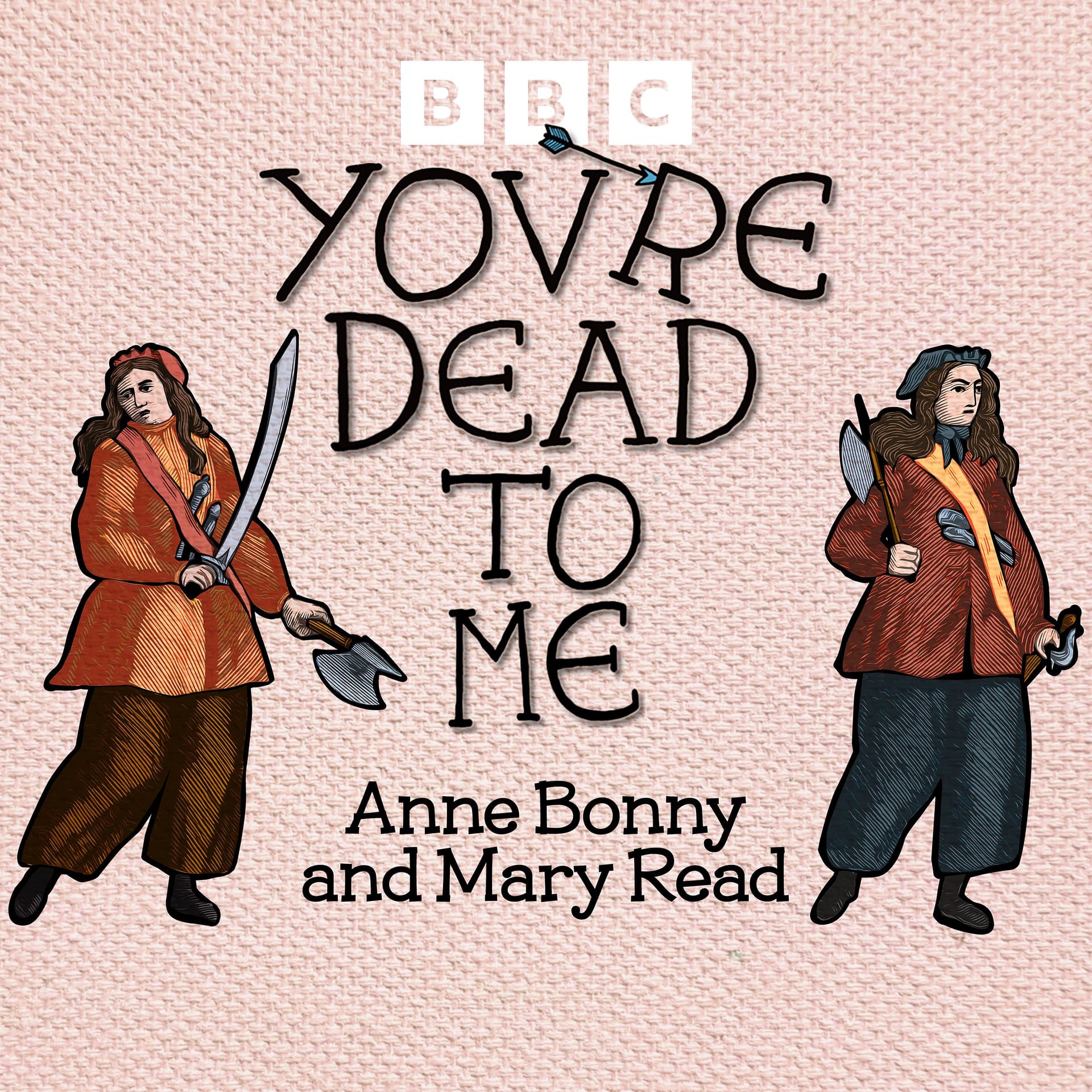
In short
The “real-life Pirates of the Caribbean” story of Anne Bonny and Mary Read, framed through the late-17th/early-18th-century Atlantic world, piracy’s economics, and what’s known (and uncertain) about their gender and sexuality.
Guest backgrounds
Hannah Cusworth is curator of the Atlantic at the National Maritime Museum and doing a PhD at University College London, researching Atlantic-world and black studies. Kima Bob is a comedian/writer/producer and host of the Icebergs podcast.
Key claims
Much of what we know comes from Captain Charles Johnson’s 1724 General History of Pirates, which is entertaining but may mix fact and invention. Anne Bonny and Mary Read likely disguised themselves as men to access opportunities and safety. The Caribbean economy is portrayed as built on empire and enslavement; women in Jamaica could run businesses and smuggle, including contraband like ribbons.
Notable examples
Anne’s alleged upbringing in Cork, her father’s attempt to hide her by dressing her as a boy, and her later partnership with Calico Jack (Jack Rackham). Mary’s alleged disguise as her dead brother, soldiering in Flanders, then becoming a pirate. Their capture in 1720 by Captain Jonathan Barnett, trial for piracy, hanging of the men, and the women’s death outcomes: Mary dies in jail (fever, possibly childbirth complications); Anne’s fate is less certain, with a later Jamaica burial record.
Written by AI. May contain mistakes. Listen to the episode to check what was said.
Chapters
Tap a time to open that second in VOIntroduction of the Guests
1:30 to 2:54
The hosts introduce their guests and set the context for the discussion on piracy.
“doing a PhD in University College London.”
Setting the Scene for Pirates
2:54 to 4:38
Discussion about the nature of pirates and the specific focus on Anne Bonny and Mary Read.
“What's your starting baseline of knowledge?”
Anne Bonny's Early Life
4:38 to 7:24
Explores the early life of Anne Bonny, her family background, and childhood.
“We often assume they spend their whole life together, but they don't, They grew up completely separately.”
Mary Read's Background
7:24 to 9:50
Details on Mary Read's upbringing and her family's circumstances.
“were brought to South Carolina at this time figures are about roughly kind of 40%.”
Dramatic Lives of the Pirates
9:50 to 11:50
Explores the dramatic events and choices leading both women to piracy.
“Apparently she also had a temper from a young age and there is this story which apparently is almost certainly untrue of her attacking an English servant with a carving knife.”
Crossing Paths and Identity
11:50 to 14:01
Discussion on how both women navigated their identities and eventual meeting.
“And then to disguise her infidelity from the husband's family, she dresses Mary as her former child, male child, who had sadly passed away, so that she can continue getting the allowance from her family.”
Mary Read's Journey to the Caribbean
14:01 to 17:09
Explore Mary Read's life from soldier to pirate, including her marriage and personal struggles.
“I mean, that sounds like a kind of memoir you'd write.”
The Caribbean Society in the 18th Century
17:10 to 21:00
Understand the societal structure and roles of women in 18th century Caribbean life.
“The colonists have to have incredibly tight control so they can run this kind of violent plantation system.”
The Allure of Piracy
21:01 to 24:34
Discuss the appeal of piracy during the Golden Age and how it drew in figures like Anne and Mary.
“Ribbons was like a huge thing in sort of 17th century Jamaica.”
Becoming Pirates: Anne and Mary's Transformation
24:35 to 28:00
Learn how Anne and Mary transitioned from ordinary lives to infamous pirates, including their relationships.
“She's on her way to the Caribbean and her ship actually gets stopped and attacked by pirates.”
Show all 22 chapters
Anne and Mary's Life on the Pirate Ship
28:00 to 30:18
Explore the dynamics of Anne Bonny and Mary Read's lives aboard a pirate ship, including their identities and roles.
“As soon as they get it, as soon as they're on the pirate ship, they're back to their old characters.”
The Hardships and Social Structure of Piracy
31:26 to 36:14
Delve into the realities of pirate life, the social structure aboard ships, and the potential for egalitarianism among pirates.
“has long been suspected of trying to sway elections in other countries.”
The Queer Relationships of Anne and Mary
36:14 to 40:02
Examine the potential romantic and sexual dynamics between Anne Bonny and Mary Read, as well as societal implications.
“But there were a number who managed to get their wealth back to their families in Britain or whatever.”
The Downfall of Anne Bonny and Mary Read
40:02 to 42:00
Learn about the capture of Anne Bonny and Mary Read, the circumstances leading to their downfall, and the ensuing manhunt.
“I'm quite passionate about the idea that, like, an absence of evidence is not evidence of absence.”
The Capture of Anne Bonny and Mary Read
42:00 to 45:00
Explore the chaotic capture of the infamous pirate duo by Captain Barnett.
“their trial, which we're about to get onto.”
Trial and Sentencing of the Pirates
45:00 to 47:50
Delve into the trial and the unusual circumstances surrounding the sentencing of Anne and Mary.
“Okay, so they're captured and they are going to be sentenced.”
The Fate of Mary Read and Anne Bonny
47:50 to 50:20
Discover the tragic fates of Mary Read and the mysterious life of Anne Bonny after their trial.
“So the women were found to be pregnant, about four months pregnant.”
The Complex Legacy of Anne Bonny and Mary Read
50:20 to 54:40
Discuss the legacy of Anne Bonny and Mary Read in the context of 18th-century Caribbean life.
“So final thoughts, Kima, on Mary, Reed and Anne Bonny.”
Romanticizing Pirate History
54:40 to 55:50
Examine the tendency to romanticize pirate culture while ignoring its darker aspects.
“I always find that, like, really interesting when people, like, talk about this era as if it was, like, a magical time.”
Quickfire Quiz: Kima's Knowledge Check
55:50 to 56:00
A fun quiz segment testing Kima's retention of the episode's pirate history.
“Great, well it's time now for the So What Do You Know Now?”
Quiz on Anne Bonny and Mary Read
56:00 to 59:35
Engage in a fun quiz about the lives of pirate legends Anne Bonny and Mary Read.
“I was going to say, are you feeling confident?”
Reflections and Additional Resources
59:35 to 1:00:58
Hosts reflect on the quiz results and suggest further episodes about other pirates.
“While simultaneously hyper-focusing on the answer.”
Transcript
Automatic transcript. May contain errors.0:00This BBC podcast is supported by ads outside the UK. Pop quiz. What's in your kid's lunchbox? At Whole Foods Market, they've already done the studying. Over 300 food ingredients are banned from their shelves. No hydronated fats in the peanut butter and no high fructose corn syrup in the cookies. And for sandwiches, there are no synthetic nitrates or nitrites in any of their deli meat. So you can pack lunchboxes with peace of mind. Get back to school ready at Whole Foods Market. The U.S. has long been suspected of trying to sway elections in other countries. But is something more brazen going on these days?
0:40I'm Asma Khalid, and I'm one of the hosts of the Global Story podcast from the BBC. Brazil has accused the U.S. of meddling in its upcoming vote. The U.S. has dismissed the allegation. But how do these claims fit into the long legacy of American electoral interventions? Check out The Global Story on BBC.com or wherever you get your podcasts.
1:26roommates in History Corner. She's curator of the Atlantic at the National Maritime Museum and is doing a PhD in University College London. Her research interests bring together the histories of the Atlantic world and black studies and you might recognise her name from her time as a researcher on this very programme. It's Hannah Cusworth. Ahoy me matey. Welcome back to the show. You're the first ever research intern to come back as an expert on the show. Oh yeah I know. Thank you so much for having me back. Delighted. I feel very proud. Like a proud Like a little graduate. Yeah, it's wonderful.
1:56And in Comedy Corner, she's a fantastic comedian, writer and producer. You'll have seen her on the TV as the host of It's a Sin After Hours, on Richard Osman's House of Games, on QI, or maybe starring alongside Steve Coogan in Chivalry. Maybe you've seen her sell out tour shows, seen her at the Edinburgh Fringe. You go every year. She's also the host of the Icebergs podcast. You're very busy. But of course, most importantly, you'll remember her from our episodes, our raucous episodes indeed, on Prohibition in the USA and Pharaoh Hatshepsut. It's Kima Bob. Welcome back, Kima. Hey, glad to be here.
2:25Can't wait to laugh and learn. In that order. It's so funny. But I think like when someone does an intro and you're just like, oh, yeah, I did do that. That's awesome. So thanks for reminding me of who I am. That's it. That's why I'm here. I'm basically just making sure that you're aware of your own CV. Yeah, I'm excited to learn stuff today. That is the plan. And we've done America together. We've done ancient Egypt together. Today we are in what we're doing, Pirates of the Caribbean today. Love that. Not the movies. Yeah. Genuine, real Pirates of the Caribbean. So what do you know? What's your starting baseline of knowledge?
2:59Well, I love the fashion. Okay. I love the fashion of pirates. I love what they're doing. I like, I mean, sometimes pirates are like really righteous, right? Sometimes pirates are bad, but sometimes pirates are good. And so I'm curious. I'm like, what are these pirates going to be? Am I on the side of the pirates? And I tell you what, as a very Robin Hood leaning person, I think I'm going to be. I mean, these are some very famous pirates who do, I think, border the edges of both bad and good occasionally. Nice, spicy, complex characters. We'll see what we get with them. But do you know the names?
3:40Anne, Bonnie, Mary Read. Have you ever encountered them? Okay, so we're starting from scratch. Yes. Okay, that's exciting. So, what do you know?
3:52This is the So What Do You Know. This is where I have a go at guessing what you, our lovely listener or viewer, hello, might know about today's subject. And I reckon you might know a bit. Kima didn't know Mary and Anne in terms of the names, but they are two of the most famous women of the golden age of piracy. They popped up in the hilarious 2023 sitcom Our Flag Means to Death, very funny show. They're in the video game Assassin's Creed 4. black flag. Perhaps you've stumbled across the statue of them at execution docks in London. Maybe a bit of a spoiler there. Sorry. Maybe you've just tumbled down a Reddit thread on their relationship.
4:25But how did two women from Ireland and England end up becoming pirates of the Caribbean? Why did they disguise themselves as men? And do you really need to take to the high seas to find yourself a girlfriend? Let's find out. Right then, Hannah. Bonnie and Reid, they're a double act. We often assume they spend their whole life together, but they don't, They grew up completely separately. They do. Nothing in common. So can we start with Anne Bonny's early life? Where was she born? What was her family situation? Of course. So for both women, details of their childhood and actually kind of lives are unclear.
4:58And we're not always sure what is true. Not great for the historians among us. But it's also not that unusual for women who were born in the kind of late 17th century, kind of early 1700s. our main source is a 1724 book called a general history of pirates by one captain charles johnson we're not 100 sure if that's his real name if that's a like a stage name right um but it was written very close to the time that and bonnie and mary reed were doing their thing so he probably spoke to actually quite a lot of people sailors maybe people who knew them and the book is a wild ride like he is telling wanting to tell a really entertaining story and it really captivated people at the time.
5:41It was a bestseller. It went through numerous editions. It was translated into different languages. But it also is still pretty hilarious today. So excited to get into it. Okay, so we should take it with a pinch of sea salt, right? Some of these facts. A bucket of sea salt. All right. Anne Bonny is often said to have been born Anne Cormack in Cork, Ireland. And then we think she was born in sort of the late 17th, early 18th century and an illegitimate daughter or so the story goes in the general life of pirates an illegitimate daughter of a married lawyer guy with quite a lot of status and a maid and it's a bit of a like bawdy tale there's there's bed swapping there's someone stealing silver spoons there's twins there's like adultery there's a lot going on um but as i said we're not 100 sure how much of that is just uh johnson kind of telling a good tale uh and how much is based in fact okay Okay, so Anne Bonny, actually Anne Cormac.
6:39We should start there. Yeah, I mean, some historian, it's unclear, but let's go with Anne Bonny. How many times today are you going to say, it's unclear? We should just get that little placard we should show on the screen. Okay, so Anne Cormac, born in Cork, Ireland. Her father is the sort of rich lawyer, but her mum is the maid. Bit of scandal there. And Kima, do you want to guess how Anne's father tried to hide his illegitimate daughter that he wasn't meant to have? In a closet. physically hide her just harry potter style yeah uh what i mean not quite in a closet but metaphorically metaphorically he dressed her as a boy um and i think the whole town knew this was not a very well-kept secret the her kind of um anne's birth and so he was like hmm how do i hide her in the house without people kind of letting on and they were like sure just her as a boy of course so wouldn't people be like where did this boy come from right so the story is that he was like oh this is a male relative of mine that i'm like training up to be like someone basically a paralegal in my law right okay and apparently people bought it okay um also i love like she's doing drag from a young age that is a consistent theme unfortunately people found out and they decided to find a new life in in the new world so they traveled to the Carolinas and this bit we think is probably based in in historical fact um and at this time as lots of our listeners will know South Carolina was a real kind of hub for the trade of enslaved people and so a lot of enslaved people who were brought into the U.S.
8:21were brought to South Carolina at this time figures are about roughly kind of 40%. And her father, it said, kind of left law and fell into merchandise, which as a historian of this period is often like, oh, what are you selling, cakes? And the answer is no enslaved people. So we think that's probably what he did as his job. And apparently he made so much money from that that he was able to purchase a considerable plantation. And so Anne grew up pretty well. Yeah, so it's not a great start, Kima. out hey shall we be responsible for the sins of our fathers no sure but at the same time she is living living high on the hog with money that comes from evil i don't oh no maybe i'm not maybe i'm not on her side okay oh man we've had our first moral quandary can you tell us more about anne's teenage years you know growing up according to johnson anne's mother died relatively soon after they arrived in the Carolinas and therefore kind of Anne became the lady of the house.
9:27And we don't have a huge amount of evidence about what her, that kind of life was like for her, but we do know that there are a number of other women, even in South Carolina, who had this kind of role, even being quite young women, of kind of being like the lady of the house and overseeing the plantation. There was a woman who's kind of really quite famous in the US, her name's Eliza pickney lucas and she uh at 16 was managing her family's plantation in the carolinas and then goes on to make a huge amount of money and is kind of credited as like bringing indigo into the the colony so that might have been quite a similar role for anne she might have been managing enslaved people she might have been responsible for kind of running the plantation the finances of it um and what the hell yeah she's not a hero yet is she no no okay oh man don't worry i mean there's more to come.
10:20There's more to come. Apparently she also had a temper from a young age and there is this story which apparently is almost certainly untrue of her attacking an English servant with a carving knife. Wow. Okay. Kima, our fiery tempered Anne wasn't the only one with the anger issues because she also managed to anger her father, the former lawyer. How did she do it? What did she do that's made Daddy angry? Ooh, hopefully free some slave. That would be good it wasn't quite that it was more of a sort of daddy i love him type thing right so anne married a poor sailor james bonnie hence becoming anne bonnie and her father was livid and threw her out he had wanted to make a good match for her and this kind of relatively lowly sailor james was not the one james was also really angry actually because he thought that by marrying anne he was going to be making a little bit of money right she was going to be bringing a little bit of money to the relationship and then daddy cut her off um and then according to one story she was kind of so furious that she burned down the plantation on her way out wow okay and i'm back in so we have our pyromaniac ann on the run uh let's check in with our other leading lady then so hannah how does mary reed if it is mary reed at this point how does she start her life is she similarly wealthy as her dad also a lawyer you know is it comfortable beginnings not so comfortable beginnings for mary reed from what we can tell again having to take this with a bit of a with a large pinch of salt there is a mary reed existing in bristol in the like historical record and apparently she's like there writing a petition to kind of pardon pirates so maybe we're not sure if this is like a family thing for the reeds um but her father apparently actually do you know what we don't know illegitimate mary reed's mother apparently had an affair while her sailor husband was away.
12:13And then to disguise her infidelity from the husband's family, she dresses Mary as her former child, male child, who had sadly passed away, so that she can continue getting the allowance from her family. These people are obsessed with the drag. So Anne Bonny was disguised as a boy. Yes. And Mary was disguised as her dead brother. Yes. So quite dark. At the time, These kind of mistaken identities or kind of gender swapping, dressing, this was quite a common theme in this kind of literature at this point. So we're not sure if this is just like a good tale or if there is some basis in fact for Mary Read.
12:52Right. So we've got a theme established, which is girls dressing as boys. Can you guess what Mary's new name was when she was dressing as a man? Mario.
13:05Not a plumber, sadly. Not Mario. You weren't far off Mark. Is that the English Mario? Classic. Classic name for a person. It's more chartered accountant than pirates, isn't it? And actually, Mark Reed stays this person's name for a while, right? They're living their life as Mark Reed, but they're also dressing as their dead brother. Yeah. And there's a sense that we get that Mary dressed as Mark or dressed as a man, even when the situation perhaps didn't really explicitly require it. so I'm not sure if you could sort of say that maybe she had more of a kind of attachment to this gender identity or whether it was a situation where dressing as a man or as a boy enabled more opportunities and was potentially kind of safer in in some way so real wow so she finds work as a sailor dressed as dressed as a man and then she becomes a soldier she's fighting in Flanders as part of the war of Spanish succession Mary meets another soldier apparently they're kind of sharing a tent together and she really falls in love with him and thankfully there's this kind of moment where she is like oh do you know what actually guess what i'm a woman and he is like absolutely let's crack on and she's like no no no no uh let's get married right okay let's not let's not do that kind of thing here i want to be your kind of honorable uh honorable wife um and i suppose like good for the good for the the kind of the people around them they were like yeah this is excellent let's like let's have a big wedding they gave them some money um and mary and her husband open a pub that's called the three horseshoes um sadly i like that i kind of like that name that's cute it is cute yeah because i feel like everything is like the the lion and the the witch and the wardrobe do you know what i mean i was like the queen's face exactly yeah they went three horseshoes sadly what happened to the fourth horseshoe that poor horse i know and also you would have thought three horseshoes would have been good luck right sadly it didn't work out that way for them and the husband died quite soon after and so mary after kind of getting maybe her happy ending is in quite a difficult situation the war is over there's not that much work for a soldier anymore and so she decides to try her luck by going on a ship to the americas so as a soldier she'd been mark as a soldier she'd been mark they'd been mark but yeah mark reed soldier yeah chartered accountant yes and now having got married she's Mary Reid.
15:34That's right. I'm running the pub as Mary Reid. And is Reid her husband's surname? No, Reid is her name. Okay, so she's keeping her original... Okay, fine. And now she's off to the Caribbean. She's off to the Caribbean. Okay. Pirate life for me. Quite a tough start to life for Mary. I mean, it sounds very spicy. It sounds eventful. I bet she was never bored. Yeah. I mean, that sounds like a kind of memoir you'd write. I was born and dressed as my dead brother. Then I became a soldier. Then I became... And can I say, both of these ladies are on a slippery slope to lesbianism. them okay so hannah can you tell us about the 18th century caribbean world that mary was sailing towards and was already there i would say the caribbean at this time really is defined by empire and enslavement by many ways and historians have kind of called it like the birthplace of modernity for lots of these things that we're more familiar with today the sugar plantation became incredibly kind of mechanized highly organized there were indigenous communities who were still in the Caribbean.
16:32I think it's often a myth that once Columbus got there, suddenly all of the indigenous people were wiped out. But they were living often quite challenged existences because so much of the Caribbean was turned over to sugar plantations or coffee, other kind of cash crops like that. By the time Mary and Anne get to the Caribbean, this kind of imperial system had been going on for about 200 years. And can I say, that's too long. way too long and so it wasn't something that was brand new although we do kind of get the sense the english are like slightly more latecomers to it yeah rather than than the spanish but you've got the english the spanish the french the dutch all kind of competing for supremacy over these different islands all there really to make money and port royal is kind of known as this like den of iniquity this kind of pirate haven um as is the what is now the bahamas and so you've kind of got These places of, I suppose you could argue lawlessness, but there's also really tight control, right?
17:37The colonists have to have incredibly tight control so they can run this kind of violent plantation system. Enslavement underpins all of it. Yeah. Okay. So Port Royal was the sort of primary capital that moves to Kingston? There's a big old earthquake in 1692. And some people at the time are like, it's because you're all sinners. That's why there's this big earthquake. But there's an earthquake and a lot of the focus moves to Kingston. So in somewhere like Port Royal or in Kingston, you've got a real mixture of white colonists, many of whom owned enslaved people. You've also got a small group of people who are kind of free people of colour.
18:15Some of them might have been born free. Some of them might have received their freedom or fought for their freedom. And they're this kind of middle ground, perhaps. Many of them do own enslaved people, but many of them also have been enslaved. And then you have the vast majority of people on these islands that are enslaved Africans who are working in really brutal conditions, sometimes in towns like Port Royal or Kingston, often on plantations. And then you have indigenous communities, particularly in some of the other islands in the kind of southern Caribbean, who are fighting against colonial control all the time that they can.
18:52Kima, what do you imagine the position of women was in this society? Particularly, you know, Anne and Mary. What do you imagine their freedoms or responsibilities would have been moving into this world? Okay, so I feel like it's probably like house stuff. Like people love, they're like, you gotta do the house. And maybe they're making clothes or something. Okay. And I think they have to do things that suck and are boring. I mean, suck and boring is perhaps part of it. I mean, are you saying that they're working in manufacturing? I think it's like domestically. Domestic chores, okay. I feel like it's domestic vibes because at this point, they are making other people do things that are actually hard.
19:38That's fair. And there is a big, yeah, there is a big element of that. I think perhaps surprisingly or perhaps not, right, considering this is where Anne and Mary go to, women in the Caribbean, we're talking white women here, we're talking free women of colour, had a lot more freedom and actually were a lot wealthier than their counterparts in Europe. So we've got loads of examples of white women doing exactly as Kima said, they're kind of the women of the plantation and they've got this big group of enslaved people who are doing the really hard work for them. But we also have loads of records of white women and to a lesser extent, free women of colour running businesses.
20:14They were making clothes at the kind of lower end, but they were also doing things like running taverns, running boarding houses, smuggling, piracy. That was like actually a thing that women in Jamaica did. There was a really big trade to be made in like smuggling and contraband and running shops. So these women were actually quite big players. And there was a large amount of like, people were a little bit more relaxed in Jamaica because people died all the time. So people were like, life is short. Let's just have a child out of wedlock. And people, lots of the kind of like senior people in the plantation weren't really super focused on people's morals.
20:54And so there was a little bit more freedom to be had if you were free, right? If you were enslaved, you're living a completely different existence. Right. Question. Yeah. What kind of, what are we smuggling? What's counterint? Ribbons. It was quite a big. Wow. No, so you've got... Ribbons was like a huge thing in sort of 17th century Jamaica. People are smuggling food, they're smuggling gold, they're smuggling wealth. There's a whole variety of things. Wine. Rum, presumably rum. Rum. So there's a big kind of, yeah, there's a big variety. But mainly ribbons. Just sort of opening up a trench going, do you want any ribbons?
21:33Would you like any? I've got the latest one from Europe for you. Yeah. Would you like to adorn yourself? But we should talk about piracy because we're here for pirates, right? We're here for pirates. That's why people have tuned in. They want pirates. So, Kima, this is known, this period is known as the golden age of piracy. So what do you think it was about this time in particular that made the life of the pirate appealing? There's going to be swashbuckling. Yes. Right? So there's swashbuckling, which do you know what that means? Does anyone know that? I do, yeah. What does that mean? Well, technically, it's an old phrase meaning where you bang your shield with your sword and pirates didn't use shields.
22:09So actually, swashbuckling isn't a thing a pirate did at all. What? But don't people say that about them? They do. It's the golden age of Hollywood has ruined it. Interesting. Okay, so they're not swashbuckling, which is unfortunate. Maybe they're just vibing. Maybe people are like, hey, we actually like that you're doing that. We're fans of your work. Do you know, that is a really interesting point because they were. So there were different in the kind of golden age of piracy from about 1670 to 1730. So Anne Bonny and Mary Read are kind of coming in towards the end of it. But at the beginning, states like Britain, France were quite into this kind of piracy.
22:48And they would often sponsor it, like state sponsored piracy called private kind of privateering. And then they were like, oh, no, this has really got out of hand. Right. And then at first, we're into these guys attacking these Spanish ships kind of on our behalf. But now they're attacking us and our wealth and we are not into that. So then they kind of turn on the pirates and start prosecuting them. What are we talking about in terms of what the pirates are stealing? Do we know? Like, are they nicking clothes, money, spices, people? The Caribbean is this real centre of, I suppose, like wealth extraction.
23:21And that is why it's so incredible to be a pirate in these waters, because you've got so many ships that are moving from South America. There's kind of Spanish silver ships that are going over. and you've also got then rum, sugar. I think it's not talked about a huge amount in the kind of literature on pirates, but a number of these ships would also have held enslaved people. And so the pirates were taking whatever they found on the ship and sometimes those were goods and sometimes it was people. Yeah. I mean, obviously, yes, as you say, it's, you know, this extraordinarily diverse economy, I suppose, but these pirates will steal whatever has value.
23:58Exactly. And we also have this sense of the pirate crews then could become quite racially mixed because you would have like formerly enslaved people who perhaps would be kind of taken on and would join the pirate cruise as well as pirates coming from Europe. And in particular, Nassau, the capital of Bahamas or what is now Bahamas, was like a really thriving base for pirates to sell the kind of spoils of their ill-gotten gains. Right. So the obvious question, Kima, how do Mary Read and Anne Bonny get into piracy? What do you think their route is? they're bored oh wait wait one of them had a pub but she might not anymore that's right maybe they just want more ribbons you know they're like i don't have enough ribbons they're just addicted to ribbons i've got to have more yeah how do i get these ribbons i know say all the high seas women love ribbons they do women be shopping and women be wearing ribbons From what we know from Johnson, so again, this kind of big caveat, but let's run with it for a little moment.
25:07She's on her way to the Caribbean and her ship actually gets stopped and attacked by pirates. Oh, OK. All right. And then they're like, oh, we're English pirates. And she's like, oh, hey, I'm English. And so then I think she kind of joins the ship. And at this moment, there's this kind of amnesty on pirates for a while. I think the British government are like, OK, let's try a new strategy, which is that we all kind of convince them they could become like legitimate traders for a bit and see who turns over and maybe that will solve the problem. Spoiler. Yeah, it doesn't really. And so Mary, we think, perhaps became pirate by choice.
25:46And we get more of a sense of she was like into the life. And so she's there with his husband, James Bonney, and quickly it seems kind of becomes bored of him, decides to go for this much more dashing or exciting guy called Jack Rackham, who some of the listeners will know as Calico Jack. Yeah, that's his pirate name, isn't it? Calico Jack. Calico's a type of fabric, right? Exactly. And so apparently I think it comes from the trousers that he was wearing. So when Kima said earlier that she liked the outfits, I think that was those like big trousers were quite big in the pirate world clearly Anne fancied the trousers too yeah okay so Anne sort of dumps her husband for calico jack that's right they tried to do a wife sale have you heard about this so um they tried to kind of suggest that like Anne should get an annulment but that's quite difficult in this time so they're like hey how about James you have this wife you're not really that into her how about we pay you off right and I'll take Anne and you can get an annulment and you can just kind of start again.
26:48I will buy your wife. I will buy your wife. Chaos. These people are obsessed with selling humans. Yeah. They got a taste for it and then, yeah, they couldn't let it go. Presumably she at least said yes to this. The sense we get is that she kind of, she's into it. She's like head over heels with Jack and is just like by any means possible. Okay. Yeah. We get the sense from Johnson that Anne is a very strong character, that she is kind of making very firm, kind of fierce choices across her life. Yeah. Yeah. I mean, so Mary Read is effectively captured by pirates. And then it's like, well, this is, this seems fine.
27:25Yeah. I'll just join you. Yes. But that's quite rare, right? Women aren't really common pirates at this point. No. So women would travel on ships, but women as pirates is incredibly rare. We only have like a small number of documented examples of women as pirates. There may have been a large number or a certain number that dressed up as men. And I suppose those people might be lost to the historical record. And kind of Anne Bonny and Mary Read are kind of really noted because they are that rare thing, which is a female pirate in the golden age. But of course, at this point, they're not female pirates because they are dressing as men again.
28:01As soon as they get it, as soon as they're on the pirate ship, they're back to their old characters. so it's uh wait does that make her thing with uh jack like gay i don't know i mean jack presumably knows because he's bought a wife right yeah so jack knows so at this point i think when she's in the south she is living um nassau sorry she's living as a woman that's the sense that we get but once on the ship yeah there's very clear like donning of men's clothes okay and so how much this is kind of a gender identity that she is kind of into it make it's like the best version of herself and how much this is more like i'm not going to be wearing all big skirts on a pirate ship because they're going to get tangled up in the ropes and the rigging it's impractical it's impractical all those ribbons they get tangled up indeed so real uh okay so i guess we we get to reintroduce mark reed chartered accountant and do we know ann's name her her dead brother's is i mean and andy Andy Bonney?
28:58So it's the dead brother is Mary. Oh, okay, I'm getting confused. And at some points in some historians' work is sometimes described as Andy, and I'm not sure where they got that from. Andy Bonney. It's not out of the realm of possibility that some of the people who kind of gave their stories to Johnson, who was writing a general history of pirates, had actually come across Anne Bonney and Mary Read. And some sources suggest that they met in kind of 1717, 1718 when they were in Nassau. They're definitely together by 1720 because their names appear in this kind of state proclamation from the government of Bahamas, the governor of Bahamas, sorry, declaring Jack Rackham and his crew to be enemies of the crown of Great Britain.
29:43And they are Anne Bonny and Mary Read. And she's kind of given this like alias. Sometimes she's known as Fulford. Sometimes she's known as Anne Bonny. So we get the sense that she's kind of got this slightly shady past already. And they're listed with Jack Rackham as being these big enemies of the state. That's cool. OK, so the previous sort of policy of like, hands off, it's fine. You just please be legitimate traders. That's ended. The government's come back down hard again. The government is not happy with Anne and Mary and Jack. And partly it's because they've stolen this ship called the William.
30:18And if you're into ships, it's a great little number, sloop, apparently very fast. I feel like I've got to say, you know, bring in the type of ship from working in a maritime museum. And yeah, so they do that in sort of August 1720. And they kind of slip away from Nassau and they're off into Caribbean waters. That's exciting. The pirate life for me. Keema, what do you imagine life was like on the ship for Anne and Mary slash Mark and Andy, whatever they're going by? Yeah. What do you think their daily life is like? On the deck, tanning, having little drinks. They invent the pina colada. They're having a lovely time, and they're giving orders while they sunbathe.
31:02Pop quiz. What's in your kid's lunchbox? At Whole Foods Market, they've already done the studying. Over 300 food ingredients are banned from their shelves. No hydronated fats in the peanut butter, and no high fructose corn syrup in the cookies. And for sandwiches, there are no synthetic nitrates or nitrites in any of their deli meat. So you can pack lunchboxes with peace of mind. Get back to school ready at Whole Foods Market. The U.S. has long been suspected of trying to sway elections in other countries. But is something more brazen going on these days? I'm Asma Khalid, and I'm one of the hosts of the Global Story podcast from the BBC.
Read the full transcript
31:42Brazil has accused the U.S. of meddling in its upcoming vote. The U.S. has dismissed the allegation. But how do these claims fit into the long legacy of American electoral interventions? Check out The Global Story on BBC.com or wherever you get your podcasts.
32:01That's a lovely vision of piracy. I'm assuming it's a much harder life on a ship, even if they are. I mean, one of them is dating the captain, right? So that's going to give you some privileges. But it's hard. It's hard work being a pirate. It is hard work being a pirate. But apparently Anne could really kind of handle herself in this male-dominated space. She was neither mindful nor demure. Allegedly, and I think this might actually come from a novel, but let's go with it anyway for the moment. Allegedly, she once used her sword to publicly undress her fencing master button by button. Amazing.
32:32And another story was that she shot off the... Was that sexually or non? I don't know. I mean, I think it's quite unlikely to have actually happened, so we can read into it whatever we want. It's a real romance novel trope, right? Yeah, that's quite hard. It's very Zorro. It's very, oh, you know. But we do get the sense, I think, and I think we probably can take this a little bit more seriously, that Anne was, someone tried to sexually assault Anne, not on the ship, but on land, and she, like, she smashed him. So she was, I think these women were in this world where they had some, like, levels of agency, but they were living very much under a patriarchal system.
33:08It seemed like kind of Anne and Mary could handle themselves, but there were dangers coming from either men on the ship or from men on shore. So Kimi, you've imagined them on the deck signing themselves, pina coladas. It's a lovely image. The pirate life was pretty hard, but it wasn't as hard as the naval life. If you were in the British Navy, that was a really tough life. So piracy was a bit more, slightly more glamorous. I guess, yeah. It's a little bit less kind of proto-crueship, you know, like you're on there, you've got your entertainment, there's a swimming pool, you've got your pina colada.
33:39But pirate life, yeah, it was hard. I think it was a case of choose your heart. So if you were a pirate, your average life expectancy was two years.
33:51Sorry. Sorry, yeah, maybe I should have tried to land that with a little bit better. I'm going to say it. It probably sounds crazy, but that's too short. I mean, that's like the life cycle of a butterfly or something. That's so short. Yeah, but it's not two-year-old pirates, right? So they've like lived this life. No toddlers. There's no toddlers. We're not talking like toddler pirates. Adorable two-year-olds running around with swords. Yeah, okay. It's that they were very likely already at sea. And what would happen is like a pirate ship would come across another vessel, sometimes a Royal Navy vessel or a merchant kind of shipping vessel.
34:23And they would try and work out like who were the good sailors on it. And we'd be like, hey, do you want to come and be a pirate? And would get them to sign up to some sort of like pirate code. And so there's an element here of, I suppose, like a different social structure outside the quite like rigid. and often if you're thinking about like naval discipline, very harsh life, it's a little bit more perhaps democratic. You're signing up to this kind of charter, but you're also then getting, I suppose, some rights in return so that it was much more egalitarian on a pirate ship than on a Navy ship.
34:59There was a sense that when you then got this loot, it would be shared almost equally between the crew. Like maybe the captain would get two shares and the kind of ordinary sailors would get a share. But it wasn't this strictly very hierarchical system that you would get. And, I mean, people have kind of described pirates as almost like this kind of proletarian class of kind of, I suppose, more like working class people. You know, people have different kind of interpretations of it. Nautical socialism. Nautical socialism. But, I mean, you do get the sense of, I suppose like a different social order.
35:36Yeah, I mean, the code's interesting, right? The fact that they kind of sign up to a contract. I mean, you said at the start of the show that you were hoping for kind of Robin Hood vibes. Yeah, well, I love that. It's like, maybe there is honour amongst thieves, you know? Like, that sounds really cute. I love that for them. Yeah, but the life expectancy of two years was, that's quite worrying. But maybe, like, if you're in the Navy and it sucks, you want to die anyway. Maybe, I mean, you know. No, but Kima has a good point, right? There were a lot of people who thought, you know what, I'll give it a go.
36:07Because at least this offers the opportunity of, I suppose, adventure, of wealth. And we know that a lot of pirates were kind of captured and tried and killed. But there were a number who managed to get their wealth back to their families in Britain or whatever. And kind of lived more comfortable lives than they would have if they were just an ordinary, yeah, Navy sailor. There's another thing we should talk about. Another sort of novel social institution aboard a pirate ship, which I think taps into what you were saying about social contracts and pirate code. It's a thing called, well, it's a French word, so matoletage.
36:42Do you know what that would have been? Matoletage. The matoletage sounds like it's below the decoletage. Maybe the matoletage is under the boobs to the pubes. Boobs to the pubes. Macoletage. love it it's a lovely theory i don't think that hey if you guys do merch get that on a t-shirt boobs to the pubes on the back magalotage uh what what is it i mean how do we describe it i suppose it's an economic arrangement between two crewmates and they split spoils equally if one of them died then you would get your kind of mates riches which is sweet right okay so they would give some of the the pirates wealth who had died or been killed they would give it to family on on shore if they had one and they would take some for themselves and some people some historians have likened this to an early form of of gay marriage that's what it's just i was like that sounds gay as hell which is which i think some people have said it's a stretch sometimes it was much more between um either two men or between like an adult man and a much younger what we would now consider to be like a boy um but i don't want to kind of like a twink it's like a twink i'm just saying you're not i mean you're really not wrong i'll come back to that so i don't kind of want to be all you know historians will say they're just friends about this but i'm not sure if we can they were just roommates they were just pals special friends they were just special friends but i don't necessarily think we can go as far to say it's a form of kind of gay marriage but it's clearly an arrangement and i think it is very likely that men were having sex on with men on board and that some of these relationships would have been kind of romantic relationships.
38:28Our episode is about Anne, Bonnie and Mary Reid. How did they first meet each other? Were they both dressed as men at the time? Did they both think the other was a man at the time? Because that's obviously, that's an exciting, interesting question for us. And I think part of the reason why Anne, Bonnie and Mary Reid have become so popular is because there was this kind of generation of gay and lesbian historians who were kind of looking to recover Anne Bonny and Mary Reid's story and to talk about them as lesbians and that this was like an important part of their identity and we should not kind of skate over that and it's important to kind of recover these women and celebrate them and kind of be aware of their lesbianism.
39:07And so according to Johnson, Bonny took a special liking to Reid but thinking that she was at this point dressed as a man and lured Mark to the cabin that she shared with Rackham and then Anne revealed herself. I don't know why I'm doing that. I mean, I know why I'm doing that, right? So Anne revealed herself as a woman to persuade Reed to sleep with her. But apparently to her great disappointment, Mary let her know that she was a woman also. And then apparently Rackham burst into the cabin and found both women undressed. And then Rackham allowed Mary to carry on living kind of in secret. So to the rest of the crew, she was dressed as a man.
39:45But she and Anne apparently kind of became just friends. Sure. Yeah. We don't know. We don't know. We don't know. It's worth asking the questions. I think this whole situation is inherently queer. I mean, it certainly feels like we've touched on all sorts of aspects of it. Hmm. This is exciting. I'm quite passionate about the idea that, like, an absence of evidence is not evidence of absence. We can't say for certain just because we don't have evidence that, like, these women weren't queer, that they weren't attracted to each other, that there wasn't a sexual relationship between the two of them, just because there isn't like hard and fast evidence that that was the case.
40:20It does feel like a pretty queer space. And queer versions do actually appear in the 18th century. So there's a 1765 edition of Johnson's work where Reed is said to have entered into the service of the kind of being a pirate purely on the account of Anne Bonny, who was her lover. Yeah. And then later historians were like, no, no, no, no, no, no. We don't want any of that. Yeah. And so, I mean, historians have questioned whether the women were really unaware of each other's identity, which kind of suggests these possibilities for same-sex desire. I think it's going to be one of those ones. I'm going to be like the boring historian here and being like, we will never really know.
41:00It's true. We won't know. That's true. But quite frankly, girls who dress like boys are hot. I'll say it. Preach. Yeah, I'm like, do it. Let me see those cargo pants. But yeah, I mean, I guess we need to talk about the end of the story, because if they had a two-year life expectancy and all that, you know, obviously the authorities caught up with them pretty quickly. Do you know what befell our pirate pair? So Anne, Bonnie, Mary, Reed, Mark and maybe Andy, do you know what happened to them? Well, you said something about Execution Bay or something like that. I did, I did, yeah, Execution Doc. Get murdered peer, whatever.
41:38so I'm guessing it has something to do with that it does it does I mean some depictions before they're caught there are depictions of Anne and Mary uh not wearing all their clothes fighting bravely I think it's a second like another later edition they are there with their boobs out yeah and I think this was part of the like intrigue of the time and the trial their trial, which we're about to get onto. There are many mentions of boobs. So this was something that was kind of circulating at the time. It wasn't like the person who did the woodcut was just like, oh, yeah, let's just pop them on. You don't want your nips out when you've got swords flailing around.
42:19It's just not good health and safety. Not saying. No, come on, you've got to think about this stuff. Yes, this depiction of them, you know, fighting effectively topless or their shirt unbuttoned, this is their last stand. Is it the British authorities? Yeah, so there's a manhunt launched for Rackham's crew. and it's led by this experienced pirate hunter called Captain Jonathan Barnett and he's employed by the British Crown. That's it. Yes, I was trying to remember his name, Barnett. And so he sort of hunts them down and he gets them at night? He gets them at night. Now, they were there on the ship getting drunk on I think this kind of Madeira wine when suddenly it was like panic stations and they were being captured by Barnett.
42:59Boo. Do you get a big sense that like Captain Jack was not maybe like the best pirate. He looks so good in his trousers though. Who am I to kind of comment? So they leave what is now the Bahamas and they kind of head to Jamaica relatively quickly and they're kind of travelling around on the kind of seas around Jamaica and they're just not that good at capturing big amounts of money. There's like at one point they seem to like accost this woman called Dorothy in a canoe who's just like paddling along with some provisions in the canoe and there and and and mary apparently like no kill her right she's seen us now you gotta like oh wow you've gotta like get rid of her and the other pirates are like no she's fine she's fine um spoiler alert she comes back to testify i was gonna say classic key witness right dorothy in the canoe exactly and then i think there's some i think maybe there's some fishermen or some like people it's just really small-scale piracy at one point they do uh manage to get a ship that's full of i think it's madeira wine so they're all there like very drunk uh on on the shore and i think there's like one version of it which is and it's like what are you doing stop getting so drunk you know like we need to be we need to like have our wits about us and at that very moment enter jonathan barnett um and captures them while they're all kind of like off their faces uh on the shore yes and the story goes that all the men were drunk and hid that's all right but the women mary and anne they fought pretty much to the death they were like you're not taking this ship yeah so it's anne um mary anne and an unnamed other kind of pirate she was like pirate's life for me gals um and mary in particular is noted as like firing down in the hold she was really angry she was like get up here lads like we need to be fighting not like cowering in the deck being like, oh, we're really sorry, we're really sorry.
45:00Okay, so they're captured and they are going to be sentenced. Do you know what they're going to be sentenced for? What's the trial? Indecent exposure. No, it wasn't actually. It was for the much worse crime, I suppose, of piracy on the high seas, which is an instant death sentence, is it? Yeah, they were tried for piracy and death was, yeah, was going to be the likely outcome. It was there. But I mean, I'm suspicious of all colonial court documents, but this one is probably slightly more reliable. The trial document is probably slightly more reliable than Johnson. And you've got these kind of multiple witnesses who turn up to say, yeah, these guys were pirates, right?
45:39They like accosted me. They threatened to murder me. They stole my stuff. and so on the 20th of November 1720 all of the people in the kind of all of the pirates except for Bonnie and Reed were found guilty and they were sentenced to death by hanging. Yeah. And their corpses, that took place and their corpses, the men's corpses were kind of displayed as a warning. But why weren't Bonnie and Reed sentenced to death? Because they were cute. I mean, go further than cute? Because they were very hot. Yeah. Maybe they were like, can women commit crime? I mean, that's an interesting question. Was it sexism?
46:20Sexism was a really big part of it. It's kind of patriarchal system that they were all operating in. I think we're not, I think, 100 % sure exactly why the sentencing, their sentencing or trial was delayed, but it was likely because they didn't really know, the court didn't really know what to do with two women and were kind of debating what their sentence might be or what their trial might look like. And then, of course, when they were eventually sentenced to death, then it was delayed again, this time because they both claimed to be pregnant. So it was highly unusual for women to be sentenced for murder, like for murder.
46:56And only about 20 percent of women kind of got that sentence. But when women were sentenced, they would often do something called like pleading the belly, which means you're basically saying like guys I'm I'm pregnant don't you you might want to execute me but please don't come for the unborn child which obviously I mean that if they were pregnant that would mean that they were sailing the high seas and doing all of that kind of you know well combating seasickness with morning sickness it's it's a real that's a tough life if they are pregnant yeah I mean either they dodged the morning sickness or it was getting messy because like when I was in my first trimester I was trying hard not to just like throw up on the 17th century manuscripts I was looking at so I mean but we we know these girls were fierce so maybe they they were just yeah working through it the sense that we get is that they were both pregnant okay um so we think with Anne it was it was Jack's child um Mary I think had like a lover on board um dorothy yeah yeah but there was no love lost between anne and jack and when she saw rackham for one last time she apparently told him if he had fought like a man then there was no need for him to have been hanged like a dog oh spicy yeah it's giving real housewives real housewives of the pirate jail yeah i mean that's a that's a good final line so jack rackham was hanged yep Calico Jack, Calico No More.
48:26What happened to the women? So the women were found to be pregnant, about four months pregnant. So kind of quick with child as a kind of early modern idea of when they kind of, when you can start to feel the baby's movements. And so they were in, they were kept in jail. And it's a pretty tragic end for Mary Read. And she died of a fever while in jail in Jamaica. and we think that because of the date, there's actually a burial record for her. So there's a burial record for her which would have been, if she was four months pregnant, it would have been around the time she was due to give birth. So historians think perhaps she died of a fever during childbirth or of complications due to childbirth.
49:09And so we kind of know the end of Mary Read's life. That's very sad. Very sad. For Anne Bonny, it's a bit more of a mystery. so there is a burial record of an Anne Bonny in Jamaica but it wasn't an uncommon name so there's a burial record of for for her um about sort of 10 10 bit later years later so perhaps she kind of got out of jail she was she wasn't executed and there is no record of either of them being executed and the kind of colonial authorities were pretty on it with their record keeping when it came to this kind of thing so it might have been that she got out of jail maybe she had her child um and she was buried in in jamaica there are other stories there's one particular historian who claims to have like spoken to her descendants which is that her father like bust her out of jail with his like connections from south carolina right the lawyer yeah so he kind of like apparently bust her out of jail took her back to south carolina and she got married to another guy and had like eight kids or something uh and there are descendants apparently in south carolina if you are a descendant of ann bonnie please let me know get in touch get in touch um and so we're but we're not really sure what happened to Anne.
50:18Do we like that ending for her? Yeah, I love the mystery of it. Go off, Anne. So final thoughts, Kima, on Mary, Reed and Anne Bonny. What have you learned? What have you enjoyed? I've enjoyed learning more about the piracy of the time. I have no idea what's going on at that point in time or at any point before now. So that was nice. Yeah, and it was interesting to hear about, like, I guess them navigating. I also love all the gay mystery. Yes. I think people on the internet love that the best. And I think it is important to, I suppose as Kimo was saying, like there is a really big queer element to the pirate life and to Anne Bonny and Mary Read's life, even if we don't have like definitive evidence that they were like a same-sex couple.
51:09It's like, I mean, they're wearing men's clothes. They're doing a life that is traditionally male. That in itself is fascinating. and with novel but yeah whether they had relationships or intimacies that were you know yeah and whether um mary kind of was more comfortable living as mark it's not something that i think we'll we'll get to the bottom of but it is interesting to like explore these possibilities rather than just completely shutting them down fabulous i love this like middle like the pirate ship as this kind of third space where people can exist um more how they want to like it's still difficult, but also like, you know, we're having this like diversity.
51:46People are being freed, sometimes. I think it's cool to have this kind of like unsafe safe haven. Yeah. Like it just sounds quite fun. Probably one of the funnest places to be at that time. Yes, but you would eventually get killed by the government. So there we go. Live fast, die out. Well, don't we all in some way or another? The Nuance Window!
52:13OK, well, it's time now for the nuance window. This is where Kimo and I settle down to swig some rum and polish our cutlasses for two minutes, while Hannah stands on deck to tell us something we need to know about Anne Bonny and Mary Reid. My stopwatch is ready. Take it away, Hannah. Anne Bonny and Mary Reid have become icons of female rebellion, of queer identity, of living outside the rules. But what fascinates me is this paradox. The Caribbean is central to their story, but as a backdrop and the realities of 18th century Caribbean life are very often absent. According to Johnson, both women travel to the Americas because it's seen as a place of opportunity, whether that is making their fortune or in terms of living a less constricted life.
52:57While lots of Johnson's account, as we've said, needs to be taken with a large pinch of sea salt, archival records do consistently show that women in American colonies like South Carolina or Jamaica were much wealthier than their English counterparts and in many ways had greater agency. In 1721, a white woman in Jamaica named Alice Slaughter left two boats, her great tankard, feather bed, pillows, gold shoe buckles and a great cedar chest in her will. She also transferred the ownership of the enslaved people that rowed those boats and over 20 other enslaved people to her godson and to her friends.
53:33This level of wealth and ownership of enslaved people was much more common for white women, but some free women of colour were economically powerful and slave owners themselves. What enabled the opportunities of women like Alice, Anne and Mary was the violent dispossession of Indigenous people, the destruction of ecosystems to make way for monocrop agriculture on plantations, which by the 1720s were overwhelmingly worked by enslaved Africans. Part of what made Caribbean waters such a good place for pirates was the wealth that was being transported across them. Many of the ships that pirates captured were full of people as well as sugar and rum.
54:08We don't know what Mary and Anne thought of the violence that underpinned much of the life in America's in the 18th century. We might even wonder if Anne left the Carolinas partly to escape her own entanglement with plantation slavery. Yet to celebrate or romanticize these women as queer icons or as proto-feminists while skating over or deliberately ignoring their context that their piracy took place in is a very particular choice, given what we know about the Caribbean in the early 18th century. Amazing. Yeah, thousand percent. I always find that, like, really interesting when people, like, talk about this era as if it was, like, a magical time.
54:48I'm like, it was extremely hard for some people. Yeah. Yeah, and I think that sort of urge to romanticize. We do all the time with pirates. We do all the time. Hollywood does it all the time. but actually you know these are people who often monetized human enslavement human cruelty they weren't good guys and good girls all the time but they could do stuff that you're like that's cool you know there's it's complicated it's really complicated and i think you know maybe ann and mary didn't themselves profit from enslavement but the caribbean that they were kind of taking like they were profiting from or they were they were very much in was underpinned by it If you're like a slavery Nepo baby, you're benefiting.
55:31But I think there always has to be someone on the bottom of the thing, right? And so where enslaved people weren't, that would have been children, then that would have been women. But then you have these people to put below that, and it raises the other people up. It's very interesting. So what do you know now?
55:55Great, well it's time now for the So What Do You Know Now? This is our quickfire quiz for Kima to see how much she has learned. Uh-oh. I was going to say, are you feeling confident? But that sound suggests not. Hey, let's find out. I've decided to raw dog it. Okay. And just kind of see how good my memory is. Yeah. You will have noticed if you're watching that I have been using the pen. I'm doodling. So let's see how we get on. Yeah, your note-taking is primarily just very lovely swirls. It's interesting because sometimes you just put the pen down and you just see where it ends, you know? Sure.
56:29You just got to follow it for a bit, yeah. But not towards words. It didn't really write words. And that's okay. That's fine, that's fine. You know, let's see how you do. Ten questions for you, Kima. Question one. How did Mary's mother hide her illegitimate birth? What did she do? She dressed her like a boy. She did, dressed her like her dead brother, Mark. Question two, how did Anne's father make his money after losing his law practice in Ireland and moving to the Carolinas? A very naughty practice of making people do stuff for no money. Yes, enslavement, absolutely. Question three, we get much of the story of Bonnie and Reed from A General History of Pirates, written by which sort of, I was going to say celebrity author.
57:11He wasn't a celebrity, but he was famous at the time. Do you remember his name, the author of this book? Something Johnson. Yeah, I'll accept that. Charles Johnson. Very good. Question four. What was the average lifespan of an 18th century pirate in the Caribbean? Two years. Terrible two. Yeah, two years. It's brutal, isn't it? Question five. Do you remember what a matalatage was? The place for the boob to people. It wasn't that. It's like a kind of will type thing. Yeah. Where you can leave stuff to people that you like. That's right. Absolutely. You can share. It's a bit gay. It's a bit gay.
57:47Question six. Can you name one thing that people were smuggling in 17th century Jamaica? No, just kidding. Ribbons. Ribbons. They were doing a lot of interpretive dancing. Question seven. Who was Bonnie and Reed's captain with the wonderful trousers? Yes, something calico. Yeah, calico. Jack. Jack. Very good. Jack Rackham. Question eight. What story was told about Bonnie and Reed's actions during their capture? Yes. Do you remember? Yes. What time was the capture and what happened on the boat? They were, everyone's drunk. They were very drunk? Everyone's drinking a bunch of wine. And the guy comes up, the guy that's been looking for him, and he's like, he's like, I'm going to get you.
58:34And they're like, we're going to fight. And the boys are like, I'm hiding, I'm shy. And they're like, boys, you better fight. And then they fight. but eventually they do get caught. That was a wonderful summary. Thank you so much. I really enjoyed that. Question nine. You're doing really well here, by the way. Question nine. What were Anne's final words to Captain Jack Rackham before he was hanged in 1720? You're a little biatch. It wasn't far off. She's like, if you fight like a man, you don't have to hang like a dog. Very well remembered. This were a perfect 10 out of 10. Kima Bob, this could be faultless.
59:12It could be huge. How did Anne Bonny and Mary Read narrowly escape going to the gallows? Because they got knocked up. They did, yeah. They pleaded their bellies. They were pregnant. They didn't get hanged. Ten out, ten chemo bob. Well done. Who needs notebooks? So I, like most comedians, have ADHD. And so I just kind of planned the rest of my day under my doodle. I've been doing really well. While simultaneously hyper-focusing on the answer. You've retained all the knowledge and you've also planned your lunch. Amazing. Fantastic. It's powerful up here. Watch out. Exactly. The comedian's brain.
59:50It's, you know, don't mess with it. It's a marvellous thing. Well done, Kima. Very, very impressive. Thank you, Hannah. A wonderful history lesson. Thank you. Thank you, listener of course, for joining us. If you want more from Kima, you can check out her episodes on American Prohibition. A very funny one, that one. So true. And the ancient Egyptian pharaoh Hatshepsut, who ruled ancient Egypt thousands of years ago. I always have fun here. Yeah. if listeners want more swashbucklers which of course as we know swashbuckling wasn't a real thing because that's when you bang your shield and they didn't do that but anyway we've got episodes on Blackbeard very famous pirate we've got episodes on Gronje O'Malley the Irish pirate queen we've got Chung-Ee-Sao the Chinese pirate queen most successful pirate of all time and we have Julie Dobigny the French opera singer bisexual sort of sword fighter very good fun that too if you've enjoyed the podcast please subscribe to You're Dead To Me on BBC Sounds to hear the show 28 days earlier than anywhere else and if you're outside the UK you can listen at bbc.com or wherever you get your podcasts.
1:00:46I'd just like to say a huge thank you to our fantastic guests. In History Corner we have the incredible Hannah Cusworth from the National Maritime Museum. Thank you, Hannah. Thank you so much. Great sailing with you. It was good sailing. It was a short life, only two years but you know, worth it. It's all you need. Yeah, we made it. And in Comedy Corner we had the always brilliant Kima Bob. Thank you, Kima. Yeah, thanks for having me. It was a pleasure. 10 out of 10, very impressive. And to you, lovely listener, join me next time as we pick up our nautical telescope and bring another obscure historical figure into focus.
1:01:14But for now, I'm off to go and see if we can get more subscribers by podcasting with my nips out. Bye!
1:01:32Why do some brilliant business ideas come a cropper? I'm Sean Farrington, and in a new series of Toast, I'll be looking at five more brands, businesses and wonder products, which offered a lot but didn't stick around. Including a budget cinema selling tickets for 20 pence and the toilet paper we knew from school. I remember worrying about getting paper cuts in an area that you wouldn't wish to be guessing a paper cut. Finding out what we can learn from their disappearance. Toast from BBC Radio 4. Listen first on BBC Sounds.
1:02:11The U.S. has long been suspected of trying to sway elections in other countries. But is something more brazen going on these days? I'm Asma Khalid, and I'm one of the hosts of the Global Story podcast from the BBC. Brazil has accused the U.S. of meddling in its upcoming vote. The U.S. has dismissed the allegation. But how do these claims fit into the long legacy of American electoral interventions? Check out the Global Story on BBC.com or wherever you get your podcasts. Thank you.
From the publisher
Greg Jenner is joined in the eighteenth-century Caribbean by historian and curator Hannah Cusworth and comedian Kemah Bob to learn about the swashbuckling lives of pirates Anne Bonny and Mary Read. These women and their adventures on the high seas have become the stuff of legend, helped along by the sensational account of their lives written shortly after their capture. Though they are famous for the short period they spent together on a pirate ship, dressed as men to hide their true identities, the two had very different backgrounds. Anne was the well-off and rebellious daughter of a merchant and plantation owner in Carolina, while the working-class Mary already had experience dressing in men’s clothing and working as a sailor and soldier. This episode traces their biographies, exploring their upbringings, romantic entanglements (with men and each other), and time aboard the pirate ship captained by the infamous Captain 'Calico Jack' Rackham, as well as their ultimate fate. And it looks at the wider context of the Caribbean, the transatlantic trade in enslaved Africans and the Golden Age of piracy which shaped their lives and choices, and asks what place they have in queer and trans histories of the period.
If you’re a fan of swashbuckling pirates, women in male professions, and the complicated history of slavery and colonialism in the Caribbean, you’ll love our episode on Anne Bonny and Mary Read. If you want more from Kemah Bob, listen to our episodes on Hatshepsut or Prohibition in the USA. And for more swashbuckling women, check out our episodes on duellist and opera singer Julie d’Aubigny, Chinese pirate queen Zheng Yi Sao, or Irish pirate Grainne O’Malley. You’re Dead To Me is the comedy podcast that takes history seriously. Every episode, Greg Jenner brings together the best names in history and comedy to learn and laugh about the past. Hosted by: Greg Jenner Research by: Naomi Weaver Written by: Naomi Weaver, Dr Emmie Rose Price-Goodfellow, Dr Emma Nagouse, and Greg Jenner Produced by: Dr Emmie Rose Price-Goodfellow and Greg Jenner Audio Producer: Steve Hankey Production Coordinator: Gill Huggett Senior Producer: Dr Emma Nagouse Executive Editor: Philip Sellars