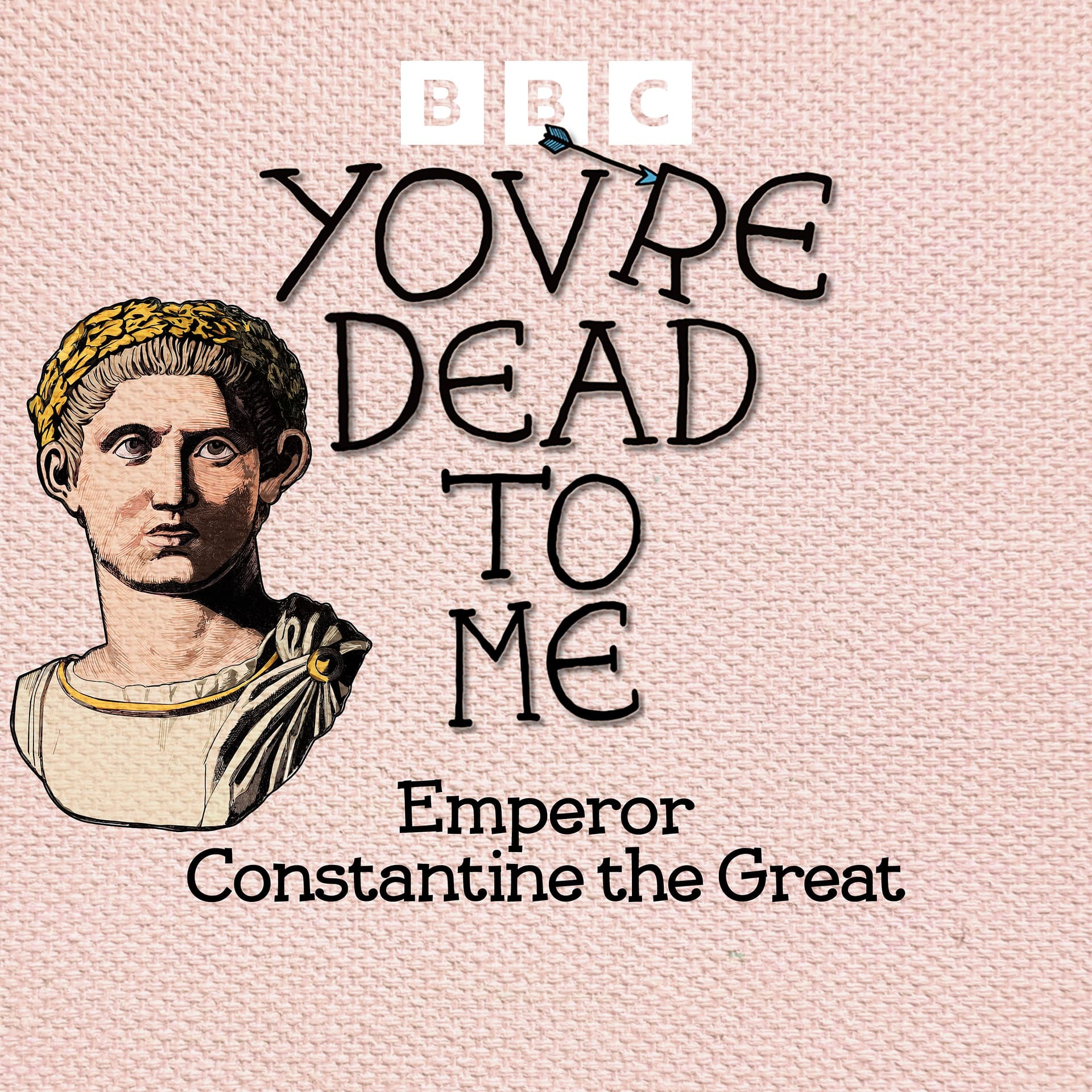
In short
Constantine the Great’s rise during the late Roman “crisis of the third century,” his consolidation of power after civil wars, and how his (contested) conversion to Christianity reshaped imperial policy and doctrine, culminating in the founding of Constantinople.
Guests
Professor Lucy Grigg (University of Edinburgh, Late Antiquity; research on society/culture/religion in the later Roman world; author of Popular Culture and the End of Antiquity in Southern Gaul). Ivo Graham (UK comedian; TV appearances; author Yardsticks for Failure; hosts Gig Pigs).
Key claims
Constantine’s biography is source-polarized (pro- and anti-Constantine; e.g., Eusebius and Lactantius), and his conversion is debated (possible 312 vision vs earlier praise of a pagan Apollo vision). The “Edict of Milan” is a later myth; support for Christianity came via legislation after 312. Constantine’s rule becomes increasingly controlling, with major executions.
Notable examples
Tetrarchy “rule of four” under Diocletian; Constantine’s escape from Galerius (305); Battle of the Milvian Bridge (312); Council of Nicaea (325) and the Nicene Creed/Arian controversy; Constantine’s marriage alliance with Licinius; Crispus and Fausta executed (326); founding Constantinople (324–330); Helena’s Christian pilgrimage to holy sites.
Written by AI. May contain mistakes. Listen to the episode to check what was said.
Chapters
Tap a time to open that second in VOWhat Do You Know About Constantine?
2:15 to 4:19
Discussion on the general knowledge about Constantine the Great.
“I've written Maximians from Max Engenstries, even though I don't know what that is.”
Sources and Trustworthiness
4:19 to 5:48
Analysis of the sources regarding Constantine's life and their reliability.
“lovely listener or viewer, hello, might know about today's subject.”
Constantine's Family Background
5:48 to 7:20
Exploration of Constantine's family history and its complexities.
“Okay, so we've got quite a confusing evidentiary record, but we know some things.”
The Tetrarchy Explained
7:20 to 11:28
Understanding the Tetrarchy and its significance in Roman politics.
“So Constantius, even I get them wrong, he's on his military travels.”
Constantine's Upbringing
11:28 to 14:01
Speculation on Constantine's childhood and training for leadership.
“I mean, it's actually, yes, it's actually pretty successful.”
Rise of Constantine: Early Life and Training
14:01 to 17:08
Explore Constantine's upbringing, military training, and early influences.
“but as well as the Tetrarchy having the sort of four spread out, are their next of kins all being sort of primed to take over the four?”
Power Vacuums and Political Maneuvering
17:09 to 21:16
Learn about the political changes following Diocletian's abdication and the rise of Constantius.
“Well, Diocletian does something incredibly unusual for a Roman emperor.”
Civil War Erupts in the Roman Empire
21:17 to 24:28
Understand the civil war dynamics between Constantine and Maxentius, including alliances and conflicts.
“They do do that, but just saying it doesn't always make it happen because Galerius isn't so keen on this idea.”
The Battle of Milvian Bridge
24:29 to 28:00
Discover the events leading to and the outcome of the pivotal battle at the Milvian Bridge.
“but he stays out of Italy, so he doesn't control Italy, which you'd think is quite important.”
Constantine's Campaigns and Rise
28:00 to 29:40
Learn about Constantine's military actions and rise to power, including the defeat of Maxentius.
“The Rhine, yeah, sort of France, Germany, that sort of area, fighting the Franks.”
Show all 21 chapters
The Christian Vision and Conversion
30:10 to 33:18
Explore the debated accounts of Constantine's vision before the Milvian Bridge and its implications for Christianity.
“And hygiene was actually probably better than you think it is.”
Council of Nicaea and Christian Doctrine
33:18 to 35:50
Understand the significance of the Council of Nicaea and the Nicene Creed in shaping Christian doctrine.
“Okay, so he converts to Christianity possibly, has visions possibly, puts the Cairo on his soldier's shields.”
Constantine's Political Intrigues and Family Dynamics
35:50 to 41:20
Delve into Constantine's complex political maneuvers and tumultuous family dynamics, including his brutal actions against relatives.
“I think Constantine is a very hypocritical Christian already.”
Founding Constantinople
41:20 to 42:00
Learn about the establishment of Constantinople and its significance for the Roman Empire.
“His new city is, of course, called Constantinople.”
Constantine and the Founding of Constantinople
42:00 to 45:30
Learn about the establishment of Constantinople and its significance.
“You know, dental, you know, massive dental sort of studios.”
Helena's Pilgrimage to Holy Sites
45:30 to 48:20
Discover the role of Helena, Constantine's mother, in early Christianity.
“Do you know why we're going to talk about this?”
Constantine's Late Baptism and Its Implications
48:20 to 53:10
Explore the significance of Constantine's late baptism and its historical context.
“Certainly for Constantine, going around murdering everyone.”
The Legacy of Constantine and Historical Forgeries
53:10 to 56:00
Learn about the forged narratives surrounding Constantine's legacy.
“Okay, it's time now for the nuance window.”
Debating Constantine's Legacy
56:00 to 56:17
The hosts discuss their stance on Constantine the Great's impact on history.
“Are we pro or anti or neutral on Constantine the Great?”
Quiz on Constantine's History
56:17 to 58:42
Ivo participates in a quiz testing his knowledge about Constantine's life and reign.
“This is where we find out how much Ivo can remember from our absolutely chaotic conversation.”
Exploring Related Historical Topics
58:42 to 59:30
The hosts mention other episodes discussing Roman history and Christianity.
“I think you gave me the benefit of the doubt on a couple of those.”
Transcript
Automatic transcript. May contain errors.0:00This BBC podcast is supported by ads outside the UK.
0:30up at Whole Foods Market. In a world where swords were sharp. And hygiene was actually probably better than you think it is. Two fearless historians. Me, Matt Lewis. And me, Dr. Eleanor Janaga, dive headfirst into the mud, blood, and very strange customs of the Middle Ages. So for plagues, crusades, and Viking raids, and plenty of other things that don't rhyme, subscribe to Gone Medieval from History Hit wherever you get your podcasts.
1:06Hello and welcome to You're Dead to Me. We're the Radio 4 comedy podcast that takes history seriously. My name's Greg Jenner. I'm a public historian, author and broadcaster. And today we're gathering our armies, grabbing our crosses and marching back to the 3rd and 4th centuries to learn all about the Roman Emperor Constantine the Great. And to help us tell our Maximians from our Maxentiusists, that's hard to say, Maxentiusists. And to help us tell our Maximians from our Maxentius, we have two very special guests in History Corner. She's Professor of the History of Late Antiquity at the University of Edinburgh, where her research focuses on society, culture and religion in the later Roman world.
1:46Maybe you've read her excellent book, Popular Culture and the End of Antiquity in Southern Gaul. It's Professor Lucy Grigg. Welcome, Lucy. Thank you. Hello. Lovely to have you in. And in Comedy Corner, he's the UK's most apologetically posh comedian. But, you know, in a good way. Maybe you've seen one of his many stand-up shows, listened to his wonderful music podcast, Gig Pigs, or read his wonderful new book, Yardsticks for Failure. And you'll have seen him all over the TV on Last Leg, Mock the Week, Live at the Apollo, my favourite, of course, Taskmaster. It's Ivo Graham. Welcome, Ivo. Hi, Greg.
2:15Hi, Lucy. Thanks for having me. We're thrilled to have you in. It's nice to be here. First time on. First time on. So, contractually... Nervously noting already. I've written Maximians from Max Engenstries, even though I don't know what that is. But it just felt very important immediately. It is going to be important. I have to ask Ivo, do you like history? I've really wrestled with this answer. And I've actually found it quite a bleak thing to contemplate because I do, but I don't think I do enough for this show. And I think I'm a well-educated man who is steadily getting thicker. And I've reflected on that a lot.
2:55Actually, I like giving quizzes. I often do quite badly on them. I think people expect me to be into history and I often have like a history joke in my show and sort of enjoy the sort of smug intellectualism of like a bit about Garibaldi in my most recent one. It's about the Italian leader. It's about the biscuits. And then there's a joke about boarding school, which we don't need to go into. But like, actually, when you break it down, like I've got a seven-year-old daughter who's starting to learn stuff and I often don't know what she's talking about. There's so many comedy history podcasts now, the serious ones, the edgelord ones.
3:25And I feel I'm being left behind by all of it. So I will disappoint today. No, no, no. Welcome to the History Slipstream. Okay, yes. I want to get back into it. Okay. What do you know about Constantine the Great? You know, the internet is obsessed with the Roman Empire. Yes. So are you equally thinking about him daily? No, again, I'm not thinking about that daily at all. And, you know, fair play to... I mean, of course, you're a bit of a busman's holiday. The idea of thinking about the Roman Empire every day. Yes. My brother did ancient history at university. and so I did message him saying, do you know a lot about Constantine?
4:00And he said, the chryzos were never really my jam. So that's all I've got for this. What a quote.
4:11So, what do you know?
4:16This is the first segment. It's called the So What Do You Know? This is where I have a go at guessing what you are, lovely listener or viewer, hello, might know about today's subject. And despite being one of history's greats, the great indeed, our Constantine doesn't really get much pop coverage. You know, he's not really in the pop culture. There's a movie called Constantine with Rachel Weisz and Keanu Reeves. Wrong Constantine, nothing to do with ancient Rome. Some of you may know him as the first Christian Roman emperor. If you've been to York or if you've studied there, like myself and producer Emmy, you will know there's a lovely statue of him outside York Minster.
4:50Perhaps you've been to Constantinople, the city named by him, founded by him, which of course is now Istanbul. Ivo is writing that down. Very good. But why did he found this new capital city? What inspired his religious conversion to Christianity? And is it okay to be a Christian emperor who kills so many people? Let's find out. Right, Professor Lucy, we often have to deal with some pretty dodgy sources when we visit the ancient world, particularly for biographies of people. So how trustworthy are our texts today? Are we taking everything with a pinch of salt? Yes, pretty much. It's not that there aren't sources, and there are even pretty contemporary sources.
5:26Eusebius of Caesarea writes a life. Lactantius writes about him. There's also sources written not long after he's died, but the problem is that they're often very polarized. There's the pro-Constantine sources. They embellish some things, leave other things out. And then there's the sources that probably make all kinds of other things up. There's religious bias. I mean, yeah, it's tricky. Okay, so we've got quite a confusing evidentiary record, but we know some things. So Ivo, given that Constantine grew up to be emperor of Rome, what class do you think he was born into? Do you think he was more Eton College or more Eton out of the bins?
6:03I think Eton College, I think. You think? Born to rule. Okay. Posh. Princely. Yes, you've given me two options, and I've gone with the one I'm more familiar with. but obviously I would fully support a rags to riches story Jamie Vardy etc we'll see the Jamie Vardy I mean that's a niche reference let's be honest who were Constantine's parents was he entitled and noble or is this a rags to riches story well what's interesting is it's a bit of both so his father whose name is Constantius get ready for all of these matching names he's a soldier He's from Moesia, modern Serbia. He's sort of a rising star in the military autocracy of the day when he meets Constantine's mom, who's called Helena.
6:52She is from ancient Bithynia, so part of modern Turkey. And this is where it gets interesting. The ancient sources describe her as, one describes her as vilissima, which very vile, very common even. And so we're not quite sure about her. It's thought they meet maybe in an inn where maybe she's working as a barmaid. a stable girl sex worker, possibly. We don't know if she's a Roman citizen. She could have been enslaved. They meet probably in their 20s. So Constantius, even I get them wrong, he's on his military travels. They meet, because we don't know whether she's like a proper Roman citizen, we don't even know if they're actually married.
7:31Some of the sources refer to her as his concubine, which is quite a common status at that time. So we don't know if they're married, but they are in their 20s. They meet. Constantine is born in the early 270s, not quite sure when. And this is a point when his father, Constantius, is busy kind of climbing the ranks of the imperial hierarchy. And eventually he throws over poor Helena for a more politically advantageous match. So he marries then the daughter or stepdaughter of the Emperor Maximian, who's called Theodora. So that's kind of the end of their relationship. So young love, you know, talented young soldier meets girl in pub.
8:09Yeah, that's absolutely fine. I love the word villicina. I'm going to try and use that in my life as much as possible. So, Ivo. Yes. We've got a fairly complicated family history already. Yes. I'm going to complicate things even more. No. Because we're going to talk about Roman politics. Okay. What was the, do you know what the Tetrarchy was? No. I'm sorry. That was a delightful wince. Okay. I'm sorry. It looked like it hurt. Is it okay? Is it all right? It's all right. It's okay. I've got to make peace with all of this. The Tetrarchy, I mean, you study classics at Deaton. Yes, I had to eat in college.
8:39A bit of money was spent on my classics education undeniably. Can you work out what tetrarchy might mean? Yes, it's obviously something to do with the number three. Yes. No. Four. Sorry? Four. Four. Yeah. Yeah. Wow. Yeah, I guess so. So what does it mean then? I mean, Lucy, do you want to tell us? The rule of four is what it means. I feel very bad that I laughed. I would never laugh at my students. No, I think that's great to produce such an unvarnished content. You did say you were getting thicker, so it's okay. Yeah, yeah. Didn't expect to prove it so early in the episode. Yeah, rule of four.
9:15Because a tetrahedron is a four-sided, four-pointed. What's a tetrahedron again? I don't know. Luckily, it's not a geometry. Yeah, yeah, yeah, sorry. This is not a geometry podcast, so I don't know. But yeah, you're right. Tetrapak? What's tetrapak? So what's tetrapak then? Tetris. Is it tetris? I'm thinking of tetris. I'm afraid if you'd said what number does, well, you've seen what's happened. I don't know that Tetris signifies four. So what would a three version of Tetrarchy be? Well, Tetris presumably is four because they're like little squares that fall from you. But that's, I don't know.
9:48We need to move on from the geometry quiz because clearly none of us know what we're doing here. The Tetrarchy is the rule of four. Lucy, we are talking here about what's known as the crisis of the third century. Yes. I mean, and obviously as ever, historical trends come and go. People go, oh, there's no such thing. a third century crisis, but it pretty much looks like a crisis. You've got this period, particularly over 50 years up to 284, where you have political crisis, military crisis, everything goes wrong on all the frontiers, economic problems, religious tensions, and lots of emperors. So yeah, how many emperors depends on how you count.
10:29Maybe 26, definitely over 20. If you count all the wannabe emperors, you're getting close to 50. But about 25 or so is usually accepted. That's usually accepted, 25 who ruled. So, I mean, as the UK, we've just lost another prime minister. Yeah, yeah. So we're kind of heading towards our own crisis because we've had seven prime ministers in 10 years. The Romans went with 25 and 50. I feel like we're trending upwards. Yeah, yeah. We could win this. Yeah, it's weird that the Starmer one feels like it's been a period of almost stability. And that's been, what, less than two years. Yeah, if that. Yes.
11:05it's horrible to be approaching Roman levels of turnover. I mean, it's dangerous being a Roman emperor. They are murdered constantly. There's a point where there are six emperors in one year, which is way too many emperors. So they're going through emperors like Chelsea, Watford and Spurs go through managers, which is obviously a reference for Ivo, not necessary for all our listeners. But what was the tetrarchy? How does it fix things? Does it fix things? You know, what is this idea of the rule of four? I mean, it's actually, yes, it's actually pretty successful. fall. So we've had this period where it's clear that one autocrat cannot rule the empire, all of his territory by themselves.
11:42Tetrarchy, although pedantic point, because I am an academic, it's a modern term. It's not Diocletian who founds the Tetrarchy doesn't go around going, welcome to the Tetrarchy. And so you've had all of these soldier emperors, they get called making it to the top. When Diocletian makes it to the top in 284, he does something different. He sets up what gets called the Imperial College again, modern term, with two senior emperors, two junior emperors. Now, if anyone's been to Venice on holiday, you can see these lovely sort of stumpy purple statues of these four guys on the corner of St. Mark's.
12:16And so you've got the empire sort of divided into two and then again into two, so into four. You've got senior empresses, Augustuses, and junior emperors who are called Caesars. And so we have Diocletian and Maximian as co-emperors for the East and the West, which is where I get confused too. Diocletian's own son-in-law, who's called Galerius, he's his Caesar in the East. And then we have Constantius, Constantine's dad, who is the junior one in the West. So is it really merit-based? Well, what do you think? Probably not. But this does seem to usher in a period of relative stability for the Roman Empire, unless perhaps you are a Christian, particularly in the east of the empire, because Diocletian and Galerius are sort of going for pretty violent oppression of the Christians there.
13:05Yeah, I mean, Diocletian is famous, isn't he, for the kind of horrific treatment of Christians. The martyrdoms and so on are... No, absolutely. And also, this is where our sources get a bit muddy, because the interconnections between Constantine and Diocletian, in which the pro-Constantine sources say and want to really, like, pretend they aren't there are clearly there. So Constantius, the dad of Constantine, is now junior emperor, basically, of the West. So how do you imagine Constantine's childhood? What do you think he's getting up to with his sort of, you know, his average Tuesdays? Well, I mean, so if his dad's doing that, and this is now, it's Theodora, is his mother.
13:48Stepmom, yeah. His step-mom. Is he still seeing any of Helena? Good point, yeah. You know, I'm thinking about co-parenting timetables, which is probably not a sort of top priority here. But presumably, and I don't know if we've discovered this, but as well as the Tetrarchy having the sort of four spread out, are their next of kins all being sort of primed to take over the four? Yeah, I think you're really getting this now, yes. Or is it like if Constantius doesn't really sort of pull his weight, if someone who was really pulling the weight in the Tetrarchy had two top sons, could it be like they'll both get promoted?
14:32Premium quality sons, yeah. Yes, that is pretty much how it is. I should say that Constantius doesn't really get rid of Helena until probably Constantine is sort of adult. But yeah, it's true, we don't really know what happens to her. she does just kind of disappear from history for a while. Vissima. She goes well for her in the end. So Constantine is born in Serbia, nicest modern Serbia. So he has been kind of groomed for this life, as you're suggesting. He's sort of getting military training because it's very much a kind of military elite. He's also like Ivo learning Greek and Latin literature and indeed philosophy, but his mother is likely illiterate.
15:09So it's a big kind of social gap here. And then as you say, his dad becomes Caesar in the West. So he's traveling with his father and around these other courts. He's really traveling. We think he went as far east as Palestine, Egypt, even ancient Persia. Okay, as a soldier. Yes, and as a soldier, maybe a kind of part of a sort of bodyguard unit, but definitely as a kind of junior sort of princeling. So he's sort of, you know, Ivo, you did Eton and Oxbridge, the classic path for leadership. Yes. You haven't ended up in politics yet. No, I haven't. But do you sort of feel a familiarity with Constantine's life?
15:47Do you sort of recognize this and think, oh, yes, that could have been me? No, I don't exude leadership qualities. Oh, I think that's fair. I think you're a man of tremendous charisma. Well, that's very kind. I think I'm a man of occasional charisma. But I don't think even that is the most important quality in leadership. The closest I felt to that sort of thing, I think, is being a leader of a group at a festival. that I really do promote myself to that role. Particularly if I've been and others haven't. There was a great Glastonbury night last year where we were trying to get home at about 4am and there were a lot of us and it's a very crowded central spine of the festival.
16:30It's like the zombie army going through. And I brought a ball of string to the festival and I was like, everyone stay on the string. And it was one of the more military things I've done in my life. You did a Theseus. I did a Theseus. He wasn't in my mind at the time, but he should have been, of course. Two of the people who met on the string are now in a long-term relationship. This is the future of dating, Ivo. You've invented a new... But everything changed for Constantine in the year 305, when he was, what, 30? Yeah, he was probably born in 272, but sometimes, yeah, something like that. Okay, early 30s.
17:07So what's this sort of crucial moment? 305, why do we? Well, Diocletian does something incredibly unusual for a Roman emperor. He voluntarily abdicates. I mean, really, that is incredibly rare. And he goes off to look after his cabbages, really. Is that a euphemism or is that? Seemingly not. So he goes voluntarily, but his co-emperor, Maximian, not so much. He doesn't really want to do it, but he's made to. So now we've got a kind of vacancy. So if you remember, we've got this four system. And so Galerius and Constantius get an upgrade. So we've now got two new Augustuses. So our junior Caesar's become the new Augustuses, right?
17:50But what happens next? As you've already suggested, there's a range of potentials. And Constantine doesn't actually get the call at this point. His dad controversially perhaps picks somebody else, a guy called Severus, yeah, who becomes Caesar in the West. Galerius, he does it with nepotism and he picks his own nephew. But it's pretty obvious it's a slightly dangerous position to be in, definitely dynastic danger. And Galerius apparently clearly thinks it's a bit dangerous having Constantine around. So he supposedly sends him on dangerous missions like one-to-one combat with dangerous beasts. Wow.
18:26Okay. For his amusement or what sort of beasts? Undefined, you can pick. Oh yeah, okay. Which beast are we thinking either? Bore? Wild boar? Boar, yeah, dangerous. Yeah, absolutely. A wild boar, absolutely. Yeah, I mean, panthers, lions. There's plenty of dangerous animals in the ancient Roman world. Yeah, and we've all seen gladiator, you know. Yes, absolutely. Well, yeah, I didn't want to go full sort of tigers and elephants. Yeah, okay. So, Lucy, while Daddy Constantius is now emperor of the West or East, I can't remember. West, you're West. Thank you. His son is being bullied by his co-worker.
19:02Yeah, yeah, yeah. So, does HR get involved? How do you sort of solve office politics? Well, this is where Daddy does sort of come to the rescue bit. So he, this is like local interest, he's actually in Britain, in northern Britain, fighting the Picts. And he tries to get Galerius to send him away. He's basically in this kind of bullying hostage situation that Galerius is caught. And there's a story that Galerius agrees to let him go, then changes his mind the next morning. but by the time he's sort of like got the order out Constantine has already legged it off to be reunited with his dad Yes and legged it off is probably the operative verb there because as far as we can tell he's on the run Yes, yeah He's scared, he thinks Galerius is going to get him So how does he get to Northern Britain in fact Scotland as we call it now in record time, maximum pace how do you get across Europe that fast?
19:54What's the best route?
19:58in 305. Yep. They haven't built the motorways yet. No. Or the TGV. I think it's got to be horse. It is horse. Yeah. It's a horse network. And he's taking the fastest horses. Yes. But he's not going the normal route. No. So he uses the cursus publicus. So this is the sort of highway official transport system. And the story goes, he takes the fastest horse in each stable. They're spread out on the way and not such a nice bit. Damage, you know, injures the other horses so no one else can follow him. And he goes a special roundabout route to avoid the Caesar of the West, who is Severus, who's been picked instead of him, so he can make it to meet his dad.
20:39So he's gone the long way around. Yeah. To avoid getting picked up and arrested and sent back to Galerius to be murdered. And it works. He meets his dad probably in northern Gaul, but then they head off to Britain to fight the pesky pigs. They do, and they campaign together until they end up in Iborakum, which is... Sunderland? Not bad, York. York, which is where the statue of Constantine now is. I've written that down, York Minster. Iborakum to York. And in 306, Daddy Constantius dies in York. So our Serbian Roman Emperor is dead. And the soldiers are like, it's fine, because we've got another one right here.
21:21all hail Emperor Constantine. They do do that, but just saying it doesn't always make it happen because Galerius isn't so keen on this idea. He does agree, perhaps reluctantly, that Constantine can still be a junior emperor, so is Caesar. But yeah, Severus then becomes Augustus. I mean, I hope you're keeping up because frankly, it's the right mess at this point. And then we have to throw our new character into the mix, who is Maximian's son. remember Maximian's son, who is called Maxentius. He's currently hanging out in Rome. He's not actually got any official job, but he thinks it's frankly unfair that Constantine, who he calls the son of a harlot, apparently is now being acclaimed in this way.
22:05Maximian was the co-emperor previously with Diocletian. Yes. So his son, Maxentius, is just sort of lay about waiting for power. Yeah. And is now angry that Constantine has got the power that he feels he should have. Yes. Are you following Ivo? Sorry. Quite a lot. Yeah, there's a lot of names now, but I'm afraid I'm already at the point where I go, that won't be in the quiz. Those names can't be. Probably is in the quiz, is all I'm going to say. So maybe get jotting down in the old notebook. So we've got two father-son pairs here. But luckily for us, they've gone with the Kardashian family branding style because we've got Constantius and Constantine and Maximian and Maxentius.
22:45And it will only get worse. Yes, it's going to get more confusing. So how do you think Maxentius dealt with Constantine being named the new emperor? This son in Rome who thought that he should be king, emperor, what do you think he does? I don't know. We're absolutely mad on threads. I don't know. Certainly maybe published something, maybe wrote something to Diocletian. No, Diocletian is abdicated. He's with his cabbages. Sorry. Okay, that's annoying. But he's too far away to go and deal with the issue directly, I would say. So maybe he raises an army in wait for his return? Oh, that's good. I mean, that's not a bad instinct, right?
23:28No, yeah. I mean, I think many people will know the quote, I am Spartacus. By this point, it's more I am emperor, right? Because now everyone is sort of putting their hand forward and saying, I'm the emperor, not that guy, it's me. Yeah. You need an army. Yes, and as Ivo says, you've still got the kind of retired, but are they really emperors as well? So there's a big cast. So yes, Maxentius gets the imperial troops, the guardsmen in Rome, which in Rome is a pretty good place to be, let's face it. He gets them to acclaim him as emperor. He persuades his father Maximian to come out of retirement.
Read the full transcript
24:01So as I said, he's kind of waiting in the wings and join his cause. So we've got civil war. We've got Roman empire back in civil war. And so Maxentius, he's raised his troops, as you say. He does well in Italy. If you remember, there's also this problem with this guy called Severus, who's not related particularly to our main people. He's in Italy, and so Max Centius and his troops do very well. They capture him. They kill him. Of course they do. And Constantine, for this point, just stays out of it. He's calling himself Senior Emperor of the West, but he stays out of Italy, so he doesn't control Italy, which you'd think is quite important.
24:35And he just stays on the Rhine. He's a very good soldier, seemingly. He's fighting the Frankish tribes there. So he's in Germany? Rhine, yeah. So the border of France and Germany. Right, OK. So Maxentius has taken power, got his dad out of retirement to back him up, killed Severus. Yes. And now we're waiting for the smackdown with Constantine. Something like, yes, yes. I don't know exactly that. Okay. But Ivo, Constantine then gained a surprising ally in his fight against Maxentius. Who do you think he was? So it's really just a case of which names are still on the table. I'm shocked.
25:14Is it the retired Diocletian? It's a good guess. Okay. It's even more surprising than that. Okay. Well, surely it's not Maximilian. It's Maximilian supporting his own son. Yeah. He gets, his enemy's dad joins his side. Wow. Which is very awkward at Christmas. Yes, so Maximilian has been building an alliance with Constantine and history also repeats itself because at this point, So his first wife, Minovina, we don't know much about her. Maybe that's because she was Diocletian's daughter and the pro-Constantinian sources are trying to disassociate them. But he gets a new wife who is Maximian's daughter, Fausta.
25:53So he's had a son with his first wife. Yes. The son's called Crispus. Yes. But he's ditched that wife and he's on to the new wife. Yes. And she is Fausta. And that's in 307 they get married. Okay, so it's all going quite well. He cemented the relationship with his new ally who was his enemy's dad. Yes. Yeah, yeah, yeah. Sorry. How old is he by this point? 34? Yeah, yeah, something like that. Something like that. Not quite ready for a midlife crisis, you would think. I don't know when you say that, but I mean he's... Yeah, I'm 35 and I'm on the fast train. So if Constantius had been married to Maximian's daughter Theodora, does that mean that Fauster, his new wife, his second wife, is Constantine's new step-aunt as well as his new wife.
26:39I mean, who even knows at this point? Are we going to be hearing any more about Crispus? Not loads. That's a shame. I mean, you'll hear one thing about him and it's not nice. So, yes, Crispus will get his comeuppance. Okay, so after the wedding, this lovely, beautiful wedding where the two families are united, presumably Max Hancher's not invited to the wedding. You would think not. He's at war with him. Yes. Yes, so Maximian quarrels with his son, Maxentius, obviously, but doesn't manage to quite get rid of him. And this is where, okay, imagine we've got Diocletian back with his cabbages. He comes out of retirement for an emergency conference.
27:21This is great. Yeah, in 308 in Carnot, which is near Vienna. But he says he won't come back to rule. They try and sort out the situation. Maximian is forced to abdicate for the second time, second or even third time, for second time, but it becomes clear that he doesn't really want to go. So when it comes to Maximian, he's forced in what is very much traditional Roman style to die by suicide. So that's Constantine's sort of succession moment. That's where he really, like the claws come out. So up to this point, he's divorcing, he's dumping, but now he's killing his enemies. And then not even enemy, a former ally.
27:55Is he back in Rome by this point? Not yet. Okay. He's doing all of this from York. No, he's more in sort of... Oh, sorry, the Rhine. The Rhine, yeah, sort of France, Germany, that sort of area, fighting the Franks. At this point, Diocletian's vegetable garden sounds quite appealing, right? It's just sort of sit there with the cabbages and the carrots. So did Maxentius take maximum revenge on Constantine for killing his papa? Doesn't quite go that way. Right, okay. So, yes, we've had Constantine on the Rhine. Then in 312, he decides to deal with Maxentius. So he marches to Italy. he defeats Maximian's, Maxentius's troops in the north of Italy.
28:36Yeah, the names are too much. And then finally, when is it the 28th of October 312, they're in Rome and we get the end game for Maxentius. They have a battle at the Milvian Bridge, which is just north of Rome. Although the sort of pro-Constantine source is trying to pick it up as like a great victory, it's probably a foregone conclusion. It's awful, Maxentius's troops, they've cut the bridges, lots of them drown, including Maxentius himself. And Constantine is then, yeah, he's the winner. He's been acclaimed liberator by the Senate. So he's now definitely the senior emperor for the west of the empire.
29:14But even though Galerius has died in the east, there's a new eastern Augustus called Licinius, who has been busy killing off all his rivals as well. Just, I mean, they're all at it. So Maximian is dead. Maxentius is dead. His head's on a pike. and there's a new senior emperor in the east, Licinius, and a new senior emperor in the west, our chap, Constantine. Not yet the great. Still married to Fauster. Still married to Fauster. Okay.
29:43September's always busy. Whole Foods Market can help. Their September Stock Up event makes it easy to load your pantry and freezer with flavorful, nourishing food. Even better, there are hundreds of sales. Get dinner going with canned soups and veggies. Lean on frozen pizzas, pastas, and seafood everyone loves. Their Build Your Own Family Meals feeds four for just$35. Stock up at Whole Foods Market. In a world where swords were sharp. And hygiene was actually probably better than you think it is. Two fearless historians. Me, Matt Lewis. And me, Dr. Eleanor Janaga, dive headfirst into the mud, blood, and very strange customs of the Middle Ages.
30:27So for plagues, crusades, and Viking raids, and plenty of other things that don't rhyme, subscribe to Gone Medieval from History Hit wherever you get your podcasts.
30:41So Constantine and Licinius now have to cement an alliance, the Eastern and Western emperors, and so they do so through marriage and that is the marriage of Constantia. Yes. Who's that? Constantine's half-sister. Not even just normal sister, just half-sister. I think. Okay, sure. Okay, so Constantia marries Lacinius. Great. Yeah. Thank you. Brothers-in-law, brothers-in-law. Okay. So it's been water-wall politics, family confusion, murder, intrigue, battles and wars and all sorts of things. But the Battle of the Milvian Bridge is in 312 and this is supposedly the beginning of the Christian story.
31:25This is where we start to introduce the religious journey or conversion. So can you talk us through that sort of conversion or that moment? Yeah, and this is one of the most debated, really, arguments in ancient history. So there is a story, versions of the story put together that the night before this battle, so in October in 312, Constantine has a vision, or maybe not the night before, in which he sees a heavenly sign in the sky with two letters, a chi in a row, which are the first letters of the Greek word Christus, and another sort of slogan almost saying, conquer by this. And then the story goes, having seen this sign, he puts Christian symbols on the shields of all of his soldiers, and then they go off and defeat Maxentius.
32:12but even that version is slightly contradicted even by pro-Christian authors and awkward fact there is a speech from two years earlier 310 an official speech of praise about Constantine which says that he had seen a vision of a pagan god Apollo and had a victory so how many visions did he have trying to put these together is is tricky um I mean there's a lot of debate around his conversion. I mean, did he see anything? Was he sincere? But I mean, it is pretty clear that he does an awful lot very quickly to support the Christian church, regardless. So he issues pro-Christian legislation, he builds churches at Rome, and he and Licinius, remember his co-emperor in the East, they get together and agree a kind of package to extend measures in support of Christianity, including across the East, where the Christians have been persecuted.
33:07And this sort of package of measures that they agree. There's a kind of historical myth that this is then called the Edict of Milan. But as I tell my students, there was no edict and there was nothing at Milan. So we don't call it that, but there we go. Okay, the not so edict of Milan. The not so edict of Milan, that's it. Okay, great. Okay, so he converts to Christianity possibly, has visions possibly, puts the Cairo on his soldier's shields. So they're fighting for Christ. Do they know who he is, Christ? These soldiers, have they heard of Christianity? you know are ordinary soldiers in the army in you know are they christians too or is this just i mean to me it seems pretty unlikely at this date right um but yeah no one asks them just paint this on the shield lads and off we go yeah i've got the chiro there you go okay so edict of milan didn't happen but the council of nicaea did ivo do you know what happened at the council of Nicaea in 325.
34:01It's a very important and famous, one of the best councils, gatherings of bishops. They decide on a very important Christian doctrine. Do you want to have a guess what that would be? The Bible. Okay, so you think it's them getting together to compile the Bible? Well. No, maybe that's a bit ambitious. Well, what do you think, Lucy? I mean, I think it is quite ambitious and it is a sign again that Constantine is really getting in on the game. He fancies himself clearly as a bit of a theologian. All those studies are coming in handy. And so the church, it's not really just one church. It's actually quite a lot of controversy and division.
34:41He's already got involved with a dispute between rival Christian groups in North Africa. And the Council of Nicaea, as Greg says, is where they come up with this statement still known today as the Nicene Creed. And that's to deal with this debate over the nature of Christ and the relationship between the Father and the Son and the Holy Trinity. And so there's been the so-called Arian heresy. So the way Christian heresies work is if you win, you name your opposing version a heresy and then you name it after a person. So it's named after a priest called Arius, A-R-I-A-N. But basically they come up with a compromise.
35:21What is the Nicene Creed? And just in case you want to know, the compromise is that the father and son are of the same substance. So he is a committed Christian at this point, we think, maybe, possibly. He's doing Christian things. He's definitely doing Christian things. So how do you think this newfound converted Christian treats his co-ruler, Lichinius, over in the Eastern Empire? Do you think he extends him his charitable hand, God's love, kindness? I think I can tell the answer from the way you phrased the question. I think... Am I leading too heavily? I think Constantine is a very hypocritical Christian already.
35:56I think he's very controlling and ill justify whatever he wants to do with whatever part of the Bible he's just made up. And this is all from a dream or from a like... Yeah, he's had visions, yeah. Yeah, I mean, and not to take anything away from Christianity, which I broadly respect, but it all feels quite opportunistic on Constantine's front. Yeah, I mean, it's hard to argue with Ivo's logic there because... No, lots of people have said this. So Constantine sends his brother-in-law, Bassanius, off to the court of Licinius and Bassanius is married to Anastasia. So that's the sort of family connection there.
36:33And Bassanius, it goes wrong for him quite quickly at the court of Licinius, doesn't it? Very much so, yes. He tries to convince Licinius to betray Constantine. Allegedly. So Constantine has Bersanius killed, and then Constantine and Lycanius go to war. Yes. In fact, for 12 years after Milvian Bridge, although they're co-emperors, brothers-in-law, they're periodically fighting each other. Finally, 324, Constantine and, oh, we get Crispus again, his oldest son Crispus. They get together. So there was a bit of a pretext. Lycanius, who had been doing Christian things, starts enacting anti-Christian measures in the East, And so Constantine uses this as a pretext to go and fight against him.
37:16And so he and Crispus defeat Licinius. First, he says he'll spare his wife. Licinius' wife is begging him, but in the end, surprise, surprise, ends up executing him. Oh, and of course, Licinius' son is also executed. Who would have been Licinius II? And so now Constantine, and this is a big deal, no one's been emperor of the whole Roman world for some time at this point. He's now in charge of East and West. he's got the whole Roman Empire, and he's got three sons of his own. So he's in full control. Yeah, yeah, so he's now the emperor of everything. What happened to the Tetrarchy? Well, he's Tetrarched it.
37:53Wow, fantastic. Yeah, so he's the emperor of everything, east and west. Constantine heading towards the Great, we'll see. Lucy has mentioned his children there. So Crispus is his son with his first wife, Minavina, but he's also had five kids with his second wife, Fauster. So three sons, two daughters. Ivo, I'd love you to guess their names, please. How many of them start with Constan? Three. Four, actually. The three boys, one girl. Right. So the girl is, but we've already had a Constantia, haven't we? His sister, who married like Aeneas. Good, yes. Okay. So Constantia must be off the table. Constant...
38:36Yeah, you're nearly there. Teller. Constantia Tina Constantina Well done Okay, Constantine We've got one Okay, give me the boys Constant
38:54Constantus Constant It's not my improv forte this I have to say Tell me the names Constantine Constantius Constans Okay So one is named after himself One is named after his dad in honor of the granddad, I suppose, and Constans. And then we have Constantine. So it's Constantine, Constantius, Constans. The daughter is Constantine. The other daughter is Helena. Great. Named after his mom. Great. Which is nice. It's nice, right? So he's got his kids. In some ways, you could think, oh, happy families. Dynasty building. It is very Kardashian. But it's not happy families because it's Constantine. Of course it is.
39:34So in 326, Constantine had Fausta and Crispus killed. What do you think they had done, Ivo? Something to do with the Christianity? Not converted, not respected. So you think they're worshipping the old gods still? Yeah, and who can blame them? Sure, okay, that's a good guess. Lucy, unfortunately the word I'm going to have to use is a lot less charming. Incest? Oh no. Allegedly, so this is where the pro and anti stories are difficult to say. So what we do know is in 326, Constantine has Crispus executed. And Fauster dies reputedly by being locked up in a sort of heating room at the Roman baths.
40:17And so she is dead. So he saunas her to death. He saunas, yeah, he steams her to death. Wow. That's what happens. And so we don't know why either of them was killed or if they're connected, as is the case. We've got these problems with the sources. So the pro-Constantinian sources just say nothing. They pass over the whole thing in silence, whereas the anti-Constantine sources say they were bumped off because they were having an incestuous relationship as stepmother and stepson. Which is sort of a standard slur in the Roman world, right? Yeah, absolutely. That's how you destroy your enemies, is you say they've been sleeping with the wrong person.
40:50Yeah. Because you can't disprove it, right? It's a kind of, it's a trope. Absolutely. An incest trope and getting at stepmothers, another absolute part of this. He's murdered his son, his wife, his father-in-law, his enemies, his friends, his brother-in-law, Bassanius, is dead. They're kind of dropping like flies. But that's okay because he's going to build a new city. Yeah, and he's got three sons still. He's got three sons and daughters as well. His new city is, of course, called Constantinople. Very good. And do you want to tell us what he's going to do there? What's he going to build? What would you build if you get to start Ivopolis, your own brand new city?
41:36Well, it's infrastructure, isn't it? Well, only of its churches, obviously, because that's got to be a big part of it for him. Sure, okay. So, but maybe also, particularly if he spends much time in York, there'll be some castles and walls. And then, you know, maybe, I've never been to Istanbul, so I'm not able to draw from present-day experience, but obviously football stadium. You know, dental, you know, massive dental sort of studios. Hair transplant surgeries. Yeah, absolutely. Everything we love and benefit from today. These are all excellent guesses. I think Church was good. Yes, and not quite a football stadium, but a very famous hippodrome.
42:22Oh, great. So that's actually, yeah. Chariot racing is the number one sport in the Eastern Roman Empire. Of course. and it will become the home of the most rabid fans. They riot and they burn the thing down. Absolutely, in the Nika riots. So tell us more a little bit about Byzantium that becomes Constantinople. Yes. Yes, it's nice to get away from the murder. So in 324, Constantine entirely rebuilds this new city that had been Byzantium and calls it Constantinopolis. It's inaugurated, it takes six years to build, very quick by HS2 standards, and it's inaugurated in May 330. And it's not entirely news because the Tetrarch's gone around building Tetrarch capitals, but Constantinople is more than just that.
43:07It has, as I was, it has churches, it has a Senate house, so that's like Rome. Obviously fortifications, as you said. It has an imperial palace with a massive great hippodrome, impressive public spaces. It's referred to as New Rome. It's referred to as a second Rome. But very much Constantine has left his mark. So we know that in the middle of his forum, there's this colossal bronze statue of him on top of a purple column, nearly 40 metres high in total. Just if you try to picture this, it's a classicising statue. So he was naked, holding a globe and a spear to symbolise he's emperor of everything.
43:47Ivo, if you were going to have a 40 metre naked statue of yourself, what would you be holding? I think globe and a sphere sounds fantastic. There was a boy at my prep school who was holding a globe on the front cover of the school magazine. And it's not dated very well. It satisfies every, like, born-to-rule stereotype part of the school. Like an incredibly Aryan eight-year-old just looking at a globe. So, yeah, maybe not. You say New Rome. Obviously, the eastern part of the empire spoke Greek. Yes. Constantine spoke Greek and Latin. Yeah, absolutely. So does he code switch when he's out there?
44:27Does he speak Greek when he's in Constantinople and then back home in Rome he's speaking Latin? Yeah, this is a really interesting question. And then when Justinian, who's Byzantine Empire, introduces his law code, it's still in Latin. So Latin continues being a kind of language of power. But yeah, there's kind of code switching between Greek and Latin is definitely key to this era. Is it important politically? Yeah. I mean, obviously it becomes important later on. The Byzantine Empire is enormously powerful and, you know, keeps going to 1453. But is it important to him, to his rule? I think it is, yes.
44:58Obviously, it's just not like any other imperial capital because it has a senate. So it's effectively set up as a rival, a second Rome. The Roman senators back in the real Rome hate it. And so, yeah, there's this whole new geopolitical era. There've been all of these problems on the east and sort of facing east. Yeah, that's what will happen in the end, as you say. It's the Eastern Roman Empire. the Byzantine Empire that will end up being the Rome that did not fall. Sure. And there's another city we need to talk about, another holy city, Jerusalem. Do you know why we're going to talk about this?
45:36Because, no, I don't. You had such confidence for a second. It's his mum. It's Helena. What do you mean it's his mum? Constantine's mum, she's going on tour. She's going to go check out all the best Christian sites because she wants to, she's Christian, you know, she's converted to Christianity too. Because of her son. Because of her, well, because of her son or has her son converted to her? No, they're different. Yeah, that's what we don't know. The sources go both ways. So do we know when she converts and why she converts and why she ends up in Jerusalem? No, we don't know. No, no. Okay, thanks for coming.
46:08But the interesting thing is the stories are all about, oh, the whole point of the tour is to go to Jerusalem. So this is, she sets off in 326. So perhaps in the aftermath of the scandal, There's stories about her being very angry and upset about the murders of Crispus and Fauster. But she heads off to the east. So she's an Augusta. So after a really bad period in her life, she's now named Augusta Empress. She goes off on this massive eastern tour. She doesn't just go to the Holy Land, but she does go there. And this is part of the story later on. So she goes to Jerusalem. She goes to Bethlehem.
46:46She sees the Church of the Holy Sepulchre, the Church of the Nativity. And this story develops, not at the time, but maybe 75 years later, after her death, we first can trace it. The story comes that she discovered the relics of the True Cross. Ah. But she, I mean, she didn't, sorry. Maybe she did. Okay, so... Yeah, so she goes off on this massive tour, and she's really old at this point. I was going to say, Constantine by this point, he's in his 50s. Yes, and so we think that by the time she dies, yeah, 328, she could have been around 80. So she returns home after this grand tour. She dies and her son has her buried in Rome.
47:26She is hugely important as a role model for later Byzantine emperors. And of course, she is declared a saint. But then so is Constantine, who I think maybe devalues the brand somewhat. So Ivo, we have Constantine, the first Christian Roman emperor. And his mum is this sort of Christian who's gone on tour and seen all the holy relics. so we can imagine that this, you know, faith is very important to them. So I want to ask you, at what point did Constantine get baptised as a Christian? Oh, ludicrously late. How late can you go? Couldn't fit his head in the font. You know, 60, at the age of 60. Later than that?
48:03Later than that, 69. It's, I mean, it's as late as you can go, really, Lucy. I mean, they're quite keen on a deathbed baptism. To be fair to Constantine, deathbed baptism is quite popular in early Christianity because you're not supposed to sin after you're baptised, which is quite hard for most people. Certainly for Constantine, going around murdering everyone. So he's probably about 65, 337. He's out east preparing for a military campaign against the Persians and he gets ill. And at this point, pretty much on his deathbed, he's baptised by the local bishop, Antisian Constantius, brings his body to Constantinople, which seems fitting, and he gets buried sort of with full honours in the mausoleum of the Holy Apostles.
48:48And the bishop who baptises him, Bishop Eusebius, is that the same person who writes the sources? No, that would be too useful. People having the same name, I'm sorry. Eusebius of Nicomedia versus Eusebius of Caesarea, sorry. Nothing in this episode is simple. Just one simple thing is all we want. This is an above-averagely complicated episode. I mean, honestly, I am struggling to even figure out what's happened, and I'm going to be hosting this. It's a very complicated life. I'm so sorry, Ivo. You've come in for your debut, and we've thrown you a hospital pass. That's absolutely fine. I think getting Tetrarchy wrong suggests that I would struggle even with the simpler stories.
49:24I still feel bad about that. No, not at all. Please. What do you think happened to the Roman Empire after Constantine's death? He had reunited as one consolidated thing, and he founded this brand-new city, What do you think happens? Strength to strength. Yeah? Yeah, absolute dynasty. It's still going, isn't it? No, I think it's obviously a hotbed of opportunists ready to jump on the grave of any freshly baptized. Constantine, I think there's, but I could work out one of his sons maybe. Yeah, he's got three sons and a daughter. So that should be, he should be able to have a bit of protection of the, and Constantius just did something good, didn't he?
50:03What did Constantius do about two minutes ago? Buried his dad. Oh, he buried him. Oh, yes, sorry. So, yeah, I think surely the family name sort of stumbles on a little longer. I think that's a really good answer. Yeah, and basically it does, but with a good bit of added murder. Yes. So Constantine has got these three sons. He's also got two nephews, a bit optimistically perhaps, to have five potential successors. So yes, what do you think his sons do? They go on a total killing spree. They kill off the cousins. Basically, any surviving male relatives are either killed or put under house arrest.
50:45In fact, only two sort of extended family male members survive, one of whom will then become the exciting emperor Julian the Apostate. That is a story for another day. But yes, so we're left with Constantine II, Constantius II and Constans' empire goes on. So they split the empire three ways. So he reconsolidated back into one and they split it into three, which is the same thing that happened after Alexander the Great, isn't it? Yes, it's, well, yeah. I mean, there's a very boring, nerdy thing about how it doesn't officially get divided into some years later, but you really don't want that. So there we go.
51:20So the Roman empire sort of barrels on afterwards, changed because he's introduced Christianity. Some emperors resist that again and push back again. Yeah, just Julian the Apostate. Yeah, but then eventually Christianity wins out. So it's been a wild and bloody ride. How do you feel about Constantine? Does he deserve the title, The Great? They were just doling that out, weren't they, back in the day? I'm fine with that. I mean, it's very impressive, you know, everything he's done. And I, you know, I've had a fair bit of Christianity in my own life. So, you know, cheers. I think I think what's so sort of bleak about the relentless sort of normalization of murder is like you then hear well the sons divide it three ways and they obviously you know brothers is you know better than nephews but surely if secondary family members can be dispensed with so easily how are you not constantly looking over your shoulder at your own brother as well you know I'm sorry to so incredibly basic to the opening scene of The Dark Knight, where just every single person gets picked off as soon as they cease to be useful to the operation.
52:33And that's sort of what this feels like, really. Yeah, it is. I'd love the sort of conclusion to be, the great thing that comes to know is, not only was he such an impressive conqueror of the world, but his Christian values really inspired a bit of loyalty in subsequent generations of his family. No, I'm afraid not. I mean, the son and the father were united in the Nicene Creed, but the son and the father didn't really unite politically. They were just at each other's throats and that's the story of Rome, I'm afraid, until the fall of Rome, or the fall of the Western Roman Empire in the 470s. So there we go.
53:04That's Constantine. He's dead now. Oh, sorry. And only just baptised. But that's the point. That's the point. Wiped clean of all the sin. Yeah, yeah. The nuance window!
53:20Okay, it's time now for the nuance window. This is where Ivo and I sit quietly for two minutes, drawing up blueprints for our dream cities, while Professor Lucy takes to the forum to tell us something we need to know about Emperor Constantine. So my stopwatch is ready. Take it away, Professor Grigg. Thank you. So as I've made it clear, it's very hard to find a reliable account of the life of Constantine. We've got these very polarised sources. We've got a propaganda, you know, the remains of a propaganda campaign that's sent out to deliberately obfuscate. His legacy is very important. Not all of it is controversial, though.
53:55We do know that he brought about massively important changes, geopolitical changes. He made massive reforms in the army, the economy, obviously religion, and founded Constantinople. But he's also very famous for something he didn't do at all, which I wanted to talk about. So as we discussed, he was baptised on his deathbed by an Aryan bishop, Eusebius of Nicomedia, despite the Nicene Creed. It's an inconvenient fact. Don't let an inconvenient fact get in the way of the story. So a new story develops that he's baptized by a much more respectable bishop, Sylvester, Bishop of Rome. And this then becomes part of one of the most famous historical forgeries of all time, the donation of Constantine.
54:35And so the story here is that Constantine has leprosy and is cured by Bishop Sylvester. That's when he converts to Christianity. And he grants Sylvester, the Pope, you might say, and the Roman church, some major powers. So supremacy over all the churches in the world. Also, he grants to the Bishop of Rome temporal authority over Rome and territories. And this is backed up by a document, the Donation of Constantine, and that's repeatedly invoked for centuries in battles between the church and governments, but also between the church in the East and the West, who obviously are not very keen on being ruled by the church at Rome.
55:13But guess what? Of course, as I've said, it's a forgery and it doesn't get uncovered until the mid-15th century. A Renaissance humanist and indeed priest, good for him, Lorenzo Valla proves that it was a forgery. But the legacy of Constantine as a legacy of fake news really went on for a long time. Amazing. One minute 57. Very impressive. Incredible timekeeping. So fake news, forgeries. Yeah. Is there anything legitimate about Constantine the Great? I mean, I guess there are plenty of legacies of him politically, but I mean how do you feel about his posthumous life? I don't know anything about it.
55:50Yeah everything I know about Constantine has come in in the last hour. But I've got a statue to visit when I go to York next on tour. You do, it's a nice statue. He's sitting in his throne. Fantastic. He looks very imperial. Are we pro or anti or neutral on Constantine the Great? I think anti. I've got to say it sounds like a bloody nightmare. So what do you know now?
56:16OK, well, it's time now for the quiz. This is the So What Do You Know Now? This is where we find out how much Ivo can remember from our absolutely chaotic conversation. Do I get to look at my notes during the quiz? Absolutely, that's what they're for. Ivo, generally, I imagine you're quite good at quizzes. You've said you're not, but I think you test well. That's good. It depends how much I'm able to revise. I've done OK on a couple of quizzes. You've made some notes. And I've made some notes for this. Fab, so let's see what you do. Ten questions. I will be generous as a market because honestly, some of this stuff I can't remember because it's been so chaotic.
56:48But let's have a go. Okay, question one. What was unusual about Constantine's parents' relationship? Different classes. They were, absolutely. They were sort of, you know, she was maybe lower status and he was higher status. Question two. Which Christian persecuting emperor founded the first Tetrarchy then retired to his garden? Of course, it was Diocletian. Very good. Mr. Cabbage himself. Question three. What mode of transport did Constantine use? Pause. Very good. But in a roundabout, sort of not direct horse. Absolutely. Fast horses, but long way round. Fantastic. Yeah, very good. Question four.
57:21In which city was Constantine first proclaimed emperor by his army? York. It was. Iboricum, York. Question five. You'll accept the English translation, me. Sorry. After receiving a vision, supposedly, what did Constantine put on his soldier's shield before the Battle of Milvian Bridge? It's there. It's there. The Cairo. It was the Cairo, the Christian imagery, the first letters of Christ's name in Greek. Question six. What city did Constantine found in 330? Constantinople. It was. That's quite an easy one, isn't it? Question seven. Why did Constantine kill his wife, Fauster, and eldest son, Crispus?
57:55Incest. Supposedly. Supposedly. It's a trope. Question eight. You're doing very well, by the way. Question eight. What happened to Constantine's co-emperor, Lichinius and his son, Lichinius II?
58:08Um... What did happen to them? I mean, dead. I'll take dead. Yeah, executed by Constantine. Question nine. What did Helena, Constantine's mother, allegedly find in Jerusalem? Oh, the relics of the true cross. Absolutely. Very good. And question 10. For a perfect 10 out of 10, Ivo Graham. When was Constantine the Great baptised? On his deathbed. Yay, you've done it. Well done. Hugely impressive, given that even the historians in the room didn't know what was happening for half of the point. I mean, absolute chaos. I think you gave me the benefit of the doubt on a couple of those. No, no, I think you did very, very well.
58:47It's the one where I just rather pathetically said, murdered. True, absolutely true. Thank you so much, Ivo. I hope you've enjoyed that slightly, I mean, wild ride. I've enjoyed it a great deal, of course. We'd love to have you in, thank you. It's a real demo for the grace of God. Another big thumbs up for the 21st century. And this is why you want to avoid politics, right? You've made the right decision. Comedy, not politics. A listener, of course, if you want more murderous Roman emperors, check out our episodes on the rise of Julius Caesar. We've got Agrippina the Younger. We've got Emperor Nero.
59:17That's with Patton Oswalt and Mary Beard. To hear more about the Christianization of the Roman Empire, we've got an episode on Hypatia of Alexandria. Plus, of course, we've got an episode on Constantinople, the city that Constantine founded. We talk about the Ottoman era with Sue Perkins. If you've enjoyed the podcast, please subscribe to You're Dead to Me on BBC Sounds to hear the show 28 days earlier than anywhere else. And if you're outside the UK, you can listen at bbc.com or wherever you get your podcasts. I'd just like to say a huge thank you to our guests in History Corner. We had the legendary Professor Lucy Grigg from the University of Edinburgh.
59:49Thank you, Lucy. Pleasure. And in Comedy Corner, we had the incredible Ivo Graham. The great, indeed. Thank you, Ivo. Thank you very much, Greg. And to you, lovely listener, join me next time as we launch another campaign into the far reaches of the past. But for now, I'm off to go and retire my microphone and plant my vegetable garden. If it's good enough for Diocletian, it's good enough for me. Bye!
1:00:25Hello, it is Danny Robbins here. For years now on Uncanny, we have explored real people's potentially paranormal experiences. But one thing that listeners have often asked me is why don't we look at supernatural cases from the past? Well, you asked and we listened. Our new series, Uncanny Cold Cases, takes a deep dive into some of these stories, from the most haunted house in England to the original UFO abduction case. Can we make sense of these strange stories that have haunted history? Uncanny Cold Cases. Listen on BBC Sounds.
1:01:07In a world where swords were sharp and hygiene was actually probably better than you think it is, two fearless historians, me, Matt Lewis, and me, Dr. Eleanor Janaga, dive headfirst into the mud, blood, and very strange customs of the Middle Ages. So for plagues, crusades, and Viking raids, and plenty of other things that don't rhyme, Subscribe to Gone Medieval from History Hit wherever you get your podcasts.
From the publisher
Greg Jenner is joined in ancient Rome by Professor Lucy Grig and comedian Ivo Graham to learn all about Emperor Constantine the Great and the Christianisation of the Roman empire. Born not in Rome but in the Balkans, Constantine’s life was shaped by the turbulent politics of the late third century. He grew up as Emperor Diocletian – remembered now as a savage persecutor of Christians – was establishing the Tetrarchy, with four rulers now in control of the empire. One of these was Constantine’s father, Constantius. But when Constantius died in York, his son was acclaimed emperor in his place, kicking off a violent civil war. This episode traces Constantine’s life, from his childhood through to his elevation as emperor, taking in his extraordinary victory at Milvian Bridge, the vision that allegedly encouraged his conversion to Christianity, and his founding of Constantinople as a New Rome. It also examines his relationship with his mother, later known as Saint Helena, the bloody path he carved to the imperial throne, and his role in the pivotal Council of Nicaea, a landmark event in Christian history.
If you’re a fan of religious revolutions, bloody Roman power politics, and historical nepo babies, you’ll love our episode on Constantine the Great. If you want more Roman rulers, listen to our episodes on the Rise of Julius Caesar, Agrippina the Younger, or Emperor Nero, with Professor Mary Beard and Patton Oswalt. And for more on the Christianisation of the Roman empire, check out our episode on Hypatia of Alexandria. You’re Dead To Me is the comedy podcast that takes history seriously. Every episode, Greg Jenner brings together the best names in history and comedy to learn and laugh about the past. Hosted by: Greg Jenner Research by: Auréliane Perrin Written by: Auréliane Perrin, Dr Emmie Rose Price-Goodfellow, Dr Emma Nagouse, and Greg Jenner Produced by: Dr Emmie Rose Price-Goodfellow and Greg Jenner Audio Producer: Steve Hankey Production Coordinator: Gill Huggett Senior Producer: Dr Emma Nagouse Executive Editor: Philip Sellars