In short
You're Dead to Me: Early Medieval Papacy (Episode Summary)
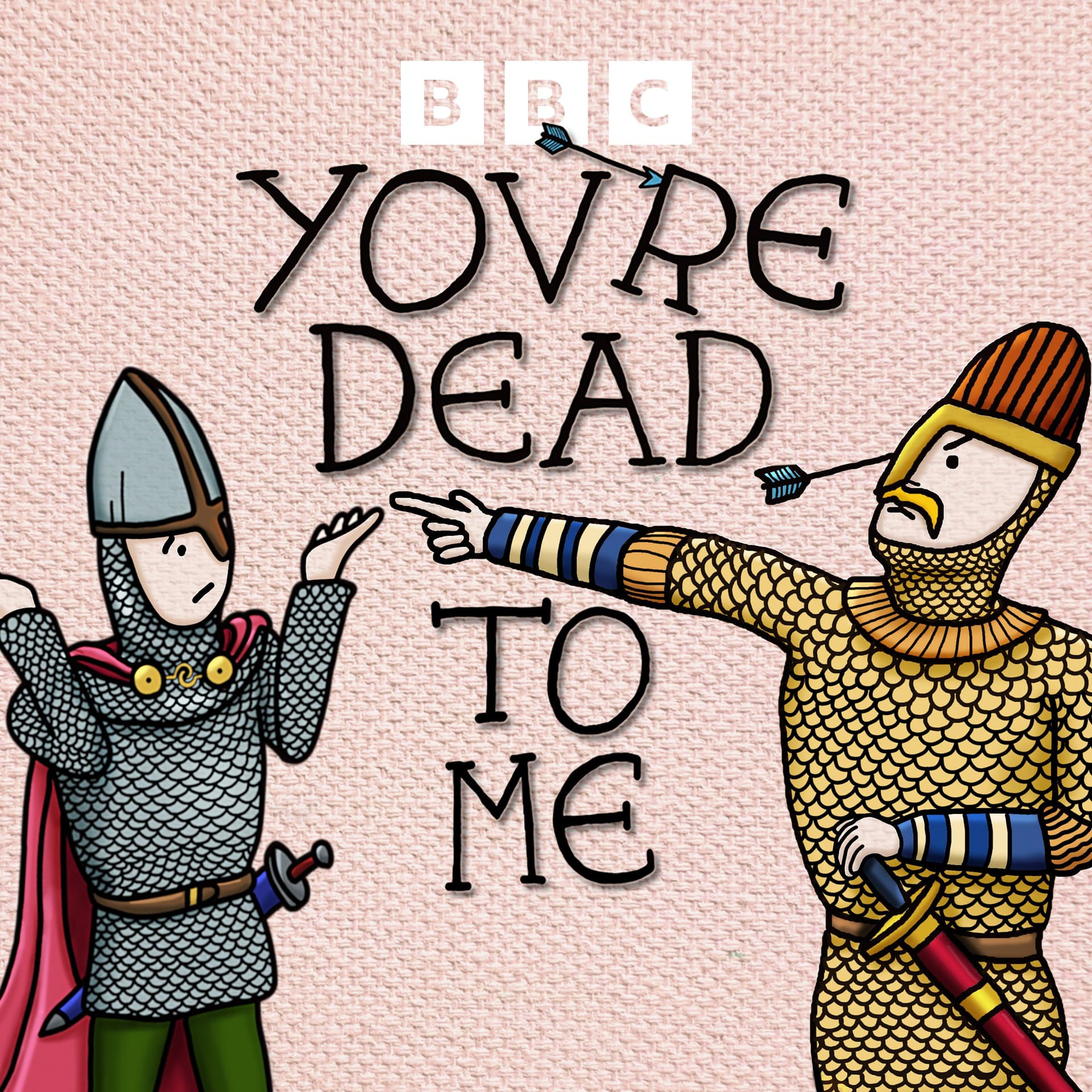
Podcast Overview Podcast Title: You're Dead to Me Description: A comedy podcast that takes history seriously, hosted by Greg Jenner. The show features comedians and expert historians discussing various historical topics, from notable figures to interesting events, often with humorous insights.
Episode Title Early Medieval Papacy (Radio Edit)
Episode Description In this episode, host Greg Jenner is joined by historian Professor Brett Whalen and comedian Alison Spittle to delve into the chaotic and scandalous world of the early medieval papacy in 9th-century Rome. The discussion covers power struggles, corrupt practices, and the infamous courtroom trial of Pope Formosus.
Key Themes and Discussions
Introduction to the Topic
- Historical Context: The episode focuses on the chaotic nature of the papacy during the early medieval period, often referred to as the Papal Dark Ages.
- Guest Introductions:
- Professor Brett Whalen: Expert in medieval history, particularly the papacy.
- Alison Spittle: Comedian, writer, and enthusiastic newcomer to the topic of medieval papacy.
The Role of the Papacy
- Definition of the Pope: The Pope serves as the Bishop of Rome and is seen as the spiritual leader of the Catholic Church.
- Historical Significance: The discussion touches on the evolution of the papacy and its claims to universal authority, particularly post-St. Peter.
The Papal Dark Ages
- Characteristics: This period is described as chaotic and corrupt, with power struggles among popes and influential Roman families.
- Pope Formosus: A significant figure whose controversial trial sparked discussions of morality and legitimacy within the papacy.
The Cadaver Synod
- Trial of Pope Formosus: Pope Stephen VI exhumed Formosus’s body and put it on trial in what is termed the Cadaver Synod.
- Details: Formosus's corpse was dressed in papal regalia and propped up on a throne while accusations were leveled against him.
- Verdict: The corpse was found guilty, leading to the nullification of Formosus's papacy and the stripping away of his papal vestments.
Aftermath and Reactions
- Consequences for Stephen VI: Stephen faces backlash for the trial and is eventually deposed and killed.
- Rehabilitation of Formosus: Subsequent popes work to clear Formosus's name, leading to a series of politically charged events within the papacy.
Overview of Subsequent Popes
- Political Turmoil: A rapid turnover of popes occurs, with nine popes in eight years (896-904), reflecting the instability of papal authority.
- Influence of Roman Families: Powerful families exert control over the papacy, indicating the intertwining of religious and political power.
Reforms and Future Directions
- Need for Reform: The episode hints at the coming 11th-century papal reform movement, which aimed to clean up abuses and strengthen the papal office.
- Pope Urban II: The episode concludes with the discussion of Urban II, who famously called for the First Crusade, marking a pivotal moment in papal history.
Key Takeaways
- The early medieval papacy was marked by corruption, scandal, and political manipulation.
- The Cadaver Synod exemplifies the extremes of papal politics and the public perception of the church.
- The chaotic environment laid the groundwork for future reforms and a stronger papal authority in the medieval period.
Conclusion The episode combines humor with serious historical analysis, presenting the chaotic legacy of the early medieval papacy in an engaging manner. The discussions provide insight into the complexities of political and religious power dynamics during this tumultuous period in history.
---
Additional Notes
- Production Team:
- Research by Jessica Honey
- Written by Emma Nagouse, Emmie Rose Price-Goodfellow, and Greg Jenner
- Produced by Emma Nagouse and Greg Jenner
- Listener Engagement: Encouragement for audience reviews and subscriptions to the podcast for future episodes.
Written by AI. May contain mistakes. Listen to the episode to check what was said.
Transcript
Automatic transcript. May contain errors.0:00This BBC podcast is supported by ads outside the UK. History This Week. February 1905. A quiet morning at the rail yard until the ground gives way. An entire locomotive is swallowed whole. It is another setback for an audacious project to tunnel under the Hudson River. And today, 115 years later, these tunnels are a national emergency waiting to happen. Listen to History This Week from the History Channel. wherever you get your podcasts.
1:03Dark Ages. And that's not even the meanest thing they've said. And to help me shed some light on this tantalisingly tumultuous time, I am joined by two very special guests. In History Corner, he's a professor at the University of North Carolina at Chapel Hill, where he works on Christian intellectual and cultural history during the Middle Ages. He has published on the Crusades, apocalypticism and pilgrimage. And luckily for us, he literally wrote the book on the medieval papacy. It's Professor Brett Whalen. Welcome, Brett. Thank you so much for having me. And in Comedy Corner, she's a comedian, writer, radio producer and actress.
1:34You might have seen her hilarious stand-up shows or seen her sitcom Nowhere Fast. Maybe you've heard her on the Guilty Feminist podcast or her BBC show Wheel of Misfortune. She's podding fabulous. It's Alison Spittel. Welcome, Alison. Hello. I'm so excited about being here and what a subject, first of all. The Papal Dark Ages sounds like an entry for Finland in the Eurovision. It's an incredible band I would love to see. Me too, absolutely. Alison, this is your debut performance on the show, which means I have to contractually ask you, do you like history? Did you like it at school? I did. I loved history.
2:07I had a great history teacher. So yeah, I've always been very interested in history. Today we're doing medieval history. It's quite far back and it's quite specific as well. And I know you were raised Catholic, you're comfortable with the history of Catholicism, but perhaps less so with medieval papacy, the political papacy. Do you know anything about it? No, I know nothing about it. Being former Catholic, I was very big into saints. For me, popes are administration people. Saints for me were like the superheroes and popes were like the guys in the FBI supporting them quietly. so uh for a medieval medieval popes as well it's there must have been some absolute skullduggery i'd say i don't know i don't want to predict but i want drama i want this to be a mini series on an american network tv show with jeremy irons in it or something like that i can promise you today there's a lot of drama this is an extraordinary story and some serious shenanigans happening so what do you know
3:07that brings us on to the first segment of the podcast called the so what do you know this is where i have a go at guessing what our listener might know about today's subject i'm guessing you know what the pope is you know where the vatican is but the power struggles of the papacy a thousand years ago yeah that's not going to register is it really in terms of pop culture or rather i guess in terms of pope culture there aren't loads of tv shows or films i can point to I mean, there's the sort of Dan Brown, Angels and Demons. If you have to read that or watch that, I'm so sorry. There's Jude Law and the Young Pope.
3:37There are some TV series that bounce around in this era, things like The Last Kingdom, but that's all about kings and princes and warriors, not popes. So I reckon the so-called papal dark ages is pretty dark and dingy for non-specialists, which is a shame because it was extremely chaotic and debauched and corrupt. So let's crack on. First of all, papal history is all about popes. and the popes of course are the Bishop of Rome, head of their worldwide Catholic Church, the Supreme Pontiff. They have more names than the Mother of Dragons. So Alison, how many popes have there been since the very beginning do you think?
4:09Oh okay, so people live for a shorter time before. I'm going to go for 10 ,000 popes. That's another name of a band that I would love. That does sound like the name of a band. They're like so sad, we don't know how many people are in them. It's innumerable. The Vatican says 266 popes. That's less people that's been on RuPaul's Drag Race. Brett, in terms of setting the papal stage, was St. Peter the first pope or is it a political office constituted after his death? Where do we start papal history? I mean, it sort of depends on where you look at it. You know, on one level, the pope is just the bishop of Rome.
4:48He's the leader of the local church in the city. And there were certainly Christians in Rome back in the first century, back in the days of St. Peter, and they presumably had a bishop pretty early on. And there were Christians with bishops spreading all around the Roman Empire. All those bishops were sometimes called popes, by the way, Papa in Latin. But what's going on different in Rome is the fact that the idea that Jesus Christ in the Gospel of Matthew 16, 18, made the apostle Peter his kind of deputy, right? He was the rock that Jesus founded the church on, and he gave him the keys to the kingdom of heaven.
5:18And then according to tradition, Peter went to Rome and actually founded the church there and handed down that power to the next bishop, his successor, according to some of the lists, named Linus. It gets passed down, this power, down through the ages, right? So by the second, third centuries, what you start to see are bishops like Victor, he's pope around the year 199, weighing in on controversies in the church. There was a big controversy about the correct way to date Easter at the time. And they start to claim a power that isn't just about being the bishop of Rome, but as a universal power over the entire church.
5:50So, you know, four or five hundred years after the time of St. Peter, you start to see the title of Pope being reserved for not all bishops, but just the Bishop of Rome. And that's when he's really becoming like the Pope. No one was keeping a list of Popes in the first, second century. And I think in the third and fourth century, people kind of retroactively made these nice tidy lists. So I think we can be, you know, appropriately suspicious of the exact number of Popes. and allison do you know why the papacy is based in rome it's not just the gelato it only occurred to me today where does the term roman catholic come from tell me why this is i'm trying to figure something funny but the curiosity has overtaken my brain saint peter's critical here and also saint paul you get two for the price of one here because there's a tradition that uh that saint paul also went to rome it's the capital of the roman empire it's the heart of the roman world and so the idea that these two really important apostles went there and they founded the church there.
6:45I think, you know, I guess nowadays we call it an origin story, right? So that is the origin story. But today we're looking at the early medieval European situation. So we're scrolling forward into the sort of 800s and 900s. We've got this massively important religious and political institution, but it descends into absolute infamy. The papal dark ages is the nice way of describing what happens. Yeah, they had this chronicle, it's called the Book of Popes. Amazing name. Isn't it? I think that runs from about the 6th the ninth century and it gives these little like mini papal biographies but after the ninth century it kind of trails off no one writes another people biography for like 100 years so for 300 years they've done the papal biographies and then they get to the crisis and they're like you know what we haven't got time that we haven't got time there's another pope in the popes are like the sugar babes in the way that like the middle sugar babes are not really talked about that much it's to Siobhan.
7:34I remember the early days. Justice for Rommel, that's what I say. I know. Okay. We reached the late 800s. The papal dark ages is a phrase that's sort of commonly used by historians to talk about this period where politically speaking the papacy is weak and vulnerable and chaotic. Alison, you ever heard of formosis? I've never heard of formosis before. Is it a type of yoghurt? It sounds like it would keep my blood pressure down. Formosus in Latin means handsome. Do we get a handsome pope? You get a handsome pope, the Jude Law Pope, the young pope. Young pope. He is handsome, undeniably. He's handsome for a bit, and then it goes a bit wrong.
8:15Brett, can you tell us about Pope Formosus and the notorious thing that happens to him? Formosus is a bishop. He's the bishop of Porto, which is just outside Rome. The Pope Nicholas I sends him up to Bulgaria on a mission to convert the Bulgarians, and he does a good job. He's a successful missionary. Later on, though, he gets tangled up in these kind of local, nasty Roman politics. He's deposed at one point. And eventually, he actually manages to become pope himself. This is in 891. He's now holding the top spot in the church. But again, he gets caught up in this political infighting, including this question of who's going to be the next king of Italy.
8:53He dies, apparently of natural causes, in 896. There's a pope right after him, Boniface VI. But he's only pope for like 15 days, So we don't really need to worry about him. The Pope after that, Stephen VI, is not a fan of Formosus. And some things happen from there that are a bit shocking. Some things happen is a very, very kind way of describing what is about to happen. Alison, in 897, we get the most unhinged courtroom drama you can possibly imagine. How do you think Pope Stephen VI continues his beef with Pope Formosus, who by this point is dead? They're going to dig him up, aren't they? Good job.
9:34Oh, wow. I mean, you've got to have a special type of spite to dig as well. You know, what did he do? OK, tell me, tell me, tell me. Pope Stephen VI orders the exhumation of the corpse of Formosus and he is put on trial. So it is called the Cadaver Synod. And Brett, do you want to give us the lurid details? This is amazing. This is amazing. How do you try a rotting corpse? Weekend at Bernie's just like popped into my head. There's this great painting by Jean-Paul Laurent. It's from 1870. It's not medieval at all, but it's one of these great, I think one of the more famous representations of the Cadaver Synod.
10:16So Formosius' rotting body is after nine months in the tomb. He was dug up. He's dressed up in the full papal regalia. He's propped up on the throne and his body is put on trial. Pope Stephen VI is there levelling the charges against him and kind of interrogating him. And supposedly there was a deacon off to the side or behind him, acting like a ventriloquist. No! Yeah, speaking for Hermosius. Oh, I'd love to see that on Britain's Got Talent. So he put his hand into the back of the head. I don't know if he literally like shoved his hand in and moved his jaw. That would be brilliant. It's the bridge too far, I think.
10:51There's definitely someone giving answers on behalf of Formosus, who is a rotting shell of a man. But anyway, Alison, that is the scene. So, I mean, can you imagine that as a TV drama now? How does the defendant plead? Dead, Your Honour. Dead. So Stephen is yelling his questions. The deacon is doing the corpse ventriloquism. The corpse is found guilty. Obviously, of course he is, because they're not going to be like, oh, he got off on a technicality. Clearly, they're finding him guilty. What do you think his posthumous punishment is? Please say it's death again. Please. It has to be. This is double death.
11:27Death squared. It can't be nine months on community service. He's not going to be able to sweep up. He's a corpse. It has to be death. It's a sort of reputational death. All of his acts as Pope were nullified. He was stripped of his papal vestments that they put on him. Remember those robes they put on him when they took him off again ceremonially. They snapped off his three fingers he had used to bless people. Whoa. Oh. And then they reburied him in a commoner's grave. And Stephen said it was because Formosus had committed perjury, coveting the papacy, violating the laws of the church. So those are the sort of crimes he's accused of.
12:03Because we're hearing about him now. Was there like a retrospective on this? Is it Frambrosia? Formosus. Formosus. Was there kind of like a renaissance for him? Because why do we know so much about him? Great question. I'm thinking like a historian, Alison. Very nice. He's reburied in a commoner's grave. And then the chaos is not over yet, is it, Brett? Pope Stephen seems to get concerned that some of Formosia's supporters might actually dig up the body and kind of turn it into like a martyr or almost like a saint, right? Get the relics and turn those into a focal point for devotion. Stephen orders the body to be dug up again.
12:36And according to some of these chronicles, he gets thrown in the Tiber. The cult of relics was a really big deal in the Middle Ages. I mean, I visited St. Valentine's Bones. There's an incredible thing in Dublin where you can look at like wish books and I'm no longer Catholic. Love the iconography, I won't lie. Love sitting in a church. But like, yeah, this is so interesting to me. Sorry, I totally interrupted you there. No, no, no. With my enthusiasm, Brett. Continue, continue, continue. No, you're spot on. And you're the one who first brought up saints at the beginning of the show. That's really helpful to remember that there's this whole kind of culture around dead bodies, you know, breaking them up into little bits and sending them around and putting them into altars.
13:14That's what they do to Formosus, though, that they throw them in the river because they want to make sure that no one gets their hands on his body and turns it into a saintly relic. And yet? He doesn't become a saint, but there are stories here that a monk or other stories, it's like a fisherman who's in the Tiber. Imagine that you're like fishing in the Tiber. You know, you put up the Pope's corpse. Wow, where did that come from? It's a Pope. And the body does get rediscovered, right? And some sympathetic supporters of Formos just get their hands on it. To do it, I think Stephen was probably worried about.
13:45There's this one priest, actually, yeah, this other story, Auxilius of Naples is this guy. He's writing at the time, he says there was a thunderstorm. So this is where maybe God was getting involved and it caused the Tiber to rise up. And at that point, the body was discovered. According to another story, this monk had a prophetic dream. Of course. These are signs that Formosius was wrongly, I think, convicted, right, clearly. and um auxilius by the way is one of these priests who was ordained made into a priest by guess who by formosius so i think he has his own vested interest in wanting to be team formosius and when when formosius's acts are all nullified that would send these kind of ripples through the whole church if you just nullified everything a pope did and so someone like auxilius i think probably had his own reasons for wanting to rehabilitate pope for moses so i guess stephen has failed in his quest.
14:36He buried him and then threw him in the river and both times it's gone wrong. What do you think happens to Pope Stephen VI, Alison? Do you think it all ends very nicely for him? Does he get tried when he's dead? Oh, sweet justice. He doesn't get tried in a court of law, but he gets his comeuppance, doesn't he, Brett? And it's a pretty violent comeuppance. Yeah, I mean, so people like Auxilius of Naples have it out for Stephen after this all goes down and he gets pushed out of power not too long after. And he's stripped of his vestments. He's demoted to being a monk, kind of on a house monastic arrest.
15:10And he's eventually strangled to death. There's so much bloodlust for these popes. I am aghast. I'm from Ireland. They love popes there. So thank you for that, Brett. That's an excellent summary of the Cadaver Synod and its consequences. So karmic justice for Stephen. Then we get the new guy, Pope Romanus. Now he's got a good name. It's Rome. He's called Romanus. I've got a good feeling about him. Does he do well? I'm sorry. Yeah, he gets overthrown pretty quickly and trundled off to a monastery and dies four months later. What of? We think maybe poisoned. But I've got a really strong feeling that Pope Theodore II, the best of the chipmunks, he's going to nail this.
15:51How long does he last, Alison? I'm going to go two years. Three weeks. No! Yeah. When I say three weeks, that's the generous version of the story, because the other story is that he dies within 12 days. So Theodore II has not gone great. He's murdered by foul play, but Brett, he is still linked to the Cadaver Synod. He's still linked to Formosus, isn't he, Theodore? Yeah, I mean, already Romanus had already started this process of actually annulling Stephen VI's axe, right, and kind of rehabilitating Formosius. Romanus held a synod reinstating Formosius and condemning Stephen. And then, yeah, Theodore keeps this process going.
16:33It's interesting, right? There's like multiple synods by multiple popes after condemning Stephen VI's actions and overturning the verdict of the Cadaver Synod. So you get the sense of how important this was for people to unwind this. Putting a corpse on trial, it wasn't really a winning move in the long run. No, it makes you look petty, I have to say. It's really petty. Yeah. Okay, so we have Theodore dies after only three weeks maximum. He's then replaced by another pope. Things are unfortunately not massively improving. Alison, we asked you at the beginning to guess how many popes there were in total.
17:07I'm now going to ask you to guess how many popes were there in the eight years between 896 and 904? I'm going to go for 18. I love the way you embrace the chaos. It was nine popes in eight years. So, which is still pretty bad, but not all of those did one year. Some of those were doing just a few months. There were some caretaker popes involved in this. Some definite caretaker popes. These popes being elected, you know, inverted commas, but there's actually an awful lot of sort of sinister underhand politics happening here. We have some very powerful families with wonderful names, the Theophylacti, the Crescentii and the Tusculani.
17:46They are the kind of medieval mafia mob bosses of papal politics, aren't they? Yeah, I mean, you can't understand what's happening without really thinking about these powerful Roman families. And so they're putting their own on the throne. And then within a few months or a year, that pope is bumped off, murdered, deposed. So many popes were killed or deposed. We don't even have time to list them, Alison. That's how many it was. The papacy clearly is in dire straits here, Brett. The obvious question, I suppose, is are various kings and princes and rulers and political decision makers, have they just given up on the papacy?
18:17No, I don't. I mean, Rome still, it is still such a touchstone point, right? Popes still have this layering of legitimacy. They're the only ones that can bestow. You can be a really powerful king, but if you want to really have the imperial title and have people recognize it as meaningful, you need a pope to be the one to hand that crown over. Just to give you an example, there are these rulers in Germany in the late 900s, conveniently named Otto I, Otto II, and Otto III. They become really powerful, powerful enough that they want to reclaim the imperial title. So Otto goes down, I think around, it's like 955.
18:54He goes down to knock some heads in northern Italy and actually meets with the Pope and gets crowned as emperor. The Ottonians, as they're called, the Ottonian dynasty, donates properties to the papacy. Emperor Otto III is interesting. He works really closely with Pope Sylvester II, who was his former tutor, actually. And they seem to have these big, ambitious plans to kind of bring back the glory of the Roman Empire. They both die at 1002 and 1003, like within a year of each other. And nothing much comes of this partnership. And it takes another decade or so before another emperor is crowned.
19:27These rulers don't walk away from the appeal of Rome. Okay. But there's clearly a crisis going on. So, Alison, if you were the chief exec of the papacy, we've reached the year 1000 here. So what reforms would you be putting in place to try and protect the brand? Is there celibacy now or is that later on in the... It's theoretically on the books at this point, but not always observed. Let's put it that way. It's a great question. I would get the devil out of the church. That would be my big thing. Step one. Brett, how do you remove the devil from the church? How do you reform the papacy? After 200 years of absolute crisis, we've reached the early 1000s.
20:06Are there going to be reforms coming down the pipeline? The 11th century, I'm certainly not the first medieval historian to talk about. It's sometimes called the papal reform movement, where people are trying to sort of clean house here. One example of this is in 1049, you get a new pope, Leo IX. He's generally considered the first reformer pope of the 11th century. He's more or less installed by the emperor at the time, Henry III. But when he shows up, actually shows up in Rome to take up the papal office, he comes, it's described in some accounts, in the manner of a pilgrim. He's barefoot. He's humble.
20:37He tells the people of Rome that if he's not worthy to be their bishop, he'll leave, right? So, and then in the 1070s, you get to Pope Gregory VII. And he left such a stamp on this new spirit of reform. It's sometimes actually called the Gregorian papacy. And to your point, he wants to get priests to be celibate. He wants priests to stop getting married and passing their church property on to their kids. He wants to get rid of simony, which is the idea that you can like buy a bishopric or buy a position as an abbot. And so there really is this idea they want to get the pope out from under the thumb of lay people, which includes kings and emperors, by the way, and really broadcast the idea that the papacy is the ultimate spiritual head of the Christian world.
21:15And that's how you're going to reform the church is by the pope stepping up into this role. So is it given the pope ultimate power? In some ways that I think when we think of the papacy as being a big deal in the Middle Ages, it's really the 11th century when that starts to happen. So you wind up with Clement and then you have a series of popes over the following decades who are basically kind of popes in exile, right? They're not actually in Rome, but they have a lot of support. You see the popes, a series of popes. What was it? Sticking with the reform up to their eyeballs. And one of the interesting ones is Urban II.
21:40He's elected pope in 1088. Pope Urban, that's a genre of music that wasn't happening in the mid-two fasts. Have you heard of Urban, Alison? Does that name ring any bells? I haven't. They relate to Keith Urban, the husband of Nicole Kidman. Yeah, Karl Urban, Pope Urban, and Keith, they're all the same urban, all the same family. He's an important pope. He's savvy. He gathers a lot of support from different European rulers and bishops. Pope Urban II is one of the most famous popes from history. He's going to do something very, very famous. Do you know what it is, Alison? It's in the 1090s. Oh, I'm...
22:15All right, I'm going to give a hint. Okay, please. Orlando Bloom. Orlando Bloom. The calcium kid? Does he become a boxer? Does he become a boxer? Or is he a pirate? You've gone two pirates of the Caribbean, Brett. We should have gone the other way. We should have gone with Ridley Scott. Oh, yes, yes. Kingdom of heaven. So kingdom of heaven. Okay, cool. So is he a tough pope? He calls the First Crusade. Ah, yes. Okay. Which is a huge moment in global history. It's obviously going to be a horrifically violent religious war. Brett, this is, you know, in terms of medieval Christianity, this is a sort of watermark moment, isn't it, for the papacy?
22:53Because this is an assertion of strength. I think so. You know, here's Urban. And he's in the middle still of this ongoing fight with Henry IV. He can't even really go to the city of Rome, but he's out working the crowd sometimes, literally. And in 1095, he preaches this sermon in Claremont in France and calls for Christians to go. And as he sees it, liberate the holy city of Jerusalem. And this becomes known as the First Crusade. At the time, and certainly in retrospect, the kind of show-stopping demonstration of the Pope's authority on a, I guess now we might call it like an international level.
23:23In the crusade, it actually captures Jerusalem in July 1099. And Pope Urban II dies just like a few weeks before news reaches Rome that the crusaders had actually, after this three-year campaign, managed to capture the city. Urban's very symbolic of a kind of a new direction with the papacy, I think. We now get into a new phase where the papacy is still political. It's still controversial, but there is more strength in the office, I suppose. Was Urban looking for that war to get the Europeans together against what they would perceive as a common enemy and give these rich people something to do?
23:56Rich also inviolent. Yeah. The peace of God is happening at the same time. And there's this idea like stop killing each other. Start killing other people. Exactly. Go kill the so-called infidels as they view them. Interesting. Yeah, I mean, that's a whole other episode, Alison. But, you know, that's brought us to the end of our conversation, to the end of the papal Dark Ages. The Nuance Window!
24:23This is where Alison and I spend our two minutes reburying a pope we've just dug up, while Brett has two uninterrupted minutes to tell us something we need to know about today's conversation. So my stopwatch is ready, Brett. If you are ready, the Nuance Window, please. Yeah, great. And, you know, you've made this, Alison particularly, I think, with all of your great comments, you've made this pretty easy. I think we've really grabbed a hold of some of the nuance of the situation, right? I'll be the first to admit that something like the Cadaver Synod, you can see it as a sign of the fact that the Middle Ages were the Dark Ages, and it was irrational, it was grotesque, it was barbaric, but I do think we need to avoid this impulse, right?
Read the full transcript
24:56I think of it as like a historical confirmation bias, if you see what I mean, for the way we view the medieval as opposed to the modern world. But we saw on the show today, right, bishops around medieval Europe, like the popes of Rome, were deeply enmeshed in political life, right? Italian politics, the pope is the biggest landlord in medieval Italy, after all. And they were certainly involved in local politics with these families that Greg mentioned earlier, struggling for control of the city. And this was really the case after the collapse of the Kirillan Empire. Governing institutions, like of all different kinds, were really under new kinds of pressure.
25:28In that context, the Cadaver Synod kind of makes sense, so to speak. It has its own kind of internal logic. You know, on the other hand, keep in mind, contemporaries knew the Cadaver Synod was outrageous, right? This wasn't just like, another day in the crazy Middle Ages. I mean, people in the 9th century knew that this isn't how the successor of St. Peter is supposed to act, with the keys to the kingdom of heaven. And the same thing goes for, like, being murdered with a hammer or sleeping with your mistress or using church property for your own personal gain. So even in the middle of these struggles and in the middle of these troubles, you see these calls for reform, which really pick up steam.
26:00In the 11th century, to get the Roman popes out from under the thumb of these local families, out from under the thumb of emperors, and really do things differently. And, you know, that leads to something like Urban II being in a position to stand up as the leader of Christendom and call for the First Crusade. So from that kind of more nuanced perspective, I think that the people of Dark Ages, and I'm making air quotes here with my fingers, really become less like sensationalistic and more historically important because, you know, they allow us to kind of to see and track these broader changes in medieval European history as a whole.
26:29Thank you so much, Brett. That's fascinating. Alison, any thoughts on that? I feel nuanced up to the eyeballs. my mind has been opened so hard. Like with medieval ages, I just thought it was like eating large drumsticks and jousting. But this has been so, so great. Fabulous. Well, thank you so much, Alison. Thank you so much, Brett. And listener, if after today's episode, you want to know about the Crusades, why not go listen to our episode on Saladin? And remember, if you've enjoyed the podcast, please leave a review, share the show with your friends, make sure to subscribe to Your Dead to Me on BBC Sound so you never miss an episode.
27:03But all that's left for me to do is say a huge thank you To my guests in History Corner, we had the fantastic Professor Brett Whalen from the University of North Carolina at Chapel Hill. Thank you, Brett. Thank you so much. Thank you, Alison. I had such a great time. Thanks. Me too, Brett. You're a legend. Thanks so much. And in Comedy Corner, we had the awesome Alison Spittel. Thank you, Alison. Greg, Brett, everybody else. It's been knowledgeable and beautiful. Thank you. Pleasure. Thanks for coming. and to you lovely listener, join me next time as we excitedly assume more forgotten historical subjects and then put them on trial.
27:38But for now, I'm off to go and change my name to Corpus Ventriloquist. Bye!
27:49You're Dead to Me is a BBC Studios production for BBC Radio 4.
28:04Hi, I'm Phil Wang, and this is a podcast-to-podcast trailer for a different podcast than this podcast that you've listened to, or are going to listen to. But nonetheless, I'm talking about another podcast that you should also definitely listen to. The podcast I'm talking about is Comedy of the Week, which takes choice episodes from BBC sitcoms, sketch shows, podcasts, and panel shows, including my own show, Unspeakable, and puts them all into one podcast. Maybe I'll trail this podcast on that podcast. Who's to say? I'll do what I like. Listen to Comedy of the Week now on BBC Sounds. Podcast.
28:42History this week. February 1905. A quiet morning at the rail yard until the ground gives way. An entire locomotive is swallowed whole. It is another setback for an audacious project to tunnel under the Hudson River. And today, 115 years later, these tunnels are a national emergency waiting to happen. Listen to History This Week from the History Channel, wherever you get your podcasts.
From the publisher
Greg Jenner is joined by guests Prof Brett Whalen and comedian Alison Spittle in 9th-century Rome to explore the early medieval papacy. As the political heart of the papacy is plunged into chaos, we step into a world consumed by debauchery and a thirst for power and hear about perhaps the most unhinged courtroom trial of all time.
This is a radio edit of the original podcast episode. For the full-length version, please look further back in the feed.
Research by Jessica Honey Written by Emma Nagouse, Emmie Rose Price-Goodfellow and Greg Jenner Produced by Emma Nagouse and Greg Jenner Assistant Producer: Emmie Rose Price-Goodfellow Project Management: Isla Matthews Audio Producer: Steve Hankey