In short
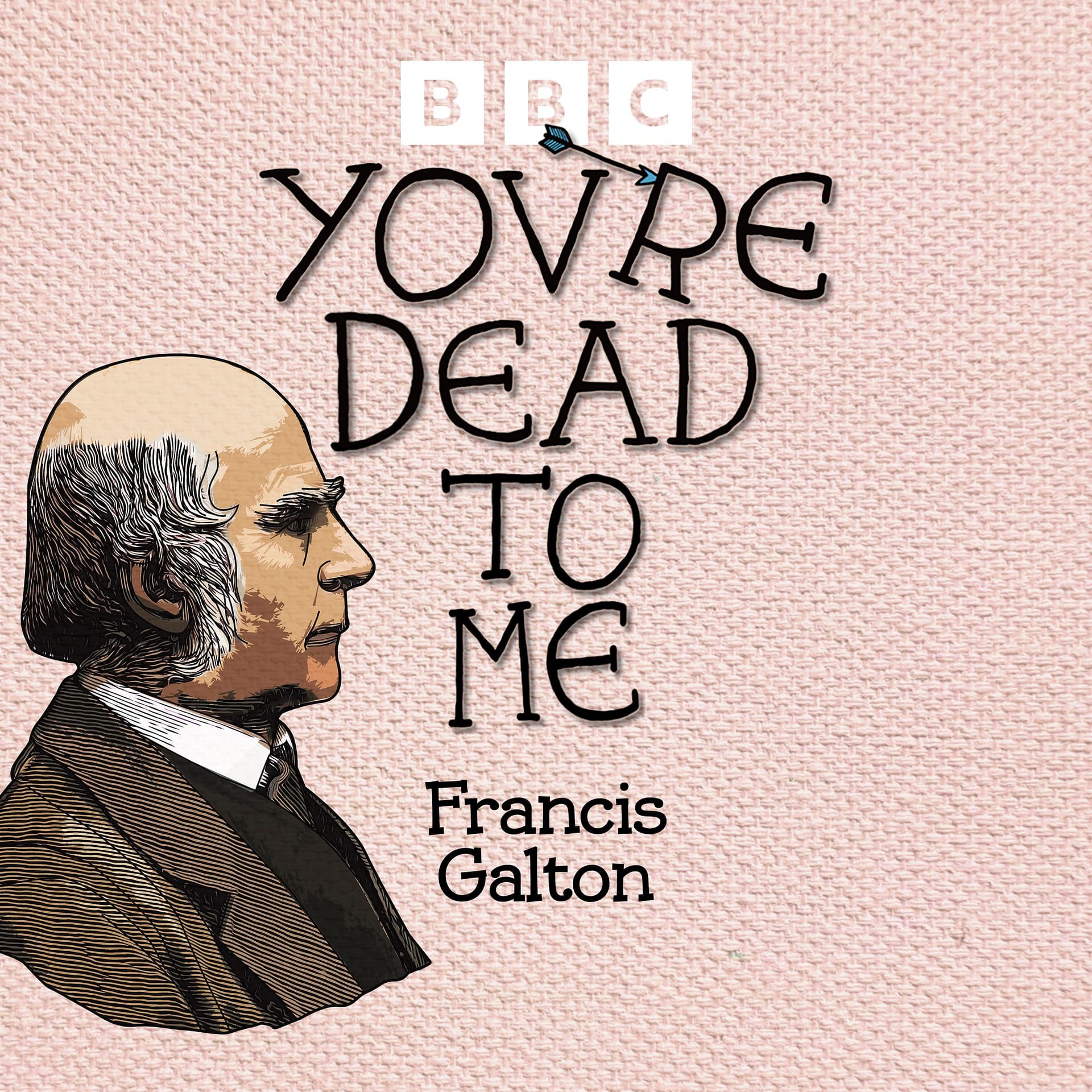
The life and scientific legacy of Francis Galton, focusing on how his statistics and measurement culture fed into Victorian eugenics, scientific racism, and later ideas about intelligence and criminality.
Guests
Greg Jenner (host; public historian, author, broadcaster). Sabhadra Das (historian/writer/curator; specialist in history and philosophy of science, scientific racism and eugenics; former UCL science collection curator). Desiree Birch (comedian/actor/writer; previously discussed Galton’s role in IQ testing and its effects on opportunity).
Key claims
Galton coined “eugenics” and treated “breeding better” as a science, influenced by Darwin but diverging into “who is fittest altogether.” He used questionnaires (temperament traits) and helped popularize “nature versus nurture.” He developed statistical tools like correlation/regression to the mean. His eugenic thinking relied on measuring bodies and recording pedigree.
Notable examples
triangulating and measuring an indigenous Khoi woman in South Africa; “beauty map of Britain” using pin-based “gloves” to rate women on street corners; public “laboratory” at an 1884 exhibition charging 3 pence for pedigree and physical tests; composite “criminal face” averages; statistical uniqueness of fingerprints.
Written by AI. May contain mistakes. Listen to the episode to check what was said.
Chapters
Tap a time to open that second in VOIntroducing Francis Galton and Eugenics
2:24 to 3:56
Discussion about Francis Galton, his influence, and the concept of eugenics.
“So I actually, in a show that I did, one of my tour shows, Desiree's Coming Early, we talked about Francis Galton because he sort of pioneered the eugenics that went into this sort of IQ test.”
Galton's Early Life and Family Background
3:56 to 7:24
Exploring Galton's upbringing, family wealth, and connections to slavery.
“This is where I have a go at guessing what you, our lovely listener, might know about today's not so lovely subject.”
The Education and Interests of Young Galton
7:24 to 11:16
Delving into Galton's education, interests in medicine, and early genius.
“Which, I mean, it's like, let's put them all together.”
Galton's Disruption and Mathematical Pursuits
11:16 to 14:00
Discussing Galton's shift from medicine to mathematics and personal challenges.
“to try to get to a good fishing spot, and he gets caught in the reeds and nearly drowns.”
Galton's Academic Struggles
14:00 to 14:36
Explore Francis Galton's challenging educational journey and his eventual degree.
“So, yeah, he gets distracted by mathematics.”
A Millionaire's Adventure
14:37 to 15:28
Learn about Galton's life choices after inheriting wealth and his unique travels.
“So he does have a math degree from Cambridge.”
Exploration and Ambition
15:29 to 17:28
Delve into Galton's expeditions and his ambitious endeavors in mapping Africa.
“So normally people stop at the second cataract, but he goes on further to Khartoum.”
Controversial Measurements
17:29 to 19:49
Discuss Galton's controversial approach to measuring indigenous people.
“a Nama interpreter who had learned Damra, which is the language that was useful in that area.”
Science and Gender
19:50 to 22:24
Analyze Galton's scientific pursuits alongside his views on gender and race.
“is when Charles Darwin went around the world, he had a sympathetic eye towards non-white people.”
Galton's Personal Life
22:25 to 25:04
Investigate Galton's marriage, family dynamics, and their implications.
“on various drowned men until eventually he comes to one.”
Show all 27 chapters
Scientific Experiments and Legacy
25:05 to 26:16
Learn about Galton's significant experiments and his relationship with Darwin.
“I mean, which is like a nice little metaphor.”
Galton's Contributions to Science
26:17 to 28:00
Discover Galton's contributions to statistics and his influence on scientific practices.
“he's a member of the Royal Geographic Society, having had the kind of Lunar Society as a sort of family background, he found his own science club.”
Galton's Cake and Tea Preferences
28:00 to 29:18
Exploration of Galton's quirky habits and his statistics background.
“like, you know, you can separate the scientist from the science in this one.”
Understanding Eugenics and Statistics
29:18 to 30:15
Discussion on Galton's contributions to statistics and the challenges of eugenics.
“So it's not that, so two tall parents are probably going to have kids that are taller than the average, but they're not going to have kids that are taller than themselves.”
Galton's Inventions and Counting Techniques
31:14 to 33:56
Delving into Galton's inventions and his unconventional counting methods.
“So, you know, he just he likes to measure stuff.”
Galton's Beauty Map and Eugenics
33:56 to 36:56
Analyzing Galton's controversial beauty map and its implications for eugenics.
“Don't worry about the right-hand glove, everything fine.”
Galton's Contributions to Science
36:56 to 39:29
Overview of Galton's significant contributions to various fields of science.
“but I assume that he's a social scientist, statistician.”
Galton and Darwin: A Scientific Legacy
39:29 to 42:06
Exploring the relationship between Galton's ideas and Darwin's theories.
“There And so Charles Darwin sort of puts into the world this sort of extraordinary, groundbreaking, brilliant, brilliant book that still to this day is still, you know, one of the foundational texts of modern biology.”
Victorian Measurement Practices
42:06 to 43:30
Learn about the Victorian practices of measuring individuals and their significance.
“So they're paying three pence a time, and they're getting their pedigree recorded and they're also having physical measure.”
Galton and Criminology
43:30 to 45:34
Discover Galton's contributions to criminology, particularly through fingerprinting.
“We haven't got enough data to be able to, this is the thing, scientists, you've got to have enough, we haven't got, this is the data gathering stage.”
Eugenics and Its Legacy
45:34 to 47:14
Explore Galton's role in eugenics and its impact on modern science and society.
“We need to talk about just briefly, should we understand him as a data gatherer and then other people put in place policies?”
Galton's Life and Death
47:14 to 48:58
A look at Francis Galton's life, his health issues, and his contributions to science.
“Yeah, I was going to say, which leads to America and then Hitler, which is amazing when you find out.”
The Nuance Window
48:58 to 50:44
Discussion on Galton's fragmented legacy and the implications of eugenics.
“In 1909, Francis Galton is knighted for his contribution to science, race science, but also a lot of the science that's still with us now, post eugenics.”
Galton's Views on Society
50:44 to 53:27
Delve into Galton's controversial views on society and race through his writings.
“While Savadra takes centre stage to tell us something we need to know about Sir Francis Galton.”
Quickfire Quiz on Galton
53:27 to 55:49
Engage with a fun quickfire quiz that tests knowledge about Francis Galton.
“So the smoking gun on this one is he gave an interview to a journalist from a Jewish newspaper, the Jewish Chronicle.”
Quiz on Francis Galton's Life and Contributions
56:00 to 58:38
Explore interesting trivia and key facts about Francis Galton's work and life.
“What self-experimentation did Galton perform on himself during his years as a medical student?”
Recommendations for Future Episodes
58:38 to 59:10
Discover other engaging episodes featuring historical figures and themes.
“It's been a problematic history as it is.”
Transcript
Automatic transcript. May contain errors.0:00This BBC podcast is supported by ads outside the UK. Pop quiz. What's in your kid's lunchbox? At Whole Foods Market, they've already done the studying. Over 300 food ingredients are banned from their shelves. No hydronated fats in the peanut butter and no high fructose corn syrup in the cookies. And for sandwiches, there are no synthetic nitrates or nitrites in any of their deli meat. So you can pack lunchboxes with peace of mind. Get back to school ready at Whole Foods Market. Hello, Greg Jenner here. Great news. You can now watch this episode and all future episodes of You're Dead to Me in full video.
0:40Just search for You're Dead to Me on YouTube or watch episodes 28 days early by subscribing to the streaming service BBC Select in the US and Canada. Thank you.
0:56Hello and welcome to You're Dead to Me. We are the BBC Radio 4 comedy podcast that takes history seriously. My name's Greg Jenner. I'm a public historian, author and broadcaster. And today we are growing out our sideburns, gathering some problematic data as we head back to Victorian Britain to learn all about the scientist Francis Galton. And to help us in our study, I have two very special lab partners. In History Corner, she's a historian, writer and curator and a specialist in the history and philosophy of science, particularly the scientific racism and eugenics movement. Sorry about that. You might have read her excellent book, Uncivilised, Ten Lies That Made the West.
1:35And luckily for us, she spent nine years as the curator of the science collection at University College London, where a lot of the Galton material is held. It's Sabhadra Das. Welcome, Sabhadra. Hello. Lovely to be here. Thank you for coming in. And in Comedy Corner, she needs no introduction, but I can actually have to do one. She's a comedian, an actor, a writer. You've seen her on all the telly, on Taskmaster, Frankie Ball's New World Order, QI, Too Hot to Handle. Maybe you've seen her live on tour, a brilliant stand-up comedian. But of course, most importantly, you'll know her from so many of our episodes.
2:07Timekeeping, history of Broadway musicals, Lena Horne. We had to have her back for Series 12. It's Desiree Birch. How did we not get sideburns for this? It's a visual medium now. Surely we should have all been doing this. Desiree, I mean, you've been on the show loads of times. I think we've skirted around the edge of eugenics sometimes. but what do you know about Francis Galton? So I actually, in a show that I did, one of my tour shows, Desiree's Coming Early, we talked about Francis Galton because he sort of pioneered the eugenics that went into this sort of IQ test. Because I talked a lot about that and having grown up and sort of like gifted and talented education in California and how that was sort of predicated on an IQ test that both like limited the opportunities for a lot of black people in California at certain periods, but also allowed me to get into the kind of education that would get me into higher and higher places.
3:02And also apparently was the only reason we figured out that lead was making people like dumber in America because there was lead and all the gas and everything. And it was only the IQ test that was like, oh, lead go up, IQ go down. And like, then they got rid of lead and everybody was like, oh, finally I can like remember anything or function. so that was like the one good thing apparently that IQ test did yeah that might be the only good thing about IQ test but yeah it did like you know whatever Europe did with Eugenics America was like alright you know and then just like blew it up to 10 ,000 and it was perfectly horrible that's a pretty good summary except for the lead bit except for the lead except for the lead bit I mean there's actually a lot more to talk about Gordon's life is sort of fascinating and deeply problematic but there will be some funny bits hopefully you know we are a comedy show there always is But we are going to be crashing into eugenics at some point.
3:51So let's, you know, so klaxon warning there. But so let's crack on. So, what do you know?
4:01This is the So What Do You Know? This is where I have a go at guessing what you, our lovely listener, might know about today's not so lovely subject. Francis Galton, Sir Francis Galton, is sometimes called the most influential British scientist you've never heard of. If you've heard of him, like Desiree, You might know he was the originator of the science or pseudoscience of eugenics, the belief that society can be improved. So he's like the dark money of like, you know, you've never heard of him, but his work is in everything. So, you know, eugenics is the idea that you can improve the human race by selecting who can and cannot reproduce.
4:39You may know him as a major figure in early criminology. If you know your Charles Darwin's, you may know that he was Darwin's famous cousin. But were Goulton's actual inventions and discoveries, you know, as Desiree said, are they, you know, important to the history of science? Why did he take Darwin's ideas to such a dark place? Because he was the cousin who wasn't as cool as Darwin and Darwin came up and he was like, well, I could do that and I could do like 10 times more and made it way worse. It's like he's in the room. Final question. When do a pair of gloves deserve to be cancelled? Let's find out.
5:14When they do this over some dust and they start judging everything. Oh, not even those gloves. Oh, wait, is it the Mickey Mouse ones? Whole other gloves. You're going to find out. Those could also have been. You're going to find out. Okay, we'll start at the beginning. So Sabadra, he's born in 1822, which makes him kind of Regency era. He's going to crash into Victorian era later. Where is he born in the country? And, you know, does the family have money? Is he posh? Oh, yeah, he's, well, they are new money. He is pretty posh. So he's born in Birmingham, which may or may not sound posh, depending on how you want to think about it.
5:46Not one of the ones that they advertise over in Birmingham when they're like, the home of Sir Francis Galton, famous eugenicist, guys, am I right? High concentration of brown people in this country, am I right? Yeah, he would be thrilled to see what's happened here. Perfect. The family estate was a place called Sparkbrook, which is now one of the suburbs of Birmingham. The Galtons made their money three generations earlier. So Samuel Galton makes his money as an ironmongerer. Okay. Which sounds fairly innocuous. Yeah, it does. Until you start to remember that ironmongering means making things like chains and shackles and muzzles.
6:25Ka-ching! He's one of the gajillions cashing in on human trafficking. Totally directly making money from the slave trade. But they're clever as well, so they pivot. But so because they know that the trade in enslaved Africans is going to be made illegal, they swapped to a different technology in terms to be able to benefit from this indirectly. Right. So what they did was they swapped to gun manufacturing. Great. Because that way... The ethical choice. And they're Quakers as well. So this is kind of like an interesting thing. By the time we get to our Galton, they've converted to Anglicanism. But the family starts out as a Quaker family.
7:04So, yeah, you know, these things are problematic. We keep in mind, it's like, you know, porridge and guns. And actually, Galton and Farmer guns were the foremost guns that were used to trade for enslaved Africans. Right. They're not top quality guns, but they are useful. So they're used as a currency almost. They're used as a currency, exactly right. Okay. And then they moved to the much cleaner industry of banking, which... Which, I mean, it's like, let's put them all together. I mean, as a trio, it's a fairly evil selection, isn't it? It's not brilliant. It is the full trifecta of Dushy, yeah, entirely.
7:38Okay. So now that when they're in banking, of course, they're making money indirectly from the trade that they made money from directly. Okay, fine. Okay, so that was the first Samuel Galton. And the Samuel Galton, who is the father of our little Francis Galton, is the third Samuel Galton. He is. He's Samuel Tertius Galton. Tertius Galton. Yes, that's what I wondered, because I was like, Tertius, like tertiary, the third. He's the third guy. They didn't want to call him Trip. They didn't call him Trip. That's it, yeah. Trip Galton. All the lax bros in school. Jesus. Okay, so tell us about the family connection because, I mean, little Francis Galton is connected to the Darwins.
8:13He is. So how does that work on a family tree? So he was the son of Samuel Tertius Galton and also of Violetta Darwin, who was the daughter of a famous doctor called Erasmus Darwin. And this is how we get that Charles Darwin connection is because they share that grandfather. I mean, he grows up in a scientific family, but in Birmingham's sort of also the kind of epicenter of a scientific movement as well absolutely so both of his grandfathers so that samuel jr and erasmus darwin are founding members of a thing called the lunar society these were wealthy emphasis on wealthy these very rich but scientifically minded men but what they're interested in doing is actually mobilizing the science to their greater interest so there are other people like james watt matthew bolton joseph priestly we think that uh galton's grandfather supported Joseph Priestley with money.
8:59So Priestley's one of the great scientists. He is. He discovered oxygen. Oxygen and invents fizzy drinks. Yeah, we're fond of him. But he might be the reason why Samuel Jr. was able to get into the Royal Society. Oh, interesting. It's who you know. And Watt and Bolton, obviously, we're talking steam power, steam engines. It's kind of, you know, industrial Britain. It fuels the Industrial Revolution. And he's a brilliant mind as a kid, right? So at one, he's reading? Not quite. 18 months, he knows the alphabet. Okay. Age two, he can read. Age three, he can write. And age five, he's onto epic poetry.
9:38I mean, sure. Yeah, why not? So, you know, age six, he's reciting the Iliad. They didn't have Facebook back in the day. My daughter's six and she's smart, but she's not doing the Iliad or, you know, anything like that. You're just not working hard enough. Yeah, it's my fault. It's clearly me. She's like, oh, but there's sunlight outside. so Adele is the sister who takes little Frank on as a project yes so we know that she had some form of curvature of the spine which meant that she wasn't as mobile as she would have been otherwise and so and she's you know she's confined indoors she's confined to her bed for extended periods but he is her project like he and he she is you know she is the baseline she creates this notion of a genius and a born genius because he's doing all these things so early but yeah But also one that's made like through somebody like, you know, is he getting the ideas of being like, oh, well, you can really cultivate all of these great things.
10:31Yeah, the baby did not teach itself Greek. Yes. Greek babies do, but that's a different way. I mean, even still, they've got to hear Greek. Yeah, I mean, that's a good scientific question. Do we just learn Greek? I don't know. So it's nature versus nurture. And we'll come back to that later, Desiree, because actually that is a crucial phrase. So, so far, Lil Frank is giving off young Sheldon vibes. Oh, very much so. Boy genius. nerdy. Nerdy, but also a bit of a jock. Oh, really? I don't understand how these two things are possible, but it's the Victorian era. They're full of promise. He's outdoorsy.
11:05He likes some sports. And when they do eventually send him to school, he does quite well. He likes running around fields. Multiple stories of him nearly drowning. One time was when he was reaching across a river to try to get to a good fishing spot, and he gets caught in the reeds and nearly drowns. So we nearly lose him fairly early on, actually. Damn.
11:26I mean you say brilliant and accomplished he doesn't love school Francis Galton he's not he doesn't excel emotionally at school no possibly because there isn't someone just holding his hand and telling him how brilliant he is the whole time he apparently hated school he said it was hateful in many ways and lovable in none okay but that also might be part of his like looking back and mythologizing it's like no school wasn't responsible for making me clever I was born clever fair enough and parents wanted him to be not an ironmonger not a banker they They want him to be a doctor. Yeah, this whole situation is so Asian sometimes.
11:56I guess because they're selling so many guns. They're like, somebody's got to stitch them up. Yeah. Jeez. So mom and dad are like, we think you should go to med school. Yeah. Well, mom particularly was very keen on him going to med school. And back in the day, medical school isn't like you go to university for eight years and then they put you on the ward. They put you on the ward straight away. Okay. So he goes to med school and he's literally seeing patients like week one. This is it. Yeah. Okay. And, you know, he's not thrilled by it. you know, the thing about hospitals is that they're full of sick and poor people.
12:26And in fairness, like imagine yourself in that situation. Like you've been kind of bunged in. It's not a fun place to be all together. Med school is tough. It's a hard life. And he hasn't had like several seasons of The Pit to watch to like really get into the vibes of how... He hasn't seen scrubs. He hasn't understood the emotional... Yeah, I mean he gets fairly adept. You know, he can set bones and he does his level best. But he's way more into kind of understanding the nature of medicine. He's actually kind of keen on pharmacy. Apparently, he says in his autobiography, he decided that he wanted to test the efficacy of different drugs.
12:59So he started all the ones beginning with A and works his way through B. But when he got to C, he took this stuff, which is called croton oil. And he said, I had underestimated its efficacy as an emetic and a diuretic. So we're talking both ends violently. So yeah, unfortunately, Galton got to see and made himself vomit and defecate and then went, oh, I might stop there just before he got to D with Deadly Nightshade, which might have ended our episode very early. I mean, the thing that's interesting is Galton never qualifies as a doctor. No, he got a little bit distracted by maths. So he was chatting with his cousin Charles, who was also a failed doctor.
13:40Sure, yeah, that's the other thing I suppose we should think, isn't it? Charles Darwin is not a doctor, but should have been a doctor. This is it. So basically, you know, how everybody now is like, oh, I dropped out of university and started an app or whatever. Like, you know, millennials didn't invent this. They were dropping out of school and doing all kinds of cool things. He is your original disruptor. Choose how you want to apply that. And just as dangerous. Pretty much, yeah, if not more. So, yeah, he gets distracted by mathematics. And Darwin's like, yeah, go to Cambridge, study math. You'll enjoy it.
14:09Okay. So he's able to convince his dad that this is a good idea. but also he struggles there as well. Formal education was not his milieu. He was not enjoying himself there because it's tough and you have to learn a lot of things. And listen to other people tell you what's right despite what you already think. This is, yeah. I mean, it's a bit early on but that doesn't seem like an unfair thing to Samaris. So he was going for the honors degree and he misses that by a mile but he did get the pole degree. So he does have a math degree from Cambridge. The pole degree? It's like when you just do your basic degree.
14:43So it's not an honours. He's not on pole position. No, no, no. The pole degree. Participation trophy. Yeah, it's okay. Well done, you showed up. You got a little ribbon for being here. Okay, great. So after dropping out of medical school and not getting his maths degree or his honours degree at least, Galton got a huge windfall of cash when his father died. So Desiree, what would you do with a massive windfall? You're young, you're 23, millionaire. I'd go back and do better at school. Ah. do a do-over but no I mean Goulton does the opposite thing he does the sort of classic post-university holiday but it's not lads lads lads magaloof drinking he's not even doing the kind of famous grand you know the kind of grand tour you do of Greece and Italy he's like I'm gonna go to Antarctica he goes to Sudan and Syria actually he was originally off to Egypt so this is why this is why we can get a bit magaloof kind of situation which is like you could go on the Dahabia which is a boat that will take you on a cruise on a Nile cruise sure But the thing that is exceptional is that he does go then further.
15:42So normally people stop at the second cataract, but he goes on further to Khartoum. Okay. And then he works his way back, yeah, via modern-day Syria as well. He goes to Damascus. That's really great. And he gets a lovely medal from the Royal Geographic Society. For going on holiday? No, not quite. Okay. Congratulations, young white explorer. You have done the correct thing. Here's your reward. What? No, no, no. This is where the ambition starts to come in. And so like his 20s, he's basically like having a great time, mostly drunk, mostly shooting things. Correct, always. What else are you going to do?
16:17Yeah. And by the time he's 30, he does that thing that I think all of us do when we're 30, which is like, what am I doing with my life? Actually here for him. Yeah. And he's got this cousin who went on a trip around the world. David Livingston has just discovered Naked Ngarmi. Okay. So he's like, Southwest Africa. I'm going to go to Southwest Africa and I'm going to be an explorer. And that is like in cahoots with the Royal Geographical Society. Yeah, and his expedition there was so successful because he's so good at making maps of that area. And of course, we know that the British Empire runs on maps.
16:48We love a map. And because his maps were so accurate, this wins him the gold medal from the Royal Geographical Society. And when he's in South Africa, Galton meets a beautiful woman. And normally that story ends in a fairly conventional way. But not this one. Does he need to study her or something? Yeah. Yeah. And you will be my queen muse project. Yeah, no, he describes her as having a beautiful outline, which is a weird chat outline. Wait, he's met her where now again? South Africa. This is South Africa. Oh, she's got an interesting outline, I would imagine. And he's going to get her measurements.
17:23She's from the indigenous Khoi Khoi people. Yeah, we don't know her name. All that we know about her is that she was married to an interpreter, a Nama interpreter who had learned Damra, which is the language that was useful in that area. And he was working for Reverend Hugo Hahn, who had his missionary out in Bahman. I'm throwing lots of detail in there because we have so little about her. And what he's about to do is dehumanizing. Of course. There's like no two ways about it. I mean, he measures her with a sextant as if she's, I mean, it's a navigational aid. Okay. So he's just like, how much, how many hectares are you?
17:59or something? Well, yeah, this is the beginning of like phrenology and other like measuring things as well. This isn't the beginning. So he's well embedded. And there was a little bit of phrenology in those years in the 20s as well, where everyone measures his head and tells him how clever he is. Okay. So actually to us, we say Francis Galton goes to Southwest Africa and encounters an indigenous woman. And his first instinct is that he wants to measure her. And that sounds really weird to us. But for the time period... I mean, he's not measuring any Victorian women, right? Not yet. Not yet. Oh, okay.
18:32We'll get to that. Oh, interesting. Okay. So the fact that he sees someone of this shape and size, she probably had a condition which is, oh, I had to learn how to pronounce this, diatopygia, which is when people have a big butt. Okay. This is like the whole Sir Mix-a-Lot approach to, you know, Victorian size. Okay. So he's really interested and he's probably also heard of a woman called Sarah Bartman, Saki Bartman, who was derogatively called the hot and hot Venus. She lived a little bit before he was born. And she'd been in Britain and France and she'd been a sort of somewhat celebrity. Yeah, she'd been exhibited.
19:07Exactly, almost as a wonder, as cruel as that was. I mean, as a freak, is the sad thing of that. So when he sees this woman, this reaction actually makes perfect sense because the way in which people looked at non-white people in the day is we're going to measure them, we need to understand how they work, which is exactly what happened. He says in his quote, I worked out the results by trigonometry and logarithms. Oh yeah, I mean, he's a gentleman about it because he doesn't talk to her. He's not been introduced. So he's like, how do I measure her from a distance without, and he basically triangulates her.
19:42Wow. Yeah. It's an illustration for us as to how he sees non-white people and I think the really sad thing about Galton in Africa is when Charles Darwin went around the world, he had a sympathetic eye towards non-white people. he was still pretty racist in how he thought about them. But unfortunately for Galton, travel did not broaden the mind. No. He gets to Southwest Africa and his negative ideas about black people in particular have become really entrenched. He's already great. He's already had a woman doting on him his entire life, who's his older. So I think he's just sort of like, great, I'm the center of the universe.
20:14And so I will measure it. And as well as winning his medal from the Royal Geographical Society. I bet he walked up to her with his medal all shined. He also gets a book deal, of course. and he writes a book and actually it's a travel book. It's called The Art of Travel. It's a guide on how to travel. Bring a protractor. Yeah. Oh, absolutely. Minimal. You're going to see lots of people you want to measure. I mean, he literally says that, Desiree. It's published in 1855. It's advice for travelers. And he says you should possess at least a moderate fortune and have scientific taste and knowledge.
20:51What else does he say people should bring? Practical sorts of things. like you need to be able to work in the landscape. So pen knives, fishing equipment, stationery, cutlery, blankets, and iron. So it's important. Made by the Galton family. There we go. So yeah, regardless of, you know, how much out in the wilderness you are, you've got to keep that safari suit nice and pressed. And in point of fact, actually, so you know in your head if you say African explorer and ironically an image pops into your head of a white man in a safari suit. It's him. He's the one. It's because of this book. I mean, he also talks about you crack an egg into your shoe to avoid blisters.
21:26I mean, not a terrible idea, but like he, you know, he's giving advice, but the advice is for a certain gentleman class. Sure, of course, because they're the only ones who are going to be able to afford to. I mean, but realistically, who else is getting on a boat to go that far? Well, exactly. Yeah, exactly. Yeah. He also includes a rather strange cure for drowning. Do you want to guess what he recommends? Don't go wading out into the weeds, not paying attention like a dumb child. No, if someone has gone into the water and it looks like they've drowned, what is the Francis Galton approved method for bringing them around?
21:54I don't know. Don't fight and just float to the top. I mean, it's not... Hit him with your big gold medal. It's not far off. I mean, because this is before CPR. No, he goes with... Cuddle them. Cuddle them between two large men. I mean, they're passed out, get a free grope before they wake up. Yeah, yeah, two large men, give them a cuddle, put heated stones on their feet and then tickle their nostrils with snuff and put a feather down their throat. I mean, okay. That'll get the water out. I think the point is warmth, but yeah, the cuddling is a bonus. I mean, it's not stupid. In my head, I do imagine him trying various scientific techniques on various drowned men until eventually he comes to one.
22:28And I was just like, oh, get all that water out of their mouth. Now stick a feather in it. Yeah, it's classic Gordon. So there we go. So he's published his travel guide. He gets back from Africa. He's measured African women and now he needs to marry a British woman. That is his custom. And he finds one and she's called Louisa. That's right, Louisa Butler. and quite the whirlwind romance. So without wanting to sound like Craig David, he met her in January. Nice. Proposed in April and they were married in August. Okay. So yeah, no hanging about. No. Do you think he'd already pre-measured her and figured out that she was?
23:06Well, he is very, I mean, she's the daughter of one of the ex-headmasters of Harrow. So her pedigree does count for a lot. Okay, so he's measured the family tree and gone approved? Yeah, I think she was a good option. I mean, but we've also got like letters back and forth between the family saying, we think the African explorer is smitten. Yeah. Yes. So Louisa Jane Butler, his wife, when he writes his memoir, Desiree, how many times is Louisa mentioned in his entire memoir? I mean, the way you've set that up, like zero to one times. It's two times. Okay. Oh, wow. Double my expectations. She's in the index twice, which is brutal.
Read the full transcript
23:47How does he refer to her those two times? It's four pages worth of pedigree. So it's four pages worth of all of the eminent men who are her ancestors. Oh, wow. Got it. Okay, but like it was all about pedigree and none about like, oh, she's got great birthing hips and all of these other things. No, I don't think that that would be appropriate. That's okay, fine. And she's a supportive wife as well. Like she's interested in his work. She's happy to support him in the things that he's doing. So he's probably under some kind of apprehension that she's cool with. interested. Okay, but also it's kind of like, what else would she expect?
24:18Except for me to say how great she is because of her lineage. Yeah. Right? Like, that's the best compliment you could give. And they never have kids. They never have kids. And lots of people have speculated. There's a sort of litany of reasons given. Especially since he's super into like, oh, like, you'd think he'd be like, let me have 10 of my own specimens. Right. Yeah. You'd think eugenicists would be like, we need more of me. Yes, exactly. But other way, right? Unless there's some reason they couldn't. Yeah, very much the other way. We don't, so again, we don't know. the theories range from he had some kind of venereal disease to um they did not know what to do because they were a victorian couple seems unlikely yeah seriously but uh yeah this is we don't know whether this is deliberate um uh carl pearson who's one of his colleagues later has this weird theory that he that galton himself was concerned with what he would be passing on in terms of mental illness possibly um so yeah we don't know whether this is deliberate child freeness or whether this is a personal tragedy that's happening between these two people and it's the nature of history that we're never going to know sure so instead of filling the house with kids which may have been a choice or not a choice we don't know he instead fills it with science experiments this is the era of galton as the tinkerer as the the measurer you know i think we can think of him as a sort of classic victorian gentleman scientist beavering away in his laboratory yeah absolutely he didn't fill the house with children at one point he did fill it with rabbits.
25:37I mean, which is like a nice little metaphor. Extend the metaphor how you will. That was all to do with he had read something that Darwin had written and this is one of the very few times that Charles Darwin is comprehensively proved wrong is through scientific experiments that Galton did. Darwin suggested that maybe the mechanism of inheritance comes in the blood and so that's why all the rabbits was multiple blood transfusions over multiple generations of rabbits had no effect whatsoever so Galton can publish and say Charles Darwin was wrong about this one. Yeah, sure. My cousin's an idiot. And I finally proved it.
26:13He would have definitely used that word. We'd want to find a better one. But he does found, having been, you know, he's a member of the Royal Geographic Society, having had the kind of Lunar Society as a sort of family background, he found his own science club. He did. Well, actually, he's not to do with the X Club. Oh, is he not? No, he's kind of on the fringes. He's too much a gentleman scientist to be in the X Club. Yeah, so the X Club was, a group of scientists and they were like, the thing a scientist should be is not a gentleman scientist. So this is like the fight club of scientists. This is, yeah.
26:44That's a movie I would watch for sure. And with chess as well. I don't know why, but I feel like that would work. So X club is in the letter X. The letter X. X is in like X master spot. Yeah. All right. And what their principle was, was that scientists should be a proper profession. So they're the X men. Again with the mutants. Okay. So what they want to do is they want to professionalize science. They don't want science to be simply the purview of like wealthy rich men. So it shouldn't be doubly posh men. They want to democratize it a bit more and like regulate it, which is kind of antithetical to everything Francis Galton is.
27:18No, he was really into that. Oh, he was. But that's because I think he's so firmly held his belief in the class system and the fact that it would hold. Got it. He's like, as long as it's just us, then let's do more of us doing this. Because the only people going to university at that time is from Richmond. Because he believes the best will rise to the top anyway because he's a eugenicist. He is, exactly. Okay, so he has various interests. We'll get to some of the more sort of famous ones, the sort of smaller, cuter ones. He works out the perfect algorithm for slicing cake, which is... Is it that one that I keep seeing on Instagram?
27:50Yeah, that's exactly that one. Did he make that? Yeah. Oh, that's annoying. Now I'll never cut it like that. Because he's worried about the cake. Yeah, exactly. A eugenicist slicer. Okay. No, but like seriously, like, you know, you can separate the scientist from the science in this one. I love that you study math at Cambridge just to figure out how to perfectly cut cake. Well, it's because he's stingy as well. It's like, it'll go off. The way that you do it, it's going to go off. He's worried it's going to go stale. Well, there's a lot of people eating polite slices and it's like, it's cake. Just put it in your cup.
28:17Not in my house. I eat all the cake in day one. Yeah, people are like, oh, it's so rich. Shut up. He also comes up also with the perfect cup of tea because of course he is a Brit. He's an Englishman. He must have the perfect cup of tea. Well, for his traveling, right? So this is still, always keep the empire in view. The reason why you need to know how to make the perfect cup of tea is you might find yourself anywhere in the world where they don't understand these things. And you'll have to be teaching it to them by example. So what is it steep for three minutes and then just a splash of milk?
28:44I don't know the exact formula. It's like T equals something. T equals MC squared. T equals, yes. I think we should think of him, I mean, you've made this point actually and maybe I'm stealing your point. We should think of him primarily as a statistician. 100%. Okay, so he trains as a doctor. He moves to maths. but really his calling is stats. Yeah, and these are his significant, meaningful, and they outlast him. They're still there to this day. The things that he comes up with in terms of stats are devices, they are mechanisms for understanding, and statisticians still use them today. So correlation and regression to the mean.
29:20Those are both him. Through these experiments, he understands how traits are starting to get passed from parents to children, but also understanding that, so regression to the mean, and this is the best I will be able to do for you, is the fact that over the course of generations, traits tend back toward the middle. So it's not that, so two tall parents are probably going to have kids that are taller than the average, but they're not going to have kids that are taller than themselves. That's how we keep coming back to the mean. We keep coming back to the average. Okay, so we kind of keep going back and then we'll pass the average and then it starts going back again.
29:52So it just... Statistically, Galton understood how difficult eugenics would be. Right. So he's like, we probably should breed better people, but it's really tough to do because over the generations, we keep going back. But we have all these guns back in my place. And so let's just get rid of the. So he's primarily a statistician. His motto is whenever you can count. Pop quiz. What's in your kid's lunchbox? At Whole Foods Market, they've already done the studying. Over 300 food ingredients are banned from their shelves. no hydronated fats in the peanut butter, and no high fructose corn syrup in the cookies.
30:29And for sandwiches, there are no synthetic nitrates or nitrites in any of their deli meat. So you can pack lunchboxes with peace of mind. Get back to school ready at Whole Foods Market. What if your favorite way to unwind could actually reward you? With MistPlay, it can. Stop scrolling social media for nothing. Mistplay lets you earn points just for discovering and playing mobile games. Redeem them for gift cards from brands you love simply for doing what you already do to relax. Download Mistplay today and make your downtime more rewarding.
31:14So, you know, he just he likes to measure stuff. That's his primary instinct is count it. But when he wasn't measuring, he was inventing. We've already heard about his sort of cake slicing. But he invents some marvellously Victorian sort of ludicrous inventions. My favourite would be the spectacles to read newspapers underwater that we all need. He was just trying to get patents into that. Talk us to the interview if you can. I mean, maybe you can't. I don't know. No, I mean, but this is, again, one of these annoying things. And this was what happened when I was doing the job of taking care of his stuff, was that you really start to see the person, you start to have a sympathy for them.
31:51So yeah, spectacles that you can read underwater. Apparently he kept forgetting he was underwater, so he kept nearly drowning. Because you know when you're reading, you're really into reading a thing. This is why he had to come up with the whole drowning procedure. And he also, and okay, the joke writes itself here, which is that he invented the dog whistle. Nice. I mean, amazing. That's so on the nose. It's too perfect. I mean, was he doing experimentation with dogs and that's how he figured her? No, the fact that it is the dog whistle as an accident. He was actually doing experiments with humans in as much as he was trying to be able to measure people and what pitch they can hear.
32:28So he then comes up with a whistle that's such a high pitch that only animals can hear. So he tested it out in London Zoo. I've seen that. The lions were annoyed. Oh, the tootsweets. Same thing. So other animals hear the dog whistle. Right, okay. So he invents the dog whistle and now racists use the dog whistle too. That's great. We need to get to the gloves because we promised you gloves. Yes, exactly. So let's get to the golden gloves. What do you think he needed them for? I'm guessing to turn the pages on his underwater newspaper, to be honest, because they're going to start sticking together.
32:56No, I'm afraid. I'm going to label them either gorgeousness gauntlets or maybe misogyny mittens. Oh, so he could do experiments on women and not get all of these delicious fluids on him? He's interested. He's going out measuring the statistical hotness of women around the UK in terms of their distribution in different cities. Wait, he's trying to figure out where the hottest women are in the UK. Literally that. He's literally trying to figure out. But I mean, temperature hot, not like, that's a fitting. No, he's literally, so he's like the early Mark Zuckerberg. He literally is. Is the hot or not?
33:30That's the next joke in my script. He is literally Zuckerberg-ing his way around the UK going, who's the hottest? Where's the hottest city? Can't see how this would go wrong. Can you talk us through it, Sabadra? Like, what? And shape society. Okay, how do the gloves work? Because you had to care for the gloves in the collection. I did, and it is a thrill to be able to have to describe these physical objects to you in a sound-based medium. Well, we're visualized now. We are true, yes. But we don't have the gloves, sorry. If you imagine a pair of gloves, if you imagine me wearing a pair, right-hand glove, nothing doing, don't worry about it, completely normal glove.
33:58Don't worry about the right-hand glove, everything fine. Left-hand glove has been modified. It's got a felt pocket across the four fingers and out of the thumb is the sharp end of a pin. Okay. So into the felt pocket, what you can do is you can put a piece of paper. Now, I am Indian, so I can count to 20 on one hand. Ah. Because what we do is we count through the segments. Yeah. Thank you. This is our gift to you. Thank you. We've given other things too. How do you reckon Galton was counting with a pinprick? I don't know. Just how many times a woman would scream every time he would touch them inappropriately with a pinprick.
34:38Thankfully, the pin never went near the woman. Okay. What he would do was he would stand on street corners in various metropolitan centers around the UK. What a sentence. Stand on street corners measuring women. with his hands in his pockets. So this is a covert counting device. Oh, this is gross. Because he's like - So he's stabbing himself to count? He's stabbing himself, not himself. That's why you've got the felt pocket. The felt pocket stops him stabbing himself. He's stabbing the piece of paper. And it's a scale of one to three. The scale is attractive at one and repellent at the other, indifferent in the middle.
35:05Oh, wow. But so basically he's trying to see how much of a half chub he gets as women walk by. And he's like hot, not, kind of okay. Six out of 10, whatever the hell. Yeah, brown bag, beer goggles, three pints, six pints. Oh, I like them boobies. Oh my word. So he's standing on street corners around the cities of the UK. Creepily staring at women, but this is fine. Yeah, he's in his 60s at this point, just to paint you. And he's what? He's building a beauty map of Britain? This is what he called his beauty map of Britain. And it is important for his eugenic program, because what he did was something that probably we might want to think about doing now, which is that he didn't discount women on the basis of their attractiveness.
35:47He thought the more attractive they are, the better incubators they are. He correlates attractiveness and athleticism with intelligence, jock and geek, right? Okay. So nowadays, I feel like we kind of do the opposite. Yeah, how does he control for the, like, okay, so. But that's an ancient Greek idea. Oh, it's so funny you should ask that. So he says, because he's the only one measuring, he is the control. So he said that the least attractive city was Aberdeen. I'm so sorry, Aberdeen. He said that the hottest city was? Probably Birmingham, right? Next to him. No, London. Really? He said London.
36:23Okay, fine. I didn't want to, you know, bias toward London. I guess it has the most people from the most different places. Like it would be a different... Yeah, I guess people move to the capital where there... Yeah, maybe there's something there. There's a lot of... Okay. Which is just his horrible class, like snobbery and all those things showing through. Before we get to eugenics proper, I mean, we've done some... We've done a little bit of eugenics, haven't we? But before we get to like proper, like what he means by it, there are other very sort of important contributions that Francis Galton made to science.
36:52What sciences do you think they might be, Desiree? Well, I don't know how much he did with his medicine, but I assume that he's a social scientist, statistician. So that's where all of his contributions are gonna go. I mean, that's not a bad guess. I mean, I think the ones we'd probably, the ones we'd shout out, I think would be meteorology. He's a weatherman. Okay. Statistically mentioned already. Because of stats. And then I think the one that's really crucial would be psychology. He's the first person to develop a questionnaire, which is a fundamental tool in psychology. And he was looking at it to look at people's temperaments or their character.
37:27And so he's describing them there as mild, docile, fretful, violent, and masterful. Oh my God. So every time we take one of those stupid quizlets on a meta thing, it's because of him? It's because of him. Myers-Briggs, The people who came up with the Myers-Briggs test were eugenicists. That's what they were trying to categorize people because they were like, this is how we need to think about how to organize society. And it's like, only two of you should mate. Yeah. Okay. This then has an influence on Alfred Binet, who's the guy that comes up with IQ, which is like the looking at child development and intelligence.
37:58And I think we also have to shout out the phrase that I think many of us will use in our life. I've certainly used it as a parent, nature versus nurture. This is a Galtonian notion. It is, absolutely. is the subtitle to his 1874 book, English Men of Science, Their Nature and Nurture. And this is the first time a questionnaire is used in a psychological study. It's not a very sophisticated questionnaire. It's got questions like, what do you think makes you so clever?
38:23So I'm paraphrasing, but nothing else. So it's, yeah. And he comes down very firmly on the nature side. Of course he does. He's a eugenicist. Yeah. Okay. I mean, just very quickly, meteorology, would you mind just talking us through? like as a weatherman what does he contribute so the thing that he's known for is that he comes up he coins the term anti-cyclone uh which is the best i can tell you is the opposite of a cyclone it's to do with weather patterns pressures and it's just a bunch of people in the sea protesting cyclones this is it yeah we're down with cyclones it goes the other way yeah and air pressure etc that gives you stable fair weather right so that's what you want you want nice stable sort of sunny days nothing but smooth sailing for all of those ships for the empire i was gonna say is he the one that gives me that lovely sleepy time shipping report.
39:05There we go. Yeah, in that vein. But the other thing, the major thing is the weather map. So he's one of the early people, the first person to publish a weather map in a British newspaper. Yeah. I think we need to get onto his proper eugenicist thinking. There's a huge response to his cousin's famous book of 1859, his cousin being Charles Darwin. And that book, do you know what the book's called? The Origin of Species? Yeah, The Origin of Species. There's probably a longer subtitle. By means of natural selection. There And so Charles Darwin sort of puts into the world this sort of extraordinary, groundbreaking, brilliant, brilliant book that still to this day is still, you know, one of the foundational texts of modern biology.
39:40But how does Galton take to it? Oh, he loves it. Okay. He thinks it's the best thing anyone ever wrote. Did you guys see what my cousin did? I know. Cousin Charlie. I'm going to start using this voice now. But to his cousin's genius idea, he has his own genius idea. So Darwin, especially in the first bit of Origin, talks about animal domestication. And by the end of Origin, what Darwin has demonstrated is that all human life on Earth has a common ancestor. What Darwin was trying to do was to say, hey, we're all connected. Maybe we shouldn't be enslaving people. Whereas what Galton sees in Darwin's work is humans are animals like any other.
40:22And as such, we should breed them better. And this is the tragic thing is he wasn't the only one. So I think a lot of people know the expression survival of the fittest, which was coined by the economist Herbert Spencer in reaction to what Darwin was talking about. The thing is you can read that sentence two ways. The way Darwin meant it was those who are the best fit for the environment in which they live. Whereas what Spencer and then Galton and then these other social Darwinists go is actually just who is fittest altogether. And we get to say who that is. Yes. And the word eugenics, it's a phrase that's invented by Galton.
40:56It's a term that's invented by him based on ancient Greek. Yes. So he coins the term eugenics and he uses it to mean, so the eugenics part of it exists before him. Yeah. Right. And that means well, well born or well and best. You is good in Greek. And genus means stock or people or ethnicity or race. Yeah. Every book that you'll read about eugenics will say, he coined the term to mean well born. We need to remember the ics. Yeah. Okay. The fact that there's ics at the end, another word he was considering was, it's either viticulture or viriculture. I forget which one. You could grow people like you grow crops, like viriculture, like agriculture.
41:32The fact that he puts the X on the end, he wants to make it a science. He doesn't, it's not, this isn't down to like taste. This isn't down to who may, I don't know, have the biggest yacht. But if he started X club, he's going to have to like continue to fuel it with different sciences that people can go into. This is it. So how do we use scientific data in order to be able to determine who are the people who should be allowed to have children? We should also mention the International Exhibition of 1884, where Galton sets up a laboratory where members of the public come along and pay to be measured by his sort of various apparatus he builds.
42:10What are they measuring? What are people paying to be measured? So they're paying three pence a time, and they're getting their pedigree recorded and they're also having physical measure. Guys, you're gonna have to get on board. Yeah. Like the way pedigree meaning like, do they just report who their daddy is? Yeah. Yeah.
42:31And then they get all of their measurements done and then they figure out that they're Pisces and that they like certain things, you know what I mean? Because it's still just like, tell me more about who I am. Pretty much, pretty much. But, but also science because accurate physical measurements of all parts of the body and then also things like the power of their breath or the power of their punch. He kept complaining that people kept breaking the punching machine because at the International Health of Elbex, they were drunk as well. So they've gone to the fair and they're drinking and now they're going to do science too.
43:00And also, if you're in front of your wife or your girlfriend, you want to head it hard, right? You want to show off. You pay 3p, get your money's worth on this punch. You're mad about a lot of things. This is Victorian. So he's measuring people's span of their arms. He's measuring height and weight. He's measuring pull and squeeze strength, reaction time. It's sort of, in many ways, this is science we do still now, right? Oh, we still do today. In terms of longevity studies, in terms of athleticism studies. This stuff is sort of adjacent to what is now contemporary science, but it's just done through a lens of eugenics.
43:27The methods are exactly the same. Right, yeah. I mean, does he go like, here, you should breed with this person now when they're done? We haven't got enough data to be able to, this is the thing, scientists, you've got to have enough, we haven't got, this is the data gathering stage. But he got them to pay so that he could gather their data, which is a little bit. We give all this data away too. So we can't blame the Victorians. He famously looked for the biological certainty of what he called the criminal face. So he looked for a statistic. He kind of took photographs and looked for a statistical average.
43:55And why was it on the Pantone scale? I mean, yeah. What about? A famous family guy meme, you know. But he looked for the kind of average criminal face. Yeah, this is composite photography where you take lantern slides of people's portraits and you pile them up on top of each other and out of that emerges the average face. So that movie Minority Report? Yeah. There we go. And the huge contribution he makes to criminology... Not just Tom Cruise's career. Not just Tom Cruise's career, but the huge contribution Galton makes, it would be in fingerprinting. Does he invent it or does he steal the invention?
44:29Because there's some controversy here. There is some controversy. He is the person, this is uncontroversial, he is the person to demonstrate statistically the uniqueness of fingerprints to individuals. Okay. So by looking at a lot of data, he comes up with the number one in 64 billion, which is not straightforward nowadays. And fingerprinting is definitely an art, not necessarily a science. Oh, really? But yeah. Did they find a duplicate somewhere? No, it's more a question of how you read them from crime scenes. So it's not like crime scenes, like the criminal will just conveniently leave you a perfect set of fingerprints.
44:58You've got to be able to read them. And the empire comes in here too, because he didn't steal from anyone, but he was building on research that came out of India. He also gets credit for the work of two Indian police officers, Haim Chandra Bose and Aziz Al-Hak, who were part of the Bengal police. And they are the ones who do the legwork for what becomes the Edward Henry, who's the name of the head of police, system for fingerprint analysis, which is what still exists today. It's like all the fancy computers use the same method to categorise. So by 1894, fingerprints are first used in trials. And in 1901, the British police adopt them as their sort of new way of catching criminals.
45:32And that's Galton again. So a huge legacy. We need to talk about just briefly, should we understand him as a data gatherer and then other people put in place policies? Or should we understand him as an advocate for eugenics in actual policy governments? I'm going to plump for the latter because I have here a long list of his publications and all the time that he's publishing in scientific journals, he's giving papers at the Royal Society, he's also writing articles in Macmillan's magazine and Fortnightly Review. So this was very much a Brian Cox level of public understanding of science, of making sure that his ideas were out there for people to get.
46:05Sure. Just, you know, as the BBC, Professor Brian Cox, not eugenicist, a brilliant scientist, a much beloved. But I mean, he's in terms of like, he is a scientist, but he's also his own hype man really well. He understands that. Yeah, he's like, he understands that this is going to be like a national project. He's going to have like hearts and minds. You've got to get the people involved. So he's doing public engagement. Yeah. Yeah. Public engagement of science. Okay. And he founds the laboratory in 1907, which is called the, I mean, it's at University College London. It is. And it's called the National Eugenics?
46:33It was originally founded in 1904. My colleagues at UCL have done a lot of work into the intricacies of this, but the long and the short of it is, is that by 1907, there is at UCL, the Galton Laboratory for National Eugenics. Okay. So it's a laboratory, so they're gathering data. So again, more pedigree stuff, more biometry stuff. And also, yeah, it's also then after Galton dies and leaves money to the university for the chair of eugenics, it's being taught as well. So you can go back to the UCL calendars and the syllabus and see that eugenics is being taught in the biology department for a good 40, 50 years.
47:06That's how eugenics becomes the kind of dominant way of understanding the world through the sort of early 20th century, which then leads to Hitler. Yeah. I mean - Via the US. Via America. Yeah, I was going to say, which leads to America and then Hitler, which is amazing when you find out. He's like, oh, I learned from the best. How we've ever posed ourselves as a moral authority on anything. Like, were there, I mean, it's just interesting to be like, Like, oh, is this the point at which we started putting like baby's footprints on a like birth certificate or something? Do you know what I mean?
47:36All of these things that we record about people automatically only came in after Galton was like, hey, you need this information on people if you want to surveil them for the rest of their natural lives. Yeah, he worked with a doctor called Frederick Muhammad, who is actually a descendant of Sheikh Dean Muhammad. Oh, really? Of this parish. Oh, we did an episode about him. but that's... So they worked together to develop this thing called the Life History Album, which was supposed to be sent out to every citizen. And like you record, it's like a baby book, but really detailed and for the rest of your life.
48:06So all of that information gets, yeah, compiled. And actually nowadays, you know, there's all the data charts of like how the baby grows and here's the percentile and here's the average and here's the thing. Oh, if they're in the right or wrong percentile is all based on that kind of measurement. It is, although we don't do right and wrong anymore. Yes, but I mean, I don't know. I haven't had a kid since ever. but you know what I mean I'm like there's always these weird books where we're like oh my baby isn't long enough yeah exactly it's so weird because I'm like they were born and they were this length I don't care they were born they have all of the fingers great but it is true like doctors will always say your daughter is tracking above the national average and you're like yeah is that good I always keep hearing where it's like oh my baby's too round I'm like well I'm sure they'll stretch out or they're not talking yet or you know they didn't walk early like all of these things I mean we should we should end his life, we shouldn't kill him.
48:56Let's get to the end of his life. In 1909, Francis Galton is knighted for his contribution to science, race science, but also a lot of the science that's still with us now, post eugenics. However you want to make that distinction. Yeah, I know. But he was poorly his whole life. This is a man who has many medical conditions, who has his own mental health crises over and over. He died in 1911. He was 88, actually. It's a good age. Yeah, I was going to say he lived quite a long time for somebody who was weak and kept trying to drown himself on accident so many times. Absolutely. He died of bronchitis.
49:29It's amazing what you can do when you have lots of family money. You just rise to the top of the water and cough it up and keep going. As you said, he left£45 ,000 to the UCL National Laboratory for Eugenicist Science. Galton Laboratory for National Eugenics. Thank you. I'll stop just branding them. It's a lot of money. He left an awful lot of money to his project. In today's money, because I figured you might ask this, probably in the region of three and a half to four million pounds. I would say it's usually about 10, sort of 10 ratio, isn't it? A small endowment. Just a little, it's also the residue of his wealth.
50:00So after his endowment's bequest to people in his life, all of the rest of the money, the ironmongering slave banking money goes to this. That didn't go into everyone else's estates. I mean, is Louisa finally like, great, took him long enough rolling in it. I was going to say she pre-deceased him by a little long. Sad face. Sad face. And he didn't have any kids. So I guess the money went to his pet project. Yeah. Racism. Eugenics was his baby. Great. The Nuance Window.
50:35On that note, time now for The Nuance Window. This is the part of the show where Desiree and I silently measure the studio for two minutes. Data is important. While Savadra takes centre stage to tell us something we need to know about Sir Francis Galton. My stopwatch is ready. One second, I'll get it out. Take it away, Sabadra. When I was curator of the Galton collection, I had a recurring nightmare. On a normal day, working behind the scenes in a storeroom, a glass lantern slide, a photograph of Francis Galton slips from my hand and smashes to pieces on the cold, tiled floor. This was by no means an irrational concern.
51:09It is a well-known fact that the people most likely to damage museum objects are the people who work in museums. And Galton is already fragmented anyway. When I say that Francis Galton is the most important scientist most people have never heard of, it speaks to my experience as a history buff who never learned about him in history class. But of course, many people have heard of him, depending on who you ask. Weather forecasters, crime scientists, sociologists, psychology graduates, geneticists, and statisticians all recognize the name of the man who made foundational contributions to their disciplines.
51:40Even if you're not a scientist, he often features in trivia and fun facts. He's on QI all the time. but the Galton most people have heard of is in pieces. When eugenics was discredited after the Second World War and continues to be disproved through advances in genetics, his reputation was severely compromised and it seems as though he disappeared into the footnotes. In this way, the wider absence of Galton's story is a story in itself. It's a story about the things we find easy to talk about and the things we don't. With his ideas about eugenics, Galton rebranded race science for the 20th century.
52:14Eugenics made race into a broad church, expanding notions about racial fitness to include disability, class, gender and sexuality, and also body size. People don't marginalise themselves, and whether we know it or not, this discredited science still has the power to shape how we talk about and how we see each other. To be critical of eugenics, then, isn't to be anti-science or the pursuit of knowledge as a whole. It just reminds us how the pursuit of an objective truth actually objectified people. The way Galton and his fellow eugenicists viewed the world, the ways in which they chose who to value in society, leaves a lot of people out.
52:50When we write Galton back in, when we put him back together again, we give ourselves the key to finding the other people we lost on his account. Amazing. Thank you so much. Yeah. And very punctual too. Thank you. Extraordinarily safe time this out. When you were talking about all this, I was like, I'm surprised he didn't invent the BMI as well. Close. He came pretty close. Yeah, I was going to say somebody must have used that. Yeah. I mean, did he like, was he just sort of like chuffed his chips about his own work? Or did he start to see things happen and go like, oh, wait a second, not exactly that.
53:24Or was he just like, keep using it. This is all great. Yeah. So the smoking gun on this one is he gave an interview to a journalist from a Jewish newspaper, the Jewish Chronicle. And the journalist was asking and saying, you know, we've been hearing about the persecution of Jewish people in Russia. What do you feel about this? and his reply is, do brace yourself, his reply is, you should be grateful that those weaker elements of your society are being weeded out for you. Jesus Christ. Oh, wow. Okay. He's like, because otherwise I'd have to take the whole arsenal of my family's guns and kill them myself so that we weren't continue to bring them.
53:57So he was fully, I mean, but what did he continue? Sorry, we need to go on. But was he sort of like, oh, but we need a slave class. Because I mean, how else would he have money to fund his work if there hadn't been an underclass for, you know what I mean? Sure. I mean, the slave trade had been abolished by this point in the 1830s in theory. Yeah. It was slavery still going. It's still happening, but it's abolished legally. Like he didn't, you know, did he think that, oh, but we're always going to need these people underneath us. They should just stay underneath us. Not only do we need them, it's like this is what they're best fit to do biologically.
54:27Yeah. Yeah. So we can't kill them all. So he is more interested in how do we pick the good ones so that we can make sure that we, the British Isles, have good population control, right? So it's like, we can't control everywhere else. We can just import the bad ones. Well, so another, he wrote a letter to the Times once called Africa for the Chinese. He's like, the thing about Africa is that it's full of all of these amazing natural resources, but it's also full of, and I'm quoting him, African people who are lazy and don't make the most of it. Except for they're doing everything for us. Except, yeah, this team of 30 carried me through my two-year expedition.
55:02As I drown in a river again. One more time. Yeah. But the thing about the Chinese is that not only are they industrious, but they're good at having children. Bring the Chinese into Africa, problem solved. Okay. So, yeah, he had plans. All right. He had plans. And he influenced a lot of Teddy Roosevelt. Yeah, I was going to say, because that story of him being like a weakling who was super into science and the outdoors sounds pretty clear. Yeah, exactly. I mean, it's extraordinary life. It's an important scientific legacy. It is now discredited science. It is. But we have to understand. But it's still in everything.
55:33But it's still everywhere. We're still using questionnaires and personality tests at the very least. Absolutely. So what do you know now?
55:44We could talk about this man for a long, long time because he's so significant. But we have to move on. It's time now for So What Do You Know Now. This is our quickfire quiz for our comedian Desiree. Okay, here we go. Question one. Which family member played an important role in Frances' early education? Oh, his older sister Adele. It was. That's right. Question two. What self-experimentation did Galton perform on himself during his years as a medical student? Hold on. Think alphabetical. Oh, because he stopped at C with the ABC on the drugs. He wanted to see it, and the C just made him puke out all of his fluids.
56:21He did. Puking poo. That's right. There we go. Question three. What happened in 1844 to allow Galton to devote himself to science? A bunch of money. Bunch of money. Yeah, his family. His inheritance. His father died. And he goes to Sudan, Syria. That's it. There you go. Question four. How did Galton attain the body measurements of a koi koi woman he met in South Africa? Well, he looked at her from afar and used trigonometry to figure out her measurements without coming up to her. It's so gross. The sextant and maths. Question five. Who was Galton's most famous cousin? Oh, Charles Darwin. More famous cousin, I suppose I should have said.
56:54Most famous is probably actually fine. Yeah, very good. Question six. How many times did Galton's wife, Louisa, appear in the index of his memoir? Just the two times, but over the course of four long pages of her daddy's. Darling, I measured you twice. What more do you want? Question seven. I measured up close. Question seven. Can you name one non-problematic scientific discipline where Galton made important discoveries? I mean, I guess the weather map is not problematic. Yeah, I was going to say. The other ones seem like they are about to be problematic in two seconds. I feel like meteorology is non-problematic, but yeah.
57:25Question eight. Galton coined the term eugenics in 1883, But what does it mean in ancient Greek? I mean, a good race, good stock. Good genes. Yeah, let's say good genes, good breeding, very good. Question nine. For what purpose did Galton design his counting gloves? This is so, I mean, it just points out how gross Mark Zuckerberg is already. But he wanted to figure out who was hot or not. That's right. Just to figure out the hottest ladies that were in London, clearly. And for a bonus point, who were the unfortunately least hot ladies? I mean, the fishwomen of Aberdeen. I mean, obviously they were just women who were married to fishermen, but in my head, they all have fish heads and that's why it's okay.
58:04Okay. And this for a perfect 11 out of 10, to which institution did Galton leave 45 ,000 pounds in his will? A gajillion pounds were left to UCL for his national eugenics laboratory. Very, very good. Like, did they sandblast his name off of it or is it still? Pretty late. Like, obviously, or did they take off the eugenics first and now it's the Galton lab for questionnaires? Questionnaires. It's like you have second sight. The eugenics disappeared in the 50s. Galton's still sticking around. It's still sticking. And it's just the Galton lab for stuff and things. Cool. Desiree, a perfect 11 out of 10.
58:38Never in doubt. Fantastic. Thank you for that. Fantastic episode. It's been a problematic history as it is. Listener, if after today's episode, you want another totally bananas boffin biography with Desiree, in fact, check out our episode on Pythagoras. He was an absolute lunatic. Oh, my God. Delicious lunatic. Amazing. Fascinating. One loves a cult leader, right? For more 19th century eugenics and surprisingly funny, we've done an episode on the Kellogg brothers, which is really good fun. And we did one on Victorian bodybuilding. Again, surprisingly funny, but again, surprisingly eugenicist. If you've enjoyed the podcast, please subscribe to You're Dead to Me on BBC Sounds to hear the show 28 days earlier than anywhere else.
59:17And if you're outside the UK, you can listen at bbc.com or wherever you get your podcasts. But I'd just like to say a huge thank you to our guests. In History Corner, we had the sensational Sabadra Das. Thank you, Sabadra. Thank you so much for letting me share this story. Thank you for doing it so eloquently and sensitively and also letting us do jokes. Because, you know, we do have to do the jokes. But he's a dickhead. And in Comedy Corner, we had your Dead to Me superstar, Desiree Birch. Thank you, Desiree. What a joy to learn about this racist. And to you, lovely listener, Join me next time as we measure the vital statistics of another forgotten historical figure.
59:58But for now, I'm off to go and stop my six-year-old from learning the Iliad, because no good will come of it. No, no, no. Bye!
1:00:19Hello, I'm David Baddiel, And from Radio 4 and the History Podcast, I'm hosting 60 Years of Hurt, a series about football and Englishness, in which we try and define what Englishness actually is via the rollercoaster history of the England men's football team. It includes contributions from various English gentlemen and women, Stephen Fry, David Seaman, England sports psychologist Pippa Grange and many others. England may or may not win the World Cup in 2026, but maybe you'll find out why it means so much to us as a country that they might do. Listen to 60 Years of Hurt on BBC Sounds.
From the publisher
Greg Jenner is joined in Victorian England by historian and curator Subhadra Das and comedian Desiree Burch to learn all about the life of scientist and eugenics pioneer Francis Galton. He was many things: a Victorian gentleman scientist, an inventor of whacky devices, a pioneer of fingerprinting technology, the less famous cousin of superstar naturalist Charles Darwin, and an important figure in the development of statistics. But more importantly – and more troublingly – Francis Galton originated the now discredited science of eugenics. His theories about how to apply principles of good breeding to humans, and his advocacy of ways to improve Britain’s so-called ‘racial health’, led directly and indirectly to many horrors in the decades after his death, from the forced sterilisation of certain groups to the Holocaust. This episode traces his life from child prodigy to prolific scientist, exploring his obsession with understanding the world through measurement and statistics, and how this mindset eventually led him to pioneer eugenic theories. Along the way it takes in his African travels, unwise self-experimentation during his medical degree, and his troubling views on women. If you’re a fan of debunked scientific theories, whacky historical inventions and the unsavoury origins of modern beliefs, you’ll love our episode on Francis Galton. If you want more biographies with Desiree Burch, listen to our episodes on Pythagoras, Paul Robeson or Lena Horne. And for more on the history of eugenics, check out our episodes on the Kellogg Brothers and Victorian Bodybuilding. You’re Dead To Me is the comedy podcast that takes history seriously. Every episode, Greg Jenner brings together the best names in history and comedy to learn and laugh about the past. Hosted by: Greg Jenner Research by: Naomi Weaver Written by: Dr Emmie Rose Price-Goodfellow, Dr Emma Nagouse, and Greg Jenner Produced by: Dr Emmie Rose Price-Goodfellow and Greg Jenner Audio Producer: Steve Hankey Production Coordinator: Gill Huggett Senior Producer: Dr Emma Nagouse Executive Editor: Philip Sellars