In short
Podcast Episode Summary: Hannibal of Carthage
Podcast Overview Podcast Title: You're Dead to Me Description: A comedy podcast that takes history seriously, blending entertainment with insightful discussions about historical events and figures.
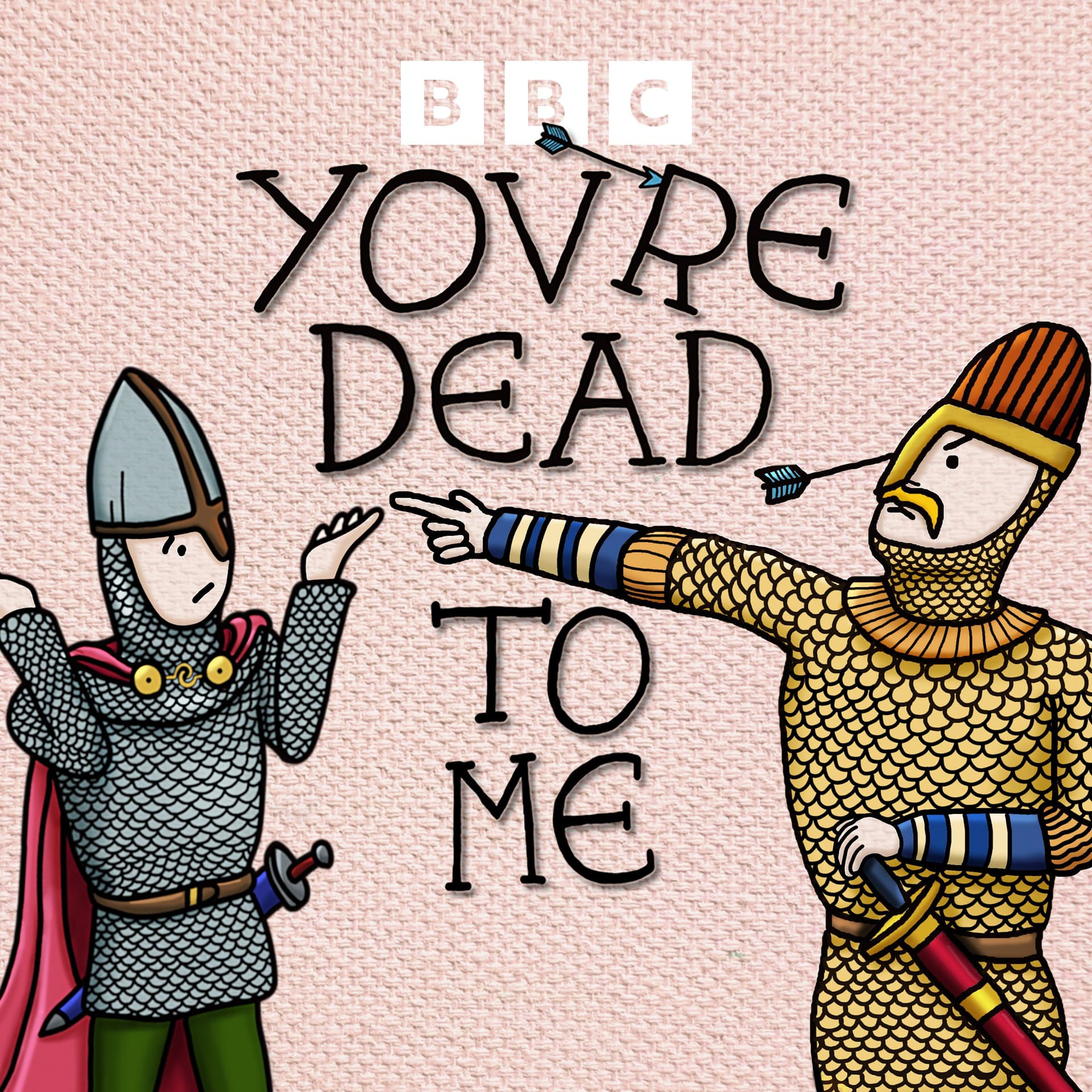
Episode Details Title: Hannibal of Carthage (Radio Edit) Description: Greg Jenner, alongside classicist Professor Josephine Quinn and comedian Darren Harriott, dives into the life of Hannibal Barca, the renowned Carthaginian general during the Second Punic War against Rome.
---
Key Themes and Concepts
- Hannibal Barca's Background
- Birth and Family:
- Born in 247 BCE in Carthage (modern-day Tunisia).
- Son of General Hamilcar Barca, who fought in the First Punic War.
- Raised in Spain where his father sought to secure and expand Carthaginian territory.
- Early Military Career:
- Joined his father on military campaigns at a young age.
- Became commander at 26 after the death of his brother-in-law Hasdrubal.
- Conflict with Rome
- Second Punic War:
- Initiated in 218 BCE after Hannibal besieged the Roman-aligned city of Saguntum.
- Surprised Rome by invading Italy instead of confronting them directly in Spain.
- Historic Tactics:
- Famous for crossing the Alps with war elephants.
- Utilized innovative battle strategies, such as the encirclement tactic at the Battle of Cannae, leading to a significant Roman defeat.
- Hannibal's Military Campaigns
- Major Battles:
- Victories at the Battles of Ticinus, Trebia, and Lake Trasimeni in Italy.
- Strategic brilliance led to the near collapse of Roman power in Italy.
- Caution Against Rome:
- Chose not to attack Rome directly after his victories, potentially saving his forces from unnecessary loss.
- Downfall and Legacy
- Decline in Power:
- Lost strategic advantages as Rome rallied under Scipio Africanus.
- Eventually faced defeat at the Battle of Zama in 202 BCE, resulting in the end of Carthaginian military power in the Mediterranean.
- Later Life:
- Returned to Carthage where he became a political leader but later fell out of favor with Rome.
- Died by suicide around 183 BCE to avoid capture by Romans, leaving behind a controversial legacy.
- Carthaginian Women in History
- Sofonisba:
- A Carthaginian woman who played a critical role during the conflict by marrying two Numidian kings.
- Her actions influenced the power dynamics between Carthage and Rome.
---
Key Takeaways
- Hannibal Barca is a defining figure in military history, known for his tactical genius and audacity against Rome.
- The Second Punic War was marked by significant battles that reshaped the power balance in the Mediterranean.
- Historical narratives, such as Hannibal's decisions and outcomes, are often influenced by later Roman historians, shaping his legacy as both a warrior and a strategic leader.
- The episode highlights not just Hannibal's life but also the roles of women like Sofonisba in the context of ancient geopolitics.
Conclusion This episode of *You're Dead to Me* offers an engaging blend of humor and historical analysis, emphasizing Hannibal's complex character and the broader socio-political landscape of ancient Carthage and Rome. Through lively discussions, the hosts illuminate the significance of this historical figure and the intricate narratives surrounding the Second Punic War.
Written by AI. May contain mistakes. Listen to the episode to check what was said.
Chapters
Tap a time to open that second in VOExploring Hannibal and Carthage
1:01 to 4:20
A detailed introduction to Hannibal and the historical context of Carthage.
“All episodes available now, wherever you get your BBC podcasts.”
Hannibal's Early Life and Family
4:20 to 7:24
Discussion of Hannibal's background, family, and early influences.
“Hold on, keep doing it with me for a little bit.”
Hannibal's Rise to Power in Iberia
7:24 to 10:17
The circumstances leading to Hannibal becoming the leader of Carthaginian armies.
“Okay, so the dad, Hamilcar Barker, So he's been fighting in Sicily.”
Conflict with Rome and the Start of the Second Punic War
10:17 to 12:49
Details on Hannibal's conflict with Rome and the lead-up to war.
“And he starts campaigning straight away.”
Hannibal's Journey Over the Alps
12:49 to 14:01
Examining Hannibal's daring journey with his army to invade Italy.
“There were some cashews going off a mountain.”
Hannibal's Journey and Victories
14:01 to 18:09
Explore Hannibal's military journey to Italy and his significant victories against the Romans.
“He leaves Siberia with 37 elephants and we honestly don't know how many arrive in Italy.”
Hannibal's Tactical Brilliance
18:10 to 20:59
Learn about Hannibal's tactics and the implications of his decisions during the Roman campaign.
“But actually, I think a much more likely way of telling the story is that he never intended to actually conquer Rome.”
The Downfall of Carthage
21:00 to 24:20
Understand the series of events that led to Hannibal's eventual downfall and the fate of Carthage.
“And then you have the Battle of Zama and this is the final big Roman victory in Africa.”
Sofonisba: A Carthaginian Heroine
24:21 to 27:46
Discover the story of Sofonisba, a Carthaginian woman who played a crucial role in the war.
“This is where Darren and I sit silently in the command tent to strategise for two minutes, while Professor Joe takes centre stage to tell us something we need to know about ancient North Africa.”
Transcript
Automatic transcript. May contain errors.0:00This BBC podcast is supported by ads outside the UK.
0:30All starts with a subscription to BBC.com. Find out more at BBC.com slash unlimited. I am Nina Khrushcheva, the great-granddaughter of Nikita Khrushchev, the leader of the Soviet Union in 1962. And I'm Max Kennedy, the nephew of US President John F. Kennedy. We explore what was a terrifying moment in history. The story of the Cuban Missile Crisis. How close the world came to nuclear war. And what they had to do to pull it back from the brink. The Balm, Kennedy and Khrushchev. All episodes available now, wherever you get your BBC podcasts.
1:11Hello and welcome to You're Dead to Me, the Radio 4 comedy podcast that takes history seriously. My name is Greg Jenner, I'm a public historian, author and broadcaster. Today we're mounting our war elephants and marching back to the ancient Mediterranean to learn all about the Carthaginian general, Hannibal Barker. And joining our campaign, we have two very special comrades in arms. In History Corner, she's Professor of Ancient History at the University of Cambridge and a specialist on Roman, North African and Phoenician history and archaeology. You might have read her award-winning book, In Search of the Phoenicians, or her best-selling award-nominated new one, How the World Made the West, a 4 ,000-year history.
1:47It's brilliant. It's Professor Josephine Quinn. Welcome, Jo. Thanks for having me. Delighted to have you here. And in Comedy Corner, he's a comedian, writer and presenter. You'll have seen him on all the TV shows like Live at the Apollo, Love Island After Sun, Roast Battle, Mock the Week, Dancing on Ice or heard him on the radio on News Jack Unplugged, Infinite Monkey Cage, Black Label. And of course, you'll remember him from our episode on Victorian bodybuilding. It's Darren Harriot. Welcome back, Darren. Thank you for having me. Darren, last time you demonstrated incredible knowledge. I did, yeah.
2:17You were basically an expert on Eugene Sandow. I was so excited to come in and talk about Eugene. Yeah, I know so much about bodybuilding. And I think maybe like a year before, I'd watched a documentary about him twice. So I came in here so cocky. I know it all, guys. Very different to them. Right, I was going to say, the history of ancient North Africa. Yeah, yeah. Not really my specialist subject, that. But I'm excited. There's going to be a lot of questions I'm going to throw out, guys. Okay. Does the name Hannibal ring a bell? It does, yeah. I know a couple of Hannibals. Hannibals from TV shows, a comedian.
2:52It stops there. Okay, Hannibal Buress. Hannibal Buress, there we go. Yeah, that's it, that's my knowledge. So, what do you know?
3:05Well, that brings us to the first segment of the podcast. It's called the So What Do You Know, where I have a go at guessing what our lovely listener might know about today's subject. And when I say Hannibal, you might, like Darren, be thinking of TV people. I think of the cigar-chomping leader of the A-Team. Oh, yeah. I know three. Three Hannibal references. More likely you're thinking of the famous fictional serial killer. But today it's less Hannibal the Cannibal and more Hannibal of Carthage. Hannibal has appeared in a ton of historical novels, including ones by Ross Leckie and Ben Kane. Several films as well, the 1959 film Annibale and the 2009 film Hannibal.
3:39And apparently if Vin Diesel gets his way, maybe soon we'll be getting a high-octane Hannibal trilogy. I can't wait to watch an elephant power drift around a hairpin corner. That is what we all want to see. But what is the fact behind the fiction? Did Hannibal really have an elephant era? Did a hailstorm change history? Let's find out. Right, Professor Joe, before we meet Hannibal, I think we probably need a quick crash course on the Carthaginists. Actually, you know what? I'm going to turn to Darren and put you on the spot. Oh, here we go. Where was Carthage in... I'll give you North Africa. Yeah, North Africa.
4:11OK, yeah. How north are we talking? Pretty north. OK. On the sea. By the sea? Yeah. That doesn't really help me. Am I Egypt? West of. West of? Yeah. Where's West of Ages? Isn't that Morocco? Too west. Too west. I'm going back to Joe. Joe. Hold on, keep doing it with me for a little bit. We could be here for an hour. It's right in the middle. So ancient Carthage is in modern Tunisia. It's actually now a sort of seaside suburb of modern Tunis. Really lovely. In fact, lots of great cafes there. But it was originally founded as a colonial settlement in the 9th century BCE by people we now call Phoenicians.
4:54And these are sailors who were based in the ports of the Levant, so modern Lebanon more or less. So cities like Tyre and Sidon and so on. I mean, the archaeologists estimate has about 30 ,000 people after about a century, which would make it an extremely massive city in the Western Mediterranean in that era. It expands by controlling access to other ports in the Western Mediterranean and to the coastline. It really kind of forbids other cities from sailing along any of the coastlines that are interesting to it. And then later on in its history, it actually expands inland as well, becomes a sort of farming state into North Africa.
5:34So by the 4th century BCE, so 500 years after it's founded, the Carthaginians control territory and trade across a huge swathe of North Africa, but also the islands of Sardinia, most of Sicily, and a lot of southern Spain as well. Wow. Let's meet Hannibal. He is the most famous of all the Carthaginians. You know, the Carthaginian Empire is vast. You said he's been 500 years already. But we're going to talk about Hannibal today. So when was he born? What was his family background? Is he posh? Is he, you know, is he kind of working class, works his way up? So Carthage is an oligarchic republic. So it's a bit like Rome.
6:11It's got a public assembly, but it's mostly the people in charge are mostly from fairly ancient aristocratic families. And that's the background. That's Hannibal's background. So he's born in 247 BCE. He's the son of a general called Hamilcar Barca. And this general fought in the First Punic War against Rome. He has two brothers. We know that. They're called Hasdrubal and Mago. He has three sisters. Nobody bothers to tell us what they're called, unfortunately. Well, you know. It's a different time. And what's been going on when Hannibal is born is this first war between Carthage and Rome. And basically the relationship between the two cities gets increasingly strained due to various central Mediterranean politics and war breaks out in 264.
7:00and Hamilcar, who's Hannibal's father, he's sent to Sicily to prosecute this war in 247, so the same year that Hannibal is born, until 241 when Rome defeats Carthage at the Battle of the Egody Islands off western Sicily and that's the end of the First Punic War. It's the first really big defeat ever. So this is the first Punic War. The fact it's the first one tells us more are coming. Yeah, exactly, exactly. Okay, so the dad, Hamilcar Barker, So he's been fighting in Sicily. Where do you think his son grows up? Did his son grow up in Sicily? I mean, that's a sensible guess. Well, you wouldn't take his son with you, would you?
7:37No, he grows up in Spain. What? Was that just to protect him? Was that just to protect his family? How did he grow up in Spain? No, because once Rome has taken Sicily and Sardinia, basically what Carthage wants to do is consolidate its holdings in southern Spain, which it's had some level of interest in before that. But it's really the only place left that it can really expand now without kind of hitting the Romans again. So Hamilcar, who's really, I mean, his reputation is really enhanced by what happened in the First Punic War, even though they lost, he was the big Carthaginian star. So he takes a force to Spain in 237.
8:15And once he gets there, he basically acts a bit like an independent prince. But it's all with the permission of the Carthaginian Senate. And the reason that Hannibal goes with him, I mean, the story goes that he's nine years old. when his dad leaves to go to Spain, and he begs to join the expedition. And so his dad lets him, and he doesn't get back to Carthage until he is 45 years old. Nine! Yeah, and then his dad dies in battle in 229, 2298. Hannibal's about 18 at this point, and obviously he's too young to take command. So the command of the Carthaginian armies in Spain goes to his brother-in-law, who's called Hasdrubal the Fair.
8:55Great, thanks. I mean, we've got Hamilcar, Hasdrubal, Hannibal and another Hasdrubal. I mean, Hasdrubal, yeah. Hamilcar, Hasdrubal, Hannibal and Hasdrubal. Darren, are you keeping up with the Carpashians? I love that. Yes, I am. I'm on series three. How do you think the brothers get on? How do you think, because Hannibal's got brothers, he's got sisters. How do you reckon? They probably didn't like each other. There's probably a power struggle of some sorts. Older, taking over. He's old enough to fight. Did they all grow up in Spain? A lot of the family do seem to kind of grow up in Spain together.
9:24And they actually, they kind of get on okay. And Hasdrubal seems to be a pretty good replacement for Hamilcar. And we don't know very much about what Hannibal's doing in this period, but he's definitely leading some of the military campaigns against some of the local populations into their territory. He eventually manages to replace his brother-in-law as the Supreme Commander in Iberia. How do you think he manages it? Did he kill him? He didn't kill him, no. Did he? No, poor old Hasdrubal gets assassinated by one of their allies, apparently. About 222, 2221. Sounds like a Roman to me. Who knows what may be going on behind the scenes.
10:04But what happens is that the Carthaginian troops then choose Hannibal as their new leader. By now he's 26, that's a kind of respectable age and he's unanimously confirmed by the Carthaginian people and sent it back at home as well, even though he hasn't been home at this point for almost 20 years. And he starts campaigning straight away. So after a year, he's moved further into Iberia than either Hamilcar or Hasdrubal after him. You know, we hear he treats his troops very well. He's also a natural risk taker and he's a great soldier. Hannibal was now spending his 20s, like many lads do, annoying the Spanish locals, rampaging around with his buddies.
10:39And then he falls out with Rome. How has he fallen? I mean, look, come on. We know what's happening next, but like, what's the sort of story here? OK, so there's a town called Saguntum on the east coast of Spain. It's now a suburb of Valencia. And it's the last holdout against Hannibal and the Carthaginians south of the Ebro River. And so the Saguntines appeal to Rome for support against Hannibal. And Rome officially warns Hannibal to leave Saguntum alone, even though it's south of the Ebro. And so it's really in Hannibal's sphere. So he calls their bluff and he besieges the city anyway. And we hear he directly engages with the fighting.
11:21He only leaves the battlefield when he takes a wound to the sternum and he has to go off and deal with another uprising at that point. OK, so he's sort of poked the bull a little bit because the Romans are like, don't. And he's like, I'm gonna.
11:38We now get the Second Punic War in 218 BCE. I mean, we get a proper famous Roman now, Scipio. Can you tell us about him? So Rome sends an embassy to Carthage in 218 to declare war. Their initial plan is to send a consul called Publius Cornelius Scipio. He's actually the father of the famous Scipio to fight Hannibal in Spain. And their idea is they're going to send one consul to Spain and another consul to Africa. So two consuls take the Roman army in two directions and get rid of the whole threat in both directions. But then what happens is that Hannibal, again, basically decides to kind of call their bluff and he actually decides to invade Italy himself, which they are not expecting.
12:22You know what? I'm really liking this Hannibal. I didn't expect that at all. That would be great. He doesn't care, does he? So he basically has to take his troops and elephant overland from Spain to Italy because Rome essentially controls the sea at this point. Can you imagine going into a battle? You've never seen an elephant. yeah you're like what is that what that's a very yeah i never thought of that yeah i guess i don't have discovery channel they can't check these i can't check these things out that would terrify me if i were into a battle and there's an elephant there darren obvious question how would you convince a bunch of angry elephants to cross some mountains he's crossing from spain to italy so he's going over the alps he's going over the pyrenees first pyrenees and then the alps that's a very good that's a very good point do peanuts work i've seen peanuts work quite a bit maybe a trail of The pain just...
13:11There were some cashews going off a mountain. 14 ,000 tonnes of peanuts along hundreds of miles of mountain pathway. OK, Jo, how do you convince elephants to go off mountain piste? OK, so the real problem with the elephants isn't actually the mountains. The elephants can kind of manage the mountains. It's the river. It's when he has to cross the Rhône in between the Pyrenees and the Alps. and elephants really don't like crossing water. So what he has to do is construct a kind of bridge of rafts and then cover it in earth. So the elephants think that it's land. That is so much work. But then they leave the female elephants on first so the other elephants will just follow.
13:56So that's also... It's like a night out, that is. Eventually, they do. But we don't know. He leaves Siberia with 37 elephants and we honestly don't know how many arrive in Italy. He leaves with 37 and he shows up with two elephants. Some elephants. OK, so he leaves Iberia with 50 ,000 soldiers on foot, 9 ,000 cavalry, 37 elephants. How many soldiers do you think he arrives with, Darren? I'm going to go 20 ,000. That's bang on. Whoa! Come on, that's amazing. As far as we can tell, Joe, he arrives 20 ,000 soldiers to the left and about 6 ,000 cavalry. So he's lost more than half his army. And then what, was there a Roman army waiting for him to ambush him?
14:40Yeah, there is, but it doesn't do them much good because he has this series of incredible victories. In his first months in Italy, he wins the Battle of Tichinus in November, right after he's crossed the Alps. He wins the Battle of Trebia in December. Then the following June, he wins this enormous battle at Lake Trasimini. So this is all kind of northern central Italy. And then he carries on south. And in the autumn of 2017, there's a... 2017 BC, right? Sorry, sorry, yeah, not 2017. Are you sure? Okay. Sorry, sorry, sorry. In the autumn of 2017, Rome has a temporary dictator because it's a state of emergency, Quintus Fabius Maximus, and he tries to block a Parsonapulia and ambush the Carthaginian army.
15:26but what Hannibal does is that he ties burning brands to the horns of 2 ,000 cattle and drives them up against the Roman troops. So that gets rid of the Roman troops. So he sets fire to live cows and charges them at the Romans? Yeah, yeah, yeah, yeah. He's got a lot of time on his hands, hasn't he? He's doing very well. He also gains loads of allies in Italy and then comes the Battle of Cannae and this is the biggest defeat of all for the Romans, unsurprisingly. And they've got more troops. So Rome's got somewhere between 70 and 85 ,000 troops. There are 50 ,000 Carthaginians and allies at this point.
16:05But the reason that Hannibal wins is this amazingly brilliant tactic, which is that he has a deliberately weak centre in his army to attract the Romans to attack him in the centre. And then he has cavalry, a very strong cavalry on both wings, with one of his nephews who's called Hanno and another guy called Hasdraval on the other side. Another one, yeah. And so what happens is that the Romans kind of surge into the centre where they see the weakness and then they're surrounded by the cavalry. And this is complete and bit of tactical brilliance on Hannibal's part. And Rome suffers incredibly heavy losses.
16:42So geographically, where is he now, Hannibal, after this big win at Cannae? After Cannae, he's in the south of Italy. So how close is he to Rome? About 400 kilometres. Darren, would you? Would you march on Rome? I would so go into Rome. Yeah, I think he went into Rome and just tried to take over and just tried to kill whoever he could kill and then just set fire to a bunch of cats with little daggers and they just all ran in there.
17:11Joe, does he march on Rome? Because Darren would. No, no, he doesn't. He doesn't. I'm afraid he's really sensible. I mean, what he does is he can solve the day. I'm actually in shock that he didn't do that. But eventually, so he does eventually march on Rome, but it's five years later in 211. And so Hannibal marches right up to the gates of Rome, but he doesn't attack. He doesn't attack. Is it just to show I can do this? Like I can come here any time I want. Well, the later Roman sources make it out to all be a kind of terrible mistake. There's a hailstorm that he takes as an unfavourable omen.
17:53And he also hears that Rome is diverting troops to Spain at this point. So he thinks they're not taking him seriously. And he basically chickens out. But I mean, that's quite important to Romans to make him seem like a really superstitious kind of scared person. So this is a later Roman historian called Livy. Exactly. This is Livy's version of the story. But actually, I think a much more likely way of telling the story is that he never intended to actually conquer Rome. It's much too big a job. And also, there's no real profit to Carthage in acquiring Rome or destroying it. I think the strategy behind his whole campaign is to reduce Roman power in Italy and then in the Mediterranean more generally, basically to put Rome back in its box.
18:36I mean, what's the really bad piece of luck for Hannibal is that on the very day that he arrives at Rome, unbeknownst to him, the Romans have actually called a muster of soldiers in the city because they're recruiting some new legions. So actually, Rome is full of soldiers. He got there on the parade day. He got there on the parade day. This is a hinge point in history, right? Because if he'd crushed Rome in that moment, we might never have had the Roman Empire. OK, so the hailstorm is probably a later sort of Roman literary sort of legend or whatever. But he doesn't take Rome and then it doesn't kind of work out.
19:14So he gets sort of trapped down in Brutium. Yeah. And he's there for four years. Four years, exactly, yeah. What goes on in this period is that Scipio, Scipio the son. Oh, the good one. Yeah, yeah. He gets elected commander in Spain and he captures. So the Romans start to make real progress in Spain. So basically the Bar kids lose control of Iberia. Scipio, having done quite a bit of damage to the Carthaginians in Spain, he now takes the war to North Africa. So the Romans actually invade North Africa and Scipio sets fire to a Carthaginian camp near Utica, which is west of Carthage in Tunisia. We're in 203 now.
19:58And Scipio then defeats the Carthaginians in battle, a Carthaginian force led by another Hasdrubal, I'm afraid. Patrick Francisco. And at that point, the Carthaginians sue for peace and they try and blame everything on the bar kids. Of course they do. So Scipio orders them to withdraw from Gaul, Spain and Italy. They have to give up their navy apart from 20 ships and they have to pay a huge fine. Now, this gets a bit tricky. So they provisionally accept this treaty, but it hasn't been formally signed off. And at that point, the Council of Carthaginian Elders finally summoned Hannibal home to Africa.
20:37So he's been at war in Italy for 15 years. And then suddenly he gets a letter saying, get home. Yeah, yeah, come home. Yeah. And then what happens is that Carthage breaks this, certainly what Rome think is a truce, by looting Roman supply vessels. Some Roman envoys get attacked by a mob at Carthage. and the Council of Elders encourages Hannibal to go after Scipio. And then you have the Battle of Zama and this is the final big Roman victory in Africa. Yeah. There is a final peace treaty, which means that Carthage now can't fight wars outside Africa. They have to pay 10 ,000 silver talents. Oh, no.
21:20A massive amount of money. They have to hand over all their elephants and they have to reduce their fleet to 10 ships, the rest of the fleet is burned. Tenship. It's handing over your elephants, like in a movie where a sort of maverick cop have to turn on a shield and gun. It's like... There you go, chief. Yeah. Sorry, Sarge. He does disappear from the records for a few years after that. But then he comes back. He comes back. So he comes back to politics in Carthage, you know, where he hasn't been since he's a child. He becomes one of the two Shoffets, who are the two kind of senior magistrates at Carthage.
21:57196 BCE. But the next year he gets into trouble with Rome. So the Romans by now have moved on. They're fighting the king of Syria, the Seleucid king, Antiochus III. And they hear that Hannibal is in contact with Antiochus. Even though Scipio himself defends Hannibal in the Roman Senate, they believe that he's plotting behind their back. Wow. Oh, and he was burning inside him, I bet. Just so angry. All those winds and that one time, everything just goes downhill. I mean, so, Joe, in terms of what we know, was Hannibal colluding with Antiochus of Syria? OK, we don't know, but when Rome asks Carthage to indict him, he's outlawed and he does flee to Antiochus' court.
22:57And he does then play kind of a minor role in Antiochus' war with Rome. But then the Romans defeat the Seleucids and again they demand that they give up Hannibal. And he escapes again. He goes further east and he ends up in the kingdom of Bithynia on the Black Sea. Darren, do you know what happens to Hannibal in the end? No, no, I mean he defeats the Romans. Oh, you're clinging to that story. It just sounds great. It's even... No, I don't know what happens to him. Okay, how does he die? I don't think it's going to be in battle. Okay. I think... Just one of those stupid deaths that happened back then or something.
23:38That's what I... Honestly, I really think it was... Was it an animal? Did an elephant accidentally fall on him? That is not what happened. What happened to my new hero? reportedly he always carried poison with him in case he was captured by the Romans. So he seems to have died by suicide sometime around 182 BCE. It's quite the life, Darren. Well, quite the life, yeah. He's one heck of a traveller. I really like the fact that he just wouldn't give up. He just always had it in his heart that he just didn't like them, just wanted to get them, and he nearly did. Oh, poor guy. Hannibal of Carthage, quite the career.
24:21The Nuance Window!
24:27OK, time now for The Nuance Window. This is where Darren and I sit silently in the command tent to strategise for two minutes, while Professor Joe takes centre stage to tell us something we need to know about ancient North Africa. So my stopwatch is ready. Take it away, Professor Quinn. Thank you. OK, so after all these men and all their battles, I want to talk about a Carthaginian woman who played her own important role in the war between Carthage and Rome by marrying not one but two Numidian kings and in the end proved braver than both of them. So Sofhanisba was an aristocratic Carthaginian woman, Saphonbaal in her own language.
Read the full transcript
25:04we hear that she was beautiful, learned, musical, and she was the daughter of the general Hasdrubal Disko, who we've seen being defeated by the Romans in 203. And what we're told is that in 206, she had been engaged to the local Numidian king, Masinissa, and he controlled the inland region beyond Carthaginian territory, so in a lot of what's now Tunisia. The Carthaginian Senate, though, ordered her to marry his rival Syphax instead. And Syphax ruled most of what's now Algeria from Kyrtham on Constantine. Syphax was considered a more important strategic ally to Carthage than Masinissa. And Sofhanisba accepted this decision, but Masinissa wasn't happy.
25:50And this is supposedly what persuaded him to throw his support and his crack cavalry behind Rome instead of Carthage. and this was absolutely crucial for Rome's eventual victory at Zama. Meanwhile, Sofenisba had persuaded her new husband, Syphax, to stick with Carthage in the final stages of the war. But in the end, after Scipio defeated Hasdrubilgisco in 203 with Masinissa's help, Masinissa himself wins a decisive victory over Syphax with Roman help and he takes the other king prisoner and he comes to Cia to take possession of his palace and his wife. And so Sofhanisba and Massinissa finally marry.
26:31But when Scipio, when the Roman general finds out that Sofhanisba had played a decisive role in Syphax's calculations against Rome, he demands that Massinissa turn her over to him as a prisoner. And that's not going to happen. So instead, Massinissa offers his new bride a cup of poison, which she courageously drinks, and then he takes Scipio, her corpse. I have to say he can't have been too upset though because he then remains an ally of Rome for 50 years so that's men for you what a story thank you Joe I mean Sof and Isma she really I mean she played quite a dangerous game there yeah I mean she was in all the rooms where it happened right did you say did she know it was poison or did he yeah she knew she knew she was absolutely in on it she didn't want to be a prisoner of Rome any more than he did wow she was like are you going to take it I was like no no no afterwards you first and then I've just cleaned my teeth actually I don't want to yeah thank you so much Darren and of course thank you so much Professor Joe listener if you want more from Darren of course check out the episode on Victorian bodybuilding that was also huge fun for more plucky generals from history we've got episodes on Joan of Arc Julius Caesar the younger well the young Julius Caesar Robert Bruce of course and remember if you've enjoyed the podcast please share the show with friends I'd just like to say a huge thank you to our guests in History Corner.
27:58We have the amazing Professor Josephine Quinn from the University of Cambridge. Thank you, Jo. It's been a pleasure. Thank you. And in Comedy Corner, we have the dazzling Darren Harriot. Thank you so much, Darren. Thank you so much for having me. Loved it. And to you, lovely listener, join me next time as we lay siege to another tricky historical topic. But for now, I'm off to go and teach elephants how to ski. Winter Olympics, here we come! Bye!
28:22Your Dead to Me is a BBC Studios production for BBC Radio 4.
28:37I'm Rory Stewart and I want to talk about heroes. When I was a child, I imagined a heroic future for myself in which I would achieve great things and die sacrificing my life for a noble cause before I was 30. But my experiences in the Middle East and in politics showed me that there was something deeply wrong with my idea of heroism. From BBC Radio 4, my podcast, The Long History of Heroism, explores ideas of what it meant to be a hero through time. How have these ideas changed? Who are the heroes we need today? Listen to Rory Stewart, The Long History of Heroism, first on BBC Sounds.
29:40Lady Killers with Lucy Worsley on BBC.com. It all starts with a subscription to BBC.com. Find out more at BBC.com slash unlimited. I am Nina Khrushcheva, the great-granddaughter of Nikita Khrushchev, the leader of the Soviet Union in 1962. And I'm Max Kennedy, the nephew of US President John F. Kennedy. We explore what was a terrifying moment in history. The story of the Cuban Missile Crisis. How close the world came to nuclear war. and what they had to do to pull it back from the brink. The bomb, Kennedy and Khrushchev. All episodes available now wherever you get your BBC podcasts.
From the publisher
Greg Jenner is joined in ancient North Africa by classicist Professor Josephine Quinn and comedian Darren Harriott to learn about Hannibal of Carthage and his war with Rome.
Located in modern-day Tunisia, Carthage was once a Mediterranean superpower that rivalled Rome. In 218 BCE, the Second Punic War began between the two powers, with the Carthaginian army led by a man named Hannibal Barca. Famously, Hannibal took his forces – including a contingent of war elephants – over the Alps and into Italy, finally marching on Rome itself. But eventually the Carthaginians were beaten back, and Hannibal ended his days in exile. In this episode we explore his epic life, from his childhood in Spain, to his tactical brilliance as a general, to his post-war career as a reformist politician.
This is a radio edit of the original podcast episode. For the full-length version, please look further back in the feed.
Hosted by: Greg Jenner Research by: Emma Bentley Written by: Emma Bentley, Emmie Rose Price-Goodfellow, Emma Nagouse, and Greg Jenner Produced by: Emmie Rose Price-Goodfellow and Greg Jenner Audio Producer: Steve Hankey Production Coordinator: Gill Huggett Senior Producer: Emma Nagouse Executive Editor: Philip Sellars