In short
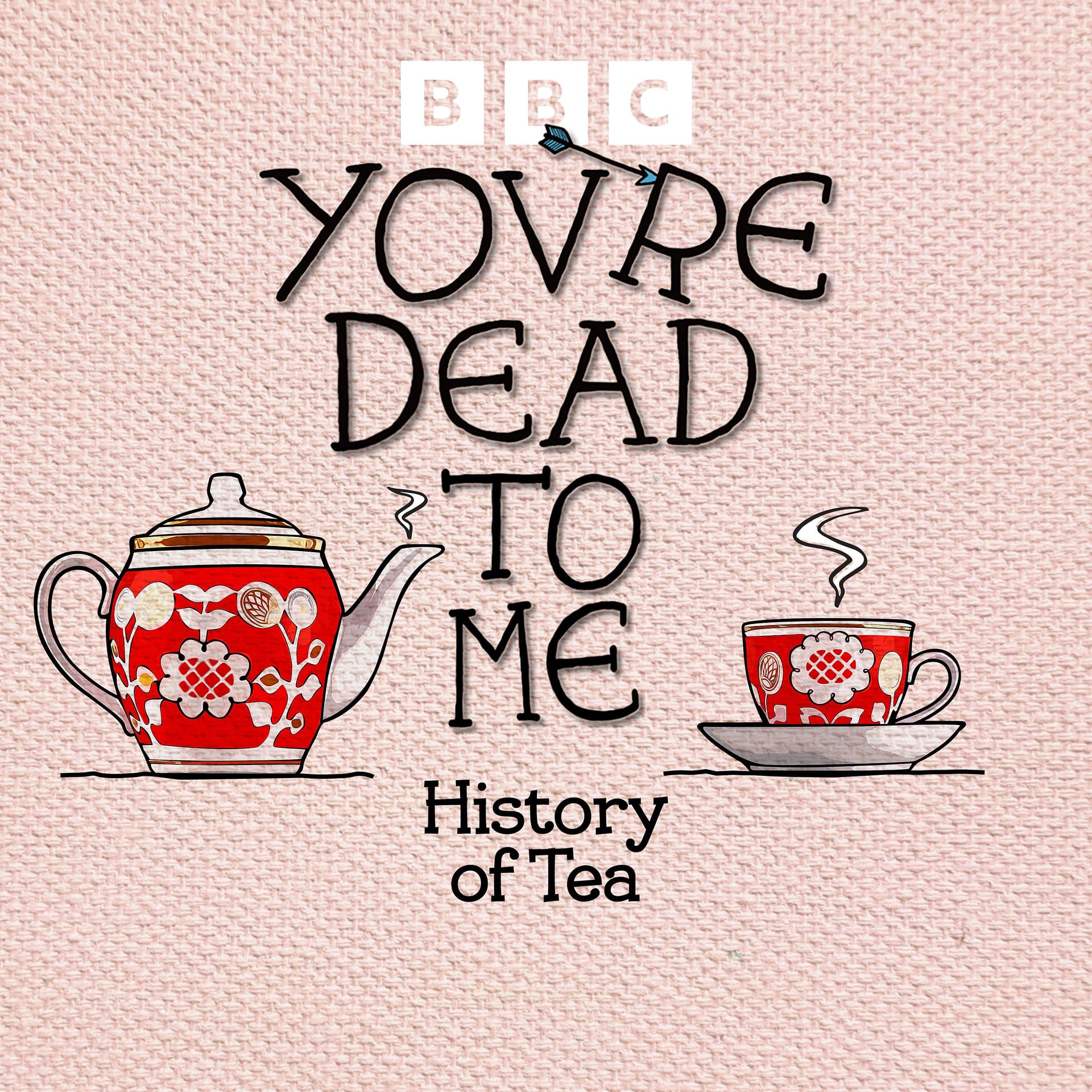
How tea became central to British identity, from early introduction by royalty to mass adoption during industrialization, plus darker imperial and military episodes (opium wars, tea heist) and later tea culture in Britain (tea rooms, WWII rationing, modern competition with coffee).
Guests/backgrounds
Ben Henderson and Alice Luxton (BBC/Here for the History hosts). Alice is a history author with best-selling history books and viral BBC/social history videos (e.g., London railings in WWII). They cite anthropologist Kate Fox (Watching the English), food historian Penn Vogler, and tea expert Jane Pettigrew.
Key claims
Tea spread from elite court influence (Catherine of Braganza) to wider society via expensive early trade, smuggling, and later industrial-era “tea breaks.” British industrial success is linked to tea’s boiled water, milk, and sugar. Tea became a national resilience symbol in WWII.
Notable examples
Catherine of Braganza’s 1662 arrival asking for tea; Thomas Twining’s 1706 Strand tea shop; 1784 tax cut; East India Company opium trade and Opium Wars (Hong Kong ceded); Robert Fortune’s 1848 “Great Tea Heist” enabling Darjeeling; Dickens’s tea mentions; Florence Nightingale recommending tea; WWII “top five” government purchases including tea; 60 billion cups/year and 84% of Brits drink tea daily.
Written by AI. May contain mistakes. Listen to the episode to check what was said.
Chapters
Tap a time to open that second in VOPodcast Hosts and Format
2:30 to 3:52
Meet the hosts Ben and Alice, discussing their history podcast's focus on everyday life.
“You can also watch us on our YouTube channel.”
Personal Tea Routines
3:52 to 6:00
Ben and Alice share their personal tea preferences and rituals, highlighting regional differences.
“We'll be uncovering the historical backstories that have shaped our lives.”
Tea's Importance in British Culture
6:00 to 7:08
Explore the significance of tea in Britain and its role in social situations.
“But it is a big part of the British identity.”
The Legendary Origins of Tea
7:08 to 8:13
Learn about the legendary origins of tea and its introduction to British culture.
“Now legend has it, 5 ,000 years ago, revered Chinese emperor and herbalist Xiong was relaxing under a camellia sinensis tree as his servants prepared some boiling water to be drunk.”
Catherine of Braganza and Tea
8:13 to 12:23
Discover how Catherine of Braganza popularized tea in England after marrying King Charles II.
“But if we're going to be looking at the role that tea played in Britain's history, it actually starts much later in the 1600s.”
The Rise of Tea Shops
12:23 to 14:01
Examine the establishment of the first tea shop in England and the commercialization of tea.
“This is partly because Portugal had established trade routes with the Far East and importantly China, which is where the tea leaves come from.”
The High Cost of Tea
14:01 to 15:18
Learn about the historical prices of tea and its inaccessibility for ordinary people.
“That's the only place producing it at the time.”
Smugglers and Demand
15:18 to 16:15
Discover how high taxes on tea led to a smuggling culture across social classes.
“And of course, because it's taxed so highly and because there's such a big demand for it, people go outside the system and it creates this market for something that I know you'll love, Ben, smugglers.”
Introduction to the Dark Side of Tea
16:15 to 16:41
Discussion on the shift of tea's popularity leading to darker historical narratives.
“and to try and stamp down on that, the tax was slashed in 1784.”
The Tea Wars Begin
17:04 to 17:37
Explore how Britain's tea demand led to conflict with China during the Opium Wars.
“Now through June 23rd, shop for You Save Days and get great savings on all your favorite personal care essentials and earn four times points.”
Show all 20 chapters
The Tea Wars Begin
17:40 to 18:25
Explore how Britain's tea demand led to conflict with China during the Opium Wars.
“Auto Pacific Segmentation, 2026 Rogue vs.”
Corporate Espionage: The Tea Heist
18:25 to 24:10
Learn about Robert Fortune's role in stealing tea secrets from China.
“Now I'm taking us forward into the 1800s when tea had become so popular that Britain was willing to go to war for it.”
Tea During the Industrial Revolution
24:10 to 28:00
Understand how tea became integral to the lives of factory workers in Britain.
“They've exploited opium and employed some pretty brutal military tactics.”
Tea's Role in the Industrial Revolution
28:00 to 29:06
Explore how tea became integral to British society during the Industrial Revolution.
“Anyone who asks for one of those really obscure ones in the shishi coffee shops, you know.”
Tea as a Solution to Social Issues
29:06 to 30:05
Learn about tea's perceived benefits in addressing social problems like alcoholism.
“Because the Industrial Revolution happens earliest and fastest in Britain.”
Personal Tea Experiences and Anecdotes
30:05 to 31:29
Hear anecdotes about experiences in tea rooms and a personal favorite tea spot.
“Which is a bit of a convoluted way of just saying that they would often give tea to the patients, and she thought that was a great morale boost.”
Tea in Wartime Britain
31:29 to 32:45
Understand how tea was vital to British morale during World War II.
“And I will take you and you will enjoy it, I'm sure.”
The Evolution and Future of Tea
32:45 to 34:52
Discuss the current status and future trends of tea consumption in Britain.
“Today, it's grown all around the world, a place like Africa and across Asia.”
Closing Thoughts and Insights
34:52 to 36:04
Reflect on the significance of tea in British culture and its historical context.
“So that's quite a lot, even if you are not contributing to those numbers.”
Closing Thoughts and Insights
36:07 to 37:09
Reflect on the significance of tea in British culture and its historical context.
“New tools, new expectations, and real pressure to keep up.”
Transcript
Automatic transcript. May contain errors.0:00This BBC podcast is supported by ads outside the UK.
0:30The new tropical butterfly refresher from Starbucks. Guava and passion fruit flavors with mango pineapple flavored pearls. Yeah, that feels like summer before you even taste it. Funny how one small stop becomes the best part of the day. Start your summer rhythm with Starbucks. Try the new tropical butterfly refresher from Starbucks. Running a business shouldn't feel like surviving a software group project. One app for accounting, another for inventory, another for sales, and somehow none of them talk to each other. That's where Odoo comes in. An all-in-one business management software that brings every part of your business together.
1:12From sales and accounting to inventory and marketing, all in one powerful platform. No messy integrations, no bouncing between tabs. And best of all, no spreadsheets. Stop managing software and start managing your business with one unified system. Try for free today at odoo.com slash iHeartRadio. That's O-D-O-O dot com slash iHeartRadio.
1:58And each episode we find out about how stories from the past have shaped our lives in the present. Yes, we'll uncover the origin stories behind the traditions, stereotypes and beliefs that make up everyday life. Why we speak the way we do, why football is our national sport, who came up with a package holiday. And in this episode, we're telling the story of how the humble cup of tea became so ingrained in British culture. It's a riveting tale. And if you want to hear more unusual origin stories, listen and subscribe to Hear for the History on BBC Sounds. If you're outside the UK, you can listen on bbc.com or wherever you get your podcasts.
2:35You can also watch us on our YouTube channel.
2:43Hello, I'm Ben Henderson. And I'm Alice Luxton. So, Alice, obviously I spend most of my free time with my nose in your best-selling history books. Thank you. But I think the first time I came across you was when you posted a video online to your legions of followers about some black railings on the street in London, which looked slightly misshapen. Am I right? Oh, yes. People absolutely love that video. It really went viral. There are these wonderful railings and they were actually used originally as stretchers in the Blitz in the Second World War. And people just love seeing, you know, the history behind these ordinary objects.
3:19Yeah, it's fascinating. I love that. And I saw it was even written up in the papers, you know, national news. Thank you, Ben. Thanks for reading. You're a loyal supporter. You're right. Well, I've also seen your stuff. You've been making history programmes for the BBC for years now. And you have your own social videos about history too. I loved the video about the origins of the British stiff upper lip. I think that's the first one I saw of yours. And it was always something I just accepted, but never really questioned why. Ah, well, it's funny you should say that, Alice, because that's exactly what we're doing on our brand new podcast, isn't it?
3:52Here for the history. Exactly, Ben. I'm so excited. We'll be uncovering the historical backstories that have shaped our lives. Yes, so we'll be finding out things like how English turned into the language we speak today and how the suit became every man's uniform and even where the weekend came from. And I've been really surprised by some of the things we found already. Some of it's really weird, some of it's quite dark and some of it's just hilarious. so I can't wait to reveal it all.
4:25So to you listening, we're here for the history. Now let's crack on with the first episode. Alice, could you start by telling me your dream morning routine? Well, the first thing that I have every morning is a cup of tea, as I did this morning, and I'll get out of bed, try and wake up. And the first thing I do is put the kettle on. I'll have an English breakfast tea. I've got a special mug. It's from the Durham Cathedral gift shop, which I bought a few years ago. And I'll have, I'd say, a dash of milk, semi-skim milk. And it normally ends up being the colour of a digestive biscuit. So I'm very particular about that.
5:08But if I get it right, it does set me up for a perfect day. What about you? how much milk do you have? Well, I don't want to ruin my popularity this early in the show, but I'm actually more of a coffee man. I know I'll have tea in the evenings, but yeah, more of a coffee man. My mum is a tea addict. So I've seen the addiction in action. Yeah. A fellow tea obsessive. I love it. Your mother and I would get on no doubt. Yeah, exactly. But I am interested in how particular people are with their tea routines. I've always been a bit of a, you know, just shove some milk in it. But obviously, you know, I'm a Southerner living in the North in Manchester.
5:42And if I go to make a round of tea for my colleagues at work and I put, you know, just slightly too much milk in, they'll have a massive go at me. Like, oh, you're Southern softy, can't make a cup of tea. Look at me with contempt. I know, people have such strong feelings about it, myself included, and perhaps you deserve that contempt. But it is a big part of the British identity. And actually the anthropologist Kate Fox has written about this in her book, Watching the English. She said that whenever the English feel awkward or uncomfortable in a social situation, that is almost all the time, they make tea.
6:17So totally relatable. How much does it say that you've got a cup of tea right there? Right, yeah, I am feeling awkward and uncomfortable. But the question is, why is tea so important? Did you know, this is an amazing fact, next to water, it's the most consumed beverage in the world. Yeah, that's pretty remarkable. So there's a lot of tea drinkers, there's a lot of us out there. But what about in Britain? How did something not native to Britain become intrinsically linked to British identity? Well, Alice, the anticipation is brewing. Well done. Welcome everyone to our new show, Here for the History from BBC Sounds.
6:53In the show, we'll be taking the stereotypes and traditions that make up everyday life and find out their historical origin story. Today, Alice is going to take us through the history of tea and pin down, in her opinion, how we Brits got so obsessed with it. So Alice, the kettle's boiling and I'm here for the history. Chapter One, Royal Tea.
7:19Now legend has it, 5 ,000 years ago, revered Chinese emperor and herbalist Xiong was relaxing under a camellia sinensis tree as his servants prepared some boiling water to be drunk. As he did so, a leaf of the tree drifts off the branch and lands in the pot of boiling water. But instead of throwing it away, Shanong takes a sip. He tries this new concoction and there we have it. Tea is born. Oh, unbelievable scenes, Alice, and beautifully told. But this is, you know, an underrated moment in global history, surely. A huge moment. This has shaped the lives of millions of people. Now, there are a few origin stories of how tea was invented, but this is probably the most famous of all.
8:13But if we're going to be looking at the role that tea played in Britain's history, it actually starts much later in the 1600s. So a time of civil wars, Puritans, ruffs, people wearing those big wide-bringed hats, the plagues, the Great Fire of London, that sort of thing. And we're going to look at the year 1662. The Portuguese princess Catherine of Braganza is sailing through storms and rolling seas. She's in an English fleet travelling from Portugal to England for a pretty big moment in her life. She's going to marry King Charles II of England, who, by the way, at this point, she's never actually met.
8:52So pretty full on for her. The thing about Catherine, though, she's only 23 years old. She grew up next to a nunnery. She's basically had this life of seclusion and strict religious studies. She's got this reputation for being pretty pious and quiet, kind of a mousy figure, you might say. So if she's quite a shy person, naturally, this must have been a pretty daunting moment, I can imagine. You know, you've got to go over there, marry the King of England. I'd feel you the butterflies, I imagine. Absolutely. And she's this diplomatic pawn in this great tangled web of European politics. The marriage is a great strategic alliance arranged by her father, King John IV of Portugal.
9:31And this is quite a common thing at the time for royal families to use marriage as a way to forge these partnerships. Nonetheless, she lands in Portsmouth on the 14th of May, 1662. It's been a terrible journey. She's been thrown around, tossed about in the sea by the storms. But finally, she steps off the boat, no doubt hugely relieved. And what is the first thing she asks for on dry land? Can you guess? A pint at the local weather springs. Not quite. Catherine of Braganza asks for a cup of tea. And unfortunately, much to her disappointment, they don't have one to give her. So though tea had actually already arrived in the UK by this point in the 1650s, and we know this because of the famous diarist Samuel Pepys, it wasn't actually popular yet.
10:21So the princess on arrival was offered, you're right, Ben, a small ale instead. Oh, well, my historical instincts have kicked in there. You laughed. There we go. She'd love an airport spoons, I'm sure. Now, a week later, Charles II comes down to Portsmouth, and on this day, he meets Catherine of Braganza for the first time, and they get married. Oh, really? So it's not the, you know, big fancy royal wedding we're used to. No offence to Portsmouth, but not the most glamorous location in the world. Well, it's quite low key, I suppose you might say, but they do go to London later on and they process into London.
10:56And, you know, that's a great celebration. Of course, Charles is quite an extravagant man. Yeah, well, just to paint a picture of Charles II then for listeners. So he's often portrayed in portraits with a big shaggy dark wig going down past his shoulders. And he's known as a bit of a lad, isn't he? He famously reopens the taverns after the Puritans had tried to clamp down fun after the Civil War. But for the purposes of this marriage, his temperament's not great, is it? Because him and Catherine don't raise any surviving children, do they? And he has quite a lot of illegitimate kids with various mistresses, doesn't he?
11:30So he's not the best behaved. He's got a lot of mistresses and he is known as the King of Partying. So they are quite a kind of strange couple in some ways, this mousey girl from Portugal. But nonetheless, the key thing is that Catherine of Braganza, she is the new wife of Charles II and she joined the English court. And in one sense, she's this great outsider because she's remained a Catholic while the English court's religion is Protestantism. And she dresses in the Portuguese style. She has some quite funny habits which do actually catch on. She brings the fork in, which is a useful implement.
12:03She introduced marmalade again. Very grateful for that. But most importantly, she popularises tea. Yeah, it's a pretty remarkable influence for one woman, isn't it? Yeah, thank you. She's like an early modern Alice Loxton. Great influencer. Yeah, we're very similar in many ways. Now, as part of her dowry, Portugal provided a chest of tea. And this was already a very popular drink in the Portuguese court. This is partly because Portugal had established trade routes with the Far East and importantly China, which is where the tea leaves come from. Now, she serves this tea to her ladies-in-waiting and the ladies at court.
12:37So this sets a trend in England for the elites drinking tea. And we know that she would go and visit aristocratic families and drink tea at their houses, places like Ham House, which is on the outskirts of London on the River Thames, which is a beautiful house. Oh, have you been there? I have been there. And I've actually been to the cafe and drunk tea in the cafe. So, you know, repeating Catherine of Bracanza's experiences. Oh, very good. First-hand research, Alice. I'm impressed. Of course, of course. I do my best. Okay. So this tea as well, this would be tea coming from China, presumably, because that's where it's produced.
13:10And so it would have been green tea rather than the kind of black tea with milk that we'd later adopt in Britain as the centuries go by. Fascinating. But I'm interested to know how tea then spread from, you know, this elite circle revolving around Catherine of Braganza to wider society. So let me know how that happened. Yes, well a big moment in the history of tea in Britain comes in 1706 because we get our first tea shop. An exciting moment and it opened on the Strand which is where many of the London elites were living after the Great Fire of London and it was opened by a man called Thomas Twining.
13:48Ah, of Twining's tea fame, I see. Actually the shop still exists today which is rather wonderful But the key thing about the 18th century is that tea at this point was insanely expensive. So this is because it had to be transported from China. That's the only place producing it at the time. And there were these massive taxes on importing it. OK, so how much are we paying for a cup of tea? OK, so by 1707, three and a half ounces of Twining's gunpowder tea. It was called gunpowder tea because they had these tightly rolled leaves that looked like grains of gunpowder. This was sold at a price which would work out today as£160.
14:30OK, that sounds enormously expensive, but I don't really know actually how much 3.5 ounces is. What is 3.5 ounces in tea? OK, so 3.5 ounces is the same as 100 grams. It's about the same weight as four AA batteries or two medium eggs, if that's helpful. OK, yeah, yeah, yeah. 100 paperclips. Can you envisage what that looks like? That's, no, not really. That's helpful. Or a tree frog. It's the same weight as a tree frog. Oh, well, now it's clear. Prior to tree frogs these days, it's a joke. I'm always using tree frogs to measure out the flour. But yeah, so it's 100 paperclips worth of tea. Three and a half ounces costs£160.
15:11So what does that tell you? It's just very, very expensive. Yeah, so ordinary people surely aren't able to access this kind of thing. No. And of course, because it's taxed so highly and because there's such a big demand for it, people go outside the system and it creates this market for something that I know you'll love, Ben, smugglers. Absolutely. Well, I found this particularly interesting. You're a pirate at heart, I know. It's often said. Yeah, in the tea story, this is fascinating, though, because it really demonstrates that demand for tea isn't just located among the aristocrats at the top with Catherine.
15:45It's dispersed through society. So pirates are bringing the tea over from Holland and Portugal because there was far lower taxes over there than there was over here. And there's a lot of violence involved in this smuggling. But I found it really funny. It's not always the people you'd expect, you know, the pirates, villains in society. There were teachers involved in the smuggling trade. There was members of the clergy. Yeah, there's all sorts. Clergy men, you can never trust them. I've always said it. So, no, you're right. Well, it draws to the point that because of these high taxes, there was huge amounts of smuggling.
16:16and to try and stamp down on that, the tax was slashed in 1784. Fascinating. OK, so we get the picture. Catherine has popularised tea at the elite level and it's slowly trickling down through the classes and growing in popularity. But I get the feeling, Alice, that things are about to take a much darker turn. They are indeed. Hi, Uncle Lazer here. America's built on fast cars, fast food and even faster women. Photo casinos built in America. You know what they're fast at? Fast cash, rise, redemption. You see, only Moto is U.S. owned and operated. Moto. It's American-made. That's who we are, and that's who we care about.
16:56Play for free at Moto.us. Moto Casino is the social casino. Avoid were prohibited. No purchase necessary. Visit Moto.us for more details. Must be 21+. Moto Casino. America's social casino. Hey, it's Ryan Seacrest for Jewel Osco. Now through June 23rd, shop for You Save Days and get great savings on all your favorite personal care essentials and earn four times points. Shop in-store or online and save on items like head and shoulder shampoo, Pantene shampoo, Trace-A-Mé conditioner, L 'Oreal hair dye, Trace-A-Mé hairspray, and Aussie Miracle Curls. And earn four times points to use for future savings on groceries or gas.
17:34Offer ends June 23rd. Restrictions apply. Offers may vary. Visit Jewelosco.com for more details. Why is it always chaos when we link up? Cause nobody plans anything bro. Good thing the Rogue's ready like that. For real. Rain, dirt, whatever. Available all wheel drive. Five modes. We still outside. And they got some kick too. That turbo? Torque is crazy. The most in its class. It moves moves. Rogue doesn't mess around. And peep the space. Merch on merch. Gear. Mikes. All of it fits. Load up. We out. 2026 Nissan Rogue. Built for all of it. Auto Pacific Segmentation, 2026 Rogue vs. Latest in-market competitors in the ex-SUV mainstream mid-sides class, excluding electrical vehicles based on manufacturer websites.
18:23Chapter 2. The Tea Wars. Now I'm taking us forward into the 1800s when tea had become so popular that Britain was willing to go to war for it. At this point, China is still the only country that produces tea. And of course, the British Empire is at its height. So it's a time of expansionism, trade, globalism, all happening apace. And there's this company that's been set up. It's called the East India Company. And there are a few of these. But in this instance, we're talking about the British one. It started out as a merchant company. But over time, it basically became an extension of the British state.
19:03Yes, and the East India Company plays a huge role in this story, doesn't it? Absolutely, because in order to meet British demand for tea, the East India Company was determined to try and buy some more. But there was a problem because the Chinese would only accept silver in exchange for tea and the East India Company did not have enough silver. And the way that they dealt with this problem is rather looked down on today, shall we say, to put it politely. Because what they did was they took opium, which was being produced in parts of East India, an area of the world that they controlled at that time, and they amped up the production massively.
19:43So opium comes from poppies. It's massively addictive. Yeah, a very dangerous drug that can ruin lives and has done many people. So the East India Company then sold this opium illegally to Chinese merchants in exchange for silver, which then allowed them to buy more tea to bring back to Britain. And this did lead to a huge problem in China of opium addiction, which you can understand the emperor wasn't very happy about. Yeah. And this is what leads to what's known as the Opium Wars, isn't it? The Opium Wars, indeed. So the Emperor even writes to Queen Victoria in 1839. He pleads for this trade of opium to cease.
20:26He's met with silence. And next he takes action. He seizes 20 ,000 chests of opium and dumps it in the sea. And the East India Company retaliates with great force. And we obviously know it as a company, but they actually have the Royal Navy, don't they, to support them in going to war here? Absolutely. So the Royal Navy send in these warships, there's steamships towing gunboats that smash through China's river and coastal defences. So China is forced to capitulate. It's a great humiliation for them. They end up having to pay for the loss of the opium. They cede Hong Kong to Britain. They're forced to open up more ports to trade to Britain.
21:07And the eventual result of all of this is that tea starts to flow more easily and enable trade with Britain. Gosh, we're flooding their country with drugs, causing loads of addiction and going to war for tea. Now, following this, the Brits not only had they forced China to trade in this way, but they also wanted to take it a step further. Instead of having to rely on China to trade the tea, they wanted to shortcut this and grow the tea themselves. And so in India, they set up tea gardens and plantations. The great problem was that they were lacking in some pretty key parts of this. They lacked the knowledge, the know-how of how to grow the tea, but also the plants to do it.
21:52There have been all of these attempts which just totally failed. And this is where we introduce a new character to the story. Get comfortable because this is quite a story. So let me introduce you to Robert Fortune. He is a Scottish botanist, an explorer. And in 1848, he was instructed by the East India Company to, in an infamous episode of corporate espionage, travel to China in secret and do something pretty daring. Gather the tea seeds, the plants and the understanding which would enable the British to grow tea. Now, this is a pretty devious move, to put it kindly. Fortune disguises himself in traditional Chinese clothing and hairstyle.
22:41He sneaks into areas of China, which are completely forbidden to foreigners. And he goes to the factories and he sees how tea is made. I can't believe that a Scottish man can fit in in 19th century China. like that but yeah very impressive an impressive disguise so he brought back 20 000 live plants and convinced a small number of workers to travel to a northern province as he called it to grow the tea and this was in fact british controlled india in what we would now know as darjeeling and that is why we have darjeeling tea yes well done now it's really interesting to read about fortune's take on the whole affair.
23:24He wrote this book about it and he talks about it like this amazing adventure. He was the first to see these secrets. He wrote, I often look back upon those days with feelings of unalloyed pleasure. And of course, the interesting thing is he might have had a great time, but for China, they see this very, very differently. Yeah, absolutely. He's a bit of a national villain there, isn't he? Yeah, absolutely. And the point is, he's seriously unpopular in China today. They view him as this terrible figure. They see it as trickery. He single-handedly kneecapped the economy. And it's part of that great century of humiliation, which they still talk about today.
24:02And they call it the great tea heist. That's how it's remembered. So yeah, Robert Fortune and the opium trade echoes down the centuries. Absolutely. So it's quite a big change at this point. They've exploited opium and employed some pretty brutal military tactics. There's been a sprinkling of espionage and all of this broke China's monopoly on tea production and began to satisfy this raging demand for tea in Britain. Chapter three, look for the bare necessities. Okay, so as the Opium Wars and tea espionage are playing out in the Far East, what's happening back in Britain. Well, the Industrial Revolution is well underway.
24:47And this is playing quite a big part in the demand for tea. Can you tell me a bit about the Industrial Revolution, Ben? I know it's your great favourite topic. Oh, well, I'll try my best. So it's obviously a massive period of technological change. Britain turns from being a largely kind of agrarian country, where most people live in the countryside, to being a heavily urbanised country based on factory work. Okay, And so what is life like for those factory workers? Well, they work terrible hours. They have terrible diets. And the thing is, if only they had something warm and sustaining to keep them going through those long hours.
Read the full transcript
25:21I can't imagine what that possibly could be. So Charles Dickens, the great 19th century novelist, paints quite a vivid picture of the Industrial Revolution in many of his books, but also mentions tea quite a lot within that. And what's interesting is it was used across classes at this point. And it's really seen as this regular homely drink. It's part of this comforting ritual. And actually tea is seen as a rejuvenating drink in the way that you might think about coffee today. So I've got a few bits from Dickens that I thought we could have a look at. One of the mentions is in Great Expectations.
26:00And we follow the character Pip. Mr Pumblechook and I breakfasted at eight o 'clock in the parlour behind the shop, where the shopman took his mug of tea and hunch of bread and butter on a sack of peas in the front premises. I mean, I like the mentions of tea there, feel nice and homely, but who has bread and butter on a sack of peas? I think he's sitting on a sack of peas. Obviously, that's an unconventional breakfast. Yeah, it's weird habits of the past. But there we go. So he's having bread and butter and a mug of tea, which seems, you know, I'd be up for that. And so there's lots of mentions of tea throughout Dickens's books.
26:41And it's basically accepted among historians that in this industrial period, tea is broadened out to be not just something for the elite, these kind of lovely, delicate types of tea, but actually it's for the masses too. And it becomes increasingly important for industrial workers. So by 1834, there's a lot of mills and factories where they're giving workers particular moments in the day which are specified as tea breaks. OK, so tea's being worked into the regime now and becoming part of the fabric of society. Absolutely. And during these gruelling shifts of long hours in the mills and the factories, they see tea as this great stimulant.
27:18It's really sugary. So it's like the modern day or the 19th century energy drink. Yeah, it's an energy drink. People are using it not just for the taste, but very much as a stimulant to help people get through the day. And we heard from Charles Dickens, but the British food historian Penn Vogler, she has also written about this. And she says that, interestingly, the way that Dickens writes about it, there is a bit of a divide between coffee and tea. And that manifests as the baddies, the evil characters, drinking coffee and the goodies, the good people in the books, drinking tea. Outrageous. And I was always a Dickens fan.
27:54I can't believe he'd say that. Although I'd have to say, you know, there are some pretty evil, you know, matcha drinkers and things like that. Anyone who asks for one of those really obscure ones in the shishi coffee shops, you know. Takes ages to make. I can sympathise with Dickens there. Yeah, well, you know, I think in this situation it would mean that you played the baddie and I was the good character. So I'm all for it. All for Penn Vogler's theory. But the crucial point is that the Industrial Revolution seems to cement tea as this warm and sustaining drink that's good for our health. But I suppose the key point here is that in the Industrial Revolution, tea is cemented as not just a kind of warm and cosy drink, but actually one that's really integral for our health.
28:35And we actually spoke to a tea expert, Jane Pettigrew, and her theory is that Britain's success during the Industrial Revolution could be credited to the importance of tea. Just the simple point that the water had to be boiling. So that made it safer to drink. Or the fact you've got milk for protein and sugar for energy. All of this was fueling a workforce of healthy workers. Fascinating. So I think this is really kind of at the heart of why Britain becomes so associated with tea, isn't it? Because the Industrial Revolution happens earliest and fastest in Britain. It utterly transformed our society more than any other.
29:14And therefore tea, which is basically the sustaining juice that's firing the Industrial Revolution, is naturally going to become part of our national identity. And this era is also the era, you know, the Victorians, they're awash with moral panics and all that kind of stuff. And industrialisation has brought, I mentioned some of the poverty earlier. There's a lot of problems with alcoholism. So they see tea as a great solution to that too. Because, you know, get them off the booze, get them on the tea. Absolutely. The temperance movement, I think, is how it's described. And Florence Nightingale, who was the founder of Modern Nursing, she recommended it.
29:49So she said that it was certain that there is nothing yet discovered which is a substitute to the English patient for his cup of tea. He can take it when he can take nothing else, and he often can't take anything else if he has it not. Which is a bit of a convoluted way of just saying that they would often give tea to the patients, and she thought that was a great morale boost. How fascinating. I love that. So it's both a healthy product, but it's also useful for fueling the workers. So at this point, tea is really embedded in British society. A great moment is in the 1800s when the first tea room opens in Glasgow, which I know you would have been very excited about, Ben.
30:29The first one queuing up outside, I'm sure. Well, I've actually not had great experiences with tea rooms. So I went on holiday to Bath, yeah. And I know there's a very famous tea room there. And they just didn't let me in. I think, you know, apparently you've got to put well in advance. You're a suspicious character. I know, exactly. They saw me as a coffee drinker. But you got barred from the tea room. Pretty much, yeah. But anyway, then I thought my luck had changed because I think it was my girlfriend's birthday and her brother had bought her a voucher for this specific tea room all the way over in Leeds.
30:57So it's a big drive to get there. So I'm thinking, wow, this must be pretty high status. And we get there and it was just grim. There was no one in there apart from one guy on his own who'd gone for his own little birthday tea. So this is why you don't like tea. Yeah, and I just wasn't a fan. My favourite tea room, it's in a village called Chawton in Hampshire, which is where Jane Austen lived and wrote her books. And there's a tea room opposite and it's full of Jane Austen fans. And it's got teacups all across the ceiling. There are teacups dangling from the ceiling. And I will take you and you will enjoy it, I'm sure.
31:31Oh, fantastic. Looking forward to it. There we go. I'll hold you to that. So tea rooms are in, which is exciting. Maybe not for Ben. But moving on, throughout the 20th century, the love of tea continues. And in the Second World War, it plays, again, an integral part. So this is a good stat. So the five purchases, the top five purchases of the government in the Second World War are bullets, artillery shells, bombs, explosives and tea. I love that. That's so British. Which is absolutely core to the war effort. It's rationed. It's provided for soldiers. So it's more important than clothes, you know, fairly key things to keep in existence.
32:15What would you rather? I'd rather. Yeah. Yeah, I was going to say that. Yeah, well, this is... If rather people be naked and drink tea, then, basically. I love that. But yeah, no, tea definitely is part of the war effort, isn't it? And you get those iconic images that come out in old newsreels of, you know, bombed out homes during the Blitz. But then these women emerge and they're still there handing out the tea and everyone's kind of smiling. And it becomes that symbol of national resilience, doesn't it? Absolutely. And you can see for the last 200 years, 300 years, perhaps, tea has actually been really integral to British history.
32:48Today, it's grown all around the world, a place like Africa and across Asia. And actually, you even get tea in Britain. There are, would you believe this, more than 50 tea growers in Scotland alone, which I don't know how they do that considering the climate, but fair play to the Scots for being excellent gardeners, I suppose. But I suppose the big question is, what is the future of tea? I mean, you're a coffee drinker. I know. Well, it's an interesting story how coffee seems to have, I think, actually risen above tea among many Brits these days. There was a bit of research that was published a few years ago, which said more Brits now regularly drink coffee than tea.
33:23And I think it's a lot to do with, you know, there's been a huge amount of marketing around coffee, isn't there? Plus, we've got the infiltration of American culture, which really drives that kind of like that sense of the artisan coffeehouse, all that kind of stuff. and all the different rituals around coffee, I think are partly what elevates it, particularly among people, you know, you and my age. Yeah, I mean, I do think coffee is the sexier drink, I'd say. You know, it's a bit cooler, whereas tea is so associated. I mean, I'd still definitely have a cup of tea if I was going to a cathedral cafe or maybe...
33:57Every day. Yeah, obviously that's what I spend most of my time doing. But it's very much village teas. and the great thing about tea is you can have cake with it so you have cake and tea i think it's something you have when you visit your granny that kind of thing um but it's it's more cozy right if coffee's sexy tea is cozy yeah and you get these new brands of tea coming out so it's not just you know our traditional black teas you've got teas from the far east herbal teas aren't there there's bubble tea bubble tea that's the new thing exactly and you know i actually interviewed one of the uh well there's two tea houses in taiwan that claim to have invented bubble tea.
34:31So I interviewed the owner and one of his assistants, who supposedly was the first person to spot the tapioca balls and put them in the bubble tea. Wow. That is a big, that's up there with Shenong's invention of tea 5 ,000 years ago. Well, despite all of this, tea is still a big part of our story. 84 % of Brits drink tea every day and there are 60 billion cups per year. So that's quite a lot, even if you are not contributing to those numbers. Well, thanks so much, Alice. That's been absolutely fantastic. You've really given us a great insight into how tea spread and how it became an iconic part of British culture.
35:06I'm interested to go to these cathedral cafes with you. It sounds like an excellent daily... We'll go to Chawton. Yeah, fantastic. You'll love it. And actually, I didn't realise that it was that switch between producing tea in China to India that left us with the humble cuppa we have today. So I've learnt a lot. I hope everyone listening feels the same. Make sure to listen and subscribe to Here for the History on BBC Sounds or watch us on our YouTube channel. So until next time, goodbye. Goodbye.
35:39Hi there, Ben here again. And just to say, if that's whetted your appetite for more, head to Hear for the History right now for our next episode, which is all about food. Specifically, why does British food have such a bad reputation? You can hear it on BBC Sounds, or if you're outside the UK, You can listen on bbc.com or wherever you get your podcasts. You can also watch the episode on our YouTube channel. This episode sponsored by Codecademy. Your job is changing fast. New tools, new expectations, and real pressure to keep up. This isn't a someday problem. It's happening right now. That's where Codecademy comes in.
36:19Instead of just watching or reading, you learn by doing. From your very first lesson, you're writing real code directly in your browser. No setup, no guesswork. Whether it's AI tools, prompt engineering, data analysis, or cybersecurity, Codecademy shows you exactly what to learn and gives you a clear step-by-step path to get there. So you're not just keeping up with tech, you're actually getting ahead. With structured career paths and real-world projects, you'll build skills you can use immediately on the job. Join millions of people already leveling up with Codecademy. Start your free trial today at Codecademy.com.
36:58Get that Amex Gold card ready. I'm too tired to cook. We feeling five guys or the Cheesecake Factory? Both. Earn up to$120 a year in statement credits of participating partners. Up to$10 each month when you pay with the Amex Gold card. Learn more at AmericanExpress.com slash Explore-Gold. Enrollment required. Terms apply.
From the publisher
Where exactly does the British love affair with tea begin? It all starts with a Portuguese princess…
In this first episode of Here For The History, Alice Loxton and Ben Henderson explore the origin story of the British love of tea. Starting with the first appearance of tea in England in the 1600s and its popularisation in the English royal court, the story takes a dark turn as the British East India Company seeks to break China’s monopoly on tea production leading to the Opium Wars and corporate espionage.
Here For The History is a new BBC Sounds podcast where every week historians Alice Loxton and Ben Henderson will shed light on the stereotypes, social norms, traditions and beliefs that fill our everyday life. From Britain’s stiff upper-lip, to Scottish tartan, the podcast will reveal the surprising roots of the customs and everyday objects that surround us.
If you enjoy this episode, you can listen and subscribe to Here For The History on BBC Sounds. If you’re outside the UK, you can listen on BBC.com or wherever you get your podcasts. Key sources for this episode: A Social History of Tea - Jane Pettigrew A journey to the tea countries of China - Robert Fortune Dinner with Dickens - Penn Vogler