In short
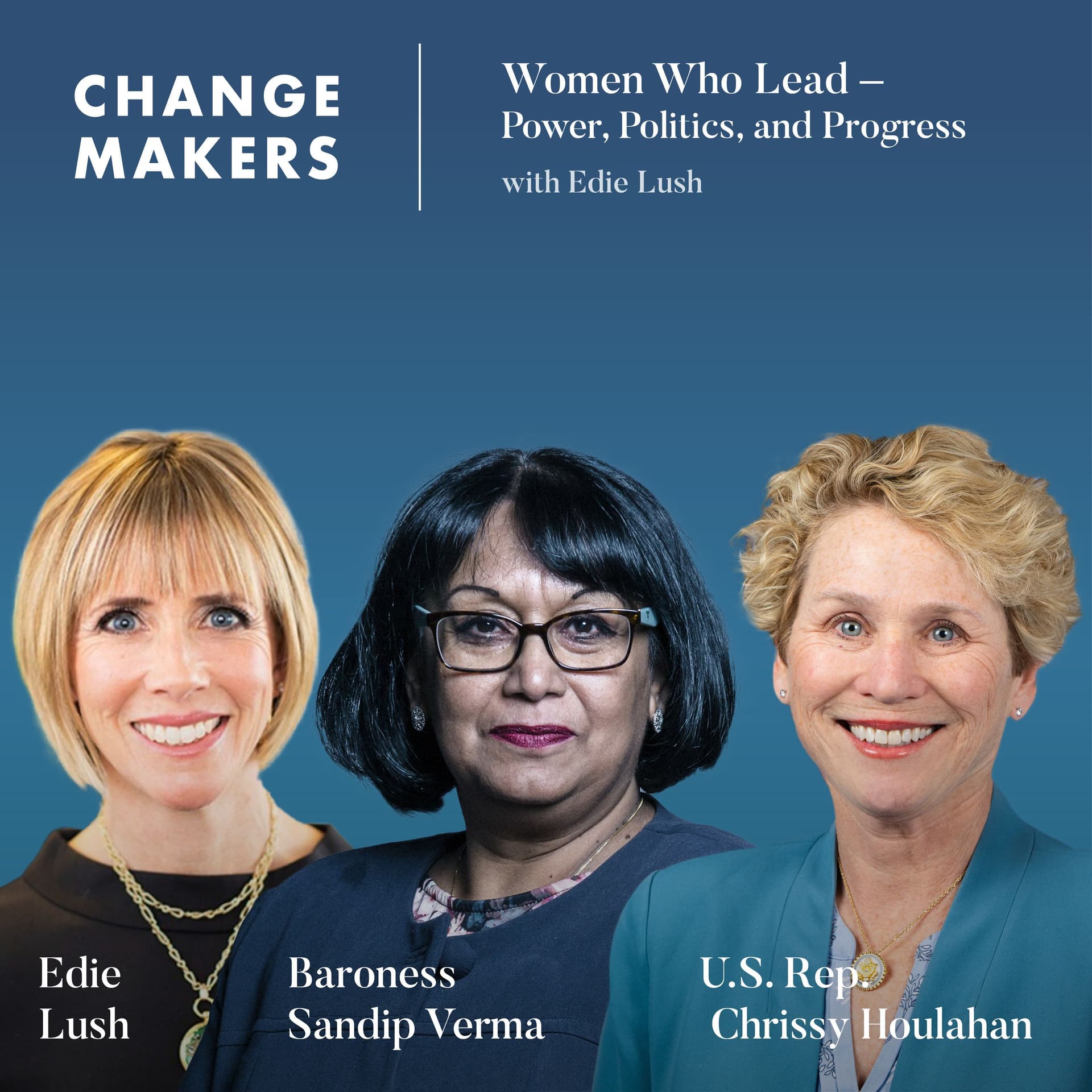
Change Makers Podcast Episode Summary: Women Who Lead: Power, Politics, and Progress with Edie Lush
Episode Overview In this episode of Change Makers, host Edie Lush discusses the critical issue of women's representation in politics in light of International Women's Day. Despite the global elections held in 2024, female political representation has stagnated. Key guests include U.S. Representative Chrissy Houlihan and Baroness Sandip Verma, both prominent female politicians with different political backgrounds. They discuss challenges, experiences, and strategies for increasing women’s presence in politics.
Key Themes and Discussions
The State of Women's Representation
- In 2024, elections in over 40 countries resulted in the slowest growth of female representation in two decades.
- Increasing women's political representation is not merely a gender issue but also impacts societal and economic growth (1% increase in female legislators correlates with 0.8% GDP growth).
Guest Insights Baroness Sandip Verma
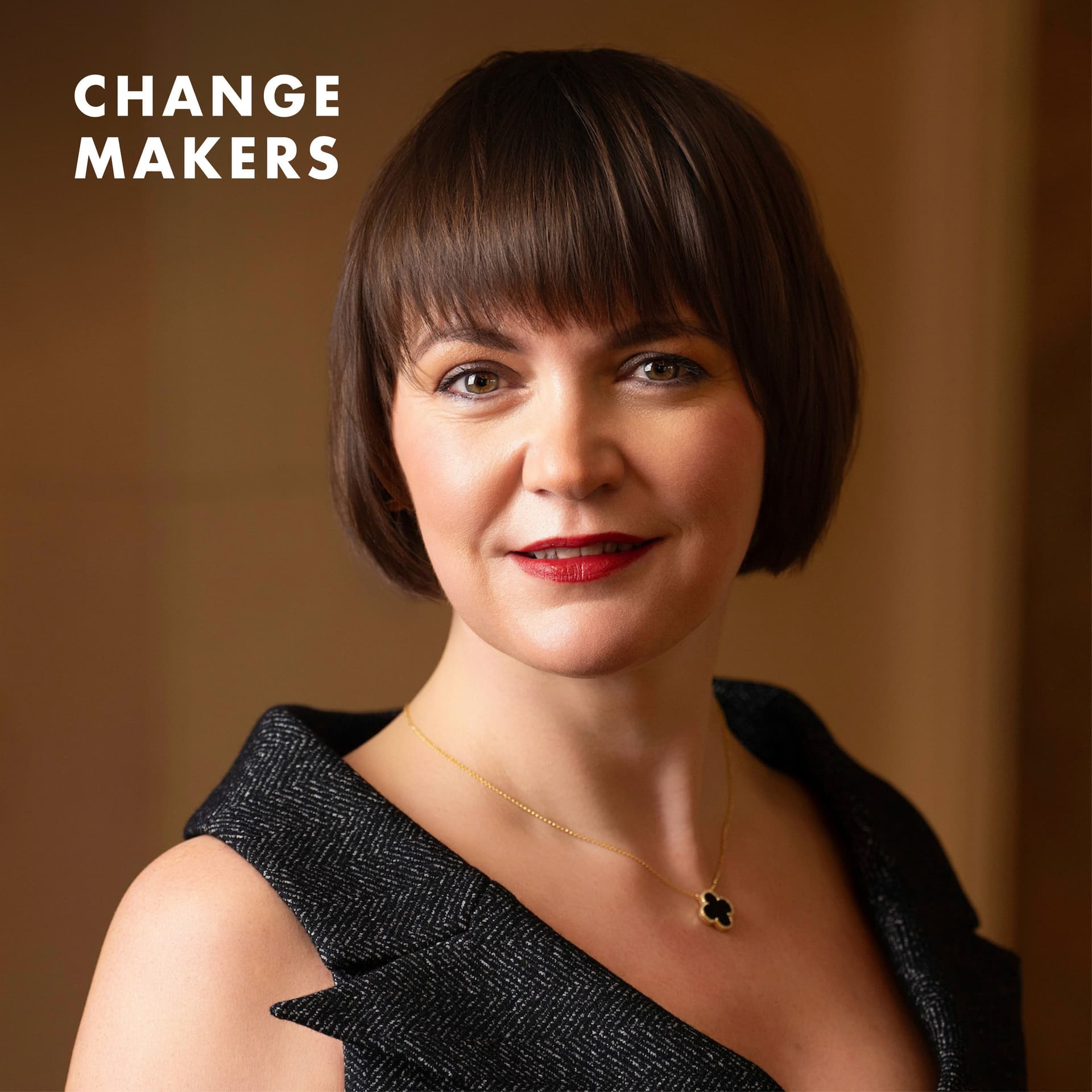
- Motivation: Personal experiences of gender bias and cultural challenges drive her to advocate for women in politics.
- Background: Grew up in a culture that marginalized girls; her work aims to open doors for women in political spheres.
- Experience: Highlights the challenges faced by women in gaining access to networks and opportunities.
U.S. Representative Chrissy Houlihan
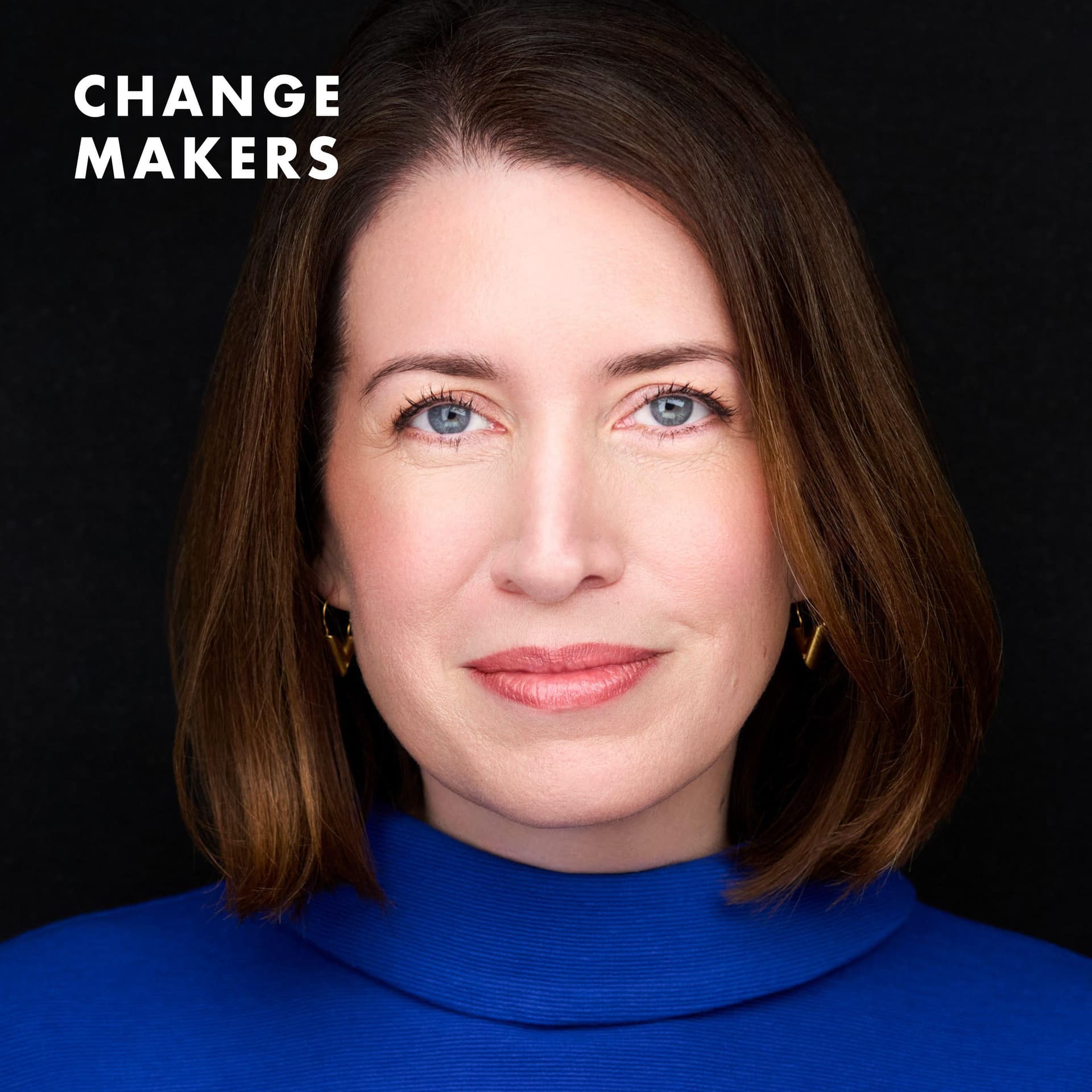
- Background: First woman elected to Pennsylvania's 6th District and a former Air Force engineer.
- Motivation: Entered politics out of concern for the country’s direction and to represent under-represented voices.
- Representation Challenges: Discusses the historical lack of women in Pennsylvania's congressional delegation.
Barriers to Women in Politics
- Cultural Stereotypes: Both guests discuss how traditional gender roles and stereotypes limit women's participation in politics.
- Safety Concerns: Women politicians often face threats and harassment, deterring potential candidates from entering the political arena.
- Work-Life Balance: Women disproportionately handle unpaid care responsibilities, complicating their political ambitions.
Mentorship and Support
- Importance of Mentorship: Both guests underscore the need for mentorship opportunities for women entering politics.
- Baroness Verma emphasizes the role of teachers and supportive figures in her journey, while Houlihan notes the lack of mentorship in historically male-dominated environments.
Structural Changes Needed
- Policy Reform: Calls for structural changes such as paid parental leave, affordable childcare, and laws that promote gender equality in the workplace.
- Cultural Change: Both politicians advocate for a shift in societal attitudes towards women’s roles in politics and the workplace.
Lessons from Other Countries
- Verma shares successful initiatives from other countries, such as educational programs that engage boys in discussions about gender equality through sports.
Conclusion and Call to Action
- Both women emphasize that progress requires active participation and courage to challenge the status quo.
- They encourage listeners to reflect on their own roles in advocating for change and to continue pushing for a political environment that is equitable for everyone.
Key Takeaways
- Women in politics face unique challenges that require both individual and systemic efforts to overcome.
- Mentorship, cultural change, and policy reform are critical to increasing women’s representation.
- The conversation surrounding women in politics is ongoing and needs collective action to foster a more inclusive political landscape.
Final Thoughts As we celebrate International Women's Day, the episode serves as a reminder that advancing women's representation in politics is essential not just for women, but for society as a whole. It calls on everyone to demand more from political systems and strive for a more equitable future.
Written by AI. May contain mistakes. Listen to the episode to check what was said.
Transcript
Automatic transcript. May contain errors.0:03Welcome to Changemakers, the podcast where we focus on some of the most pressing issues of our time. I'm your host, Edie Lush. Today, in honor of International Women's Day, we are tackling a paradox that's shaping our world. In 2024, over 40 countries held elections, yet women's political representation stagnated in nearly two-thirds of those countries. Of course, it isn't just nice to have women in politics. We know that for every 1 % increase in female legislators, that boosts GDP growth by 0.8%. So to explore this issue further, we spoke to two female leaders from different political perspectives and opposite sides of the Atlantic.
0:51U.S. Representative Chrissy Houlihan is a Democrat from Pennsylvania, and Baroness Verma from the U.K.'s House of Lords is a conservative. Despite their different backgrounds, they share a common goal, breaking down the barriers that keep women out of politics. Bernice Sandeep Verma was formerly ministerial champion for tackling violence against women and girls overseas. She also chaired the UN Women's National Committee for the United Kingdom. I asked her what motivates her work. So first of all, what motivates me is the fact that we are still talking about the subject. And, you know, ever since I've been a child, just looking at the debate around what girls could, should do and what they could not do has really rankled me.
1:41And so I've grown up, first of all, in a culture where girls were always put on the back burner. And then in a society where we still feel it's OK to have a club which doesn't always let you in. And so there are some challenges that we all face, whether we are socially, economically, not able to access the networks. But the wider challenge, of course, is there are some doors that are just firmly shut for women and we need to open them up. So that gives me purpose every single day to get up to see what more I can do. I had the privilege of serving two terms as chair of UN Women, the National Committee for the UK.
2:26which enabled me to see a much wider perspective of what other countries are doing. And sometimes some of the solutions other countries are actually vying for give us an insight into what we could do a bit better. You mentioned there you came from a culture that put girls and women on the back burner. How did you move to the front burner? So I think, look, you're either born with this spark of I'm going to or you accept. I was growing up in a country, the UK, when being brown or of color was actually very challenging. So there were very few people that looked like me. So my parents, again, it's a contradiction of terms, because what they didn't want me to do was feel I was second best.
3:16And at the same time, they needed to also remind me I was a girl. So you had this sort of dilemma that you can't be second best, but you have got to still be this girl and you've got a culture that holds girls in the sort of shadows rather than at the forefront. So how do you balance all of that? So most children that grew up with me from immigrant families lived in parallel worlds. We lived in very different worlds to what we had at home to what we were actually doing when we were outside of the home. Interesting. Where did you grow up? So my home city is Leicester. I still have a strong connect with my city and I still see some of the challenges I faced still existing today amongst communities that are failing to see the opportunities that are out there if only you take the step forward to integrate and accept them.
4:10So what drove you to get into politics? I think I'm a natural activist. And I was invited to a business meet to see fellow candidates for the European elections of 1999. And I was a little bit taken aback when they couldn't answer one question that I put to them. And I think it was a day or two after that, A knock came on my door to say, would I actually come join? And would I help diversify and bring a different lens to the party? And hence, it all started. Across the Atlantic, Congresswoman Chrissie Houlihan spoke about her journey from military service to becoming the first woman ever elected to Pennsylvania's 6th District and the first Democrat to be elected there in over 160 years.
5:10I serve as our member of Congress from Pennsylvania's 6th Congressional District, which is just outside of Philadelphia, the city of brotherly love and the home of the Eagles. And I have been here in this office in Congress for six years. This is my fourth term. Before joining Congress, I frankly had no intention of serving in this way. although I hope that my background is of service. I'm an engineer by education. I went to school at Stanford and MIT for that. I served in the Air Force as an engineer, and then I helped scale a bunch of organizations and companies in my community, one that was a basketball apparel and footwear company, one that was focused on corporate social responsibility and good governance for companies, and I also was an educator.
6:01I was a high school chemistry teacher for a time. And so kind of through service in the military, service in growing good and responsible businesses or service in education, kind of wanted to bring what I hope is those set of skills to service here at a time where our country really needs comedy and decency and needs level-headedness and the ability to come together. And in terms of my childhood, I grew up in a military family. And my dad and my grandfather served in the same squadron. And I, as a child, moved around quite a bit. But of course, I've settled in the Pennsylvania area, and I've been there for more than 30 years.
6:43What made you decide to go into politics? To be honest, I was recruited in many ways by President Trump in his first election. I really was concerned about the trajectory of the country when he was first elected by the people. I feel as though he's sort of a symptom of a larger issue. And I was hopeful that I would be able to be part of a pushback in 2016, I guess, was his first election. I was elected in 2018 and was sworn in in 2019. and just frankly really did feel like that it was a real call to action to try to do something to bring us back together. And specifically, one of my motivating factors was that my dad is a survivor of the Holocaust.
7:34He was born into World War II, 1942, and was a Jewish child. He had forged documents that allowed him to survive in the care of a Christian family. And my oldest daughter is LGBTQ. She's queer. And when the two of them were so shaken by the results of that election, I thought that I was in the right place and the right time with the right skills to be helpful in trying to bring our country back together. And you are the first woman to be elected to your district in 160 years. I wonder what that original campaign was like. And then also the reelection last year, you won 56 % of the vote. The world was watching Pennsylvania last November.
8:24Tell me a little bit about it. Yes, I am the first woman ever in the history of the United States to serve the 6th Congressional District. I'm the first Democrat to serve in my district in 163 years. And I frankly didn't anticipate that I would be successful when I first raised my hand as a candidate. I just felt as though it was important for somebody to raise their hand and to push back against what I thought were some dangerous policies and dangerous developments. And so I feel as though I'm in an interesting time. My district itself, as you mentioned is an interesting one just outside of Philadelphia.
9:03The composition of the district is it's 40 percent Democrat, 40 percent Republican and 20 percent independent. And so it is one of those purple places, which is why when you watch the election results of any election, you're likely looking at the suburbs of Philadelphia to try to understand where the trends are. We are a suburban district, a rural district, and an urban district, all in one area. We have the predominance of the nation's mushrooms are grown in my community, but we also have a lot of pharmaceutical and tech and finance companies as well. And we lastly have the city of Reading in our district.
9:41And Reading, if you remember your monopoly, is the Reading Railroad, one of the biggest industrial giants in our nation at one point in time, and one of the wealthiest cities in the world at one time, is now one of the cities that is most disadvantaged and is struggling the most in terms of having an industrial blight that has happened in the city. So lots and lots of different kinds of places in my part of Pennsylvania. And how was the re-election? Was it a more brutal battle than the first time around? Well, this was, I guess, my fourth re-election. And each one of them is very, very different in personality and character.
10:22You know, the atmosphere and the attitude of the electorate always is changing and changing, you know, all the way up until Election Day. I think in this particular instance, Democrats, I won in my district and the electorate chose also would have chosen Harris as president if it was up to just the Pennsylvania Sixth. But there was definitely a depression in terms of excitement over both Democrats and Republicans in my community. So, you know, it remains to be seen what another follow-on election will look like. But if you're kind of a student of this, and I have only recently become a student of this, you see that there's sort of a cycle depending on the on year, the off year, the, you know, election for president, the election without a president at the top of the ticket.
11:17And those kinds of things definitely cycle. So I would anticipate that this election, if it follows history, this upcoming one, will favor the party and the minority. And that would be the Democrats. I'm actually shocked that I read a report recently 49 % of people around the world still think that men make better political leaders. You're the first woman of South Asian origin to sit on the front bench of either house of parliament. How did you confront some of the cultural stereotypes about women's roles, both within your community and in Westminster? So Westminster was very much a club for men, I think, for a very, very long time.
12:04And it's been challenging. I mean, I think it's still incredibly challenging. Just the way people behave in Parliament, particularly in the Commons, I think it's very much a combative type of atmosphere, which we don't really need in politics. I mean, it does great theatre, but it doesn't actually bring anything to the debate. And I think people outside, they might like a little bit of, you know, the arena politics of the Romans and the Greeks. But to be quite frank, we are far, far removed from that now. My argument has always been if we want children to behave, then we have to show them how to behave.
12:40And if we behave in that sort of way, in that way, then people are going to mimic and kids will mimic. So if you want to have respect and tolerance and an understanding of listening to each other, then behave like that. So I think to get the macho-ness out of politics and actually make it into an intelligent debate. How would you actually do that? What would you change in the House of Lords or in Parliament? Well, in the House of Lords, it's very rare that you get it. It's a really different environment. But in the House of Commons, I just think we don't need it anymore. We should be way past that.
13:18And when you say 49%, you know, 51 % of the world's population are women. So, you know, 49%, 49%, but we still outstrip men. So we need to be able to articulate that we need that space at the table. And I've constantly said it, you know, I'm not here to displace men, but I am here to make space for women. And I will keep doing that. Representative Houlihan also sees that same bias reflected in the current political climate in the United States. I was brought into office in 2019. Pennsylvania is one of the largest delegations, congressional delegations in the country. We had at that time 18 members of Congress and none were women at that time.
14:07We were the largest congressional delegation with no women at all. And fortunately, in 2019, four women, myself included, joined the delegation of the then 18. We in Pennsylvania still have only elected a woman to statewide office, I believe, one time in our hundreds and hundreds of years of history. So there clearly is something going on, right? Some sort of doubt in people's minds about the capability of women to lead and to serve. and to represent. And I think it's terrible. I think it's a tragedy. And obviously, I think it's a false, false. I think I am very qualified. And I think women are very qualified to serve.
14:54And I would hesitate probably to say, I would say sometimes more qualified than their male counterparts and their dispositions sometimes more suited for this kind of difficult job. Let's talk a little bit about mentorship. Every 1 % decline in female representation reduces mentorship opportunities by 2.3%. So magnified. I wonder who your mentors were as you grew within your career. So the great thing for me was, although I came, I went to school in one of the most challenging wards in the city. it was tough rough but it had a school where the teachers cared so much about their pupils and I can say hand in hand on heart that my whole journey through the education system although it was tarnished with lots of hate which was outside the teachers themselves understood that every child should have an opportunity.
16:05And they worked rock solid hard with children who were prepared to put the work in. Is there one teacher that you remember? I remember many. I mean, I remember my science teacher, Ms. Spencer. I remember my history teacher, Mr. Hassel. I remember my, you know, English teacher, Ms. Bet. I mean, there are so many names that can come up. And I think they keep coming up in my memory. is because they showed me that I could achieve anything I wanted as long as I was prepared to put the work in. I have to be honest that mentorship, I've grown up in a mostly male world. You know, I served, as I mentioned, in the military.
16:48I'm an engineer. I worked at a basketball company. I'm now in Congress. Like there haven't been a whole lot of opportunities to be mentored or to mentor. And there are more formal programs and more opportunities for my girls, my young women daughters to be mentored and to mentor than there were when I was growing up. So I'm not easily able to sort of point to that's somebody who mentored me and it was a, you know, and I mentored this person. But I think that has changed. And I think that there is a much more a conscious effort on the part of people, both women and men, to reach out to young people, mostly women, to bring them up.
17:34And I really very much believe that I am at the point where I still need quite a lot of handholding and mentorship. And I now recognize that I should ask for it. It's taken me time to ask for help. I'm 57. It's taken me probably 57 years to realize that I have, I need help. So I'm working on it too. Women spend three times more hours on unpaid care than men. Now I'm showing my own bias here because I'm not sure I would naturally ask this question of a man, but I wanted to know how both Baroness Verma and Congresswoman Houlihan managed family expectations while building their careers. I have grown girls and I have my first grandchild.
18:20My kids are in their 30s and I started relatively young with having kids in my 20s. And my husband and I, I think, have done a decent job of balancing and sharing. And that being said, there still was plenty of times where the balance was more on me to be part time or to, you know, I was joking just this morning that when I went to grad school, I had daycare two days a week. and I was pregnant and I had one child. And when my husband was going to go to his grad school, he insisted that he could not possibly accomplish his grad school with just two days of childcare that he needed all days. And he had a pretty stiff conversation about how, why is it different for me to go to graduate school and for you to go to graduate school?
19:12Why do you need childcare all the time? So speaking to childcare, that is one of the ways that we can balance the playing field. We can focus on things like paid leave, paid medical and paid family leave. We can focus on making child care affordable and accessible. We can focus on making sure that there's more time for people to take care of their families in whatever way, shape or form that they look. So paid parental leave, this office, I have done some work on getting that 12 weeks for federal employees, all federal employees now, men and women, are able to have 12 weeks of leave. And in In fact, just yesterday, I talked to a gentleman who's in a very senior ranking position at the CIA, and his son is now taking his parental leave.
19:55He's also in the federal workforce and very, very grateful for that. But we can't just sit on federal employees and the military having it. Seventy five percent of Americans don't have paid leave. We are one of just a few nations still left, unfortunately, that don't have that. And that, of course, trickles into the child care issue when your children get a little bit older. So, you know, 30 something years later, my daughter this coming Monday will start her now four month old in child care. And she will have used and her wife will have used all of their time that they have available to grow up that baby as big as possible.
20:34but a four-month-old is tiny, you know, and I wish that we had a better country that had meaning, a better system in our country that would honor the importance of families better. So I was determined not to be a superwoman. I was determined that I could not be all things to all and my children, wonderful that they are, understood that, you know, their mother had interests outside of the house and that she would come in and that you know it enabled them actually to learn how to do lots of different things in their own lives and I am really really pleased that they didn't sort of have any hang-ups about the fact that okay she's not always there on time and that dad may have to step in I think I think we sometimes beat ourselves up by trying to be the perfect everything and actually just recognize we're not.
21:30You know, we may be good at some things and really rubbish at others, but that doesn't matter because that's how the world operates. You know, we can't all be perfect. And why should we be? Are there structural changes that might change this, not just for legislators, but for other women at work? What laws could change? I think, look, you've got to raise families to understand that everybody should have an opportunity right so what you bring into your households matters how you behave with each other matters if you are going to be those parents that say the boys do this and girls do that well that's what happened right but if you say well look you know the world is yours to do what you think you are good at then they will achieve i think the problem we have is we take things away from people and rather than giving them opportunities we just close the doors and say oh it's too hard don't try you'll fail i think it's good to fall down a couple of times you'll enable you to actually get up be stronger learn from what you've just done and maybe maybe make yourself just a bit more stronger and more world wise on what you're not going to do next time i mean i i I'm completely with you.
22:48It feels like a giant societal issue. It is. It's huge. And that's why I said there's no just easy fixes to any of this. This is going to take time, but it's also going to take us to want to have that change. You know, I mean, my granddaughter was a COVID baby, so it made my son have to actually stay at home. But, you know, his thing to me, when he speaks to me about it, he said it was the nicest time to be able to be part of that beginning of a new life. And, you know, so the upside to it was that, I mean, there were a lot of downsides to COVID, but at least there was an upside that parents actually who wanted to be with their children could be.
23:36You mentioned at the start, the fact that other countries have lessons for us that might help us do things better, what kind of things would you point to? So I looked at a lot of programs around domestic abuse across the world as the champion, global champion for the prime minister and David Cameron. And I was quite surprised when I went to some countries thinking, wow, that's a program that I, you know, didn't think about. So like football. Football was a really good, in one of the African, I won't say which one, but it was a very good program in one of the African countries I'd visited, where the boys were taught, you know, about domestic abuse through storytelling when they went to play football.
24:24And how girls were also, through storytelling, inviting the boys from the football clubs to come in and sit and listen. And bringing the two groups together, just through storytelling, it was just really interesting to see how the interaction between them started to change. Research shows that women politicians face higher rates of violence and intimidation, both online and in real life. We've seen this in the UK, from death threats to MPs stepping down over safety concerns. I asked Representative Houlihan about this in the United States. I had a conversation today. I have a defense fellow here.
25:08She's a Marine and she serves a year here in our office and I get a defense fellow every year. And she was asking that kind of question of me, like, do I feel safe? What do you, you know, how do you go? This is a Marine, You know, asking me how I'm feeling. And I explained to her that I have to walk into this job with, you know, armor, a different kind of armor on, knowing that, you know, my life is in danger, the lives of my family and my staff is in danger, that we are constantly under threats of one form or another and harassment of one form or another. But I take this in the same way that I took serving in the military.
25:50This is my job. It is my duty to serve. I understand the risks that I am taking. What I am not certain of is if people, women or men, who look at this will say, like, boy, what I really want to do when I grow up is join Congress where I'm going to be harassed and underpaid and overworked. And everybody's going to tell me that I'm incompetent. But it's not a perfect combination of ways that motivate people to run for elected office. I asked Baroness Verma what needs to change to make these spaces safer for women. I think it comes to our earlier point of how we behave in politics. We are a reflection of the society that we represent, right?
26:33So if we behave in a way which is aggressive and intolerant and brings disharmony into everything we do, then of course it does have a ripple out effect. So I think part of it is about how do we change that approach. Social media has become quite, I would say, quite toxic. Not just for politicians, for everyone. If you disagree with me, I hide behind this anonymous wall that allows me to say and do whatever I want to do. And you don't need to know who I am, but I will feel I can. I have this ability to do it. I think we've got to start holding social media companies to account. They have got a responsibility, duty of care, because they make money off the backs of people who are living in fear.
27:35And I don't think that anybody should get away with that. If you're going to make a profit on the back of somebody's fear, then you need to be doing something about it. Have you experienced any online abuse or air in person? I have throughout my growing up. First of all, it was easy because you saw the person in front of you. Then you go onto the social media platforms. I've just come off them. I feel, I mean, the only one I've done is stick to his LinkedIn. And that's really to celebrate what people are doing. I love to see progress and what people are, new things people are doing. I wonder that if we think about last year, the election backslide in the number of women who are in parliament.
28:26We lost women in parliament in France and India. We did see them grow in the UK and Mexico. I wonder if you think this is a temporary setback or something that we should be worried about, a warning sign. And I wonder how nations like the UK can avoid similar regression. First of all, it's very expensive. I mean, going into politics is not a cheap, you know, route into anything. You have to have the finances. The responsibilities that still tag on to a female wanting to come into politics, going home, having to manage the house, going out, doing the canvassing, doing the leafleting, putting part of a campaign team.
29:11You know, it all seems very normal for a man to not have to worry about home, food, domestic issues. But it's all there still for a female to have to navigate around. So I think the drop sometimes comes with that. The second thing, of course, is you have to give up a lot. So if you're giving up a paid role as well, as all of your responsibilities, it becomes incredibly expensive. And I think part of the reason why we perhaps are doing better here is we're recognizing that here. But in countries where huge amounts of money are spent on elections, huge amounts of money, then you are, because of cost, you're taking women out.
30:01I don't know. I hope that it is a temporary setback. I know that sometimes things are like a pendulum and that there are huge swings and then unfortunately huge swings the other way. And I wish that there would be more moderation to the pendulum and that we would, the arc of the universe would, you know, kind of go in the right direction. But instead, I think it's not an arc. I think it's sort of a jagged line. So I guess I would hope that we will see an improvement here, unfortunately, here in the United States, we're seeing assaults on the questioning the competence of people who are women or people of color.
30:42And that, of course, is a very bad trend. And it will definitely suppress the number of women and people from non-white male communities who are interested and able to serve in this area. As we wrap up, Baroness Verma shares a powerful reminder about why we can't afford to hold back, no matter how slow or frustrating progress can seem. I think this is a debate that has gone on for a very long time. I think the progress is so slow, it's snail-like. I think what we need to be able to do is ask ourselves, are we asking the right questions? Are we challenging the right agency? And are we actually consistent in our messaging?
31:29You mean to boys and girls or? So if you want to bring change, you have to be consistent in what you want. And I think sometimes we want something and then halfway through we change the want, the ask, and we accept. And I think that if it's not good enough in the first place, it's not good enough in the second place if it's not the whole ask. so you have to you have to be brave enough sometimes to risk the fact that you may have to raise your head above the parapet and be the the four guy but you're changing lives for lots of other people and ultimately you get your pay back but if we all wait for somebody else then we're all going to wait a long time you know I and the one thing I've learned as I've got older and in fact everybody who knows me when I hit my very special birthday last year of 65 I realized actually the biggest thing that held me back was my own fear of maybe upsetting somebody of offending somebody of holding myself back but they were not fearful of upsetting me of holding me back of being the barrier the obstacle so I suddenly realized that actually I don't need to fear anything and my my my wish my desire my ask for everyone is to just look in the mirror and ask yourself what do you really want and if you want it then just go for it because the fear of not wanting it or not going for it you'll regret it in the end you'll you know life goes by really quickly I mean I look back and think I was only 40 a few minutes ago I mean I still feel about 21 so my knees tell me not but but but but do you know what i mean yeah so life life is too precious we only get one go at it but we spend far too much time thinking what we can't do and i think we should just focus on all the things we can do and i think that to me is is you know what really drives me on and on and on people say why don't you get tired i said i don't because I still see too much inequality.
Read the full transcript
33:50I still see too many people not having the opportunity. As we celebrate International Women's Day, let's remember that progress doesn't happen on its own. It takes leaders who are willing to challenge the status quo on both sides of the Atlantic. And it takes all of us to demand more from our political systems. Thank you for listening to Changemakers.
34:18Ooh, ooh
From the publisher
In 2024, nearly half the world’s population held elections, yet we saw the slowest rate of growth in female representation in two decades. What’s holding us back?
In this episode of Change Makers, Edie Lush speaks to two powerhouse politicians from opposite sides of the Atlantic: U.S. Representative Chrissy Houlahan, a Democrat and the first woman to represent Pennsylvania's 6th District in Congress, and Baroness Sandip Verma, a Conservative peer in the UK House of Lords and former chair of the UN Women's national committee for UK.
From breaking barriers in male-dominated spaces to tackling issues like gender bias, childcare, and online harassment, these two leaders share their insights on what it takes for women to rise in politics - and how we can create more opportunities for the next generation.
It’s a conversation about leadership, resilience, and why progress for women is progress for everyone.