In short
Change Makers Podcast Episode 181: Ben LaBolt - Building Brand Resilience in an Age of Misinformation
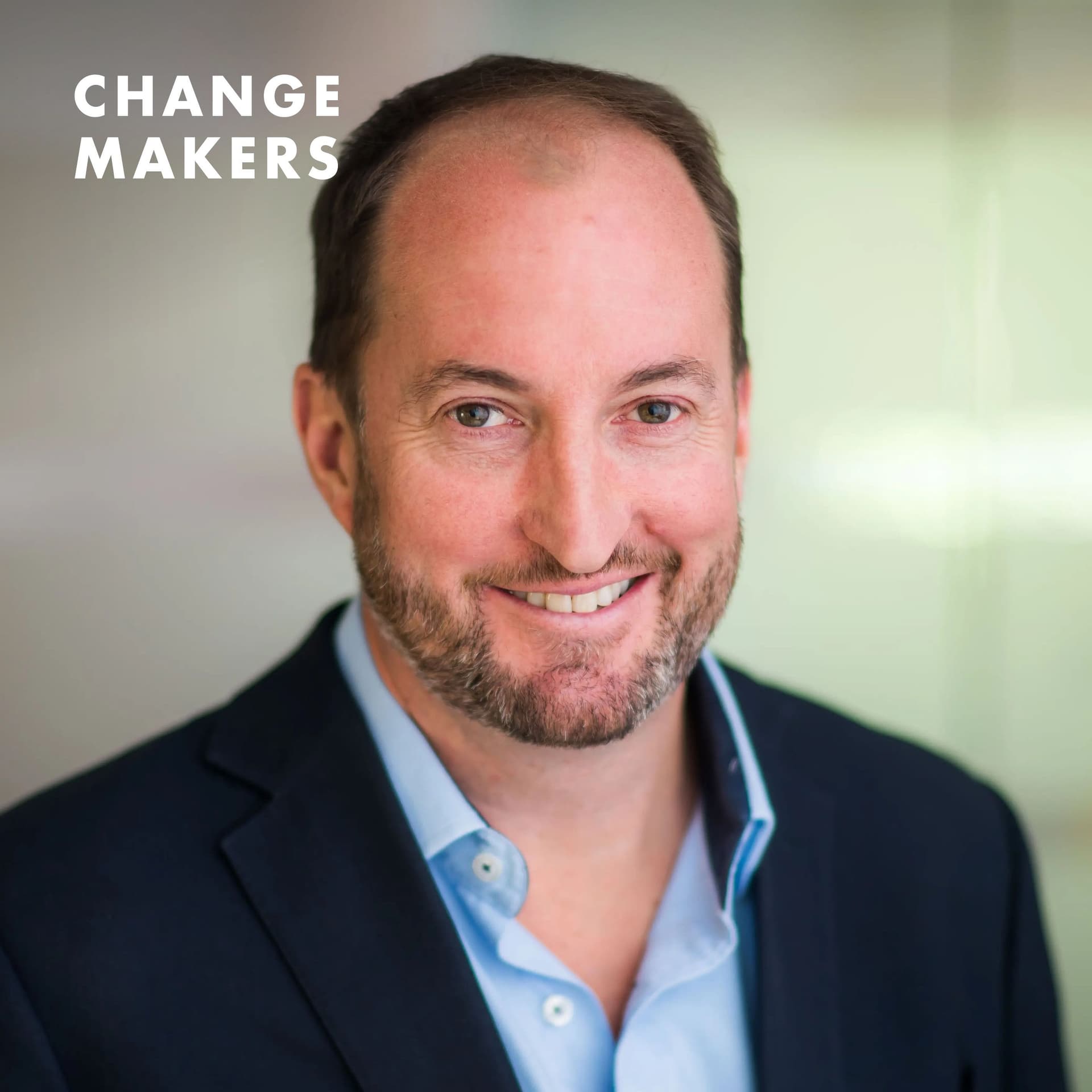
Podcast Overview Podcast Title: Change Makers: Leadership, Good Business, Ideas and Innovation Host: Michael Hayman Guest: Ben LaBolt, former White House Communications Director, now President at BPI Episode Focus: The significance of resilience in leadership amidst misinformation.
Key Themes and Insights
- Resilience as Leadership Currency
- Definition of Resilience: In today's landscape, resilience is essential for brands, leaders, and governments to navigate misinformation and public mistrust.
- Misinformation Challenge: The rapid spread of misinformation poses a significant threat to brand reputations and requires proactive measures from organizations.
- Introduction to the Resilience Index
- Purpose: BPI's Resilience Index analyzes how brands withstand misinformation compared to competitors.
- Findings: Brands with established reputational values tend to perform better against misinformation, suggesting proactive reputational work is critical for long-term success.
- Navigating the Communications Landscape
- Changing Media Environment:
- The fragmentation of media consumption has transformed how information reaches audiences.
- Organizations must adapt by utilizing diverse channels (e.g., social media, traditional media) to communicate effectively.
- Importance of Brand Values
- Consumer Expectations:
- Modern consumers prioritize brand reputation and ethical behavior over mere product quality.
- Brands perceived as committed to community and employee welfare are more trusted when misinformation arises.
- Strategies for Effective Communication
- Campaign Mentality:
- Organizations should adopt campaign-oriented strategies to engage stakeholders effectively.
- Identify and understand target audiences to create relevant and persuasive messaging.
- Real-World Implications of Misinformation
- Consequences:
- Misinformation can lead to significant financial losses and market share declines for brands.
- Companies that invest in building a strong reputation before facing misinformation are better positioned to handle crises.
- Lessons from Political Communication
- Comparisons in Communication:
- The communication styles of political leaders differ significantly, impacting their effectiveness in engaging with the public.
- Leaders must be proactive in defining their narrative to avoid being defined by external misinformation.
- The Role of Leadership in Crisis Management
- Proactive vs. Reactive Strategies:
- Organizations that proactively communicate and build trust are more successful in managing crises.
- Risk management should focus on defining and promoting the organization’s values rather than avoiding action.
Conclusion and Final Thoughts
- Final Message from Ben LaBolt: The modern communications landscape requires organizations to be vigilant and proactive in their messaging and reputation-building efforts to withstand the inevitable challenges posed by misinformation.
Key Takeaways
- Resilience is vital in leadership and brand management.
- Establishing clear, value-driven communication strategies can mitigate the impact of misinformation.
- Organizations should continuously adapt to the evolving media environment and consumer expectations.
This episode underscores the critical necessity for brands and leaders to cultivate resilience and trust to thrive in an increasingly complex and often misleading information landscape.
Written by AI. May contain mistakes. Listen to the episode to check what was said.
Transcript
Automatic transcript. May contain errors.0:03Welcome to Changemakers with me Michael Hayden and today I'm joined by Ben Billabolt, former White House Communications Director under President Biden and now President at BPI. With a career spanning the West Wing, Capitol Hill and City Hall, Ben has advised Presidents Biden and Obama, Chicago Mayor Rahm Emanuel, and played a key role during Supreme Court confirmations. Now at BPI, he's sharing new research on what makes brands resilient in a time of deep mistrust. The Resilience Index shows that trust and favorability aren't enough. To endure, brands must be seen as committed to more than just profit.
0:35So, how should leaders communicate in an age of misinformation? Well, let's hear more from Ben. Ben, welcome to London. Welcome to Changemakers. A pleasure to see you. And what a conversation we've just had, really, your journey from working with the Commander-in-Chief to the CEOs and C-suites around the world. Welcome back to BPI and an amazing story about the White House we're going to tell. But let's just cover off that. That's what it feels like to be back in the private sector, I guess. Well, look, my schedule is a little bit better that much. I got like some portion of Sunday's back. So there's an upside in that.
1:14Look, part of the reason I came back to BPI was whether when I was at the White House or here at BPI is just grappling with the change in communications environment around us. And one of the reasons I came to BPI in the first place is I believe this is the agency and the group that has the smartest set of tools to figure out exactly where information consumers are going today. Where are they getting their sources of information? How are they dealing with the rise of creators and the migration to TikTok and all these other sorts of platforms? And the media is trying to adapt too, and we're trying to follow them along in their journey.
1:51So really great to be back. It's great to have you back. I mean, I suppose in terms of, you know, you've got your Sundays back, but in terms of your compare and contrast, who's got to learn something from here in comms? I mean, is it government that should learn from the private sector or vice versa? How do you find the styles in terms of the role of the comms director, the role of the communicator? Yeah, look, I think that the best approach for me is always the most campaign-oriented and the most integrated. And so, you know, many organizations we've worked in, certainly the government, it's very bureaucratic and things are divided between communications and press and digital and stakeholder outreach.
2:32And they're in bureaucratic organizations that were built 50 years ago, and they're not necessarily modernized for the modern communications environment. And so, you know, what we know about how to reach people today is that they're getting sources of information throughout the day. They're getting it in their cab on the way to work. They're getting it in the elevator. They're catching a moment of television when they're walking to the audience, they're getting it on their smartphone. And so trying to build an organization, whether it's the government on the private sector side, that reaches people throughout their day with information that is relevant to them is a task that we are all trying to figure out.
3:13And I think that's, you know, I was trying to figure that out in the White House, how to reorganize that bureaucracy to be able to deal with this changing communications moment. But I got to tell you, it's much easier to be able to meet that demand in the private sector. Now, you've been speaking to a full room of leaders this afternoon about, I suppose, the campaigning mindset. And of course, when we think about campaigns, I think a lot of people will understand it from a political leader's point of view, a party's point of view, trying to get the votes for government. But do you get the sense that actually there is almost like the voter mentality that the private sector has to go through?
3:48And as a campaigning for mindshare, campaigning for preference. And I guess, do you see it sort of in terms of its vibrancy and the innovation in terms of how the privacy system have picked up the mantle? I absolutely do. Look, I think it was born out of politics and born out of campaigns. But if we are in a competition for mindshare, if we are dealing with a fracturing media where people are getting information from many more sources, and some are not through traditional media channels, but, you know, a creator who may have a YouTube show that reaches 30 million people. We need to develop a campaign platform to reach those people, to grab their attention, to communicate with them about something that matters to them, and to understand if we're persuading them or not, right?
4:33Are you moving them along the scale of somebody who wants to be associated with your company, somebody who would consider buying your product? What we've found is that there's segments of customers. There's people who are going to shop at your store regardless because they like your product. But about a third of consumers really care about brand reputation. Are you doing good things for the community? Are you treating your workers well? Questions like that, they'll ask before they make a purchase decision. So you have to have a campaign mentality. Well, exactly. And it's almost like the vote for preference, right?
5:02I mean, you've been launching the Resilience Index this week. And I think that's closely allied to this in terms of the relationship between consumers, employees, stakeholders, and the organizations that are asking for their loyalty. Talk us through some of the top line findings. Well, look, we need to accept that this new information ecosystem, we've also seen the rise of some problematic things, such as misinformation. So when there used to be a piece of misinformation, you could call an editor or fact checker and say, there's a problem in this story and let's change it right i mean there's no one really to call uh anymore and not only we're seeing misinformation impact the brand reputation of of companies and organizations but we're seeing some companies that have lost billions of dollars in market share because something was claimed about them online that didn't have any truth to it and you know they could call the wall street journal and say that something is false um but uh ultimately that didn't reach the online ecosystem and really respond to that.
6:04And so the Resilience Index was built to test misinformation against brands and determine whether there are some brands that could better withstand the misinformation than others. And what we found is that brands that had done the proactive reputational marketing work to establish a set of values that their stakeholders cared about and made them trust them more when they were exposed to misinformation about the company. And it really had a 2x difference. It was like an investment in your long-term future. It is. And to do so in a proactive way before you're attacked, before there's a piece of misinformation that's spread against you is really important because you have to establish trust in the leadership to be able to be durable in these moments.
6:48And the truth is, pretty much every single brand is going to face misinformation or attack against them in this ecosystem. And so you've got to be ready for the moment that somebody makes a claim. You may accept that. I mean, I think a lot of people think that kind of attack mentality, misinformation, well, it might be fine for a big company over here, but is it really going to affect me? I mean, how ready for that world of change do you think companies actually are? Well, you know, some companies are getting religion after a very serious crisis moment. And that's often the type of client that we hear from is going through something very significant where something was claimed that spread like wildfire.
7:31There was a campaign to delete their app, for example. So you're already on the back foot from day one. Yeah. My hope is that there have been enough of those problematic incidents over time that executive leaders are seeing the need for more proactive planning here. I think about it like the moment 10 or 20 years ago where companies being told, if you don't have a crisis plan on the shelf, you need to build one today. Well, this is a different and much more complex moment. It's going to take some proactive reputational work to make sure that you can endure the moment when it comes. Right. And now at the heart of the research is really fascinating insights into attitudes to change across the US, UK and Germany.
8:13Pick up the story for us in terms of actually what those attitudes actually are. Well, look, 52 % of people in the US and the UK, for example, are primed to believe misinformation about a company. They don't have a base level of trust in companies. And one in five would tell you that they don't trust companies at all. It's a little bit more in continental Europe, but not a significant difference. difference. And so you're starting from a difficult baseline. But what we saw when we tested misinformation against various companies in specific industry segments is that those that did better against their competitors had established a strong brand forward reputation in which they'd gone out and they said, the executive leadership is committed to more than growth at all costs and profit.
9:01We're making investments that are making a substantial difference in the community. We treat our employees well. You know, those companies, when they were exposed to misinformation in our model, consumers said, hang on a second, that's not like them. Why don't we? I'm not sure I trust this misinformation that's being inserted. You looked into some sort of examples of what misinformation might be in terms of the sort of things that people would be predisposed to believe in. Tell us what they were. Yeah, look, it's a number of things. It's financial malfeasance. Did an executive use company funds in an inappropriate way?
9:41Did they not offer their employees fair benefits? Did they shut down a labor action that was brewing at work in an unfair way? We tested 171 attacks against these companies. And again, what we saw across the board, whether it was auto industries or consumer packaged goods, we went down the line and it was the companies that had done the proactive work beyond just product marketing, beyond just buy this product because it's a good product and we'll sell it. And those that went a few steps further and established what the brand stood for, withstood these attacks much better. We've talked a bit today about a kind of post-truth world.
10:30And I suppose I was mulling on this sort of idea that, well, is it just where the best story is always going to win, right? You know, that actually, if you can tell something which is so salacious, so interesting. I mean, I wonder whether that's a pivot back into the political world where we are just, you know, there's an element of what I say becomes reality. You know, and that raises significant concerns and issues for corporate leaders or leaders of any sort of institutional establishment today. That's why we find that laying the groundwork long before you face misinformation is important. You know, there's the old rule in marketing of the rule of seven that you have to hear something seven times to remember that you heard it at all.
11:18It's who gets first to establishing that baseline that may win the fight here and may win the battle. And it's much better to spend a little bit of money now and a little bit of time to establish that baseline. They try to undo this major threat to your business. And I suppose that's the upside of this research, right? Which is that, you know, you kind of read what you say, isn't it? Actually, if you're prepared to put in the hard yards to actually build that reputation, it's going to actually help you weather something if and when that moment arises. Yeah, look, we see misinformation has a material impact on businesses, not just on their reputation, but on their stock price, on their employees' willingness to stick with a company, stakeholders' willingness to stick with a company.
12:03And so the proactive work today can pay real dividends down the road. Let's move to the West Wing. Let's move to the White House. Let's talk about that. I mean, what a job, right? I mean, this is one of the biggest jobs, possibly the biggest job in comms to be direct communications for the president. I mean, tell us a little bit about that role, what it actually means, what you actually do. Yeah, absolutely. Look, I came back to the White House after 15 years away. I was there in 2009 and 2010 under President Obama. That was really a different time. Twitter and Facebook had just been invented.
12:39There was a really strong White House press score at the time that still reached a lot of the country. And an epic communicator, right? Yeah, no doubt. You know, one of a kind, you know, generational talent in terms of communications as the principal. Fast forward 15 years down the road, there's been a huge factoring of the media. I mean, just turn on your TV. It's hard to even find the channel that you're looking for when you're watching television. But add to that YouTube and TikTok and the rise of short form video, the transformation of social media, what we're finding is that there's just so many views dedicated online to a piece of content that didn't necessarily, you know, originate from a newspaper or television station or something that had editors.
13:26So it's much harder to break through today. It's much harder to be sticky with them. Can you ever get onto the front foot today where it is so fractured, it is so difficult? From a comms point of view, how do you create the weather? I think it's this. I think you start with stakeholder mapping and research to understand where the people you care about are. And really important stakeholders to White House or to a business are people who are persuadable. Those are the people who decide elections. Those are the people who decide whether they're going to shop at your business, whether it will succeed or fail.
14:01So the similarities either side, right? Exactly. Exactly. So really honing in on that universe of people to understand their belief structure and what they value and then building a cross channel campaign that reaches them wherever they are. Maybe it's traditional media and they're reading the paper and watching a morning show. Maybe it's something that's served to them in their social media feed or just such a good piece of video that it's reaching everyone online. You know, we really tried to work across that dual ecosystem. We brought in, you know, creators to the White House all the time. And we we view that as a yes and environment where you don't throw out the old playbook, but you add a lot.
14:39Yeah, I mean, I suppose it's an issue for a lot of corporations as well as a political environment where, you know, if a big part of your job is risk management, how do you become the opportunity seeker? How do you actually use innovative new methods, actually reach out to completely different ways than the old ways? I mean, how do you create that kind of, I suppose, that agency for change within that sort of environment yourself? And, well, one way of looking at it is this. I mean, risk management is an interesting term because I think that's how a lot of companies and organizations looked at it over time.
15:12And they viewed the way to respond to the risk as doing less. If you do anything, it creates risk. That's not the environment we live in today. Doing nothing is what creates risk, right? Waiting around for an attack or a piece of misinformation. information if you're not out there defining your story defining your brand defining your vision you're leaving it to be defined by others and there's a lot of people that now have the power to define it so you've got to get out there proactively and do it yourself yeah but i but i suppose it's where everything has such a potential cost reputationally that actually that kind of i suppose predisposition to risk mitigation if you will and says that well everything's about cutting down.
15:53But actually, in a political environment, you've got to get preference. You've got to inspire. You've got to get on the front foot. Yeah, you've got to set the terms of the debate, right? I mean, whoever defines the terms of a public debate first is oftentimes the one who wins that debate. Because otherwise, it's just about fighting back and you're on the defensive. Finding your way to a proactive message that resonates with the decision makers the persuadables is the way to win uh and there's often a clock running on your ability to do yeah that is the thing isn't it about the actual you've got a limited amount of time to actually make a difference and and you're in that i mean you know eventually you ran out of time right you know what what what are the kind of the lessons you took away from from that experience in terms of in terms of the sort of i suppose the lessons that you learned And both, I suppose, both positively and possibly most challengingly, right?
16:48Look, this is a difficult time to govern. It's a difficult time to lead any organization right now, specifically in the four years since the pandemic. I mean, there'd been, you know, economic anxiety out there beforehand. We've had change elections in the United States every election cycle since 2006, with one exception. And so it's a volatile environment around there. people felt a loss of control coming out of the pandemic. They were impacted by inflation, many for the first time in their lives in a significant way. And that was really felt around the world. Big, big factors. I think, you know, President Biden went into office, he was focused on addressing the crisis, right?
17:32Getting us out of the pandemic, getting from an economy that was flat on its back to the strongest in the world, rebuilding our democratic alliances around the world. He achieved those things, but the average person is not necessarily focused on macro issues. They're more focused on their day-to-day and their kitchen table. And we tried to do everything we could to communicate around that. But like 80 % of incumbents around the world these past four years made a change. Right. I mean, having worked with two very different presidents, do you think that the commander-in-chief sees themselves through the lens of the communicator-in-chief?
18:12I think they often do, but there's very different styles that we've seen in our presidents. And I had two different experiences on that front. President Obama was a leader who came up through a grassroots movement, started as a community organizer. His ability to create change was defined by his ability to move the public and everything was a public appeal and a public campaign. You know, President Biden had the wisdom and experience of 50 years in public office and the depth of relationships that have been built domestically and globally to create change, understanding exactly what the incentive structure of each leader and each voter in that ecosystem was, and then being able to pass big things and drive change, whether it was expanding NATO or, you know, passing an infrastructure bill back home.
19:00So they were stylistically different in terms of their leadership style and as communicators you know president biden was a creature of the senate and so he loved giving a speech yeah and probably more technically oriented in that in that respect yeah i mean i mean let's i mean i suppose that that covers 44 and 46 let's talk about 45 and 47 in terms of um in terms of president trump i mean because you know that i mean this is a president that kind of understands the power of communication whatever whatever you think positively or negatively i mean this this is somebody that knows how to create a story that people will pay attention to.
19:34Yeah, look, I mean, I think ultimately he is, he's somebody who understands the modern media ecosystem that benefited him during the campaign. It's helped him establish a ubiquitous brand across the country. He's done that as communications has changed over the years. So he had an ability to do that with, you know, tabloids in New York in the 1980s. And today it's really an extension of the brand he built for himself on reality of television on The Apprentice. He's always got the cameras running and is creating a moment for that. Some of the moments are not moments that appealed to me, but they're certainly reaching people.
20:11The way I sort of think about it is kind of like, you know, a master of publicity, no doubt, but is he a master of reputation? I mean, what does this all add up to in terms of the longer term play, in terms of what he's going to be remembered for, what the legacy is? Because this is a president with time that's going to run out as well, right? Yeah. Well, in service of what is a fair question, but I think where the strategy has started to see some holes in it right now, he's seen a 10 point dip in his approval rating since he took office, which was very fast, is that the strategy is built around appeals to the base and fights with the left, but it's lost the focus of the persuadable voters.
20:55The persuadable voters were told he was going to bring down costs on day one and bring down inflation on day one and spend every day focused on that. And so when he does things that are having the opposite impact, um, and when he does some of the things that feel like a little bit more aggressive in the political stunt category, that tends to turn off persuadable voters who are actually not very political, you know, who, who really need to be engaged by campaign. Does not lead to anything. It doesn't tend to appeal to that demographic. It's a signal rather than noise, I suppose, is the question.
21:29Just thinking about, I suppose, the lessons from all of this is that we're talking in London. We are talking on the day that the US and the UK are about to announce a trade deal. for a president that was elected on a mandate that seemed very domestic and quite insular this is a president that has caught the attention of the world in quite quite a big way what's your advice for a country like the uk in terms of how it communicates back the other way you know because we've got corporations that want to trade film companies that want to make films we've got you know companies and people that really want to stay on the right side of the us in an environment where that seems to be a very difficult thing to do.
22:14Yeah, look, I think Prime Minister Starmer has played this in a smart way. He got to the front of the line here, and he had a strategy that I think hopefully will be mutually beneficial through a process that was a volatile process established by the United States. At the same time, I would say be clear about where your red lines are, right, and make sure that the policy outcome is actually what you're seeking, because some of the people who've sought a specific outcome have not gotten what they intended. Right. Now, last question, if I may. I mean, I understand that President Biden had some comments about President LeBolt.
22:58As the new president of PPI, what was the message? Well, I was talking to him a little while back and somebody said to him, you know, Mr. President, Ben's a president now. And he said, you know, you weren't elected to anything. You're an oligarch. I think there's a bit of a difference. Brilliant. Well, listen, great to have you back at BPI. Thanks for sharing the stories of not just life in the White House, but I suppose consequences for companies, consequences for corporations. and that this whole sort of incredible sort of era that we're living through, where I suppose we're going to see just so much change in our own industry of communications.
23:42Well, it's a great way to close out the Changemakers podcast, Michael. Great to be here with you. Great conversation today and look forward to spending more time in the UK. Thanks, Ben.
From the publisher
In this episode of Change Makers, we speak to Ben LaBolt, former White House Communications Director and now President at BPI. With experience spanning the West Wing, City Hall, and global boardrooms, Ben shares insights into how organisations can navigate today’s fractured media landscape.
At the heart of our conversation is BPI’s Resilience Index - groundbreaking research revealing what separates the brands that survive and thrive from those left vulnerable to misinformation and public mistrust.
Drawing on lessons from politics and the private sector, Ben offers a blueprint for how leaders can strengthen their communications and build lasting reputational resilience.