In short
Change Makers Podcast: Episode 182 - Journeys of Discovery with Min Kym
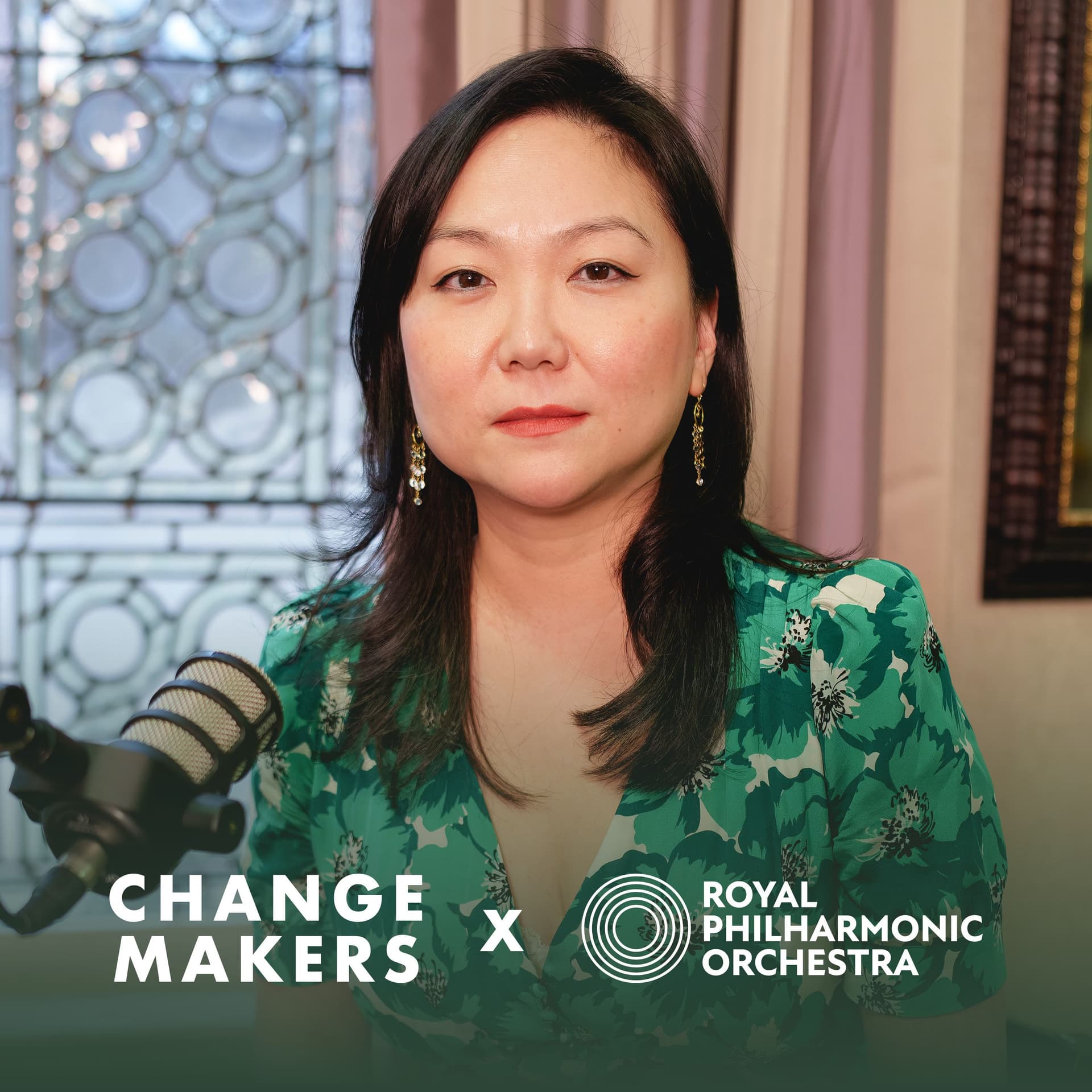
Episode Overview In this episode of *Change Makers*, host Michael Hayman interviews internationally renowned violinist and author Min Kym. They discuss her journey from a child prodigy in South Korea to overcoming the profound loss of her beloved Stradivarius violin, and how these experiences shaped her identity and artistry. The conversation reflects on the emotional relationship between musicians and their instruments, the pressures of early success, and the cathartic process of writing her memoir, *Gone: A Girl, a Violin, a Life Unstrung*.
---
Key Themes and Discussions
- Connection to Music
- Childhood Influence: Min Kym grew up in a traditional South Korean family where her mother’s love for music played a significant role in her early exposure to the violin.
- Deep Relationship with the Violin: Kym describes her violin as an extension of herself, emphasizing the personal connection and emotional depth that musicians experience with their instruments.
- Loss and Identity
- Theft of the Stradivarius: Kym shares the traumatic experience of having her Stradivarius stolen, framing it as a significant loss not just of an object, but of part of her identity and voice.
- Grief and Recovery: She discusses the grieving process that followed the theft and the importance of reclaiming her voice after this loss.
- Perfectionism and Pressure
- Impact of Early Success: Kym reflects on the pressures associated with being labeled a "child prodigy" and how this label affected her mental health, leading to issues such as anorexia.
- Coping Mechanisms: She emphasizes the importance of finding balance and the difficulties of managing expectations in a professional environment.
- The Writing Process
- Memoir as Catharsis: Kym reveals that the idea to write her memoir stemmed from her desire to process her feelings and experiences, ultimately creating a narrative that connects her past with her present.
- Advice for Young Talents
- Mentorship and Guidance: Kym shares insights on mentoring young musicians, advising against comparisons and focusing instead on individual paths.
- Navigating Expectations: She cautions against the societal pressures that can overwhelm young talents and emphasizes the joy of music as a primary motivation.
- The Role of the Audience
- Connection with Performers: Kym describes the symbiotic relationship between musicians and their audience, with both parties contributing to the energy of live performances.
---
Highlights from the Interview
- Intimate Experience at Cadogan Hall: Kym describes the joy of returning to perform and rehearsing with the Royal Philharmonic Orchestra, sharing personal anecdotes about feeling like part of the orchestral team.
- Artistry and Time Travel: She likens playing classical music to a form of time travel, connecting with composers from the past through their music.
- Cultural Resilience: Kym shares stories about her family, particularly her grandmother’s resilience through hardship, which influenced her own determination.
---
Conclusion In this enlightening episode, Min Kym’s story highlights themes of resilience, identity, and the transformative power of music. Her journey illustrates the complexities of artistic expression, the weight of expectations, and the importance of finding one's voice amidst life's challenges. Kym's memoir serves not only as a personal account but also as a source of inspiration for anyone navigating their own journeys of loss and self-discovery.
Written by AI. May contain mistakes. Listen to the episode to check what was said.
Transcript
Automatic transcript. May contain errors.0:02Welcome to Journeys of Discovery, a changemakers collaboration with the Royal Philharmonic orchestra. I'm Michael Heyman, and today we're at Cadogan Hall in London, where I'm joined by world-renowned violinist and author Min Kim. Beginning her career as a child prodigy, Min lived and breathed the violin, but when her beloved Stradivarius was stolen, everything changed. In this episode, she shares her extraordinary journey, reflecting on music, identity, and the courage to start again.
0:37now men welcome to good again hall welcome back to the royal philharmonic orchestra as one of our very very accomplished musicians um we are um here at the rehearsals uh for tchaikovsky's violin concerto um we've been watching those rehearsals together let's just let's just start there in terms of somebody who has been watching from one seat but might be much more used to sitting on another seat as a player in the orchestra um what was it like watching it oh fantastic i absolutely loved it i mean it feels like coming home anyway the hall itself i've played here um and the orchestra of course and you know i was saying earlier i was looking amongst the orchestra oh yeah there's peter and you know um so yeah it's lovely i mean the hall itself is such an intimate experience I think that's what makes it quite unique really.
1:32But you said while we were sort of sat watching that it was you were playing along in your mind. How did that sort of manifest itself? Well I mean when you are so used to actually you know playing in front of the orchestra and the and actually I have played in orchestras as well there's a sort of telepathy that happens that you catch the conductor. So clear, I mean, her directions. I felt as though I was playing along with the other musicians and it's kind of, it's like a drug, isn't it? But it's also, it's an energy. Yes, exactly. And I always think when you watch that relationship between the conductor and the orchestra, and of course today you're seeing in an overwhelmingly strings-based orchestra, is sort of watching that sway, watching that whole kind of, you know, it's almost like watching...
2:29Like a shoal of fish. It is. I was going to say tidal. But I would say definitely water was in there, wasn't it? Completely. And I love the body language as well that happens with the orchestra. I mean, it's such a natural experience. And yes, exactly, I felt like I was part of it. And of course, with that kind of energy is the energy that you receive from the audience. when you're sat on stage how does that relationship feel when you sort of feel the relaxation the appreciation, the joy, the applause how does the relationship with the audience work? It feels as though you're breathing with the audience you feel like you're also breathing with all the other musicians it does become this collective experience and as you say the relationship and the energy in the room absolutely changes the live performance.
3:23And that really is the beauty. Now, let's talk about this absolutely fantastic book, Gone, A Girl, A Violin, A Life Unstrung. It starts with a very sad moment in your life, a Stradivarius violin that is stolen. So pick up the story for us. Well, as any violinist will know, your relationship with your instrument is as though it's a part of your body it really is your voice it's an extension of you the relationship that you build with it is something that develops over time I always think about my first meeting with my violin as exactly that it was it's like meeting another person so it's got a personality there's a relationship it's got a heart it's got a soul it's got its own mind it's got its own temperament I know that might sound a little bit bonkers but but you're not the first that has said that absolutely a lot of people will talk about this this this sort of almost physicality to the relationship this kind of like well and a soulfulness in terms of that that kind of you know you found your instrument it is and it's also um the relationship that you have with the maker of the violin and the genius of Stradivarius is something that you really feel in the the tones of the violin I mean it is a beautiful work of art in itself.
4:47And the relationship, it's almost like you are sort of travelling back in time. Yes. And speaking, it's a little bit, actually almost like playing, you know, a piece of music written by Bach or Beethoven. It's like you are actually having a relationship with the composer and you are relating. It's time travel. I mean, well, didn't you say time travel? Because you said, you know, in one piece I read, you said it could be a museum piece, but that, of course, would be its tragedy, which is that actually it's there to live, to play. Because this was an instrument from the late 1600s. Yes, it's such, I mean, it's a very, it's a balanced, it's a delicate balance to recognise that, yes, these are beautiful, you know, pieces of art and, you know, people want to see the craftsmanship like you would go to a museum to see a painting.
5:33But obviously the difference between these instruments is that actually the beauty is in its voice. In its voice. And so not to hear that. As you're saying, that voice was stolen from you. It was, it was, yeah. So pick up the story at the point. So the theft happened in a sandwich shop, wasn't it? And you're having a coffee and... Well, I mean, subsequently, you know, I think in my darker moments, and actually, you know, you have to sort of find some kind of humour in any bleak situation. And, you know, I sort of think, it was the world's most expensive sandwich, really, that day. and I have relived that moment many, many, many times.
6:17I try not to let it define me though because I mean with any loss and I did really struggle with it for a very long time, I thought I would wake out of this nightmare and when I realised that actually it's real, this is happening, I had to find a way to reclaim my voice. um so it was it was proper grieving proper grief that you that you went oh yes with this and of course subsequently the police were able to um apprehend the people that had stolen it and and get the violin back but you weren't able to take the violin back because you were underinsured there were various reasons and that must have added an extra dimension to your it was very painful yeah I mean I'm not going to hide behind any kind of pretense which I did for a really long time because I think there was sort of the part of me that was you know very raw and honest with myself about how I felt but then there's the other sort of very kind of practical and also I don't know I think I did actually actually feel a sense of sort of embarrassment you know it's an object it's a very expensive object by the way but I mean well but it sounds like it wasn't it wasn't it's sort of value that was it was priceless because I was just thinking with something like that that down the ages that you know its story will have been the people that will have had similar relationships oh yes it's by no means unique this relationship as you've had but because it's It's found its way to you and then somebody has taken that.
8:01So I think a lot of people would understand that actually it must have been an awful loss. I think I eventually came to relate it a little bit to it was my home. And in a way it really was. I mean, I was traveling the world anyway at the time, so I wasn't really settled in any one place. But the thing about my violin was that wherever I went, it represented all the hours that I'd spent alone with it. Because as a soloist, that's what you do. You're spending more time with your instrument than you are almost with another person. Yeah. I mean, well, and it's the point you make in the book, is that actually, you know, there's always someone else in the relationship.
8:49Well, it's a constant. It was my constant. It was my sort of, yeah, it was my partner. It was my life partner. I know that sounds mad, doesn't it? Well, but I mean, I suppose, tell us about the book though, because of course you've turned that partner into a great story, right? You know, in terms of the, I suppose, we'll get back to the sort of the earlier parts in a moment, but in terms of the actual, you know, the title Gone, it's very much about this moment we're talking about in terms of this moment of loss and ultimately realisation about your future. But in terms of why write the book, what was the message you were wanting to impart with it?
9:26Well, it actually started off really as a suggestion from the detective who was in charge of the investigation. I was really struggling with just, you know, coming to terms with everything. And he was so kind and so supportive. He would ring me every Friday at five o 'clock on the dot just to talk, tell me a little bit of updates. you know I was just very very grateful to have that um consistent communication you know because I nobody knew where it was but knowing that people were looking for it was very important to me um and so um I started to write down my my feelings and my thoughts and just as almost like a catharsis it was like a diary you know um and then as as it went on I realized that actually it was I had come to a full stop in my life and it wasn't something that I had intended it wasn't like I decided to have a sabbatical or anything like that it was an enforced stop it was a little bit like COVID actually you know I had no choice except to you know regroup and that's when and come to terms yes yes and I think I did realize that there was somewhat of an unbalanced relationship that I had.
10:43And subsequently, actually now, I feel very much that my voice is my voice. And yes, of course, you have these very intense relationships with your instruments. But I realised that I had, in some way, had a security blanket. And it was. And that took a really long time, actually, for me to accept. Accept. Yeah. Because I think another way of reading this story is also about your journey with music. And I mean, let's go back to the beginning because that in of itself is a whole book. Growing up in South Korea, growing up with what sounds like an incredible family, but not a musical family, but actually a family that encouraged you, got the yellow pages out, found you a violin teacher.
11:31Let's talk about some of these key characters. It sounds like your grandmother and your mother were particularly important. this story? Well, we lived in Korea until I was three. And but I spent a lot of time with my grandmother, have an older sister. And I so when I was born, I spent a lot of time with my grandmother, and she almost became like my second mother to me. And until we came to England, and I was just, I think, just shy of a month from being three years old. And so it's that funny plastic age, isn't it? Right. And she was an incredible woman. She had gone through real pain and tragedy in the war.
12:08So she lost her leg in the war that the house was shot at and a bullet hit her leg and she was actually put in a shallow grave because she wasn't expected to survive. With my mother who was a tiny infant at the time shroud was placed over because, you know, she had gangrene in her leg, you know. but her eldest son who was only 12 at the time so my uncle he pulled her out and with the help of the older man got hold of a bottle of whiskey for some kind of makeshift anesthetic she drank the whole bottle bit into a stick and they cut her leg off I mean isn't that extraordinary? Beyond belief and also must speak to an incredibly resolute character with the grit and determination to carry on.
13:08Her sort of resilience, I think, really came from she had seven children. And the idea of leaving her seven children, and one of them was literally a babe in arms, just didn't enter her mind. And she had to live for her children. Yes. And she lived until she was 87 years old. So you were not short of role models. growing up you were perhaps you're musicians in terms of people in terms of the people to actually give you those initial I suppose inspirations perhaps so how did the sort of how did the interests in in the violin sort of sort of develop because you know you would to go on to very quickly to become a child prodigy of of incredible talent and incredible ability So my mother loved music.
14:00And when she was pregnant with me, so my parents had a very Korean traditional marriage where my father would go out to work. He would, you know, put the week's wages down the table. My mother would run their house. And every week she would put some money aside to buy her first hi-fi system. And her brother would send her records and she joined this music club and they'd listen to it. What were the records? What was her sort of genre? Violin. Violin? Yeah. So she listened to Heifetz, Kyunghwa Chung. Of course, you know, amazing Korean violinist, you know, maestro. Maestro? And so she listened to things like Mendelssohn Violin Concerto, Tchaikovsky, which we're going to hear tonight, Sibelius, you know, Menuhin, Perlman.
14:50And so I am sure somehow that must have absorbed because she would listen to this while she was pregnant with me. So there are some violinists that I feel so much more kind of tuned into and it's almost like I know their fingering and it correlates with the violins that my mother listened to when she was pregnant. How interesting, because I've always, I mean, I'm a strings person. I love listening to the sounds of the strings And I believe they just do, you know, they do something to those that love them in terms of that it's very hard to explain. There's a sort of, there is just... The vibration.
15:31It is. I think it's an extraordinary sort of experience of actually, you know, I think your heartbeat lowers it. There is a very physical reaction to listening to an orchestra with a lot of its string section playing. Did you feel that? I did. We were breathing with it. Yeah, we were. Yes, yeah. So what you say about your mother's pregnancy, that doesn't seem like too much of a jump for me. No, I think it's quite logical, really, isn't it? It is an experience which is not just one for the ear. It is one for the mind. It's one for the body. And, of course, you know, the baby does hear inside the womb.
16:11So I really don't think it's illogical. Well, you are proof of the proposition, if you like. I mean, so you're born. Tell us how the sort of the first steps into becoming a violinist happened. So, as I said, my mother loved music. And when we came to England when I was three and my sister was five. And so we listened to music all the time. and then eventually my sister wanted to learn the piano because there were pupils in her class who were learning the piano so she wanted to learn the piano so she enrolled for a piano lesson and I'm just being a little terror. So you're the youngest? Yes, I'm two years younger.
16:59I have two daughters. My youngest is a violinist and my eldest is a pianist. So is that... That's not what the same talent is. I understand the dynamic. I just was chomping at the bit. I wanted to do something too. I mean, you know, I was watching her play and I'd be sort of immersed in the music and sort of thinking, you know, can I do that? Can I do that? But the only available space at the same time as my sister's lesson, so, you know, it meant that my mother wouldn't have to sort of come twice, was either a trumpet or the violin. And the trumpet didn't really appeal to me at the time. And I think I was probably too young anyway.
17:37I mean, I was only six. But the violin, I just immediately thought, that's it, that's the one. And I immediately went upstairs, went to the children's encyclopedia, got out the section for the violin, and I saw this, and I swear, I fell in love. It was just, the shape, I mean, it's such a beautiful looking instrument. It is, as you say, the wood, the craftsmanship, everything. But it's also not, it's not the easiest of instruments. I mean, it's sort of, you know, I think perhaps you might feel it's easy because of the, I suppose, the sort of the incredible level of accomplishment that you've achieved.
18:17But when did it sort of click? When did you sort of like realise actually? Straight away. You were straight? Yeah, immediately. It just felt like me. It just felt like you? It just felt so natural. I mean, there are lots of instruments that didn't feel like that, you know, to me. But the violin just felt like, of course, that's what I'm here for. So you could actually just, so you felt this is it, this is that, and actually what it could do, I guess, in terms of the sounds it could create. I loved the sounds that it could create. So my friend had a quarter-sized violin, and before my first violin lesson, I was so excited.
18:56She let me borrow it, and I taught myself how to play Talk to a Little Star for my first lesson. But I loved the way, you know, the thing with the piano, of course, is that all the notes are out. what I loved about the violin was that you can actually change the notes. I mean, that was just an incredible feeling of freedom, first of all. And empowerment, right? I did. Yes, absolutely. I don't think I thought about it in those terms, but it was just this incredible freedom of this. It's almost like this canvas. Like play. You could actually play with it and you could actually... Yes, and it just felt so natural.
19:33It just felt natural. So it just kind of started from there, really, yeah. And, of course, you went on very quickly to become, you know, as I heard one journalist ask you, you know, a child prodigy, you know, in terms of actually, I don't know how you relate to that phrase, but a child of immense talent, as you decried it, the cuckoo in the nest. It's a very peculiar thing, actually. when, so I mean I was six when I started playing the violin and I started hearing that term being described from that age and it was quite bewildering because I didn't know what it meant because you know when you're growing up every experience feels normal because it is your life, right?
20:20So I didn't quite understand what that meant. I think the only thing that I could relate to was that in the class that I started with, so I started at the same time with other children and I kept being put further and further up the associated board exams. And within sort of six months, I'm playing with 13, 14-year-olds. So that was quite a strange experience. And pressure on your shoulders. because one of the other aspects of the book and your story has been as well as I suppose finding your voice feeling on occasion that you lost it also and that there were pressures that led to anorexia for example and things that means that this is not just the easiest of stories to tell is it?
21:21I think the minute professionalism comes into it that's when things change right I think for any child performer what changes exactly? The expectations and also that you're not doing it for fun anymore there's something there's a goal at the end of it so I won a competition when I was 11 and I got my first agent and manager around the same time and I of course I still loved playing, but I was aware of the dynamics that shifted. And, you know, it's very nuanced because of course, you know, my teachers are not trying to put me under pressure, of course, but all of a sudden I'm sort of in this new environment where there's an audience and people actually paying to come and hear me play.
22:08So of course there is just that added pressure. Exactly. And it's not that it stops being fun. More like, yes, you know, there's this perfectionism that comes into it that I didn't feel before. Right. And it strikes me from your story, Min, that on one level, that this is about stages in your life where, as well as the tremendous opportunities that they've afforded, you've also had to find coping mechanisms in terms of how to deal with that. Yes. Tell us about that in terms of the, I suppose, because some of this has been about mentors and teachers, some of this has been about just maturity and how you realise things.
22:59Just sort of bring that to life a bit for us. I mean, the thing is, it's hard being an adolescent for anyone, right? and being where I was it was almost like a double-edged sword actually because I felt actually very privileged because when I did have my anxieties like everybody does I could actually retreat into the violin and that almost that became my home so going back to a while. The safe space. Exactly, exactly that. But it was a sort of cycle, you know. I would then become so kind of obsessive about getting everything perfect. I mean, there's that word again, perfect. It took me a really long time.
23:44So perfection, I mean, that's interesting, isn't it? Because what does that even mean? Well, but I suppose the thing is like with anybody who's in an elite profession, whether it's music or sport or you are looking to push the boundaries of yeah of i mean i've noticed it with with the rpo orchestras that that they love the you know the the sort of the the complexity the challenge the the the opportunity to do things which are different which pushes pushes you to sort of like get to that next level all of the time i mean someone said something when I was maybe about 12 or 13 that really resonated.
24:23And it was quite a famous saying, I think, which is that the difference between an amateur and a professional is that an amateur will practice until they get it right. And a professional practice until they can't get it wrong. Yeah, that's a good way of putting it. Just a thought, but we're sort of moving towards the end of our time together. But I was just thinking, knowing what you know now, what's the advice you'd give to parents with very talented children that are the next men, the next sort of prodigy that is sort of like on the way up, but facing probably very, very similar life challenges along the way?
25:11What's the parenting advice? I think that's a really interesting way that you put it, actually, which is don't compare. Right. The minute there's an idea of being the next something or the next, it's already a losing battle, isn't it? Well, it is, but of course it's invariably how society tends to deal with it. Exactly, yeah. That's what the pressure often is. I think, you know, it's such a sort of strange thing dealing with, because I do actually mentor young students and seeing talent is such a thrilling thing. So I've seen, you know, I experienced something like that. It's exciting. But it's a huge responsibility as the person who's guiding because there are things that you don't want to touch.
26:01You know, you have to be led by the child, really. Yeah. Now, it just so happens that tonight there is a little bit further serendipity because, of course, we have an acclaimed South Korean conductor, Shin Yong-sung, who is conducting Tchaikovsky's Violin Concerto, which just feels like it was meant to be, this interview. I loved watching her conduct, by the way. I thought she had beautiful hands. And like I said, I felt like I was playing along with her. Oh, gorgeous. Yes, yes, yes. Very clear. Yeah. A bit of pride? Absolutely. My goodness, yes. Because it's a very great soul philharmonic orchestra.
26:48I do, yeah. It's a sort of, it also sort of, I suppose, in some ways encapsulates the changing dynamics of music, that sort of new audiences, new traditions, new people. I mean, that's a wonderful part of the next chapter, isn't it? I think so. Well, change is always good. Yeah. Embrace change. I mean, what's the alternative? Yeah, I mean, it was just so, it was, what I really enjoyed about watching, you know, watching an orchestra that's not in its form out, formal clothes, it's actually just practicing, is that it's people. Yes. It's society. And it's so interesting, actually, because you know that they're concentrating so hard, you can really feel it, but they're not giving their all because it's the rehearsal and it's not the concert.
27:33But it's, but the concentration is palpable. and yet you know that they're not playing full on and you know that tonight it's going to come to life. It's like they're at half tilt. Yeah. No, absolutely. Well, Min, thank you very much for sharing the story of Gone. Certainly Gone but not forgotten. I mean, it's a wonderful story full of, I think, life lessons as well as really important stories. And thank you for sharing yours with us here at the RPA. Thank you for having me. Thank you.
From the publisher
Min reflects on the pressures of early success, the identity crisis that followed the loss of her violin, and how she ultimately found her way back to music. She and Michael discuss the profound relationship between musician and instrument, the emotional weight of artistry, the reality of perfectionism, and the cathartic process of writing her memoir, Gone: A Girl, a Violin, a Life Unstrung.
Recorded at Cadogan Hall in collaboration with the Royal Philharmonic Orchestra, this is a conversation about music, talent, and what it takes to begin again.