In short
Change Makers Podcast Episode Summary
Episode Title
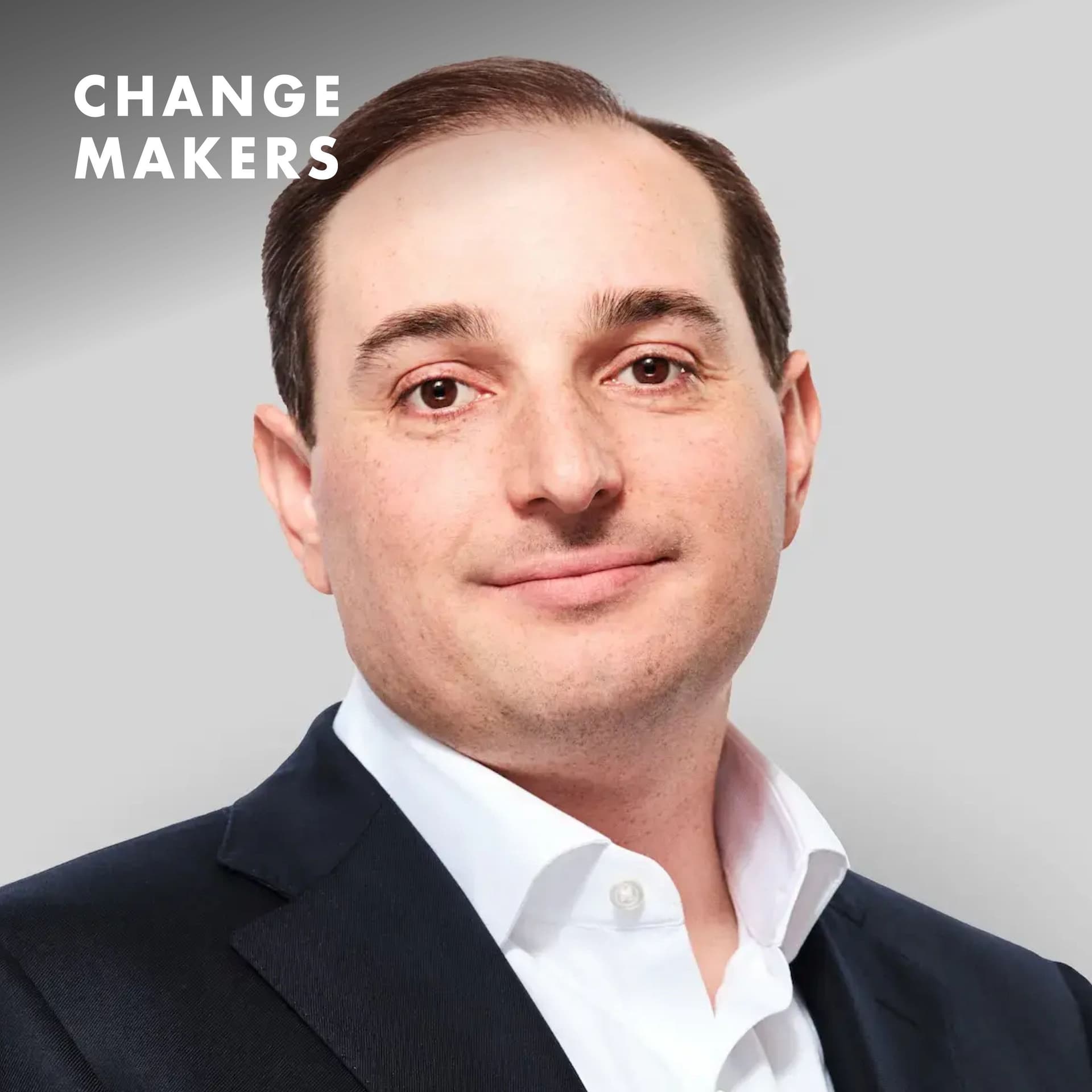
184: Andrew Bleeker: How to Lead Change, Not Be Consumed by It
Podcast Overview
- Host: Michael Hayman
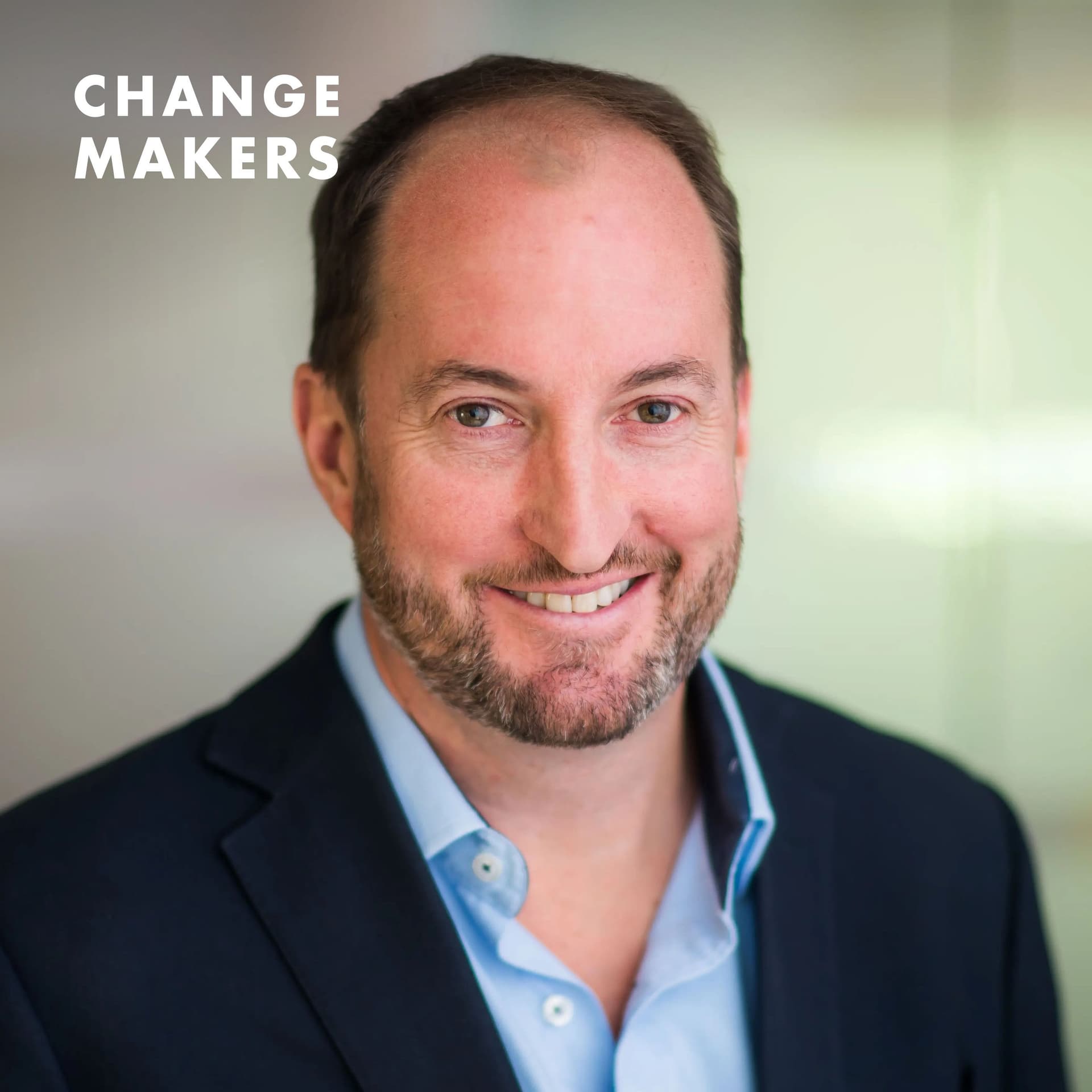
- Guest: Andrew Bleeker, Founder and CEO of Bully Pulpit International (BPI Group)
- Focus: Leadership, navigating change, and the role of communication in modern business.
Key Themes and Concepts
- Leadership During Change
- Andrew Bleeker discusses the challenges leaders face in navigating complex changes across societal, geopolitical, and technological domains.
- The necessity for leaders to adapt to rapid changes and how traditional structures may not suffice anymore.
- BPI's Role as a First Chair Advisor
- BPI aims to act as a strategic advisor, helping organizations through turbulent times.
- The firm emphasizes the importance of communication as a fundamental skill, while also integrating business, policy, and risk management.
Insights from Andrew Bleeker
- The Evolving Landscape
- Bleeker identifies the current state as a period of constant change, accelerated by events like the COVID-19 pandemic and geopolitical conflicts (e.g., Russia-Ukraine).
- Leaders are increasingly expected to respond within short timeframes (e.g., “100 hours” instead of “100 days”).
- Fragmentation of Information
- The media landscape has drastically changed; information is now mostly consumed via social media and personalized feeds.
- Younger demographics are less likely to seek out news, leading to a reliance on curated content delivered through algorithms.
- Experience from the Obama Campaign
- Bleeker reflects on his experience as the lead digital strategist for President Obama's campaign, which utilized innovative digital strategies at a time when traditional methods were failing.
- The campaign represented a grassroots movement, empowering supporters to engage at a personal level rather than a top-down approach.
- Building Resilience in Brands
- BPI introduced the “Resilience Index,” which evaluates how brands can respond to crises and their ability to maintain trust and favorability.
- It helps organizations understand their vulnerabilities and navigate public perception effectively.
Practical Applications for Leaders
- Navigating the Post-Trust World
- Leaders must acknowledge that traditional trust metrics are fragile; brands can be vulnerable to misinformation.
- The resilience index assists organizations in evaluating their standing and anticipating potential threats.
- Adapting Communication Strategies
- Organizations need to embrace new communication channels, including social media influencers and content creators, to connect with audiences effectively.
- Understanding the motivations behind engagement is crucial for building rapport with constituents.
- Continuous Learning and Adaptation
- Bleeker emphasizes the importance of agility in leadership, urging leaders to keep learning and adapting to new circumstances.
- He advocates for a cultural understanding where the collaboration between business and government leaders enhances innovation and progress.
Quotes and Takeaways
- Quote: "Keep your eyes on the stars and your feet on the ground." - Theodore Roosevelt
- A reminder to balance optimism with realism in leadership.
- Quote: "Mediocrity knows nothing higher than itself, but talent instantly recognizes genius." - Arthur Conan Doyle
- Highlights the importance of recognizing and valuing expertise and innovation in any field.
Conclusion
- Andrew Bleeker’s insights provide a contemporary framework for leaders grappling with rapid change, emphasizing the need for effective communication, adaptability, and an understanding of the evolving media landscape. The discussion illustrates the challenges and opportunities leaders face as they strive to lead effectively in an increasingly complex world.
Written by AI. May contain mistakes. Listen to the episode to check what was said.
Transcript
Automatic transcript. May contain errors.0:03Welcome to Changemakers with me Michael Heyman. Today I'm joined by the Chief Executive and Founder of Bully Pulpit International, Andrew Bleeker. Now, I've been working with Andrew over the last year, and I've seen it firsthand why he's a trusted counselor to leaders at moments of change and transformation. His career bridges business and policy, notably as the lead digital marketing strategist on both of President Barack Obama's presidential campaigns. Today, he works around the world on campaigns that power change, using data, insights, and state-of-the-art comms techniques to help leaders navigate risk and corporations build resilience.
0:41This is the story of what it means to lead change and not be conceived by it. Andrew, welcome to London. Welcome to Changemakers. Great to see you here off the plane at one o 'clock, straight into the studio. That's hardcore. Thanks for having me. Changemakers has been on my podcast list for a long time. So great to be in the studio. Well, real pleasure. I mean, and when I say straight off the plane, straight off the plane from D.C. over from the States, tell us all about first chair advisors. I mean, that's the big pitch. Explain it to us. Well, one or two things are going on in the States at the moment, but here too.
1:13Look, I think we find ourselves in this moment of change, right? We all talk about change. And this moment has a lot of different changes happening at the same time. And I think that's throwing everybody for a loop, particularly CEOs and leaders, be that in the private sector or the public sector. Because at the same time, we're having societal changes, geopolitical changes, cultural changes, and obviously huge changes in the way we communicate in technology. And if you think about how a normal organization is organized, right, if you think about the CEO, who's around that table? There's a general counsel.
1:44There's a CFO. There are certain business leaders. But historically, yes, there's maybe been a chief marketing officer. But who really is on all these new issues that are coming at us? They're not single audience issues. They're not just investor issues. They're not just your talent issues with the CHRO. They're not just regulator issues. but of course everyone's interested in the same topics today and so the question is who's in charge who do you turn to and our view has always been and we found that we're now 15 years into bpi is that there's a real desire to have an advisor that could sit across the public right help you on the most important and is it the communicator i mean is that is that is that what what sits in the first well i think what we're seeing is that there's there's a communicator plus right right But communication skills are the basis of it.
2:31But you do have to understand how communications fits with the business. How does it fit with policy? How does it fit with the investment community? And who can help you navigate, whether it was Russia invading Ukraine, whether it's COVID, whether it's what's going on with AI. Of course, all the people in the C-suite have a view on that. But someone's got to run. But that's a total disruption to old models, right? You know, a stretch on the capabilities of people that are going to sit in that chair. Yeah. And really, the reason I think it's evolved is that most of these issues have really philomexed CEOs.
3:05Because I think what we found is that, you know, a black swan issue, a pandemic, okay, they happened occasionally. And those were sort of stop the press's issues. And the whole C-suite turned down to this. But now these are constant. Yeah. Every week, is Trump tweeting at you? Did all of a sudden your product have a tariff? Is there? I think the speed of change is quite something for leaders. And I remember in Mission, we interviewed an entrepreneur that talked about we're living in dog years, as in every new one's worth seven old ones. I actually think it needs another mammal. I mean, I don't know what.
3:38Maybe it's mouse years. Who knows? But it's an accelerated period of change. Yeah, and we're not even six months into this administration. Yeah. Right. And we've got a long way to go. Well, six months in the States, 12 months here. But I suppose that is the backdrop, though, of a lot of change at policy level. A good example is in new administrations, we used to think in terms of the 100-day strategy. Yeah. Right? You know, new prime minister, new president. But now we're talking 100 hours. 100 hours, yeah. And that's really – Certainly are in the States. But that's the expectations for companies, too.
4:10Yeah. We've done a number of CEO announcements in the last couple weeks, and that's the expectation that no one's giving them three months. So velocity, speed, complexity, great communicators usually bring simplicity, a sense of calm, a sense of navigation of these kind of headwinds of change. What build on that for us in terms of what that first chair advisor really has in their arsenal? So I think that was the first chair model five years ago. And all of those things are still fundamental. Of course, you need to have judgment. You need to be calm. You need to help get rid of all the lingo and the acronyms and help explain people why you matter.
4:49But we're in a moment where, in addition to that, the media universe has changed too. And so one is fragmented. There's no general consensus on facts and information. We're not having one conversation. We're having many different conversations. And the question is, how do we get to people where they are? Because we're living in a world now where people don't particularly – we have some really interesting research on this. But people don't seek out news, particularly people under 50 and under 40. The majority of information that people get comes to them. They don't have a civic expectation. They weren't trained in school.
5:24And it's curated. It's curated based on algorithms and based on what else they've done. And it's not based on who you follow anymore because we're in a video-first social world that's based on what are they – you're being pushed in your feed based on what's popular. Right. So it's not just what you chose. Now, we'll talk about a little bit about what we do at BPI and I suppose the services that sort of meet that need, respond to those issues. But I want to go back, actually, because I suppose to understand where we are today and going forward. I mean, you had this amazing cockpit view of change in 2008, working on the Obama campaign, working on what was considered the first breakthrough digital campaign to persuade people and to bring about change.
6:10Tell us about it. Well, you know, it's funny. On the one hand, it feels like a very long time ago. On the other hand, there's so many similarities between that period and today. So I was very fortunate to work on the Obama campaign. I led the digital marketing efforts. Did you want to go into politics? Was that the plan? I mean, fortunately, I wouldn't wish running for office on anybody. And I never aspired to do that. But yes, I've always been drawn to politics. I live in, you know, raise my kids in Washington, D.C., you know, love being around it, love the ability. And partially because I always came up with the belief that, you know, I was certainly brought up to believe that that was the way you could, through government, through collective action was the best way to help people.
6:50Interestingly, as I've grown, I've realized actually there's a limit to what government can do. We're going to need brands and NGOs and we're going to need everyone to solve these. Back then, we're in the world of yes, we can. Right. You know, the world of actually optimism is on the rise, positivity is there in terms of what can be done. And you're working for the candidate that embodies hope. Right. So what does that feel like? Well, and he was – one thing to remember about Obama is that if you were to ask him, if the president, if you were to ask David Axelrod, the sort of chief strategist, they would tell you that they never set out to run a digital campaign.
7:24But they were the underdog. Yeah. Like they were a huge underdog, right? First term senator, no money. And so the only way that they could win is by being willing to take risks. And disrupt. And disrupt. And find new channels, engage new people. and try things. And so really our digital marketing efforts and a lot of that campaign came from we had very little to lose, right? So we were willing to try things and innovate actually long before other spaces. And I suppose that's the kind of startup politics. But very quickly, you know, we've talked about this, is that there's a level of sophistication where even like a speech is no longer written as a speech is written in terms of actually what are going to be the takeouts, what's going to be the five second clip, what's going to be, I mean, the level of sophistication that suddenly you know sort of seemed to happen at speed at pace seemed to be a big part of what that brand was all about about being seen being on the money on the button on the pulse well certainly it was it there's so many parallels to what the changes we were just talking about today right so you think about then it was the great financial crisis plus the birth of social media for the first time but but it was still basically pre-news feed it was a different it was a different era but it was the first time we could really empower supporters Yeah.
8:39Right. It was the I think it was the first real modern grassroots digital campaign and which was a huge change that we are not going to talk top down to people. We're going to empower them to talk to their own. Do you think do you think you see that in hindsight or were you feeling it at the time? I think that was very clear at the time that that was a very that was a very explicit strategy. And one of the campaigns and marketing, by the way, has been, you know, it was was very top down is still largely one to many. and we one of the things we've always talked about is sort of networks not neighbors that you know whether you're knocking on someone's door in a political campaign or you're you're marketing to them or communicating to them oh the messenger matters yeah right and finding and particularly today as any kind of trust and authority all around the world and we see this country by country right the the value of establishments is dropping very quickly and so expertise is different right the people that can persuade you the most are the people that are not the experts in the field, the economists or the, you know, the scientists, it's your friends.
9:40So I suppose this is like a massive lab, right? You know, you're experimenting, and you worked on two campaigns, right? Oh, yes. And presumably, they evolved and they changed. But at some point, a business was born. An idea was actually, this is what you do in the world of public service. Maybe I can do this in the world of business. Tell us about that in terms of actually when you thought, well, actually, maybe I could create something commercial out of it. So BPI stands for Bully Pulpit International. And I know every time I'm in London or in Europe, people say, what on earth is that? The bully pulpit is a term from President Teddy Roosevelt in the United States, which is about basically around how do you use the power of the presidency to move the public?
10:24How do we move the public conversation and through that change policy and change the world? It is the pulpit being, it meant actually good pulpit, but not angry preaching. But how do you have this unique ability of the American presidency? But I think your PM and many other CEOs have this too, to really convene the conversation. And obviously the I, which now stands for international, was interactive. Interactive, right. Because we felt there was exactly this, that it was the Obama campaign, like not that many campaigns. A, politics was cool at the time. Obama was cool, is cool. But every brand was coming to us and say, okay, wait, how do we do that?
11:03We realize that marketing has changed, communications has changed, and we need a fundamentally different approach. And we were very lucky to be starting at a time when, in 2009, when some of the biggest brands in the world didn't feel like they had this capability. And so we're able to be in that room. We were not made necessarily the first chair day one. First chair is sort of an aspirational goal. It's something we're working towards every day. We have to earn every day. We don't just get. And every time we think we found it, we realize there's another table somewhere. Right. So it's a it's a long term goal to really.
11:35Yeah, to get to the first. But I think the thing also that you said in some of the answers you sent us in terms of best tip for life, find your tribe. Right. So what's that tribe for you business? I mean, are you in the plate or actually was it the political world? Where did you find your tribe? So I'm a huge believer that a lot of success is about not just picking the right industry that's going to be growing, but finding the people that you want to work with, that you're really loyal to, that you have shared experiences with, that become your tribe that you can work with over the course of your career.
12:10Right. I found that in politics. The Obama community is an example. but increasingly the political world in the United States because actually there's a lot of commonality between say the Bush world and the Obama world truthfully they get along pretty well these days and others is really a tribe that is sort of growing up together and so so much of the senior team our original senior team was being able to draw from other leaders not from the digital side necessarily of the Obama world but from other side from speech writing from communications from polling and research and likewise as our as if you think about who is the first chair on the client side within an organization oftentimes it's the most senior political person in the building yeah yeah right and they want people they that are part of their tribe that speak their language can keep up with them that they know get it that they trust well it's interesting because I mean special assistants are something that we're seeing over here in the UK Rishi Sunak has just become sure sort of chief advisor at Goldman Sachs I mean I suppose this point of view that actually you know look at nick clegg at meta and other other people were actually that you're right they bring that kind of background where they bring something something new and different um i mean you you you've cited another great power broker james baker as an influence other other side of the other side of the aisle but but for somebody i mean a lot of people won't even know who james baker was but actually you probably know what he did in terms of his influence and his ability to get things done so james baker if you ask me like who who is someone that I think is really impressive.
13:40James Baker would not be an obvious one, probably from a Democrat out of the United States. But a couple of things, you know, James Baker became Secretary of State, Secretary of Treasury, White House Chief of Staff, you know, three of the most powerful positions in the United States government under Reagan and then George H.W. Bush. What is interesting about one of the things that as I start to look towards maybe the second half of my career. One of the things that really inspires me about James Baker was that when James Baker turned 40, he was a lowly lawyer in Texas in sort of a middling firm.
14:14And totally, no one knew who he was. And because of his real ability to manage, he obviously helped when the Soviet Union, he was Secretary of State during the fall of the Soviet Union, was able to negotiate peace, German reunification made you know the first Iraq war you know major foreign policy victories um but this is a guy that no one knew who he was at 40 and so he was totally able to reinvent himself and learn new things and keep learning and I that is to me really inspirational yeah I think there is there is a career inspiration there but I suppose also there was a style inspiration because I mean he was he was much more quietly spoken perhaps than today's politician much more known for his diplomacy, his pragmatism, and actually on mission, you know, wanting to get the job done right.
15:05But how does that world exist today? Could a James Baker come to the fore in 2025 as opposed to 1985, let's say? I want to believe the answer to that's yes. And I think we all have to keep working for an environment in politics and in business where capable people can do well. Right. And, you know, I think there's an increasing question of, Would somebody like that become a principal today or would they stay a staffer? And I think that's an interesting question. But look, I do think we're seeing more intersectionality between business leaders and government leaders. And I think that's a good thing.
15:39Because I think we're realizing that, frankly, there was a long period that I've come up in, right, from really the sort of the end of the Cold War till recently, where in many ways, the government wasn't that necessary for the innovations that were happening in the economy. And if anything, a lot of what governments in Europe and the States were doing was try to take government out of certain parts of the economy. The next 10 years are different. Right. So government's got to lean in, right? Very much so. We're about to go through a fascinating period of economic and technological change from AI to precision medicine.
16:17Obviously, what's going to happen in defense and global security. And these are the markets of the future. Yeah, exactly. sustainability and government's gonna the way the way government supports inhibits regulates protects is going to define the next decade and yet a lot of people watching this will think yeah but i've seen you know aged senators and people that just you know sort of buildings that were built in medieval times whatever i mean how how fit for this modern world is modern democracy that's the that's the challenge but i think they're i i think one most leaders are realizing this is existential right um and i think we're seeing that you know you're starting to hear that out of germany you're starting to hear that out of you know there are a lot of frankly interesting democratic models in europe where they get it you know you look at estonia you look you know you look at the nordics where they're they're really there so i don't think it's about necessarily democracy as as a inhibitor age is a challenge um but but again you know you look at you know you know you look at um you look at henry kissinger writing a book about ai at almost 100 i don't think it's about age i think it's about are we leaning in and are we learning yeah yeah yeah and and actually but i think an approach to how you see the future friend or foe you know if you if if your view is we've hardly got started half yeah the glass is half full not half empty you tend to view the world differently than if you think well actually the robots are coming from all of our jobs you know it's end of day stuff so i think outlook really matters doesn't it?
17:45Character attitude. Well, and we spent a lot of time, as you know, researching views on change and how do we help people lead through change? Because if we're not leading through change, change can be very, very scary. Yeah. Right. AI is a great example of this. Many, many pieces are great examples. And what we're seeing is that basically with, you know, we have two economies in most of the Western world where we have one relatively urban economy that at least up to this point in the AI development has done rather well over the last 20 years and has a a fairly positive view of the future and of technology and of globalization and another real part of the economy that feels really left behind.
18:24And as a result, we've seen the rise of populism, not just in politics, but in business and in life. And it is very much not a US only phenomenon. So tell us how that then comes into the briefs that you're being asked to answer on a practical level, in terms of, I suppose, the exam questions that the business has to grapple with to find answers to. Well, the businesses can't escape this environment. I think that for a long time, business leaders would say, we're not political. We don't want anything to do with this. This isn't our issue. We're just trying to run a business. And I think they're finding that's no longer viable, which doesn't mean they have to be political.
19:01But what's interesting is that I think - They have to be activists. No, I don't even think they have to be activists, but they have to understand the environment that they're in and how they fit. So for instance, one of the things that probably the most common call we're getting this year is hey look i we have a terrific communications team we have great relationships with reporters the stories have been good why do things feel so bad right what's going on why do our reputation scores keep going down why are there boycotts or what you know or even violence like you look at you know there's a ceo that's assassinated the united states uh on the health care side recently where is this coming from and one of the things i think we've really helped we are helping brands try to understand is that where they're being like that the the the reach of traditional news um is just very poor yeah uh and it's it's not only low in aggregate but it's it's particularly limited in the types of people that it reaches and and is is that it is it the end of traditional media do you think or actually how how where does this go next in terms of you know is there a moment where there's a reaction against this ever sort of drift towards more and more fragmentation or actually does technology provide an answer or do we actually seek answers from other eras into how society convenes and brings itself back together so let me answer both that and the corporate question because the i think what we're finding is that what brands are realizing is that oftentimes there's 10 times more content about them on social media truthfully and that they don't really have a grasp of the reach and they certainly don't have a grasp of the impact compared to a traditional news.
20:35But of course, the traditional news and the reporters are still critical. One, that's who brands are eager to engage with. And that's often who breaks stories and starts stories. But the way that people encounter them is through their feeds, right? It's through increasingly video first feeds, right? And TikTok and Reels and YouTube. And that's, again, that's everywhere in the world. And if you look at Asian Latin America, even more so their way ahead. Europe and the US are even a little bit behind in some of these things. And so where does this go? I don't think we're – I'm not all doom and gloom about it.
21:07I think there are a lot of interesting bright spots. There are a lot of – but the power dynamic in news is shifting, and it's shifting to personalities, not publications. So I'm not sure I would sit here and we support some of these news organizations or different media organizations in different ways. There are a lot of ways – they're doing a lot of interesting things to monetize around sports and entertainment and documentaries and bright spots. and culture I do think can be the convener. I think there is still a real convening power of culture. We've made our biggest investment this year in a group called Proper Daily as we move out of Los Angeles and Miami, as we move into the culture space and are creating more content and working with creators who are not, because sports is still not seen as sort of fragmented and polarized.
21:53There's a limited supply. There's only one game. There's only one team. Well, we can see that And, you know, we've got Wimbledon being played here in the tennis this week. I mean, you know, there's a lot of lies on one court, right? Well, we have a lot of football in the United States this week, right? Exactly. You know, with the Club World Cup. And so we see huge opportunities there. But really what we're finding is that the journalists themselves are realizing that if they have built brands, they don't need their publications. So every day we're seeing another terrific journalist become an entrepreneur.
22:22Yeah. Right? And start a newsletter. You know, start a TikTok feed. Podcast. and a podcast and i i don't think it's necessarily bad some of those are terrific non-part you know you know straight up journalists i think it's been you know there has been almost it's kind of like you know sort of matt rushmore style of like this is this is the way it is you know and they've and it's etched into the stone of public life that you will only get your your media from certain certain areas and then it's all changed but i suppose a lot of people sit here and go yeah you know and look look where that's got us right you know look at look at a world of you know where where nobody trusts anyone nobody trusts what they're really you know i suppose you've talked about the idea about leading change or be consumed by it um and published the resilience index which i think gives a really fascinating idea about you well how how do you exist in that environment what are the factors that actually help you navigate that world which can be i suppose from a corporate perspective extremely dangerous on things like reputation and that you know the way people feel about you.
23:23And disconcerting, because I think we've been told for, you know, multiple decades that as a CEO or as a chief communications officer, you need to be measuring your favorability and your trust. And it turns out those are very fragile measures because we're living effectively in a post-trust world. And effectively, there are slight differences between, you know, for instance, UK, France, Germany, and the US, but very slight. So break that down for us, post-trust world. What's the component parts of that? Fundamentally, people will believe almost anything about a brand. There's just no assumption that brands will do good.
23:55And there's very little understanding of because there's been so much turnover with the exception of maybe Jamie Dimon or a handful of other long-term sales. No smoke without fire. Right. There's very little connection to who these business leaders are. And so almost anything will be believed about them, which makes disinformation and misinformation so potent. And so one of the things that we've looked at is, okay, if you – and also what's interesting is that brands are hesitant usually to test attacks on themselves because we couldn't possibly – some lawyer says we couldn't possibly test that.
24:23And so when they get attacked, they realize too late how fragile they are. And so what the resilience index is is basically a look at, okay, if these are the kinds of attacks that are likely to come at brands or NGOs, organizations, leaders, how will they fare? Will they stick or will they not stick? and it turns out there are huge differences so oftentimes we'll look at two brands that have identical favorability scores you know same industry like two automakers two airlines very similar trust scores that perform one can perform twice as well as the other and what why why why is that so what the nice thing is because we've asked you know 60 some odd traits that we're looking at across you know 200 brands and you know in half a dozen countries the first round we're going to add a lot more countries next year is that we're able to to really correlate and look back at what are some of these attributes, right?
25:12And there are a few attributes that really matter. But the biggest question is sort of twofold. One is, is this a faceless institution? Or is there a person or a set of leaders that they can actually identify with? And what is the real motivation behind those people? Are they out for something bigger? Do we know what these people are about? And yes, they might not be perfect. They aren't as able to not be perfect. We understand that they're a business. That's okay. But do we believe there's something that they're interested in beyond just purely profit? Right. And I think it's worth saying that, you know, a big part of the BPI model is data, right?
25:48And I mean, in terms of what clients can understand about the world, I mean, is the resilience index the kind of like, is that the world you're advising them on? Or is there a lot more to it in terms of the day job? Well, I think it's the first step, right? The resilience index also helps you understand how you swing at fewer pitches, right? So every organization is being asked to consider 50 things on any given day, right? You know, employee investments, community investments, responding to ESG or diversity and inclusion or many, many other things. And it helps, I think one of the things that resilience does, and resilience is different for every industry and every brand.
26:26So a lot of times we're doing sort of deep custom research around what makes every individual brand resilient. And what are the, if they lean into just a couple things to get one narrative out there, which is the one that's really going to help them. And then what that allows us to do is when you combine that with the conversation we were just having around reach is to then look at your content, all the things happening about you and your competitors in pretty real time and being able to sort of map it on it. If you can imagine a sort of a two by two matrix, you can map impact, right? So what's persuasive and what's not.
26:57And often that'll surprise you because some of the things that are really popular, people just don't believe. And some of the things that you don't think are a big deal are really persuasive and damaging. And you can map it also on reach. And that's when you start to look at, wow, some of these things on social are getting a ton of reach. But actually, I might have great press that is terrific that I should be promoting because no one's seen it. So alongside the first chair, you're going to look at very, very different sort of capabilities that are going to go with that in the future, I guess, in terms of actually where you spend, how you organize, the skills you're going to look for.
27:28Well, it looks a lot more like a campaign. Right. Right. And so it's almost like a campaign manager. We're back to the campaigning style, the big idea, the idealism. Interesting because, you know, when you visit BPI in D.C., is that outside every room is a fictitious sort of president, right? You know, from West Wing, Battlestar Galactica. They're all kind of, I suppose, campaigning presidents that stand for, well, the hope of a better tomorrow. I mean, is that the style, do you think? And I think that's what every brand needs to have the capability to do, which is to respond and measure in real time and deploy messages.
28:07And the reality is it's just going to be a lot more work than it used to be. It's not that you can't reach people, but it is harder. You have to do five times more interviews than you used to have to do. You have to be on more channels than you used to have to be on. And we need things that are new arrows in the quiver that might be in culture, that might be in content you're creating yourself, that might be in working with influencers because there's still trust. But the trust is with a different set of institutions. There's a parasocial relationship. People trust influencers. They're in your ear.
Read the full transcript
28:36It's one of the reasons podcasts are so powerful. You spend a lot of time with these people. I mean, I can't have this interview without talking about Trump because, I mean, you know, the effect. I mean, he is a truly disruptive force in not, I mean, no longer just the world, right? I mean, in terms of how he will be remembered in terms of his effect on this environment, I think, you know, I suppose. I mean, I should challenge it both positively and negatively. What would you take in terms of the highs and lows in terms of actually what that hugely disruptive style of communicator, but obviously a hugely talented communicator as well?
29:10Well, look, politics aside, right? I think, you know, on the geopolitical world, I think he's accelerated a multipolar world 10 years probably, you know, and has broken, obviously, a lot of alliances that I think we're going to suffer for a long time. But from a communications perspective, in many ways, you know, Trump is from the New York TV world. Trump is a game show host. He understands ratings. He understands psychology. He's really a master of coming up with the sound bite. No tax on tips. Yeah. You know, and being able to flood the zone and, frankly, just keep everyone off balance. Yeah.
29:44And what's interesting now is we see a lot of people trying to emulate the president without a lot of success. Right. In business or in public life? Both. Right. I think because people look for the easy version of it. So they say, oh, it must be podcasts. And of course, there's some truth to that. Of course, you need to understand podcasts. But most CEOs could not go on Joe Rogan. These podcast interviews are actually extremely bright. Lex Friedman. Is there a lot? Because I think it's interesting about the Keep It Simple Stupid, that kind of the kiss thing, I think Clinton came up with. I mean, he is a master of the soundbite, no doubt about it.
30:21But if you were to try and draw a lesson for a CEO that's looking at the president of the United States at the moment in terms of actually what's the standout style of leadership in terms of something to take out of that style of presidency, which is obviously hugely different to his predecessors. Well, I think, you know, the channels are different than the predecessors, but I think ultimately we're in a change moment. Last year, 2024, we had elections in over, you know, over half the world, right? And other than maybe India, right, we had a change moment pretty much everywhere, right? And come and lost.
30:55And so I think, you know, I think what is Trump particularly good at is that he's leading a change message. And it's a pretty simple change message, right, of whether you want to call it Make America Great Again or Trump can fix it, right? Like he is a change force. And in a time when people are scared, rightly, that's very appealing. And this is not a time. And we see this for almost every brand, too. If you were in this moment, if you were trying to defend the status quo, if you were trying to explain, if only people understood our business, if you're explaining, you're losing. Right, interesting.
31:28And facts alone are not sufficient. Facts alone can be complex and difficult. And people don't care. And gray, right. Facts are a part of an emotional story. They need to give the scale and the credibility to an emotional story. But there's gotta be a narrative of how are you, what are you for? Right. And how are you part of the solution? Last question. um quote for life i i still you might have got knowledge is power in that because you're a voracious reader i have what three books a week i try i try i mean that that's a serious that's serious that's i mean um that's serious amount of knowledge to get get through but also not much time watching tv anymore more listening reading i have not had you know i've i have two young kids so i've not had a lot of time for tv but i do uh i am a pretty addicted audiobook and podcast person so I almost always have something in my ear.
32:16And there's, the access to content right now is incredible. You can hear from, I mean, take a podcast like In Good Company, right, with the head of the Norwegian Summer Wealth Fund. I mean, like, all these people that you just had no access to as a mere mortal, even five, ten years ago, you can learn a tremendous amount from them. Yeah, I agree. I mean, there's just, I mean, it's there, right? But let's look, so you gave us two quotes, right? Do you want me to just read them out? I don't think because they're reasonably long ones, or have you got them? Sure. I mean, I could give a lot of favorite quotes.
32:47It's hard to pick one. But to go back to Teddy Roosevelt, who is obviously an homage we've recognized in the firm. He's a line that keep your eyes on the stars and your feet on the ground. And I've always believed that, which is, look, we can be optimistic. We can care about making change, but we have to live in reality and be practical. And we can't help people make change if we can't get them where they are. And I suppose you can trip up if you're only looking up, right? Yeah, exactly. We have to live in the real world and be realistic and data-driven and flexible. And then you have a second quote here.
33:22Mediocrity knows nothing. Mediocrity knows nothing higher than itself, but talent instantly recognizes genius. Tell us about that. I'm a big Sherlock Holmes fan. Right. You know, my dog is actually named Sherlock. My last dog was named Watson. That's on Mycroft. Yeah, it could be. It could be. No, picking a single Arthur Conan Doyle quote is hard, but I do think the more that I learn, I think the more I realize how little I know. But the ability to find talent and how also I think the tragedy of how much talent and expertise is sort of demonized in this society, I think is really stuck with me.
34:03I think a wonderment about the future, right? I mean, it's there to be found, right? But I'm an optimistic person. I'm excited by the technologies that are happening right now. And as I meet, we're very fortunate that we're able to work with many of the most impactful, largest business NGOs, political leaders in the world. And I have yet to meet one that I don't think means well. Yeah. Right? These most powerful business leaders or major global philanthropists or billionaires, everybody wants to help. They want to do the right thing. They want to be impactful. And it's harder than ever for them to do that.
34:38And I think we're in a really fortunate position to be able to work with them on some of the most important issues every day. Andrew, alas, we must leave it there. Thank you for sharing the story of the first chair advisor. It's been a pleasure to tell it. Thanks for having me.
From the publisher
Andrew's career bridges the worlds of business and policy, notably as the lead digital marketing strategist on both of President Obama's presidential campaigns. Now, he works globally as the first chair advisor to corporations and leaders building resilience, managing risks, and running campaigns that power change.
Drawing on his experience using data insights and state-of-the-art communications techniques, Andrew shares what it takes to lead change and not be consumed by it.