In short
Category creation and demand generation for premium, one-of-a-kind original art—how Saatchi Art markets to people who don’t yet know they want art, while maintaining luxury value.
Guest
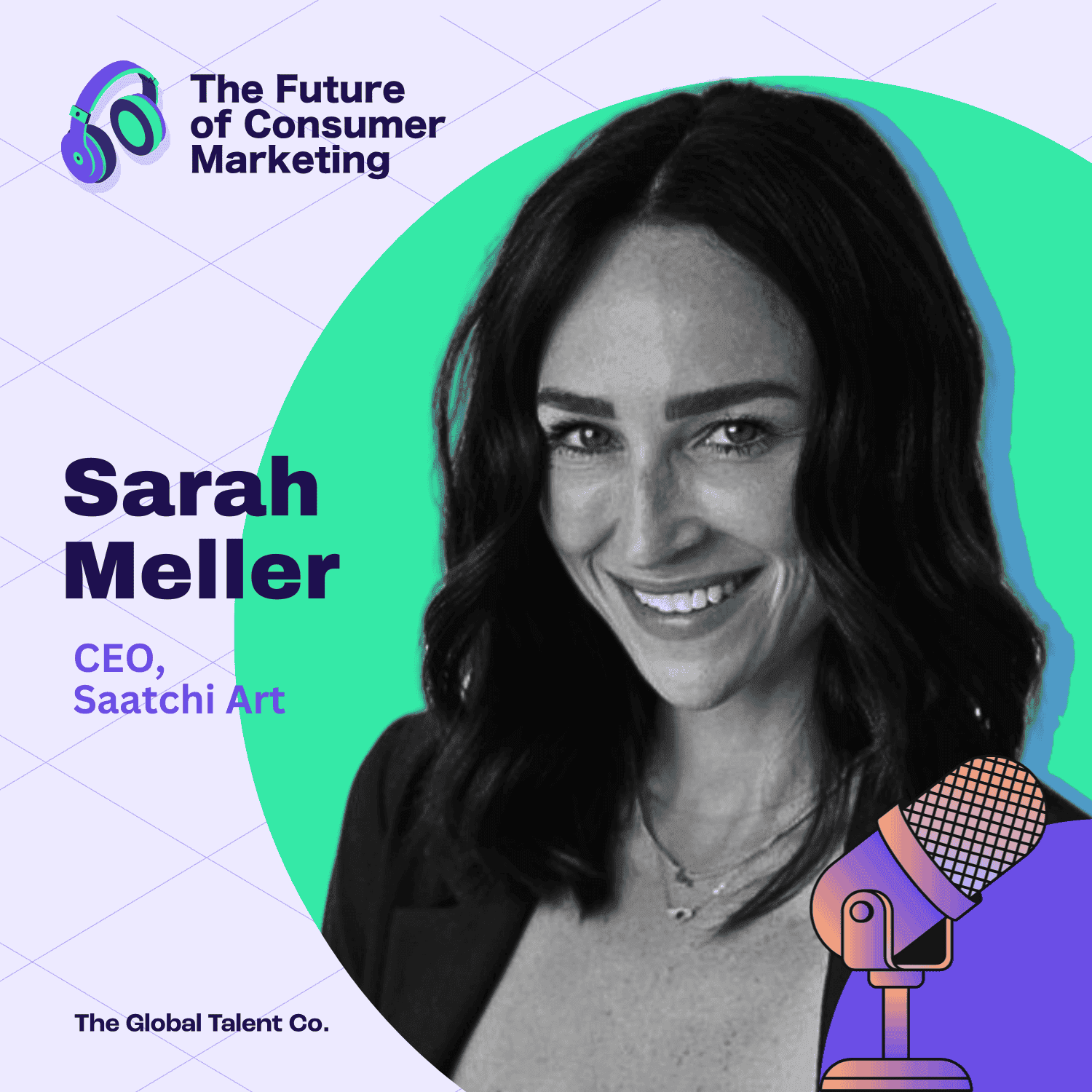
Sarah Meller, CEO of Saatchi Art Group. Background: joined SaatchiArt.com in 2018 to lead marketing (growth, new customers, retention). Became first GM and then CEO about 2.5 years before the episode. Leads three units: Saatchi Art (online marketplace), The Other Art Fair (artist-direct IRL fairs), and hospitality art advisory (art programming for brands like Nobu and Four Seasons, plus healthcare/corporate clients).
Key claims
“Buy what you love” guides marketing; category creation is required because art demand isn’t top-of-mind. Art is positioned as everyday, human-made, and emotionally meaningful (not scarcity-based). Average price is about $1,200.
Notable examples
her husband buying an abstract Indian artwork via Instagram during COVID; The Other Art Fair’s success despite broader art-market declines; AI used for search/discoverability and interior visualization.
Written by AI. May contain mistakes. Listen to the episode to check what was said.
Chapters
Tap a time to open that second in VOSarah's Journey to CEO
0:28 to 1:32
Discover Sarah's path from marketing director to CEO at Saatchi Art.
“Yeah, this is going to make me feel old, but I feel like I've known you for about a decade.”
Marketing Philosophy: A Growth Engine
1:32 to 2:56
Explore Sarah's belief in marketing as a growth engine for business.
“You were like, okay, I'm going to enter in the org, marketing director, then bam, CEO.”
Transitioning Roles: Learning Curves
2:56 to 4:28
Sarah discusses the challenges of transitioning from marketing to general management.
“that probably separates me from maybe other CEOs is like, I do not look at marketing as a cost center.”
Art Accessibility: The Core Philosophy
4:28 to 6:49
Learn about Saatchi Art's philosophy of accessibility and emotional connection in art.
“I mean, look, probably just getting to know so many more aspects of the business.”
Creating Demand for Original Art
6:49 to 9:08
Understand the challenges of creating demand for original art.
“I can't remember the framework, but it had some like 11 different types of brands that you can pursue.”
The Value of Original Art
9:08 to 13:20
Discuss the value and pricing of original art versus mass-produced alternatives.
“doesn't mean they want another blue painting.”
The Future of Art and Human Connection
13:20 to 14:00
Explore the importance of human connection in the art market's future.
“AI music is like, what is amazing about art is that a human like me, who I could understand was talented enough to like put pen to paper and make this beautiful, gorgeous thing that like resonates with me in my life.”
The Art Market's Current Landscape
14:00 to 14:48
Discussion on the struggles and successes in the art market since COVID.
“I mean, we have these like some of like, you know, kids, they're doing these like get off platforms type like rallying things, you know, people using headphones with the court, like, I don't know all these things, right?”
The Value of Human Connection
14:49 to 15:46
Exploring the importance of in-person interactions in a remote world.
“Especially you were saying you're remote, like I'm remote.”
Navigating Technological Change
15:47 to 16:52
Insights on how to adapt to AI and NFT trends in the art world.
“where there's all of this, you know, technological change.”
Show all 15 chapters
The Importance of Liberal Arts
16:53 to 18:11
Discussion on the value of liberal arts education in modern times.
“hands and their brains and think and write and do all those things that I think will become really essential to navigate a world where AI is kind of an increasing player.”
The Future of Education and Skills
18:12 to 19:52
Reflections on how education must evolve with advancing technology.
“And there's a lot of reading and writing.”
Leveraging AI in Business
19:53 to 22:25
Exploration of how AI is being integrated into marketing and content creation.
“So firstly, I think on some level for some content creation, AI can be really generative as we start thinking, you know, organic social is still a huge driver for our business.”
Advice for Aspiring Marketers
22:26 to 24:50
Key insights on building a successful marketing career in today's landscape.
“Yeah, obviously, like learn AI is like a very, very important piece advice.”
Vision for Saatchi Art's Future
24:51 to 25:42
Discussing the strategic vision and goals for Saatchi Art moving forward.
“And I feel like being at an art company like that is our bread and butter.”
Transcript
Automatic transcript. May contain errors.0:00Sarah Meller:This show is brought to you by the Global Talent Co, a marketing leader's best friend in these times of budget cuts and efficient growth. We help marketing leaders find, hire, vet, and manage amazing marketing talent for 50 to 70 % less than their U.S. and European counterparts. To book a free consultation, visit globaltalent.co. Our guest today is a longtime friend of mine, Sarah Meller, CEO of Saatchi Art. Sarah, thanks for being here.
0:27Brett:Thank you for having me, Brett. I'm excited to be here.
0:29Sarah Meller:Yeah, this is going to make me feel old, but I feel like I've known you for about a decade. So we previously worked together.
0:33Brett:That makes me feel so old. So old. Agree. Agree.
0:37Sarah Meller:Well, let's talk about that entry point. So it looks like 2018, you joined the company. What was the initial role that you started with?
0:43Brett:Yeah, I started leading up marketing for Satyaart.com, global online art marketplace. I think the really leading online marketplace in the world. My remit was to expand growth there, bring in new customers, do retention, kind of do it all. And we had a great time doing it. And about two and a half years ago, I took on role of first GM and then CEO of Saatchi Art Group in totality. And the group is actually comprised of three complementary business units. So we have Saatchi Art, which is our global online marketplace. We have a global art fair called The Other Art Fair, which is where you can connect with artists directly.
1:19Brett:And then we have a hospitality art advisory unit, really interesting project. So we do art programming curation for luxury commercial brands, places like Nobu, Four seasons, along with healthcare facilities, corporate clients, all those things.
1:32Sarah Meller:And was that the master plan? You were like, okay, I'm going to enter in the org, marketing director, then bam, CEO. Or how did that happen?
1:37Brett:I absolutely was not on my vision board. It was not. But it's funny. I think, you know, coming from marketing, I thought a lot about the audience, a lot about our brand. I am a firm believer in working for places that you believe in. And I also don't think that you can market it well unless you truly buy into what the brand or what the company is doing. And so it does feel like a natural outgrowth of that marketing leadership role to kind of steer the overall business.
2:04Sarah Meller:Why aren't there more? That's like always my question. There's not a lot of CMOs that make their way through the org and eventually become CEOs, but it seems so stupid because marketing is so important.
2:13Brett:I know. I don't know. I mean, do you think it's just that like CMOs have high turnover, maybe high burnout, and maybe kind of like it just doesn't feel appealing to kind of go into one of those general management roles? I mean, I don't know.
2:26Sarah Meller:Yeah, I guess like that could be it. Especially if they just like love marketing, which like a lot of people, they don't want, like that's not a promotion for them. That's like a demotion to go and be in charge of like marketing plus everything else or response. Yes.
2:36Brett:Well, it's been such a learning curve for me too, because I think too, to like kind of take my hands off the steering wheel of our marketing team and like really let them run that show and kind of be on the outside was really hard. It was a really hard kind of transition for me to kind of get out of the weeds there. because I truly still love marketing. And I still think it's a growth engine. And so I do think that's one thing that probably separates me from maybe other CEOs is like, I do not look at marketing as a cost center. Like I look at it as a growth engine for the business. And I think maybe more CEOs see it, see it as that kind of cost center.
3:09Brett:Necessary evil, if you will.
3:10Sarah Meller:It must be intense to work for you, to hire for that role of a marketing director, knowing that you were the previous person responsible for marketing and overseeing marketing. That would be scary. I'd be intimidating.
3:20Brett:I'd like to think it's a good partnership. You know, I tell the SME team all the time, too. I think for me, the learning curve coming to this role is like starting to have direct reports that are so much more expert in areas that you don't know much about. And so at least, you know, when it comes to kind of the marketing side of things, I can be hopefully a good partner to the team in that way. But yeah, I mean, trying to take my hands off the wheel there has been an important, important thing for me to do.
3:46Sarah Meller:I feel like it's intimidating if you're going to bullshit in any way. Like whenever I hire marketers to work for me, I just tell them like, I've done all the bullshit. Like I'm bullshitting client, everything possible. I will know everything that you're going to try to bullshit me on. And I think that's what gets intimidating. It's like, if you have a CEO who's like, you know, they were an engineer, they don't understand marketing, they don't get marketing. Like you can bullshit quite a bit. But like, it's very hard if you're dealing with someone who really knows what they're talking about.
4:08Brett:I totally agree. I totally agree. And it's like, I definitely now, you know, being part of like agency calls and kind of going through the numbers. It's like, it definitely is a different point of view, I think, to come in there and like really, really understand what these words mean, because there is a lot of lingo. And to be fluent in that kind of definitely pulls back the curtain, I think, in some ways, for sure.
4:27Sarah Meller:What's been the most enjoyable part of this process for you as you made this transition over the last two and a half years?
4:33Brett:I mean, look, probably just getting to know so many more aspects of the business. I mean, I think the thing that's always drawn me to marketing is, and it's good for people that I think that are extroverted and social, it's like you get to have your hands in all parts of the pie, right? And in a general management role, that's even more true. And so what I loved about marketing is very much still true now. I get to kind of work with everyone, see what everyone is doing, get to have an opinion on everything and observations and insights about everything. And I feel like I felt like that in marketing.
5:01Brett:You know, the hard part, I think, of working in marketing is always that everybody else also has an opinion on your work. You know, everyone is a consumer. Everyone sees advertisements. Everyone, you know, is online. And so they feel like they can have a point of view on what you do. And I always felt like that was a really hard thing to navigate as a head of marketing or, you know, in that role.
5:19Sarah Meller:Yeah. I mean, it's always the inbound stuff. Like we got it a lot when we were like, you know, very heavy on the agency business. Like CEO forwards you some random like billboard out in the wild. It's like, how come we're not doing this?
5:29Brett:I do that sometimes or worse, like to our PR agency. Why don't we have this? You know, like I see myself writing those annoying emails and I do try and check myself because having been the recipient of those for much of my career, you know, I feel like I owe the team more than that. But I still sometimes do it. I for sure do it.
5:44Sarah Meller:Yeah, it's hard to not do it. It's so hard.
5:46Brett:It's very hard. It's very hard.
5:47Sarah Meller:When you think about your general marketing philosophy, like how would you describe how you think about marketing?
5:52Brett:I feel like, I mean, I don't know. If I can speak to it, I guess on the brand level, I think what we believe at Saatchi Art is very much buy what you love. Artwork is the totally subjective thing. And there's a lot of barriers around it, right? People are unsure if their taste is right. They're unsure if, you know, what they like is good. They're unsure of what like things should cost, what the value should be. And where we've always kind of leaned in is just go with your gut. And I think that philosophy in some ways has undergirded all of our marketing for the brand too, which is funny. And I think ironic being a premium luxury brand, like so often, so much of that luxury marketing is predicated on scarcity and being part of a club.
6:31Brett:And we're actually trying to do precisely the opposite. We're trying to make something that feels gatekeeping and premium, more accessible and more open to a bigger swath of people. And so I think that buy what you love, anyone can do it. Trust your gut is very much kind of what guides us and what really guides our marketing.
6:50Sarah Meller:I can't remember the framework, but it had some like 11 different types of brands that you can pursue. And I think the democratizer was one. Sounds like you're the democratizer.
6:59Brett:I think that's a fair way to put it. And democratizer, but also category creator. I mean, I think that, you know, when we think about our number one challenge, it's really that. It's like, how do we serve people who don't even know? How do we kind of create the demand for original art? How do we prove out that it's something that you want and that you need in your life? Like, to me, I think just so many, art is one of those things that's like, it's something in a museum or it's something in a gallery or it's something that like you do on the weekends, like you look at on the weekends. And like what we're really trying to do at Saatchi Art is prove that is totally wrong.
7:31Brett:Like it's an everyday daily type thing. So category creation, who is like, it's top of mind for me all the time.
7:38Sarah Meller:So I feel like if you just think about art in general, I just normally think of like rich stuffy people and like, yeah, a museum or Sotheby's doing these like big auctions. Like when you say art, that's the first thing that comes to mind. And I think people, the second thing that comes to mind is like, I can't afford it. Like I'm not totally, totally. Your site's like, there's a lot of epic, epic stuff you get, like very reasonable prices.
7:59Brett:Absolutely. Absolutely. I mean, I think, you know, we serve two audiences. One is like that tried and true collector. They know what they want. They bought art before. But more importantly, it's those people who are not confident about art, who don't think art is for them. And how do we kind of demonstrate and show them that art is this amazing thing that can bring joy to your life? You can afford it. And also you can buy it sight unseen on the internet, which is like this whole other level of thing we have to kind of traverse in our marketing work.
8:23Sarah Meller:So it sounds like for that first group, you're able to capture the demand, right? Like they're in the market looking for art. it's all about just capturing the demand and saying, yep, look here. For that other group though, like how do you approach that? Because you have to go and somehow get them to, all right, create the demand and then capture the demand, which is very cool to do.
8:38Brett:It's the ultimate marketing challenge. And it's every time we bring on someone new to our marketing team or we have a new agency, I feel like they are dumbfounded with the complexity of like this, not only creating a category, but also selling only unique items. Like every SKU in our catalog is one of a kind, which is like also kind of a performance marketer's nightmare.
8:58Sarah Meller:Yeah.
8:59Brett:And, you know, on top of it, it's like, how do you even start predicting what people like when they aren't even quite sure what they like, let alone talking about that second, third purchase? Like just because someone bought a blue painting doesn't mean they want another blue painting. And that's what kind of makes it so absolutely fun. And I like feel like I'm nerding out even talking about it. But yeah, I think a lot of it's about that demand generation, content, education. How do we show people better what art brings their lives? How do we convey that? I think so much of it is about the emotions.
9:26Brett:I don't know about you. Like, do you have original artwork in your house?
9:28Sarah Meller:I do. Yeah? Yeah. Yeah.
9:30Brett:I mean, like, back to that idea of, like, art is something you do on the weekends or something you look in a museum. It's like, I love, like, walking up the stairs, put my kids to bed and seeing, like, a beautiful abstract painting that someone's hand made. Like, that brings joy to my day. And that's, like, a really hard thing to convey to people, especially if they haven't experienced it. But that's kind of, that's our MO. Like, that's what we're in the business of trying to do through our marketing and our brand messaging.
Read the full transcript
9:51Sarah Meller:I just hope you don't say that anymore. That sounds like so cheesy of like, we don't sell art, we sell joy. I think a lot of art. No, we don't.
9:57Brett:I mean, very much. We don't. We don't. But you know, it's funny. It's like I was telling a story to the team the other day where it's like, this sounds so cheesy, but my husband bought me, you know, we were thinking about like kind of like, what's the first artwork that you bought on Saatchi? And I had collected art before I started at Saatchi, mostly through friends that were artists because I was lucky enough to have friends that made work or maybe during my travels. That's a really big, I feel like gateway into art collecting is like you're somewhere and you kind of want to remember it. But my husband bought me this work when I was pregnant with our first son.
10:25Brett:And it was during COVID. It was 2020. Things were super precarious. And it was, you saw it on the software at Instagram. And so I had to applaud him. Like, as the marketer, I was like, oh my gosh, like, I love this attribution. Like, you saw something on Instagram. You went to purchase it. Thousand dollar thing. Awesome. But it was this abstract artwork from this artist in India. And it had reminded him of kind of like the outline of a boy's kind of side profile, like the sonogram. And at that point, like, my husband hadn't been into any of my appointments. You know, we weren't even living together.
10:51Brett:he was a resident, he was in the COVID units. It was like, it was just a really tumultuous time. I was having a very challenging pregnancy with some issues. And he bought this artwork. And I freaked out because I was like, my God, this is such a jinx. And like, it made me so scared. And then eventually, like, I opened up this crate from India, we got it framed, I put it on the wall. And it became this like thing that I looked at every day during my late pregnancy. And it like, kind of was like this like mantra of like, look at this beautiful thing, like this joyous thing is going to happen. And like everything ended up being good and all right.
11:20Brett:And it's like this artwork by this artist who I will never know or ever meet or talk to made this thing that is so elemental in my life. And like, it kind of like makes you emotional thinking about that. And so like, how do you kind of put that in marketing? I don't know. But to your point about like joy and it being cheesy, it kind of is. But it's like, I feel like we all need more of that in our lives right now. Like, you know, it really does move you in ways, I think, when something's meaningful.
11:44Sarah Meller:I think it's, you know, not to be sad, but I have artwork from my brother who passed away. And like, I love that. It's fucking awesome.
11:50Brett:Oh my God. Yeah.
11:51Sarah Meller:I look at it, it makes me happy. And like, that's cool. I think it's like a big value add of art in general. It's like, it'll be there forever. And like, that's just like a cool thing to have sitting there.
12:01Brett:A hundred percent. It's like, what else in your house kind of does that for you? Other than like your family picture, like pictures, I feel like that, obviously. Maybe some pieces of jewelry to an extent for some people, heirloom type stuff. But yeah, I feel the same. I feel the same about art.
12:16Sarah Meller:When you think about the competitive landscape, then like who is the competitor for the group that is not yet buying art? Like what's the alternative for them if they're not buying art?
12:25Brett:I think it's mass produced, awful wall art category. Like the thing that like if you are shopping on Crate and Barrel and it's kind of like here's this like vague ambient abstract and these things aren't cheap. And so I think that's also like what we want to get out there is like you can have something made by a real human with real intent and emotion and drive. And it's not going to cost much more than that. And it's going to be something that is uniquely yours. And that's what we have to kind of get more across.
12:52Sarah Meller:What's the average price point?
12:54Brett:Like roughly around like$1 ,200.
12:56Sarah Meller:That's pretty reasonable for like original art. Again, getting back to like democratizing, like in my head, art is this like just insanely priced stuff that like some of these auction like hitting the hammer down and like sold. Absolutely. Absolutely.
13:08Brett:And like not to already start kind of like AI conversation. But like, I really, truly feel like the premium things are going to become those things that are human made, human created. Like, I don't know if this is a hot take, but it's like, I don't want AI art. Like, I just don't. Like, that doesn't interest me. AI music is like, what is amazing about art is that a human like me, who I could understand was talented enough to like put pen to paper and make this beautiful, gorgeous thing that like resonates with me in my life. And so, you know, to be able to have something like that at that price, I just think that's pretty amazing.
13:39Brett:And I want more people to know that that's a possibility.
13:42Sarah Meller:I mean, I think the world's going back that way just in general, right? Like the example I was reading was like, you know, a shift towards like analog and like analog is going to be cool. Like, yeah, it's going to be cool. Physical things, human created things, like that's all cool now. But like maybe 10 years ago, there were discussions about like, is it the end or these things? I agree.
13:59Brett:I agree. I mean, we have these like some of like, you know, kids, they're doing these like get off platforms type like rallying things, you know, people using headphones with the court, like, I don't know all these things, right? But yeah, I think it's the move. And I have to say, like, this year in particular, it's been really hard for the art market. I mean, not even talking about Saatchi art, but like the blue chip art market, everything is kind of this like doomsday, everything's down from these kind of 2022 post COVID highs. But our art fair, the other art fair has been doing amazingly. And I do think there's something to like, an IRL experience where you're talking to people, you're having a drink, you're meeting artists, you're hearing directly from them that kind of just like drives you to make those purchases.
14:38Brett:And it's been such a success story. And I think people are just trying to look for those moments of real connection now more than ever. And I think it will continue to kind of go down that path. I hope so.
14:49Sarah Meller:I think it will. Especially you were saying you're remote, like I'm remote. It's like, I crave going, just like hanging out with humans physically. Like it's not good, I think. Like that's what I think. recently I'm like, I love remote life. It's great for having kids and all that stuff. But I was meant for more than just like sitting behind a computer screen all day. A hundred percent. I agree.
15:09Brett:And let me tell you, I see it when I'm at the preschool pickup and there's a lot of remote parents. It's suddenly like everyone's like, oh my God, I'm talking to people. And sometimes I just want to get out of there. I'm like, I'm trying to get my kid to go. But I do see the value, you know, I miss it too. And I think those things ebb and flow. But yeah, the flexibility of remote work is unparalleled. And I feel like such an unlock for parents, especially.
15:28Sarah Meller:Yeah.
15:28Brett:I don't know how people did it before. I truly don't.
15:31Sarah Meller:Yeah. We've talked about that a lot. My wife and I have talked about that a lot of like, it's just crazy. Like must've been so hard when you were like at the office all day. Like just how little you did to spend with your kids or like, yeah, not a lot of time.
15:41Brett:No, like you just wouldn't see them. I don't think I could do it.
15:44Sarah Meller:It'd be very, very, very hard. What about, you know, navigating this world where there's all of this, you know, technological change. So I don't know, honestly, not the state of the now, but I know NFTs at one point, they were going to completely destroy the art market or you don't make the art market. And like, obviously, like AI is here now. Like, how do you think about like navigating when like these types of trends are coming? And how do you know if it's going to stick around, if it's just going to go away?
16:06Brett:I mean, I think AI is probably different than NFTs. Like, I think it's here to stay. Look, you know, it helps me in my daily life. I encourage everyone on our team to use it to figure out what it works for, what it doesn't is equally important. I think it will have some impacts on the art world and art makers. I think especially those that kind of do more like hyper real aesthetics, photographers, like I think it is kind of infusing some things. That said, my hope, which may be naive, is that like it's again just going to kind of make human creatives and creators more empowered. Like I have to believe that is true.
16:41Brett:I think that those things will just still have a premium, those people that can still do that. In fact, it's like I even think about my kids and like what I would want to push them into. And it's like I feel like art is now more than ever like something that I feel like I would encourage them to like use their hands and their brains and think and write and do all those things that I think will become really essential to navigate a world where AI is kind of an increasing player. But, you know, technology comes and changes things and we all still keep going. So I try not to catastrophize, I guess, at that point.
17:13Sarah Meller:It's funny how wrong, you know, the general advice was. I don't remember that, like, you know, for what, like 10 or 20 years, it was like, learn to code, learn to code, I was like, no, do something. Man, it's like, we're wrong. Sorry about that.
17:24Brett:Let me tell you, I had a tip on my shoulder forever. I don't know if you remember. It probably didn't make a mark with you as much. But like, I remember at one point, Obama was like doing this speech and he actually named Chuck, like, we don't need more art history majors. And like, I was an art history major. My parents supported me being an art history major. I was an art history master's at Hunter College. And I remember he said that. And I was like, so sad. I took such a personal offense. Obviously, he didn't. It was like a glib, off the cuff comment. But I actually think like liberal arts, humanity is like, that's what we need more than ever.
17:52Brett:We need people that like know how to think. They know how to curate and kind of like pull out meaningful aspects. Like I think those are the soft skills that actually are going to be the ones that are important. And I'm obviously biased. But yeah. Yeah. I just remember hearing that. But what I love so much about our history is like, it's just a beautiful lens on like how to look at what has transpired through humanity and these like connection points. And there's a lot of reading and writing. And I still think that that's going to be important because, I mean, I don't know about you. I think about this all the time.
18:21Brett:It's like AI at this stage in our lives, in our careers, it's like, I think I'm understanding it. I know the limit, but I can't imagine being a high schooler or in college kind of navigating that technology. I feel like it would be really overwhelming.
18:33Sarah Meller:I think just in general, my wife and I were talking about that. It's like when we do for schools, like we were talking like pre-interview, but like, it's scary. Like, I don't know if I believe that they're going to be like, I don't know if you should be taught the exact same way that I was taught. I don't think so.
18:45Brett:I mean, I don't think our kids, I'm like, I told my husband the other day, I was like, I don't know if our kids will learn how to drive. Like all these things, I don't know, maybe they won't. Like, I think it's just really different and kind of like, I don't know. It's 2 a.m. thought for sure. Most nights for me, though.
18:59Sarah Meller:I have great authority there to say, like, they will not drive. Whenever I have on founders who are building like autonomous vehicles or autonomous technology, I ask them that question. Like, oh, yeah. Just daughter, like, do you think she's going to drive? They say no. Everyone said no. Obviously, like, they're already optimistic. There you go.
19:12Brett:There you go. Okay. in a Waymo for the first time the other day. And he like literally was like not, he was like five, but like he didn't register. And I was like, this is actually crazy. Like, I remember the first time I saw a drone with my husband. We were like dating and we were on a beach. Like, I remember that day. I remember my first date in Waymo. Like, I remember these things,
19:29Sarah Meller:but these kids are different.
19:31Brett:They're growing up in a different place.
19:32Sarah Meller:Waymos, every time I get in one, like I do them like three or four times a week. I'm still like a little kid. Me too. There's no human. The wheel's moving. Me too. It is cool. It's cool stuff.
19:43Brett:Me too. Totally. Totally.
19:45Sarah Meller:What other technology are you excited about as it relates to your business and how you're thinking about the business going forward? Yeah. How are you? Or maybe an easier, more specific question. Like, how are you leveraging AI within the business or within marketing?
19:56Brett:Yeah. So firstly, I think on some level for some content creation, AI can be really generative as we start thinking, you know, organic social is still a huge driver for our business. And I feel really lucky to say that because I think what we do still surprises and delights. And so like those types of channels, organic social, SMS, they're great channels for us. I think we have started using AI in terms of kind of refining that copy, doing all that, just being able to kind of keep up with the volume. Right now, we're really excited about using an AI powered search mechanism. So one of the big challenges on Saatchi Art is that everything we have on the site is UGC.
20:30Brett:So two-sided marketplace, it's artists literally uploading everything. And so a pain point for us has always been discoverability. Not only because a lot of people come and they just literally don't know what they're looking for, but because everything's UGC and it's based on artist tagging. It's like you don't always kind of surface what the people are looking for. So we brought on a new vendor there. We're really excited about kind of making that clearer and helping people find exactly what they're looking for and also just kind of aiding kind of what the artists upload to our site. So really excited about that.
20:57Brett:I think, you know, we are trying to embrace it as fully as we can. But I think the big thing there is helping us do things we want to do and not just kind of like throwing spaghetti at the ball or embracing AI for AI's sake. That's been, you know, for sure a guiding mandate for the whole business.
21:12Sarah Meller:How do you make sure that the people know even what to search for? And like, I don't know if you played around with Mid Journey when that first came out, but it was like, you know, in this like Discord and you would like post publicly and you give it these descriptions of like, make it this style of art. I remember like going and like looking at a list of different types of art because I had no clue that like, yes, once existed. What they think you go posting it.
21:33Brett:The image generation stuff has like, I feel like it's been crazy how it's evolved over the last year or so. what I'm excited about is kind of using it to make more art and interiors it sounds kind of not sexy but that's definitely been kind of a barrier for us we have again millions of SKUs everything unique we have so many buyers everyone with different homes how do you help like envision what things look like for people that speak to them and AI is an unlock there because rather than kind of doing a home shoot that is tens of thousands of dollars in a single space we can utilize AI to like basically expand all of our creative to levels that like are kind of unheard of.
22:08Brett:So I'm really excited about that. It's changing every day. And our designers are basically just like becoming in-house experts. And it's also what I keep telling my team is like, these are skills we all need to learn. Like what's really exciting about this is we're learning on the job, a skill set that is basically invaluable. And like, we all need to kind of carry with us whatever we do next.
22:25Sarah Meller:What other advice would you have? Yeah, obviously, like learn AI is like a very, very important piece advice. But imagine that there's, you know, marketers listening in, they're inspired by your story. They want to have a kind of rise that you have career wise. Like what advice would you have from your journey?
22:39Brett:It's a great question. I think being committed to the brand always shows through. I tend to be a company woman. I like to work at a place and stay there and learn and evolve. And I do think oftentimes that that pays off, you know, be there from the bottom, do the work that other people aren't doing, make yourself more invaluable than you thought you could be. And I generally think that that's kind of the way to win. I also think being curious and getting involved in other aspects of the business is always a great move. Just knowing what's going on, being part of the conversation. And that's increasingly harder, I think, in a remote, even hybrid world.
23:19Brett:And it's something that I personally worry about, I think, for younger generations and people coming into the workforce, it's harder. It's a bit more arduous climb when you kind of have to get your face out there and interact with people. And that's like not naturally happening in an office hallway.
23:36Sarah Meller:I think it's interesting too, the idea of getting involved in other parts of the business. We had a CMO from, I can't remember, I think it was Reddit. The one was saying like, go and like learn business. Like this is more like, you want to be a CMO of like a big, big company. Like you need to learn business, not just Yeah, yeah, yeah. To be a business partner, to the founders, to the CEO, like that's how you think about it till I get to the low level. I'm sure it's obviously the same for, you know, CEO.
23:59Brett:No, look, that's how I lead our business. It's every single month, the whole company walks through our P &L and everyone needs to somewhat understand what is going on. The numbers are the business, you know, and I want them to understand that we're not kind of shooting from the hip. Everything is kind of laddering up and that's not to say there's no vision or creativity. Of course, those things are there, but everyone needs to kind of understand what's coming in and what's going out and what the lay of the land is. So that was for me, I feel like a learning curve when I got into this role was like really getting a strong handle on the finances.
24:31Brett:And I want to impart that on everybody else on our team, whether they are an operations person or a curator or an engineer. I think we all should know that. So I try and lead transparently in that respect.
24:44Sarah Meller:You mentioned vision. So let's end with the fun question. What's the big picture vision? Where does the company go from here?
24:48Brett:Look, I've said it already. I feel like we're moving to this world where authenticity is going to be the ultimate luxury. And I feel like being at an art company like that is our bread and butter. I think at least for me, the vision for Saatchi Art is really about continuing to remove barriers, get more people owning and enjoying and finding that joy in art, but also maintaining that meaning. And so really that idea of like democratizing access without diminishing value. And I think we're proving that that's very possible. And that's kind of the ultimate goal, I think, at Saatchi Art Group.
25:19Sarah Meller:Amazing. I love it. All right, we're going to wrap here. This has been so much fun. You have such an awesome story. I just love your energy. It's always so fun to chat with you. Before we wrap, anyone listening in, where should we send them? Where should they go?
25:28Brett:Yes, tweet SaatchiArt.com, SaatchiArt on Instagram for some surprise and delight in your feed. The other art fair, we are next up in Chicago next weekend. So if you're in Chicago, come visit us.
25:40Sarah Meller:Amazing. Sarah, thank you so much. So much fun.
25:42Brett:Nice to talk to you, Brett.
From the publisher
In this episode of The Future of Marketing, host Brett interviews Sarah Meller, CEO of Saatchi Art. Saatchi Art operates at the intersection of technology and the art world, running a global online art marketplace alongside The Other Art Fair and a hospitality art advisory business. Sarah discusses the unique challenge of marketing a premium product category that most consumers don't yet know they want—original artwork—while competing against mass-produced wall art and fighting the perception that art collecting is only for the wealthy. Through democratizing access to original art and leveraging technology to solve discovery challenges, Saatchi Art is creating a new category of everyday art collecting.
Topics Discussed:- Marketing category creation versus demand capture in luxury markets
- Balancing democratization with premium brand positioning
- Navigating UGC-based marketplaces and discovery challenges
- Building IRL experiences in an increasingly digital world
- Leveraging AI for content creation and visual merchandalization
- Evolving from marketing leadership to CEO in a DTC business