In short
Echelon’s scaling of fitness content production from an initial goal of 100 videos to 2,000 pieces per month, and how the company builds AI-enabled fitness hardware and partnerships. It also covers Strength IQ, marketing lessons, and retail go-to-market advice.
Guest backgrounds
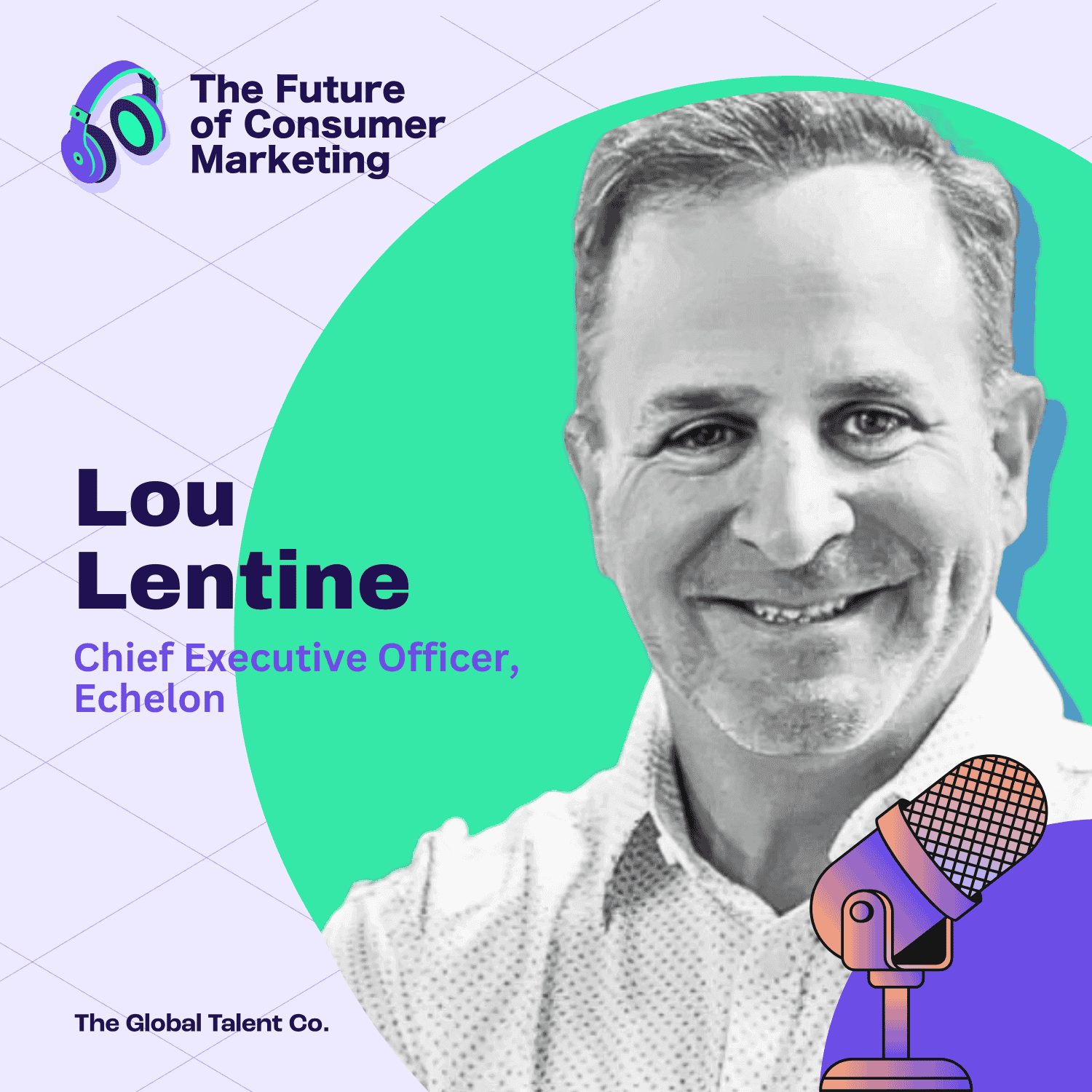
Lou Lentine is CEO, Chairman, and Founder of Echelon. He describes himself as a business-focused entrepreneur who shifted into fitness after doctor advice, starting with a spin bike and building a content studio.
Key claims
Echelon uses AI-backed technology plus a large video platform; it designs equipment for easy setup (e.g., treadmill setup without tools). They grew content by recruiting instructors and filming in-house. They emphasize personalized, authentic marketing and nimble pivots based on ad ROI.
Notable examples
Spin bike launched at CES; content studio in Chattanooga, plus Miami and a planned Dubai opening (closing London). Retail partners include Costco, Walmart, Dick’s, and Academy. Strength IQ uses an AI platform (AWS Bedrock) to run strength tests and generate 15-day workout programs.
Written by AI. May contain mistakes. Listen to the episode to check what was said.
Chapters
Tap a time to open that second in VOLou Lentine's Journey to Echelon
0:33 to 1:52
Discover Lou Lentine's background and the inspiration behind Echelon.
“So let's go ahead and talk about Echelon and everything that you're building there.”
Launching the First Product
1:52 to 3:19
Learn about Echelon's first product launch and content strategy.
“And you were telling me pre-interview of one of your previous businesses was Christmas lights.”
Expansion of Content Production
3:19 to 3:55
Understanding how Echelon scaled to 2000 pieces of content monthly.
“pieces of content every month in fitness.”
Navigating Difficult Decisions
3:55 to 5:32
Lou discusses how he approaches tough business decisions.
“You know, I've been over there a few times last year and it's just a great lot.”
Consumer vs. Commercial Business
5:32 to 7:28
Insights into the balance between consumer and commercial segments.
“can you do it there at a better budget than you can in London?”
Retail Partnerships and Strategies
7:28 to 8:10
Learn about Lou's insights on forming retail partnerships.
“or earlier in their career who are trying to get into retail?”
Challenges in Retail During COVID
8:10 to 9:10
Discussion on how COVID affected retail and logistics.
“And then you're going to be like, where the heck am I going to sell 20 ,000 pieces?”
Product Innovation and Design
9:10 to 11:30
Exploring Echelon's unique approach to product design and innovation.
“And just dealing with circuit boards and chips was also very challenging.”
The Strength IQ Product Line
11:30 to 14:01
Introduction to Echelon's Strength IQ and its unique features.
“We try to think and look at a product differently and why we're building it.”
Integrating AI into Fitness Machines
14:01 to 15:19
Learn how Echelon integrates AI into cardio and strength machines for personalized workouts.
“strength machines, and really give an experience where you get on the machine.”
Show all 13 chapters
Lessons Learned in Marketing and Branding
15:23 to 16:37
Discover important marketing lessons on being nimble and authentic in building a brand.
“What are some lessons that you've learned along the way?”
Advice for Fitness Tech Founders
16:39 to 17:56
Get valuable insights on navigating the evolving landscape of fitness technology.
“And then I'm like, my gosh, if we would have stayed on that track, look at how big this guy.”
Engaging with the Echelon Community
17:58 to 18:52
Find out how Echelon connects with its community and promotes wellness brands.
“You know, when the first internet came, there's AOL.”
Transcript
Automatic transcript. May contain errors.0:00Brett Stapper:This show is brought to you by the Global Talent Co, a marketing leader's best friend in these times of budget cuts and efficient growth. We help marketing leaders find, hire, vet, and manage amazing marketing talent for 50 to 70 % less than their U.S. and European counterparts. To book a free consultation, visit globaltalent.co. Hey, everyone, and welcome back to the Future of Consumer Marketing. Today, we're speaking with Lou Lentine, CEO, Chairman, and Founder of Echelon. Lou, what's going on? Having a great Friday. How are you? I'm good. I'm really excited for this conversation. So let's go ahead and talk about Echelon and everything that you're building there.
0:37Brett Stapper:What does the company do at a very, very high level? What we do at a high level, we're a manufacturer of fitness, recovery equipment that has a lot of technology behind it. That makes it smart and it's backed with AI. We have strong positions in home and also in gyms and verticals and commercial facilities. And were you just like a fitness guy, just pumping weights and you had to build your own product or how'd you get into this world? Absolutely not. Obviously, I did a lot of sports as a kid and then I wrapped myself around working in business through my 20s and 30s and both a few different businesses.
1:10Some say a serial entrepreneur. I don't think I'm that, but I think I'm a business guy. I just love to see something grow. During about 2012, 13, we had some successful product lines and we started working on a fitness product. One of the reasons my doctor told me, you're not working out enough. You're not eating good. Well, I mean, I was financially successful in going to restaurants too much. And I started just changing my life. And I knew the only way that I could truly, truly make a difference in my life is to build a product and wrap myself in it. Because once I get into a business or get into a product, I am all about it.
1:46And I learn it, live it, and really get to know it so that I can create the best product for people.
1:52Brett Stapper:Makes a lot of sense. And you were telling me pre-interview of one of your previous businesses was Christmas lights. I imagine that like compared to going deep on Christmas lights with fitness equipment, there's like a much bigger personal impact on going deep on fitness equipment. 100%, but I did have the best house in the neighborhood with the Christmas lights on, I'll tell you that. I had all the prototypes on it and people would come in for Halloween, people would come to my house because I definitely was all in. Yeah, I can see that. I can imagine. Now, obviously, there's a lot of different products that you have.
2:19Brett Stapper:What was the first product that you began with? And how did you choose that to be the first product? We started off with a spin bike and we built this spin bike. And with the Christmas products, as you just mentioned, we were getting copied by everyone. And it was very challenging on Amazon. Almost every week we were taking off 15, 20 copycat products. So we started working on this spin bike and I wanted to do something different and make an environment where consumers were attached to it and we'd create video production. Now, we were doing video production in our company already. So we understand how to create videos.
2:51So we set up a studio in the office and I went out and found some great instructors locally and knocked on some doors, myself personally, found some instructors, recruited them, brought them in and started filming some content. Our goal was to film a hundred pieces of content before we launched. And we actually launched the product at CES show that year. And then it went on QVC and Academy and a bunch of other retailers. But our goal was just to create a hundred and see what happens. And then next thing you know, we built an entire platform with today, we produced 2000 pieces of content every month in fitness.
3:21Brett Stapper:2 ,000 pieces of content? Oh yeah. That's a lot of different content. I mean, it's across a lot of variety of products and we're very, you know, unlike some of our competitors, we have several different products. I mean, you go from bikes, treadmills, to stair climbers, to ellipticals, and then we also do everything off the equipment too, from the yoga to the hit classes, the boxing. So we have a good breadth of content. We have a studio in Chattanooga with five studios in the studio. And then we have one in Miami, Florida. We get a good five from Miami. And then we have London, which soon will be opening Dubai in September.
3:55How'd you choose Dubai? You know, I've been over there a few times last year and it's just a great lot. It's a lot of expats as well. And, you know, you got a lot of people from England and you get that London vibe without being in London. It's just a new facility. The technology is really advanced there. They're forward thinkers for sure. And when you're talking health and wellness, Dubai is in the forefront for sure. And are you closing Miami? No, we're going to be closing London. London was a small studio and just the ability to grow in that studio was difficult. And we looked at other options and nothing really fit right for us.
4:30And this just came across as a great opportunity for
4:32Brett Stapper:us. You mentioned the hard decision there. How do you approach making these types of hard decisions? Do you have a framework or what do you do to navigate these types of situations? You know, obviously we listen to our members and also I got to listen to our executive team and we look at how they will impact the business. And, you know, short term, it's going to decisions like this are difficult sometimes for our members because obviously they grow very attached to these instructors. I mean, they become your friends, they become your family, but you have to look at it. What's best for the business in the long term?
5:01What's going to work well with the business and how is it going to impact them? I mean, we've made the hard decisions before. And yeah, the first short period is difficult, but then everyone starts saying, oh, look at these, we're producing 25 % more content. You know, the streaming, the equipment's better, everything's better. And they start seeing the difference and we're appealing to their schedule. We're looking at our members and we couldn't give them the depth of scheduling that we wanted to. So they're going to see that. So we're looking long-term, what's going to work right. Obviously, you got to look at budget as well.
5:32can you do it there at a better budget than you can in London? And that could be a positive as well if we go forward.
5:39Brett Stapper:Now, if we look at the business, what percentage is consumer versus commercial? Our business is interesting. We have about 40 % of our business's members. Our membership is a good part of our business. And that membership is made up of two different segments. You have the consumer membership, and then you also have the dealer membership because, you know, we sell it to the gyms, we sell it to department complexes. So you have those commercial members, if not dealer as well. About 20 % is B2C, direct to the consumer. Then we have a great platform in retailers from Costco's to Walmart's to Dick's Boring Goods to Academy.
6:11So some of our great partners. And then we have about 20 % of it is international. So globally selling around the world from UK to Spain, Germany, France. And I don't know if it all added up to a hundred, but there's also a nice percent that's commercial, obviously.
6:24Brett Stapper:And commercial, we see big growth in commercial. On the retail side, you mentioned some household names there that of course everyone knows. What have you learned about getting those partnerships and securing those partnerships? I've been selling retail my whole life and obviously you gotta be very cost conscious when you're selling to them. This year has been a difficult time at retail. A lot of these retailers are dealing with tariffs and it's been a lot of uncertainty with the tariffs on where it's gonna land. We're still in a state of uncertainty and I hope that to clear up soon. But you have to, you know, you're working on programs through them and you have to support it with marketing behind as well.
6:58You don't sell product in and cross your fingers. I just kind of sell. You got to really have that marketing support behind it to make sure it drives off the shelf. And it's a multi-tier marketing approach. Don't just create some advertising in TV or digital and throw it out there. You got to make sure that it supports it. But at the same time that it stayed profitable. You can't just throw a bunch of brand advertising out there. It's got to have response. And I come from a direct response world. So we make sure we got proper returns on it.
7:24Brett Stapper:What advice would you have to maybe younger founders or earlier in their career who are trying to get into retail? You've been doing it your whole life. Like what's your number one biggest piece of advice that you'd have to give them? Drive awareness prior to getting in there. You don't want the product to be sitting on the shelf without that awareness already. So you can build your B2C business and grow that and build some awareness and show the retailer that there's turns. Then go in and don't overdo it. If the retailer says, listen, I want 20 ,000 pieces, I'm going to go do it. say to me, what if we step back and just go 12 ,000?
7:56Let's not be a little bit aggressive. And they're going to be like, what? Oh my gosh, you're turning now. So order. Well, listen, the orders are going to come, but don't put yourself out there and take too much risk. Because if that product doesn't sell, I promise you, he's going to try to come back and give it back to you. And then you're going to be like, where the heck am I going to sell 20 ,000 pieces? I didn't have that planned for my next 12 months in B2C, direct to consumer.
8:18Brett Stapper:On the starting point for you then, was it, did you start off direct to consumer? Yeah, I was more direct-to-consumer early on, and then we started selling in retailers. You know, our space had a lot of headwind behind it, so we did go pretty quick into retail because there was a lot of headwind in it and a lot of, you know, just a lot of noise about the category. What year was the noise the strongest? Was that in, like, the COVID times? I remember there was a lot of buzz. Was that, like, the hottest moment for you, or when was the peak kind of hotness of the store? Yeah. I mean, 19 and 20, there was a lot of buzz, obviously going into COVID created a huge demand.
8:55And I believe we sold out in the three, four month period going into COVID. And then we had to deal with all the pressures of logistics, challenges with manufacturing as the Asian factory started shutting down. And that became a challenge. And just dealing with circuit boards and chips was also very challenging. We ended up buying a lot of chips, not knowing what the end was and put a lot in inventory at the time because we needed them. And you didn't know if we could get them tomorrow.
9:24Brett Stapper:When you look at a competitive landscape, how are you positioned against the competitors that are out there? If we look at the direct to consumer side of the business. Yeah. You know, I believe, Brian, that is about experiences. And we also have a good connection with our community. And we have a good quality product at a reasonable price. You know, we're not the most expensive brand out there, but we're not a cheap brand. We really focus on quality and also technology behind it. So, you know, there are other brands that I respect what the other guys are doing, but we're trying to build something that's different.
10:00The community we have behind our brand, just our members, are so strong. And even when we make tough decisions and they want to reach out back to us and give their opinion, I listen. You know, I may not be like all CEOs. I actually sit and I listen to my consumers, you know, my consumers, my members and the community. And I hear what they're saying. And of course, you know, not always what I want to hear, but you got to listen to it and we make decisions. And I had one the other day. They wanted to give me some advice and I'm happy to hear it, you know, and it was good to hear. Are you the smartest then?
10:33Is that part of the positioning? Smartest, meaning smart? Yeah, I wouldn't say I'm the smartest, but. Yeah, exactly. A lot of smart people around me, thank God. No, I would say we're innovative, design, mark design, we think differently. I think we, you know, when you look at Apple, I mean, they're not always the first to market, but they think differently and they bring out the best product. If you compare, just take a look at our bikes compared to a leading competitor. Their bike was built for direct-to-consumer, delivery and setup by them. When you look at our bike, our bike was designed where I could put it into a box, I could ship it to a customer and they could set it up in 30 minutes.
11:12So we thought differently about it. You know, and then when we built a commercial bike, I built a commercial bike for commercial. If you go to ChatGPT and ask what's the best bin bike or bike for commercial, it actually says us, which we love that because we built it right for commercial and thought about it. We know where are the pain points in this? We try to think and look at a product differently and why we're building it. How easy is it to set up? You know, how is it for the consumer? Or do you need to spend$250 to have a guy come to your house? So during COVID, you couldn't get people to come to your house.
11:43So when we designed our treadmill, we made it so you could set it up without one piece of tool. So we thought differently about it. The biggest pain point in treadmills is lugging that into your house and taking an hour and a half setting up a piece of equipment. With us, you push a button, I think pops right up. Even with our most elaborate ones, it's like two Allen wrench screws and you got it done. But we think differently.
12:05Brett Stapper:I mean, that has to be touching on such a big pain point for everyone, right? Like we just had a baby and the amount of stuff that I was like assembling, like there's nothing I want to do less than to go and like assemble things. And I think that's like a wide held belief for every consumer. Like no one likes to be sitting there trying to assemble things. It's very smart. You're able to build around that. I similar experience. My son just going to law school and we went over and help him set up his apartment. And I'm there setting up this bed for him. And I'm thinking like, who the heck? This is not fun.
12:32You know, I mean, I'll be through size A, size B. I mean, it was, and of course, nobody reads directions. You're all just trying to read the directions, but they're very complicated. So now we thought real differently and make it real simple for people.
12:46Brett Stapper:And what about, I was looking at different announcements that you've made recently, and I see Strength IQ came out. Can you tell us a bit more about Strength IQ, where that came from, what you're hoping to achieve with that new product line? Yeah. This has been a successful campaign for us. We started working on Strength IQ about three years ago. You know, as we entered commercial business back in 2020 and 21, we came in first with what we do best, and that's cardio. Came in with strong bikes, strong treadmills, ellipticals, and other machines for the gyms. And also we have a mirror product that has the experience and video content within our mirror that hangs on the wall.
13:20You'll find it in tons of apartment complexes and gyms around the world. But then we started looking at strength and we said, how can we do something differently and in strength. And we thought if we can bring our technology in it and use that technology that we built, our platform we built, which is something very unique. There's not many people have a platform for content and also for recommendations that we have. We had to build from the bottom up. Started off just trying to figure out how to connect an iPad to a chipset and a circuit board and we got it done. But we then built AI. We worked with the Amazon AWS.
13:55They They helped fund a whole backend on the bedrock system, building this whole AI platform with us. And for our cardio machines, so we said, let's take that AI platform and let's cross it into the machines, strength machines, and really give an experience where you get on the machine. It first gives you a strength test and you answer a few different questions on it. And it builds an entire workout program with the circuit, 15 day, excuse me, workout program. We brought that technology we had, a strong technology that not a lot of other companies have and brought it right into that.
14:27Brett Stapper:I see. That makes sense. From a marketing perspective, what have you done that's really moved the needle and been meaningful? I would say really focusing on the individual with personalized messages. You know, we can't send blanket communication to customers anymore in marketing. You really got to look at it in a more personalized nature. And I think that's a lot of things we've done now, not only with our email marketing or our marketing both digitally as well. We're really looking at that. We're also looking at being authentic with our message. And I don't think everyone is good at that. And we've tried really to use our community and show the authentic part of the company rather than trying to hire some big stars and using their power to bring people in.
15:19And we're trying to really give an authentic message that people can relate to.
15:22Brett Stapper:What are some of the hard lessons you've learned about marketing so far and building a brand, building a community that loves you? What are some lessons that you've learned along the way? That's a tough one. A lesson I've learned, I don't know if it's in marketing, but it is throughout the entire business. You have to be nimble. You know, you have to be able to pivot and keep an eye on the numbers. And if things aren't working right, don't be afraid to pivot and make some changes. because you're not seeing the return on your ad spend. What's the most painful pivot that you've had to make? Pivots, like everyone talks about them, like they suck sometimes.
15:56Brett Stapper:They're very painful to make. Just the product's not working right. Sometimes you're like, you know, we're putting a lot of money behind a product. We're not seeing it and you don't give up on it. But, you know, I'm talking my whole career. We've had items that we've got behind. We're ahead of the trend, right? Sometimes you're just, you're ahead and you can see it. You can see this is going to go, but your ad spend, your return on your ad spend is not doing well. So maybe pivot a little bit. Don't forget about that item, but maybe you're just ahead of the curve and you got to wait. Sometimes it's very expensive to try to drive that demand if the demand's not there, but you have a vision.
16:31You kind of see ahead. Maybe you see ahead a year or two and then it's going to come. Now to completely change your direction and move away. I've done that in the past. And then I'm like, my gosh, if we would have stayed on that track, look at how big this guy. We pivoted too hard, right? Instead of just a slight pivot.
16:47Brett Stapper:That makes sense. Let's end with the question on advice. So for founders that are listening in, they're building fitness tech, what's the number one piece of advice that you'd have for them as they build the tech and bring it to market? Why would I give my competitors advice on fitness? No, I'm just joking. It's a tough one. Fitness tech is not an easy thing because you really got to be personalized, right? To the individual. It's not an easy answer to give, but it's not an easy answer to give. I mean, fitness tech is evolving, just like everything is evolving with this AI experience going on.
17:19Things evolve so fast. Just the other day, I'm playing with a picture and next thing you know, picture turns into a video. And I'm like, Mike, this is blowing my mind. I was like, but if I think I had six months, this is going to be nothing. Things are changing so quickly. And we think further ahead. We're thinking six months, a year ahead. What could be? Because I know things are moving that direction. So we try to plan our tech so it has the foundation so that it moved forward. And we're not just stuck at a wall because we didn't think far enough ahead. So that would be the comment, I guess, is just think further ahead.
17:52Don't just think what's there today because tech is moving very quickly. And I think this is kind of like the age of when the internet started. You know, when the first internet came, there's AOL. I mean, we're in AOL right now. So things are going to change a lot and we're going to be at the fiber speed soon.
18:08Brett Stapper:You've got mail. I'll never forget that. Exactly. Amazing, man. Well, this has been a lot of fun. Really appreciate you taking the time to chat. Before we wrap up, if anyone's listening in and wants to follow along with you and your journey, where should we send them? Where should they go? Yeah, check out echelonfitness.com. You see all our commercial and our home product. And remember, we're in recovery too. Cold plunges, hot therapy, light therapy. So really a wellness brand that hope everyone can get behind it. And check us on social media. Check out some of the stories from our members. And you can check me out on LinkedIn at Lulantani.
Read the full transcript
From the publisher
In this episode of The Future of Consumer Marketing, host Brett Stapper interviews Lou Lentine, CEO and Founder of Echelon. Echelon has built a distinctive position in the crowded connected fitness market by designing products around consumer pain points rather than technology first. While competitors focused on premium positioning and professional installation, Lou's team created equipment that consumers could set up in 30 minutes without tools - a critical differentiator during COVID when in-home installation became impossible. The company has evolved from a single spin bike with 100 pieces of content to a global fitness platform producing 2,000 pieces of content monthly across studios in Chattanooga, Miami, and soon Dubai. With a multi-channel strategy spanning DTC, major retailers like Costco and Dick's Sporting Goods, and a rapidly growing commercial business, Echelon demonstrates how to scale authentic community engagement while maintaining profitability across diverse distribution channels.
Topics Discussed:- Building a content ecosystem before launching hardware products
- Designing consumer products with retail distribution and home assembly in mind
- Navigating the connected fitness boom during COVID and subsequent market correction
- Managing multi-channel distribution across DTC, major retail, and commercial segments
- Leveraging AI and AWS partnerships to create personalized workout experiences
- Making strategic pivots in content production (closing London studio, opening Dubai)
- Building authentic community engagement without celebrity endorsements