In short
How esports marketing can shift from global reach to local community building, using MOUZ’s Hamburg HQ and city-based fandom strategy; also how esports marketing evolved with streaming and how to balance content for hardcore fans vs newcomers.
Guests
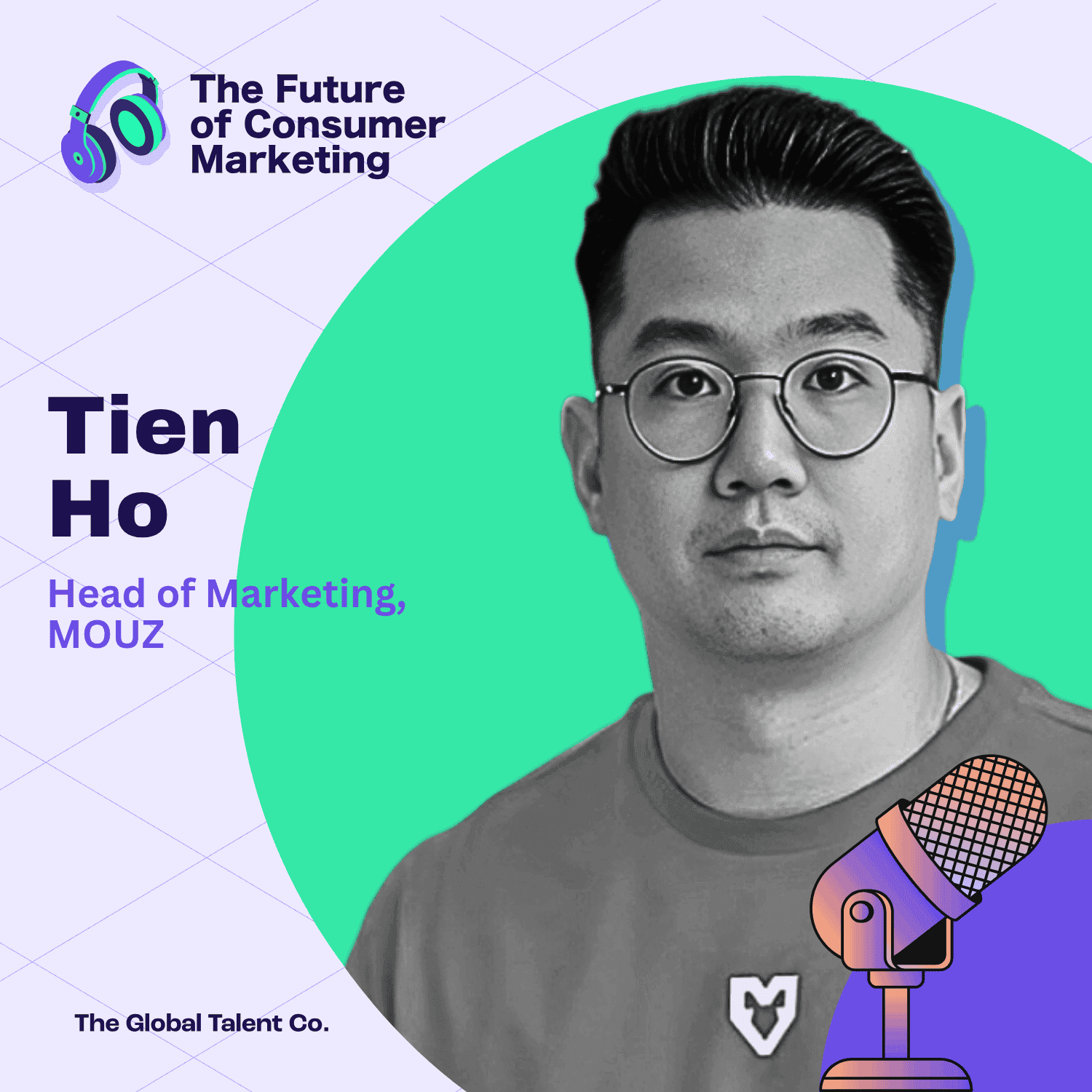
Tian Ho, head of marketing at MOUZ (Mouse Sports) in Hamburg. Background: studied business/economics and China culture; started in gaming peripherals in Hamburg; entered esports via social media (2014) for Rocket; became full-time in 2018 to lead marketing for Rogue (League of Legends); joined MOUZ in 2021, focusing on Counter-Strike.
Key claims
“Best marketing is winning.” Counter-Strike has a hub (HLTV) that helps discovery. Local HQs create generational fandom and reduce prejudice by making esports feel like real sports. Traditional sports shifted toward streaming after COVID.
Notable examples
MOUZ HQ across Hamburg central station with stadium-like viewing; an office-based online match that generated 1M+ organic impressions; Counter-Strike vs League of Legends ecosystem comparison; school-holiday “Fortnite bootcamps” (no Fortnite team) and partnerships like a nearby gym.
Written by AI. May contain mistakes. Listen to the episode to check what was said.
Chapters
Tap a time to open that second in VOTian Ho's Background in Esports
0:48 to 2:20
Tian Ho shares his journey into esports and marketing roles.
“And today with me here, I have Tian Ho, head of marketing at Moe's, a high performance e-sports club headquartered in Hamburg that's built to shape a sustainable e-sports industry where anybody can rise to the top.”
The Shift in Esports Marketing
2:20 to 4:44
Discussion on how esports marketing has evolved over the years.
“And then the funny thing was that almost all the people in management used to be in eSports.”
Differences Between Game Communities
4:44 to 7:27
Tian explains the differences between League of Legends and Counter-Strike communities.
“had a change of scenery, something fresh, something new, because Counter-Strike is a lot different than League of Legends.”
Marketing Strategies for Esports
7:27 to 10:14
Exploring how to market esports teams and the role of winning.
“So imagine somebody from a shorter generation that's used to, I don't know, streaming 30 minute law games and just watching like three of them in 90 minutes.”
The Local Approach in Esports
10:14 to 12:16
Tian discusses the importance of local fandom in esports.
“I think we have a very interesting approach.”
Building Community and Legacy
12:16 to 14:00
How Moe's aims to build a community around their esports team.
“where parents are fans of us and they get kids.”
Building Local Fandom in Esports
14:00 to 15:20
Explore how creating local esports headquarters can foster community and loyalty.
“It's like, yeah, all these people are going to see us every day.”
Innovative Online Match Experiences
15:20 to 17:40
Learn about unique online match setups that engage fans and enhance visibility.
“But yeah, it's funny that you said it because I think two months ago, like, usually you have to imagine we always go to like location and play offline at the tournament.”
Balancing Content for Gamers and Newcomers
17:40 to 19:48
Understand the challenge of appealing to both hardcore fans and newcomers in esports.
“is to get people to see like the games I love.”
Creating Community through Gaming Camps
19:48 to 23:19
Discover how gaming boot camps can introduce esports to younger audiences.
“Like the biggest events usually have two or three million viewers.”
Show all 14 chapters
Career Advice in Esports Marketing
23:19 to 27:36
Gain insights on building a career in esports and the importance of networking.
“Or are you doing everything in-house and physically there?”
Luck and Preparation in Esports
27:36 to 28:00
Understand the significance of being prepared to seize opportunities in the esports industry.
“be yourself and take advantage of the chances you get.”
The Importance of Personal Branding in Gaming
28:00 to 29:10
Learn how personal branding and reputation impact success in the gaming industry.
“with what you say and your reputation in the gaming industry, I think it's totally logical too.”
Connecting with the Esports Community
29:10 to 29:56
Discover how to engage with the esports community and find opportunities in the industry.
“How could they go about learning schedules when games are going to happen, checking you guys out on your website, or if they even want to apply or try out for the team, if that's even possible.”
Transcript
Automatic transcript. May contain errors.0:00This show is brought to you by the Global Talent Co, a marketing leader's best friend in these times of budget cuts and efficient growth. We help marketing leaders find, hire, vet, and manage amazing marketing talent for 50 to 70 % less than their U.S. and European counterparts. To book a free consultation, visit globaltalent.co. Hey, everybody, and thank you for listening. My name is Andres Figueira, and I'm going to be your host for the day. This show is brought to you by The Global Talent Company, a company that's helping other enterprises connect top remote professionals from South America, South Africa, and anywhere really with leading tech companies worldwide.
0:40So if your team is looking to hire world-class South America or South African talent, just head on over to theglobaltalent.co and see how we can help. And today with me here, I have Tian Ho, head of marketing at Moe's, a high performance e-sports club headquartered in Hamburg that's built to shape a sustainable e-sports industry where anybody can rise to the top. How's it going, Tian? It's a pleasure to have you here. I'm good. Thanks for having me. I hope you're good as well. Yes, I'm doing just fine, man. Starting my day and actually pretty excited to speak to you and to learn everything about what Moe's is doing.
1:15I'm an avid gamer from my side. I'm far away from being a pro eSports gamer, but I do love, I have my PlayStation, my Switch, everything. I just love to spend time actually enjoying games. So Tian, just so that we can put the audience a bit more in context into who you are and what you do, would you be able to tell us a bit more about your background? First of all, it's pronounced mouse. So it's like the animal mouse. Okay. Full name used to be Mouse Sports, since we're doing sports with the mouse. That's the original, the name. So the shortened form is just mouse because in games you usually only have four characters to write your clan tag.
1:53So back in the days they changed it to a Z at the end. Okay, I love that. I love that. Okay, mouse. Perfect, perfect, man. And for my background, I mean, I studied business economics, administrations and actually China as a culture. like it was like a new kind of like course they don't have it anymore but yeah when i went out of college or university it was a bit like what i'm going to do next with it because it was such a broad university course and then i actually started at a hardware company for gaming peripherals okay which was also based in hamburg so i'm originally from hamburg germany and yeah they offered internships so i just applied i was also gaming a lot in during my student time since You don't have too much to do as a student.
2:39Yeah, then I got into the company. And then the funny thing was that almost all the people in management used to be in eSports. So they used to plan themselves as what's called MTW, also a very big clan. And they had the idea to take eSports as like the industry and make peripherals specifically for eSports. So that's how I got into eSports actually from gaming peripherals, because they also had like teams that they managed. and yeah, there was a League of Legends in the European League. That's where I started in League of Legends. And yeah, I worked my way up. So I started off in social media, which was also kind of like, that was like in 2014.
3:18So it was not as developed as it is now with social media. I can imagine. Especially in Germany, which is not like the earlier adapters of things. It was like a new scene. So I took over or built up the social media department for Rocket. And then 2018, Riot decided to franchise teams in the European League, similar to how American sports leagues are doing it. And then it made sense for me to go full time because before that, if you get relegated, it's not a very safe job because the moment you get relegated from a first league, there's not any budgets left and stuff like that. So yeah, in 2018, I decided to go full time in eSports and I got an offer to lead the whole marketing for that team, which was called Rogue.
4:04And yeah, I think we did a good job from being a brand that nobody knew, which was also foreign because they were more like an American-based team. Okay. Flying their first European team in Europe. And also it was their first team in that game, specific game that teams and other games like Rainbow Six or Call of Duty. and yeah then in 2021 i got the offer to come back to hamburg to my hometown to go with mouse and also mouse is more like into counter strike so i really like the change of scenery a bit because i think especially in esports if you stay or if you work in one game you kind of get into like a bubble where you don't see too much of the other games and i think i really like that i just had a change of scenery, something fresh, something new, because Counter-Strike is a lot different than League of Legends.
4:53Yes, I can imagine. And I've heard a lot of things about the League of Legends community that it's not the healthiest one per se. It can be very toxic when you play, but I think it's also with Counter-Strike. But I think the ecosystem is completely different. So League of Legends is more like a franchise type of system, similar to American leagues or even like European football leagues where you have games every week. and Counter-Strike is more like a tour, like in tennis. You go from country to country, different tournament organizers. So it's a very, very different ecosystem. Okay, I understand.
5:27And I do like the fact that you've been able to jump around. And as you say, it's a breath of fresh air when you get into a new game because you can get a bit burnt out, for example, of being in the LOL environment too long or in the Counter-Strike that is, I believe it also is a bit toxic, but so cool, man. And Tian, in the decade that I feel that you've been in the industry, how has marketing and esports changed from the time that you started until now? I mean, I think specifically for esports, I think back in 2014, 2015, I think esports tried to get into television, get into more like these traditional marketing channels.
6:04But I feel like as time went and especially with COVID hitting, it changed the other way around. So I feel like traditional sports then started to look into, okay, we need to stream online. We have a problem with reaching an audience. I think that's going to be a big issue for football, like real football here from Europe. We'll not be able to reach the younger audiences because the game is too slow maybe or too long for the attention span of the younger generations. And I feel like it turned around and traditional sports is now trying to get into the channels that we are in. Right. Like, I mean, Twitch, kind of like the streaming scene and also just like social media.
6:42I think social media was not a big thing in traditional sports before. And yeah, so it was funny to see that it's WAP. And I don't know if you know those leagues, but in Germany, there's so many influencer leagues now in football, like Iken League or, and they do exactly the same, right? They only stream online to reach the younger audiences. The games are much faster. It's not 90 minutes. In that sense, I can see that it shifted a lot in that regard. No, I completely agree. And I do feel like the attention span of the public is getting shorter. And it is causing other industries to need to pivot and cater to that short attention span that is now.
7:19Like me personally, I'm not the biggest soccer fan or football since you guys are in Europe. And I do feel that the game starts to run a bit long. And I'm 30 years old. So imagine somebody from a shorter generation that's used to, I don't know, streaming 30 minute law games and just watching like three of them in 90 minutes. And it's like, do I really want to watch a whole soccer game? So I totally get how the sports industry has needed to change and adapt a little bit to what the esports industry has brought to the table, because streaming is just the main thing right now. Like if you're able to stream what you're playing, if you're able to show online and have the chat, which is now a whole character in and of itself.
7:59It's like, hey, chat, what do you think of this? What do you think of that? Do you like it? Give me your comments. It really is a nice way to provide live retro feedback to what you're doing online at the moment. So that's pretty cool. And I totally understand why it would change to that in that direction. So Tien, another question I have is like, how do you market to a global fan base when the product that is essentially being offered is watching other people play games? Like, do you feel the need to have to convince your audience to come and watch your team or the mouse team play? Or do you have like a big fan base that already just knows when the games are and how to watch them and everything like that?
8:37I mean, there's a big difference then also like if you talk about League of Legends or Counter-Strike, because in Counter-Strike, there's so many games. So if you want to, you could watch Counter-Strike every day. Okay. I think the good thing that Counter-Strike has is there's a third party platform, which is called HLTV. with kindness like the central hub where you can like see all the games that are going on live right now. So it's hltv.com. Okay. And I think for me, I always say the best marketing that we can do is winning. So I agree. So I mean, it goes back to also like if you do a product, right?
9:13I think the best marketing is the product itself. The product is not good. I mean, you cannot make good marketing for a product that's not good, in my opinion. That's true. And for me, it's the same with the team. So I'm very fortunate that we have the management here that knows how to build good teams. So you also have to know that Maus is probably one of the oldest organizations in esports. So Maus has been around for 22 years now, or 23 actually now, 2002. Wow, okay. And they always manage to stay like kind of at the top of the ranking list worldwide. So right now I think we're third or fourth in the world competing for titles.
9:49So in that sense, I think it makes my job much easier because I don't have to convince people to watch. But I feel like it's also something that it's like a whole circuit, right? Like it's a tournament organizer who does the marketing. So people watch. They have to do a lot of content around it. Of course, we have to promote our games, but also it's the opponent, right? If we don't have strong opponents, people are not watching because it's going to be a storm, but it's going to be a fast game and people already expect the outcome. So I think there's a lot of factors to it. You also mentioned global.
10:18I think we have a very interesting approach. And that goes back to what I said with esports trying to be more like traditional sports, where traditional sports is very local, right? Like all the teams have like a hometown, they have a stadium. Exactly. And esports tried to do that by just naming teams based on like cities. So I think Overwatch tried it where they had just called the team London Spitfire. Like there's nothing in it, right? They were just named like this, but they had no location in London and stuff like that. I understand. Okay. And actually where I'm sitting right now is our new headquarter, which is in the middle of the city.
10:54So I don't know if you know Hamburg, Germany. It's never heard of it. It's the second biggest. I do know Hamburg. I haven't had the pleasure of visiting Hamburg. It's a beautiful city. So it's the second biggest city in Germany, actually. Okay. One of the biggest cities in Europe. I think it's the biggest city that is not a capital in the EU. Nice. I cannot say Europe because then Istanbul, I think, is the biggest. And we are literally right across the central station in the middle of society. Wow. And we're kind of developing it right now, but our approach is to make it more local. So there's like a place for fans to come.
11:28So they have this connection where they feel like, okay, this is a team from my hometown. I need to support them. And this is very unique right now in the esports world because I don't think a lot of teams can first find a location like this. Have the right city where everything is very central. So Hamburg also is built in a way that everything is like in the middle of the city. Okay. Like, for example, in Berlin, it's very hard to do because you have like two downtowns. Okay. If you want to say so, because of the wall. And yeah, we've seen some effect of it, like fans switching teams to us because they're like, oh, you're from Hamburg, I'm from Hamburg.
12:01So naturally I should support a team that is from Hamburg, right? And we're looking into that more to make the global esports more like to a local thing. and also because of our longevity, we can see the generation shifting similar to real sports where parents are fans of us and they get kids. And of course, the goal for us must be to make their kids also fans of us, right? I think a location like this is helpful also for talent development. I think we see this also as a project. I mean, I heard that you read our mission statement on our website. It says like for esports, right? It doesn't say just for us.
12:38So we also see the pressure in representing esports in general with this location. And I think it's easier to get parents into the topic if there's a physical location. If you're from Germany, you know that Hamburg is one of the more expensive cities. So if your kid tells you, yeah, they have an office, like it's a serious business right across the central stage. And the road next to us is also the main shopping street. So it's like roughly half a million people go for a central station every day. And like half of them come out of this exit. It's like 250 ,000 people every day seeing this location, seeing our logo.
13:12And we're thinking about events maybe to get parents more in to explain to them. It's a serious business. Of course, not every kid is going to make it, but it's the same in football, right? Like how many people make it in football and parents have no problem sending their kids to practice all the time. And yeah, maybe some people say, of course, it's like physical. It's good for your physics, but it's also proven scientifically that playing games is also good for your brain. You become a better driver in a car. You're better in school. So there's also benefits in playing games. And yeah, in that sense, it's very interesting what we're trying to build here.
13:49Well, dude, like I'm hearing you speak and I'm just excited for you guys because it's the first time, at least on my side, that I'm hearing of an esports team doing exactly what you're mentioning. And I think it's crazy, man. And like you're getting all that exposure from being in front of the central station, which I imagine that must have been part of what you guys thought of the investment of getting an office and a headquarters right there. It's like, yeah, all these people are going to see us every day. We'll become like a legacy brand, which I believe Mouses already is because they're talking about generational switching of fans and everything.
14:20But it is an excellent way to have this like presentation card for the company that says like, yeah, we are serious and we really are meaning to stay in the industry. And now we have these headquarters. Like I'm just imagining like here in Argentina, you go and you can see the soccer teams, like the clubs from here, Boca Juniors or the River Plate, and you go to their stadium and you see exactly, I just imagine, I don't know, like a fan store with the team's shirts and with like all the merch and caps and maybe even create more community by streaming the games your team does in the headquarters and allowing people to come if they're members not sure how it could work but that really is crazy man because it's bringing something that is so global into a narrower scope for each locality like what hamburg is so congratulations for that dude i think it's an excellent idea like i'm getting a bit of fomo from being down here because i would love to check that out actually there was a very cool event in argentina where they did it in a subway station.
15:20I think it was Buenos Aires. Yeah. That's actually Argentine teams. Like the Argentine team is 9Z, I think. Okay. Also, Aguero has their own team. It's true. I know which one it is. But yeah, it's funny that you said it because I think two months ago, like, usually you have to imagine we always go to like location and play offline at the tournament. And rarely for a top team like us, we play online. So you have to imagine 80 % of the circuit is actually playing online, the tournaments. So what we actually did is, because we're not so used to playing online anymore, we decided to play our online match here in our office.
15:56And it's kind of built like a stadium. I don't know if you saw pictures. I wasn't able to see the pictures. Okay, but it's built like the whole stand so that everybody can watch what's being played. Exactly. You can maybe check later. But on our website, we have a dedicated section just for the HQ, the mouse HQ. What we did was usually they would play from home, right? They would fly home, play in their bedrooms, literally. of course what we did is we made them come here and they played here visible for people to come in and see this was a very new concept right usually people have to go to the stadium or to the different locations where we're playing so for example in germany that's once a year in cologne which is a very very big tournament so we play like in front of 20 000 people in the lanxus arena yeah and that was a new experience and i think we got over a million impressions organically because people thought it was such a great idea to try something new, right?
16:48So I'm a big fan. Maybe also because of my time in Rocket. We were more like this kind of like guerrilla marketing thing. Okay. When you see Rocket, do you refer to Rocket League? No, no. Rocket was like a peripheral company. Okay, true, true. Okay. I'm getting confused with all the little names, but okay, perfect. It was like a cat logo. Okay. And their philosophy was to keep the team small, right? Do everything in-house. And I feel like that really left an impression on me. So what we always try to do is do something that no one else did before. I like to compare it to the Coca-Cola Pepsi thing.
17:23Coca-Cola is always number one, no matter how good Pepsi is going to become. It's always going to be Coke. In that sense, we also tried it this way to be the first mover in the thing. So we get the benefit of doing it. Of course. And you mentioned that you even have this all set up stadium-like within your headquarters is to get people to see like the games I love. For example, I'm a big Pokemon fan. So I check out the Pokemon battles tournaments and it's exactly that way. You have even with the card game or with the video games, you have these two people sitting in the front battling each other out and the whole bunch of spectators just watching that on the screen and their live reactions to what's happening.
18:03And I think that's invaluable because part of what I love from streaming and watching gamers is I love to watch the game, obviously, but I love the little camera on the side, seeing their face, seeing their frustration or their happiness or how hard they're just concentrating. And it's like, dude, this guy's in the zone. And being able to provide that live for people, I think it really is invaluable. So that is so cool, man. So cool. And I do have a question. Does Mouse, you guys only play Counter-Strike, right? We only have other games. Okay. Like what other games do you guys, do you guys also have teams for?
18:37I mean, we have Street Fighter, two players from the UK. Okay. Then we still have StarCraft. So the player there is already a player for us for 15 years. So half his life. He came here at 14. I think he's like 29 now. So more than half his life, he was a part of us. Then we still have Valorant. We have SimRacing, actually. Okay. We have Drivers there as well. Trying not to forget who else we have. I think for now, yeah. Okay. Okay. Cool, man. Cool. Okay, Tian. Another marketing question that I want to hop in, because I can geek out about gaming all day and I can just talk about everything that's not marketing.
19:13But how are you able to balance creating content for like diehard fans of the game or of the team versus making esports a bit more accessible to newcomers and making it a bit more enticing for anybody that isn't a part of the industry already? For that, I think you need to also separate gaming from esports, in my opinion. Okay, understood. Because I think just the pool of people playing the game is much, much bigger than people watching the sports or the esports in that sense. And I think that's already a big enough challenge to convert people who play the game to watch the games. And you can see it, right?
19:49Like the biggest events usually have two or three million viewers. Yeah. While other tournaments don't have it. And I think in that sense, you kind of need to like market to them as well. But I think it's hard to market to like a general market that doesn't even play the game. I feel like because also of the type of game that we play, counter-strike so there's a lot of like prejudice you know especially in germany because of some yeah shootings back in the days of course everyone played counter-strike in our age i would say right like it's hard to fight someone who didn't play counter-strike and the media kind of took it as the reason why he went for the shooting yeah i know it's a very very difficult topic with gaming in general i feel like i think a lot of people game but they have like this kind of stereotype in the head and again we're back in the mouse hq but we also build it in a way that if you look into the facility you don't see any gamers you just see the stands wow and you need to really physically move into the facility and get in touch with the topic in a sense right when you went enter you're in and then you can see the gamers and it was designed on purpose to get people in without having any like prejudice or just seeing outside these gamers of course They're only nerds watching.
21:02They could think it's even like 3B3 mini soccer court for people to play. But once they go in, they see actual gamers like playing and it's like, okay, this looks like a team. Yeah, like what they see is the excitement of the crowd, events. And I think that's what makes sports sports in a sense, right? It's the crowd, the emotions of the crowd. And yeah, I feel like for us, it's very hard to just market to the general audience. But what we do, we don't take Counter-Strike, for example. like what we also started to do is doing school holidays. We do like Fortnite bootcamps. We don't have a Fortnite team, but it's the game that kids like to play.
21:37I would totally go to a Fortnite bootcamp. Like I love Fortnite, but I'm the worst Fortnite player you'll ever meet. So it's just fun to me go and get killed. It's basically a holiday camp, right? And it's not just gaming. They also have physical activities. So we have a gym next door that we're working with closely. Okay. Now you also have to go to the gym. So it's kind of like, I don't know how you call it in America, but it's like for vacation, the boot camp, you know? Yeah, a summer camp. Yeah, summer camp. Exactly, summer camp. That's the word I was missing. And yeah, also to get there and to touch, oh, this is a career that might be possible, right?
22:11And the environment and everything is top notch here, of course, because gamers can also be picky. Well, I remember when I was in college, one of the jobs I wanted the most is I'm super big on Clash Royale and Clash of Clans, you know, the mobile games. I love those and I've been playing it since it came out. And I remember I would always go into the Supercell, which is like the makers of the game, I went into their website and just check the open job listings. And I would just apply to everything because I wanted to be in the gaming industry so bad. And then they actually got so big that they have their own tournaments and everything.
22:44And it's like, dude, maybe if I had been a bit more persistent, I might've even entered that because I was just a kid from Venezuela playing when he had Wi-Fi and it was just amazing. but I totally feel how you guys are actually working on. And I think I just said this before, but I just feel it's a very big approach on creating community and physical community and having people know you guys for what you stand for. And if you're in the summer and don't know what to do, hey, why don't you go to a Fortnite bootcamp at Maus? And it's like, it's not just e-sport tournaments and having the professional leagues, but it's bringing everybody in as well.
23:19So that is amazing, man. That really is super cool. Oh, and Tian, I would love to know also So from the way I'm hearing you speak and from how I understand you guys have the headquarters in Hamburg, do you guys work at all like Maus with remote employees or with your marketing team? Or are you doing everything in-house and physically there? I mean, most of the staff is here physically in because the facility is big, but it makes no sense to build. And then everyone's working remote. I think also in Germany, it's kind of going back to being in office. Okay. Because maybe it's a culture thing. But I think especially for esports, you're missing out a lot if you're not around the people in the office.
23:58I feel like there's so much information flowing while making a coffee and all. And also our industry is very, very fast paced, I would say. So things can change from today to tomorrow. And therefore, I think it makes no sense to not be in the office for this type of job, in my opinion. I think it would be similar for me. Also, if you work for a sports club, like a football club, you want to go to the stadium, right? you want to work there. Because otherwise, why not just get a normal job at a normal company, you know, and then also earn a lot more money. I'm going to be 100 % real with you. If I were in Hamburg right now, I would even ask you after the call, like, hey, do you guys allow co-working in the mouse headquarters?
24:36Because I would just go and work there because I work remotely, obviously. But one of the things I miss the most is exactly what you mentioned. And it's the fact that when you went to get a cup of coffee, you were kind of in the break, but things keep flowing because you keep talking with your colleagues and you're around everybody and everybody's up for a chat or anything like that. So I really do think that's helpful to keep things moving forward. But like, I'd love it. Just a little co-worker's face and I could just see everybody play and I'll be in my own world, but just like living the dream, that would be so cool.
25:06You're not the first one who asked if they could just call me and co-worker. It's also a philosophy thing, I think. And that's why we also build it, right? To instill the philosophy of the team into the players, but also staff, right? Like you don't build this if your goal is not to be number one in the world. Of course. And I think it's more powerful to see it and feel it than to hear it, you know? So I think that's also a big part of our philosophy that we give them the best conditions to perform. Okay. And also they see all the details. There were a lot of details that we had to think of in terms of how we built everything.
Read the full transcript
25:41Now, I can only imagine with the fact of you just telling me, no, we placed the stands and the audience in the front on purpose so that the people who see don't see the gamers and don't have prejudice. So they just enter. It feels like a very well thought out plan. And those are the ones that last the longest. So I believe longevity and legacy for you guys is totally in the books, man. It's totally in the books. It needs to be like, I don't think anyone here wants to be the one. The reason why team went down after 23 years. Oh, no, no, don't. Fingers crossed on that, man. Okay. Tien, I know we're almost at time, but I have just one more question for you.
26:14And this is more for the audience. And it would be is if you could give yourself some advice that you would have loved to know when you were starting out. Like if you were talking to you at the beginning of your career in esports, what would you have loved to know? And if anybody here is listening and they're thinking of starting in the esports industry of just getting a job in marketing or maybe trying out for a team, like what would you think would be the best advice you could give them? That's a very tough question because I think I got very lucky in a sense that, for example, the first company was in my hometown.
26:47It was not too far from me. And I think I did it. So it would be like advice that I would give to myself because I did it. But I think you need to get lucky. But then when you get the chance, it's about how you work for it, right? Like how much advantage do you take from these lucky incidents? But I think what really helps in the esports industry or gaming industry, if you want to make it, it's connecting with people. So I think it's a lot of nepotism, to be honest with you and eSports with hiring and stuff like that. And then also I always compared that we're similar to the players. Like one mistake or one bad opinion about you could destroy your career basically in the industry because everything is so tight.
27:25It's not that many tier one teams as well. If you think about it, it's maybe like five or six teams where you can be like on the top, top level. And I think, yeah, just be careful what you say around people maybe and make the good connections. be yourself and take advantage of the chances you get. Now, I love that. And I'll even personally take that advice because I've been saying for a while now that luck is when, like this is something I read, but luck is when opportunity meets preparation. So you got this opportunity, you were totally prepared. And with that luck, then you just decided to work harder and now you're where you're at.
27:57So I think that's totally valid. And the fact that you need to watch yourself with what you say and your reputation in the gaming industry, I think it's totally logical too. just because of the fact that it's not that big yet. And even though it's huge and it's a bit counterintuitive to think that such a global industry is very tight knit and everybody's got to know who you are if you're working for an important company or anything like that is something that people might not think of. So that's an excellent warning, man. That's an excellent warning and I appreciate that. And I think we're in marketing, right?
28:29So maybe start with marketing yourself, right? In a sense, I think it's the same principle. Yeah, create your own brand and make sure you don't off it off and then you can try and take a whole team's one. And I also have a strong belief of just come from, I actually played American football, which is kind of funny, right? I mean, Europe. Okay. I played American football, but we always said you can force luck. Like you can force it. And then if the opportunity arises, you're already prepared, like you said, right? You have the preparation for it and you can take full advantage of it. And maybe a good ending word.
28:57I think that's how we should do marketing as well, right? Prepare for the moment where we are successful and then just emphasize it. It's not our job to create something that is not there. I totally agree with that, dude. I totally agree with that. Oh, and before I let you go, I would love to also give you the opportunity to let anybody who's listening know how to, if they want to see game from the mouse team in Hamburg and they live there. How could they go about learning schedules when games are going to happen, checking you guys out on your website, or if they even want to apply or try out for the team, if that's even possible.
29:30How would people go and understand how to reach you guys? I think the main channel in eSports in general is X. So that's, I think, most up-to-date channel for us as well. So if we have any events going on, it's going to be there. Then for job offerings, I think you can just go on the mouse website, which is mousesports.com, or you can also put in mouse.gg to see your openings. But other than that, you can then be on LinkedIn to ask me questions if you want to. Nah, that's fine. That's super cool, dude. But yeah, with that, I hope everybody from the audience enjoyed this episode. I hope that you learned a lot, just like me.
30:05And Tien, it really was a pleasure having you on, man. Thank you so much for taking the time to be a guest on the show. And I really do hope that Mouse keeps growing alongside you and you guys get to be the number one team in the world. Thank you. And thanks again for doing that. It was very fun. No problem at all, man. It really was a pleasure, dude.
30:32you
From the publisher
In this episode of The Future of Marketing, host Andres Figueira interviews Tien Ho, Head of Marketing at MOUZ, one of esports' oldest and most successful organizations. MOUZ is pioneering a radical shift in esports marketing by bringing a digital-first industry back to physical reality. While other esports organizations chase global audiences online, MOUZ is building a 22-year legacy brand through hyper-local community engagement, treating their Hamburg headquarters as both a performance facility and a marketing platform. With their team consistently ranking in the top 3-4 globally in Counter-Strike, Tien shares how they're converting the product of winning into sustainable fan loyalty while solving esports' biggest challenge: making parents believe this is a legitimate career path for their children.
Topics Discussed:- Building physical headquarters as a marketing strategy in a digital industry
- Converting players into viewers in the esports funnel
- Creating hyper-local brand loyalty in a global competitive landscape
- Designing facilities to combat gaming stereotypes and prejudice
- Leveraging prime real estate for organic brand awareness
- Developing talent pipelines through youth camps and community programs
- Transitioning from franchise league systems to tournament circuits
- Executing guerrilla marketing tactics with limited resources