
In short
HyperJar’s growth and marketing strategy—how 700K users were acquired mainly via PR and word-of-mouth, not ads—plus the behavioral-psychology rationale for “spend well” and the app’s retention mechanics (shared “jars”). It also covers HyperJar’s origin in consumer working-capital/financing, its monetization (merchant offers + interchange, and B2B via HyperLayer), and the founder’s new book about spending.
Guest
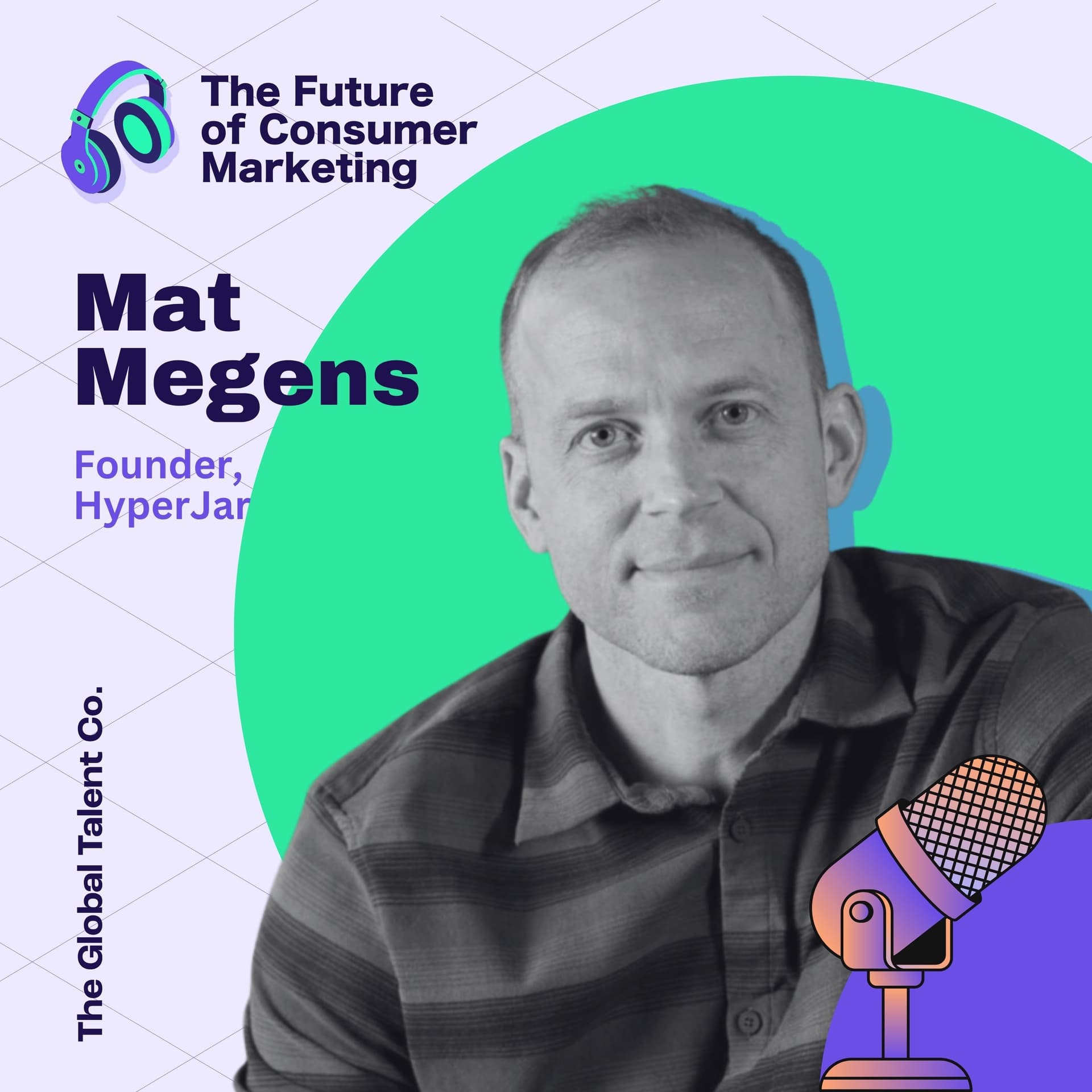
Matt Megens, founder of Hyperdome/HyperJar; previously worked in investment banking and saw supply-chain financing issues.
Key claims
Meta/Google ads drove lower-quality signups; credible influencers (e.g., Martin Lewis) and organic customer referrals created “sticky” users. Macroeconomic stress (COVID/inflation) accelerated adoption. Saving feels better via gamification (e.g., an “odometer” counting savings growth).
Notable examples
early Lidl prepay arrangement; “child card” shared jar; Oxford behavioral finance professor input; jars for bill-splitting/travel and restricting spending (e.g., travel-only vs McDonald’s). Book: “10 Things I Love About Money.”
Written by AI. May contain mistakes. Listen to the episode to check what was said.
Chapters
Tap a time to open that second in VOThe Purpose of HyperJar
0:30 to 1:24
Matt explains HyperJar's mission to help users manage spending and avoid debt.
“Matt, for those of us that don't know what HyperJar is doing, can you tell us in a sense to what the company is doing and why it is doing that?”
Origins of HyperJar
1:24 to 2:26
Discussion of the initial concept and evolution of HyperJar from supply chain financing.
“So the origin of it was not exactly what it looks like today.”
User Acquisition Strategy
2:26 to 4:10
Matt describes how HyperJar grew its user base through partnerships and PR.
“But it evolved into a, as the world became more difficult, it evolved into a very useful tool for people to spend their money better.”
Understanding Customer Demographics
4:10 to 5:51
Exploration of the different customer segments using HyperJar and their motivations.
“and then word of mouth from happy customers without referral benefits.”
The Role of Behavioral Psychology
5:51 to 7:48
Discussion of how behavioral psychology influences HyperJar's design and user engagement.
“involved right because obviously there's a lot of brands and companies per se that want to It's easy to invest or buy or consume.”
Revenue Model of HyperJar
7:48 to 10:13
Explanation of how HyperJar generates revenue through partnerships and B2B services.
“So a few examples are when you did prepay, we had a bit of an odometer, which was counting up, showing your savings growing in real time.”
Lessons on Marketing and Referrals
10:13 to 13:00
Insights on effective marketing strategies and the importance of organic growth.
“I mean, you basically accomplished what a lot of companies and brands aspired to grow really well at multi-referrals.”
Building Customer Retention
13:00 to 14:00
How shared money features create stickiness and enhance customer retention.
“So a lot of people dismiss the value of their brands and it's all about performance marketing.”
Feature-Led Approach of HyperJar
14:00 to 15:27
Understanding how HyperJar's features create user stickiness and solve financial problems.
“and it solves problems for a network of people.”
Introducing '10 Things I Love About Money'
15:28 to 17:18
Discussion about the author's new book aimed at changing perceptions about money.
“not only a successful entrepreneur, but also, I hope I can say, a successful author.”
Show all 17 chapters
Book Reception and Feedback
17:19 to 18:49
Insights on the initial reception of the book and feedback from industry professionals.
“Like other people that love it, that hate it, like what's the feedback so far?”
Critique of Modern Capitalism
18:50 to 20:35
Exploration of why capitalism has received negative publicity and its inherent issues.
“What's your personal explanation for that?”
Proposed Solutions for Finance
20:36 to 22:52
Discussion on potential fixes for the current financial system and its compensation structures.
“How to fix it, I don't quite know, but I know something.”
Technological Trends in Consumer Finance
22:53 to 25:06
Excitement about future trends in consumer finance and technological advancements.
“So I think I would have some, like if you're going to lose money, you're going to feel pain or you might literally make no money and you might go into debt.”
Lessons Learned in Fintech Development
25:07 to 26:58
Advice on product development and marketing strategies for fintech companies.
“And in terms of scaling consumer fintechs, what are some of the things that you would do differently now versus, you know, five years ago?”
Entrepreneurial Advice for New Founders
26:59 to 28:00
Key insights for young entrepreneurs on managing their businesses effectively.
“What are the things that you wish you knew back then that would have been tremendously helpful in building out your company?”
Getting Hands Dirty in Business
28:00 to 28:37
Learn the importance of understanding technical skills before hiring experts.
“So it's almost better to have a smaller team and you have to get your hands dirty in a lot more areas.”
Transcript
Automatic transcript. May contain errors.0:00This show is brought to you by the Global Talent Co, a marketing leader's best friend in these times of budget cuts and efficient growth. We help marketing leaders find, hire, vet, and manage amazing marketing talent for 50 to 70 % less than their U.S. and European counterparts. To book a free consultation, visit globaltalent.co. Hello, everyone, and welcome to a new episode of Future of Consumer Marketing with Matt Megens, the founder of Hyperdome. Matt, it's a pleasure to have you. It's great to be out here. Thank you for having me. Matt, for those of us that don't know what HyperJar is doing, can you tell us in a sense to what the company is doing and why it is doing that?
0:42Yeah, so HyperJar, it's essentially an app to help people to spend their money well, to try to avoid debt and to try to essentially keep as much of your money as possible in this world of constant marketing and impulse of spending. And it's expanded also into a business called HyperLayer, which is offering these features to institutionals such as banks and pension companies. So in this age of austerity and inflation, it's a thing that all sorts of people are looking for. And then like I said, banks, which provide lending products, are looking for better solutions to help people to spend smart and save better.
1:14Yeah. And what was the unique thesis initially, why you felt that it's the right time to start Apple? What did you see in the market that others didn't? Yeah. So the origin of it was not exactly what it looks like today. So the origin of it was trying to essentially supply chain financing problem that I saw from my previous professional experience. And I was trying to see if I could inject capital into, for example, let's say a supermarket, but using a consumer savings. So this was in an era when interest rates were almost zero. So people didn't have very good savings options. So my thought was, could we make a crowdsource working capital product where people who have savings could save towards a business such as Tesco?
1:54and Tesco could pay them, for example, what looks like an interest rate by committing to buy at Tesco in the future. And in which case, Tesco was sort of raising capital. So that was the original idea. But then as I tried to implement it, it was not quite working because it required scale. And when you start out, you don't have scale. So I needed to create something that would attract consumers. And then that led to what the app looks like today, which is a sort of a useful spending app. And from that, that sort of became popular and things started to take off from there. and that working capital solution became sort of in the background in a way, but it still lurks underneath the surface.
2:28But it evolved into a, as the world became more difficult, it evolved into a very useful tool for people to spend their money better. Amazing. And how would you, because obviously we are here to talk a bit about marketing. So how would you kind of acquire or grow those first 10 ,000, 100 ,000 users? I'd say the first 5 ,000 were because at the time we had an arrangement with Little. So you could prepay to Lidl and earn, it was like a 5 % per annum type return on Lidl. And Lidl already has extremely good prices. So that attracted a lot of... Really a leading supermarket, right? That's right. So a discount supermarket, so typically don't even have like sales because the prices are always quite low.
3:08So to have like what looks like a discount on Lidl was very attractive. So we attracted a really loyal user base from that. And that was like to the first 5 ,000. And then it still turned out that little eventually they came off of the app just for other reasons, just related to their focus in terms of their own loyalty product. But at that time, we then had enough inertia that other people became interested and we developed essentially a child card. So you sort of became a product where a child could have a card that you could sort of view through a shared jar, we call it. And that just started to take off.
3:38And I'd say the next hundred thousand came because we had a reference from a few people in media just through PR. So like Martin Lewis, money-saving expert had sort of mentioned us, and that sort of led to a groundswell of downloads. And then I'd say from that point on, we now have close to 700 ,000 customers. It became a lot of word of mouth. So there was some spend certainly on Google and Facebook. We did a little bit of radio. We sort of dabbled in a little bit of everything. But the most successful was our natural PR from people like influencers like Martin Lewis, which were organic. They just mentioned it because they thought it was something useful.
4:12and then word of mouth from happy customers without referral benefits. It was just them telling their friends, hey, you should check this out. And would you say that the main reason why people actually got to R4J was because they wanted to save money or was it because they wanted to have a better understanding of the budgets? What were the main ESPs, the main communication points that really resonated the most? Yes, I think there are two main cohorts of customer. The first one is the parent who wants a product for their child that doesn't cost three pounds a month. So a free product where they can have oversight over their child or teen's spending.
4:50So that's a very popular use case. It's typically mothers and sometimes grandparents who might have a grandchild that they give money to or maybe they have a lot more responsibility for. So that's a very popular demographic. And that's more just for oversight over shared money. And it's not because we have a very powerful shared money in terms of these jars and you can set controls and have visibility in terms of spending and spending limits. The second popular demographic are people who are not trying to budget per se. They're not people who are hardcore budgeters who have the Excel spreadsheet.
5:20They're people who maybe struggle somewhat and not necessarily deep in debt, but just trying to get on top of spending in this sort of world of contactless digital. So they want a tool where they could divide the money into our jars and spend directly from a jar. And it just lets them control their spending. it's almost like a real-time budget with the discipline of having to make a budget so people trying to spend better when they're overwhelmed by this contactless world of spending so that's a big demographic of people just trying to yeah i guess essentially save and waste less money and grow their bank balance i mean there's probably also a lot of learnings from even psychology involved right because obviously there's a lot of brands and companies per se that want to It's easy to invest or buy or consume.
6:04And then you're trying basically the opposite, right? You're trying to make people aware of how to save and budget and, you know, earn a lot and spend. So did you have to, how did you get into this field of psychology? Or is that something that you're buying a lot and what works, what doesn't work? Very good question. So that whole behavioral psychology, behavioral finance, it's a huge aspect around trying trying to make, I guess, the app goes spread virally, have people, I guess, even understand it. Because as you said, the dominant marketing that exists is around, for example, debt, whether it's credit, buy and pay later, these very simple instant payment options.
6:41That's the common marketing that's pushed, that's promoted, that people understand, and they're acclimatized to it. So you're trying to do the reverse. You're trying to say, slow down, save up before you buy something, hold off. So how do you make that sort of fun and exciting? It's like, it's much easier say, hey, you can have this amazing thing today. Even if you don't have the money, you can have it today. And that's a very easy sort of sell. And even though it's going to hurt you afterwards, people go for that instant dopamine hit. So we had to think of how do we promote this? Like it's a deeper, longer term satisfaction when you save up and then eventually get something and you have less of that underlying burden that comes about by having debt.
7:18So even though people who have debt may not feel they have any kind of anxiety or tension, they normally do because you have something that you owe, something you have to pay back, which limits other possibilities. So we did a little bit of work. We spoke to, there's a professor at a department at Oxford University that we spoke to around some aspects of behavioral finance. And a lot of it is really just, we sort of thought through things. It wasn't any kind of extremely extensive scientific inquiry. It's how can we make the process of saving feel better? So try to come up with gamification of it.
7:49So a few examples are when you did prepay, we had a bit of an odometer, which was counting up, showing your savings growing in real time. So it felt like, okay, I'm going to put this money aside, but oh, look, this wheel is growing constantly. There's like an odometer where it went to like, say, six decimal places. That meant it's going to have movement. And you realize, okay, it's actually growing right now. So it's growing. And that's sort of fun. And maybe it's only a penny, a pence or two per day, but that's enough to make people feel a bit about it because it's doing something that's working for you.
8:17So we try to think about ways to make saving feel good. But I have to say the thing that helped us the most was when the economy went bad. This is around a few years ago. So it had COVID happened. And then after COVID, with inflation, cost of living crisis, people just naturally started to become anxious about their money and about they started on their own sort of withdraw from debts. And those flush times started to reverse and people gravitated towards products that helped them save. So it became easier without us having to do anything. So I'd say the economy, the macro economy was the biggest factor in terms of driving more users into our ecosystem.
8:55Okay. And tell us, how do you make money? Like what are your ways of marketing? Yeah. So as I mentioned, we have a B2B offering, which is new called Hyperlayer. And we have the app, which is Hyperjar. The Hyperjar business model is fairly simple. So the revenue comes from, we work with merchant partners. Those merchant partners to give offers. If anyone takes up an offer, which gives them a discount, we earn a slight transaction fee from that. That's the main revenue driver. Like any payment card, there's a fee called interchange. So anyone who uses the MasterCard debit card, we earn a portion, but it's small, like 20 basis points for domestic payment.
9:30So you can't make a business off of that, but it's a piece of revenue. In the US it's different, but in Europe, it's a very small fee. And then the other fees, we have like a few other fees, but they're not revenue drivers. It's just like to cover costs because it is a free product. So if you lose a card, you pay five pounds to replace your card. But that just covers costs. It doesn't drive profit. But the main driver moving forward is on the B2B side. So we are working with some large institutional clients and HyperJar is almost like an R &D lab. So we have this app, we have live customers, and we're at the leading edge of these sort of features, which are aimed towards saving and spending well.
10:03And the institutional clients want this kind of technology. So those clients, we charge for services and that's the main revenue driver moving forward. I mean, you basically accomplished what a lot of companies and brands aspired to grow really well at multi-referrals. So are there any big learnings that you can share of how you succeeded in doing that? And what are some of the loops that you've created, tested that really made a difference? So in my experience, I found the spend on, like say, Meta and Google led to a less engaged customer. And especially because our product was somewhat different in terms of this sort of spend well product, which doesn't replace your bank account.
10:45It complements your bank account. So it's a bit of a new thing that is not immediately understandable. So I found ads didn't, so you might get a lot of downloads, you may get a lot of new signups, but it didn't lead to a good customer. So I found that was more wasteful spends. And if I were to do it again, I would probably spend almost nothing on Meta or Google ads. And it was more the referral of customers who are already in there, who led to a good quality customer because they would explain it to their friends and why it's good. But then how do you get that initial customer to tell their friends?
11:14As I said, it was more the influencer. So more like the Martin Lewis. So someone who has credibility, who says this is a really attractive proposition and explains it in a couple of sentences, those downloads converted really well into sticky customers. So to me, it was PR that came from credible sources, like influencers who, again, weren't paid for. They just liked the products. and would speak about it. That was our biggest success. And then from there, the customers speaking to their friends. So if I were to do it again, I'd make a lot more effort in trying to get the product into the hands of people who could review it, could talk about it and talk about it sincerely, like not paid for promotion, just sincere reviews, honest reviews, and then more grassroots, just getting into the hands of people and then telling their friends and trying that hard level, low level networking.
12:04And that's obviously a slower scaling but potentially more sustained because the people that we can sign up are people that are really interested, I would assume, right? It's slow scales, but you hit inflection points where all of a sudden you get like 10 ,000 in a day and then that 10 ,000 starts to create a heavy organic. We're getting 500 to 800 organics a day because we started to have a base and it was like steady every day. This is one thing I don't know why or how, but it would just happen. It just kept on happening. And not like it was weird because it wasn't like you'd get 5 ,000 one day and then none for some days.
12:38Every day would be like a steady 500. 500 new people every single day. And that went on for like over a year. So yeah, I don't know how that happened and why it happened. That's some of the mystery of consumer businesses. But it hit this organic, natural point where it just sort of grew on its own. And it slowed down after a year or a bit. And I think this is where I think traditional brand work, like there's a value in traditional brand work. So a lot of people dismiss the value of their brands and it's all about performance marketing. but I'm more of a believer in a high quality brand. If you have a high quality product and how that can, as you mentioned, there is a slow burn initially, but it can provide sustainable growth.
13:15Again, if it's a solid product that has a brand that people are happy to share, that are proud of it almost in a way that can go a long way more than performance marketing in my experience. Okay. And I mean, the other part of the equation is, of course, the retention side, right? So work as a bit of what you're doing to make sure you know stay on board that they keep this web like what are some tricks that you've seen yeah so one of the best things that works in our favor is we have this i mentioned the social money feature so you can create what we call jars those jars you can create controls over them and those jars you can like share with other people once people start sharing with their jars you create the stickiness because it becomes really hard to like it solves problems for people and it solves problems for a network of people.
14:05And once you're into a network, you need to get a few other people into the network for it to work really properly. Think of like say bill splitting things. So imagine you have flatmates and you want to split bills. Well, if you want to use say split wise, every flatmate has to be on it for it to work. But the shared jars thing, if someone's going to do, for example, a couple of families are going to do a trip together to Greece and they want to try and control their spending. So with HyperJar, they could do a Greece jar and they can invite the other families onto it. And if, for example, we have no FX fees and the best FX exchange rate, so it's an attractive proposition like, hey, get this card.
14:39There's no FX fees and the best exchange rate. And we can sort of manage our spending together, these multiple families. So then family will say, oh, great. There's no downside to that. It's free. Great. And they sign up to that and use it for the trip. And then they can sort of see, oh, this is actually quite useful. This sort of sharing, especially with children. Oh, I can use this for my child who might be in secondary school. and for example, I can have a use case. My children need to travel around, take the train, Uber, but I don't want them spending the travel money on McDonald's. So I can create a jar, share it with them, call it travel and restrict the spending only on transport and will not work at McDonald's and elsewhere.
15:14So these features become sticky because it solves a problem that you can't, I can't do this without it. So to me, it's the features. It's very feature-led. The features provides the stickiness and the key is getting them into a use case that solves a problem for them. Okay, got it. not only a successful entrepreneur, but also, I hope I can say, a successful author. So you just released a book some time ago, two weeks ago, called 10 Things I Love About Money. Quite controversial for some people in this world, but why the need to write a book and tell us a bit more about what's in it. Yes, even to your original point about the controversial, that's exactly right.
15:51And my cover is 10 Things I Hate About Money. I cross out hate and put in love. And every chapter starts with something I love about money and something I hate about money related to the chapter because money is a contentious topic and it provides a lot of anxiety and tension. And that's part of the point. I'm trying to bring positivity to the topic of money, but in a way that can affect people today. So the book, the reason why I think it's important is, you know, there's lots of books about personal finance out there, but this book is inspired by Hyperjar. And Hyperjar was solving a gap in the market where there's nothing to help people to spend their money well.
16:27And to create wealth, a lot of books will talk about how to invest and maybe things about trying to make more money and grow your income. But those are hard things to do. But one thing everyone has control over is their spending. So everyone has control over their spending. And it's amazing how much people, they underestimate how bad almost everyone's spending is, how much waste there is. And small changes can have profound impacts. Even people who have six figures, seven figure incomes, the changes that one can make and how powerful they are on a daily basis are profound. The book is trying to explain how powerful your spending is, how much power you have to change it, how you can change it today.
17:05So it's inspirational. So you don't have to like hit the lottery. And if you start today, almost anyone can create wealth. And it's trying to give a formula to actually do this, a very functional formula. So I think it's really important in this day and age. And what's been the reception? Like other people that love it, that hate it, like what's the feedback so far? Yeah, so it's only been out for a few weeks, as you mentioned. And so obviously I have friends and family who've read it and I'm going to get positive reviews because even if they don't like it, I'm sure they're going to say they like it.
17:35So I'll discount those. But I've given it to a few professional people in the industry who, like say it's somebody who's a consumer finance expert. And so far, the feedback has been very positive. You know, they like the style of writing. It's very relaxed and try to have humor in it. So I try to make it very approachable as a finance book. And they actually like how the topics, like I said, unique. No one would talk about spending. And I gave a couple of unique ideas about this, that they said things like, I was sort of scared reading some of these chapters because I realized some of the bad things I'm doing that I didn't want to face up to.
18:06It opened their eyes. So none of it is rocket science. A lot of it is just sort of making people aware of things that become so habitual that you're not even aware of it. And it's almost like a therapist will tell you things you already know, but you don't know how damaging they are. And to do it in a way where it's like, it's not just telling you, it's like, okay, now what can we do about this? And how can we make this into a positive experience that isn't painful? So the feedback has been along those lines. It's eye-opening and approachable, and they actually have a few things they're going to take away and apply in their lives.
18:37So, so far, it's been positive. Now, hopefully, as it gets spread out further, that reception continues. But it's early days, so we'll see. Why do you think in recent years, money and capitalism just had such a bad publicity? What's your personal explanation for that? That's a great question. So I love economics and I love philosophy. And I'm raised in a Western capitalist world. And that's how, as a youngster was raised to, you know, work hard and try to save your money, you know, just make your way in terms of a good job. So I raised that framework, that capitalist framework. And my parents, they only went to like grade three and they never had university education.
19:16It's like hardworking, but they always were like, get your education and there will be opportunities. And that's turned out for me. So that worked when I was a youngster. But one thing that's happened is a lot of the opportunities in the system have broken down somewhat. And it used to be that you follow a formula and there's a pretty steady path to some level of success. And that has broken down to some degree. So I think what's happened with capitalism in Western countries, this is sort of a deeper debate, but I think you have a lot of what I call crony capitalism, where it's not like a true meritocracy in the world, in the economic world.
19:47And certain people who are connected can divert opportunities and money flow because in certain things, money can be so big and vast that someone can get an outsized amount of compensation that doesn't necessarily reflect the skill or the work. And I think it is unfair. And somehow that has to be fixed. The problem is with finance, the amounts of money is now so vast. It doesn't take too many people to move money. And you just earn a tiny percent of that. So you can allocate vast amounts of money. And once you allocate that money, once you have the money, you can do things with that money and becomes like other people are locked out of the system because they just didn't choose, for example, finance.
20:19So I think especially finance and the compensation of finance is broken. And that then create a downstream effect of capital allocation, which isn't fair for society. And even if you believe in meritocracy and capitalism, I don't think it allocates capital to the effort that people couldn't fairly. How to fix it, I don't quite know, but I know something. I want to do my next question now. If you had fixed two, three things, what would that be? Well, I have a few ideas though. One of the ideas is I do think there almost needs to be, again, I've worked in investment banking. I sort of see, you'll see some people who aren't necessarily that smart or bright earning fast, fast amounts of money.
20:55It doesn't make sense yet. That said, the company made that profit. They made the profit. So I think one thing that would help in terms of finance is there's too much of a system where as an employee, you can do these transactions and trades. And if it makes a lot of money, you earn a lot of money. But if it loses a lot of money, there's no consequence for it. So it's all one sided. So and even if when the company loses money, there's still like bonuses paid out. If there's a system where it's more like ownership, where if the company loses, you lose, it would correct for a lot of the excess risk taking.
21:23It would correct for a lot of the excess compensation. there needs to be more of an ownership model within finance. An entrepreneurial model, basically. An entrepreneurial model, because again, having gone from technology to finance to entrepreneurship, so I feel like any money that I may make from this venture, I will have earned it because of the sacrifice, because of the risk, because of the chance I could have nothing. It's much harder than in the world of banking. And because the truth is, if it doesn't work out, which most do fail, you're left with nothing. So you have to really commit to it and you have to believe in it.
21:51and the incentives are aligned very nicely. Whereas in finance, as an employee, and as you see a senior manager, the incentives are just not aligned. And as you say, even if you're like a partner and you have like, you know, an equity stake, whether it's with bailouts or whether it's with just the money is so vast that they can still pay, you know, some of the key people and while they say lay off some analysts, the system is just somewhat broken and there needs to be far more, like I guess if you're a hedge fund, you have a bit of that. But even then with the two in 20, you earn like this fee, even if they might compare, like most hedge funds underperform the S &P index.
22:25Yeah. They're still making their big commissions. They're still up to millions. Like it doesn't make sense. So this is like, why are pension funds putting money into these things that don't make the money? That's a separate question. But a lot of this is because it's so complex and people are just almost overwhelmed that they just sort of think, well, you outperformed your benchmark. Well, what does that even mean? Why do you have this random benchmark and mean on the S &P index that's outperformed your benchmark that you've paid, employs millions of pounds to underperform the S &P? So it was a lot broken in terms of the compensation model, in terms of the downside risk that people have to take.
22:56So I think I would have some, like if you're going to lose money, you're going to feel pain or you might literally make no money and you might go into debt. And if that happened, again, I want to encourage risk-taking, but with startups, people do that. So that can also happen in finance. And I think it also eliminates a lot of these financial bubbles where like the subprime prices, like there's no incentive to slow down. There just wasn't. Yeah. Coming back to kind of your business And I mean, you're really in tune and in sync with all the trends. Like what are some of the big things that we're most excited about them?
Read the full transcript
23:25So technological trends in terms of consumer trends. So one thing I'm very excited about is something that we're involved with. So this is publicly announced like we're working with Standard Life on a product. And it's the intersection of pension funds and banking. And one thing I feel missing is that a lot of pension funds need to merge more into the banking world of products. Just like banking tries to merge a bit into the investment side. And so I'm excited about just that. I think there's a lot to happen. I think a lot of pension companies are going to reinvent themselves and just do a lot more with this customer base, not just help them raise money.
24:00And when they're 65, they go off and spend it with their bank. So help them, again, this is because I focus on spending, help people to spend their pensions, help them to spend this amount and help them to get better value from it. So that's something I'm personally excited about that relates to our business. And as I mentioned, like this broader trend of spending well, I'm excited about trying to bring in more advanced psychology and to make saving and spending smartly more exciting. So bring that dopamine to saving, gamify it. I really think it can be done. There's some research done that's called double dopamine, where if you save it for something and then when you buy it, you get dopamine effect because you're sort of saving and you sort of feel good about saving.
24:37And when you buy the item, it almost feels free because you spend it in a room that'd be saved funds. and if the gamification of saving can continue to push to the edge and as apps develop and as you get young people into because young people are more aware as well they're more aware of the dangers of debt because they're sort of coming into a tough time and it's tough to get a job so i feel there's going to be a real revolution in terms of people caring a lot more about spending smartly and all the technology that will go into that i'm really excited about so i think there's a big exciting future for that the gamification of saving and spending smartly Yeah, amazing.
25:08Good takeaways. And in terms of scaling consumer fintechs, what are some of the things that you would do differently now versus, you know, five years ago? I'm a real product person. So I believe a great product will lead. And I think if you make an amazing product, that will do most of the heavy lifting in terms of trying to grow something. And it goes back to, I think it was Airbnb. You rather have 100 customers that love you than 10 ,000 that like you. So you start with the people that love you and then you sort of go from there. So for me, one of the mistakes, though, is we had too many features that we would launch that weren't quite ready, but we spent a lot of time and money on them.
25:46We didn't do enough initial testing. So even though the feature ultimately got it right, the execution is so critical. The UX user experience is so critical, but it's so expensive and costly. It certainly was for us if you launch too soon. So more low-level, cheap testing of features, like prototypes, more focus groups, a lot more of that. So a lot of features would still roll out and became a dud because it was a bit too complicated, for example. And eventually you tweak it. But when you tweak it in real time, it's expensive. And you'll probably waste a lot of money doing it real-time tweaking.
26:17So being a product-led founder who had the vision of a product and functions and features, the execution was still critical. And I didn't do enough early testing to try to find that sweet spot of ease of use and also to understand what it's all about. So that's where the marketing comes in. It's not just about how do you explain it to people? Because when it's something new, you didn't understand it. And we didn't do enough figuring out how to message what the feature is and how to message how it's going to help your life, how to message how to use it, how to implement it, incorporate it into your life.
26:45So I think that that message is where the marketing part is so critical your brand and product has to people have to immediately get how they're going to use it in their life and we didn't do enough of that so again once they spread it the word of mouth happened because people are saying here's how I use it and they tell their friends we could have made that process go much more quickly by telling people again think of a use case and then find the demographic that's going to apply that use case and then start blasting people with it here's how you can use it for your life and your life's going to be easier but figure out that message we didn't test that messaging enough okay and then just as the last question, advice for, you know, young entrepreneurs.
27:18What are the things that you wish you knew back then that would have been tremendously helpful in building out your company? I think one thing is don't underestimate how much you can do on your own. Like don't try to hire experts too soon, because if you're an entrepreneur and you have a passion for something and then you have an idea for a product, there's a lot of pressure. I had a lot of pressure to bring a product expert, a marketing expert. And I'd often get frustrated and because I'd be thinking, because they don't quite get it. And truth was, they didn't quite get it. And it wasn't their fault.
27:46It's because I knew this problem so deeply that maybe I didn't explain it well enough. But the truth was, I could learn the mechanics of the product or the marketing side better than they could learn the passion and the depth behind what the product was. In the early days, you want that fast communication loop. So it's almost better to have a smaller team and you have to get your hands dirty in a lot more areas. So my advice is try to get your hands dirty and figure out technical stuff before you hire a tech expert because it's easier to learn that technical skill than it is to try and get someone to learn your passion and understand the deep-rootedness of the problem.
28:17Yeah, and I agree. And I think it also helps you down the road, right? If you have a big organization, you can always relate to when you've been doing all the details and you can get your hands dirty, whereas if you've never been in the operational field, whatever it is, marketing part, then it's hard to kind of argue with the experts. Exactly, yeah. Amazing. Well, Matt, it's been a really big pleasure. thanks for coming on to the show and then wishing you best of luck with the company and the book. Thank you so much. I appreciate you reaching out and I hope the listeners get some value from this.
28:48Amazing. Thank you.
From the publisher
In this episode of The Future of Consumer Marketing, host Roman Kirsch interviews Mat Megens, Founder of HyperJar. HyperJar is transforming how consumers manage their spending through behavioral psychology and gamified saving mechanics. Starting from a supply chain financing concept, the company evolved into a consumer spending app that helps people avoid debt and spend more intentionally. With nearly 700,000 customers, HyperJar has achieved remarkable organic growth primarily through word-of-mouth and credible influencer endorsements, while building sticky retention through shared money features that create network effects.
Topics Discussed:- Evolving from B2B supply chain financing to consumer spending management
- Building the first 100,000 users through retail partnerships and organic PR
- Applying behavioral psychology to make saving feel rewarding
- Creating viral growth through credible influencer endorsements versus paid advertising
- Developing shared money features that create network effects and retention
- Monetizing through merchant partnerships and B2B licensing
- Leveraging economic downturns as tailwinds for financial wellness products